




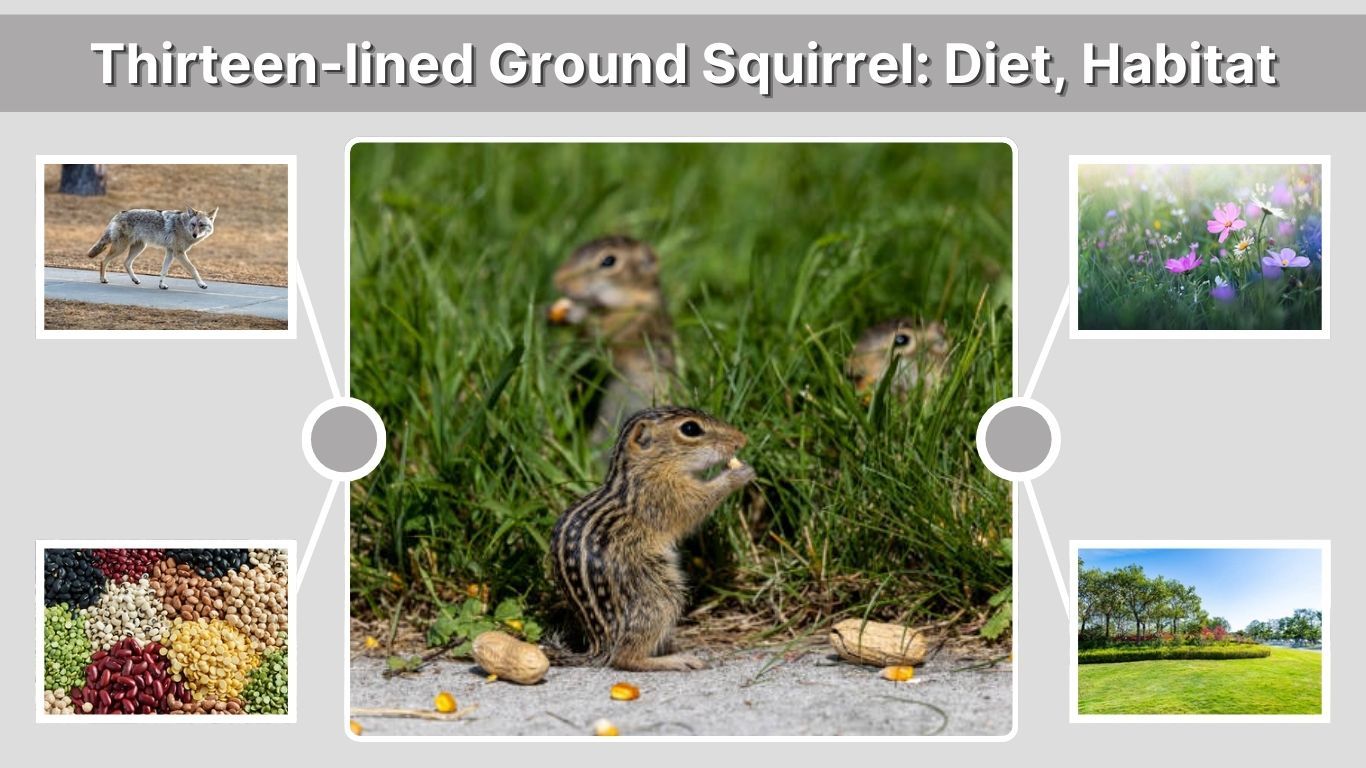
The thirteen-lined ground squirrel is a small rodent known for the distinctive stripes running along its back. Native to North America, this species is commonly found in grasslands, prairies, and open fields. Its unique pattern of lines and spots makes it one of the easiest ground squirrels to recognize. These active animals spend much of their time searching for food, digging burrows, and staying alert for predators in open habitats.
What Is the Thirteen-lined Ground Squirrel?
The thirteen-lined ground squirrel (Ictidomys tridecemlineatus) is a species of ground squirrel that belongs to the squirrel family Sciuridae. It is widely distributed across the central regions of North America, particularly in grasslands and prairie ecosystems.
The name “thirteen-lined” comes from the distinct pattern of alternating light and dark stripes that run down the squirrel’s back. These stripes are often broken by small white or yellowish spots, creating a unique and recognizable appearance.
Unlike tree squirrels that spend most of their time in trees, the thirteen-lined ground squirrel lives mainly on the ground and in underground burrows. These burrows provide shelter, protection from predators, and safe places to raise young.
This species is diurnal, meaning it is active during the day, especially during warm months when food is abundant.
Thirteen-lined Ground Squirrel Identification

The thirteen-lined ground squirrel can be easily identified by its distinctive stripe pattern and small body size. Several features make this species stand out among other ground squirrels.
Key identification features include:
- Thirteen alternating stripes running along the back
- Small white or yellow spots between some stripes
- Light brown or tan body color
- Short bushy tail compared to tree squirrels
- Small rounded ears and large dark eyes
- Upright alert posture when watching for predators
This striking pattern helps camouflage the squirrel in grassy environments, making it harder for predators to detect.
Thirteen-lined Ground Squirrel Size
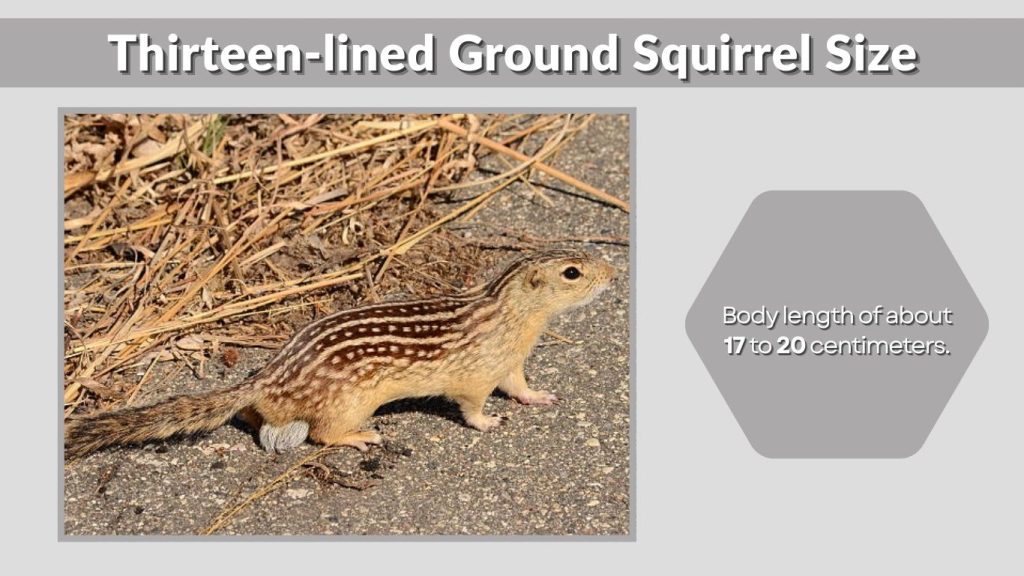
The thirteen-lined ground squirrel is a small to medium-sized ground squirrel, built for speed and agility across open landscapes.
Average Body Length
Adult thirteen-lined ground squirrels usually have a body length of about 17 to 20 centimeters (7 to 8 inches). Their compact size allows them to move quickly through grasslands and narrow burrow tunnels.
Tail Length
The tail typically measures 6 to 10 centimeters, which is shorter and less bushy than the tails of many tree squirrels. The tail still helps with balance while the squirrel runs or changes direction quickly.
Weight
Most thirteen-lined ground squirrels weigh between 150 and 250 grams. Their relatively lightweight bodies allow them to move rapidly and efficiently across open ground.
Size Comparison
Compared with larger ground squirrels such as the California ground squirrel, the thirteen-lined ground squirrel is much smaller. However, it is well adapted to life in grasslands where speed and agility are important for survival.
Thirteen-lined Ground Squirrel Habitat
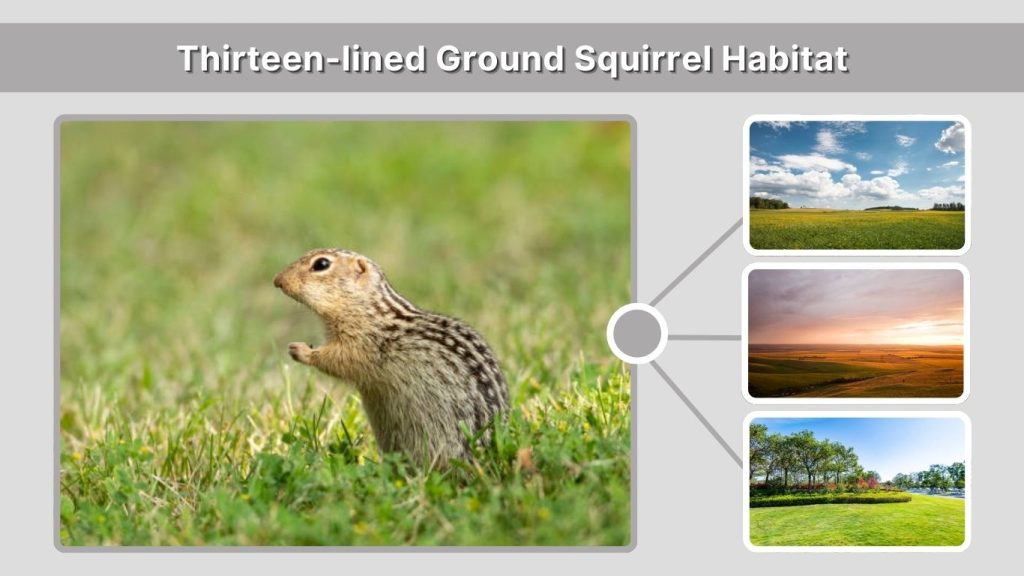
The thirteen-lined ground squirrel lives mainly in open environments where it can easily dig burrows and watch for predators.
Natural Habitat
Typical habitats include:
- Grasslands and prairies
- Open fields and meadows
- Farmland and pastures
- Golf courses and grassy parks
These open landscapes provide the loose soil needed for digging burrows and plenty of plants and insects for food.
Geographic Distribution
The thirteen-lined ground squirrel is widely distributed across central North America. Its range includes:
- Much of the central United States
- Parts of southern Canada
- Some regions of northern Mexico
Within these areas, the species prefers flat or gently rolling landscapes with short vegetation.
Burrow Systems
A key feature of this squirrel’s lifestyle is its underground burrow system. These burrows consist of tunnels and chambers that may extend several meters underground.
Burrows serve several important purposes, including:
- Protection from predators
- Shelter during extreme weather
- Safe places for sleeping and raising young
Many burrows have multiple entrances, allowing squirrels to escape quickly if danger approaches.
Thirteen-lined Ground Squirrel Diet

The thirteen-lined ground squirrel diet is varied and includes both plant and animal foods.
Primary Foods
Common foods eaten by these squirrels include:
- Seeds and grains
- Grasses and plant leaves
- Wildflowers and vegetation
These foods provide energy and nutrients during the active summer months.
Additional Foods
In addition to plant foods, thirteen-lined ground squirrels may also eat:
- Insects
- Beetles and grasshoppers
- Small invertebrates
This mixed diet makes them omnivores, allowing them to adapt to different food sources throughout the year.
Feeding Behavior
Thirteen-lined ground squirrels usually forage on the ground, gathering food with their front paws while sitting upright.
They may also store small amounts of food in their burrows, especially before colder seasons when food becomes less available.
Behavior of the Thirteen-lined Ground Squirrel
The thirteen-lined ground squirrel is an active and alert animal that spends much of its day searching for food and maintaining its burrow. Because it lives in open environments, it must stay constantly aware of potential predators.
Daily Activity
Thirteen-lined ground squirrels are diurnal, meaning they are active during the daytime. They usually begin their activities in the morning and continue until late afternoon. During this time they forage for food, groom themselves, and explore their surroundings.
When temperatures become extremely hot or when predators are nearby, they quickly retreat to their burrows for safety.
Burrowing Behavior
Burrowing is an important part of the squirrel’s lifestyle. These animals dig complex underground tunnel systems that may include several chambers.
These burrow systems are used for:
- Sleeping and resting
- Storing food
- Protecting themselves from predators
- Raising their young
Many burrows have multiple entrances so the squirrel can escape quickly if danger appears.
Alert Behavior
One well-known behavior of the thirteen-lined ground squirrel is its upright standing posture. The squirrel often stands on its hind legs to scan the environment for predators such as hawks or foxes.
If danger is detected, it may quickly run to the nearest burrow or produce warning sounds.
Thirteen-lined Ground Squirrel Hibernation
Like many ground squirrels, the thirteen-lined ground squirrel survives winter through hibernation.
Why They Hibernate
During winter months, food becomes scarce and temperatures drop significantly. Hibernation allows the squirrel to conserve energy and survive harsh conditions.
Hibernation Duration
In colder regions, these squirrels may hibernate for five to seven months. They enter hibernation in late autumn and emerge in early spring.
Body Changes During Hibernation
During hibernation, several changes occur in the squirrel’s body:
- Body temperature drops dramatically
- Heart rate slows down
- Breathing becomes very slow
- Metabolism decreases
These changes allow the animal to survive long periods without eating.
Reproduction and Lifespan
Breeding Season
Breeding usually occurs shortly after the squirrels emerge from hibernation in spring. This timing ensures that young squirrels are born when food is plentiful.
Offspring
Female thirteen-lined ground squirrels typically give birth to 6 to 12 babies per litter. The young are born blind and hairless and remain inside the burrow for several weeks.
Growth and Development
As the young squirrels grow, they develop fur and open their eyes. After about a month, they begin exploring outside the burrow and learning to forage for food.
Average Lifespan
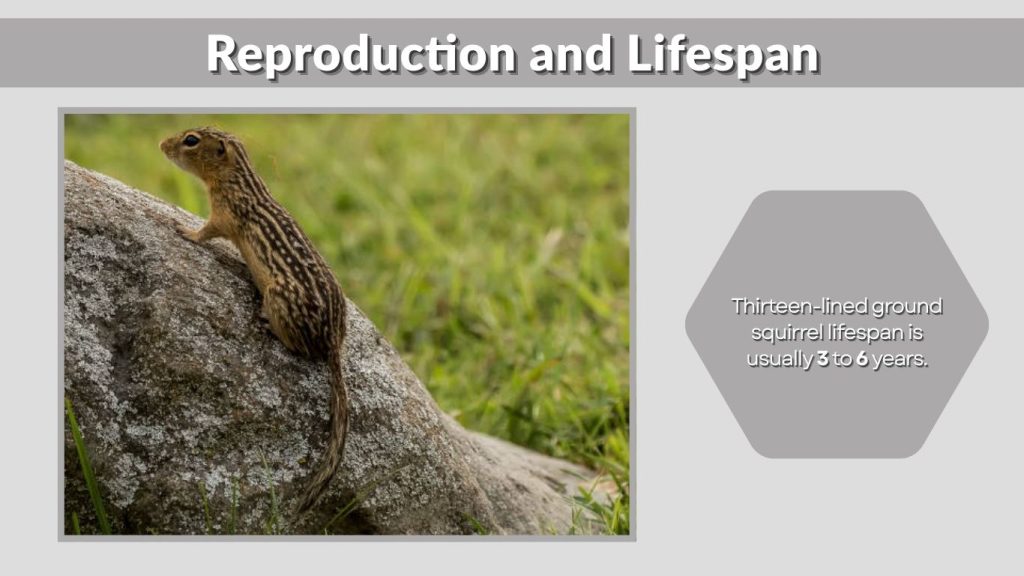
In the wild, the thirteen-lined ground squirrel lifespan is usually 3 to 6 years, although many individuals may live shorter lives due to predators or environmental challenges.
Interesting Facts About Thirteen-lined Ground Squirrels
Unique Stripe Pattern
The most distinctive feature of this species is the pattern of thirteen lines running along its back. These stripes often include small light-colored spots that create a striking visual pattern.
Fast Running Ability
Despite their small size, thirteen-lined ground squirrels are very fast runners. Their speed helps them escape predators in open environments.
Important Role in Grasslands
These squirrels play an important role in grassland ecosystems. Their burrowing activity helps improve soil quality and creates habitats for other small animals.
Predators and Threats
Natural Predators
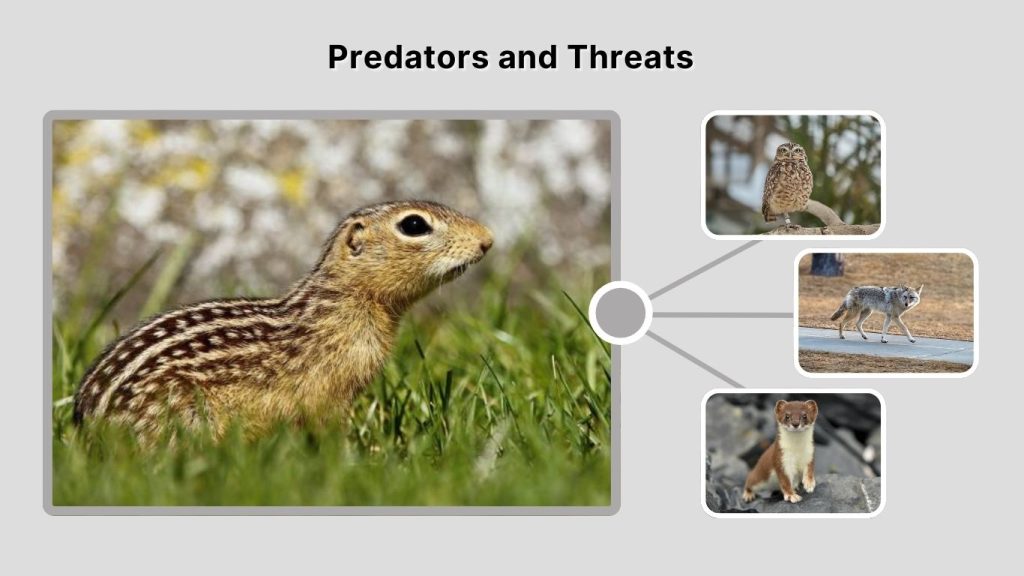
Many predators hunt thirteen-lined ground squirrels, including:
- Hawks and owls
- Foxes and coyotes
- Snakes
- Weasels
Living near burrows helps them escape quickly when threatened.
Environmental Threats
Human activities can also affect their populations. Some common threats include:
- Habitat loss due to agriculture and urban development
- Changes in grassland ecosystems
- Predation from domestic animals
Protecting natural grasslands is important for maintaining stable populations of this species.
Thirteen-lined Ground Squirrel vs Other Ground Squirrels

The thirteen-lined ground squirrel differs from other ground squirrel species in several ways.
Appearance Differences
Its distinct striped pattern makes it easy to recognize compared with other ground squirrels that may have plain or spotted fur.
Habitat Preferences
While many ground squirrels live in forests or mountainous regions, the thirteen-lined ground squirrel prefers open grasslands and prairies.
Behavioral Differences
This species is particularly known for its quick movements and upright alert posture, which help it detect predators in open landscapes.
Role in the Ecosystem
The thirteen-lined ground squirrel contributes to the balance of grassland ecosystems.
Its burrowing activity helps aerate the soil, which improves plant growth. The squirrel also helps control insect populations and serves as a food source for many predators.
Conclusion
The thirteen-lined ground squirrel is a fascinating small mammal recognized by its unique striped pattern and active lifestyle. Found in grasslands and prairies across North America, this squirrel spends much of its time digging burrows, searching for food, and staying alert for predators.
Through its burrowing activities and feeding habits, the thirteen-lined ground squirrel plays an important role in maintaining healthy grassland ecosystems. Protecting natural habitats ensures that this distinctive species continues to thrive in the wild.