





The rock squirrel is a large ground squirrel commonly found in rocky deserts and mountainous regions of North America. Known for its strong digging ability and alert behavior, this squirrel thrives in harsh environments where many other animals struggle to survive. Rock squirrels spend much of their time searching for food, exploring rocky terrain, and retreating into burrows for safety. Their adaptability and resourcefulness make them one of the most successful squirrel species in desert ecosystems.
What Is a Rock Squirrel?
The rock squirrel (Otospermophilus variegatus) is a species of ground squirrel that belongs to the squirrel family Sciuridae. It is native to the southwestern United States and northern Mexico, where it inhabits rocky landscapes, desert areas, and canyon environments.
Unlike tree squirrels that spend most of their time in trees, rock squirrels are primarily ground-dwelling animals. They live in underground burrows or take shelter in rock crevices to protect themselves from predators and extreme temperatures.
Rock squirrels are diurnal, meaning they are active during the daytime. They can often be seen sitting upright on rocks or open ground while watching for potential threats.
These squirrels are important members of desert ecosystems, helping to spread seeds and maintain soil health through their burrowing activities.
Rock Squirrel Identification
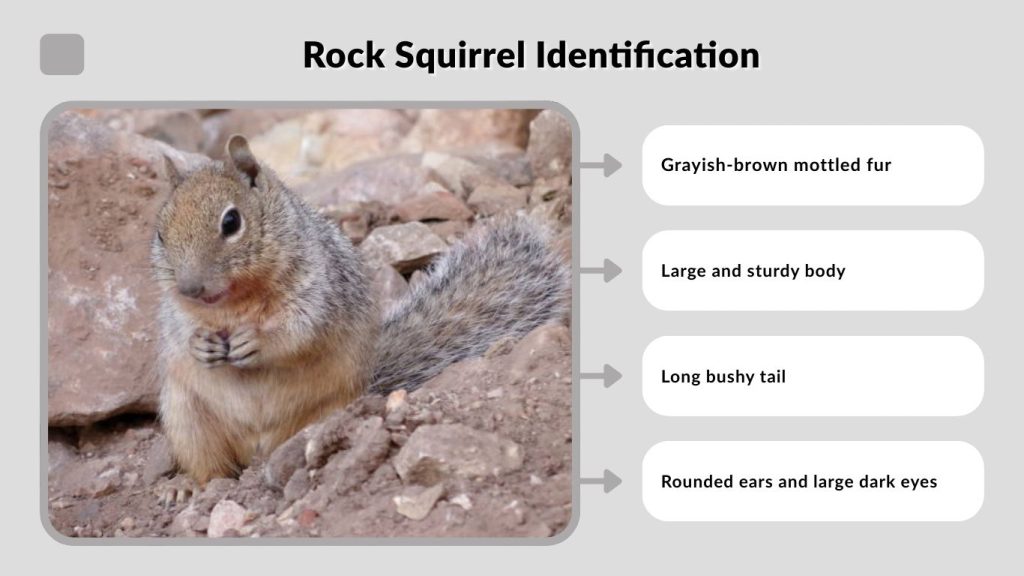
Rock squirrels can be recognized by their large size, mottled fur, and bushy tails. They are among the bigger ground squirrel species and are often mistaken for small prairie dogs or chipmunks.
Key identification features include:
- Grayish-brown mottled fur that blends with rocky surroundings
- Large and sturdy body compared with many other ground squirrels
- Long bushy tail often edged with white
- Rounded ears and large dark eyes
- Strong claws designed for digging burrows
- Upright alert posture when watching for predators
These characteristics allow rock squirrels to survive and move easily in rugged desert landscapes.
Rock Squirrel Size
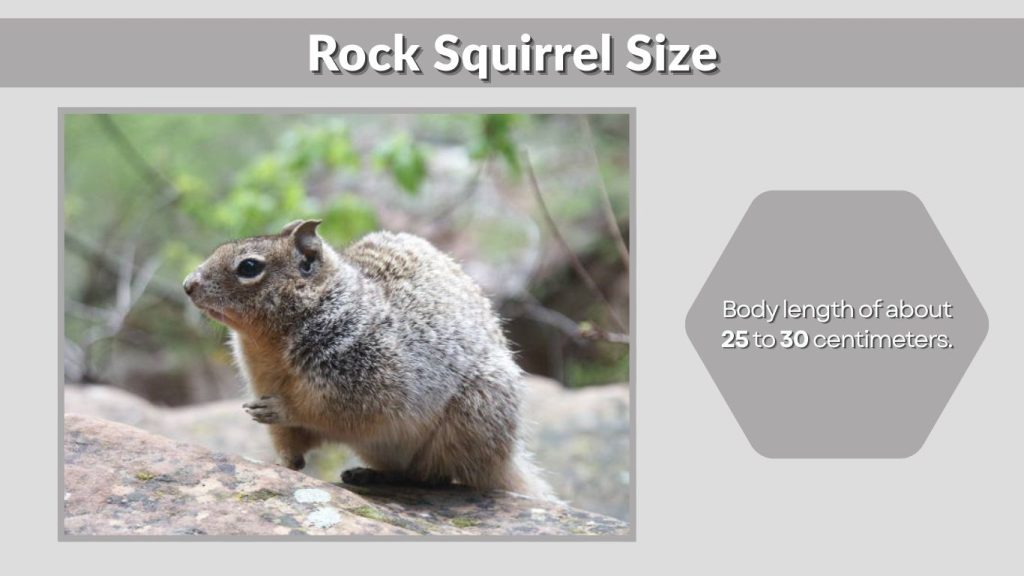
Rock squirrels are considered large ground squirrels, especially when compared to many other species in the same group.
Average Body Length
Adult rock squirrels usually have a body length of about 25 to 30 centimeters (10 to 12 inches). Their robust body structure helps them move efficiently across rocky terrain.
Tail Length
The tail typically measures 15 to 20 centimeters, making it relatively long and bushy. The tail helps the squirrel maintain balance when climbing rocks or moving quickly across uneven ground.
Weight
Rock squirrels usually weigh between 450 grams and 900 grams, depending on age and food availability. This heavier body mass helps them store energy for periods when food is scarce.
Size Comparison
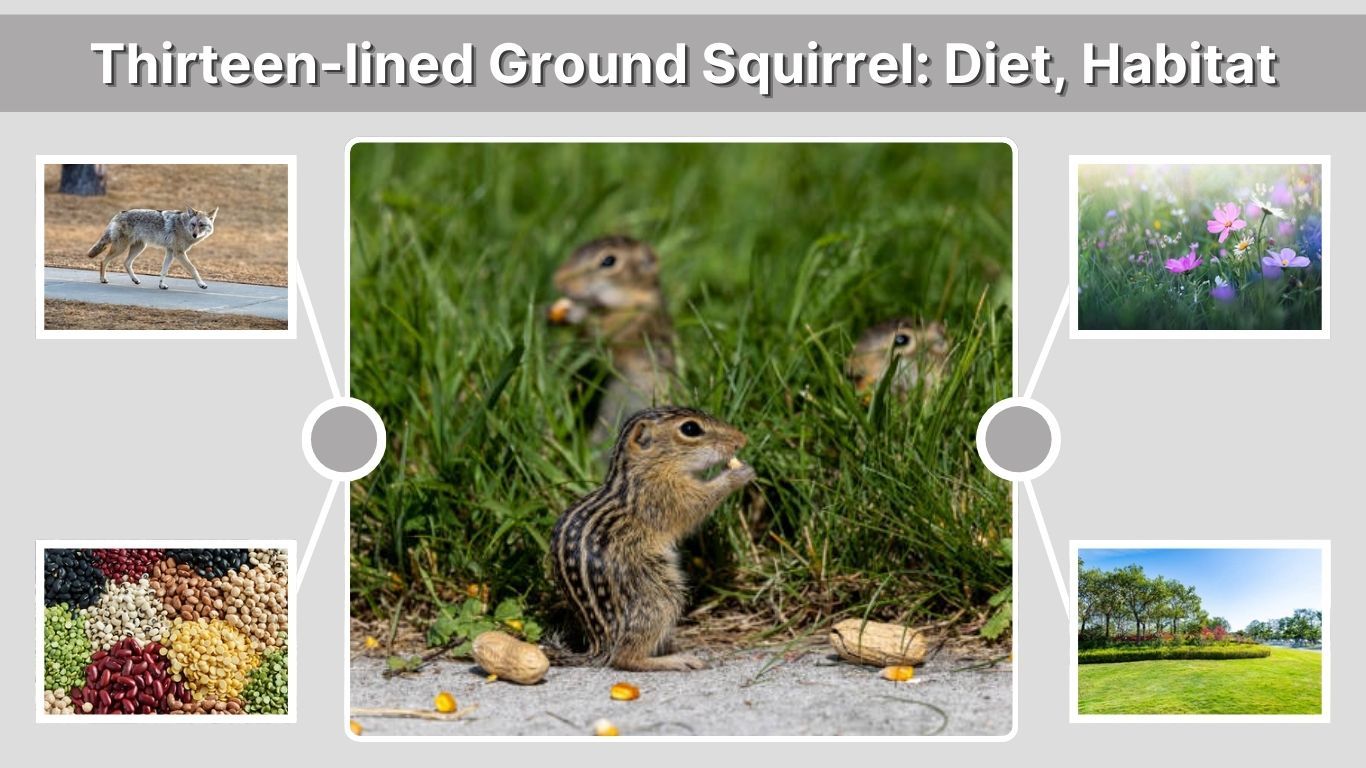
Compared with smaller species such as the thirteen-lined ground squirrel, rock squirrels are noticeably larger and more powerful. Their larger size allows them to travel longer distances and defend their territories more effectively.
Rock Squirrel Habitat
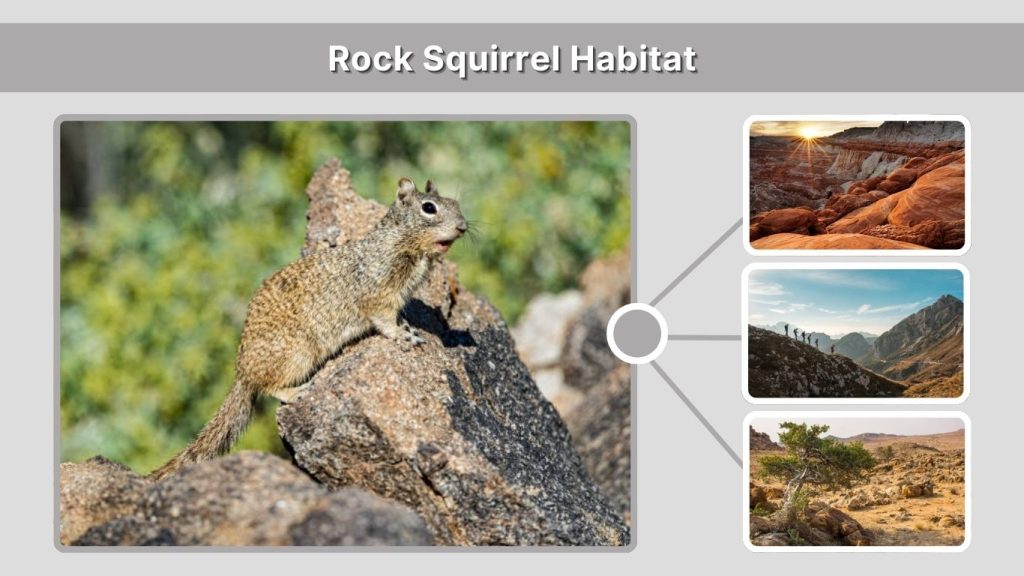
Rock squirrels are well adapted to arid and rocky environments, where their burrowing skills help them survive extreme temperatures.
Natural Habitat
Typical habitats for rock squirrels include:
- Rocky deserts
- Mountain slopes
- Canyon areas
- Dry scrublands
These environments provide rocks and crevices that offer natural shelter and protection.
Geographic Distribution
Rock squirrels are mainly found in:
- The southwestern United States (Arizona, Texas, New Mexico, Nevada, and Utah)
- Northern Mexico
Within these regions, they prefer areas with plenty of rocks and loose soil suitable for digging burrows.
Burrows and Shelter
Rock squirrels build underground burrow systems that may include several chambers and tunnels. These burrows provide shelter from predators, extreme heat, and cold weather.
In rocky areas, they may also use natural rock crevices as temporary shelters or escape routes.
Rock Squirrel Diet

The rock squirrel diet is quite varied, allowing the species to survive in environments where food sources may change throughout the year.
Primary Foods
Rock squirrels commonly eat:
- Seeds and nuts
- Fruits and berries
- Leaves and vegetation
These foods provide essential nutrients and energy.
Additional Foods
In addition to plant foods, rock squirrels may also eat:
- Insects
- Small animals or bird eggs
- Occasionally carrion
Because they eat both plant and animal foods, rock squirrels are considered omnivores.
Feeding Behavior
Rock squirrels typically forage on the ground, searching for food among rocks, shrubs, and desert plants. They often hold food with their front paws while sitting upright.
Some individuals may also store food in their burrows for later use, especially during times when food becomes less available.
Rock Squirrel Behavior
Rock squirrels are active and alert animals that spend much of their day searching for food, exploring their territory, and watching for predators. Their behavior is well adapted to life in rocky and desert environments.
Daily Activity
Rock squirrels are diurnal, meaning they are most active during the daytime. They usually leave their burrows in the morning to forage for food and return to their shelters during the hottest parts of the day.
In extremely hot desert climates, they may reduce activity during midday and become more active again later in the afternoon.
Burrowing and Climbing Behavior
Rock squirrels are skilled diggers. They create underground burrows with several tunnels and chambers. These burrows are used for sleeping, hiding from predators, and raising young.
Despite being ground squirrels, they are also excellent climbers. Rock squirrels can climb rocks, cliffs, and even trees when searching for food or escaping danger.
Social Behavior
Rock squirrels are usually solitary animals, although they may live in areas close to other squirrels if food is plentiful. Each squirrel typically maintains its own territory and may defend it from intruders.
They communicate with other squirrels using warning calls and body signals when predators approach.
Rock Squirrel Reproduction
Breeding Season
Rock squirrels typically breed once each year, usually during the spring when environmental conditions are favorable and food is more abundant.
Offspring
Female rock squirrels usually give birth to 4 to 6 babies per litter. The young are born blind and hairless and remain in the burrow during their early development.
Growth and Development
As the young squirrels grow, they begin to develop fur and open their eyes. After several weeks, they start exploring outside the burrow and gradually learn how to find food and avoid predators.
Rock Squirrel Lifespan
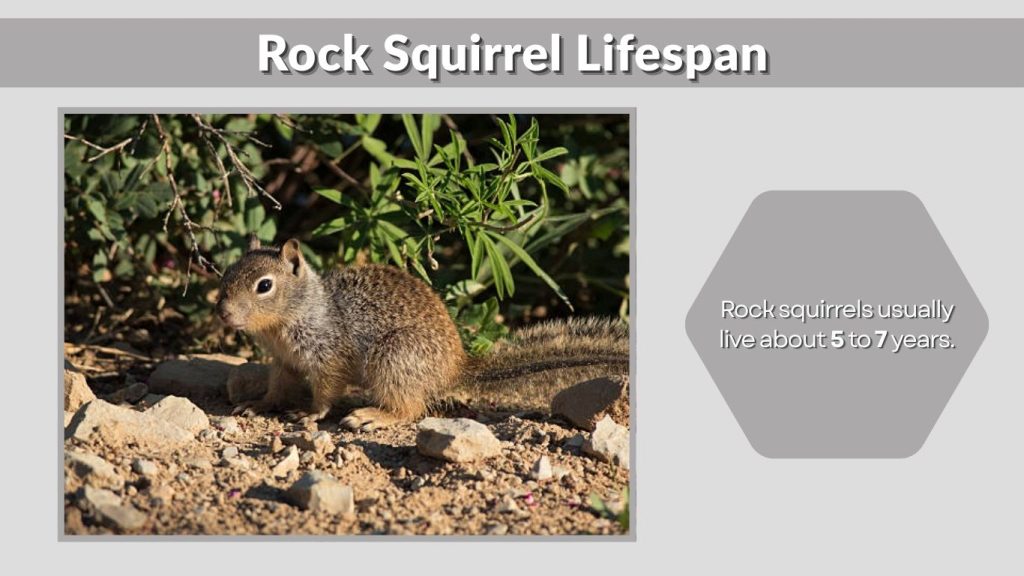
The rock squirrel lifespan can vary depending on environmental conditions, predators, and access to food.
Average Lifespan in the Wild
In the wild, rock squirrels usually live about 5 to 7 years. However, some individuals may live longer if they avoid predators and have stable habitats.
Factors Affecting Lifespan
Several factors influence how long rock squirrels live:
- Predation from birds of prey and mammals
- Availability of food and water
- Habitat quality and environmental conditions
- Human activity in desert and mountain regions
Interesting Facts About Rock Squirrels
Excellent Climbers
Although they are ground squirrels, rock squirrels are very good climbers. They often climb rocks, cliffs, and trees to search for food or escape predators.
Loud Warning Calls
Rock squirrels produce loud alarm calls when they sense danger. These warning sounds alert other squirrels nearby and help them avoid predators.
Adaptations for Desert Life
Rock squirrels are well adapted to hot and dry environments. They often stay in burrows during the hottest parts of the day and rely on vegetation and stored food for moisture.
Predators and Threats

Natural Predators
Rock squirrels face several predators in their natural habitats, including:
- Hawks and eagles
- Owls
- Coyotes and foxes
- Snakes
Their burrows and climbing ability help them escape many of these predators.
Environmental Threats
Human activities can also affect rock squirrel populations. Some threats include:
- Habitat destruction from development
- Changes in desert ecosystems
- Conflict with humans in urban areas
Protecting natural habitats helps ensure stable populations of these animals.
Rock Squirrel vs Ground Squirrel

Although rock squirrels belong to the ground squirrel group, they have some differences compared to other ground squirrel species.
Habitat Differences
Rock squirrels prefer rocky desert environments and canyon areas, while many other ground squirrels live in grasslands or open plains.
Physical Characteristics
Rock squirrels are generally larger and heavier than many other ground squirrel species.
Behavioral Differences
They are known for their climbing ability and use of rock crevices, which is less common in many ground squirrel species.
Role in the Ecosystem
Rock squirrels play an important role in desert ecosystems. Their burrowing activity helps improve soil aeration, which benefits plant growth.
They also help spread seeds and serve as an important food source for many predators, contributing to ecological balance.
Conclusion
The rock squirrel is a fascinating desert-dwelling rodent known for its large size, climbing ability, and adaptability to rocky environments. Found throughout the southwestern United States and northern Mexico, these squirrels thrive in harsh landscapes where they dig burrows, search for food, and stay alert for predators.
Through their burrowing and feeding activities, rock squirrels contribute to the health and balance of desert ecosystems, making them an important species in their natural habitats.