




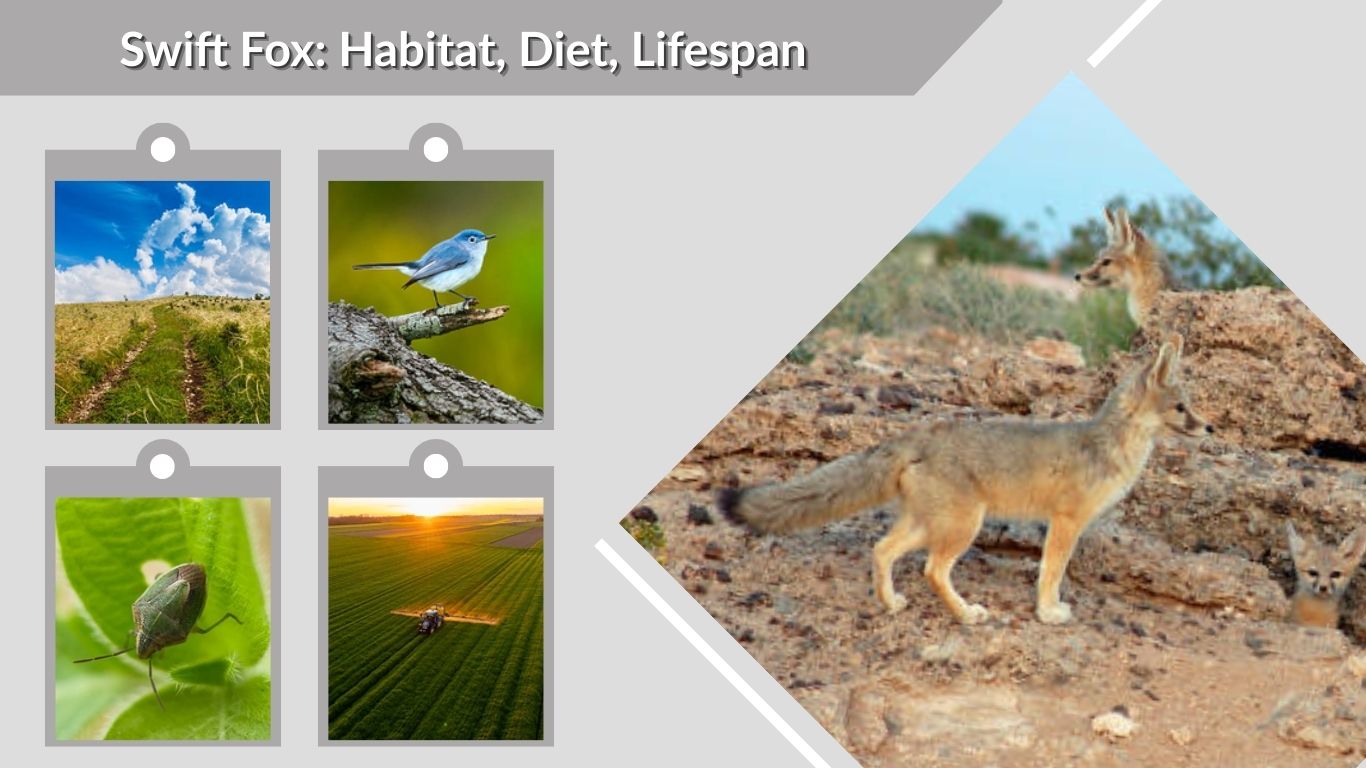
The swift fox is a small and agile fox species native to the grasslands of North America. Known for its speed and adaptability, this fox earned its name because of its fast running ability, which helps it escape predators and hunt prey in open plains. The swift fox once faced serious population declines but has slowly recovered in some areas due to conservation efforts. With its small body, bushy tail, and sharp senses, the swift fox plays an important role in maintaining balance within prairie ecosystems.
What is a Swift Fox?
The swift fox (Vulpes velox) is a small fox species that belongs to the Canidae family, which includes wolves, coyotes, and domestic dogs. It is one of the smallest fox species found in North America and is closely related to the kit fox.
Swift foxes are well known for their speed and agility, which help them survive in open grasslands where hiding places are limited. Their lightweight body allows them to run quickly across the plains, avoiding predators such as coyotes.
These foxes are mainly found in the Great Plains region, including parts of the United States and Canada. They prefer wide, open landscapes where they can easily hunt insects, rodents, and other small animals.
Swift foxes are mostly nocturnal, meaning they are active during the night. During the daytime, they rest in underground burrows that protect them from predators and harsh weather conditions.
Swift Fox Identification
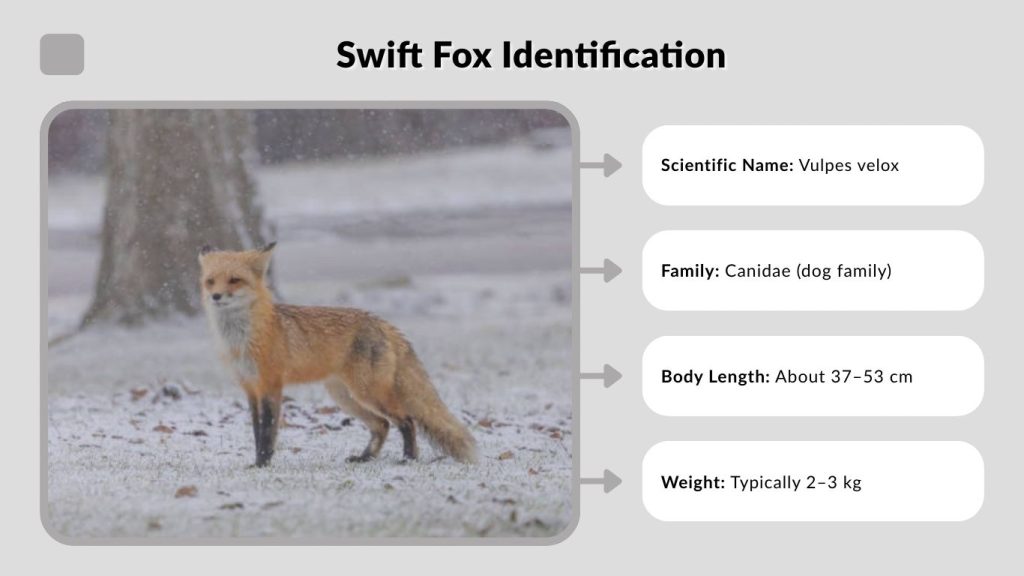
The swift fox (Vulpes velox) is a small fox species native to the grasslands and prairies of North America. It is known for its speed, lightweight body, and large ears, which help it survive in open plains where predators are common. Its fur coloration blends well with prairie landscapes, providing natural camouflage. The swift fox’s compact body, bushy tail, and sharp senses make it well adapted for hunting small animals and navigating wide grassland habitats.
Key Identification Features
- Scientific Name: Vulpes velox
- Common Name: Swift Fox
- Animal Type: Mammal
- Family: Canidae (dog family)
- Body Length: About 37–53 cm (15–21 inches)
- Tail Length: Around 22–35 cm (9–14 inches)
- Weight: Typically 2–3 kg (4–7 pounds)
- Fur Color: Gray or tan back with a lighter white or cream underside
- Tail: Bushy tail with a black tip
- Ears: Large, pointed ears that help detect prey
- Habitat: Grasslands, prairies, and open plains of North America
- Activity Pattern: Mostly nocturnal or active at dawn and dusk
These characteristics help distinguish the swift fox from other fox species, especially the larger red fox.
Swift Fox Habitat
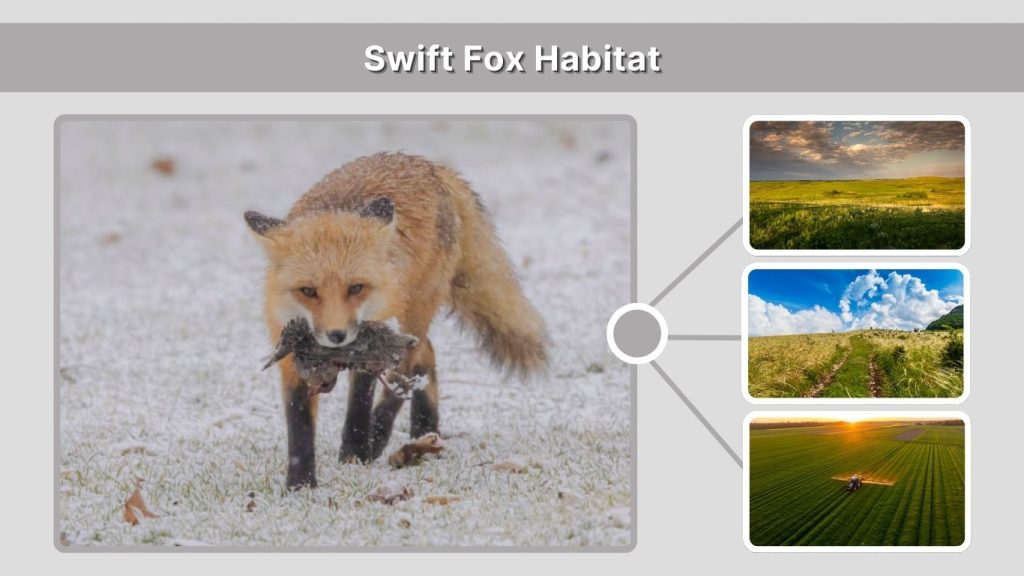
The swift fox habitat mainly consists of open grasslands and prairies where the animals can move freely and hunt for food. These environments provide the space and visibility that swift foxes need to survive.
Where Do Swift Fox Live?
Swift foxes are primarily found in the Great Plains of North America. Their range includes parts of:
- The United States
- Southern Canada
In the United States, they can often be found in states such as Colorado, Kansas, Wyoming, and New Mexico.
Preferred Environments
Swift foxes prefer shortgrass prairies and open plains with low vegetation. These areas allow them to spot predators quickly and run away if necessary.
Typical environments include:
- Grasslands
- Prairie ecosystems
- Semi-arid plains
- Agricultural lands with open space
These landscapes provide both hunting opportunities and suitable places to dig dens.
Habitat Adaptations
To survive in open environments, swift foxes dig underground burrows that serve as shelters. These dens protect them from predators and extreme weather.
A single swift fox may use several different dens within its territory, moving between them depending on safety and environmental conditions.
Because the plains can become very hot during the day, swift foxes are mostly active at night, when temperatures are cooler.
Swift Fox Diet
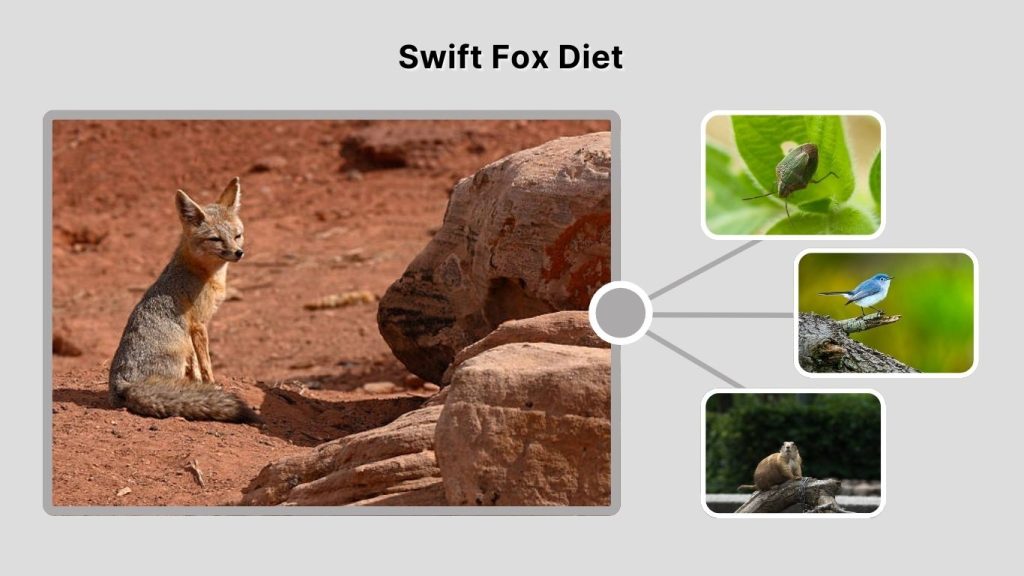
The swift fox diet is varied because these animals are omnivores. Their diet includes both animal prey and plant materials, depending on what is available in their habitat.
What Do Swift Fox Eat?
Swift foxes typically feed on:
- Small rodents such as mice and prairie dogs
- Insects including grasshoppers and beetles
- Small birds
- Reptiles such as lizards
- Fruits and plant materials
This flexible diet helps them survive in prairie environments where food availability may change with the seasons.
Hunting Behavior
Swift foxes usually hunt during the night or early morning hours. Their keen sense of hearing and smell helps them locate prey hidden in grass or underground.
They move quickly and quietly through the grass before pouncing on their prey, capturing it with sharp teeth and quick reflexes.
Seasonal Diet Changes
The diet of swift foxes may vary depending on the time of year. During warmer months, they often eat more insects and fruits, while in colder seasons they rely more on small mammals and birds for food.
Swift Fox Behavior
Swift foxes display several behaviors that help them survive in the open prairie environment. They are generally shy animals and tend to avoid direct contact with humans. Their behavior is shaped by the need to stay alert and move quickly in landscapes where hiding places are limited.
Activity Patterns
Swift foxes are primarily nocturnal, meaning they are most active during the night. They may also be active during the early morning or evening hours when temperatures are cooler.
During the daytime, they usually rest in underground dens that protect them from predators and harsh weather conditions.
Social Structure
Swift foxes often live in pairs, especially during the breeding season. A male and female may share the same territory and work together to raise their young.
Outside the breeding season, swift foxes may live alone but still maintain a defined territory.
Communication
Swift foxes communicate in several ways, including:
- Vocalizations such as barks, yips, and growls
- Scent marking to define territory
- Body language, including tail movement and posture
These signals help them interact with other foxes and avoid conflicts.
Swift Fox Life Cycle
The life cycle of the swift fox includes several stages from birth to adulthood. Each stage plays an important role in the fox’s survival and development.
Breeding Season
Swift foxes usually breed once each year. The mating season typically occurs between January and March.
During this time, pairs strengthen their bond and prepare a den where the female can safely give birth.
Gestation and Birth
After mating, the female swift fox carries the pups for about 50 to 55 days. She then gives birth inside a protected den.
A typical litter contains 3–6 pups, although litter sizes can vary depending on environmental conditions.
Pup Development
Swift fox pups are born blind and helpless, relying entirely on their mother for warmth and milk. Their eyes usually open after about 10 to 14 days.
As the pups grow, they begin exploring the area near the den and gradually learn how to hunt by observing their parents.
Growth to Adulthood
Young swift foxes become more independent as they develop their hunting skills. By the time they are 8–10 months old, they are usually ready to live independently and establish their own territories.
Swift Fox Lifespan
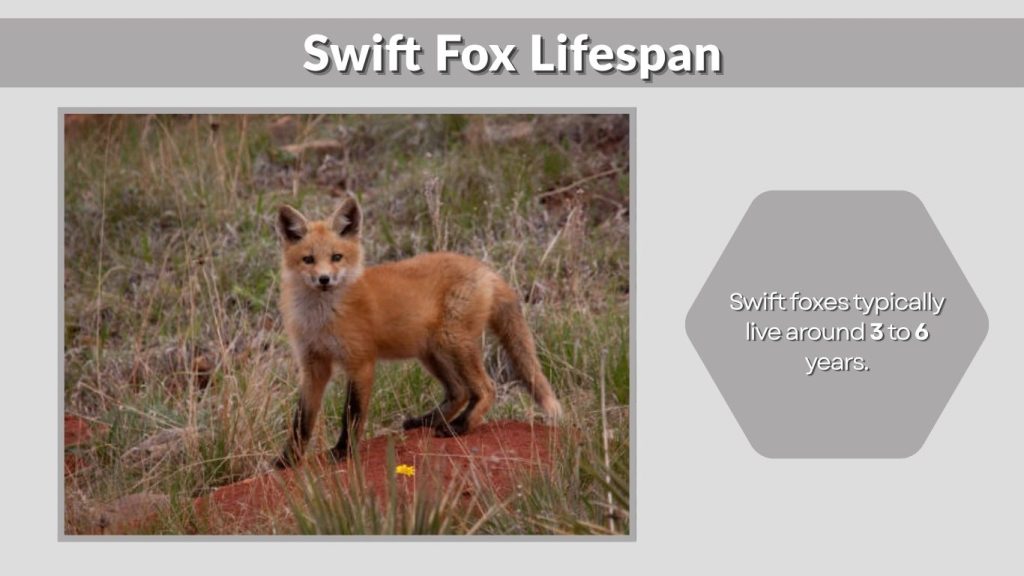
The swift fox lifespan can vary depending on environmental conditions and threats in the wild.
Lifespan in the Wild
In natural habitats, swift foxes typically live around 3 to 6 years. Many foxes may not reach old age due to predators, disease, or environmental challenges.
Lifespan in Captivity
In protected environments such as wildlife centers or zoos, swift foxes may live up to 10–12 years because they receive regular food, shelter, and medical care.
Factors Affecting Lifespan
Several factors influence how long swift foxes live:
- Predators such as coyotes and eagles
- Disease and parasites
- Habitat loss and environmental changes
- Human activities such as road accidents
Protecting their natural habitat helps improve survival rates.
Swift Fox vs Red Fox
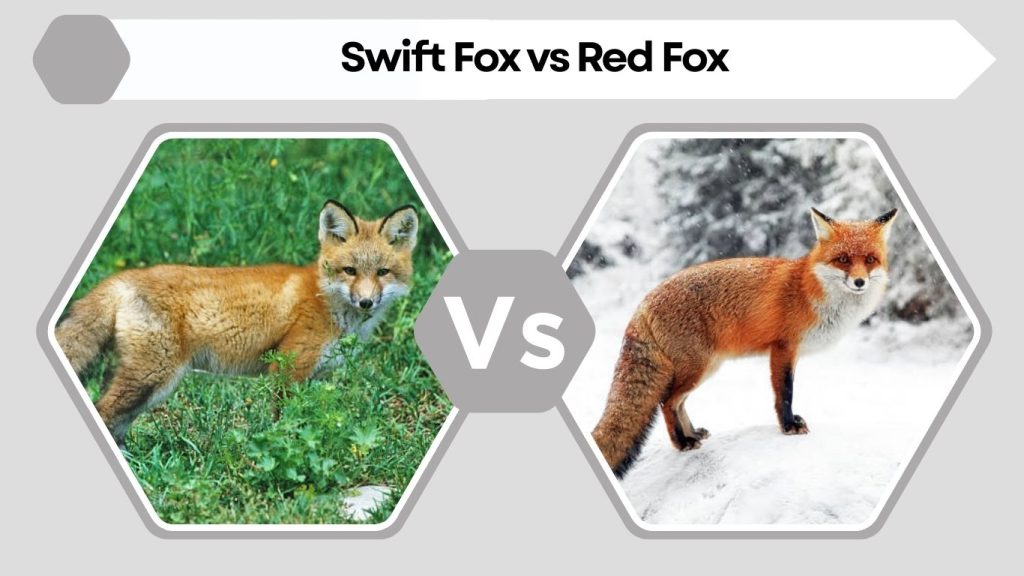
Although both animals belong to the fox family, there are several differences between the swift fox and the red fox.
Differences in Appearance
Swift foxes are generally smaller and lighter than red foxes. They have gray or tan fur and a smaller, more compact body.
Red foxes are larger and have a distinctive reddish-orange coat with a bushy white-tipped tail.
Habitat Differences
The two species also prefer different environments.
- Swift Fox: Open plains and grasslands
- Red Fox: Forests, farmland, mountains, and even urban areas
Red foxes are more adaptable to many types of habitats, while swift foxes prefer wide-open prairie ecosystems.
Behavior Differences
Swift foxes rely heavily on speed and agility to escape predators in open landscapes.
Red foxes often depend more on stealth and adaptability, allowing them to live in a variety of environments.
Predators and Threats to Swift Foxes
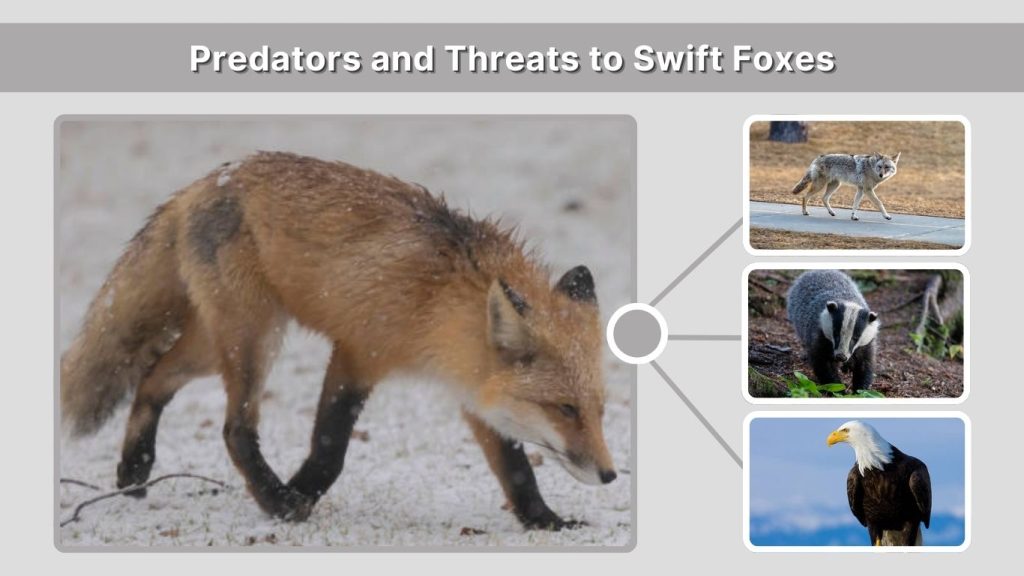
Despite their speed, swift foxes still face several threats in the wild.
Common predators include:
- Coyotes
- Eagles and other birds of prey
- Badgers
- Larger carnivores
Human activities can also affect swift fox populations. Habitat loss, agriculture expansion, and road traffic may reduce suitable living areas for these animals.
Conservation Status of the Swift Fox
Swift fox populations once declined significantly due to habitat loss and predator control programs. However, conservation efforts have helped some populations recover.
Reintroduction programs in parts of Canada and the United States have successfully increased their numbers in certain regions.
Protecting prairie habitats remains essential for the long-term survival of the swift fox.
Interesting Swift Fox Facts
Swift foxes have several unique characteristics that make them fascinating animals:
- They are one of the fastest fox species in North America.
- Swift foxes use multiple dens within their territory for safety.
- They are highly adapted to life in open prairie ecosystems.
- Their speed helps them escape predators in landscapes with little cover.
FAQs
Where do swift foxes live?
Swift foxes live mainly in the Great Plains region of North America, including parts of the United States and southern Canada.
What do swift foxes eat?
Swift foxes eat rodents, insects, birds, reptiles, fruits, and other small animals.
How long do swift foxes live?
Swift foxes typically live 3–6 years in the wild and up to 10–12 years in captivity.
What is the difference between a swift fox and a red fox?
Swift foxes are smaller and live in grasslands, while red foxes are larger and live in a wider variety of habitats.