




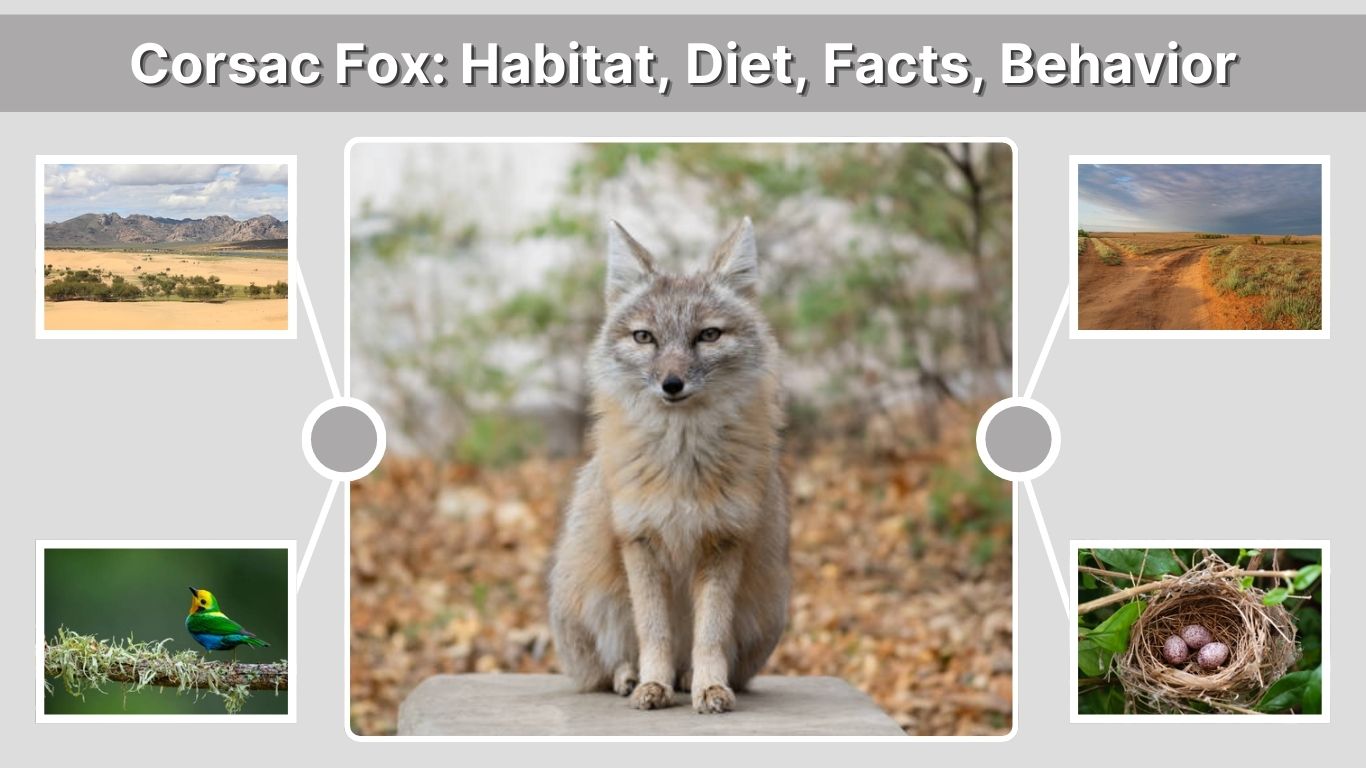
The corsac fox is a small fox species native to the wide grasslands and deserts of Central Asia. Known for its pale fur and slender body, the corsac fox is well adapted to life in harsh environments where temperatures can be extremely hot in summer and very cold in winter. Its scientific name is Vulpes corsac, and it belongs to the same family as wolves, dogs, and other fox species. This fox plays an important role in maintaining balance in the ecosystem by controlling populations of rodents and insects across the steppe regions.
What is a Corsac Fox?
The corsac fox is a small to medium-sized fox species that lives mainly in open steppes, grasslands, and semi-desert regions. It is widely distributed across Central Asia and is especially common in countries such as Mongolia, Kazakhstan, China, and parts of Russia.
This fox species is known for its light-colored fur, which helps it blend into dry landscapes. The corsac fox is also highly adaptable and can survive in environments where food and water may be limited.
Unlike some fox species that live near forests, corsac foxes prefer open terrain where they can easily spot predators and prey. They are excellent runners and can travel long distances while searching for food.
Corsac foxes are generally nocturnal, meaning they are most active during the night. During the day, they usually rest in burrows or sheltered areas to avoid extreme weather.
Corsac Fox Identification
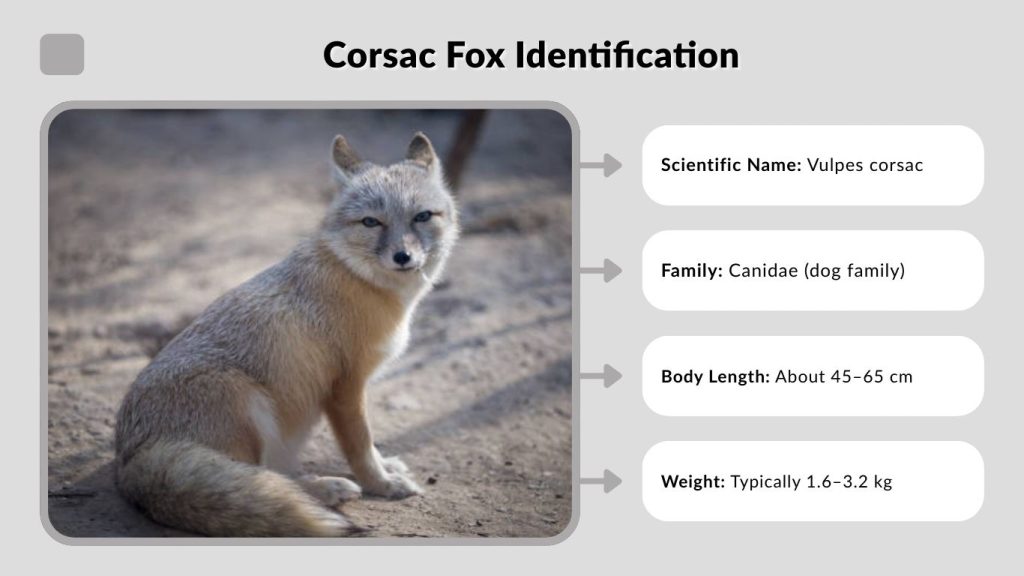
The corsac fox (Vulpes corsac) is a small fox species native to the steppes and semi-desert regions of Central Asia. It is known for its pale sandy or gray fur, slender body, and bushy tail, which help it blend into dry grasslands and open plains. The corsac fox is well adapted to harsh climates with hot summers and cold winters. Its large ears and keen senses allow it to detect prey easily, making it an efficient hunter in wide open landscapes.
Key Identification Features
- Scientific Name: Vulpes corsac
- Common Name: Corsac Fox
- Animal Type: Mammal
- Family: Canidae (dog family)
- Body Length: About 45–65 cm (18–26 inches)
- Tail Length: Around 25–35 cm (10–14 inches)
- Weight: Typically 1.6–3.2 kg (3.5–7 pounds)
- Fur Color: Pale gray, sandy, or yellowish coat with lighter underside
- Ears: Large ears for detecting prey in open grasslands
- Tail: Long, bushy tail sometimes with a darker tip
- Habitat: Steppes, semi-deserts, and grasslands of Central Asia
- Activity Pattern: Mostly nocturnal or active during cooler hours
These features make the corsac fox easy to recognize and well suited for life in the open plains and dry environments of Central Asia.
Corsac Fox Habitat
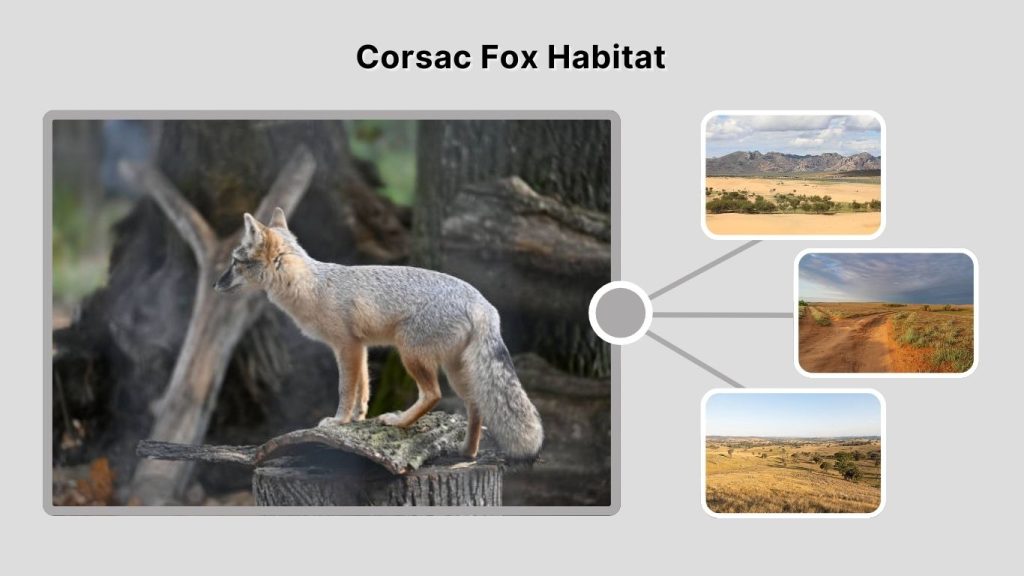
The corsac fox habitat mainly consists of dry, open landscapes where vegetation is sparse. These environments allow the fox to hunt efficiently and avoid predators.
Where Do Corsac Foxes Live?
Corsica foxes are mainly found in Central Asia, where vast grasslands and steppe regions provide suitable living conditions. Their range includes countries such as:
- Mongolia
- Kazakhstan
- China
- Russia
- Uzbekistan
These areas are known for their wide open plains and semi-arid climates.
Preferred Environments
Corsica foxes prefer habitats that offer both shelter and access to prey. Typical environments include:
- Open steppes
- Semi-desert regions
- Dry grasslands
- Arid plains
These landscapes provide good visibility, allowing the fox to detect predators and locate prey.
Habitat Adaptations
Corsac foxes have developed several adaptations that help them survive in extreme climates.
They often use underground burrows for shelter. These burrows may be dug by the fox itself or taken over from other animals. The burrows help protect them from heat, cold, and predators.
Corsac foxes are also capable of traveling long distances when searching for food, especially during periods when prey becomes scarce.
Corsac Fox Diet
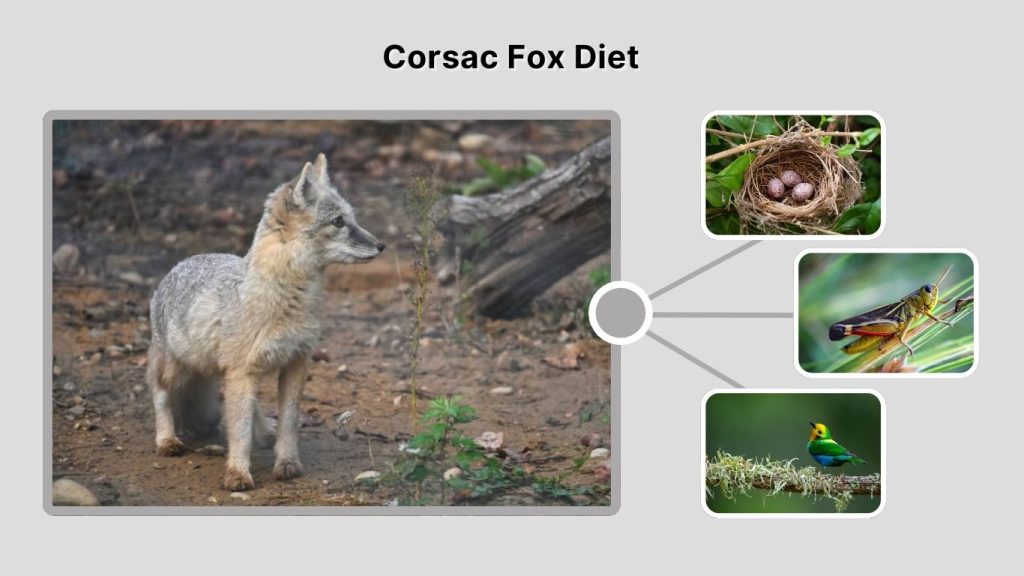
The corsac fox diet is diverse because these animals are opportunistic feeders. They consume a variety of animals depending on what is available in their habitat.
What Do Corsac Foxes Eat?
Corsica foxes commonly feed on:
- Small rodents
- Birds
- Bird eggs
- Insects
- Small reptiles
Rodents make up a large portion of their diet because they are abundant in steppe ecosystems.
Hunting Techniques
Corsac foxes are skilled nocturnal hunters. They rely on their sharp hearing and strong sense of smell to locate prey hidden in grass or underground.
Once prey is detected, the fox quickly pounces or digs into the soil to capture it.
Seasonal Diet Changes
The diet of corsac foxes can change depending on the season. During warmer months, they may eat more insects and small animals, while in colder months they rely more on rodents and birds.
This flexible feeding behavior helps them survive in environments where food availability may vary throughout the year.
Corsac Fox Behavior
Corsica foxes display several behaviors that help them survive in the harsh environments of Central Asia. They are generally cautious animals that avoid humans and rely on their speed and alertness to stay safe from predators. Their behavior is shaped by the open landscapes of the steppe, where hiding places are limited.
Activity Patterns
Corsac foxes are mostly nocturnal, meaning they are active during the night. They may also be active during the early morning or evening when temperatures are cooler.
During the day, corsac foxes usually rest in underground burrows or sheltered areas. These dens help protect them from extreme weather conditions such as heat in the summer and cold winds in the winter.
Social Structure
Corsac foxes are typically solitary animals, but they may occasionally live in small family groups. During the breeding season, a male and female may form a pair and share the same territory.
Outside of the breeding season, adult foxes often live alone and maintain their own territories.
Communication
Like many fox species, corsac foxes communicate using several methods:
- Vocal sounds such as barks and yips
- Scent marking to establish territory
- Body posture and tail movements
These signals help foxes interact with mates and warn other animals to stay away from their territory.
Corsac Fox Life Cycle
The life cycle of the corsac fox includes several stages from birth to adulthood. Each stage helps young foxes develop the skills they need to survive in the wild.
Breeding Season
Corsac foxes usually breed once each year. The mating season typically occurs during late winter, often between January and March.
During this time, pairs form and prepare a den where the female will give birth to her pups.
Gestation and Birth
After mating, the female corsac fox carries the pups for about 50–60 days before giving birth.
A typical litter contains 2–6 pups, although the number can vary depending on environmental conditions.
Pup Development
At birth, the pups are blind and completely dependent on their mother. They remain inside the den during the early weeks of life where they are protected from predators.
Their eyes usually open after about 10–14 days, and they begin exploring outside the den a few weeks later.
Growth to Adulthood
As the pups grow, both parents may help provide food and protection. Young foxes gradually learn hunting skills by watching their parents.
By the time they reach about 9–10 months old, they are usually ready to live independently.
Predators and Threats to Corsac Foxes
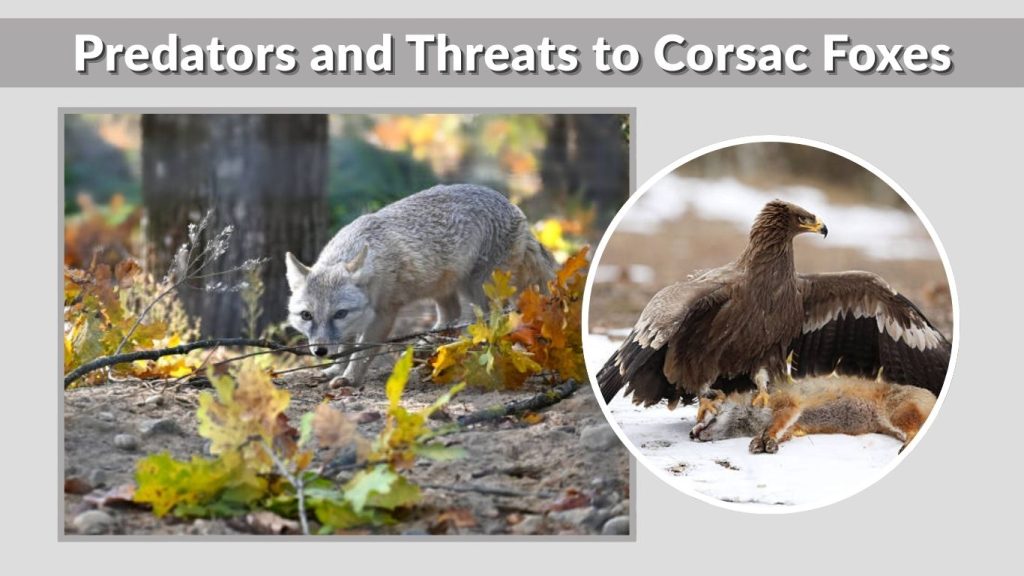
Despite their speed and adaptability, corsac foxes face several threats in the wild.
Common predators include:
- Wolves
- Eagles and other large birds of prey
- Larger carnivorous mammals
Human activities can also affect corsac fox populations. Habitat degradation, hunting, and trapping for fur have historically reduced their numbers in some regions.
Environmental changes that affect prey populations can also impact corsac fox survival.
Conservation Status of the Corsac Fox
The corsac fox is currently listed as Least Concern on the global conservation scale, meaning the species is not considered endangered. However, its population can fluctuate depending on environmental conditions and human activities.
Protecting steppe ecosystems and maintaining healthy prey populations are important for ensuring the long-term survival of this species.
Conservation efforts in some regions aim to monitor populations and protect natural habitats.
Interesting Corsac Fox Facts
Corsica foxes have several unique characteristics that make them fascinating animals:
- They can survive long periods without drinking water, obtaining moisture from their food.
- Corsac foxes are capable of traveling long distances during times when food becomes scarce.
- Their pale fur helps camouflage them in dry steppe landscapes.
- They are well adapted to both extremely hot summers and freezing winters.
FAQs
Where do corsac foxes live?
Corsac foxes live mainly in Central Asia, including Mongolia, Kazakhstan, China, Russia, and nearby regions.
What do corsac foxes eat?
They eat rodents, birds, eggs, insects, and small reptiles.
How big are corsac foxes?
Corsac foxes typically measure 45–65 cm in body length and weigh around 1.6–3.2 kg.
Are corsac foxes endangered?
No, corsac foxes are currently not considered endangered, but their populations can be affected by habitat changes and hunting.