




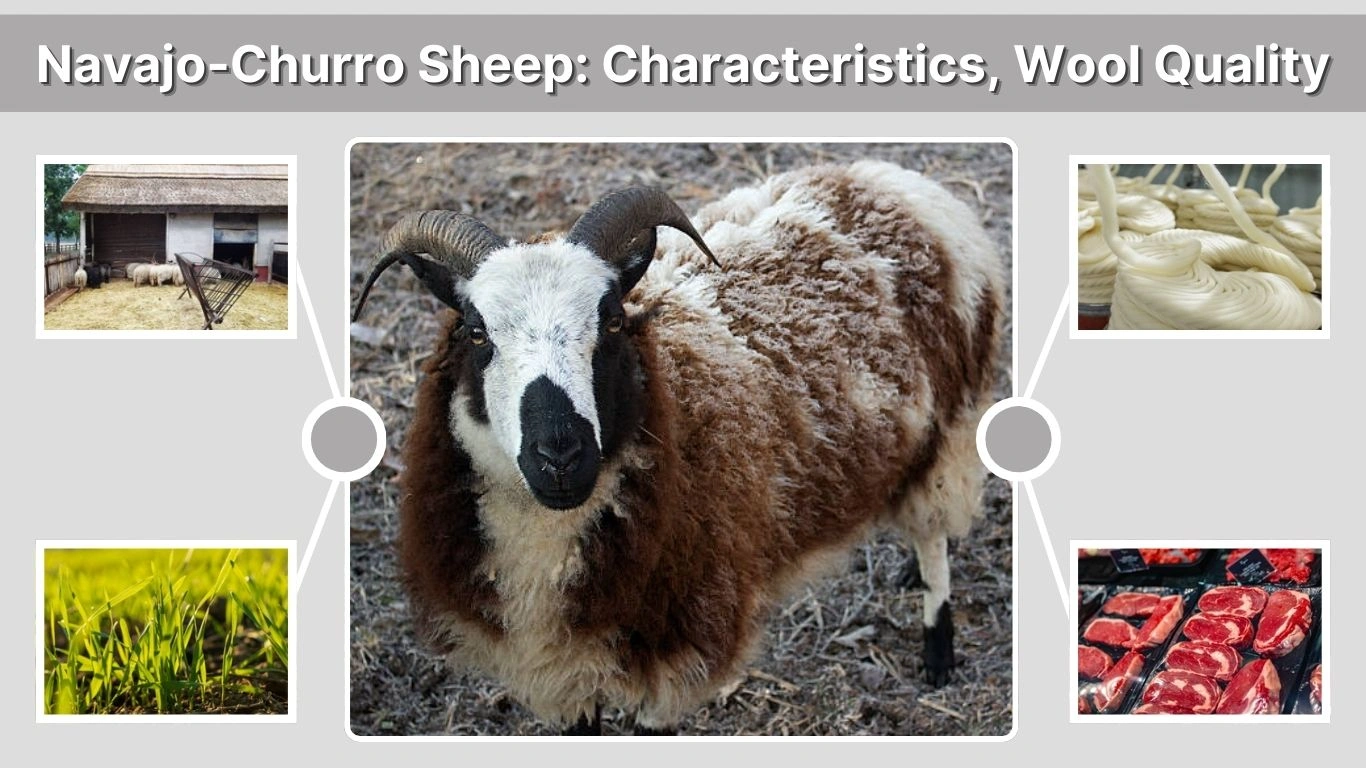
Navajo-Churro sheep are one of the oldest and most historically significant sheep breeds in North America. Known for their hardiness, unique multi-horned appearance, and distinctive dual-coated wool, these sheep hold deep cultural importance for the Navajo people. For centuries, they have been essential to traditional Navajo weaving, food production, and sustainable desert farming. Despite facing near extinction in the 20th century, conservation efforts have helped revive the breed, making Navajo-Churro sheep a symbol of resilience and heritage.
What Are Navajo-Churro Sheep?
Definition of the Breed
Navajo-Churro sheep are a heritage sheep breed primarily associated with the Navajo Nation in the southwestern United States. They are considered a landrace breed, meaning they developed naturally through adaptation to their environment rather than intensive commercial breeding.
These sheep are well known for their durability, adaptability to harsh climates, and unique wool structure. Unlike many commercial sheep breeds that are bred for a single purpose, Navajo-Churro sheep are valued for both fiber production and meat, making them a versatile livestock breed.
Origin of the Name
The name “Navajo-Churro” reflects the cultural and historical roots of the breed.
- Navajo refers to the Navajo people, who raised and carefully developed the breed over centuries.
- Churro comes from the Spanish Churra sheep, a breed brought to North America by Spanish explorers and settlers during the 1500s.
Through generations of selective breeding by the Navajo, these sheep gradually evolved into a distinct breed adapted to the desert landscapes of the American Southwest.
Quick Facts
Here are some quick facts about Navajo-Churro sheep:
- Breed type: Heritage landrace sheep
- Primary uses: Wool, meat, and cultural traditions
- Average lifespan: 10–12 years
- Climate adaptability: Excellent for arid and semi-arid regions
- Special feature: Some rams develop four or more horns
Their ability to survive in dry climates with limited forage makes them particularly valuable for sustainable and low-input farming systems.
History of Navajo-Churro Sheep
Spanish Introduction in the 16th Century
The story of Navajo-Churro sheep begins in the late 1500s, when Spanish explorers introduced Churra-type sheep to North America. These sheep were among the earliest domesticated animals brought by Spanish settlers.
Initially, the sheep were used by Spanish colonists for food, wool, and trade. Over time, some of these animals spread into the lands inhabited by Native American tribes, including the Navajo.
Development by the Navajo People
The Navajo people quickly recognized the value of these sheep and began raising them extensively. Over centuries, Navajo herders selectively bred sheep that could:
- Survive in harsh desert environments
- Produce strong wool for weaving
- Provide meat and milk for families
As a result, the sheep gradually adapted to the dry climate, rugged terrain, and limited vegetation of the region.
The wool from these sheep became the foundation of traditional Navajo rug weaving, a craft that remains world-famous for its quality and artistry.
The Livestock Reduction Era
Despite their cultural importance, Navajo-Churro sheep faced a major crisis during the 1930s livestock reduction programs initiated by the U.S. government.
Officials believed that large numbers of livestock were contributing to land degradation in the Southwest. As a result, thousands of sheep owned by Navajo families were confiscated and destroyed.
This policy devastated both the Navajo economy and the Navajo-Churro sheep population, pushing the breed close to extinction.
Breed Recovery Efforts
By the late 20th century, conservationists and Navajo communities recognized the need to preserve the breed.
Organizations such as the Navajo-Churro Sheep Association began working to:
- Identify remaining purebred animals
- Rebuild breeding populations
- Promote the cultural and agricultural value of the breed
Thanks to these efforts, Navajo-Churro sheep have slowly recovered, although they are still considered a rare heritage breed.
Physical Characteristics of Navajo-Churro Sheep
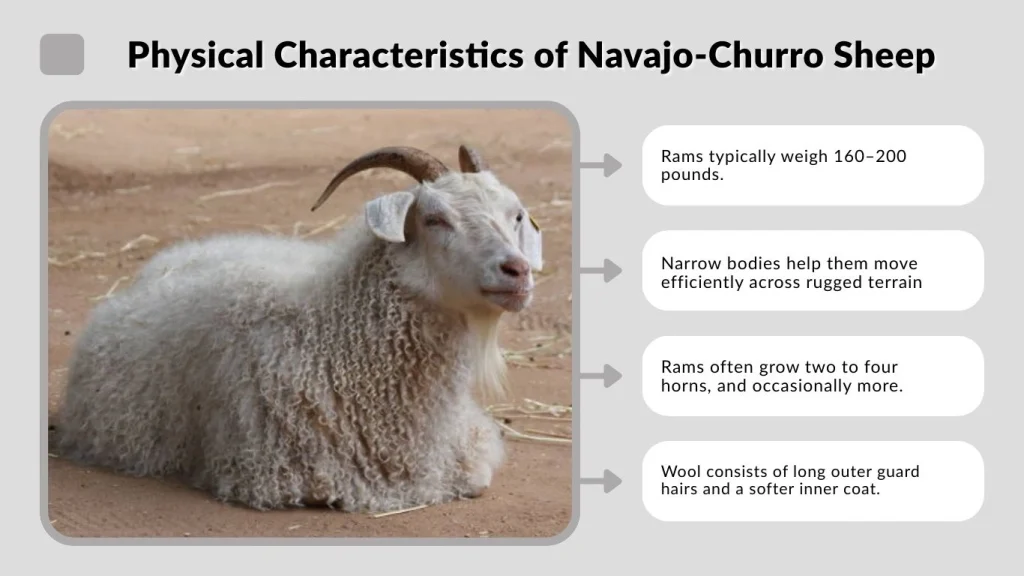
Navajo-Churro sheep have several distinctive physical traits that make them easily recognizable among other sheep breeds. Over centuries, they adapted to the harsh desert environments of the American Southwest, developing a lean body, strong legs, and protective wool. Their appearance reflects both functionality and resilience, allowing them to travel long distances while grazing and survive in dry climates with limited resources.
Below are some key physical characteristics of Navajo-Churro sheep:
- Medium Body Size – Rams typically weigh 160–200 pounds, while ewes weigh around 90–120 pounds.
- Lean and Athletic Build – Their narrow bodies help them move efficiently across rugged terrain.
- Multiple Horns (Polycerate Trait) – Rams often grow two to four horns, and occasionally more.
- Variable Horns in Ewes – Ewes may have two horns or sometimes be naturally hornless.
- Dual-Coated Fleece – Wool consists of long outer guard hairs and a softer inner coat.
- Long Staple Wool Fibers – Wool fibers are longer and stronger than many commercial breeds.
- Strong Legs and Hooves – Well adapted for walking long distances while grazing.
- Wide Range of Coat Colors – Common colors include white, black, brown, gray, and spotted patterns.
These physical traits contribute to the breed’s hardiness, adaptability, and usefulness for both wool and meat production, making Navajo-Churro sheep a valuable heritage breed.
Wool Quality and Fiber Characteristics
Dual-Coated Fiber Structure
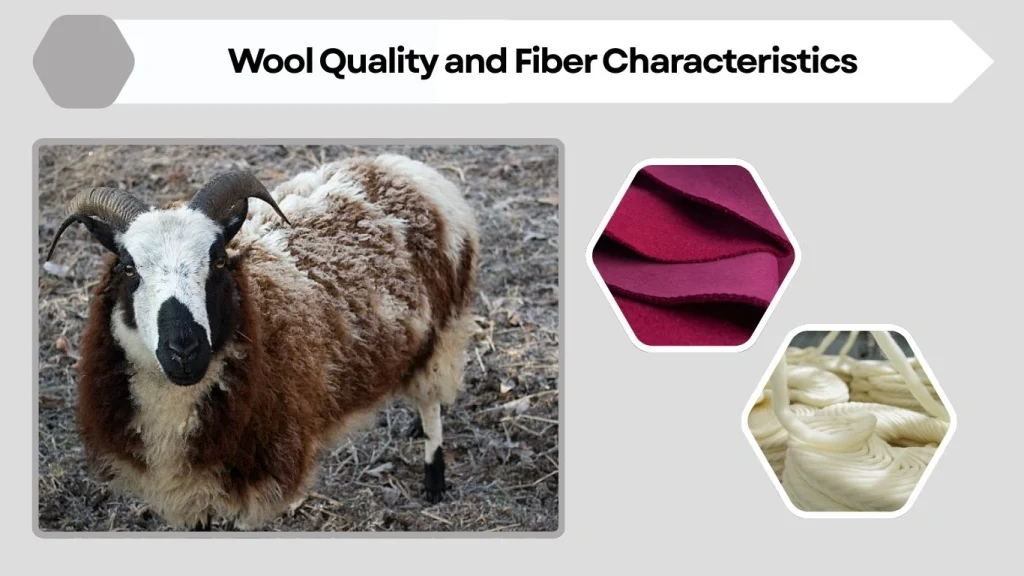
One of the most valuable characteristics of Navajo-Churro sheep is their dual-coated fleece. Unlike many modern commercial breeds that produce uniform wool, Navajo-Churro sheep grow two distinct fiber layers.
The outer coat consists of long, coarse guard hairs that protect the sheep from harsh weather, wind, and dust. Beneath this layer is a softer inner coat, which provides insulation and warmth. This natural combination creates wool that is both strong and flexible.
Because of this structure, the fleece is especially suitable for hand spinning and traditional textile production.
Staple Length and Texture
Navajo-Churro wool is known for its long staple length, which often ranges between 8 and 14 inches. Long fibers make the wool easier to spin into yarn, especially for artisans and traditional weavers.
The texture of the wool is generally coarser than fine-wool breeds like Merino, but it is extremely durable. This durability makes the fiber ideal for products that require strength, such as rugs, blankets, and tapestries.
Why Navajo Weavers Prefer It
For generations, Navajo weavers have preferred Navajo-Churro wool because of its strength and natural resilience. The fibers create yarn that holds its shape well and resists wear over time.
Traditional Navajo rugs are famous for their tight weaving and long lifespan. The unique wool of Navajo-Churro sheep contributes significantly to this durability. Even today, many artisans still seek out this breed specifically for authentic Navajo textile production.
Uses of Navajo-Churro Sheep
Traditional Navajo Weaving
Perhaps the most well-known use of Navajo-Churro sheep is in traditional Navajo rug weaving. The wool is spun into yarn and dyed using natural dyes derived from plants, minerals, and insects.
These rugs are not only functional household items but also important cultural artworks. Navajo weaving traditions have been passed down through generations and continue to be a vital part of Navajo cultural identity.
Meat Production
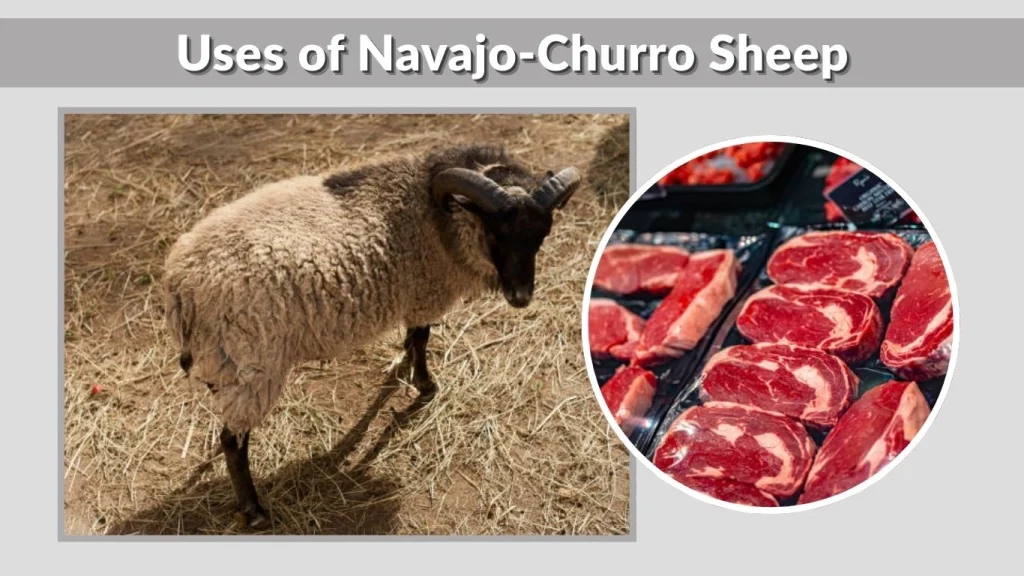
Although Navajo-Churro sheep are primarily valued for their wool, they also provide lean and flavorful meat. Compared to some commercial breeds, their meat is often described as having a richer and more natural flavor.
Because the sheep are typically raised on natural forage rather than intensive feeding systems, the meat is often considered high quality and sustainable.
Cultural and Ceremonial Uses
Navajo-Churro sheep play a role beyond agriculture. They are deeply connected to Navajo spiritual and ceremonial traditions.
In many Navajo communities, sheep symbolize prosperity, family stability, and cultural continuity. They are sometimes used in traditional ceremonies and celebrations, reinforcing their importance within Navajo life.
Sustainable Farming
Another important use of Navajo-Churro sheep is their role in sustainable and low-input farming systems.
Because the breed is well adapted to dry climates, they require fewer resources compared to many commercial breeds. Their ability to thrive on sparse vegetation makes them particularly suitable for desert and semi-arid grazing systems.
Temperament and Adaptability
Hardy Desert Breed
Navajo-Churro sheep are widely known for their exceptional hardiness. Over centuries, they have adapted to survive in environments with extreme temperatures, limited water, and scarce vegetation.
This resilience allows them to remain productive even in challenging conditions where other breeds might struggle.
Foraging Ability
These sheep are excellent foragers, meaning they can efficiently graze on a wide variety of plants. Their grazing habits allow them to utilize sparse vegetation in desert landscapes.
This trait makes them particularly valuable for farmers who rely on natural pasture systems rather than expensive feed.
Disease Resistance
Another advantage of Navajo-Churro sheep is their natural resistance to many common sheep diseases and parasites.
Because they evolved in relatively harsh environments with minimal human intervention, they tend to have stronger natural health compared to some intensively bred livestock.
Conservation Status of Navajo-Churro Sheep
Population Decline
The Navajo-Churro breed suffered a dramatic decline during the livestock reduction programs of the 1930s. Thousands of sheep were removed or destroyed, leading to a severe drop in the breed’s population.
For many decades, only small pockets of purebred animals remained.
Current Population Numbers
Today, thanks to dedicated conservation work, Navajo-Churro sheep populations have gradually increased. However, the breed is still considered rare and in need of continued preservation.
Many breeding programs aim to maintain the genetic diversity of the remaining flocks.
Conservation Organizations
Several organizations play an important role in protecting the breed. These include:
- Navajo-Churro Sheep Association
- The Livestock Conservancy
These groups support breeders, promote awareness, and encourage responsible breeding practices.
Importance of Preservation
Preserving Navajo-Churro sheep is important for several reasons:
- Protecting genetic diversity in livestock
- Preserving Navajo cultural heritage
- Supporting sustainable agriculture
The breed represents a living connection between traditional knowledge and modern farming practices.
Raising Navajo-Churro Sheep

Housing Requirements
Navajo-Churro sheep generally require simple shelter rather than complex housing systems. A basic structure that protects them from extreme weather is usually sufficient.
Because they are hardy animals, they often spend much of their time grazing outdoors.
Feeding Needs
Their diet mainly consists of grass, shrubs, and natural forage. They are capable of surviving on vegetation that many other breeds cannot efficiently utilize.
Farmers may occasionally provide supplemental feed or minerals, especially during winter or drought conditions.
Breeding Practices
Navajo-Churro sheep are known for strong maternal instincts and good fertility rates. Ewes usually give birth without complications and care well for their lambs.
Natural breeding systems are commonly used, allowing flocks to reproduce with minimal human intervention.
Shearing and Wool Care
Shearing typically occurs once per year, usually in spring. After shearing, the fleece is sorted into different fiber types depending on quality and intended use.
Many small-scale producers sell the wool directly to hand spinners, fiber artists, and textile makers.
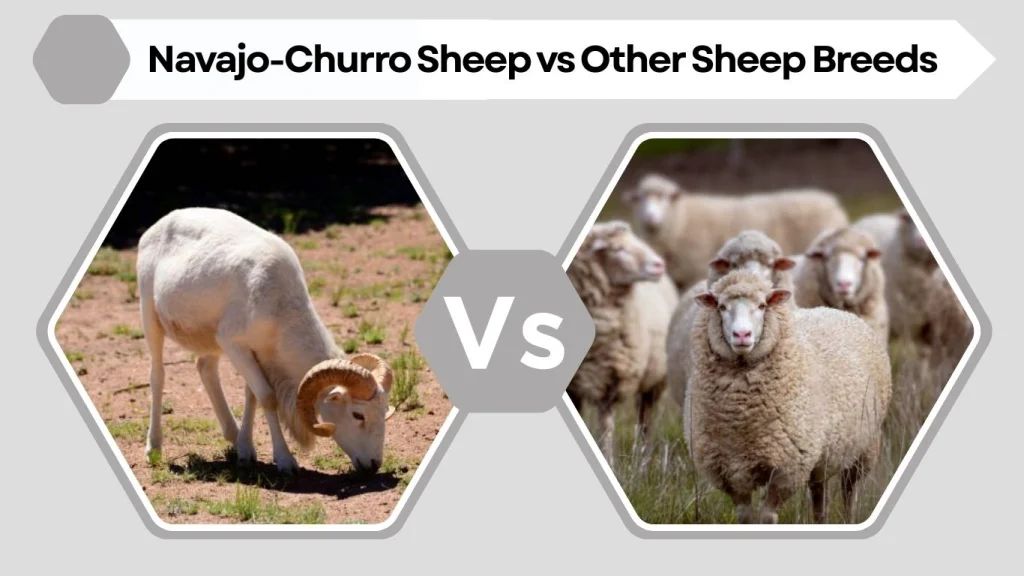
Navajo-Churro Sheep vs Other Sheep Breeds
Navajo-Churro vs Merino
Merino sheep are famous for producing extremely fine and soft wool, often used for clothing. Navajo-Churro wool, on the other hand, is stronger and more durable, making it better suited for rugs and heavy textiles.
Navajo-Churro vs Suffolk
Suffolk sheep are primarily raised for meat production and grow faster than Navajo-Churro sheep. However, Navajo-Churro sheep require fewer resources and adapt better to dry environments.
Unique Advantages of Navajo-Churro
Some of the key advantages of Navajo-Churro sheep include:
- Exceptional hardiness
- Long, durable wool fibers
- Ability to thrive in desert climates
- Strong cultural significance
These qualities make them a valuable heritage breed worth preserving.
Interesting Facts About Navajo-Churro Sheep
- They are considered one of the oldest sheep breeds in North America.
- Some rams can develop four or even six horns.
- Their wool is a key material used in traditional Navajo rugs, which are known worldwide.
FAQs
Are Navajo-Churro sheep good for wool?
Yes. Their wool is strong, long, and durable, making it ideal for hand spinning and rug weaving.
Why are Navajo-Churro sheep endangered?
The breed nearly disappeared during the 1930s livestock reduction programs, which drastically reduced sheep populations in the Navajo Nation.
How much wool does a Navajo-Churro sheep produce?
A typical sheep produces about 4–7 pounds of wool per year, depending on age, health, and environmental conditions.
Can Navajo-Churro sheep survive in harsh climates?
Yes. They are specifically known for their ability to thrive in desert and semi-arid environments with minimal resources.
Conclusion
Navajo-Churro sheep are more than just a livestock breed—they represent a deep connection between agriculture, culture, and history. Their strong wool, remarkable adaptability, and cultural significance have made them an essential part of Navajo life for centuries. Although the breed once faced near extinction, conservation efforts have helped restore its population. Protecting and promoting Navajo-Churro sheep today ensures that this unique heritage breed continues to support sustainable farming and cultural traditions for future generations.