




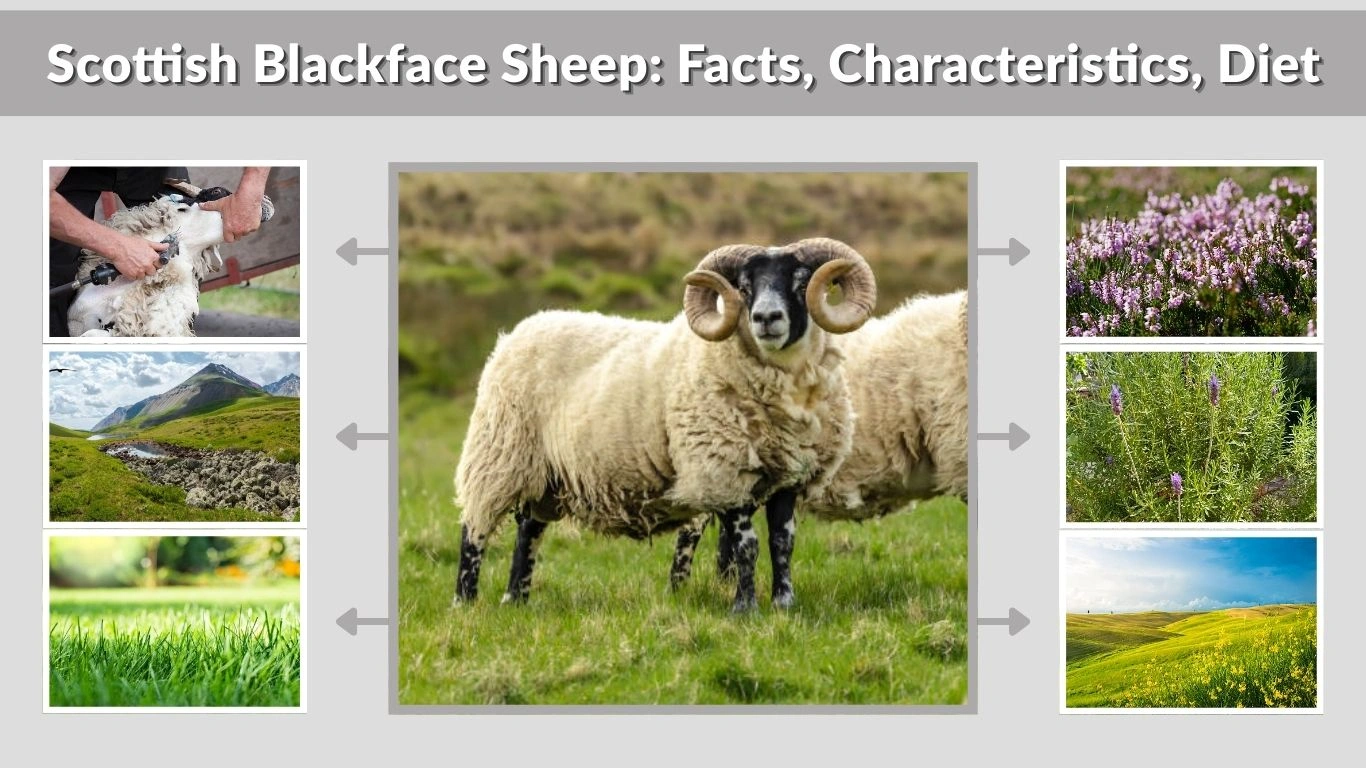
Scottish Blackface sheep are one of the most recognizable and hardy sheep breeds in the United Kingdom. Originating in the rugged hills and mountains of Scotland, these sheep are well known for their black faces, strong bodies, and ability to survive in harsh climates. For centuries, they have played an important role in hill farming and rural agriculture. In this guide, we explore Scottish Blackface sheep facts, their characteristics, lifespan, diet, and why they remain a popular breed among farmers.
What Are Scottish Blackface Sheep?
Scottish Blackface sheep are a traditional hill sheep breed that developed in the upland regions of Scotland. They are specially adapted to grazing in rough, mountainous terrain where weather conditions can be challenging.
Unlike some modern sheep breeds that are raised primarily in lowland farms, Scottish Blackface sheep thrive in rugged environments with limited grazing resources. Their strong survival instincts and ability to forage efficiently make them one of the most reliable breeds for hill farming.
Origin and History of Scottish Blackface Sheep
The Scottish Blackface breed has a long history that dates back several centuries. These sheep are believed to have developed in the Scottish Highlands, where farmers needed livestock that could survive cold temperatures, strong winds, and rough terrain.
By the 18th and 19th centuries, Scottish Blackface sheep had become widely used in upland farming throughout Scotland and northern England. Over time, the breed spread to other parts of the world, including Ireland and North America.
Because of their resilience and adaptability, Scottish Blackface sheep remain one of the most common hill sheep breeds in the United Kingdom.
Importance in Scottish Agriculture
Scottish Blackface sheep have played an important role in Scotland’s agricultural traditions. They are particularly valuable for hill and mountain farming, where other livestock may struggle to survive.
Farmers raise these sheep mainly for:
- Meat production
- Wool production
- Grazing management in upland areas
Their ability to graze on rough vegetation such as heather and hill grasses makes them ideal for maintaining natural landscapes.
Scottish Blackface Sheep Characteristics

Scottish Blackface sheep have several physical and behavioral traits that allow them to thrive in challenging environments.
Physical Characteristics
The breed is easily recognizable because of its distinctive appearance.
Common physical traits include:
- Black face and legs
- Thick white wool coat
- Curved horns in both rams and many ewes
- Strong and muscular body
Their thick fleece protects them from harsh weather conditions, while their strong legs allow them to move easily across steep hills and rocky terrain.
Coat and Wool Characteristics
Scottish Blackface sheep produce coarse wool, which is stronger and more durable than the fine wool produced by some other breeds.
The fleece is typically long and dense, providing protection against wind and rain in mountainous environments.
Although the wool is not as soft as Merino wool, it is valued for its durability and is commonly used in products such as:
- Carpets
- Rugs
- Industrial textiles
This type of wool is particularly useful in products that require strong fibers.
Temperament and Behavior
Scottish Blackface sheep are known for their active and resilient nature. They are well adapted to living in large grazing areas and often travel long distances while searching for food.
These sheep have strong survival instincts and are capable of finding vegetation even in difficult terrain.
Because they spend much of their time grazing in open landscapes, Scottish Blackface sheep are generally independent animals. However, with proper management they can be handled effectively by farmers.
Scottish Blackface Sheep Lifespan
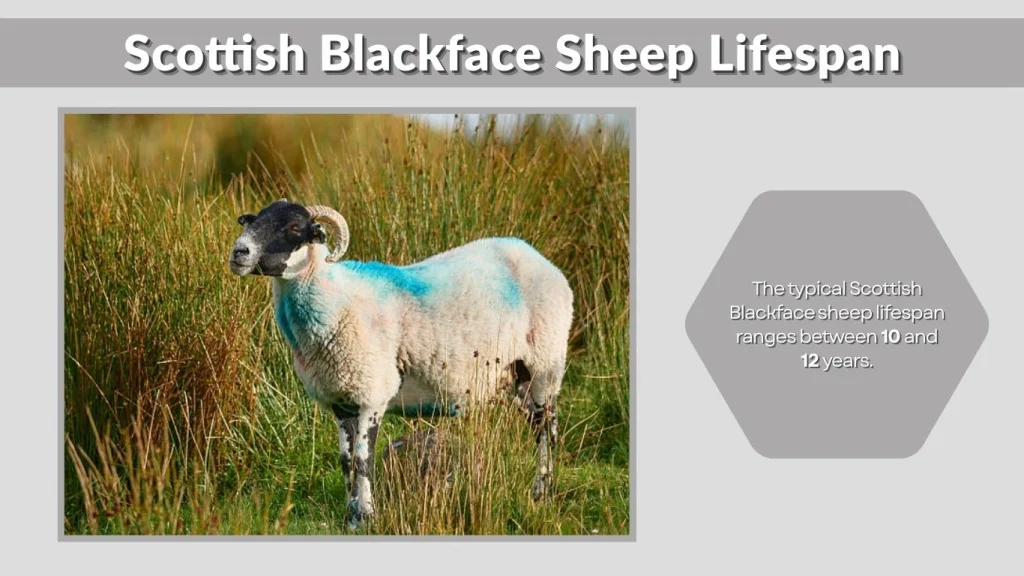
The typical Scottish Blackface sheep lifespan ranges between 10 and 12 years, although some animals may live longer under good farming conditions.
Several factors influence how long these sheep live, including nutrition, environmental conditions, and overall flock management.
Factors Affecting Lifespan
Healthy Scottish Blackface sheep usually live longer when they receive proper care and nutrition.
Important factors that affect lifespan include:
- Access to nutritious grazing
- Clean drinking water
- Protection from predators
- Regular health checks
Because they evolved in tough mountain environments, Scottish Blackface sheep are naturally hardy and disease-resistant. This resilience helps them maintain good health even in harsh conditions.
What Do Scottish Blackface Sheep Eat?
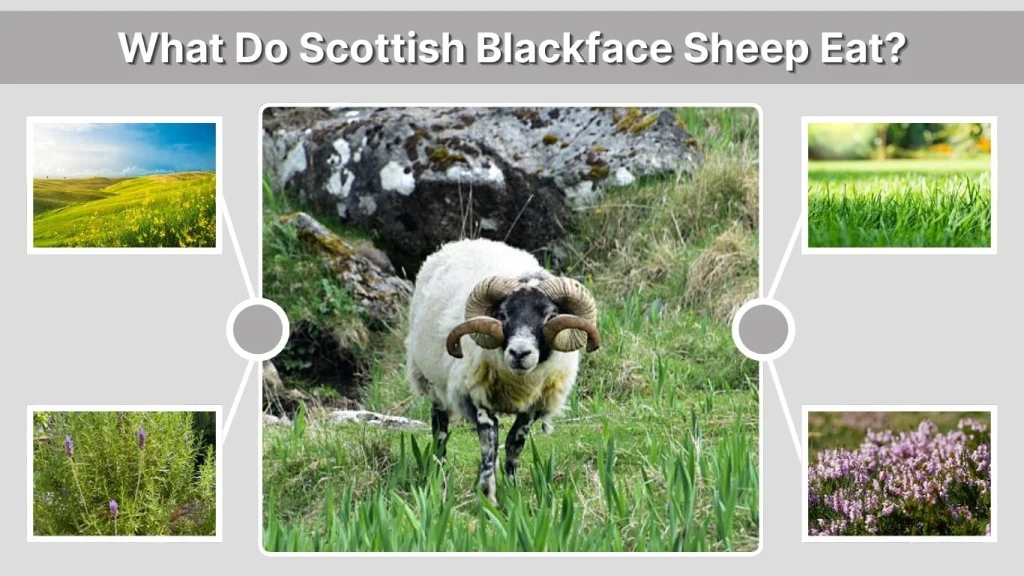
Scottish Blackface sheep are well known for their ability to survive on rough grazing land. Because they evolved in the rugged hills and mountains of Scotland, they are excellent foragers and can thrive on vegetation that many other livestock animals would struggle to utilize.
Natural Grazing Diet
In upland environments, Scottish Blackface sheep commonly feed on a variety of natural plants, including:
- Grass
- Heather
- Hill vegetation
- Herbs and weeds
- Moss and shrubs
Their ability to digest tough plants allows them to survive in areas where pasture quality is often limited. This makes them especially useful for hill farming and conservation grazing.
Seasonal Feeding Patterns
The diet of Scottish Blackface sheep changes depending on the season.
Summer Grazing
During spring and summer, sheep usually graze freely on hillsides and upland pastures. Fresh grass and plants provide most of the nutrients they need during this time.
Winter Feeding
During winter, when natural grazing becomes scarce, farmers often provide supplementary feed such as:
- Hay
- Silage
- Mineral supplements
These additional feeds help ensure the sheep maintain good body condition during colder months.
Nutritional Requirements
Like all sheep breeds, Scottish Blackface sheep need a balanced diet to maintain health and productivity. Important nutritional needs include:
- Clean drinking water
- Minerals and salt supplements
- Adequate grazing areas
Providing these resources helps ensure healthy wool growth, reproduction, and overall well-being.
Scottish Blackface Sheep Wool
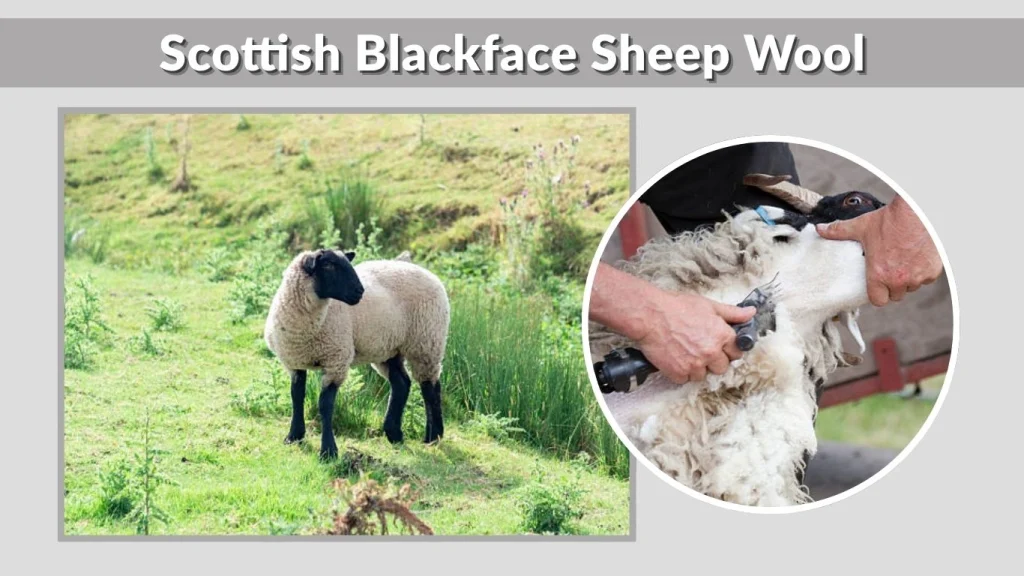
Scottish Blackface sheep produce coarse and durable wool, which is well suited for strong textile products.
Characteristics of Scottish Blackface Wool
The fleece of Scottish Blackface sheep is typically:
- Long and coarse
- Dense and protective
- Strong and durable
This type of wool helps protect the sheep from harsh weather conditions in mountainous environments.
Uses of the Wool
Because the wool fibers are strong rather than soft, Scottish Blackface wool is commonly used for products that require durability.
Common uses include:
- Carpets
- Rugs
- Insulation materials
- Industrial textiles
Although it is not usually used for fine clothing, the wool is valued for its strength and resilience.
Wool Production Levels
Scottish Blackface sheep typically produce moderate amounts of fleece each year. The exact amount can vary depending on the sheep’s age, diet, and health.
Regular shearing helps maintain the animal’s comfort and keeps the fleece in good condition.
Scottish Blackface Sheep Size and Weight
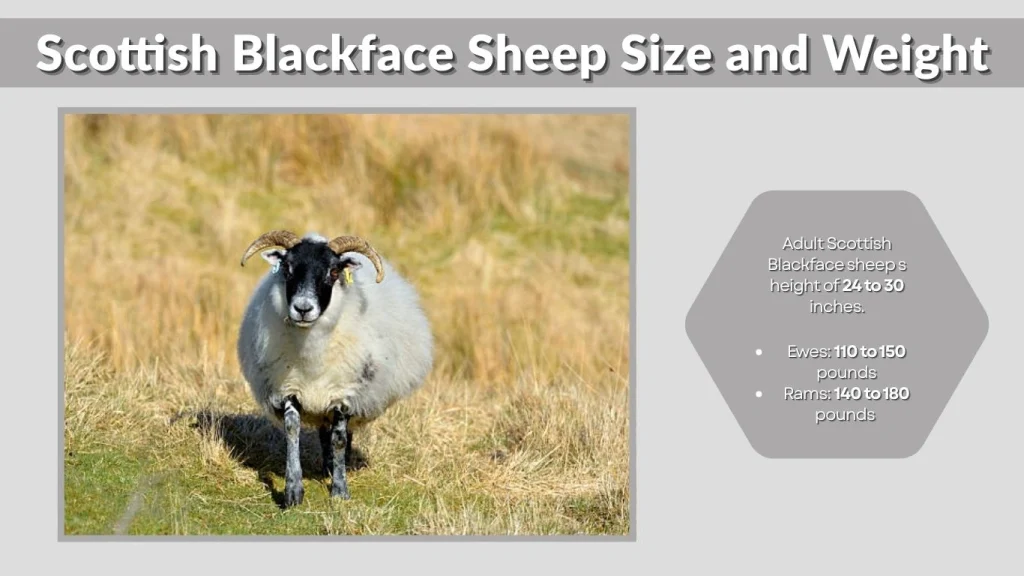
Scottish Blackface sheep are considered a medium-sized sheep breed, with strong bodies that are well suited to life in rugged landscapes.
Average Height of Scottish Blackface Sheep
Adult Scottish Blackface sheep usually have a shoulder height of about 24 to 30 inches (60–75 cm).
Their sturdy build allows them to travel long distances while grazing on hills and mountain slopes.
Weight of Rams and Ewes
The weight of Scottish Blackface sheep varies depending on sex and age.
Typical weights include:
- Ewes: 110 to 150 pounds (50–68 kg)
- Rams: 140 to 180 pounds (64–82 kg)
These strong animals are capable of maintaining good condition even when grazing in rough terrain.
Growth and Development
Lambs grow steadily when they have access to good grazing and proper care. Farmers often manage breeding programs carefully to maintain strong and healthy flocks.
Scottish Blackface Sheep Farming
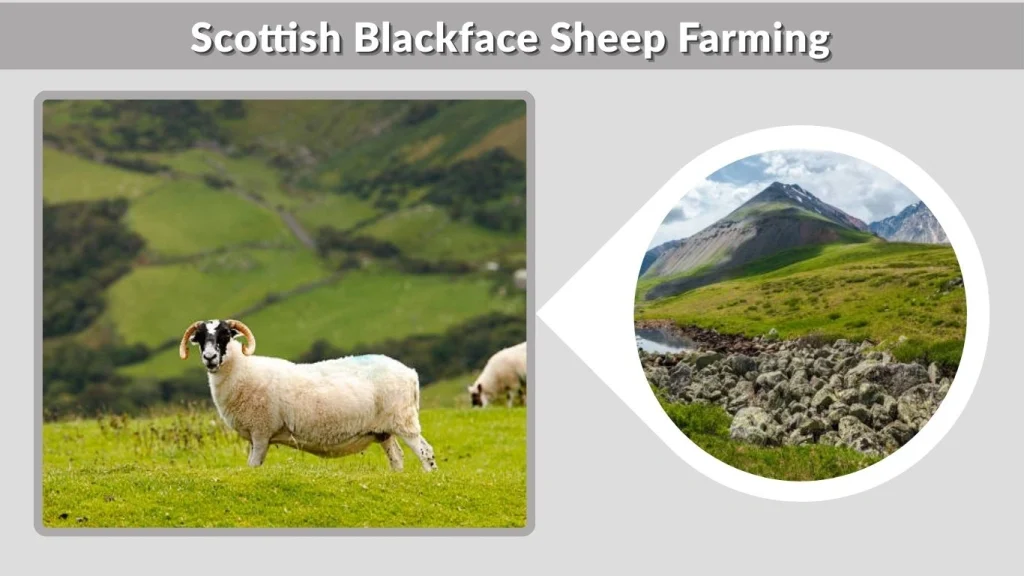
Scottish Blackface sheep are widely used in hill and upland farming systems. Their resilience and grazing ability make them ideal for farms located in mountainous or rough terrain.
Role in Hill and Mountain Farming
In upland areas where crops cannot easily be grown, sheep farming is often the most practical agricultural activity. Scottish Blackface sheep can graze on natural vegetation found in hills and moorlands.
This grazing helps maintain natural ecosystems while providing farmers with meat and wool.
Why Farmers Raise Scottish Blackface Sheep
Farmers value Scottish Blackface sheep for several reasons:
- Exceptional hardiness
- Strong grazing ability
- Good meat production
- Ability to thrive in harsh climates
These qualities make them one of the most reliable breeds for hill farming.
Basic Care and Management
Although Scottish Blackface sheep are hardy animals, proper management is still important. Farmers typically provide:
- Adequate grazing land
- Access to clean water
- Protection from predators
- Regular health checks
Good flock management ensures that sheep remain healthy and productive.
Advantages of Raising Scottish Blackface Sheep
There are several benefits to raising this traditional sheep breed.
Excellent for Harsh Climates
Scottish Blackface sheep are extremely well adapted to cold, windy environments. Their thick wool and strong bodies help them survive harsh weather conditions.
Strong and Hardy Breed
Their natural resilience allows them to remain healthy even in challenging farming environments.
Efficient Grazers
Scottish Blackface sheep can feed on rough vegetation such as heather and hill grasses, making them ideal for upland pastures.
Suitable for Large Grazing Areas
These sheep are particularly well suited to farms with large grazing areas where they can roam freely.
Scottish Blackface Sheep Facts
Scottish Blackface sheep have several unique qualities that distinguish them from other sheep breeds.
Quick Facts About Scottish Blackface Sheep
Here are some key facts about the breed:
- Origin: Scotland
- Breed type: Hill sheep breed
- Primary use: Meat and wool
- Color: White fleece with black face and legs
- Climate adaptability: Extremely hardy
These traits make Scottish Blackface sheep well suited to cold, windy, and mountainous environments.
Interesting Facts About the Breed
One of the most distinctive features of Scottish Blackface sheep is their dark-colored face and legs, which contrast with their thick white fleece.
Another interesting fact is that both rams and ewes often have horns. The horns are typically curved and can vary in size depending on the animal’s age and genetics.
Scottish Blackface sheep are also known for their excellent grazing ability. They can survive on vegetation that many other sheep breeds would find difficult to digest.
Because of this ability, they are often used to graze rough land and maintain natural landscapes in upland areas.
FAQs
What are Scottish Blackface sheep used for?
Scottish Blackface sheep are mainly raised for meat and wool production, as well as for grazing management in upland farming systems.
How long do Scottish Blackface sheep live?
Most Scottish Blackface sheep live between 10 and 12 years, although some may live longer with proper care.
Are Scottish Blackface sheep good for wool?
Yes, their wool is strong and durable. It is commonly used for products such as carpets and rugs.
What do Scottish Blackface sheep eat?
Scottish Blackface sheep mainly eat grass, heather, and rough hill vegetation. During winter, farmers may provide hay and mineral supplements.
Conclusion
Scottish Blackface sheep are one of the most iconic sheep breeds in the United Kingdom. With their distinctive black faces, curved horns, and strong bodies, they are perfectly adapted to life in rugged upland environments. Their ability to graze on rough vegetation and survive harsh weather conditions has made them a valuable breed for hill farming. Today, Scottish Blackface sheep continue to play an important role in agriculture, providing both meat and durable wool while helping maintain natural landscapes.