




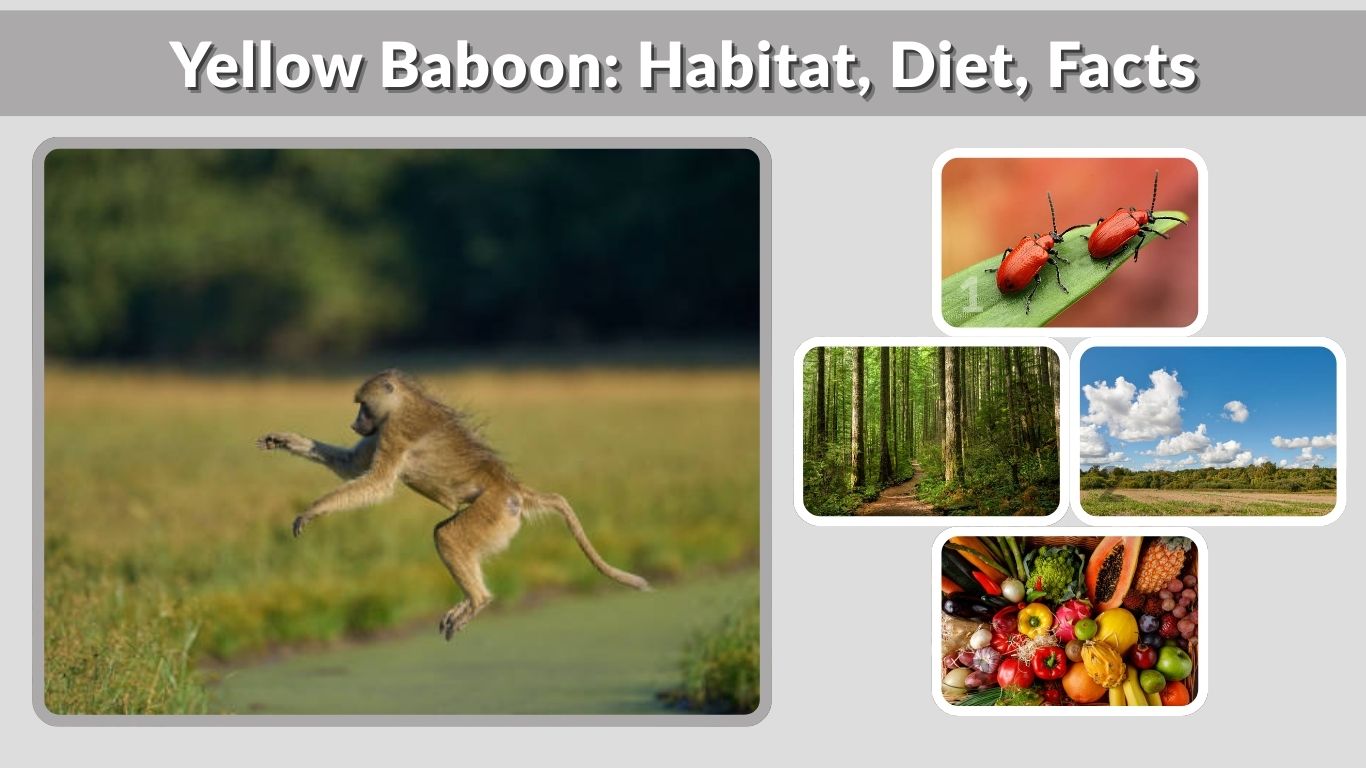
The yellow baboon is one of the most recognizable baboon species in Africa. Known for its yellowish-brown fur, long dog-like muzzle, and highly social behavior, this primate thrives in a variety of environments. Yellow baboons are intelligent and adaptable animals that live in large social groups called troops. They are commonly found in savannas and open woodlands across East Africa. In this article, we explore yellow baboon identification, habitat, diet, baby development, and interesting facts about this fascinating primate.
What Is a Yellow Baboon?
The yellow baboon is a species of Old World monkey belonging to the genus Papio. Its scientific name is Papio cynocephalus. It is one of the five recognized baboon species found across Africa.
Scientific Classification
- Scientific name: Papio cynocephalus
- Family: Cercopithecidae
- Order: Primates
- Genus: Papio
Yellow baboons are part of the Old World monkey family, which includes many primates found in Africa and Asia.
Overview of the Species
Yellow baboons are native to East Africa, where they are widely distributed across several countries. These monkeys are known for their ability to adapt to different environments, which helps them survive in a variety of habitats.
They live in social groups called troops, which may include dozens of individuals. A troop usually consists of adult males, females, juveniles, and infants. Living in groups helps them find food, care for young members, and protect themselves from predators.
Yellow baboons are also famous for their complex social interactions and strong bonds within the troop.
Yellow Baboon Identification
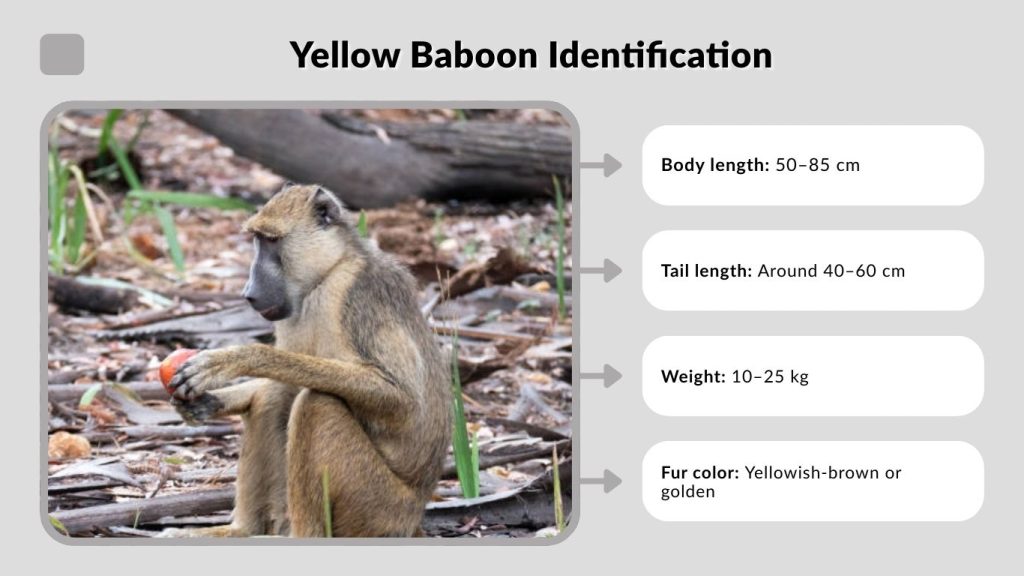
Yellow baboons have several physical features that make them easy to recognize.
Physical Characteristics
These baboons have slender but muscular bodies and distinctive facial features.
Typical characteristics include:
- Body length: 50–85 cm
- Tail length: Around 40–60 cm
- Weight: 10–25 kg depending on gender
- Fur color: Yellowish-brown or golden
- Face: Long dog-like muzzle with dark skin
Their yellow or golden fur gives them their common name.
Size and Weight
Male yellow baboons are larger and stronger than females.
Typical measurements include:
- Male weight: 20–25 kg
- Female weight: 10–15 kg
Adult males also have larger canine teeth, which they use in dominance displays and defense.
Distinctive Features
Several traits distinguish yellow baboons from other primates.
Important features include:
- Long snout or muzzle
- Large canine teeth
- Long tail used for balance
- Muscular body adapted for ground movement
These features help them travel long distances while searching for food.
Yellow Baboon Habitat
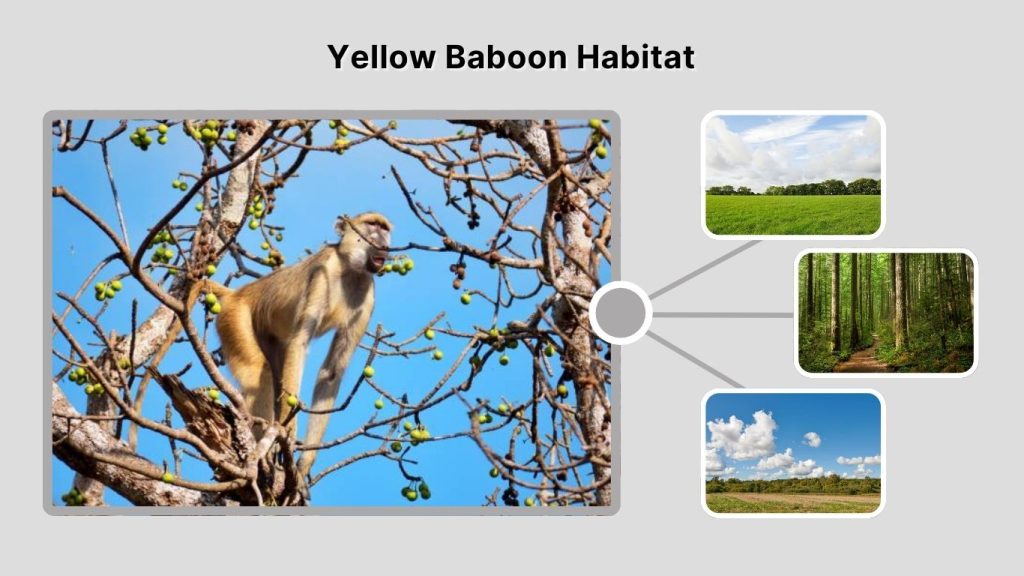
Yellow baboons are highly adaptable animals that live in many different habitats.
Where Do Yellow Baboons Live?
Yellow baboons are mainly found in East Africa, including countries such as:
- Tanzania
- Kenya
- Ethiopia
- Somalia
They are especially common in areas with open landscapes and access to water sources.
Natural Habitat Types
Yellow baboons inhabit several types of natural environments, including:
- Savannas
- Woodland areas
- Open forests
- Grasslands
These habitats provide trees for resting and sleeping as well as open areas for foraging.
Adaptation to Human Environments
Yellow baboons can also live near human settlements.
They are often seen in:
- Farmlands
- Villages
- Wildlife reserves and national parks
While their adaptability helps them survive, it can sometimes lead to conflicts with farmers, especially when baboons raid crops.
Yellow Baboon Diet
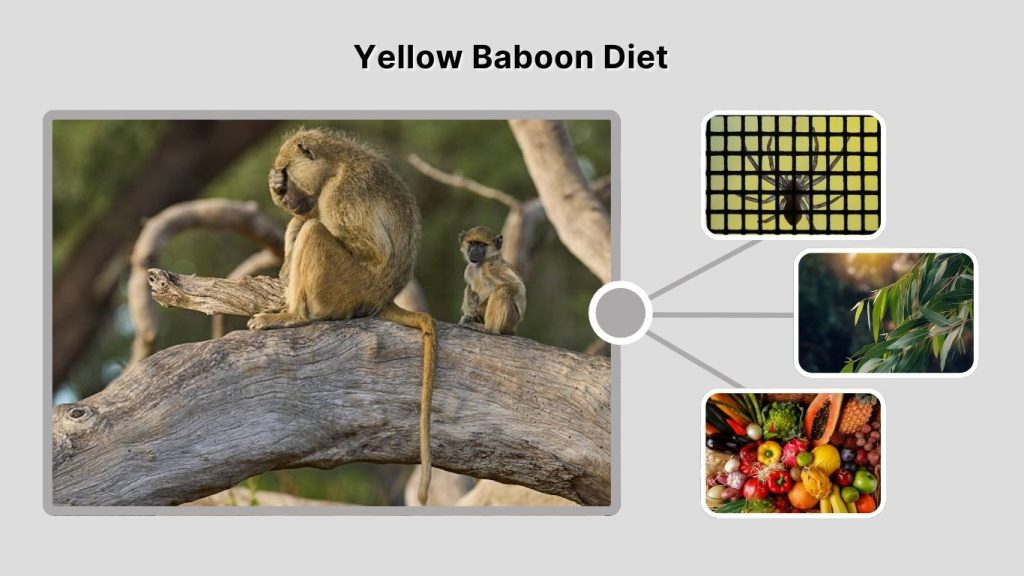
Yellow baboons are omnivores, meaning they eat both plant and animal foods. Their flexible diet helps them survive in different environments.
What Do Yellow Baboons Eat?
In the wild, yellow baboons eat a wide variety of foods, including:
- Fruits
- Seeds
- Leaves
- Roots
- Insects
These foods provide important nutrients needed for survival.
Omnivorous Feeding Behavior
Yellow baboons are opportunistic feeders, meaning they will eat whatever food sources are available.
They may also consume:
- Small animals
- Birds
- Eggs
- Rodents
This flexibility makes them highly adaptable to changing environments.
Foraging Behavior
Yellow baboons spend much of their day searching for food on the ground.
Common feeding behaviors include:
- Digging for roots and insects
- Collecting fallen fruits
- Using their hands to pick up and hold food
Young baboons learn these feeding habits by watching older members of the troop.
Yellow Baboon Baby
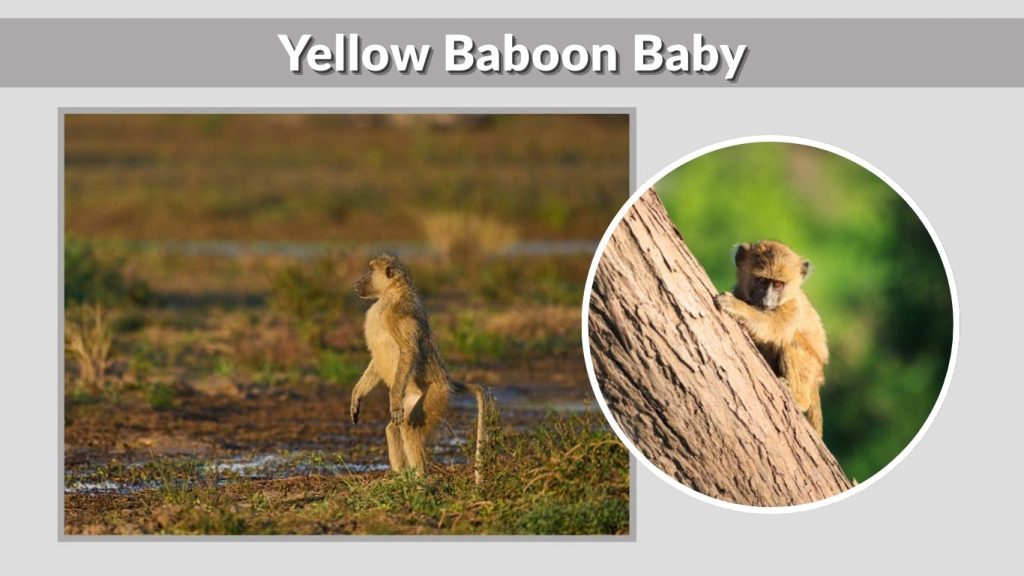
Baby yellow baboons are called infants and depend heavily on their mothers during the early stages of life.
Birth and Infant Development
Female yellow baboons usually give birth to one baby at a time after a gestation period of about 180 days.
After birth:
- Infants cling closely to their mothers
- Mothers provide milk and protection
- Other troop members may show interest in the baby
The bond between mother and infant is very strong during the first months of life.
Appearance of Baby Yellow Baboons
Baby yellow baboons often look slightly different from adults.
Typical features include:
- Darker fur at birth
- Pink or dark face
- Small and delicate body
As they grow older, their fur gradually becomes the yellowish-brown color typical of adult baboons.
Yellow Baboon Life Cycle
The life cycle of a yellow baboon includes several stages of development from infancy to adulthood. Each stage plays an important role in learning survival skills and social behavior within the troop.
Life Stages
Yellow baboons usually pass through four main life stages:
1. Infant Stage (0–1 year)
During this stage, the baby baboon depends completely on its mother for food and protection. Infants cling to their mothers and begin learning basic movements and social interactions.
2. Juvenile Stage (1–4 years)
Young baboons become more independent and spend much of their time playing with other juveniles. Play helps them develop coordination, climbing ability, and social skills.
3. Adult Stage (4–8 years)
At this stage, baboons reach maturity. Females may begin reproducing, while males grow stronger and compete for higher positions within the troop hierarchy.
4. Mature Adult Stage
Older baboons play an important role in maintaining group stability and guiding younger members of the troop.
Social Learning
Young yellow baboons learn many behaviors by observing older members of their troop. These behaviors include:
- Finding and gathering food
- Recognizing predators
- Communicating with other baboons
- Understanding the social hierarchy
Social interaction, play, and grooming help young baboons develop these essential skills.
Yellow Baboon Lifespan
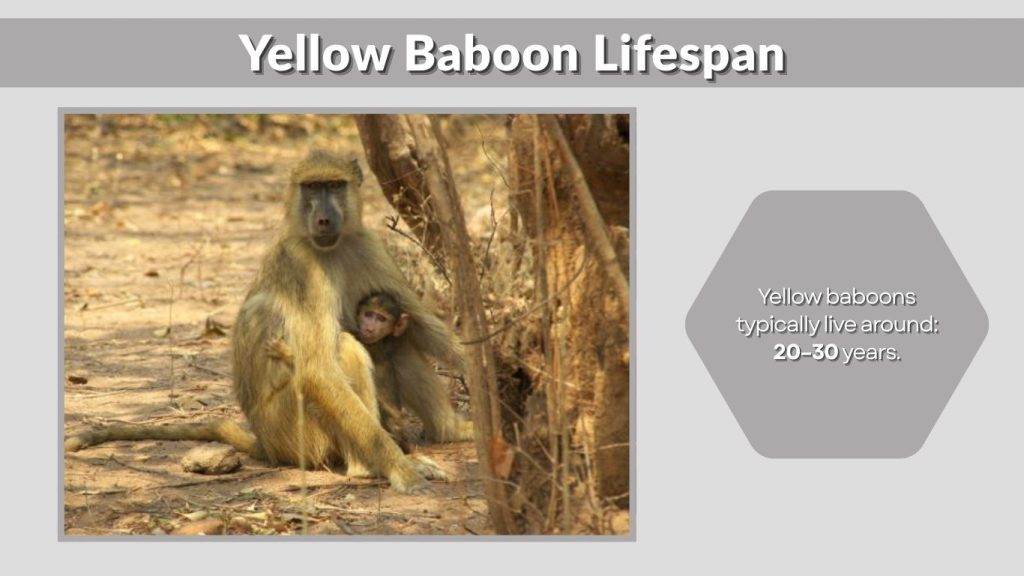
The lifespan of a yellow baboon depends on environmental conditions and access to food and shelter.
Lifespan in the Wild
In natural habitats, yellow baboons typically live around:
20–30 years
However, survival can be affected by predators, disease, and environmental challenges.
Lifespan in Captivity
In zoos and protected wildlife reserves, yellow baboons often live longer due to regular food supplies and medical care.
Their lifespan in captivity may reach:
35–40 years
Factors Affecting Lifespan
Several factors influence how long yellow baboons live, including:
- Habitat quality
- Food availability
- Predators such as lions and leopards
- Human activities such as hunting and habitat destruction
Healthy ecosystems generally support longer lifespans.
Yellow Baboon Social Structure
Yellow baboons are highly social animals that live in organized groups called troops.
Troop Organization
A typical yellow baboon troop may contain 20 to 80 individuals, including:
- Adult males
- Adult females
- Juveniles and infants
Females usually remain in their birth group throughout their lives, while males often leave their troop when they reach maturity.
Dominance Hierarchy
Yellow baboon societies have a clear dominance hierarchy. Higher-ranking individuals usually have better access to food and mating opportunities.
Dominant males compete with each other to maintain their position in the troop.
Communication and Behavior
Yellow baboons communicate through various signals, including:
- Vocal calls
- Facial expressions
- Body posture
- Grooming interactions
These communication methods help maintain order and cooperation within the troop.
Yellow Baboon Facts
Yellow baboons are fascinating primates with several interesting characteristics.
Interesting Facts
Here are some notable facts about yellow baboons:
- They are one of the most studied baboon species in Africa.
- Yellow baboons are highly intelligent and adaptable animals.
- They spend much of their time foraging on the ground.
- Their strong social relationships help them survive in challenging environments.
Behavioral Facts
Their complex social life involves many behaviors such as:
- Grooming to strengthen social bonds
- Cooperative living in troops
- Protective behavior toward young baboons
These behaviors help maintain harmony within the group.
Conservation Status
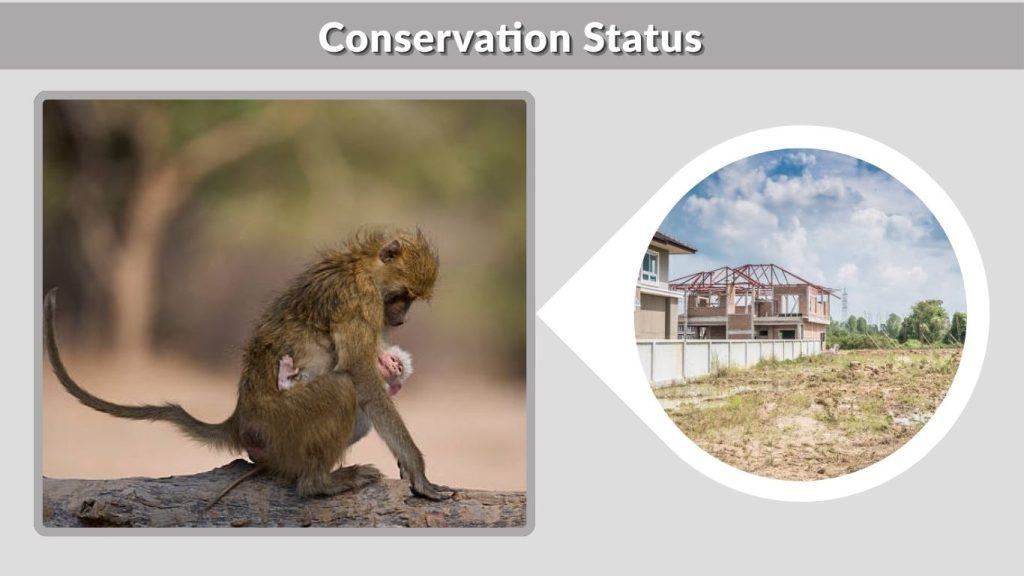
Yellow baboons are widespread and generally not considered endangered.
Population Status
The species is currently classified as Least Concern, meaning its population remains stable in most areas.
Major Threats
However, some local populations face challenges such as:
- Habitat loss due to human development
- Human–wildlife conflict
- Hunting in certain regions
Conservation Efforts
Conservation efforts focus on protecting yellow baboons through:
- National parks and wildlife reserves
- Habitat conservation programs
- Wildlife protection laws
These efforts help maintain stable populations in the wild.
FAQs
Are yellow baboons dangerous?
Yellow baboons can be aggressive if threatened. Because they are strong animals with sharp teeth, it is important to keep a safe distance in the wild.
Where do yellow baboons live?
Yellow baboons are mainly found in East Africa, including Tanzania, Kenya, Ethiopia, and Somalia.
What do yellow baboons eat?
Yellow baboons are omnivores and eat a variety of foods such as fruits, leaves, seeds, insects, and small animals.
Conclusion
The yellow baboon is an intelligent and adaptable primate that thrives in many African environments. Known for its yellowish fur, strong social structure, and flexible diet, this baboon species plays an important role in its ecosystem. Living in large troops, yellow baboons rely on cooperation and communication to survive in the wild. Protecting their natural habitats and promoting peaceful coexistence with humans will help ensure the long-term survival of these remarkable animals.