

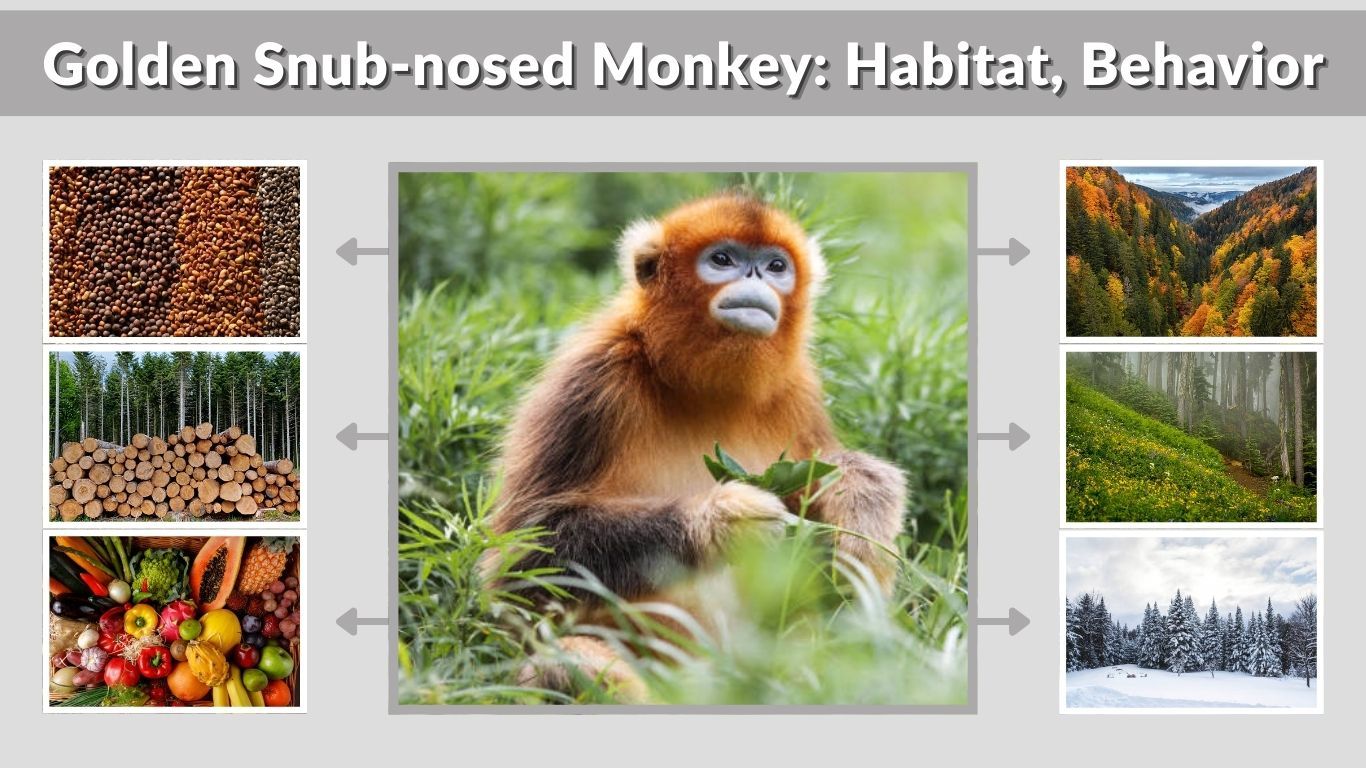
The golden snub-nosed monkey (Rhinopithecus roxellana) is one of the most striking and rare primates in the world. Known for its bright golden fur and distinctive blue face, this monkey lives in the mountainous forests of central China. It is specially adapted to survive in cold climates and high altitudes where many other primates cannot live. Golden snub-nosed monkeys are highly social animals that live in large groups and play an important role in maintaining the health of forest ecosystems.
What Is a Golden Snub-nosed Monkey?
The golden snub-nosed monkey is a species of Old World monkey belonging to the colobine subfamily. These monkeys are famous for their unique facial features, colorful fur, and ability to survive in cold mountain forests.
Scientific Classification
The golden snub-nosed monkey belongs to the following biological classification:
- Kingdom: Animalia
- Phylum: Chordata
- Class: Mammalia
- Order: Primates
- Family: Cercopithecidae
- Genus: Rhinopithecus
- Species: Rhinopithecus roxellana
This species is part of the snub-nosed monkey group, which includes several rare monkeys found mainly in Asia.
Unique Features
Golden snub-nosed monkeys have several characteristics that make them stand out among other primates:
- Bright golden-orange fur covering most of their body
- A distinctive upturned snub nose
- A blue-colored face that contrasts with their golden fur
- Thick fur that helps them survive in cold mountain climates
These unique features help them adapt to the harsh environments of high-altitude forests.
Golden Snub-nosed Monkey Physical Characteristics
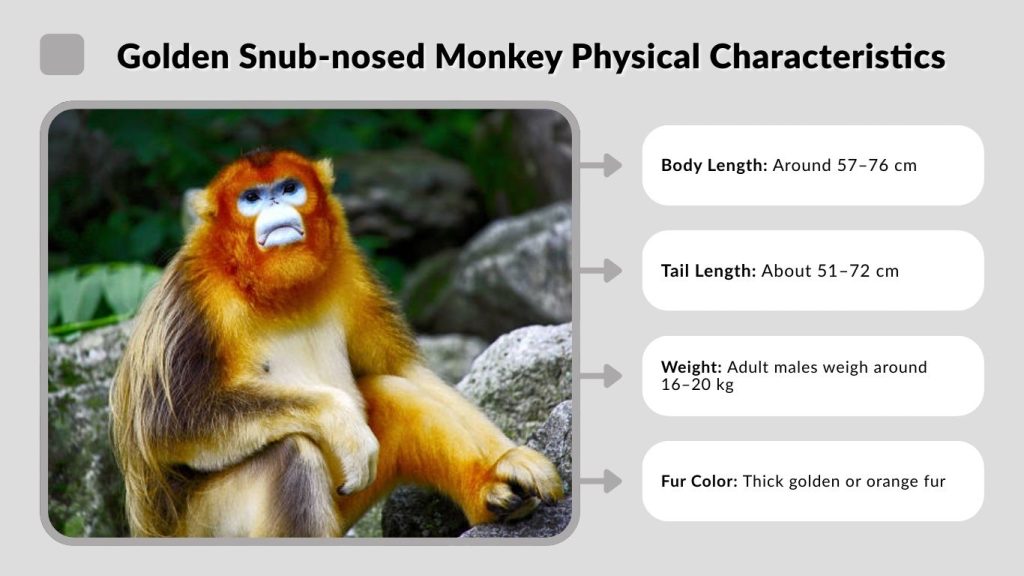
Golden snub-nosed monkeys have a distinctive appearance that makes them easy to recognize. Their thick golden fur and unique facial features help them survive in cold mountainous habitats.
Some of their key physical characteristics include:
- Body Length: Around 57–76 cm (22–30 inches) from head to body.
- Tail Length: About 51–72 cm (20–28 inches), often nearly as long as the body.
- Weight: Adult males weigh around 16–20 kg, while females weigh 8–10 kg.
- Fur Color: Thick golden or orange fur that protects them from cold temperatures.
- Face Color: A distinctive blue face with pale markings around the eyes and mouth.
- Snub Nose: A small, upturned nose that gives the species its name.
- Long Limbs and Tail: Adapted for climbing and moving through forest trees.
Their thick fur and strong bodies allow them to survive in cold mountain environments where winter temperatures can drop well below freezing.
Golden Snub-nosed Monkey Habitat
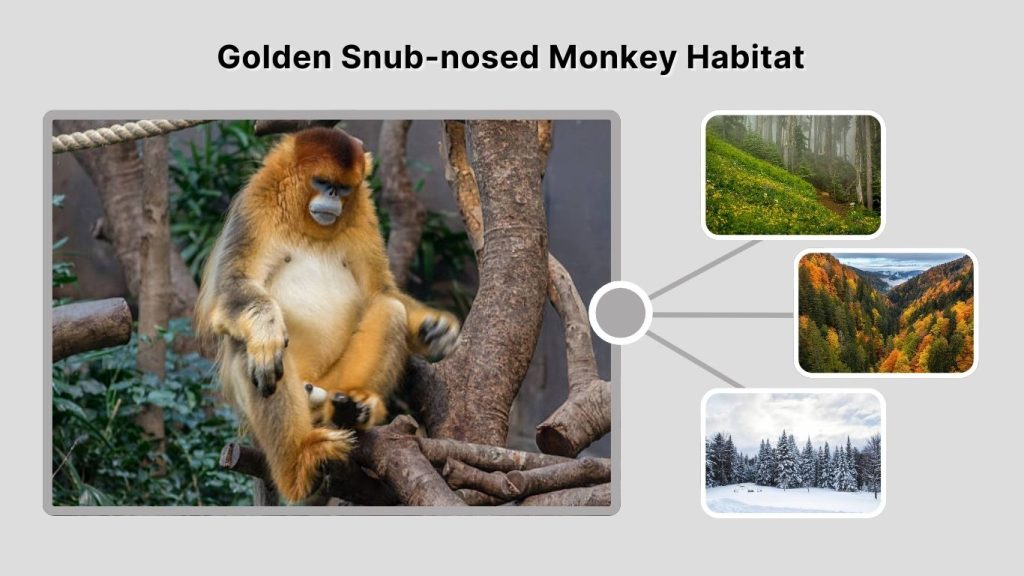
Where Do Golden Snub-nosed Monkeys Live?
Golden snub-nosed monkeys are native to central and southwestern China. They live mainly in mountainous forest regions where temperatures can be very cold during winter.
Their main geographic range includes:
- Sichuan Province
- Shaanxi Province
- Gansu Province
These monkeys typically live at high altitudes ranging from 1,500 to 3,400 meters (4,900–11,000 feet) above sea level.
Preferred Habitat
Golden snub-nosed monkeys prefer temperate mountain forests that contain dense vegetation and tall trees. Their habitats often include:
- Mixed deciduous and conifer forests
- High-altitude mountain forests
- Snow-covered forests during winter
These environments provide food sources such as leaves, fruits, and tree bark, as well as shelter from predators.
Adaptations to Cold Environments
Unlike many other monkeys that live in warm tropical regions, golden snub-nosed monkeys have adapted to extremely cold conditions.
Their adaptations include:
- Thick insulating fur that protects them from freezing temperatures
- Large social groups that help conserve warmth
- Ability to survive in snowy mountain climates
These adaptations make them one of the few primate species capable of living in such cold habitats.
Golden Snub-nosed Monkey Diet
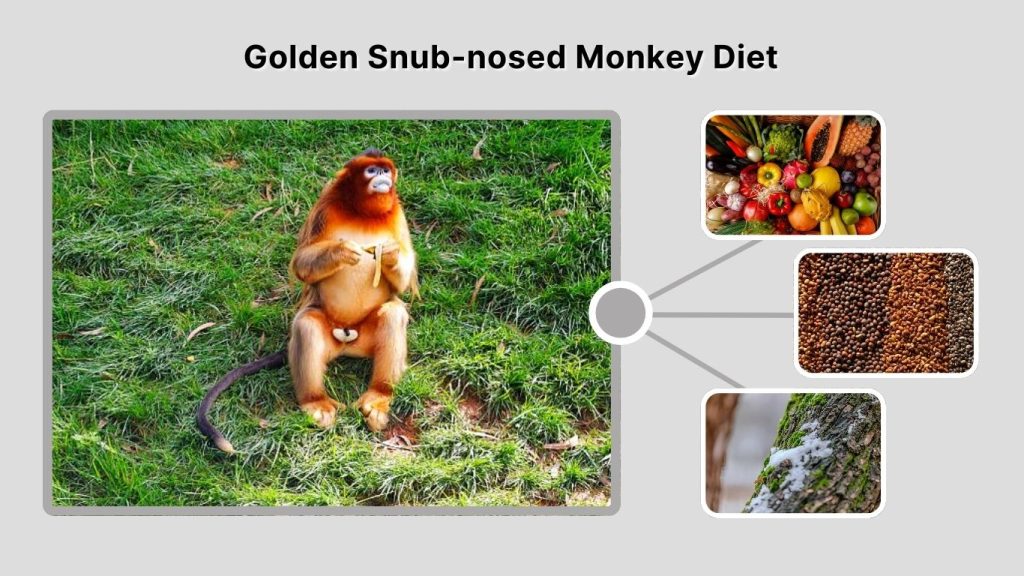
Golden snub-nosed monkeys are primarily herbivores, meaning they mainly eat plant-based foods. Their diet changes depending on the season and availability of food.
Primary Foods
Some of the most common foods eaten by golden snub-nosed monkeys include:
- Leaves
- Fruits
- Seeds
- Bark
- Lichens
Lichens, which grow on tree bark and rocks, are especially important during winter when other food sources are scarce.
Seasonal Diet Changes
Their diet often changes with the seasons. For example:
- Summer: More fruits, leaves, and seeds are available.
- Winter: They rely heavily on tree bark and lichens.
This flexible diet helps them survive in environments where food availability changes throughout the year.
Digestive Adaptations
Like many leaf-eating monkeys, golden snub-nosed monkeys have a specialized digestive system with a multi-chambered stomach.
This system allows them to break down tough plant fibers and absorb nutrients from leaves and other plant materials that many animals cannot digest.
Behavior and Social Structure
Golden snub-nosed monkeys are highly social animals that live in large and complex groups. Their social structure helps them survive in the harsh mountain environments where they live. Living in groups provides protection from predators and helps individuals find food more efficiently.
Social Groups
Golden snub-nosed monkeys often live in large multi-level societies that can contain up to 100 or more individuals. These large communities are usually made up of smaller family units.
A typical group structure includes:
- One dominant male
- Several adult females
- Their young offspring
Multiple family groups may come together to form a much larger troop. These large gatherings help provide safety and improve cooperation when searching for food.
Communication
Communication is very important for maintaining order within the group. Golden snub-nosed monkeys use different methods to communicate with each other, including:
- Vocal calls to warn about danger or maintain contact
- Facial expressions to show emotions or intentions
- Body movements and gestures
These signals help maintain strong social bonds between group members.
Daily Activities
Golden snub-nosed monkeys follow a daily routine that usually includes:
- Searching for food
- Eating leaves, fruits, and bark
- Grooming other members of the group
- Resting in trees
Grooming is an important activity because it strengthens social relationships and helps maintain group harmony.
Reproduction and Life Cycle
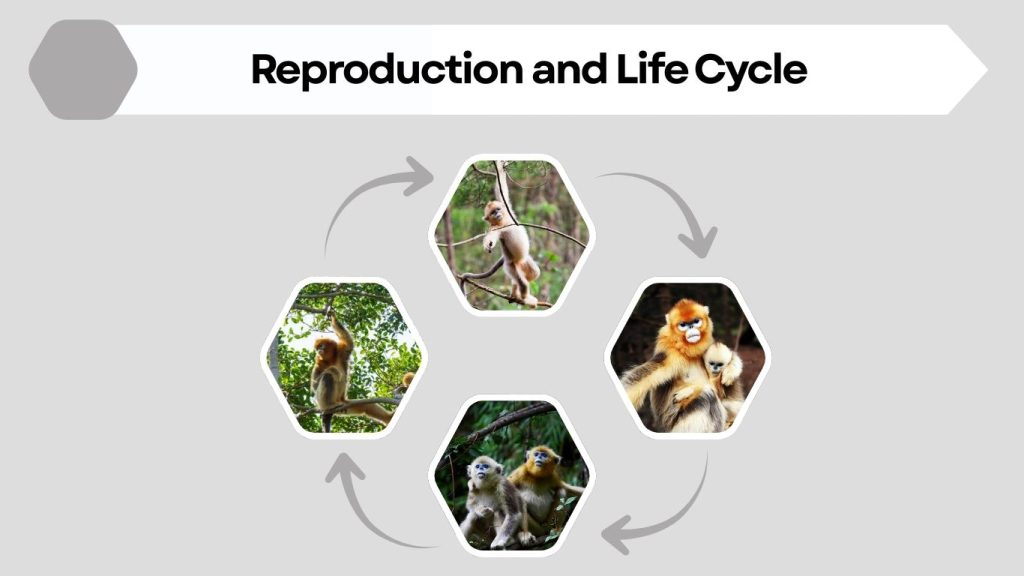
The life cycle of golden snub-nosed monkeys includes several stages from infancy to adulthood. Their reproductive behavior helps maintain stable populations within their forest habitats.
Mating Behavior
Golden snub-nosed monkeys typically breed once a year. The dominant male in a family group usually mates with the females within that group.
During the breeding season, males may compete for dominance and access to females.
Birth and Infant Care
After a gestation period of about 6 to 7 months, a female usually gives birth to one baby.
Newborn golden snub-nosed monkeys have:
- Light-colored fur
- Small bodies
- A strong attachment to their mothers
The mother carries the infant and protects it during the early months of life. In some cases, other females in the group may also help care for the baby.
Growth Stages
Golden snub-nosed monkeys go through several stages of development:
- Infant stage – completely dependent on the mother
- Juvenile stage – begins learning social behaviors and exploring the environment
- Adult stage – capable of reproduction and leadership roles
Young males often leave their birth group as they grow older and may join bachelor groups.
Lifespan
Golden snub-nosed monkeys can live for many years depending on environmental conditions.
- In the wild: around 20 years
- In captivity: sometimes up to 25 years
Their survival depends largely on habitat protection and the availability of food.
Predators and Threats
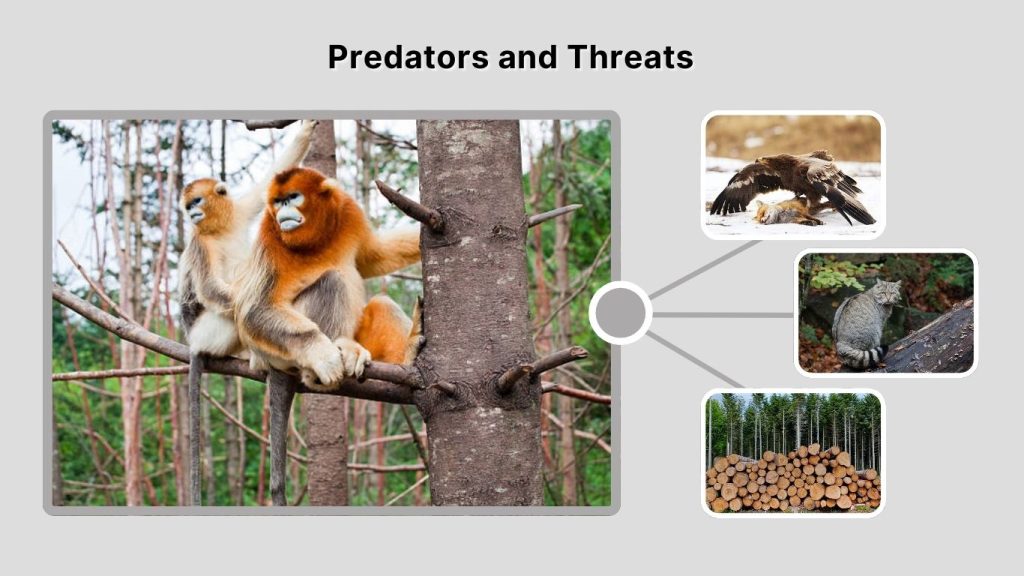
Despite living in mountainous forests, golden snub-nosed monkeys still face several dangers in the wild.
Natural Predators
Some animals that prey on these monkeys include:
- Large birds of prey
- Wild cats
- Other forest predators
Living in large groups helps reduce the risk of predation.
Human Threats
The biggest threats to golden snub-nosed monkeys come from human activities, including:
- Deforestation
- Logging
- Habitat fragmentation
- Human disturbance
When forests are destroyed, these monkeys lose both their homes and food sources.
Conservation Status
Golden snub-nosed monkeys are considered an Endangered species according to the International Union for Conservation of Nature (IUCN).
Conservation Efforts
Several conservation programs have been developed to protect these monkeys and their habitats. These include:
- Establishing protected national parks in China
- Implementing strict wildlife protection laws
- Supporting research and conservation programs
Protected mountain forests are especially important for ensuring the survival of this rare species.
Importance of Conservation
Protecting golden snub-nosed monkeys helps maintain healthy ecosystems. These monkeys contribute to forest health by:
- Spreading plant seeds
- Supporting plant growth
- Maintaining biodiversity
Conserving their habitats also protects many other species that share the same environment.
Interesting Facts About Golden Snub-nosed Monkeys
Here are some fascinating facts about these unique primates:
- They can survive in very cold mountain environments, even in snowy conditions.
- Their bright golden fur helps them stay warm in winter.
- They live in large social groups, sometimes with more than 100 monkeys.
- Their blue faces and snub noses make them easy to recognize.
- They rely on lichens as an important winter food source.
These unusual characteristics make them one of the most remarkable monkeys in the world.
FAQs
Where do golden snub-nosed monkeys live?
Golden snub-nosed monkeys live mainly in mountain forests of central and southwestern China, especially in Sichuan, Shaanxi, and Gansu.
What do golden snub-nosed monkeys eat?
Their diet mainly consists of leaves, fruits, seeds, bark, and lichens.
Are golden snub-nosed monkeys endangered?
Yes, golden snub-nosed monkeys are classified as endangered due to habitat loss and environmental threats.
Conclusion
The golden snub-nosed monkey is one of the most unique primates on Earth, known for its golden fur, blue face, and ability to survive in cold mountain forests. These monkeys play an important role in maintaining forest ecosystems, but they face increasing threats from habitat loss and human activities. Protecting their habitats and supporting conservation programs are essential to ensure that this remarkable species continues to thrive in the wild.