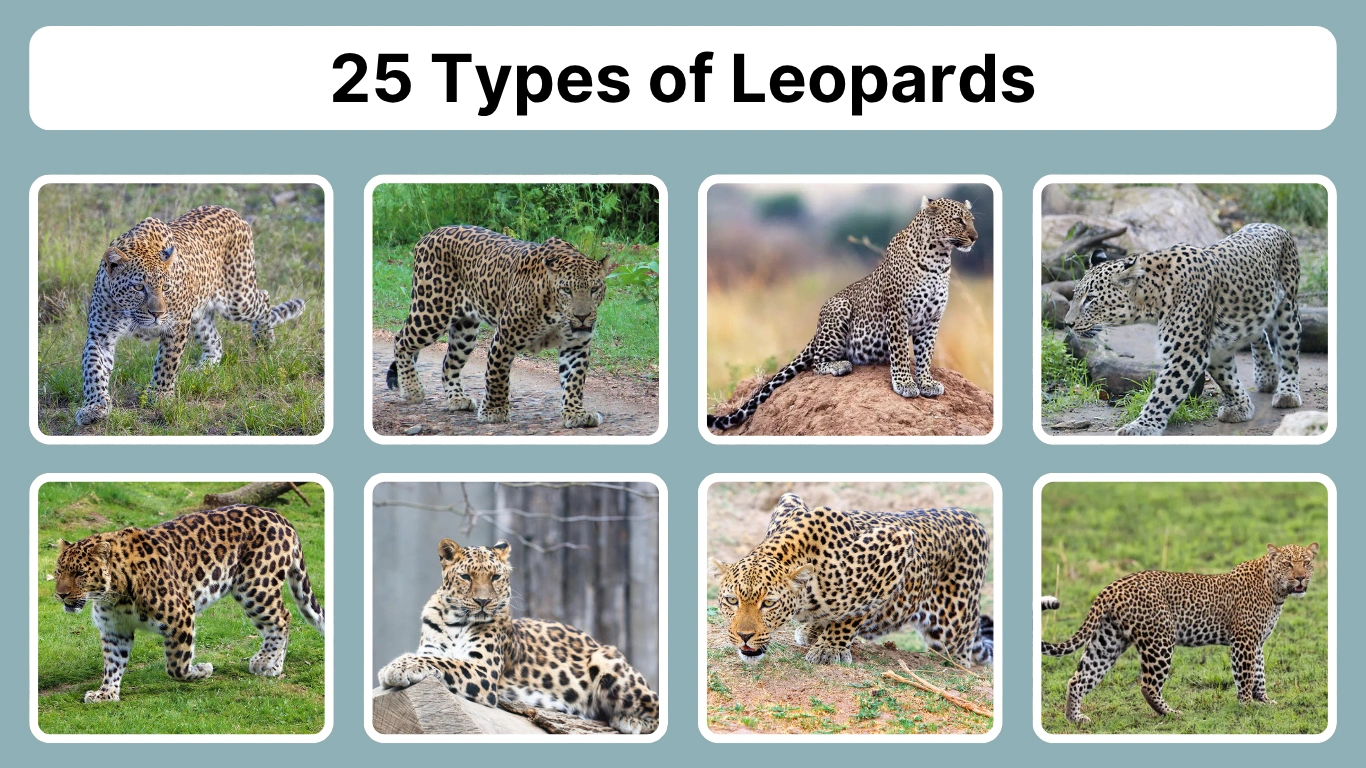






The African leopard (Panthera pardus pardus) is one of the most powerful and adaptable big cats found across Sub-Saharan Africa. Known for its striking golden coat with black rosettes, this solitary predator thrives in a wide range of habitats, from dense forests to open savannas. Leopards are skilled hunters, using stealth and strength to capture prey and often storing it in trees. Despite their wide distribution, African leopards face growing threats from habitat loss, poaching, and human conflict, making conservation efforts increasingly important for their survival.
African Leopard Identification
Physical Appearance
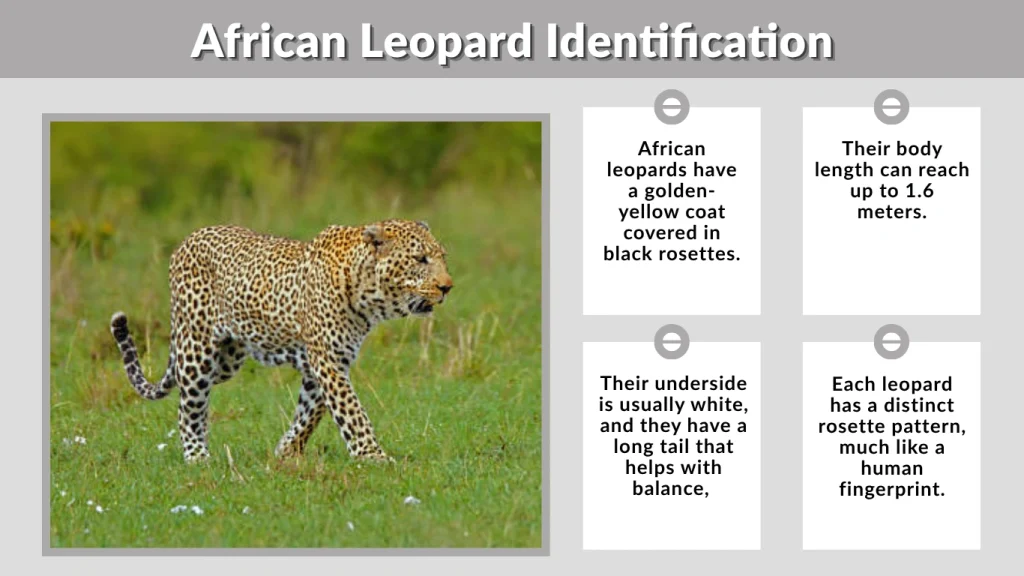
African leopards have a golden-yellow coat covered in black rosettes—clustered spots that form unique patterns across their body. Their underside is usually white, and they have a long tail that helps with balance, especially when climbing trees. Their bodies are muscular yet compact, built for strength and agility.
Size and Weight
Male African leopards are generally larger than females. Males typically weigh between 60–90 kg, while females range from 30–60 kg. Their body length can reach up to 1.6 meters, excluding the tail, which adds another 60–100 cm.
Unique Markings
Each leopard has a distinct rosette pattern, much like a human fingerprint. These markings not only provide camouflage in grassy or wooded environments but also help researchers identify individual animals in the wild.
How to Identify an African Leopard vs Other Big Cats
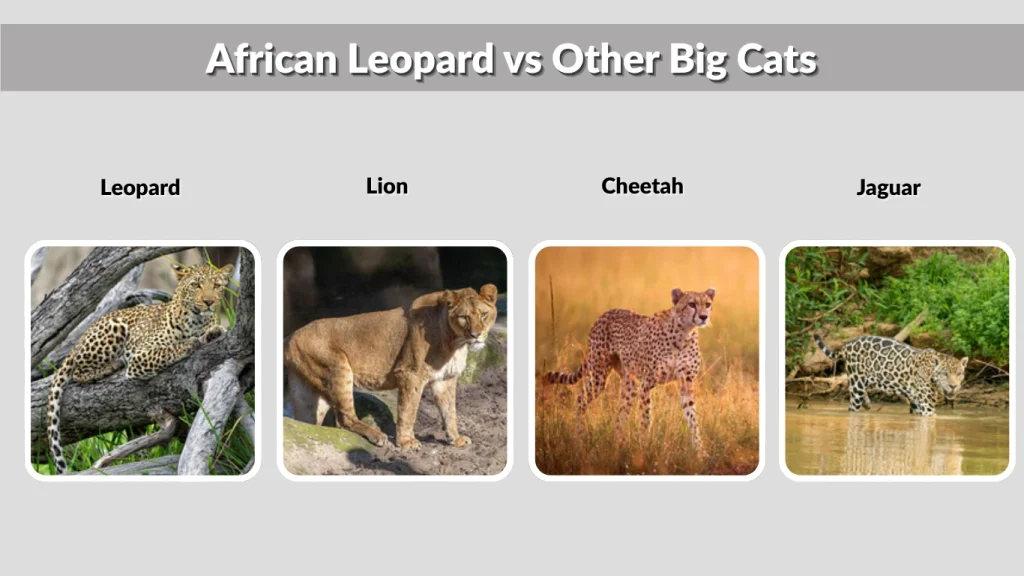
Leopards are often confused with cheetahs and jaguars. Unlike cheetahs, leopards have rosettes instead of solid spots and lack tear lines on their faces. Compared to jaguars, leopards are slimmer and have smaller rosettes without central spots. They are also much smaller than lions and do not have a mane.
African Leopard Facts
Quick Facts
- Scientific name: Panthera pardus pardus
- Average weight: 30–90 kg
- Speed: Up to 58 km/h
- Lifespan: 10–15 years in the wild
- Conservation status: Vulnerable
- Key trait: Exceptional climbing ability
Interesting Facts About African Leopards
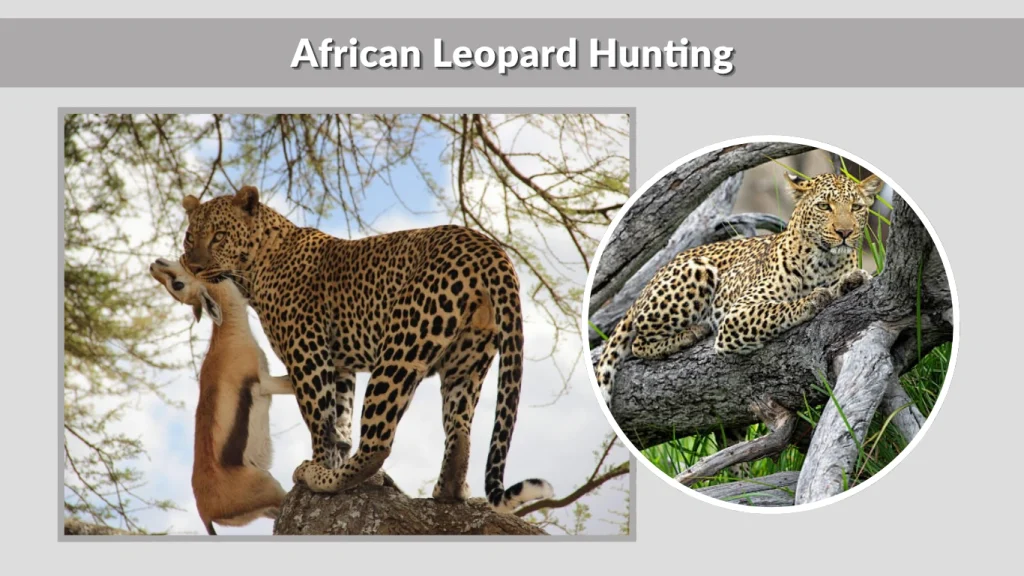
African leopards are incredibly adaptable and can survive in forests, savannas, and even near urban areas. They are solitary animals and mostly active at night. One of their most remarkable behaviors is dragging prey up into trees to protect it from scavengers like hyenas and lions.
African Leopard Habitat
Where Do African Leopards Live?
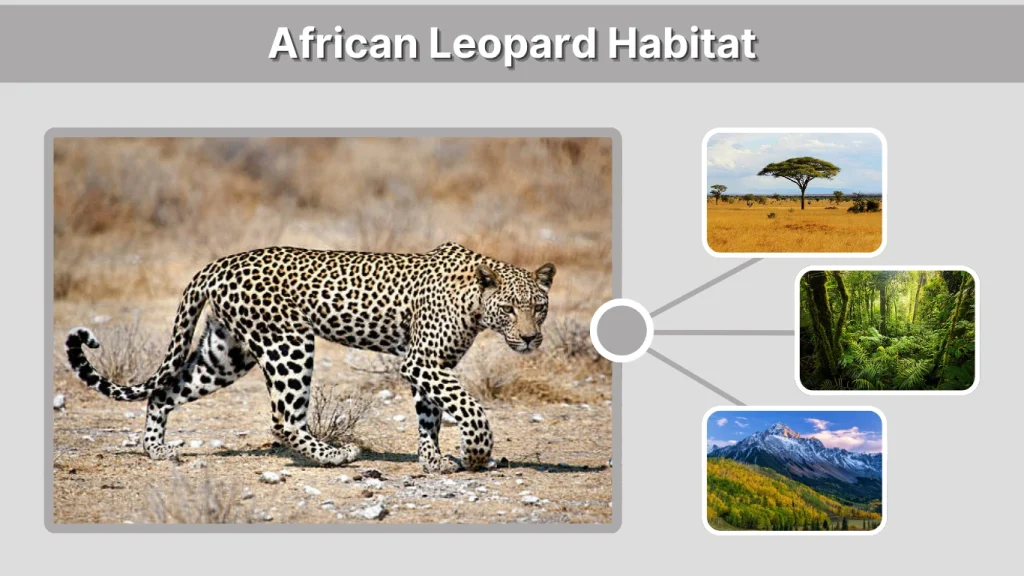
They are found throughout Sub-Saharan Africa, including countries like Kenya, Tanzania, South Africa, Botswana, and Ethiopia. Their wide range is a testament to their adaptability.
Types of Habitats
African leopards live in a variety of habitats, including:
- Savannas
- Rainforests
- Mountains
- Grasslands
- Semi-desert regions
Habitat Adaptability
Unlike many other big cats, leopards can adjust to different environments as long as there is enough cover and prey. Their ability to hide, climb, and hunt efficiently allows them to survive even in areas close to human settlements.
African Leopard Diet
What Do African Leopards Eat?
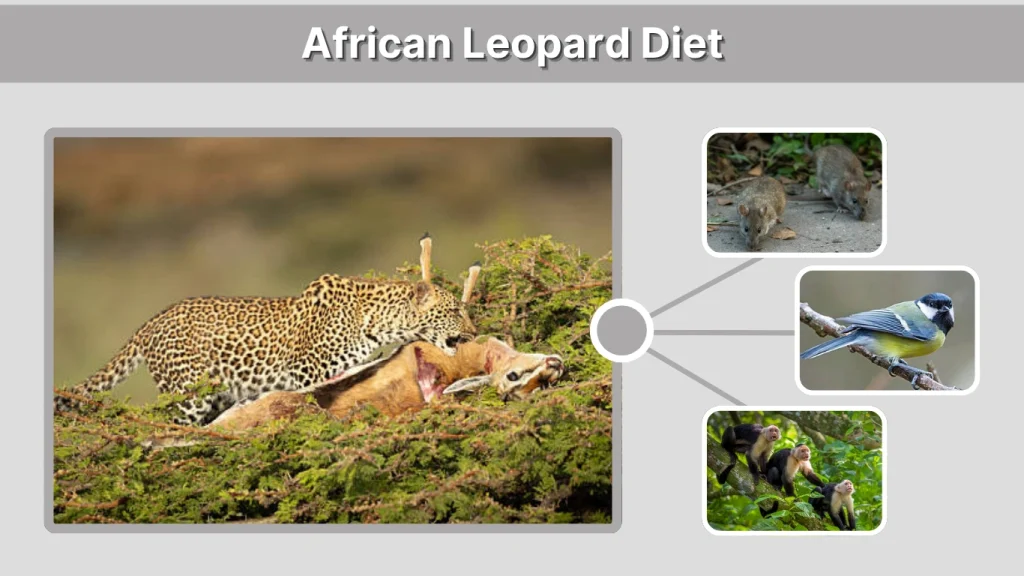
Leopards are opportunistic feeders and eat a wide range of animals, including:
- Antelope (such as impala)
- Rodents
- Birds
- Reptiles
- Monkeys
Hunting Techniques
Leopards rely on stealth and surprise. They silently stalk their prey, getting as close as possible before launching a sudden attack. After a successful kill, they often drag their prey into trees to keep it safe from other predators.
African Leopard Hunting Behavior
Leopards are mostly nocturnal hunters, meaning they hunt at night. They prefer to hunt alone and rely heavily on their camouflage and patience. Their ability to adapt their hunting style based on the environment makes them highly effective predators.
African Leopard Hunting
How Leopards Hunt Their Prey
The hunting process begins with careful stalking. Leopards move quietly through vegetation, staying low and hidden. Once close enough, they sprint toward their prey and deliver a powerful bite to the throat or neck, quickly immobilizing it.
Hunting Success Rate
Leopards have a moderate success rate compared to other big cats. While not as fast as cheetahs, their stealth and strength make them efficient hunters. Their ability to store food in trees increases their chances of feeding successfully over time.
Threats from Human Hunting
Human activities pose serious threats to African leopards. Poaching for their beautiful skins and illegal hunting have significantly reduced their populations in some regions. Trophy hunting, though regulated in some areas, also impacts their numbers.
African Leopard Life Cycle
Reproduction and Mating
African leopards do not have a fixed breeding season and can mate throughout the year. Females signal readiness through scent markings and vocalizations. After mating, the gestation period lasts about 90–105 days. Males do not participate in raising the young.
Birth and Cubs
A female leopard typically gives birth to 2–3 cubs in a सुरक्षित, hidden den such as caves, thick bushes, or rock crevices. Cubs are born blind and completely dependent on their mother. Their eyes usually open after about a week, and they begin to explore their surroundings within a few weeks.
Growth Stages
As cubs grow, they start learning essential survival skills like hunting and climbing. By 3 months, they begin eating meat, and by 12–18 months, they become independent. At this stage, they leave their mother to establish their own territories.
African Leopard Lifespan
Lifespan in the Wild
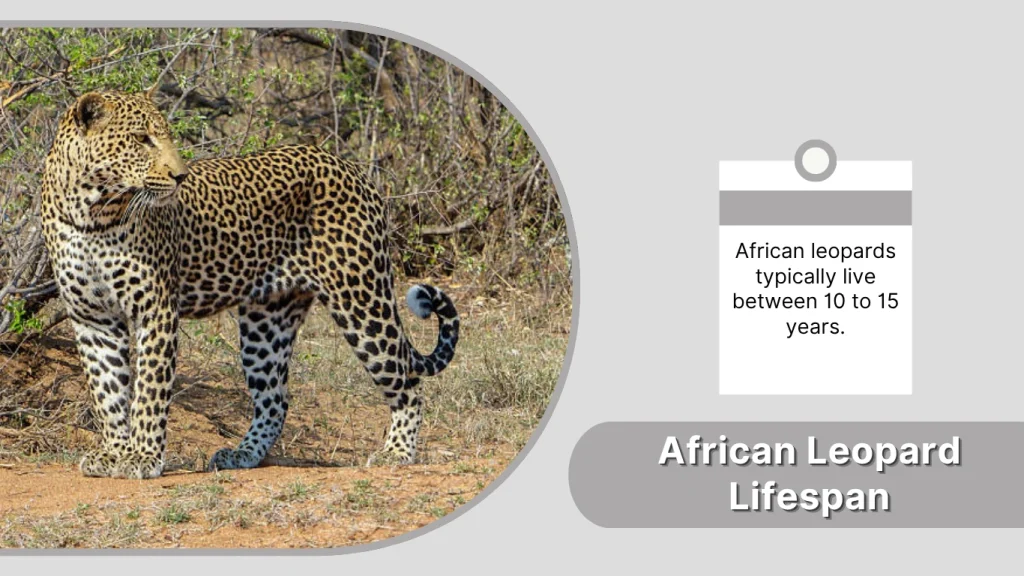
In the wild, African leopards typically live between 10 to 15 years. Their lifespan depends on factors such as food availability, competition with other predators, and threats from humans. Cubs face the highest mortality rates due to predation and environmental challenges.
Lifespan in Captivity
In captivity, African leopards can live up to 20–23 years due to regular feeding, medical care, and protection from predators. However, life in captivity lacks the natural challenges and behaviors found in the wild.
Is the African Leopard Endangered?
Conservation Status
The African leopard is currently classified as “Vulnerable” by the International Union for Conservation of Nature (IUCN). While still widespread, populations are declining in many regions.
Major Threats
The biggest threats to African leopards include habitat loss due to agriculture and urban expansion, poaching for their skins, and conflicts with humans when leopards prey on livestock. These factors have significantly reduced their numbers in some areas.
Conservation Efforts
Efforts to protect African leopards include establishing national parks and wildlife reserves, anti-poaching laws, and community awareness programs. Conservation organizations are also working to reduce human-wildlife conflict through better livestock management and education.
Behavior and Characteristics
Physical Features
African leopards are strong and agile animals with powerful limbs and sharp claws. Their flexible bodies allow them to climb trees effortlessly, often carrying prey heavier than themselves up into branches.
Social Behavior
Leopards are solitary animals and prefer to live and hunt alone. Each leopard maintains a territory, which it marks using scent, scratches, and vocal signals. Males usually have larger territories that may overlap with several females.
Communication Methods
Leopards communicate through vocalizations such as growls, roars, and cough-like calls. They also use scent marking and scratching trees to signal their presence to other leopards.
African Leopard vs Other Big Cats
Leopard vs Lion
Leopards are smaller and more solitary compared to lions, which live in social groups called prides. Leopards rely on stealth, while lions depend more on teamwork and strength.
Leopard vs Cheetah
Cheetahs are faster and built for speed, while leopards are stronger and better climbers. Leopards have rosettes, whereas cheetahs have solid spots and distinctive tear lines on their faces.
Leopard vs Jaguar
Jaguars are bulkier and have stronger jaws compared to leopards. Their rosettes often contain spots inside, unlike the simpler patterns of leopards. Jaguars are mainly found in the Americas, while leopards are native to Africa and parts of Asia.
FAQs
What is the average lifespan of an African leopard?
African leopards typically live 10–15 years in the wild, depending on environmental conditions and threats. In captivity, they can live longer—often up to 20 years or more—due to consistent food supply, medical care, and protection from predators.
What do African leopards eat?
African leopards are carnivores with a varied diet that includes antelope, monkeys, birds, rodents, and reptiles. They are opportunistic hunters and adapt their diet based on available prey in their habitat.
Are African leopards endangered?
African leopards are currently classified as Vulnerable, meaning they are not yet endangered but face a high risk of becoming so. Their population is declining due to habitat loss, poaching, and human-wildlife conflict.
Where do African leopards live?
African leopards are found across Sub-Saharan Africa in diverse habitats such as savannas, forests, mountains, and grasslands. Their adaptability allows them to survive in a wide range of environments.
How can you identify an African leopard?
African leopards can be identified by their golden coat with black rosettes, muscular build, and long tail. Unlike cheetahs, they lack tear marks on the face, and unlike jaguars, their rosettes do not contain central spots.
Conclusion
The African leopard is a remarkable predator known for its strength, adaptability, and stealth. From its unique identification features to its diverse habitat and hunting skills, this big cat plays a vital role in maintaining ecological balance. However, growing threats highlight the importance of conservation efforts to ensure that future generations can continue to witness this incredible animal in the wild.