




Small ocean fish are an essential part of marine ecosystems, supporting the food chain and maintaining ocean balance. Despite their size, they play a huge role in feeding larger marine animals and even humans. From shallow coastal waters to deep seas, these fish are found in a wide variety of habitats. This list highlights 14 different types of small ocean fish, each with unique features, behaviors, and roles in the underwater world.
1. Anchovy

Anchovy is a small, slender ocean fish known for its silvery body and schooling behavior. It is widely distributed across many coastal regions and plays a crucial role in marine ecosystems. Despite its tiny size, it serves as a major food source for larger fish, seabirds, and marine mammals. Anchovies are also important in human diets in many parts of the world, often consumed fresh, dried, or preserved. Their ability to form dense schools helps them survive in open waters where predators are common.
Identification
- Slender and elongated body shape
- Silvery sides with a slightly bluish or greenish back
- Large mouth that extends beyond the eye
- Small, delicate fins and soft scales
- Usually grows between 10–20 cm in length
Habitat
Anchovies are typically found in temperate and subtropical coastal waters around the world. They prefer shallow, nutrient-rich areas such as estuaries and continental shelves where plankton is abundant. These fish often stay near the surface but may move deeper depending on light, temperature, and predator presence. Seasonal migrations are common, as anchovies follow food sources and suitable environmental conditions. Their presence is often linked to upwelling zones, where cold, nutrient-rich water rises and supports large plankton populations.
Behaviors
Anchovies are highly social and are best known for forming large, tightly packed schools. This schooling behavior helps reduce the risk of predation and increases efficiency in finding food. They are fast swimmers and can quickly change direction in response to threats. Anchovies often display daily vertical migration, staying deeper during the day and rising closer to the surface at night. Their coordinated movements create impressive visual patterns in the water, often seen as shimmering waves when light reflects off their bodies.
Diet
Anchovies primarily feed on plankton, including microscopic plants (phytoplankton) and tiny animals (zooplankton). They use specialized gill rakers to filter these organisms from the water as they swim with their mouths open. Feeding usually occurs near the surface where plankton is most concentrated. Their diet can vary slightly depending on location and season, but plankton remains their main source of nutrition. This feeding behavior makes them an essential link between lower and higher levels of the marine food chain.
2. Sardine

Sardine is a small, oily fish commonly found in oceans around the world. It is closely related to herrings and is well known for its importance in both marine ecosystems and human consumption. Sardines are often seen in large schools, moving together in coordinated patterns. They are widely harvested for food and are popular due to their rich nutritional value. These fish play a vital role as a link between plankton and larger predators like tuna, seabirds, and dolphins.
Identification
- Small, streamlined body with a slightly rounded belly
- Silvery scales that easily shed
- Single dorsal fin and forked tail
- Dark spots sometimes visible along the sides
- Typically grows between 15–25 cm in length
Habitat
Sardines are mainly found in temperate and subtropical ocean waters, especially along coastlines. They prefer nutrient-rich regions where plankton is abundant, such as upwelling zones. These fish usually swim in the upper layers of the ocean, staying close to the surface. Sardines often migrate seasonally in large groups, following water temperature changes and food availability. They are commonly found in areas like the Atlantic, Pacific, and Mediterranean regions.
Behaviors
Sardines are highly social fish that form massive schools, sometimes stretching for kilometers. This schooling behavior helps them avoid predators by confusing and overwhelming them. They are active swimmers and can move quickly as a group when threatened. Sardines often show synchronized movements, creating wave-like patterns in the water. Like anchovies, they may also perform daily vertical migrations, moving closer to the surface at night to feed.
Diet
Sardines mainly feed on plankton, including both phytoplankton and zooplankton. They use filter-feeding techniques, taking in water and trapping food particles with their gill rakers. Feeding usually occurs near the surface where food is plentiful. Their diet may slightly vary depending on location and season, but plankton remains their primary food source. This simple diet allows them to support many larger marine animals in the food chain.
3. Herring
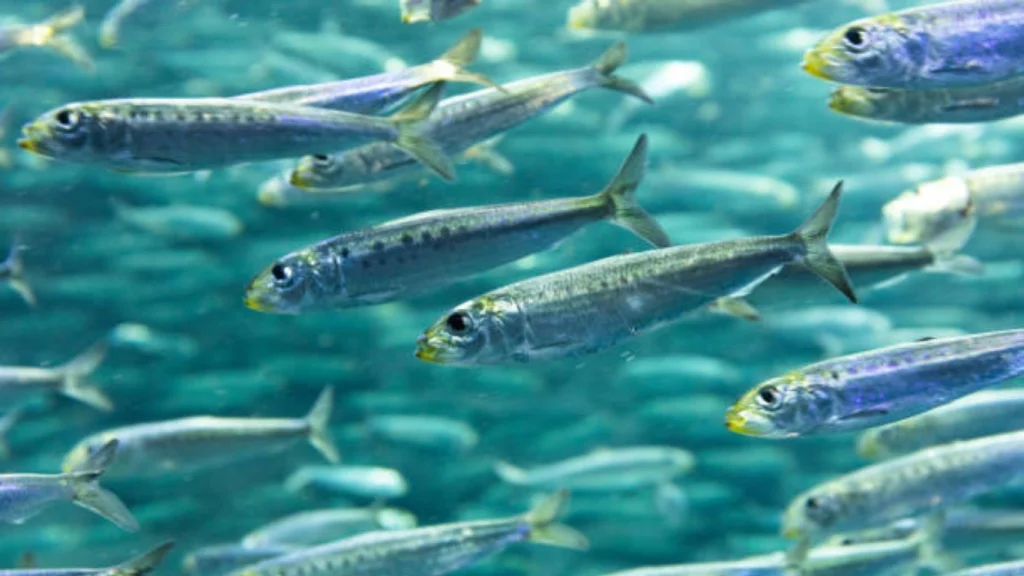
Herring is a small, silvery fish commonly found in large schools in ocean waters. It is an important species in marine ecosystems and has long been valued as a food source for humans. Herring are known for their shimmering appearance and synchronized swimming patterns. They are widely distributed and play a key role in transferring energy from plankton to larger predators such as whales, seals, and larger fish.
Identification
- Slender, laterally compressed body
- Bright silvery sides with a bluish or greenish back
- Single soft dorsal fin
- Forked tail for fast swimming
- Usually grows between 20–30 cm in length
Habitat
Herring are typically found in temperate and cold ocean waters, especially in the North Atlantic and North Pacific regions. They prefer coastal areas, continental shelves, and sometimes deeper offshore waters. Herring often migrate between feeding and spawning grounds, depending on the season. They are usually found in large schools near the surface but may move deeper during daylight hours or to avoid predators.
Behaviors
Herring are famous for their schooling behavior, forming massive, tightly packed groups that move in perfect coordination. This helps protect them from predators and improves feeding efficiency. They are strong swimmers and can travel long distances during migration. Herring also communicate through subtle movements and changes in direction, allowing the entire school to react quickly to threats. Their synchronized swimming creates a flashing effect as light reflects off their scales.
Diet
Herring mainly feed on plankton, including small crustaceans like copepods and other microscopic organisms. They are filter feeders, using their gill rakers to capture food while swimming. Feeding often occurs in the upper layers of the ocean where plankton is most abundant. Their diet may vary slightly with seasons and location, but plankton remains their primary source of nutrition.
4. Smelt
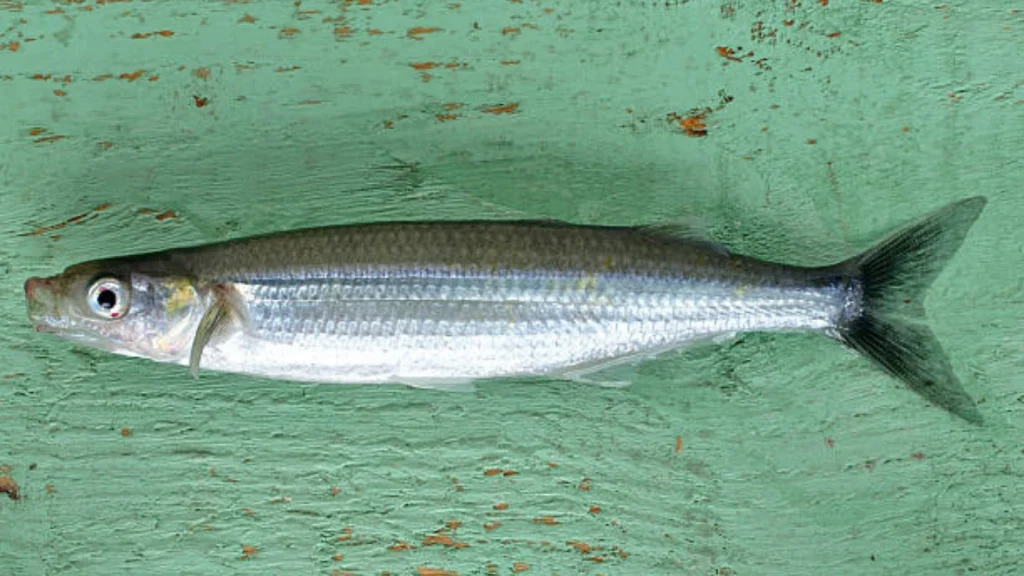
Smelt is a small, silvery fish often found in both marine and brackish waters. It is known for its delicate body and slightly cucumber-like smell when fresh. Smelt are important in the food chain and are commonly used as bait fish as well as for human consumption in some regions. They are fast swimmers and often move in groups, making them easier to spot in coastal environments.
Identification
- Slender, elongated body with smooth scales
- Silvery coloration with a faint greenish back
- Small head with a pointed snout
- Single dorsal fin and forked tail
- Typically grows between 15–25 cm in length
Habitat
Smelt are commonly found in coastal ocean waters, estuaries, and sometimes rivers. They prefer cool, clean environments and are often seen near the surface or in mid-water zones. Some species migrate between saltwater and freshwater, especially during spawning seasons. They are usually found in temperate regions where water conditions remain stable and food sources are readily available.
Behaviors
Smelt are schooling fish that move together in groups for protection and efficiency in feeding. They are active swimmers and can quickly react to predators. During spawning seasons, many smelt species migrate to freshwater rivers or shallow coastal areas. Their movements are often influenced by temperature and light, and they may become more active during certain times of the day or year.
Diet
Smelt primarily feed on small aquatic organisms such as plankton, insect larvae, and tiny crustaceans. They hunt by sight and often feed in mid-water or near the surface. Their diet can vary depending on their environment, but they generally consume whatever small prey is most abundant. This flexible feeding habit helps them survive in different aquatic conditions.
5. Silverside
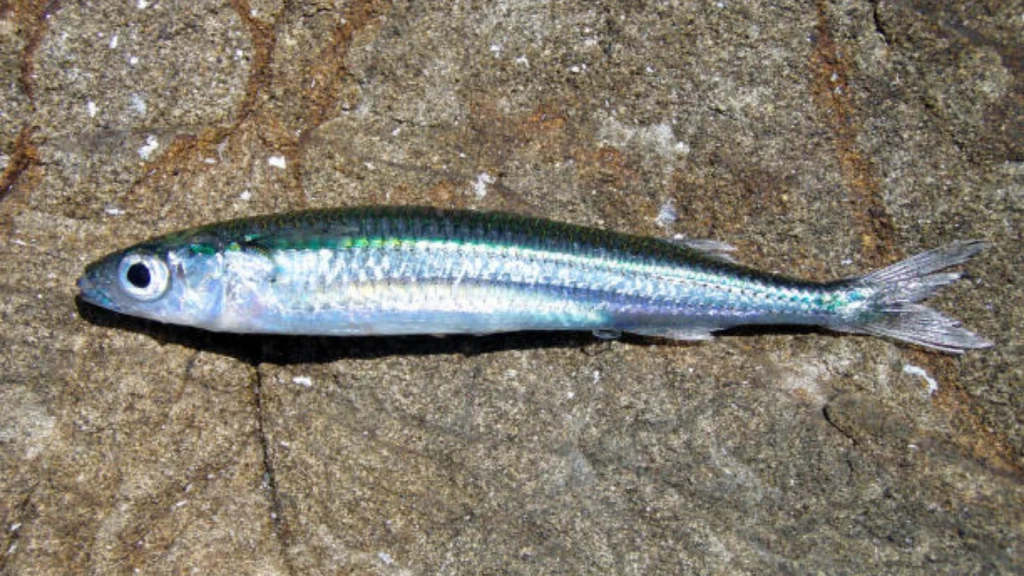
Silverside is a small, slender fish known for its bright silver stripe running along the side of its body. It is commonly found in coastal marine waters and is often seen swimming in groups near the surface. These fish are important in the food chain, serving as prey for larger fish and seabirds. Silversides are quick and agile swimmers, making them well adapted to shallow and open water environments.
Identification
- Slim, elongated body shape
- Distinct bright silver stripe along the side
- Transparent or lightly colored fins
- Small mouth and pointed head
- Usually grows between 7–15 cm in length
Habitat
Silversides are typically found in coastal waters, estuaries, and lagoons. They prefer shallow, warm environments where sunlight supports plankton growth. These fish often stay near the surface and are commonly seen in calm, clear waters. They can tolerate varying salinity levels, which allows them to live in both marine and brackish environments. Silversides are widely distributed in tropical and temperate regions.
Behaviors
Silversides are schooling fish that form small to medium-sized groups. This behavior helps protect them from predators and improves their chances of finding food. They are fast and agile swimmers, often darting quickly in response to danger. Silversides are usually active during daylight hours and may gather in larger groups during certain seasons, especially when food is abundant.
Diet
Silversides mainly feed on plankton, small crustaceans, and tiny insects. They usually feed near the surface, where food is easier to find. Their small mouths limit them to consuming tiny prey, but they are efficient feeders. Their diet can vary depending on their environment, but they mainly rely on readily available small organisms for survival.
6. Lanternfish
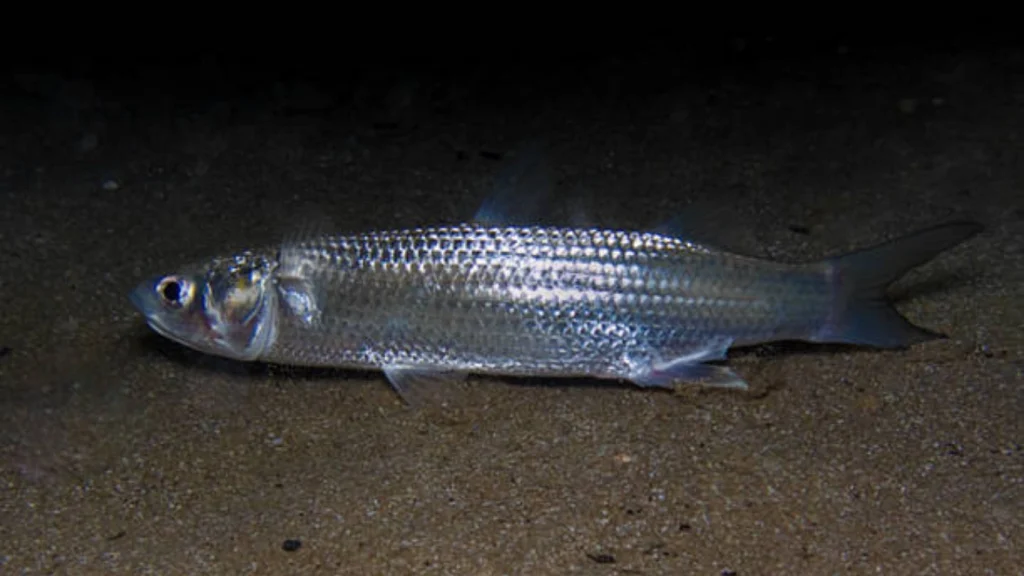
Lanternfish is a small deep-sea fish known for its ability to produce light through special organs called photophores. These fish are among the most abundant vertebrates in the ocean and play a major role in deep-sea ecosystems. Despite their small size, they are crucial in transferring energy from tiny organisms to larger predators. Lanternfish are rarely seen by humans because they live in deep ocean waters.
Identification
- Small, slender body
- Dark coloration, often brown or black
- Rows of light-producing organs (photophores) along the body
- Large eyes adapted for low light
- Typically grows between 2–15 cm in length
Habitat
Lanternfish are found in deep ocean waters across the world, usually at depths of 200 to 1,000 meters during the day. At night, they migrate closer to the surface to feed. This daily movement is known as vertical migration and is one of the largest migrations on Earth. They prefer open ocean environments rather than coastal areas and are especially common in tropical and temperate regions.
Behaviors
Lanternfish are known for their daily vertical migration, moving up to the surface at night and returning to deeper waters during the day. This behavior helps them avoid predators while still accessing food. Their light-producing organs are used for communication, camouflage, and attracting prey. They often swim in loose groups and rely on darkness for protection.
Diet
Lanternfish mainly feed on plankton, including small crustaceans and larvae. They hunt at night near the surface where food is more abundant. Their large eyes help them detect prey in low-light conditions. By feeding on tiny organisms and being eaten by larger animals, they form an essential part of the deep-sea food web.
7. Goby
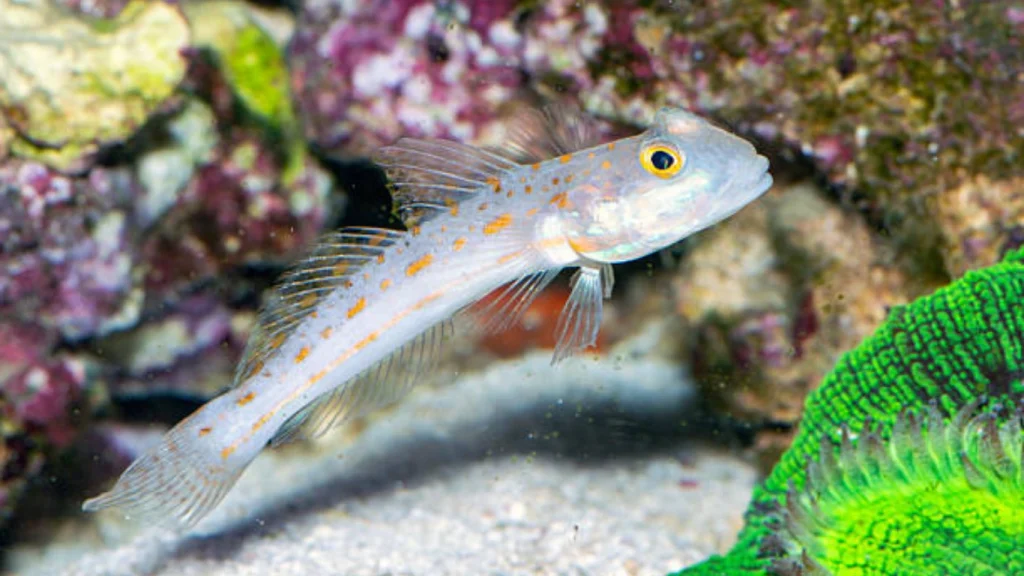
Goby is a small, bottom-dwelling fish commonly found in shallow marine environments. It is one of the largest families of fish, with many different species varying in color and size. Gobies are known for their adaptability and unique behaviors, often forming relationships with other marine creatures. Despite their small size, they play an important role in maintaining the balance of coastal ecosystems.
Identification
- Small, elongated body
- Rounded head with large eyes
- Fused pelvic fins forming a suction-like disc
- Often camouflaged with patterns or dull colors
- Typically grows between 3–10 cm in length
Habitat
Gobies are usually found in shallow coastal waters, including coral reefs, sandy bottoms, and rocky areas. Many species live close to the seabed, where they can hide in burrows or crevices. Some gobies are also found in estuaries and brackish waters. They prefer warm environments and are especially common in tropical and subtropical regions. Their ability to adapt allows them to thrive in a wide range of habitats.
Behaviors
Gobies are generally territorial and spend much of their time near the ocean floor. Some species form symbiotic relationships, such as living with shrimp that dig and maintain burrows. They are not strong swimmers and often rely on quick movements and hiding for protection. Gobies can be solitary or live in small groups, depending on the species. Their behavior often revolves around staying hidden and avoiding predators.
Diet
Gobies mainly feed on small organisms found on or near the seabed. Their diet includes tiny crustaceans, worms, and plankton. They usually pick food from the sand or rocks rather than actively chasing prey. Some species may also consume algae. Their feeding habits help clean the ocean floor and contribute to the health of their environment.
8. Blenny
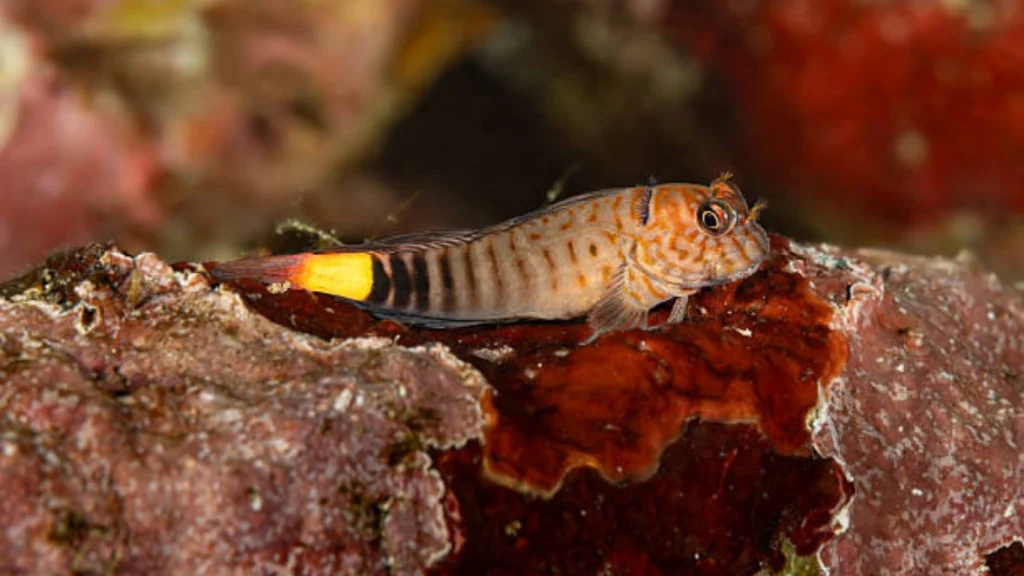
Blenny is a small, bottom-dwelling fish known for its elongated body and curious appearance. These fish are commonly found in shallow marine environments and are often seen resting on rocks or coral surfaces. Blennies are popular for their unique personalities and adaptability. They play an important role in reef ecosystems by helping control algae growth and serving as prey for larger animals.
Identification
- Long, slender body with a slightly flattened head
- Large eyes and often expressive facial features
- Continuous dorsal fin running along the back
- Some species have small tentacle-like structures above the eyes
- Typically grows between 5–15 cm in length
Habitat
Blennies are usually found in shallow coastal waters, especially around coral reefs, rocky shores, and tidal pools. They prefer environments where they can easily hide in crevices, holes, or among rocks. Most species stay close to the bottom and rarely venture far into open water. Blennies are widely distributed in tropical and subtropical oceans, where warm temperatures support their lifestyle.
Behaviors
Blennies are known for their territorial nature and often defend small areas from other fish. They spend much of their time perched on surfaces, observing their surroundings. Instead of swimming continuously, they move in short bursts or hop between spots. Some blennies display bold behavior, even confronting larger fish. Their ability to quickly hide in narrow spaces helps them avoid predators.
Diet
Blennies mainly feed on algae, making them important for controlling plant growth on reefs. Some species also consume small invertebrates like crustaceans and worms. They usually graze on surfaces rather than chasing prey. Their feeding habits vary depending on the species, but many rely heavily on plant material as a primary food source.
9. Pipefish
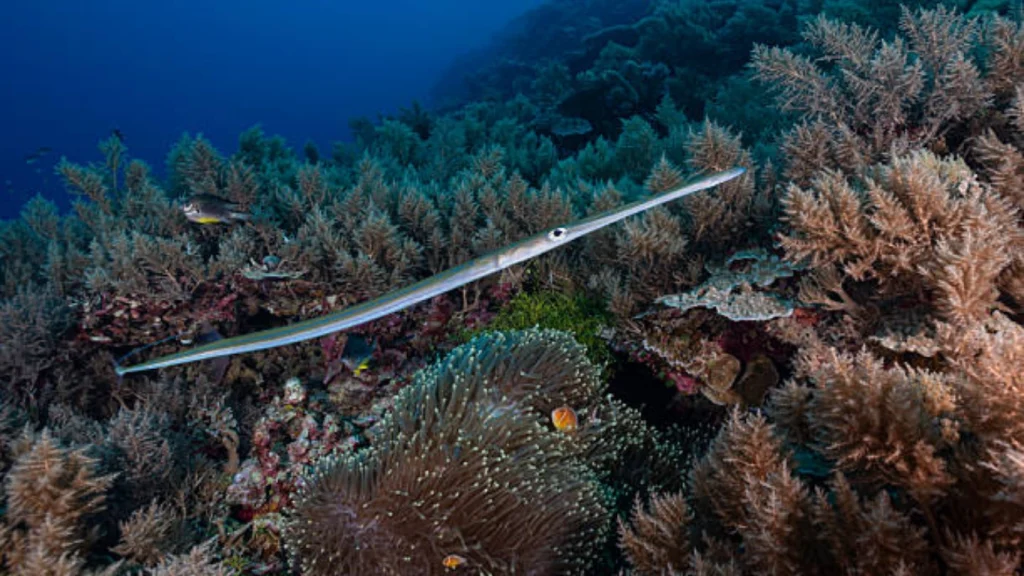
Pipefish is a small, slender fish closely related to seahorses, known for its long, tube-like body and snout. It moves slowly through the water and often blends into its surroundings for protection. Pipefish are commonly found in coastal areas and are admired for their unique shape. Like seahorses, some species show interesting reproductive behavior where males carry the eggs.
Identification
- Long, thin, pipe-like body
- Extended snout used for sucking in food
- Bony rings covering the body instead of scales
- Small fins and limited swimming ability
- Typically grows between 10–20 cm in length
Habitat
Pipefish are usually found in shallow coastal waters, including seagrass beds, coral reefs, and mangrove areas. They prefer calm environments where they can easily hide among plants and structures. Their body shape helps them blend in with seagrass and seaweed. Pipefish are commonly found in tropical and temperate regions and tend to stay in areas with gentle water movement.
Behaviors
Pipefish are slow swimmers and rely heavily on camouflage to avoid predators. They often remain still, aligning their bodies with plants to stay hidden. Some species show unique mating behavior where the female transfers eggs to the male, who carries them until they hatch. Pipefish are generally solitary or found in pairs and avoid open water where they are more vulnerable.
Diet
Pipefish mainly feed on tiny crustaceans and plankton. They use their long snouts to suck in small prey quickly. Feeding usually occurs in calm waters where food is easily accessible. Due to their slow movement, they rely on stealth rather than speed to catch prey.
10. Killifish
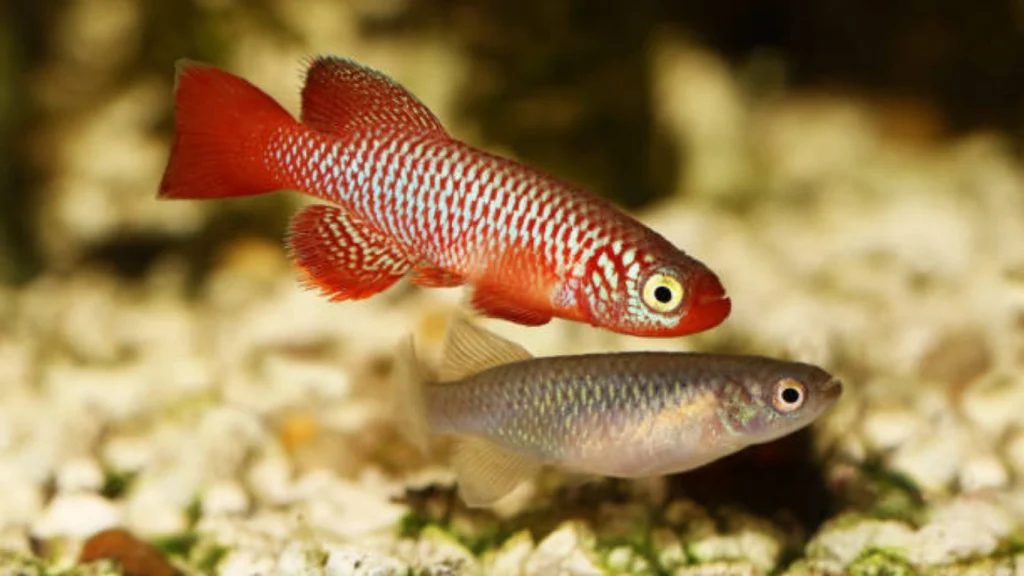
Killifish is a small, colorful fish commonly found in coastal and shallow marine waters. It is known for its adaptability and ability to survive in varying environmental conditions. Many species of killifish are brightly colored, making them popular in aquariums. Despite their small size, they are resilient and play an important role in controlling insect populations and maintaining ecological balance.
Identification
- Small, slender body with smooth scales
- Often brightly colored with patterns or spots
- Rounded fins and slightly upturned mouth
- Large eyes relative to body size
- Typically grows between 4–10 cm in length
Habitat
Killifish are commonly found in shallow coastal waters, estuaries, and tidal pools. They can tolerate a wide range of salinity levels, allowing them to live in both marine and brackish environments. These fish prefer calm, warm waters with plenty of vegetation. They are often seen near the surface or in sheltered areas where they can find food and protection from predators.
Behaviors
Killifish are active and adaptable, often seen swimming in small groups or alone. They are known for their ability to survive in harsh conditions, including low oxygen environments. Some species can even tolerate temporary drying conditions by laying eggs that survive until water returns. They are quick swimmers and can react rapidly to threats.
Diet
Killifish mainly feed on small organisms such as insects, larvae, plankton, and tiny crustaceans. They often feed near the surface, picking off prey with quick movements. Their diet can vary depending on their environment, but they generally consume whatever small food sources are available.
11. Damselfish
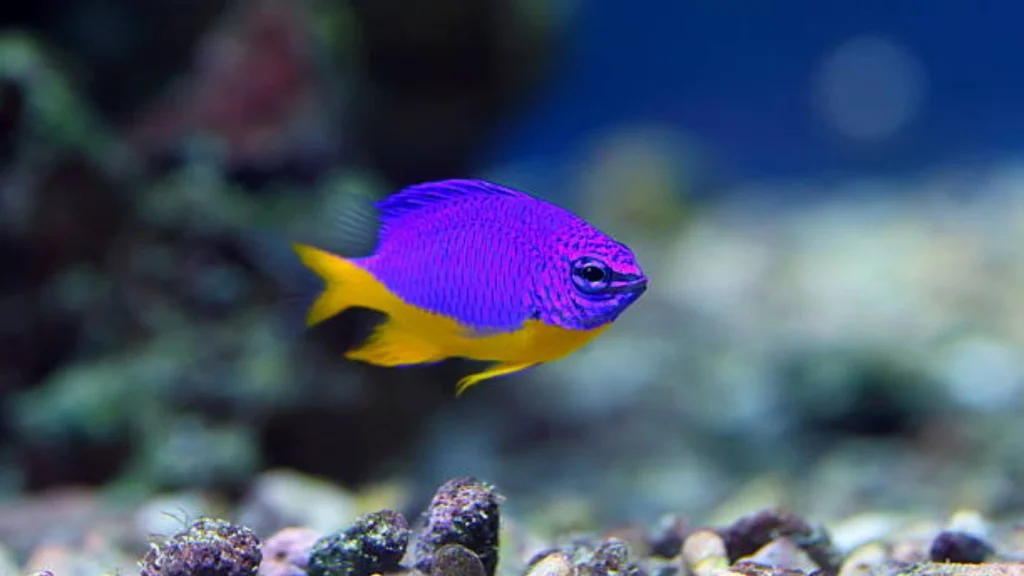
Damselfish is a small, brightly colored fish commonly found in coral reef environments. It is known for its bold behavior and strong territorial nature despite its small size. These fish are popular among divers due to their vivid colors and active presence. Damselfish play an important role in reef ecosystems, especially in maintaining algae balance and supporting overall reef health.
Identification
- Small, oval-shaped body
- Bright colors such as blue, yellow, or black depending on species
- Single continuous dorsal fin
- Forked tail for quick movement
- Typically grows between 5–15 cm in length
Habitat
Damselfish are mainly found in warm, tropical ocean waters, especially around coral reefs. They prefer shallow areas where sunlight supports coral and algae growth. These fish often stay close to specific territories within the reef, such as coral heads or rocky areas. They rarely move far from their chosen spot, making reefs their primary and permanent home.
Behaviors
Damselfish are highly territorial and will aggressively defend their area from other fish, even those much larger than themselves. They are active swimmers and spend much of their time guarding their territory. Some species farm algae, maintaining small patches that they protect as a food source. Their bold and sometimes aggressive behavior makes them stand out in reef environments.
Diet
Damselfish mainly feed on algae and small plankton. Some species focus more on plant material, while others include tiny crustaceans in their diet. They often feed within their territory, especially if they maintain algae patches. Their feeding habits help control algae growth and support the balance of coral reef ecosystems.
12. Cardinalfish
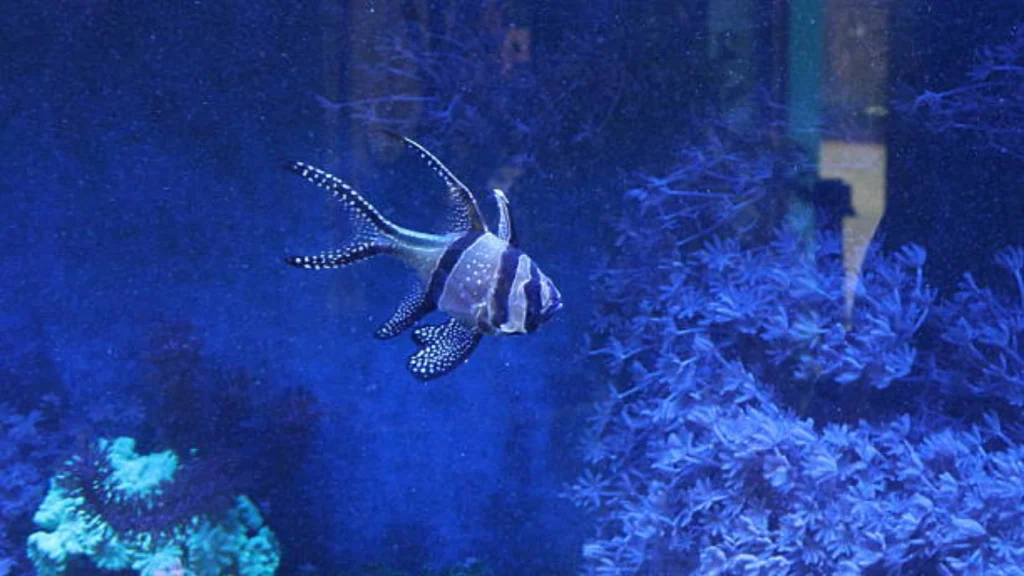
Cardinalfish is a small, reef-associated fish known for its large eyes and calm nature. It is commonly found in tropical ocean waters and is especially active at night. These fish often hide among corals or rocks during the day and come out after dark to feed. Cardinalfish are important in reef ecosystems and are also popular in aquariums due to their peaceful behavior and unique appearance.
Identification
- Small, oval-shaped body
- Large eyes adapted for low-light conditions
- Silvery or reddish coloration, sometimes with stripes or spots
- Two separate dorsal fins
- Typically grows between 5–12 cm in length
Habitat
Cardinalfish are usually found in warm, tropical ocean waters, particularly around coral reefs and rocky areas. They prefer sheltered environments where they can hide during the day, such as caves, crevices, or among coral branches. These fish often stay in shallow waters but can also be found at moderate depths. They are widely distributed in Indo-Pacific regions.
Behaviors
Cardinalfish are mostly nocturnal, meaning they are active at night. During the day, they remain hidden in groups to avoid predators. At night, they leave their shelters to search for food. They are generally peaceful and often seen hovering in place. Some species show unique reproductive behavior where males carry fertilized eggs in their mouths until they hatch.
Diet
Cardinalfish mainly feed on small plankton and tiny crustaceans. They hunt at night when food is more available and competition is lower. Their large eyes help them see in low-light conditions, making it easier to locate prey. Their diet supports their role as a link between small organisms and larger predators in reef ecosystems.
13. Glassfish
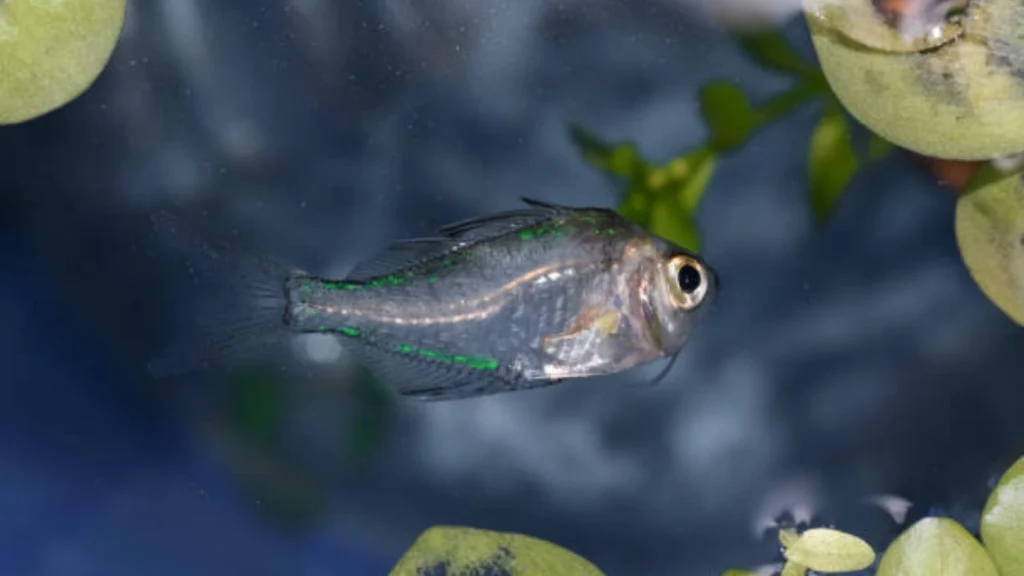
Glassfish is a small, transparent fish known for its almost see-through body, which allows internal organs and bones to be visible. This unique feature helps it blend into its surroundings and avoid predators. Glassfish are commonly found in coastal waters and are often seen in groups. Their delicate appearance and schooling behavior make them quite distinctive among small ocean fish.
Identification
- Transparent or semi-transparent body
- Visible internal bones and organs
- Small, laterally compressed shape
- Light silver tint in some species
- Typically grows between 5–10 cm in length
Habitat
Glassfish are usually found in coastal marine waters, estuaries, and sometimes brackish environments. They prefer calm, shallow areas such as mangroves, lagoons, and sheltered bays. These environments provide protection and a steady supply of food. Glassfish are commonly seen in tropical and subtropical regions, where warm water supports their survival.
Behaviors
Glassfish are schooling fish that often move in groups to reduce the risk of predation. Their transparent bodies make them harder to detect in the water. They are generally calm and slow-moving, relying more on camouflage than speed for protection. Glassfish are usually active during the day and stay together in loose groups.
Diet
Glassfish mainly feed on small plankton, tiny crustaceans, and larvae. They usually feed in mid-water, picking small prey from their surroundings. Their diet depends on what is available in their habitat, but they mostly consume microscopic organisms that drift in the water.
14. Halfbeak
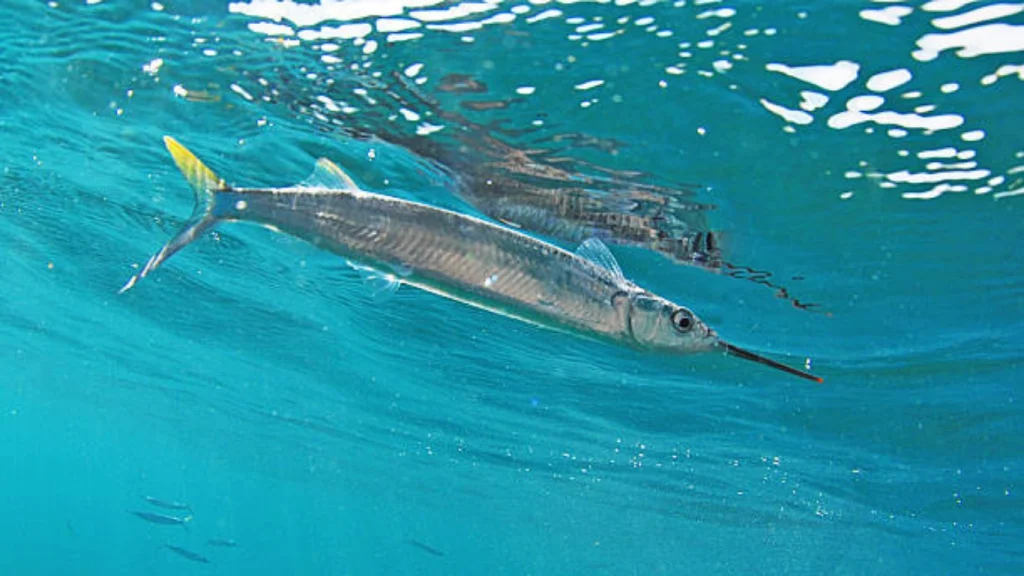
Halfbeak is a small surface-dwelling fish known for its unique jaw structure, where the lower jaw is longer than the upper jaw. This distinct feature makes it easy to recognize. Halfbeaks are commonly found in coastal waters and are often seen swimming near the surface. They are agile and quick, helping them escape predators and catch food efficiently.
Identification
- Slender, elongated body
- Lower jaw significantly longer than the upper jaw
- Silvery coloration with a darker back
- Small fins and streamlined shape
- Typically grows between 15–30 cm in length
Habitat
Halfbeaks are usually found in warm coastal waters, including lagoons, estuaries, and nearshore ocean areas. They prefer surface waters where they can easily access food. These fish are commonly seen in tropical and subtropical regions. Their presence is often associated with calm waters and areas rich in small floating organisms.
Behaviors
Halfbeaks are active swimmers that spend most of their time near the water’s surface. They often move in small groups and are known for their quick, darting movements when threatened. Some species can leap out of the water to escape predators. They rely on speed and surface-level awareness to survive in open environments.
Diet
Halfbeaks mainly feed on small insects, plankton, and tiny crustaceans found near the water’s surface. They use their elongated lower jaws to catch prey efficiently. Their feeding behavior is closely tied to surface activity, where food is most accessible.
FAQs
What are small ocean fish?
Small ocean fish are species that typically grow to a short length, usually under 30 cm. They are found in marine environments and play an important role in the food chain by feeding on plankton and serving as prey for larger animals.
Why are small fish important in the ocean?
Small fish are crucial for maintaining balance in marine ecosystems. They transfer energy from tiny organisms like plankton to larger predators, supporting the entire food web. Without them, many marine species would struggle to survive.
Where can small ocean fish usually be found?
Small ocean fish are commonly found in coastal waters, coral reefs, estuaries, and even deep-sea environments. Their location depends on the species, with some preferring shallow warm waters and others living in colder or deeper regions.
What do small ocean fish eat?
Most small ocean fish feed on plankton, tiny crustaceans, algae, and larvae. Their diet depends on their habitat and species, but they generally consume small, easily available organisms in the water.
Do small ocean fish live in groups?
Yes, many small ocean fish live in groups called schools. This behavior helps protect them from predators, improves feeding efficiency, and allows them to move together in a coordinated way through the water.