



Pigeons are one of the oldest domesticated bird species in the world, and their diversity is astonishing. From the regal Jacobin with its feathered hood to the acrobatic Tippler known for endurance flying, pigeons come in a vast range of colors, body shapes, and personalities. This article showcases 40 fascinating pigeon breeds from across the globe—each with its own origin, appearance, and purpose.
Whether you’re a beginner enthusiast, a seasoned breeder, or simply curious about the world of fancy pigeons, this detailed guide offers insight into their identification, temperament, habitat needs, and exhibition value. Each breed is presented with easy-to-follow sections, including identification checklists and descriptive traits to help you recognize and appreciate their uniqueness.
1. Racing Homer Pigeon

The Racing Homer pigeon is one of the most well-known and widely bred pigeons in the world. Developed for speed and homing ability, it is primarily used in pigeon racing competitions. These pigeons are intelligent, fast, and possess a remarkable ability to navigate over long distances and return to their loft.
Identification
- Feather Color: Varies—commonly blue-bar, red, checkered, or white
- Eye Color: Orange or pearl
- Beak Color: Light gray to black, medium-length
- Body Shape: Streamlined, muscular, and medium-sized
- Wing Shape: Long and pointed
- Feet: Clean, pink or reddish
- Weight: 12–14 ounces
Temperament and Behavior
Racing Homers are intelligent, alert, and highly trainable. They are active birds with strong flying instincts and form strong bonds with their handlers and lofts.
Habitat and Training
They thrive in clean, well-ventilated lofts with ample flying space. Regular training and conditioning are essential for building endurance and navigation skills.
Utility and Performance
Primarily used in the sport of pigeon racing. They are also kept by hobbyists for their loyalty and flying ability, and in some cases, used as message carriers (homing pigeons) in history.
2. Tippler Pigeon
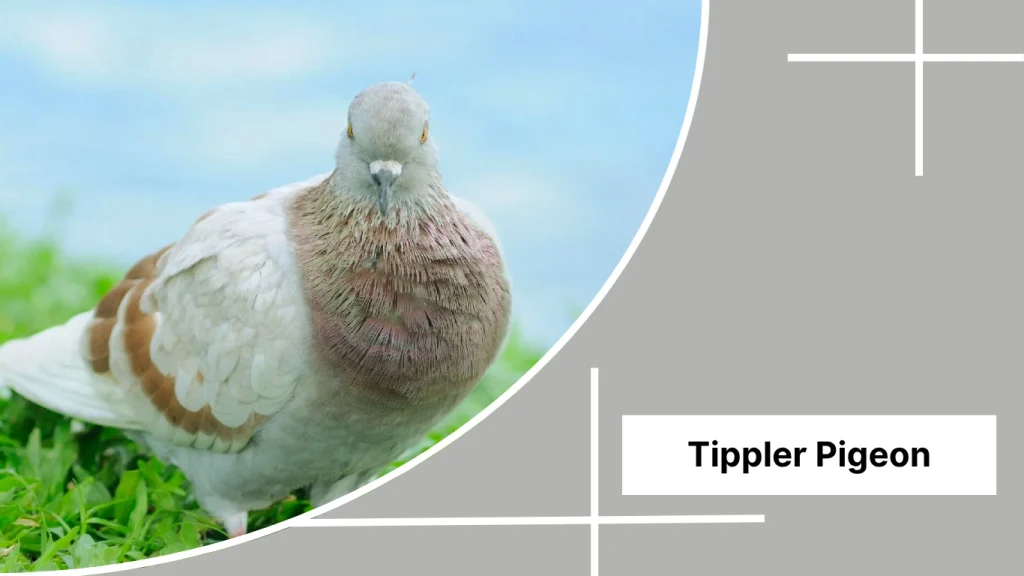
The Tippler pigeon is a long-distance flying breed developed in England. Renowned for endurance, Tipplers can remain in flight for over 10 hours when properly trained. They are favored by flying sport enthusiasts who compete to see whose birds stay airborne the longest.
Identification
- Feather Color: Various—black, blue, dun, red, mottled, and more
- Eye Color: Orange, pearl, or bull (varies by strain)
- Beak Color: Usually black or horn
- Body Shape: Slender, medium-sized with long wings
- Wing Shape: Tightly tucked with long flight feathers
- Feet: Clean, pink or red
- Weight: 10–13 ounces
Temperament and Behavior
Tipplers are calm, intelligent, and highly responsive to training. They are sociable and thrive in flocks, but require consistent routines for peak performance.
Habitat and Flying
They are loft-kept and trained to circle high in the sky for hours. Tipplers need regular exercise, proper nutrition, and fly best in mild, calm weather conditions.
Utility and Performance
Used primarily in endurance flying competitions. Their quiet behavior and aerial skill make them a favorite among dedicated fanciers.
3. Roller Pigeon
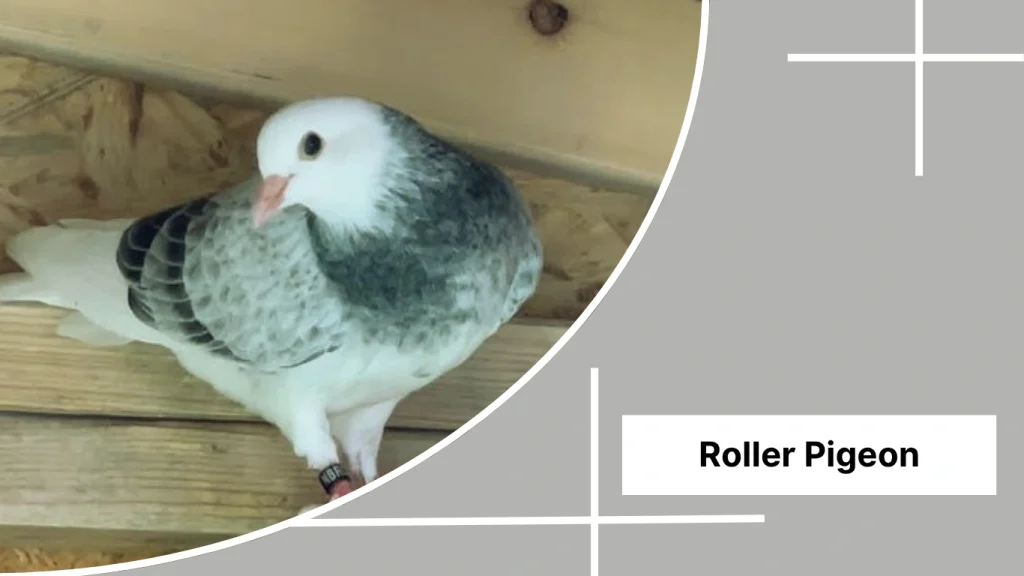
The Roller pigeon is a performing breed best known for its acrobatic mid-air spins or “rolls.” Developed for entertainment and competition, there are two main types: Birmingham Rollers (perform aerial rolls) and Parlor Rollers (perform on the ground).
Identification
- Feather Color: Wide variety—solid, pied, checkered, and splash
- Eye Color: Pearl or orange
- Beak Color: Varies—dark to horn
- Body Shape: Compact and well-muscled
- Wing Shape: Short to medium length, carried tightly
- Feet: Clean, pink or red
- Weight: 9–12 ounces
Temperament and Behavior
Rollers are active, friendly, and thrive on interaction and flight. They are enthusiastic performers that require selective breeding for consistent rolling ability.
Habitat and Flying
They are kept in high-flying lofts and perform best when trained daily. Birmingham Rollers fly in kits and tumble in coordinated bursts mid-flight.
Utility and Performance
Bred for aerial performance and used in flying exhibitions and competitions. Their spectacular rolling displays captivate fanciers worldwide.
4. Fantail Pigeon
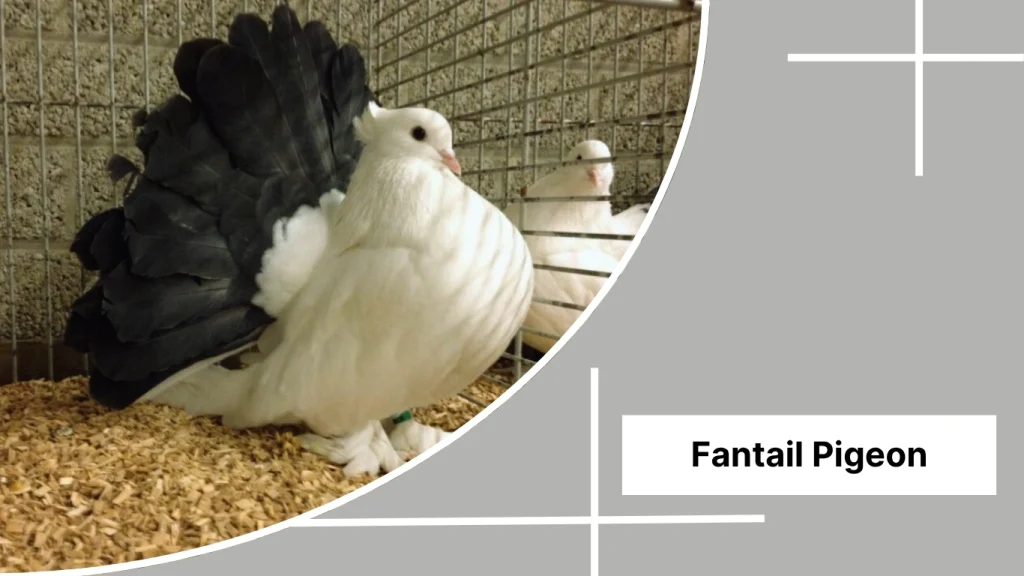
The Fantail pigeon is one of the most ornamental pigeon breeds, instantly recognizable by its spectacular fan-shaped tail consisting of 30 to 40 feathers. Originally from India or Spain, it is a favorite in shows and exhibitions due to its unique appearance and gentle temperament.
Identification
- Feather Color: White, black, silver, red, dun, and pied patterns
- Eye Color: Bull (black) or pearl, depending on color variety
- Beak Color: Short, light or dark depending on plumage
- Body Shape: Small to medium, upright with arched neck
- Tail: Wide and fully fanned, held high
- Feet: Clean, short, pink or red
- Weight: 11–13 ounces
Temperament and Behavior
Fantails are gentle, quiet, and tame easily. They’re more decorative than athletic and prefer calm environments with minimal disturbance.
Habitat and Care
Best kept in clean lofts or aviaries with space for gentle flight. Their large tails require dry, sanitary conditions to avoid feather damage.
Utility and Presentation
Primarily kept for show, breeding, or as ornamental pets. Fantails are sometimes used in wedding releases but lack the homing instinct of other breeds.
5. Jacobin Pigeon
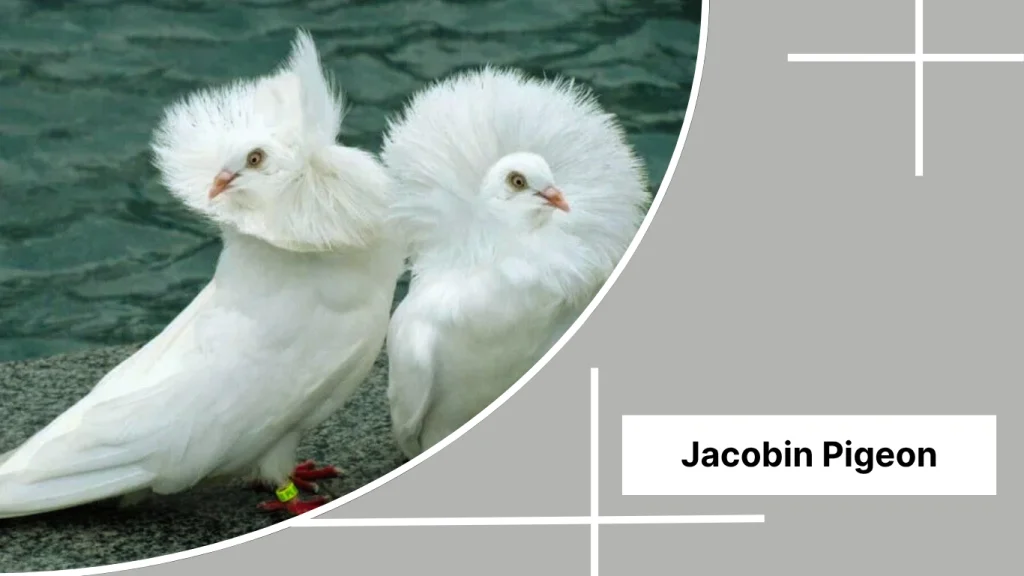
The Jacobin pigeon is an exotic, fancy breed famed for its feathery “hood” that encircles its head and neck. Originating in Asia and later developed in Europe, it is primarily bred for exhibition and admired for its unique silhouette.
Identification
- Feather Color: White, black, blue, yellow, and red; often solid-colored
- Eye Color: Pearl or bull depending on feather variety
- Beak Color: Short, pink to dark horn
- Body Shape: Medium-sized, upright with long legs
- Hood: Thick mane of feathers covering the head and neck
- Feet: Clean-legged, pink or red
- Weight: 11–13 ounces
Temperament and Behavior
Jacobin pigeons are calm and somewhat shy due to their limited vision. They are not suited for flying or foraging but adapt well to quiet aviaries.
Habitat and Grooming
Require clean, spacious cages or lofts with special attention to feather hygiene. Their hoods can obstruct vision, so feeders and perches should be easily accessible.
Utility and Exhibition
Purely ornamental and shown in competitive exhibitions. Their feather structure and posture are closely judged in shows, making grooming and genetics important.
6. Lahore Pigeon
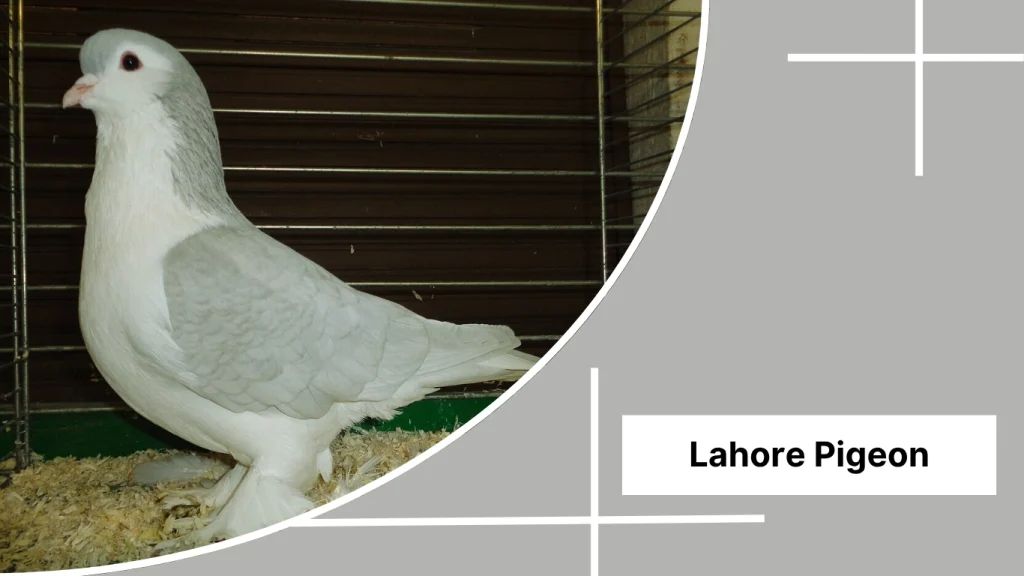
The Lahore pigeon is a large, ornamental breed originally from Pakistan, known for its striking coloration and gentle personality. It is widely appreciated in pigeon shows for its bold markings and soft feather texture.
Identification
- Feather Color: White base with contrasting colors—black, blue, brown, red, or checkered patches over head, neck, and wings
- Eye Color: Orange to red
- Beak Color: Short, pink or horn-colored
- Body Shape: Large, broad chest with upright posture
- Feet: Feathered (muffed)
- Tail: Long and slightly spread
- Weight: 13–16 ounces
Temperament and Behavior
Docile, peaceful, and easy to tame. Lahore pigeons are calm and social, often kept in pairs or small groups.
Habitat and Grooming
They thrive in clean, dry lofts with enough space for short flights. Feathered feet require regular cleaning to prevent dirt buildup and infection.
Utility and Presentation
Primarily bred for exhibition and admired for symmetrical, bold color patterns. Their gentle nature also makes them suitable as decorative pets.
7. Modena Pigeon
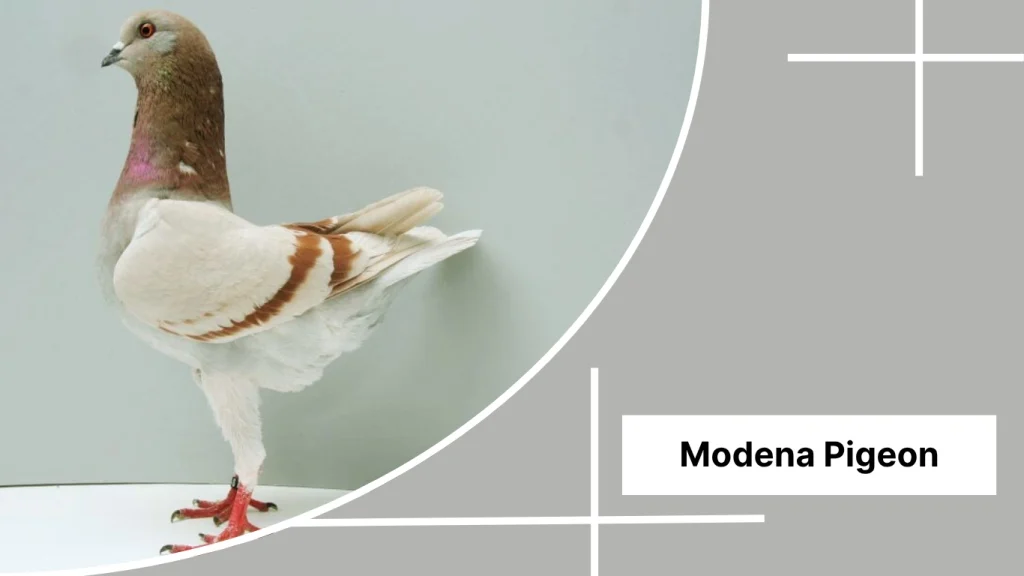
The Modena pigeon is a compact, upright fancy breed originally from Modena, Italy. It is divided into two main types—Gazzi (colored wings and tail) and Schietti (solid-colored)—both known for their rounded build and proud stance.
Identification
- Feather Color: Wide variety—solid (Schietti) or marked (Gazzi) in blue, red, yellow, white, black, etc.
- Eye Color: Pearl or bull, depending on variety
- Beak Color: Short, pink to black depending on plumage
- Body Shape: Compact, round chest with upright posture
- Neck: Short and thick
- Feet: Clean, strong, and short
- Weight: 12–15 ounces
Temperament and Behavior
Calm, confident, and lively. Modenas are easy to keep, friendly with handlers, and active in loft environments.
Habitat and Maintenance
Suited for lofts and display pens. Their compact form doesn’t require long flights, and they do well in aviaries with minimal aggression.
Utility and Exhibition
Bred exclusively for show, especially in breed competitions where posture, feather condition, and color clarity are highly judged. Their eye-catching appearance makes them popular among fanciers.
8. Pouter Pigeon

The Pouter pigeon is a fancy breed group known for its dramatic, inflatable crop or “globe,” which it expands when displaying or courting. Various types exist, including English Pouter, Pigmy Pouter, and Brunner Pouter, each differing in size and posture.
Identification
- Feather Color: Wide range including solid, pied, and marked varieties
- Eye Color: Orange, pearl, or bull depending on type
- Beak Color: Medium-length, horn or black
- Body Shape: Tall and upright with long legs and inflated crop
- Feet: Clean or feathered depending on strain
- Tail: Short and straight
- Weight: Varies by type (11–18 ounces)
Temperament and Behavior
Energetic, lively, and playful. Pouters are curious and often display exaggerated strutting and posturing behaviors.
Habitat and Maintenance
Require vertical loft space due to their height and mobility. Inflated crops need dry, dust-free environments to maintain good health.
Utility and Exhibition
Bred solely for show and ornamental purposes. Judged for crop size, leg length, and upright posture. Enthusiasts often breed them for exaggerated display traits.
9. Archangel Pigeon
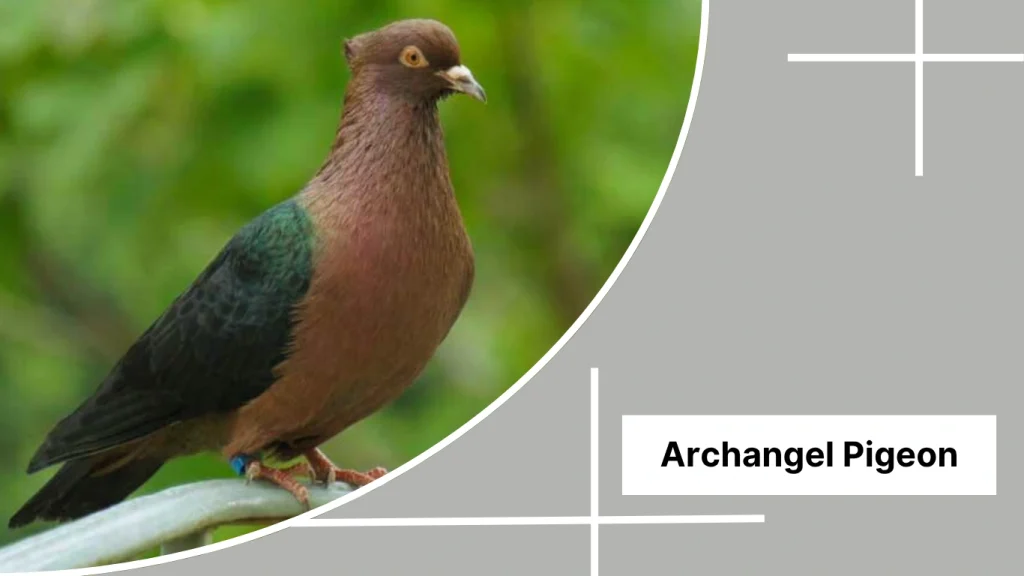
The Archangel pigeon is a visually stunning breed admired for its brilliant metallic sheen and elegant profile. It is one of the oldest fancy breeds, originally from Central Europe, and highly prized in exhibitions.
Identification
- Feather Color: Metallic bronze or gold body with contrasting black, blue, or white wings
- Eye Color: Pearl or orange
- Beak Color: Fine, medium-length, black or horn
- Body Shape: Slim, with a slightly arched neck and tight feathering
- Crest: May have a peak crest (optional)
- Feet: Clean, reddish-pink
- Weight: 10–12 ounces
Temperament and Behavior
Alert, gentle, and responsive to handling. They’re best kept in quiet, decorative lofts rather than with high-flying or aggressive breeds.
Habitat and Grooming
Feather condition and color require cleanliness and minimal exposure to direct sunlight to preserve sheen. Do best in display cages or controlled aviaries.
Utility and Presentation
A classic exhibition breed admired for its intense coloration and contrast. Popular in shows and by collectors focused on aesthetics and lineage.
10. Capuchine Pigeon
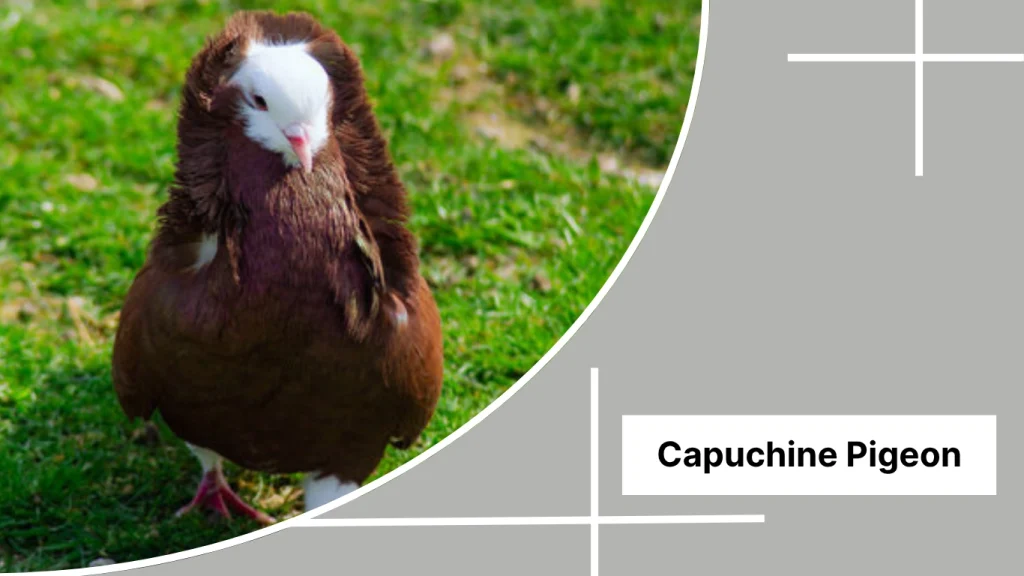
The Capuchine pigeon, also known as the Old Dutch Capuchine, is an elegant fancy breed admired for its feathered hood or “mane” that frames the head. Originating in the Netherlands, it is bred primarily for ornamental purposes and exhibition.
Identification
- Feather Color: Commonly white with colored hoods; also black, red, yellow, blue
- Eye Color: Pearl or orange depending on variety
- Beak Color: Medium-length, horn or dark
- Body Shape: Small to medium, upright with short neck
- Crest: Full hood with shell-shaped feathering around the head
- Feet: Clean, red or pink
- Weight: 11–13 ounces
Temperament and Behavior
Quiet, gentle, and slightly shy. Capuchines are not strong fliers and prefer calm environments with minimal competition.
Habitat and Grooming
Require clean lofts and protected aviaries to keep feathering intact. Their hood can impair vision slightly, so perches and feeders should be accessible.
Utility and Exhibition
Primarily used in pigeon shows and exhibitions. Judged for feather structure, hood symmetry, and color contrast. Popular among fanciers for their refined look.
11. Trumpeter Pigeon
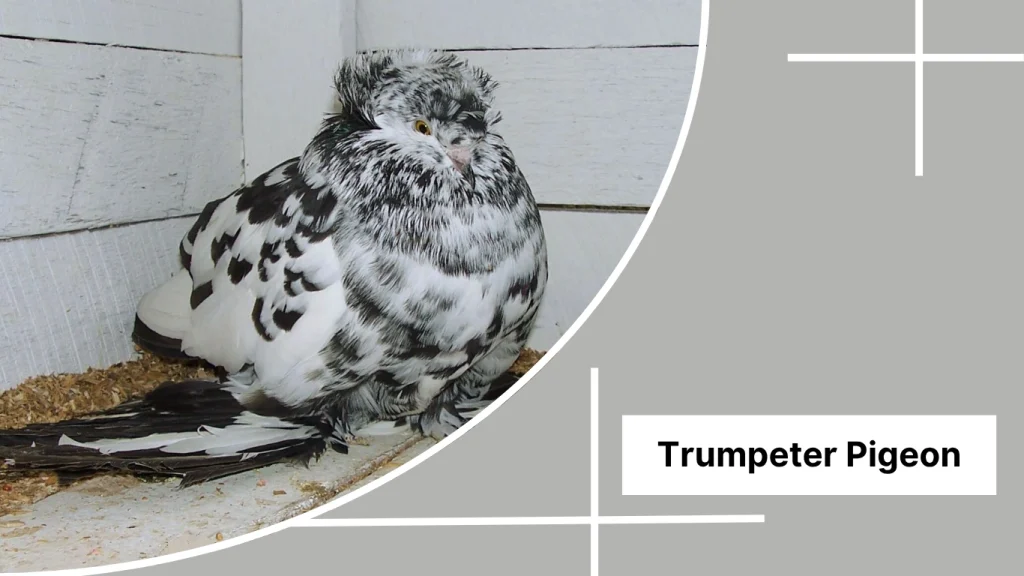
The Trumpeter pigeon is a group of fancy breeds known for their unique cooing or “trumpeting” vocalizations. Notable types include the English Trumpeter, Arabian Trumpeter, and Bokhara Trumpeter, each recognized by feather tufts and sound.
Identification
- Feather Color: Wide range—solid, pied, and laced patterns
- Eye Color: Pearl, bull, or orange depending on breed
- Beak Color: Short to medium, often pink or horn
- Body Shape: Medium with full chest and compact wings
- Crest & Muffs: Elaborate crest, long muffs (feathered feet)
- Feet: Fully muffed with flowing feathers
- Weight: 12–15 ounces
Temperament and Behavior
Docile and social. Trumpeters are generally not strong fliers but are active on the ground and enjoy attention.
Habitat and Care
Require spacious, clean aviaries with extra care for feathered feet. Not ideal for high perches due to heavy muffs and low vision.
Utility and Exhibition
Kept for ornamental purposes and valued for their unique sounds and elaborate feathering. Regularly featured in fancy pigeon shows.
12. Indian Fantail Pigeon
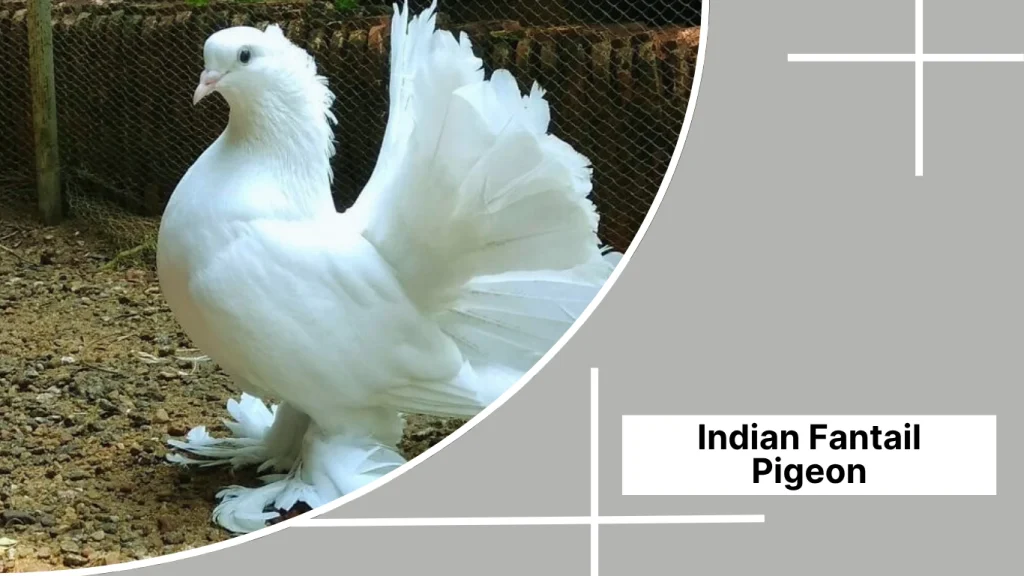
The Indian Fantail is a fancy pigeon breed developed in India. It is a variation of the classic Fantail but larger and with a more upright carriage and fuller feathering, especially in the chest and tail.
Identification
- Feather Color: Commonly white, but also found in red, blue, pied, and mottled
- Eye Color: Bull (black) or pearl
- Beak Color: Short, light pink or horn
- Body Shape: Large, rounded chest with upright stance
- Tail: Wide fan-shaped tail with 30–40 feathers
- Feet: Feathered (muffed)
- Weight: 13–15 ounces
Temperament and Behavior
Very gentle, friendly, and tolerant. Indian Fantails enjoy human interaction and can become quite tame in backyard lofts.
Habitat and Care
Best kept in clean, dry lofts with adequate space. Their feathered feet and large tail require extra grooming and sanitation to prevent matting and soiling.
Utility and Presentation
Primarily bred for ornamental use and exhibition. Often featured in shows due to their posture, size, and graceful fan tail.
13. English Carrier Pigeon

The English Carrier is one of the oldest pigeon breeds and was originally used for carrying messages. Though no longer used for communication, it remains a respected show breed with a distinctive appearance.
Identification
- Feather Color: Various solid and pied colors including black, blue, red, and dun
- Eye Color: Pearl
- Beak Color: Long, dark, and slightly downcurved
- Body Shape: Tall, slim, and upright
- Wattles: Prominent cere (fleshy tissue) around beak and eyes
- Feet: Clean, reddish
- Weight: 13–15 ounces
Temperament and Behavior
Intelligent, alert, and observant. They are active and do well in well-managed lofts with regular human contact.
Habitat and Maintenance
Clean lofts with adequate perch space are ideal. Their large ceres require attention to prevent buildup or irritation.
Utility and Exhibition
Now bred solely for fancy shows and exhibitions. Judged based on length and shape of beak, wattles, and carriage rather than performance.
14. Nun Pigeon

The Nun pigeon is a small, elegant fancy breed developed in England. It is known for its striking color pattern, particularly the colored cap, tail, and wing markings that contrast with the white body. Originally bred for flying, it is now kept mainly for ornamental and show purposes.
Identification
- Feather Color: White body with colored head cap, tail, and primary wing feathers (black, blue, red, yellow)
- Eye Color: Pearl
- Beak Color: Short and horn-colored
- Body Shape: Small, upright with slim profile
- Crest: Shell crest with rosettes on the sides
- Feet: Clean, pink or reddish
- Weight: 9–11 ounces
Temperament and Behavior
Gentle and quiet. Nuns are social birds that do well in mixed lofts and aviaries. They are alert but not aggressive.
Habitat and Maintenance
Do well in lofts and show cages with ample perch space. Their small size and clean legs make them easy to care for and manage.
Utility and Presentation
Primarily bred for exhibition. The Nun is judged on crest formation, color placement, and body symmetry. Its calm nature and distinct markings make it a favorite among show breeders.
15. Saxon Fairy Swallow Pigeon

The Saxon Fairy Swallow is a highly decorative fancy breed originating from Germany. It is admired for its soft feather colors, laced wing patterns, and elaborate feathering on the feet.
Identification
- Feather Color: Typically white with colored laced wings—black, blue, red, yellow, or dun
- Eye Color: Bull or pearl, depending on strain
- Beak Color: Medium-length, flesh-colored or dark
- Body Shape: Medium-sized, upright with short neck and broad chest
- Feet: Fully muffed with long feathering
- Crest: May have a slight shell crest
- Weight: 12–14 ounces
Temperament and Behavior
Calm, friendly, and ornamental. Fairy Swallows are not strong fliers but are alert and well-suited to display aviaries.
Habitat and Grooming
Require very clean conditions, especially for foot feathering. Spacious pens or show cages are preferred, with dry bedding to protect muffs.
Utility and Presentation
Bred exclusively for show. Valued for their symmetrical wing patterns, soft pastel tones, and stylish foot feathering. A popular breed in European exhibitions.
16. Bokhara Trumpeter Pigeon
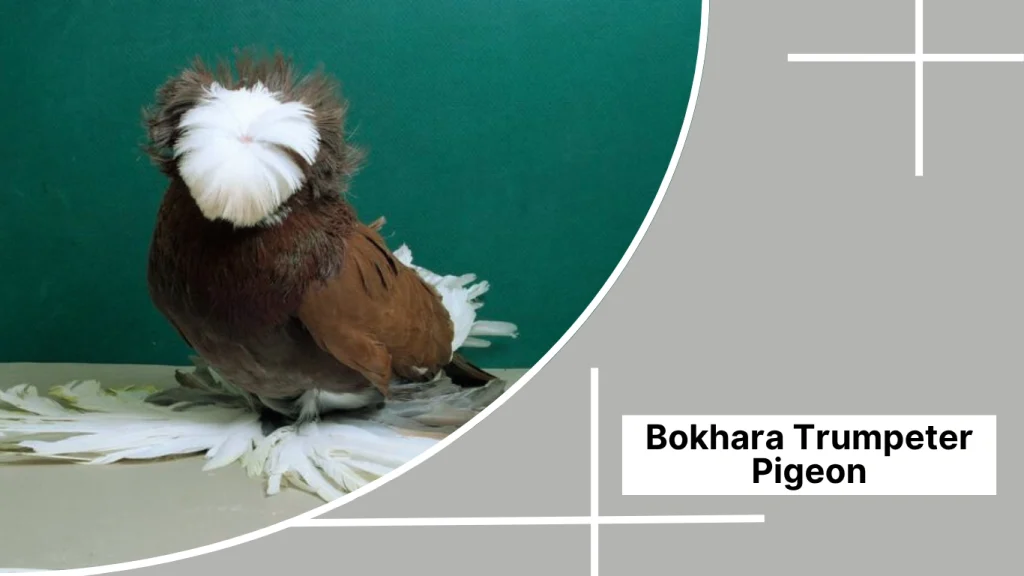
The Bokhara Trumpeter is a dramatic and highly ornamental breed originating from Central Asia. It’s one of the most visually extravagant pigeons, known for its massive feather muffs, long mane, and continuous cooing or “trumpeting” sounds.
Identification
- Feather Color: Wide range—white, black, red, yellow, blue, and pied combinations
- Eye Color: Usually bull or pearl depending on plumage
- Beak Color: Short, pink or horn-colored
- Body Shape: Medium to large, upright with full chest
- Crest: Prominent shell crest with thick mane extending to shoulders
- Feet: Extremely muffed, long flowing feathering
- Weight: 13–16 ounces
Temperament and Behavior
Docile and friendly but relatively inactive. Bokhara Trumpeters are more decorative than functional and are best kept in peaceful aviary settings.
Habitat and Grooming
Require very clean, dry environments. Their heavy feathering, especially on the feet and head, demands frequent grooming to prevent matting and infections.
Utility and Presentation
Kept entirely for ornamental and exhibition purposes. Judged for symmetry, feather quality, head and crest development, and foot muff fullness. One of the most impressive breeds in fancy pigeon shows.
17. Dragoon Pigeon
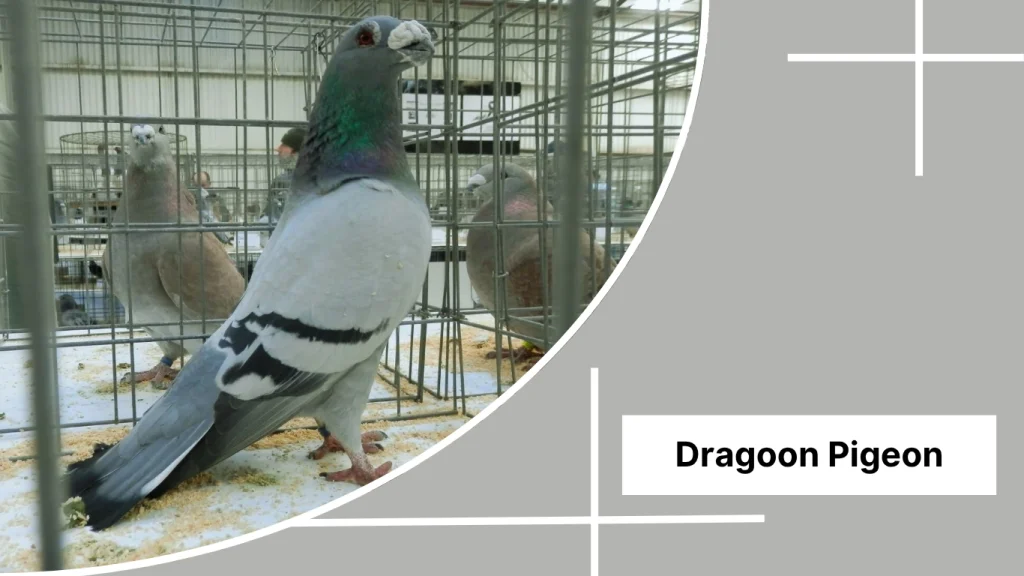
The Dragoon pigeon is a robust and historic breed from England, known for its upright posture and powerful appearance. Once used in early message-carrying work, it is now primarily a show bird valued for its bold features and proud stance.
Identification
- Feather Color: Solid and barred varieties in blue, black, red, yellow, and dun
- Eye Color: Rich orange or red
- Beak Color: Short, stout, and dark
- Body Shape: Broad chest, upright with short back and firm structure
- Wattles: Clean, with small but noticeable cere above the beak
- Feet: Clean-legged, strong, reddish
- Weight: 13–15 ounces
Temperament and Behavior
Alert, confident, and lively. Dragoons are good-natured and adapt well to structured loft life. They are observant and responsive to their environment.
Habitat and Maintenance
Do well in spacious lofts with low perches. Require less grooming than ornamental breeds, making them easy to care for.
Utility and Presentation
Used today in fancy pigeon exhibitions, where judges focus on posture, head and beak shape, and eye intensity. Historically linked to the development of Racing Homers.
18. King Pigeon
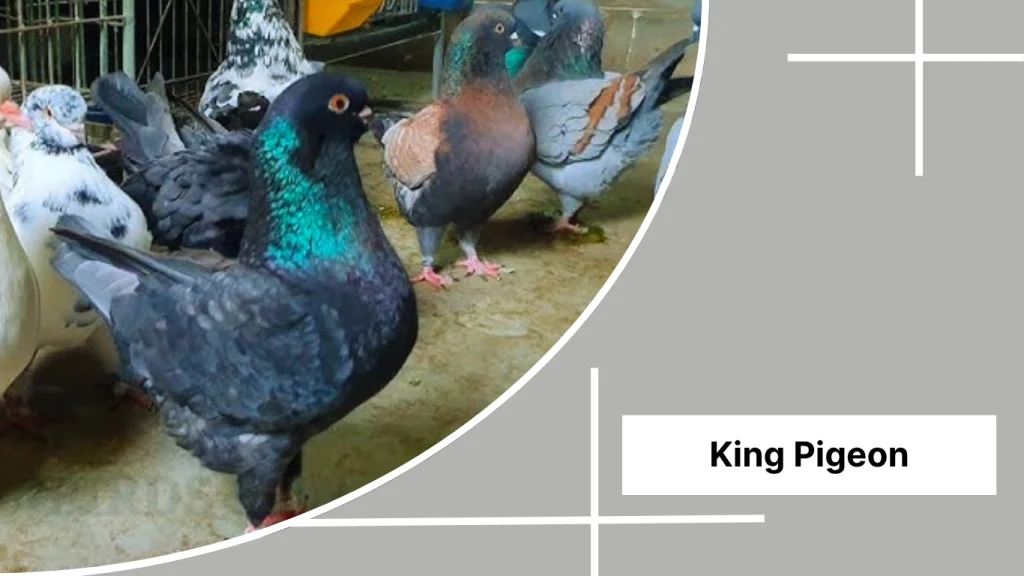
The King pigeon is a large, plump breed developed in the United States for squab (meat) production. It combines strength with elegant posture, making it useful both for commercial use and exhibition.
Identification
- Feather Color: White is most common in utility Kings; show Kings appear in blue, silver, red, dun, black, and other variations
- Eye Color: Orange or pearl
- Beak Color: Short, thick, and horn-colored or black depending on plumage
- Body Shape: Large, rounded with a broad chest and upright stance
- Feet: Clean-legged, thick, and red
- Weight: 20–32 ounces (larger than most fancy breeds)
Temperament and Behavior
Calm, gentle, and docile. Kings are easy to handle and not flighty, making them ideal for confined lofts and beginner keepers.
Habitat and Maintenance
Prefer roomy enclosures with clean bedding and easy access to food and water. Due to their size, they are not agile fliers and are best kept on the ground level.
Utility and Presentation
Two strains exist: Utility Kings bred for meat (especially squab production) and Show Kings bred for exhibition. Judged for size, shape, and posture in shows.
19. German Modena Pigeon

The German Modena is a striking and well-proportioned fancy pigeon developed from the original Italian Modena. It is admired for its bold stance, full chest, and smooth, rounded body.
Identification
- Feather Color: Wide color palette—solid, laced, and marked varieties including blue, red, yellow, black, silver
- Eye Color: Pearl or orange depending on color type
- Beak Color: Medium-length, pink to black
- Body Shape: Compact, upright with strong chest and full back
- Feet: Clean-legged, reddish
- Weight: 13–15 ounces
Temperament and Behavior
Confident, tame, and very manageable. German Modenas are calm and can coexist peacefully with other fancy breeds.
Habitat and Maintenance
Do best in clean lofts with access to short perches and easy-to-reach nesting boxes. Require minimal grooming compared to long-feathered breeds.
Utility and Presentation
Bred entirely for fancy exhibition. Judged for posture, feather condition, symmetry, and head shape. Known for elegance and refinement among pigeon fanciers.
20. Chinese Owl Pigeon

The Chinese Owl pigeon is a small, ornamental breed known for its distinctive frilled chest feathers and compact build. Despite the name, the breed originates from Spain and gained popularity for its unique appearance and soft temperament.
Identification
- Feather Color: Wide range—white, black, red, yellow, blue, and pied
- Eye Color: Pearl or bull
- Beak Color: Short and stout, usually pink or horn-colored
- Body Shape: Small and round with upright stance
- Feather Texture: Frilled or curled feathers on chest and neck
- Feet: Clean-legged, short, pink or red
- Weight: 9–11 ounces
Temperament and Behavior
Gentle and social. Chinese Owls are friendly with handlers and adapt well to aviary environments.
Habitat and Maintenance
Best suited for clean indoor lofts or display aviaries. Regular grooming of frilled feathers helps maintain appearance and health.
Utility and Presentation
Bred solely for ornamental purposes and exhibitions. Judges value the density and arrangement of the chest frills along with overall form and color.
21. Swallow Pigeon

The Swallow pigeon is a stylish German fancy breed named for its wing pattern, which resembles the forked tail of a swallow. It is highly ornamental and comes in several color-marked varieties.
Identification
- Feather Color: White body with colored head, wings, and tail—colors include black, red, blue, yellow, and silver
- Eye Color: Bull or pearl
- Beak Color: Medium-length, flesh to horn-colored
- Body Shape: Medium, upright with smooth feathering
- Feet: Feathered (muffed), often long and flowing
- Weight: 11–13 ounces
Temperament and Behavior
Quiet, friendly, and alert. Swallow pigeons are calm and enjoy gentle human interaction.
Habitat and Maintenance
Prefer dry, clean aviaries. Feathered feet require routine maintenance to avoid buildup of dirt or moisture.
Utility and Presentation
Exclusively ornamental. Popular in shows where wing marking precision, tail symmetry, and muff quality are major judging points.
22. Hungarian Giant House Pigeon
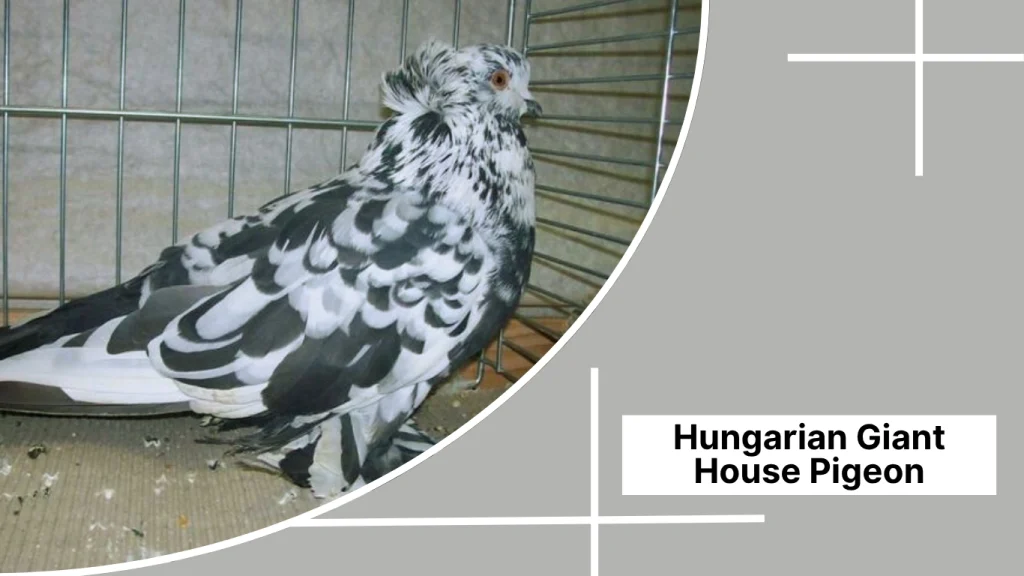
The Hungarian Giant House pigeon is a large, impressive utility breed developed for squab production. Known for its rapid growth and robust frame, it’s one of the biggest pigeon breeds and is also valued for its calm disposition.
Identification
- Feather Color: Commonly white, but also seen in gray, black, and pied
- Eye Color: Orange or pearl
- Beak Color: Medium-length, pale or horn-colored
- Body Shape: Large, muscular, and upright
- Feet: Clean-legged, thick and strong
- Weight: 30–34 ounces
Temperament and Behavior
Very calm, quiet, and tame. These pigeons are not easily startled and are cooperative in breeding programs.
Habitat and Maintenance
Require spacious lofts or pens with low perches and easy access to nesting areas. Their size limits flight, so they should be housed with minimal elevation.
Utility and Presentation
Primarily bred for meat (squab) but also kept by utility breeders for exhibitions based on body mass and form.
23. Antwerp Smerle

The Antwerp Smerle is a rare and ancient Belgian fancy breed known for its vivid colors and broad body. Originally a show bird, it is also admired for its genetic contribution to modern Racing Homers.
Identification
- Feather Color: Blue bar, checkered, red, yellow, and laced varieties
- Eye Color: Pearl
- Beak Color: Medium-length, dark or horn-colored
- Body Shape: Medium to large with broad chest and short back
- Wattles: Small, clean cere
- Feet: Clean, reddish
- Weight: 13–15 ounces
Temperament and Behavior
Confident, active, and alert. They are well-suited to social lofts and easy to manage.
Habitat and Maintenance
Adaptable to most loft environments with moderate care. Prefer clean surroundings and secure nesting areas.
Utility and Presentation
Kept mostly for show and ornamental purposes. Their bold posture and historical importance make them prized among classic pigeon breeds.
24. Frillback Pigeon

The Frillback is a decorative fancy pigeon breed known for its unique curled or “frilled” feathers on the wing shield and foot muffs. It is admired for both its beauty and elegance in pigeon shows.
Identification
- Feather Color: Wide variety including white, black, red, yellow, blue, and pied
- Eye Color: Pearl or bull depending on color type
- Beak Color: Short to medium, pink or horn-colored
- Body Shape: Medium-sized with upright carriage and compact build
- Feather Texture: Distinctive curled feathers on wing shield and muff
- Feet: Fully muffed with frilled feathers
- Weight: 11–13 ounces
Temperament and Behavior
Calm and quiet. Frillbacks are friendly with limited flying capability, making them suitable for enclosed aviaries.
Habitat and Maintenance
Require regular grooming and dry environments to maintain feather condition. Clean bedding and low perches are ideal to protect their foot feathering.
Utility and Presentation
Used solely for exhibition. Judged for tightness and curl of frills, overall body symmetry, and crest type (plain- or shell-crested varieties).
25. English Owl Pigeon
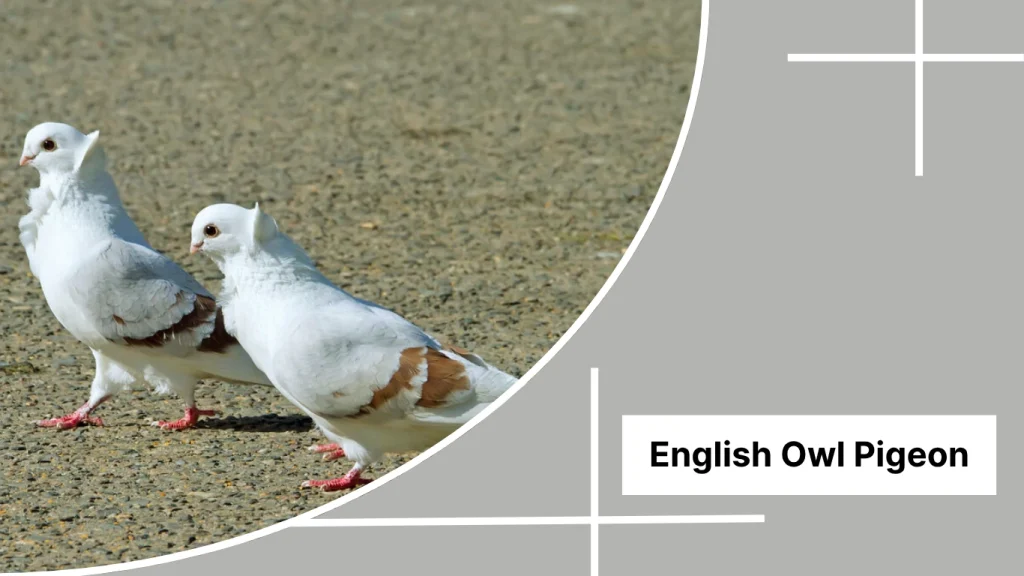
The English Owl pigeon is a compact fancy breed recognized by its short beak and frilled feathers on the chest, giving it a “bearded” appearance. It is a gentle, attractive breed popular among exhibition fanciers.
Identification
- Feather Color: Solid and pied varieties in white, black, blue, dun, and red
- Eye Color: Orange or pearl
- Beak Color: Very short and broad; pink or horn
- Body Shape: Small, round body with upright stance
- Feather Texture: Slight chest frill with smooth plumage
- Feet: Clean-legged
- Weight: 10–12 ounces
Temperament and Behavior
Sweet-natured, sociable, and docile. They enjoy calm settings and are easy to handle.
Habitat and Maintenance
Ideal for indoor aviaries or show cages. Their beak structure requires special feeder designs for easy access to food.
Utility and Presentation
Exclusively ornamental. Valued in shows for their chest frill, compact form, and head-beak proportion.
26. Ice Pigeon
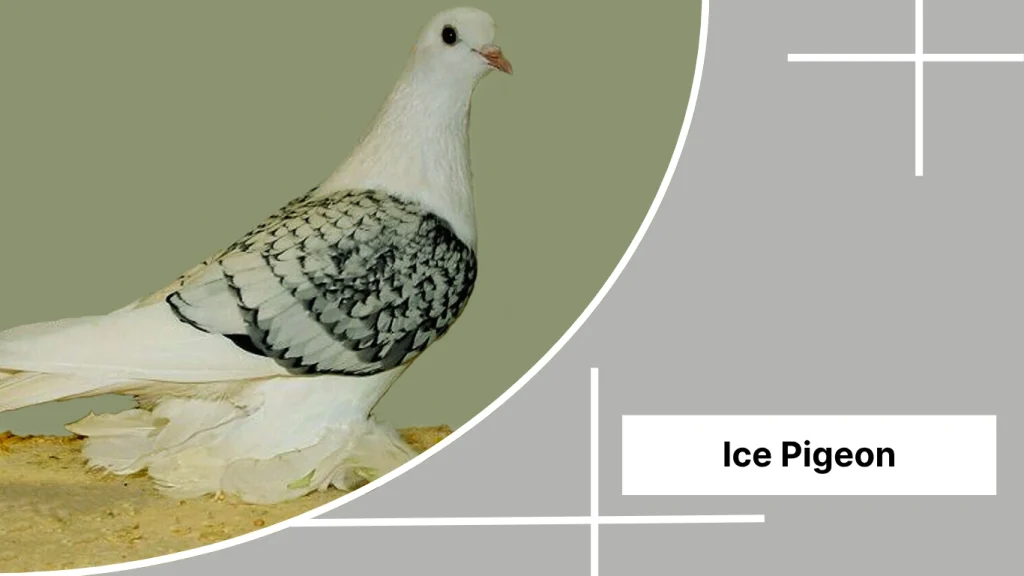
The Ice Pigeon is a beautiful fancy breed from Germany and Poland, prized for its shimmering, frost-like feather color. It has a sleek, upright appearance and is especially popular among breeders who value subtle yet striking plumage.
Identification
- Feather Color: Soft silvery-blue or “ice” with delicate lacing or bar patterns
- Eye Color: Orange or pearl
- Beak Color: Medium-length, horn-colored or dark
- Body Shape: Medium-sized, upright with smooth lines
- Feet: Clean-legged, pink or reddish
- Weight: 11–13 ounces
Temperament and Behavior
Calm, even-tempered, and easy to care for. Ice Pigeons are quiet and do well in lofts with other gentle breeds.
Habitat and Maintenance
They thrive in clean aviaries with moderate space and perching areas. Feather color is best preserved with minimal exposure to sunlight and dust.
Utility and Presentation
Kept purely for fancy and exhibition. Judged for color purity, sheen, and lacing. Their soft, powdery appearance gives them high aesthetic value.
27. Old Dutch Capuchine
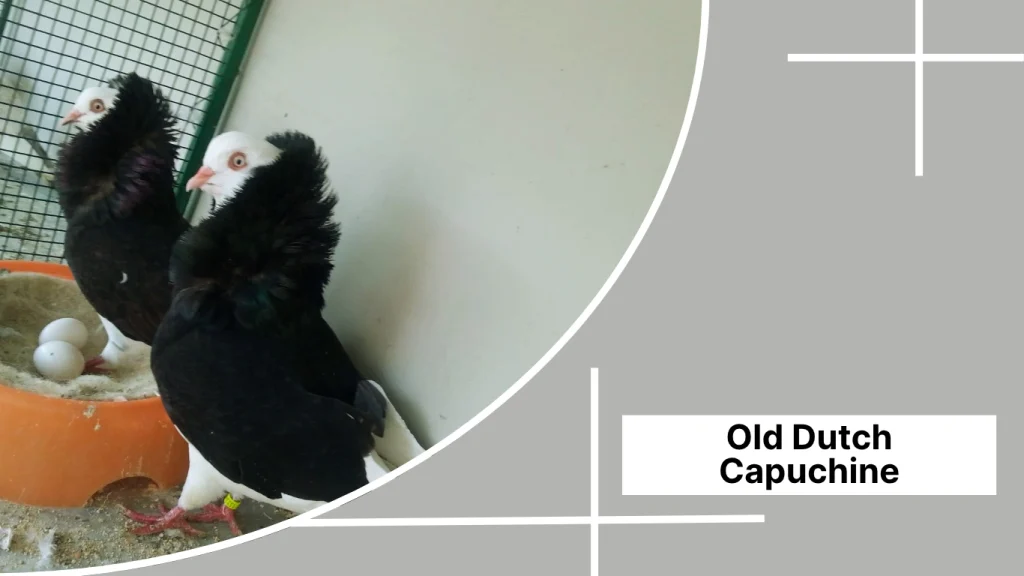
The Old Dutch Capuchine is a decorative pigeon breed from the Netherlands, admired for its shell crest and richly feathered mane that surrounds the neck. It is one of the oldest crested breeds and continues to be a favorite in shows.
Identification
- Feather Color: Solid and pied—common colors include black, red, yellow, blue, and white
- Eye Color: Pearl or bull depending on color variety
- Beak Color: Short, horn or pink-colored
- Body Shape: Small to medium, with a high stance
- Crest: Full shell crest with a thick feather mane around the neck
- Feet: Clean-legged
- Weight: 10–12 ounces
Temperament and Behavior
Quiet and well-mannered. Capuchines are not strong fliers and prefer enclosed aviary environments.
Habitat and Maintenance
Require clean conditions to maintain the quality of crest and mane feathers. Easy access to feeders and perches is important due to limited vision.
Utility and Presentation
Used exclusively for exhibition. Judged for mane fullness, crest symmetry, and feather condition. A classic breed in many fancy pigeon collections.
28. Vienna Highflyer

The Vienna Highflyer is an elegant flying breed developed in Austria, known for its high-altitude flight and endurance. It is also admired for its graceful appearance, making it a dual-purpose bird for both sport and ornamental keeping.
Identification
- Feather Color: Common in blue, black, red, yellow, and white, often with laced or bar patterns
- Eye Color: Pearl or bull depending on variety
- Beak Color: Medium-length, often horn-colored
- Body Shape: Slim, medium-sized with upright posture
- Feet: Clean-legged, red or pink
- Weight: 10–12 ounces
Temperament and Behavior
Energetic, intelligent, and calm in loft. Vienna Highflyers are natural fliers and work well in flocks.
Habitat and Maintenance
Need lofts with ample space and a safe open area for flight. Flight training is essential to develop and maintain their highflying ability.
Utility and Presentation
Used for highflyer competitions and appreciated for their agility, endurance, and elevation. Also shown for color and form in fancy pigeon events.
29. Syrian Dewlap
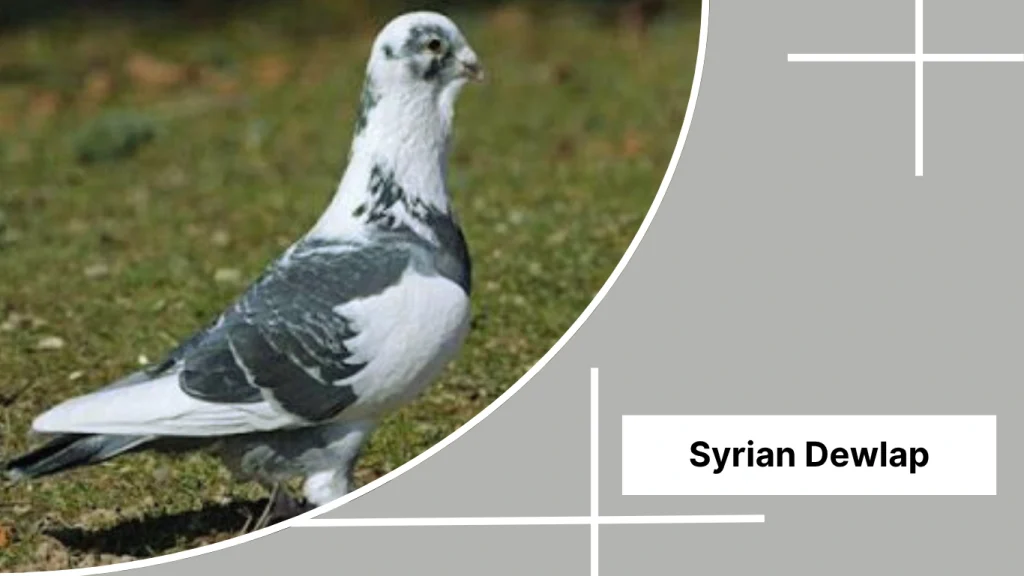
The Syrian Dewlap is a tall, upright breed from the Middle East, particularly Syria. It is characterized by its large dewlap (loose skin at the throat) and proud, statuesque posture.
Identification
- Feather Color: Black, white, red, yellow, and blue with bar or check markings
- Eye Color: Orange or pearl
- Beak Color: Long and thick, typically horn or dark
- Body Shape: Large and upright with long neck
- Dewlap: Prominent, wrinkled skin under the beak and neck
- Feet: Clean-legged, strong and reddish
- Weight: 15–18 ounces
Temperament and Behavior
Regal and confident, but gentle with handlers. They are observant and often kept as quiet display birds.
Habitat and Maintenance
Best housed in spacious aviaries with good airflow. The dewlap area must remain clean to avoid skin infections.
Utility and Presentation
Bred for ornamental purposes and exhibition. Judges look for dewlap size, body posture, and clean feathering. Often used to preserve heritage bloodlines.
30. Scandaroon Pigeon
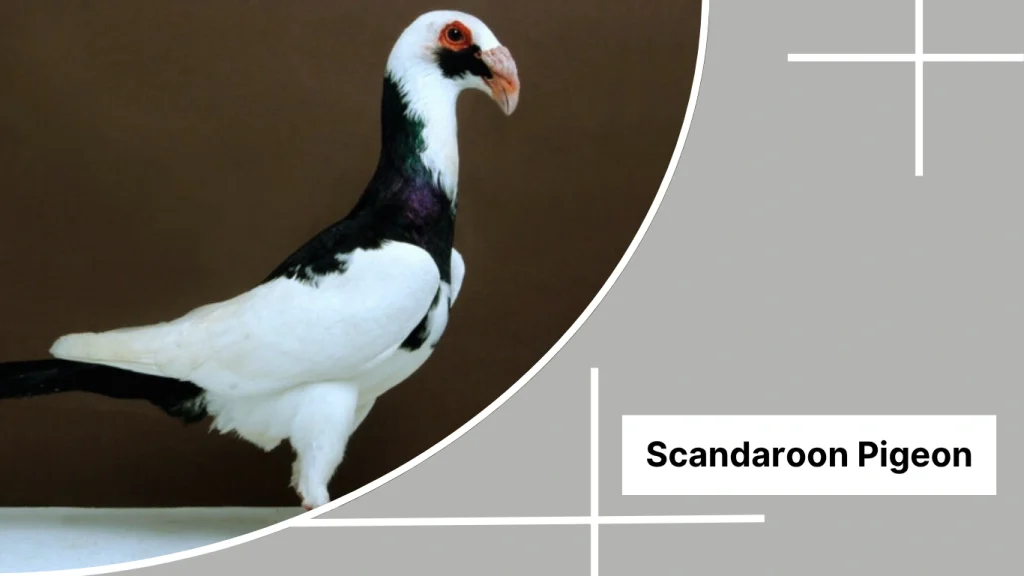
The Scandaroon, also known as the Nuremberg Bagdad, is one of the tallest and most ancient pigeon breeds. It has a long beak, arched neck, and prominent wattle, giving it a distinct and regal appearance often associated with messenger pigeons in antiquity.
Identification
- Feather Color: Blue, black, red, yellow, and white—solid and pied varieties
- Eye Color: Pearl or bull
- Beak Color: Very long and downward-curved, dark horn or black
- Body Shape: Large and tall with an arched neck and proud carriage
- Wattles: Very pronounced beak and eye cere
- Feet: Clean-legged, reddish-pink
- Weight: 16–20 ounces
Temperament and Behavior
Bold, curious, and active. Scandaroons are highly alert and sometimes dominant in mixed lofts, but they can be tamed with care.
Habitat and Maintenance
Require roomy lofts with low perches and wide entrances due to their large body and head structure. Wattles should be kept clean and dry to avoid buildup.
Utility and Presentation
Bred solely for exhibition. Judged for beak length and curve, cere size, and overall stance. Their dramatic profile makes them a centerpiece in show displays.
31. Exhibition Homer

The Exhibition Homer is a fancy breed developed from Racing Homers but bred for size, shape, and feather quality rather than flight. It combines a muscular body with showy characteristics, making it ideal for exhibition standards.
Identification
- Feather Color: Blue bar, check, silver, red, yellow, and pied varieties
- Eye Color: Orange or pearl
- Beak Color: Medium, slightly downturned, horn or black
- Body Shape: Large, upright, with broad shoulders and smooth feathering
- Feet: Clean-legged
- Weight: 16–20 ounces
Temperament and Behavior
Gentle, stable, and sociable. These pigeons adapt easily to human presence and are simple to handle in lofts.
Habitat and Maintenance
Require standard loft space and nest boxes. Since they’re not bred for racing, their activity level is moderate, and they do well in exhibition pens.
Utility and Presentation
Used in fancy pigeon shows, judged for structure, symmetry, and feather condition. Although they descend from athletic birds, their role is now strictly ornamental.
32. Tippler Pigeon

The Tippler pigeon is a performance flying breed developed in England. It is renowned for its ability to fly for extended durations—sometimes over 20 hours nonstop. Tipplers are a favorite among competitive long-distance flyers.
Identification
- Feather Color: Wide variety—blue, black, red, yellow, grizzle, and pied patterns
- Eye Color: Orange or pearl
- Beak Color: Medium, slender, horn or dark
- Body Shape: Medium-sized, sleek, and muscular
- Feet: Clean-legged, reddish
- Weight: 11–13 ounces
Temperament and Behavior
Energetic, alert, and highly trainable. Tipplers are social within their flocks and form strong homing instincts when properly trained.
Habitat and Maintenance
Need large lofts with roof access for flying sessions. Regular exercise and careful conditioning are essential to maintain their flying stamina.
Utility and Presentation
Primarily used in endurance flying competitions. Some are also shown, but their main appeal lies in their flight capabilities, endurance, and discipline.
33. Jacobin Pigeon

The Jacobin pigeon is a highly ornamental breed known for its unique feathered hood that completely encircles the head. It has a refined, upright posture and has been a favorite in fancy pigeon circles for centuries.
Identification
- Feather Color: White, black, red, yellow, blue, and pied varieties
- Eye Color: Pearl
- Beak Color: Short, pink or horn
- Body Shape: Medium-sized, slender with long neck
- Crest (Hood): Full circle of feathers around head and neck
- Feet: Clean-legged, pink
- Weight: 11–13 ounces
Temperament and Behavior
Quiet, elegant, and sometimes shy. Jacobins may have limited vision due to their large hood, making them less active and more dependent on their environment.
Habitat and Maintenance
Require dry, clean lofts and gentle care to maintain the hood feathers. Perches and feeders should be placed accessibly due to reduced side vision.
Utility and Presentation
Used solely for exhibition. Judged for the shape, fullness, and symmetry of the hood as well as body balance and feather quality. Their appearance makes them one of the most recognizable show pigeons.
34. Magpie Pigeon

The Magpie pigeon is a sleek and refined fancy breed known for its distinct color pattern resembling that of a magpie bird—white body with bold colored markings on the head, wings, and tail. It is a decorative breed widely appreciated in exhibitions across Europe.
Identification
- Feather Color: White body with colored head, wings, and tail—common colors include black, blue, red, yellow, and dun
- Eye Color: Pearl or bull depending on strain
- Beak Color: Short to medium, horn or dark
- Body Shape: Small to medium with upright, slim frame
- Feet: Clean-legged, pink or reddish
- Weight: 10–12 ounces
Temperament and Behavior
Calm, well-behaved, and suitable for aviary life. Magpie pigeons are peaceful and mix well with other gentle fancy breeds.
Habitat and Maintenance
Do well in clean, dry aviaries with ample lighting to highlight their coloration. Their markings need to be kept neat and free of dust for show quality.
Utility and Presentation
Bred exclusively for exhibition. Judged for precision and contrast of markings, posture, and smooth feather quality. A favorite among breeders who appreciate elegance and simplicity.
35. Helmet Pigeon

The Helmet pigeon is a compact fancy breed known for its minimalistic color pattern—white body with a colored “helmet” on the head and often on the tail. There are several types, including plain-head and crested varieties.
Identification
- Feather Color: White body with colored head (and tail in some varieties)—colors include black, red, yellow, blue
- Eye Color: Bull or pearl depending on variety
- Beak Color: Short and thick, often pink or horn-colored
- Body Shape: Small and rounded with an upright stance
- Crest: Plain or shell crest depending on type
- Feet: Clean-legged
- Weight: 9–11 ounces
Temperament and Behavior
Gentle, quiet, and friendly. Helmet pigeons are sociable and adapt well to close human interaction and indoor aviaries.
Habitat and Maintenance
Require clean, well-ventilated lofts with easy perch access. Their color pattern requires upkeep for showing—especially the contrast between white and helmet marking.
Utility and Presentation
Kept for ornamental purposes and popular in pigeon shows. Judges look for head marking precision, crest shape (if present), and feather condition.
36. Show King Pigeon
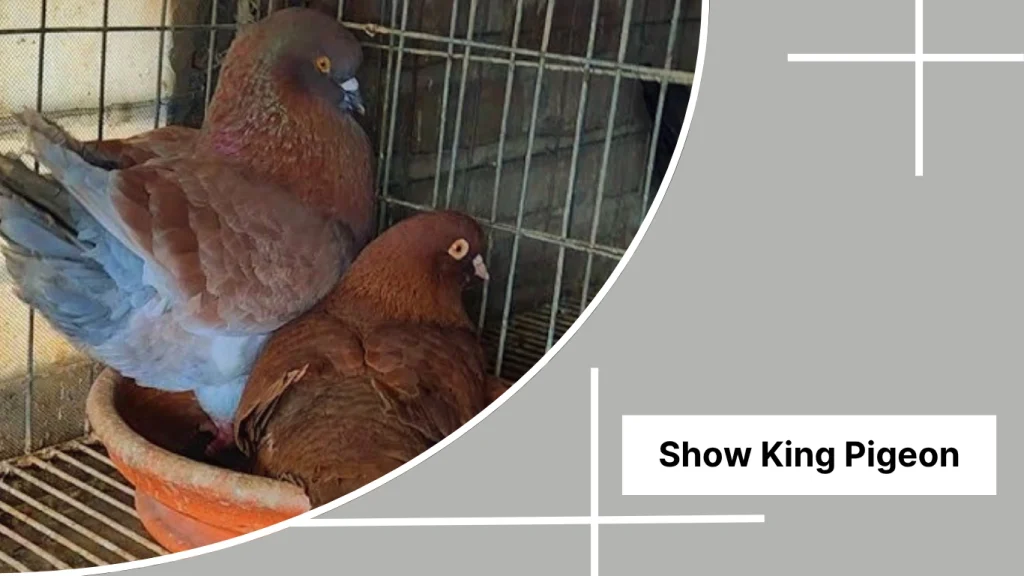
The Show King pigeon is a fancy version of the utility King breed. While utility Kings are bred for meat, Show Kings are selectively bred for body type, symmetry, and poise, making them a staple of competitive pigeon exhibitions.
Identification
- Feather Color: Wide variety including white, black, blue, silver, red, and pied
- Eye Color: Pearl or orange
- Beak Color: Short and thick, usually horn or dark
- Body Shape: Large, robust, with upright posture and broad chest
- Feet: Clean-legged, thick, and red
- Weight: 26–32 ounces
Temperament and Behavior
Very docile and calm. Show Kings are easy to handle and do well in confined spaces, which suits their exhibition-focused role.
Habitat and Maintenance
Prefer wide cages with soft flooring to avoid feather damage. Regular grooming and weight management are important to keep them in show condition.
Utility and Presentation
Used exclusively for exhibition. Judges assess symmetry, size, stance, and feather quality. Their regal appearance and calm nature make them crowd favorites.
37. West of England Tumbler

The West of England Tumbler is a stylish British breed admired for its tight feathering and distinctive posture. Though originally a flying tumbler, today it’s bred mainly for show and valued for its head shape and feather finish.
Identification
- Feather Color: Blue, black, red, yellow, and silver with various patterns
- Eye Color: Pearl
- Beak Color: Short and broad, typically flesh-colored
- Body Shape: Medium, well-rounded with a slightly tilted back
- Feet: Clean-legged
- Weight: 11–13 ounces
Temperament and Behavior
Calm, alert, and gentle. This breed is quiet and social, making it ideal for exhibition and mixed aviaries.
Habitat and Maintenance
Best kept in neat, well-spaced lofts with room for short flight and exercise. Their smooth plumage is easy to maintain with regular care.
Utility and Presentation
Primarily ornamental. Judged for smooth feathering, well-filled face, short beak, and upright stance. A classic breed in UK fancy pigeon circles.
38. Lahore Pigeon
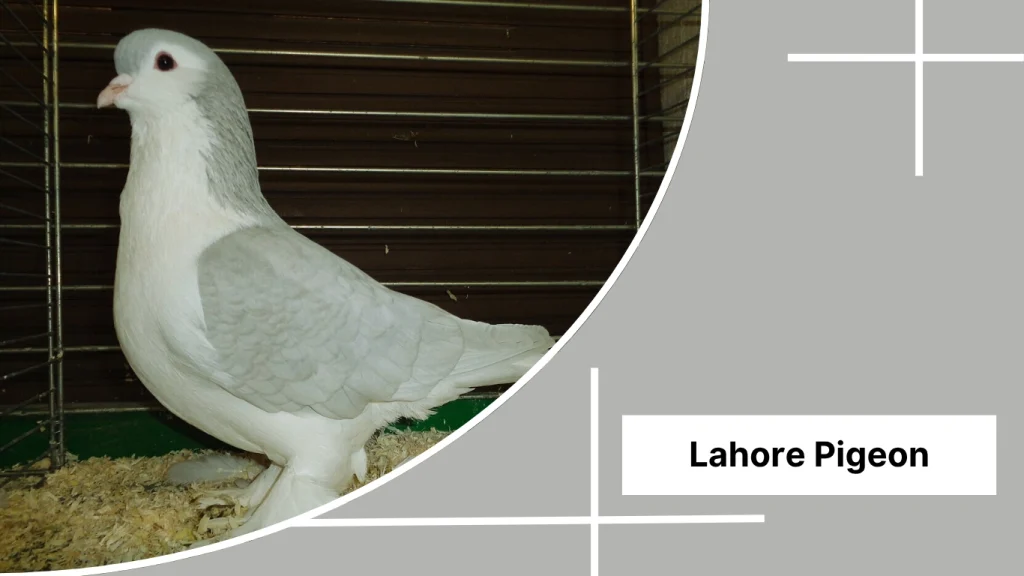
The Lahore pigeon is a large, ornamental breed that originated in Pakistan and became popular in Europe for its gentle personality and stunning plumage. It’s easily recognized by its contrasting saddle markings and full body.
Identification
- Feather Color: White base with colored saddle, wing, and head markings—commonly black, blue, brown, and red
- Eye Color: Pearl or bull
- Beak Color: Short, thick, usually pink or horn-colored
- Body Shape: Large, broad with full chest and short tail
- Feet: Feathered (muffed), thick and soft
- Weight: 16–20 ounces
Temperament and Behavior
Exceptionally gentle, friendly, and easy to tame. Lahore pigeons are affectionate and do well in family or exhibition settings.
Habitat and Maintenance
Require spacious lofts with clean, dry bedding to maintain foot feathers. Grooming is important to keep their markings sharp and muffs clean.
Utility and Presentation
Bred entirely for ornamental purposes. Judged for marking precision, feather quality, body size, and calm behavior.
39. Syrian Owl Pigeon

The Syrian Owl pigeon is a short-beaked fancy breed from the Middle East, appreciated for its tight feathering, round head, and gentle demeanor. It is a compact, elegant bird used primarily for exhibition.
Identification
- Feather Color: Wide variety—solid, barred, and pied patterns in red, black, blue, yellow
- Eye Color: Orange or pearl
- Beak Color: Very short and thick, often horn-colored
- Body Shape: Small, rounded with short neck and full breast
- Feet: Clean-legged, short and pink
- Weight: 9–11 ounces
Temperament and Behavior
Tame, sweet-natured, and alert. Syrian Owls adapt well to handling and do well in indoor aviaries.
Habitat and Maintenance
Prefer small cages or display lofts. Due to their short beak, shallow food and water dishes are necessary for comfortable access.
Utility and Presentation
Exhibited for body form, feather tightness, and short beak. Valued for their balance of classic and modern appearance in shows.
40. Polish Lynx Pigeon

The Polish Lynx pigeon is a striking utility-fancy breed originally from Poland and Germany. Known for its barred and laced feather pattern resembling a lynx’s fur, it’s kept for both ornamental purposes and its historical use in squab production.
Identification
- Feather Color: Silver, blue, red, and yellow with distinct barred or laced markings
- Eye Color: Orange or pearl
- Beak Color: Medium, slightly curved, typically horn-colored
- Body Shape: Large, sturdy with broad chest and slightly sloped back
- Feet: Clean-legged, strong, pink or reddish
- Weight: 18–22 ounces
Temperament and Behavior
Mild-mannered and robust. Polish Lynx pigeons are easy to manage and thrive in structured environments.
Habitat and Maintenance
Best kept in roomy lofts with low roosts. They require minimal grooming and are hardy birds suited to a range of climates.
Utility and Presentation
Used in shows for their color and pattern, and occasionally in utility breeding for meat. Judged on feather definition, body strength, and posture.