



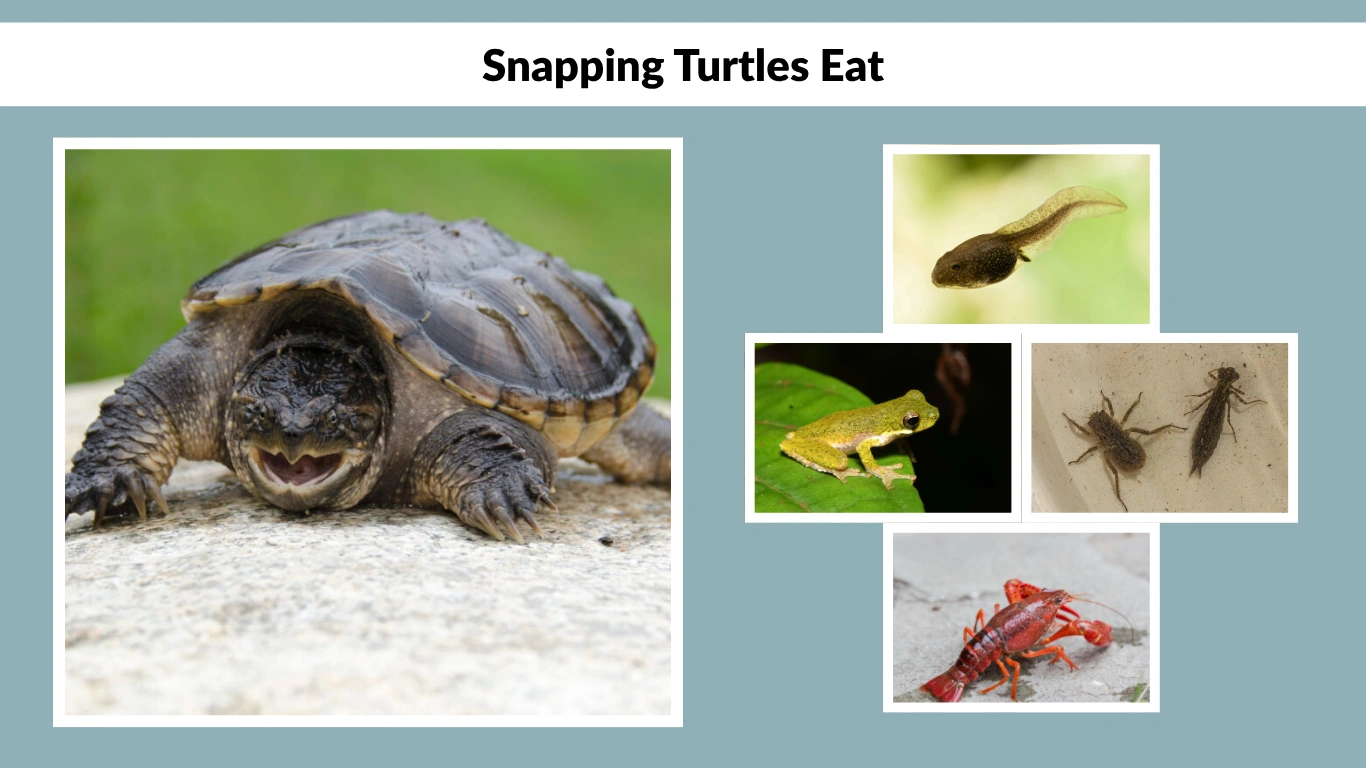
Snapping turtles are some of the most fascinating and ancient reptiles in North America, known for their strong jaws, rugged appearance, and surprisingly varied diet. Whether you’re observing them in the wild or caring for one as a pet, understanding what snapping turtles eat is essential for their health and survival. From baby hatchlings to massive adults, their food preferences change with age, habitat, and species.
In this guide, we’ll explore everything from what baby snapping turtles eat in the wild to what alligator snapping turtles prefer in captivity. We’ll also answer regional diet questions like what these turtles eat in Michigan or Florida and provide practical tips if you’re feeding a snapping turtle at home. Let’s break down the snapping turtle’s menu—whether it’s fish, plants, or something more unexpected.
What Do Common Snapping Turtles Eat?

Common snapping turtles (Chelydra serpentina) are opportunistic omnivores, meaning they eat both animal and plant matter depending on availability. In the wild, they primarily hunt underwater but also scavenge along riverbanks, ponds, and wetlands.
In the Wild
Wild common snapping turtles feed on:
- Small fish (bluegill, minnows, perch)
- Frogs and tadpoles
- Aquatic insects and larvae
- Snails, worms, crayfish
- Ducklings, small birds, and rodents (occasionally)
- Carrion (dead animals)
- Aquatic plants and algae
They are known to ambush prey by lying still at the bottom of the water and striking with lightning speed when something comes close.
In Captivity
When kept as pets or in rehabilitation centers, their diet can include:
- Commercial turtle pellets
- Earthworms, crickets, mealworms
- Frozen/thawed feeder fish or pinky mice
- Leafy greens (e.g., kale, romaine lettuce)
- Occasional fruits like berries or apple slices (in moderation)
Their diet in captivity should be varied to replicate their wild intake and ensure balanced nutrition.
What Do Alligator Snapping Turtles Eat?
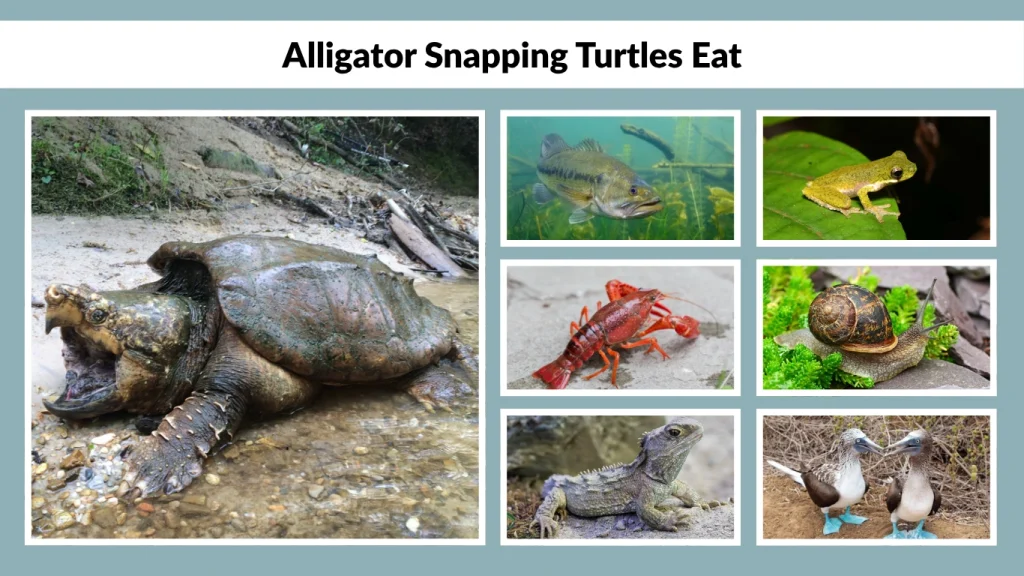
Alligator snapping turtles (Macrochelys temminckii) are primarily carnivorous and have a unique way of catching prey. They’re famous for their worm-like tongue lure, which they use to attract fish while lying motionless with their mouths open.
In the Wild
Their wild diet includes:
- Fish (bass, catfish, shad)
- Amphibians (frogs, salamanders)
- Crustaceans (crayfish, shrimp)
- Snails, clams, and mussels
- Small turtles or reptiles
- Birds and aquatic mammals (rarely)
- Carrion and discarded meat
Alligator snapping turtles are mostly nocturnal feeders and tend to stay submerged, relying heavily on stealth and their powerful jaws.
In Captivity
In a captive or pet setting, they can be fed:
- Raw or cooked fish (boneless)
- Chicken pieces, liver (occasionally)
- Worms, insects, and feeder fish
- Shrimp, krill, or freeze-dried seafood
- Turtle pellets enriched with calcium
- Very limited fruits or vegetables (not a major part of their diet)
It’s important to avoid overfeeding or offering high-fat foods too often, especially in captive environments where their activity is limited.
Baby Snapping Turtles: What Do They Eat?

Baby snapping turtles, also known as hatchlings, have different dietary needs compared to adults. Their bodies are still developing, so they require more protein and smaller, easy-to-digest foods.
In the Wild
Wild baby snapping turtles eat:
- Small aquatic insects
- Tiny fish or fish fry
- Worms and small snails
- Tadpoles and small amphibians
- Aquatic larvae and zooplankton
- Soft aquatic vegetation (in smaller amounts)
They rely heavily on hunting and scavenging in shallow waters with dense vegetation, where food is easier to catch.
In Captivity
Pet or captive baby snapping turtles thrive on:
- Bloodworms, mealworms, earthworms (cut into small pieces)
- Small feeder fish or shrimp
- Reptile-safe turtle pellets soaked for softness
- Small pieces of boiled egg or chicken (occasionally)
- Soft leafy greens (like duckweed, spinach, or kale)
Feed baby turtles daily and only what they can consume in 10–15 minutes. Overfeeding can lead to water pollution and health issues.
What Do Snapping Turtles Eat in the Wild?
In their natural habitat, snapping turtles are resourceful hunters and scavengers. Their diet is influenced by local biodiversity, seasonal changes, and water availability.
Key Wild Food Sources:
- Animals: Fish, frogs, birds, snakes, small mammals, insects, and carrion
- Invertebrates: Crustaceans, mollusks, worms
- Plants: Algae, duckweed, water lilies, pondweed
Snapping turtles are essential in the ecosystem, helping control fish and insect populations and cleaning up dead animal matter.
What Do Snapping Turtles Eat in a Pond or Lake?
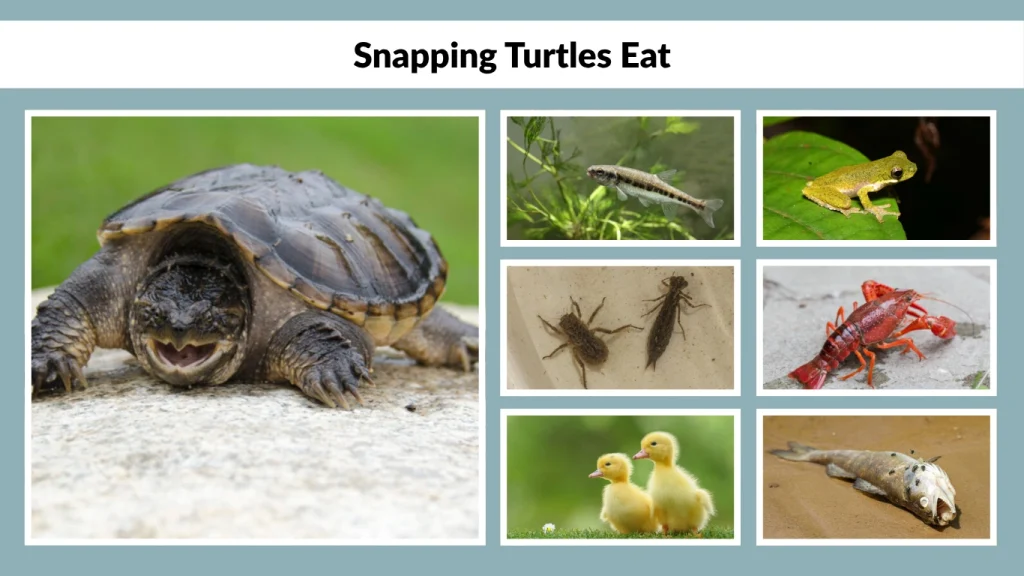
Ponds and lakes are ideal environments for snapping turtles due to the abundance of food and cover. Their diet in these habitats includes:
Common Foods in Ponds/Lakes:
- Minnows, perch, or bluegill
- Frogs, tadpoles, and salamanders
- Dragonfly larvae and other aquatic insects
- Crayfish and freshwater mussels
- Ducklings (occasionally)
- Decaying fish or dead animals
- Water plants like duckweed and cattails
Pond owners often worry about turtles eating their fish—while it’s possible, snapping turtles usually target the sick or slow-moving fish.
What Do Snapping Turtles Eat in Captivity (as Pets)?
When kept as pets, snapping turtles need a carefully planned diet that mimics their wild intake to prevent malnutrition and disease.
Captive Diet Tips:
- Protein Sources: Commercial turtle pellets, crickets, earthworms, mealworms, raw fish, cooked chicken (in small amounts)
- Plant Foods: Romaine lettuce, spinach, kale, duckweed, aquatic plants
- Fruits (occasionally): Berries, melon, mango (small portions)
- Calcium Supplements: Cuttlebone or calcium blocks to support shell growth
- Drinking Water: Clean, chlorine-free water for swimming and hydration
Feed adult snapping turtles 3–4 times per week and remove uneaten food to maintain water quality. Baby turtles need daily feeding.
What Do Snapping Turtles Like to Eat Most?
Snapping turtles are opportunistic feeders, but they do have clear preferences when it comes to their meals. In the wild, they tend to favor protein-rich foods such as fish, amphibians, and invertebrates. Their hunting instincts are strongest when prey moves, so live or freshly killed food is often more enticing to them than plant matter. However, during periods of low prey availability, they will consume a significant amount of aquatic vegetation.
In captivity, snapping turtles often show preference for live feeder fish, worms, or even shrimp over pellets or vegetables. While they can be trained to eat commercial diets, many pet snapping turtles still display excitement when presented with moving food, which mimics their natural hunting behavior. Younger turtles, in particular, are drawn to high-protein meals, while adults might consume more plants over time.
Plant-Based Foods Snapping Turtles Can Eat
Although snapping turtles are primarily carnivorous, especially when young, they also consume a notable amount of plant matter—particularly as adults. This plant intake plays a role in their digestion and helps balance their overall diet. In the wild, snapping turtles may eat aquatic plants like duckweed, water lilies, and pondweed. These are easily accessible in shallow waters and provide fiber and hydration.
In captivity, safe plant-based options include leafy greens such as romaine lettuce, collard greens, kale, and spinach. These should be offered in moderation and chopped into bite-sized pieces to prevent choking. Fruit can also be given occasionally, but only in small amounts, since high sugar content may lead to digestive issues. It’s important to avoid feeding turtles toxic plants or those treated with pesticides, as they can cause health problems.
What Animals or Fish Do Snapping Turtles Eat?
Snapping turtles are capable predators with strong jaws that allow them to catch and consume a wide variety of animals. In natural freshwater habitats, their diet often includes fish species like minnows, perch, and sunfish. They also consume amphibians, including frogs and salamanders, and are known to prey on young birds or ducklings that venture too close to the water’s edge.
Aside from fish and amphibians, snapping turtles will eat crustaceans such as crayfish and shrimp, as well as mollusks like snails and freshwater clams. Their powerful bite enables them to crush shells and hard exoskeletons. In some cases, they may even target small mammals like mice if they find them near the water. Scavenging is also common, and snapping turtles will not hesitate to feed on already-dead animals if they come across them.
What Do Snapping Turtles Eat by Size and Age?
The dietary needs of snapping turtles change significantly based on their size and age. Hatchlings and very young turtles require a high-protein diet to support rapid growth and shell development. These smaller turtles focus primarily on soft-bodied prey that they can easily capture and digest, such as insect larvae, worms, and small fish.
As snapping turtles grow into juveniles and eventually adults, their diet becomes more varied. Larger turtles are capable of taking down bigger prey, including adult frogs, larger fish, and even birds or small mammals. At the same time, their ability to digest plant matter improves, and they begin incorporating more aquatic vegetation into their meals.
Size also affects feeding frequency. Baby turtles may need food daily, while large adults can be fed two or three times a week depending on their activity level and environment. Monitoring the size of food portions relative to the turtle’s head is a good rule of thumb—if the food is too big to bite easily, it should be chopped or replaced with something smaller.
Region-Specific Diet Examples
Snapping turtles are found throughout North America, and while their core diet remains consistent, regional variations in habitat can influence what they eat. In Michigan, snapping turtles commonly consume perch, crayfish, aquatic insects, and water plants found in inland lakes and marshes. In Ohio, their diet often includes amphibians, minnows, snails, and plant matter from farm ponds and wetlands. Indiana snapping turtles feed on similar prey, particularly in slow-moving streams and agricultural waterways.
In Florida, the warmer climate and diverse aquatic ecosystem allow snapping turtles to consume a wide range of prey, including tropical fish, shrimp, and a greater variety of aquatic vegetation. Maine and Massachusetts snapping turtles rely heavily on fish, frogs, and seasonal plant growth due to cooler climates and seasonal food fluctuations. In Canada, snapping turtles adapt to shorter active seasons by consuming high-protein prey like tadpoles, fish, and carrion when available.
Feeding Alligator Snapping Turtles in Captivity
Alligator snapping turtles kept in captivity need a carefully managed diet to maintain their health. Since they are mostly carnivorous, their food should consist primarily of high-quality animal protein. Raw or cooked boneless fish such as tilapia, chunks of chicken, and shrimp are commonly fed. Feeder fish should be offered occasionally, but not as a staple due to the risk of introducing parasites.
Turtle pellets designed for carnivorous species can provide balanced nutrition, especially when supplemented with vitamins and calcium. Younger alligator snapping turtles should be fed more frequently, around four to five times per week, while adults do well with two to three feedings per week. It’s essential to avoid fatty meats and processed foods, as these can cause obesity and liver problems in the long term.
Feeding Tips for Pet Snapping Turtles
Feeding snapping turtles in captivity requires more than just tossing food into their tank. Variety, cleanliness, and monitoring are all important factors. Feeding should be done in a separate container or tank whenever possible to reduce waste buildup and maintain water quality. Uneaten food should be removed within 20 minutes to prevent fouling the water.
Offer food that is appropriately sized. Chopping large items into smaller pieces makes it easier for the turtle to consume and reduces the risk of choking. Avoid feeding live fish frequently, as they may carry parasites or stress out the turtle. A balanced schedule includes a mix of protein, greens, and supplements, particularly calcium for shell health.
Hydration is typically not an issue, as snapping turtles live in water and drink through it. However, ensuring the water is clean and chlorine-free is vital. A basking area should also be available to support digestion and vitamin D synthesis.
FAQs
What do snapping turtles eat and drink?
Snapping turtles primarily eat protein-rich foods like fish, amphibians, and insects, along with aquatic plants. They drink water directly from their habitat and stay hydrated by living in aquatic environments.
Do snapping turtles eat fruit?
Yes, but only in small amounts. Fruits like berries, melon, or apple can be offered occasionally, especially to captive turtles, but should not make up a large part of their diet.
What do red-eared or red snapping turtles eat?
There is no species called a “red snapping turtle,” but if referring to red-eared sliders or hybrids, their diet is similar to common snapping turtles: a mix of protein and plant-based foods.
What do snapping turtles eat in Canada or northern regions?
They eat seasonally available fish, amphibians, aquatic insects, and plants. Because of the short warm season, they feed aggressively in summer to prepare for winter dormancy.