

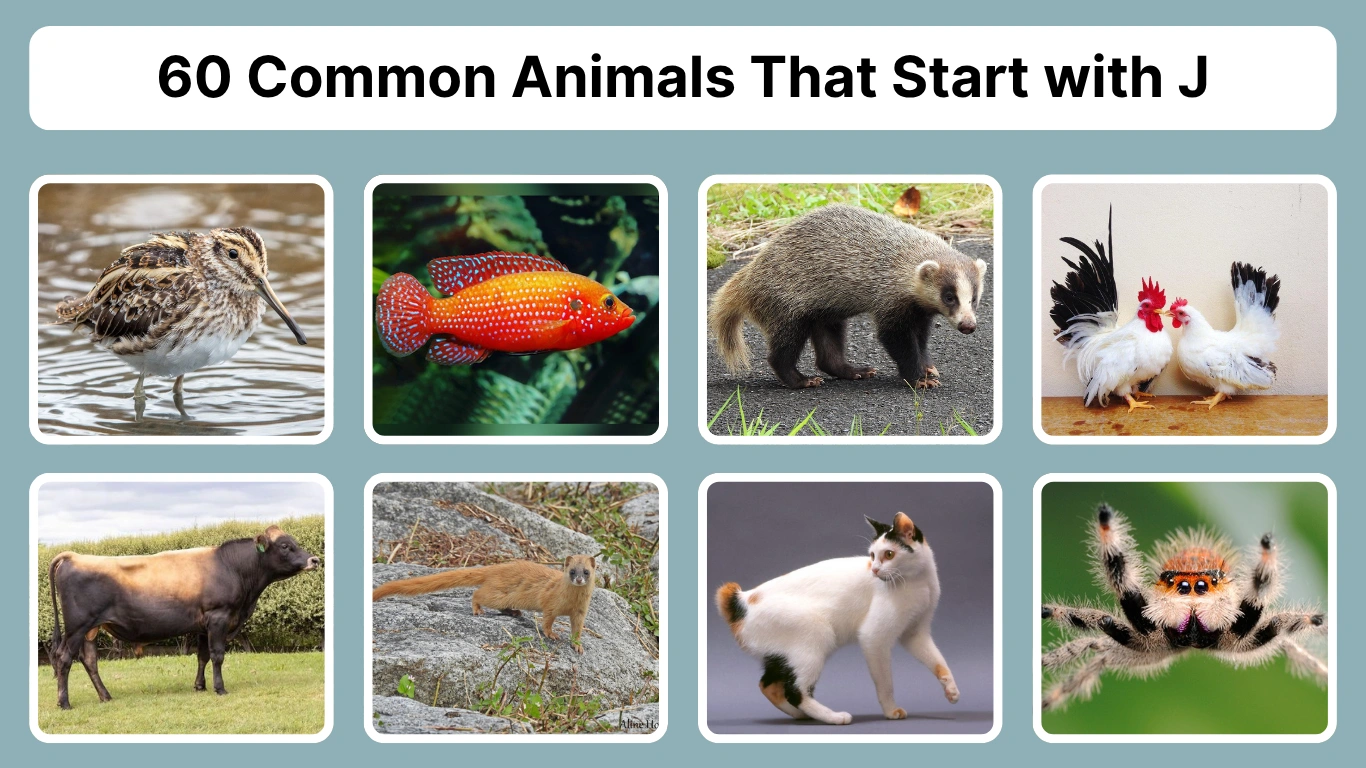
From jungles and rivers to farms and forests, the animal kingdom is full of fascinating creatures whose names begin with the letter J. In this article, we’ve grouped 60 such animals—from mammals and birds to insects and marine life—each with unique traits and habitats. Whether you’re a wildlife enthusiast or just curious, this list will introduce you to some of nature’s most interesting animals starting with J.
Mammals that Start with J
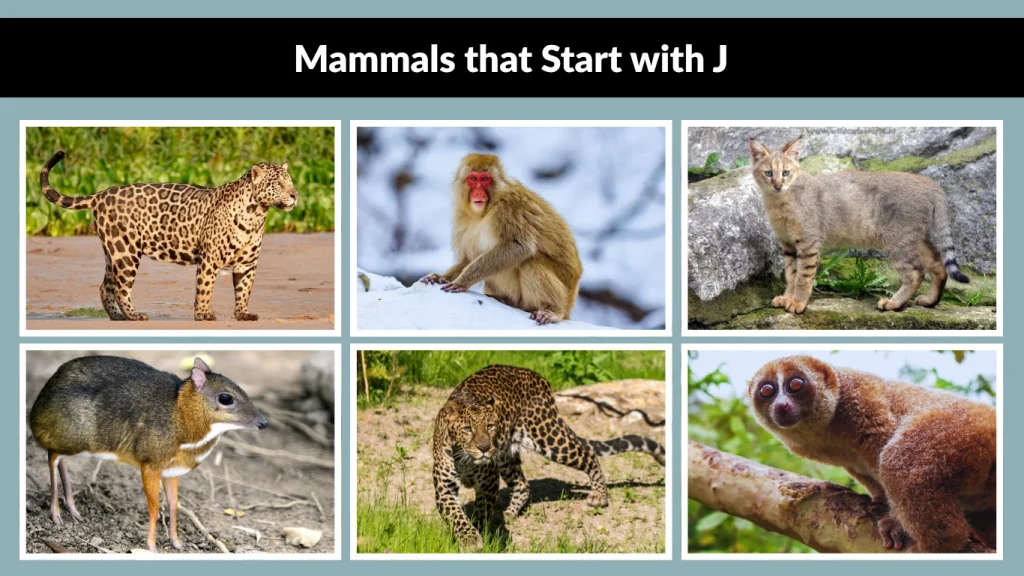
Mammals are warm-blooded vertebrates known for having hair or fur and nursing their young. In this group, you’ll discover fascinating mammals whose names begin with the letter J—from stealthy hunters to playful creatures found in forests and mountains around the world.
1. Jaguar
The jaguar is a powerful big cat native to the Americas. It has a yellowish coat covered with black rosettes and is known for its strength and stealth.
They are solitary animals, often found in rainforests, and are excellent swimmers. Jaguars play a crucial role in maintaining balance in their ecosystems.
2. Japanese Macaque
Also called the snow monkey, the Japanese macaque lives in cold mountain regions of Japan. It’s known for soaking in hot springs during winter.
These social primates live in groups and have expressive faces. Their intelligence and adaptability have made them a favorite subject in animal behavior research.
3. Jungle Cat
The jungle cat is a medium-sized wild cat native to Asia. It has long legs, a short tail, and a tawny or gray coat with faint markings.
Unlike its name suggests, it prefers wetlands and grasslands over dense forests. Jungle cats are solitary and mainly active at dawn and dusk.
4. Java Mouse-Deer
Despite its name, the Java mouse-deer is not a true deer but a chevrotain. It’s one of the smallest hoofed mammals, about the size of a rabbit.
It lives in the dense tropical forests of Java. This shy and nocturnal animal feeds on fruits, leaves, and flowers close to the forest floor.
5. Javan Leopard
The Javan leopard is a critically endangered big cat found only on the Indonesian island of Java. It has a sleek body and a coat with distinctive spots.
Due to deforestation, its habitat has become highly fragmented. The Javan leopard is elusive and primarily nocturnal, making sightings rare.
6. Javan Slow Loris
The Javan slow loris is a small, nocturnal primate with big eyes and a toxic bite. It moves slowly through the treetops in search of insects and fruit.
Found only in Java, this endangered species faces threats from habitat loss and illegal pet trade. It’s one of the few venomous mammals known to science.
Aquatic & Marine Animals that Start with J
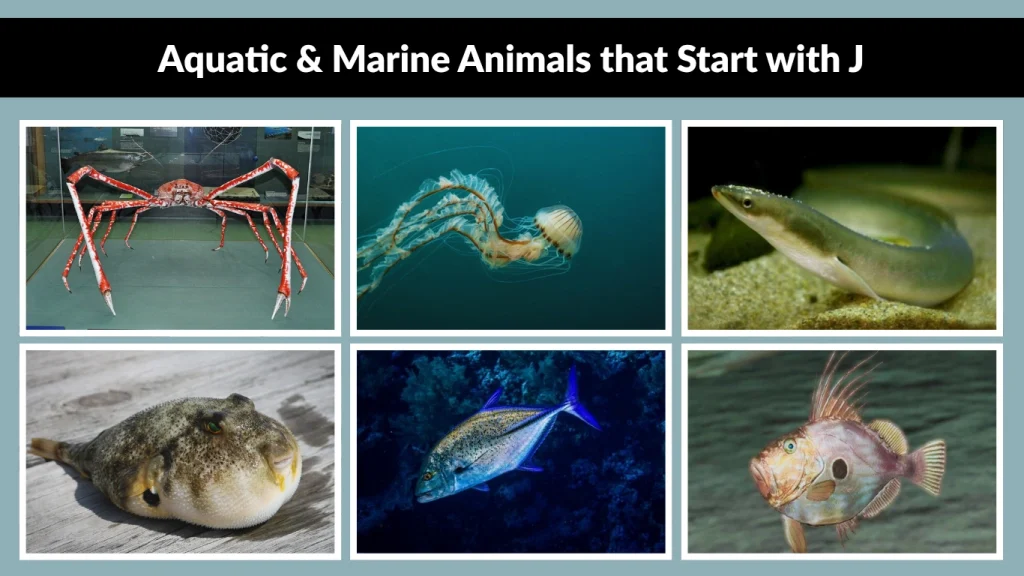
Aquatic and marine animals live in or around water, whether it’s the ocean, rivers, or lakes. This group showcases fascinating sea creatures and water dwellers whose names begin with the letter J, ranging from jelly-bodied invertebrates to deep-sea fish with unique adaptations.
7. Japanese Spider Crab
The Japanese spider crab is the largest arthropod in the world, with legs that can span up to 12 feet. It lives in deep waters near Japan.
Despite its intimidating size, it is generally harmless and feeds on dead animals. Its long limbs help it move across the sea floor and reach food easily.
8. Jellyfish
Jellyfish are gelatinous sea creatures known for their umbrella-shaped bodies and long, stinging tentacles. They’ve existed for over 500 million years.
Found in oceans worldwide, jellyfish drift with the currents. While some species are harmless, others can deliver painful stings to predators or unsuspecting swimmers.
9. Japanese Eel
The Japanese eel is a long, snake-like fish that lives in freshwater but migrates to the ocean to spawn. It is a delicacy in Japanese cuisine.
Young eels, known as elvers, are often caught and farmed. Their mysterious life cycle and long migrations remain a subject of scientific research.
10. Japanese Pufferfish
Also called fugu, the Japanese pufferfish is famous for its ability to inflate and its toxic organs. It contains tetrodotoxin, a powerful neurotoxin.
Despite its danger, it is a highly prized delicacy in Japan, prepared only by licensed chefs. It lives in coastal waters and has a rounded, spiny body.
11. Jackfish
Jackfish refers to several fast-swimming fish in the Carangidae family, including species like the crevalle jack. They are often found in warm ocean waters.
Known for their strength and speed, they are popular among sport fishers. Jackfish travel in schools and prey on smaller fish near coral reefs and coastlines.
12. John Dory
The John Dory is a flat-bodied fish known for its large eyes and dark spot on each side. It inhabits coastal and deep-sea waters.
It uses stealth to hunt smaller fish, sucking them in with its extendable mouth. Its distinct look and tasty flesh make it a sought-after catch.
Birds that Start with J
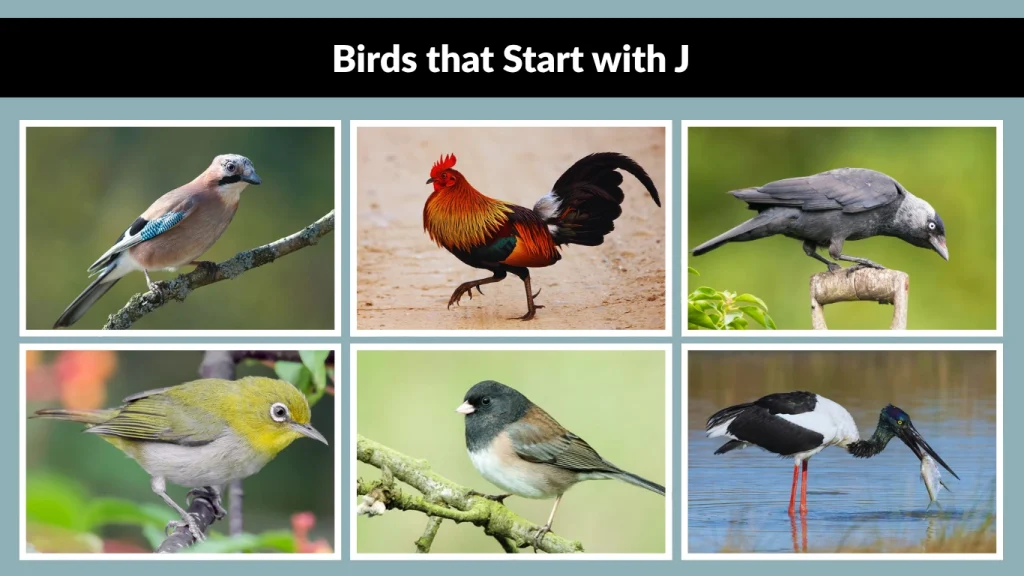
Birds are warm-blooded vertebrates characterized by feathers, beaks, and the ability to lay eggs. In this group, you’ll discover some captivating birds starting with the letter J—from colorful songbirds to skilled flyers that thrive in forests, fields, and wetlands.
13. Jay
Jays are colorful, intelligent birds belonging to the crow family. They are known for their bold personalities and loud, harsh calls.
Most jays have bright blue, black, and white plumage. They are often seen caching food like acorns and are skilled mimics of other birds’ calls.
14. Junglefowl
Junglefowl are wild relatives of domestic chickens, found in South and Southeast Asia. The red junglefowl is believed to be the ancestor of today’s chickens.
They have bright plumage and loud crowing calls. These ground-dwelling birds forage in undergrowth and prefer dense jungle environments for shelter.
15. Jackdaw
Jackdaws are small, black-gray members of the crow family, easily recognized by their pale blue eyes and chatty behavior.
They are highly social birds, nesting in colonies and forming tight bonds. Jackdaws are often found in towns, farms, and open woodlands across Europe and Asia.
16. Japanese White-eye
The Japanese white-eye is a tiny green bird with a prominent white ring around its eye. It’s native to East Asia and often found in gardens and forests.
These birds feed on nectar, fruits, and insects. They are social and move in flocks, known for their cheerful calls and acrobatic flight.
17. Junco
Juncos are small sparrow-like birds native to North America, often called “snowbirds” due to their winter appearance in many regions.
They have gray or brown plumage with white underbellies. Juncos forage on the ground and are commonly seen flitting around feeders and brushy habitats.
18. Jabiru
The jabiru is a large stork found in Central and South America. It’s one of the tallest flying birds, with a striking black head and neck.
It nests in tall trees near water and feeds on fish, amphibians, and reptiles. The jabiru’s huge wings make it a graceful flyer despite its size.
Mammals that Start with J (Continued)
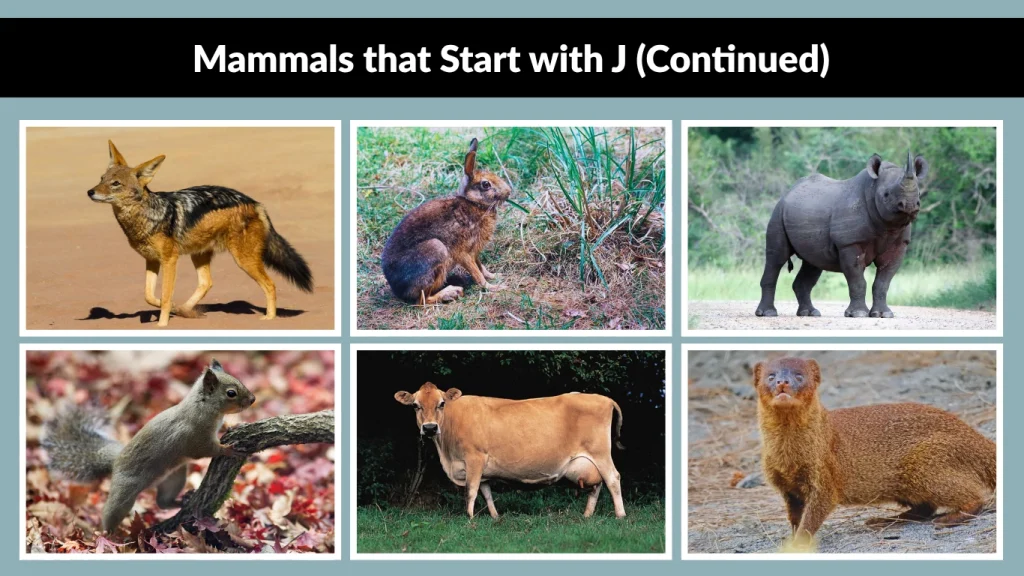
This group highlights even more mammals that start with the letter J. From predators to grazers, these animals are found across various continents and environments, each playing a vital role in their respective ecosystems.
19. Jackal
Jackals are medium-sized canids found in Africa and parts of Asia. They resemble small wolves and are known for their sharp intelligence and adaptability.
They are opportunistic feeders, eating everything from small animals to fruit and carrion. Jackals are often heard making high-pitched yipping calls at night.
20. Japanese Hare
The Japanese hare is native to the main islands of Japan. It has a reddish-brown coat that turns white in snowy regions during winter.
This solitary and shy mammal feeds mainly on grasses and bark. It is an important part of Japan’s forest ecosystem and avoids predators using speed and stealth.
21. Javan Rhinoceros
The Javan rhinoceros is one of the rarest large mammals on Earth, found only in Ujung Kulon National Park in Indonesia.
It has a single horn and a thick, gray hide with folds. Due to its elusive nature and dwindling population, conservation efforts are critical for its survival.
22. Japanese Squirrel
This small, tree-dwelling rodent is found in Japan’s deciduous forests. It has a bushy tail, large eyes, and a coat that varies by season.
Japanese squirrels are active during the day and feed on nuts, seeds, and fruits. They’re agile climbers and build nests in tree hollows or branches.
23. Jersey Cow
The Jersey cow is a small, light-brown dairy breed originally from the British Channel Island of Jersey. It’s known for producing rich, high-butterfat milk.
These cows are gentle, intelligent, and efficient grazers. They’ve been exported globally and are especially favored on small farms and family-owned dairies.
24. Javan Mongoose
The Javan mongoose is a carnivorous mammal found in Southeast Asia. It has a long, slender body, pointed snout, and coarse brown fur.
It preys on insects, rodents, and snakes. Known for its fearlessness, the Javan mongoose is sometimes introduced to control pests but can become invasive.
Insects and Arachnids that Start with J
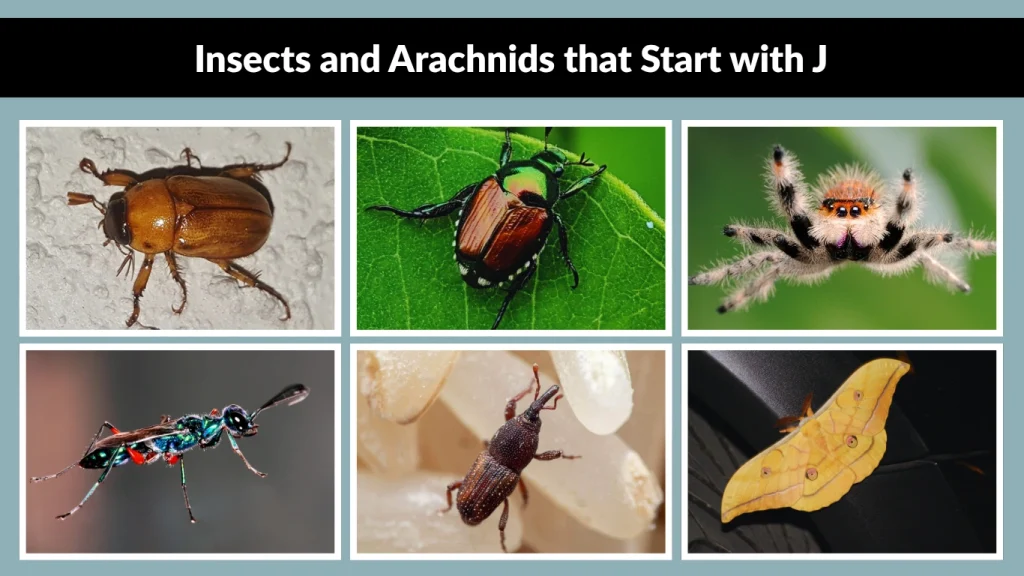
Insects and arachnids are among the most diverse creatures on Earth. This group features six small but fascinating invertebrates whose names begin with J—ranging from buzzing beetles to spiders and parasitic wasps found in gardens, forests, and fields.
25. June Bug
June bugs are large, brown beetles that appear in late spring and early summer. They are attracted to lights and are often seen flying clumsily at night.
Their larvae, called white grubs, live underground and feed on plant roots. While adults are mostly harmless, larvae can damage lawns and crops.
26. Japanese Beetle
The Japanese beetle is a metallic green and copper-colored insect that feeds on over 300 types of plants. It’s a serious pest in many countries.
Originally from Japan, it was accidentally introduced to North America. The adults skeletonize leaves, while the grubs feed on turfgrass roots, harming lawns.
27. Jumping Spider
Jumping spiders are small, fuzzy arachnids known for their excellent vision and ability to leap many times their body length.
They don’t build webs to catch prey; instead, they stalk and pounce like tiny cats. Many species are curious and seem to observe humans closely.
28. Jewel Wasp
Also called the emerald cockroach wasp, this insect is known for its shimmering body and eerie parasitic behavior on cockroaches.
It injects venom into a roach’s brain, turning it into a zombie host for its larvae. This stunning but ruthless wasp is native to parts of Asia and Africa.
29. Java Rice Weevil
This tiny beetle is a pest that attacks stored grains like rice, corn, and wheat. It’s dark brown with four lighter spots on its back.
The adult weevils chew into kernels to lay eggs. As larvae develop inside the grain, they hollow it out, causing major agricultural losses.
30. Japanese Silk Moth
The Japanese silk moth is a large, night-flying insect known for producing silk. Its caterpillars feed on mulberry leaves before spinning cocoons.
Unlike the domestic silkworm, this species isn’t commercially farmed. Its fuzzy brown wings and wide wingspan make it a striking sight in forests and gardens.
Reptiles and Amphibians that Start with J
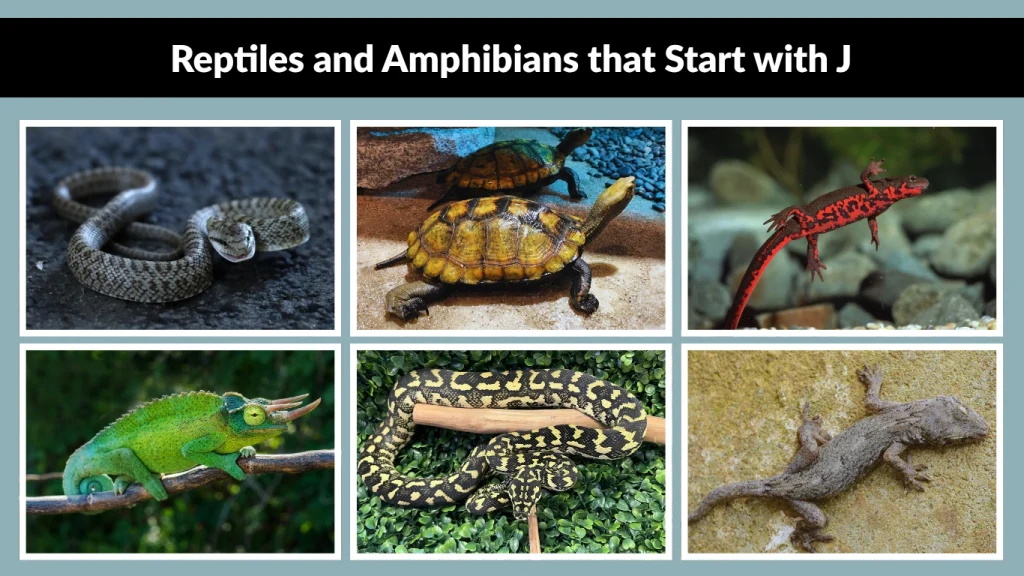
Reptiles and amphibians are cold-blooded animals with fascinating behaviors and adaptations. In this group, we explore species that start with the letter J—from snakes and turtles to lizards and newts—each uniquely suited to its habitat.
31. Japanese Rat Snake
This non-venomous snake is found throughout Japan and is known for its olive or green-gray coloring. It can grow over 5 feet long.
It helps control rodent populations in rural areas and is often seen near rice fields. Despite its size, it’s harmless and even considered sacred in some regions.
32. Japanese Pond Turtle
The Japanese pond turtle is a freshwater reptile found in rivers and marshes of Japan. It has a dark shell and a yellow-striped head.
This shy turtle is active during the day and feeds on insects, aquatic plants, and small fish. It hibernates during winter in mud or under leaves.
33. Japanese Fire Belly Newt
This small amphibian has a black body with bright red-orange belly markings that serve as a warning to predators.
It secretes toxins from its skin as a defense mechanism. Native to Japan, it’s popular in the pet trade but should be handled carefully due to its poison.
34. Jackson’s Chameleon
Native to East Africa but introduced elsewhere, this chameleon is known for the three horns on its head, resembling a miniature triceratops.
It can change color, grip branches with zygodactyl feet, and extend its sticky tongue to catch insects. Males use their horns for displays and combat.
35. Jungle Python
Also called the jungle carpet python, this non-venomous snake is native to Australia. It’s known for its bold black and yellow markings.
It’s a constrictor, using its strong body to subdue prey. Jungle pythons can grow over 8 feet and are common in forests, grasslands, and near human dwellings.
36. Japanese Gecko
This small, nocturnal lizard is found in homes and gardens across Japan. It has a soft, translucent body and large, lidless eyes.
Japanese geckos eat insects and use tiny toe pads to climb walls and ceilings. Their chirping calls are often heard during warm nights.
Domesticated and Farm Animals that Start with J
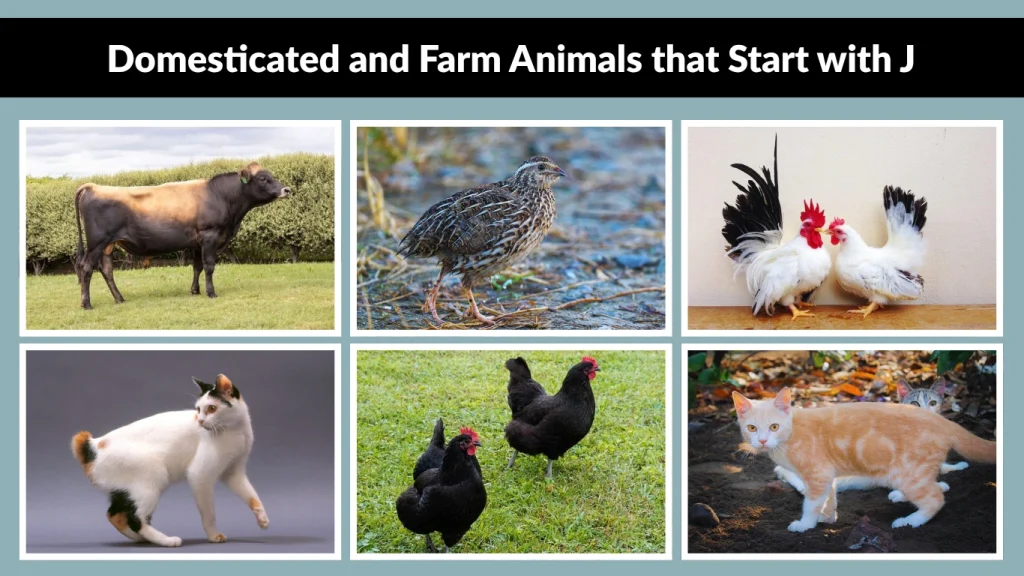
Domesticated and farm animals have lived alongside humans for thousands of years, offering companionship, labor, and food. In this group, you’ll meet six animals starting with J that are commonly found on farms or as household pets.
37. Jersey Bull
The Jersey bull is the male of the Jersey cattle breed, known for its lean build and light brown coat. It plays a vital role in breeding.
Though smaller than other bulls, it can be aggressive and should be handled cautiously. Jersey bulls contribute to dairy farming by siring high-yielding cows.
38. Japanese Quail
This small game bird is commonly raised for its eggs and meat. Native to East Asia, the Japanese quail is hardy and quick to mature.
It’s often used in research due to its fast reproduction cycle. Their eggs are speckled and considered a delicacy in many parts of the world.
39. Japanese Chicken
The Japanese chicken, such as the Onagadori breed, is known for its ornamental value and long tail feathers. It’s kept more for beauty than productivity.
These chickens are often showcased in exhibitions and admired for their graceful appearance. They require extra care and special housing conditions.
40. Japanese Bobtail Cat
This domestic cat breed is easily recognized by its short, pom-pom-like tail and active, playful nature. It is considered a symbol of good luck in Japan.
Japanese Bobtails are friendly, intelligent, and often vocal. They’ve been part of Japanese culture for centuries and appear in folklore and art.
41. Java Chicken
The Java chicken is one of the oldest American poultry breeds, despite its name. It’s a dual-purpose bird used for both meat and egg production.
They’re calm, hardy, and good foragers. Java chickens come in several color varieties and are valued for their genetic diversity in breeding programs.
42. Javanese Cat
The Javanese cat is an elegant and slender domestic breed with long, silky fur and striking blue eyes. It’s closely related to the Balinese and Siamese breeds.
They are affectionate, intelligent, and love to communicate with their owners. Their graceful movements and loyalty make them ideal companions.
Animals by Region (Japan & Java) that Start with J

Some animals are closely tied to specific regions where they’ve adapted to local climates and ecosystems. This group highlights animals starting with J that are native to Japan or the island of Java, showcasing the biodiversity found in these rich environments.
43. Japanese Serow
The Japanese serow is a goat-antelope species native to mountainous forests in Japan. It has short horns, a shaggy coat, and a stout build.
This shy, solitary animal is protected as a national symbol. It feeds on leaves, shoots, and acorns, and plays an important role in forest ecology.
44. Japanese Marten
This small, agile carnivore lives in Japan’s forests and is known for its yellow-orange fur and bushy tail. It is mostly active at night.
The Japanese marten eats fruits, insects, and small animals. Though solitary, it’s curious and occasionally seen near rural homes or roadsides.
45. Javan Hawk-Eagle
The Javan hawk-eagle is a striking bird of prey with a bold crest and dark brown plumage. It’s found only on the Indonesian island of Java.
It’s the national bird of Indonesia and symbolizes strength. This eagle nests high in trees and feeds on reptiles, birds, and small mammals.
46. Japanese Weasel
The Japanese weasel is a slender carnivore with orange-brown fur and a white underbelly. It thrives in woodlands, riversides, and farmlands.
It hunts rodents, frogs, and insects, and is helpful in pest control. Although common, it is elusive and rarely seen during the day.
47. Japanese Badger
Similar to the European badger, the Japanese badger is a nocturnal mammal with a stocky body and grayish-brown fur.
It digs extensive burrows and feeds on earthworms, insects, and berries. Japanese badgers are peaceful creatures and often live near farmlands and forests.
48. Japanese Shrew
This tiny, insect-eating mammal is found in grasslands and forests across Japan. It has a long, pointed snout and gray-brown fur.
Japanese shrews are very active, constantly foraging for food. Despite their size, they are fierce hunters of insects and worms, vital to soil health.
Fish that Start with J
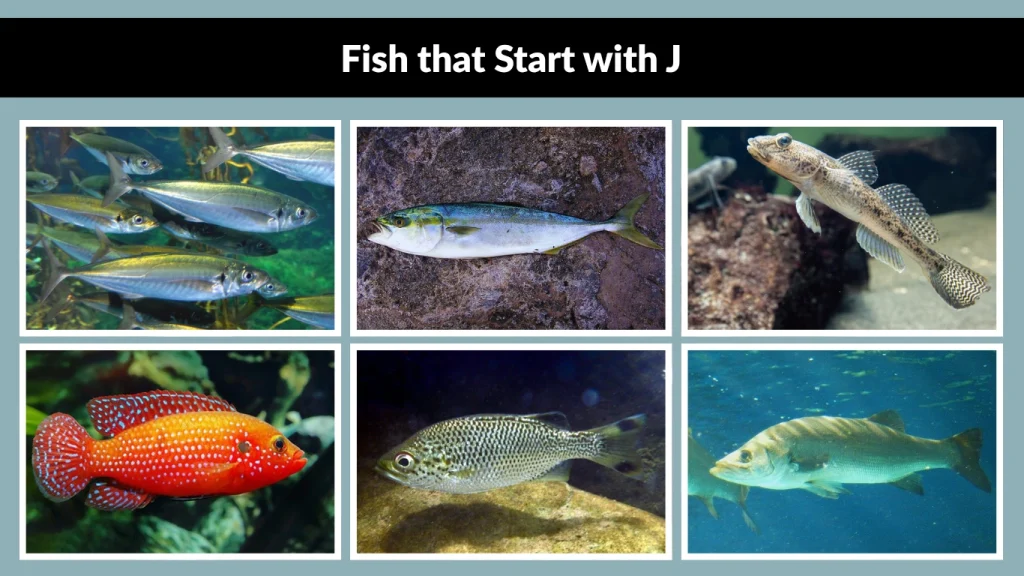
Fish are incredibly diverse, ranging from sleek ocean predators to colorful freshwater swimmers. In this group, you’ll discover fish species beginning with the letter J—each adapted to unique aquatic habitats, from tropical coasts to deep ocean zones.
49. Jack Mackerel
Jack mackerel is a fast-swimming, schooling fish found in coastal and offshore waters. It has a streamlined body and a silvery-blue sheen.
Popular in commercial fishing, it’s used for canned products and fish meal. Jack mackerel feeds on plankton and small fish and is vital in marine food chains.
50. Japanese Amberjack
Also known as “Hamachi,” the Japanese amberjack is a prized fish in Japanese cuisine, especially sushi and sashimi.
It’s a strong, torpedo-shaped swimmer found in the northwest Pacific. Juveniles are called “mojako,” and adults are often farm-raised due to high market demand.
51. Japanese Goby
The Japanese goby is a small, bottom-dwelling fish found in rivers and coastal waters. It has a rounded head and fused pelvic fins used like suction cups.
It feeds on tiny invertebrates and algae. Japanese gobies are adaptable and often thrive in brackish or muddy environments near river mouths.
52. Jewel Cichlid
Though native to Africa, the jewel cichlid is popular in aquariums worldwide due to its vivid red and blue colors and lively behavior.
They are territorial and aggressive, especially during breeding. Jewel cichlids thrive in freshwater setups and require careful tank mate selection.
53. Jungle Perch
Jungle perch are freshwater fish found in northern Australia and Southeast Asia, often in fast-flowing jungle streams and rivers.
They have a robust body with dark blotches and are prized sport fish. Jungle perch feed on insects, crustaceans, and small fish, often lurking near rocks.
54. Japanese Sea Bass
The Japanese sea bass is a predatory coastal fish known for its silvery body and aggressive feeding behavior.
Popular among anglers and chefs alike, it’s found in bays, estuaries, and river mouths. It hunts smaller fish and is especially active during twilight hours.
Lesser-Known or Unique Animals that Start with J
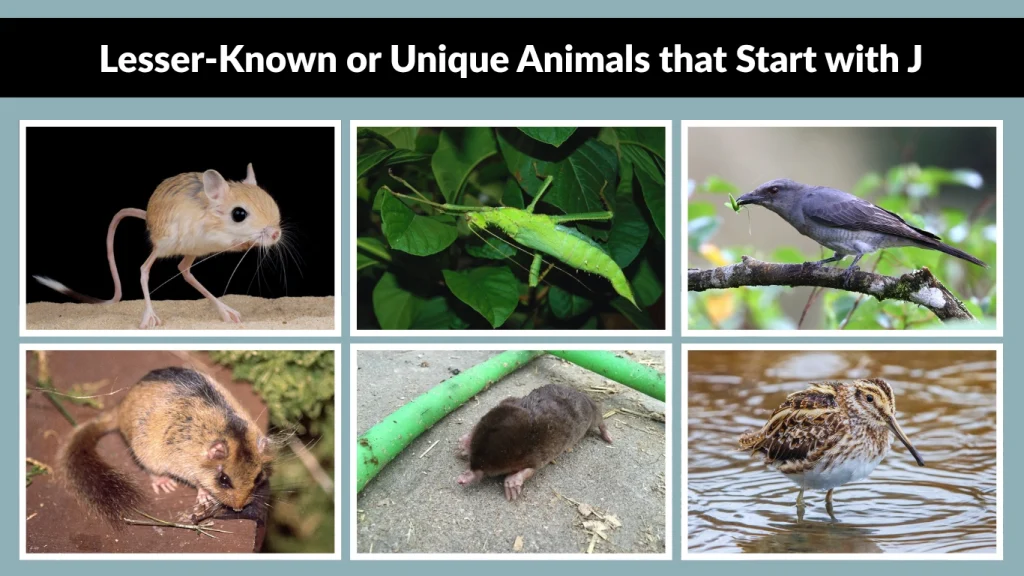
This group features lesser-known or uniquely fascinating animals that start with the letter J. From desert dwellers to giant insects, these creatures may not be as famous but offer plenty of intrigue and biological wonder.
55. Jerboa
Jerboas are small rodents with long hind legs, short forelimbs, and long tails—adapted perfectly for desert life. They hop like kangaroos to escape predators.
Found in North Africa and Asia, jerboas dig burrows and are mostly nocturnal. Their large ears help release heat and detect nearby danger.
56. Jungle Nymph
The jungle nymph is a large, leaf-like stick insect native to Southeast Asia. Females are bright green and among the heaviest insects in the world.
They use camouflage to avoid predators and can produce hissing sounds or use thorny legs if threatened. Jungle nymphs feed on leaves and remain still for hours.
57. Javan Cuckoo
The Javan cuckoo is a rare bird native to the Indonesian island of Java. It’s elusive and not well studied due to its limited range.
Like many cuckoos, it may lay its eggs in other birds’ nests. The Javan cuckoo is mostly found in forested habitats and feeds on insects and caterpillars.
58. Japanese Dormouse
This tiny, arboreal rodent is native to Japan and closely related to squirrels. It has soft fur, a bushy tail, and large eyes for night vision.
It lives in trees and hibernates through winter in nests. Japanese dormice feed on berries, insects, and tree bark and are active during twilight hours.
59. Japanese Mole
The Japanese mole is a small, burrowing mammal found only in Japan. It has velvety fur, tiny eyes, and powerful forelimbs for digging tunnels.
It spends most of its life underground, feeding on earthworms and insects. Japanese moles help aerate soil and reduce pest populations naturally.
60. Jack Snipe
The jack snipe is a small, secretive wading bird found in Europe and Asia during migration. It has cryptic plumage and prefers marshy, reedy wetlands.
It’s known for its bobbing movement and ability to vanish into dense vegetation. Jack snipes feed on insects and are difficult to spot even at close range.