
From the depths of the ocean to the peaks of mountain ranges, animals whose names start with the letter “R” can be found in every corner of the world. This diverse list includes mammals, birds, reptiles, amphibians, fish, insects, and more. Each species has its own unique traits, habitats, and behaviors, making the animal kingdom both fascinating and full of surprises.
Mammals that Start with R

Mammals beginning with the letter R live in an incredible range of habitats, from icy tundras to tropical rainforests. Some are expert climbers, others are strong swimmers, and a few are uniquely adapted to cold or high-altitude environments. Each plays an important role in its ecosystem, whether as a predator, prey, or seed disperser.
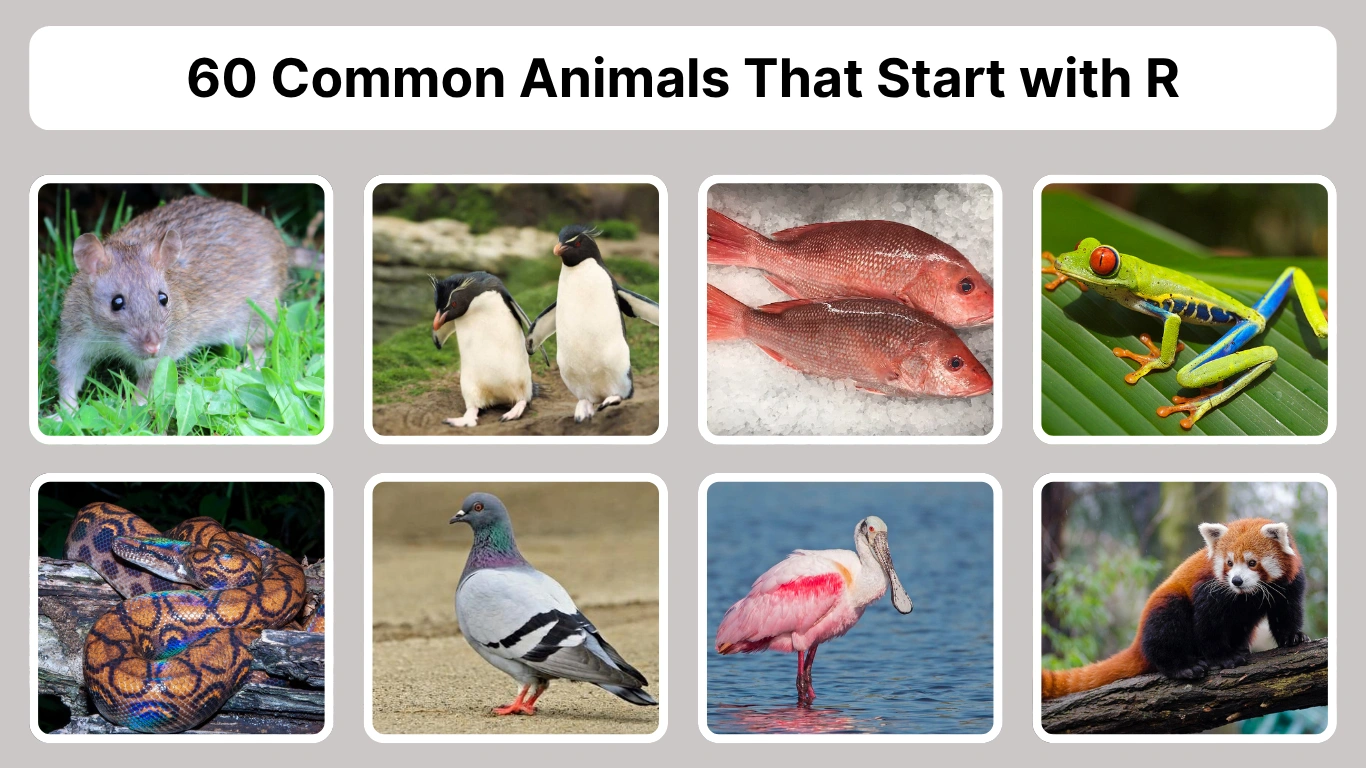
1. Red Panda
The red panda is a small, tree-dwelling mammal native to the Himalayas and parts of China. It has reddish-brown fur, a long bushy tail, and a gentle appearance that often draws comparisons to raccoons.
Primarily herbivorous, red pandas feed on bamboo, but also enjoy fruits, berries, and small insects. They are solitary and shy, spending most of their time in trees. Sadly, they are endangered due to habitat loss and poaching.
2. Raccoon
Raccoons are medium-sized mammals native to North America, easily recognized by their black “mask” and ringed tail. They are highly adaptable and thrive in both wild and urban environments.
Known for their intelligence, raccoons are skilled at opening containers and finding food. They are omnivores, eating fruits, insects, small animals, and human scraps. They are mostly nocturnal, foraging at night while resting in dens during the day.
3. Reindeer
Reindeer, also known as caribou in North America, are large, hoofed mammals found in Arctic and subarctic regions. Both males and females grow antlers, a rare trait among deer species.
They are migratory animals, traveling vast distances in search of food. Their diet consists mainly of lichens, grasses, and mosses. Reindeer are important to many indigenous cultures for food, clothing, and transportation.
4. Rock Hyrax
The rock hyrax is a small, furry mammal found in Africa and the Middle East. Despite its rodent-like appearance, it is more closely related to elephants and manatees.
They live in rocky areas, forming colonies for protection against predators. Rock hyraxes feed mainly on grasses, fruits, and leaves. Their padded feet allow them to climb and grip rocks with ease.
5. Rhesus Macaque
The rhesus macaque is a highly adaptable monkey native to South, Central, and Southeast Asia. They have light brown fur, expressive faces, and short tails.
Rhesus macaques are social animals, living in large troops with complex hierarchies. They eat fruits, seeds, insects, and human food in urban areas. They have played a key role in scientific research, particularly in medical studies.
6. River Dolphin
River dolphins are freshwater dolphins found in rivers of South America and Asia. They have long, narrow snouts and poor eyesight, relying on echolocation to navigate.
Species like the Amazon river dolphin are known for their pinkish hue. These dolphins feed on fish and small crustaceans. Unfortunately, they are endangered due to pollution, dam construction, and habitat degradation.
Birds that Start with R

Birds whose names start with the letter R can be found in nearly every habitat on Earth — from dense forests and wetlands to urban parks and coastal regions. They vary greatly in size, color, and behavior, with some known for their melodic songs, while others are admired for their hunting skills or striking plumage.
7. Robin (American Robin)
The American robin is a familiar songbird across North America, recognized by its reddish-orange breast and cheerful song. It is one of the first birds to appear in spring, often seen hopping across lawns.
Robins feed on insects, worms, and fruits, making them valuable for pest control. They build cup-shaped nests, usually in trees or shrubs, and fiercely protect their young from predators.
8. Roseate Spoonbill
The roseate spoonbill is a wading bird with bright pink plumage and a distinctive spoon-shaped bill. It inhabits marshes, swamps, and coastal lagoons in the Americas.
Its unusual bill helps it sift through shallow water to catch small fish, insects, and crustaceans. The bird’s vivid coloration comes from the pigments in its food, similar to flamingos.
9. Red-tailed Hawk
The red-tailed hawk is one of the most common raptors in North America, known for its reddish-brown tail feathers and piercing cry. It is a powerful hunter that soars high over fields and forests.
Feeding mainly on rodents, rabbits, and other small animals, it helps control pest populations. These hawks are territorial and often mate for life, raising chicks in large stick nests.
10. Rock Pigeon
The rock pigeon, also known as the common pigeon, is found in cities, rural areas, and rocky cliffs worldwide. They have a wide range of colors, though many are gray with iridescent neck feathers.
Domesticated for thousands of years, pigeons have served as messengers, pets, and even racing birds. They are highly adaptable, feeding on seeds, grains, and human food scraps.
11. Red Knot
The red knot is a medium-sized shorebird famous for its long-distance migrations between Arctic breeding grounds and southern wintering areas. In breeding season, its plumage turns a striking reddish-brown.
It feeds on mollusks, insects, and crustaceans, often timed with horseshoe crab spawning events. Conservation efforts are ongoing, as some populations have declined due to habitat loss.
12. Rufous Hummingbird
The rufous hummingbird is a tiny, fast-moving bird with bright orange plumage and a feisty personality. It breeds in the northwestern United States and migrates to Mexico for the winter.
These hummingbirds feed on nectar, insects, and spiders, and are known for their incredible memory of flower locations. Despite their small size, they aggressively defend feeding territories from other hummingbirds.
Reptiles that Start with R
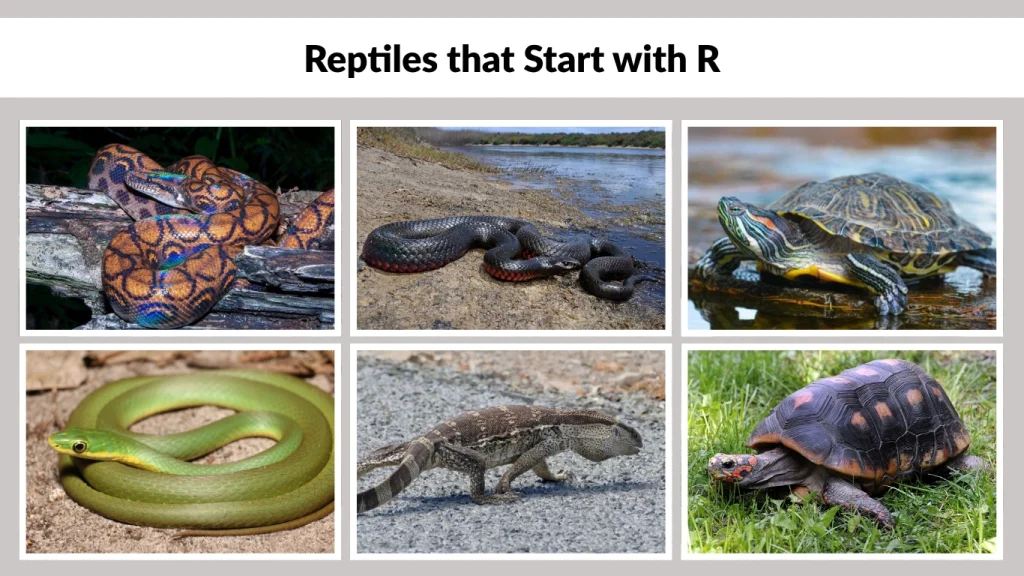
Reptiles beginning with the letter R are found in a variety of ecosystems, from dense rainforests to arid deserts. They include snakes, lizards, and turtles, many of which are skilled predators or well-camouflaged survivors. These species often play important ecological roles, helping maintain balance in their environments by controlling prey populations.
13. Rainbow Boa
The rainbow boa is a non-venomous snake native to Central and South America. Its scales have an iridescent sheen that reflects rainbow colors under sunlight, making it a favorite among reptile enthusiasts.
It is primarily nocturnal, feeding on rodents, birds, and lizards. Rainbow boas are constrictors, killing their prey by wrapping around it. They thrive in humid environments like rainforests and wetlands.
14. Red-bellied Black Snake
The red-bellied black snake is a venomous species native to eastern Australia. It has a glossy black back and a distinctive reddish underside.
Despite its venom, it is generally shy and avoids confrontation. It feeds on frogs, fish, and small reptiles. Its presence is beneficial in controlling pest species, though it should be treated with caution.
15. River Turtle
River turtles are freshwater reptiles found in rivers and streams worldwide, with species like the Amazon river turtle being particularly well-known. They have strong swimming abilities and flat, streamlined shells.
These turtles are omnivorous, eating aquatic plants, insects, and small fish. Many species are threatened by habitat destruction, pollution, and overharvesting for food or the pet trade.
16. Rough Green Snake
The rough green snake is a slender, bright-green, non-venomous snake native to the southeastern United States. Its color provides excellent camouflage among leaves and vines.
It is insectivorous, feeding mainly on grasshoppers, crickets, and caterpillars. Known for its gentle nature, it is often admired by wildlife watchers and poses no threat to humans.
17. Rock Monitor
The rock monitor, also called the white-throated monitor, is a large lizard found in Africa. It has a muscular build, long tail, and powerful limbs, making it an effective predator.
Its diet includes insects, rodents, eggs, and small reptiles. Rock monitors are excellent climbers and diggers, using their strength to search for food in both trees and burrows.
18. Red-footed Tortoise
The red-footed tortoise is a medium-sized tortoise native to South America. It is recognized by its dark shell marked with lighter patches and brightly colored scales on its legs.
It is an omnivore, eating fruits, flowers, fungi, and small invertebrates. Red-footed tortoises are popular pets but require specialized care to mimic their warm, humid natural habitat.
Amphibians that Start with R
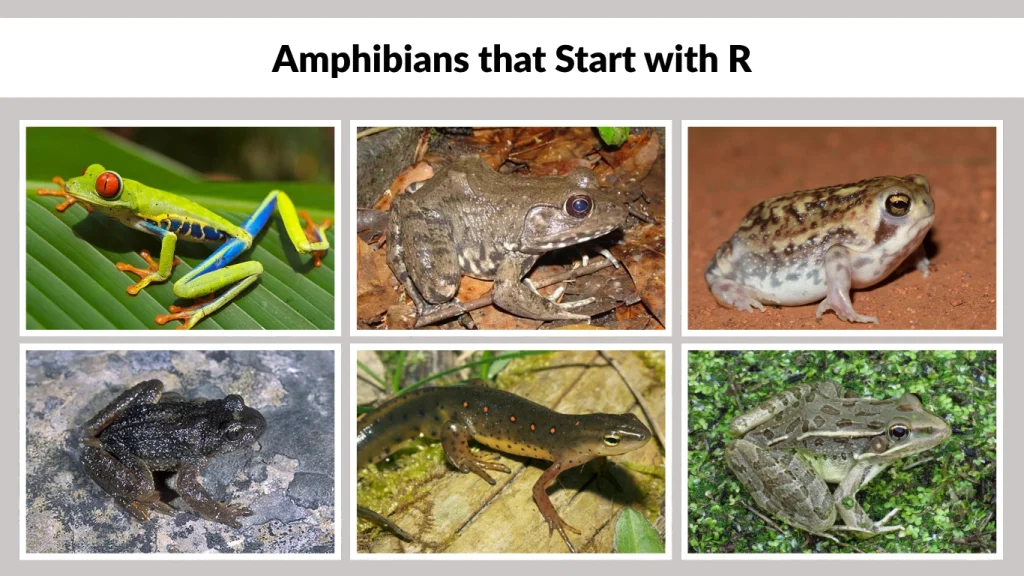
Amphibians starting with the letter R inhabit wetlands, rivers, forests, and even mountainous areas. These creatures are often sensitive to environmental changes, making them important indicators of ecosystem health. With their dual life stages—living both in water and on land—they play vital roles in controlling insect populations and serving as prey for larger animals.
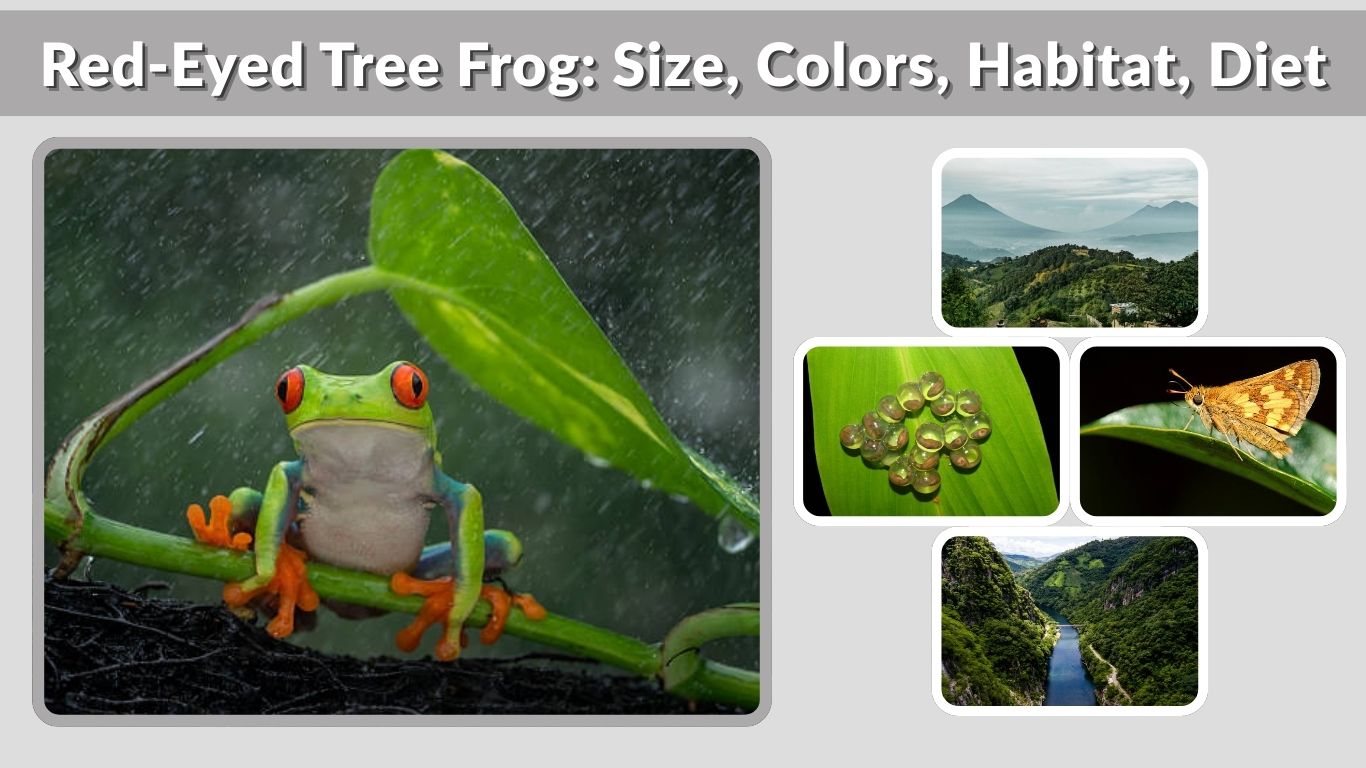
19. Red-eyed Tree Frog
The red-eyed tree frog is a brightly colored amphibian native to Central America. It is famous for its vivid green body, blue sides, and striking red eyes.
By day, it hides among leaves, using its coloration for camouflage. At night, it becomes active, feeding on insects. Its bright colors may startle predators, giving it a chance to escape.
20. River Frog
The river frog is a large, aquatic frog found in the southeastern United States. It has dark green to nearly black skin and lacks distinctive markings, making it blend well with muddy waters.
It feeds on insects, small fish, and other amphibians. River frogs are excellent swimmers and are often found near permanent bodies of water like rivers and swamps.
21. Rain Frog
Rain frogs are small, burrowing amphibians found in various regions, including Central and South America and parts of Africa. They are named for their tendency to appear during rainy weather.
They have stout bodies and short legs, making them more suited for digging than jumping. Their diet consists mainly of ants, termites, and small insects.
22. Rocky Mountain Tailed Frog
The Rocky Mountain tailed frog is a unique species native to cold, fast-flowing streams in North America. Males have a small tail-like organ used during reproduction.
Unlike most frogs, they are poor jumpers and rely on crawling along streambeds. They feed on aquatic insects and larvae, playing an important role in stream ecosystems.
23. Red-spotted Newt
The red-spotted newt is a brightly colored amphibian found in eastern North America. Its juvenile stage, called the red eft, has a vivid orange body covered with small red spots.
It undergoes multiple life stages, transitioning from aquatic larva to terrestrial juvenile, and then to aquatic adult. It feeds on insects, worms, and small crustaceans.
24. Rio Grande Leopard Frog
The Rio Grande leopard frog is native to the southwestern United States and northern Mexico. It has a greenish-brown body covered with dark spots.
It prefers permanent water sources like ponds and streams. This frog is primarily nocturnal, feeding on insects and small invertebrates, and is known for its loud, distinctive call.
Fish that Start with R
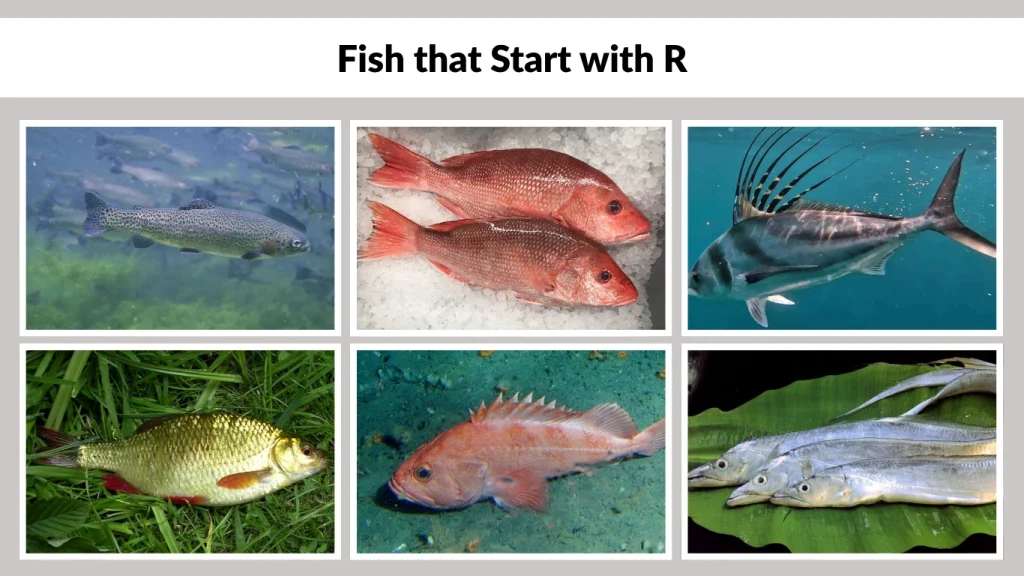
Fish whose names start with the letter R inhabit both freshwater and saltwater environments, from cold mountain streams to warm tropical seas. They come in a wide range of sizes and shapes, with unique adaptations for survival, feeding, and reproduction. Many are important to humans as a food source, while others are admired in aquariums.
25. Rainbow Trout
The rainbow trout is a colorful freshwater fish native to North America but introduced worldwide for sport fishing. It is recognized by its pinkish lateral stripe and speckled body.
These fish prefer cold, clear streams and lakes, feeding on insects, small fish, and crustaceans. They are prized by anglers for their fighting spirit and delicate flavor.
26. Red Snapper
The red snapper is a popular saltwater fish found in the Gulf of Mexico and along the southeastern U.S. coast. It has a bright reddish body and firm, tasty flesh.
Living near reefs and rocky bottoms, it feeds on fish, squid, and crustaceans. Overfishing has made conservation measures necessary to protect this valuable species.
27. Roosterfish
The roosterfish is a striking game fish found in the eastern Pacific Ocean. It is easily recognized by its tall, comb-like dorsal fin.
Highly sought by sport fishermen, roosterfish put up a strong fight when hooked. They feed on smaller fish and often hunt in shallow coastal waters.
28. Rudd
The rudd is a freshwater fish native to Europe and Asia, now introduced in other regions. It has a golden body, red fins, and a slightly upturned mouth.
It feeds on aquatic plants, insects, and small crustaceans. Rudd are hardy and can thrive in ponds, lakes, and slow-moving rivers.
29. Rockfish
Rockfish are a diverse group of marine fish found mostly in the Pacific Ocean. They vary in color from bright red to mottled brown, depending on the species.
They live near rocky reefs and feed on crustaceans, squid, and smaller fish. Some species can live over 100 years, making them among the longest-lived fish.
30. Ribbonfish
The ribbonfish is a long, slender, silver fish that inhabits deep ocean waters. Its body is laterally compressed, resembling a shimmering ribbon.
It feeds mainly on squid and small fish. Ribbonfish are rarely seen by humans because they live in deep waters, but occasionally wash ashore during storms.
Insects that Start with R

Insects beginning with the letter R are a diverse group, ranging from tiny agricultural pests to large, impressive beetles. They inhabit almost every environment on Earth, playing crucial roles in pollination, decomposition, and pest control. Some are admired for their beauty, while others are known for their strength or unique behaviors.
31. Red Ant
Red ants are small but aggressive insects known for their painful stings. They are found in various regions worldwide, especially in warm climates.
Living in large colonies, they work together to gather food and protect their nest. They feed on insects, seeds, and sugary substances, and are highly organized in their foraging.
32. Rhinoceros Beetle
The rhinoceros beetle is one of the largest beetles in the world, named for the horn-like structure on its head. Males use their horns in battles for mates.
Despite their fearsome appearance, they are harmless to humans and feed mainly on decaying plant matter. Their strength allows them to lift objects many times their own weight.
33. Rice Weevil
The rice weevil is a small beetle that infests stored grains like rice, wheat, and corn. It is considered a major agricultural pest.
Females lay eggs inside grains, and larvae develop within, feeding on the kernel. Infestations can cause significant losses in stored food products.
34. Robber Fly
Robber flies are fast, predatory insects with strong legs and sharp mouthparts. They are known for capturing other insects in mid-air.
They play an important role in controlling pest populations. Robber flies inject enzymes into their prey, liquefying the insides for easy consumption.
35. Red Admiral Butterfly
The red admiral butterfly is a medium-sized butterfly with striking black wings marked by red bands and white spots. It is found in temperate regions worldwide.
It feeds on nectar from flowers and is often seen in gardens. This butterfly is also known for its seasonal migrations.
36. Rose Chafer
The rose chafer is a greenish-gold beetle commonly found in Europe. Adults feed on flowers, especially roses, while larvae develop in soil, feeding on plant roots.
They are considered minor garden pests but are also important decomposers, helping break down organic matter in the soil.
Marine Animals that Start with R
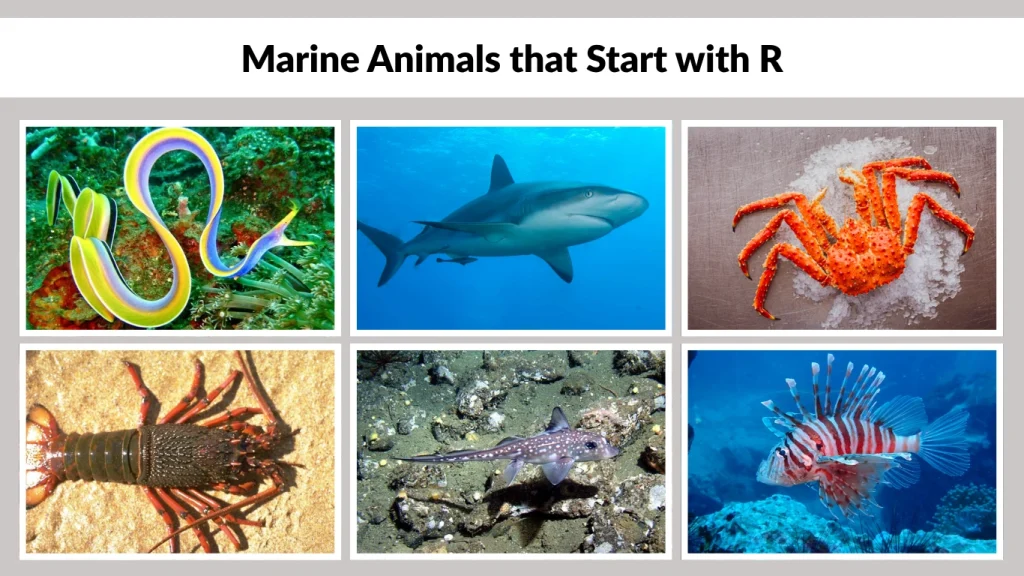
Marine animals beginning with the letter R are found in oceans, seas, and coral reefs around the world. They include fascinating predators, colorful reef dwellers, and unique deep-sea creatures. Many are important to marine ecosystems, helping maintain healthy food chains and contributing to biodiversity in underwater habitats.
37. Ribbon Eel
The ribbon eel is a striking reef-dwelling fish known for its elongated body and vibrant colors, which change as it matures. Juveniles are black, while adults can be bright blue or yellow.
It lives in sandy burrows within coral reefs, feeding on small fish and crustaceans. Its slender shape allows it to dart quickly into hiding when threatened.
38. Reef Shark
Reef sharks are medium-sized sharks commonly found in warm, shallow waters around coral reefs. Species like the blacktip reef shark are especially recognizable by their fin markings.
They are agile hunters, feeding on fish, squid, and crustaceans. Reef sharks are vital apex predators, helping regulate the balance of reef ecosystems.
39. Red King Crab
The red king crab is one of the largest crabs in the world, native to the cold waters of the Bering Sea. It has a spiny shell and powerful claws.
Highly valued as seafood, it is harvested in a carefully managed fishery. Red king crabs feed on mollusks, worms, and small invertebrates on the ocean floor.
40. Rock Lobster
The rock lobster, also known as spiny lobster, is a crustacean without large claws, unlike true lobsters. It has a hard exoskeleton and long, spiny antennae.
It lives in rocky crevices and reefs, feeding on mollusks and detritus. Rock lobsters are prized for their meat and are a major part of coastal fisheries.
41. Ratfish
Ratfish are deep-sea fish related to sharks, with a distinctive long tail resembling that of a rat. They have large, wing-like pectoral fins for graceful swimming.
They feed on mollusks, crustaceans, and small fish, using grinding tooth plates. Ratfish live in deep, cold waters and are rarely seen by humans.
42. Red Lionfish
The red lionfish is a venomous reef fish with long, spiny fins and striking red, white, and brown stripes. It is native to the Indo-Pacific but has become invasive in the Atlantic.
It feeds on small fish and crustaceans, using its fins to corner prey. Invasive populations threaten reef biodiversity by consuming large numbers of native species.
Exotic and Rare Animals that Start with R

Exotic and rare animals beginning with the letter R are often found in limited habitats and can be difficult to spot in the wild. Many have unique physical traits, unusual behaviors, or striking colors that make them fascinating to researchers and wildlife enthusiasts. Some are threatened or endangered, making conservation efforts vital for their survival.
43. Red-handed Tamarin
The red-handed tamarin is a small monkey native to the forests of South America. It has black fur with reddish-orange hands and feet, giving it its name.
These primates are agile climbers, feeding on fruits, insects, and tree sap. They live in social groups and communicate with a range of vocal calls and body gestures.
44. Raggiana Bird-of-paradise
The Raggiana bird-of-paradise is Papua New Guinea’s national bird, famous for its long, flowing red-orange plumes. Males perform elaborate courtship dances to attract females.
They feed on fruits, berries, and insects, helping disperse seeds in their rainforest habitat. Their stunning appearance has made them a symbol of tropical beauty.
45. Rodrigues Flying Fox
The Rodrigues flying fox is a large fruit bat found only on Rodrigues Island in the Indian Ocean. It has a fox-like face and large wings adapted for long flights.
Feeding primarily on fruit and flowers, it plays an important role in pollination and seed dispersal. Conservation programs have helped its population recover from near extinction.
46. Rock Ptarmigan
The rock ptarmigan is a hardy bird found in Arctic and alpine regions. It changes its plumage color with the seasons—brown in summer and white in winter—for camouflage.
It feeds on buds, leaves, and berries, surviving harsh winters in snow-covered habitats. This adaptability makes it a true cold-weather survivor.
47. Red-shanked Douc Langur
The red-shanked douc langur is a colorful monkey from Southeast Asia, known for its bright red legs and multi-colored face. It is often called one of the most beautiful primates.
They live in treetops, feeding on leaves, seeds, and flowers. Sadly, they are endangered due to hunting and deforestation in their native range.
48. Roseate Tern
The roseate tern is a graceful seabird with pale plumage and a faint pinkish hue on its breast during breeding season. It breeds in coastal areas and small islands.
It feeds mainly on small fish, diving skillfully into the water to catch prey. The species is considered vulnerable in some regions due to habitat loss and human disturbance.
Domesticated and Farm Animals that Start with R
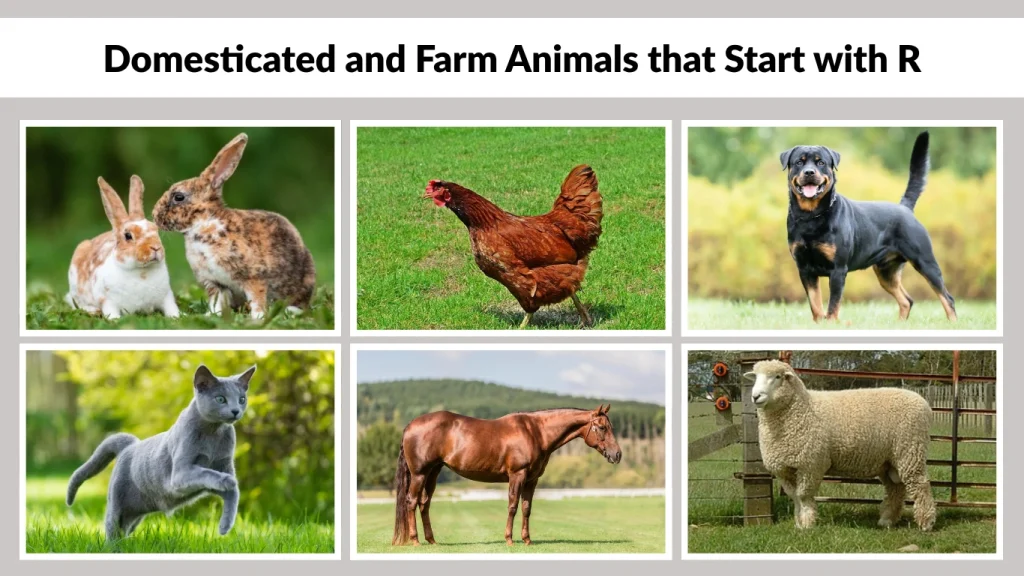
Domesticated and farm animals beginning with the letter R include species raised for companionship, food, or other agricultural purposes. Many have been bred for specific traits such as productivity, temperament, or appearance. These animals often share close relationships with humans and play important roles in rural economies and households worldwide.
49. Rex Rabbit
The Rex rabbit is a domestic breed known for its plush, velvety fur and gentle temperament. It comes in various colors and patterns, making it popular in both pet and show circles.
They are friendly and easy to handle, feeding on hay, vegetables, and pellets. Their fur is also valued in the garment industry for its softness.
50. Rhode Island Red Chicken
The Rhode Island Red chicken is a hardy, dual-purpose poultry breed known for its rich brown eggs and meat quality. It has deep red feathers and a strong build.
They are adaptable to different climates and easy to raise, making them a favorite among backyard farmers and commercial operations alike.
51. Rottweiler
The Rottweiler is a powerful working dog breed with a protective nature and strong loyalty to its family. Originally bred for herding and guarding, it is now often used in security and police work.
With proper training and socialization, Rottweilers can be affectionate companions. They require a balanced diet, regular exercise, and consistent leadership from their owners.
52. Russian Blue Cat
The Russian Blue cat is an elegant feline with short, dense bluish-gray fur and striking green eyes. It is known for being intelligent, gentle, and reserved with strangers.
These cats thrive in calm households and form strong bonds with their families. They are playful yet quiet, making them excellent indoor pets.
53. Riding Horse
A riding horse is any horse trained for carrying a rider, whether for leisure, sport, or work. Popular breeds for riding include the Thoroughbred, Arabian, and Quarter Horse.
Riding horses require regular grooming, exercise, and proper nutrition. They are used in activities ranging from trail riding to competitive equestrian events.
54. Romney Sheep
The Romney sheep is a dual-purpose breed valued for its high-quality wool and meat. Originating in England, it is hardy and adaptable to various climates.
Its fleece is long, lustrous, and highly sought after in textile production. Romney sheep are calm in temperament, making them easy to manage on farms.
Miscellaneous Animals that Start with R
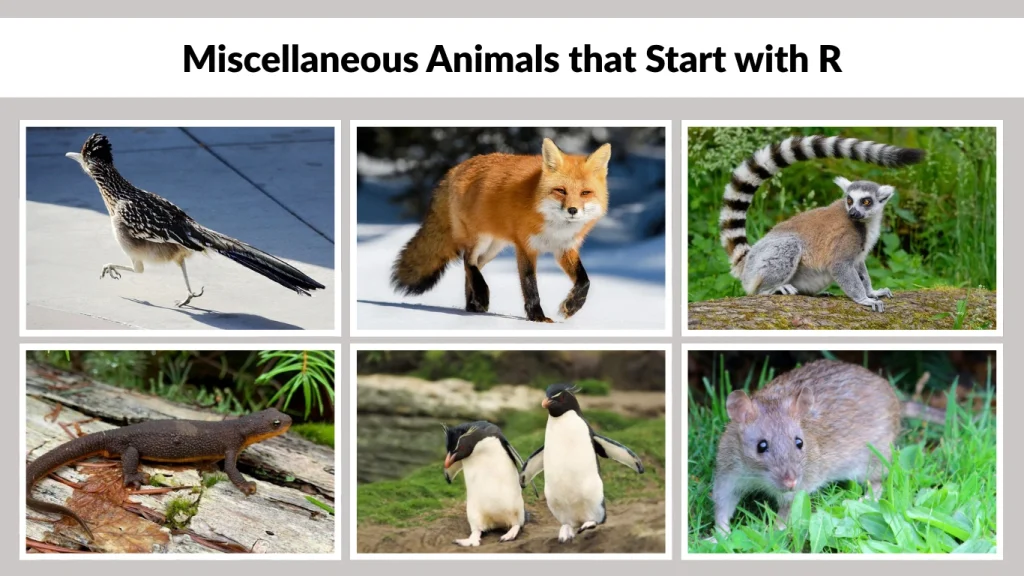
This final group features a mix of animals starting with the letter R that don’t neatly fit into the previous categories. They come from different habitats and taxonomic groups, including mammals, birds, reptiles, and amphibians. Each species plays a unique role in its ecosystem, from controlling pests to pollinating plants or serving as important prey for larger predators.
55. Roadrunner
The roadrunner is a fast-running bird native to the deserts of the southwestern United States and Mexico. It is known for its long legs, crest, and distinctive streaked plumage.
It feeds on insects, small reptiles, and even other birds. Roadrunners are skilled hunters, often catching rattlesnakes by pecking and shaking them before swallowing.
56. Red Fox
The red fox is a highly adaptable mammal found across the Northern Hemisphere. It has reddish-orange fur, a bushy tail, and sharp senses for hunting.
It is an omnivore, feeding on rodents, birds, fruits, and insects. Red foxes are also known for their intelligence and ability to thrive near human settlements.
57. Ring-tailed Lemur
The ring-tailed lemur is a primate native to Madagascar, easily recognized by its long, striped tail. It is a social species, living in groups led by dominant females.
They feed on fruits, leaves, and flowers. Ring-tailed lemurs spend time both in trees and on the ground, making them more terrestrial than many other lemurs.
58. Rough-skinned Newt
The rough-skinned newt is an amphibian found along the Pacific coast of North America. It has a dark brown back and bright orange underside.
It produces a potent toxin called tetrodotoxin, making it highly poisonous if ingested. Despite this, some predators have developed resistance to its toxins.
59. Rockhopper Penguin
The rockhopper penguin is a small, energetic penguin found on sub-Antarctic islands. It is named for its unique habit of hopping over rocks instead of sliding on its belly.
It has spiky yellow and black feathers on its head and feeds on krill, squid, and small fish. They are excellent swimmers and skilled at navigating rough shorelines.
60. Rat
The rat is a highly adaptable rodent found on every continent except Antarctica. It has a long tail, sharp teeth, and a keen sense of smell.
Rats are omnivores, feeding on grains, fruits, insects, and even garbage in urban areas. While they can be pests, they also play roles in research and as pets in some households.