
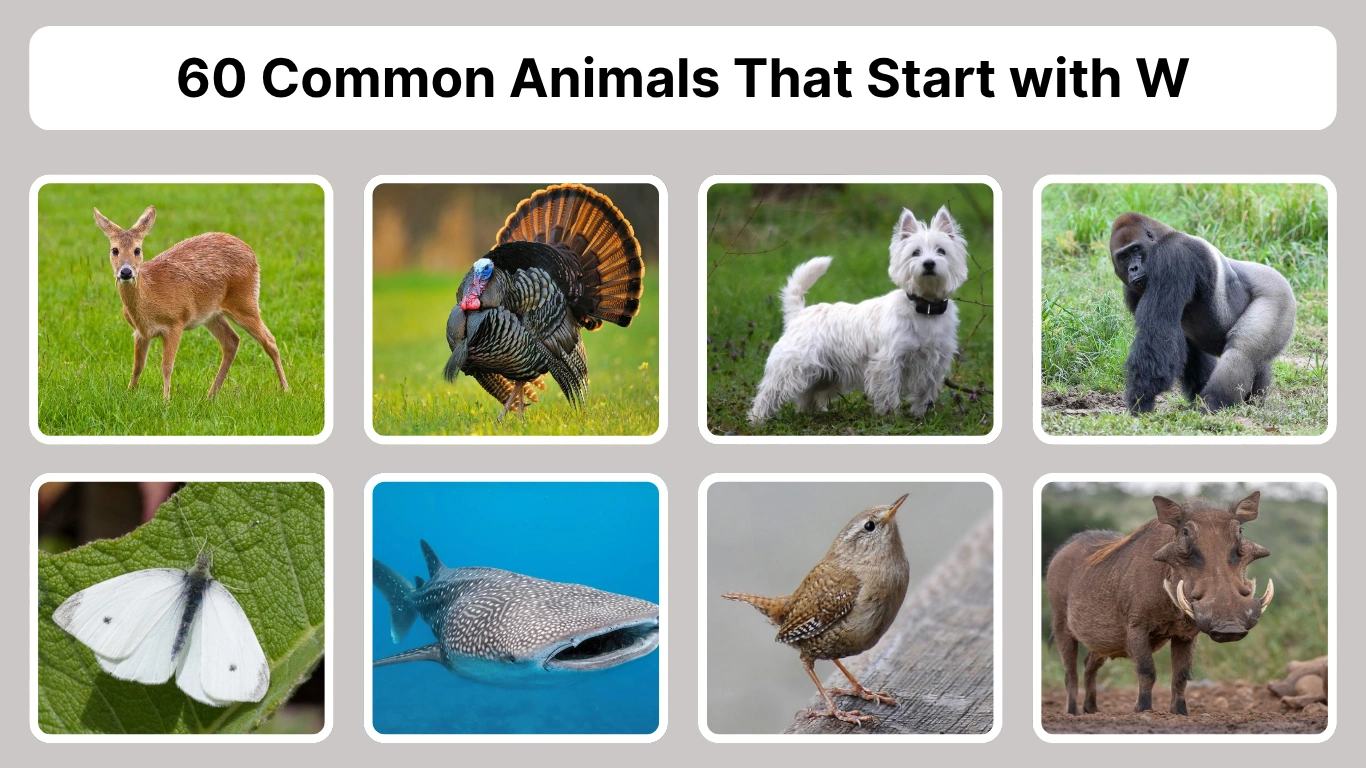
From the icy waters of the Arctic to the dense forests of the tropics, animals whose names start with the letter W can be found in almost every habitat on Earth. This diverse collection includes powerful mammals, colorful birds, fascinating reptiles, and more. In this guide, we’ll explore 60 remarkable species, grouped by type, to discover their unique traits, habitats, and roles in nature.
Mammals that Start with W
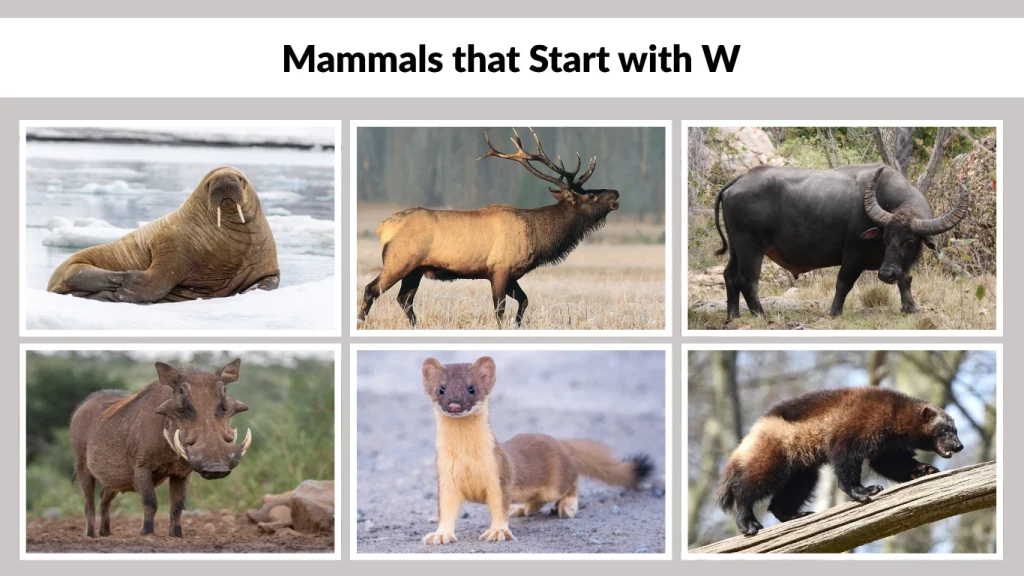
Mammals beginning with the letter W include a variety of species, from large sea giants to agile land predators. They inhabit different environments, from icy Arctic waters to dense forests and open grasslands. Each of these mammals has unique adaptations that help them thrive in their specific habitats and play vital roles in their ecosystems.
1. Walrus
The walrus is a large marine mammal found in Arctic waters, easily recognized by its long tusks and whiskers. They use their tusks for hauling themselves onto ice and for defense against predators. Walruses have thick blubber layers to keep them warm in freezing waters.
These social animals often gather in large groups on ice floes or beaches. They feed mainly on clams and other shellfish, using their sensitive whiskers to detect prey on the ocean floor. Their presence helps maintain a balanced marine ecosystem.
2. Wapiti (Elk)
The wapiti, also known as elk in North America, is one of the largest members of the deer family. Males are known for their impressive antlers, which they shed and regrow each year. They inhabit forests, meadows, and mountain valleys.
Wapiti are herbivores, feeding on grasses, leaves, and bark. During the rutting season, males bugle loudly to attract females and challenge rivals. They are important grazers, helping maintain healthy vegetation growth in their habitats.
3. Water Buffalo
The water buffalo is a large domesticated bovine found in parts of Asia, Africa, and South America. They are valued for their strength, milk production, and ability to work in rice fields and wetlands. Their broad hooves help them navigate muddy terrain.
These animals have a calm temperament and can live in herds for protection. Water buffalo milk is rich in fat and used to make products like mozzarella cheese. They also play a vital role in rural farming communities.
4. Warthog
The warthog is a wild member of the pig family found in Africa. It has distinctive tusks and facial warts, which are thickened skin patches that provide protection during fights. They live in savannas, grasslands, and open woodlands.
Warthogs are primarily grazers and root-diggers, feeding on grasses, roots, and tubers. They often use abandoned aardvark burrows for shelter, entering backward so their tusks face outward toward potential predators.
5. Weasel
Weasels are small carnivorous mammals with long, slender bodies and short legs. They are found across Europe, Asia, North America, and parts of Africa. Their flexible bodies allow them to pursue prey into tight spaces.
They are skilled hunters, feeding on rodents, birds, and eggs. Despite their small size, weasels are fierce and can take down animals larger than themselves. They help control pest populations in their ecosystems.
6. Wolverine
The wolverine is a muscular, bear-like member of the weasel family found in northern forests and tundra. Known for their strength and tenacity, wolverines can travel long distances in search of food.
They are opportunistic feeders, consuming carrion, small mammals, and even large prey when possible. Wolverines have a thick fur coat for insulation in extreme cold and are respected for their resilience and adaptability.
Birds that Start with W
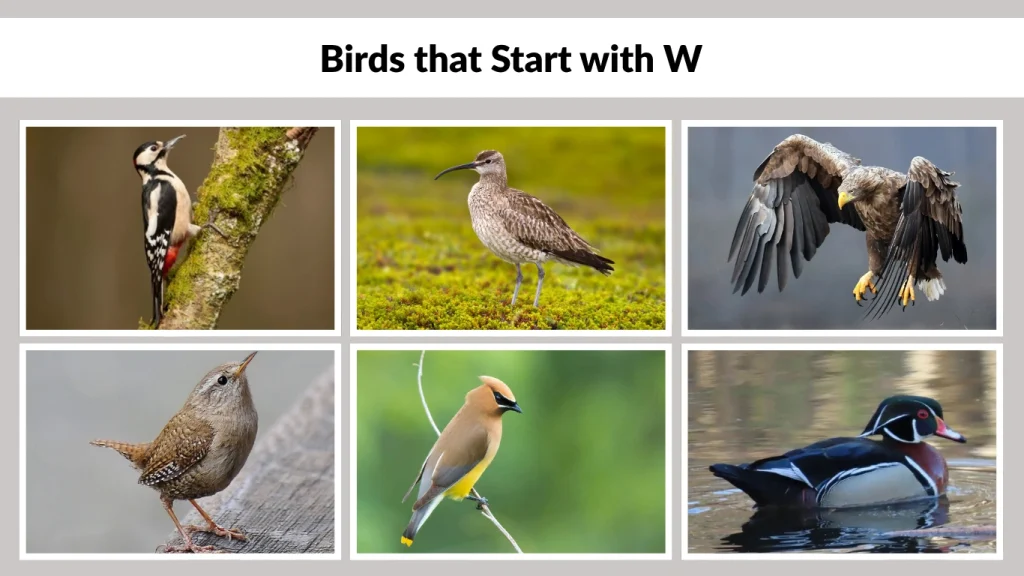
Birds beginning with the letter W include both migratory and resident species, from small songbirds to powerful raptors. They inhabit diverse environments such as forests, wetlands, grasslands, and coastal regions. Many of these birds are known for their striking plumage, distinctive calls, and important roles in pollination, seed dispersal, and maintaining balanced ecosystems.
7. Woodpecker
Woodpeckers are medium-sized birds known for pecking into tree bark to find insects and create nesting holes. They have strong beaks and shock-absorbing skulls that allow repeated drumming without injury.
They play an important role in forest health by controlling insect populations and creating cavities that other animals use for nesting. Their drumming sounds are also used for communication and territory defense.
8. Whimbrel
The whimbrel is a migratory shorebird with a long, downcurved bill adapted for probing mud and sand for invertebrates. It breeds in the Arctic and migrates to warmer coastal areas for winter.
During migration, whimbrels travel thousands of miles in large flocks. They are a vital part of coastal ecosystems, helping control small crustacean populations while serving as prey for larger predators.
9. White-tailed Eagle
The white-tailed eagle is one of the largest birds of prey in Europe and Asia, with a wingspan of up to 8 feet. It is easily recognized by its pale head and massive yellow beak.
These eagles are skilled hunters, feeding on fish, waterfowl, and carrion. They often nest near large bodies of water, building huge stick nests that can be used for decades.
10. Wren
Wrens are small, energetic songbirds found in many parts of the world. They are known for their loud, complex songs despite their tiny size. Their brown plumage often blends with their surroundings.
Wrens feed mainly on insects and spiders, actively foraging in shrubs and undergrowth. They are resourceful nest builders, often constructing dome-shaped nests in sheltered spots.
11. Waxwing
Waxwings are medium-sized birds with silky feathers and bright red tips on some wing feathers, resembling drops of wax. They are found in the Northern Hemisphere and migrate in search of food.
They primarily feed on berries and fruit, sometimes consuming large quantities at once. Their social nature makes them a common sight in flocks, especially in winter.
12. Wood Duck
The wood duck is a colorful waterfowl native to North America. Males have striking iridescent plumage, while females are more subdued but still elegant. They nest in tree cavities near wetlands.
Wood ducks are strong fliers and can maneuver through dense forests. They feed on seeds, fruits, and aquatic invertebrates, contributing to wetland ecosystem health.
Reptiles that Start with W
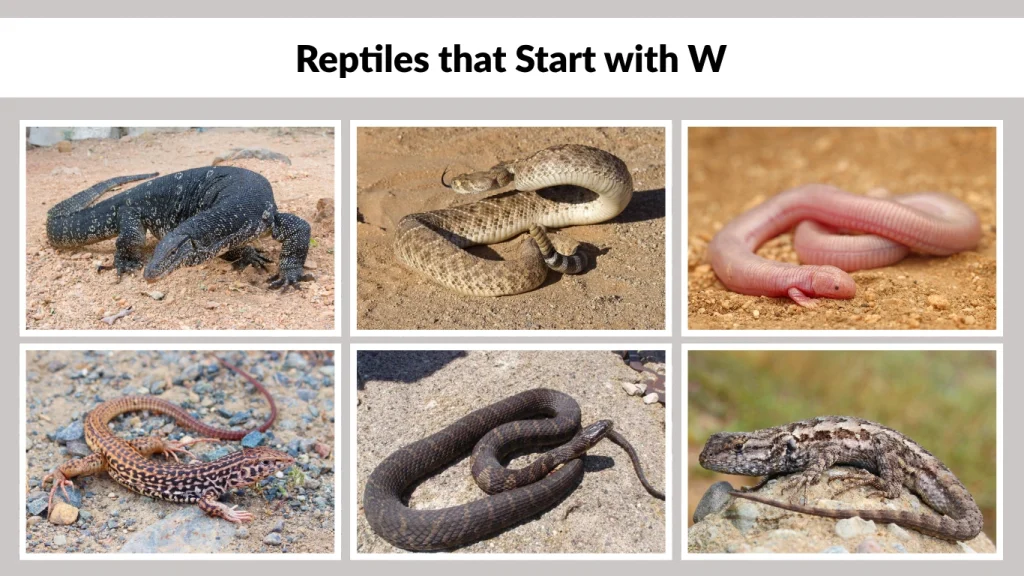
Reptiles beginning with the letter W range from powerful snakes to unique lizards and turtles. They are found in habitats such as wetlands, deserts, forests, and rocky areas. Many have specialized adaptations for hunting, defense, and survival in harsh environments. These species play essential roles in controlling prey populations and maintaining ecological balance in their regions.
13. Water Monitor
The water monitor is a large lizard native to South and Southeast Asia. It is an excellent swimmer, often found near rivers, lakes, and coastal areas. Its strong tail and sharp claws make it a formidable predator.
Water monitors are opportunistic feeders, consuming fish, birds, eggs, and carrion. They are highly adaptable and can thrive in both natural and human-modified environments.
14. Western Diamondback Rattlesnake
The western diamondback rattlesnake is a venomous pit viper found in the southwestern United States and Mexico. It is recognized by its diamond-shaped markings and a rattle at the end of its tail.
It uses its venom to immobilize prey such as rodents and birds. When threatened, it shakes its rattle as a warning before striking, helping prevent unnecessary conflict with predators or humans.
15. Worm Lizard
Worm lizards are legless reptiles that resemble earthworms but are more closely related to lizards. They spend most of their lives underground, using their strong skulls to burrow through soil.
These secretive creatures feed mainly on insects and other small invertebrates. Their underground lifestyle helps aerate the soil, benefiting plant growth in their habitats.
16. Whiptail Lizard
Whiptail lizards are small, fast-moving reptiles found mainly in the Americas. They are named for their long, slender tails, which can be shed to escape predators.
Some species reproduce through parthenogenesis, meaning females can produce offspring without mating. They feed on insects, spiders, and small invertebrates, playing an important role in pest control.
17. Water Snake
Water snakes are non-venomous snakes commonly found near lakes, rivers, and marshes in North America. They are excellent swimmers and spend much of their time hunting in water.
They feed on fish, amphibians, and aquatic invertebrates. While harmless to humans, they are often mistaken for venomous snakes and unfairly killed.
18. Western Fence Lizard
The western fence lizard, also called the blue-belly lizard, is native to the western United States. It is easily recognized by the blue coloring on its throat and belly.
These lizards bask in the sun to regulate their body temperature and feed on insects and spiders. They also help reduce Lyme disease risk by killing ticks that bite them.
Amphibians that Start with W
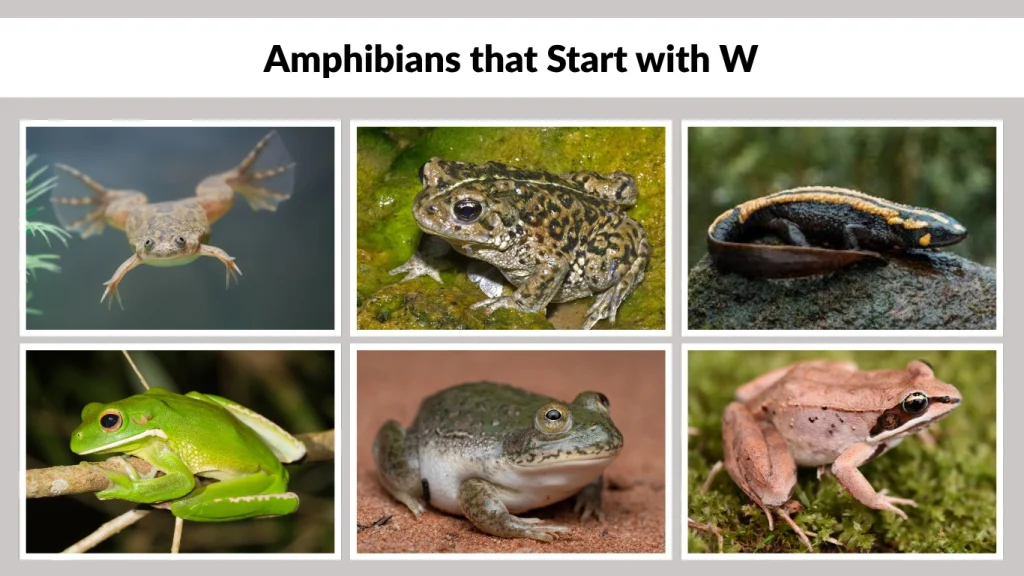
Amphibians beginning with the letter W are found in a variety of moist habitats, including wetlands, rivers, forests, and temporary ponds. Many are adapted to both aquatic and terrestrial life stages, making them important indicators of environmental health. They help control insect populations and serve as prey for numerous predators, contributing to balanced ecosystems.
19. Water Frog
The water frog is a semi-aquatic amphibian found in Europe, Asia, and parts of North America. It spends much of its life in or near ponds, lakes, and marshes.
These frogs feed on insects, worms, and other small aquatic creatures. Their presence often indicates clean water, making them valuable for monitoring habitat health.
20. Western Toad
The western toad is a large, ground-dwelling amphibian native to western North America. It has dry, bumpy skin and prominent parotoid glands behind the eyes.
It feeds on insects and other invertebrates, using a sticky tongue to catch prey. Western toads hibernate during winter and are active mainly at night during the warmer months.
21. Warty Newt
The warty newt is a small amphibian recognized by its rough, textured skin. It inhabits ponds, slow-moving streams, and wet forests across parts of Europe and Asia.
Newts feed on insects, worms, and small aquatic animals. They are capable of regenerating lost limbs and tails, a trait that makes them fascinating to scientists.
22. White-lipped Tree Frog
The white-lipped tree frog, also called the giant tree frog, is native to Australia and New Guinea. It is the largest tree frog species in the world.
It has bright green skin with a white stripe along its lower lip. This frog feeds mainly on insects and uses its strong legs to leap between trees in search of food.
23. Water-holding Frog
The water-holding frog is an Australian amphibian adapted to survive in arid environments. It can store water in its body during the rainy season and burrow underground during droughts.
This stored water can sustain the frog for years without drinking. Indigenous Australians have historically used it as a water source in emergencies.
24. Wood Frog
The wood frog is a North American species known for its ability to survive freezing temperatures. It enters a state of suspended animation in winter, with its heart stopping until spring.
These frogs breed in early spring, often while ice is still on ponds. They feed on insects and small invertebrates, helping maintain ecosystem balance.
Fish that Start with W
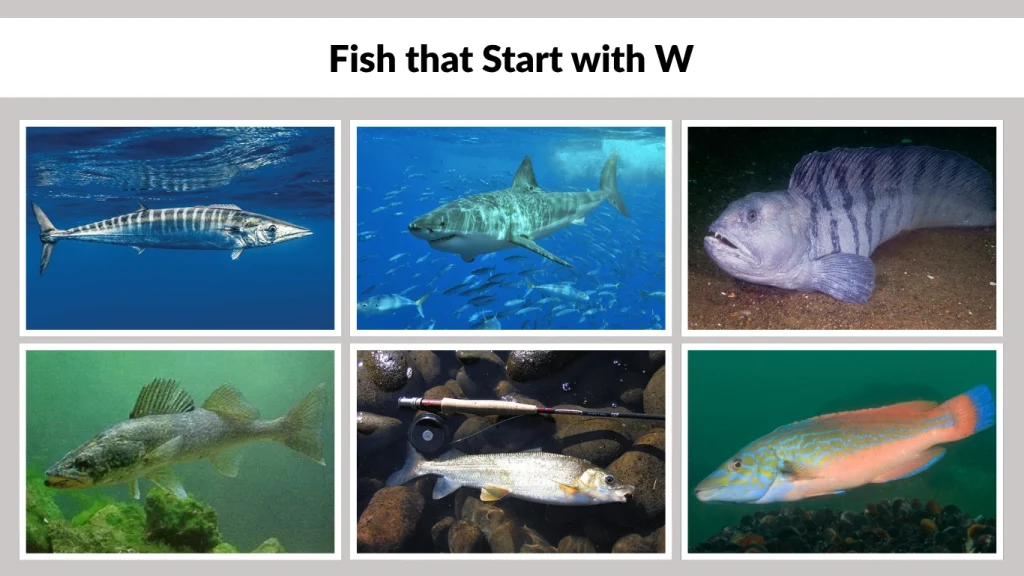
Fish whose names start with the letter W can be found in oceans, rivers, and lakes worldwide. They range from powerful ocean predators to small freshwater species. Many are important food sources for humans and wildlife, while others are valued for sport fishing. Their diversity reflects a wide variety of feeding habits, body shapes, and behaviors.
25. Wahoo
The wahoo is a fast, predatory fish found in tropical and subtropical oceans. It is known for its speed, sometimes reaching up to 60 mph, making it a prized catch for sport fishers.
Its long, streamlined body and sharp teeth make it an efficient hunter of smaller fish and squid. Wahoo meat is highly valued for its mild flavor and firm texture.
26. White Shark (Great White Shark)
The great white shark is one of the most famous marine predators, found in coastal waters worldwide. It can grow over 20 feet long and is recognized for its powerful build and rows of sharp teeth.
Great whites feed on fish, seals, and other marine animals. Despite their reputation, attacks on humans are rare, and they play a vital role in regulating ocean food chains.
27. Wolf Fish
The wolf fish is a bottom-dwelling predator found in cold Atlantic waters. It has large, strong teeth used to crush hard-shelled prey like crabs, lobsters, and sea urchins.
Its tough jaws and powerful bite make it an important predator in rocky reef ecosystems. It also has a distinctive eel-like body and mottled skin patterns.
28. Walleye
The walleye is a freshwater fish native to North America, prized by anglers for its delicate, flaky flesh. It is named for its pearlescent eyes, which help it see in low light.
Walleyes are most active during dawn and dusk, feeding on smaller fish and insects. They thrive in cool lakes and rivers with sandy or rocky bottoms.
29. Whitefish
Whitefish are a group of freshwater fish found in the Northern Hemisphere, especially in cold lakes. They have silver bodies and are related to salmon.
They are valued for their mild, tender meat and are often caught commercially. Whitefish feed mainly on plankton and insect larvae near the lake bottom.
30. Wrasse
Wrasses are colorful reef fish found in tropical and subtropical oceans. They are active during the day and rest in crevices at night.
Many wrasses have specialized teeth for cleaning parasites off other fish, making them important to reef health. Their bright colors make them popular in marine aquariums.
Insects that Start with W
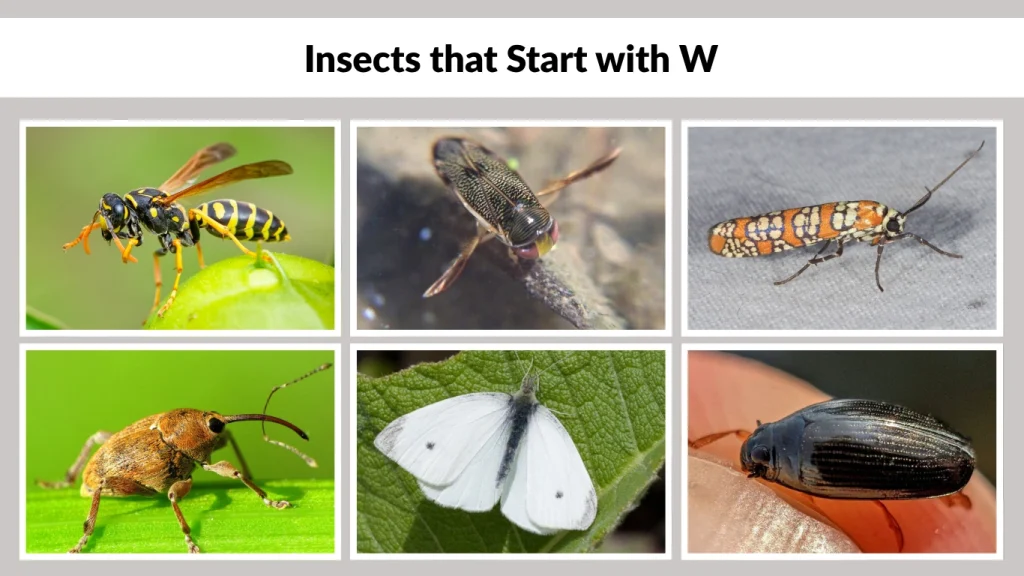
Insects beginning with the letter W include important pollinators, skilled predators, and species that thrive in water habitats. They live in diverse environments ranging from gardens to wetlands. Many of them play crucial ecological roles, helping control pests, aiding in plant reproduction, and contributing to the overall balance of ecosystems around the world.
31. Wasp
Wasps are flying insects found worldwide, known for their slender bodies and narrow waists. They can be solitary or social, with some species building large paper nests.
They are important predators of other insects, helping control pest populations. While some wasps can sting, they also play a role in pollination and maintaining ecological balance.
32. Water Boatman
The water boatman is an aquatic insect found in ponds, lakes, and slow-moving streams. It uses its oar-like hind legs to swim gracefully through the water.
These insects feed on algae, detritus, and small aquatic organisms. They are harmless to humans and are an important food source for fish and amphibians.
33. Webworm Moth
The webworm moth is a small, night-flying insect whose larvae spin silk webs over tree leaves. These caterpillars feed on the enclosed foliage for protection.
Although heavy infestations can damage trees, webworms are generally part of a healthy ecosystem. Birds and predatory insects help keep their populations in check.
34. Weevil
Weevils are a type of beetle with distinctive elongated snouts. They are found in many environments, often associated with stored grains or plants.
Some species are agricultural pests, while others feed harmlessly on wild plants. Their varied feeding habits make them both beneficial and problematic to humans.
35. White Butterfly
The white butterfly is a common garden insect, often referring to species like the cabbage white. It has pale wings with small dark spots.
They are important pollinators, but their caterpillars can be pests to vegetable crops. Gardeners often use companion planting to deter them naturally.
36. Whirligig Beetle
The whirligig beetle is an aquatic insect that swims in circles on the water surface. Its divided eyes allow it to see above and below the water at the same time.
It feeds on insects trapped on the surface film and is an important part of pond and lake ecosystems, helping recycle organic matter.
Marine Animals that Start with W
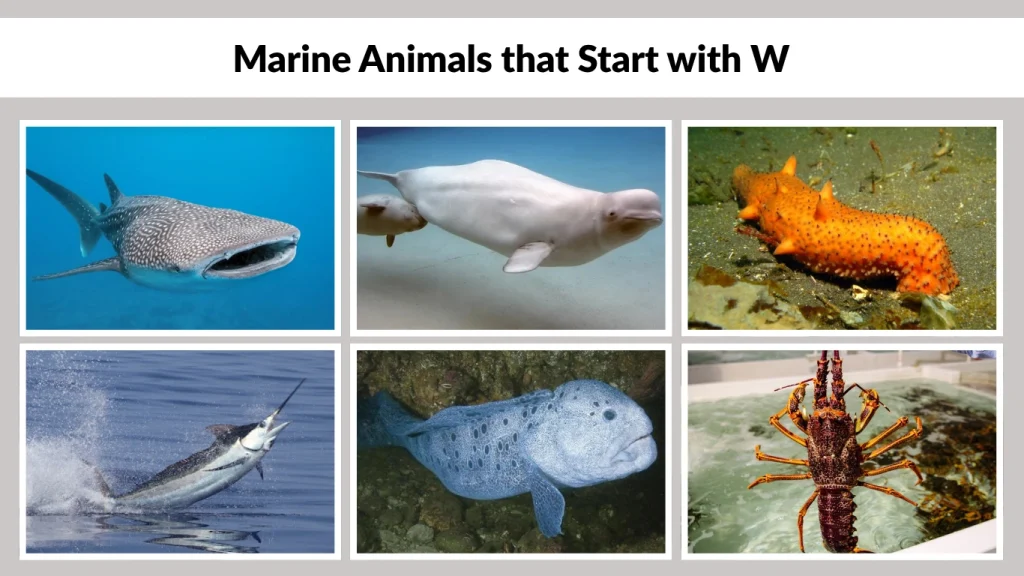
Marine animals whose names start with the letter W live in oceans around the world, from tropical reefs to icy polar waters. This group includes massive marine mammals, colorful reef fish, and unique invertebrates. They play critical roles in maintaining healthy ocean ecosystems, from top predators to bottom-dwelling cleaners that recycle nutrients.
37. Whale Shark
The whale shark is the largest fish in the world, reaching lengths over 40 feet. Despite its size, it feeds mainly on plankton, filtering tiny organisms from the water as it swims.
These gentle giants are found in warm oceans and are popular with divers. They are considered vulnerable due to overfishing and habitat threats.
38. White Whale (Beluga)
The white whale, or beluga, is a small, social whale found in Arctic and sub-Arctic waters. Its pure white coloring and rounded head make it easily recognizable.
Belugas are highly vocal and use echolocation to navigate under ice. They feed on fish, crustaceans, and worms, often hunting in cooperative groups.
39. Warty Sea Cucumber
The warty sea cucumber is a soft-bodied marine animal found on sandy and muddy sea floors. It has a bumpy surface and a slow-moving lifestyle.
It plays an important role in recycling nutrients by consuming detritus and organic matter from the ocean floor. Sea cucumbers also provide food for many predators.
40. White Marlin
The white marlin is a sleek, fast-swimming fish found in the Atlantic Ocean. It has a long, spear-like bill used to stun and catch smaller fish.
Highly prized in sport fishing, the white marlin is known for its speed and agility. Conservation efforts aim to protect its populations from overfishing.
41. Wolf Eel
The wolf eel is a long, eel-like fish found in rocky reefs in the North Pacific. It has powerful jaws for crushing hard-shelled prey like crabs and sea urchins.
Despite its fierce appearance, the wolf eel is generally shy and forms long-term mating pairs, sharing rocky crevices as their home.
42. Wrinkled Rock Lobster
The wrinkled rock lobster is a spiny lobster found in tropical and subtropical waters. It lacks the large claws of true lobsters but has strong antennae for defense.
It hides in rocky crevices during the day and comes out at night to feed on mollusks, crustaceans, and detritus, helping maintain reef balance.
Exotic and Rare Animals that Start with W
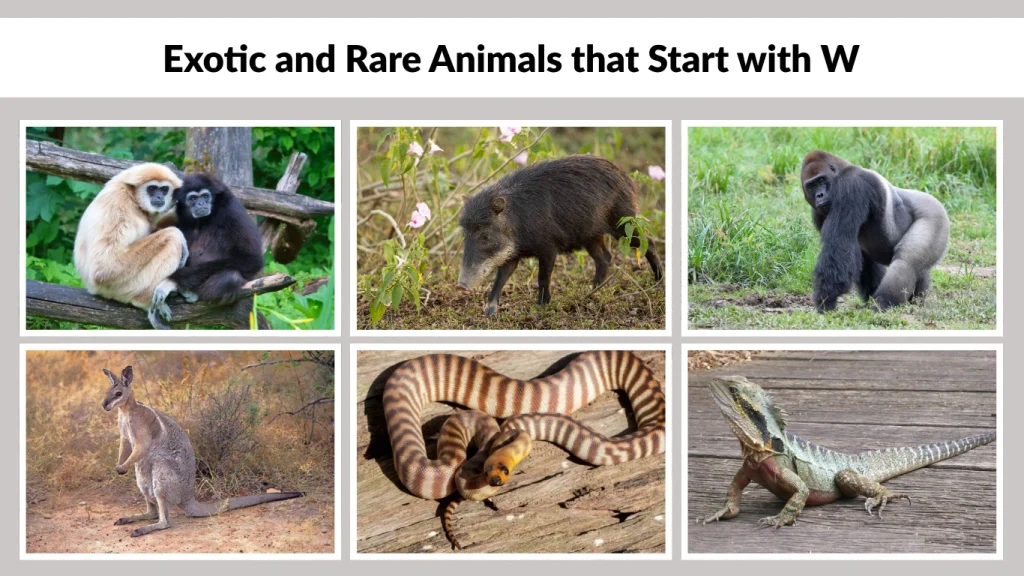
Exotic and rare animals beginning with the letter W often have unique appearances, specialized adaptations, and limited distributions. Many of these species are little known to the general public and are often found in remote habitats. Their rarity makes them important for biodiversity conservation and valuable subjects for scientific research and eco-tourism.
43. White-handed Gibbon
The white-handed gibbon is a small, agile ape found in Southeast Asia’s tropical forests. It is known for its long arms and distinctive white fur markings on its hands and feet.
These gibbons are expert brachiators, swinging gracefully from branch to branch. They live in monogamous pairs and defend their territories with loud, melodious calls.
44. White-lipped Peccary
The white-lipped peccary is a wild pig-like mammal native to Central and South America. It has a dark body with a white stripe around its mouth.
They live in large herds that can number over 100 individuals, roaming forests in search of fruit, roots, and small animals. They play a key role in seed dispersal.
45. Western Lowland Gorilla
The western lowland gorilla is the most numerous gorilla subspecies, found in the dense forests of Central Africa. It is critically endangered due to hunting and habitat loss.
These gorillas are gentle giants, living in family groups led by a dominant silverback male. They feed on fruit, leaves, and stems, shaping forest vegetation.
46. Wallaby
Wallabies are small to medium-sized marsupials native to Australia and nearby islands. They resemble kangaroos but are generally smaller and live in a variety of habitats.
They feed mainly on grasses and leaves, using their strong hind legs for hopping. Wallabies are important grazers in the ecosystems they inhabit.
47. Woma Python
The woma python is a non-venomous snake native to Australia. It has a slender body with a distinctive pattern of brown and tan bands.
This python feeds on reptiles, mammals, and birds, often using burrows for shelter. It plays a role in controlling small animal populations in arid and semi-arid regions.
48. Water Dragon
The water dragon is a large lizard native to Australia and Southeast Asia. It is often found near rivers, lakes, and streams, where it can dive into water to escape predators.
These reptiles are omnivorous, feeding on insects, plants, and small vertebrates. Their ability to live in both urban and natural areas makes them adaptable survivors.
Domesticated and Farm Animals that Start with W
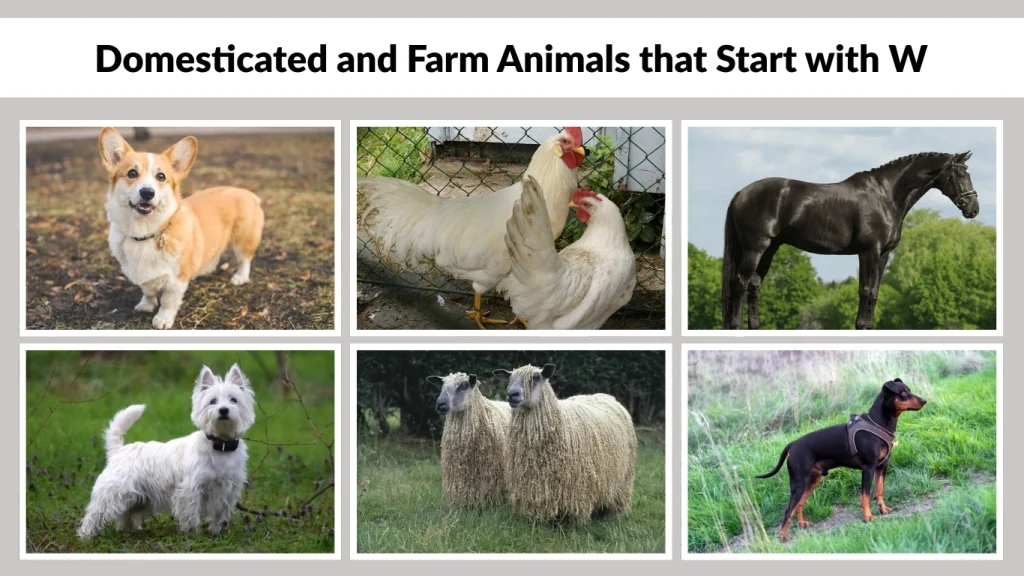
Domesticated and farm animals whose names begin with W include species bred for companionship, food, wool, or work. Many have been selectively bred over generations to enhance specific traits such as strength, temperament, or productivity. They play vital roles in human societies, from agricultural labor to providing meat, milk, and other valuable resources.
49. Welsh Corgi
The Welsh Corgi is a small herding dog breed from Wales, known for its short legs, long body, and lively personality. It is intelligent, affectionate, and easy to train.
Historically used to herd cattle, Welsh Corgis remain active and alert. They are popular family pets and excel in dog sports like agility and obedience.
50. White Leghorn Chicken
The White Leghorn is a prolific egg-laying chicken breed originating from Italy. It has white feathers, a bright red comb, and a slender build.
Known for producing large white eggs, these chickens are active and hardy. They adapt well to different climates, making them a staple in commercial egg production.
51. Warmblood Horse
Warmblood horses are a group of middle-weight horse breeds developed in Europe for sport and riding. They combine the athleticism of hot-blooded breeds with the calmness of cold-blooded horses.
They excel in dressage, show jumping, and eventing. Warmbloods are valued for their balanced temperaments and versatility in competitive equestrian sports.
52. West Highland White Terrier
The West Highland White Terrier, or “Westie,” is a small, sturdy dog breed from Scotland. It is known for its bright white coat and confident, friendly nature.
Originally bred for hunting vermin, Westies are now popular companion animals. They are energetic, loyal, and adapt well to both urban and rural living.
53. Wensleydale Sheep
The Wensleydale sheep is a long-wool breed originating in England. It is prized for its soft, lustrous fleece, which is highly valued in the textile industry.
These sheep are calm and easy to manage. They are often crossbred to improve wool quality in other breeds, contributing to the wool industry’s sustainability.
54. Working Dog (various breeds)
Working dogs are bred to perform tasks such as guarding, herding, pulling sleds, or assisting humans in search and rescue. Many breeds fall into this category.
They are intelligent, strong, and highly trainable, making them invaluable in law enforcement, farming, and service roles. Their loyalty and work ethic are unmatched.
Miscellaneous Animals that Start with W
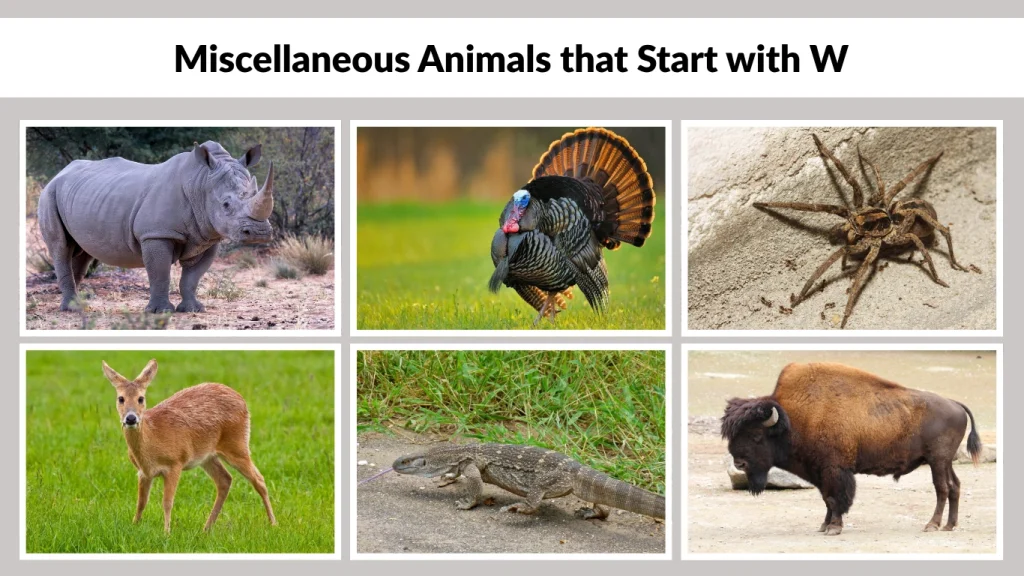
This final group includes a mix of animals starting with the letter W that don’t neatly fit into previous categories. They come from diverse habitats, ranging from polar ice to tropical forests. Many have unique adaptations that help them survive in challenging environments, and each plays an important role in the ecosystems where they live.
55. White Rhinoceros
The white rhinoceros is one of the largest land mammals, found in parts of Africa. It has a square-shaped mouth adapted for grazing on grass.
Despite their size and thick skin, white rhinos are threatened by poaching for their horns. Conservation programs have helped stabilize some populations, but they remain vulnerable.
56. Wild Turkey
The wild turkey is a large bird native to North America, recognized for its fan-shaped tail and distinctive gobbling call. Males display brightly colored heads and wattles during courtship.
Turkeys are omnivores, feeding on seeds, insects, and small reptiles. They are agile runners and strong fliers over short distances, despite their bulky build.
57. Wolf Spider
The wolf spider is a fast-moving ground-dwelling arachnid found worldwide. Unlike many spiders, it does not spin webs to catch prey but actively hunts on the ground.
Females carry their egg sacs attached to their bodies and even carry newly hatched spiderlings on their backs, offering them protection in early life.
58. Water Deer
The water deer is a small deer species native to China and Korea. It is notable for having long, protruding tusk-like teeth instead of antlers.
They live near rivers, lakes, and wetlands, feeding on grasses and aquatic plants. Their swimming ability allows them to escape predators effectively.
59. White-throated Monitor
The white-throated monitor is a large lizard native to southern Africa. It has a powerful build, strong claws, and a forked tongue for detecting scents.
It feeds on insects, small mammals, reptiles, and eggs. These monitors are intelligent reptiles, capable of problem-solving and using their strength to access food.
60. Wood Bison
The wood bison is the largest land animal in North America, even larger than the plains bison. It has a massive head and a high, pronounced shoulder hump.
Once nearly extinct, wood bison have been reintroduced in parts of Canada and Alaska. They graze on grasses and sedges, helping shape their habitats.