




King penguins (Aptenodytes patagonicus) are majestic birds known for their tall stature, sleek bodies, and eye-catching orange markings. As the second-largest penguin species after the emperor penguin, they are built for life in cold, marine environments. But unlike emperor penguins that inhabit the heart of Antarctica, king penguins have chosen different territories—remote subantarctic islands with rocky shores and chilly, but not frozen, climates. So, where exactly do king penguins live, and what makes their chosen habitats ideal? Let’s explore their geographic range, breeding grounds, and unique adaptations that help them thrive in the wild.
Natural Range of King Penguins

Geographic Distribution
King penguins live in the Southern Hemisphere, particularly on subantarctic islands that circle the edges of the Antarctic region. These birds do not venture deep into mainland Antarctica. Instead, they occupy isolated land masses that offer a perfect mix of cold temperatures, ocean access, and ice-free terrain—ideal conditions for breeding and foraging.
Countries and Territories Where They’re Found
King penguins are primarily found in:
- South Georgia and the South Sandwich Islands (British Overseas Territory)
- Crozet Islands and Kerguelen Islands (French Southern and Antarctic Lands)
- Macquarie Island (Australia)
- Falkland Islands (British Overseas Territory)
- Auckland and Campbell Islands (New Zealand)
These areas offer consistent cold climates, strong marine ecosystems, and limited human disturbance—making them ideal for sustaining large penguin colonies.
Major Breeding Colonies
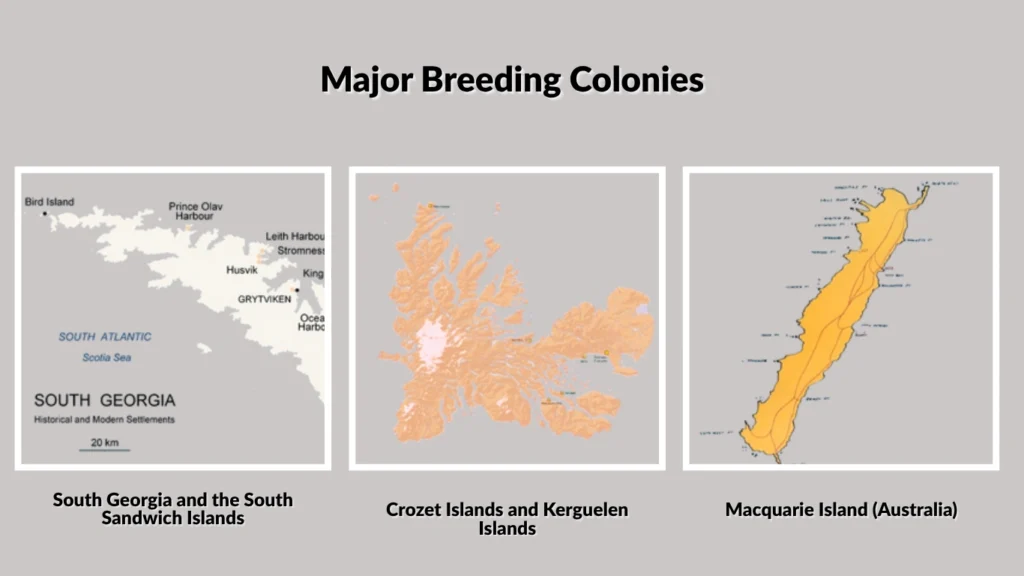
South Georgia and the South Sandwich Islands
This remote chain of islands in the South Atlantic Ocean hosts the world’s largest colonies of king penguins. South Georgia alone supports over 400,000 breeding pairs, particularly in areas like St. Andrews Bay and Salisbury Plain. The island’s beaches are covered with penguins year-round, thanks to staggered breeding cycles.
Crozet Islands and Kerguelen Islands
Located in the southern Indian Ocean, these French territories are home to hundreds of thousands of king penguins. The birds here breed in massive colonies, nesting on coastal plains and valleys where they can access the ocean easily for feeding.
Macquarie Island (Australia)
Macquarie Island, situated between New Zealand and Antarctica, is a UNESCO World Heritage Site and home to a smaller but well-documented king penguin population. It’s an important area for research and conservation, hosting several penguin species side by side.
Habitat Preferences
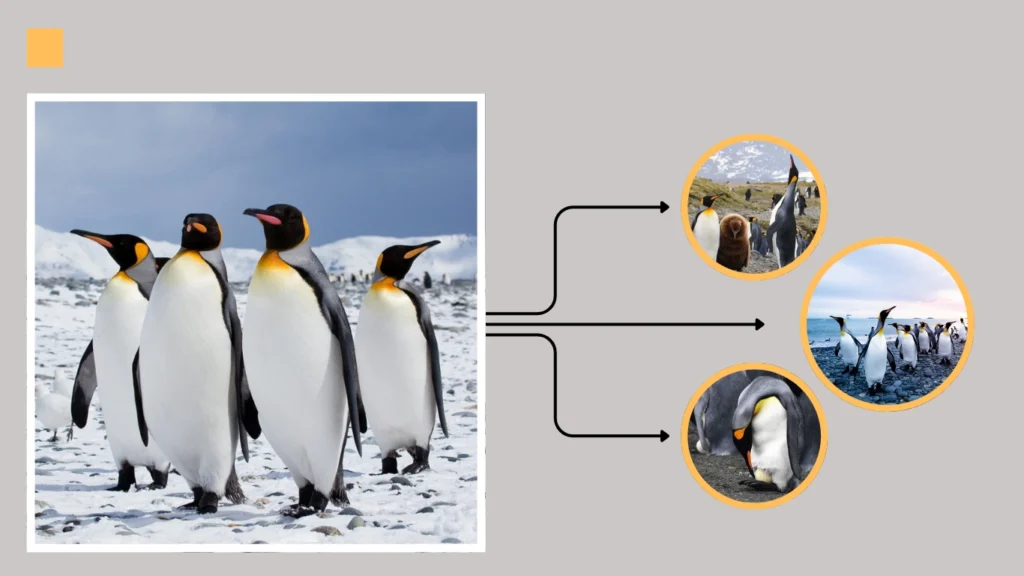
Coastal Plains and Beaches
King penguins prefer flat, ice-free coastal areas for breeding. These include beaches, valleys, and sometimes gentle slopes. They avoid icy terrain because they do not build traditional nests—instead, they carry eggs on their feet, which requires dry ground.
Tundra and Rocky Terrain
Some colonies are found slightly inland, where the terrain includes rocky outcrops and mossy tundra. These areas offer shelter from wind and predators. The landscape must be stable and safe enough for both adult penguins and their chicks.
Seasonal Movement and Marine Range
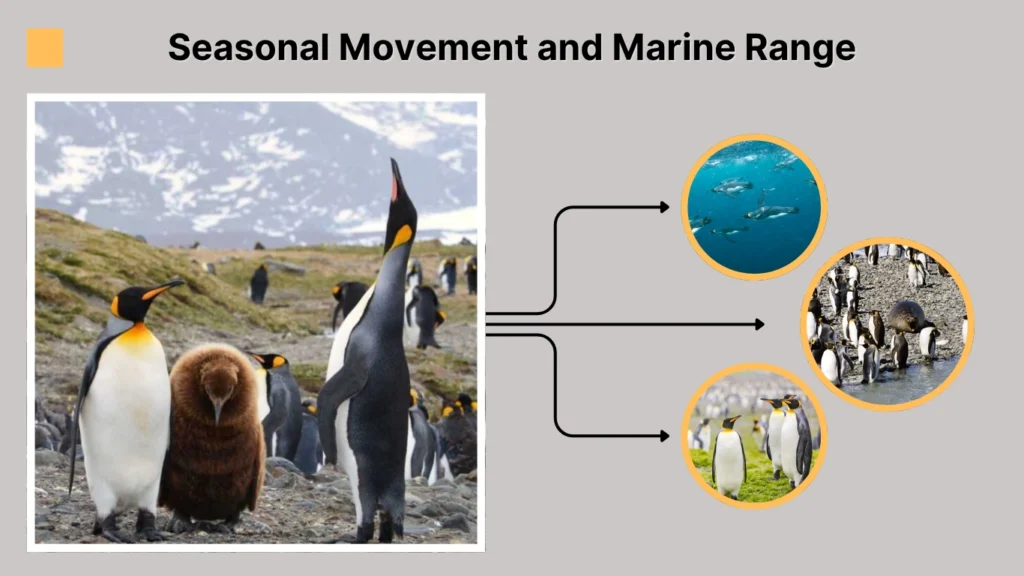
Foraging Range
King penguins are exceptional divers and swimmers. While their colonies are land-based, they spend a significant portion of their life in the ocean. They forage in cold, nutrient-rich waters and may travel over 500 kilometers (300 miles) to find fish, squid, and krill.
They are known to dive more than 300 meters (1,000 feet) deep and stay submerged for up to 10 minutes—a remarkable ability that allows them to reach prey that other birds can’t.
Migration Behavior
King penguins are not true migratory birds, but their foraging routes and behaviors change seasonally. After breeding, many adults leave the colony to search for food over long distances. Their movement patterns are linked to ocean temperatures, food abundance, and breeding responsibilities.
How Climate Affects Their Range
Sensitivity to Ocean Temperature
King penguins rely heavily on marine food chains. Rising sea temperatures and melting glaciers can alter fish and squid populations, pushing food sources further away. This change forces penguins to swim longer distances, which can reduce chick survival rates due to feeding delays.
Ice-Free Requirement
Unlike emperor penguins, king penguins cannot breed on sea ice. They need solid, ice-free ground to rest their eggs on their feet for incubation. Heavy snowfall or shifting ice conditions can disrupt breeding success and chick development.
Comparison with Emperor Penguins’ Habitat
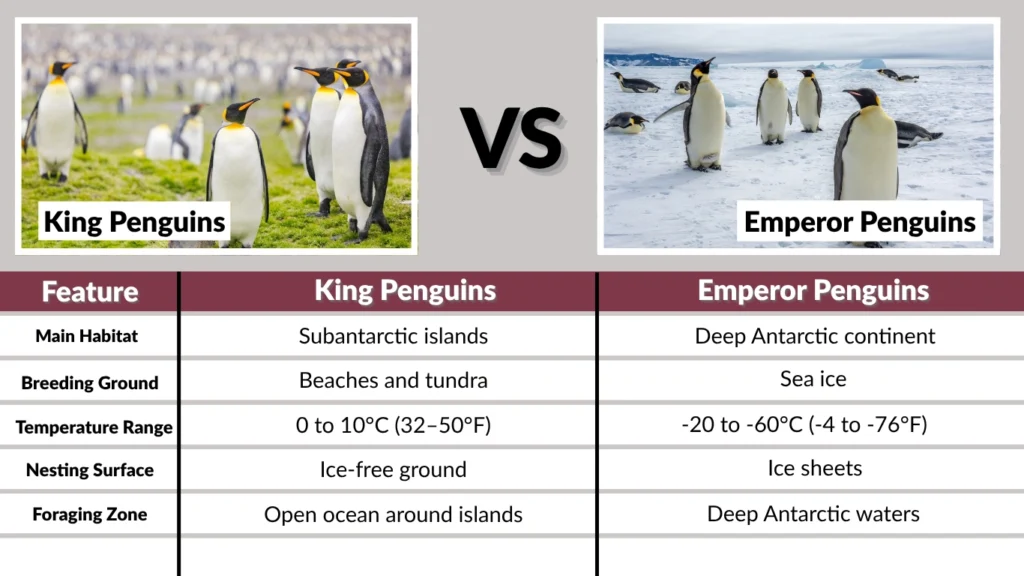
While both species are from the Aptenodytes genus, their habitat preferences differ significantly. Here’s a breakdown:
| Feature | King Penguins | Emperor Penguins |
| Main Habitat | Subantarctic islands | Deep Antarctic continent |
| Breeding Ground | Beaches and tundra | Sea ice |
| Temperature Range | 0 to 10°C (32–50°F) | -20 to -60°C (-4 to -76°F) |
| Nesting Surface | Ice-free ground | Ice sheets |
| Foraging Zone | Open ocean around islands | Deep Antarctic waters |
This table highlights how king penguins adapt to more temperate cold environments, while emperor penguins endure much harsher Antarctic conditions.
Human Interaction and Conservation
Protected Areas and Marine Reserves
Many king penguin habitats are within protected reserves or designated marine conservation zones. For instance, Macquarie Island and South Georgia have strict regulations to minimize human interference and protect biodiversity. These measures help ensure the penguins’ breeding and foraging grounds remain intact.
Tourism and Research Stations
King penguins are a major attraction for eco-tourism in the subantarctic. While tourism can raise awareness and support conservation, it also poses threats if not managed properly. Most tour operators now follow strict wildlife guidelines. In addition, several islands have scientific research bases monitoring the impact of climate change, food availability, and breeding success.
FAQs About King Penguin Habitat
1. Do king penguins live in Antarctica?
No, king penguins are not found on the Antarctic mainland. They live on subantarctic islands north of the continent, where the climate is cold but not as extreme.
2. Why do king penguins avoid icy breeding grounds?
Because they incubate eggs on their feet and require dry, ice-free surfaces. Snow and ice can freeze the egg or make balancing it impossible.
3. Can king penguins live in zoos?
Yes, king penguins can live in captivity, but only in environments that mimic their natural cold habitat, including chilled water and regulated temperature zones.
4. Are any king penguin colonies threatened by humans?
While most colonies are remote, some have been impacted by past human activities like whaling and overfishing. However, strict protection laws now guard many of their habitats.
5. How do they find food so far from their colony?
King penguins use their excellent swimming skills and deep diving capabilities to reach schools of fish and squid far from land, guided by ocean currents and instinct.