



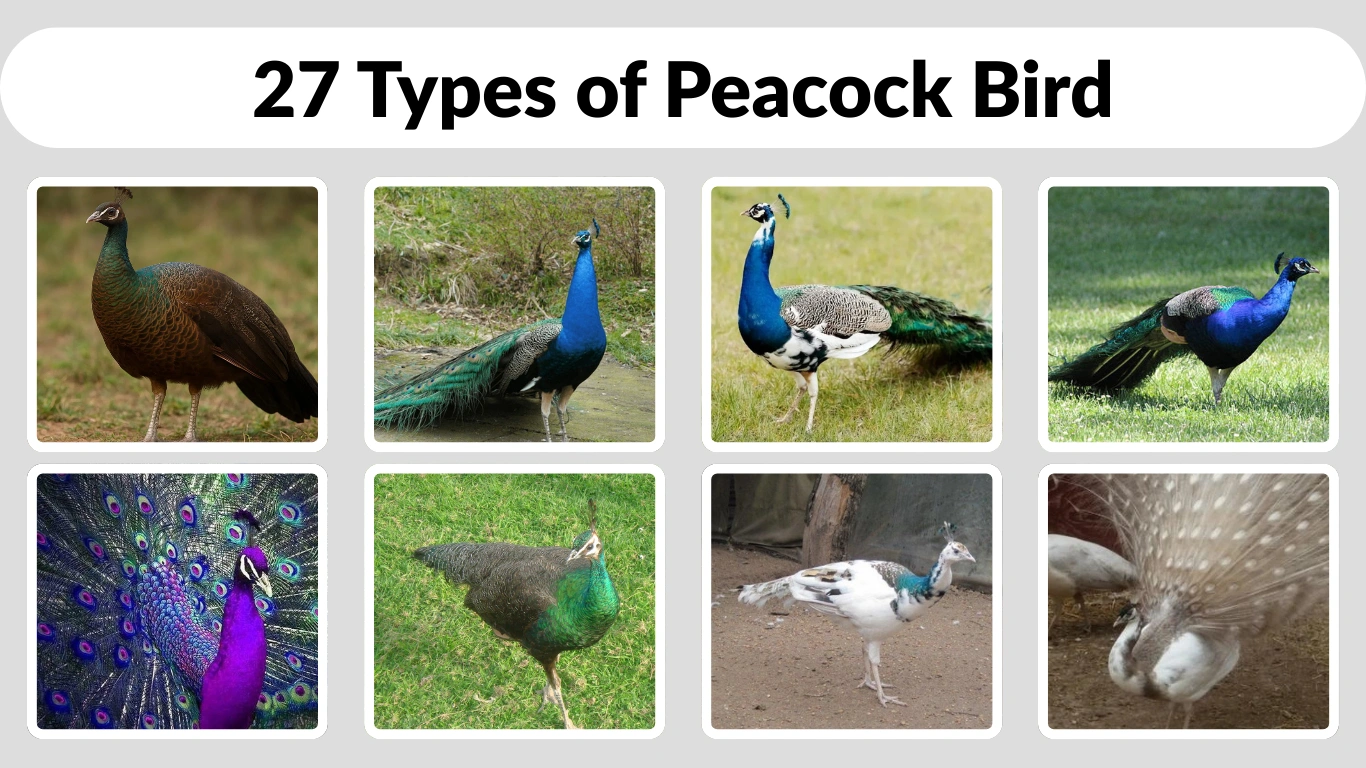
Peacocks are among the most beautiful and fascinating birds in the world, admired for their vibrant colors, graceful movements, and striking feather displays. While only a few peacock species exist naturally, selective breeding has produced many stunning color varieties. From classic blue and green peafowl to rare shades like opal, jade, and moonglow, each type offers unique visual charm and ornamental value.
1. Indian Peafowl

The Indian Peafowl is the most well-known and widely recognized peacock species in the world. Native to the Indian subcontinent, it is admired for its striking beauty, cultural significance, and impressive courtship display. This bird is also the national bird of India, symbolizing grace, pride, and elegance.
Identification
- Male is known as a peacock, female as a peahen
- Brilliant metallic blue neck and chest in males
- Long, colorful train with eye-shaped patterns (ocelli)
- Females are mostly brown and green with shorter tails
- Strong legs adapted for ground movement
Habitat and Distribution
Indian Peafowl are commonly found in forests, farmlands, open woodlands, and even near human settlements. They are native to India, Sri Lanka, Nepal, and parts of Pakistan, but have been introduced to many other regions worldwide. These birds adapt well to a variety of environments, especially areas with access to water and tall trees for roosting.
Behavior and Diet
This species is omnivorous and feeds on seeds, grains, fruits, insects, small reptiles, and even snakes. Indian Peafowl are mostly ground-dwelling but can fly short distances to escape predators or reach roosting sites. The famous display of the male—spreading its train and vibrating feathers—is performed mainly during the breeding season to attract females.
Conservation Status and Significance
The Indian Peafowl is classified as Least Concern, with stable populations across its native range. It is protected by law in India due to its cultural and ecological importance. Beyond its beauty, the bird plays a role in controlling pests and holds a deep place in mythology, art, and religious traditions across South Asia.
2. Green Peafowl
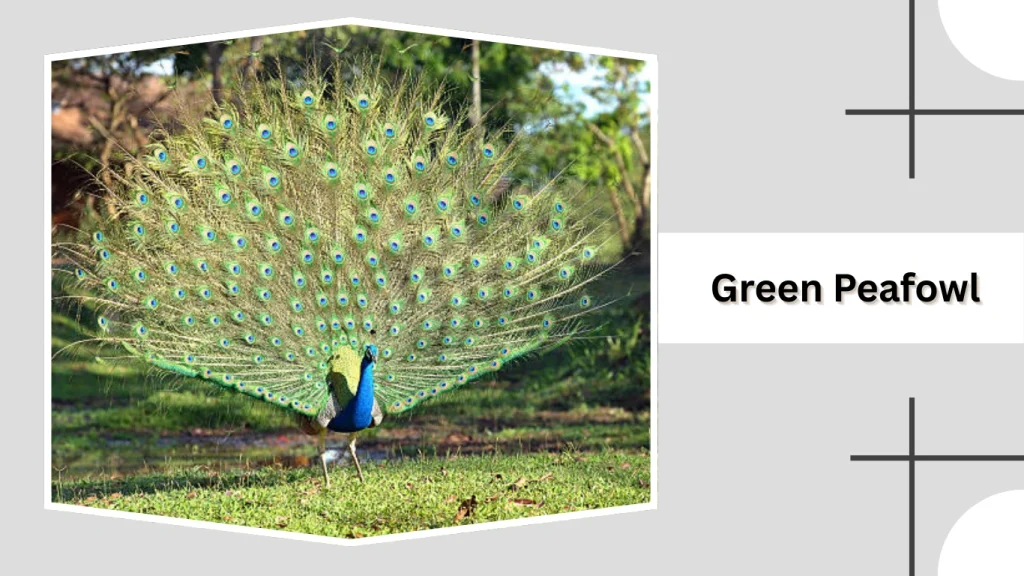
The Green Peafowl is a striking and elegant species known for its shimmering green and gold plumage. It is less common than the Indian Peafowl and is considered more elusive. This species is admired for its long, sleek appearance and louder, more piercing calls, which are often heard before the bird is seen.
Identification
- Males have glossy green and bronze body feathers
- Neck feathers appear scaly with metallic tones
- Train is long but narrower than Indian Peafowl
- Females closely resemble males but are slightly duller
- Yellowish facial skin with upright crest
Habitat and Distribution
Green Peafowl are native to Southeast Asia, including Myanmar, Thailand, Cambodia, Vietnam, and parts of Indonesia. They prefer dense forests, riverbanks, grasslands, and open woodlands near water sources. Unlike Indian Peafowl, they avoid heavy human settlements and require relatively undisturbed habitats to thrive.
Behavior and Diet
These birds are shy and more solitary in nature. They are strong runners and rely on ground movement more than flight. Their diet consists of fruits, seeds, insects, amphibians, and small reptiles. During the breeding season, males perform elaborate displays, though these are more upright and less fan-shaped than those of Indian Peafowl.
Conservation Status and Significance
The Green Peafowl is classified as Endangered due to habitat loss, hunting, and human disturbance. Conservation efforts are ongoing in several countries to protect remaining populations. Ecologically, they contribute to seed dispersal and insect control, making them important to forest ecosystems.
3. Congo Peafowl
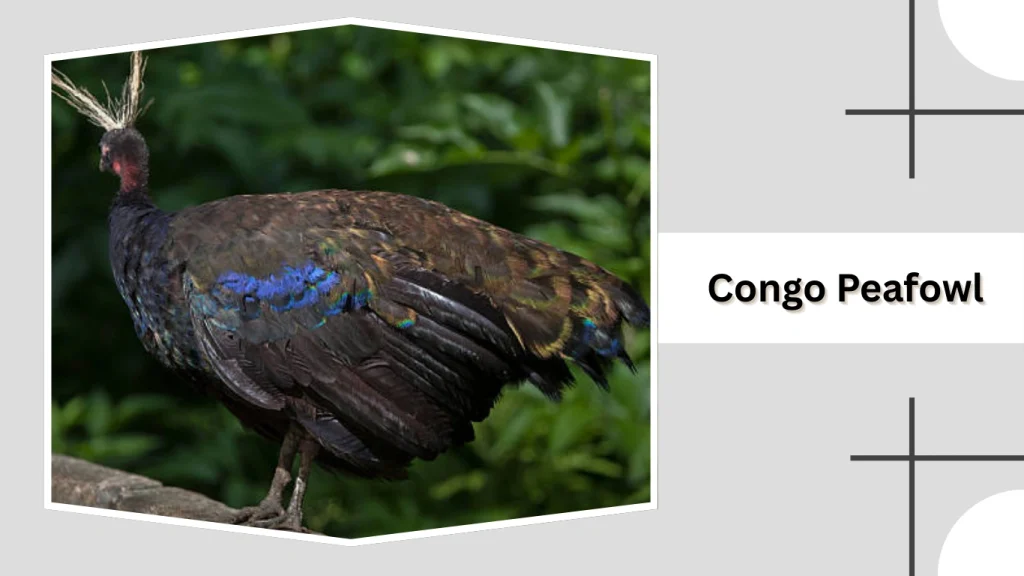
The Congo Peafowl is the rarest and least known of all peafowl species. Unlike its Asian relatives, it lacks a long ornamental train and has a more compact, pheasant-like appearance. This species holds great scientific importance due to its unique evolutionary position.
Identification
- Smaller and stockier than other peafowl
- Males have deep blue and green plumage
- Short tail without an extended train
- Females are chestnut-brown with green highlights
- White crest feathers on the head
Habitat and Distribution
Congo Peafowl are endemic to the dense rainforests of the Democratic Republic of the Congo in Central Africa. They inhabit lowland tropical forests with thick undergrowth. Their secretive nature and remote habitat make them difficult to study and observe in the wild.
Behavior and Diet
This species is mostly ground-dwelling and very shy. It feeds on fruits, seeds, leaves, insects, and small invertebrates found on the forest floor. Congo Peafowl are usually seen alone or in pairs and are most active during early morning and late afternoon.
Conservation Status and Significance
The Congo Peafowl is listed as Vulnerable, facing threats from deforestation and hunting. It is the only peafowl species native to Africa, making it biologically unique. Protecting this bird also helps preserve the rich biodiversity of Central African rainforests.
4. Blue Peacock
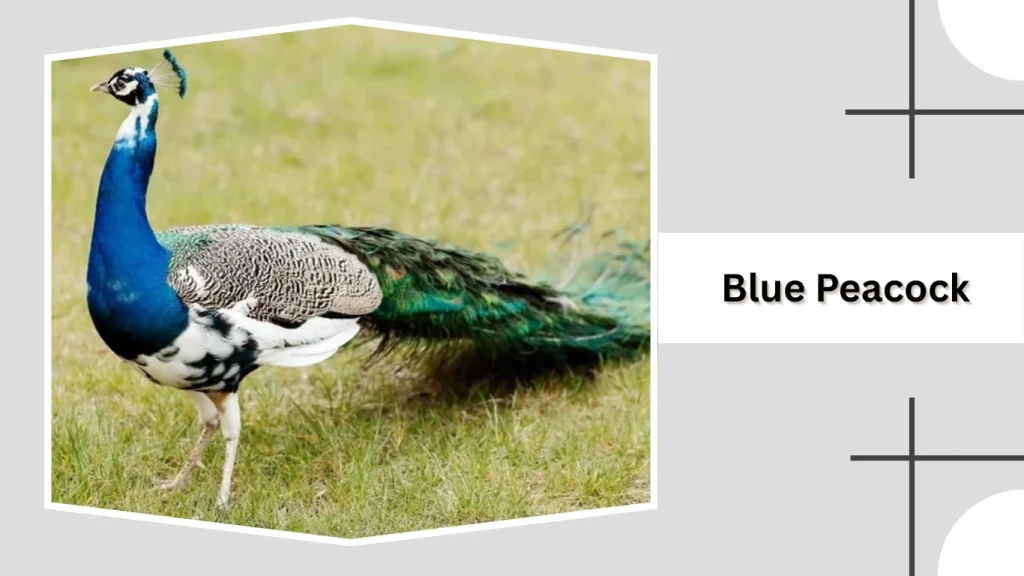
The Blue Peacock is another commonly used name for the male Indian Peafowl, famous for its vivid blue coloration and majestic appearance. It is widely admired across the world for its decorative feathers and graceful movements. This bird is often seen in gardens, parks, temples, and wildlife reserves due to its adaptability and striking beauty.
Identification
- Bright iridescent blue head, neck, and chest
- Long train covered with eye-like spots
- Slender crest of upright feathers on the head
- Strong gray legs with sharp spurs in males
- Female lacks bright blue color and long train
Habitat and Distribution
Blue Peacocks are primarily found in the Indian subcontinent, including India, Sri Lanka, Nepal, and surrounding regions. They thrive in mixed habitats such as forests, open grasslands, farmlands, and areas close to villages. Their ability to live near humans has helped them spread widely beyond their native range through introduction into parks and private estates.
Behavior and Diet
This species is mostly active during early morning and late afternoon. Blue Peacocks are ground feeders and spend much of their time walking while searching for food. Their diet includes grains, seeds, fruits, insects, small reptiles, and amphibians. During breeding season, males perform impressive displays by fanning their train and producing rattling sounds to attract females.
Cultural Importance and Conservation
The Blue Peacock holds strong cultural and religious significance in South Asia. It appears in folklore, art, and religious symbolism, often associated with beauty and immortality. The species is protected in many regions and is classified as Least Concern, with stable populations in the wild. Conservation efforts mainly focus on habitat preservation and preventing illegal hunting.
5. White Peacock
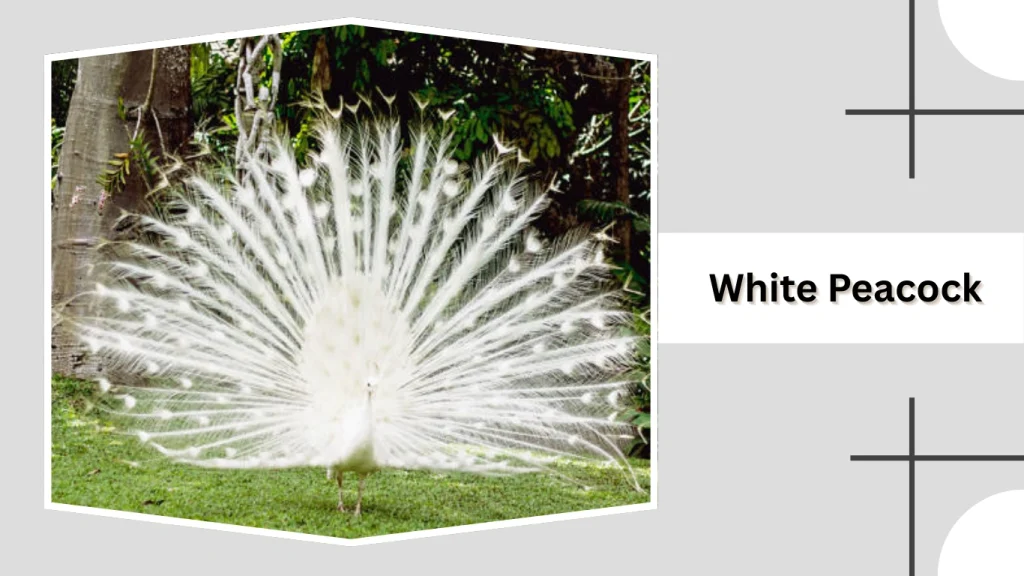
The White Peacock is a rare and visually stunning color variant of the Indian Peafowl, known for its pure white feathers and graceful appearance. Unlike albino birds, White Peacocks have blue eyes and normal pigmentation beneath their feathers. They are highly valued in ornamental gardens, parks, and aviaries due to their elegant and symbolic beauty.
Identification
- Entire body covered in pure white feathers
- Long white train without eye-shaped markings
- Blue eyes, indicating leucism not albinism
- Pale pink beak and legs
- Females are also white but smaller with shorter trains
Habitat and Distribution
White Peacocks do not exist naturally in the wild and are mainly found in captivity or semi-captive environments. They are commonly kept in private estates, zoological parks, temples, and ornamental gardens. Since they originate from selectively bred Indian Peafowl, their habitat requirements are similar, including open spaces, trees for roosting, and access to clean water.
Behavior and Diet
Behaviorally, White Peacocks are similar to other peafowl. They are ground feeders and consume grains, seeds, fruits, insects, and small reptiles. During the breeding season, males perform courtship displays by spreading their white train, creating a striking fan-like shape. Though lacking colorful eyespots, the display remains visually impressive due to its size and symmetry.
Symbolism and Conservation
White Peacocks are often associated with purity, peace, and spirituality in many cultures. They are not considered a separate species and are not evaluated independently for conservation status. Their populations are stable under human care, and responsible breeding practices help maintain their health and genetic diversity.
6. Black-shouldered Peacock
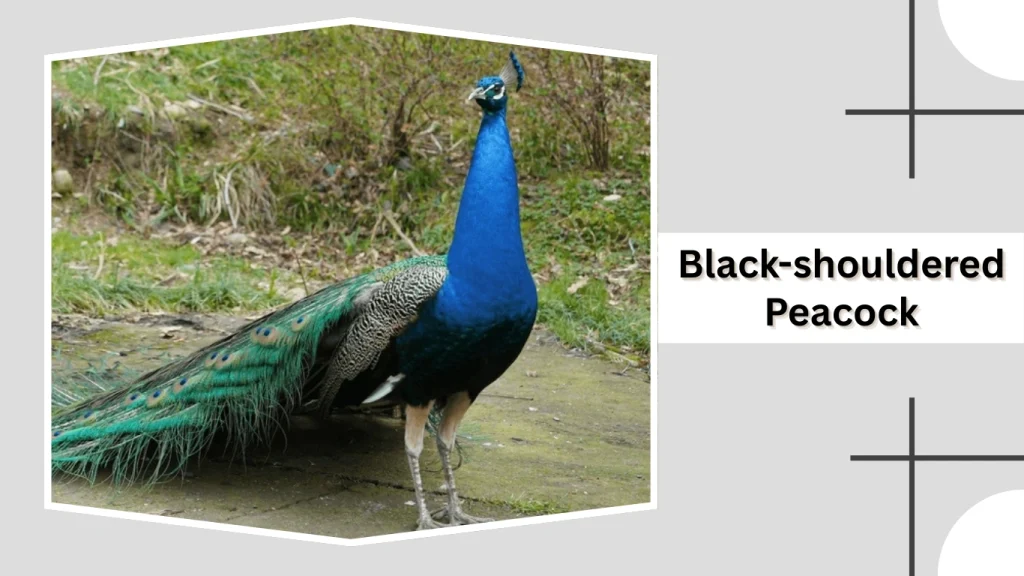
The Black-shouldered Peacock is a striking color mutation of the Indian Peafowl, known for its bold contrast between dark wings and a bright blue body. This variety is especially popular among bird breeders and ornamental collections due to its dramatic appearance and clear color definition.
Identification
- Deep blue neck and chest
- Black or dark gray wing feathers
- Reduced patterning on the wings
- Long train similar to Indian Peafowl
- Females are cream or pale gray with darker shoulders
Habitat and Distribution
Black-shouldered Peacocks are not found in the wild and exist mainly in captivity. They are bred in aviaries, private estates, and ornamental gardens worldwide. Their habitat needs are the same as standard Indian Peafowl, requiring open ground for feeding, tall trees for roosting, and sheltered areas for protection.
Behavior and Diet
Their behavior closely matches that of Indian Peafowl. They are active during daylight hours and spend most of their time on the ground. The diet includes grains, seeds, fruits, insects, and small reptiles. Males perform elaborate courtship displays during the breeding season, showcasing their long train despite the darker wing coloration.
Breeding and Conservation
This variety is produced through selective breeding and is genetically stable. It is not considered a separate species and does not have an independent conservation status. Responsible breeding helps maintain strong coloration and healthy populations in captivity.
7. Cameo Peacock
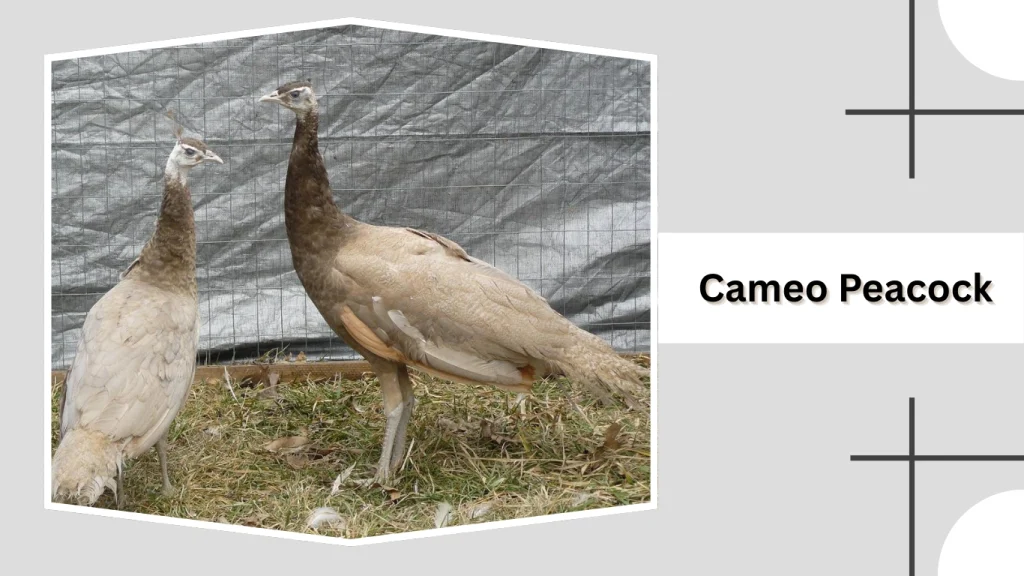
The Cameo Peacock is a soft-colored and elegant peafowl variety known for its pale beige and cream tones. Its subtle beauty makes it one of the most visually unique peacock color mutations, often prized by collectors who prefer muted, refined coloration.
Identification
- Light cream, beige, or fawn body color
- Soft pastel appearance across feathers
- Lighter train with faint eye patterns
- Pinkish legs and pale beak
- Females share similar tones with shorter tails
Habitat and Distribution
Cameo Peacocks are exclusively found in captivity and are the result of selective breeding. They are commonly kept in aviaries, ornamental parks, and private collections. Like other peafowl varieties, they require open spaces, shade, and secure roosting areas.
Behavior and Diet
Their behavior is calm and similar to other peafowl. They forage on the ground and eat grains, seeds, fruits, insects, and small invertebrates. During mating season, males perform courtship displays that highlight the soft coloration of their train rather than bold contrast.
Rarity and Conservation
Cameo Peacocks are considered rare due to the specific genetics required to produce their coloration. They are not evaluated separately for conservation, as they are a domestic variety. Ethical breeding practices are essential to preserve their delicate color traits and overall health.
8. Opal Peacock
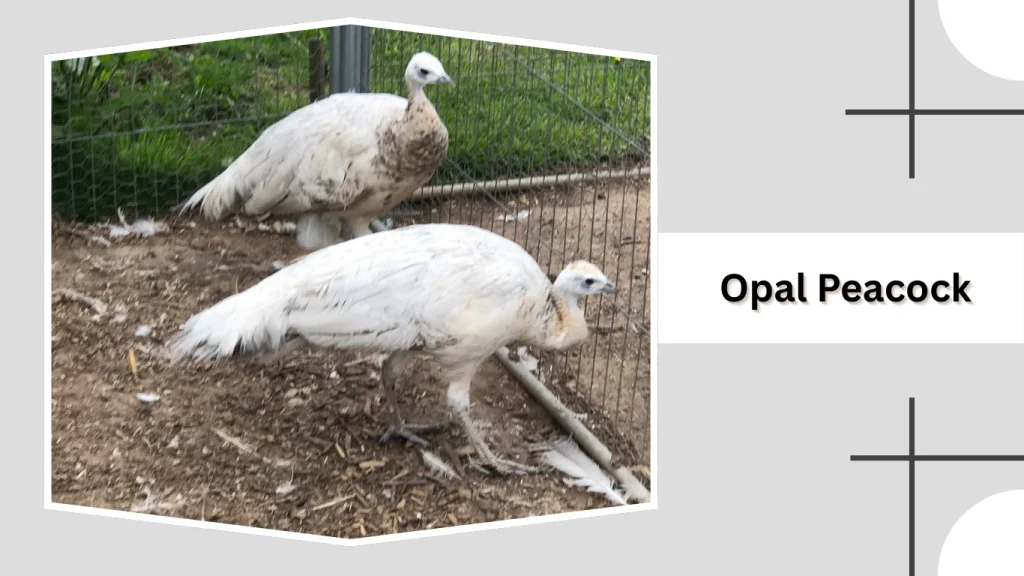
The Opal Peacock is a visually captivating color mutation of the Indian Peafowl, known for its soft gray, bluish, and pastel tones. Its feathers appear smoky or mist-like, giving the bird a calm and elegant presence. This variety is especially admired by breeders for its smooth color transitions and unique sheen.
Identification
- Soft gray to bluish body coloration
- Muted, pastel-toned train feathers
- Eye patterns appear faded or silvery
- Pale legs and light-colored beak
- Females show similar gray tones with shorter trains
Habitat and Distribution
Opal Peacocks are found only in captivity and are the result of selective breeding. They are commonly kept in aviaries, ornamental gardens, and private estates. Their habitat requirements are similar to other peafowl, including open ground for foraging, shaded areas, and trees or shelters for roosting.
Behavior and Diet
This variety behaves much like standard Indian Peafowl. They are active during daylight hours and prefer walking to flying. Their diet consists of grains, seeds, fruits, insects, and small reptiles. During the breeding season, males display their trains in wide arcs, with the opal coloration giving a soft, shimmering effect rather than bold contrast.
Breeding Value and Conservation
Opal Peacocks are valued for their genetic rarity and visual softness. They are not considered a separate species and have no independent conservation status. Responsible breeding is essential to maintain their coloration and avoid genetic weaknesses common in ornamental varieties.
9. Bronze Peacock
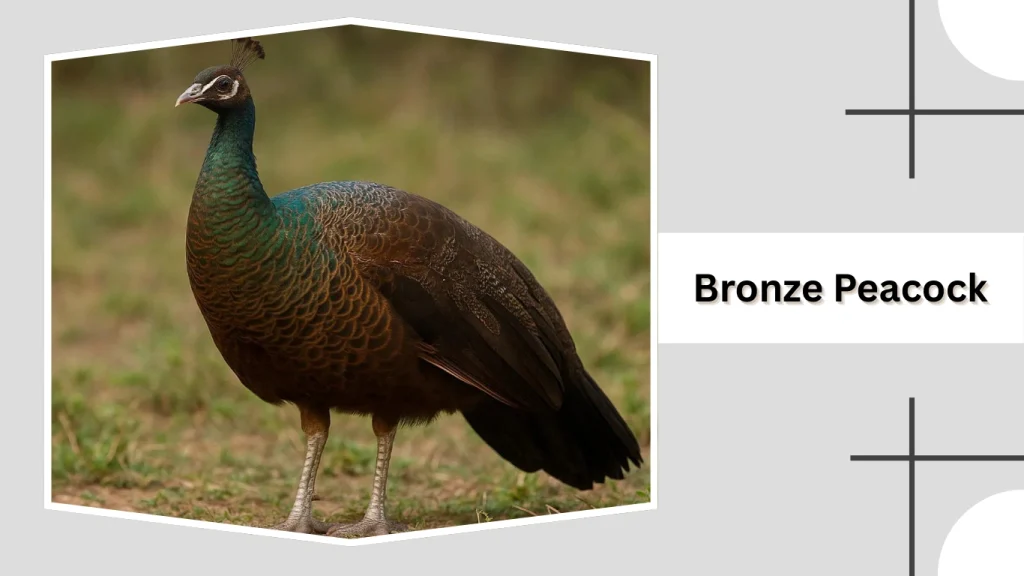
The Bronze Peacock is a richly colored peafowl variety known for its deep, earthy tones combined with metallic highlights. Its feathers display shades of copper, brown, and dark green, giving it a warm and powerful appearance. This variety is popular among breeders who favor bold and natural-looking coloration.
Identification
- Dark bronze, copper, and brown body feathers
- Metallic green and gold highlights
- Train feathers with darker eye patterns
- Strong legs with darker pigmentation
- Females are brownish with subtle bronze tones
Habitat and Distribution
Bronze Peacocks exist primarily in captivity and are bred in aviaries, farms, and ornamental collections worldwide. Their environmental needs match those of Indian Peafowl, requiring open land, access to water, and elevated roosting spots for safety.
Behavior and Diet
They are hardy and adaptable birds, often more tolerant of varied climates. Bronze Peacocks forage on the ground and consume grains, seeds, insects, fruits, and small animals. During mating season, males perform traditional courtship displays, with their darker train giving a dramatic and intense visual effect.
Popularity and Conservation
The Bronze Peacock is appreciated for its strong coloration and robust build. It is not recognized as a separate species and does not face conservation threats under human care. Maintaining healthy breeding lines ensures the preservation of its distinctive bronze coloration.
10. Purple Peacock
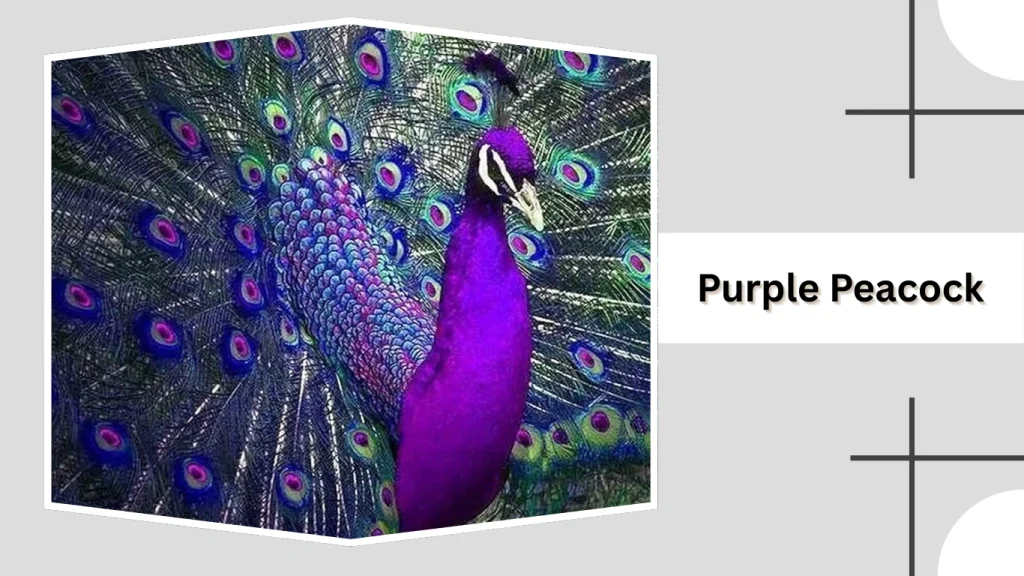
The Purple Peacock is a rare and visually dramatic color mutation of the Indian Peafowl, known for its deep purplish-blue tones and rich metallic sheen. Under sunlight, its feathers display shifting shades of violet, blue, and green, making it one of the most striking ornamental peacock varieties.
Identification
- Deep purple to violet neck and chest
- Metallic sheen with blue and green highlights
- Darker train with rich eye patterns
- Black or dark gray legs
- Females show muted purple-brown tones
Habitat and Distribution
Purple Peacocks are found only in captivity and are the result of selective breeding. They are commonly kept in private collections, aviaries, and decorative gardens. Their habitat requirements are similar to standard peafowl, including open spaces for foraging, trees for roosting, and secure shelter.
Behavior and Diet
This variety behaves similarly to other peafowl types. They are active during daylight and prefer walking over flying. Their diet includes grains, seeds, fruits, insects, and small reptiles. During the breeding season, males display their train, with the purple coloration giving a bold and luxurious appearance.
Rarity and Conservation
Purple Peacocks are considered rare due to complex genetics. They are not a separate species and do not have an independent conservation status. Ethical breeding practices help maintain strong coloration and healthy populations.
11. Charcoal Peacock
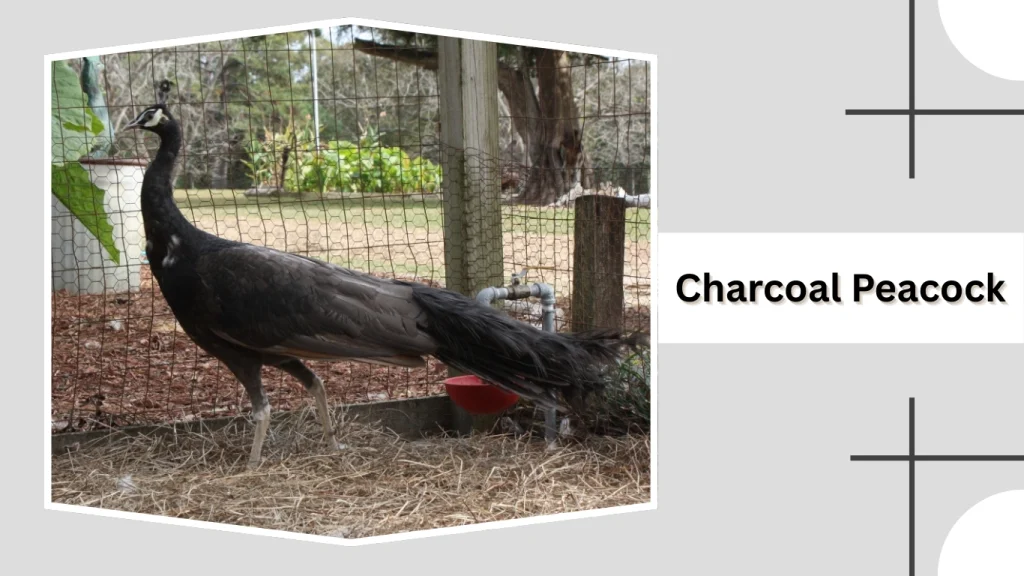
The Charcoal Peacock is a dark and elegant peafowl variety characterized by smoky gray to nearly black plumage. Its subdued coloration gives it a mysterious and modern appearance, making it a favorite among collectors who prefer darker ornamental birds.
Identification
- Smoky gray to charcoal-black body feathers
- Reduced brightness in neck and chest
- Darkened train with muted eye spots
- Dark legs and beak
- Females are gray-brown with subtle patterning
Habitat and Distribution
Charcoal Peacocks exist only in captivity and are selectively bred. They are commonly housed in aviaries, zoological parks, and private estates. Their habitat needs match those of Indian Peafowl, including open ground, roosting trees, and protection from predators.
Behavior and Diet
They are calm and adaptable birds, spending much of their time foraging on the ground. Their diet consists of grains, seeds, fruits, insects, and small invertebrates. During breeding season, males perform traditional displays, with their dark train creating a dramatic silhouette.
Ornamental Value and Conservation
Charcoal Peacocks are valued for their unique dark coloration. They are not classified separately for conservation, as they are domestic color variations. Responsible breeding ensures their long-term health and visual quality.
12. Jade Peacock
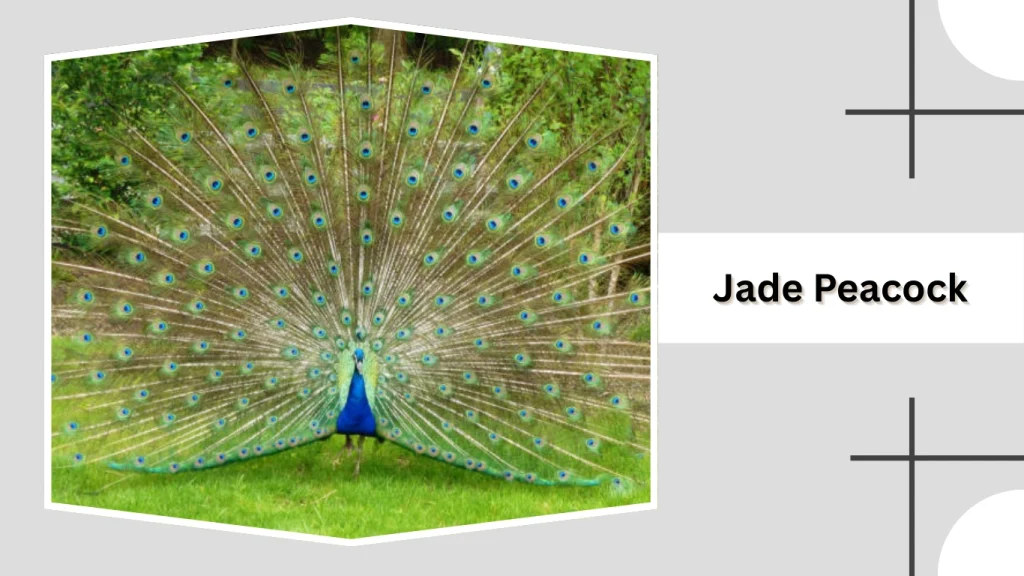
The Jade Peacock is a rare and elegant color mutation admired for its rich green tones and smooth metallic shine. Its plumage reflects shades of emerald and jade, giving the bird a fresh, jewel-like appearance. This variety is especially popular among ornamental bird enthusiasts for its natural yet vibrant coloration.
Identification
- Bright jade-green neck and chest
- Metallic green body feathers
- Train with green-dominant eye patterns
- Pale gray to pinkish legs
- Females appear dull green with shorter trains
Habitat and Distribution
Jade Peacocks are found only in captivity and are produced through selective breeding. They are commonly kept in aviaries, landscaped gardens, and private collections. Their habitat needs are similar to other peafowl varieties, requiring open areas, shade, and elevated roosting spots.
Behavior and Diet
Their behavior mirrors that of Indian Peafowl. They are active during the day and forage mostly on the ground. The diet includes grains, seeds, fruits, insects, and small reptiles. During breeding season, males display their vibrant green train, which glows strongly under sunlight.
Breeding and Conservation
Jade Peacocks are considered uncommon due to specific genetic combinations. They are not recognized as a separate species and have no independent conservation status. Ethical breeding helps preserve their vivid green coloration.
13. Midnight Peacock

The Midnight Peacock is a dramatic and rare color variety known for its extremely dark blue to near-black plumage. Under certain lighting, subtle hints of deep blue and green become visible, giving this bird a mysterious and powerful presence.
Identification
- Very dark blue to almost black neck and chest
- Minimal iridescence visible in low light
- Dark train with shadowy eye patterns
- Black legs and beak
- Females are dark brown to charcoal in color
Habitat and Distribution
Midnight Peacocks exist exclusively in captivity and are the result of selective breeding. They are typically found in private estates, aviaries, and ornamental parks. Like all peafowl, they require open ground, secure shelter, and roosting areas.
Behavior and Diet
They are calm, ground-feeding birds that spend much of their time walking and foraging. Their diet consists of grains, fruits, seeds, insects, and small animals. During the breeding season, males perform traditional courtship displays, with their dark train creating a striking silhouette.
Ornamental Status and Conservation
Midnight Peacocks are highly valued for their dark elegance. They are not a separate species and are not independently assessed for conservation. Responsible breeding ensures the maintenance of their unique coloration and overall health.
14. Peach Peacock
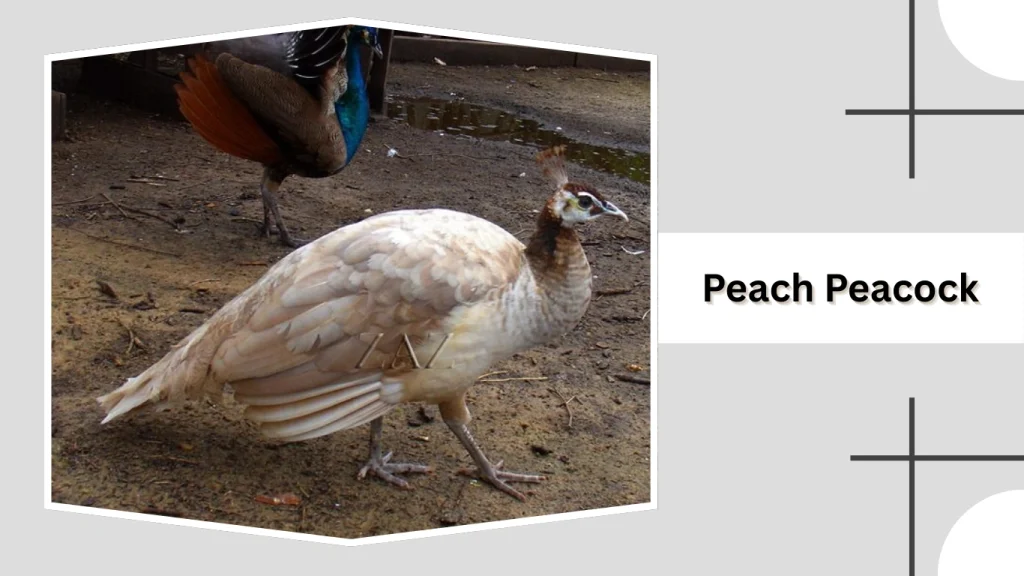
The Peach Peacock is a soft-colored and visually pleasing peafowl variety known for its warm peach, blush, and light apricot tones. Its gentle coloration gives it a delicate and elegant appearance, making it a favorite among ornamental bird collectors who prefer lighter shades.
Identification
- Soft peach to light apricot body feathers
- Warm blush tones on neck and chest
- Light-colored train with faint eye patterns
- Pale pink legs and beak
- Females display lighter peach-brown shades
Habitat and Distribution
Peach Peacocks are exclusively found in captivity and are created through selective breeding. They are commonly kept in aviaries, private gardens, and ornamental parks. Their habitat needs are similar to other peafowl, including open ground for foraging, shade, and safe roosting areas.
Behavior and Diet
They are calm and ground-feeding birds that follow typical peafowl behavior. Their diet includes grains, seeds, fruits, insects, and small reptiles. During the breeding season, males perform courtship displays, with their peach-colored train creating a soft and graceful visual effect.
Rarity and Conservation
Peach Peacocks are considered rare due to the genetic combinations required for their coloration. They are not recognized as a separate species and have no independent conservation status. Ethical breeding practices help maintain healthy populations.
15. Sonja’s Violetta Peacock
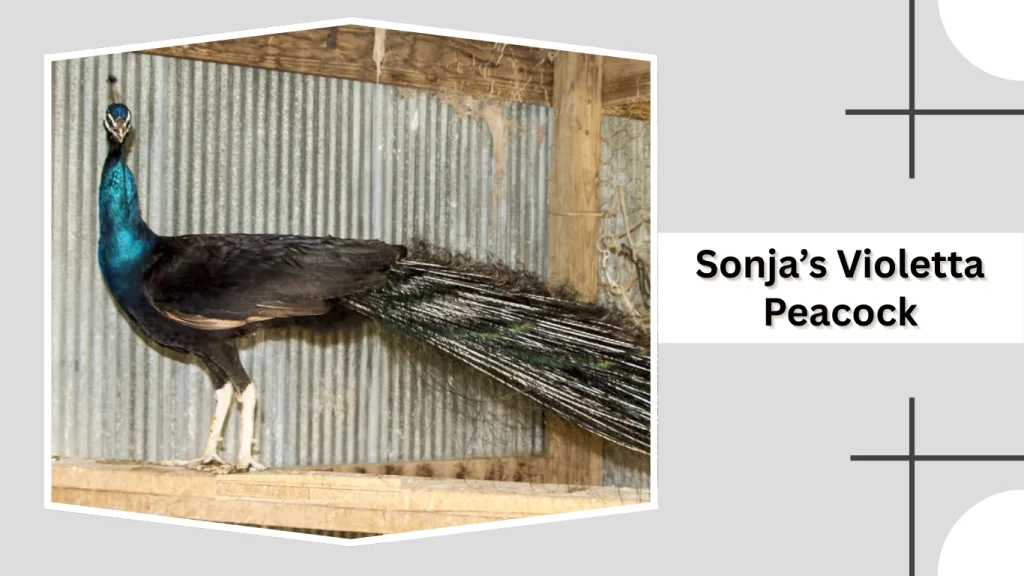
Sonja’s Violetta Peacock is a rare and premium peafowl variety known for its rich violet and deep blue coloration. Developed through specialized breeding lines, this variety is admired for its intense color depth and high ornamental value.
Identification
- Deep violet to royal blue neck and chest
- Strong metallic sheen under sunlight
- Dark train with vivid eye patterns
- Dark gray to black legs
- Females show softer violet-brown tones
Habitat and Distribution
This variety exists only in captivity and is typically found in specialized breeding facilities, private estates, and high-end aviaries. Its environmental needs are identical to other peafowl, including open space, shelter, and roosting trees.
Behavior and Diet
Behaviorally, Sonja’s Violetta Peacocks are similar to Indian Peafowl. They forage on the ground and eat grains, fruits, seeds, insects, and small reptiles. During breeding season, males perform dramatic displays enhanced by their rich violet coloration.
Breeding Importance and Conservation
Sonja’s Violetta Peacock is valued for its genetic purity and striking color. It is not a separate species and has no independent conservation status. Responsible and selective breeding is essential to preserve this rare variety.
16. Sonja’s Indigo Peacock

Sonja’s Indigo Peacock is a rare and refined peafowl variety recognized for its deep indigo-blue coloration and intense metallic shine. Developed through specialized breeding programs, this variety is admired for its rich color depth and elegant overall appearance.
Identification
- Deep indigo-blue neck and chest
- Strong metallic sheen with bluish highlights
- Dark train with bold eye patterns
- Black or dark gray legs
- Females show muted indigo-brown tones
Habitat and Distribution
This variety exists only in captivity and is mainly found in professional breeding facilities, private collections, and ornamental parks. Its habitat needs are the same as other peafowl varieties, requiring open spaces, roosting areas, and protection from harsh conditions.
Behavior and Diet
Sonja’s Indigo Peacocks behave similarly to Indian Peafowl. They are active during daylight and forage on the ground. Their diet includes grains, seeds, fruits, insects, and small reptiles. During the breeding season, males perform courtship displays, with their indigo coloration adding depth and intensity.
Breeding Value and Conservation
This variety is highly valued for its stable and vivid coloration. It is not recognized as a separate species and does not have an independent conservation status. Ethical breeding ensures the preservation of its distinctive indigo tones.
17. Sonja’s Black Opal Peacock
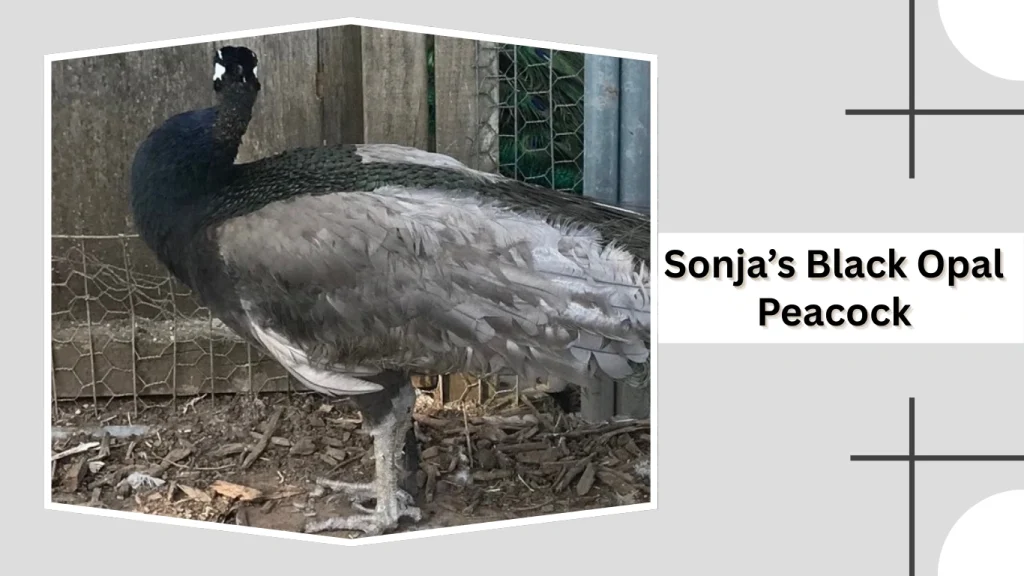
Sonja’s Black Opal Peacock is one of the darkest and most visually striking peafowl varieties. It combines deep black, blue, and green tones with a glossy, opalescent finish, making it a prized bird among collectors and advanced breeders.
Identification
- Black body with blue-green opalescent sheen
- Extremely dark neck and chest
- Train with shadowy but visible eye patterns
- Black legs and beak
- Females are dark brown to blackish in color
Habitat and Distribution
This variety is exclusively captive-bred and typically found in elite aviaries and private estates. Like other peafowl, it requires open ground, shelter, and elevated roosting areas.
Behavior and Diet
They are calm, ground-feeding birds with typical peafowl behavior. Their diet consists of grains, seeds, fruits, insects, and small invertebrates. During breeding season, males display their dark, shimmering train, which appears almost black in low light.
Rarity and Conservation
Sonja’s Black Opal Peacock is extremely rare and valued for its unique genetics. It is not classified as a separate species and has no independent conservation status. Careful breeding is essential to maintain its color intensity and health.
18. Silver Pied Peacock
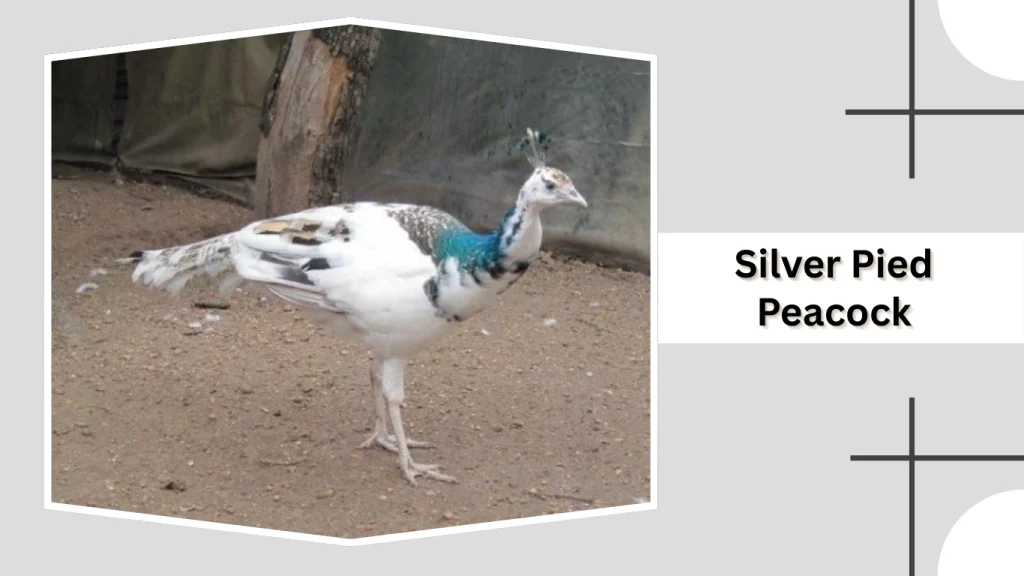
The Silver Pied Peacock is a striking peafowl variety known for its contrasting mix of white and silver-gray feathers combined with patches of natural color. This pattern gives the bird a bold, marbled appearance that stands out strongly in ornamental settings.
Identification
- White and silver-gray feather patches
- Irregular pied pattern across body and wings
- Train shows mixed white and colored eye spots
- Pale legs and light beak
- Females display softer pied markings
Habitat and Distribution
Silver Pied Peacocks exist only in captivity and are created through selective breeding. They are commonly found in aviaries, ornamental parks, and private collections. Their habitat requirements are similar to other peafowl, including open foraging areas, shade, and secure roosting spots.
Behavior and Diet
They are active ground feeders that follow standard peafowl behavior. Their diet includes grains, seeds, fruits, insects, and small reptiles. During breeding season, males perform courtship displays, with the pied pattern creating a unique and eye-catching visual effect.
Breeding and Conservation
Silver Pied Peacocks are valued for their distinctive patterning rather than color depth. They are not recognized as a separate species and have no independent conservation status. Ethical breeding ensures healthy and visually balanced offspring.
19. White-eyed Peacock
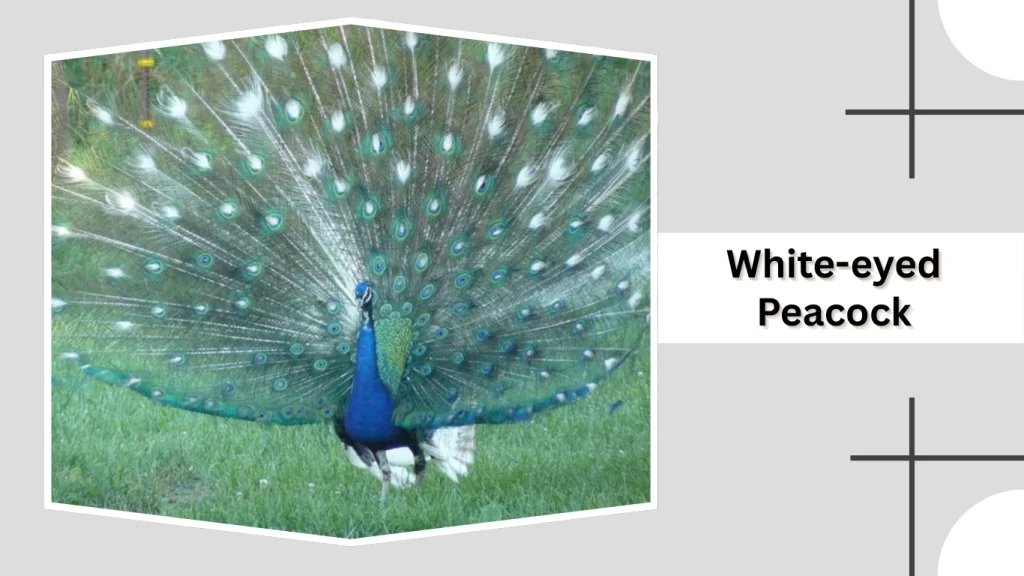
The White-eyed Peacock is a rare and unusual peafowl variety characterized by pale or white-centered eye spots on its train feathers. This subtle variation gives the train a softer and more refined appearance compared to traditional peafowl patterns.
Identification
- Eye spots with pale or white centers
- Standard blue or green body coloration
- Long train with light-toned ocelli
- Gray to pinkish legs
- Females appear similar to standard peahens
Habitat and Distribution
White-eyed Peacocks are found exclusively in captivity and are the result of selective breeding. They are typically kept in private collections, aviaries, and ornamental estates. Their environmental needs mirror those of Indian Peafowl.
Behavior and Diet
Their behavior is identical to other peafowl varieties. They forage on the ground and consume grains, seeds, fruits, insects, and small reptiles. During mating season, males display their train, with the pale eye spots creating a delicate visual contrast.
Rarity and Conservation
This variety is considered rare due to its specific genetic trait. It is not classified as a separate species and does not have an independent conservation status. Responsible breeding is important to preserve the white-eyed pattern.
20. Patternless Peacock
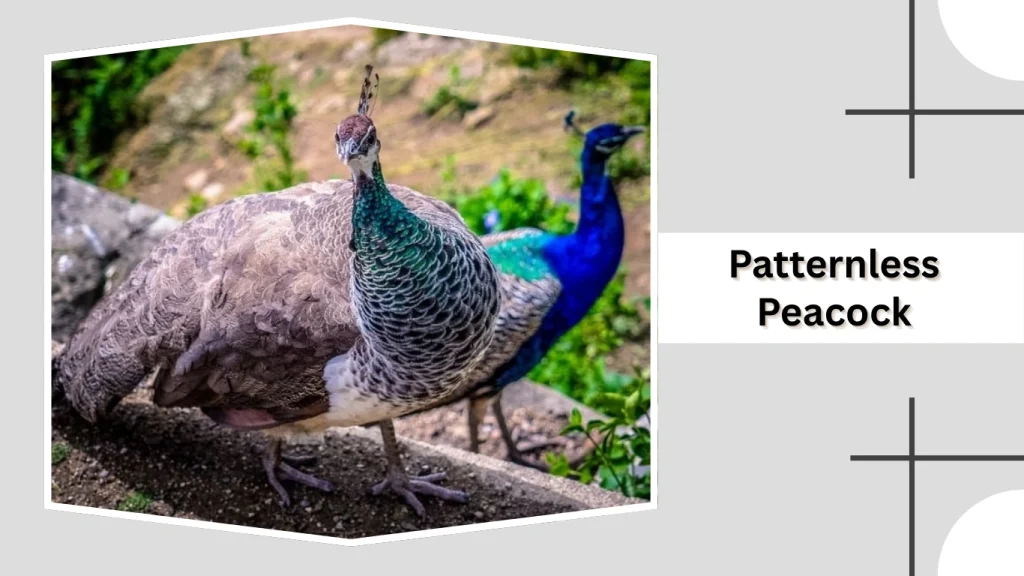
The Patternless Peacock is a unique peafowl variety known for the absence or extreme reduction of eye-shaped markings on its train feathers. This creates a smooth, uniform look that highlights the bird’s overall color rather than intricate patterns, giving it a clean and modern appearance.
Identification
- Train feathers lack visible eye patterns
- Smooth, uniform coloration across feathers
- Body color varies depending on genetic line
- Strong legs similar to standard peafowl
- Females show minimal patterning
Habitat and Distribution
Patternless Peacocks exist only in captivity and are produced through selective breeding. They are commonly kept in aviaries, private estates, and ornamental gardens. Their habitat needs are the same as other peafowl, including open space, roosting trees, and shelter.
Behavior and Diet
They behave like typical Indian Peafowl, spending much of their time foraging on the ground. Their diet includes grains, seeds, fruits, insects, and small reptiles. During breeding season, males display their train, with the lack of patterns drawing attention to color and feather shape.
Breeding and Conservation
This variety is valued for its minimalist appearance and genetic uniqueness. It is not recognized as a separate species and has no independent conservation status. Ethical breeding ensures the stability of the patternless trait.
21. Violeta Peacock
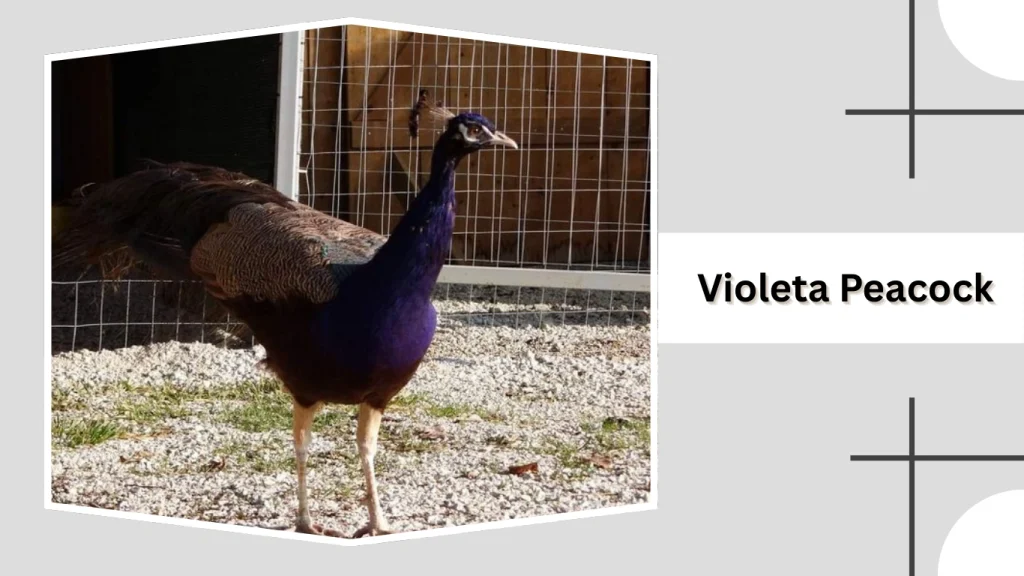
The Violeta Peacock is a rich-colored peafowl variety admired for its deep violet and purple hues combined with a metallic sheen. Its vibrant coloration gives it a luxurious and ornamental appeal, making it highly desirable among collectors.
Identification
- Deep violet to purple neck and chest
- Metallic shine under sunlight
- Dark train with bold eye spots
- Dark gray or black legs
- Females show softer violet-brown tones
Habitat and Distribution
Violeta Peacocks are found only in captivity and are the result of selective breeding. They are typically kept in private aviaries, breeding farms, and decorative parks. Their habitat requirements match those of Indian Peafowl.
Behavior and Diet
They are active, ground-feeding birds with standard peafowl behavior. Their diet includes grains, seeds, fruits, insects, and small animals. During breeding season, males perform courtship displays that emphasize their intense violet coloration.
Ornamental Value and Conservation
Violeta Peacocks are prized for their vivid color and visual impact. They are not classified as a separate species and do not have an independent conservation status. Responsible breeding helps maintain their striking appearance.
22. Hazel Peacock
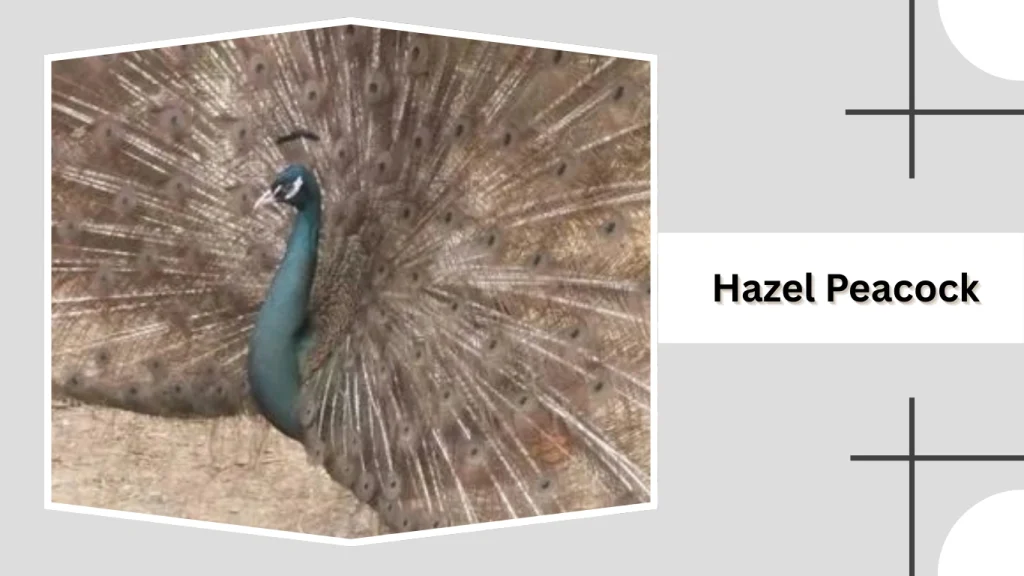
The Hazel Peacock is a warm-toned peafowl variety recognized for its soft brown, tan, and hazel-colored plumage. Its natural, earthy appearance gives it a subtle elegance, making it appealing to collectors who prefer muted and realistic color variations.
Identification
- Warm hazel-brown neck and body feathers
- Soft metallic sheen in sunlight
- Train with brownish eye patterns
- Light gray to pinkish legs
- Females are lighter brown with simpler markings
Habitat and Distribution
Hazel Peacocks exist only in captivity and are created through selective breeding. They are commonly found in aviaries, private estates, and ornamental parks. Their habitat needs are the same as other peafowl varieties, including open foraging areas and safe roosting spaces.
Behavior and Diet
They are calm, ground-feeding birds that spend much of their time foraging. Their diet consists of grains, seeds, fruits, insects, and small reptiles. During breeding season, males display their train, with hazel tones creating a soft, earthy visual effect.
Breeding Importance and Conservation
Hazel Peacocks are valued for their gentle coloration and genetic stability. They are not recognized as a separate species and have no independent conservation status. Ethical breeding ensures healthy and visually balanced birds.
23. Taupe Peacock
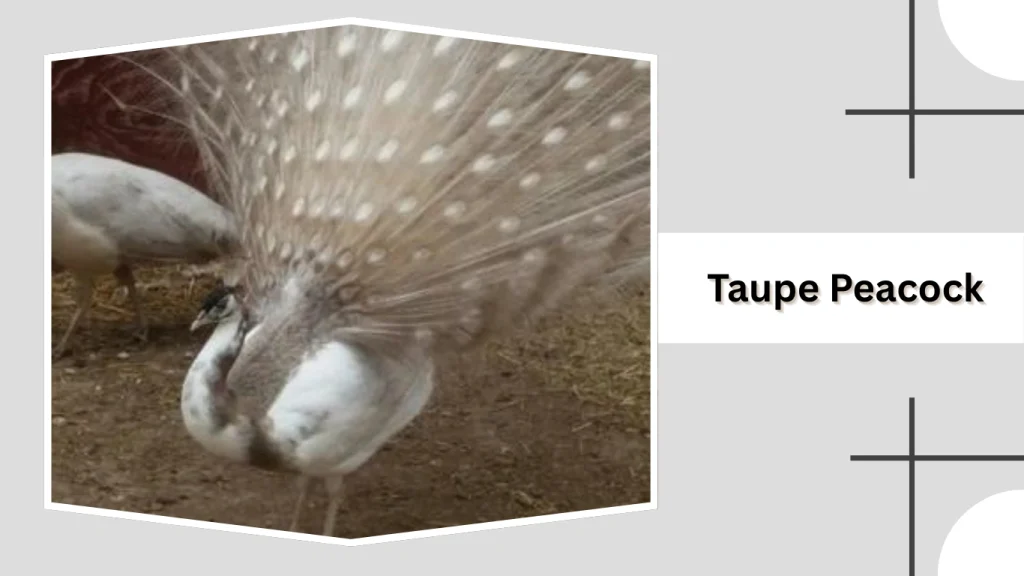
The Taupe Peacock is a refined peafowl variety known for its gray-brown, taupe-colored plumage with subtle metallic undertones. Its understated elegance makes it popular among breeders who appreciate neutral and sophisticated coloration.
Identification
- Gray-brown taupe neck and body feathers
- Soft metallic sheen under light
- Muted train with faint eye patterns
- Pale gray legs and beak
- Females appear in lighter taupe shades
Habitat and Distribution
Taupe Peacocks are found exclusively in captivity and result from selective breeding. They are commonly kept in aviaries, ornamental collections, and private gardens. Their habitat requirements mirror those of Indian Peafowl.
Behavior and Diet
They behave like standard peafowl, spending most of their time on the ground. Their diet includes grains, seeds, fruits, insects, and small animals. During the breeding season, males perform courtship displays that emphasize the smooth, neutral coloration of their train.
Rarity and Conservation
Taupe Peacocks are considered uncommon due to specific breeding genetics. They are not a separate species and do not have an independent conservation status. Responsible breeding helps maintain their subtle coloration.
24. Aubergine Peacock
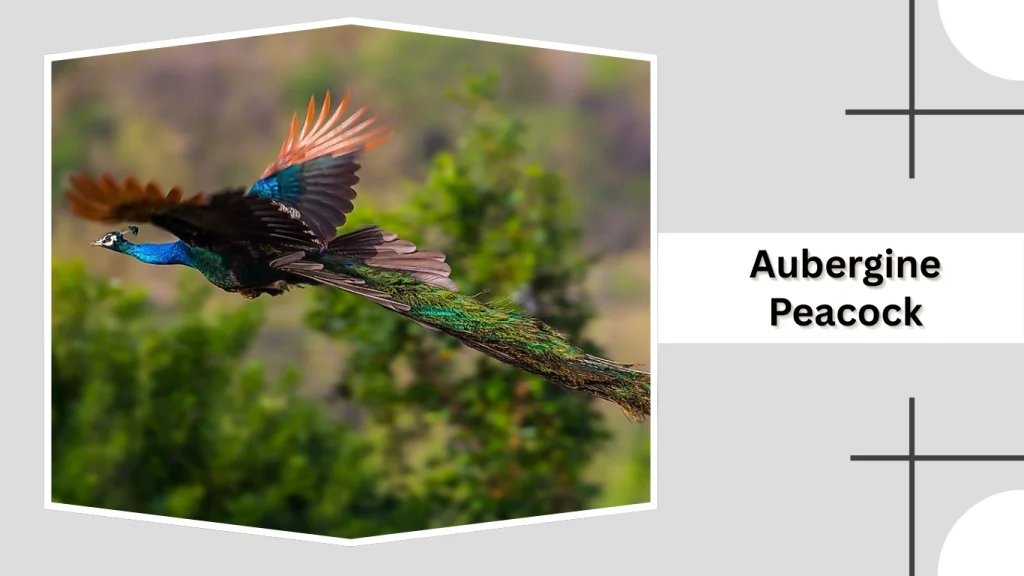
The Aubergine Peacock is a rich and dramatic peafowl variety named after its deep purple-brown coloration, similar to the skin of an eggplant. Its plumage shows a blend of dark violet, maroon, and brown tones, giving it a bold yet elegant appearance.
Identification
- Deep aubergine-purple neck and chest
- Dark brown to violet body feathers
- Train with deep-toned eye patterns
- Dark gray or black legs
- Females show muted brown-purple shades
Habitat and Distribution
Aubergine Peacocks exist only in captivity and are produced through selective breeding. They are commonly kept in private aviaries, ornamental parks, and breeding facilities. Their habitat needs are the same as other peafowl varieties, including open space and safe roosting areas.
Behavior and Diet
They are calm and ground-feeding birds with typical peafowl behavior. Their diet includes grains, seeds, fruits, insects, and small reptiles. During breeding season, males display their dark, richly colored train, creating a dramatic visual effect.
Breeding Value and Conservation
Aubergine Peacocks are valued for their deep coloration and rarity. They are not classified as a separate species and have no independent conservation status. Ethical breeding practices help preserve their distinctive color traits.
25. Moonglow Peacock
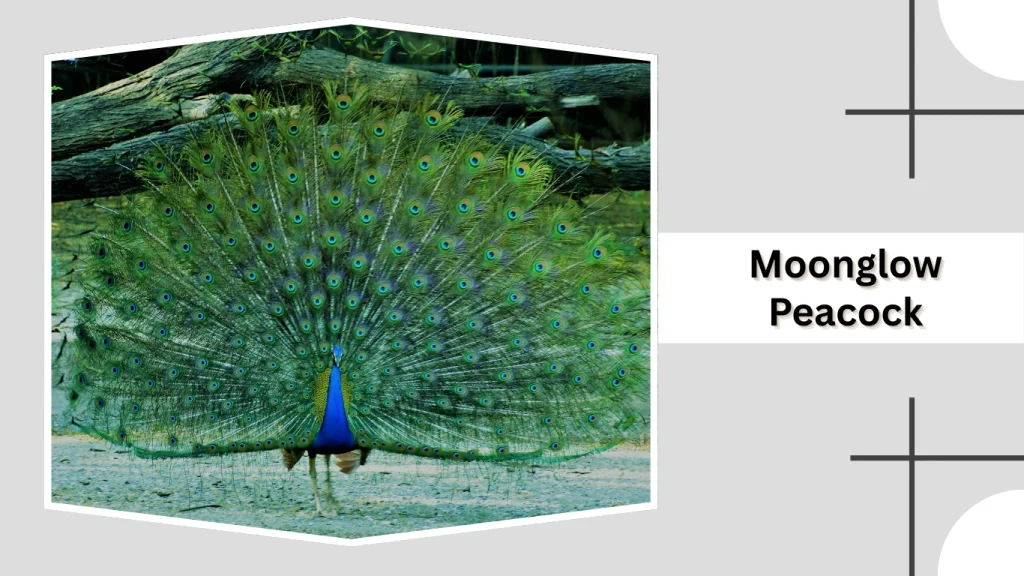
The Moonglow Peacock is a luminous and rare peafowl variety known for its pale silver, cream, and icy-white tones. Its soft glow-like appearance gives it an almost ethereal presence, especially in low light.
Identification
- Pale silver to creamy-white body feathers
- Soft, glowing appearance under light
- Light-colored train with faint patterns
- Pinkish legs and pale beak
- Females are similarly pale with shorter trains
Habitat and Distribution
Moonglow Peacocks are found only in captivity and are created through selective breeding. They are commonly housed in aviaries, private estates, and ornamental gardens. Their habitat requirements match those of other peafowl varieties.
Behavior and Diet
They behave like typical peafowl, foraging on the ground throughout the day. Their diet includes grains, seeds, fruits, insects, and small animals. During the breeding season, males perform courtship displays, with their pale train reflecting light softly.
Ornamental Significance and Conservation
Moonglow Peacocks are highly prized for their unique, glowing coloration. They are not recognized as a separate species and do not have an independent conservation status. Careful breeding is essential to maintain their delicate appearance.
26. Emerald Peacock
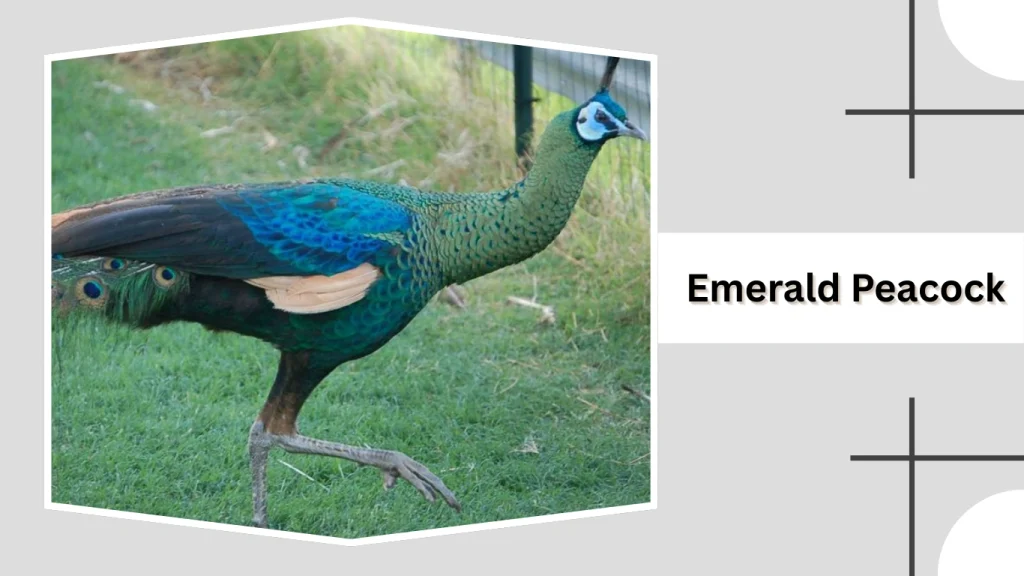
The Emerald Peacock is a vibrant and eye-catching peafowl variety admired for its rich green coloration and intense metallic shine. Its plumage reflects bright emerald tones, giving the bird a jewel-like appearance that stands out strongly in ornamental settings.
Identification
- Bright emerald-green neck and chest
- Strong metallic green sheen
- Train with vivid green-dominant eye patterns
- Gray to pinkish legs
- Females show duller green tones with shorter trains
Habitat and Distribution
Emerald Peacocks exist only in captivity and are produced through selective breeding. They are commonly found in private aviaries, ornamental gardens, and breeding farms. Their habitat requirements are similar to other peafowl, including open ground, shade, and elevated roosting areas.
Behavior and Diet
They follow typical peafowl behavior, spending most of their time foraging on the ground. Their diet includes grains, seeds, fruits, insects, and small reptiles. During the breeding season, males perform impressive displays, with emerald coloration glowing brightly in sunlight.
Rarity and Conservation
Emerald Peacocks are valued for their vivid coloration and visual impact. They are not recognized as a separate species and do not have an independent conservation status. Responsible breeding helps preserve their strong green tones.
27. Spalding Peacock
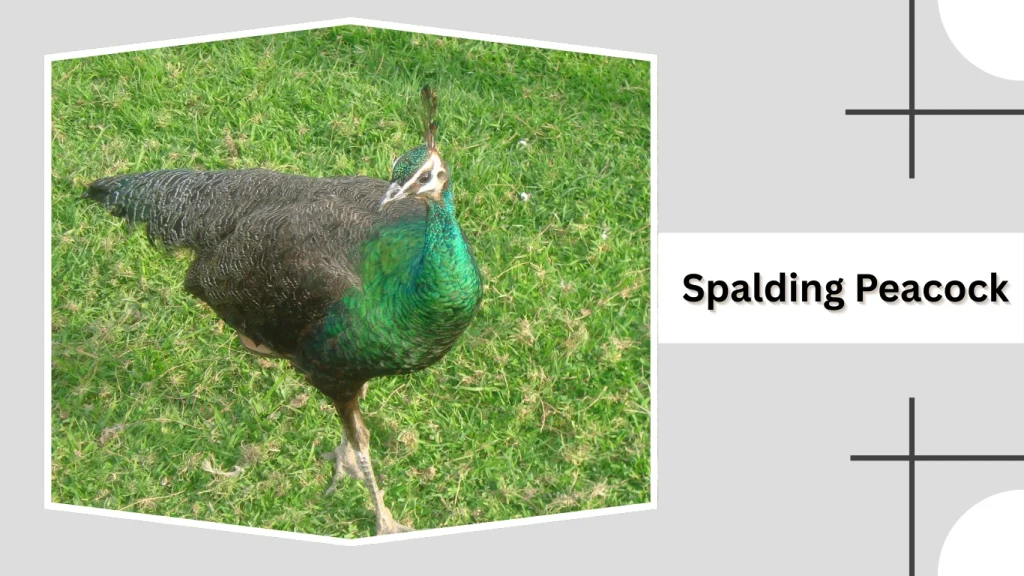
The Spalding Peacock is a hybrid peafowl variety created by crossing the Indian Peafowl with the Green Peafowl. Named after Mrs. Keith Spalding, who first developed the hybrid, this bird combines traits from both parent species, resulting in a tall, elegant appearance.
Identification
- Taller and larger body structure
- Greenish-blue neck with scaly feather texture
- Longer legs and upright posture
- Narrower train compared to Indian Peafowl
- Females resemble Green Peahens
Habitat and Distribution
Spalding Peacocks are primarily found in captivity but may also exist in managed estates. They require larger open spaces due to their size and active nature. Their habitat needs include open land, access to water, and tall trees for roosting.
Behavior and Diet
They are active and alert birds, often more vocal than Indian Peafowl. Their diet consists of grains, seeds, fruits, insects, and small reptiles. During breeding season, males display a mix of Indian and Green Peafowl courtship traits.
Hybrid Status and Conservation
Spalding Peacocks are hybrids and not considered a separate species. They are not evaluated for conservation status. Controlled breeding is important to prevent genetic mixing with pure Green Peafowl populations.
FAQs
What is the difference between a peacock and a peafowl?
Peafowl is the general name for the species, while a peacock specifically refers to the male bird. The female is called a peahen, and young birds are known as peachicks. Only males develop the long, colorful train used for courtship displays.
Are all peacock color varieties separate species?
No, most color varieties are not separate species. They are genetic color mutations or selectively bred varieties of the Indian Peafowl. Only three true species exist: Indian Peafowl, Green Peafowl, and Congo Peafowl.
Can peacocks live in the wild or only in captivity?
Natural species like Indian and Green Peafowl live in the wild, but most color varieties are found only in captivity. These ornamental varieties depend on human care and are not naturally occurring in wild populations.
Why do peacocks spread their feathers?
Peacocks spread their feathers mainly during the breeding season to attract peahens. The size, symmetry, and brightness of the train signal health and genetic strength, helping females choose suitable mates.
Are peacocks endangered?
Most peacock varieties are not endangered. Indian Peafowl are classified as Least Concern, while Green Peafowl are endangered due to habitat loss. Color varieties do not have individual conservation status because they are selectively bred.