


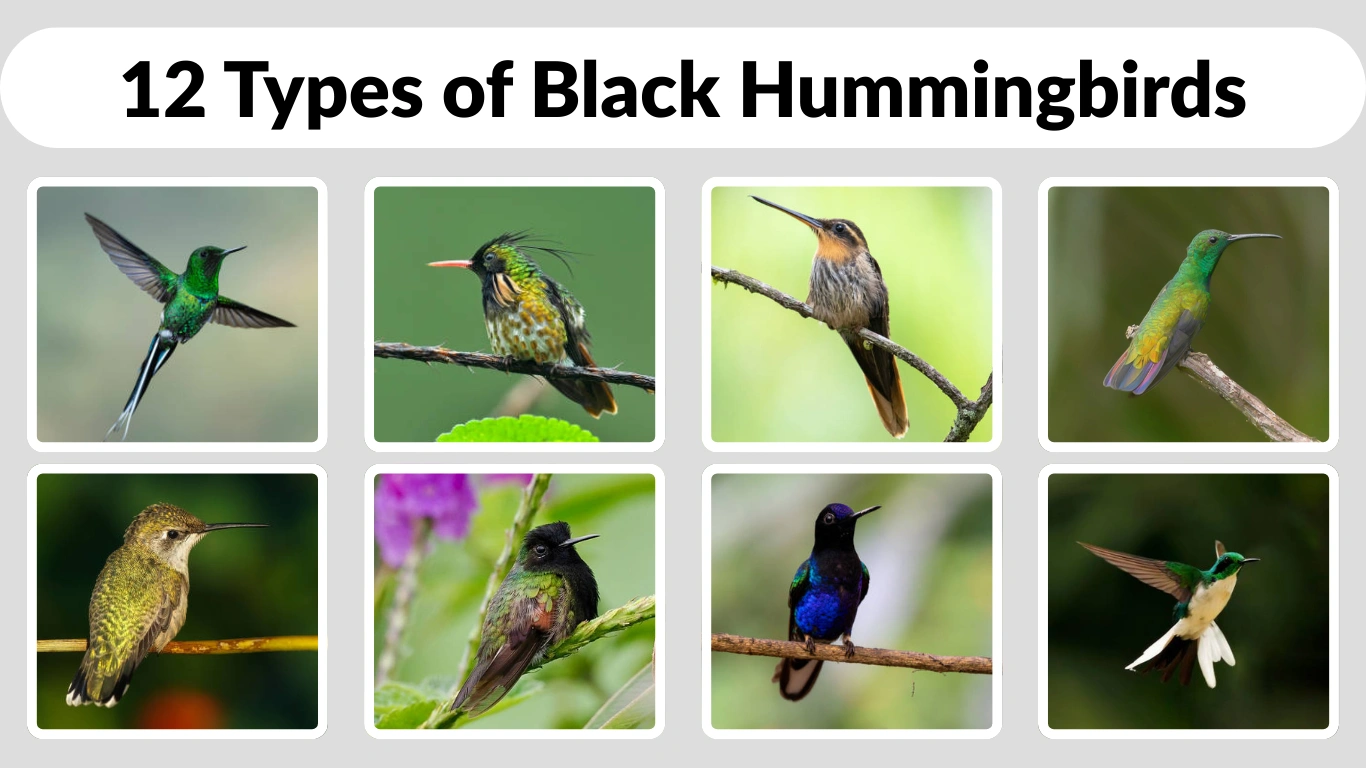
Black hummingbirds are known for their dramatic, shadowy elegance and subtle iridescence that often reveals hidden blues, purples, or greens in sunlight. Unlike brightly colored species, these hummingbirds rely on deep, dark plumage, glossy throats, crests, or tails for distinction. Found mostly in tropical and subtropical regions, they range from powerful forest dwellers to delicate ornamented species. This guide presents 12 types of black hummingbirds, highlighting species where black or near-black coloration plays a key role in identification, along with their unique traits and habitats.
1. Black-chinned Hummingbird
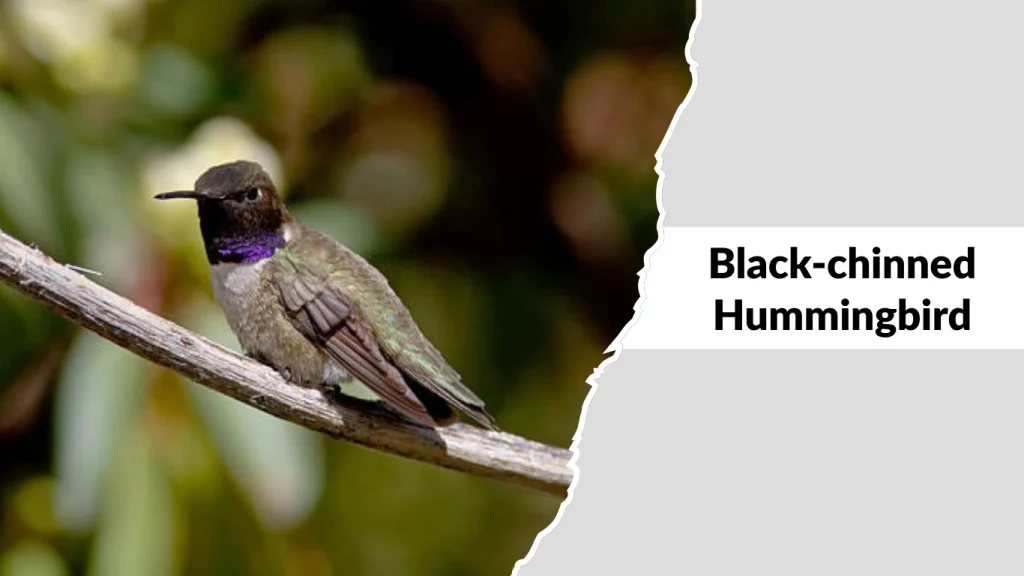
The Black-chinned Hummingbird is a common and adaptable species of western North America. Though subtle at first glance, the male’s dark throat reveals a hidden band of iridescent color when caught in the right light.
Identification
- Small hummingbird with a slender, straight bill
- Adult male has a black throat with a thin violet-purple band at the base
- Female has a plain white to pale gray throat
- Metallic green upperparts with grayish underparts
Habitat
This species is found in deserts, riparian areas, open woodlands, parks, and suburban gardens. It breeds across much of the western United States and migrates to Mexico for the winter.
Diet
Black-chinned Hummingbirds feed primarily on nectar from flowers and backyard feeders. They also consume small insects and spiders, which provide essential protein, especially during breeding season.
Color Pattern
The back and crown are metallic green. The male’s throat appears black in low light but flashes a narrow violet band in sunlight, while females show softer green and gray tones without dark throat coloration.
3. Black-eared Fairy
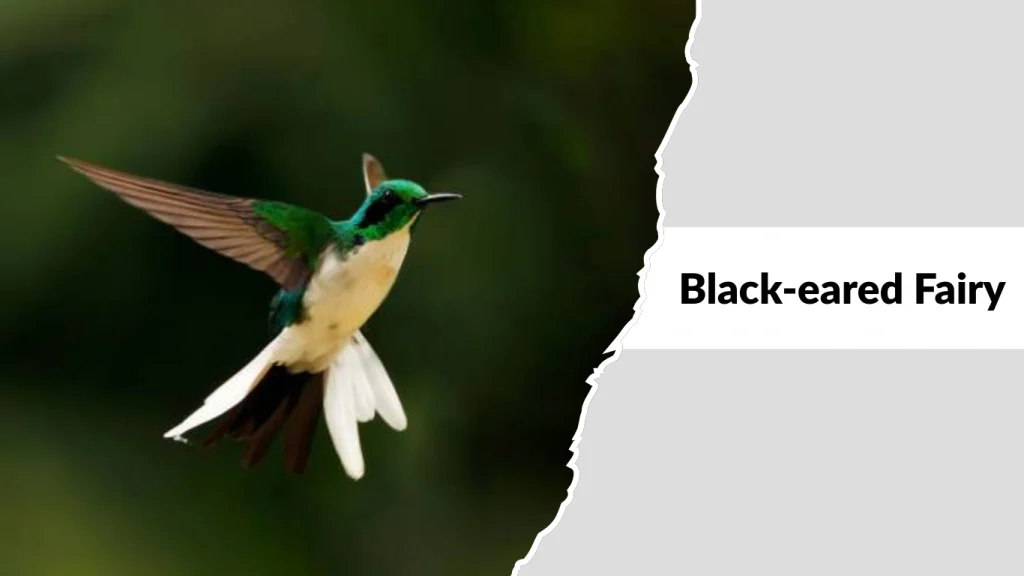
The Black-eared Fairy is an elegant hummingbird known for its contrasting dark ear patch and shimmering plumage. It appears graceful in flight and is often seen hovering calmly at flowers.
Identification
- Medium-sized hummingbird with a straight bill
- Distinct black ear patch behind the eye
- White underparts with green upperparts
- Slim body and long wings
Habitat
This species inhabits tropical forests, forest edges, and clearings. It is found mainly in Central America and parts of northern South America.
Diet
Black-eared Fairies feed primarily on nectar from flowering plants. They also consume small insects and spiders to supplement their diet.
Color Pattern
The upperparts are metallic green, contrasting with clean white underparts. The black ear patch stands out sharply, giving the bird its name.
4. Velvet-purple Coronet
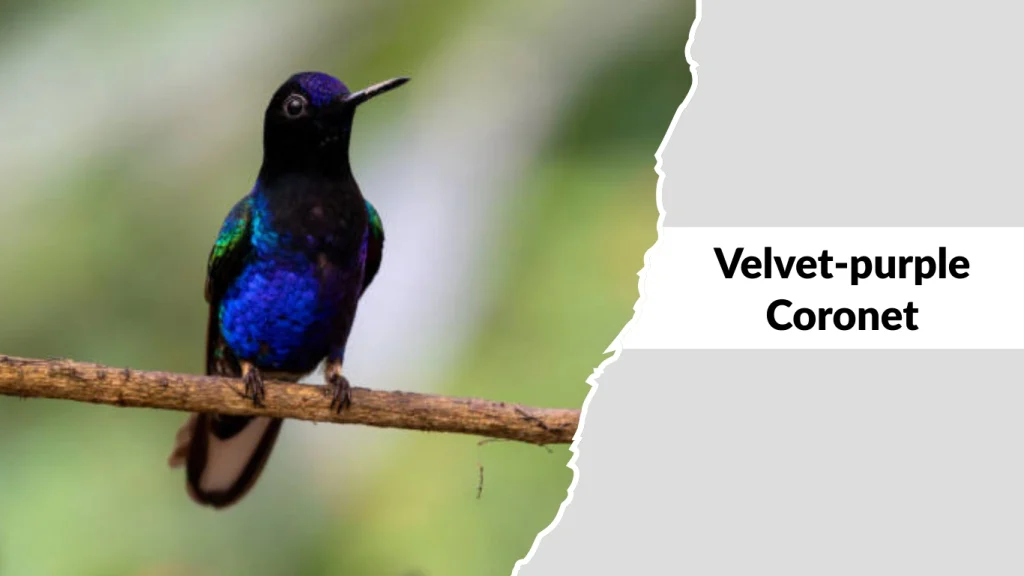
The Velvet-purple Coronet is a richly colored hummingbird admired for its deep, dark tones and velvety appearance. It is often seen perched quietly in montane forests.
Identification
- Medium to large hummingbird with a straight bill
- Adult male has deep purple to near-black plumage
- Female is greener with darker underparts
- Broad tail and strong wings
Habitat
This species lives in cloud forests and montane woodlands at mid to high elevations in the Andes, especially in Colombia and Ecuador.
Diet
Velvet-purple Coronets feed on nectar from forest flowers and flowering trees. They also eat insects and spiders, particularly during the breeding season.
Color Pattern
The plumage appears dark purple to black depending on light conditions, with a velvety sheen. Females show more green tones but still retain darker coloration overall.
5. Black-bellied Hummingbird
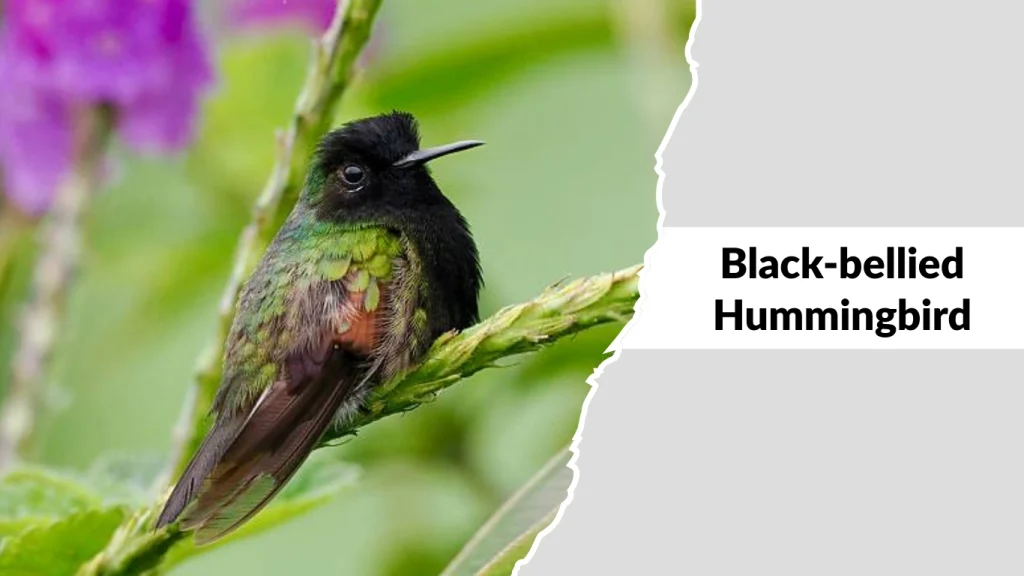
The Black-bellied Hummingbird is a distinctive species recognized for its dark underside and strong contrast in plumage. It is usually seen feeding quietly in shaded forest habitats.
Identification
- Medium-sized hummingbird with a straight bill
- Adult male has a black belly and dark throat
- Female has a paler underside with some dark markings
- Green upperparts with darker underparts
Habitat
This species inhabits humid forests, forest edges, and montane woodlands. It is mainly found in southern Mexico and parts of Central America.
Diet
Black-bellied Hummingbirds feed on nectar from forest flowers. They also consume insects and spiders, which are essential for protein intake.
Color Pattern
The upperparts are metallic green, while the belly and lower underparts are black or very dark, giving the bird a bold, high-contrast appearance.
6. Dusky Hummingbird

The Dusky Hummingbird is a subdued, less colorful species known for its overall dark and muted appearance. It blends well into its forest environment.
Identification
- Medium-sized hummingbird with a straight bill
- Overall dark gray to brownish plumage
- Males and females appear similar
- Slightly rounded tail
Habitat
This species lives in dense forests, forest edges, and shaded ravines. It is primarily found in western Mexico.
Diet
Dusky Hummingbirds feed mainly on nectar from forest flowers. They also eat small insects and spiders gathered from foliage.
Color Pattern
The plumage is mostly dark gray to dusky brown with minimal iridescence, lacking bright or contrasting colors compared to many other hummingbirds.
7. Black-throated Mango
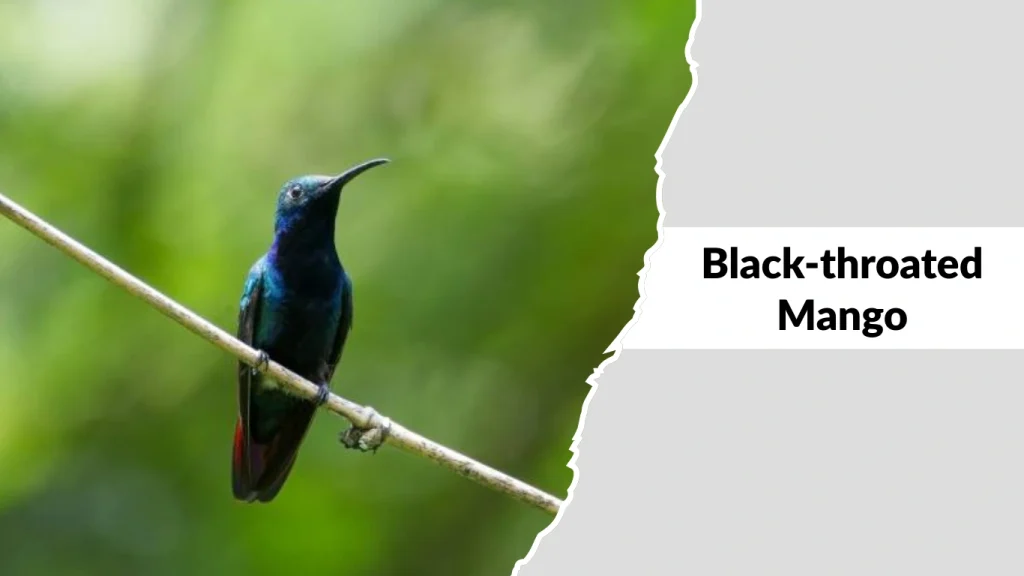
The Black-throated Mango is a bold, tropical hummingbird known for its dark throat and strong, confident flight. It is often seen perched prominently near flowering trees.
Identification
- Large hummingbird with a long, slightly curved bill
- Adult male has a glossy black throat
- Female has a white throat with dark central stripe
- Sturdy body with broad wings
Habitat
This species inhabits tropical forests, forest edges, savannas, and gardens. It is widespread across Central America, South America, and some Caribbean islands.
Diet
Black-throated Mangos feed mainly on nectar from large flowers. They also catch insects in flight or glean them from leaves.
Color Pattern
The upperparts are metallic green, while the male’s throat is deep black with a glossy sheen. Females show more contrast with white and dark striping on the underparts.
8. Green-throated Mango
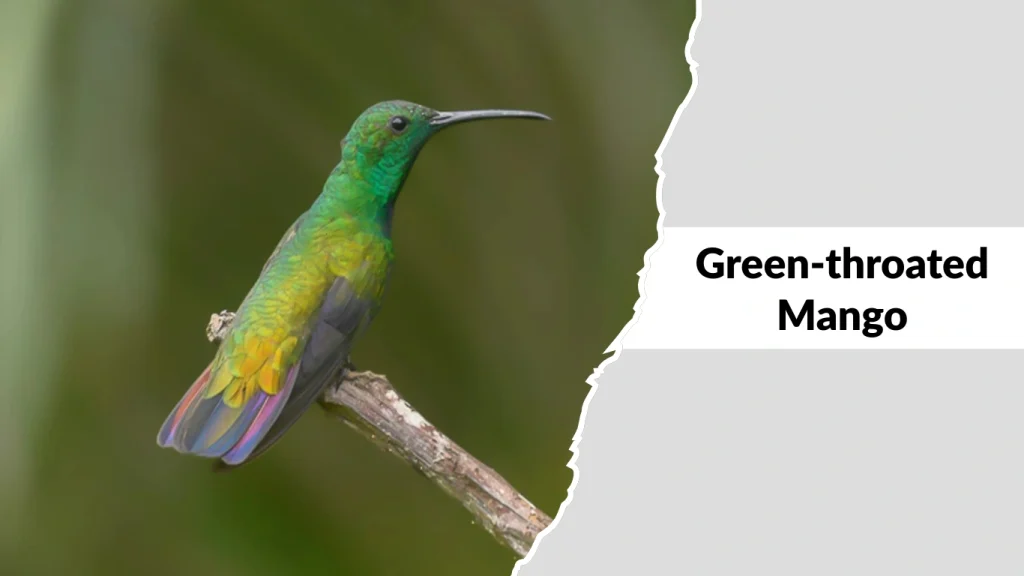
The Green-throated Mango is a close relative of the Black-throated Mango and appears darker overall, especially in low light. It is powerful and fast-flying.
Identification
- Large hummingbird with a long bill
- Throat appears dark green to nearly black in shade
- Female has a pale throat with dark streaking
- Strong wings and long tail
Habitat
This species prefers tropical forests, forest edges, mangroves, and gardens, mainly in northern South America and the Caribbean.
Diet
Green-throated Mangos feed primarily on nectar from flowering trees and shrubs. They also eat insects to meet protein needs.
Color Pattern
The plumage is deep green with a dark, glossy throat that can look black depending on lighting. Females have softer green and white tones with subtle striping.
9. Bronzy Hermit
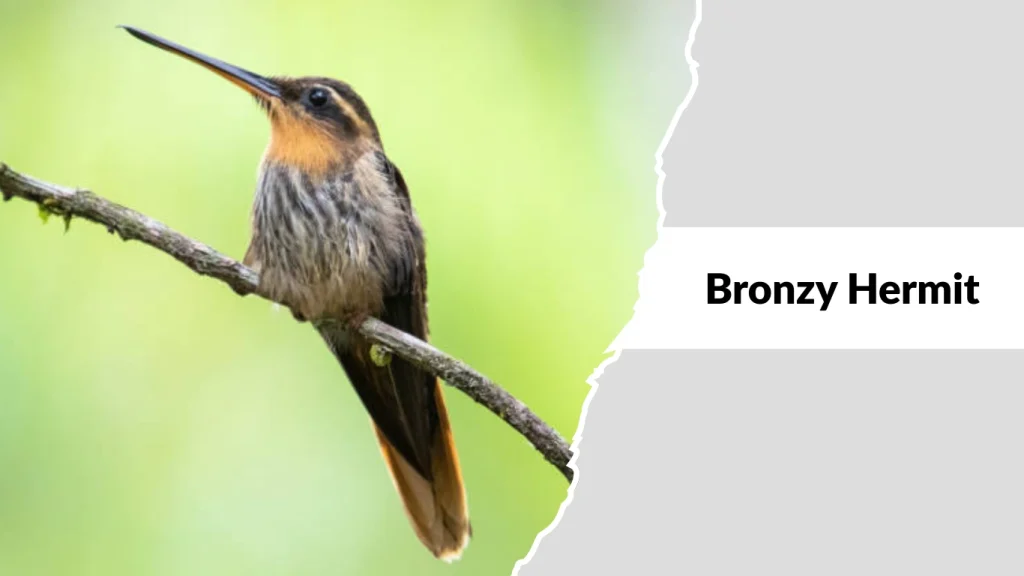
The Bronzy Hermit is a forest-dwelling hummingbird with a dark, understated look and a calm feeding style. It is often seen following regular feeding routes, known as traplines.
Identification
- Medium-sized hummingbird with a long, slightly curved bill
- Overall dark bronze to brownish coloration
- Pale stripe behind the eye
- Long tail with lighter tips
Habitat
This species inhabits tropical rainforests, forest understory, and shaded forest edges. It is found mainly in Central America and northern South America.
Diet
Bronzy Hermits feed on nectar from understory flowers. They also eat small insects and spiders gathered from vegetation.
Color Pattern
The plumage is mostly dark bronze-brown with subtle metallic sheen. Lighter facial stripes and tail tips provide gentle contrast to the otherwise dark body.
10. Rufous-breasted Hermit
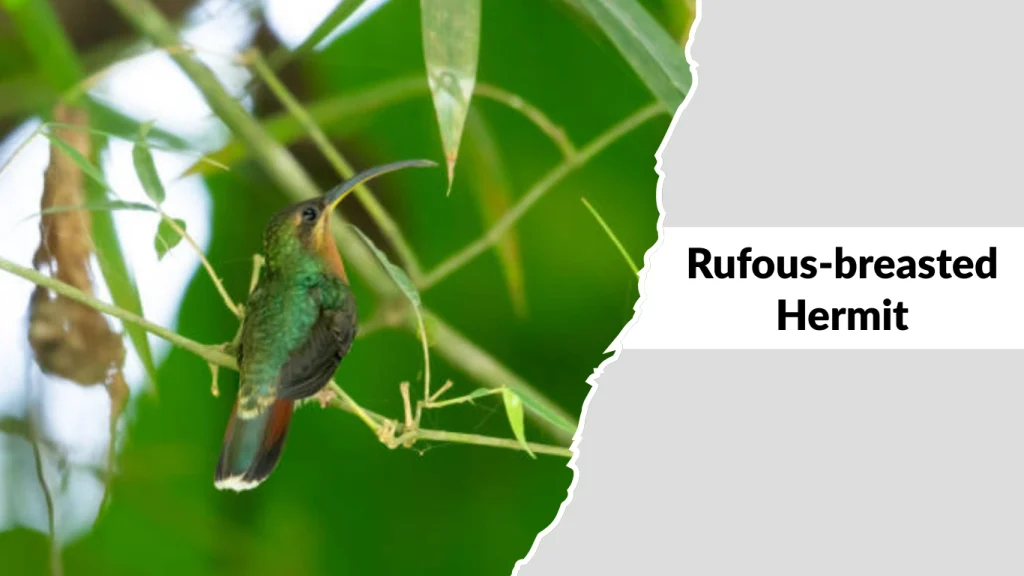
The Rufous-breasted Hermit is a dark hummingbird with warm-toned underparts and a secretive nature. It prefers shaded forest habitats and low light conditions.
Identification
- Medium-sized hummingbird with a long, curved bill
- Dark brown upperparts
- Rufous to cinnamon-colored breast
- Pale facial stripe
Habitat
This species lives in humid forests, forest edges, and secondary growth. It is widespread across Central America, South America, and parts of the Caribbean.
Diet
Rufous-breasted Hermits feed mainly on nectar from forest flowers. They also consume insects and spiders for protein.
Color Pattern
The upperparts are dark brown to bronze, while the breast shows a rich rufous tone. The overall appearance is dark and earthy, with minimal iridescence.
11. Black-crested Coquette
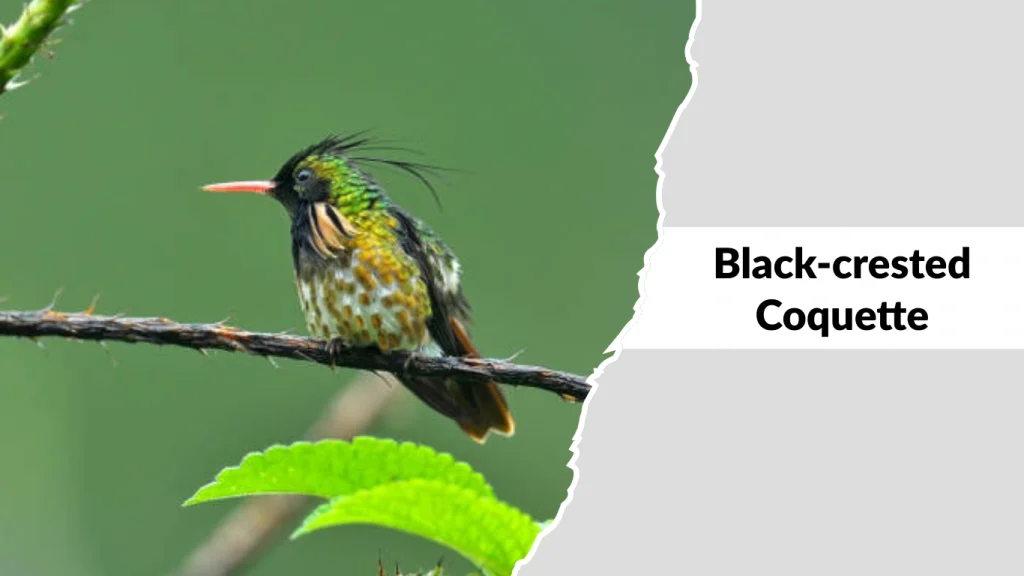
The Black-crested Coquette is a tiny, ornamental hummingbird best known for the male’s dramatic dark crest. Despite its delicate appearance, it is energetic and agile in flight.
Identification
- Very small hummingbird with a short bill
- Adult male has a distinctive black crest
- Female lacks the crest and is plainer in color
- Compact body with short wings
Habitat
This species inhabits forest edges, secondary growth, gardens, and wooded clearings. It is found mainly in parts of Central America and northern South America.
Diet
Black-crested Coquettes feed on nectar from small flowers. They also consume tiny insects and spiders to meet their nutritional needs.
Color Pattern
The upperparts are green with iridescent highlights. The male’s black crest contrasts sharply with the lighter face and throat, while females show softer green and pale tones.
12. Black-billed Streamertail
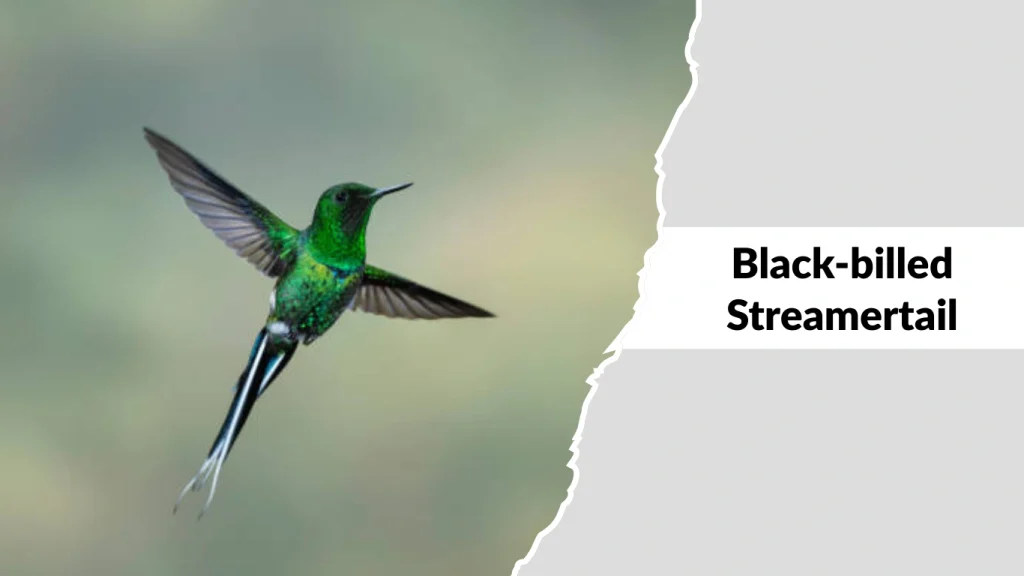
The Black-billed Streamertail is an elegant hummingbird endemic to Jamaica, closely related to the Red-billed Streamertail but darker in appearance.
Identification
- Medium-sized hummingbird with a black bill
- Adult male has long black tail streamers
- Female has a shorter tail without streamers
- Green body with dark wings
Habitat
This species lives in forests, forest edges, plantations, and gardens across Jamaica. It adapts well to both natural and cultivated landscapes.
Diet
Black-billed Streamertails feed mainly on nectar from flowering trees and shrubs. They also eat insects and spiders, especially during the breeding season.
Color Pattern
The body is metallic green with glossy black wings and tail. Males are especially striking due to their long black streamers, while females appear darker and less ornate.