




Brown horses are admired for their rich, earthy tones and wide range of beautiful variations, from light golden shades to deep, almost black hues. These colors appear across many breeds and disciplines, making brown one of the most common and versatile horse coat categories. In this guide, you’ll explore 13 common types of brown horses, learning how each shade differs in appearance, genetic background, and overall characteristics that set them apart.
1. Bay Horse
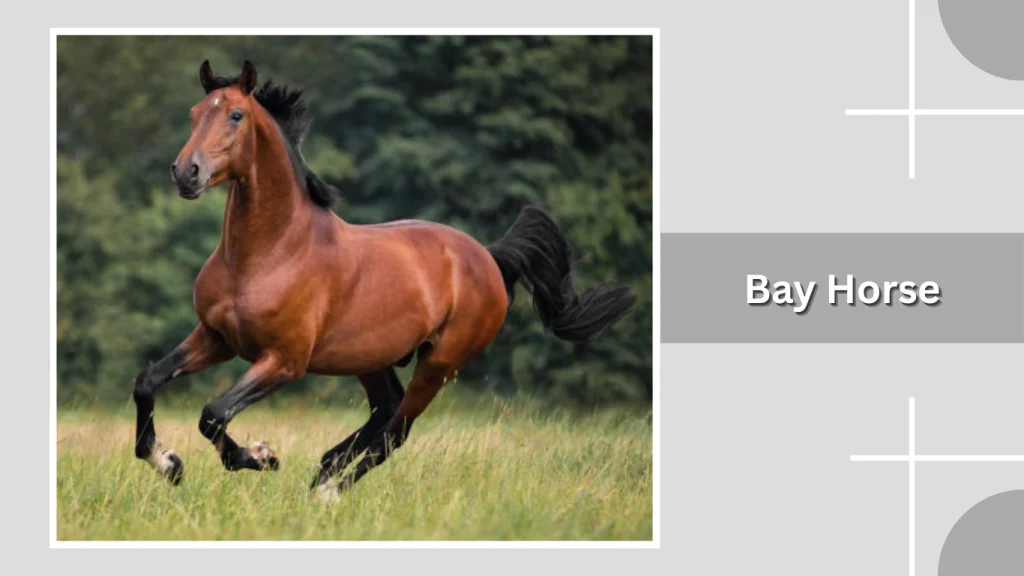
The Bay Horse is one of the most common and recognizable brown horse types. It is defined by a rich brown body paired with distinctive black points on the mane, tail, lower legs, and ear tips. This color appears across many breeds and is prized for its classic, balanced appearance.
Identification
- Body Color: Reddish-brown to deep brown
- Points: Black mane, tail, lower legs, and ear edges
- Skin: Dark
- Eyes: Brown
- Variations: Light bay, standard bay, dark bay
Genetics
The bay coat results from a combination of the black base color gene modified by the agouti gene, which restricts black pigment to specific points on the horse’s body.
Temperament
Bay horses do not have a temperament linked to color alone. Their behavior depends on breed, training, and handling rather than coat color.
Uses
Bay horses are found in nearly all disciplines, including racing, dressage, jumping, ranch work, and leisure riding. The color is especially common in sport and working breeds.
Unique Traits
The strong contrast between the brown coat and black points makes bay horses easy to identify and visually striking, contributing to their popularity worldwide.
2. Chestnut Horse

The Chestnut Horse is one of the most widespread brown-toned horse colors, known for its warm reddish-brown coat and matching mane and tail. Unlike bay horses, chestnuts do not have black points, giving them a more uniform appearance across the body.
Identification
- Body Color: Reddish-brown to dark brown
- Mane & Tail: Same shade as body or lighter
- Legs: No black points
- Skin: Usually dark
- Variations: Light chestnut, dark chestnut, liver chestnut
Genetics
The chestnut coat is produced by a recessive gene that limits black pigment, resulting in red-based coloring throughout the horse’s coat, mane, and tail.
Temperament
Coat color does not determine temperament. Chestnut horses can be calm, energetic, sensitive, or bold depending on breed, training, and individual personality.
Uses
Chestnut horses appear in nearly every breed and discipline, including racing, dressage, jumping, trail riding, and farm work.
Unique Traits
Their uniform coloring and wide range of shades—from bright copper to deep brown—make chestnut horses easy to recognize and extremely common worldwide.
3. Brown Horse
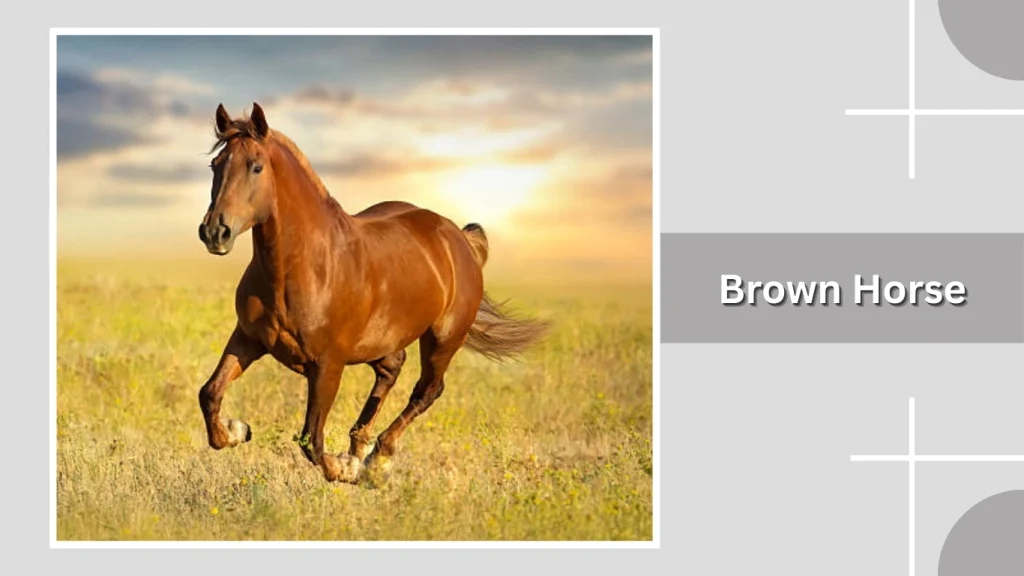
The Brown Horse has a dark, earthy brown coat that is often confused with bay but lacks the strong reddish tones. It typically features subtle black shading on the mane, tail, and lower legs, creating a softer, more muted appearance.
Identification
- Body Color: Dark brown with minimal red tones
- Mane & Tail: Usually black or very dark brown
- Legs: Dark shading, often black
- Skin: Dark
- Variations: Light brown, standard brown, dark brown
Genetics
Brown coloring is closely related to bay genetics but involves modifiers that reduce red pigmentation, resulting in a deeper, smokier brown appearance rather than a bright bay.
Temperament
There is no temperament directly associated with brown coat color. Behavior depends on the horse’s breed, upbringing, and training.
Uses
Brown horses are found across many breeds and are used in riding, driving, ranch work, sport competitions, and leisure activities.
Unique Traits
Their rich, understated coloring and subtle contrast between body and points give brown horses a classic, elegant look that is less flashy than bay but equally distinctive.
4. Seal Brown Horse
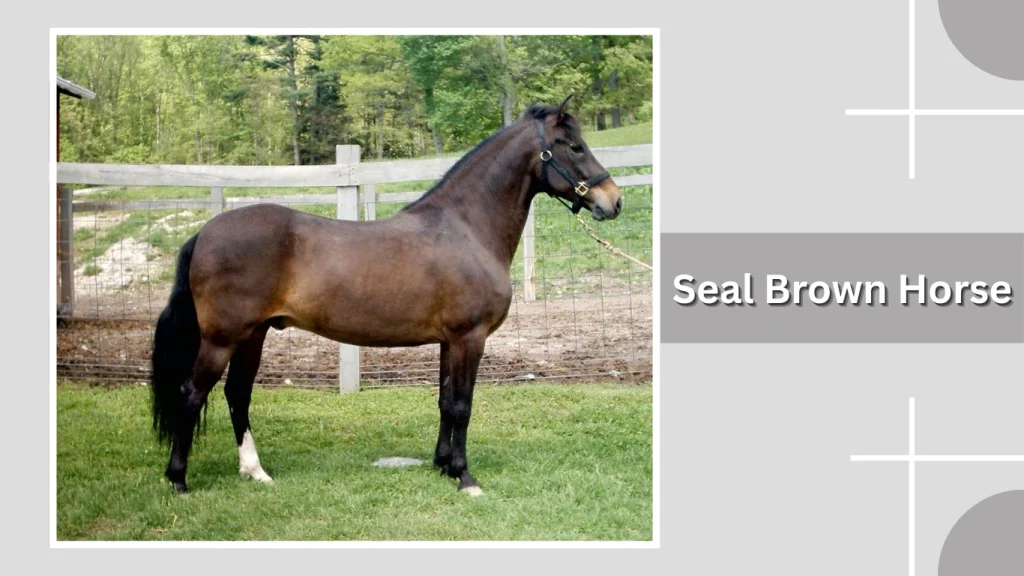
The Seal Brown Horse is a very dark brown color that can appear almost black at first glance. In certain lighting, lighter brown or reddish areas become visible, especially around the muzzle, eyes, flanks, and inner legs. This subtle contrast is what distinguishes seal brown from true black horses.
Identification
- Body Color: Very dark brown, nearly black
- Lighter Areas: Muzzle, eyes, belly, flanks, inner legs
- Mane & Tail: Black
- Legs: Black or very dark brown
- Skin: Dark
Genetics
Seal brown is genetically related to bay coloring and is influenced by the agouti gene, which restricts black pigment. Additional modifiers darken the coat significantly, resulting in the seal brown appearance rather than a standard bay.
Temperament
Coat color does not influence temperament. Seal brown horses may display a wide range of personalities depending on breed, handling, and training.
Uses
Seal brown horses are seen in many breeds and disciplines, including dressage, jumping, eventing, ranch work, and pleasure riding. Their dark coloration is often favored in show and sport settings.
Unique Traits
The ability to look black in low light but reveal warm brown highlights in sunlight is the defining feature of seal brown horses, making them one of the most visually intriguing brown coat variations.
5. Dark Bay Horse

The Dark Bay Horse is a deep, rich variation of the bay coat, featuring a dark brown body combined with clear black points. Compared to standard bay, the overall coloring is darker and more intense, sometimes approaching seal brown while still maintaining visible bay characteristics.
Identification
- Body Color: Deep brown to near-black brown
- Points: Black mane, tail, lower legs, and ear tips
- Skin: Dark
- Eyes: Brown
- Variations: Classic dark bay, blood bay (slightly lighter tone)
Genetics
Dark bay results from the same genetic combination as standard bay, with modifiers that deepen the coat color while keeping black pigment restricted to the points.
Temperament
There is no direct link between coat color and temperament. Dark bay horses can range from calm and steady to energetic and sensitive depending on their breed and training.
Uses
Dark bay horses are common in sport horse breeds and are widely used in racing, dressage, jumping, eventing, and general riding disciplines.
Unique Traits
Their deep, glossy coat paired with strong black points creates a bold, elegant appearance that is highly valued in competitive and show environments.
6. Liver Chestnut Horse

The Liver Chestnut Horse is a dark, rich variation of the chestnut coat, known for its deep brown appearance that can sometimes look almost chocolate-colored. Unlike bay horses, liver chestnuts do not have black points, giving them a uniform and solid look across the body.
Identification
- Body Color: Dark reddish-brown to deep chocolate
- Mane & Tail: Same color as body or slightly darker
- Legs: No black points
- Skin: Dark
- Variations: Dark liver, chocolate liver chestnut
Genetics
Liver chestnut is produced by the same recessive gene responsible for chestnut coloring, with additional modifiers that deepen the shade significantly. Despite the darker tone, the coat remains red-based rather than black-based.
Temperament
Coat color has no proven effect on temperament. Liver chestnut horses may display a wide range of personalities influenced by breed, training, and individual disposition.
Uses
Liver chestnut horses appear in many breeds and are commonly used in riding, showing, sport competitions, driving, and pleasure riding.
Unique Traits
Their deep, glossy coat that can appear almost brown or purple-toned in certain lighting makes liver chestnut horses one of the most visually striking brown-colored horse types.
7. Mahogany Bay Horse
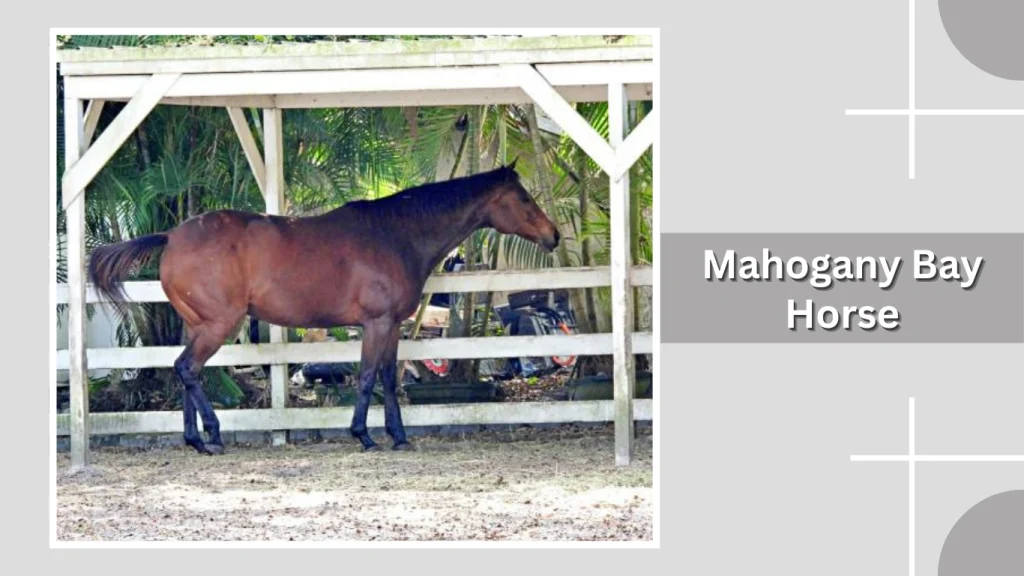
The Mahogany Bay Horse is a darker, richer variation of the bay coat, featuring a deep reddish-brown body with pronounced black points. The color has a warm, polished appearance, often appearing glossy and intense under sunlight.
Identification
- Body Color: Deep reddish-brown with mahogany tones
- Points: Black mane, tail, lower legs, and ear tips
- Skin: Dark
- Eyes: Brown
- Variations: Light mahogany bay, dark mahogany bay
Genetics
Mahogany bay shares the same genetic foundation as standard bay, created by a black base color modified by the agouti gene. Additional modifiers intensify the red pigmentation, producing the distinctive mahogany hue.
Temperament
Temperament is not determined by coat color. Mahogany bay horses can be calm, energetic, or sensitive depending on breed characteristics and training methods.
Uses
They are commonly seen in sport horse disciplines such as dressage, jumping, eventing, as well as in pleasure riding and show rings.
Unique Traits
The combination of rich red-brown tones and sharp black points gives mahogany bay horses a luxurious appearance that is especially admired in competition and breeding programs.
8. Chocolate Horse

The Chocolate Horse is known for its rich, dark brown coat that resembles the color of dark chocolate. This term is often used descriptively rather than genetically specific and may appear in several breeds, sometimes accompanied by a lighter mane and tail.
Identification
- Body Color: Deep chocolate brown
- Mane & Tail: Same color as body or lighter flaxen tone
- Legs: Match body color, no black points
- Skin: Dark
- Variations: Dark chocolate, chocolate with flaxen mane
Genetics
Chocolate coloring can result from dark chestnut, liver chestnut, or specific dilution and modifier genes depending on the breed. It is a visual description rather than a single genetic classification.
Temperament
There is no connection between chocolate coat color and temperament. Personality depends on breed traits, training, and handling.
Uses
Chocolate-colored horses are found in riding, showing, driving, and pleasure disciplines. The color is especially admired in breeds where contrast between coat and mane is common.
Unique Traits
Their rich, dessert-like coloration and occasional flaxen mane and tail give chocolate horses a distinctive and highly appealing appearance.
9. Sorrel Horse

The Sorrel Horse is a lighter, coppery variation of the chestnut color and is especially common in Western and stock horse breeds. It features a red to light brown body with a mane and tail that are usually the same shade or slightly lighter.
Identification
- Body Color: Light reddish-brown to copper
- Mane & Tail: Same shade as body or lighter
- Legs: No black points
- Skin: Dark
- Variations: Light sorrel, golden sorrel
Genetics
Sorrel is genetically identical to chestnut and is caused by a recessive gene that limits black pigment. The difference between chestnut and sorrel is mainly terminology and shade preference rather than genetics.
Temperament
Coat color does not influence temperament. Sorrel horses may be calm, energetic, or sensitive depending on breed, training, and handling.
Uses
Sorrel horses are widely used in Western disciplines such as reining, cutting, ranch work, barrel racing, as well as general riding and farm work.
Unique Traits
Their bright, warm coloring and uniform appearance make sorrel horses easy to identify and especially popular in Western riding traditions.
10. Burnt Bay Horse

The Burnt Bay Horse is a very dark variation of the bay coat, characterized by deep brown coloring with minimal red tones and strong black points. The coat often appears smoky or scorched, which is where the descriptive term “burnt” comes from.
Identification
- Body Color: Very dark brown with muted red tones
- Points: Black mane, tail, lower legs, and ear tips
- Skin: Dark
- Eyes: Brown
- Variations: Burnt bay, near-black bay
Genetics
Burnt bay shares the same genetic base as standard bay, with modifiers that significantly darken the coat and reduce visible red pigmentation. It remains genetically bay rather than black.
Temperament
Temperament is not influenced by coat color. Burnt bay horses display personalities shaped by breed, training, and individual disposition.
Uses
They are commonly seen in sport disciplines, ranch work, pleasure riding, and show environments where darker coats are often favored.
Unique Traits
Their smoky, near-black appearance while still retaining bay characteristics makes burnt bay horses visually distinctive and sometimes mistaken for seal brown or black.
11. Copper Chestnut Horse
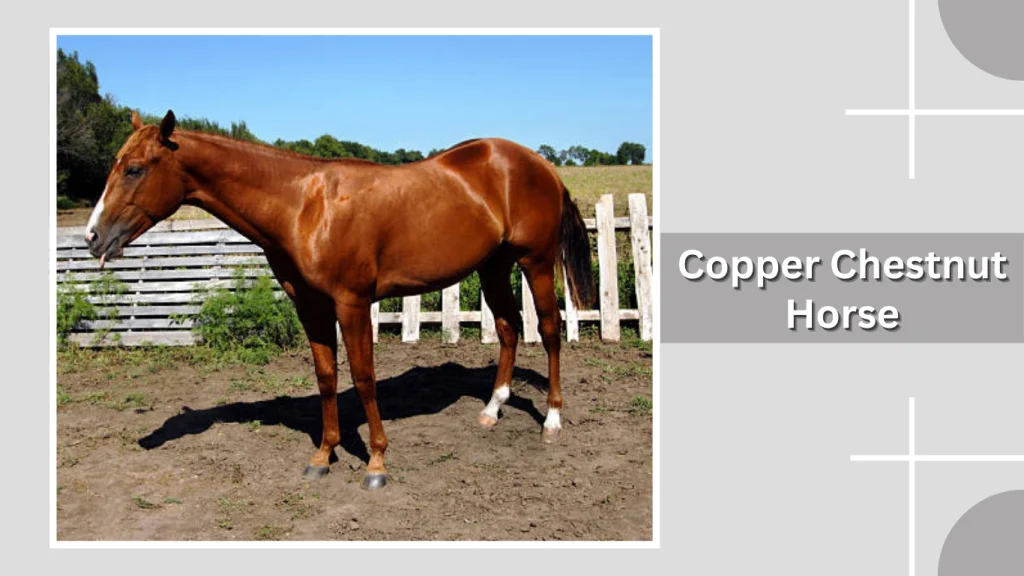
The Copper Chestnut Horse is a bright, warm-toned variation of the chestnut coat, known for its shiny, metallic appearance. The coat often reflects light strongly, giving the horse a glowing copper or bronze look, especially in sunlight.
Identification
- Body Color: Bright reddish-brown with copper tones
- Mane & Tail: Same shade as body or slightly lighter
- Legs: No black points
- Skin: Dark
- Variations: Light copper chestnut, deep copper chestnut
Genetics
Copper chestnut is produced by the same recessive gene responsible for chestnut coloring. Modifier genes and coat condition influence the intensity and shine of the copper tone rather than creating a separate genetic color.
Temperament
There is no proven relationship between copper chestnut coloring and temperament. Behavior depends on breed traits, training, and the individual horse.
Uses
Copper chestnut horses are commonly seen in show rings, pleasure riding, sport disciplines, and breeding programs due to their eye-catching appearance.
Unique Traits
Their bright, glossy coat that appears almost metallic in sunlight is the defining feature that sets copper chestnut horses apart from darker chestnut variations.
12. Golden Brown Horse
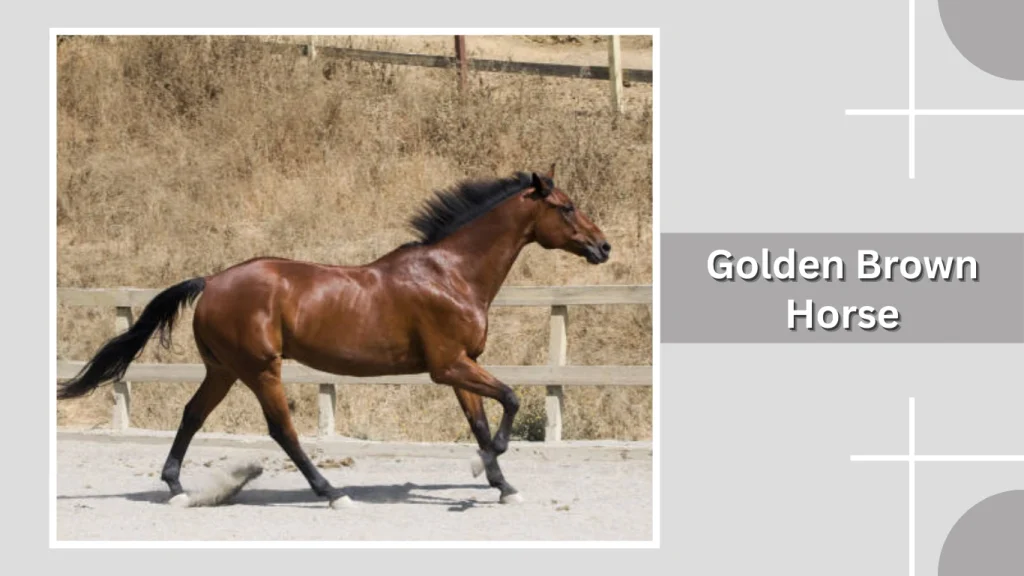
The Golden Brown Horse features a warm brown coat with golden or honey-colored highlights. This coloration gives the horse a soft, sunlit appearance and may vary in intensity depending on lighting, season, and coat condition.
Identification
- Body Color: Light to medium brown with golden tones
- Mane & Tail: Brown or slightly lighter than body
- Legs: Match body color, no strong black points
- Skin: Dark
- Variations: Light golden brown, warm honey brown
Genetics
Golden brown coloring can result from lighter bay, chestnut, or dilution effects combined with coat modifiers. It is primarily a descriptive term rather than a strictly defined genetic color.
Temperament
Coat color does not influence temperament. Golden brown horses may show a wide range of personalities shaped by breed, training, and handling.
Uses
They are used across many disciplines, including pleasure riding, trail riding, showing, and light farm work. Their appealing color often makes them popular as family horses.
Unique Traits
The soft golden sheen of the coat, especially visible in sunlight, gives golden brown horses a warm and approachable appearance that stands out without being overly dark.
13. Brunblakk Horse

The Brunblakk Horse is a brown-based dun color most commonly seen in primitive and Nordic horse breeds. It combines a brown coat with classic dun markings, giving the horse a distinctly ancient and natural appearance.
Identification
- Body Color: Brown with lighter, dusty tones
- Mane & Tail: Dark brown or black
- Legs: Often show dark striping or barring
- Markings: Dorsal stripe, shoulder shadow, leg bars
- Skin: Dark
Genetics
Brunblakk results from the dun dilution gene acting on a brown or bay base coat. This gene lightens the body color while preserving darker primitive markings.
Temperament
Temperament is not determined by coat color. Brunblakk horses may display calm, alert, or energetic behavior depending on breed and training.
Uses
They are commonly found in primitive and working breeds used for riding, driving, farm work, and conservation grazing.
Unique Traits
Their clear primitive markings, especially the dorsal stripe and leg barring, are the defining features that make brunblakk horses easily recognizable among brown horse types.
FAQs
1. What defines a brown horse color?
A brown horse generally has a brown-toned coat that may range from light golden brown to very dark brown. Some brown horses have black points, while others have uniform coloring, depending on genetics.
2. What is the difference between bay and brown horses?
Bay horses have a reddish-brown body with clear black points on the mane, tail, and legs. Brown horses usually have darker coats with minimal red tones and less contrast between body and points.
3. Are chestnut and brown horses the same?
No. Chestnut horses are red-based and lack black points, while brown horses may have darker, earth-toned coats and sometimes black shading.
4. Can a horse’s color change over time?
Yes. A horse’s coat can change with age, season, sun exposure, and nutrition, causing brown shades to appear lighter or darker at different times.
5. Does coat color affect a horse’s temperament or performance?
No. Coat color has no proven impact on temperament or ability. A horse’s behavior and performance depend on breed, training, health, and individual personality.