

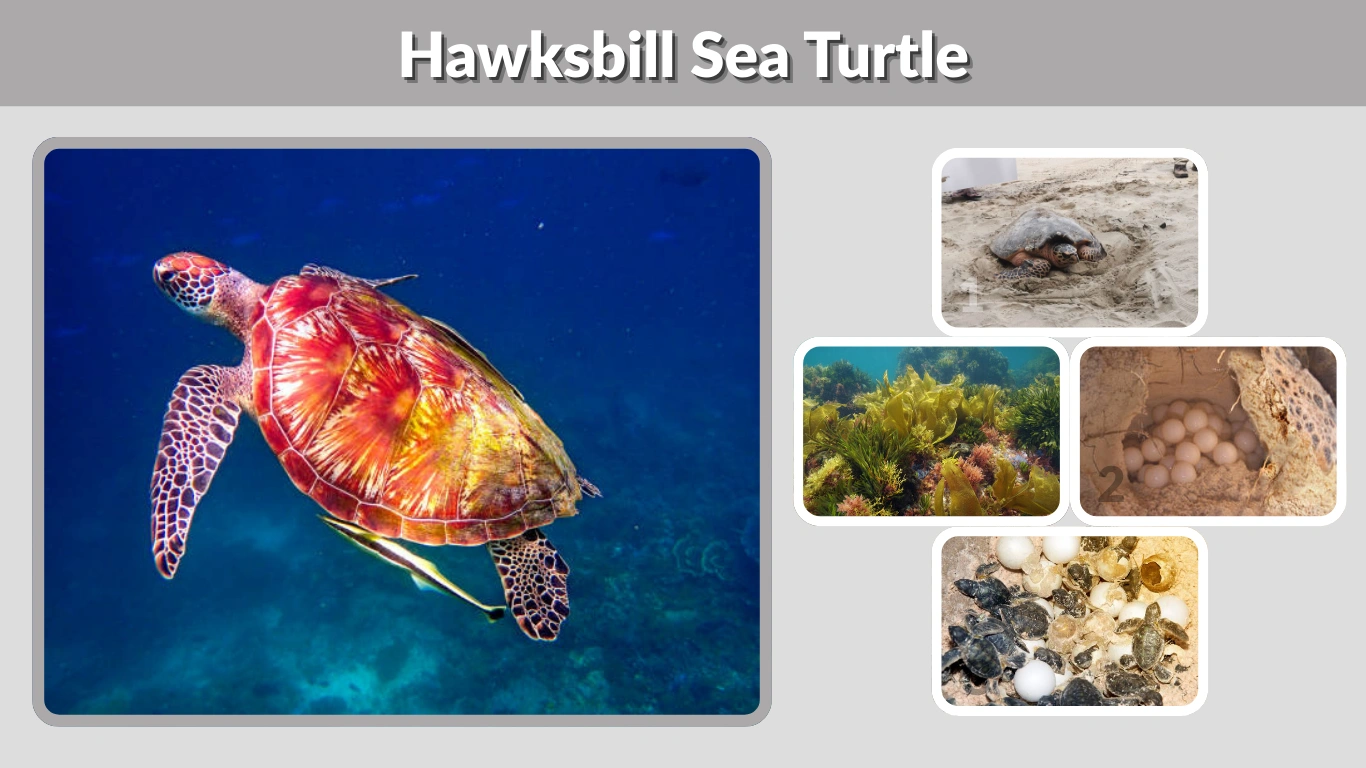
The hawksbill sea turtle (Eretmochelys imbricata) is one of the most visually striking and ecologically important sea turtle species in the world. Known for its beautiful shell and pointed beak resembling a hawk, the hawksbill plays a critical role in maintaining the health of coral reef ecosystems. Found primarily in tropical coastal waters, these turtles face numerous threats, including habitat loss, illegal poaching, and climate change. Understanding their identification, diet, habitat, behavior, and lifecycle is essential for protecting this endangered species.
Identification of Hawksbill Sea Turtles
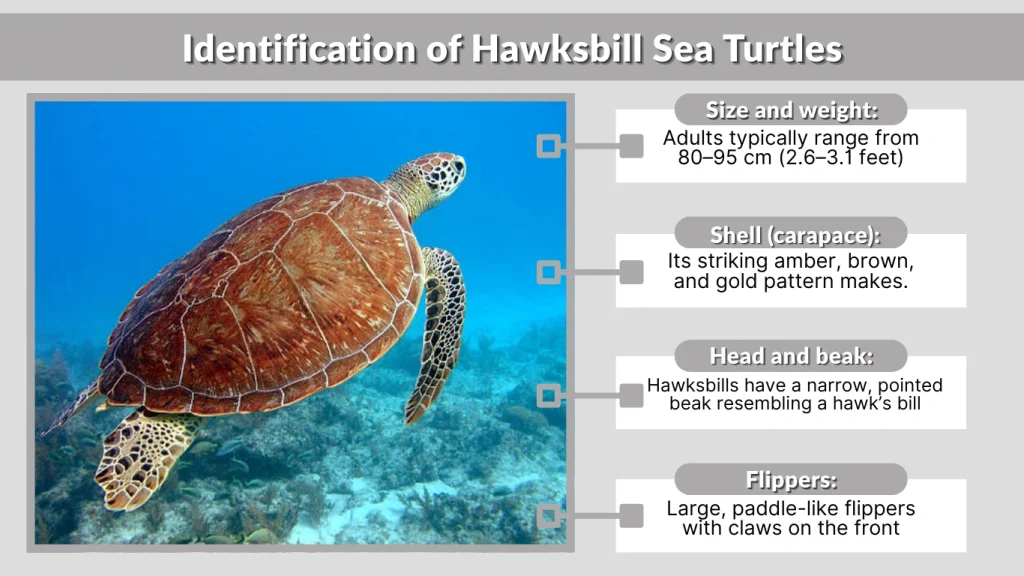
Hawksbill sea turtles are easily distinguished from other sea turtle species due to several unique features:
- Size and weight: Adults typically range from 80–95 cm (2.6–3.1 feet) in carapace length and weigh 45–70 kilograms (100–155 pounds).
- Shell (carapace): The carapace is covered with overlapping scutes, giving it a serrated appearance along the edges. Its striking amber, brown, and gold pattern makes it highly recognizable.
- Head and beak: Hawksbills have a narrow, pointed beak resembling a hawk’s bill, perfect for reaching sponges and crevices in coral reefs.
- Flippers: Large, paddle-like flippers with claws on the front, allowing for precise movement along reefs.
- Coloration: The shell’s tortoiseshell pattern and dark streaks on the head and flippers are unique to this species.
- Comparison with other turtles: Hawksbills are smaller than leatherbacks, with a narrower head and more vibrant shell than green or loggerhead turtles.
These identification traits make hawksbills easy to recognize in both marine and conservation research settings.
Physical Characteristics
The hawksbill’s distinctive shell is its most remarkable feature. The overlapping scutes provide flexibility while allowing protection from predators. Adults have a moderately flattened, heart-shaped carapace that tapers to a pointed rear. Their shells often measure up to 1 meter in extreme cases, though most remain smaller.
The hawksbill’s head is elongated, with a sharp, narrow beak adapted to extract sponges and small invertebrates from coral crevices. Their flippers are strong and clawed, ideal for navigating coral reefs, and the front flippers are longer than the rear, providing powerful propulsion.
Coloration is vibrant and variable, often including shades of gold, amber, reddish-brown, and black, which not only make hawksbills visually stunning but also historically led to overexploitation for the tortoiseshell trade.
Diet of Hawksbill Sea Turtles
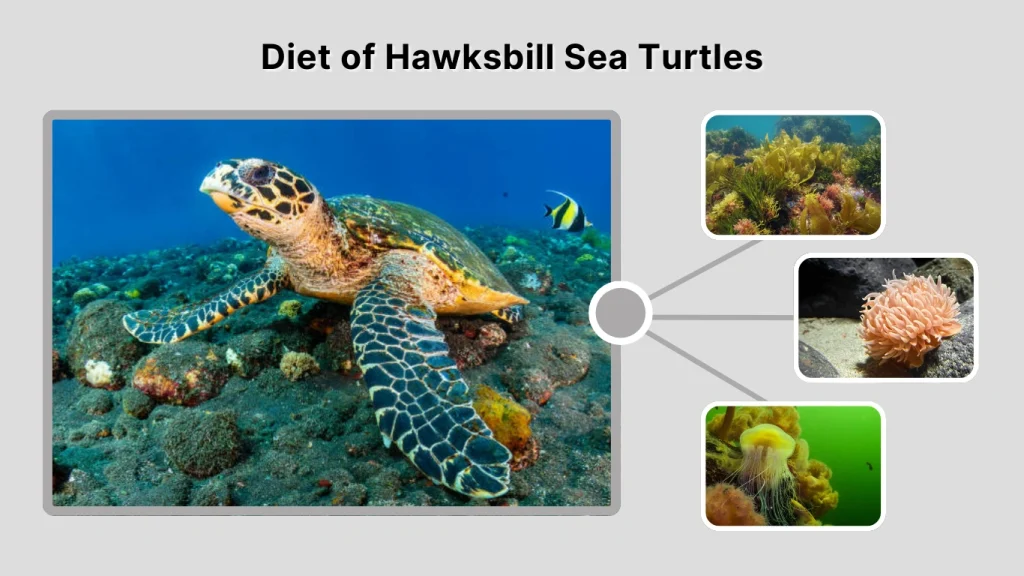
Hawksbill sea turtles are carnivorous specialists that primarily feed on sponges, which are abundant on coral reefs. Their narrow, pointed beaks allow them to reach sponges in cracks and crevices that other turtles cannot access.
Other components of their diet include:
- Algae and seaweed
- Sea anemones
- Jellyfish and soft-bodied invertebrates
- Crustaceans such as crabs
Feeding on sponges is critical for coral reef health, as hawksbills prevent sponges from outcompeting corals for space. This makes them keystone species in reef ecosystems.
Habitat and Range
Hawksbill sea turtles prefer tropical and subtropical coastal waters, especially shallow coral reefs, lagoons, and rocky outcrops. They are commonly found in the Atlantic, Pacific, and Indian Oceans, often near islands or continental shelves with abundant reef systems.
Nesting sites
Hawksbills typically nest on sandy beaches near coral reefs, returning to the same beaches where they were born. Nesting usually occurs during warmer months, and females may lay 2–5 clutches per season.
Migration
These turtles are highly migratory, traveling long distances between feeding grounds and nesting sites. Adults often move hundreds or even thousands of kilometers across oceans to find suitable nesting beaches.
Water preferences
Hawksbills inhabit waters with temperatures between 24–30°C (75–86°F) and generally remain in relatively shallow areas for feeding, though they can dive deeper if necessary.
Behaviors of Hawksbill Sea Turtles
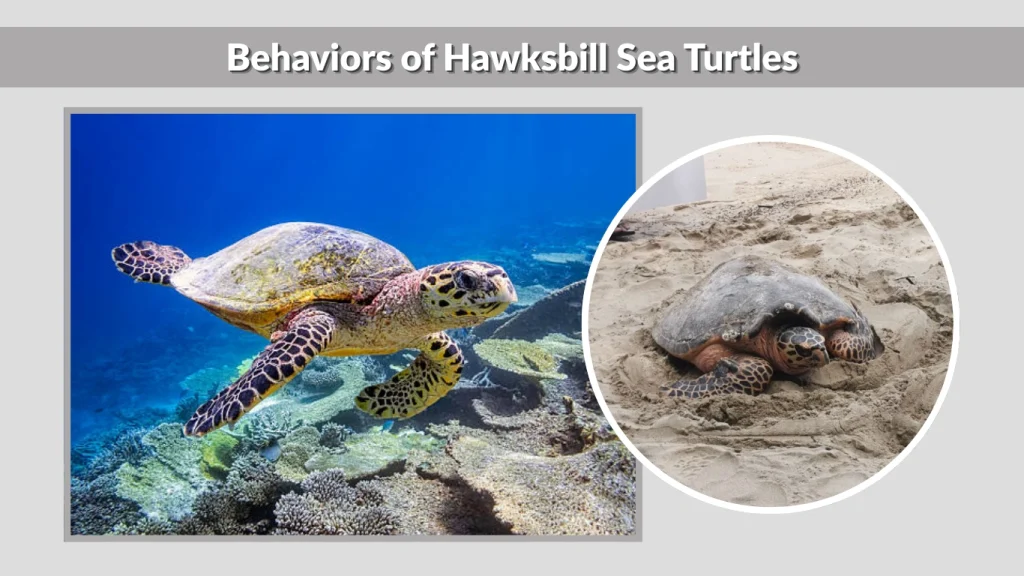
Hawksbill sea turtles are primarily solitary animals, spending most of their time alone in reef environments. They are diurnal, actively feeding during the day and resting at night among coral formations.
Feeding behavior
Hawksbills are specialized feeders. Using their narrow, pointed beaks, they extract sponges and invertebrates from small crevices in coral reefs. Their feeding helps control sponge populations, allowing coral to thrive. Occasionally, they consume algae, jellyfish, and crustaceans.
Nesting behavior
Female hawksbills come ashore at night to lay eggs on sandy beaches. They carefully select sites above the high tide line and dig nests 40–50 cm deep, depositing 50–150 eggs per clutch. After covering the eggs with sand, females return to the ocean, leaving hatchlings to emerge weeks later.
Social and navigational behavior
Hawksbills are mostly solitary but may share feeding grounds with other sea turtles. They exhibit strong homing instincts, returning to natal beaches to nest, sometimes traveling thousands of kilometers.
Lifecycle of Hawksbill Sea Turtles

Hawksbill sea turtles undergo a complex lifecycle with multiple stages:
- Egg stage: Incubation lasts about 60 days, with sex determined by sand temperature—warmer sand produces females, cooler sand produces males.
- Hatchlings: Once hatched, the tiny turtles face predators like crabs, birds, and fish on their way to the sea. Only a small percentage survive.
- Juvenile stage: Juveniles spend several years in open oceans or coastal habitats, feeding and growing.
- Adult stage: Hawksbills reach sexual maturity around 20–35 years and can live up to 30–50 years, continuing the reproductive cycle.
Threats and Conservation Status
Hawksbill sea turtles face serious human-induced threats:
- Poaching for shells: The tortoiseshell trade has historically decimated populations.
- Bycatch: Accidental capture in fishing nets and longlines.
- Habitat loss: Coastal development and tourism affect nesting beaches.
- Pollution: Ingesting plastics and exposure to chemical contaminants.
- Climate change: Rising temperatures affect nest sex ratios and habitat availability.
Currently, hawksbills are critically endangered according to the IUCN Red List. Conservation efforts include protected nesting beaches, marine reserves, and international bans on shell trade, aiming to stabilize and recover populations.
Fascinating Facts About Hawksbill Sea Turtles
- Hawksbills are critical for coral reef health, controlling sponge populations.
- They have overlapping scutes on their shells, giving a serrated edge appearance.
- Can live 30–50 years in the wild.
- Exhibit strong nest site fidelity, often returning to the same beach for reproduction.
- Historically exploited for their beautiful tortoiseshell.
How to Observe and Protect Hawksbill Sea Turtles
- Responsible wildlife tourism: Observe from a distance without disturbing turtles.
- Protect nesting beaches: Avoid bright lights, keep beaches clean, and prevent human interference.
- Reduce marine pollution: Dispose of plastics responsibly to prevent ingestion.
- Support conservation programs: Volunteer or donate to organizations protecting hawksbills and their habitats.
FAQs
What do hawksbill sea turtles eat?
Hawksbills primarily feed on sponges but also consume algae, jellyfish, and small invertebrates. Their diet helps maintain healthy coral reefs by preventing sponges from overgrowing.
Where do hawksbill turtles nest?
They nest on sandy beaches near coral reefs, often returning to the same beach where they hatched. Common regions include the Caribbean, Central America, Southeast Asia, and Pacific islands.
How long do hawksbill sea turtles live?
Hawksbills can live 30–50 years in the wild, with sexual maturity reached at about 20–35 years.
Why are hawksbill turtles endangered?
They are critically endangered due to poaching for shells, fishing bycatch, habitat loss, pollution, and climate change.
How can humans help protect hawksbill turtles?
Humans can reduce threats by protecting nesting beaches, minimizing marine pollution, avoiding disturbance, and supporting conservation programs.