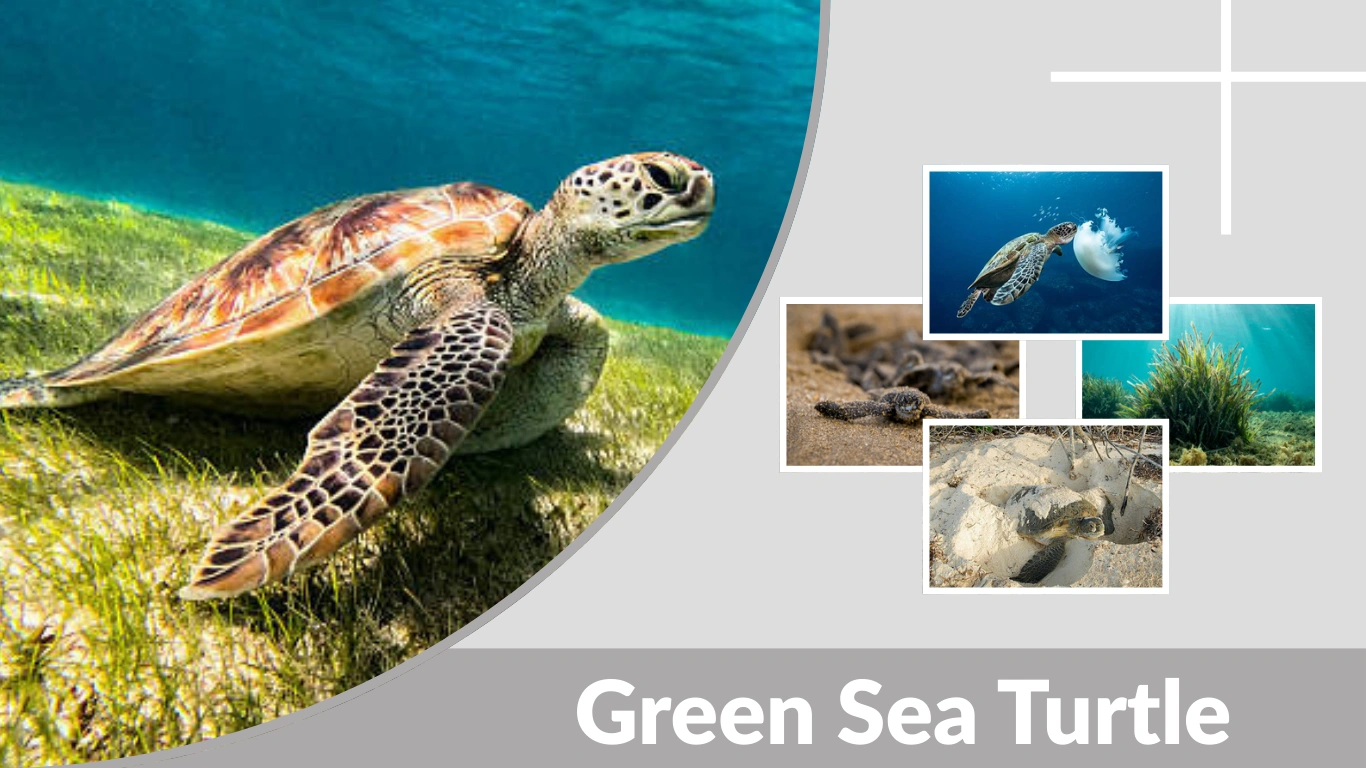
Green sea turtles (Chelonia mydas) are among the most iconic and ecologically important marine reptiles. Unlike many other sea turtles, adult green turtles are primarily herbivorous, feeding on seagrasses and algae, which helps maintain healthy marine ecosystems. They inhabit tropical and subtropical coastal waters worldwide and are known for their long migrations between feeding areas and nesting beaches. Green sea turtles are also a focus of conservation efforts because of threats like habitat loss, bycatch, and pollution.
Identification of Green Sea Turtles
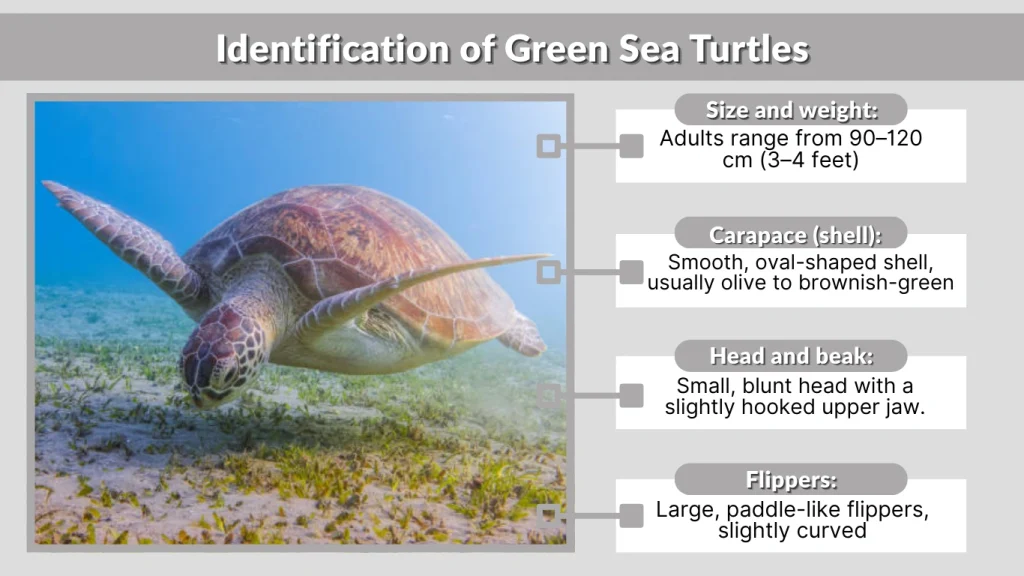
Green sea turtles have several distinctive features that make them recognizable:
- Size and weight: Adults range from 90–120 cm (3–4 feet) in carapace length and weigh 150–200 kg (330–440 pounds).
- Carapace (shell): Smooth, oval-shaped shell, usually olive to brownish-green, sometimes with darker streaks or mottling.
- Head and beak: Small, blunt head with a slightly hooked upper jaw, adapted for grazing seagrass.
- Flippers: Large, paddle-like flippers, slightly curved, with small claws on the front flippers.
- Coloration: Dark green or brown on top; pale yellow or whitish plastron (underside).
- Comparison with other turtles: Smaller than leatherbacks, broader head than hawksbills, and smoother shell compared to the overlapping scutes of hawksbills.
These features make green sea turtles easy to identify both in the water and on nesting beaches.
Physical Characteristics
Green turtles are medium to large-sized, with a robust, streamlined body designed for efficient swimming in coastal waters and open oceans. The smooth, oval-shaped carapace provides both protection and hydrodynamics, allowing them to glide effortlessly while grazing on seagrass beds.
The head and beak are uniquely adapted for herbivory. The jaws are strong enough to tear seagrass but are not suited for crushing hard-shelled prey, distinguishing them from loggerhead turtles.
Their flippers are long and powerful, enabling strong propulsion across long distances. The front flippers provide thrust, while the rear flippers are used for steering and digging nests. The olive-green coloration and subtle mottling help camouflage them in shallow coastal waters and seagrass meadows.
Diet of Green Sea Turtles
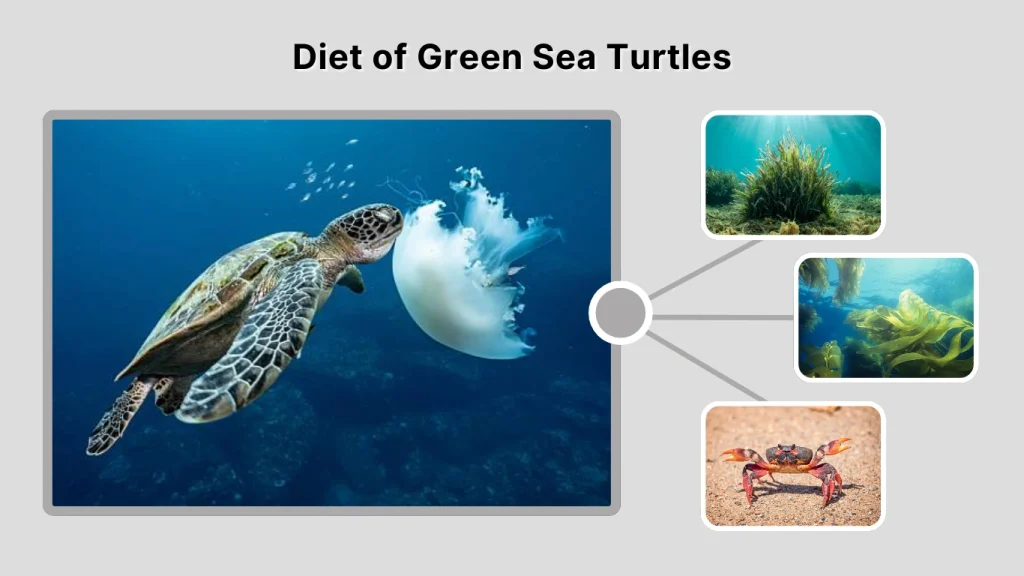
Adult green sea turtles are primarily herbivorous, with a diet that consists mainly of:
- Seagrasses: Their staple food, which they graze in shallow coastal areas.
- Algae: Consumed when seagrass is scarce or for dietary variety.
Juvenile green turtles, however, are omnivorous, feeding on:
- Small invertebrates like crabs, jellyfish, and shrimp
- Algae and plant material
By grazing on seagrasses and algae, green turtles help maintain healthy seagrass beds, prevent overgrowth, and support biodiversity in coastal ecosystems. Their herbivorous diet makes them one of the few strictly plant-eating sea turtle species as adults.
Habitat and Range
Green sea turtles are widely distributed in tropical and subtropical waters around the globe, including the Atlantic, Pacific, and Indian Oceans.
Coastal Habitats
Adults are commonly found in shallow bays, lagoons, estuaries, and coral reef areas, where seagrass beds are abundant.
Nesting Sites
Green turtles return to sandy beaches where they were born to lay eggs, usually traveling hundreds to thousands of kilometers between feeding grounds and nesting sites. Nesting typically occurs during warmer months, with females laying multiple clutches per season, each containing 80–120 eggs.
Migration
Green sea turtles are long-distance migrators, using magnetic cues, water currents, and environmental signals to navigate between feeding and nesting areas. Juveniles often inhabit pelagic zones before moving to coastal habitats as adults.
Water Preferences
They prefer water temperatures between 20–30°C (68–86°F) and generally remain in shallow coastal regions, although they can occasionally venture into deeper waters.
Behaviors of Green Sea Turtles
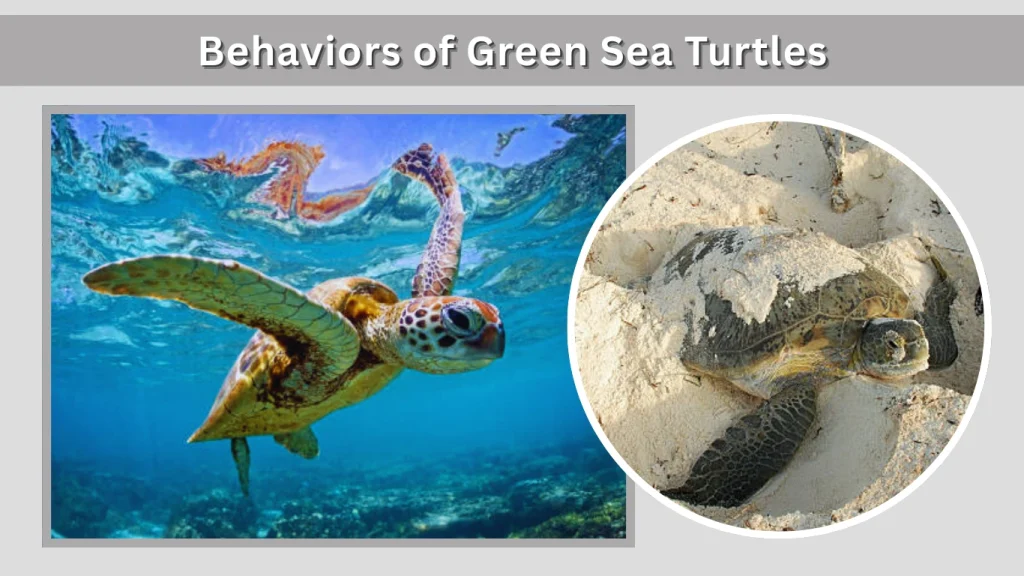
Green sea turtles are mostly solitary, though they may gather in seagrass beds for feeding. Their behavior is closely tied to feeding, resting, and nesting activities.
Feeding Behavior
Adult green turtles are herbivorous, grazing on seagrass and algae. They use their blunt, serrated jaws to tear off seagrass leaves, which helps maintain healthy seagrass beds. Juveniles are omnivorous, feeding on small invertebrates, algae, and occasionally jellyfish.
Nesting Behavior
Female green turtles return to their natal beaches to nest. Nesting occurs at night to reduce predation. Females dig a nest about 40–60 cm deep, laying 80–120 eggs per clutch. After covering the eggs with sand, the females return to the ocean, leaving hatchlings to emerge and find their way to the sea.
Migration and Navigation
Green turtles are long-distance migrants, often traveling hundreds to thousands of kilometers between feeding grounds and nesting beaches. They navigate using magnetic cues, water currents, and environmental signals, returning to their natal beaches with remarkable precision.
Lifecycle of Green Sea Turtles
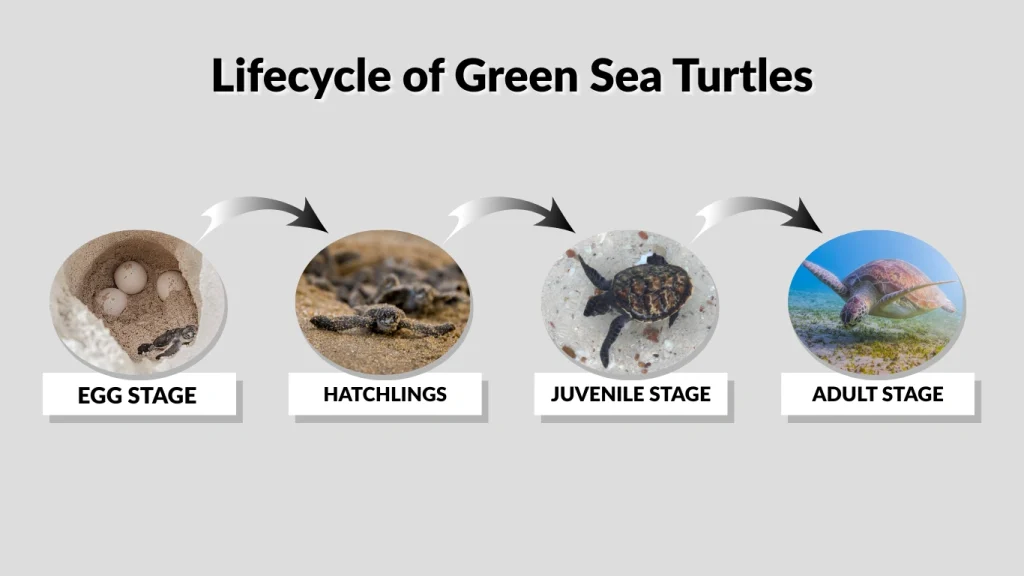
Green sea turtles have a complex lifecycle that begins and ends on sandy beaches:
- Egg stage: Incubation lasts 45–70 days, depending on sand temperature. Warmer sand produces more females, cooler sand produces males.
- Hatchlings: Tiny turtles face predators such as crabs, birds, and fish during their journey to the ocean. Only a small percentage survive to adulthood.
- Juvenile stage: Hatchlings spend several years in pelagic or coastal habitats, gradually shifting from an omnivorous diet to herbivory.
- Adult stage: Green turtles reach sexual maturity at 20–50 years and can live up to 80 years. Adults continue returning to natal beaches to reproduce, ensuring the survival of the species.
Threats and Conservation Status
Green sea turtles face numerous threats:
Natural Threats
- Predation of eggs and hatchlings by raccoons, crabs, birds, and sharks
- Extreme weather events and beach erosion
Human-Induced Threats
- Fishing bycatch: Accidental capture in nets and longlines
- Coastal development: Habitat loss due to tourism and urbanization
- Pollution: Plastic ingestion and chemical contamination
- Climate change: Rising temperatures affect hatchling sex ratios and nesting success
Green turtles are currently listed as Endangered on the IUCN Red List. Conservation efforts include protected nesting beaches, marine reserves, and international laws regulating human activities that threaten their survival.
Fascinating Facts About Green Sea Turtles
- They are the largest herbivorous sea turtle species, with adults capable of grazing vast seagrass beds.
- Known for long-distance migrations between feeding and nesting areas.
- Can live up to 80 years in the wild.
- Hatchlings are omnivorous before becoming strictly herbivorous as adults.
- Their grazing plays a key role in maintaining seagrass bed health, supporting entire marine ecosystems.
How to Observe and Protect Green Sea Turtles
- Responsible wildlife tourism: Observe turtles without disturbing them, especially during nesting.
- Protect nesting beaches: Avoid bright lights, minimize human interference, and keep beaches clean.
- Reduce marine pollution: Properly dispose of plastics and other debris to prevent ingestion.
- Support conservation programs: Volunteer or donate to organizations protecting green turtles and their habitats.
Related Species and Comparison
Green turtles share ocean habitats with other sea turtle species:
- Leatherback: Largest, jellyfish-eating, leathery shell
- Loggerhead: Broad head, hard-shelled, carnivorous
- Hawksbill: Smaller, overlapping scutes, spongivorous
- Olive ridley: Small, mass-nesting, omnivorous
Green turtles are unique for their herbivorous diet, smooth olive-green carapace, and critical role in seagrass bed ecosystems.
FAQs
What do green sea turtles eat?
Adult green turtles are primarily herbivorous, feeding on seagrasses and algae. Juveniles may also eat small invertebrates, making them omnivorous early in life.
Where do green sea turtles nest?
They nest on sandy beaches in tropical and subtropical regions, often returning to the same natal beaches where they hatched.
How long do green sea turtles live?
Green sea turtles can live up to 80 years, reaching sexual maturity between 20–50 years depending on environmental conditions.
Why are green sea turtles endangered?
Threats include fishing bycatch, coastal development, poaching, pollution, and climate change, all of which reduce nesting success and survival rates.
How can humans help protect green sea turtles?
Humans can help by protecting nesting beaches, reducing marine debris, practicing responsible tourism, and supporting conservation programs.