




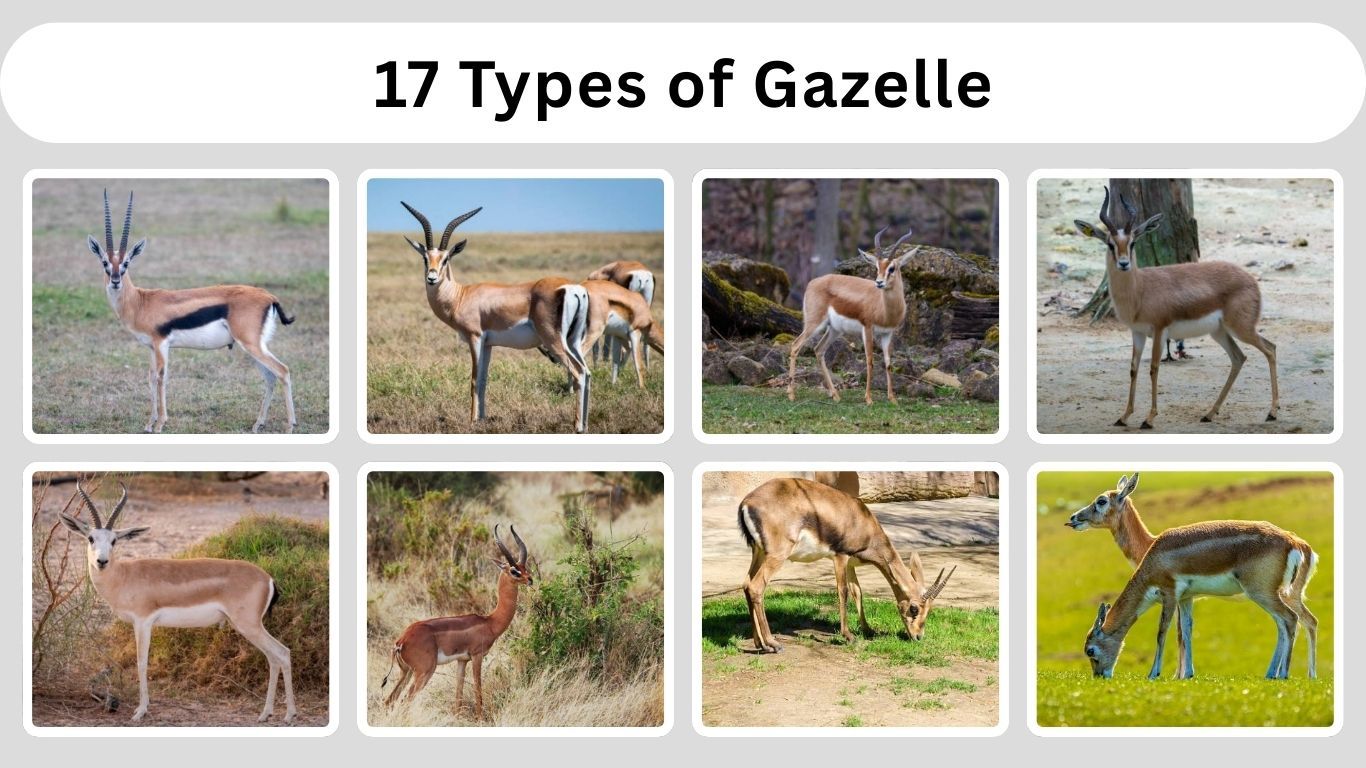
Gazelles are some of the most graceful and fastest antelopes in the world, perfectly adapted to life in open landscapes. From the scorching Sahara and Arabian deserts to African savannas and Asian high plateaus, different types of gazelles have evolved unique body features, diets, and survival strategies. In this guide, you’ll explore 17 remarkable types of gazelle, discovering how each one thrives in harsh climates, escapes predators, and plays an important role in its ecosystem.
1. Thomson’s Gazelle
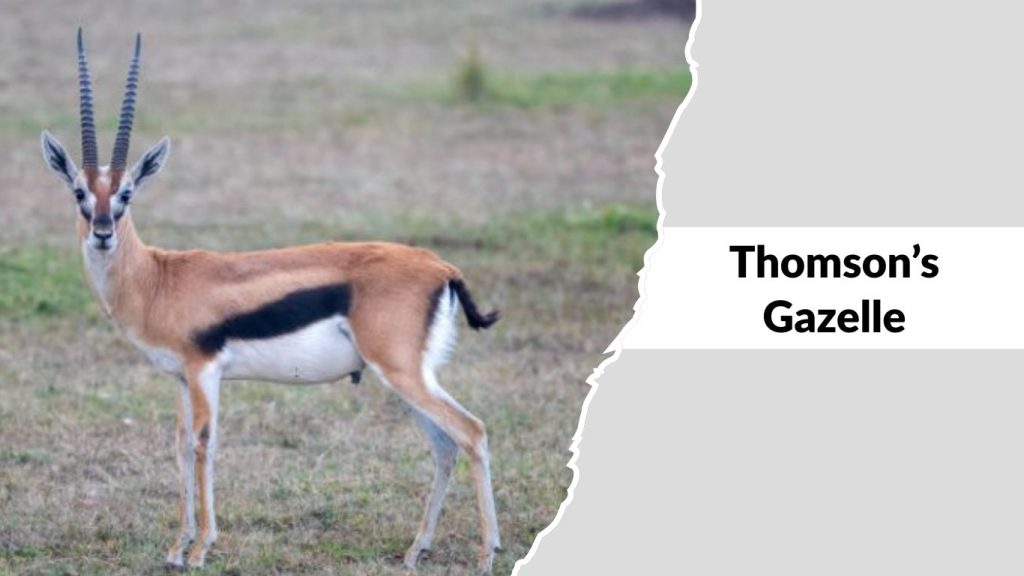
Thomson’s gazelle is one of the most well-known and recognizable gazelle species, famous for its incredible speed and graceful movements. It is a common sight on the African savannas, often seen in large herds grazing alongside zebras and wildebeest. This gazelle is specially adapted for open grasslands, where sharp eyesight and explosive running ability help it survive heavy predator pressure.
Identification
- Small, slim-bodied antelope with long, thin legs
- Light brown coat with a bold black side stripe and white underparts
- Distinct white face markings with a dark facial band
- Both males and females usually have curved, ringed horns
- Short tail with a dark tip
Habitat
Thomson’s gazelle lives mainly in East African grasslands and savannas, especially in Kenya and Tanzania. It prefers open plains with short grass, which allow it to spot predators early and escape quickly. It is rarely found in dense forests or very dry deserts.
Diet
Its diet consists mostly of grasses, making it a true grazer. During dry seasons, it also feeds on leaves, shoots, and herbs when grass becomes scarce. Thomson’s gazelle often follows seasonal rains to access fresh, nutrient-rich grazing areas.
Behavior and Lifecycle
Thomson’s gazelles are highly social and often form large herds. They are famous for “stotting,” a stiff-legged jumping display used to signal strength to predators. Breeding can occur year-round, with most calves born after rainy seasons.
2. Grant’s Gazelle
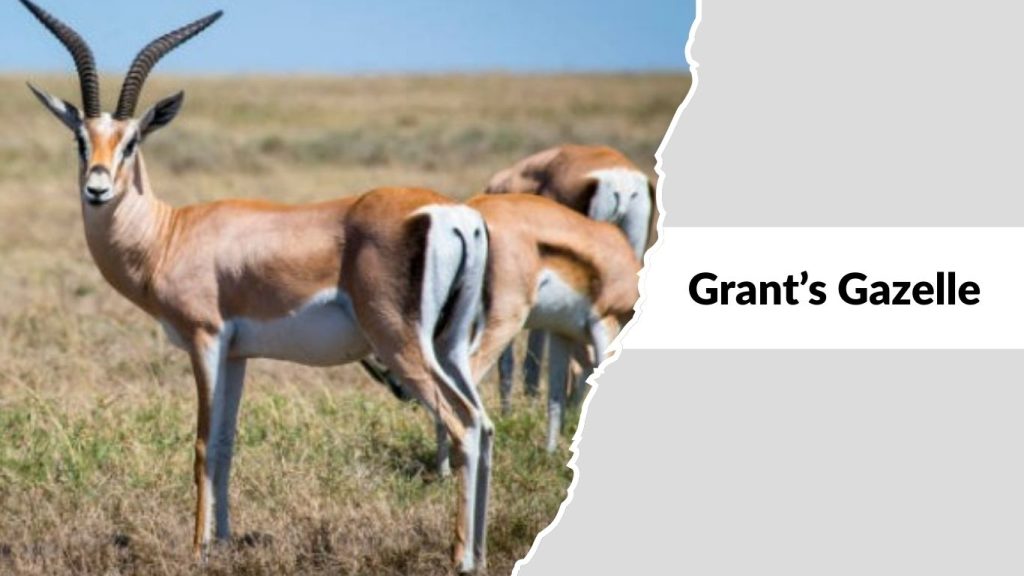
Grant’s gazelle is one of the largest gazelle species and is well adapted to dry, open landscapes. It is known for its elegant appearance, long horns, and ability to survive with little water, often getting most of its moisture from plants. This gazelle is commonly seen moving in small groups or mixed herds across East African plains.
Identification
- Large, tall gazelle with long legs and a slender neck
- Sandy-brown coat with a white belly and pale rump patch
- Long, lyre-shaped, heavily ringed horns (especially in males)
- Distinct white patch around the tail
- Narrow face with dark markings near the eyes
Habitat
Grant’s gazelle inhabits arid and semi-arid grasslands, savannas, and open shrublands of East Africa. It is especially common in Kenya, Tanzania, and parts of Ethiopia. Unlike many antelopes, it often lives far from permanent water sources.
Diet
It feeds on grasses, leaves, herbs, and shrubs. Grant’s gazelle is a mixed feeder, switching between grazing and browsing depending on seasonal food availability. This flexible diet allows it to survive droughts better than many other gazelles.
Behavior and Lifecycle
Grant’s gazelles usually live in small groups, though larger herds form during favorable seasons. Males establish territories, marking them with dung and defending them from rivals. Calves are hidden in vegetation for the first weeks of life.
3. Dorcas Gazelle
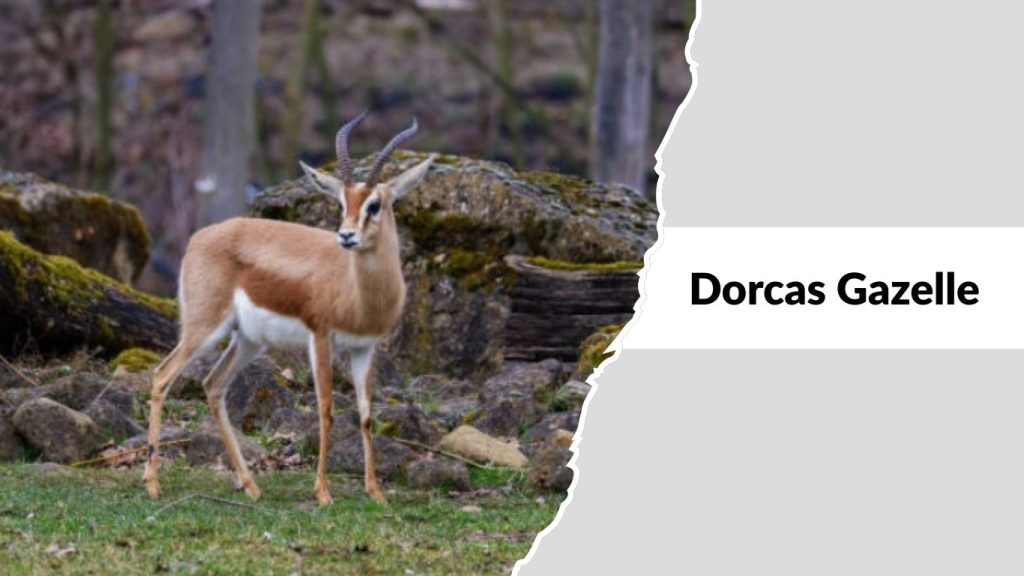
The dorcas gazelle is a small, delicate gazelle species perfectly adapted to desert and semi-desert environments. It is famous for its ability to live without direct water sources, surviving instead on moisture obtained from plants.
Identification
- Small, slender body with long, thin legs
- Pale sandy coat with a white underside
- Light facial stripes and a narrow dark side stripe
- Both sexes have gently curved, ringed horns
- Black-tipped tail
Habitat
Dorcas gazelles live in deserts, steppes, and dry savannas across North Africa and parts of the Middle East. They favor flat or gently rolling terrain with scattered shrubs and grasses, which provide both food and cover.
Diet
Their diet includes grasses, leaves, flowers, pods, and desert shrubs. They obtain most of their water from plant material and dew, allowing them to survive in extremely dry climates.
Behavior and Lifecycle
Dorcas gazelles usually live in small groups or pairs. They are fast runners and can leap high to escape predators. Breeding can occur year-round, with births often timed to follow periods of rainfall.
4. Dama Gazelle

The dama gazelle is the largest and one of the rarest gazelle species, known for its striking white body and reddish-brown neck and shoulders. It is highly adapted to life in the Sahel and southern Sahara, where extreme heat and limited vegetation shape its behavior and movements.
Identification
- Tall, long-legged gazelle with a slender but powerful build
- White body with rich reddish-brown neck, shoulders, and chest
- Long, thin, slightly curved horns in both males and females
- Large dark eyes and a narrow face
- Short tail with a dark tip
Habitat
Dama gazelles inhabit semi-desert grasslands, Sahelian plains, and open steppe south of the Sahara. They prefer areas with scattered grasses, acacias, and shrubs. Today, their range is highly fragmented due to habitat loss and hunting.
Diet
Their diet includes grasses, leaves, pods, flowers, and desert shrubs. They often browse more than they graze, allowing them to use taller vegetation. They can survive long periods without surface water by relying on moisture from plants.
Behavior and Lifecycle
Dama gazelles usually live in small groups and may travel seasonally in search of fresh grazing. They are most active in the early morning and late afternoon to avoid extreme heat. Calves are typically born after rainy periods.
5. Soemmerring’s Gazelle

Soemmerring’s gazelle is a graceful East African species known for its pale coat, facial markings, and long, slender horns. It is one of the most common gazelles in the Horn of Africa.
Identification
- Medium-sized gazelle with long legs and slim body
- Pale fawn to grayish coat with white underparts
- Distinct dark facial stripes from eyes to muzzle
- Long, slender, ringed horns in both sexes
- Narrow muzzle and alert ears
Habitat
This gazelle lives in dry savannas, open plains, and bushlands of Ethiopia, Somalia, Eritrea, and eastern Kenya. It favors flat or gently rolling terrain with sparse shrubs and grasses.
Diet
Soemmerring’s gazelle feeds on grasses, herbs, leaves, and young shoots. It is a mixed feeder, grazing when grasses are available and browsing shrubs during dry periods.
Behavior and Lifecycle
They are social animals, often forming small herds. Males may establish territories during the breeding season. Calves are usually born after rainy seasons, when food is more abundant.
6. Mountain Gazelle
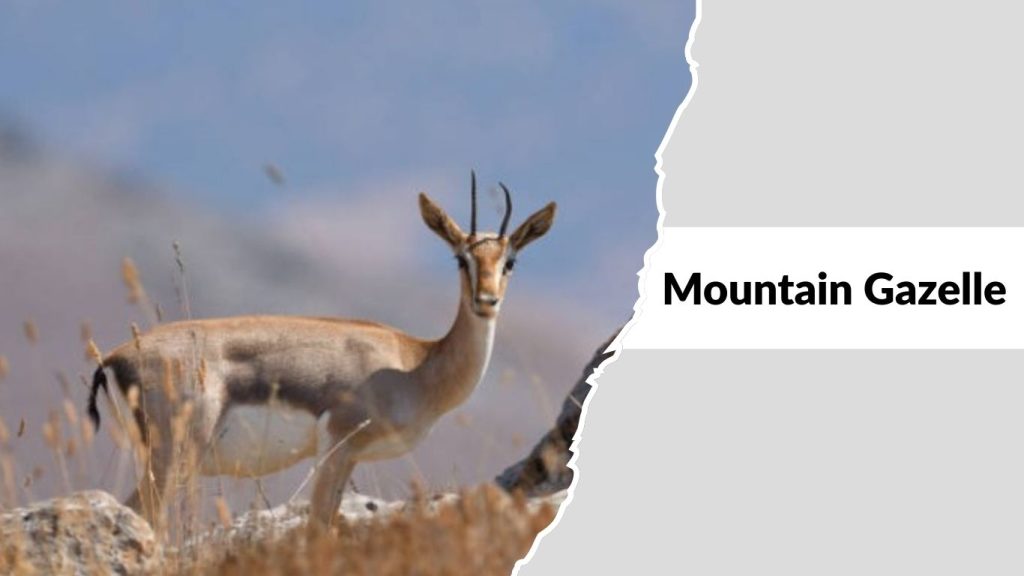
The mountain gazelle is a small, agile gazelle adapted to rocky hills, plateaus, and open woodlands. It is well known for its ability to navigate rough terrain and for its alert, nervous behavior, which helps it avoid predators.
Identification
- Small, slender body with long legs
- Light brown to gray coat with a white underside
- Dark facial markings and a narrow black side stripe
- Short, slightly curved, ringed horns in both sexes
- Black-tipped tail and large eyes
Habitat
Mountain gazelles live in dry grasslands, rocky hills, semi-deserts, and open woodlands across the Middle East and parts of the Arabian Peninsula. They often inhabit slopes and plateaus rather than flat open plains.
Diet
Their diet includes grasses, herbs, leaves, buds, and shrubs. They can survive in dry regions by obtaining moisture from plants and feeding during cooler parts of the day.
Behavior and Lifecycle
Mountain gazelles usually live in small groups. They are extremely alert and quick to flee when threatened. Breeding often peaks after rainy seasons, when food is more available for mothers and calves.
7. Slender-horned Gazelle
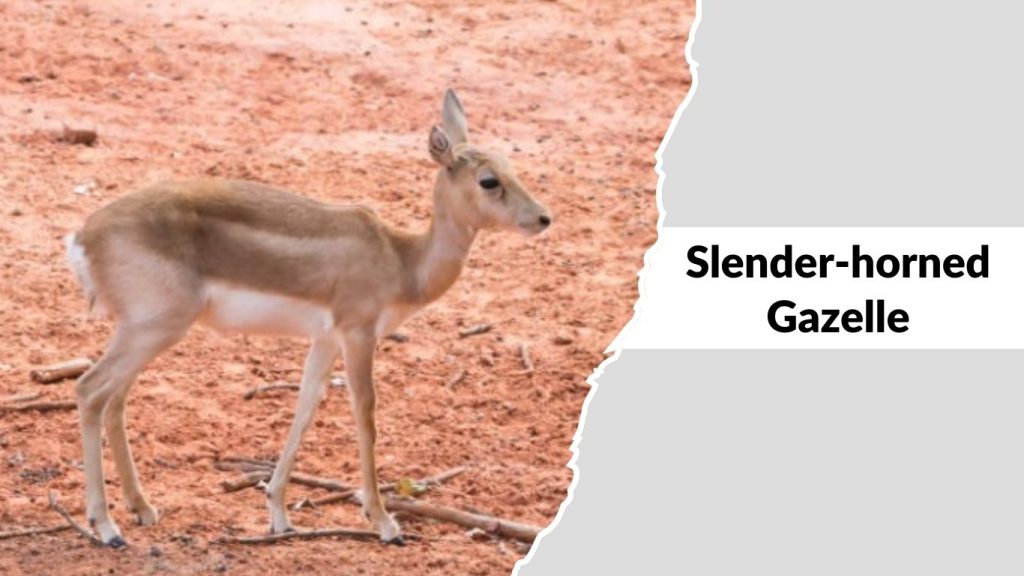
The slender-horned gazelle is a rare desert species distinguished by its very thin, elongated horns and pale coloration. It is specially adapted to sandy deserts and is one of the least-known gazelles.
Identification
- Medium-sized, very slim gazelle with long legs
- Very pale sandy or cream-colored coat
- Extremely thin, slightly curved horns in both sexes
- Faint side stripe and delicate facial markings
- Long neck and narrow head
Habitat
Slender-horned gazelles inhabit remote sandy deserts and dune systems of North Africa, especially in parts of Libya, Egypt, and Sudan. They prefer open desert with scattered vegetation.
Diet
They feed on desert grasses, herbs, leaves, and small shrubs. Like other desert gazelles, they gain most of their moisture from plant material.
Behavior and Lifecycle
These gazelles are usually solitary or live in very small groups. They are mainly active during cooler hours. Little is known about their breeding in the wild, but births are thought to be linked to rainfall.
8. Goitered Gazelle
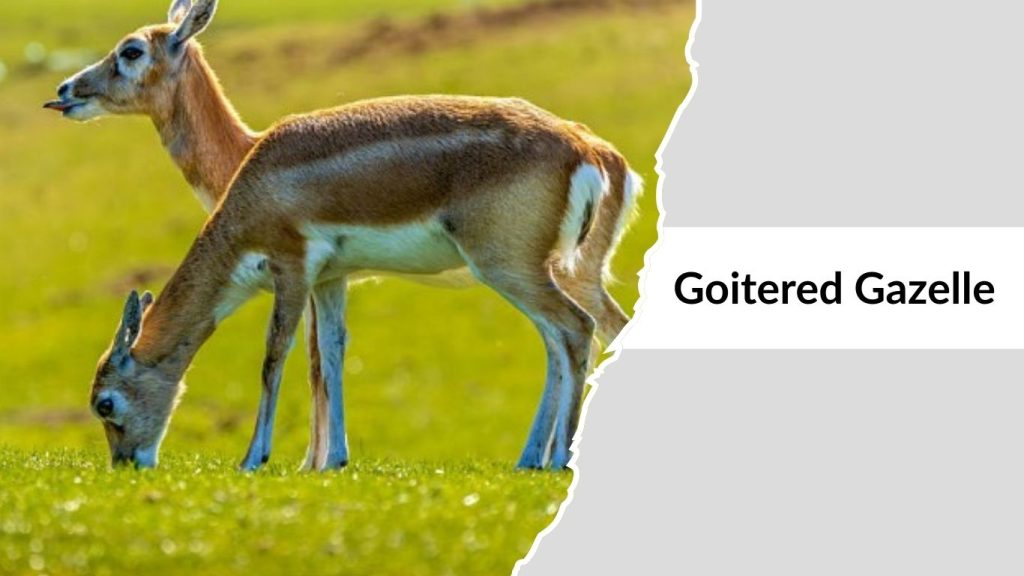
The goitered gazelle is a distinctive species named for the swollen throat seen in males during the breeding season. It is well adapted to vast open deserts and steppes across Central and Western Asia.
Identification
- Medium-sized gazelle with long legs and a slim build
- Sandy to light brown coat with a white belly
- Males develop a noticeable throat swelling (goiter) in the rut
- Strongly curved, ringed horns, mainly in males
- Narrow face with subtle facial markings
Habitat
Goitered gazelles inhabit deserts, semi-deserts, and open steppe landscapes from the Middle East through Central Asia. They favor flat plains, rolling deserts, and sparsely vegetated regions.
Diet
Their diet includes grasses, desert shrubs, leaves, and seeds. They are mixed feeders, grazing when grass is available and browsing shrubs during dry periods. They can survive long periods without direct water.
Behavior and Lifecycle
Goitered gazelles often form small herds that may gather into larger groups seasonally. During the rut, males become territorial and compete for females. Calves are born in spring or early summer.
9. Speke’s Gazelle
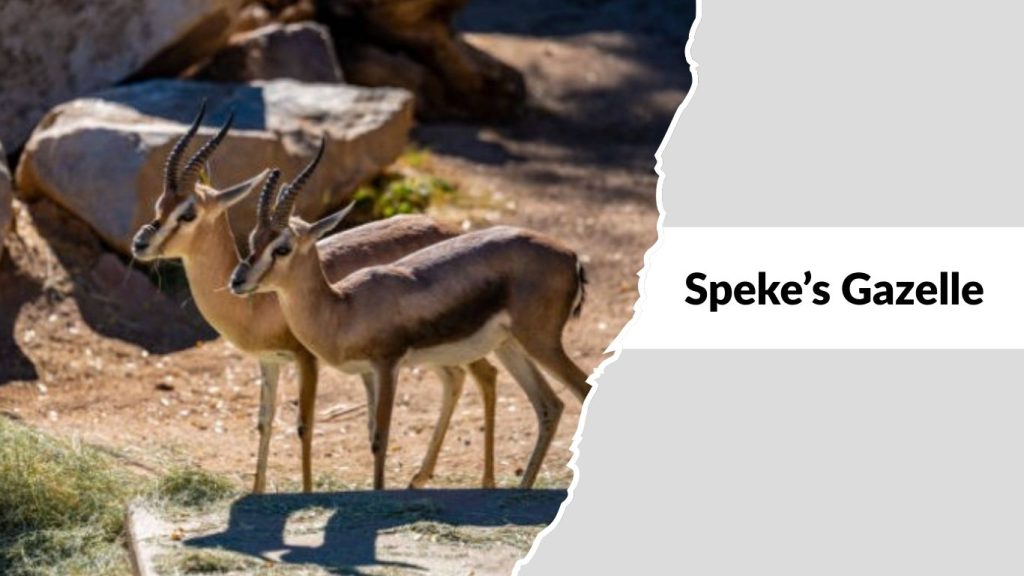
Speke’s gazelle is a small, desert-adapted gazelle known for its compact body and preference for arid coastal plains. It is closely associated with the Horn of Africa.
Identification
- Small, stocky gazelle with relatively short legs
- Sandy-gray coat with white underparts
- Short, ringed horns in both males and females
- Faint side stripe and subtle facial markings
- Short tail with a dark tip
Habitat
Speke’s gazelles live in arid grasslands, semi-deserts, and coastal plains of Somalia and parts of Ethiopia. They prefer dry, flat terrain with scattered shrubs.
Diet
They feed on grasses, herbs, leaves, and low shrubs. They rarely drink water, obtaining moisture from their food and dew.
Behavior and Lifecycle
Speke’s gazelles usually live in small groups or pairs. They are shy and quick to flee when disturbed. Breeding can occur year-round, with peaks after rainy periods.
10. Cuvier’s Gazelle

Cuvier’s gazelle is a rare and secretive gazelle species found in the mountainous regions of North Africa. It is more heavily built than many other gazelles and is well adapted to rocky, rugged landscapes.
Identification
- Medium-sized gazelle with a sturdy, compact body
- Grayish-brown coat with a white belly and throat
- Dark facial stripes and a faint side band
- Thick, ringed, slightly curved horns in both sexes
- Strong legs adapted for climbing rocky slopes
Habitat
Cuvier’s gazelles inhabit mountain ranges, rocky hills, and forested slopes of Morocco, Algeria, and Tunisia. They favor areas with Mediterranean scrub, open woodland, and rugged terrain.
Diet
Their diet includes grasses, herbs, leaves, shoots, and shrubs. They often browse more than they graze, reflecting their mountain and woodland habitats.
Behavior and Lifecycle
They are usually found alone or in small groups. Cuvier’s gazelles are cautious and often hide in vegetation or rocky cover. Breeding typically peaks in late winter, with calves born in spring.
11. Red-fronted Gazelle
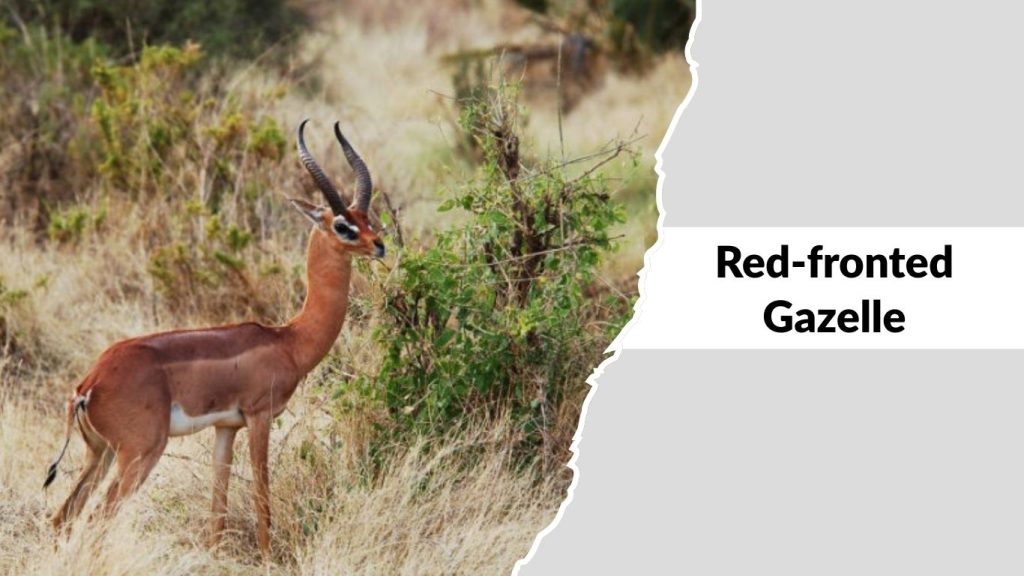
The red-fronted gazelle is named for the reddish coloring on its face and is a familiar sight in the savannas of West and Central Africa. It is known for its adaptability to a wide range of dry habitats.
Identification
- Medium-sized, slender gazelle with long legs
- Light brown coat with a distinct reddish forehead patch
- Clear black side stripe and white underparts
- Ringed, slightly curved horns in both sexes
- Black-tipped tail
Habitat
Red-fronted gazelles inhabit savannas, dry grasslands, open woodlands, and Sahelian zones across West and Central Africa. They prefer open landscapes with scattered shrubs.
Diet
They feed on grasses, leaves, herbs, and shrubs. They are mixed feeders, grazing in wet seasons and browsing more during dry periods.
Behavior and Lifecycle
Red-fronted gazelles usually live in small herds. Males may defend territories during the breeding season. Calves are commonly born after rainy seasons when food is abundant.
12. Arabian Gazelle
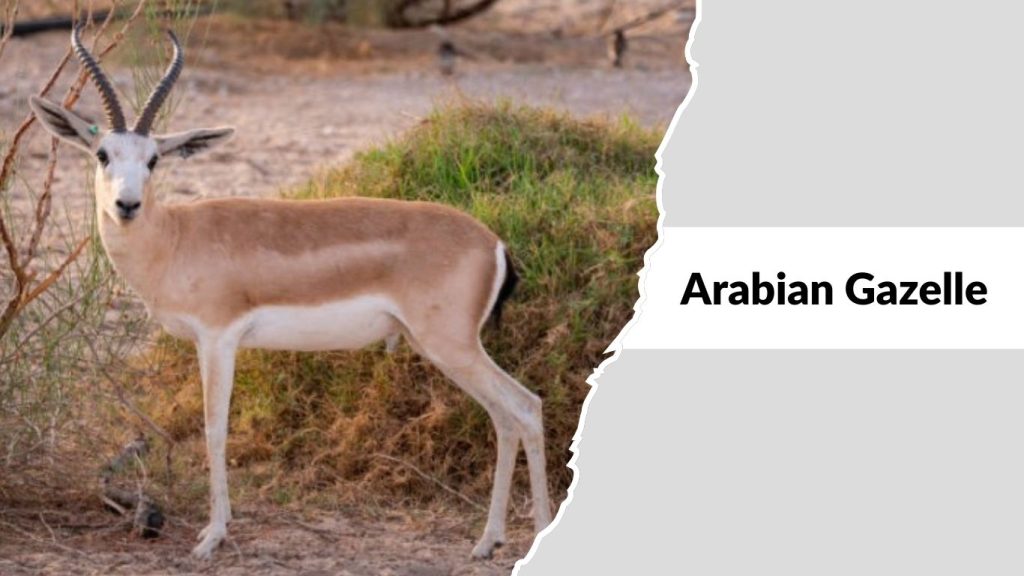
The Arabian gazelle is a small, delicate gazelle species native to the Arabian Peninsula. It is well adapted to extreme heat and dry environments and is now rare in much of its former range.
Identification
- Small, slender body with long thin legs
- Light sandy-brown coat with white underparts
- Fine, slightly curved, ringed horns in both sexes
- Dark facial markings and large eyes
- Short tail with a dark tip
Habitat
Arabian gazelles inhabit deserts, coastal plains, gravel flats, and semi-desert shrublands of the Arabian Peninsula. They prefer open terrain with scattered vegetation and avoid dense habitats.
Diet
Their diet includes grasses, herbs, leaves, buds, and desert shrubs. They can survive without direct water, obtaining moisture from plants and dew.
Behavior and Lifecycle
Arabian gazelles usually live in small groups or pairs. They are most active in early morning and evening to avoid heat. Breeding can occur year-round, with peaks after seasonal rains.
13. Rhim Gazelle

The rhim gazelle, also called the Saharan gazelle, is a pale-colored desert gazelle adapted to life in the open Sahara. Its light coat reflects sunlight, helping it cope with extreme heat.
Identification
- Medium-sized gazelle with a very pale, almost white coat
- Long, thin legs and slender build
- Light facial markings with a faint side stripe
- Thin, ringed horns in both males and females
- Black-tipped tail
Habitat
Rhim gazelles inhabit sandy and stony deserts of the Sahara, preferring open plains and dune systems with sparse vegetation.
Diet
They feed on desert grasses, herbs, leaves, and small shrubs. Like other desert gazelles, they depend heavily on moisture from plant food.
Behavior and Lifecycle
Rhim gazelles are usually solitary or live in very small groups. They are highly adapted to heat and often rest during the hottest parts of the day. Calving is believed to be linked to rainfall.
14. Chinkara (Indian Gazelle)
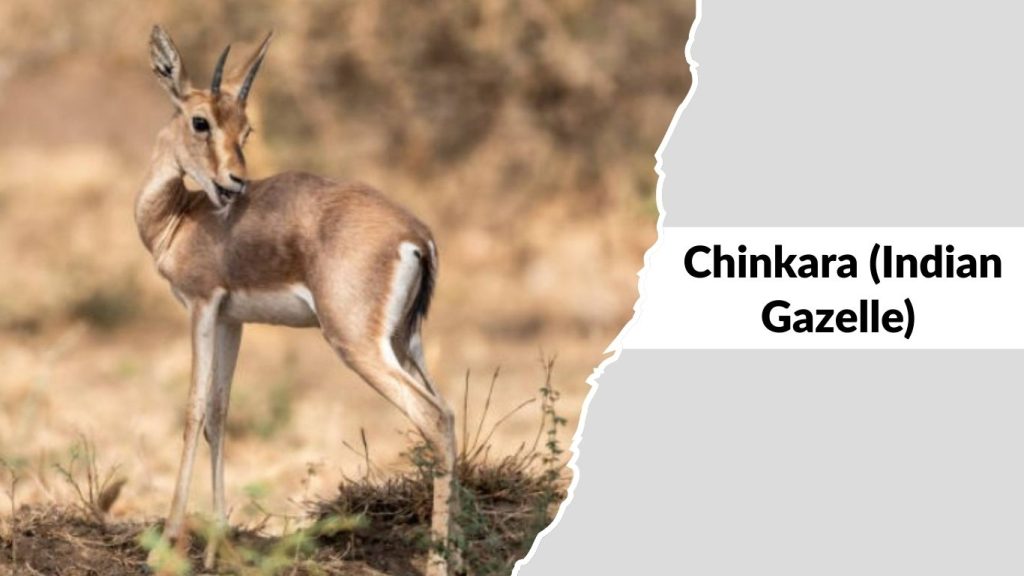
The chinkara, or Indian gazelle, is a small, graceful gazelle species widely distributed across South Asia. It is well adapted to hot, dry plains and open scrublands.
Identification
- Small, slim gazelle with long legs and a narrow body
- Light sandy to reddish-brown coat with white underparts
- Distinct dark facial stripes from eyes to mouth
- Slender, ringed horns in both males and females
- Short tail with a dark tip
Habitat
Chinkaras inhabit dry grasslands, semi-deserts, scrublands, and open woodlands of India, Pakistan, and parts of Iran. They often occupy flat plains, rocky plateaus, and low hills.
Diet
They feed on grasses, leaves, flowers, fruits, and shrubs. Chinkaras are mixed feeders and can survive long periods without drinking water, relying on plant moisture.
Behavior and Lifecycle
Chinkaras usually live in small groups or pairs. They are fast and agile runners. Breeding can occur throughout the year, with peaks after monsoon rains.
15. Mongolian Gazelle
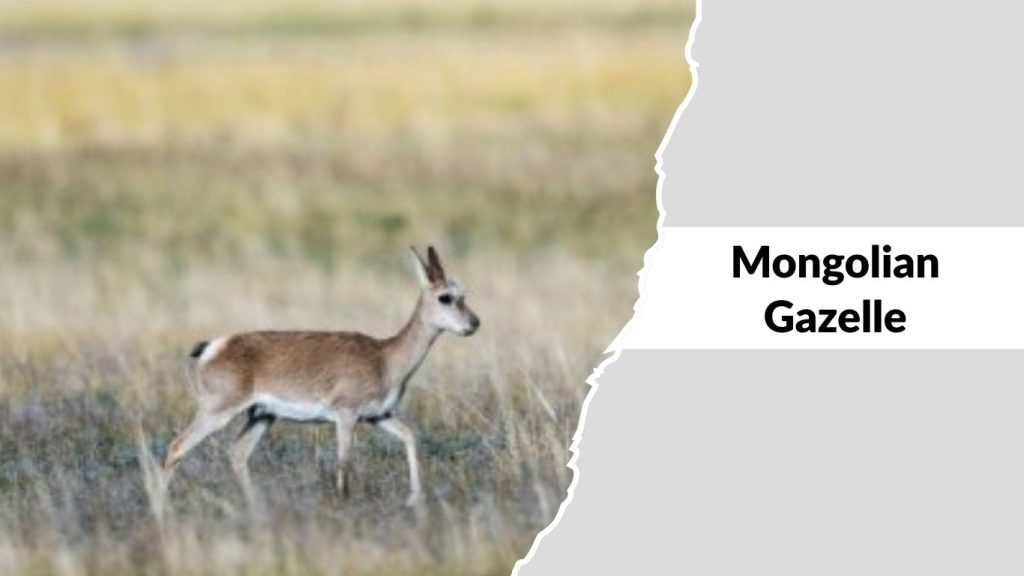
The Mongolian gazelle is one of the most numerous and wide-ranging gazelle species, famous for forming massive herds on the steppes of Central Asia.
Identification
- Medium-sized gazelle with a stocky but athletic build
- Yellowish-brown coat with white belly and rump
- Males have thick, ringed horns; females usually hornless
- Distinct swollen throat in males during rut
- Short tail and rounded ears
Habitat
Mongolian gazelles inhabit vast grassland steppes of Mongolia, northern China, and parts of Russia. They prefer wide open plains with low grasses.
Diet
Their diet consists mainly of grasses, along with herbs and shoots. They are primarily grazers and move seasonally to track fresh pasture growth.
Behavior and Lifecycle
They form huge, fast-moving herds that may include thousands of individuals. Calving occurs in late spring or early summer. They are highly nomadic and respond quickly to rainfall patterns.
16. Tibetan Gazelle

The Tibetan gazelle, also known as the goa, is a small, high-altitude gazelle adapted to the cold, open plateaus of Central Asia. It is built for life in thin air and wide grasslands, where speed and alertness are key to survival.
Identification
- Small to medium-sized gazelle with a slim, compact body
- Pale fawn to gray-brown coat with white underparts
- Short, straight to slightly curved horns in males; females usually hornless
- Narrow face with subtle dark markings
- Short tail with a dark tip
Habitat
Tibetan gazelles live on alpine grasslands, cold steppes, and semi-deserts of the Tibetan Plateau, western China, and parts of India. They are typically found at very high elevations, often above 3,000 meters.
Diet
They mainly feed on alpine grasses, sedges, herbs, and low shrubs. Their diet changes seasonally, with fresh grasses in summer and tougher, dry plants in winter.
Behavior and Lifecycle
Tibetan gazelles usually live alone or in small groups. They are shy and extremely fast runners. Breeding takes place in winter, with calves born in late spring or early summer.
17. Eritrean Gazelle

The Eritrean gazelle is a lesser-known gazelle type associated with the Horn of Africa. It is adapted to hot, dry lowlands and open plains, where sparse vegetation and high temperatures dominate the environment.
Identification
- Medium-sized, slender gazelle with long legs
- Light brown to sandy coat with white underparts
- Ringed, gently curved horns in both males and females
- Faint side stripe and soft facial markings
- Black-tipped tail
Habitat
Eritrean gazelles are found in arid and semi-arid regions of Eritrea and neighboring parts of the Horn of Africa. They inhabit open savannas, dry grasslands, and scrublands.
Diet
Their diet includes grasses, herbs, leaves, and shrubs. They are mixed feeders and can survive with very limited surface water, relying mostly on moisture from plants.
Behavior and Lifecycle
These gazelles usually live in small groups. They are cautious and fast-moving, avoiding dense vegetation. Calving is thought to occur after rainy periods, when food availability is highest.