




Octopus eggs are one of the most remarkable examples of parental investment in the marine world. Unlike many sea creatures that release eggs and abandon them, female octopuses devote the final months of their lives entirely to protecting and caring for their developing young. These tiny, pearl-like eggs contain fully formed baby octopuses that grow and transform before ever entering the open ocean. Understanding octopus eggs reveals how reproduction, survival, and sacrifice are deeply woven into the octopus lifecycle.
What Are Octopus Eggs
Octopus eggs are fertilized capsules that develop inside the female’s body after mating. Each egg contains a single embryo surrounded by protective membranes and nutrient-rich yolk that sustains the growing octopus. Unlike fish eggs, which are often released into open water, octopus eggs are carefully attached to hard surfaces and actively guarded.
The eggs are soft, flexible, and usually arranged in long strings or dense clusters. Their structure allows oxygen to pass through while protecting the embryo from bacteria and physical damage. Inside each egg, the octopus slowly forms its arms, eyes, mantle, and nervous system long before hatching occurs.
How Octopuses Reproduce

Octopus reproduction involves internal fertilization and is closely tied to the production of eggs. Males use a specialized arm called the hectocotylus to transfer sperm packets into the female’s mantle cavity. A female may store this sperm for days or even weeks before egg development begins.
Once fertilization occurs, the female’s body shifts almost entirely toward egg production. Hormonal changes trigger the growth of thousands of eggs, and feeding activity often increases briefly to store energy. Soon after, the female searches for a safe, hidden den where egg laying and protection will take place.
How Octopus Eggs Are Made
Mating and Fertilization
During mating, the male extends his hectocotylus arm to deliver sperm into the female. The sperm fertilizes the eggs internally, allowing embryos to begin development while still inside the mother’s body. In many species, mating marks the beginning of physical decline for males.
Egg Formation
The eggs develop within specialized reproductive tissues. Each egg is wrapped in a protective capsule and filled with yolk that provides all the nutrition needed for the embryo. As the eggs mature, they are prepared in long strands, ready to be attached to the den ceiling or walls.
When Egg Laying Begins
Egg laying usually begins once the female has secured a sheltered location. Environmental factors such as water temperature, oxygen levels, and food availability influence the timing. Once the process starts, the female may lay eggs continuously for several days.
What Do Octopus Eggs Look Like
Size, Shape, and Color
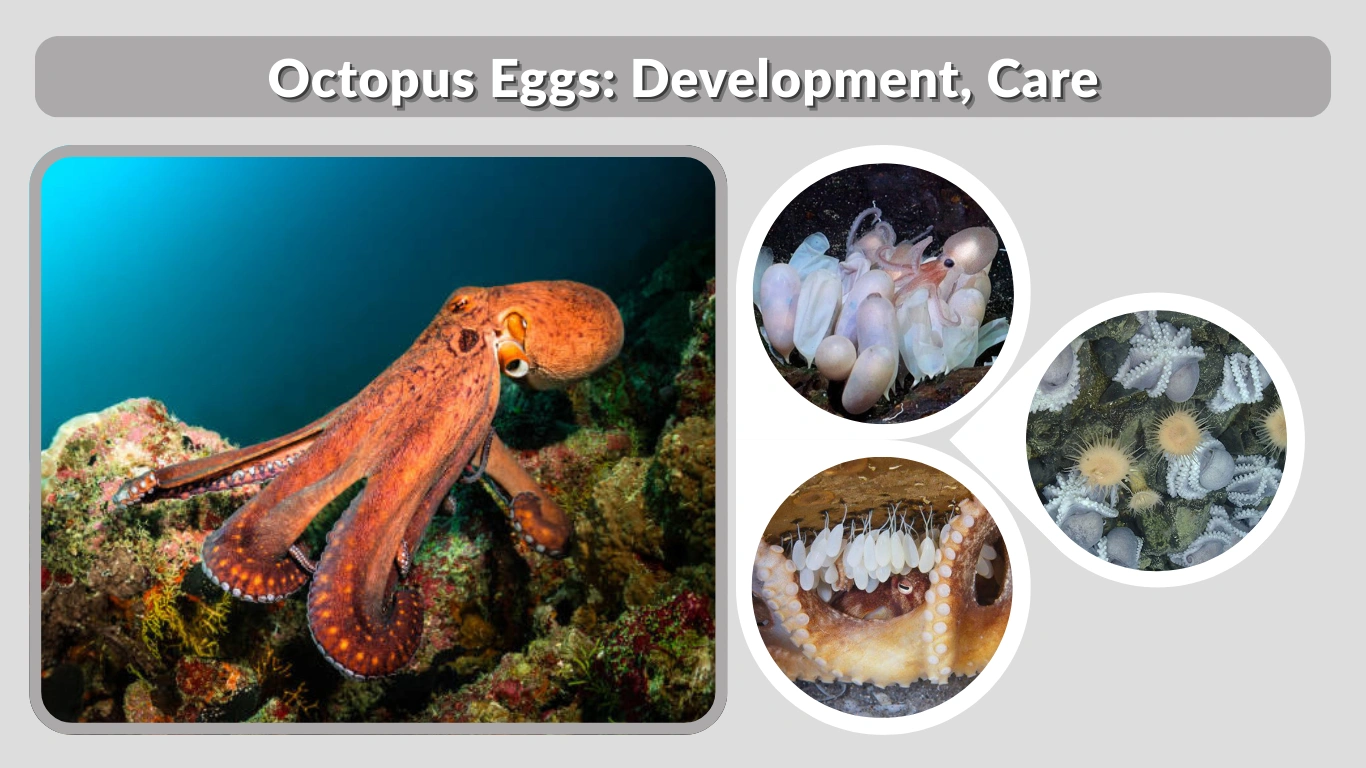
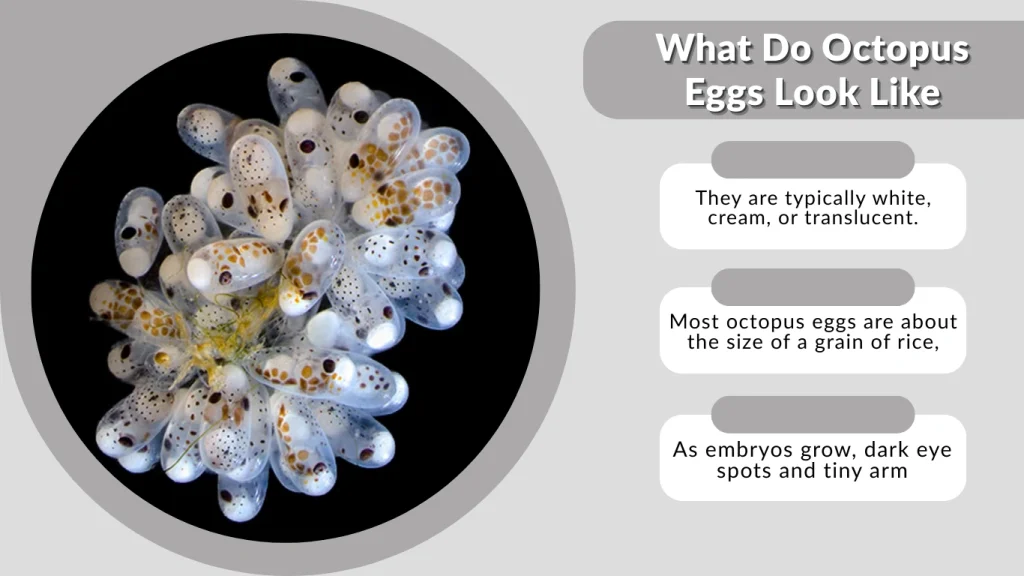
Most octopus eggs are about the size of a grain of rice, though some deep-sea species produce much larger eggs. They are typically white, cream, or translucent. As embryos grow, dark eye spots and tiny arm buds become visible through the egg casing.
Egg Strings and Clusters
Rather than scattering eggs, female octopuses bind them together into long strings that resemble bunches of pale grapes. These strings are fastened securely to rocks, coral, or cave ceilings, where they hang freely in the water.
Differences Between Species
Some species produce thousands of tiny eggs that hatch into drifting larvae, while others produce fewer but much larger eggs that hatch into well-developed juveniles. These differences influence incubation time, hatchling size, and early survival strategies.
Where Octopuses Lay Their Eggs

Female octopuses carefully select protected sites to lay eggs, including:
- Rock crevices and reef cavities
- Under ledges and coral overhangs
- Inside abandoned shells
- Within human-made debris
- In deep-sea burrows and volcanic vents
These hidden locations reduce predation risk and provide stable water flow for oxygenation.
Maternal Care of Octopus Eggs
Guarding and Cleaning
Once egg laying is complete, the female becomes a full-time guardian. She uses her arms to gently clean the eggs, removing debris, algae, and microorganisms that could cause infection. She aggressively defends the den from intruders.
Oxygenation and Water Flow
The mother constantly directs jets of water over the eggs to ensure they receive enough oxygen. She may reposition egg strings to improve circulation and prevent suffocation.
Why the Mother Stops Eating
Hormonal changes suppress appetite and trigger self-destructive processes. The female rarely leaves the eggs and slowly weakens, devoting all remaining energy to protecting the developing embryos.
How Long Do Octopus Eggs Take to Hatch

The incubation time of octopus eggs varies widely depending on species and environmental conditions. In warm, shallow waters, eggs may hatch in as little as three to five weeks. In colder environments, development slows significantly, and incubation can last several months. Some deep-sea octopus species are known to guard their eggs for more than a year before hatching occurs.
Water temperature is the most important factor affecting development speed. Warmer water accelerates embryo growth, while colder water extends incubation time. Oxygen levels and water flow also influence egg survival and successful hatching.
Development Inside the Egg
Early Embryo Growth
Once fertilized, the embryo begins rapid cell division. Over time, basic structures such as the mantle, head, and arm buds form. A yolk sac provides nutrients that support growth, eliminating the need for external feeding.
Visible Changes Before Hatching
As development progresses, the eyes darken, arms lengthen, and tiny suckers become visible. The embryo gradually becomes more active, often shifting position inside the egg. Near hatching, the young octopus closely resembles a miniature adult.
Hatching Process
How Baby Octopuses Emerge
When development is complete, the baby octopus breaks through the egg capsule using specialized movements and enzymes. It slowly pushes free, unfurling its arms for the first time. Hatching may occur over several days, with eggs opening one by one rather than all at once.
What Happens to the Mother
In most species, the female dies shortly before or soon after the eggs hatch. Months of starvation and hormonal changes lead to organ failure and tissue breakdown. Her death marks the end of parental care and the beginning of independent life for the hatchlings.
Survival Rate of Octopus Eggs
Only a small percentage of octopus eggs survive to become juveniles. Many are lost due to:
- Predation by fish, crabs, and other invertebrates
- Fungal and bacterial infections
- Low oxygen conditions
- Sudden temperature changes
- Pollution and sediment buildup
- Human disturbance of nesting sites
Even under ideal conditions, natural survival rates are low, which is why octopuses produce such large numbers of eggs.
Baby Octopuses After Hatching
Paralarval Stage
In many species, hatchlings enter a planktonic phase where they drift in open water. These tiny octopuses feed on microscopic organisms and are carried by currents across large distances. This stage is extremely dangerous, with high mortality due to predators and food shortages.
Transition to the Seafloor
After weeks or months, surviving young settle onto the ocean floor. They begin hiding in small crevices, learning to hunt, and developing camouflage abilities. This marks the beginning of their juvenile stage.
Scientific and Ecological Importance of Octopus Eggs
Octopus eggs play a crucial role in maintaining healthy marine populations. They represent the primary method of species renewal and genetic diversity. Octopus egg sites also provide food for many small marine organisms and serve as indicators of environmental health, as changes in egg survival can reflect shifts in water quality and temperature.
FAQs
How many eggs can an octopus lay?
Depending on the species, a female octopus can lay anywhere from a few hundred to over 400,000 eggs. Smaller species usually produce fewer eggs, while large oceanic and reef-dwelling species are capable of producing massive egg clusters.
How long do octopus eggs take to hatch?
Hatching time ranges from about three weeks to over one year. Warm-water species develop faster, while cold-water and deep-sea octopuses experience very long incubation periods due to slower metabolic rates.
Do octopuses die after laying eggs?
Yes. Female octopuses typically die shortly before or after their eggs hatch. Their bodies deteriorate due to hormonal changes that shut down feeding and redirect all energy toward egg protection.
Can octopus eggs survive without the mother?
Octopus eggs have a much lower chance of survival without maternal care. The mother provides cleaning, oxygenation, and defense. Without her, eggs are more vulnerable to suffocation, infection, and predation.
Where can octopus eggs usually be found?
Octopus eggs are commonly found in sheltered marine environments such as rock crevices, coral reefs, underwater caves, shells, and occasionally on human-made structures like shipwrecks and harbor walls.