

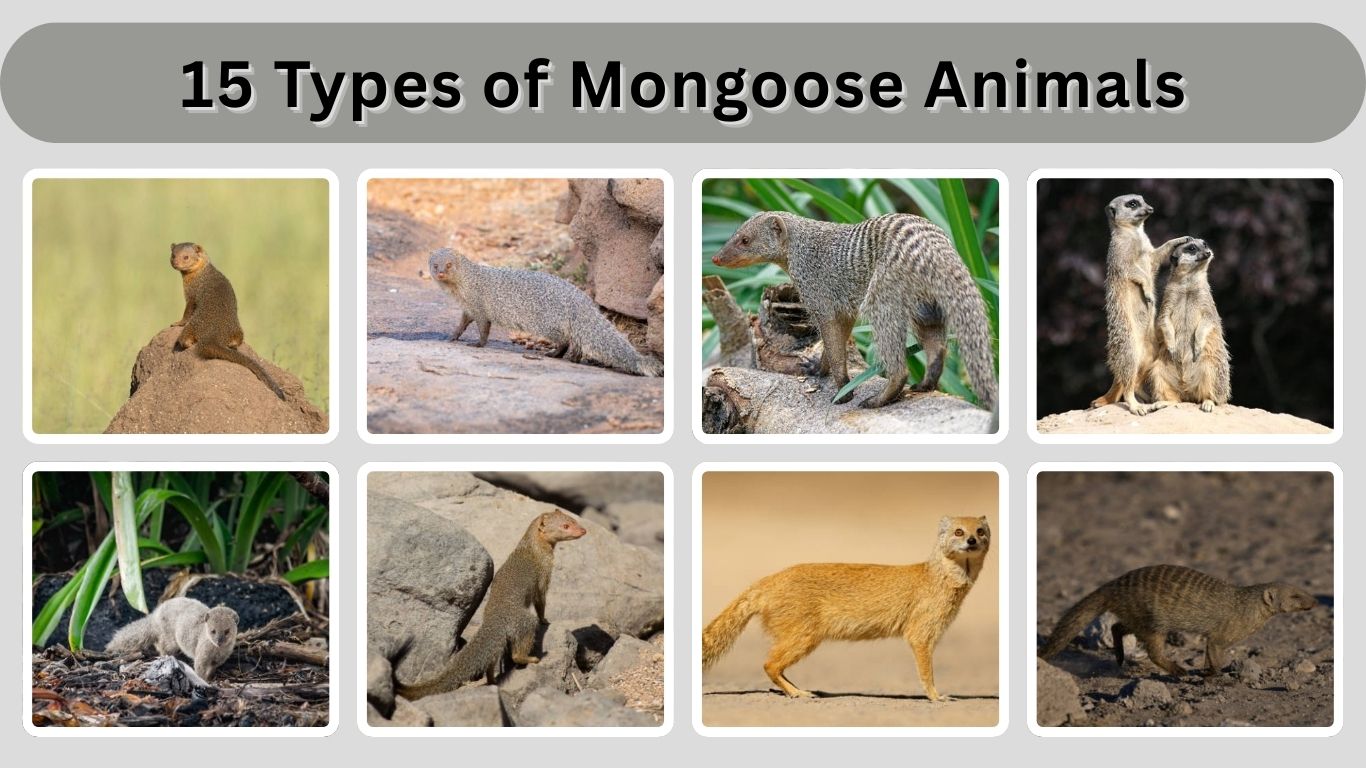
Mongooses are small to medium-sized carnivorous mammals known for their long bodies, sharp reflexes, and fearless behavior. Belonging to the family Herpestidae, they are found across Africa, Asia, and parts of southern Europe, where they inhabit forests, grasslands, wetlands, and even human settlements. With more than a dozen recognized species, mongooses vary greatly in size, coloration, and social structure—from the tiny dwarf mongoose to the large marsh mongoose—making them a fascinating and diverse group of mammals.
1. Indian Gray Mongoose (Herpestes edwardsii)

The Indian gray mongoose is one of the most widespread and well-known mongoose species, famous for its agility, intelligence, and ability to confront venomous snakes. Native to South Asia and the Middle East, this small carnivorous mammal thrives in a wide range of environments, from forests and grasslands to farms and villages.
Identification
- Slender, elongated body with short legs
- Grizzled gray to brown fur with a coarse texture
- Pointed snout and small rounded ears
- Long bushy tail, often tipped darker
- Sharp, curved claws for digging
- Adults usually measure 36–45 cm in body length, excluding tail
Habitat and Distribution
Indian gray mongooses are found across India, Nepal, Sri Lanka, Pakistan, Iran, and parts of the Middle East. They inhabit open forests, scrublands, grasslands, agricultural fields, and rocky areas, often close to human settlements.
They shelter in burrows, rock crevices, or dense vegetation and are mainly active during the day.
Diet and Feeding Behavior
They are carnivorous to omnivorous, feeding on rodents, reptiles, birds, eggs, insects, frogs, and fruits. Indian gray mongooses are skilled hunters known for their quick reflexes and strategic attacks, especially when dealing with snakes.
They forage alone, relying on sight, smell, and hearing to locate prey.
Behavior and Lifespan
Indian gray mongooses are mostly solitary and diurnal. They are curious, alert, and territorial animals. When threatened, they may raise their fur, vocalize, and make sudden darting movements.
In the wild, they typically live around 6–10 years, with longer lifespans possible in captivity.
2. Small Indian Mongoose (Urva auropunctata)

The small Indian mongoose is a compact, energetic mongoose species best known for its adaptability and for being introduced to many tropical regions. Originally native to South and Southeast Asia, it has spread widely and is now found on several islands around the world.
Identification
- Small, slender body with short legs
- Yellowish-brown to gray fur with fine speckling
- Pointed snout and small rounded ears
- Long tail, often darker at the tip
- Sharp claws for digging and catching prey
- Adults usually weigh between 300 g and 900 g
Habitat and Distribution
Small Indian mongooses are native to India, Nepal, Bangladesh, and Southeast Asia, but they have been introduced to the Caribbean, Hawaii, and other regions. They inhabit grasslands, forests, plantations, and human settlements.
They commonly live in burrows, rock piles, and dense vegetation.
Diet and Feeding Behavior
They are opportunistic feeders, eating insects, rodents, snakes, lizards, birds, eggs, fruits, and human food waste. Their flexible diet allows them to thrive in many environments.
They forage mainly during the day and are quick, alert hunters.
Behavior and Lifespan
Small Indian mongooses are mostly solitary and diurnal. They are highly active and curious, often seen darting through open areas.
In the wild, they generally live 4–8 years.
3. Egyptian Mongoose (Herpestes ichneumon)
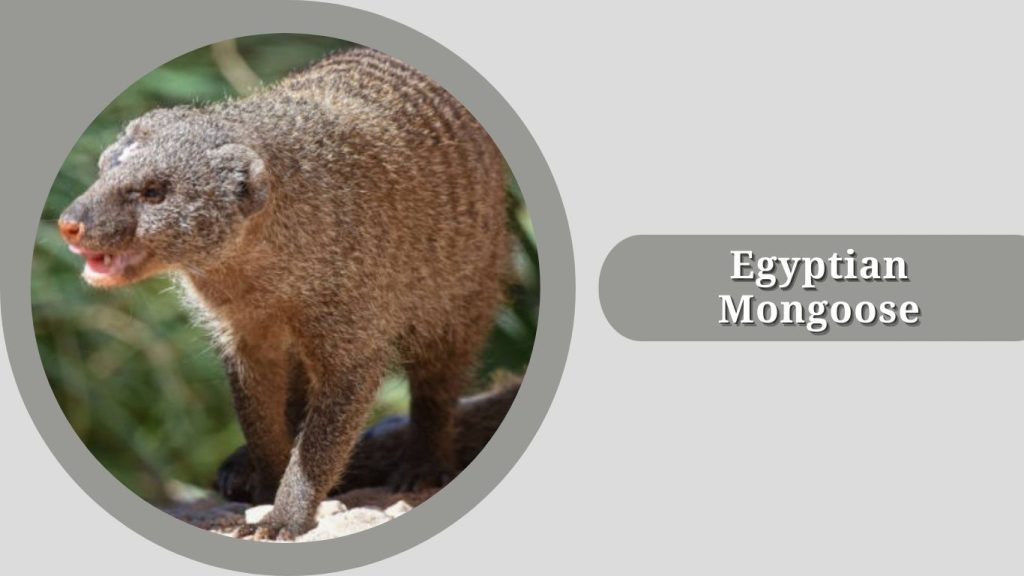
The Egyptian mongoose is a long-bodied, powerful mongoose species native to Africa and parts of southern Europe. It is historically significant, often depicted in ancient Egyptian art, and is respected for its role in controlling pests.
Identification
- Long, muscular body with coarse gray-brown fur
- Narrow head with small rounded ears
- Long bushy tail with a darker tip
- Strong legs and sharp claws
- Grizzled coat giving a salt-and-pepper appearance
- Adults can reach over 1 meter including the tail
Habitat and Distribution
Egyptian mongooses are found across much of Africa, as well as in Spain, Portugal, and the Middle East. They inhabit wetlands, savannas, forests, and agricultural landscapes, often near water sources.
They shelter in dense vegetation, hollow logs, or abandoned burrows.
Diet and Feeding Behavior
Their diet includes rodents, birds, eggs, reptiles, amphibians, insects, and fruits. They are skilled hunters and also effective scavengers.
They hunt mostly on the ground, using speed and endurance.
Behavior and Lifespan
Egyptian mongooses are mainly diurnal and can be solitary or found in pairs. They are alert and territorial, using scent marking to communicate.
In the wild, they typically live around 8–12 years.
4. Banded Mongoose (Mungos mungo)
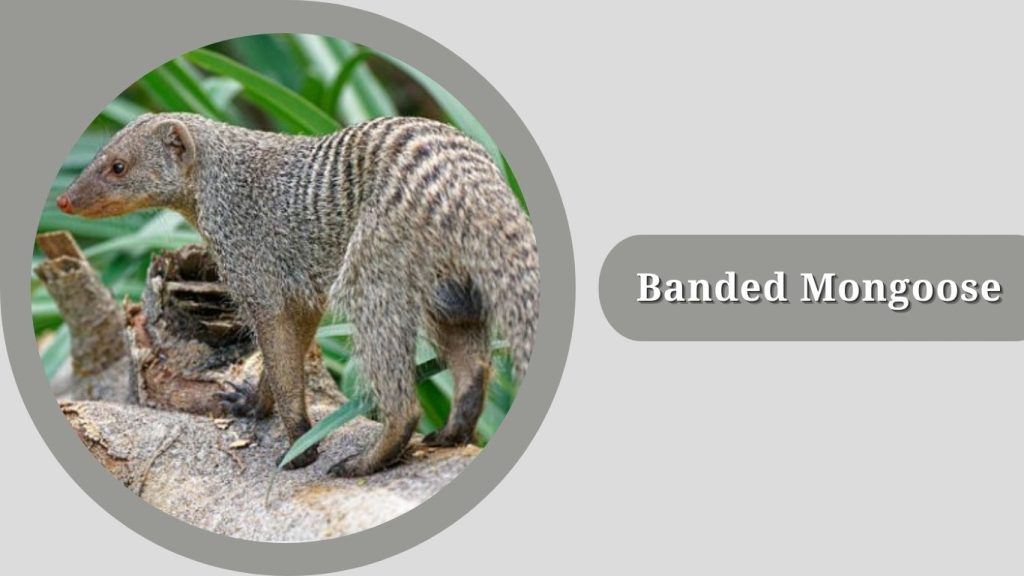
The banded mongoose is a highly social mongoose species easily recognized by the dark horizontal bands across its back. Native to sub-Saharan Africa, it is famous for living in large, cooperative groups that work together to forage and defend their territory.
Identification
- Medium-sized mongoose with a long, sturdy body
- Distinct dark bands across the back
- Short legs and a pointed snout
- Small rounded ears and dark eyes
- Long tail with a darker tip
- Adults usually weigh between 1–2 kg
Habitat and Distribution
Banded mongooses are widely distributed across central and eastern Africa. They inhabit savannas, woodlands, grasslands, and areas near rivers and villages.
They live in termite mounds, burrows, or rock crevices and are active mainly during the day.
Diet and Feeding Behavior
They feed on insects, beetles, millipedes, rodents, reptiles, eggs, and fallen fruits. Groups forage together, digging and overturning debris to find food.
They are known for their ability to crack open hard-shelled prey.
Behavior and Lifespan
Banded mongooses are highly social, living in troops that can include 10–40 individuals. They cooperate in raising young and guarding against predators.
In the wild, they typically live around 6–10 years.
5. Meerkat (Suricata suricatta)
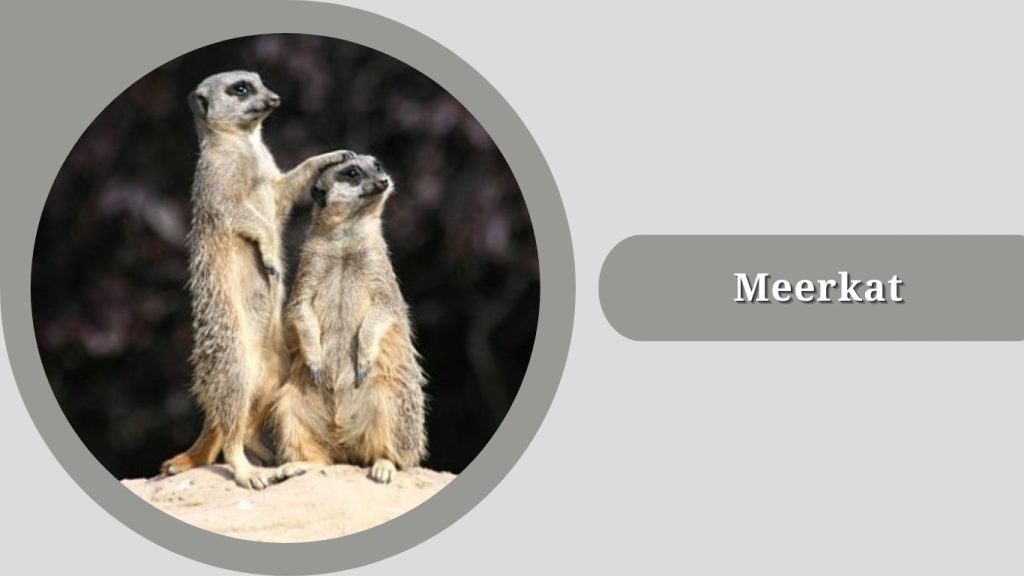
The meerkat is one of the most famous mongoose species, easily recognized by its upright posture and alert behavior. Native to southern Africa, it is adapted to arid environments and lives in large, organized social groups.
Identification
- Slender body with light brown fur
- Dark patches around the eyes
- Long tail used for balance
- Small rounded ears and pointed snout
- Strong claws for digging
- Adults usually weigh 700 g–1 kg
Habitat and Distribution
Meerkats are found in the Kalahari Desert and surrounding regions of South Africa, Botswana, and Namibia. They inhabit deserts, semi-arid plains, and open scrublands.
They dig extensive burrow systems used for shelter and protection.
Diet and Feeding Behavior
Their diet includes insects, scorpions, spiders, lizards, snakes, eggs, and small mammals. They are well known for their ability to safely eat venomous prey.
They forage in groups during the day.
Behavior and Lifespan
Meerkats are highly social, living in family groups with sentinels that stand guard. They communicate with a wide range of vocal calls.
In the wild, they usually live around 6–8 years.
6. White-tailed Mongoose (Ichneumia albicauda)
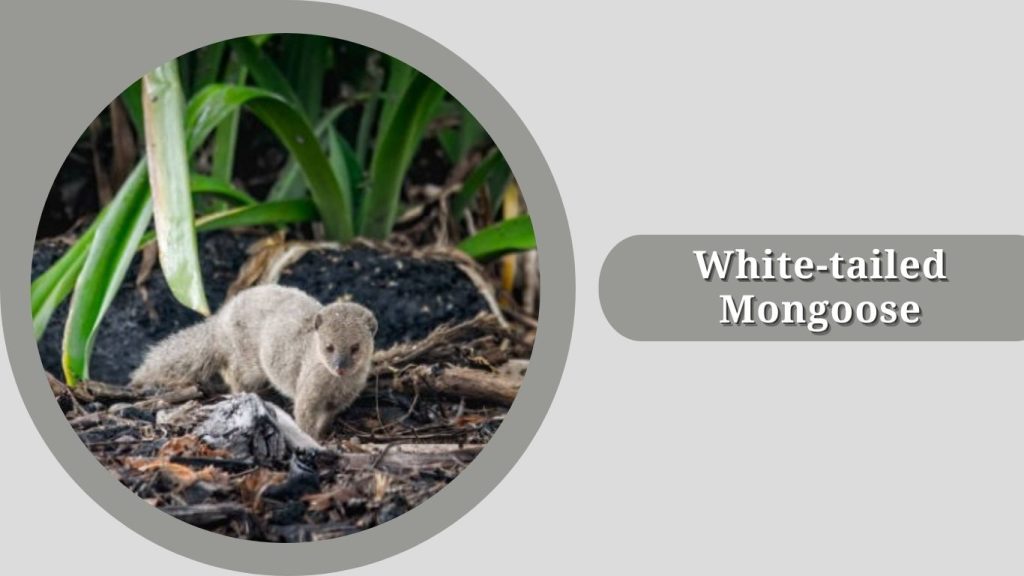
The white-tailed mongoose is the largest mongoose species and is easily identified by the thick white fur covering the end of its tail. Native to sub-Saharan Africa, it is mainly nocturnal and prefers open habitats with plenty of cover.
Identification
- Large, long-bodied mongoose with coarse gray-brown fur
- Distinct long tail with a white, bushy tip
- Strong legs and heavy build
- Pointed snout with small rounded ears
- Shaggy coat texture
- Adults often weigh between 3–5 kg
Habitat and Distribution
White-tailed mongooses are widely distributed across sub-Saharan Africa. They inhabit savannas, open woodlands, grasslands, and rocky areas, often near water.
They shelter in burrows, termite mounds, or dense vegetation during the day.
Diet and Feeding Behavior
They feed on rodents, insects, reptiles, birds, eggs, crabs, and carrion. Unlike many mongooses, they also consume significant amounts of insects and fallen fruit.
They forage alone at night, relying on smell and hearing.
Behavior and Lifespan
White-tailed mongooses are solitary and nocturnal. They are generally shy and avoid human contact.
In the wild, they typically live around 8–12 years.
7. Slender Mongoose (Galerella sanguinea)
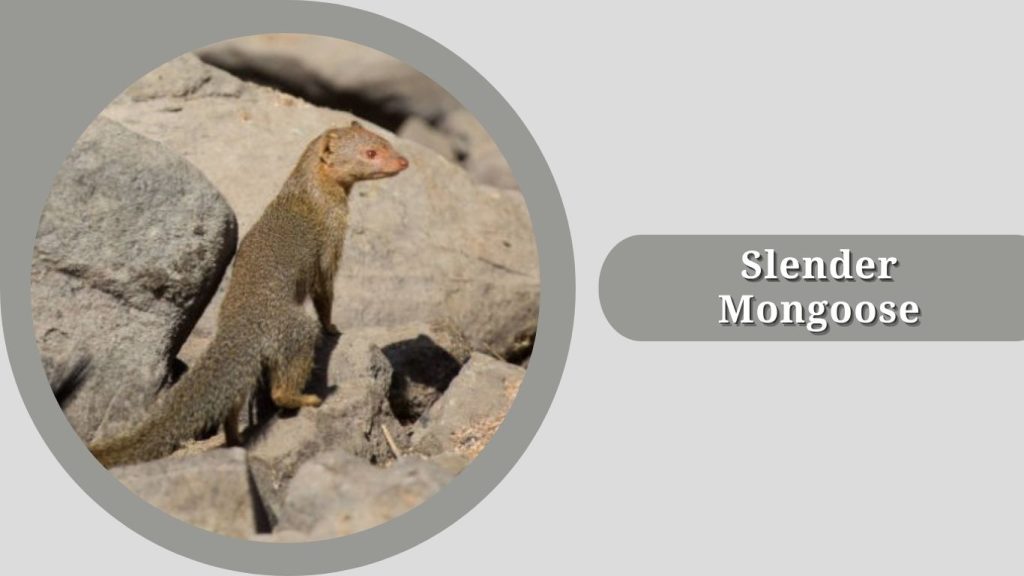
The slender mongoose is a fast, agile species known for its slim build and excellent climbing ability. It is one of the most widespread mongooses in Africa and is often seen darting through bushes or climbing low trees.
Identification
- Slim, lightweight body with short legs
- Reddish-brown to gray fur
- Narrow head with pointed snout
- Long, thin tail often darker at the tip
- Large eyes and small rounded ears
- Graceful, agile appearance
Habitat and Distribution
Slender mongooses are found throughout sub-Saharan Africa. They inhabit savannas, woodlands, forests, and scrublands.
They use burrows, hollow logs, and dense shrubs for shelter.
Diet and Feeding Behavior
Their diet includes insects, lizards, snakes, rodents, birds, eggs, and fruits. They are skilled hunters, relying on speed and sharp reflexes.
They forage mostly during the day and sometimes climb trees to find food.
Behavior and Lifespan
Slender mongooses are mainly solitary and diurnal. Males and females maintain separate territories except during breeding.
In the wild, they usually live about 6–10 years.
8. Yellow Mongoose (Cynictis penicillata)
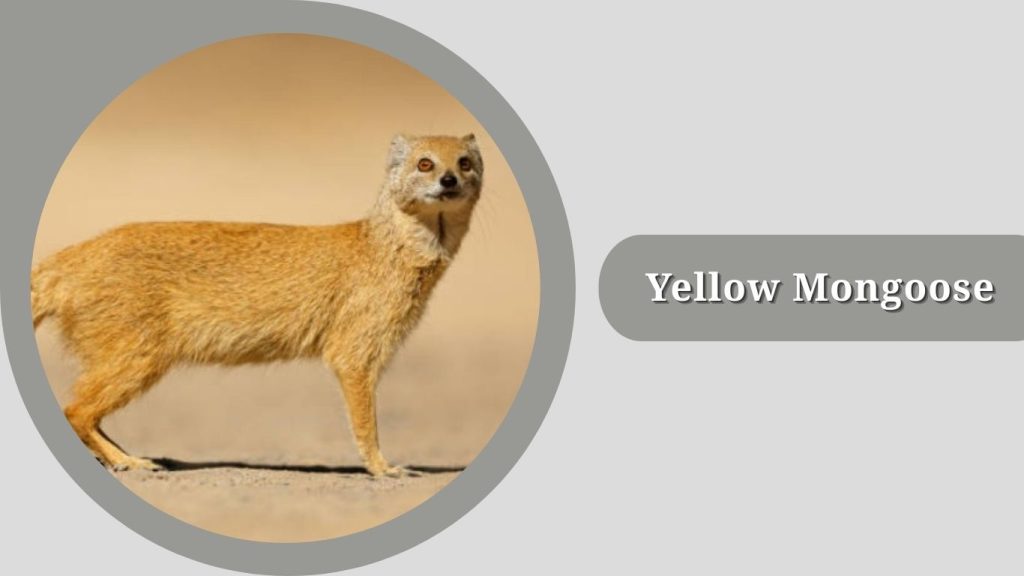
The yellow mongoose is a small, ground-dwelling mongoose best known for its association with open, dry landscapes of southern Africa. Its yellowish to reddish coat and active daytime behavior make it one of the more easily observed mongoose species.
Identification
- Small to medium-sized mongoose with slender body
- Yellowish, reddish, or light brown fur
- Bushy tail, often with a pale or white tip
- Pointed snout and small rounded ears
- Short legs adapted for running and digging
- Fine, soft coat texture
Habitat and Distribution
Yellow mongooses are found mainly in South Africa, Namibia, Botswana, and Zimbabwe. They inhabit grasslands, semi-deserts, and open scrub areas, often using abandoned burrows for shelter.
They are well adapted to arid environments.
Diet and Feeding Behavior
They feed on insects, termites, beetles, rodents, lizards, snakes, eggs, and fruits. They are active foragers, often seen searching the ground for prey.
They hunt mostly during the day.
Behavior and Lifespan
Yellow mongooses can be solitary or live in small family groups. They are diurnal and often bask in the sun near their burrows.
In the wild, they usually live around 6–8 years.
9. Black-footed Mongoose (Bdeogale nigripes)
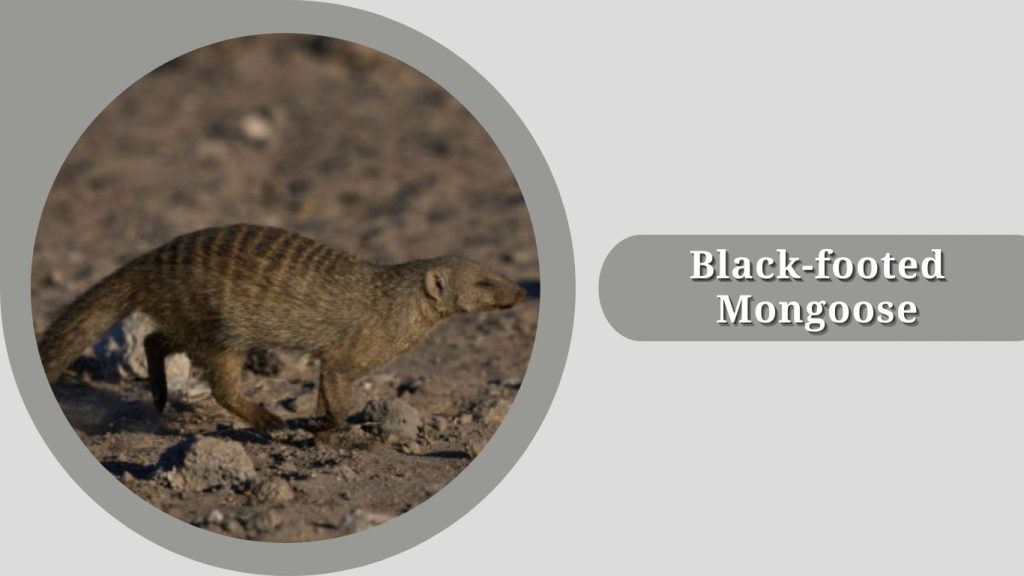
The black-footed mongoose is a secretive, forest-dwelling mongoose species known for its dark feet and nocturnal habits. It is one of the least commonly seen African mongooses.
Identification
- Medium-sized mongoose with dense dark brown fur
- Distinct black feet and lower legs
- Rounded ears and short snout
- Long, bushy tail
- Stocky, low-slung body
- Large eyes adapted for night vision
Habitat and Distribution
This species is found in parts of central and southern Africa. It inhabits dense forests, woodlands, and thick undergrowth.
It prefers secluded habitats and is rarely observed.
Diet and Feeding Behavior
Black-footed mongooses feed on insects, rodents, frogs, small reptiles, and other forest invertebrates. They hunt quietly on the forest floor.
They forage mostly at night.
Behavior and Lifespan
They are solitary and nocturnal. Very little is known about their social life due to their elusive nature.
Their estimated lifespan is around 8–12 years.
10. Marsh Mongoose (Atilax paludinosus)
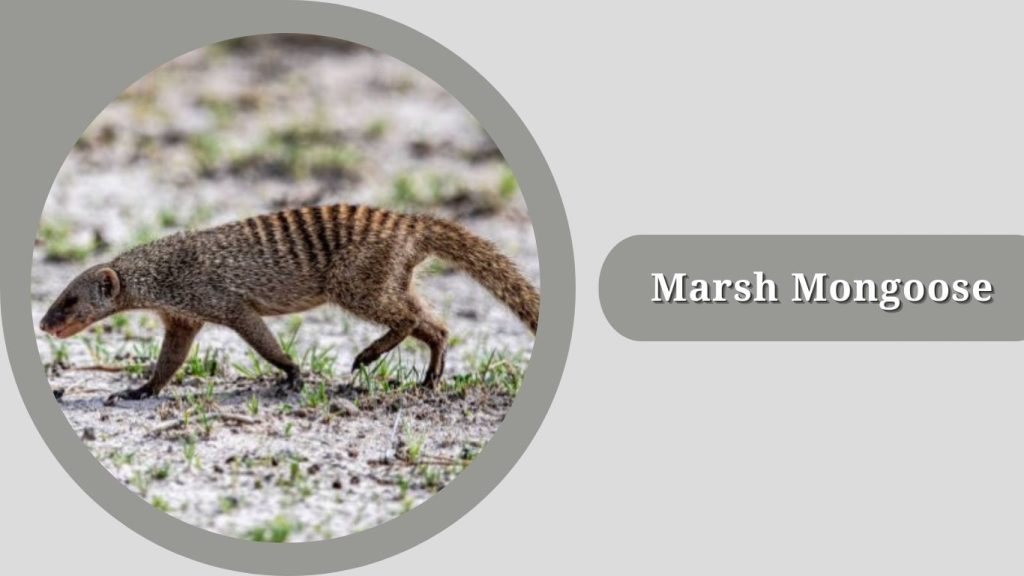
The marsh mongoose, also known as the water mongoose, is a large, semi-aquatic mongoose adapted to life near rivers, lakes, and wetlands. It is an excellent swimmer and is often seen searching for food along muddy banks.
Identification
- Large, heavy-bodied mongoose with shaggy dark brown fur
- Broad head with short muzzle
- Small rounded ears
- Strong legs and sharp claws
- Long, thick tail
- Water-resistant coat
Habitat and Distribution
Marsh mongooses are widely distributed across sub-Saharan Africa. They inhabit swamps, riverbanks, mangroves, wetlands, and forested areas close to water.
They shelter in dense vegetation, burrows, or hollow logs near water sources.
Diet and Feeding Behavior
They mainly feed on crabs, fish, frogs, insects, rodents, birds, eggs, and mollusks. Their powerful jaws allow them to crush hard-shelled prey.
They forage mostly at night and early morning.
Behavior and Lifespan
Marsh mongooses are solitary and mainly nocturnal. They are territorial and often leave scent marks near waterways.
In the wild, they usually live around 8–12 years.
11. Crab-eating Mongoose (Urva urva)
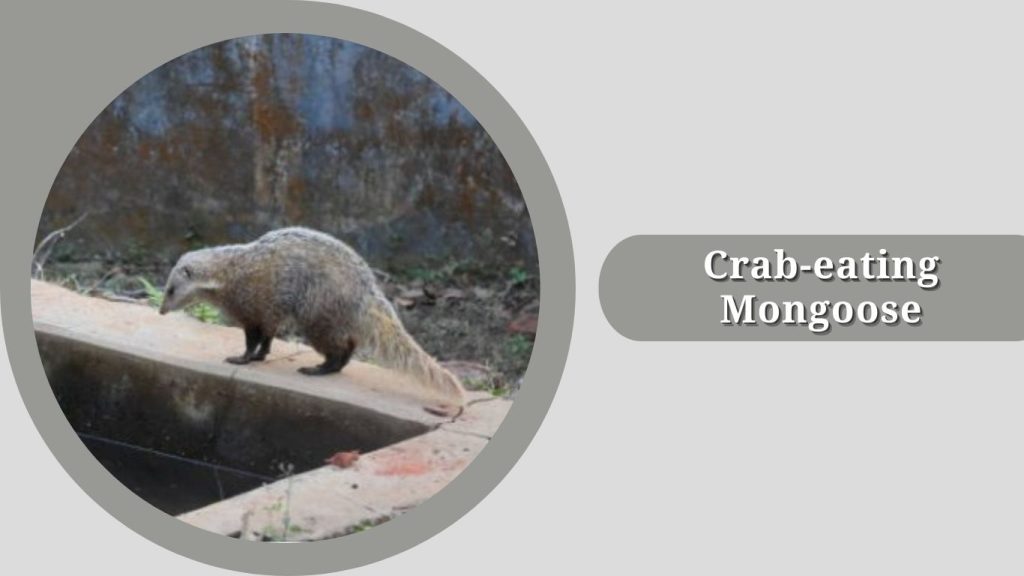
The crab-eating mongoose is a distinctive mongoose species strongly associated with freshwater habitats. It is well adapted for hunting aquatic prey and is widely distributed across South and Southeast Asia.
Identification
- Medium to large mongoose with long body
- Coarse gray-brown fur
- White throat and chest
- Long tail with darker tip
- Partially webbed feet
- Narrow head with pointed snout
Habitat and Distribution
Crab-eating mongooses are found from India and Nepal through southern China and Southeast Asia. They inhabit riverbanks, marshes, mangroves, and forest streams.
They prefer areas with abundant water and thick vegetation.
Diet and Feeding Behavior
Their diet includes crabs, fish, frogs, insects, rodents, snakes, and fruits. They are skilled at catching slippery prey and searching under rocks.
They forage mainly during the day and at dusk.
Behavior and Lifespan
Crab-eating mongooses are usually solitary but may sometimes be seen in pairs. They are strong swimmers and often travel along waterways.
Their lifespan is estimated to be around 8–12 years.
12. Short-tailed Mongoose (Herpestes brachyurus)
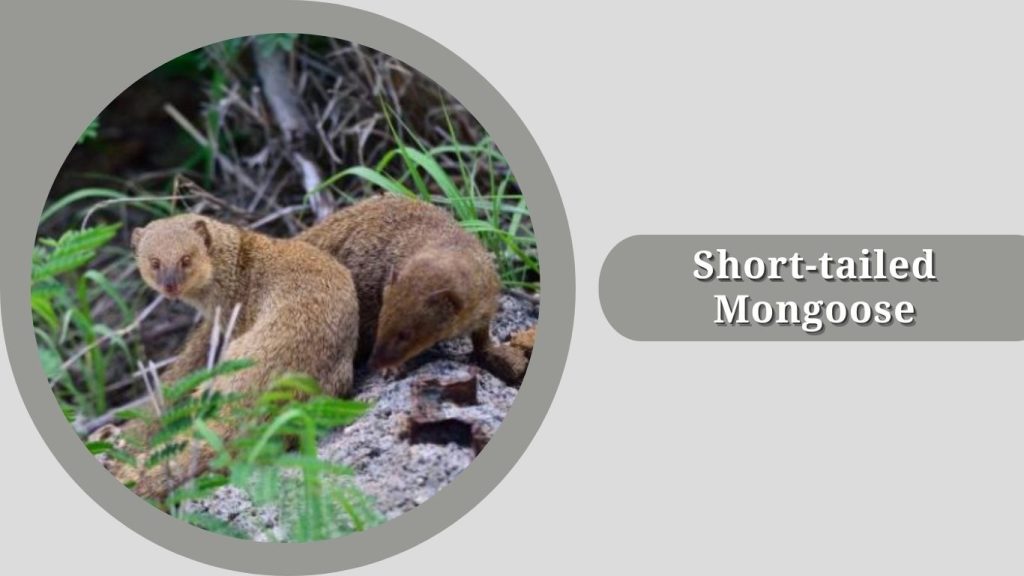
The short-tailed mongoose is a relatively large forest mongoose distinguished by its thick body and noticeably shorter tail. Native to Southeast Asia, it is adapted to dense forest environments and is rarely seen due to its shy, ground-dwelling habits.
Identification
- Stocky body with coarse dark brown fur
- Noticeably short, thick tail
- Broad head with short snout
- Small rounded ears
- Strong legs with sharp claws
- Heavy, muscular build
Habitat and Distribution
This species is found in Thailand, Malaysia, Indonesia, and Borneo. It inhabits lowland rainforests, swamp forests, and dense secondary forests.
It shelters in thick vegetation, hollow logs, or burrows during the day.
Diet and Feeding Behavior
Short-tailed mongooses feed on insects, earthworms, crabs, rodents, reptiles, amphibians, and fallen fruits. They forage quietly on the forest floor, using smell to locate prey.
They are mainly active at night and early morning.
Behavior and Lifespan
They are solitary and secretive. When threatened, they can be aggressive and emit strong odors.
Their lifespan is not well documented, but it is believed to be around 8–12 years.
13. Long-nosed Mongoose (Herpestes naso)
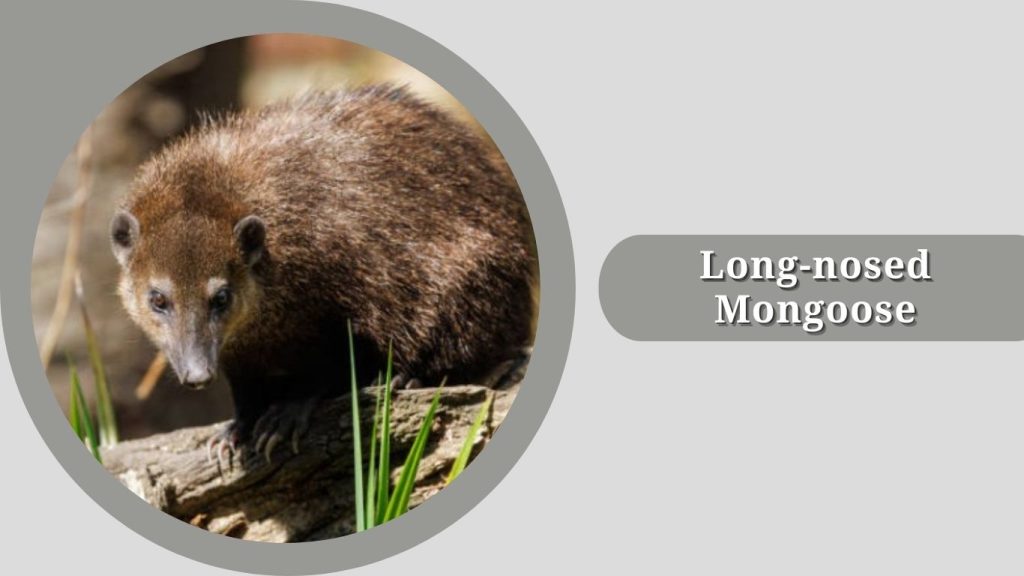
The long-nosed mongoose is a distinctive species recognized by its extended snout and slender body. It inhabits central African forests and is well adapted to foraging in dense undergrowth.
Identification
- Slender body with soft reddish-brown fur
- Long, narrow snout
- Small rounded ears
- Long tail with slightly darker tip
- Delicate facial features
- Agile, lightweight build
Habitat and Distribution
Long-nosed mongooses are found in the Congo Basin and surrounding regions of central Africa. They inhabit tropical rainforests, swamp forests, and forest edges.
They prefer dense ground cover and humid environments.
Diet and Feeding Behavior
They feed mainly on insects, earthworms, small reptiles, frogs, and forest invertebrates. Their long snout helps them probe leaf litter and soil.
They forage mostly during the day.
Behavior and Lifespan
Long-nosed mongooses are solitary and diurnal. They are shy and rarely seen.
Their estimated lifespan is around 6–10 years.
14. Brown Mongoose (Urva fusca)
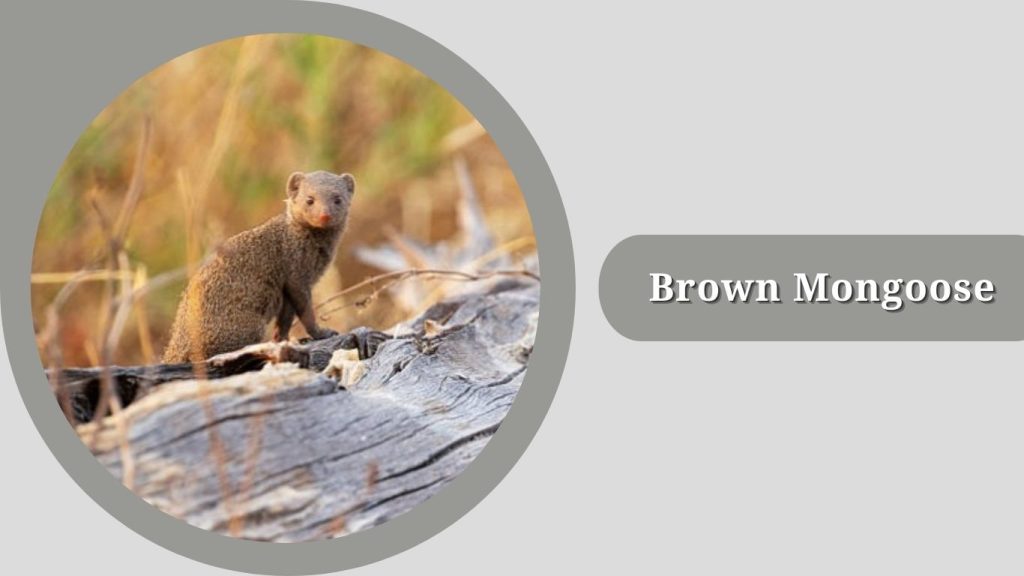
The brown mongoose is a forest-dwelling mongoose species native to parts of South and Southeast Asia. It is less well known than many African mongooses and is adapted to humid, densely vegetated habitats.
Identification
- Medium-sized mongoose with dark brown fur
- Thick, coarse coat texture
- Broad head with short snout
- Long tail with darker tip
- Small rounded ears
- Sturdy, compact body
Habitat and Distribution
Brown mongooses are found in southern India, Sri Lanka, Nepal, Bhutan, and parts of Southeast Asia. They inhabit tropical rainforests, montane forests, and dense shrublands.
They are usually associated with undisturbed forest environments.
Diet and Feeding Behavior
They feed on insects, rodents, reptiles, birds, eggs, amphibians, and fruits. Their varied diet allows them to survive in forest ecosystems with seasonal food changes.
They forage quietly on the forest floor.
Behavior and Lifespan
Brown mongooses are solitary and secretive. They are mainly active at dawn and dusk.
Their lifespan is estimated to be around 8–12 years.
15. Dwarf Mongoose (Helogale parvula)
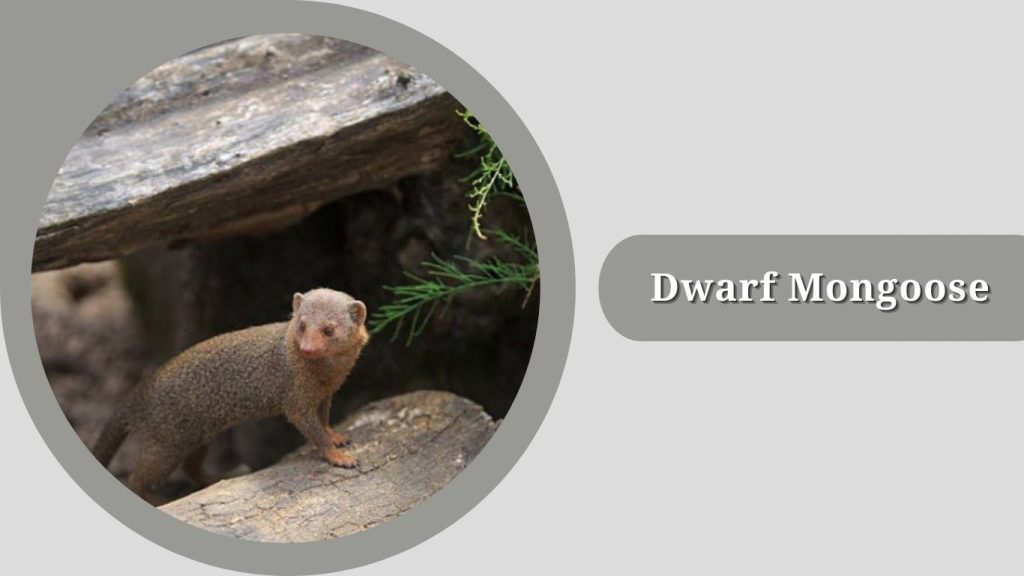
The dwarf mongoose is the smallest mongoose species and is famous for its highly social lifestyle. Native to Africa, it lives in cooperative family groups and is often seen standing alert on termite mounds.
Identification
- Very small body with short legs
- Light brown to gray fur
- Short, bushy tail
- Rounded ears and pointed snout
- Slender, lightweight build
- Adults usually weigh 200–350 g
Habitat and Distribution
Dwarf mongooses are found across eastern and southern Africa. They inhabit savannas, woodlands, and grasslands, often near termite mounds.
They use abandoned burrows and hollow logs for shelter.
Diet and Feeding Behavior
They feed mainly on insects, spiders, scorpions, small reptiles, birds’ eggs, and fruits. Groups forage together during the day.
They are active hunters of small prey.
Behavior and Lifespan
Dwarf mongooses are highly social, living in family groups with cooperative care of young. They communicate with a wide variety of calls.
In the wild, they usually live around 6–8 years.