



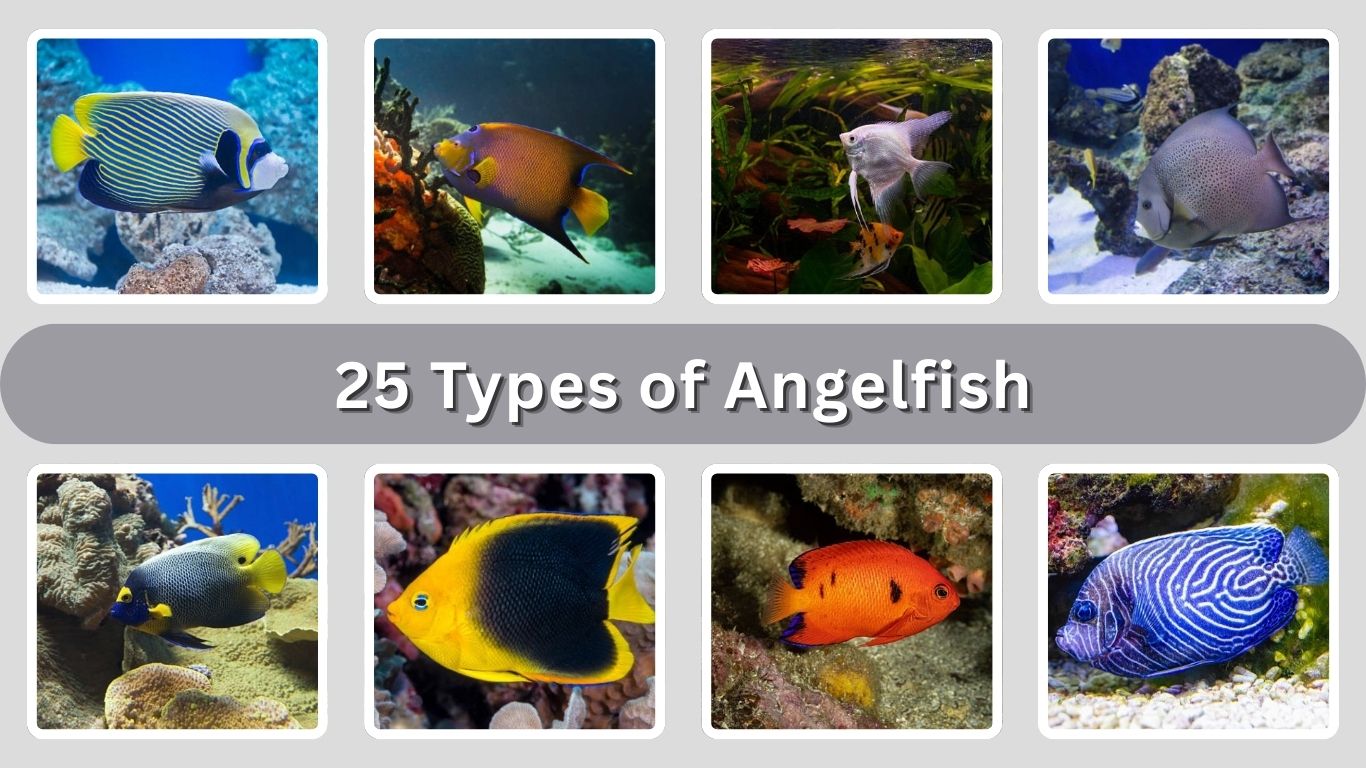
Angelfish are among the most beautiful and diverse fish found in the world’s oceans, admired for their vibrant colors, elegant shapes, and fascinating behaviors. Belonging to the family Pomacanthidae, marine angelfish live mainly on tropical coral reefs, where they play an important role in maintaining reef balance. From large, boldly patterned species to small, jewel-like dwarf angelfish, these fish attract divers, marine biologists, and aquarium enthusiasts around the globe.
1. Emperor Angelfish (Pomacanthus imperator)
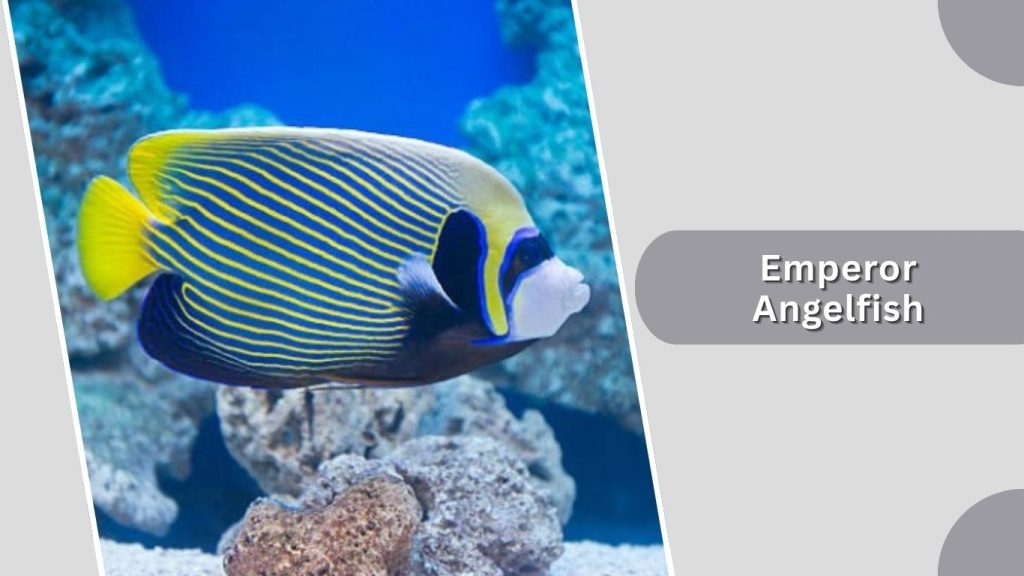
The Emperor Angelfish is one of the most iconic and recognizable marine angelfish species, famous for its dramatic color transformation from juvenile to adult. Native to tropical coral reefs, this striking fish is admired for its bold stripes, bright hues, and graceful swimming style. It is commonly found in reef aquariums and is also an important species within coral reef ecosystems.
Identification
- Bright blue and yellow horizontal stripes in adults
- Juveniles are dark blue with curved white and light-blue rings
- Oval, laterally compressed body shape
- Can grow up to about 15 inches (38 cm) long
- Distinct black mask across the eyes
- Long dorsal and anal fins extending toward the tail
Habitat
Emperor Angelfish live mainly in warm, shallow coral reef environments across the Indo-Pacific region. They are commonly found near reef slopes, lagoons, and coral-rich coastal areas, where they can hide among rocks and coral crevices. Juveniles usually stay in protected reef caves, while adults roam more open reef zones.
Behaviors
This species is generally solitary or found in pairs, especially during breeding periods. Emperor Angelfish are territorial and may defend sections of reef from other angelfish. They are active daytime swimmers, spending much of their time gliding along reef faces, picking at surfaces, and exploring coral formations.
Diet and Lifespan
In the wild, Emperor Angelfish are omnivorous, feeding mainly on sponges, algae, tunicates, and small invertebrates. In aquariums, they require a varied diet including marine algae, sponge-based foods, and protein sources. Their average lifespan ranges from 10 to 15 years under suitable conditions.
2. Queen Angelfish (Holacanthus ciliaris)
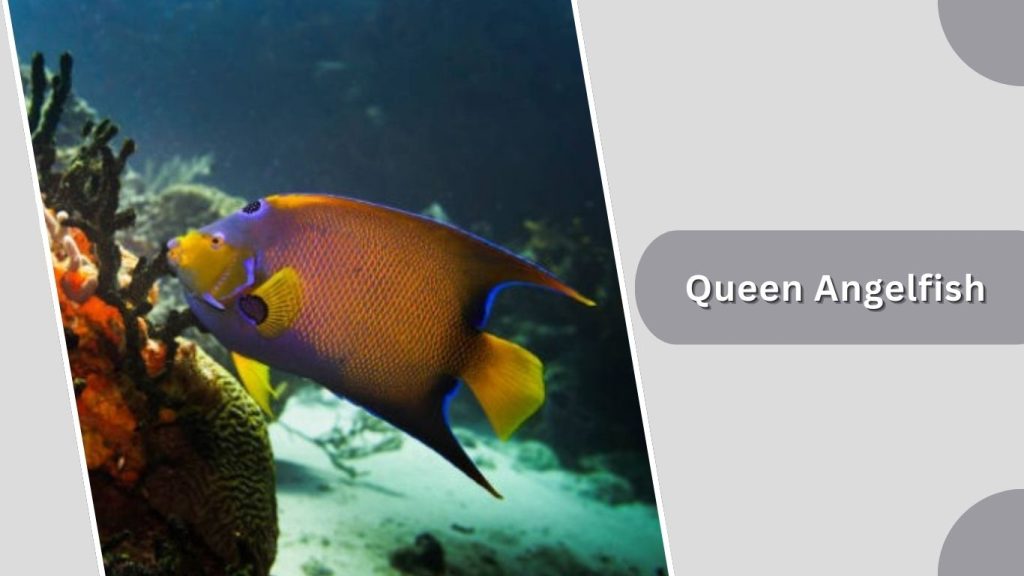
The Queen Angelfish is a brilliantly colored reef fish known for its electric blue, yellow, and green tones and the distinctive crown-like spot on its head. It is one of the most striking angelfish species in the Atlantic Ocean and is highly valued by divers and marine aquarium enthusiasts for its beauty and bold personality.
Identification
- Bright blue and yellow body with greenish highlights
- Distinctive dark “crown” or spot outlined in blue on the forehead
- Laterally compressed, oval-shaped body
- Grows up to about 18 inches (45 cm) long
- Long trailing dorsal and anal fins
- Vibrant blue edges on scales and fins
Habitat
Queen Angelfish are found in the western Atlantic Ocean, including the Caribbean Sea and Gulf of Mexico. They inhabit coral reefs, reef walls, and rocky bottoms, usually at depths of 3 to 70 meters. Juveniles prefer sheltered reef zones and seagrass areas, while adults occupy more open reef environments.
Behaviors
This species is usually seen alone or in pairs and is strongly territorial. Queen Angelfish actively patrol their reef areas and may chase away intruders. Juveniles often act as cleaner fish, removing parasites from larger fish. Adults are bold, active swimmers that spend most of the day grazing along reef surfaces.
Diet and Lifespan
Queen Angelfish primarily feed on sponges, algae, tunicates, and small invertebrates. In captivity, they require a diverse diet including sponge-based preparations and marine vegetation. With proper care, their lifespan typically ranges from 10 to 15 years.
3. French Angelfish (Pomacanthus paru)
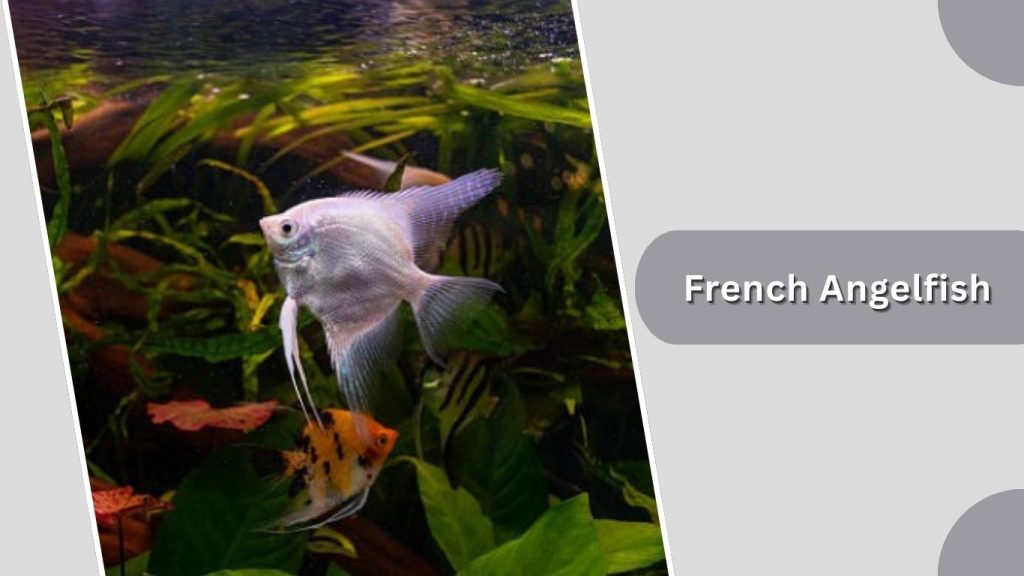
The French Angelfish is a large, eye-catching marine angelfish best known for its dark body covered in golden-yellow scale edges. As it matures, its appearance changes dramatically, making it one of the more fascinating angelfish species found in the Atlantic. It plays an important role in reef ecosystems and is often seen by divers cruising slowly along coral walls.
Identification
- Dark gray to black body with bright yellow scale margins
- Juveniles are black with vertical yellow bands
- Oval, flattened body shape
- Can grow up to about 16 inches (40 cm) long
- Thick lips and a rounded snout
- Long dorsal and anal fins extending toward the tail
Habitat
French Angelfish are native to the western Atlantic Ocean, including Florida, the Caribbean Sea, and parts of South America. They inhabit coral reefs, rocky reefs, and mangrove areas, ranging from shallow coastal waters to deeper reef slopes. Juveniles often remain in protected reef crevices and mangrove roots.
Behaviors
This species is typically found alone or in pairs and can be territorial, especially as adults. Juveniles are well known for acting as cleaner fish, setting up cleaning stations and removing parasites from larger reef fish. Adults are slow, confident swimmers that actively explore reef structures.
Diet and Lifespan
French Angelfish mainly feed on sponges, algae, bryozoans, and small invertebrates. In aquariums, they require a varied marine diet with sponge material. Their average lifespan is around 10 to 15 years, and some individuals may live even longer in protected environments.
4. Gray Angelfish (Pomacanthus arcuatus)
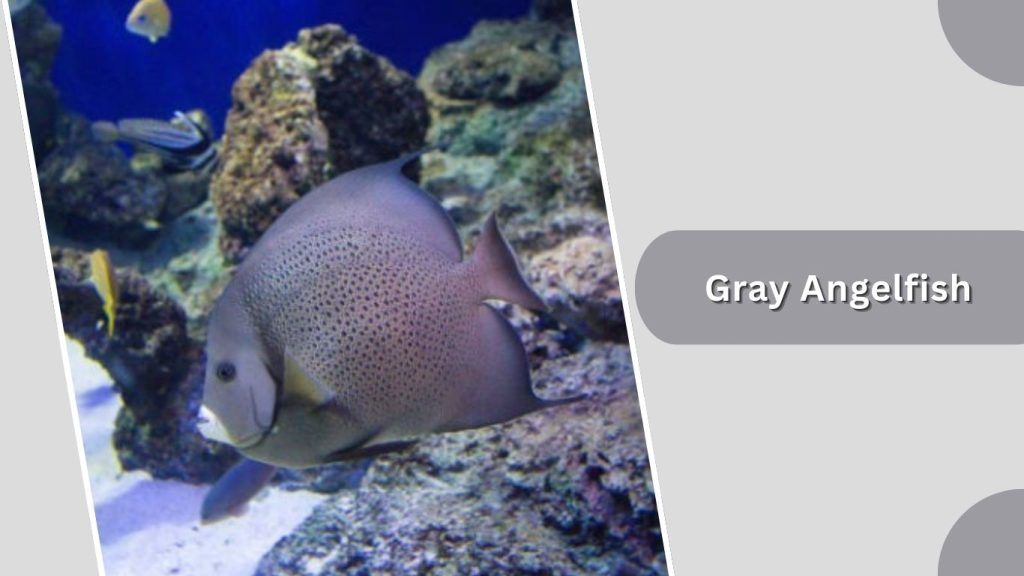
The Gray Angelfish is one of the largest Atlantic angelfish species, recognized for its powerful body, subtle silver-gray coloration, and fine speckled pattern. Although less brightly colored than some relatives, it is an impressive reef fish known for its size, strength, and important ecological role in controlling sponge growth on coral reefs.
Identification
- Silver-gray to dark gray body with small light speckles
- Juveniles have bold yellow vertical bars on a dark background
- Large, oval, laterally compressed body
- Can reach up to about 24 inches (60 cm) in length
- Thick lips and a slightly rounded snout
- Long, flowing dorsal and anal fins
Habitat
Gray Angelfish are found in the western Atlantic Ocean, including Florida, the Caribbean, and the Gulf of Mexico. They live around coral reefs, rocky ledges, and reef slopes, usually at depths between 5 and 40 meters. Juveniles prefer shallow, sheltered reefs, while adults occupy deeper reef systems.
Behaviors
Adults are usually solitary and strongly territorial, often dominating large sections of reef. They swim slowly but confidently and may chase away other angelfish species. Juveniles sometimes serve as cleaner fish, removing parasites from larger reef inhabitants, which helps maintain reef health.
Diet and Lifespan
Gray Angelfish mainly feed on sponges, algae, tunicates, and small invertebrates. In captivity, they need a sponge-rich, well-balanced marine diet. With suitable conditions, their lifespan commonly ranges from 15 to 20 years, making them one of the longer-lived angelfish species.
5. Blue Angelfish (Holacanthus bermudensis)
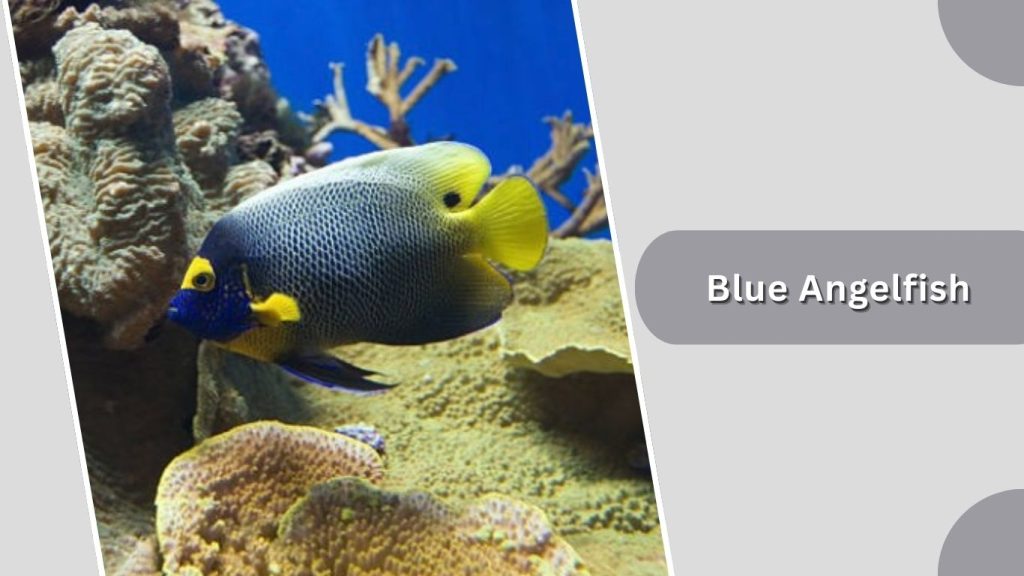
The Blue Angelfish is a striking Atlantic species known for its deep bluish body, yellow-edged scales, and dramatic color change from juvenile to adult. Closely related to the Queen Angelfish, it is often found gliding over coral reefs and rocky outcrops, where it adds bold color and movement to reef environments.
Identification
- Bluish-gray to deep blue body with yellow scale edges
- Juveniles are dark blue with bright yellow vertical bars
- Oval, laterally compressed body shape
- Grows up to about 18 inches (45 cm) long
- Rounded head with thick lips
- Long dorsal and anal fins with trailing edges
Habitat
Blue Angelfish inhabit the western Atlantic Ocean, including Bermuda, Florida, the Caribbean Sea, and the Gulf of Mexico. They prefer coral reefs, rocky reefs, and reef slopes, generally living at depths of 5 to 50 meters. Juveniles often stay in sheltered reef areas and shallow lagoons.
Behaviors
This species is typically solitary or found in pairs and can be quite territorial. Blue Angelfish actively patrol their reef sections and may chase intruders. Juveniles sometimes act as cleaner fish, picking parasites from larger fish. Adults are steady swimmers, spending much of the day grazing along reef surfaces.
Diet and Lifespan
Blue Angelfish mainly eat sponges, algae, tunicates, and small invertebrates. In aquariums, they require a varied diet that includes sponge-based foods and marine vegetation. With proper care, they can live around 10 to 15 years.
6. Rock Beauty Angelfish (Holacanthus tricolor)
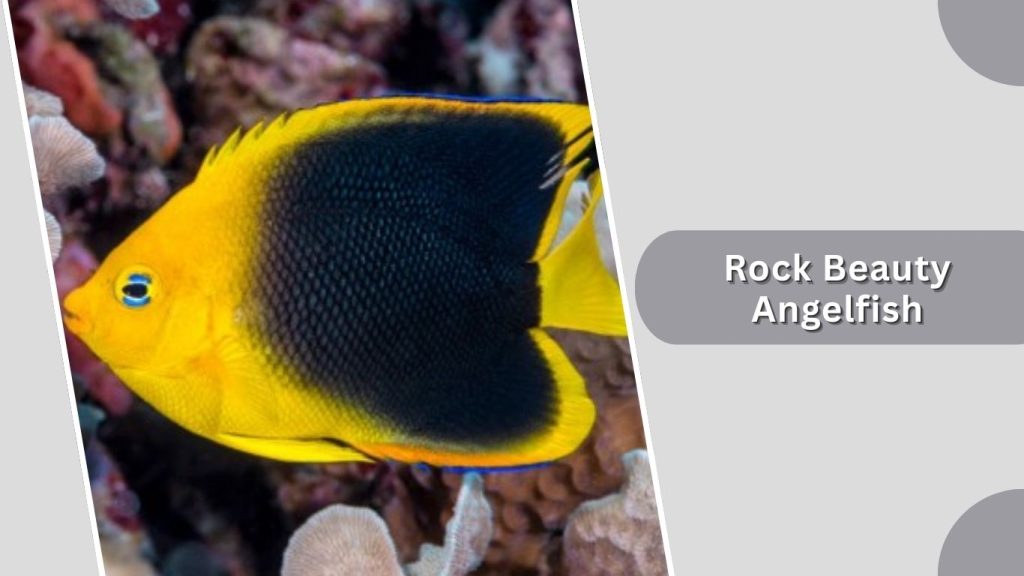
The Rock Beauty Angelfish is a distinctive reef fish recognized for its bold black-and-yellow color pattern and vivid orange crown. Although smaller than many large angelfish species, it is one of the most eye-catching angelfish in the western Atlantic and is commonly seen weaving through coral heads and rocky reef structures.
Identification
- Bright yellow head and tail with a black mid-body
- Orange to golden spot on the top of the head
- Juveniles are mostly yellow with a dark patch on the back
- Oval, laterally compressed body
- Grows up to about 12 inches (30 cm) long
- Long dorsal and anal fins with rounded tips
Habitat
Rock Beauty Angelfish are found in the western Atlantic Ocean, including Florida, the Bahamas, the Caribbean Sea, and the Gulf of Mexico. They live primarily on coral reefs and rocky bottoms, often near sponges and coral outcrops, at depths ranging from shallow reefs to about 40 meters.
Behaviors
This species is usually solitary and strongly territorial, especially as adults. Rock Beauty Angelfish are active during the day, swimming close to reef surfaces and frequently weaving in and out of coral structures. They may aggressively defend feeding areas from other angelfish and similarly shaped reef fish.
Diet and Lifespan
Rock Beauty Angelfish mainly feed on sponges, algae, and small invertebrates, with sponges making up a large part of their natural diet. In captivity, they are considered challenging to keep due to their specialized feeding needs. Their lifespan in the wild is generally around 10 to 12 years.
7. Flame Angelfish (Centropyge loricula)
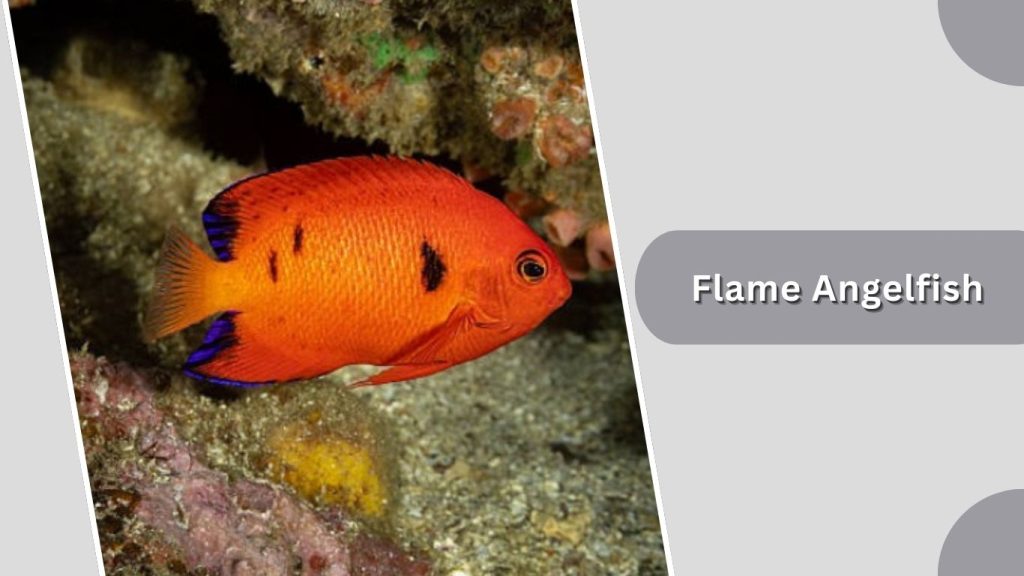
The Flame Angelfish is a small but brilliantly colored dwarf angelfish admired for its intense red-orange body and bold black vertical markings. Native to the Pacific Ocean, it is one of the most popular angelfish in the marine aquarium trade due to its vibrant appearance, active nature, and ability to thrive in reef environments.
Identification
- Bright red to orange body with black vertical bars
- Electric blue edging on dorsal and anal fins
- Small, oval, laterally compressed body
- Grows up to about 4 inches (10 cm) long
- Rounded head with small mouth
- Continuous dorsal fin with dark spotting
Habitat
Flame Angelfish are found across the tropical Pacific, including areas such as Micronesia, the Marshall Islands, and Christmas Island. They inhabit coral-rich lagoons, reef slopes, and rubble zones, usually at depths of 5 to 60 meters. They prefer complex reef structures with many hiding places.
Behaviors
This species is active, alert, and often seen darting among coral branches and rock crevices. Flame Angelfish are semi-territorial and may defend small areas from similar fish. They are usually solitary in the wild but may form small harems consisting of one male and several females.
Diet and Lifespan
Flame Angelfish feed mainly on algae, detritus, and tiny invertebrates found on reef surfaces. In captivity, they thrive on a mixed diet of marine algae, spirulina, and high-quality frozen foods. Their typical lifespan ranges from 8 to 12 years.
8. Coral Beauty Angelfish (Centropyge bispinosa)
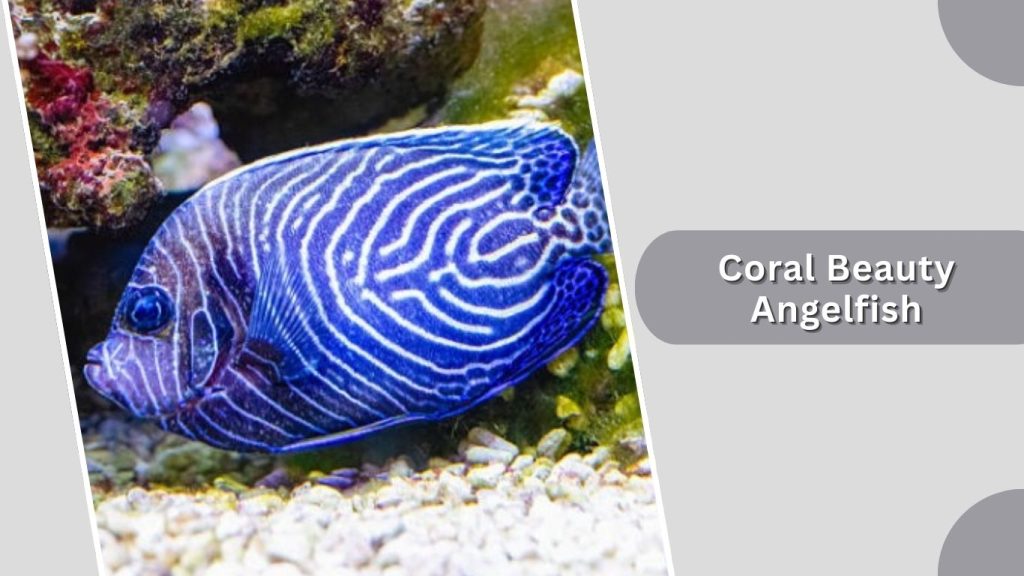
The Coral Beauty Angelfish is a popular dwarf angelfish known for its rich purple body blended with bright orange highlights. Native to the Indo-Pacific region, this small yet striking fish is admired for both its color and adaptability, making it one of the most commonly kept angelfish in marine aquariums.
Identification
- Deep purple to bluish body with orange to red midsection
- Dark vertical striping on the sides
- Electric blue edging on dorsal and anal fins
- Small, oval, laterally compressed body
- Grows up to about 4 inches (10 cm) long
- Rounded tail and compact head
Habitat
Coral Beauty Angelfish inhabit coral reefs, lagoons, and rocky reef slopes throughout the Indo-Pacific, from East Africa to the Pacific islands. They are usually found at depths between 2 and 45 meters, preferring reef areas with abundant algae growth and plenty of hiding spots.
Behaviors
This species is active, curious, and constantly on the move, picking at algae and reef surfaces. Coral Beauty Angelfish are semi-aggressive and may defend small territories, especially against similar dwarf angelfish. In the wild, they often live alone or in small social groups.
Diet and Lifespan
Their natural diet consists mainly of algae, detritus, and tiny crustaceans. In aquariums, they accept a wide variety of foods, including algae-based flakes, pellets, and frozen marine foods. With proper care, Coral Beauty Angelfish typically live between 8 and 12 years.
9. Regal Angelfish (Pygoplites diacanthus)
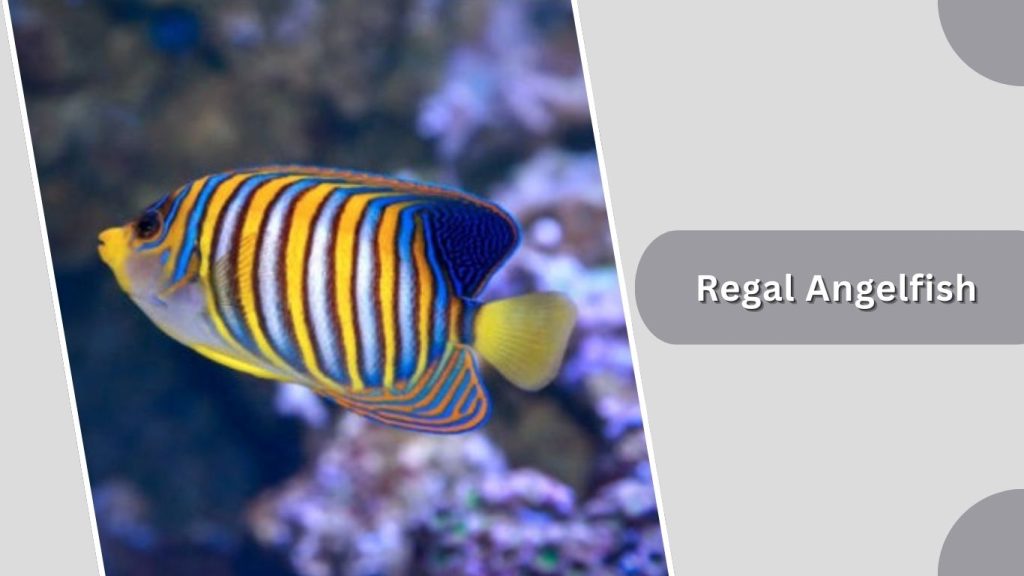
The Regal Angelfish is one of the most elegant and visually striking angelfish species, admired for its bold vertical stripes of blue, yellow, and white. Native to the Indo-Pacific region, it is often seen gliding gracefully along reef walls, where its vivid pattern provides both beauty and camouflage among corals.
Identification
- Alternating blue, yellow, and white vertical bands
- Bright orange mouth and snout area
- Compact, oval-shaped, laterally compressed body
- Grows up to about 10 inches (25 cm) long
- Rounded dorsal and anal fins
- Slightly elongated snout
Habitat
Regal Angelfish are widely distributed throughout the Indo-Pacific, from the Red Sea and East Africa to Australia and the central Pacific islands. They typically inhabit outer reef slopes, caves, and coral-rich reef walls, often at depths of 5 to 60 meters, preferring areas with strong coral growth and overhangs.
Behaviors
This species is shy and secretive compared to many large angelfish. Regal Angelfish often spend time near caves and ledges, darting quickly into shelter when threatened. They are usually seen alone or in pairs and tend to be less aggressive than many other angelfish species.
Diet and Lifespan
In the wild, Regal Angelfish mainly feed on sponges, tunicates, and small invertebrates, along with some algae. In captivity, they are considered delicate and require a carefully balanced diet. With proper care, they can live around 10 to 15 years.
10. Lemonpeel Angelfish (Centropyge flavissima)
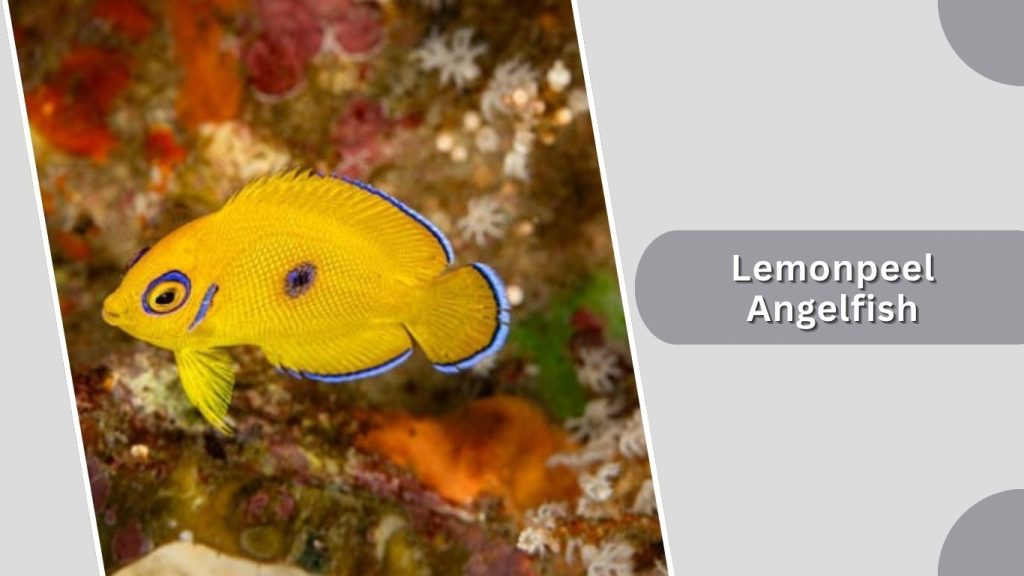
The Lemonpeel Angelfish is a small, vividly colored dwarf angelfish named for its bright yellow body. Native to the Pacific Ocean, it is easily recognized by its cheerful appearance and contrasting blue eye ring, making it a favorite among reef fish enthusiasts and underwater photographers.
Identification
- Bright lemon-yellow body
- Distinct electric blue ring around the eyes
- Blue edging on dorsal and anal fins
- Small, oval, laterally compressed body
- Grows up to about 5 inches (12 cm) long
- Rounded tail fin
Habitat
Lemonpeel Angelfish are found throughout the central and western Pacific, including the Great Barrier Reef, Micronesia, and parts of Polynesia. They inhabit coral reefs, lagoons, and reef slopes, usually at depths between 3 and 50 meters, favoring areas with rich coral cover.
Behaviors
This species is active and alert, often seen weaving through coral branches and grazing on reef surfaces. Lemonpeel Angelfish are territorial and may show aggression toward similar-looking fish. They are typically solitary in the wild but may form small social groups.
Diet and Lifespan
Their natural diet includes algae, detritus, and tiny invertebrates. In aquariums, they accept a wide variety of foods, especially algae-based diets supplemented with frozen marine foods. With proper care, Lemonpeel Angelfish generally live around 8 to 12 years.
11. Bicolor Angelfish (Centropyge bicolor)
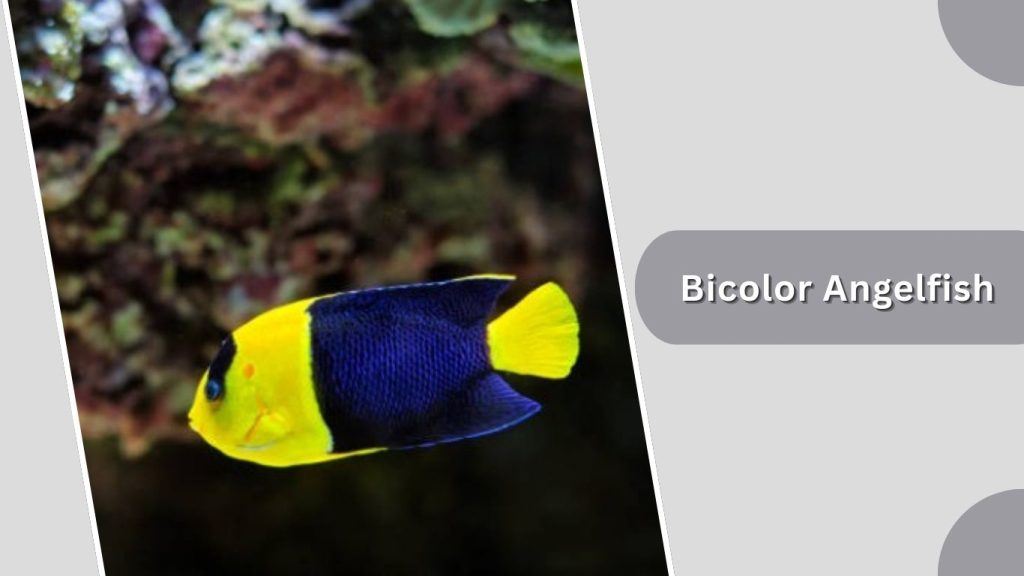
The Bicolor Angelfish is a small, brightly patterned dwarf angelfish named for its dramatic two-tone coloration. With a vivid yellow front half and deep blue rear half, it is one of the easiest angelfish to recognize. This Indo-Pacific species is common on coral reefs and is popular in marine aquariums.
Identification
- Bright yellow front half and deep blue back half
- Sharp color boundary near the middle of the body
- Electric blue edging on dorsal and anal fins
- Small, oval, laterally compressed body
- Grows up to about 6 inches (15 cm) long
- Rounded tail and compact head
Habitat
Bicolor Angelfish are found across the Indo-Pacific region, including the Red Sea, East Africa, Southeast Asia, and the Great Barrier Reef. They inhabit coral reefs, reef slopes, and lagoons, usually at depths between 1 and 30 meters, often near coral heads and rocky shelters.
Behaviors
This species is active and alert, constantly moving between coral branches and rock crevices. Bicolor Angelfish are semi-aggressive and may defend feeding territories, especially against similar dwarf angelfish. They are generally solitary in the wild but may form loose social groups.
Diet and Lifespan
In nature, they feed on algae, detritus, sponges, and tiny invertebrates. In captivity, they require a mixed diet of marine algae, spirulina, and protein-rich frozen foods. Their typical lifespan ranges from 8 to 12 years under good conditions.
12. Scribbled Angelfish (Chaetodontoplus duboulayi)
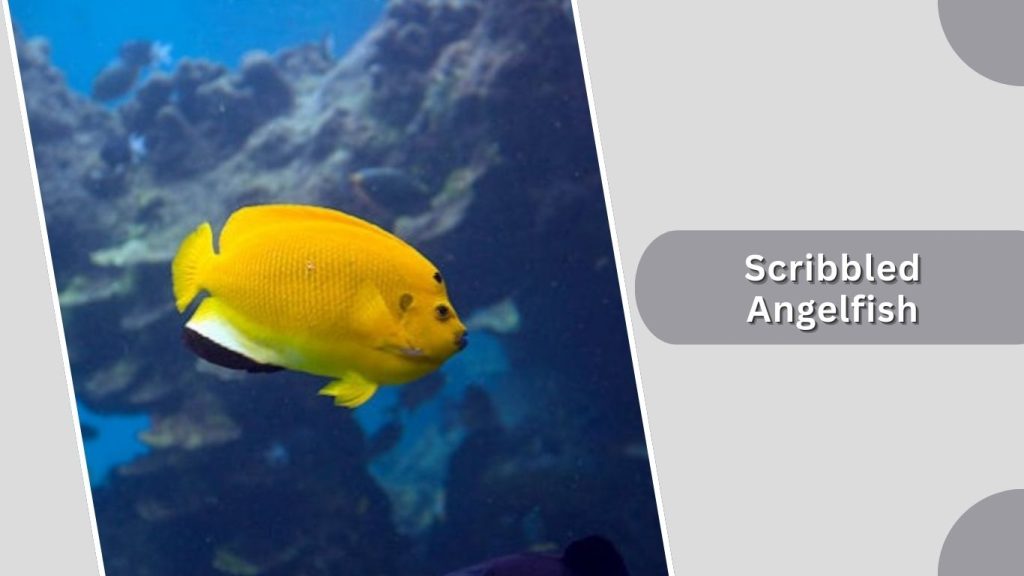
The Scribbled Angelfish is a large, eye-catching species known for its maze-like pattern of blue lines over a yellowish-green body. Native to the western Pacific, this angelfish stands out for its artistic markings and graceful movement, making it a favorite among divers and marine fish enthusiasts.
Identification
- Yellow-green body covered with thin, scribble-like blue lines
- Bright yellow face with blue markings
- Blue-edged dorsal and anal fins
- Large, oval, laterally compressed body
- Can grow up to about 11 inches (28 cm) long
- Thick lips and rounded snout
Habitat
Scribbled Angelfish are found mainly around Australia, Papua New Guinea, and nearby Pacific islands. They inhabit coastal reefs, coral lagoons, and rocky reef slopes, usually at depths between 5 and 30 meters. They often stay near caves and reef ledges where sponges are abundant.
Behaviors
This species is generally solitary or found in pairs. Scribbled Angelfish are calm but territorial, often patrolling a chosen section of reef. They spend much of the day slowly swimming along reef faces, inspecting surfaces and picking at food items.
Diet and Lifespan
In the wild, Scribbled Angelfish feed primarily on sponges, algae, and tunicates. In aquariums, they require a varied diet that includes sponge-based foods and marine vegetation. With proper care, their lifespan commonly ranges from 10 to 15 years.
13. Royal Angelfish (Pygoplites diacanthus)
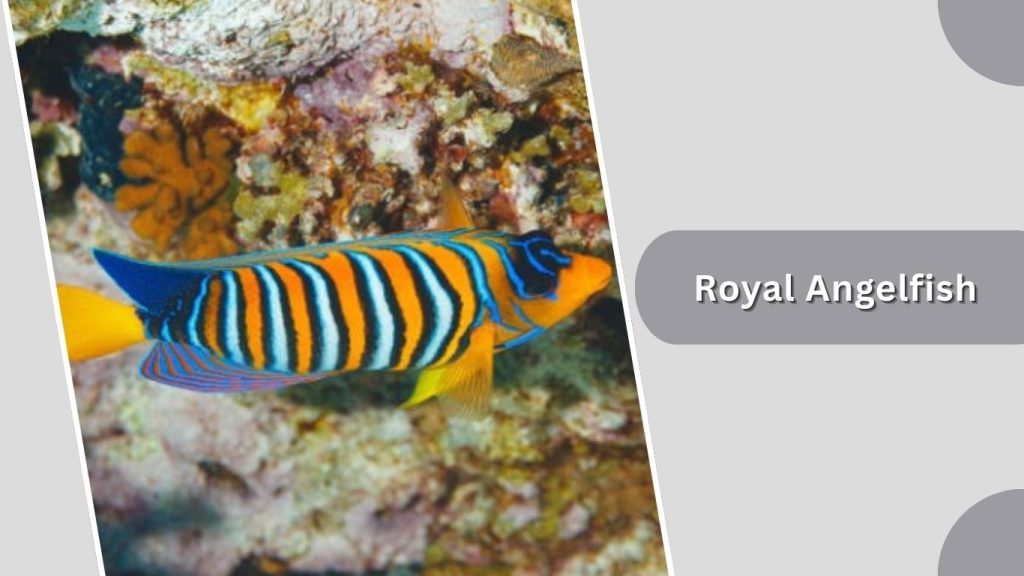
The Royal Angelfish is another common name often used for the Regal Angelfish, referring to the same striking species known for its bold blue, white, and yellow striping. Its elegant appearance and secretive nature have earned it a reputation as one of the most beautiful angelfish found on coral reefs.
Identification
- Alternating blue, white, and yellow vertical bands
- Bright orange to yellow mouth area
- Compact, oval, laterally compressed body
- Grows up to about 10 inches (25 cm) long
- Smooth, rounded dorsal and anal fins
- Slender snout
Habitat
Royal Angelfish inhabit coral-rich reef slopes, caves, and reef walls across the Indo-Pacific, from the Red Sea to the central Pacific islands. They are usually found at depths of 5 to 60 meters, preferring areas with overhangs and complex coral structures.
Behaviors
This species is shy and cautious, often staying close to reef crevices. Royal Angelfish are most often seen alone or in pairs and tend to avoid open water. They are less aggressive than many large angelfish but will defend small territories.
Diet and Lifespan
Their natural diet consists mainly of sponges, tunicates, and small invertebrates, along with some algae. In captivity, they are considered delicate and require stable conditions and a specialized diet. With proper care, they can live around 10 to 15 years.
14. Multicolor Angelfish (Centropyge multicolor)
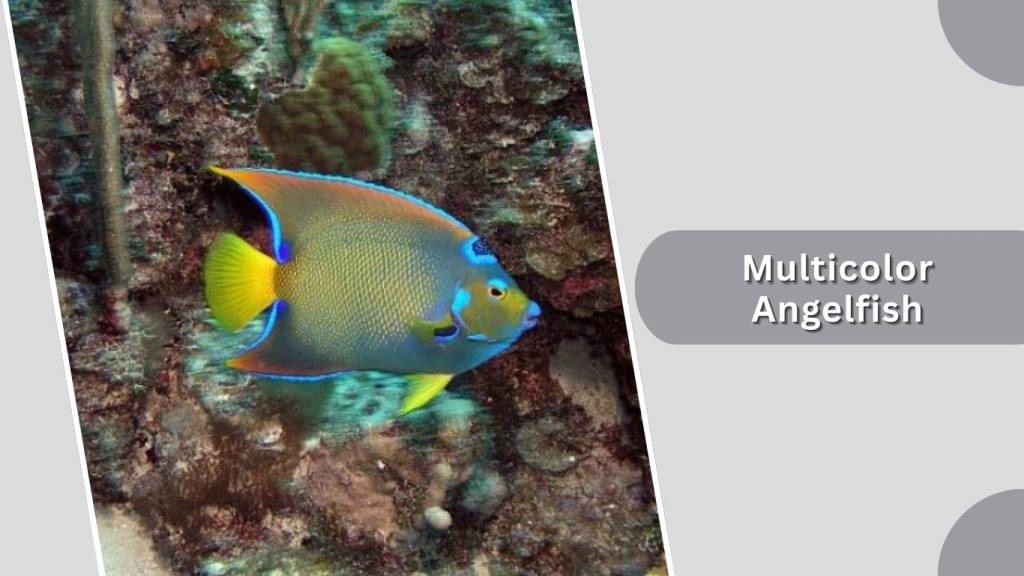
The Multicolor Angelfish is a small, vividly patterned dwarf angelfish known for its soft blend of yellow, blue, purple, and orange tones. Native to the central Pacific, this species is admired for its pastel appearance and is often seen weaving through deep reef slopes and coral outcrops.
Identification
- Pale yellow front half with lavender and bluish rear section
- Distinct dark eye stripe
- Blue edging on dorsal and anal fins
- Small, oval, laterally compressed body
- Grows up to about 4 inches (10 cm) long
- Rounded fins and compact shape
Habitat
Multicolor Angelfish are found mainly in the central Pacific, including Hawaii, Johnston Atoll, and surrounding island groups. They typically inhabit deeper reef slopes, rubble zones, and coral-rich drop-offs at depths of 20 to 90 meters, often near caves and overhangs.
Behaviors
This species is shy and secretive, usually staying close to rock crevices and coral shelters. Multicolor Angelfish are typically solitary and spend much of their time picking at algae and tiny organisms on reef surfaces. They are less aggressive than many other dwarf angelfish.
Diet and Lifespan
In the wild, they feed mainly on algae, detritus, and microscopic invertebrates. In aquariums, they require a well-balanced diet of marine algae and finely chopped frozen foods. Their lifespan is estimated to be around 8 to 12 years under good conditions.
15. Majestic Angelfish (Pomacanthus navarchus)
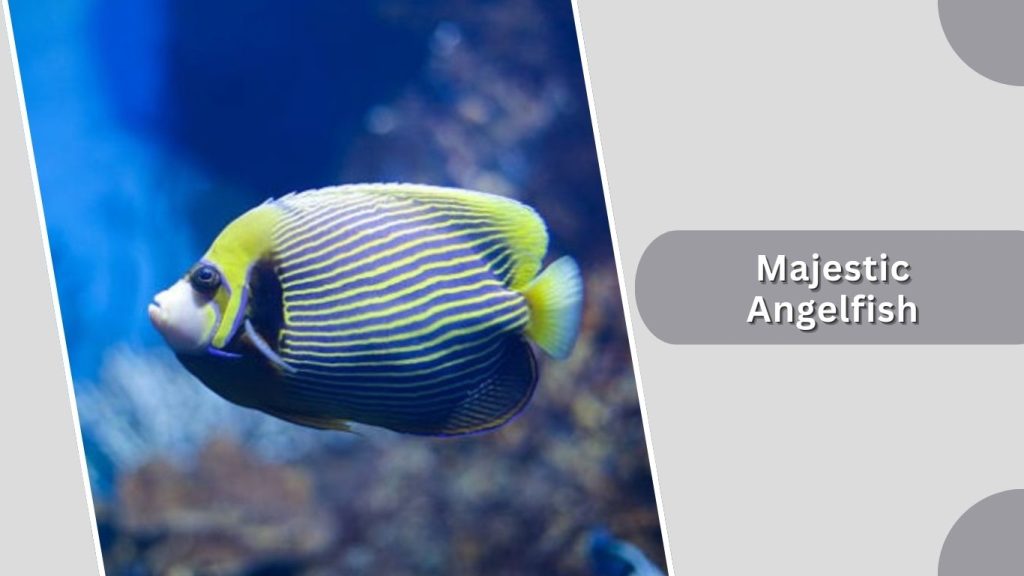
The Majestic Angelfish, also known as the Blue-girdled Angelfish, is a stunning Indo-Pacific species recognized for its deep blue body, bright yellow band, and elegant fin shape. Its dramatic coloration and calm, gliding movement make it one of the most admired large angelfish on coral reefs.
Identification
- Deep blue body with a bright yellow band behind the head
- Yellow highlights on the face and tail
- Juveniles are dark with curved light-blue stripes
- Oval, laterally compressed body
- Grows up to about 11 inches (28 cm) long
- Long dorsal and anal fins with flowing edges
Habitat
Majestic Angelfish are found throughout the Indo-Pacific, including Indonesia, the Philippines, New Guinea, and northern Australia. They inhabit coral reefs, reef slopes, and lagoon reefs, usually at depths of 5 to 60 meters. They prefer areas with rich coral growth and plenty of caves.
Behaviors
This species is generally solitary or found in pairs. Majestic Angelfish are calm but territorial, slowly patrolling reef sections and inspecting coral surfaces for food. Juveniles are more secretive, often staying close to caves and overhangs for protection.
Diet and Lifespan
In the wild, Majestic Angelfish feed mainly on sponges, tunicates, and algae. In aquariums, they need a varied diet with sponge-based foods and marine vegetation. With proper care, they typically live around 12 to 18 years.
16. Sixbar Angelfish (Pomacanthus sexstriatus)
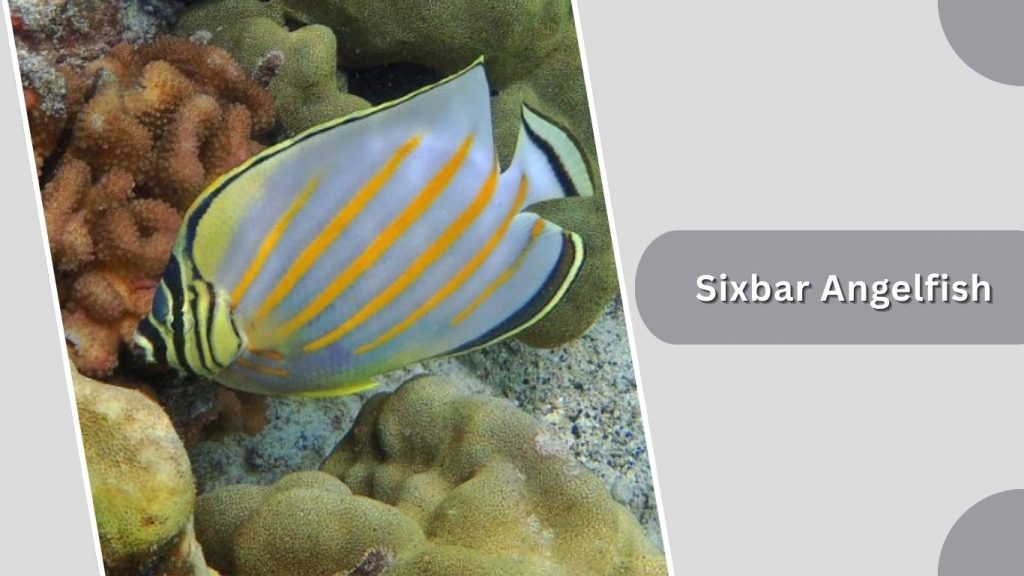
The Sixbar Angelfish is a boldly patterned marine angelfish named for the six dark vertical bands that cross its bright yellow body. Native to the Indo-Pacific region, this species is admired for its high-contrast appearance and strong presence on coral reefs.
Identification
- Bright yellow body with six dark vertical bars
- Blue edging on dorsal and anal fins
- Dark facial markings around the eyes
- Oval, laterally compressed body
- Grows up to about 14 inches (36 cm) long
- Thick lips and rounded snout
Habitat
Sixbar Angelfish inhabit coral reefs, outer reef slopes, and lagoons throughout the Indo-Pacific, from the Red Sea to the western Pacific islands. They are commonly found at depths between 5 and 50 meters, often near coral outcrops and reef ledges.
Behaviors
This species is typically solitary and strongly territorial, especially as an adult. Sixbar Angelfish actively patrol reef areas and may aggressively chase away intruders. They are powerful swimmers and are often seen moving confidently across open reef faces.
Diet and Lifespan
In the wild, Sixbar Angelfish mainly feed on sponges, algae, and tunicates. In captivity, they require a varied marine diet including sponge-based foods. Their lifespan is usually around 10 to 15 years under favorable conditions.
17. Halfblack Angelfish (Centropyge vrolikii)
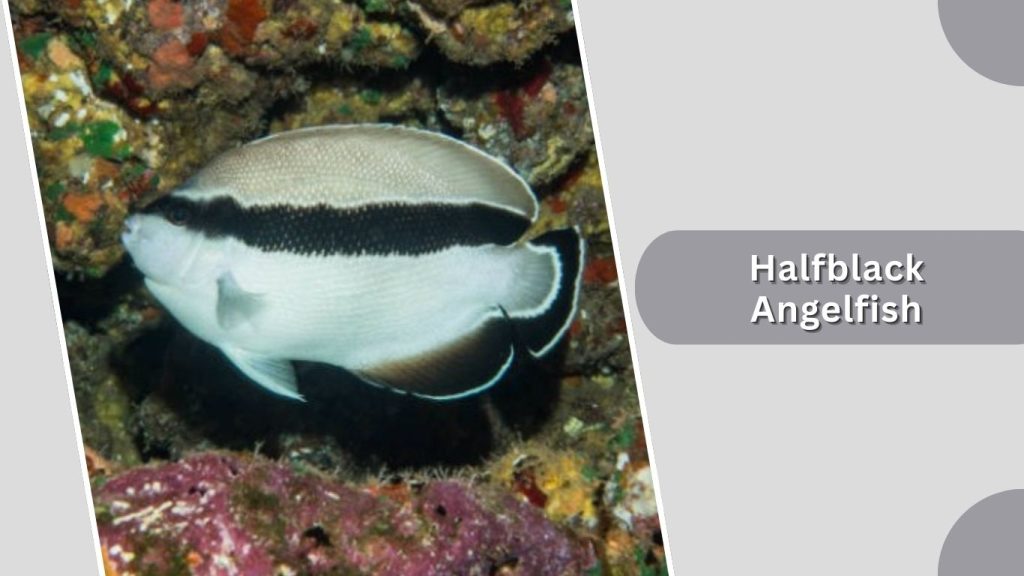
The Halfblack Angelfish is a small, elegant dwarf angelfish named for its distinctive two-tone coloration. With a dark rear half and pale gray to yellowish front half, it is a subtle yet attractive reef fish commonly seen in the Indo-Pacific region.
Identification
- Pale gray to yellowish front half with dark rear half
- Thin electric blue edging on fins
- Small, oval, laterally compressed body
- Grows up to about 4 inches (10 cm) long
- Rounded fins and compact head
- Dark eye stripe sometimes visible
Habitat
Halfblack Angelfish inhabit coral reefs, lagoons, and rocky reef slopes across the Indo-Pacific, from East Africa to Japan and Australia. They are usually found at depths between 2 and 40 meters, preferring reef zones with rich algae growth and plenty of shelter.
Behaviors
This species is active but shy, often darting between coral branches and rock crevices. Halfblack Angelfish are semi-territorial and may defend small feeding areas. In the wild, they are typically solitary or found in small social groups.
Diet and Lifespan
They feed mainly on algae, detritus, and tiny invertebrates. In aquariums, they accept a variety of foods including algae-based flakes and frozen marine diets. With proper care, their lifespan usually ranges from 8 to 12 years.
18. Annularis Angelfish (Pomacanthus annularis)
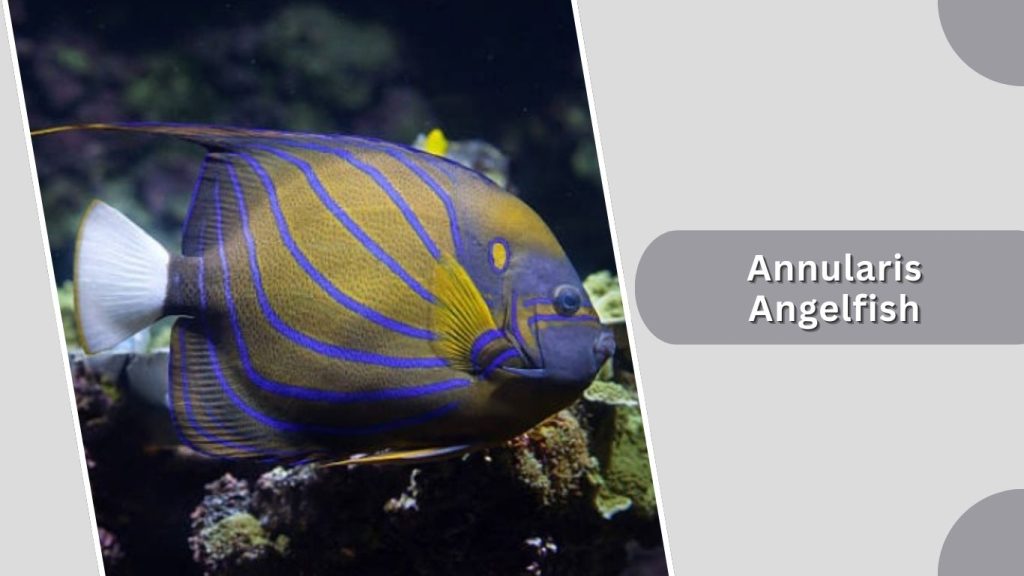
The Annularis Angelfish, also known as the Blue-ring Angelfish, is a large, brilliantly colored species famous for its electric blue markings and striking facial patterns. Native to the Indo-Pacific, it is often seen gliding slowly over reef slopes and coral walls, displaying its vivid rings and flowing fins.
Identification
- Blue body with bright electric blue and yellow markings
- Distinctive blue ring pattern on the sides and face
- Yellow tail fin
- Large, oval, laterally compressed body
- Can grow up to about 18 inches (45 cm) long
- Long, flowing dorsal and anal fins
Habitat
Annularis Angelfish are found throughout the Indo-Pacific, from East Africa and the Red Sea to Southeast Asia and Australia. They inhabit outer reef slopes, coral walls, and lagoon reefs, usually at depths between 5 and 50 meters, often near caves and overhangs.
Behaviors
This species is generally solitary or found in pairs. Annularis Angelfish are territorial and may defend large reef areas from other angelfish. They are slow, graceful swimmers and spend much of their time grazing on reef surfaces.
Diet and Lifespan
In the wild, they primarily feed on sponges, tunicates, algae, and small invertebrates. In aquariums, they require a varied diet rich in sponge material. With good care, their lifespan typically ranges from 12 to 18 years.
19. Koran Angelfish (Pomacanthus semicirculatus)
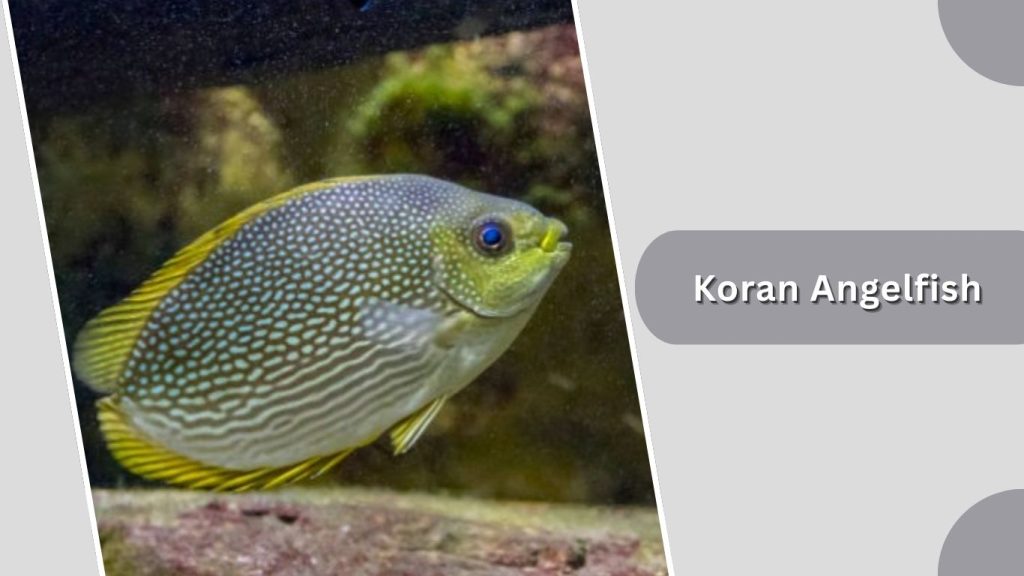
The Koran Angelfish, also known as the Semicircle Angelfish, is a large and colorful reef fish famous for its dramatic change in appearance from juvenile to adult. Its bold blue, green, and yellow tones make it a standout species on Indo-Pacific coral reefs.
Identification
- Adult body greenish-blue with thin blue scale lines
- Bright yellow and electric blue highlights on fins
- Juveniles are dark blue with light blue and white curved lines
- Large, oval, laterally compressed body
- Grows up to about 16 inches (40 cm) long
- Rounded snout and thick lips
Habitat
Koran Angelfish are widely distributed throughout the Indo-Pacific, from the Red Sea and East Africa to Japan, Australia, and the Pacific islands. They inhabit coral reefs, reef slopes, and lagoons, usually at depths between 1 and 30 meters, preferring areas with caves and coral cover.
Behaviors
This species is typically solitary and strongly territorial as an adult. Koran Angelfish actively patrol reef zones and may chase away other angelfish. Juveniles are more secretive, staying close to reef crevices and rocky shelters.
Diet and Lifespan
They feed mainly on sponges, tunicates, algae, and small invertebrates. In captivity, they need a mixed diet that includes sponge-based foods and marine vegetation. With proper care, they can live around 12 to 18 years.
20. Flagfin Angelfish (Apolemichthys trimaculatus)
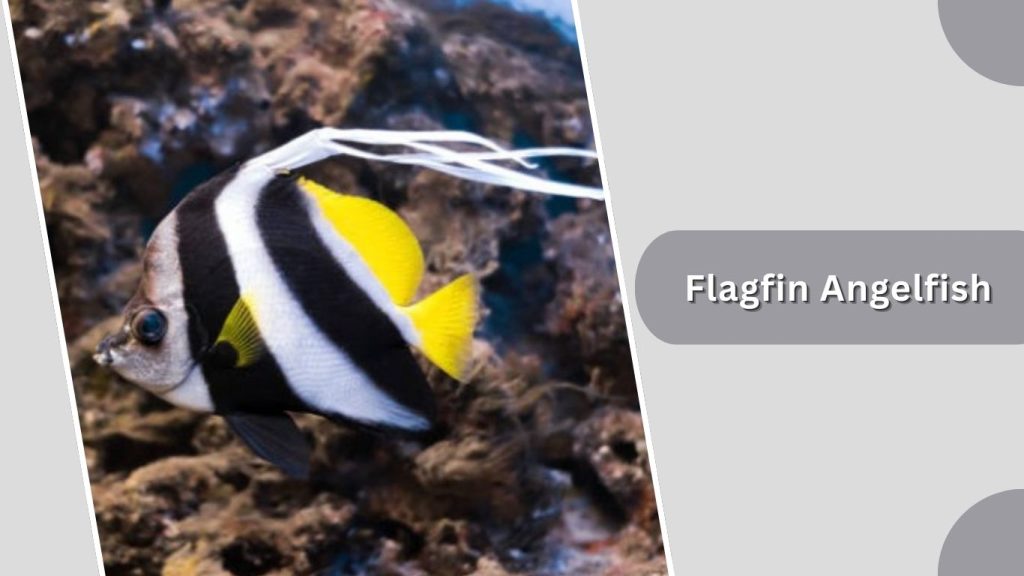
The Flagfin Angelfish, also known as the Threespot Angelfish, is a distinctive reef species recognized for its pale body, bold black markings, and bright yellow dorsal fin. Its contrasting colors and graceful swimming style make it a memorable sight on coral reefs throughout the Indo-Pacific.
Identification
- Pale white to cream-colored body
- Three black spots: one on the forehead, one on the side, and one near the gill area
- Bright yellow dorsal fin and upper body
- Oval, laterally compressed body
- Grows up to about 10 inches (25 cm) long
- Rounded fins with flowing edges
Habitat
Flagfin Angelfish are found across the Indo-Pacific, including the Red Sea, East Africa, Southeast Asia, and the Pacific islands. They inhabit coral reefs, reef slopes, and lagoons, usually at depths between 3 and 60 meters, often near coral heads and reef ledges.
Behaviors
This species is generally solitary and somewhat shy, often staying near caves and coral shelters. Flagfin Angelfish are calm but territorial and may defend feeding areas. They are slow, deliberate swimmers, spending much of their time inspecting reef surfaces.
Diet and Lifespan
In the wild, they primarily feed on sponges, tunicates, and some algae. In aquariums, they are considered challenging due to specialized feeding needs. With proper care, their lifespan usually ranges from 10 to 15 years.
21. Asfur Angelfish (Pomacanthus asfur)
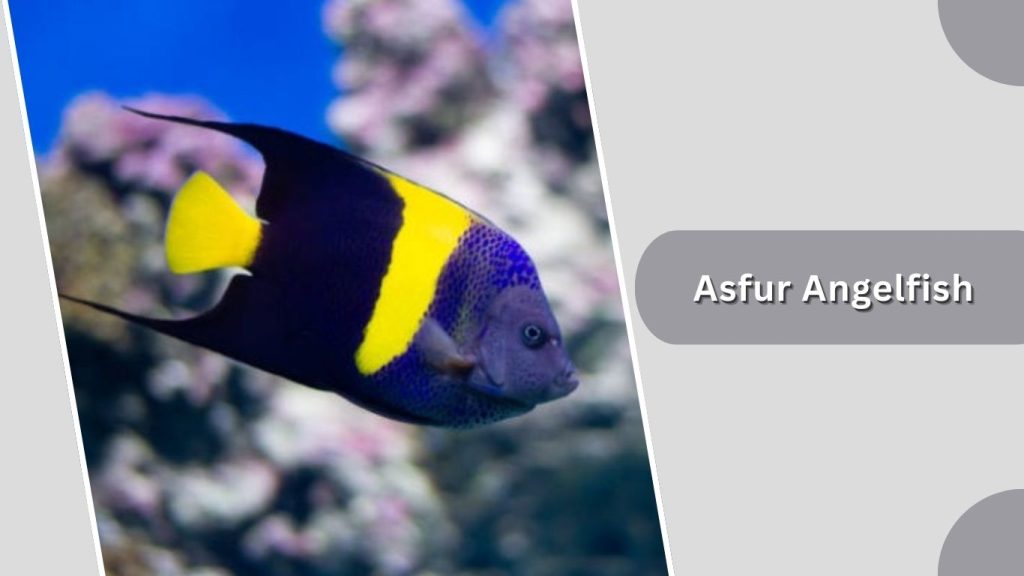
The Asfur Angelfish is a bold and striking species known for its deep blue body, bright yellow tail, and vivid yellow patch on the side. Native to the Red Sea and western Indian Ocean, it is one of the most visually dramatic large angelfish and a prized sight for reef divers.
Identification
- Dark blue to black body
- Large bright yellow patch on the mid-body
- Brilliant yellow tail fin
- Oval, laterally compressed body
- Grows up to about 16 inches (40 cm) long
- Long dorsal and anal fins with trailing edges
Habitat
Asfur Angelfish are found mainly in the Red Sea, Gulf of Aden, and western Indian Ocean. They inhabit coral reefs, reef slopes, and lagoons, typically at depths between 5 and 50 meters, favoring areas with caves and coral overhangs.
Behaviors
This species is usually solitary or found in pairs and is strongly territorial. Asfur Angelfish patrol large reef areas and may aggressively chase away intruding angelfish. They are confident, slow swimmers and are often seen gliding across open reef faces.
Diet and Lifespan
In the wild, they feed mainly on sponges, tunicates, algae, and small invertebrates. In aquariums, they require a varied diet that includes sponge-based foods. With proper care, their lifespan commonly ranges from 12 to 18 years.
22. Masked Angelfish (Genicanthus personatus)
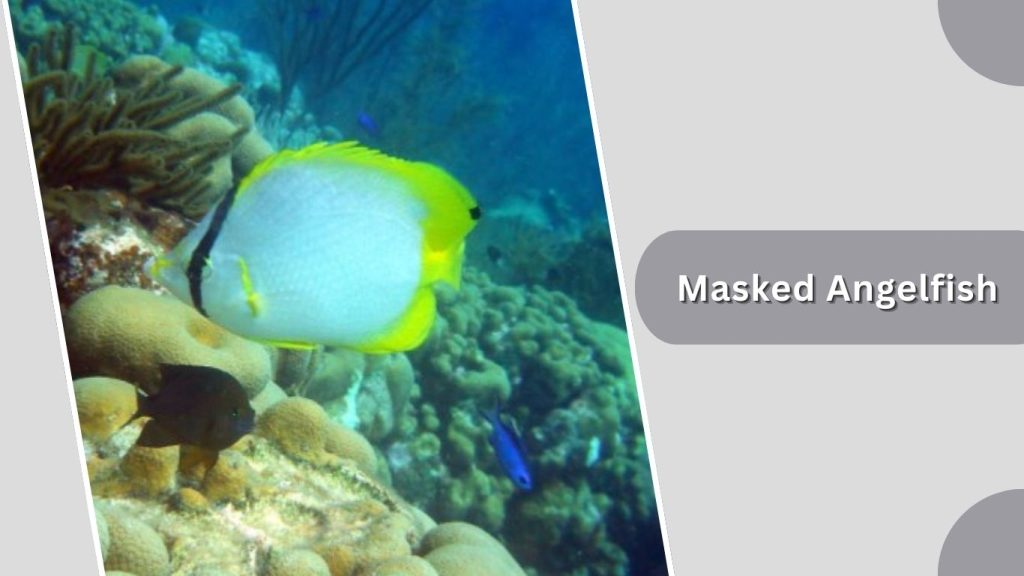
The Masked Angelfish is a rare and elegant deep-reef species best known for the dramatic black “mask” that covers its face. Native to the Hawaiian Islands and Johnston Atoll, this angelfish is highly prized by divers and collectors for its beauty, rarity, and graceful swimming behavior.
Identification
- White body with contrasting black facial “mask”
- Black dorsal fin and dark markings on fins
- Slender, streamlined body shape
- Grows up to about 8 inches (20 cm) long
- Forked tail fin
- Males and females show slight color differences
Habitat
Masked Angelfish are found primarily around Hawaii and nearby central Pacific locations. They inhabit deep coral reefs, drop-offs, and outer reef slopes, usually at depths of 30 to over 100 meters. They prefer clear water, steep reef walls, and areas with strong currents.
Behaviors
This species is peaceful and often seen swimming in small groups or pairs. Unlike many angelfish, Masked Angelfish are open-water swimmers, spending more time above the reef rather than close to coral surfaces. They are calm and non-aggressive compared to most large angelfish.
Diet and Lifespan
In the wild, they feed mainly on zooplankton, tiny crustaceans, and floating organic matter. In captivity, they accept fine frozen foods and plankton-based diets. With proper conditions, their lifespan is estimated to range from 10 to 15 years.
23. Golden Angelfish (Centropyge aurantia)
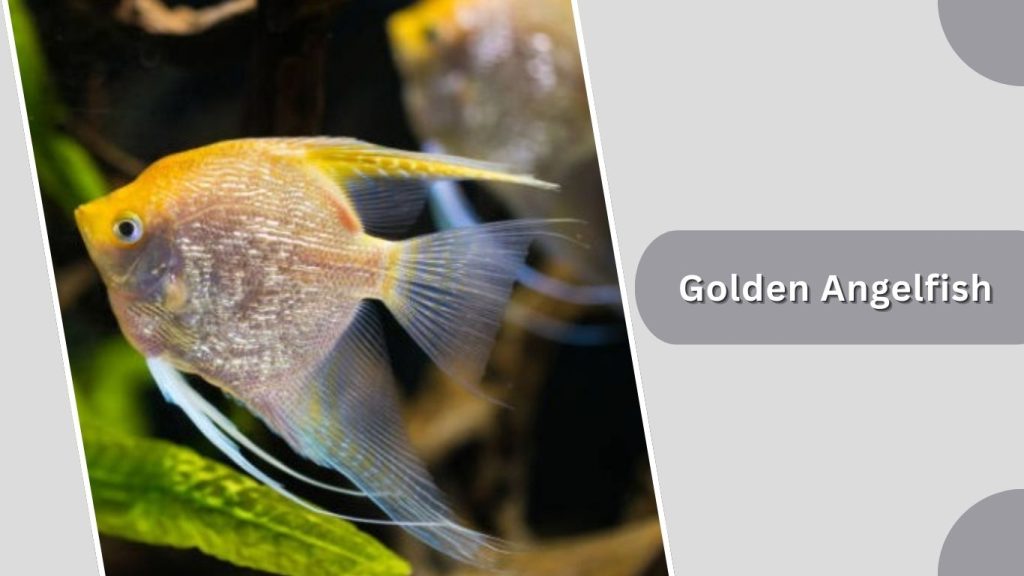
The Golden Angelfish is a small, secretive dwarf angelfish known for its warm orange-gold coloration and shy nature. Native to the Indo-Pacific, it is rarely seen in the open and often remains hidden among coral rubble and reef crevices, making it a special find for divers.
Identification
- Bright orange to golden-yellow body
- Thin electric blue edging on dorsal and anal fins
- Small, oval, laterally compressed body
- Grows up to about 4 inches (10 cm) long
- Rounded fins and compact shape
- Dark eye with subtle facial markings
Habitat
Golden Angelfish are found throughout the Indo-Pacific, including Indonesia, the Philippines, Papua New Guinea, and surrounding regions. They inhabit coral-rich reefs, rubble zones, and reef slopes, usually at depths between 5 and 60 meters, preferring areas with caves and overhangs.
Behaviors
This species is extremely shy and secretive, often hiding deep within coral branches and rocky crevices. Golden Angelfish are usually solitary and may remain unseen for long periods. When they do emerge, they move cautiously and stay close to shelter.
Diet and Lifespan
They feed mainly on algae, detritus, and microscopic invertebrates. In aquariums, they require a peaceful environment and a varied diet of algae-based and finely chopped marine foods. Their typical lifespan ranges from 8 to 12 years.
24. Potter’s Angelfish (Centropyge potteri)
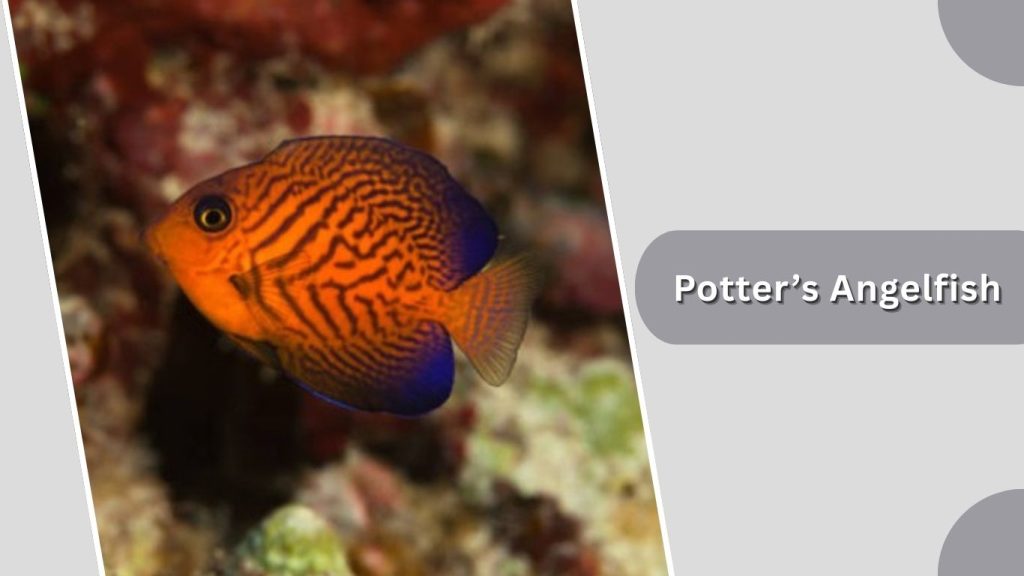
Potter’s Angelfish is a beautifully patterned dwarf angelfish native to the Hawaiian Islands. It is admired for its bright orange body covered with thin blue vertical lines and its active reef behavior. This species is popular among reef fish enthusiasts and underwater photographers alike.
Identification
- Bright orange body with thin electric blue vertical stripes
- Blue edging on dorsal and anal fins
- Small, oval, laterally compressed body
- Grows up to about 4 inches (10 cm) long
- Rounded tail fin
- Compact head with small mouth
Habitat
Potter’s Angelfish are found almost exclusively in Hawaii and nearby central Pacific regions. They inhabit coral reefs, rocky reef slopes, and rubble zones, usually at depths between 3 and 45 meters. They prefer reef areas rich in algae and coral growth.
Behaviors
This species is active, alert, and constantly grazing on reef surfaces. Potter’s Angelfish are semi-territorial and may defend small areas, especially against similar dwarf angelfish. They are usually solitary in the wild but may occasionally be seen in pairs.
Diet and Lifespan
In the wild, they feed mainly on algae, detritus, and tiny invertebrates. In aquariums, they thrive on a varied diet of marine algae, spirulina, and frozen foods. With proper care, their lifespan typically ranges from 8 to 12 years.
25. Bandit Angelfish (Apolemichthys arcuatus)
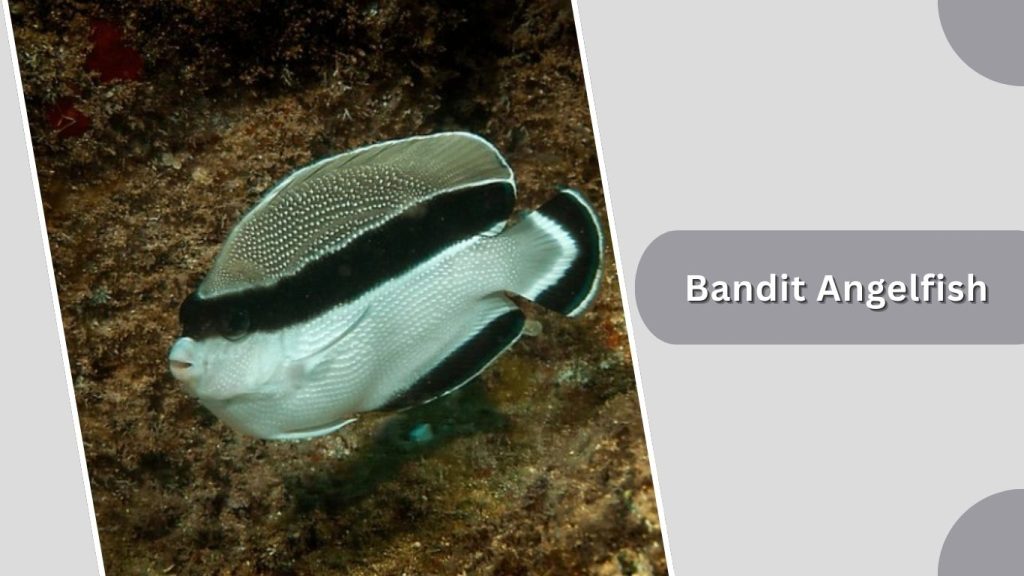
The Bandit Angelfish is a striking and rare angelfish species best known for the bold black “bandit mask” across its eyes and its contrasting white and black body. Endemic to the Hawaiian Islands and Johnston Atoll, this angelfish is admired for its dramatic appearance and deep-reef lifestyle.
Identification
- White front body with black rear section
- Thick black band across the eyes like a mask
- Yellowish dorsal fin
- Oval, laterally compressed body
- Grows up to about 8 inches (20 cm) long
- Rounded fins with smooth edges
Habitat
Bandit Angelfish inhabit deep coral reefs, outer reef slopes, and drop-offs around Hawaii and Johnston Atoll. They are usually found at depths between 30 and 90 meters, where light is lower and reef structures are steep and complex.
Behaviors
This species is generally solitary and shy, often staying near caves and reef crevices. Bandit Angelfish are calm swimmers and tend to avoid open areas. They spend much of their time slowly moving along reef walls in search of food.
Diet and Lifespan
In the wild, they primarily feed on sponges, tunicates, and some algae. In aquariums, they are considered delicate and require specialized care and diet. With proper conditions, their lifespan is estimated to be around 10 to 15 years.
FAQs
What do angelfish usually eat in the wild?
Most marine angelfish feed on a mixed diet of sponges, algae, tunicates, and small invertebrates found on coral reefs. Some species, especially dwarf angelfish, consume more algae, while larger angelfish depend heavily on sponges. This varied diet helps maintain reef balance and supports their bright coloration and long-term health.
Are angelfish suitable for home aquariums?
Many angelfish species can live in home aquariums, but they often require large, well-established marine tanks with stable water conditions. Some dwarf angelfish are more beginner-friendly, while large angelfish need spacious tanks and specialized diets. Careful species selection and proper feeding are essential for long-term success.
How long do angelfish usually live?
The lifespan of angelfish depends on the species and environment. Smaller dwarf angelfish typically live around 8 to 12 years, while larger angelfish may live 12 to 20 years or more. In captivity, lifespan is strongly influenced by tank size, water quality, stress levels, and diet.
Do angelfish change color as they grow?
Yes, many angelfish species show dramatic color changes between juvenile and adult stages. Juveniles often have bold stripes or rings that look completely different from adult patterns. These changes help protect young fish from predators and signal maturity when they reach adulthood.
Where are angelfish most commonly found?
Marine angelfish are most commonly found on tropical and subtropical coral reefs, especially in the Indo-Pacific and western Atlantic regions. They live among coral heads, reef slopes, and rocky ledges, where they find shelter, food, and breeding sites in warm, clear ocean waters.