




Anglerfish are among the ocean’s strangest and most mysterious creatures. Known for their glowing lure and terrifying appearance, these deep-sea predators have adapted to survive in one of the harshest environments on Earth. From their unusual hunting techniques to their bizarre reproduction methods, anglerfish continue to fascinate scientists and ocean lovers alike. In this guide, you’ll discover different anglerfish types, what anglerfish eat, how long they live, and some truly incredible anglerfish facts.
What Is an Anglerfish?
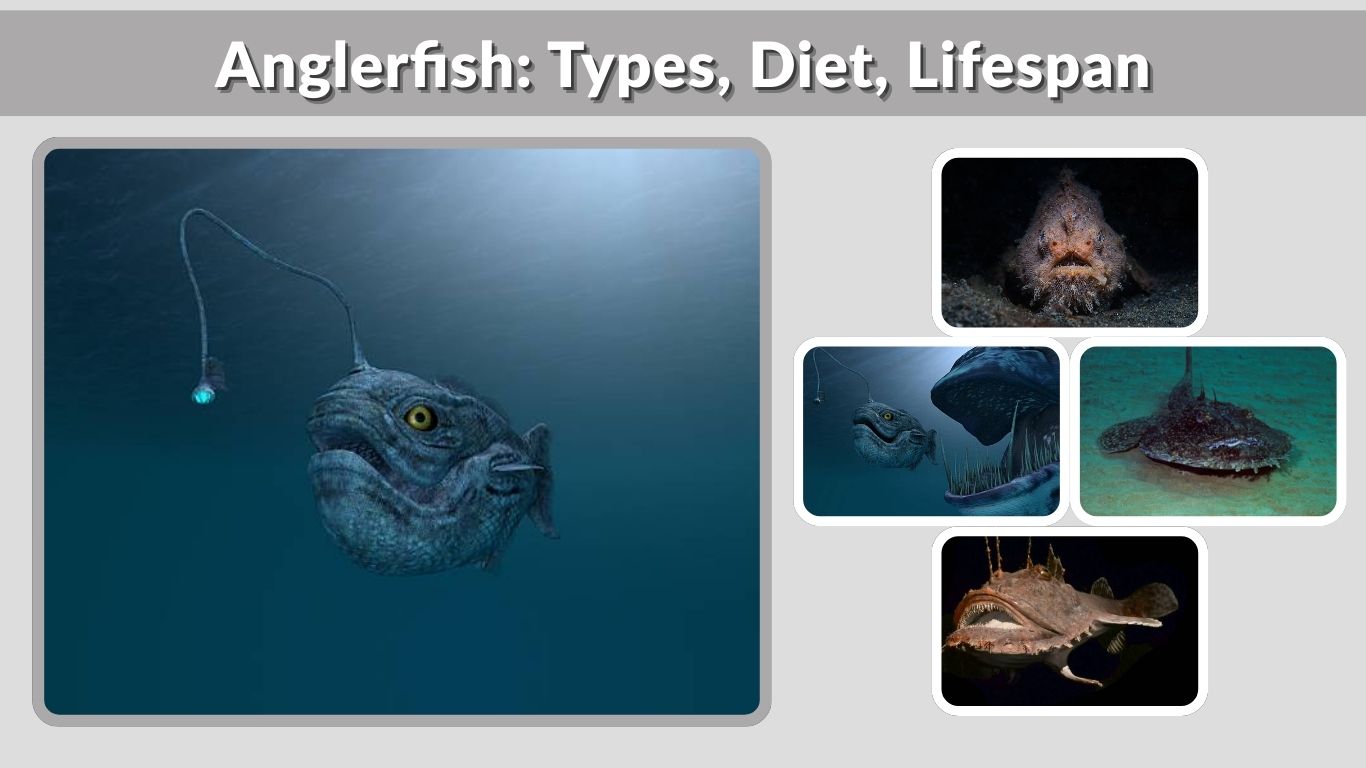
An anglerfish is a marine fish belonging to the order Lophiiformes, which includes more than 200 species. They are best known for the fleshy growth extending from their head, called an esca, which acts as a glowing lure to attract prey. This unique feature is what gives them their name—like an angler using a fishing rod, the fish “fishes” for its food.
While many people associate anglerfish with the deep sea, not all species live in extreme depths. Some inhabit shallow tropical waters. However, the deep-sea anglerfish remains the most iconic due to its sharp teeth, oversized mouth, and bioluminescent glow.
Anglerfish are carnivorous predators built for ambush. Their large heads and wide jaws allow them to swallow prey nearly as large as themselves, making them highly efficient hunters in dark environments where food is scarce.
Where Do Anglerfish Live?
Anglerfish are found in oceans around the world, from tropical regions to colder waters. Most famous species inhabit the bathypelagic zone, also known as the midnight zone, which ranges from about 1,000 to 4,000 meters below the surface. At these depths, sunlight cannot penetrate, temperatures are near freezing, and pressure is immense.
Shallow-water anglerfish species, such as frogfish, live in coral reefs and coastal regions. These species rely more on camouflage than bioluminescence to survive.
How Deep Can Anglerfish Live?
Deep-sea anglerfish can survive at depths exceeding 3,000 meters. To thrive under such extreme pressure, their bodies are specially adapted. They have soft bones and flexible skin, which help them withstand crushing ocean pressure. Their slow metabolism also conserves energy in an environment where meals may be weeks apart.
Anglerfish Types
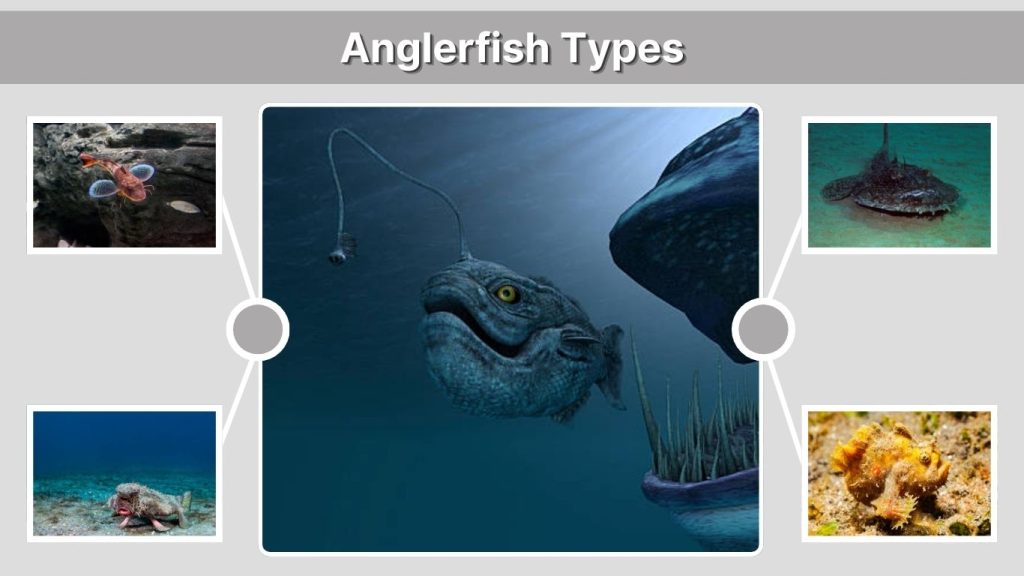
There are more than 200 recognized anglerfish species, and they vary widely in appearance and habitat. Despite sharing similar hunting strategies, different anglerfish types have evolved unique traits suited to their environments.
Deep-Sea Anglerfish
This is the classic anglerfish most people imagine. These species live in deep, dark waters and use bioluminescent bacteria inside their lure to attract prey. They have enormous mouths filled with long, transparent teeth that prevent escape once prey is captured.
Deep-sea anglerfish also display extreme sexual dimorphism, with females much larger than males.
Frogfish
Frogfish are shallow-water anglerfish found in tropical and subtropical oceans. Unlike their deep-sea relatives, frogfish rely heavily on camouflage. They can change color to blend into coral reefs or rocks and use a small lure to attract unsuspecting prey.
Monkfish
Monkfish are bottom-dwelling anglerfish found in the Atlantic Ocean. Unlike many deep-sea species, monkfish are commercially fished and widely eaten. They are sometimes referred to as “poor man’s lobster” because of their firm, lobster-like meat.
Batfish
Batfish are unusual anglerfish that appear almost flattened. Some species use modified fins to “walk” along the ocean floor. Though less famous, they are another fascinating example of anglerfish diversity.
What Do Anglerfish Eat?
Anglerfish are carnivorous predators that rely on stealth rather than speed. They typically lie motionless in the dark, dangling their glowing lure to attract prey. When a curious fish or crustacean approaches, the anglerfish strikes in a split second.
Because food is scarce in the deep sea, anglerfish cannot afford to miss opportunities. Their hinged jaws and expandable stomachs allow them to swallow prey whole—even if it is nearly their own size.
In shallow waters, species like frogfish use similar ambush techniques but may rely more on camouflage than light. Regardless of habitat, anglerfish are opportunistic hunters that eat whatever suitable prey comes within reach.
Anglerfish Diet in Detail
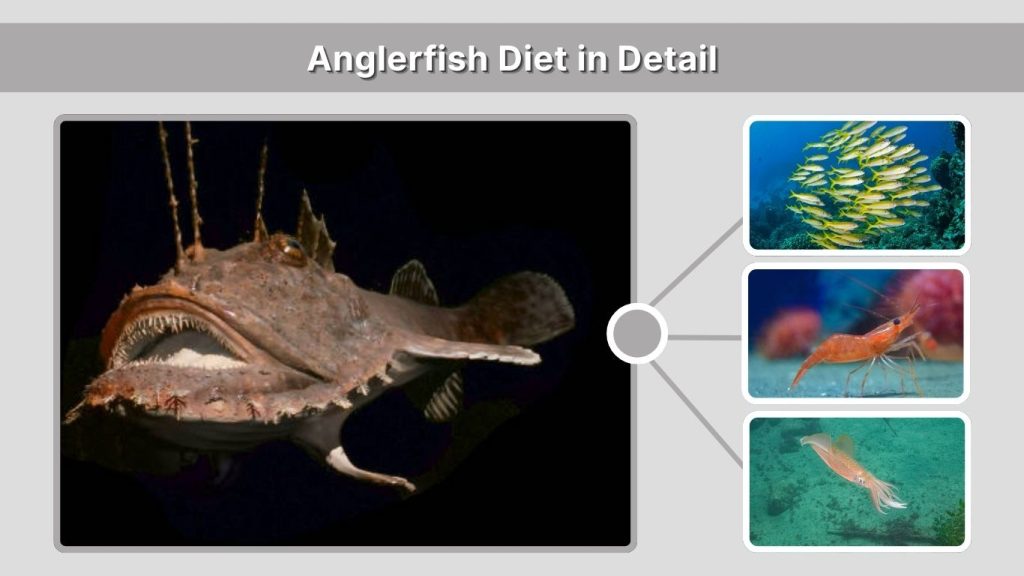
Understanding the anglerfish diet helps explain how these creatures survive in extreme environments where food is unpredictable.
Common Prey of Anglerfish
Anglerfish primarily feed on:
- Small fish
- Shrimp
- Crustaceans
- Squid
Deep-sea species often consume whatever organisms drift nearby. In the absence of regular feeding opportunities, they must maximize each meal.
Do Anglerfish Eat Large Prey?
Yes, anglerfish are capable of eating prey surprisingly large compared to their body size. Their flexible stomach expands significantly, enabling them to consume animals nearly as big as themselves. This adaptation ensures they can take advantage of rare feeding chances in the deep ocean.
How Often Do Anglerfish Eat?
Because food is scarce in the deep sea, anglerfish do not eat regularly. A single large meal may sustain them for days or even weeks. Their slow metabolism helps conserve energy between feedings, allowing them to survive long periods without food.
In shallow-water species, feeding may occur more frequently due to greater prey availability. However, all anglerfish share the same basic strategy: remain still, conserve energy, and strike quickly when an opportunity appears.
Anglerfish Lifespan
The anglerfish lifespan varies depending on the species and habitat. On average, many anglerfish live between 10 to 25 years, though precise data on deep-sea species is limited due to the difficulty of studying them in their natural environment.
Shallow-water species such as monkfish may have slightly shorter or more measurable lifespans because they are commercially fished and studied more frequently. Environmental conditions, food availability, and predation risk all influence how long an anglerfish lives.
Deep-sea anglerfish benefit from fewer natural predators, but their slow growth and limited reproduction opportunities may affect population numbers over time.
Does Reproduction Affect Lifespan?
Yes, reproduction plays a major role in the life cycle of some anglerfish species. In certain deep-sea varieties, males are significantly smaller than females. Once a male finds a female, he attaches himself to her body and eventually fuses with her bloodstream.
Over time, the male loses most of his organs, surviving primarily to provide sperm. This extreme reproductive adaptation ensures successful mating in the vast, dark ocean where encounters are rare. However, it effectively ends the male’s independent lifespan.
The Strange Reproduction of Anglerfish
Anglerfish reproduction is one of the most unusual in the animal kingdom. Many deep-sea species exhibit extreme sexual dimorphism, meaning females are much larger than males. A female may be several times the size of a male.
When a tiny male locates a female, he bites onto her body. In some species, he permanently fuses with her, connecting to her circulatory system. From that point on, he depends entirely on her for nutrients.
This parasitic mating strategy increases the likelihood of reproduction in the deep sea, where individuals are sparsely distributed. Instead of searching repeatedly for mates, a female can carry one or more attached males, ensuring fertilization whenever she releases eggs.
Shallow-water anglerfish species, however, reproduce more traditionally without permanent fusion.
Fascinating Anglerfish Facts
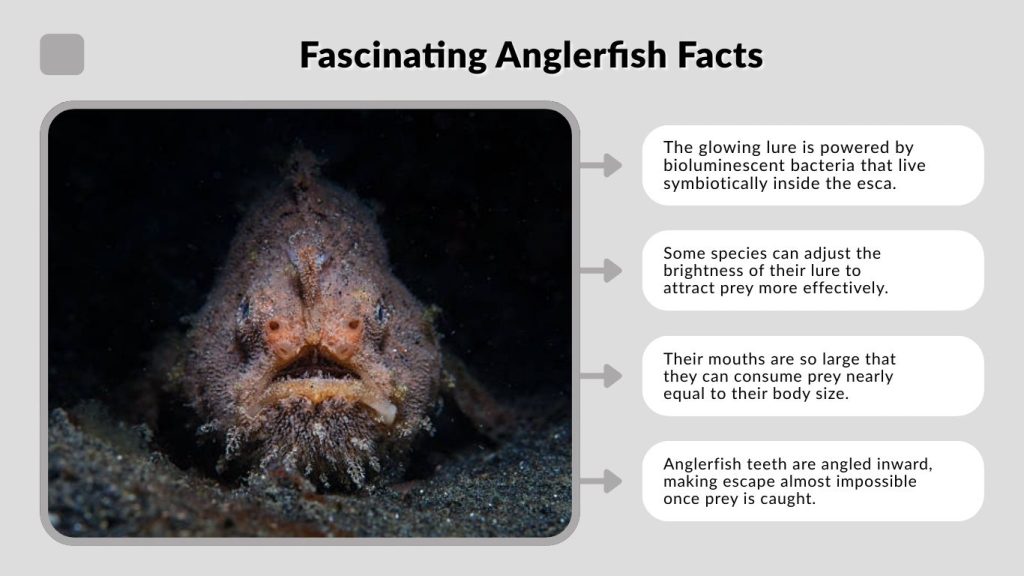
Anglerfish are full of surprises. Here are some remarkable anglerfish facts:
- The glowing lure is powered by bioluminescent bacteria that live symbiotically inside the esca.
- Some species can adjust the brightness of their lure to attract prey more effectively.
- Their mouths are so large that they can consume prey nearly equal to their body size.
- Anglerfish teeth are angled inward, making escape almost impossible once prey is caught.
- Not all anglerfish live in deep water—many thrive in reefs and coastal habitats.
- Some species do not glow at all and rely solely on camouflage.
Despite their frightening appearance, anglerfish are not aggressive toward humans and rarely come into contact with people.
Are Anglerfish Dangerous to Humans?
Anglerfish are generally not dangerous to humans. Most deep-sea species live thousands of meters below the surface, far beyond the reach of divers. Encounters are extremely rare and usually occur only when specimens are brought up by deep-sea exploration equipment.
Monkfish, a type of anglerfish, are commonly eaten and considered safe seafood. While their sharp teeth look intimidating, they pose no significant threat to people.
FAQs
How long do anglerfish live?
Anglerfish typically live between 10 and 25 years, depending on the species. Deep-sea species may live longer due to fewer predators and slower metabolisms, but exact lifespan data is limited because studying them in their natural habitat is challenging.
What do anglerfish eat in the deep sea?
In the deep sea, anglerfish eat small fish, crustaceans, shrimp, and squid. They use their glowing lure to attract prey in the darkness and swallow their meals whole using their expandable jaws and stomachs.
How many anglerfish types are there?
There are more than 200 known anglerfish species worldwide. These include deep-sea anglerfish, frogfish, monkfish, and batfish. Each type has adapted to different ocean environments, from coral reefs to extreme deep-sea zones.
Why do anglerfish glow?
Anglerfish glow because of bioluminescent bacteria living inside their lure. This light helps attract prey in the dark depths of the ocean. The glow acts like bait, drawing curious animals close enough to be captured.
Can anglerfish survive near the surface?
Most deep-sea anglerfish cannot survive near the surface due to pressure differences. However, some shallow-water species naturally live in coastal areas and reefs, where they thrive without the extreme pressure of deep oceans.