




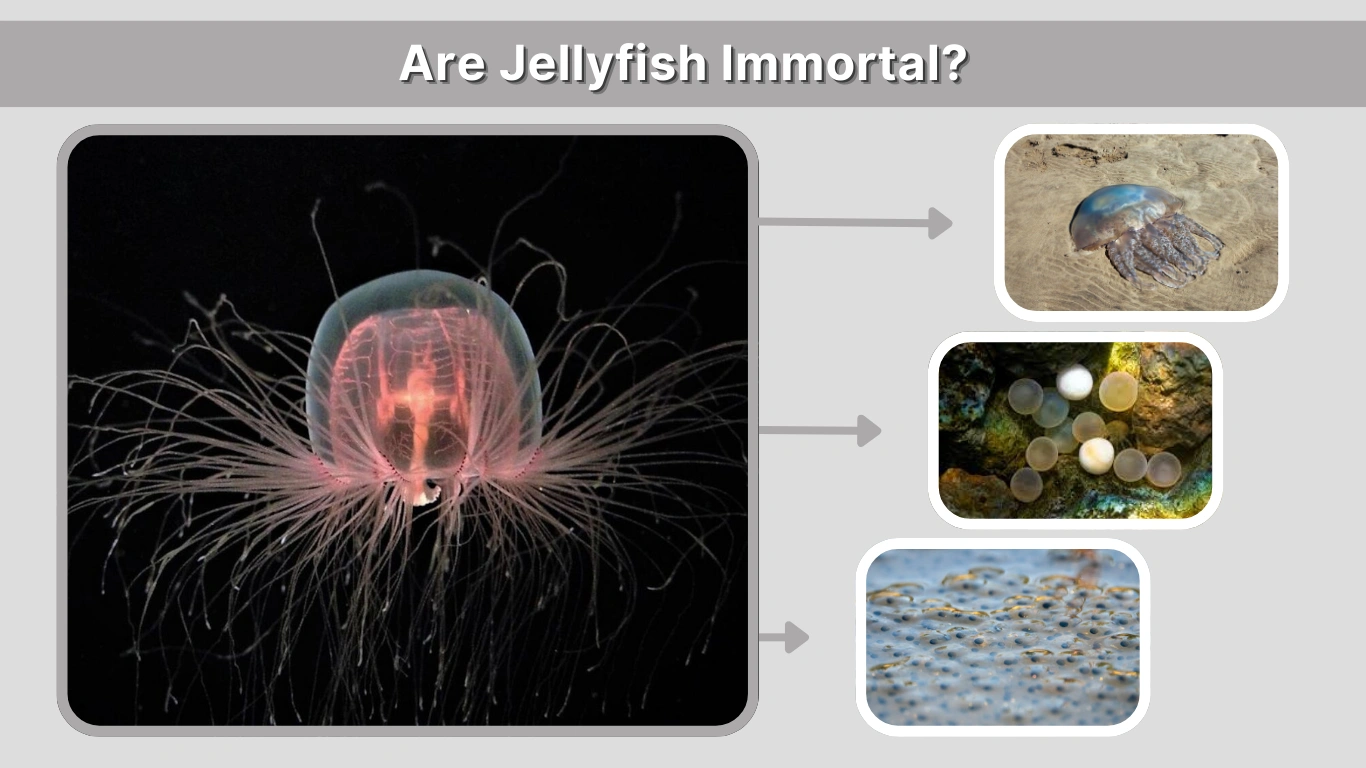
The idea that jellyfish might be immortal has fascinated scientists and ocean lovers for years. While most jellyfish live short lives, one extraordinary species has the ability to reverse its life cycle and begin again. This unique biological process has led many people to believe that jellyfish never die. In reality, the truth is more complex. Some jellyfish age and die like other animals, while one rare species can escape biological aging under certain conditions.
What Does “Immortal” Mean in Biology?
In everyday language, “immortal” means something that can never die. In biology, however, immortality usually refers to an organism’s ability to avoid aging, not to immunity from death. An animal can be considered biologically immortal if it does not weaken or die simply because of age.
This is an important distinction. A biologically immortal organism can still die from injury, disease, starvation, or predation. It simply does not have a fixed natural lifespan caused by aging. When scientists describe a jellyfish as immortal, they mean it can escape senescence, not that it is invincible.
Are All Jellyfish Immortal?
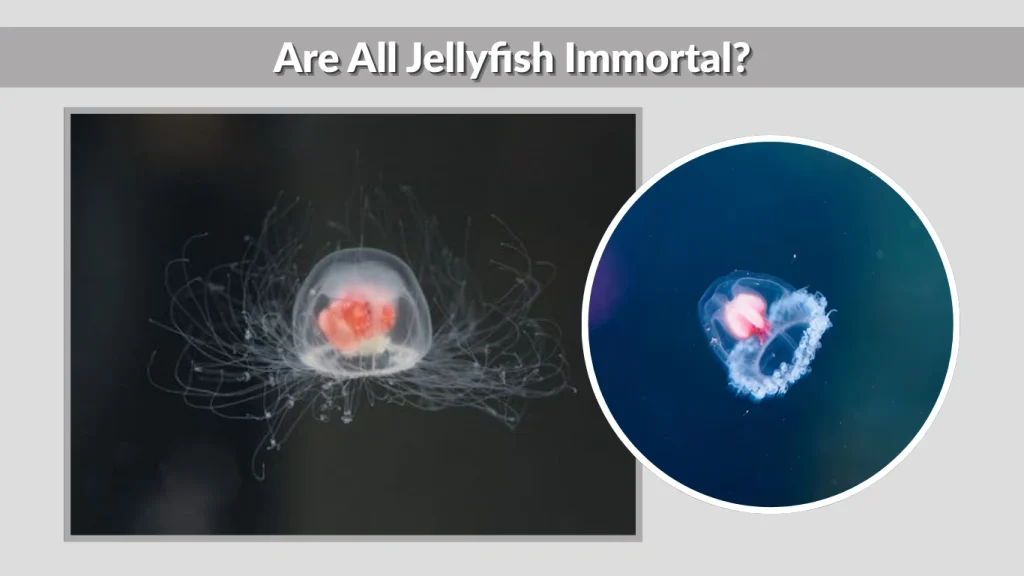
No, the vast majority of jellyfish are not immortal. Most jellyfish species follow a normal life cycle: they grow, reproduce, weaken, and die. Their adult stage often lasts only a few months. After reproduction, their bodies deteriorate, and they eventually die from natural aging or environmental stress.
Only one known species has demonstrated true biological rejuvenation. This species is commonly called the immortal jellyfish. Its scientific name is Turritopsis dohrnii. It is the only animal currently known to repeatedly reverse its development after reaching adulthood.
The Immortal Jellyfish Explained
The immortal jellyfish is a tiny hydrozoan species, usually only a few millimeters wide. It was first described in the 1880s, but its extraordinary life-cycle reversal ability was not fully recognized until the late twentieth century.
Instead of dying after reproduction, this jellyfish can transform its adult body back into a juvenile stage. From that juvenile form, it can grow again into an adult. This process can theoretically repeat forever, as long as the animal is not killed by external factors.
How the Immortal Jellyfish Reverses Its Life Cycle
Normal Jellyfish Life Cycle
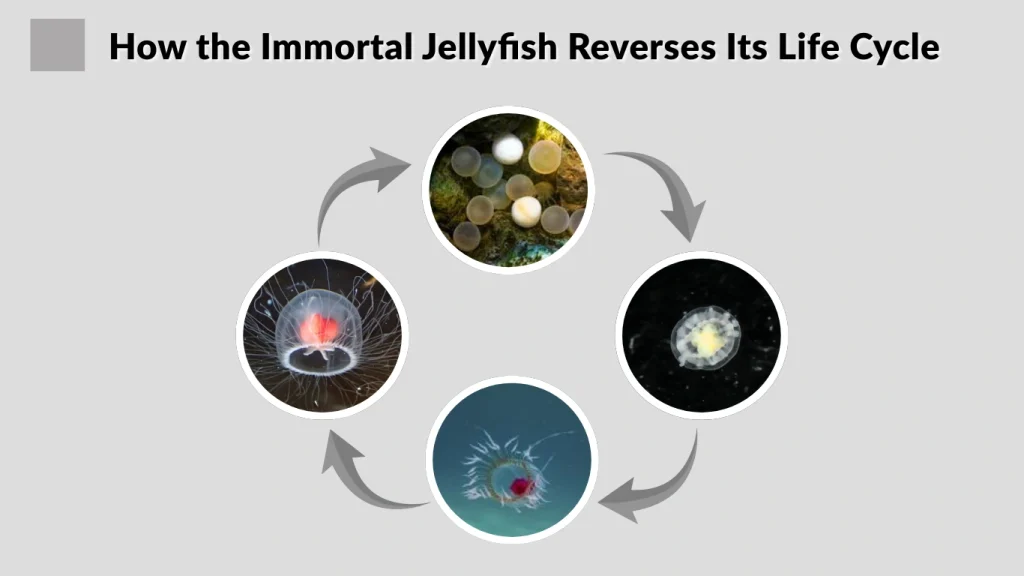
Most jellyfish follow a four-stage life cycle. They begin as fertilized eggs, develop into free-swimming larvae, settle as polyps, and then transform into adult medusae. In most species, the adult medusa is the final stage.
The Reversal Process
The immortal jellyfish breaks this rule. When injured, stressed, or starving, it can sink to the seafloor and form a small, cyst-like mass. Inside this mass, its cells undergo a process called transdifferentiation. Adult cells change directly into different types of juvenile cells.
Return to the Polyp Stage
This reorganized mass develops into a new polyp colony. From that polyp, genetically identical jellyfish bud off and grow into adults. The original adult has effectively restarted its life from the beginning.
Why This Ability Is So Rare
Most animals have specialized cells that cannot change once development is complete. Skin cells remain skin cells, nerve cells remain nerve cells. In the immortal jellyfish, adult cells can be reprogrammed to become entirely different cell types.
This cellular flexibility is extremely unusual in complex animals. It allows the jellyfish to rebuild its body from scratch. Scientists believe this ability may be linked to powerful DNA repair mechanisms and stem-cell-like behavior throughout its tissues.
Do Immortal Jellyfish Really Live Forever?
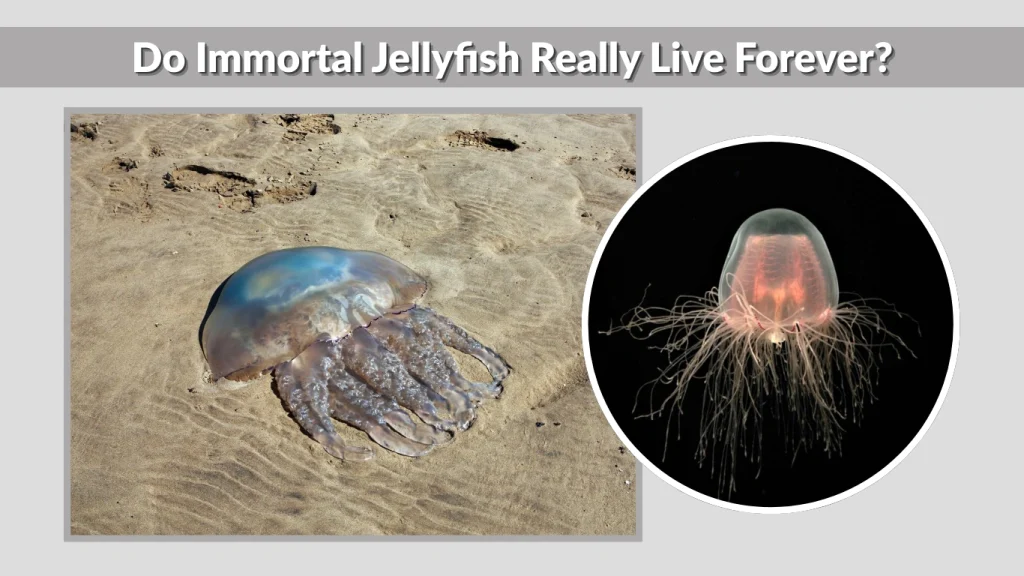
Biologically, the immortal jellyfish does not have to die from old age. In theory, it could repeat its life cycle endlessly. In reality, most immortal jellyfish do not live forever. They are frequently eaten by predators, damaged by currents, infected by disease, or killed by pollution and temperature changes.
Immortality in this case means the absence of programmed aging, not freedom from death. In the wild, very few individuals likely complete many life-cycle resets before being destroyed.
How Long Do Regular Jellyfish Live?
Most jellyfish species have surprisingly short lives. The adult medusa stage often lasts only a few months. Some common jellyfish live about one year from egg to death. Larger or cold-water species may survive several years, especially if their polyp stage persists on the seafloor.
The polyp stage, not the floating jellyfish, is often the longest part of the life cycle. Polyps can remain attached to surfaces for years, producing new jellyfish seasonally. Even so, these polyps eventually die. Only the immortal jellyfish has been shown to completely reset its development.
Identification and Features of the Immortal Jellyfish
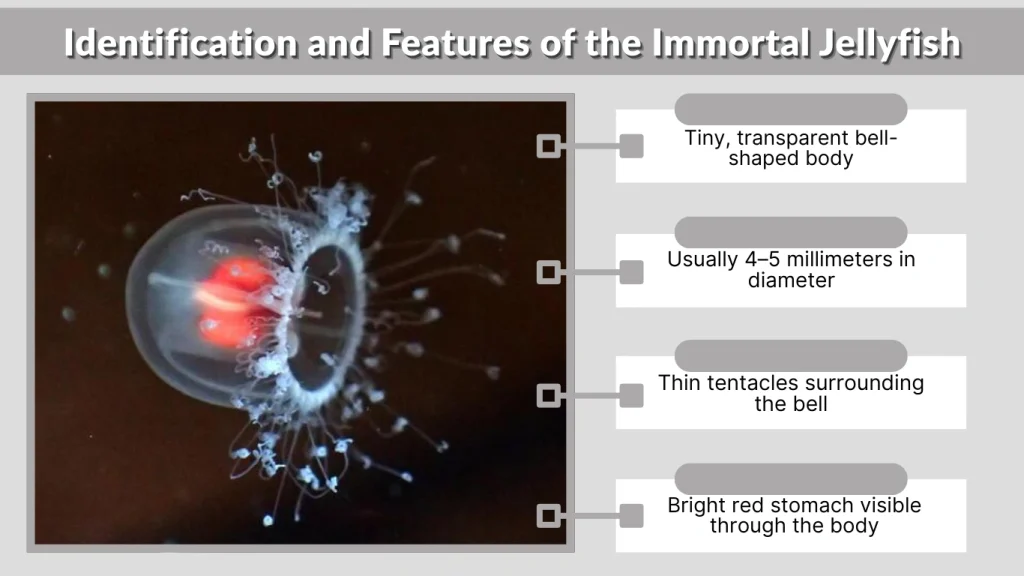
The immortal jellyfish looks simple, but its biology is extraordinary.
- Tiny, transparent bell-shaped body
- Usually 4–5 millimeters in diameter
- Thin tentacles surrounding the bell
- Bright red stomach visible through the body
- Soft, nearly invisible appearance in water
Because of its small size and transparency, it is rarely noticed by swimmers or divers. It lives among plankton, feeding on microscopic organisms.
Habitat and Global Spread
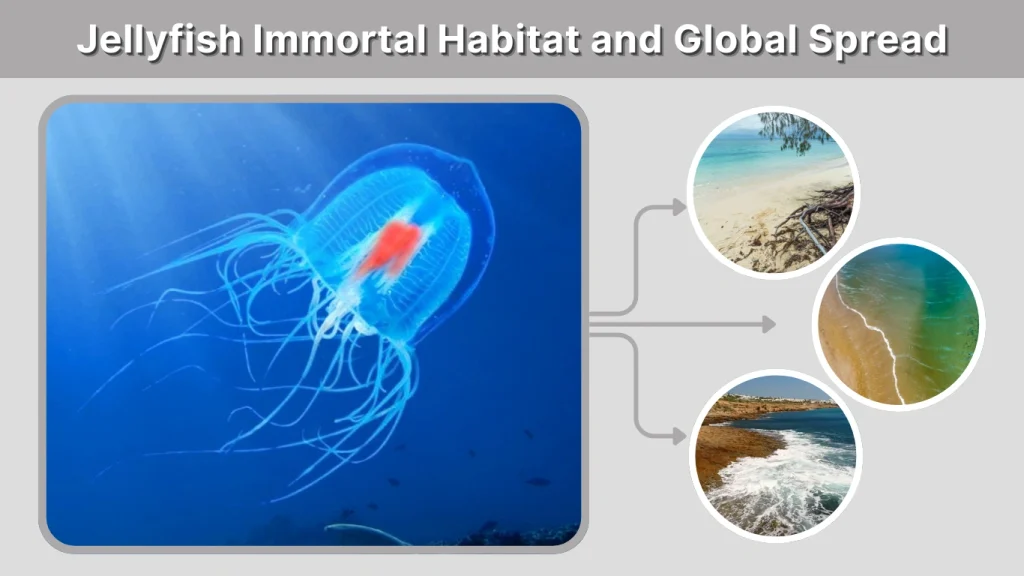
The immortal jellyfish was originally native to the Mediterranean Sea and parts of the Atlantic Ocean. Today, it is found worldwide. Its spread is largely attributed to human shipping. Polyps and larvae can survive in ballast water tanks and be released into distant oceans.
- Warm and temperate marine waters
- Coastal and offshore plankton zones
- Harbors and sheltered bays
- Mediterranean and Atlantic origins
- Now present in most major oceans
Its global distribution makes it one of the most widespread jellyfish species, despite its tiny size.
Diet and Daily Life
Immortal jellyfish feed on microscopic prey, including zooplankton, fish eggs, and tiny crustaceans. They use small tentacles equipped with stinging cells to capture food. Once prey is immobilized, it is moved to the mouth and digested.
Energy from food supports growth, reproduction, and the intense cellular activity required for life-cycle reversal. Without sufficient nutrition, the jellyfish may fail to complete the rejuvenation process.
Predators and Natural Limits
Despite its regenerative ability, the immortal jellyfish is vulnerable. It is eaten by larger jellyfish, sea anemones, fish, and plankton-feeding animals. Its transparency offers some protection, but its small size makes it easy prey.
Environmental conditions also limit survival. Pollution, rising ocean temperatures, and acidification can damage cells beyond repair. When the jellyfish is physically destroyed, it cannot regenerate.
Why Immortal Jellyfish Matter to Science
Scientists study Turritopsis dohrnii to better understand aging, regeneration, and cellular reprogramming. Its ability to convert adult cells into juvenile cells challenges traditional ideas about irreversible development.
Research on immortal jellyfish may one day contribute to advances in regenerative medicine, tissue repair, and age-related disease studies. While humans will never become immortal like this jellyfish, understanding its biology could lead to important medical breakthroughs.
Common Myths About Jellyfish Immortality
Many people believe all jellyfish live forever. This is not true. Most jellyfish age and die naturally. Another myth is that immortal jellyfish cannot be killed. In reality, they die frequently from predators and environmental hazards.
The immortal jellyfish is not magical. It is a small marine animal with a unique cellular trick. That trick, however, makes it one of the most biologically remarkable creatures on Earth.
FAQs
Are all jellyfish immortal?
No, almost all jellyfish species are mortal and age like other animals. Their adult stage often lasts only a few months. Only one known species, the immortal jellyfish (Turritopsis dohrnii), can reverse its life cycle and avoid biological aging. Even it can still die from predators, disease, or environmental damage.
What makes the immortal jellyfish immortal?
The immortal jellyfish can transform its adult cells back into juvenile cells through a process called transdifferentiation. This allows it to return to the polyp stage after adulthood and begin life again. Because it escapes normal aging, it is considered biologically immortal under the right conditions.
Can immortal jellyfish actually live forever?
In theory, they could repeat their life cycle indefinitely. In reality, most do not live forever because they are eaten, injured, or killed by environmental changes. Immortality refers only to their ability to avoid aging, not to immunity from death.
How long do normal jellyfish live?
Most jellyfish live between a few months and two years. The floating adult stage is usually short, while the hidden polyp stage may survive longer. Lifespan varies greatly by species, habitat, and water conditions.
Why are scientists interested in immortal jellyfish?
Scientists study immortal jellyfish to understand aging, cell reprogramming, and regeneration. Their unique biology may provide insights into stem cell research, tissue repair, and age-related diseases, helping researchers explore how cells can reset and rebuild living organisms.