




The aye-aye is one of the most unusual and fascinating primates in the world, found only in Madagascar. Known for its strange appearance and unique feeding behavior, this nocturnal lemur has often been misunderstood and even feared. With its long, thin finger and bat-like ears, the aye-aye stands out among all other primates. In this article, we will explore key facts, diet, habitat, and lifespan of this remarkable species.
Aye-Aye Facts
Scientific Classification and Origin
The aye-aye (Daubentonia madagascariensis) is a type of lemur, making it a primate. What makes it especially unique is that it is the only living species in its genus, highlighting its evolutionary importance. Scientists believe the aye-aye evolved separately from other lemurs, developing specialized traits that help it survive in Madagascar’s forests.
Physical Characteristics
The aye-aye has a very distinctive appearance that often surprises people. It has large, round eyes that help it see clearly in the dark, as it is a nocturnal animal. Its ears are large and sensitive, similar to a bat’s, allowing it to detect sounds inside tree bark. The most unusual feature is its long, thin middle finger, which it uses like a tool. Its body is covered in dark fur, and it has a long, bushy tail that is often longer than its body.
Unique Adaptations
One of the most fascinating aspects of the aye-aye is its method of finding food. It uses a technique called percussive foraging, where it taps on tree bark to locate hollow spaces. This behavior is similar to echolocation used by bats. Once it finds a hollow area, it gnaws into the wood using its sharp, continuously growing teeth. Then, it inserts its long finger to pull out insect larvae. This combination of traits makes the aye-aye one of the most specialized feeders in the animal kingdom.
Behavior and Lifestyle
Aye-ayes are solitary animals, meaning they prefer to live alone rather than in groups. They are mostly active at night and spend their time moving through trees in search of food. Being arboreal, they rarely come down to the ground. They communicate using sounds and scent markings to establish territory. Each individual has its own area where it hunts and builds nests.
Aye-Aye Diet
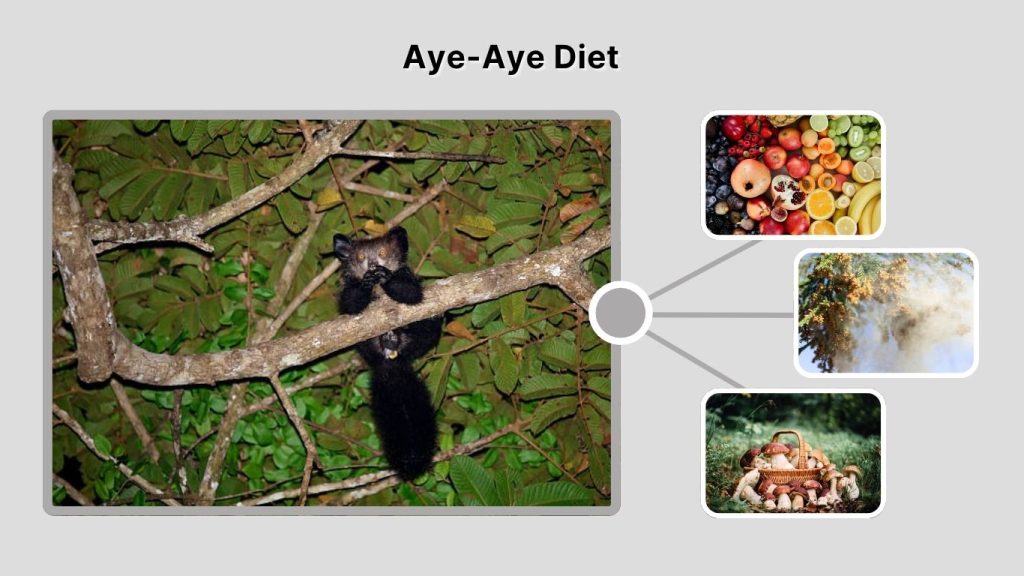
Main Food Sources
The aye-aye has a varied diet, but insect larvae are its primary food source. These larvae are found inside tree bark and provide essential nutrients. In addition to insects, aye-ayes also eat fruits, seeds, nectar, nuts, and fungi. This diverse diet helps them survive in different forest environments.
Specialized Feeding Technique
What truly sets the aye-aye apart is how it feeds. It taps rapidly on tree surfaces to detect hollow areas where insects may be hiding. After locating its prey, it uses its strong teeth to chew through the wood. Its elongated middle finger then acts like a hook, allowing it to extract the insects from inside the tree. This method is highly efficient and rarely seen in other primates.
Hunting and Foraging Behavior
Aye-ayes forage mostly at night, covering large areas in search of food. Their slow and careful movements help them conserve energy while hunting. They rely heavily on their senses, especially hearing, to detect prey. This makes them well adapted to their nocturnal lifestyle.
Ecological Importance
The aye-aye plays an important role in maintaining the balance of its ecosystem. By feeding on insect larvae, it helps control pest populations that could otherwise damage trees. Additionally, when it consumes fruits and seeds, it contributes to seed dispersal, supporting forest regeneration.
Aye-Aye Habitat
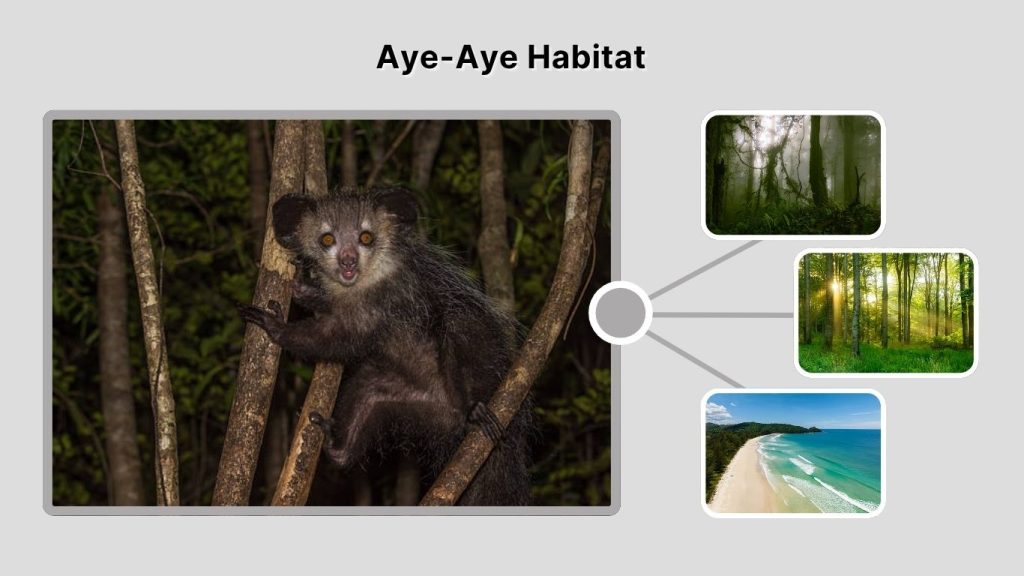
Geographic Distribution
The aye-aye is native only to Madagascar, making it an endemic species. It is found mainly in the eastern rainforests but can also be seen in some western parts of the island. Its limited range makes it especially vulnerable to environmental changes.
Types of Habitat
Aye-ayes can live in a variety of forest types, including tropical rainforests, deciduous forests, and even coastal forest areas. However, they prefer dense forests with plenty of trees, which provide both food and shelter.
Living Environment
As arboreal animals, aye-ayes spend most of their lives in trees. They build spherical nests using leaves and branches, usually high above the ground. Interestingly, they often build multiple nests within their territory and may switch between them for safety and comfort.
Threats to Habitat
Despite their adaptability, aye-ayes face serious threats to their natural habitat. Deforestation is the biggest issue, as forests in Madagascar are being cleared for agriculture, logging, and human settlement. This leads to habitat fragmentation, making it harder for aye-ayes to find food and mates. As their environment shrinks, their survival becomes increasingly difficult.
Aye-Aye Lifespan
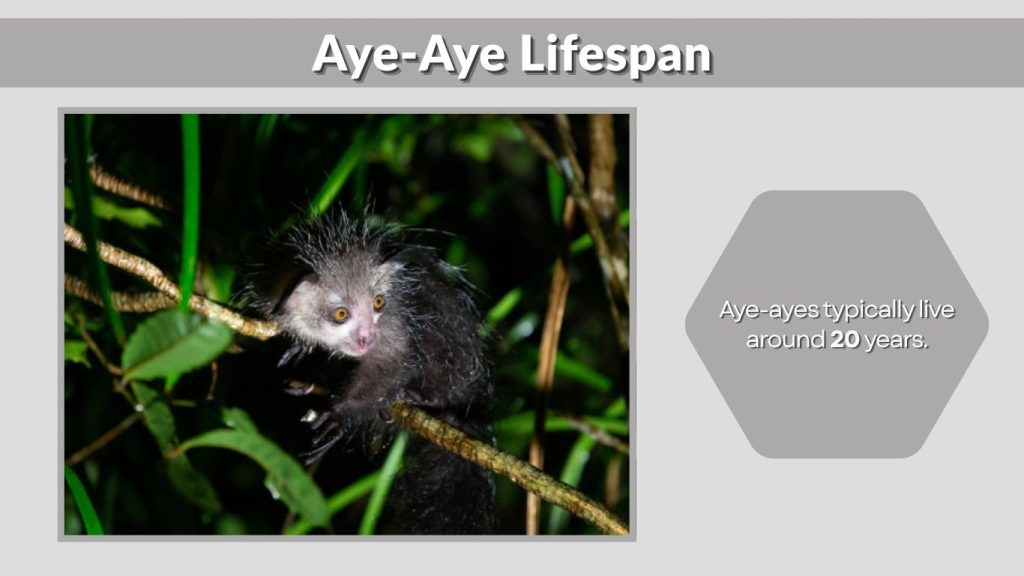
Lifespan in the Wild
In the wild, aye-ayes typically live around 20 years. However, their lifespan can vary depending on environmental conditions and threats. Factors such as food availability, habitat quality, and predation all play a role in determining how long they survive.
Lifespan in Captivity
In captivity, aye-ayes often live longer, reaching up to 23–25 years. This is mainly due to consistent access to food, protection from predators, and veterinary care. Zoos and conservation centers provide controlled environments that support their longevity.
Factors Affecting Lifespan
Several factors influence the lifespan of an aye-aye. Habitat destruction reduces food sources and shelter, while human activities increase stress and danger. Although they have few natural predators, human-related threats—such as hunting due to superstition—significantly impact their survival.
Conservation Status
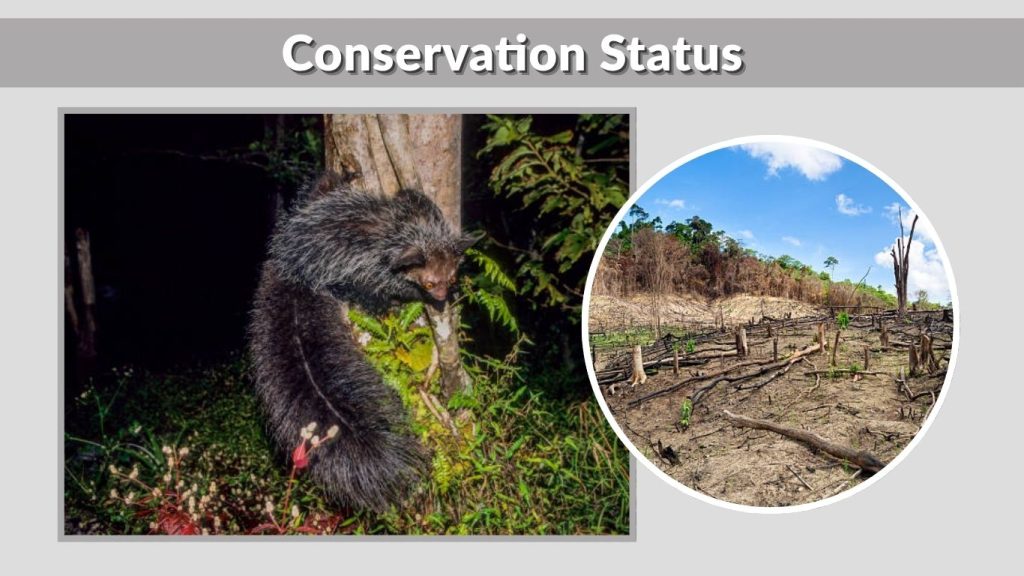
Current Status
The aye-aye is currently classified as an Endangered species. Its population is declining, and without proper conservation efforts, it risks becoming even more threatened in the future.
Major Threats
The main threats to aye-ayes include habitat loss and human persecution. In some regions of Madagascar, local myths portray the aye-aye as a bad omen or symbol of death. As a result, people sometimes kill them on sight. Combined with deforestation, this greatly reduces their population.
Conservation Efforts
Efforts are being made to protect the aye-aye and its habitat. Several protected areas and national parks in Madagascar serve as safe zones for these animals. Conservation organizations are also working to educate local communities and change harmful beliefs. Raising awareness about the ecological importance of aye-ayes is key to ensuring their survival.
Cultural Beliefs and Myths
In Malagasy culture, the aye-aye is often associated with superstition. Many people believe it brings bad luck or death, which has led to fear and hostility toward the animal. These myths have contributed significantly to its decline. However, conservationists are working to shift these perceptions by educating communities about the aye-aye’s role in maintaining a healthy ecosystem.
Interesting Facts About the Aye-Aye
- The aye-aye is the largest nocturnal primate in the world.
- It is the only primate known to use a tapping method similar to echolocation to find food.
- Its middle finger is specially adapted for extracting insects, functioning like a natural tool.
- Aye-ayes have continuously growing teeth, similar to rodents.
- They are rarely seen in the wild due to their nocturnal and elusive nature.
Conclusion
The aye-aye is truly one of nature’s most unique and mysterious creatures. From its unusual appearance and specialized feeding techniques to its important ecological role, it stands out among all primates. However, despite its fascinating traits, the aye-aye faces serious threats from habitat loss and human superstition. Protecting this species is essential not only for preserving biodiversity but also for maintaining the balance of Madagascar’s ecosystems. Greater awareness and conservation efforts can help ensure that this remarkable animal continues to survive for generations to come.
FAQs
1. What is an aye-aye?
The aye-aye is a rare nocturnal primate found only in Madagascar. It belongs to the lemur family and is known for its unusual appearance, especially its long, thin middle finger used for finding food.
2. Why is the aye-aye considered strange?
The aye-aye is considered strange because of its large eyes, bat-like ears, rodent-like teeth, and elongated middle finger. Its unique way of tapping on trees to find insects also makes it different from other primates.
3. What does an aye-aye eat?
Aye-ayes mainly eat insect larvae found inside tree bark. They also consume fruits, seeds, nectar, nuts, and fungi, making them omnivores.
4. Where do aye-ayes live?
Aye-ayes live only in Madagascar. They are found in tropical rainforests, deciduous forests, and coastal forest areas, where they spend most of their time in trees.
5. How long do aye-ayes live?
In the wild, aye-ayes typically live around 20 years. In captivity, they can live longer, often reaching up to 23–25 years.