




The indri is one of the most fascinating primates in the world, known for its haunting, song-like calls that echo through Madagascar’s rainforests. As the largest living lemur, it stands out not only for its size but also for its unique behavior and strong family bonds. Found only in a limited region of the world, the indri faces serious threats to its survival. Understanding this remarkable animal helps highlight the importance of conservation efforts and biodiversity.
What Is an Indri?
The indri (Indri indri) is a type of lemur, which is a group of primates native exclusively to Madagascar. Unlike monkeys or apes, lemurs have evolved separately for millions of years, making them unique in both appearance and behavior. Among all lemur species, the indri is the largest living one, giving it a special place in the primate family.
Scientific Classification
The indri belongs to the animal kingdom and falls under the primate order. Its classification is as follows: Kingdom Animalia, Phylum Chordata, Class Mammalia, Order Primates, Family Indriidae. It is the only species in its genus, which makes it scientifically significant and distinct from other lemurs.
Why the Indri Is Unique
What truly sets the indri apart is its combination of size, behavior, and vocal ability. It is the only living member of its genus, and its loud, melodic calls can be heard from miles away. These calls resemble songs more than simple animal noises, making the indri one of the most vocal primates on Earth.
Physical Characteristics of the Indri
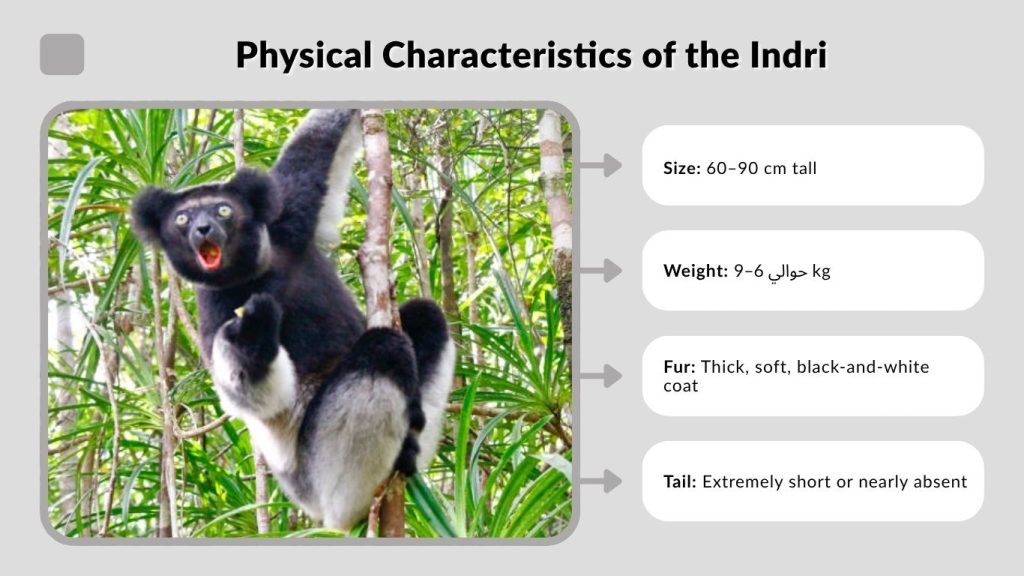
The indri has a distinctive and easily recognizable appearance, adapted perfectly for life in Madagascar’s forest canopy. As the largest living lemur, it combines strength, agility, and unique physical traits that set it apart from other primates. Its body is built for vertical climbing and powerful leaping, while its striking coloration and almost tail-less form make it one of the most unusual-looking lemurs.
Key Physical Features:
- Size: 60–90 cm tall; one of the largest lemurs
- Weight: حوالي 6–9 kg (relatively heavy for a tree-dwelling primate)
- Fur: Thick, soft, black-and-white coat with slight variations
- Tail: Extremely short or nearly absent (unlike most lemurs)
- Face: Rounded face with large eyes and small ears
- Limbs: Strong hind legs for long-distance jumping
- Posture: Often sits upright, giving a human-like appearance
These features not only help the indri survive in its environment but also make it one of the most unique and fascinating primates in the animal kingdom.
Habitat and Distribution
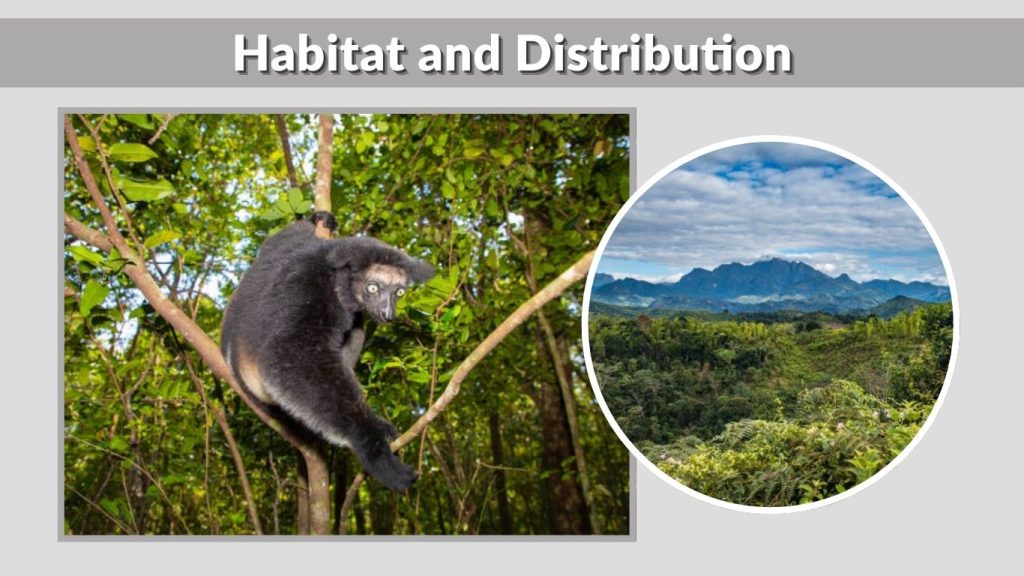
The indri is found only in Madagascar, making it an endemic species with a very limited geographic range.
Where Do Indris Live?
Indris primarily inhabit the eastern rainforests of Madagascar. These regions provide the dense vegetation and tall trees necessary for their arboreal lifestyle. Because they are so specialized, they cannot easily adapt to other environments.
Preferred Environment
These lemurs thrive in humid, tropical forests where they spend most of their lives high in the trees. They rarely come down to the ground, relying on the canopy for food, shelter, and movement.
Impact of Habitat Loss
Unfortunately, Madagascar’s forests are rapidly disappearing due to deforestation, agriculture, and human settlement. As their habitat shrinks, indris lose both their food sources and safe living spaces. This has made them increasingly vulnerable and contributed to their endangered status.
Behavior and Social Structure
Indris are highly social animals with strong bonds between group members. Their behavior reflects both intelligence and cooperation.
Social Groups
They typically live in small family groups consisting of two to six individuals. These groups are usually made up of a breeding pair and their offspring. The bond between group members is strong, and they often stay together for many years.
Daily Activity Patterns
Indris are diurnal, meaning they are active during the day. Their daily routine includes feeding, resting, grooming, and vocalizing. They are known to spend a significant amount of time calling to communicate with other groups.
Movement and Locomotion
One of the most impressive aspects of the indri is its movement. It uses a form of locomotion called vertical clinging and leaping. This allows it to move efficiently through the forest by jumping from one tree to another with remarkable accuracy and strength.
The Famous Indri Song
One of the most remarkable features of the indri is its powerful and haunting vocalization, often described as a “song.” These calls are not only unique among lemurs but also among primates in general.
Why Do Indris Sing?
Indris use their songs primarily for communication and territorial defense. Family groups sing together to mark their territory and warn other groups to stay away. These vocalizations also help maintain social bonds within the group, reinforcing cooperation and unity.
Characteristics of the Call
The indri’s call is loud, melodic, and can last for several minutes. It often begins with a series of low notes that gradually rise into high-pitched wails. These sounds can travel over long distances through the forest, sometimes up to two kilometers. Each group has slightly different patterns, making their songs unique.
Scientific Importance
Researchers study indri songs to better understand primate communication and the evolution of vocal behavior. Their complex calls provide valuable insights into how early primates—and possibly humans—developed advanced communication systems.
Diet and Feeding Habits
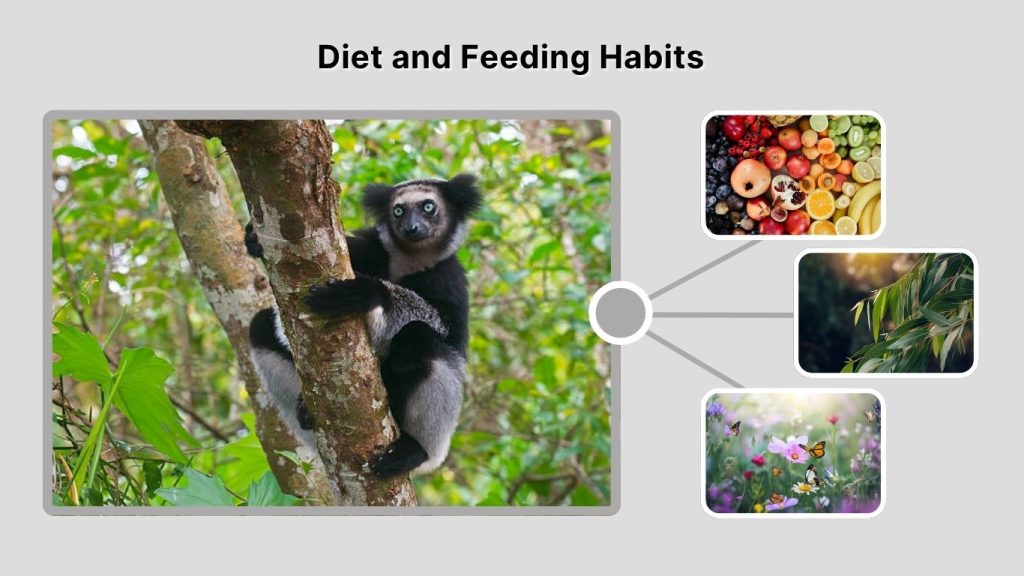
The indri has a specialized diet that plays an important role in maintaining the balance of its ecosystem.
What Do Indris Eat?
Indris are primarily herbivores, with a diet that consists mainly of leaves. They also eat fruits, flowers, and occasionally seeds. Their digestive system is adapted to process tough plant material, allowing them to survive on a leaf-heavy diet.
Feeding Behavior
These lemurs are selective feeders, choosing specific types of leaves and plants depending on the season. They spend a significant portion of their day searching for and consuming food, often moving slowly through the canopy.
Role in Ecosystem
By feeding on fruits and leaves, indris help disperse seeds throughout the forest. This supports plant regeneration and contributes to the health of Madagascar’s rainforest ecosystem.
Reproduction and Lifespan
Indris have a slow reproductive cycle, which makes their populations particularly vulnerable to decline.
Breeding and Birth
Female indris usually give birth to only one offspring at a time, typically every two to three years. This low birth rate means that population recovery is slow, especially when numbers decrease.
Parenting and Development
The mother plays a central role in caring for the infant, although other group members may also help. Young indris cling to their mother for the first few months before gradually learning to move independently.
Lifespan
In the wild, indris can live for many years, although exact lifespans vary. Their survival largely depends on environmental conditions and the availability of food and habitat.
Why the Indri Is Endangered
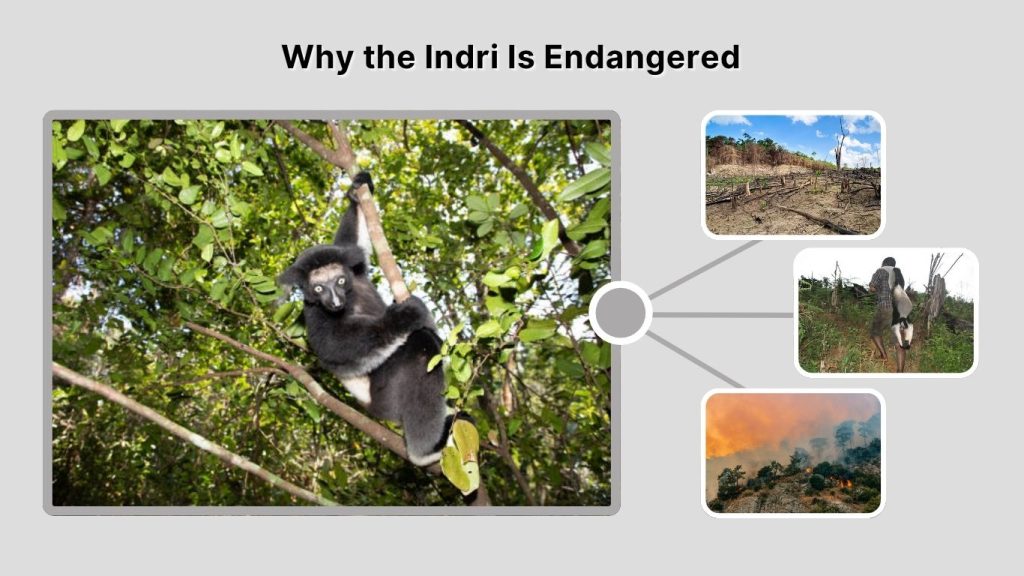
Despite its unique traits and ecological importance, the indri is classified as an endangered species.
Deforestation
One of the biggest threats to the indri is habitat destruction. Forests in Madagascar are being cleared for agriculture, logging, and human settlement. This reduces the space available for indris to live and find food.
Hunting and Human Activity
Although hunting of indris is restricted in many areas, it still occurs. In some regions, cultural beliefs protect them, but in others, they are hunted for food. Human expansion also disrupts their natural environment.
Climate Change
Changes in climate can affect the availability of food and alter the structure of forests. This adds another layer of difficulty for indris trying to survive in an already shrinking habitat.
Conservation Efforts
Efforts are being made to protect the indri and ensure its survival for future generations.
Protected Areas
Several national parks and reserves in Madagascar provide safe habitats for indris. These protected areas help preserve the forests they depend on.
Conservation Programs
Organizations and researchers are working to study indris, monitor their populations, and raise awareness about their endangered status. Community-based conservation programs also involve local people in protecting wildlife.
How People Can Help
Individuals can contribute by supporting conservation organizations, promoting sustainable practices, and raising awareness about endangered species. Eco-tourism, when managed responsibly, can also provide incentives to protect natural habitats.
Interesting Facts About Indri
The indri is full of surprising and fascinating traits that make it truly unique:
- It is the largest living lemur species
- It cannot survive in captivity, making conservation in the wild essential
- Its calls are among the loudest of all primates
- It has a very short tail, unlike most lemurs
- It forms strong, long-lasting family bonds
Indri vs Other Lemurs
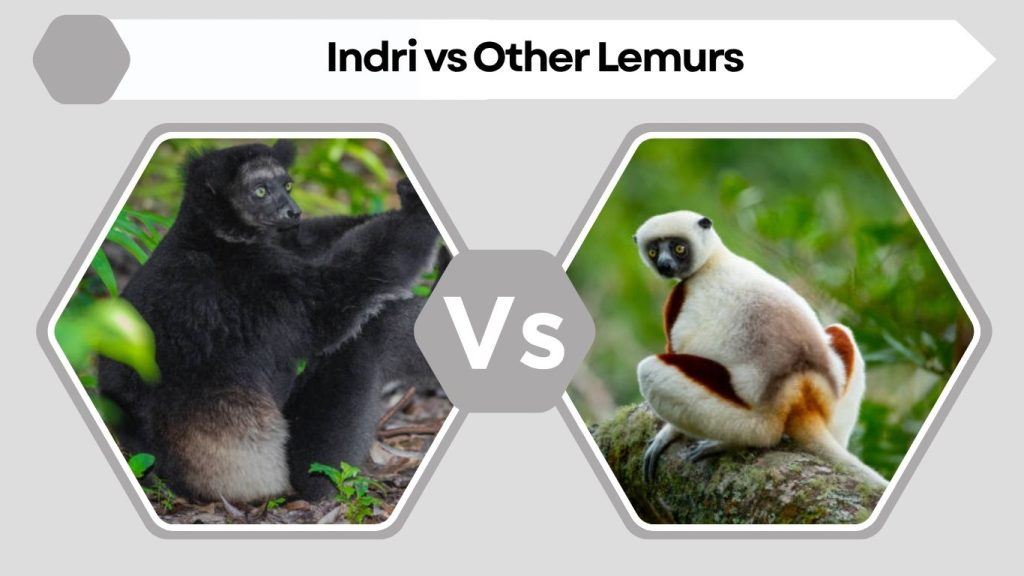
While all lemurs share some similarities, the indri stands out in several ways.
Indri vs Sifaka
Sifakas are also known for their jumping ability, but they have long tails and a slightly different body structure. Indris are larger and lack a visible tail, making them easy to distinguish.
Unique Traits of Indri
The indri’s size, vocalizations, and tail structure set it apart from all other lemurs. Its singing behavior, in particular, makes it one of the most distinctive primates in the world.
Conclusion
The indri is not just another lemur—it is a symbol of Madagascar’s rich biodiversity and a reminder of how fragile ecosystems can be. From its powerful songs to its strong family bonds, the indri represents a unique branch of the primate family. However, with increasing threats like deforestation and climate change, its future remains uncertain. Protecting the indri means preserving an irreplaceable part of our natural world, ensuring that its haunting songs continue to echo through the forests for generations to come.
FAQs
1. What is an indri?
The indri is the largest living species of lemur, native to Madagascar. It is known for its unique singing calls and strong family-based social structure.
2. Why do indris sing?
Indris sing to communicate with each other and to mark their territory. Their loud, melodic calls help keep other groups away and strengthen bonds within their family.
3. Where do indri lemurs live?
Indri lemurs live in the eastern rainforests of Madagascar. They spend most of their lives in trees and rarely come down to the ground.
4. What do indris eat?
Indris mainly eat leaves, but they also consume fruits, flowers, and seeds. Their diet changes depending on the season and food availability.
5. Why is the indri endangered?
The indri is endangered بسبب deforestation, habitat loss, and human activities such as hunting. Climate change also affects its survival by altering its natural environment.