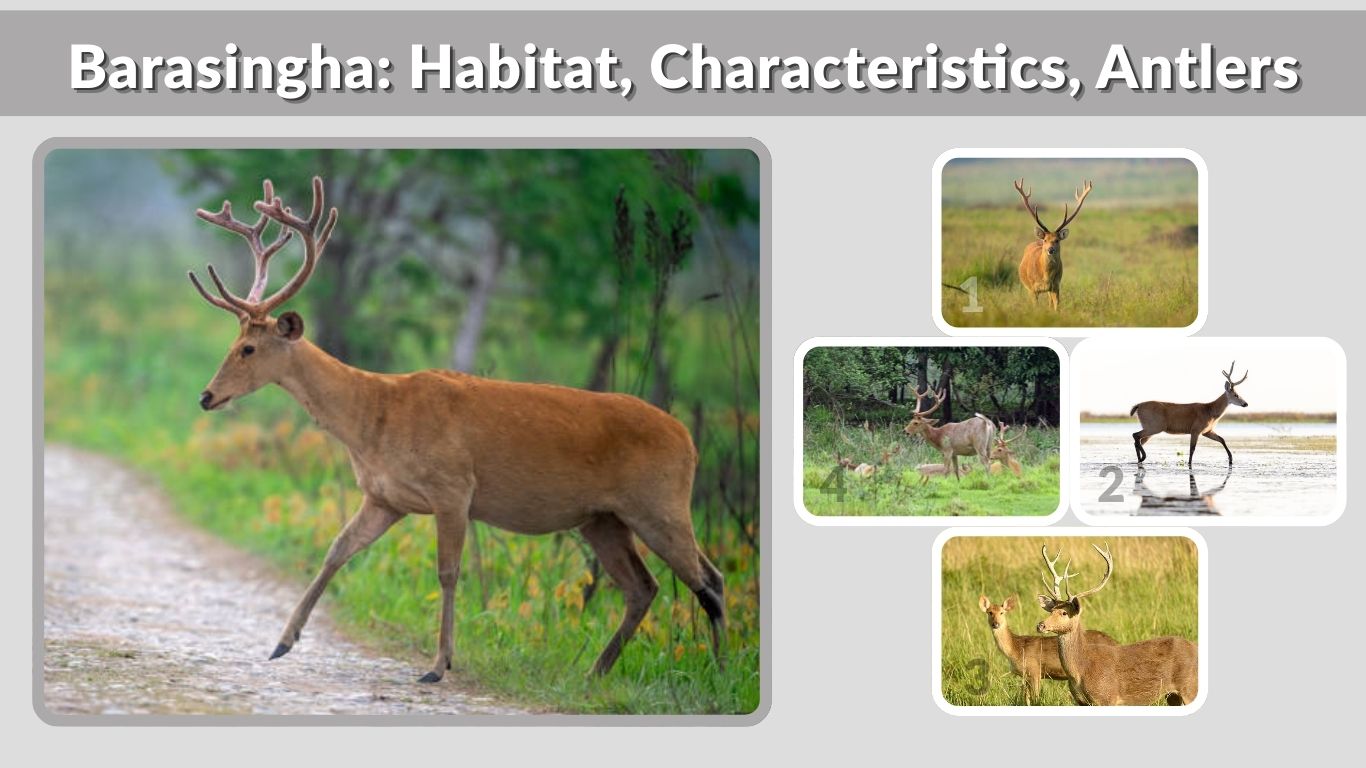
Barasingha is one of the most distinctive deer species found in the Indian subcontinent. Known for its impressive antlers and preference for wetland habitats, the barasingha holds a special place in India’s wildlife heritage. Its name, which literally means “twelve-horned,” reflects the complex branching of its antlers and sets it apart from other deer species. Beyond its striking appearance, the barasingha plays an important ecological role in grassland and swamp ecosystems. However, habitat loss and human pressure have made its conservation increasingly important.
What Is a Barasingha?
The barasingha is a large deer species scientifically known as Rucervus duvaucelii. It is commonly referred to as the swamp deer due to its strong association with marshy grasslands and floodplains. The species belongs to the deer family (Cervidae) and is native to South Asia.
Barasingha are well adapted to wet and swampy environments, where many other deer species struggle to survive. Their physical structure, feeding habits, and social behavior are closely tied to these habitats. Although once widespread across northern and central India, barasingha populations are now limited to a few protected regions.
Why Is It Called Barasingha?
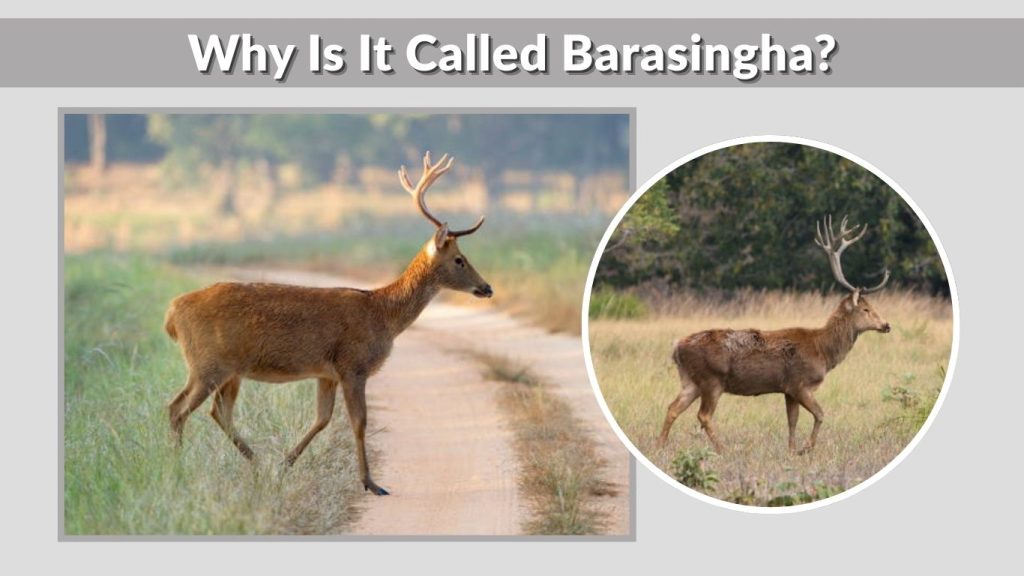
The word “barasingha” comes from two Hindi words: bara, meaning twelve, and singha, meaning horn or antler. The name refers to the large number of branches, or tines, found on the antlers of mature males. In some individuals, the antlers may have even more than twelve tines, making them among the most elaborate antlers seen in deer species.
These antlers are not just ornamental. They play an important role during the breeding season, when males compete with one another to establish dominance and gain access to females. Over time, the impressive antler structure of the barasingha has become a symbol of strength and vitality in Indian wildlife.
Habitat and Distribution of Barasingha
Barasingha primarily inhabit swampy grasslands, wetlands, and river floodplains. They prefer areas with tall grasses and abundant water, which provide both food and protection from predators. Unlike forest-dwelling deer, barasingha are better suited to open landscapes where visibility is high.
Historically, barasingha were found across much of northern and central India, as well as parts of Nepal. Today, their distribution is much more restricted. Small, isolated populations survive mainly in protected areas, where conservation efforts have helped stabilize their numbers. Seasonal flooding and grass growth patterns strongly influence where barasingha live and move throughout the year.
Barasingha in Indian National Parks
One of the most important strongholds for barasingha is Kanha National Park in Madhya Pradesh. The barasingha population in Kanha is considered a major conservation success, as the species was once close to local extinction in the region.
In addition to Kanha, barasingha can be found in a few other reserves and wildlife sanctuaries. These protected areas provide safe breeding grounds and help preserve the wetland ecosystems essential for their survival. Strict protection and habitat management have been key factors in sustaining these populations.
Physical Characteristics of Barasingha
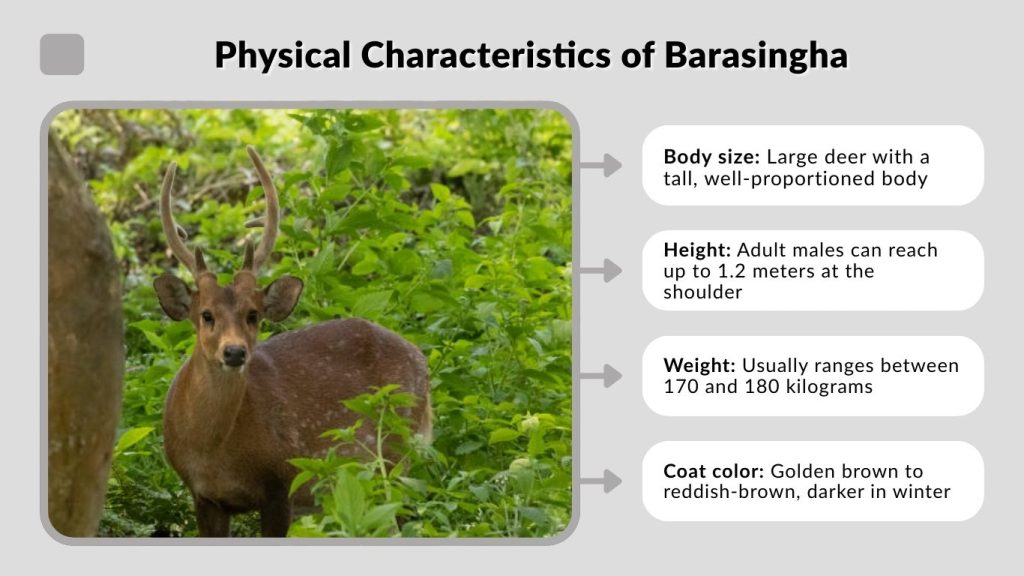
Barasingha are large, graceful deer specially adapted to wetland and grassland environments. Their physical build allows them to move efficiently through swampy terrain while maintaining speed and balance in open landscapes. These characteristics also help them survive seasonal flooding and long periods of grazing.
Key physical characteristics of barasingha include:
- Body size: Large deer with a tall, well-proportioned body
- Height: Adult males can reach up to 1.2 meters at the shoulder
- Weight: Usually ranges between 170 and 180 kilograms
- Coat color: Golden brown to reddish-brown, darker in winter
- Seasonal coat change: Thicker and darker coat during colder months
- Legs: Long, strong legs suited for marshy and uneven ground
- Hooves: Broad and splayed to prevent sinking in soft, muddy soil
- Antlers: Large, multi-branched antlers found only in males
- Neck and chest: Strong and muscular, especially in adult males
- Overall build: Slim yet powerful, designed for endurance and grazing
Diet and Feeding Habits
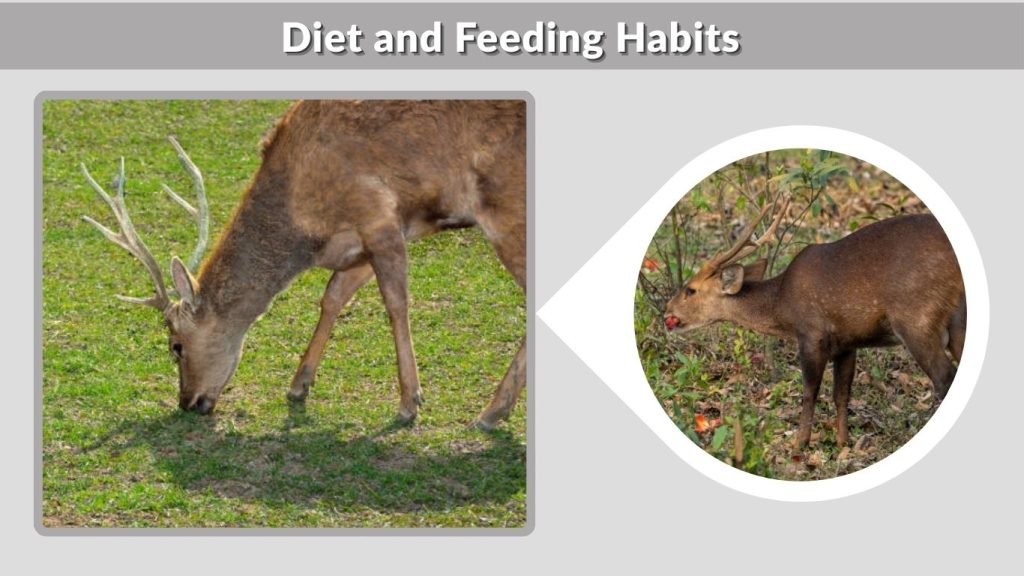
Barasingha are herbivores that primarily feed on grasses. Their diet consists of tender grass shoots, aquatic plants, and leaves found in wetland environments. During the monsoon season, when vegetation is abundant, they feed extensively to build energy reserves.
In drier months, barasingha may adjust their diet based on food availability, grazing selectively in areas where moisture remains. Their feeding behavior helps maintain grassland health by preventing overgrowth and promoting plant diversity.
Importance of Wetlands in Barasingha Diet
Wetlands play a critical role in supporting the dietary needs of barasingha. Marshy grasslands and floodplains produce nutrient-rich grasses and aquatic plants that form the core of their diet. These habitats remain productive even during dry seasons, allowing barasingha to find food when other grazing areas decline.
Loss of wetlands directly affects food availability and forces barasingha into smaller areas, increasing competition and stress. Protecting wetland ecosystems is therefore essential not only for the survival of barasingha but also for maintaining healthy grassland biodiversity.
Behavior and Social Structure
Barasingha are social animals that usually live in herds. Herd size varies depending on season and habitat quality, ranging from small groups to larger gatherings during favorable conditions. Females and young often form separate groups, while adult males may remain solitary or join herds during the breeding season.
They are primarily active during early morning and late afternoon, spending most of the day grazing or resting. Barasingha rely on alertness and group behavior to detect predators, using their height and open habitat to spot danger from a distance.
Reproduction and Lifespan
The breeding season of barasingha typically occurs during late autumn. During this time, males compete for females using their antlers and vocal displays. Dominant males gain mating opportunities, while younger or weaker males are pushed to the edges of breeding areas.
After a gestation period of about eight months, females give birth to a single calf, usually at the beginning of the monsoon season when food is abundant. Calves are hidden in tall grass during their early weeks for protection. In the wild, barasingha generally live between 12 and 15 years under favorable conditions.
Conservation Status and Threats
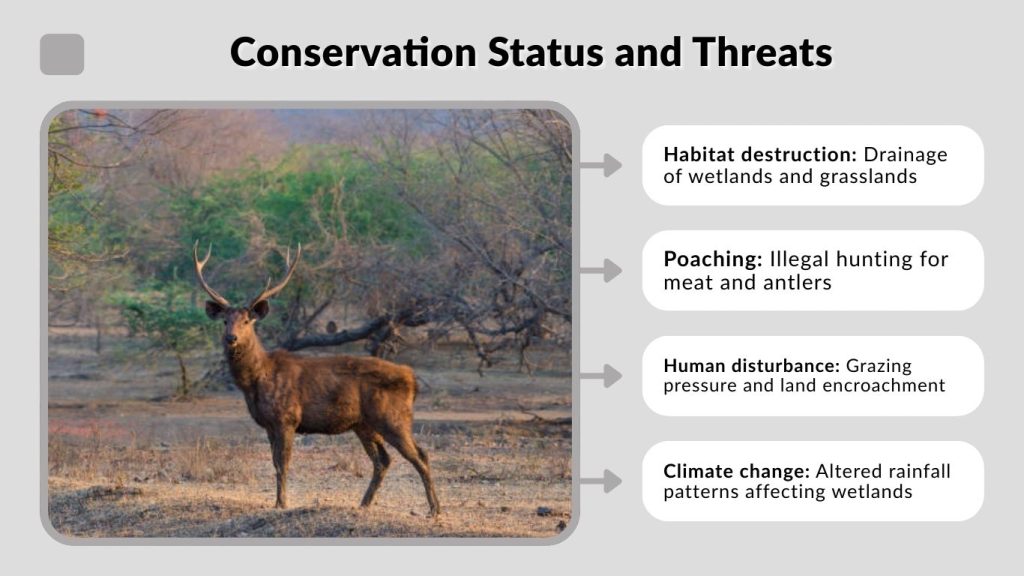
Barasingha are currently listed as a threatened species, with populations having declined sharply in the past due to habitat loss and hunting. Conversion of wetlands into agricultural land has been one of the major reasons for their decline.
Although conservation efforts have helped stabilize some populations, the species remains vulnerable. Fragmented habitats and small population sizes make barasingha susceptible to disease, genetic isolation, and environmental changes.
Major Threats to Barasingha
Several factors continue to threaten the survival of barasingha:
- Habitat destruction: Drainage of wetlands and grasslands
- Poaching: Illegal hunting for meat and antlers
- Human disturbance: Grazing pressure and land encroachment
- Climate change: Altered rainfall patterns affecting wetlands
Addressing these threats requires long-term planning and effective protection strategies.
Conservation Efforts and Protection
Significant conservation efforts have been undertaken to protect barasingha populations. Protected areas such as national parks and wildlife sanctuaries play a crucial role in preserving their natural habitats. Habitat restoration, controlled burning of grasslands, and water management have proven effective in supporting population recovery.
Community involvement is also essential. Conservation programs increasingly focus on engaging local communities, reducing human-wildlife conflict, and promoting sustainable land use practices that benefit both people and wildlife.
Barasingha as a State Animal
Barasingha holds symbolic importance in India and is recognized as the state animal of Madhya Pradesh. This status highlights its cultural, ecological, and conservation value. The species represents the rich biodiversity of central Indian grasslands and the success of wildlife conservation when properly managed.
Being a state symbol has also helped raise public awareness about the need to protect barasingha and their habitats.
Interesting Facts About Barasingha
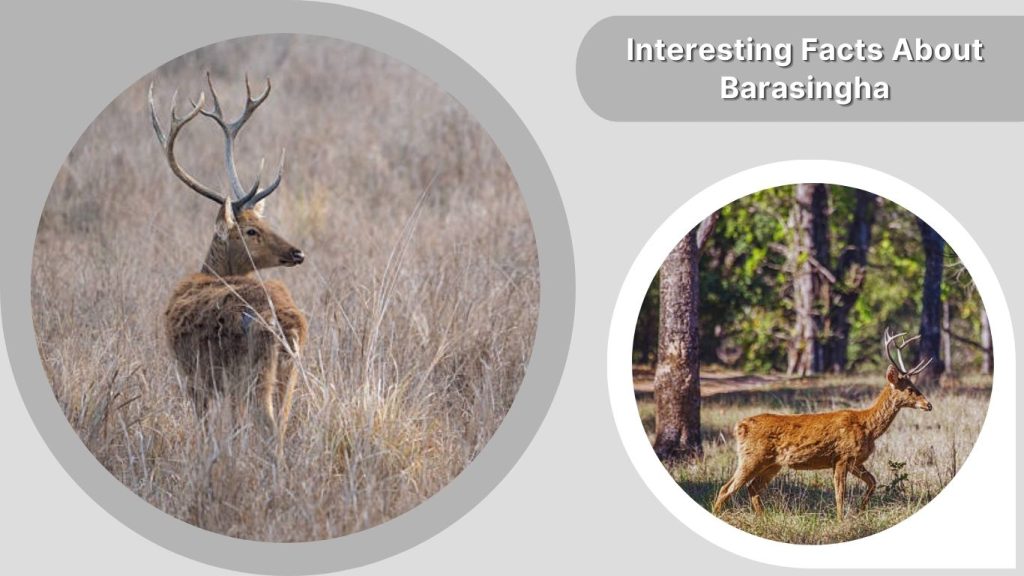
Barasingha have several unique traits that distinguish them from other deer species. Their broad hooves are specially adapted for walking through marshy ground without sinking. The antlers of mature males can form complex, crown-like structures with numerous tines.
Unlike many forest deer, barasingha prefer open landscapes, relying on visibility rather than dense cover for safety. Their grazing behavior also helps maintain grassland ecosystems, making them an important ecological species.
Conclusion
Barasingha are remarkable deer uniquely adapted to wetland and grassland ecosystems. From their impressive antlers and social behavior to their ecological role and cultural significance, they represent an important part of South Asia’s natural heritage. Continued conservation efforts, habitat protection, and public awareness are essential to ensure that future generations can continue to witness this majestic species in the wild.
FAQs
What is a barasingha?
Barasingha is a large deer species native to the Indian subcontinent. Scientifically known as Rucervus duvaucelii, it is commonly called the swamp deer because it prefers wetland and grassland habitats.
Why is barasingha called the swamp deer?
Barasingha is called the swamp deer because it lives mainly in marshy grasslands, floodplains, and wetlands. Its long legs and broad hooves help it move easily through soft, muddy terrain.
Why is it called barasingha?
The name “barasingha” comes from Hindi words meaning “twelve horns.” It refers to the many branches found on the antlers of adult males, which can sometimes have more than twelve tines.
Where is barasingha found in India?
Barasingha is mainly found in protected areas such as Kanha National Park in Madhya Pradesh. Small populations also exist in other wildlife sanctuaries and parts of Nepal.
Is barasingha an endangered species?
Barasingha is considered a threatened species. Habitat loss, wetland destruction, and human activities have caused population declines, although conservation efforts have helped stabilize some groups.