


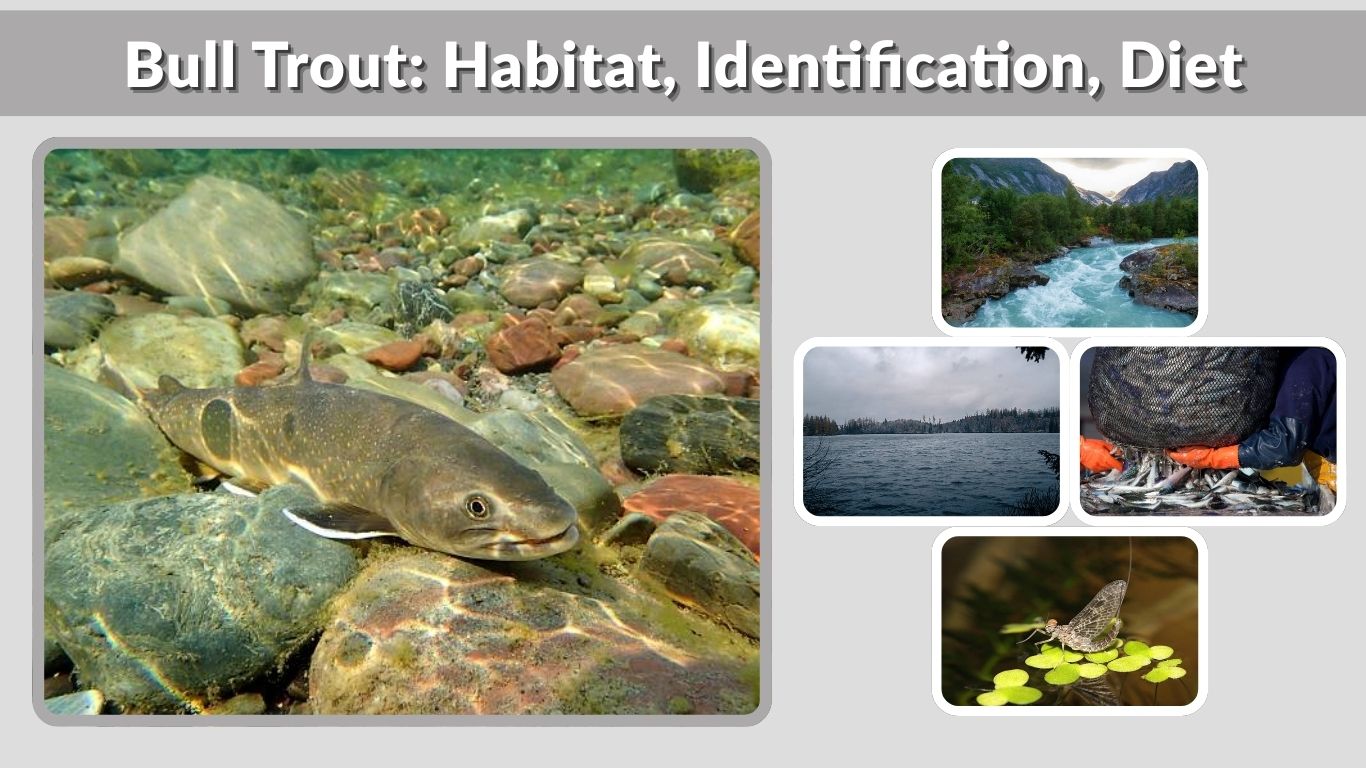
Bull trout (Salvelinus confluentus) are one of North America’s most iconic cold-water fish species. Native to the Pacific Northwest and parts of western Canada and Alaska, these powerful fish thrive in some of the coldest, cleanest freshwater systems on the continent. Often mistaken for other trout species, bull trout are actually members of the char family. Today, they are considered a threatened species in the United States, making their conservation critical. Understanding their habitat, identification features, and life cycle helps highlight why they are so important to healthy river ecosystems.
What Is a Bull Trout?
Bull trout are large freshwater fish belonging to the char genus Salvelinus, which also includes brook trout, lake trout, and Arctic char. Despite their name, they are not true trout like rainbow or brown trout. They evolved in the cold, glacial-fed rivers and lakes of western North America and are specially adapted to survive in extremely cold water conditions.
Bull trout require some of the coldest water temperatures of any salmonid species. Because of this strict requirement, they are often considered an indicator species—meaning their presence signals a clean, healthy watershed.
Scientific Classification
- Kingdom: Animalia
- Phylum: Chordata
- Class: Actinopterygii
- Family: Salmonidae
- Genus: Salvelinus
- Species: Salvelinus confluentus
As members of the char family, bull trout share more characteristics with Arctic char and brook trout than with other trout species.
Why Bull Trout Are Unique
Bull trout are sometimes called “the canary in the coal mine” for freshwater ecosystems. They require very cold, clean, connected waterways to survive. Water temperatures typically must remain below 55°F (13°C), especially during spawning and juvenile development.
Their sensitivity to habitat changes makes them particularly vulnerable to warming streams, sediment pollution, and barriers such as dams. When bull trout populations decline, it often signals broader environmental problems within the watershed.
How to Identify a Bull Trout
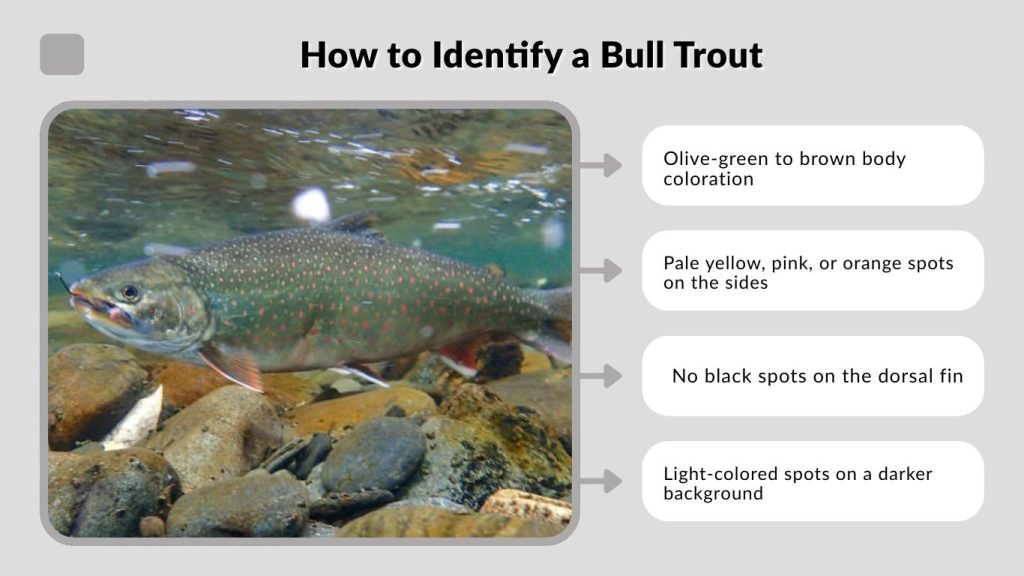
Correctly identifying a bull trout is important, especially because they are protected in many areas. Anglers sometimes confuse them with brook trout or lake trout, but there are clear differences.
Bull trout generally have a long, streamlined body built for strong swimming. Their head appears large compared to their body, and their mouth extends well past the eye—one reason for the name “bull” trout.
Key Physical Characteristics
- Olive-green to brown body coloration
- Pale yellow, pink, or orange spots on the sides
- No black spots on the dorsal fin
- Light-colored spots on a darker background
- Slightly forked tail
- White leading edges on lower fins (common in char species)
One important identifying feature is that bull trout have light spots on a darker background. This is the opposite pattern seen in many true trout species.
Bull Trout vs Brook Trout
Bull trout are frequently mistaken for brook trout because both species are char and have similar body shapes.
However, there are several key differences:
- Spot Pattern: Brook trout have red spots surrounded by blue halos, while bull trout have pale yellow or orange spots without blue halos.
- Body Markings: Brook trout display worm-like markings (vermiculations) on their backs. Bull trout do not.
- Tail: Brook trout tails usually have black spots, while bull trout tails are generally unspotted.
- Habitat: Bull trout prefer larger river systems and colder water, while brook trout are more adaptable and can live in smaller streams.
Correct identification is critical because bull trout are protected in many regions.
Bull Trout vs Lake Trout
Lake trout are typically larger and have deeply forked tails. They also display light spots on a dark body, similar to bull trout. However:
- Lake trout usually have a more deeply forked tail.
- Bull trout have a broader, flatter head.
- Lake trout are more commonly found in large, deep lakes.
In areas where both species coexist, careful observation is necessary.
Bull Trout Habitat and Geographic Range
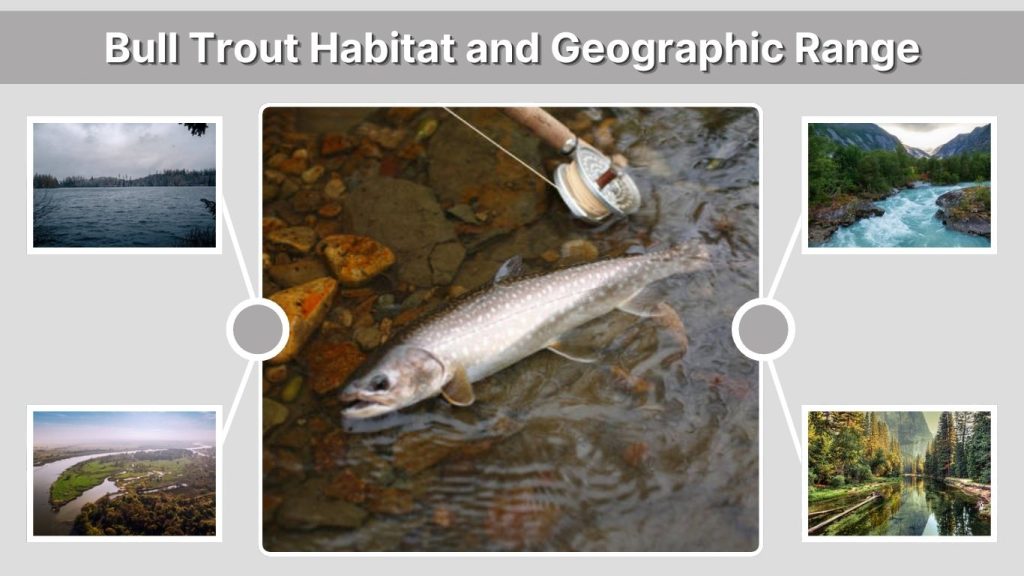
Bull trout are native to western North America. Their historical range included rivers and lakes from northern California through Oregon, Washington, Idaho, Montana, and into British Columbia and Alberta. They are also found in parts of Alaska.
Today, their distribution is more fragmented due to habitat loss and environmental changes.
Ideal Habitat Conditions
Bull trout require exceptionally clean and cold water. They are most commonly found in:
- Glacial-fed rivers
- Mountain streams
- Deep, cold lakes
- Large river systems with connected tributaries
Water temperature is one of the most important factors affecting their survival. Spawning and juvenile development require especially cold water, typically below 48°F (9°C). Sediment-free gravel beds are necessary for successful reproduction.
Bull trout also depend on complex habitat features such as deep pools, undercut banks, fallen logs, and shaded stream sections. These features provide shelter and feeding opportunities.
Geographic Distribution
Current bull trout populations are concentrated in:
- Montana (particularly in Glacier National Park region)
- Idaho
- Northeastern Oregon
- Washington State
- British Columbia
- Alberta
- Southern Alaska
Because bull trout require connected waterways for migration, dams and culverts have significantly reduced their accessible habitat in some regions.
Life Cycle and Spawning Behavior
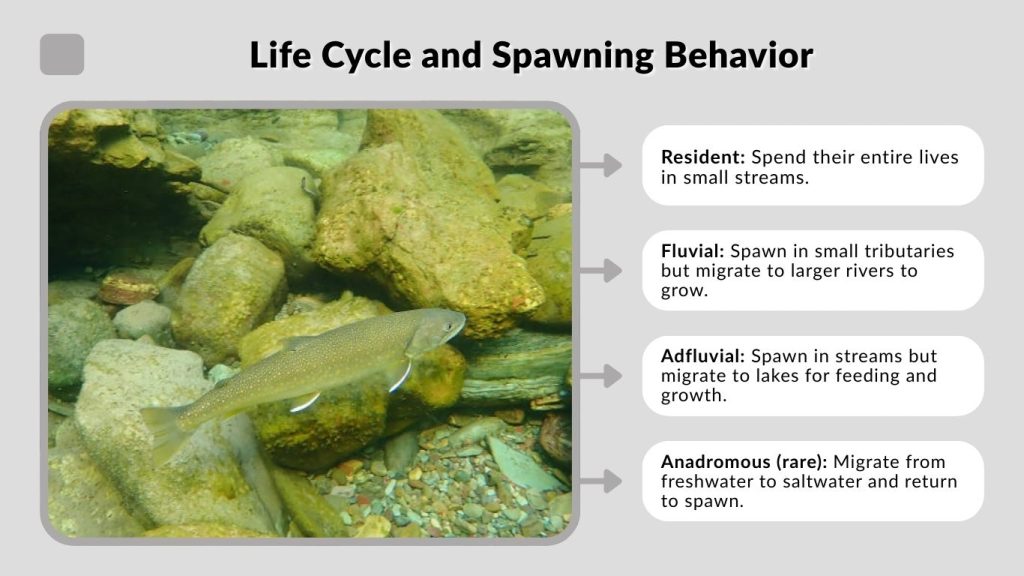
Bull trout have one of the most complex life histories among freshwater fish. Different populations exhibit different migration patterns depending on their environment.
Migration Types
There are four primary life-history forms:
- Resident: Spend their entire lives in small streams.
- Fluvial: Spawn in small tributaries but migrate to larger rivers to grow.
- Adfluvial: Spawn in streams but migrate to lakes for feeding and growth.
- Anadromous (rare): Migrate from freshwater to saltwater and return to spawn.
These migration strategies allow bull trout to take advantage of rich feeding areas while still returning to cold tributaries for spawning.
Spawning Season
Bull trout typically spawn from late summer to early fall, usually between August and October. Spawning occurs in cold, clean tributary streams with gravel bottoms.
Females dig nests, known as redds, in loose gravel. After depositing eggs, males fertilize them externally. The eggs remain buried in the gravel throughout winter, protected from predators and harsh conditions.
Juvenile bull trout emerge in early spring and often remain in their natal streams for several years before migrating, depending on their life-history type.
What Do Bull Trout Eat?
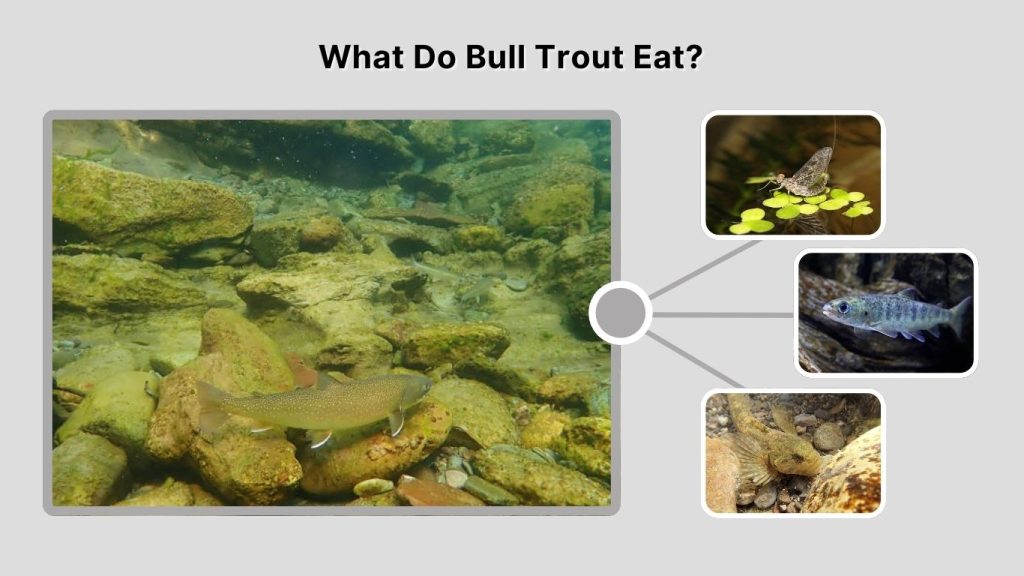
Bull trout are opportunistic carnivores, and their diet changes as they grow. Because they are aggressive feeders, especially as adults, they play an important role in maintaining balance within freshwater ecosystems.
Juvenile Diet
Young bull trout primarily feed on small prey found in streams. Their early diet typically includes:
- Aquatic insects such as mayflies, stoneflies, and caddisflies
- Zooplankton
- Small crustaceans
During this stage, they rely heavily on healthy invertebrate populations, which means clean, unpolluted water is essential for survival.
Adult Diet
As bull trout mature, they shift toward a fish-based diet. Larger individuals become powerful predators and may consume:
- Smaller trout and char
- Mountain whitefish
- Sculpins
- Juvenile salmon
- Occasionally amphibians
In lake and river systems where salmon are present, bull trout often feed on spawning or migrating salmon. This high-protein diet supports their rapid growth and allows some individuals to reach impressive sizes.
Role as a Top Freshwater Predator
Adult bull trout often function as apex predators in cold-water systems. By preying on smaller fish, they help regulate fish populations and contribute to balanced aquatic food webs. Their presence also reflects a healthy prey base and strong ecosystem connectivity.
How Big Do Bull Trout Get?
Bull trout size varies greatly depending on habitat and life-history type. Fish that migrate into lakes or large rivers generally grow much larger than those that remain in small headwater streams.
Average Size
Resident bull trout that spend their lives in small streams typically weigh between 1 and 5 pounds and measure 12 to 20 inches in length.
Maximum Size
Migratory (adfluvial or fluvial) bull trout can grow significantly larger. In productive lake systems, they may:
- Exceed 20 pounds
- Reach lengths of up to 40 inches
These larger fish are strong swimmers and highly valued by anglers where fishing is permitted.
Factors That Influence Growth
Several environmental factors affect bull trout growth rates:
- Water temperature: Colder water slows metabolism but is essential for survival.
- Food availability: Abundant prey promotes faster growth.
- Migration access: Fish with access to lakes or large rivers often grow larger.
- Habitat quality: Clean, connected waters support healthier populations.
Because they grow slowly and mature later than some other trout species, bull trout populations are particularly vulnerable to overharvesting.
Conservation Status and Threats
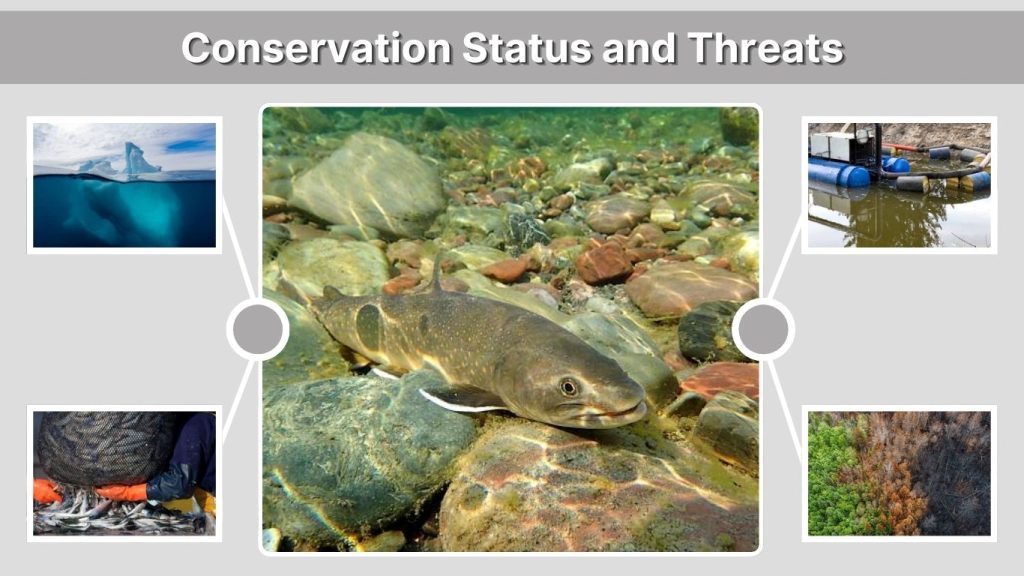
Bull trout are listed as a threatened species under the U.S. Endangered Species Act. While they are not extinct, their populations have declined significantly from historical levels due to habitat loss and environmental change.
Major Threats
Several factors have contributed to bull trout declines:
- Habitat destruction: Logging, mining, and urban development increase sediment and reduce water quality.
- Dams and barriers: Block migration routes and isolate populations.
- Climate change: Warmer stream temperatures reduce suitable habitat.
- Hybridization with brook trout: Non-native brook trout can interbreed with bull trout, weakening genetic integrity.
- Historic overfishing: Past harvest pressure reduced many local populations.
Because bull trout require cold, connected watersheds, even small environmental changes can have significant impacts.
Why Climate Change Is a Major Concern
Climate change poses one of the greatest long-term threats. Rising air temperatures lead to warmer streams, shrinking snowpacks, and reduced summer flows. Since bull trout depend on cold water, warming trends may push them into increasingly smaller areas of suitable habitat, especially in lower-elevation rivers.
Protecting high-elevation watersheds and restoring riparian vegetation are critical strategies for maintaining cold-water refuges.
Bull Trout Fishing Regulations
Due to their protected status, bull trout fishing regulations are strict in many regions. In much of the United States, it is illegal to intentionally target or harvest bull trout.
Legal Status
- Listed as threatened under federal law in the U.S.
- Regulations vary by state and province
- Often catch-and-release only where incidental capture occurs
Anglers are encouraged to learn identification skills to avoid accidental harvest.
Responsible Angling Practices
When bull trout are caught unintentionally, proper release techniques are important:
- Use barbless hooks when required
- Keep the fish in the water during release
- Avoid squeezing or excessive handling
- Release the fish quickly to reduce stress
These practices improve survival rates and help protect fragile populations.
Why Bull Trout Matter to River Ecosystems
Bull trout are more than just a sport fish—they are a key component of healthy freshwater ecosystems.
Ecological Importance
As a native predator, bull trout help regulate prey species and maintain balanced fish communities. Because they require cold, clean water and connected stream systems, their presence indicates strong watershed health.
They are also culturally important to many Indigenous communities across the Pacific Northwest and western Canada, where they have long been valued as a traditional food source.
When bull trout populations decline, it often signals larger environmental problems such as warming streams, habitat fragmentation, or pollution.
FAQs
Where do bull trout live?
Bull trout live in cold, clean freshwater systems in western North America, including parts of Montana, Idaho, Washington, Oregon, British Columbia, Alberta, and Alaska. They prefer glacial-fed rivers, mountain streams, and deep lakes with low water temperatures.
Are bull trout endangered?
Bull trout are listed as threatened in the United States under the Endangered Species Act. While not extinct, many populations have declined due to habitat loss, climate change, and migration barriers.
How can you tell a bull trout from a brook trout?
Bull trout have pale yellow or orange spots on a darker body and lack worm-like back markings. Brook trout have red spots with blue halos and distinctive wavy markings on their backs.
What do bull trout eat?
Juvenile bull trout eat insects and small aquatic organisms. Adults are fish-eaters and may consume smaller trout, whitefish, sculpins, and even young salmon.
How big can bull trout grow?
Resident bull trout typically reach 1–5 pounds, while migratory individuals in lakes and large rivers can exceed 20 pounds and grow up to 40 inches long.
Can you keep a bull trout if you catch one?
In many areas, it is illegal to keep bull trout due to their protected status. Regulations vary by region, so anglers should always check local fishing laws.
Conclusion
Bull trout are a remarkable cold-water species that symbolize the health of western North America’s rivers and lakes. From their strict habitat requirements to their role as apex predators, they are deeply connected to functioning freshwater ecosystems. However, habitat loss, climate change, and fragmentation continue to threaten their survival. Protecting bull trout means protecting clean water, connected watersheds, and resilient ecosystems for future generations.