
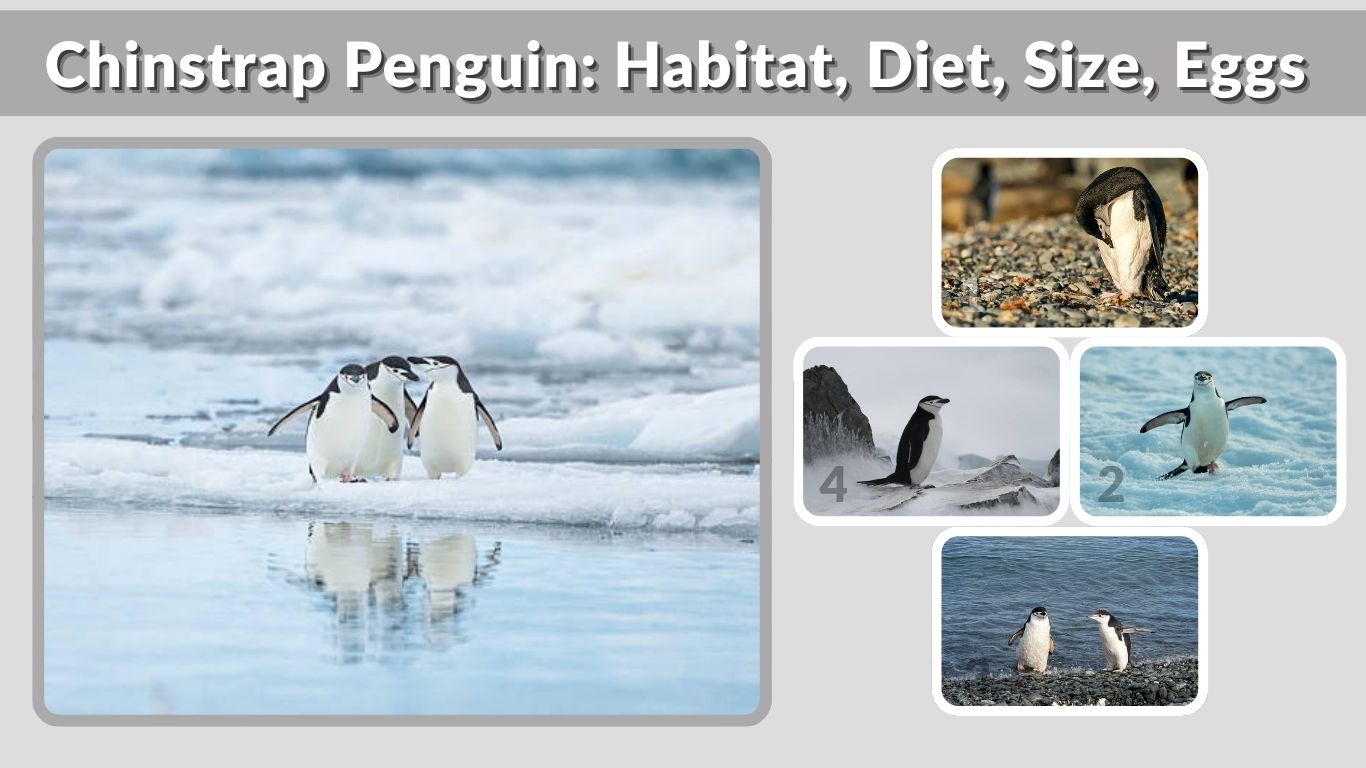
The chinstrap penguin is one of the most recognizable penguin species in the Southern Ocean. Named for the thin black line that runs under its chin like a helmet strap, this energetic seabird thrives in cold, windswept environments near Antarctica. Although smaller than emperor penguins, chinstrap penguins are bold, social, and highly adaptable. In this guide, we’ll explore key chinstrap penguin facts, including their habitat, size, diet, and early stages of their life cycle.
What Is a Chinstrap Penguin?
The chinstrap penguin (Pygoscelis antarcticus) is a medium-sized penguin species closely related to the Adélie and gentoo penguins. It belongs to a group often called “brush-tailed penguins,” known for their stiff tail feathers and active personalities.
Chinstrap penguins are famous for the narrow black band beneath their heads, which gives them their name. This distinctive marking makes them easy to identify among other Antarctic penguin species.
They are highly social birds and gather in large colonies during breeding season. These colonies are noisy, crowded, and full of activity, especially during the summer months.
Physical Appearance
Chinstrap penguins have a classic black-and-white penguin appearance with a few unique traits:
- A black head and throat
- A bright white face
- A thin black line under the chin
- A white belly and black back
Their flippers are strong and narrow, designed for swimming rather than flying. On land, they often appear slightly awkward, but in the water they move with speed and precision.
Chinstrap Penguin Size
Chinstrap penguins are considered medium-sized among penguin species. On average, they stand about 27 to 30 inches (68–76 cm) tall.
Their weight typically ranges from 8 to 13 pounds (3.5–6 kg), depending on the season and food availability. During the breeding season, adults may lose weight due to fasting while incubating eggs or guarding chicks.
Compared to Adélie penguins, chinstraps are slightly larger. However, they are much smaller than king and emperor penguins.
Where Do Chinstrap Penguins Live?
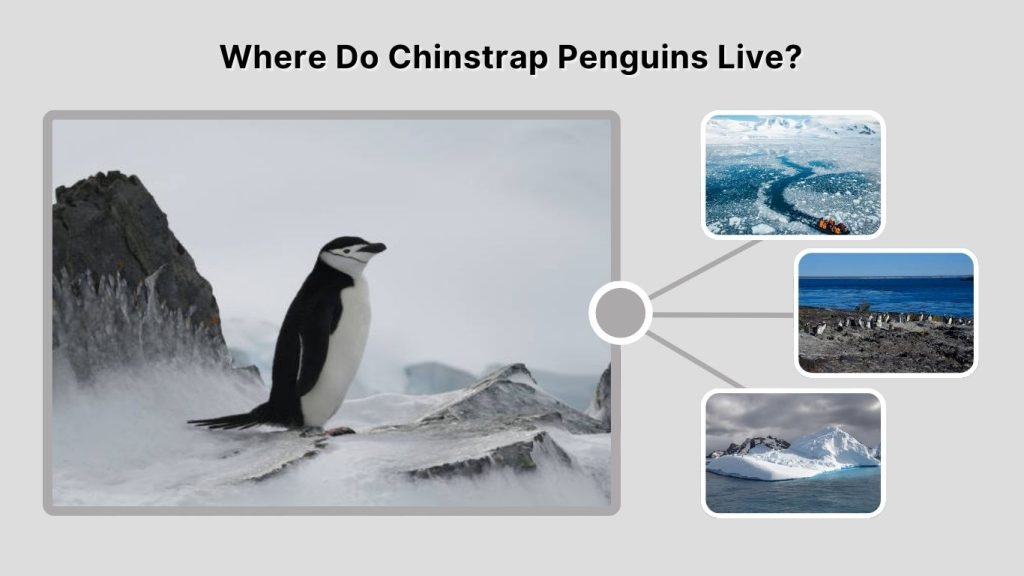
Chinstrap penguins live primarily in the Southern Ocean region, especially around the Antarctic Peninsula and nearby islands.
Chinstrap Penguin Habitat
Their preferred habitat includes:
- The Antarctic Peninsula
- South Shetland Islands
- South Sandwich Islands
- Other subantarctic islands
They typically breed on ice-free rocky slopes and coastal areas, often choosing steep, rugged terrain. These locations provide protection from flooding and allow quick access to the sea for feeding.
Unlike emperor penguins, chinstrap penguins do not breed deep on the Antarctic mainland ice. Instead, they favor rocky areas where they can build nests with small stones.
Seasonal Movements
Chinstrap penguins follow a seasonal migration pattern. During the Antarctic summer (November to March), they remain on land to breed and raise chicks.
When winter arrives and conditions become harsher, they head north toward open ocean waters and pack ice. There, they spend much of their time at sea hunting for food until the next breeding season begins.
Fascinating Chinstrap Penguin Facts
Chinstrap penguins are known for their bold and sometimes aggressive personalities. They are highly territorial during breeding season and will defend their nesting sites from neighbors.
One impressive fact is that chinstrap penguins form some of the largest penguin colonies in the world. Certain colonies contain hundreds of thousands of individuals packed closely together on rocky hillsides.
They are also extremely vocal birds. Each penguin has a unique call that helps mates and chicks identify one another in crowded colonies.
In the water, chinstrap penguins are fast and agile swimmers. They can reach speeds of up to 20 miles per hour (32 km/h) when escaping predators or chasing prey. Their streamlined bodies and powerful flippers make them efficient underwater hunters.
Because they rely heavily on marine ecosystems, chinstrap penguins are considered important indicators of ocean health in the Antarctic region.
Chinstrap Penguin Diet and Feeding Habits
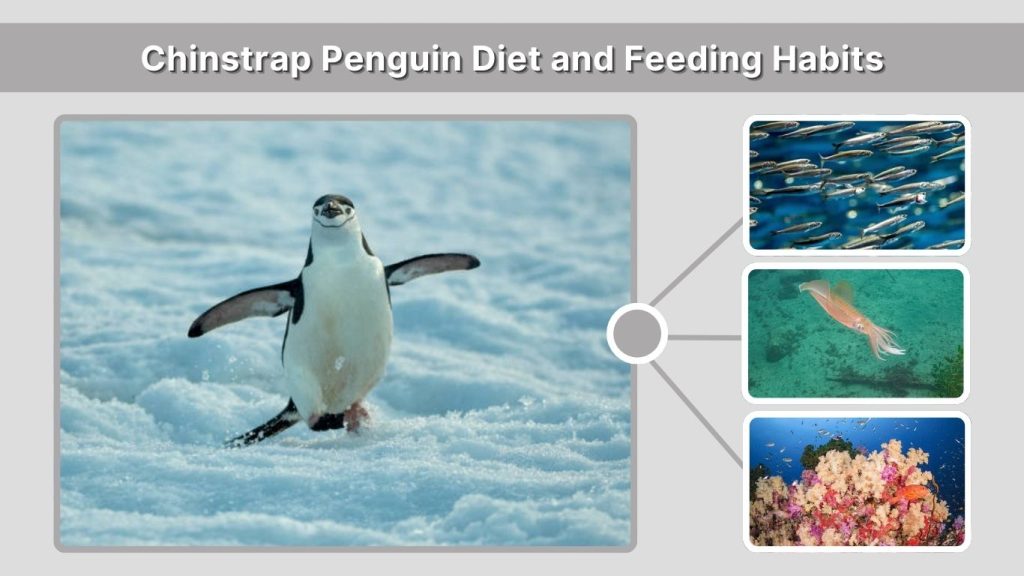
Chinstrap penguins are carnivorous seabirds that depend entirely on marine food sources. Their survival is closely linked to the abundance of krill in Antarctic waters.
What Do Chinstrap Penguins Eat?
The primary component of their diet is Antarctic krill, a small shrimp-like crustacean that forms the foundation of the Southern Ocean food web.
In addition to krill, they also eat:
- Small fish
- Squid
- Other small marine organisms
Krill makes up the majority of their diet because it is abundant and energy-rich, especially during the breeding season.
Hunting Behavior
Chinstrap penguins are strong divers and capable hunters. They plunge into the ocean and use their flippers to propel themselves through the water while chasing prey.
Most of their dives are relatively shallow, but they can dive deeper when necessary. They often forage in groups, which may improve their chances of locating dense krill swarms.
During breeding season, adults make repeated trips to sea to gather food for their chicks. Timing and coordination are crucial, as chicks rely entirely on regurgitated food from their parents in the early stages of life.
Chinstrap Penguin Eggs and Reproduction
Chinstrap penguins breed during the Antarctic summer, usually between November and March. This short breeding window provides milder temperatures and better access to food, which is essential for raising chicks successfully.
When the breeding season begins, males typically arrive at the nesting grounds first to establish territories. They select rocky areas on slopes or coastal cliffs where snow has melted.
Nest Building
Chinstrap penguins build simple nests using small stones and pebbles. These stones help keep the eggs elevated above melting snow and rainwater, reducing the risk of flooding.
Because suitable nesting stones are limited, competition can be intense. Penguins are often seen stealing pebbles from neighboring nests, leading to noisy disputes and frequent squabbles within the colony.
Chinstrap Penguin Eggs
A female chinstrap penguin usually lays two eggs per breeding season. Both parents share incubation duties, taking turns keeping the eggs warm while the other forages at sea.
The incubation period lasts about 35 to 37 days. During this time, eggs are carefully balanced on the parents’ feet and covered with a brood patch, a featherless area of skin that transfers body heat efficiently.
Once the chicks hatch, they are covered in soft gray down feathers and depend entirely on their parents for warmth and food.
Parental Care
In the early weeks after hatching, one parent remains with the chicks while the other hunts for food. Adults feed their young by regurgitating partially digested krill, fish, or squid.
As the chicks grow stronger, they gather in groups called crèches. These nursery groups offer protection from predators and help conserve warmth while both parents forage at sea.
Chinstrap Penguin Life Cycle
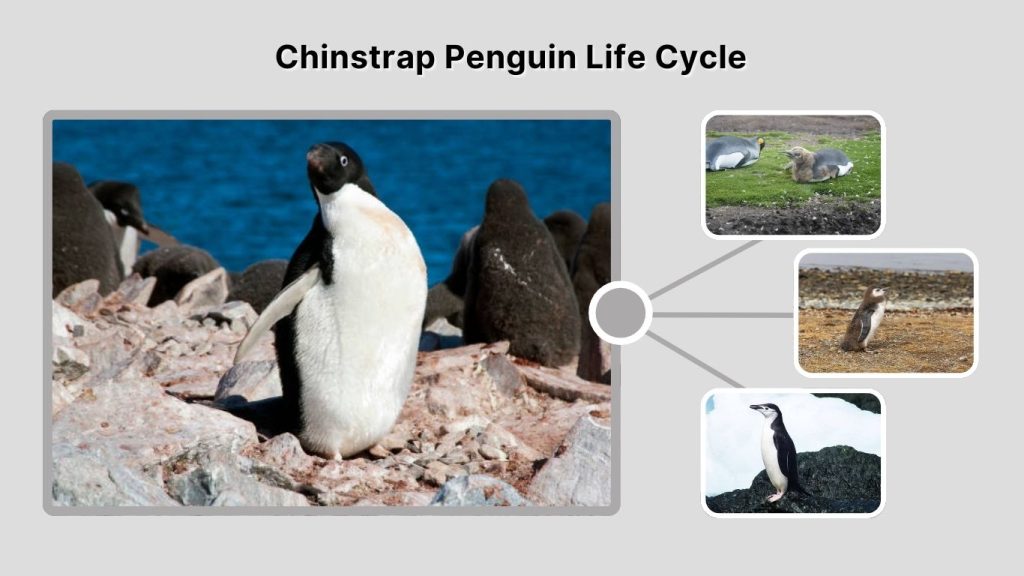
The chinstrap penguin life cycle follows a seasonal pattern shaped by the extreme Antarctic climate.
Chick Stage
Newly hatched chicks are small and vulnerable. Their gray down feathers provide insulation but are not waterproof, so they must remain on land.
During this stage, rapid growth is essential. Chicks rely entirely on frequent feedings from their parents. After a few weeks, they join crèches with other young penguins, which reduces the risk of predation by seabirds such as skuas.
Juvenile Stage
After about seven to nine weeks, chicks begin molting their down feathers and develop waterproof juvenile plumage. This transformation allows them to enter the ocean and begin swimming.
Once fledged, juvenile chinstrap penguins head to sea and may spend several years there before returning to breed.
Adult Stage
Chinstrap penguins typically reach sexual maturity between 3 and 5 years of age. Many return to the same colony where they were born, often nesting close to previous breeding sites.
Adults repeat the breeding cycle annually, provided environmental conditions and food supplies are favorable.
Chinstrap Penguin Lifespan and Survival
In the wild, chinstrap penguins generally live 15 to 20 years, though some individuals may survive longer.
Their lifespan depends on access to food, protection from predators, and stable environmental conditions.
Natural Predators
Chinstrap penguins face threats both at sea and on land.
In the ocean, their main predators include:
- Leopard seals
- Orcas (killer whales)
On land, eggs and chicks are vulnerable to seabirds such as skuas, which prey on unattended nests.
Living in large colonies provides some protection, but young penguins are still at risk.
Environmental Threats
One of the greatest challenges facing chinstrap penguins today is climate change. Because their diet depends heavily on Antarctic krill, any decline in krill populations can significantly impact survival and breeding success.
Changes in sea ice patterns and ocean temperatures may also affect feeding grounds. Additionally, commercial fishing for krill can create competition for this essential food source.
As a result, scientists closely monitor chinstrap penguin populations as indicators of ecosystem health in the Southern Ocean.
Conclusion
The chinstrap penguin is a resilient and energetic species perfectly adapted to life near Antarctica. From its distinctive chin marking to its strong swimming abilities and complex social behavior, this penguin plays an important role in the Antarctic ecosystem.
Living in massive colonies on rocky coastal slopes, chinstrap penguins depend heavily on krill-rich waters and stable sea ice conditions. Understanding their habitat, diet, life cycle, and lifespan highlights both their remarkable adaptability and the importance of protecting the fragile Southern Ocean environment they call home.