




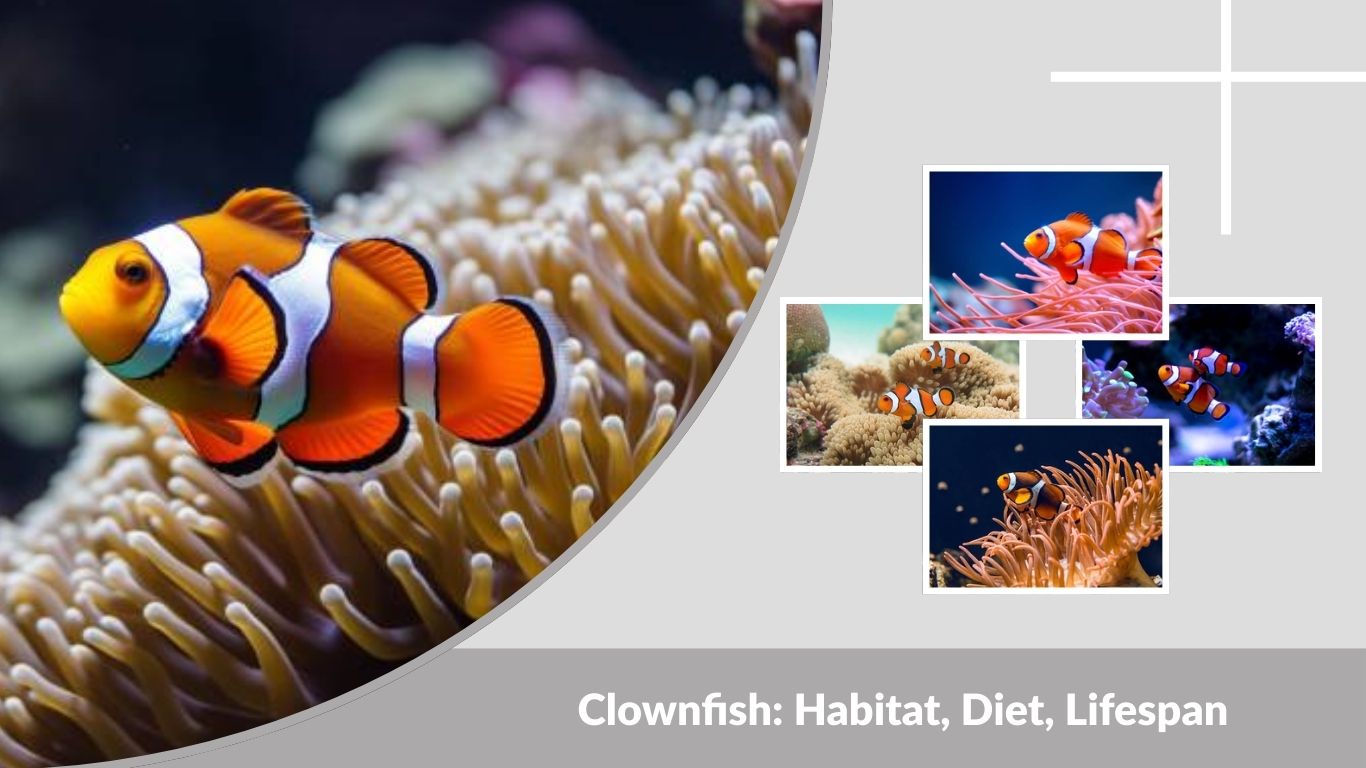
Clownfish are among the most recognizable and fascinating marine fish in the world. Known for their bright colors and close relationship with sea anemones, these small reef fish play an important role in ocean ecosystems. Found mainly in warm tropical waters, clownfish have unique behaviors related to their habitat, diet, reproduction, and lifespan. This article explores where clownfish live, what they eat, how their habitat shapes their lifestyle, and other essential details to help you better understand these remarkable fish.
What Is a Clownfish?
A clownfish is a small marine fish belonging to the subfamily Amphiprioninae. There are over 30 recognized species of clownfish, most of which are famous for their orange, white, and black color patterns. However, not all clownfish are orange—some species appear yellow, red, or even nearly black.
Clownfish typically grow between 2 to 5 inches in length, making them well-suited to life among coral reefs. They are best known for their peaceful appearance, though they can be surprisingly territorial, especially when defending their host anemone. Their popularity has increased due to their striking looks and adaptability to aquarium life.
Where Do Clownfish Live?
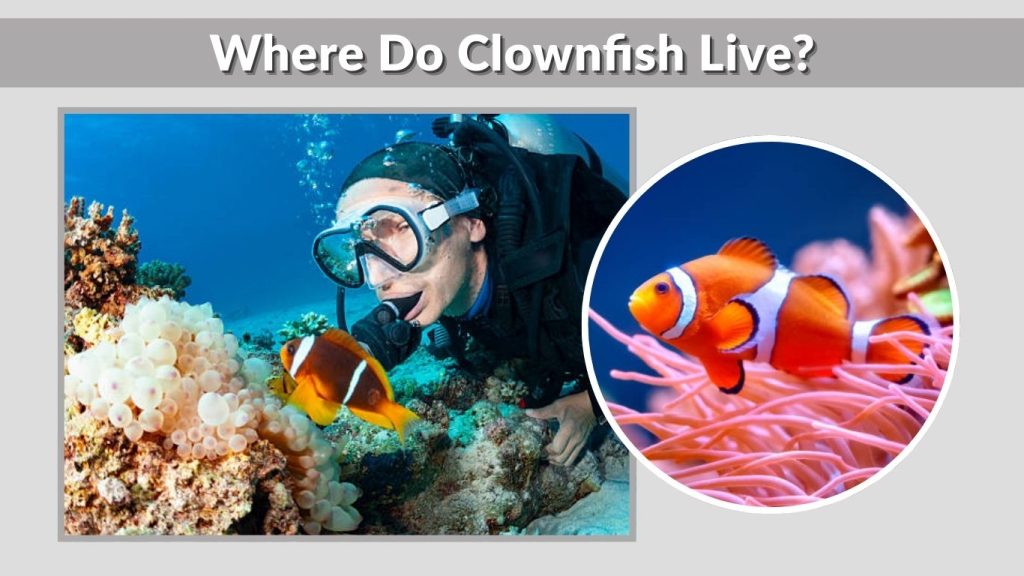
Clownfish live in warm, shallow waters of tropical oceans, primarily in the Indo-Pacific region. Their distribution includes areas such as the Great Barrier Reef, the Red Sea, the Indian Ocean, and parts of the western Pacific Ocean.
Natural Habitat of Clownfish
In the wild, clownfish are most commonly found near coral reefs, where they rely on sea anemones for shelter. These reefs provide food sources, protection from predators, and suitable breeding grounds. Clownfish usually remain close to their host anemone and rarely venture far from it.
They prefer calm lagoon waters and reef slopes rather than deep open ocean areas. The stable temperature and rich biodiversity of coral reefs make these environments ideal for clownfish survival.
Clownfish and Sea Anemones
One of the most remarkable aspects of clownfish life is their symbiotic relationship with sea anemones. Sea anemones have stinging tentacles that deter most fish, but clownfish are protected by a special mucus coating on their skin. This allows them to live safely among the tentacles without being harmed.
In return, clownfish help the anemone by cleaning it, chasing away predators, and improving water circulation. This mutual relationship benefits both species and is essential to the clownfish’s natural lifestyle.
Clownfish Habitat in the Wild and in Aquariums
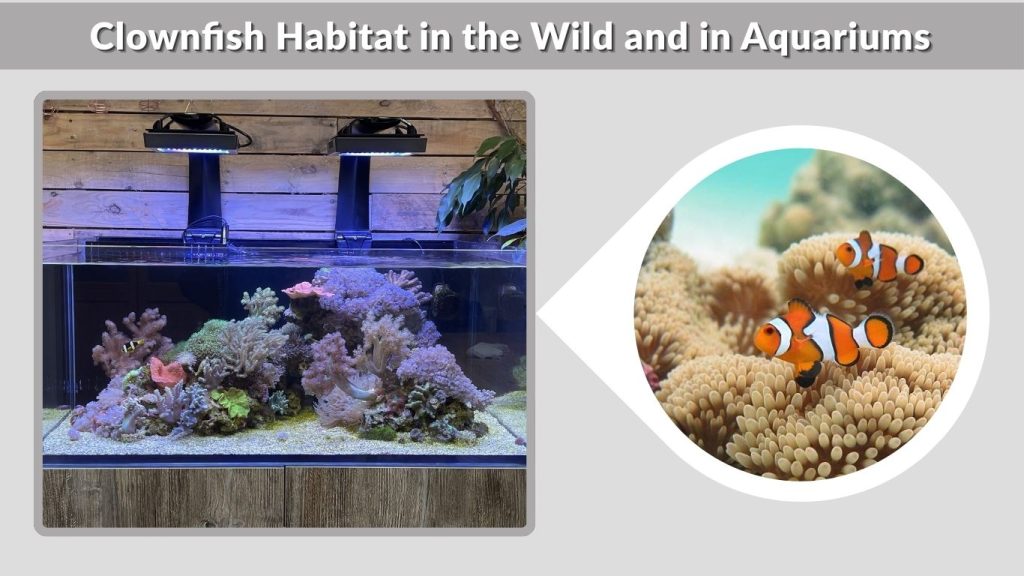
Understanding clownfish habitat helps explain their behavior, feeding habits, and lifespan.
Wild Clownfish Habitat Conditions
In the wild, clownfish thrive in water temperatures ranging from 24°C to 28°C (75°F to 82°F). They prefer shallow waters, usually no deeper than 15 meters. These conditions allow sunlight to reach the reef, supporting algae and plankton growth—key food sources for clownfish.
Coral reefs also offer hiding spaces and breeding areas, protecting clownfish eggs from predators. The stability of this environment is crucial for their long-term survival.
Clownfish Habitat in Home Aquariums
Clownfish are among the most popular saltwater aquarium fish because they adapt well to captivity. In aquariums, they require stable water conditions, proper filtration, and enough space to establish territory. While sea anemones are not mandatory in tanks, their presence can help mimic the clownfish’s natural habitat.
A well-maintained aquarium can closely replicate reef conditions, often resulting in healthier clownfish with longer lifespans compared to those in the wild.
What Do Clownfish Eat?
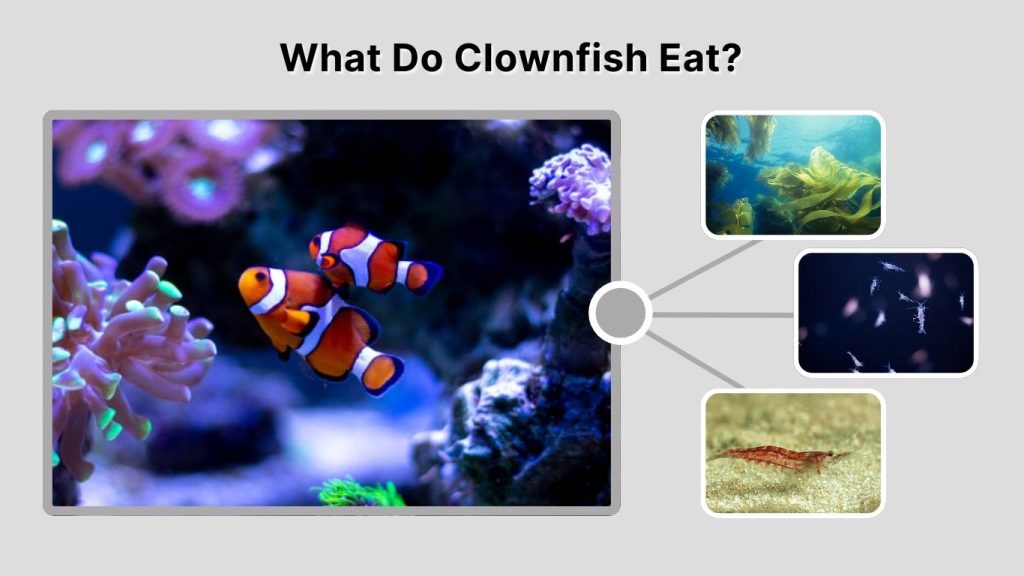
Clownfish are omnivores, meaning they eat both plant-based and animal-based foods. Their diet plays a key role in their growth, coloration, and overall health.
Clownfish Diet in the Wild
In their natural environment, clownfish feed on algae, plankton, small crustaceans, and larvae. They often eat leftover food particles from their host anemone, making efficient use of available resources. This varied diet helps them survive in reef ecosystems where food availability can change.
What Do Clownfish Eat in Captivity?
In aquariums, clownfish are typically fed high-quality pellets or flakes designed for marine fish. They also benefit from frozen or live foods such as brine shrimp and mysis shrimp. Regular, balanced feeding supports strong immunity and vibrant coloration.
Clownfish Eggs and Reproduction
Clownfish have a fascinating and highly organized reproductive system that sets them apart from many other fish species.
Clownfish Breeding Behavior
Clownfish live in small social groups centered around a single sea anemone. Within each group, there is a strict hierarchy led by a dominant female and a breeding male. The remaining members are non-breeding males.
When it is time to reproduce, the male prepares a nesting site on a flat surface near the anemone, often cleaning rocks or coral. The female then lays hundreds of eggs in the nest, after which the male fertilizes them. Once spawning is complete, the female leaves, and the male becomes the primary caretaker.
Clownfish Eggs and Hatching Process
Clownfish eggs are small, oval-shaped, and usually bright orange. A single clutch can contain anywhere from 100 to over 1,000 eggs, depending on the species and size of the female. The male guards the eggs closely, fanning them with his fins to provide oxygen and removing any that become infected.
The eggs typically hatch within 6 to 10 days. After hatching, the larvae drift in the open ocean for several days before settling onto a reef and searching for a suitable anemone to call home.
Clownfish Lifespan
The lifespan of clownfish varies depending on their environment, predators, and living conditions.
How Long Do Clownfish Live in the Wild?
In the wild, clownfish generally live between 6 and 10 years. Their survival depends heavily on the health of coral reefs and the availability of sea anemones. Predators, environmental changes, and habitat loss can shorten their lifespan significantly.
Despite these challenges, clownfish that maintain strong bonds with healthy anemones tend to have higher survival rates due to the protection these hosts provide.
How Long Do Clownfish Live in Captivity?
Clownfish often live longer in captivity than in the wild. In well-maintained aquariums, they can live 10 to 15 years, and some have been known to survive even longer. Consistent food supply, lack of predators, and stable water conditions all contribute to their extended lifespan.
Proper tank care, including regular water changes and a balanced diet, plays a crucial role in keeping clownfish healthy over the long term.
Interesting and Lesser-Known Clownfish Facts
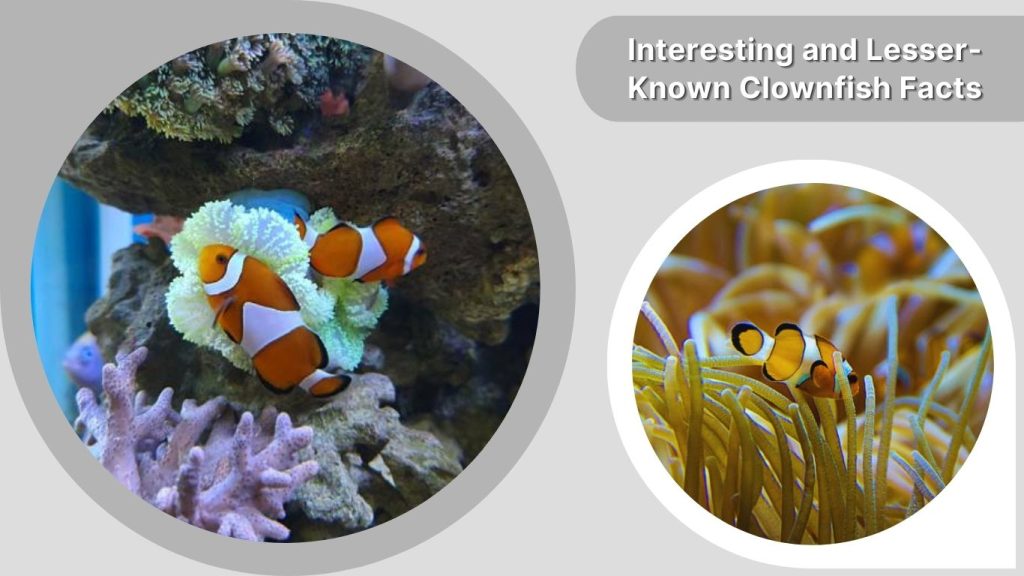
Clownfish are full of surprising traits that make them unique among marine fish.
Clownfish Can Change Their Gender
All clownfish are born male. If the dominant female in a group dies, the largest male will change sex and become the new female. This process, known as sequential hermaphroditism, ensures the survival of the group by maintaining a breeding pair.
Clownfish Are Protected from Anemone Stings
Clownfish are not immune to sea anemone stings but are protected by a thick mucus layer on their skin. This mucus prevents the anemone from recognizing the clownfish as prey, allowing a safe coexistence.
Clownfish Are Highly Territorial
Despite their small size, clownfish are extremely territorial. They will aggressively defend their anemone from intruders, including fish much larger than themselves.
Why Clownfish Matter to Marine Ecosystems
Clownfish play an important role in maintaining the balance of coral reef ecosystems. Their presence helps keep sea anemones healthy by removing parasites and improving water circulation around the anemone’s tentacles.
In return, healthy anemones contribute to reef biodiversity by providing shelter for other marine species. Protecting clownfish also means protecting coral reefs, which are among the most vulnerable ecosystems on the planet.
FAQs
How long do clownfish live?
Clownfish typically live between 6 and 10 years in the wild, depending on predators and habitat conditions. In captivity, where food and water quality are controlled, clownfish can live 10 to 15 years or even longer with proper care.
Where do clownfish live naturally?
Clownfish live in warm, shallow waters of the Indo-Pacific region. They are commonly found around coral reefs in the Indian Ocean, Red Sea, Great Barrier Reef, and western Pacific Ocean, where sea anemones provide shelter and protection.
What do clownfish eat?
Clownfish are omnivores. In the wild, they eat algae, plankton, small crustaceans, and food scraps from their host anemones. In aquariums, they eat pellets, flakes, and frozen foods such as brine shrimp and mysis shrimp.
How many eggs do clownfish lay?
A female clownfish can lay between 100 and over 1,000 eggs during a single spawning event. The eggs are laid near the anemone, and the male guards and cares for them until they hatch.
Do clownfish really live inside sea anemones?
Yes, clownfish live among the tentacles of sea anemones. A special mucus coating on their skin protects them from the anemone’s stings, allowing a safe and mutually beneficial relationship.
Conclusion
Clownfish are much more than colorful reef fish. Their unique habitat preferences, omnivorous diet, complex reproductive behavior, and surprisingly long lifespan make them one of the most fascinating marine species. From their symbiotic relationship with sea anemones to their importance in coral reef ecosystems, clownfish highlight the delicate balance of ocean life. Understanding and protecting these fish also helps preserve the reefs they depend on, ensuring their survival for future generations.