
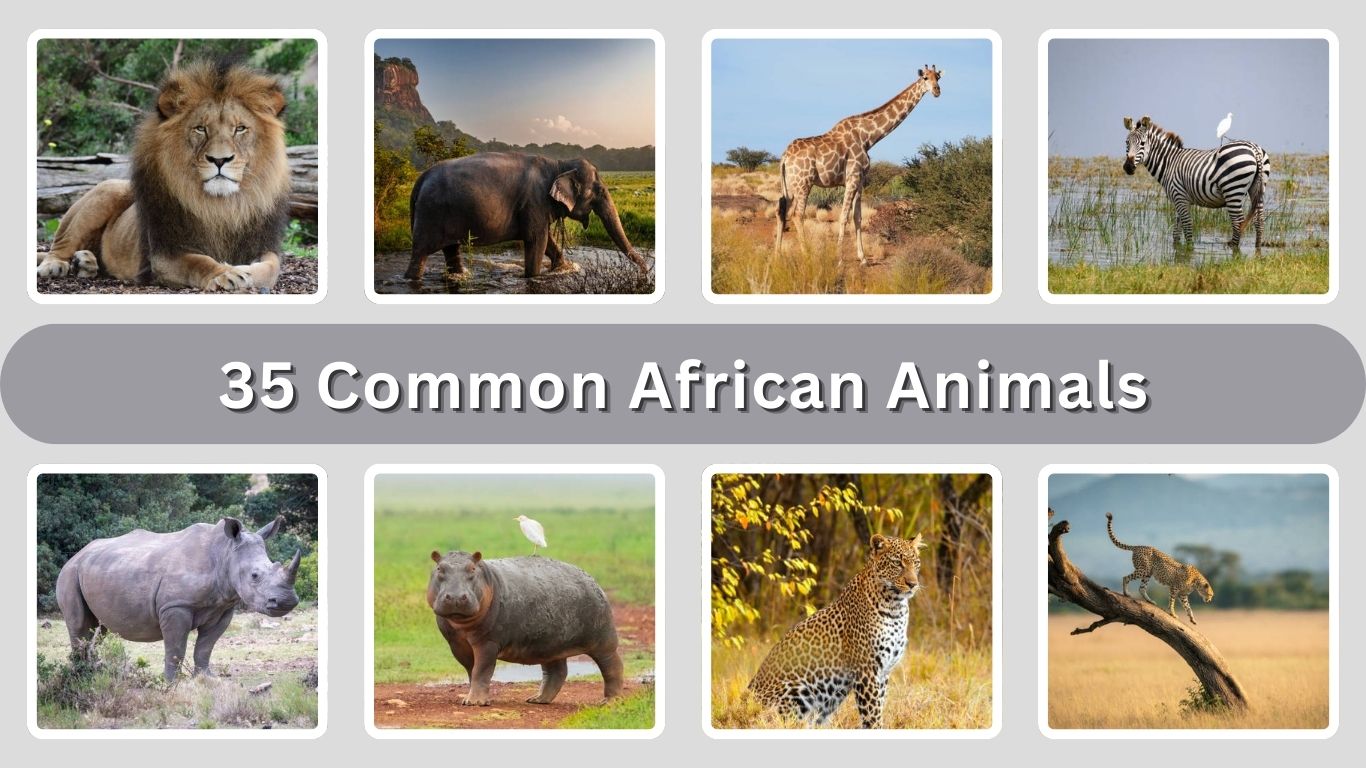
Africa is home to some of the most diverse and fascinating wildlife on Earth. From powerful predators to gentle grazers and unique birds, African animals are perfectly adapted to survive in a wide range of environments. These species play a vital role in maintaining natural balance and supporting healthy ecosystems. Their behaviors, physical traits, and survival strategies continue to captivate people around the world, making Africa a true heart of global wildlife diversity.
1. Lion
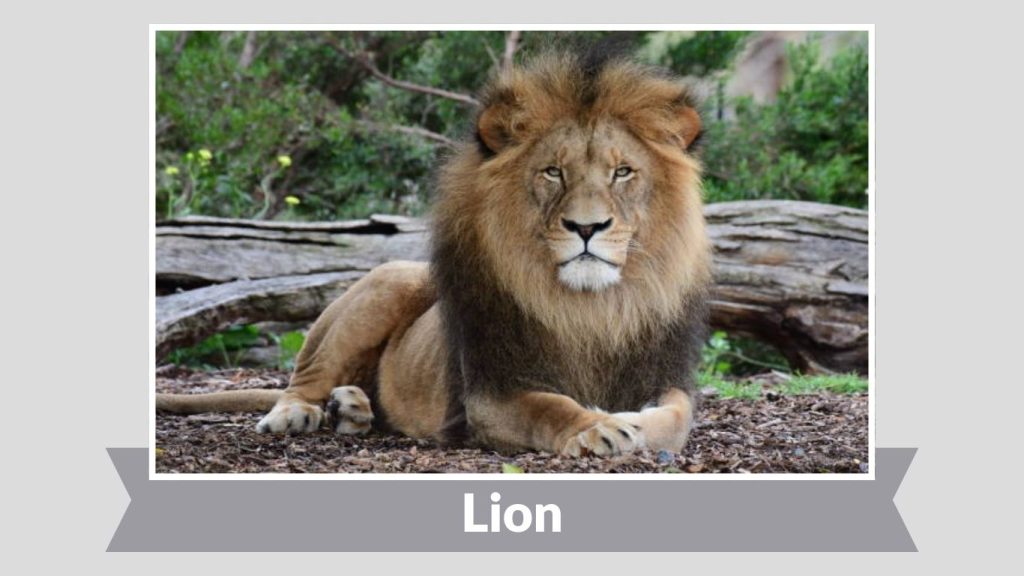
The lion is one of the most recognizable and powerful animals found in Africa. Often referred to as the “king of the jungle,” lions symbolize strength, courage, and leadership. They are apex predators and play a crucial role in controlling herbivore populations, which helps maintain ecological balance. Unlike most big cats, lions are highly social, making them unique among their relatives. Their loud roar can be heard from several kilometers away and is used to communicate with pride members and warn intruders.
Identification
- Large, muscular body with a broad chest
- Short, smooth coat ranging from light tawny to golden brown
- Adult males possess a thick mane that varies in color from blond to black
- Strong jaws with sharp canine teeth
- Long tail ending in a dark tuft of hair
- Males are generally larger than females
Habitat
Lions are primarily found in savannas, grasslands, and open woodlands across sub-Saharan Africa. These environments provide open spaces for hunting and sufficient prey availability. Lions tend to avoid dense forests, deserts, and areas with heavy human activity. They usually stay close to water sources, although they can survive in dry regions by obtaining moisture from their prey. Protected national parks and reserves now serve as their main habitats due to habitat loss elsewhere.
Behaviors
Lions are social animals living in groups called prides, typically made up of related females, their cubs, and a few adult males. Females usually do most of the hunting, working together to stalk and ambush prey. Lions are territorial and defend their area aggressively. They spend much of their day resting, often sleeping up to 20 hours, and become more active during the evening and night.
Diet and Lifespan
Lions are carnivores that mainly hunt large herbivores such as zebras, wildebeest, antelopes, and buffalo. They may also scavenge when the opportunity arises. In the wild, lions generally live between 10 and 14 years. In captivity, with regular food and medical care, they can live up to 20 years or more.
2. Elephant
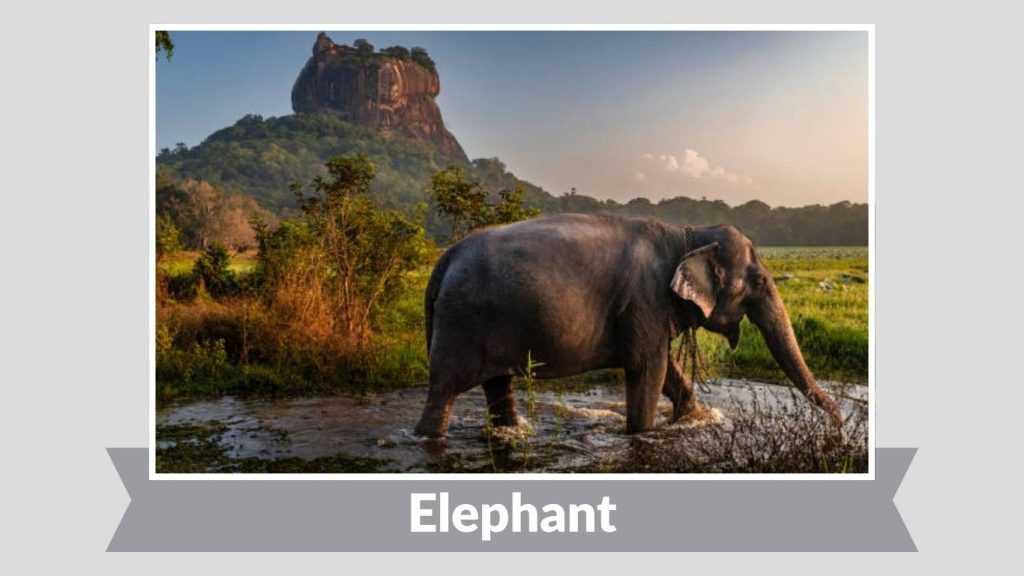
The African elephant is the largest land animal on Earth and one of the most intelligent species found in Africa. Known for its impressive size, long trunk, and strong social bonds, elephants are gentle giants that play a key role in shaping their environment. By knocking down trees, digging for water, and spreading seeds, they help maintain healthy ecosystems. Elephants are also deeply emotional animals, showing behaviors linked to empathy, memory, and cooperation.
Identification
- Extremely large body with thick, wrinkled gray skin
- Long trunk used for breathing, smelling, drinking, and grabbing objects
- Large fan-shaped ears that help regulate body temperature
- Curved ivory tusks present in both males and females
- Pillar-like legs built to support massive weight
- Small eyes relative to body size
Habitat
African elephants live in a wide range of habitats, including savannas, grasslands, forests, wetlands, and semi-desert areas. They require large territories due to their size and daily food needs. Elephants stay close to water sources such as rivers and waterholes, especially during dry seasons. Habitat loss and human expansion have forced many elephants into protected reserves and national parks.
Behaviors
Elephants are highly social and live in herds led by an experienced female called a matriarch. These herds consist mainly of related females and their young, while adult males usually live alone or in small bachelor groups. Elephants communicate using sounds, body language, and low-frequency rumbles that can travel long distances. They are known for strong family bonds, cooperative care of young, and mourning their dead.
Diet and Lifespan
Elephants are herbivores that feed on grasses, leaves, bark, fruits, and roots. An adult elephant can consume up to 150 kilograms of food per day. In the wild, African elephants typically live between 60 and 70 years, making them one of the longest-living mammals on land.
3. Giraffe
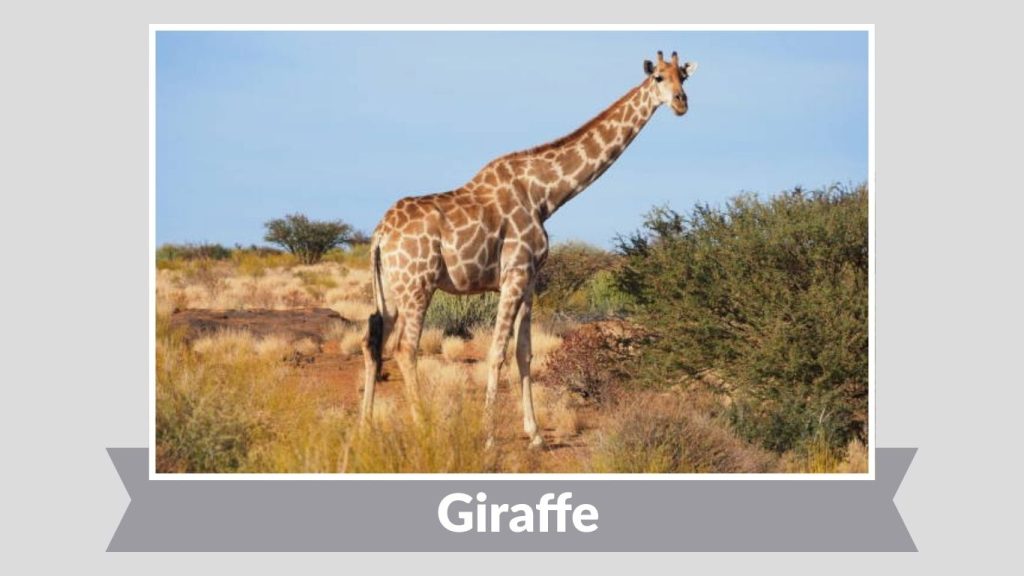
The giraffe is the tallest land animal in the world and one of Africa’s most distinctive species. Easily recognized by its long neck and unique coat patterns, the giraffe is a symbol of grace and adaptation. Its height allows it to access food sources unavailable to most other herbivores, reducing competition. Giraffes also play an important ecological role by shaping vegetation and supporting biodiversity in their habitats.
Identification
- Extremely long neck and legs
- Tall body structure, reaching up to 5–6 meters in height
- Coat covered with irregular brown patches separated by lighter lines
- Small horn-like structures called ossicones on the head
- Large eyes with long eyelashes
- Long, dark-colored tongue adapted for feeding
Habitat
Giraffes are commonly found in savannas, grasslands, and open woodlands across sub-Saharan Africa. They prefer areas with abundant trees and shrubs, especially acacia trees, which provide their primary food source. Giraffes avoid dense forests and deserts. They can survive in dry regions by obtaining much of their water from plants, allowing them to go long periods without drinking.
Behaviors
Giraffes are generally social animals and are often seen in loose groups without strong long-term bonds. These groups may change frequently in size and composition. They spend much of their day feeding and resting. Male giraffes sometimes engage in a behavior called “necking,” where they swing their necks to establish dominance. Despite their size, giraffes are calm and non-aggressive.
Diet and Lifespan
Giraffes are herbivores that mainly feed on leaves, flowers, and fruits from tall trees, particularly acacia species. Their long tongues help strip leaves from thorny branches. In the wild, giraffes typically live between 20 and 25 years, while those in captivity may live slightly longer due to reduced threats and consistent care.
4. Zebra
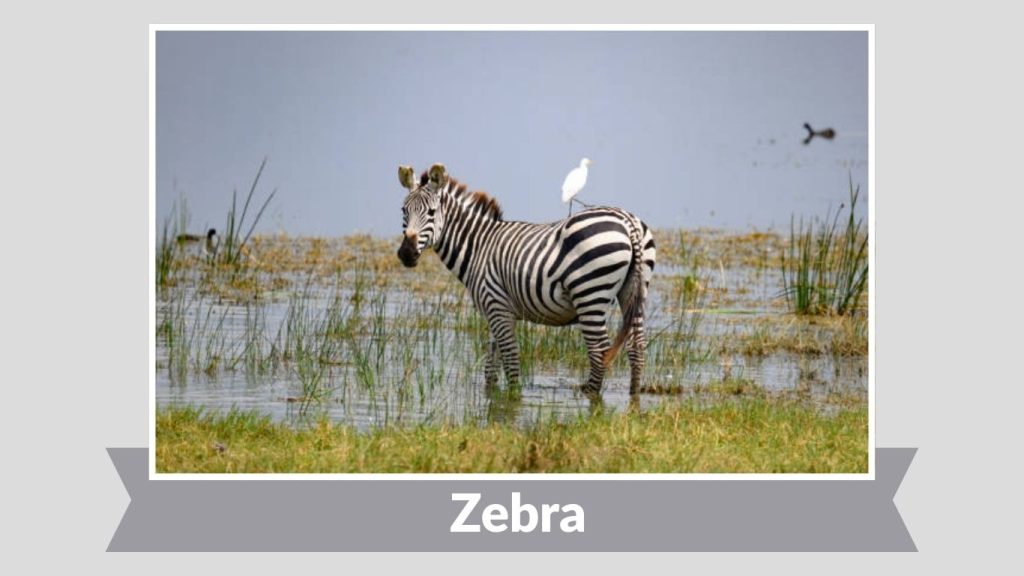
The zebra is one of Africa’s most well-known animals, famous for its striking black-and-white striped coat. Each zebra has a unique stripe pattern, much like a human fingerprint. These bold patterns help with identification, social bonding, and may even deter biting insects. Zebras are strong, fast runners and are an essential prey species, supporting large predators and contributing to the balance of African ecosystems.
Identification
- Black-and-white striped coat unique to each individual
- Horse-like body with strong legs
- Short, upright mane running along the neck
- Large ears for sharp hearing
- Long tail with a tuft of hair at the end
- Rounded hooves adapted for long-distance travel
Habitat
Zebras inhabit a variety of environments across Africa, including grasslands, savannas, open plains, and woodlands. They prefer open areas where they can easily spot predators. Access to water is important, so zebras are often found near rivers and watering holes. Some species migrate seasonally in search of fresh grazing land, especially during dry periods.
Behaviors
Zebras are social animals that live in herds. Plains zebras form stable family groups led by a dominant male, while other species may form looser associations. They communicate through sounds, facial expressions, and body movements. Zebras are alert and cautious, often standing together to watch for predators. When threatened, they rely on speed and powerful kicks to defend themselves.
Diet and Lifespan
Zebras are herbivores that mainly graze on grasses, but they may also eat leaves and shrubs when grass is scarce. Their digestive system allows them to survive on lower-quality vegetation. In the wild, zebras typically live 20 to 25 years, while those in protected environments may live slightly longer.
5. Rhinoceros
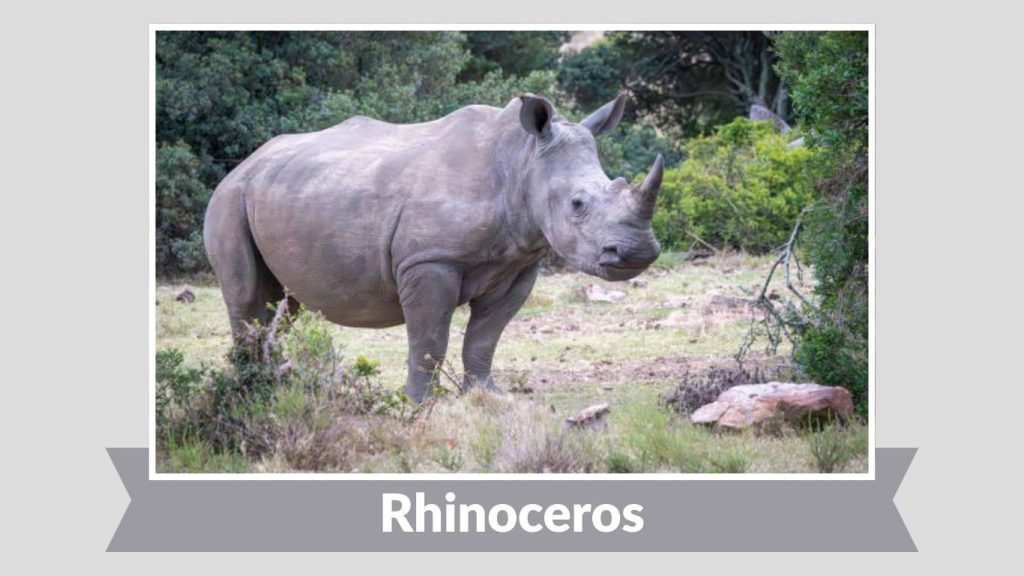
The rhinoceros is one of Africa’s most powerful and ancient-looking animals. Known for its thick skin and large horn, the rhino has existed in various forms for millions of years. Despite its heavy appearance, a rhinoceros can run at surprising speeds. Rhinos play an important role in their ecosystems by shaping vegetation and creating pathways that benefit other animals.
Identification
- Large, heavy body with thick, armor-like skin
- One or two horns made of keratin on the snout
- Broad chest and short, sturdy legs
- Small eyes with relatively poor eyesight
- Sensitive ears that rotate independently
- Wide mouth adapted for grazing or browsing
Habitat
African rhinoceroses live in savannas, grasslands, woodlands, and swampy areas. Different species prefer different environments; white rhinos favor open grasslands, while black rhinos are more common in bushy areas. Rhinos need access to water and often wallow in mud to cool down and protect their skin from insects. Most remaining rhinos now live in protected reserves due to heavy poaching pressure.
Behaviors
Rhinos are generally solitary animals, although they may be seen in small groups, especially around water sources. They are territorial and mark their areas using dung piles and scent markings. Despite their calm nature, rhinos can become aggressive if threatened. They rely more on hearing and smell than sight to detect danger.
Diet and Lifespan
Rhinoceroses are herbivores. White rhinos mainly graze on grasses, while black rhinos browse on leaves, twigs, and shrubs. In the wild, rhinos typically live between 35 and 50 years, depending on the species and environmental conditions.
6. Hippopotamus
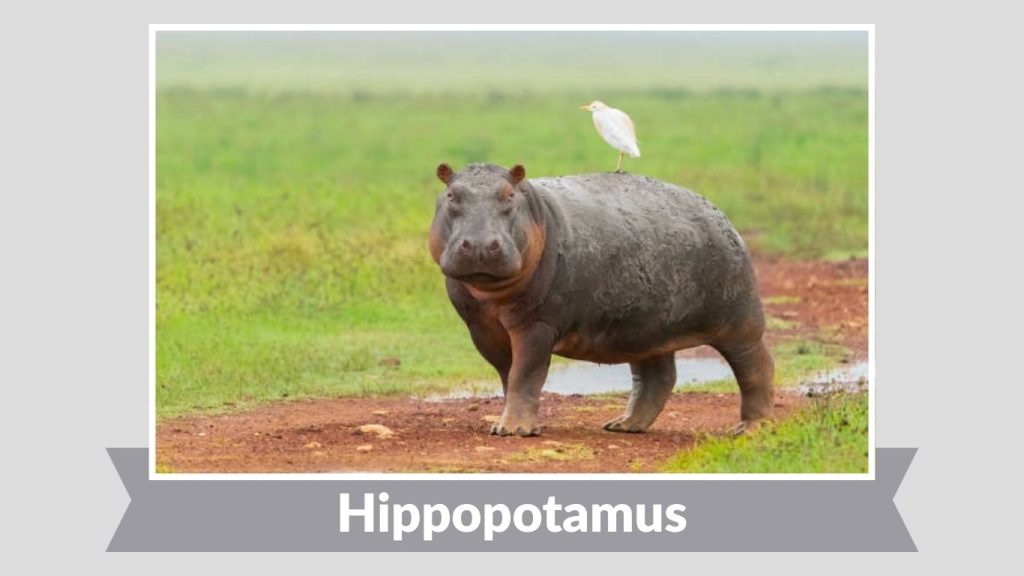
The hippopotamus is one of Africa’s most dangerous and fascinating animals. Although it appears slow and calm, the hippo is highly aggressive and responsible for more human fatalities in Africa than many large predators. Its semi-aquatic lifestyle allows it to thrive both in water and on land. Hippos play a key ecological role by transporting nutrients from land to water through their daily movements.
Identification
- Massive, barrel-shaped body
- Thick gray or brownish skin with very little hair
- Large mouth with long, curved canine teeth
- Short legs relative to body size
- Eyes, ears, and nostrils positioned high on the head
- Wide snout adapted for grazing
Habitat
Hippos live in rivers, lakes, swamps, and other freshwater bodies across sub-Saharan Africa. They spend most of the day submerged in water to keep cool and prevent their skin from drying out. At night, hippos leave the water to graze on land, often traveling several kilometers. Suitable habitats must provide both deep water for resting and nearby grasslands for feeding.
Behaviors
Hippos are social animals that live in groups called pods, usually led by a dominant male. They are highly territorial in water and will aggressively defend their space. Despite their size, hippos can move quickly on land and underwater. They communicate using grunts, roars, and low-frequency sounds that can travel through water.
Diet and Lifespan
Hippos are herbivores that primarily feed on short grasses. They graze at night, consuming large amounts of vegetation in a single feeding session. In the wild, hippopotamuses typically live between 40 and 50 years, though some may live longer in protected environments.
7. Leopard
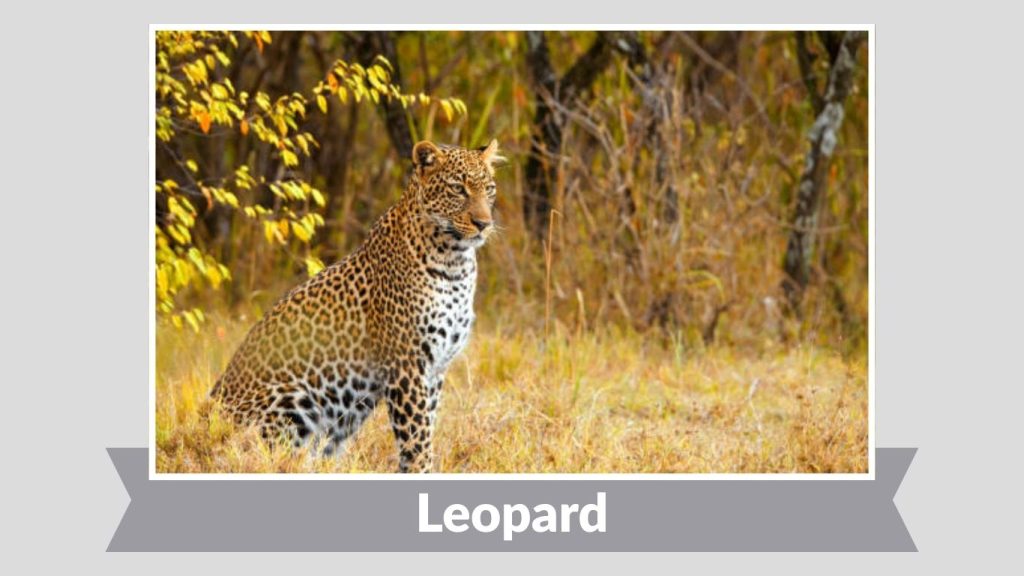
The leopard is one of Africa’s most elusive and adaptable big cats. Known for its strength, stealth, and striking spotted coat, the leopard is an excellent hunter and climber. It can live close to human settlements while remaining largely unseen. Leopards play a vital role in controlling prey populations and are considered one of the most successful predators in Africa.
Identification
- Sleek, muscular body built for agility
- Golden-yellow coat covered with dark rosette-shaped spots
- Long tail used for balance
- Powerful jaws and sharp retractable claws
- Short, rounded ears
- Strong limbs suitable for climbing and running
Habitat
Leopards are highly adaptable and live in a wide range of habitats, including savannas, grasslands, forests, mountains, and even semi-desert regions. They prefer areas with dense vegetation or rocky terrain that provide cover for stalking prey. Leopards can survive in areas with limited water by obtaining moisture from their food, making them one of the most widespread big cats in Africa.
Behaviors
Leopards are solitary and mostly nocturnal animals. They are territorial and mark their range using scent marks and scratch marks on trees. Leopards are excellent climbers and often carry their prey into trees to protect it from scavengers. They rely on stealth rather than speed, silently stalking and ambushing their prey.
Diet and Lifespan
Leopards are carnivores with a highly varied diet, feeding on antelope, monkeys, birds, reptiles, and even small mammals. This flexible diet helps them survive in many environments. In the wild, leopards typically live 12 to 17 years, while those in captivity may live longer.
8. Cheetah
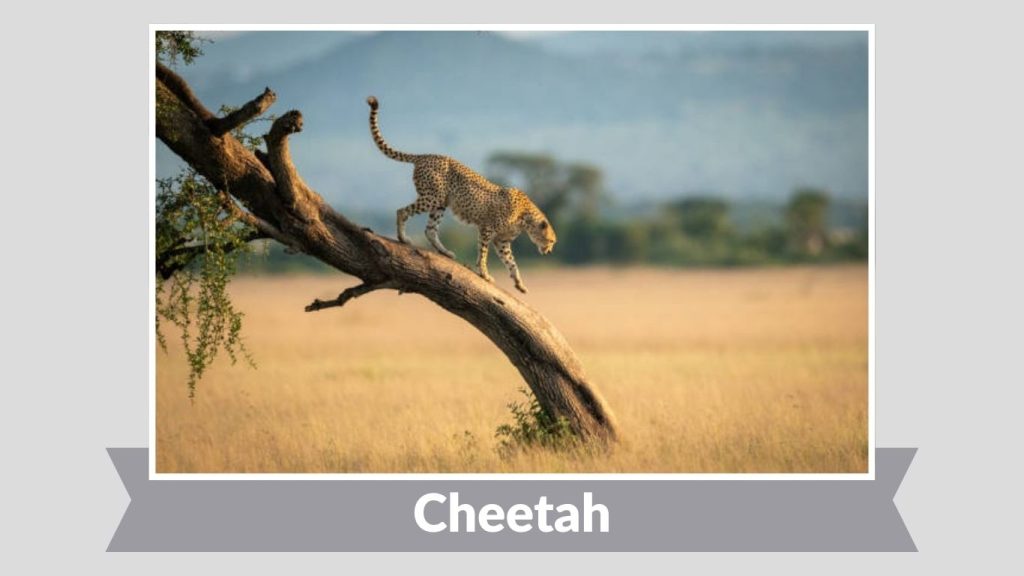
The cheetah is the fastest land animal on Earth and one of Africa’s most remarkable predators. Built for speed rather than strength, the cheetah can accelerate from zero to high speeds in just a few seconds. Its unique body structure allows it to chase down fast-moving prey in open landscapes. Unlike other big cats, cheetahs rely on speed and daylight hunting, making them visually distinctive and behaviorally unique.
Identification
- Slim, lightweight body with long legs
- Tan or pale yellow coat covered in solid black spots
- Small, rounded head with black “tear marks” running from eyes to mouth
- Long, flexible spine that aids in speed
- Non-retractable claws for better traction
- Long tail used for balance while running
Habitat
Cheetahs mainly inhabit open savannas, grasslands, and semi-arid regions of Africa. These open environments allow them to use their speed effectively during hunts. They avoid dense forests where visibility and running space are limited. Cheetahs often require large territories due to competition with other predators and declining prey availability. Today, most cheetahs live in protected reserves.
Behaviors
Cheetahs are generally solitary, although males may form small groups called coalitions. They are active during the day to avoid competition with nocturnal predators like lions and leopards. Cheetahs rely on keen eyesight to spot prey from a distance. After a high-speed chase, they must rest before eating due to exhaustion.
Diet and Lifespan
Cheetahs are carnivores that mainly hunt small to medium-sized antelope such as gazelles and impalas. They prefer fresh kills and rarely scavenge. In the wild, cheetahs typically live 10 to 12 years, while those in captivity may live longer under proper care.
9. African Buffalo
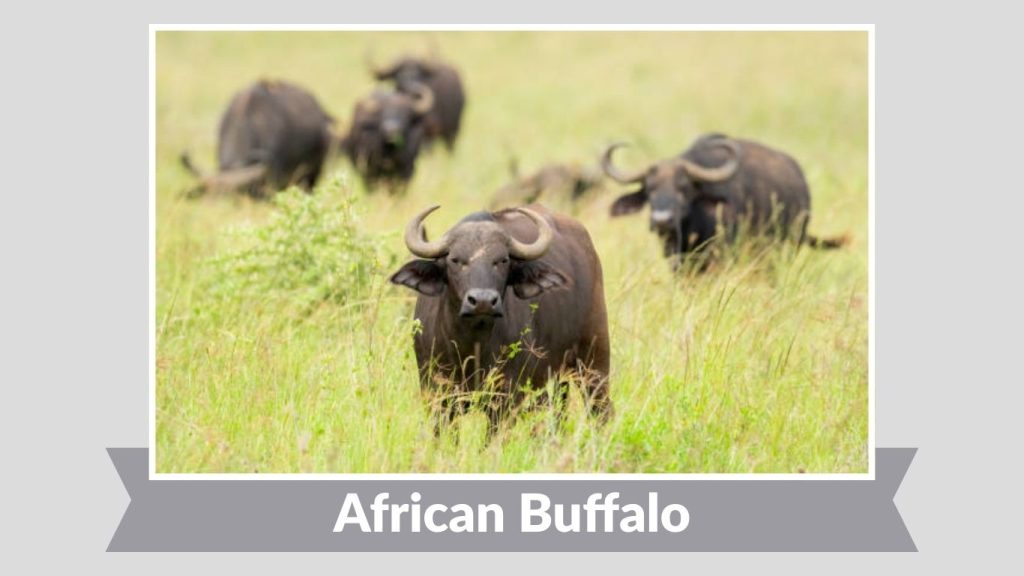
The African buffalo is one of the most powerful and unpredictable animals on the continent. Often referred to as the Cape buffalo, it is known for its strength, endurance, and strong herd loyalty. Unlike domesticated cattle, African buffalo are aggressive when threatened and will defend injured members of the herd. They are a key species in African ecosystems and an important prey animal for large predators.
Identification
- Large, heavy body with a stocky build
- Dark brown to black coat with sparse hair
- Massive curved horns that form a solid bone shield in males
- Broad head and strong neck
- Short, sturdy legs
- Wide hooves suited for rough terrain
Habitat
African buffalo inhabit savannas, grasslands, woodlands, and floodplains across sub-Saharan Africa. They require regular access to water and are rarely found in arid deserts. Buffalo herds often move in search of fresh grazing areas, especially during dry seasons. They are commonly seen near rivers, swamps, and wetlands where food and water are abundant.
Behaviors
Buffalo are highly social and live in large herds that can number in the hundreds. Herds are structured with dominant males, females, and calves. They are known for their strong defensive behavior, forming protective circles around young or injured members when predators approach. Buffalo communicate using vocalizations, body movements, and scent signals.
Diet and Lifespan
African buffalo are herbivores that graze mainly on grasses, though they may also feed on herbs and shrubs. They spend much of their day feeding and resting. In the wild, African buffalo typically live between 15 and 25 years, depending on environmental conditions and predation pressure.
10. Hyena
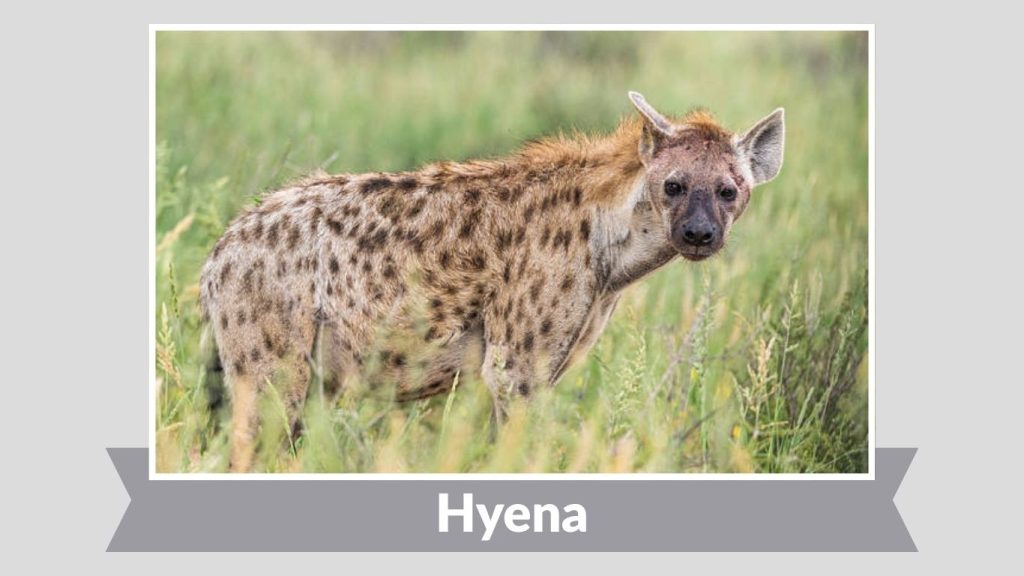
The hyena is one of Africa’s most misunderstood animals, often unfairly labeled as a cowardly scavenger. In reality, hyenas are intelligent, highly social, and skilled hunters. They play a crucial role in ecosystems by cleaning up carcasses and preventing the spread of disease. With powerful jaws and complex social systems, hyenas are among the most successful carnivores in Africa.
Identification
- Sloping back with longer front legs than hind legs
- Thick neck and powerful jaw muscles
- Coarse fur, usually spotted or brown depending on species
- Rounded ears and strong muzzle
- Large teeth capable of crushing bones
- Bushy tail
Habitat
Hyenas are found in a wide range of habitats across Africa, including savannas, grasslands, open woodlands, and semi-desert regions. They are highly adaptable and can live close to human settlements if food is available. Hyenas avoid dense forests but thrive in open areas where they can hunt and scavenge efficiently. Access to prey is more important than access to water for their survival.
Behaviors
Hyenas are extremely social animals that live in groups called clans, which can contain dozens of individuals. Spotted hyena clans are led by dominant females, and females are usually larger and more aggressive than males. Hyenas communicate using a variety of sounds, including the well-known “laugh,” which signals excitement or stress. They are active both day and night, depending on conditions.
Diet and Lifespan
Hyenas are carnivores and opportunistic feeders. They hunt animals such as antelope and wildebeest but also scavenge carcasses left by other predators. Their strong digestive system allows them to consume bones and skin. In the wild, hyenas typically live 20 to 25 years, while those in captivity may live longer.
11. Wildebeest
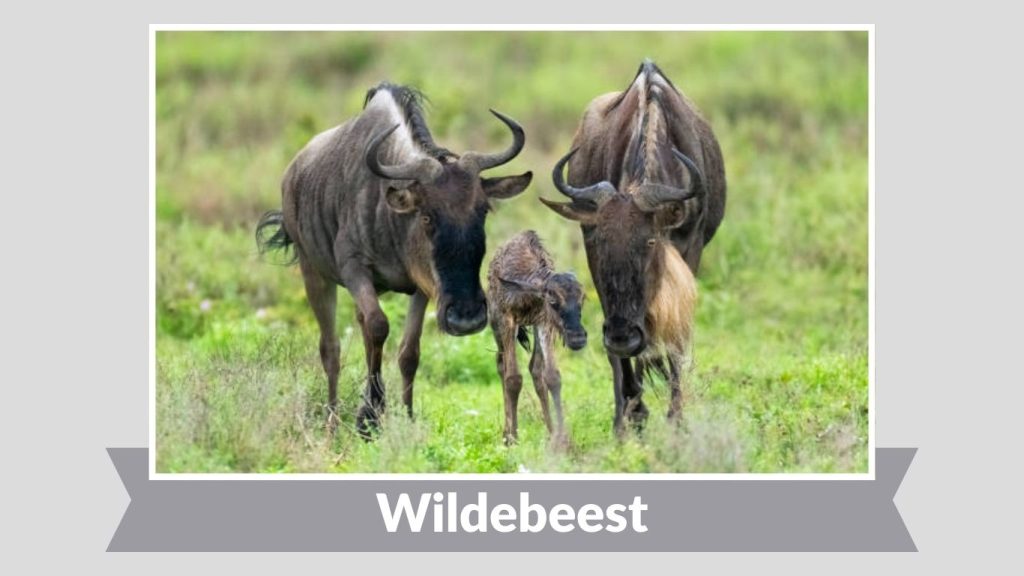
The wildebeest, also known as the gnu, is one of Africa’s most famous grazing animals and a key symbol of the Great Migration. Millions of wildebeest move seasonally across the plains in search of fresh grass and water. Their massive movements support predators and help fertilize grasslands, making them essential to the health of African ecosystems.
Identification
- Large, sturdy body with a sloping back
- Broad head with a beard-like mane
- Curved horns present in both males and females
- Dark gray to bluish coat with vertical stripes
- Long tail with a tuft of hair
- Thin legs adapted for long-distance travel
Habitat
Wildebeest mainly live in open grasslands, savannas, and plains of eastern and southern Africa. They prefer wide, open areas that allow them to detect predators easily. Access to seasonal rainfall strongly influences their movements. During dry periods, wildebeest migrate to regions with fresh grass and reliable water sources, often traveling hundreds of kilometers.
Behaviors
Wildebeest are highly social and live in large herds that can number in the thousands. They rely on safety in numbers to protect themselves from predators. Their seasonal migration is one of the largest wildlife movements on Earth. Wildebeest communicate using snorts, grunts, and body signals, and they are most active during early morning and late afternoon.
Diet and Lifespan
Wildebeest are herbivores that mainly graze on short grasses. Their feeding habits help maintain grassland health by preventing overgrowth. In the wild, wildebeest typically live between 18 and 20 years, though many fall prey to predators before reaching old age.
12. Impala
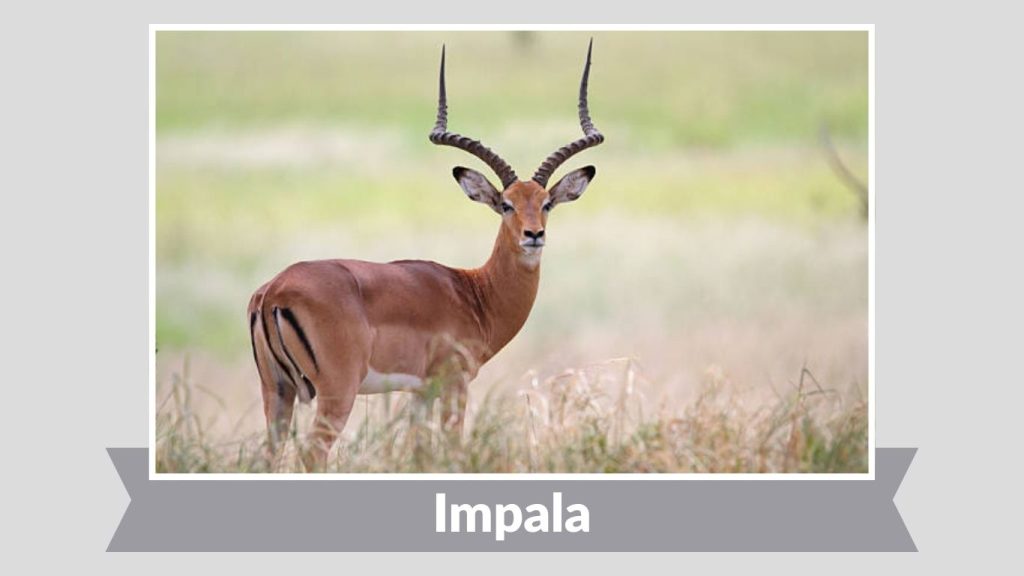
The impala is one of the most graceful and agile antelopes found in Africa. Known for its speed and impressive jumping ability, the impala is a common sight on African savannas. It plays an important role in the food chain, serving as a primary prey species for many predators while also helping regulate plant growth through grazing and browsing.
Identification
- Medium-sized, slender antelope with a graceful build
- Reddish-brown coat with a lighter underbelly
- Long, slender legs adapted for speed and jumping
- Males have long, curved, ridged horns
- Distinct black markings on the rump and tail
- Large eyes and pointed ears
Habitat
Impalas inhabit savannas, grasslands, and open woodlands across eastern and southern Africa. They prefer areas that provide a mix of grass for grazing and shrubs or trees for browsing. Access to water is essential, so impalas are usually found near rivers, lakes, or waterholes. They avoid very dry regions and dense forests.
Behaviors
Impalas are social animals that live in herds, which may consist of females and young, bachelor males, or territorial males during the breeding season. They are known for their remarkable ability to leap up to three meters high and cover long distances in a single jump when escaping predators. Impalas are alert, fast, and rely on coordinated group movement for safety.
Diet and Lifespan
Impalas are herbivores with a flexible diet. They graze on grasses during the rainy season and browse on leaves, shoots, and herbs during dry periods. This adaptability helps them survive changing conditions. In the wild, impalas typically live 12 to 15 years, though predation often reduces their lifespan.
13. Gazelle
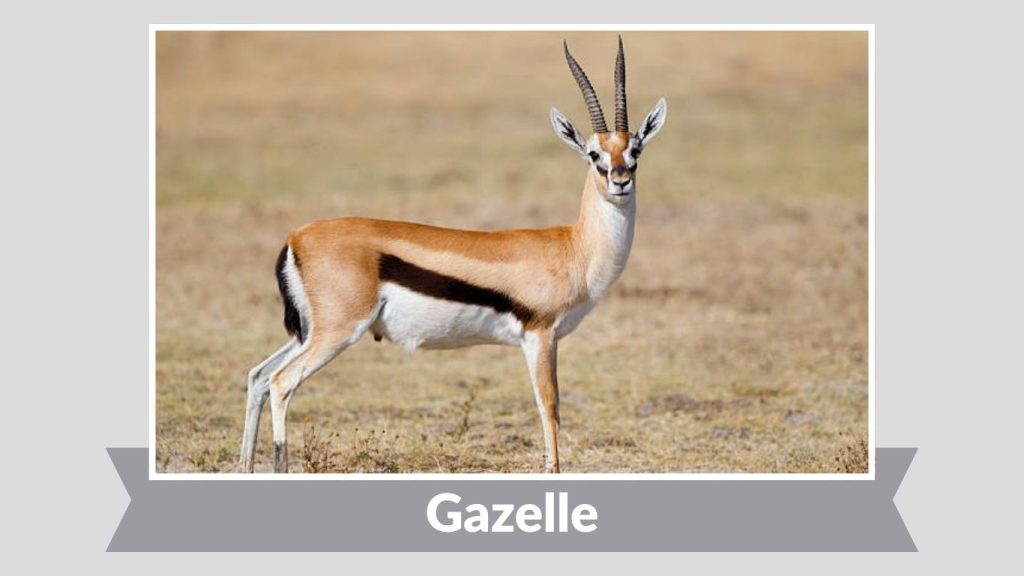
The gazelle is a swift and elegant antelope known for its speed, alertness, and sharp senses. Found widely across Africa, gazelles are well adapted to open landscapes where quick reactions are essential for survival. Their agility and endurance help them escape predators, making them a vital prey species that supports large carnivores and maintains balance within grassland ecosystems.
Identification
- Slender, lightweight body built for speed
- Tan to light brown coat with white underparts
- Distinct dark stripes or markings along the sides
- Long, thin legs adapted for fast running
- Ringed, curved horns present in both sexes (in most species)
- Narrow face with large, alert eyes
Habitat
Gazelles inhabit open grasslands, savannas, plains, and semi-arid regions across Africa. They prefer wide, open areas where they can easily spot predators from a distance. Many species are well adapted to dry environments and can survive with limited access to water by obtaining moisture from the plants they eat. Gazelles often share habitats with other grazing animals.
Behaviors
Gazelles are social animals that live in herds ranging from small family groups to larger mixed herds. They are famous for a behavior called “stotting,” where they leap high into the air to signal strength and alertness to predators. Gazelles are most active during early morning and late afternoon, spending the hottest parts of the day resting.
Diet and Lifespan
Gazelles are herbivores that feed on grasses, leaves, shoots, and herbs. Their diet may shift depending on seasonal availability of food. In the wild, gazelles generally live between 10 and 15 years, although many are hunted by predators before reaching full maturity.
14. Warthog
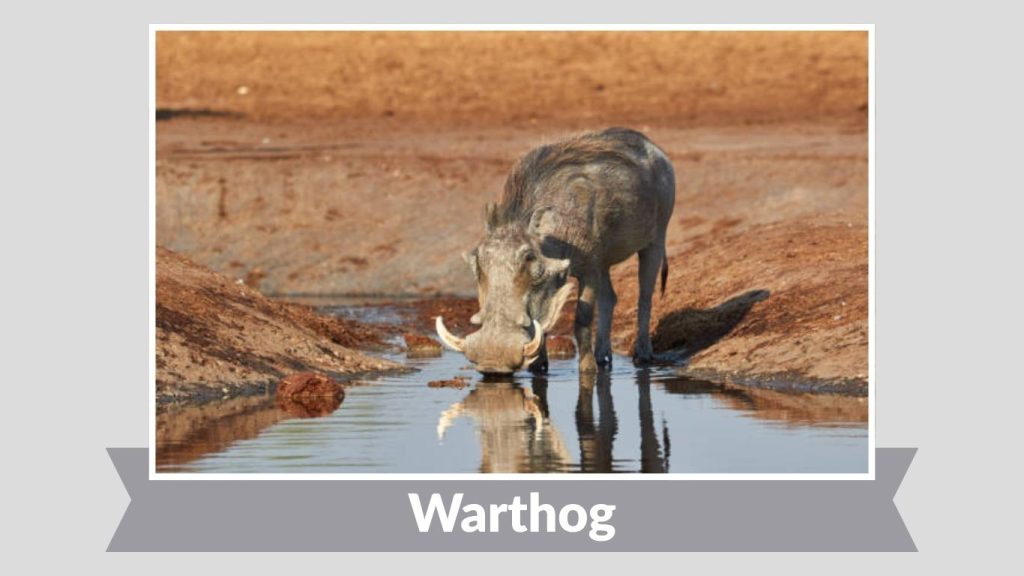
The warthog is a hardy and easily recognizable wild pig native to Africa. Despite its somewhat comical appearance, the warthog is a tough and resilient animal well adapted to life in harsh environments. It is best known for its facial “warts” and curved tusks. Warthogs play an important role in ecosystems by grazing and digging, which helps aerate the soil and promote new plant growth.
Identification
- Stocky body with relatively long legs
- Gray to brown sparse hair covering the body
- Large head with distinctive facial warts
- Curved tusks protruding from the mouth
- Short mane running along the spine
- Tail often held upright while running
Habitat
Warthogs live in savannas, grasslands, and open woodlands throughout sub-Saharan Africa. They prefer areas with short grass for grazing and access to water. Warthogs commonly use abandoned burrows made by other animals for shelter, especially to escape extreme heat and predators. These burrows also provide a safe place for raising young.
Behaviors
Warthogs are social animals and usually live in small family groups called sounders, made up of females and their offspring. Adult males are more solitary outside the breeding season. When threatened, warthogs can run surprisingly fast and use their tusks for defense. They are often seen kneeling on their front legs while grazing.
Diet and Lifespan
Warthogs are omnivores but mainly feed on grasses, roots, berries, and bark. They use their strong snouts to dig for underground food, especially during dry seasons. In the wild, warthogs typically live between 12 and 15 years, depending on environmental conditions and predation.
15. African Wild Dog
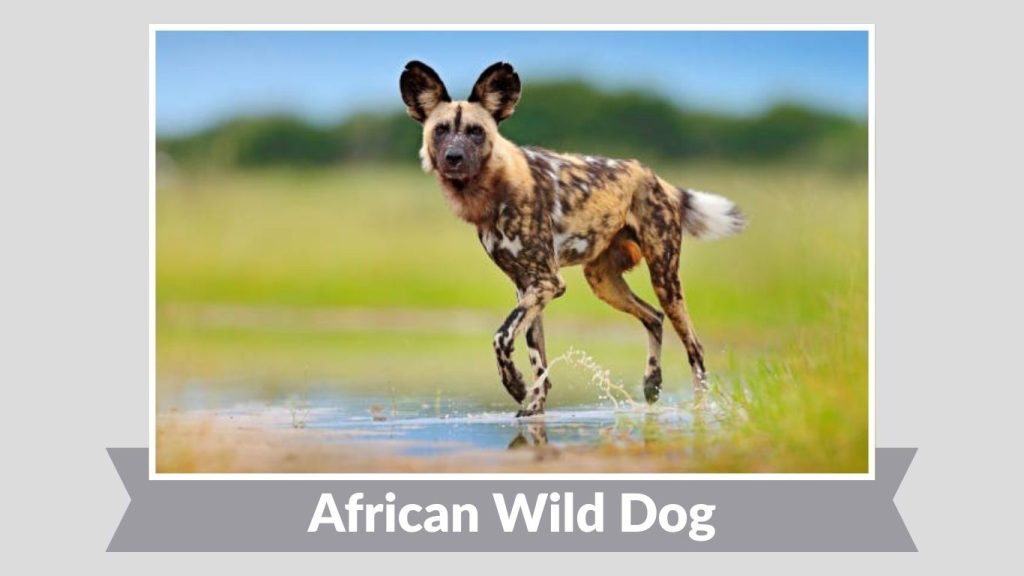
The African wild dog, also known as the painted dog, is one of Africa’s most efficient and endangered predators. Recognized by its colorful, patchy coat, each individual has a unique pattern. African wild dogs are highly social and rely on teamwork and cooperation to hunt successfully. Their presence is important for controlling prey populations and maintaining healthy ecosystems.
Identification
- Slim, athletic body built for endurance
- Irregular patches of black, brown, white, and yellow fur
- Large, rounded ears that aid in hearing
- Long legs adapted for long-distance running
- Narrow muzzle and strong jaws
- Bushy tail with a white tip
Habitat
African wild dogs inhabit savannas, grasslands, open woodlands, and semi-arid regions of sub-Saharan Africa. They require large territories due to their wide-ranging hunting behavior. These dogs avoid dense forests and areas with heavy human activity. Today, they are mostly found in protected national parks and wildlife reserves.
Behaviors
African wild dogs live in packs led by a dominant breeding pair. They have strong social bonds and show cooperative behavior, including caring for injured or sick pack members. Hunting is done as a group, with packs communicating through vocalizations and body signals. Their hunting success rate is one of the highest among large predators.
Diet and Lifespan
African wild dogs are carnivores that primarily hunt medium-sized antelope such as impalas and gazelles. They rely on endurance rather than ambush to exhaust prey. In the wild, African wild dogs typically live 10 to 12 years, though many face threats from disease, habitat loss, and human conflict.
16. Gorilla
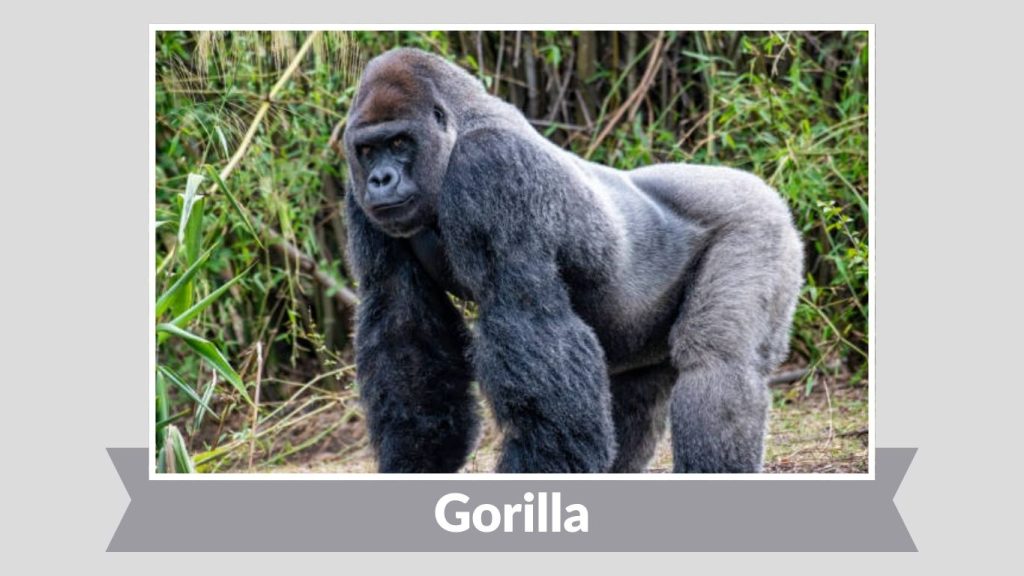
The gorilla is the largest living primate and one of Africa’s most intelligent and emotionally complex animals. Known for its strength and gentle nature, the gorilla shares a high percentage of its DNA with humans. Gorillas play an important role in forest ecosystems by dispersing seeds and maintaining plant diversity. Despite their power, gorillas are generally calm and avoid conflict unless threatened.
Identification
- Massive, muscular body with broad chest
- Dark black or brownish fur covering most of the body
- Adult males have a silver-gray patch on the back (silverbacks)
- Long arms that are longer than the legs
- Large head with pronounced brow ridge
- Human-like hands and expressive eyes
Habitat
Gorillas live in dense forests, tropical rainforests, and mountainous regions of central and eastern Africa. Different species occupy lowland forests or high-altitude mountain areas. They depend heavily on forest vegetation for food and shelter. Because of deforestation and human expansion, most gorillas now survive in protected national parks and reserves.
Behaviors
Gorillas are social animals that live in family groups led by a dominant silverback male. The silverback protects the group, makes decisions, and resolves conflicts. Gorillas communicate using vocal sounds, facial expressions, and body language. They spend much of their day feeding, resting, and socializing, and show strong bonds between group members.
Diet and Lifespan
Gorillas are primarily herbivores, feeding on leaves, stems, shoots, fruits, and bark. Occasionally, they may consume insects. In the wild, gorillas typically live between 35 and 40 years, while those in captivity may live longer due to medical care and protection.
17. Chimpanzee
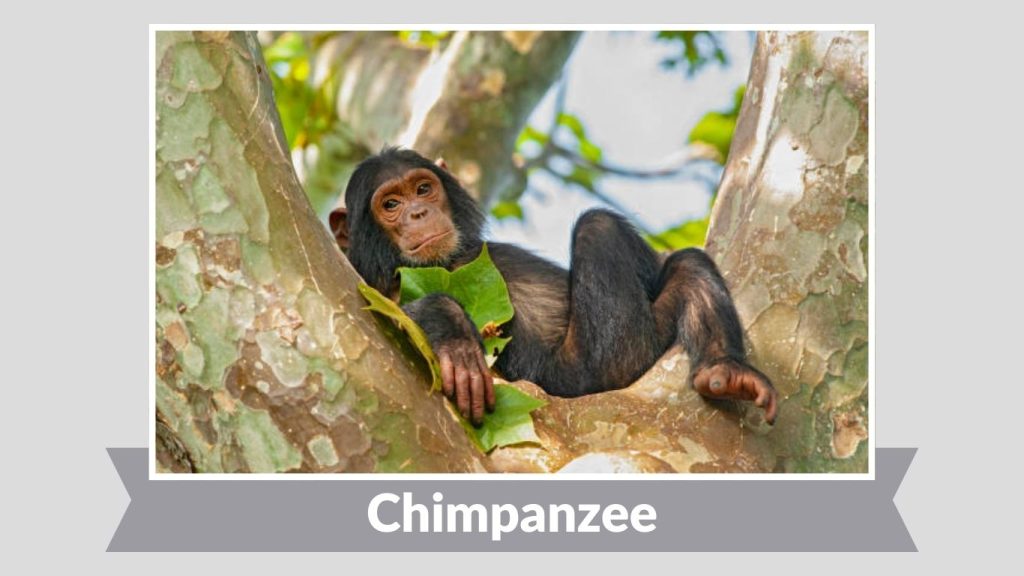
The chimpanzee is one of Africa’s most intelligent and socially complex animals. As one of humans’ closest living relatives, chimpanzees share many behavioral and emotional traits with people. They are known for problem-solving skills, tool use, and strong social relationships. Chimpanzees play a key role in forest ecosystems by dispersing seeds and influencing plant growth.
Identification
- Medium-sized primate with a lean, muscular build
- Black or dark brown hair covering most of the body
- Bare face, hands, and feet
- Long arms adapted for climbing and swinging
- Expressive facial features
- Forward-facing eyes for depth perception
Habitat
Chimpanzees inhabit tropical rainforests, woodlands, and savanna-forest mosaics across central and western Africa. They require areas with abundant fruit trees and access to water. Chimpanzees build nests in trees for sleeping and resting. Habitat destruction has significantly reduced their natural range, making protected areas essential for their survival.
Behaviors
Chimpanzees live in large social communities that split into smaller groups throughout the day. They have complex social hierarchies and communicate through vocalizations, gestures, and facial expressions. Chimpanzees are known for using tools, such as sticks to extract insects or stones to crack nuts. They also show cooperation, empathy, and occasional aggression within groups.
Diet and Lifespan
Chimpanzees are omnivores. Their diet mainly consists of fruits, leaves, seeds, insects, and occasionally small mammals. In the wild, chimpanzees typically live between 40 and 45 years, while those in captivity may live longer under human care.
18. Baboon
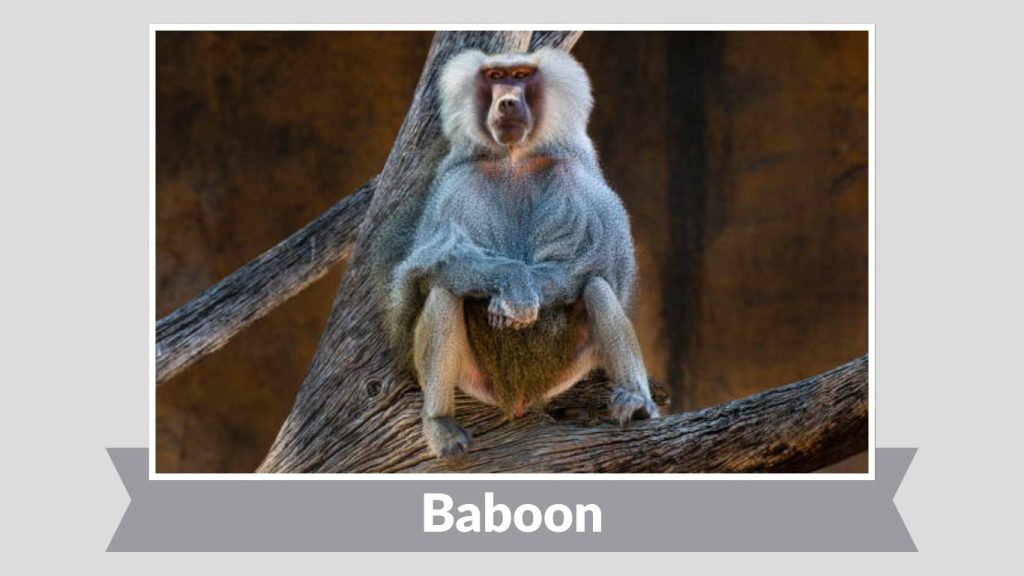
The baboon is a highly adaptable and intelligent primate commonly found across Africa. Known for its strong social structure and bold behavior, the baboon can thrive in a wide variety of environments. Its intelligence and flexibility allow it to find food and shelter even in areas close to human settlements. Baboons play an important role in ecosystems by dispersing seeds and controlling insect populations.
Identification
- Medium to large-sized primate with a muscular body
- Long, dog-like snout
- Thick fur ranging from olive-brown to gray
- Long tail, often held in a curved shape
- Sharp canine teeth, especially in males
- Bare, often colorful skin on the face and rump
Habitat
Baboons live in savannas, grasslands, open woodlands, and rocky hills across much of Africa. They are highly adaptable and can survive in both dry and wet environments. Baboons often sleep on cliffs or tall trees to stay safe from predators. Access to water is important, but they can travel long distances to find food.
Behaviors
Baboons are very social animals and live in large troops that can include dozens of individuals. These troops have complex hierarchies based on dominance, age, and family ties. Baboons communicate through vocal sounds, facial expressions, and body postures. They are active during the day and spend much of their time foraging and socializing.
Diet and Lifespan
Baboons are omnivores with a varied diet that includes fruits, seeds, roots, insects, small animals, and even birds. This flexible diet helps them survive in changing environments. In the wild, baboons typically live between 30 and 35 years, though many face threats from predators and human conflict.
19. Crocodile
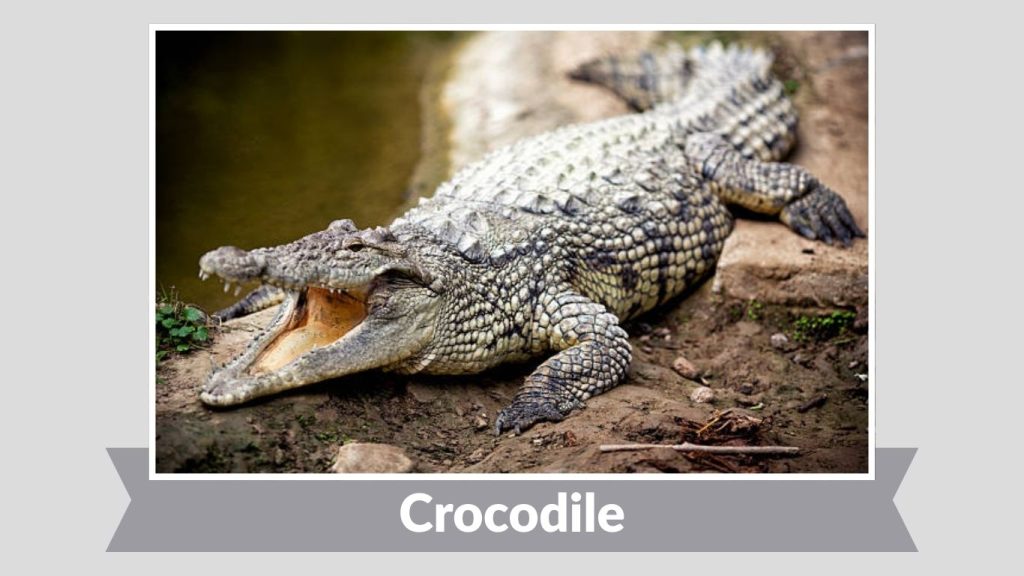
The crocodile is one of Africa’s oldest and most fearsome predators, having existed for millions of years with very little evolutionary change. Known for its powerful jaws and stealthy hunting style, the crocodile is a top predator in aquatic ecosystems. African crocodiles, especially the Nile crocodile, play a crucial role in controlling fish and animal populations around rivers and lakes.
Identification
- Long, armored body covered with thick, scaly skin
- Powerful jaws with sharp, cone-shaped teeth
- Long, muscular tail used for swimming
- Short legs positioned on the sides of the body
- Eyes and nostrils located on top of the head
- Dark green to brown coloration for camouflage
Habitat
Crocodiles live in freshwater habitats such as rivers, lakes, swamps, and wetlands across much of Africa. Some populations are also found in brackish water near river mouths. They prefer warm environments and often bask in the sun to regulate body temperature. Crocodiles depend on water bodies that provide both prey and safe nesting sites.
Behaviors
Crocodiles are mostly solitary and highly territorial, especially adult males. They are ambush predators, remaining motionless in water before striking suddenly. Crocodiles are most active at night and during early morning hours. Females show strong parental care, guarding nests and helping hatchlings reach the water.
Diet and Lifespan
Crocodiles are carnivores that feed on fish, birds, mammals, and occasionally other reptiles. Young crocodiles eat insects and small fish, while adults can take down large prey. In the wild, crocodiles can live 60 to 70 years, and some individuals may live even longer under favorable conditions.
20. Ostrich
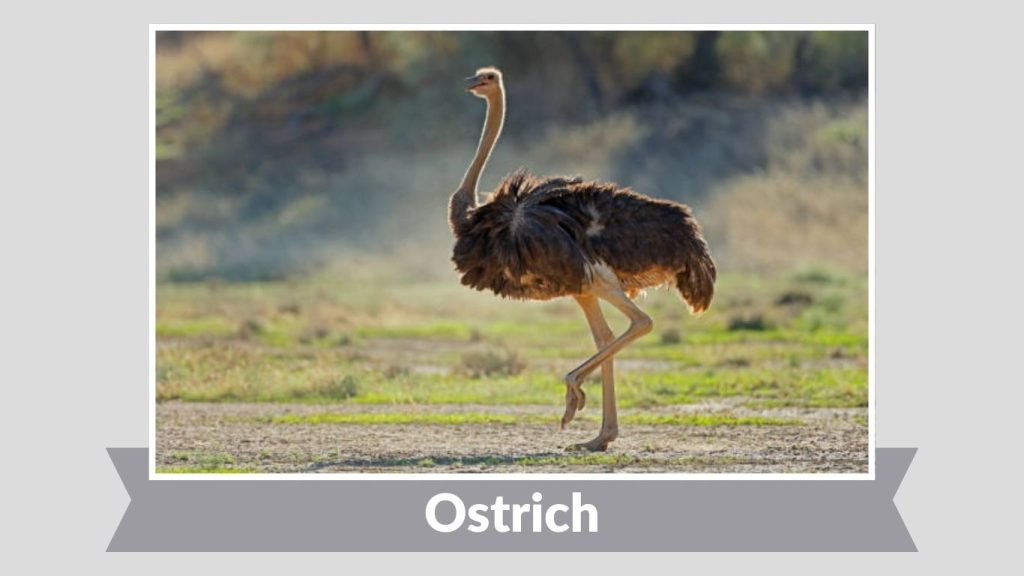
The ostrich is the largest and heaviest living bird in the world and a true symbol of the African plains. Although it cannot fly, the ostrich is an exceptional runner, capable of reaching very high speeds to escape predators. Its powerful legs, keen eyesight, and strong survival instincts make it well adapted to open landscapes. Ostriches also play a role in seed dispersal and maintaining ecosystem balance.
Identification
- Very large body with long neck and long legs
- Mostly black-and-white feathers in males, brownish-gray in females
- Small head with large eyes
- Long, powerful legs with two toes on each foot
- Short wings used for balance while running
- Bare pink or gray skin on neck and legs
Habitat
Ostriches inhabit savannas, grasslands, semi-desert regions, and open plains across Africa. They prefer wide, open spaces where they can spot predators from a distance. Ostriches are well adapted to dry environments and can survive with limited water, obtaining much of their moisture from food. They often share habitats with grazing mammals such as zebras and antelope.
Behaviors
Ostriches are social birds that live in small groups or mixed herds with other animals. They are active during the day and rely on excellent vision to detect danger. When threatened, ostriches usually run away, but they can deliver powerful kicks if cornered. They use displays such as wing flapping and body movements during mating and territorial defense.
Diet and Lifespan
Ostriches are omnivores that eat grasses, seeds, leaves, fruits, insects, and small reptiles. They swallow stones to help grind food in their stomachs. In the wild, ostriches typically live 30 to 40 years, and some may live longer in protected environments.
21. Flamingo
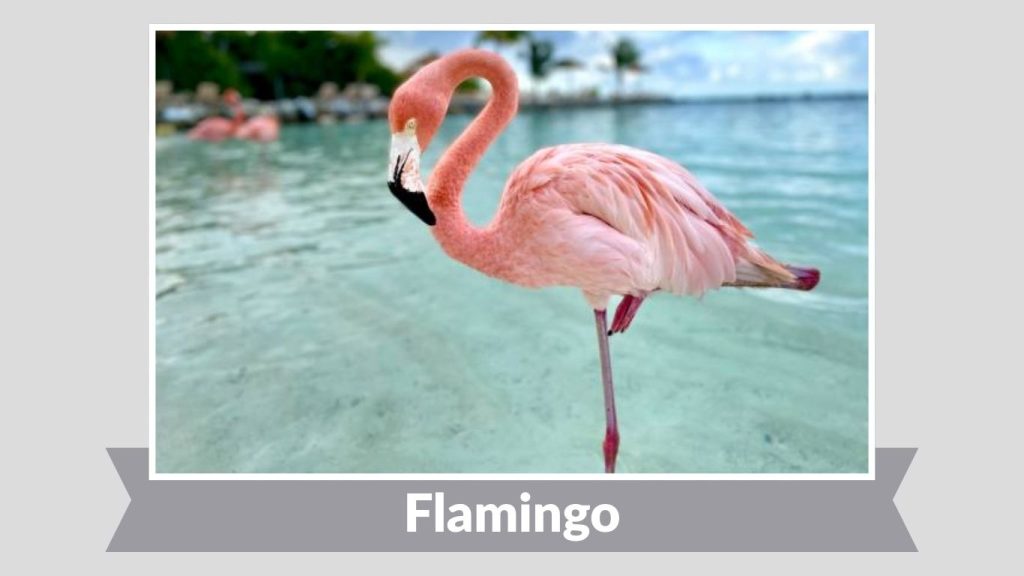
The flamingo is one of Africa’s most visually striking birds, famous for its bright pink coloration and long, slender legs. Large flocks of flamingos create spectacular scenes around African lakes and wetlands. Their color comes from pigments in the algae and small organisms they consume. Flamingos are important indicators of wetland health and play a role in maintaining aquatic ecosystems.
Identification
- Tall, slender body with very long legs
- Pale pink to deep pink feathers
- Long, flexible neck
- Large, downward-curved bill adapted for filter feeding
- Webbed feet for walking in soft mud
- Black flight feathers visible during flight
Habitat
Flamingos are commonly found in shallow lakes, lagoons, salt pans, and wetlands across Africa. They prefer alkaline or salty waters where fewer predators can survive. These habitats provide the algae and small invertebrates that make up their primary food source. Flamingos often migrate between water bodies depending on rainfall and water levels.
Behaviors
Flamingos are highly social birds and live in large colonies that can number in the thousands or even millions. They communicate using vocal calls and synchronized group movements. Breeding occurs in large groups, with nests built from mud. Flamingos spend much of their time standing, feeding, and preening.
Diet and Lifespan
Flamingos are filter feeders that eat algae, plankton, small crustaceans, and insects. Their specialized beaks allow them to filter food from water and mud. In the wild, flamingos typically live 20 to 30 years, and some individuals may live longer in protected environments.
22. Vulture
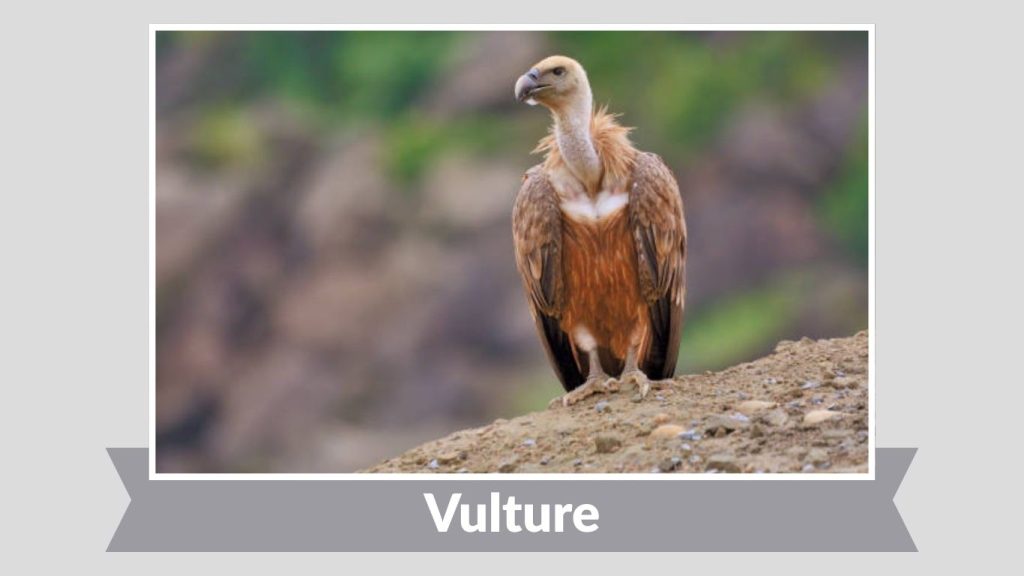
The vulture is one of Africa’s most important yet often overlooked birds. As nature’s cleanup crew, vultures play a critical role in preventing the spread of disease by feeding on carcasses. Their ability to consume decaying flesh makes ecosystems healthier and safer for other wildlife. Despite their value, many vulture species in Africa are facing serious population declines.
Identification
- Large bird with a broad wingspan
- Mostly dark brown or black feathers
- Bald or sparsely feathered head and neck
- Strong, hooked beak designed for tearing flesh
- Sharp eyesight for spotting carcasses from great heights
- Powerful wings suited for soaring
Habitat
Vultures inhabit savannas, grasslands, open woodlands, deserts, and mountainous regions across Africa. They prefer open areas that allow easy takeoff and landing and provide good visibility when searching for food. Vultures often roost on tall trees, cliffs, or rocky outcrops. Their habitat choice is closely linked to the presence of large mammals.
Behaviors
Vultures are generally social and are often seen soaring in groups or gathering around carcasses. They rely on thermal air currents to glide for long distances with minimal effort. Vultures are not aggressive hunters; instead, they depend on scavenging. Different species may feed in a specific order at a carcass, reducing conflict and improving efficiency.
Diet and Lifespan
Vultures are carnivores that primarily feed on dead animals. Their strong stomach acids allow them to digest harmful bacteria safely. In the wild, vultures can live 20 to 30 years, and some species may live even longer under favorable conditions.
23. Secretary Bird
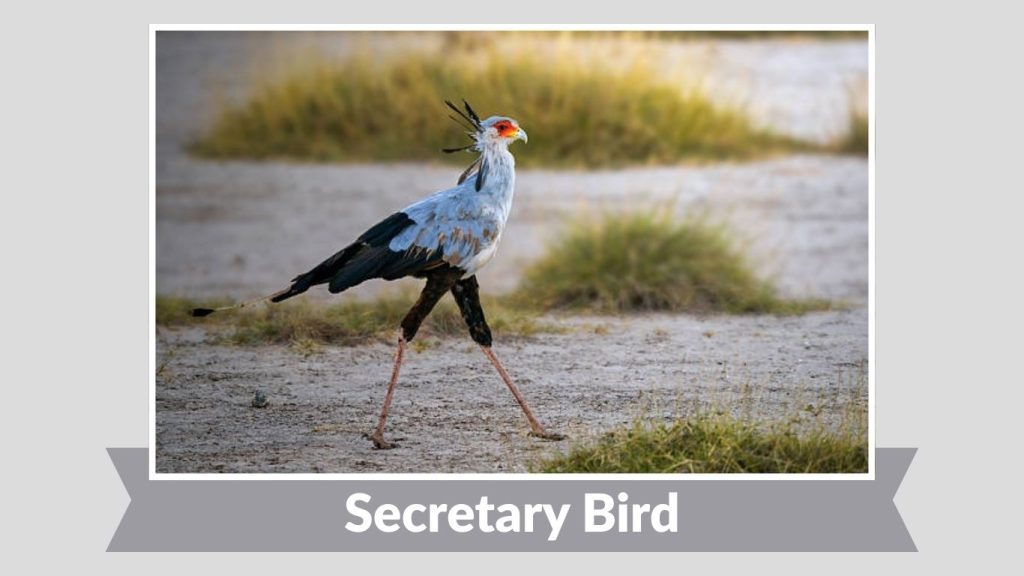
The secretary bird is one of Africa’s most unusual and elegant birds of prey. Easily recognized by its long legs and upright posture, it spends most of its time walking on the ground rather than flying. The bird gets its name from the feather-like quills on the back of its head, which resemble pens tucked behind a clerk’s ear. Secretary birds are important predators that help control populations of snakes and small animals.
Identification
- Tall bird with very long legs
- Gray body with black wing feathers
- Distinct crest of long black feathers behind the head
- Hooked beak adapted for hunting
- Long tail feathers
- Powerful legs used for stomping prey
Habitat
Secretary birds inhabit open grasslands, savannas, and lightly wooded areas across sub-Saharan Africa. They prefer wide, open spaces that allow them to walk freely while searching for prey. Dense forests and deserts are usually avoided. These birds often build large nests in tall trees, which they use for resting and breeding.
Behaviors
Secretary birds are mostly solitary or seen in pairs. Unlike most birds of prey, they hunt on foot, walking long distances each day. They are famous for their unique hunting technique, using strong kicks to stun or kill prey, especially snakes. Secretary birds are strong fliers when needed but spend much of their time on the ground.
Diet and Lifespan
Secretary birds are carnivores that feed on snakes, lizards, rodents, insects, and small mammals. Their powerful legs protect them from bites while hunting dangerous prey. In the wild, secretary birds typically live around 10 to 15 years, with longer lifespans possible in protected environments.
24. Meerkat
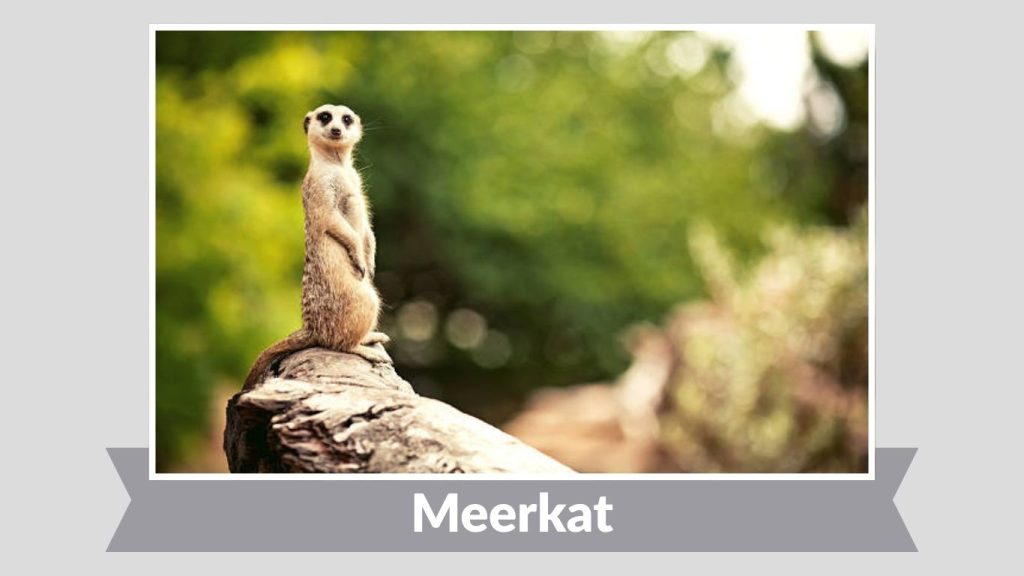
The meerkat is a small, social mammal known for its upright stance and alert behavior. Native to southern Africa, meerkats are famous for living in highly cooperative groups where each member plays a role in survival. Their teamwork, communication skills, and constant vigilance help protect the group from predators. Meerkats are an important part of desert and savanna ecosystems, especially in controlling insect populations.
Identification
- Small, slender body with light brown fur
- Dark patches around the eyes
- Long, thin tail used for balance
- Short legs with sharp claws for digging
- Pointed face with a narrow snout
- Upright posture when standing guard
Habitat
Meerkats live in dry, open habitats such as deserts, semi-deserts, savannas, and scrublands of southern Africa. They prefer sandy soils that are easy to dig, allowing them to build extensive underground burrow systems. These burrows provide shelter from predators and extreme temperatures. Meerkats often change burrows to avoid parasites.
Behaviors
Meerkats are highly social and live in groups called mobs or clans. One or more individuals act as sentinels, standing upright to watch for danger while others forage. They communicate using a wide range of vocal calls to signal threats or coordinate movement. Meerkats are active during the day and rely heavily on cooperation.
Diet and Lifespan
Meerkats are omnivores that mainly feed on insects, scorpions, spiders, small reptiles, and plant material. They have some resistance to venom, allowing them to eat scorpions safely. In the wild, meerkats typically live 10 to 14 years, though many face predation risks.
25. Jackal
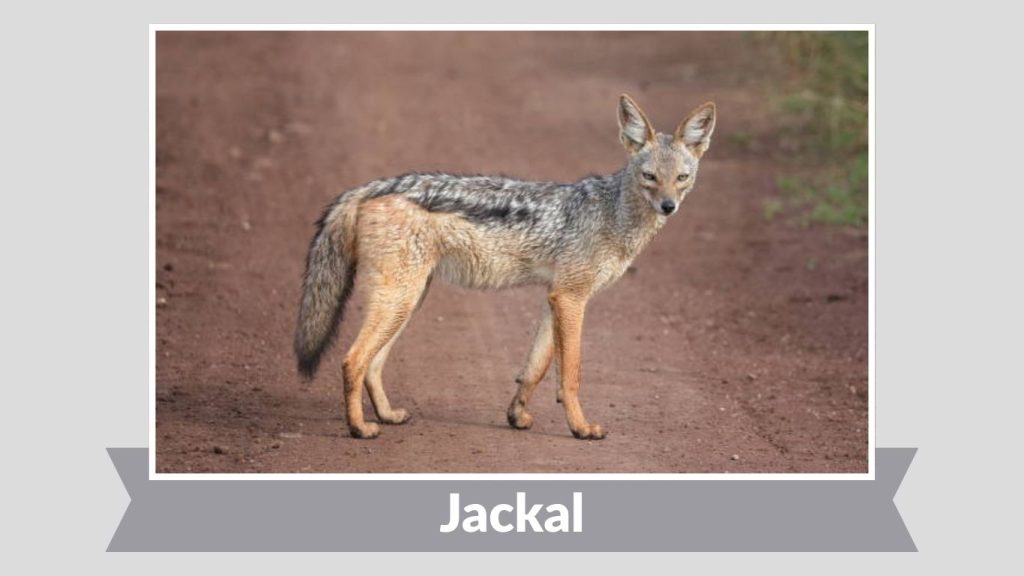
The jackal is a clever and adaptable carnivore commonly found across Africa. Known for its sharp senses and resourcefulness, the jackal can survive in a wide range of environments. It often appears in folklore as a symbol of intelligence and cunning. Jackals play an important ecological role by controlling small animal populations and cleaning up carrion left by larger predators.
Identification
- Medium-sized, slender body similar to a small dog
- Pointed muzzle with sharp teeth
- Bushy tail, often held low
- Coat color varies from golden brown to gray or black
- Long legs built for endurance
- Large, alert ears
Habitat
Jackals live in savannas, grasslands, deserts, open woodlands, and scrublands across much of Africa. They are highly adaptable and can live close to human settlements if food is available. Jackals prefer open areas that allow good visibility but also provide cover for resting and raising young.
Behaviors
Jackals are usually seen alone or in pairs, especially during breeding season. They are territorial and mark their range using scent. Jackals are mostly active at dawn and dusk, though they may also be active at night. They communicate using yips, howls, and body language, and are known for their strong pair bonds.
Diet and Lifespan
Jackals are omnivores and opportunistic feeders. Their diet includes small mammals, birds, insects, fruits, and carrion. This flexible feeding behavior allows them to thrive in changing environments. In the wild, jackals typically live 8 to 12 years.
26. Caracal
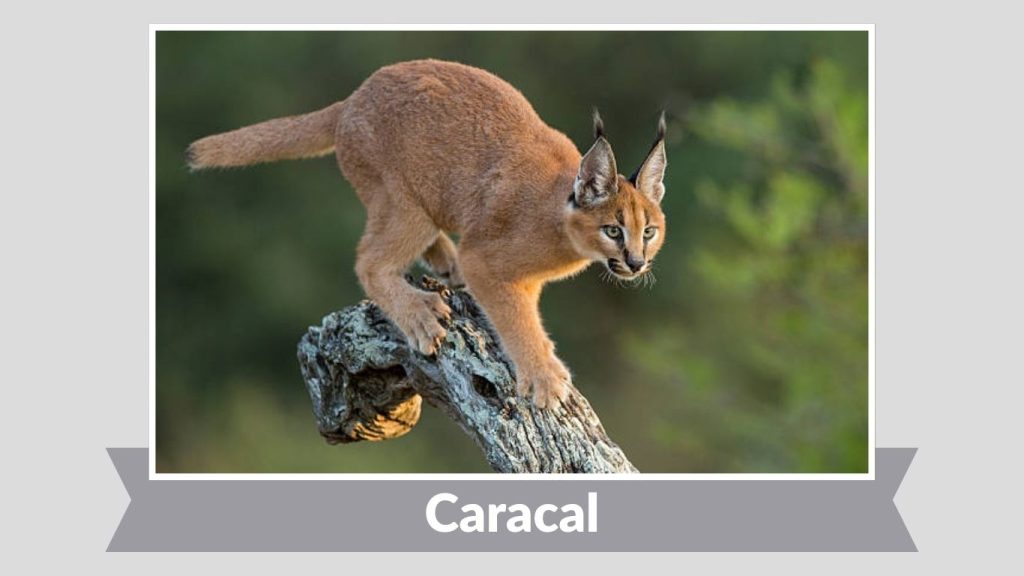
The caracal is a sleek and powerful wild cat known for its incredible jumping ability and distinctive ear tufts. Sometimes called the “desert lynx,” the caracal is highly adaptable and an excellent hunter. Its agility and strength allow it to catch birds in mid-air, making it one of Africa’s most skilled feline predators. Caracals play an important role in controlling populations of small to medium-sized prey.
Identification
- Medium-sized cat with a muscular, athletic build
- Short reddish-brown or sandy-colored coat
- Long black tufts on pointed ears
- Short tail compared to body length
- Strong hind legs built for jumping
- Yellow to amber eyes with sharp vision
Habitat
Caracals inhabit savannas, grasslands, semi-deserts, and dry woodlands across Africa. They prefer areas with good cover, such as bushes or rocky terrain, which help them stalk prey. Caracals are well adapted to arid environments and can survive with minimal water, obtaining most of their moisture from food.
Behaviors
Caracals are solitary and territorial animals. They are mostly active at night, though they may hunt during the day in undisturbed areas. Caracals rely on stealth and sudden bursts of speed rather than long chases. They are powerful climbers and jumpers, capable of leaping several meters into the air to catch birds.
Diet and Lifespan
Caracals are carnivores that feed on rodents, birds, hares, and small antelope. Their strong jaws and sharp claws make them efficient hunters. In the wild, caracals typically live 12 to 15 years, while those in captivity may live longer.
27. Serval
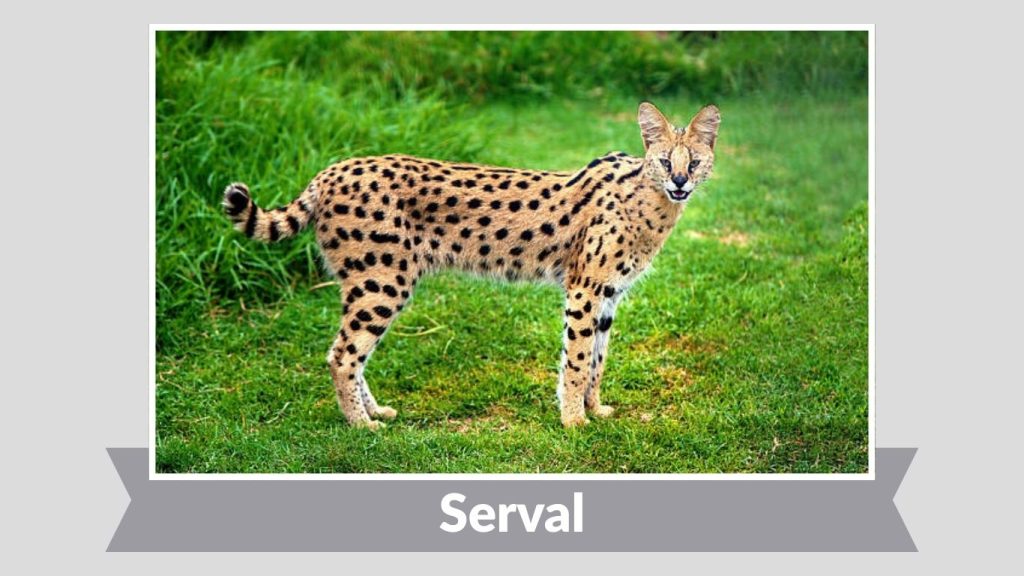
The serval is a medium-sized wild cat known for its long legs, large ears, and exceptional hunting skills. It is one of Africa’s most effective small predators, especially in catching rodents. The serval’s sharp hearing allows it to detect prey moving underground or in tall grass. By controlling rodent populations, servals play an important role in maintaining balance within their ecosystems.
Identification
- Slender body with very long legs
- Golden-yellow coat with black spots and stripes
- Large, rounded ears for enhanced hearing
- Small head with a narrow face
- Short tail with black rings
- Long neck relative to body size
Habitat
Servals are commonly found in grasslands, wetlands, savannas, and areas near rivers or marshes across sub-Saharan Africa. They prefer habitats with tall grass and access to water, which support high numbers of small prey. Servals avoid very dry deserts and dense forests. Protected wetlands and reserves are important for their survival.
Behaviors
Servals are solitary and mostly active during dawn and dusk. They hunt by listening carefully for prey, then leaping high into the air to pounce with great accuracy. Servals mark their territory using scent and are generally shy and elusive. They spend much of their time resting between hunting sessions.
Diet and Lifespan
Servals are carnivores that mainly eat rodents, birds, frogs, insects, and small reptiles. Their hunting success rate is among the highest of all cats. In the wild, servals typically live 10 to 12 years, while those in captivity may live longer.
28. Pangolin
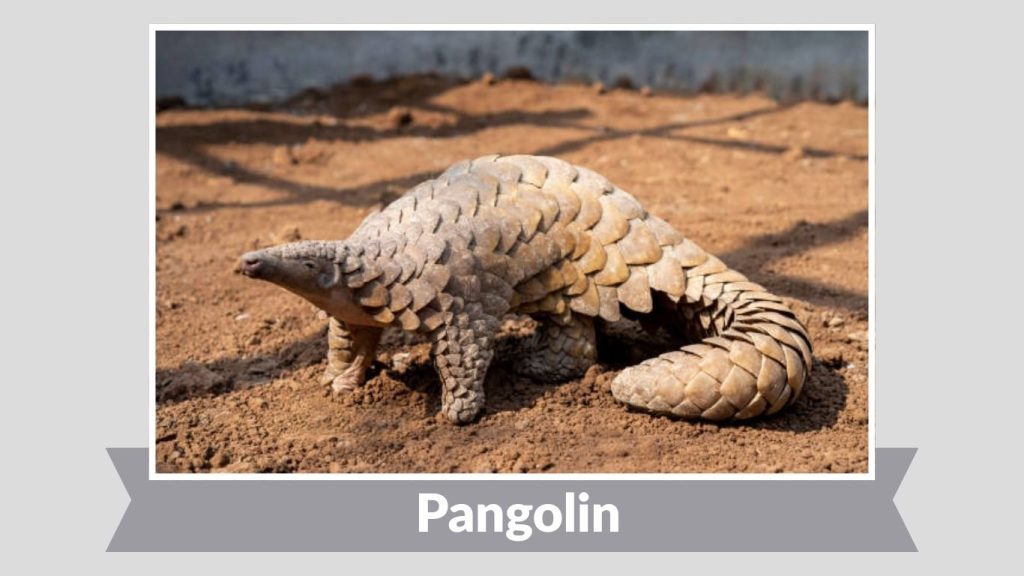
The pangolin is one of Africa’s most unique and secretive mammals, known for its protective armor of overlapping scales. When threatened, it curls into a tight ball, using its scales as defense. Pangolins are shy, nocturnal animals and are rarely seen in the wild. They play an important ecological role by controlling insect populations, especially ants and termites.
Identification
- Body covered in hard, overlapping keratin scales
- Small head with a narrow snout
- No teeth; long sticky tongue
- Strong curved claws for digging
- Long tail used for balance and climbing
- Brown to dark gray coloration
Habitat
Pangolins live in forests, woodlands, savannas, and grasslands across Africa. They require habitats with abundant ant and termite colonies. Depending on the species, pangolins may live on the ground or in trees. They often shelter in burrows, hollow logs, or dense vegetation during the day.
Behaviors
Pangolins are solitary and mostly nocturnal. They rely on their sense of smell to locate insect nests. When disturbed, they curl into a ball rather than flee. Pangolins move slowly and quietly, making them difficult to spot. They are generally peaceful and avoid confrontation whenever possible.
Diet and Lifespan
Pangolins are insectivores that feed almost exclusively on ants and termites. Their long tongue can extend far beyond the mouth to reach deep into nests. In the wild, pangolins typically live around 15 to 20 years, though exact lifespans are difficult to determine due to their elusive nature.
29. Porcupine
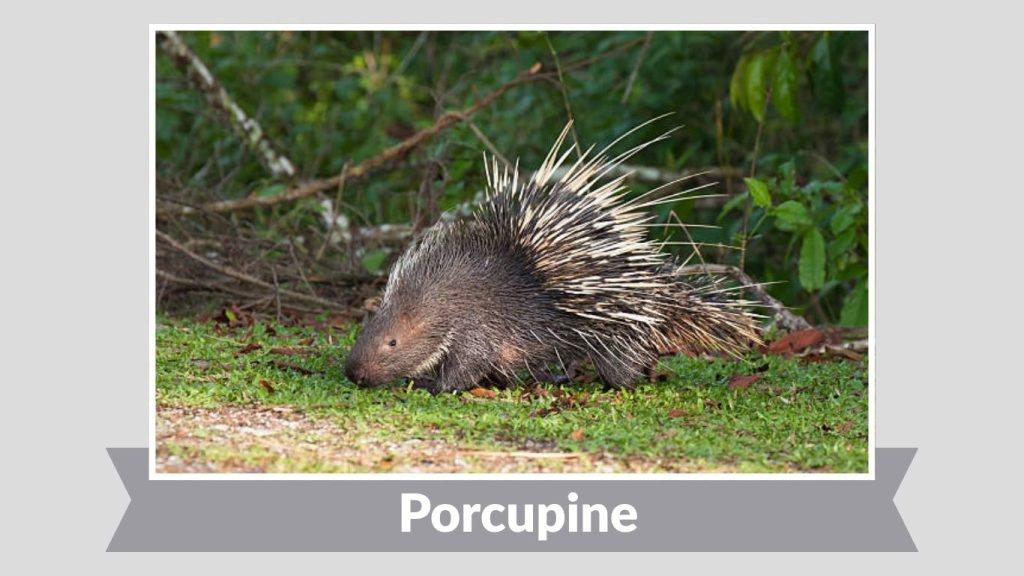
The porcupine is a slow-moving but well-defended rodent found across much of Africa. Famous for its sharp quills, the porcupine uses these spines as an effective defense against predators. Despite its defensive appearance, the porcupine is a calm and mostly harmless animal. It plays a role in shaping vegetation and soil through its feeding and digging habits.
Identification
- Large, heavy-bodied rodent
- Body covered with long, sharp quills
- Black-and-white patterned spines
- Short legs and strong feet
- Small head with blunt snout
- Thick tail with rattling quills
Habitat
Porcupines inhabit forests, savannas, grasslands, rocky hills, and semi-desert regions across Africa. They prefer areas with good shelter, such as caves, hollow logs, or burrows. Porcupines are adaptable and can survive in a variety of environments as long as food and shelter are available.
Behaviors
Porcupines are nocturnal and usually solitary or found in small family groups. When threatened, they raise and rattle their quills as a warning. If attacked, they can charge backward to embed quills into predators. Porcupines are generally peaceful and avoid conflict, relying on their defenses rather than speed.
Diet and Lifespan
Porcupines are herbivores that feed on roots, tubers, bark, fruits, and vegetation. They may gnaw on bones to obtain minerals. In the wild, porcupines typically live 15 to 20 years, though many face threats from predators and human activity.
30. Aardvark
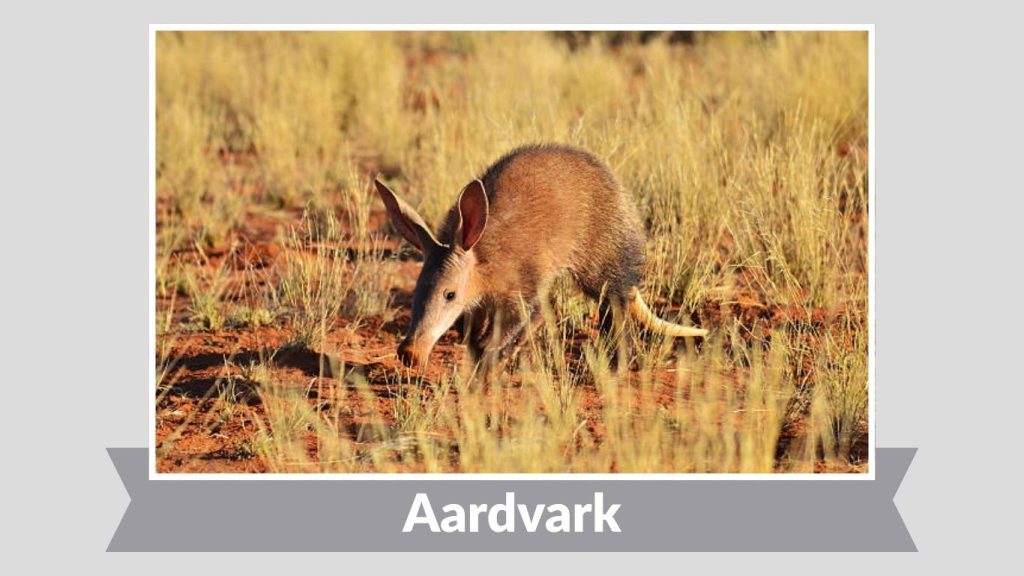
The aardvark is a unique and nocturnal mammal native to Africa, easily recognized by its pig-like snout and powerful digging claws. Despite its unusual appearance, the aardvark is highly specialized for feeding on ants and termites. By breaking open insect nests, it helps control insect populations and creates burrows that are later used by other animals.
Identification
- Medium-sized body with a rounded back
- Long, pig-like snout
- Thick skin with sparse hair
- Strong legs with large digging claws
- Large ears similar to a rabbit’s
- Long tail that tapers toward the end
Habitat
Aardvarks live in savannas, grasslands, woodlands, and semi-arid regions across sub-Saharan Africa. They require loose or sandy soil suitable for digging burrows and areas rich in ant and termite colonies. Aardvarks often change burrows, which helps reduce parasite buildup and provides shelter for other species.
Behaviors
Aardvarks are solitary and strictly nocturnal. They rely on their strong sense of smell to locate insect nests. Using their claws, they quickly dig into mounds and use their long, sticky tongues to collect prey. Aardvarks are shy and avoid predators by retreating into burrows or digging rapidly.
Diet and Lifespan
Aardvarks are insectivores that mainly feed on ants and termites. An adult aardvark can consume thousands of insects in a single night. In the wild, aardvarks typically live 18 to 23 years, though exact lifespans vary depending on environmental conditions.
31. Okapi
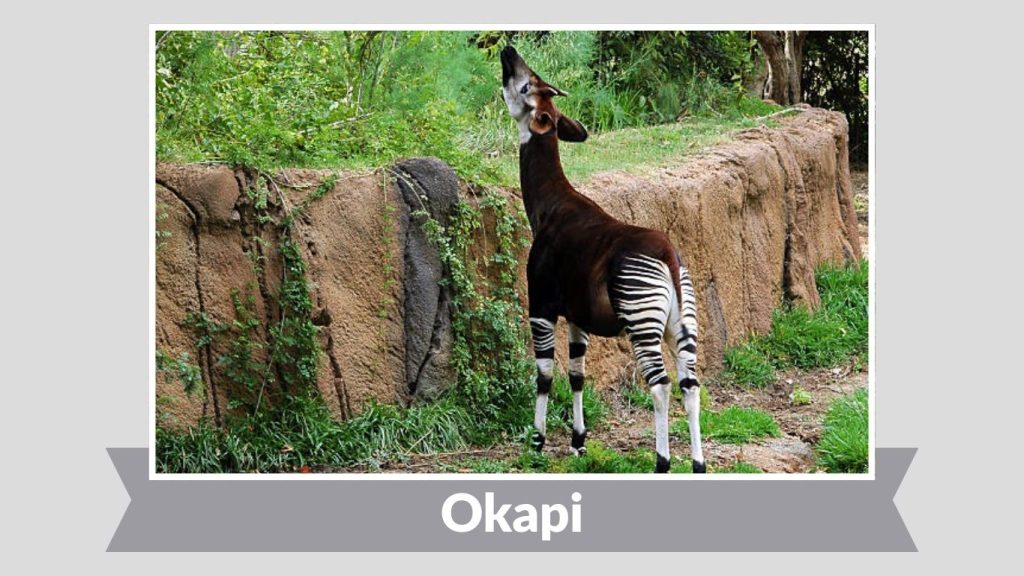
The okapi is a rare and elusive mammal native to Africa, often described as a living mystery. Although it looks similar to a mix between a giraffe and a zebra, the okapi is the giraffe’s closest living relative. It lives deep in dense forests and is rarely seen in the wild. Okapis play an important role in forest ecosystems by feeding on vegetation and helping maintain plant diversity.
Identification
- Medium to large-sized body with a giraffe-like shape
- Reddish-brown velvet-like coat
- Distinct white-and-black horizontal stripes on the legs
- Long neck, shorter than a giraffe’s
- Large ears with excellent hearing
- Long, dark, prehensile tongue used for feeding
Habitat
Okapis are found exclusively in the dense tropical rainforests of central Africa, particularly in the Congo Basin. They prefer remote forest areas with thick vegetation and access to streams or rivers. The forest provides cover from predators and abundant plant life for feeding. Due to habitat loss and human activity, okapis are now mainly restricted to protected forest reserves.
Behaviors
Okapis are solitary and shy animals. They are most active during the day but remain hidden among dense vegetation. Okapis communicate using scent markings and subtle vocal sounds that are often inaudible to humans. Mothers and calves maintain close contact, while adults generally avoid each other outside the breeding season.
Diet and Lifespan
Okapis are herbivores that feed on leaves, buds, grasses, fruits, and fungi. Their long tongue helps them strip leaves and clean their ears. In the wild, okapis typically live around 20 to 30 years, with longer lifespans possible in protected environments.
32. Kudu
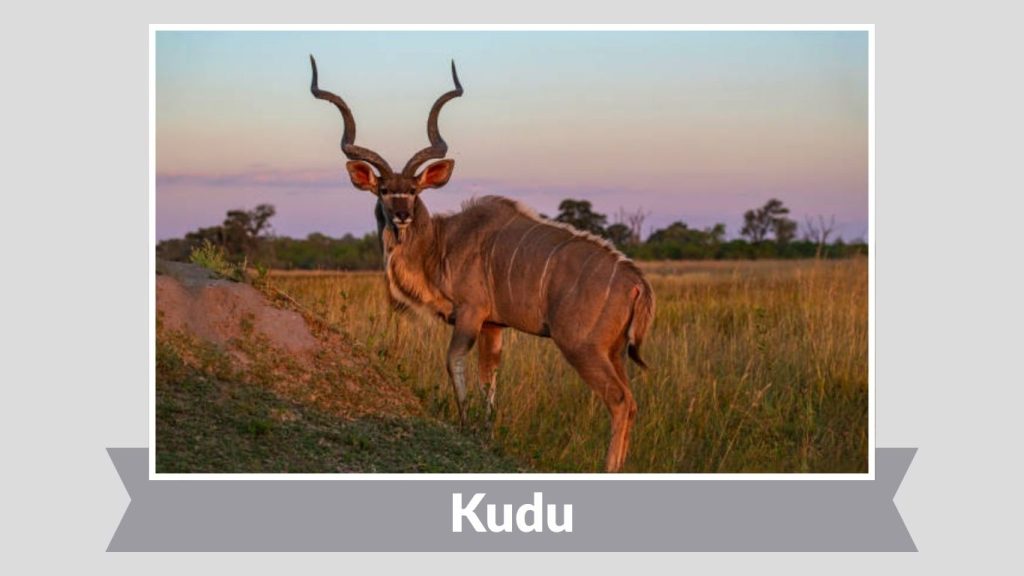
The kudu is a large and elegant antelope known for its impressive spiral horns and graceful appearance. There are two main types in Africa—the greater kudu and the lesser kudu—both admired for their beauty and agility. Kudus are shy and cautious animals, often relying on camouflage and sharp senses to avoid predators. They are an important part of savanna and woodland ecosystems.
Identification
- Tall, slender body with long legs
- Smooth brown to grayish coat with white vertical stripes
- Large spiral horns in males, sometimes reaching great lengths
- Narrow face with large, alert ears
- Short mane along the neck
- White markings on the face and throat
Habitat
Kudus live in woodlands, savannas, bushlands, and areas with dense shrubs across eastern and southern Africa. They prefer habitats that provide plenty of cover, allowing them to hide from predators. Access to water is important, though kudus can survive in relatively dry regions by feeding on moisture-rich plants.
Behaviors
Kudus are generally shy and elusive. Females and young live in small groups, while adult males are more solitary except during the breeding season. Kudus are excellent jumpers and can clear high obstacles when escaping danger. They are mostly active during early morning and late afternoon, resting in shaded areas during the heat of the day.
Diet and Lifespan
Kudus are herbivores that mainly browse on leaves, shoots, fruits, and vines. They occasionally eat grass when available. In the wild, kudus typically live 15 to 20 years, depending on environmental conditions and predation pressure.
33. Eland
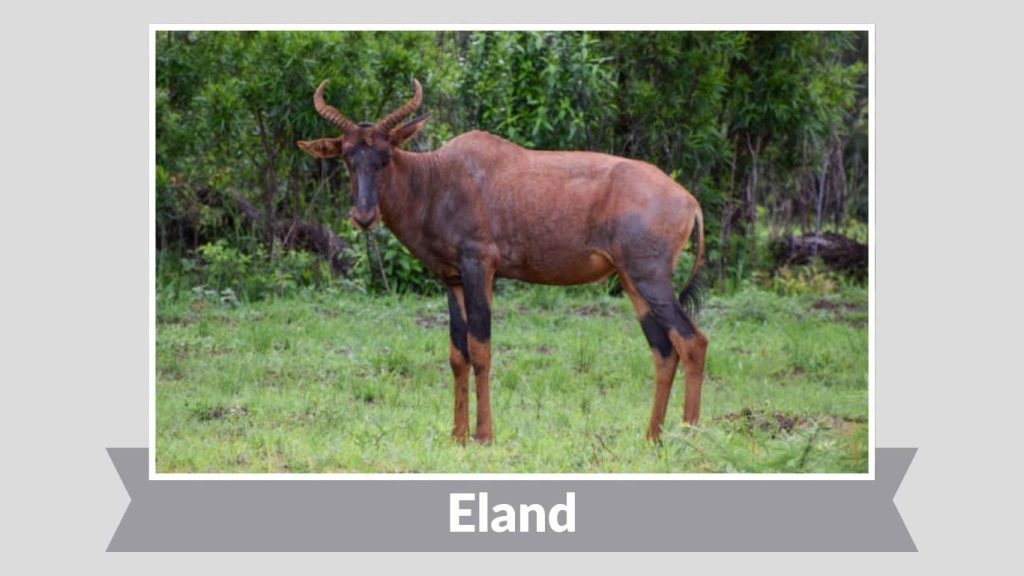
The eland is the largest antelope in Africa and is known for its calm nature and impressive size. Despite its heavy body, the eland is surprisingly agile and can jump high fences with ease. Elands are important grazers and browsers, helping shape vegetation in their habitats. They have also been culturally significant to many African communities for centuries.
Identification
- Very large, heavy-bodied antelope
- Light brown to gray coat, sometimes with faint white stripes
- Large dewlap of loose skin under the neck
- Thick, spiral-shaped horns in both males and females
- Short mane along the neck
- Broad head with large ears
Habitat
Elands inhabit savannas, grasslands, open woodlands, and semi-arid regions across eastern and southern Africa. They are highly adaptable and can survive in dry areas where water is scarce, obtaining moisture from plants. Elands prefer open areas mixed with shrubs, which provide both grazing and browsing opportunities.
Behaviors
Elands are social animals and usually live in herds that can range from small groups to large gatherings. They are generally calm and non-aggressive. Males may engage in ritualized contests during the breeding season. Elands are mostly active during cooler parts of the day and rest during extreme heat.
Diet and Lifespan
Elands are herbivores that feed on grasses, leaves, fruits, and herbs. Their flexible diet allows them to survive in changing environments. In the wild, elands typically live 15 to 20 years, with some individuals living longer in protected areas.
34. Sable Antelope
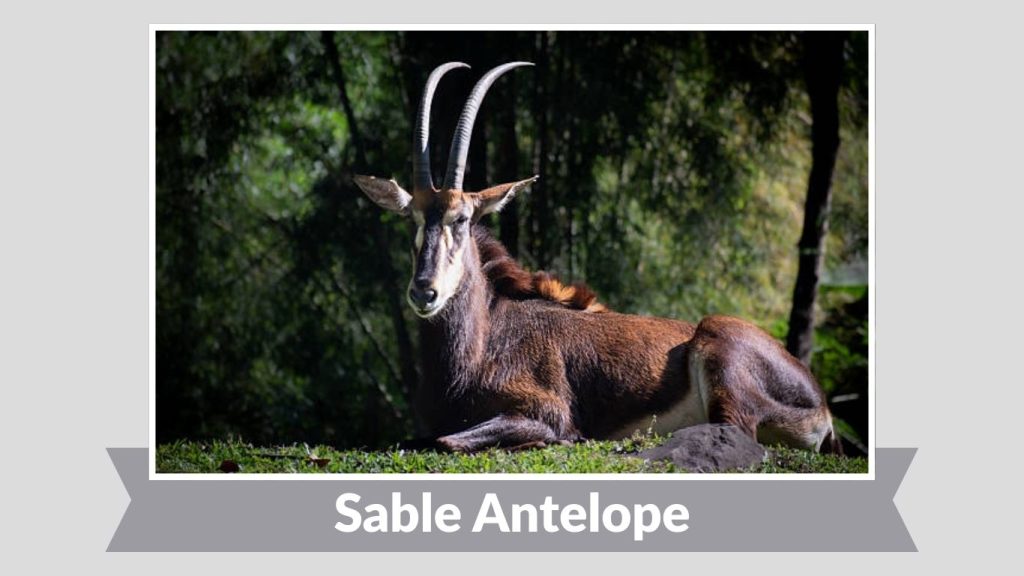
The sable antelope is one of Africa’s most striking and powerful antelopes, known for its dark coat and dramatic curved horns. It is admired for its strength, endurance, and fearless defense against predators. Sable antelopes play an important role in grassland ecosystems by grazing and shaping plant growth. Their bold appearance and confident behavior make them a symbol of strength in the wild.
Identification
- Large, robust antelope with a strong build
- Dark brown to black coat in adult males
- White facial markings with bold contrast
- Long, backward-curving horns in both sexes
- Short, upright mane along the neck
- Long tail with a black tuft
Habitat
Sable antelopes live in savannas, grasslands, and lightly wooded areas across parts of eastern and southern Africa. They prefer regions with tall grasses and access to water. These antelopes often avoid very dry areas and dense forests. Protected reserves and national parks are now their primary habitats due to hunting and habitat loss.
Behaviors
Sable antelopes live in herds led by dominant females, while adult males are often solitary or territorial. They are known for their courage and will stand their ground rather than flee when threatened. Herds maintain strong social bonds and communicate through body posture and movement. They are most active during the early morning and late afternoon.
Diet and Lifespan
Sable antelopes are herbivores that mainly graze on grasses, especially taller varieties. They may also feed on leaves and herbs during dry seasons. In the wild, sable antelopes typically live 15 to 20 years, depending on environmental conditions and predation risks.
35. Dik-dik
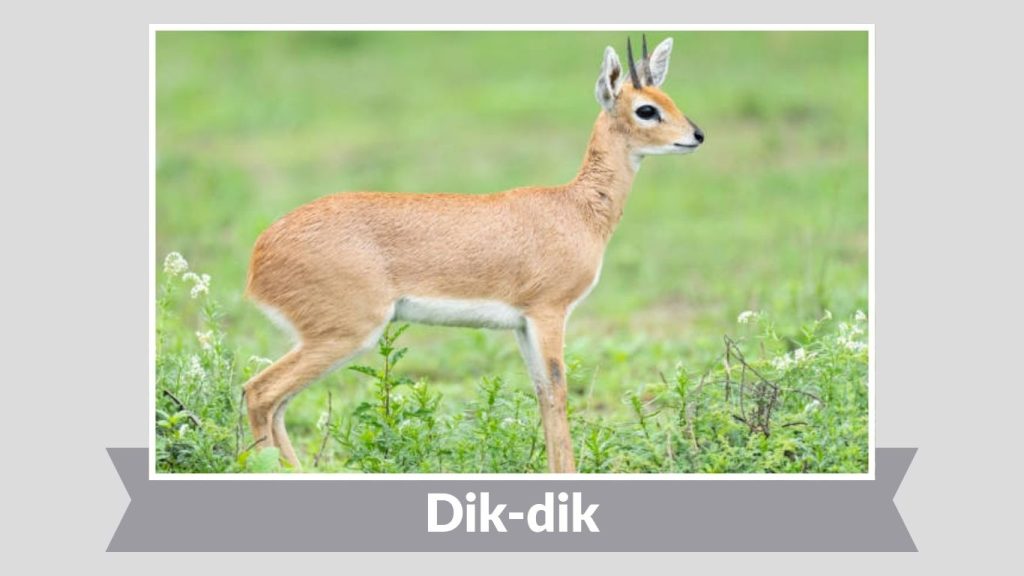
The dik-dik is one of Africa’s smallest antelopes and is known for its delicate appearance and shy nature. Despite its tiny size, the dik-dik is well adapted to dry environments and has unique survival strategies. Named after the alarm call it makes when startled, the dik-dik plays an important role in maintaining plant balance by selective feeding.
Identification
- Very small body with slender legs
- Soft gray-brown coat
- Large eyes with dark markings near the eyes
- Elongated snout that helps regulate body temperature
- Short, pointed horns in males only
- Short tail often hidden by fur
Habitat
Dik-diks inhabit dry savannas, bushlands, scrublands, and semi-arid regions of eastern and southern Africa. They prefer areas with dense shrubs that provide cover from predators. Dik-diks rarely stray far from shelter and are well adapted to environments with limited water availability.
Behaviors
Dik-diks are shy and mostly live in monogamous pairs that maintain small territories. They rely on camouflage and stillness to avoid detection. When threatened, they flee rapidly while making a whistling alarm call. Dik-diks are mainly active during cooler parts of the day to avoid heat stress.
Diet and Lifespan
Dik-diks are herbivores that feed on leaves, shoots, fruits, and herbs. They obtain most of their water from food and rarely drink. In the wild, dik-diks typically live 5 to 7 years, though some may live longer in protected habitats.
FAQs
What makes African animals unique compared to other wildlife?
African animals are unique due to their high diversity, large body sizes, and adaptations to varied environments such as savannas, deserts, forests, and wetlands. Many species have evolved to survive extreme climates, seasonal droughts, and intense predator–prey relationships.
Why do many African animals live in groups or herds?
Living in groups helps African animals protect themselves from predators, find food more efficiently, and care for their young. Herds, packs, and prides increase survival chances through cooperation, shared vigilance, and collective defense.
Are African animals endangered?
Yes, many African animals are endangered or vulnerable due to habitat loss, poaching, climate change, and human expansion. Species such as elephants, rhinos, gorillas, and African wild dogs are especially at risk, making conservation efforts critical.
What role do African animals play in ecosystems?
African animals help maintain ecosystem balance by controlling population sizes, dispersing seeds, shaping vegetation, and recycling nutrients. Predators regulate herbivores, while grazers and browsers influence plant growth and landscape structure.
Where can African animals be found today?
Most African animals are now found in national parks, wildlife reserves, and protected areas across the continent. These regions provide safer habitats where animals are protected from hunting and habitat destruction, helping preserve biodiversity for the future.