



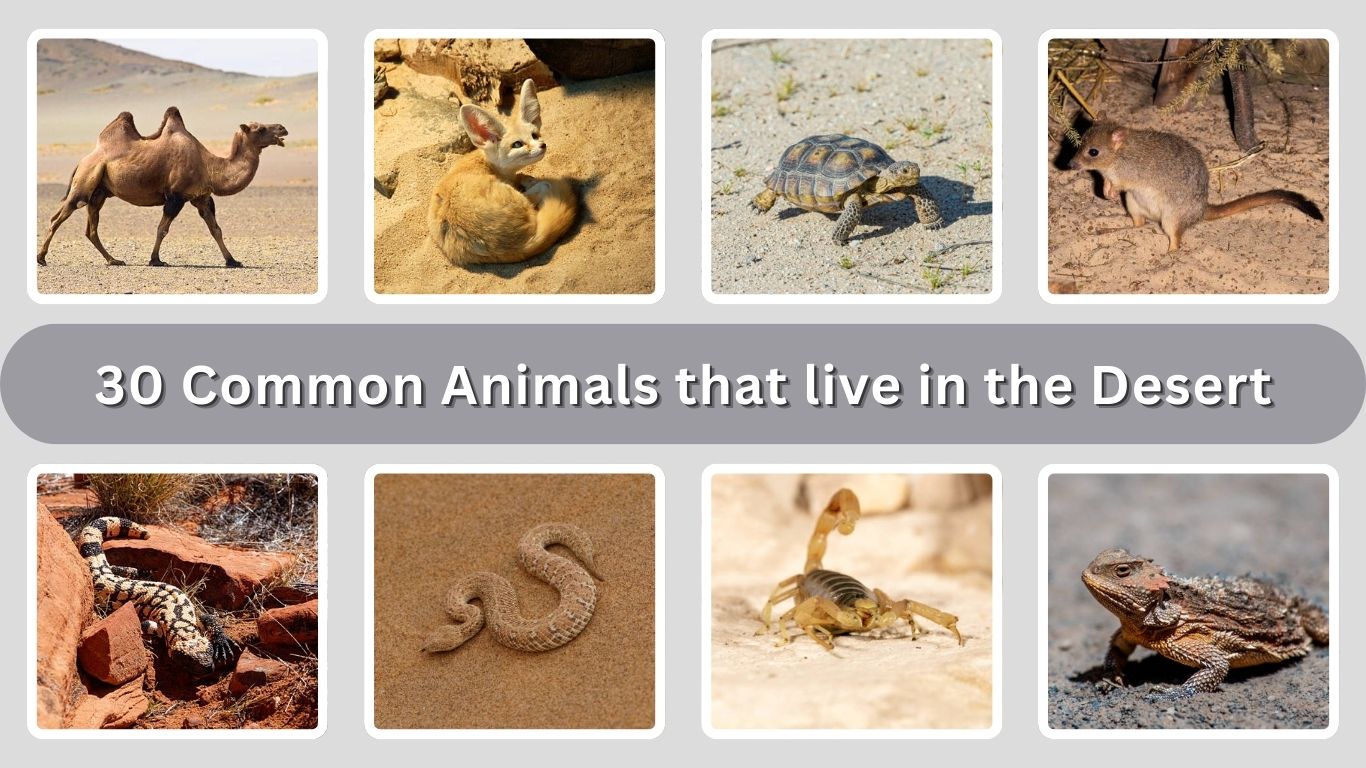
Deserts may seem harsh and lifeless, but they are home to a wide variety of fascinating animals uniquely adapted to survive extreme heat, scarce water, and limited food. From powerful mammals and agile birds to resilient reptiles and insects, desert animals use remarkable physical traits and behaviors to thrive in challenging environments. These species play vital roles in maintaining desert ecosystems, proving that life can flourish even in the most unforgiving landscapes.
1. Camel
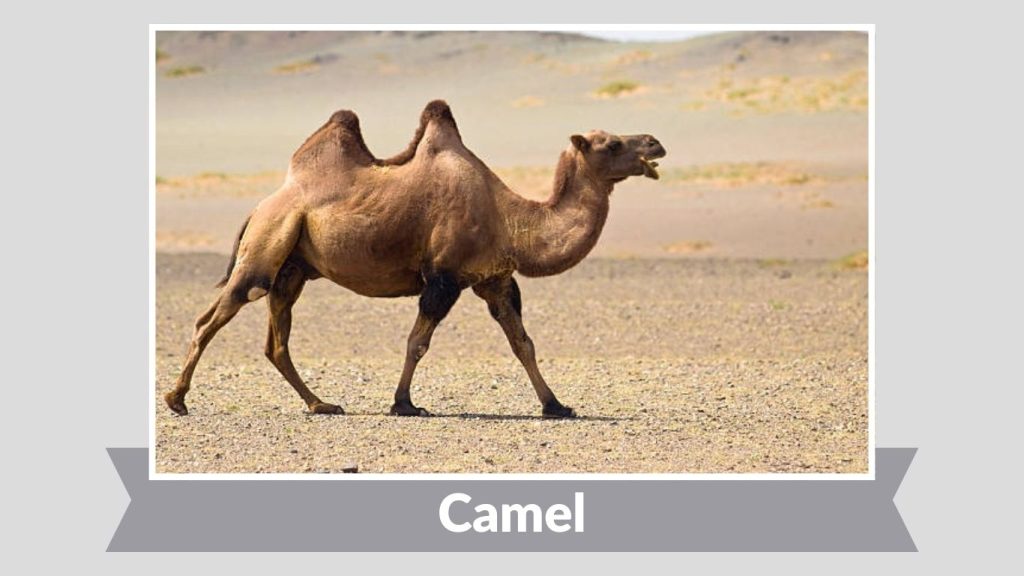
Camels are large desert-dwelling mammals famous for their incredible endurance and unique physical adaptations. Often called the “ships of the desert,” camels can survive harsh climates where temperatures are extreme and food and water are scarce. They have played a vital role in desert cultures for thousands of years.
Identification
- One hump (dromedary) or two humps (Bactrian) used to store fat
- Tall body with long legs that keep them away from hot sand
- Broad, leathery, split feet that prevent sinking into sand
- Thick coat that insulates against daytime heat and nighttime cold
- Long eyelashes, bushy eyebrows, and closable nostrils for sand protection
- Tough, leathery lips that allow eating thorny plants
Habitat
Camels inhabit deserts and semi-desert regions across North Africa, the Middle East, Central Asia, and parts of South Asia. They are well adapted to sandy deserts, rocky plains, and dry steppe environments where vegetation is sparse and water sources are limited.
Behaviors
Camels are generally calm and social animals, often living in herds led by a dominant male. They are most active during the cooler parts of the day and rest during extreme heat. Camels can tolerate significant dehydration and may go days or even weeks without drinking water, then consume large amounts at once when water becomes available.
Diet and Lifespan
Camels are herbivores that feed on dry grasses, leaves, twigs, desert shrubs, and thorny plants. Their digestive system allows them to extract maximum nutrients from poor-quality food. Camels typically live 40–50 years, depending on environmental conditions and care.
2. Fennec Fox
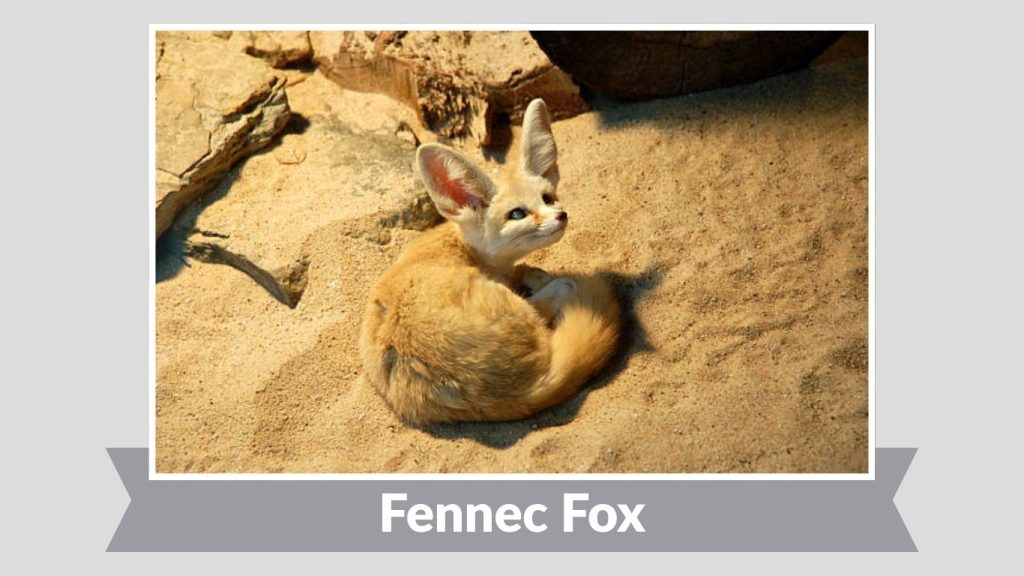
The fennec fox is the smallest fox species in the world and one of the most iconic desert animals. It is best known for its unusually large ears, which help it survive extreme desert heat and locate prey beneath the sand.
Identification
- Very small fox with a lightweight body
- Large ears that help release heat and detect sounds underground
- Pale cream or sandy-colored fur for camouflage
- Black-tipped tail and dark markings around the eyes
- Thick fur on the soles of the feet to protect from hot sand
Habitat
Fennec foxes live in the sandy deserts of North Africa, especially the Sahara Desert. They prefer dry, open areas with loose sand where they can dig burrows to escape daytime heat and predators.
Behaviors
Fennec foxes are nocturnal, meaning they are active mainly at night when temperatures are cooler. They are social animals that often live in small family groups. During the day, they rest in underground burrows that provide protection from extreme heat.
Diet and Lifespan
Fennec foxes are omnivores. Their diet includes insects, small rodents, birds, eggs, reptiles, and desert plants. They can survive with very little water, getting most of their moisture from food. In the wild, they typically live around 10–12 years.
3. Desert Tortoise
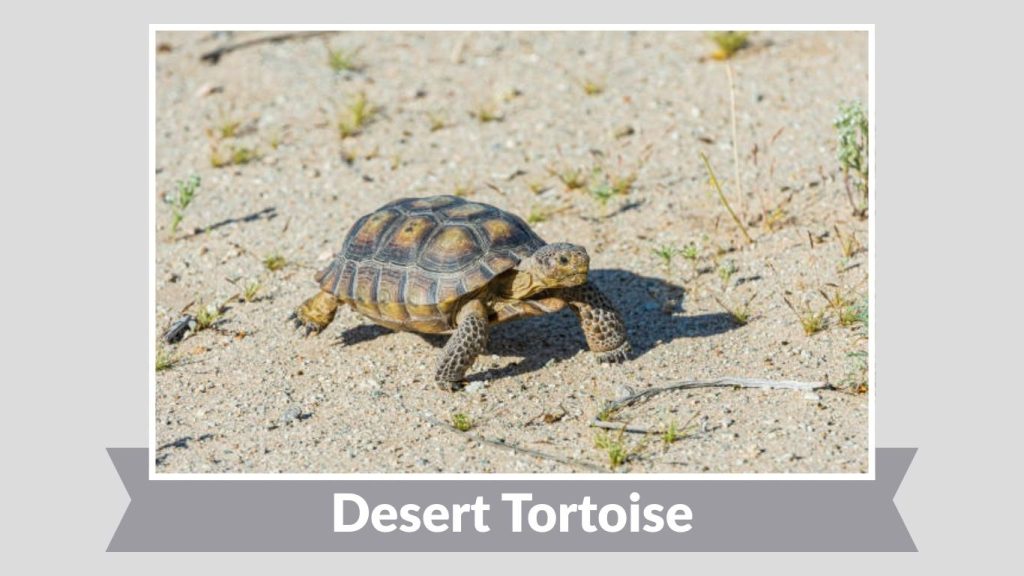
The desert tortoise is a slow-moving reptile well adapted to life in hot, dry environments. It is known for its long lifespan and its ability to survive long periods with little food or water.
Identification
- Medium-sized tortoise with a high-domed shell
- Shell color ranges from tan to dark brown
- Thick, scaly legs adapted for digging
- Strong, elephant-like feet with sharp claws
- Short, blunt tail
Habitat
Desert tortoises are found in deserts of the southwestern United States and northern Mexico. They live in sandy flats, rocky hillsides, and desert scrub areas where they can dig burrows for shelter.
Behaviors
Desert tortoises spend most of their time in burrows to avoid extreme temperatures. They are most active during cooler parts of the day, especially in spring and early summer. During very hot or cold periods, they may remain underground for months.
Diet and Lifespan
Desert tortoises are herbivores, feeding on grasses, wildflowers, cactus, and desert plants. They absorb water from plants and store it in their bodies. These tortoises can live 50–80 years or even longer in the wild.
4. Kangaroo Rat
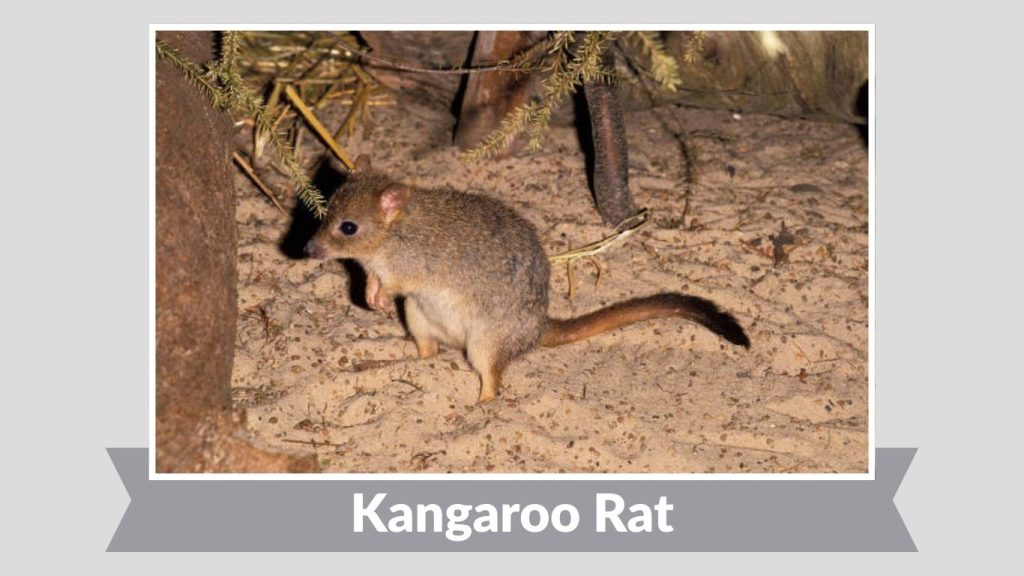
The kangaroo rat is a small desert rodent known for its powerful hind legs and remarkable ability to survive without drinking water. It gets almost all the moisture it needs from the food it eats.
Identification
- Small rodent with a compact body
- Long, strong hind legs used for hopping
- Long tail with a tuft at the end for balance
- Large eyes and ears adapted for nighttime activity
- Soft, sandy-colored fur for desert camouflage
Habitat
Kangaroo rats live in dry deserts and semi-arid regions of North America. They prefer sandy or loose soils where they can dig deep burrows for protection from heat and predators.
Behaviors
Kangaroo rats are nocturnal and spend the day inside burrows to avoid extreme heat. They are solitary animals and use powerful jumps to escape predators. Their burrows also help regulate body temperature and conserve moisture.
Diet and Lifespan
Kangaroo rats mainly eat seeds, grains, and small plants. They rarely drink water, relying instead on metabolic water produced during digestion. In the wild, they typically live 2–5 years.
5. Gila Monster
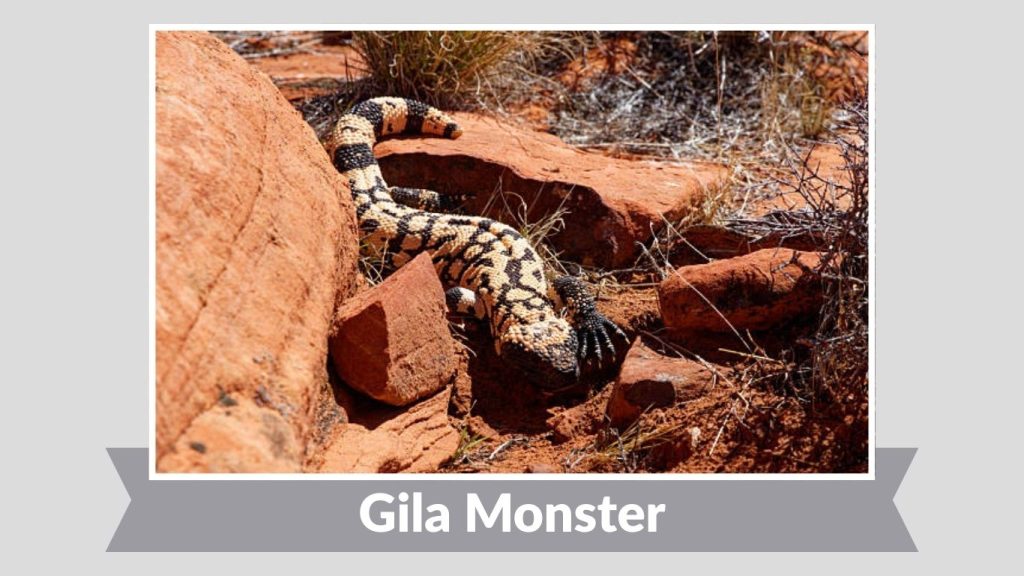
The Gila monster is one of the few venomous lizards in the world and a distinctive reptile of the desert. Despite its slow movement, it is a powerful survivor, well adapted to extreme heat and scarce food.
Identification
- Large, heavy-bodied lizard with a thick tail
- Black skin patterned with bright pink, orange, or yellow markings
- Bead-like, bumpy scales covering the body
- Short, strong legs with sharp claws
- Broad head with a powerful jaw
Habitat
Gila monsters are found in the deserts of the southwestern United States and northwestern Mexico. They inhabit rocky foothills, desert scrub, and sandy plains, often taking shelter in burrows or under rocks.
Behaviors
Gila monsters are mostly slow-moving and spend much of their time hidden underground. They are most active during spring and early summer, usually in the early morning or evening to avoid extreme heat.
Diet and Lifespan
Gila monsters feed on eggs, small mammals, birds, reptiles, and carrion. They store fat in their tails, allowing them to survive long periods without food. In the wild, they can live 20–30 years.
6. Sidewinder Rattlesnake
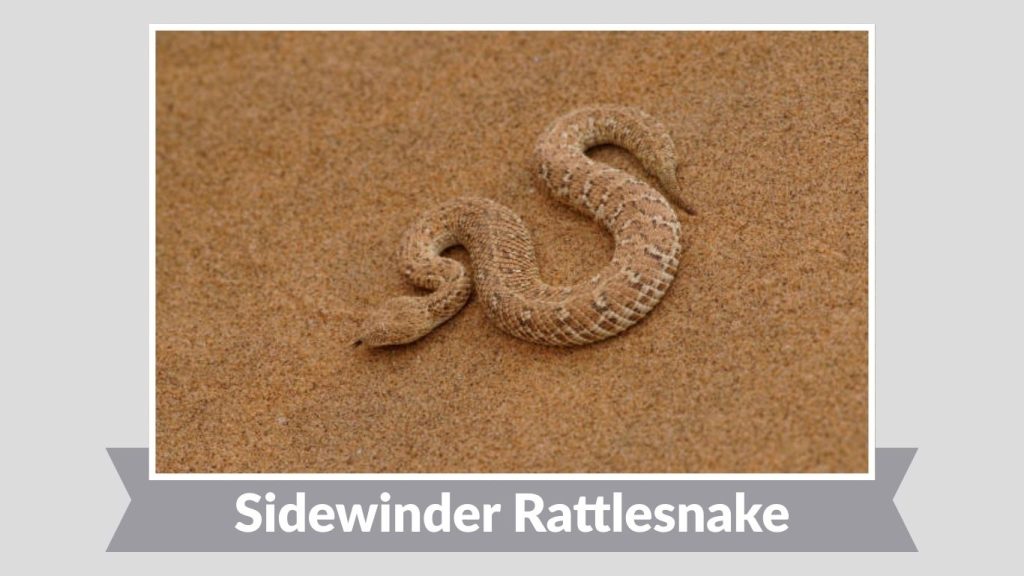
The sidewinder rattlesnake is a highly specialized desert snake famous for its unique sideways movement. This motion helps it travel efficiently across hot sand while minimizing contact with the scorching ground.
Identification
- Medium-sized venomous snake with a stout body
- Distinct horn-like scales above each eye
- Light sandy or gray coloration with darker blotches
- Rattle at the end of the tail used as a warning
- Keeled scales that give the body a rough texture
Habitat
Sidewinder rattlesnakes live in hot deserts of the southwestern United States and northern Mexico. They are commonly found in sandy dunes, open desert flats, and sparse shrublands where loose sand is abundant.
Behaviors
This snake is mostly nocturnal during extreme heat and becomes active at night or during cooler periods. Its sidewinding movement reduces heat absorption and provides excellent traction on loose sand. When threatened, it coils, rattles its tail, and strikes if necessary.
Diet and Lifespan
Sidewinders are carnivores that feed mainly on small mammals, lizards, and birds. They use venom to immobilize prey before swallowing it whole. In the wild, sidewinder rattlesnakes typically live around 15–20 years.
7. Scorpion
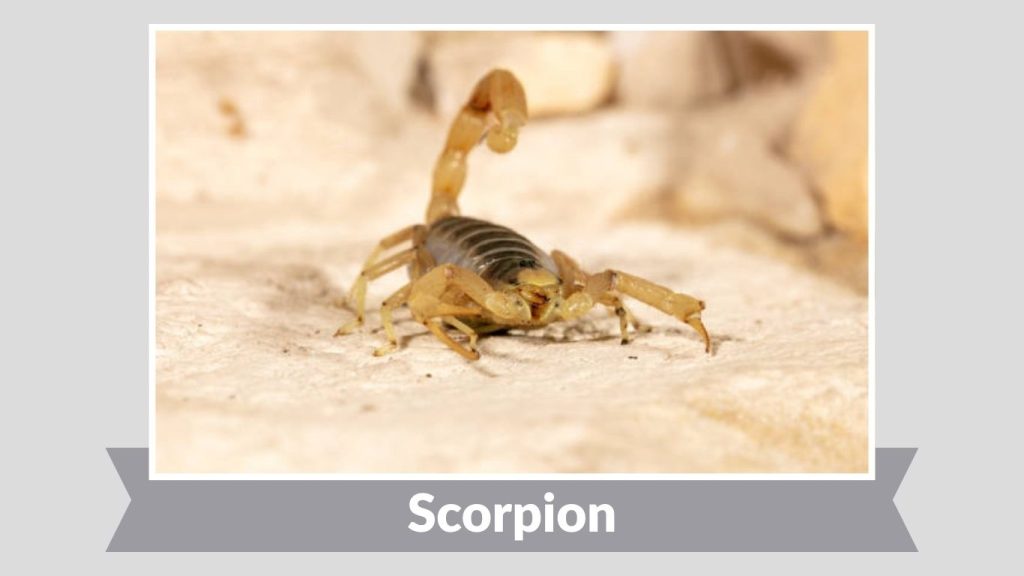
Scorpions are ancient desert arachnids that have survived on Earth for hundreds of millions of years. Highly adaptable and resilient, they are well suited to extreme desert conditions and are known for their venomous stingers.
Identification
- Small to medium-sized arachnid with a segmented body
- Eight legs and a pair of large front pincers (pedipalps)
- Long, curved tail ending in a venomous stinger
- Hard exoskeleton, usually yellow, brown, or black
- Sensitive hairs on the body to detect vibrations
Habitat
Scorpions are found in deserts around the world, including Africa, the Middle East, Asia, Australia, and the Americas. They live under rocks, logs, bark, and in burrows to avoid heat and dehydration.
Behaviors
Scorpions are nocturnal and remain hidden during the day. They rely on touch and vibration rather than sight to hunt prey. When threatened, they raise their tail and use their stinger for defense. Some species glow under ultraviolet (UV) light due to chemicals in their exoskeleton.
Diet and Lifespan
Scorpions are carnivores that feed on insects, spiders, and small vertebrates. They can survive long periods without food by slowing their metabolism. Depending on the species, scorpions typically live 3–8 years, though some may live longer.
8. Horned Lizard
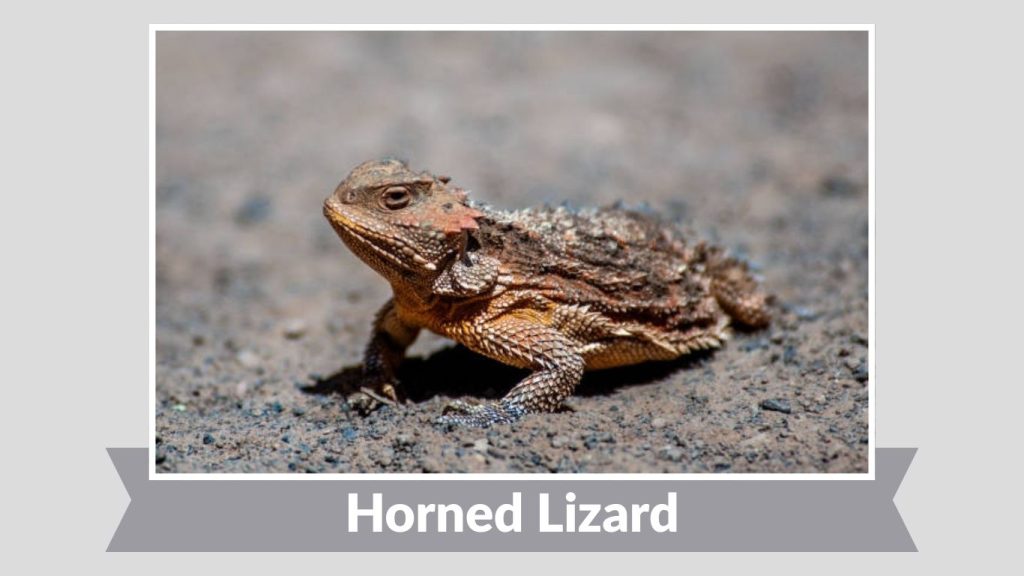
The horned lizard is a unique desert reptile known for its flat body and crown of sharp horns. Often called a “horned toad,” it is not a toad but a true lizard with remarkable defensive adaptations.
Identification
- Flat, wide body with a rounded appearance
- Crown of sharp, horn-like spikes on the head
- Rough, spiny scales covering the body
- Sandy, brown, or gray coloration for camouflage
- Short tail and small snout
Habitat
Horned lizards are found in deserts, grasslands, and semi-arid regions of North and Central America. They prefer dry, open areas with loose soil, sparse vegetation, and plenty of ants, their primary food source.
Behaviors
Horned lizards are mostly diurnal and spend much of their time basking in the sun. When threatened, they rely on camouflage, puffing up their bodies to appear larger. Some species can even squirt blood from their eyes to deter predators.
Diet and Lifespan
Horned lizards mainly feed on ants, especially harvester ants, along with other small insects. Their specialized diet allows them to thrive in harsh desert environments. In the wild, they typically live 5–8 years.
9. Meerkat
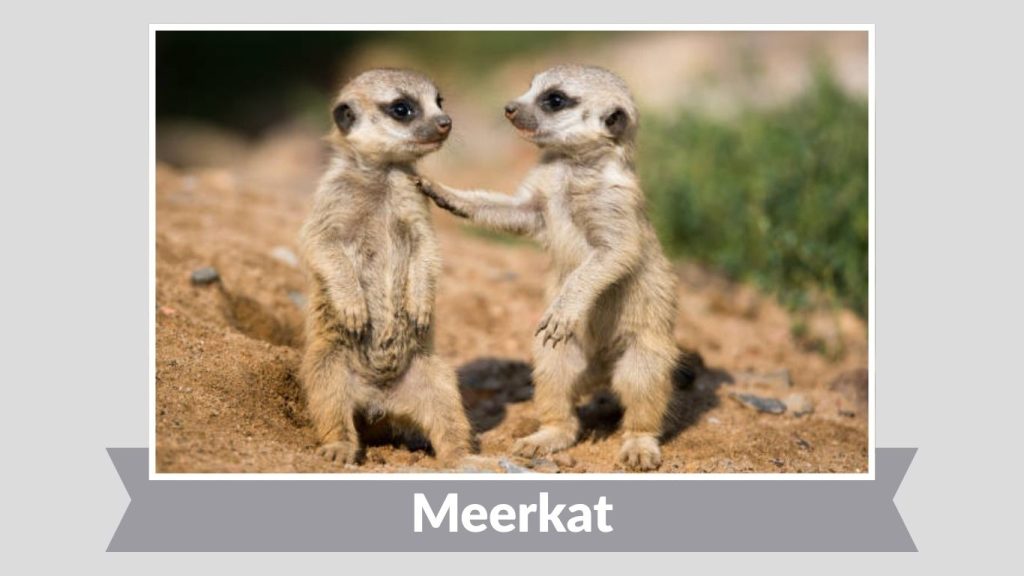
Meerkats are small, social mammals well known for their upright stance and cooperative behavior. Although often associated with deserts, they thrive in dry, open regions where teamwork is key to survival.
Identification
- Small, slender body with short legs
- Light brown to gray fur with darker stripes on the back
- Pointed face with dark patches around the eyes
- Long, thin tail used for balance
- Sharp claws adapted for digging
Habitat
Meerkats live in arid and semi-arid regions of southern Africa, including deserts and savannas. They prefer open plains with firm soil, where they can dig extensive burrow systems for shelter and safety.
Behaviors
Meerkats are highly social and live in groups called mobs or clans. They take turns acting as sentinels, standing upright to watch for predators while others forage. Their complex communication system includes different alarm calls for different threats.
Diet and Lifespan
Meerkats are omnivores, feeding on insects, spiders, scorpions, small reptiles, eggs, and plant matter. They are resistant to some venom, allowing them to eat scorpions safely. In the wild, meerkats usually live 6–10 years.
10. Dromedary Camel
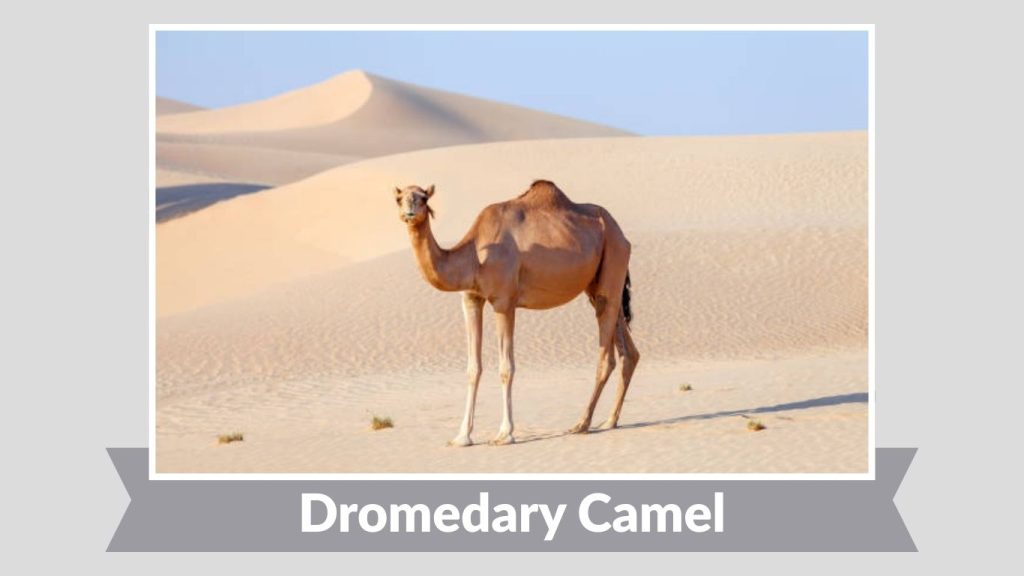
The dromedary camel, also known as the Arabian camel, is the most common camel species and is perfectly adapted to hot desert environments. It has been domesticated for thousands of years and remains essential to desert life and culture.
Identification
- Large camel with a single hump on its back
- Long legs and narrow body suited for heat regulation
- Short, light-brown to sandy-colored fur
- Long neck and large, expressive eyes
- Broad, padded feet that prevent sinking into sand
Habitat
Dromedary camels are native to the deserts of North Africa and the Middle East. Today, they are found in hot deserts, dry plains, and semi-arid regions, often living near human settlements due to domestication.
Behaviors
Dromedary camels are calm, social animals that often live in herds. They are highly tolerant of heat and dehydration and can regulate their body temperature to reduce sweating. When threatened or irritated, they may grunt, groan, or spit as a defense.
Diet and Lifespan
These camels are herbivores, feeding on dry grasses, leaves, grains, and thorny desert plants. Their tough mouths allow them to eat vegetation avoided by other animals. Dromedary camels typically live 40–50 years.
11. Jackal
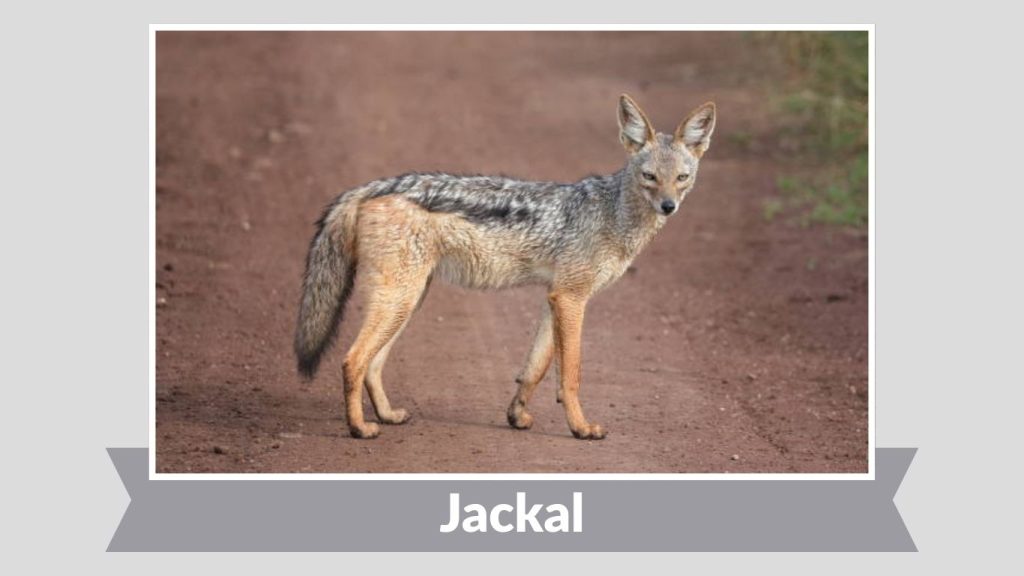
Jackals are clever, adaptable mammals that thrive in harsh desert and semi-desert environments. Known for their sharp intelligence and opportunistic nature, they play an important role as both hunters and scavengers.
Identification
- Medium-sized canine with a slender body
- Long legs and pointed muzzle
- Coarse fur, usually yellowish-brown or gray
- Bushy tail with a dark tip
- Large ears that help with heat regulation and hearing
Habitat
Jackals are found in deserts, semi-deserts, and dry grasslands across Africa, the Middle East, and parts of South Asia. They prefer open areas where they can easily hunt and scavenge, often near scrubland or desert edges.
Behaviors
Jackals are highly adaptable and may live alone, in pairs, or in small family groups. They are mostly nocturnal or crepuscular, being active during early morning and evening hours. Jackals communicate using howls, yelps, and barks, especially to mark territory.
Diet and Lifespan
Jackals are omnivores with a flexible diet that includes small mammals, birds, reptiles, insects, fruits, and carrion. This adaptability helps them survive in food-scarce deserts. In the wild, jackals typically live 8–12 years.
12. Desert Hedgehog
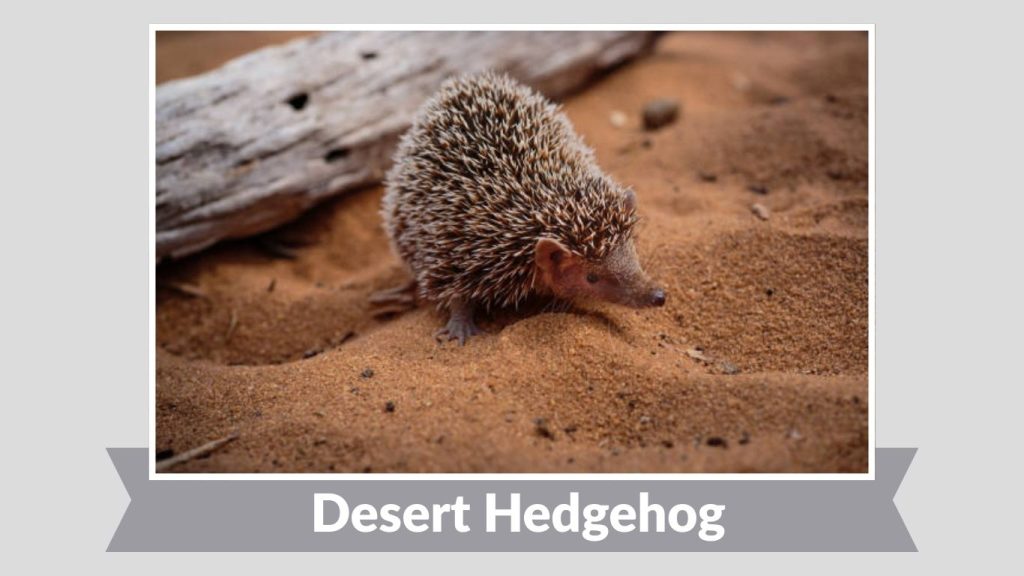
The desert hedgehog is a small, nocturnal mammal well adapted to hot, dry environments. Its spiny coat provides excellent protection against predators, while its behavior helps it conserve energy and water.
Identification
- Small, round-bodied mammal covered in sharp spines
- Spines are usually brown, white, or banded
- Short legs and a pointed snout
- Small eyes and rounded ears
- Soft fur on the face and underside
Habitat
Desert hedgehogs are found in arid and semi-arid regions of North Africa, the Middle East, and parts of Central Asia. They inhabit sandy deserts, rocky areas, and scrublands where shelter is available.
Behaviors
Desert hedgehogs are nocturnal and remain hidden during the day in burrows, under rocks, or in dense vegetation. When threatened, they curl into a tight ball, using their spines as defense. During extreme conditions, they may enter short periods of torpor to conserve energy.
Diet and Lifespan
These hedgehogs are omnivores, feeding on insects, worms, small vertebrates, eggs, and some plant matter. They can survive with limited water, obtaining moisture from food. In the wild, desert hedgehogs typically live 4–7 years.
13. Roadrunner
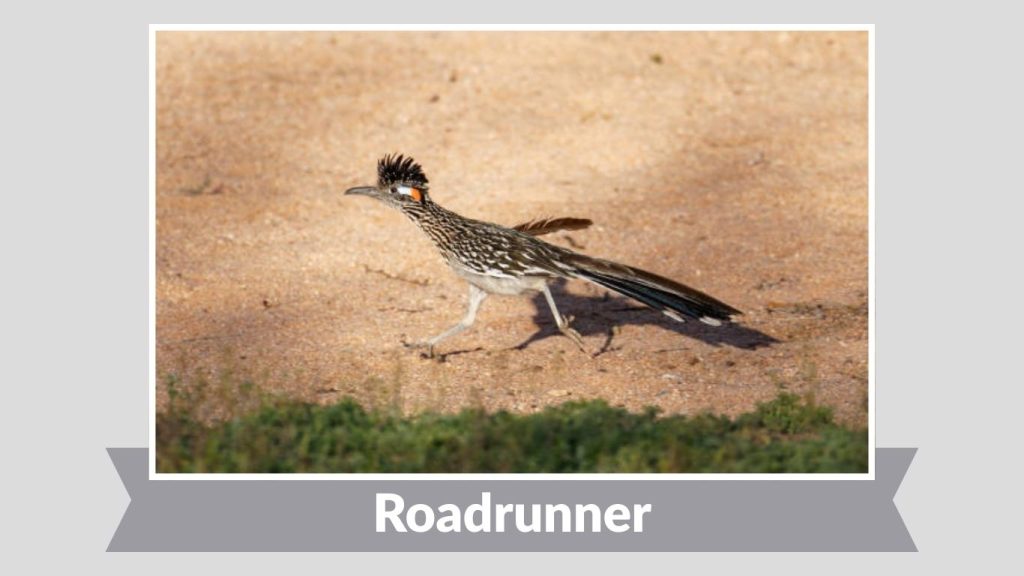
The roadrunner is a fast-running bird famous for its speed and agility in desert landscapes. It is well adapted to hot, dry climates and is often seen darting across open ground in search of prey.
Identification
- Medium-sized bird with a long tail and slender body
- Brown, black, and white streaked feathers
- Crest of feathers on the head
- Strong legs built for running rather than flying
- Long, slightly curved beak
Habitat
Roadrunners live in deserts, scrublands, and open plains of the southwestern United States and Mexico. They prefer areas with scattered shrubs, cacti, and open ground for running.
Behaviors
Roadrunners are diurnal and most active during daylight hours. They are excellent runners and can reach speeds up to 20 mph while chasing prey. Although capable of flight, they usually prefer running and only fly short distances.
Diet and Lifespan
Roadrunners are carnivorous and feed on insects, lizards, snakes, small mammals, birds, and eggs. They sometimes eat plant matter such as seeds and fruits. In the wild, roadrunners typically live 7–8 years.
14. Vulture
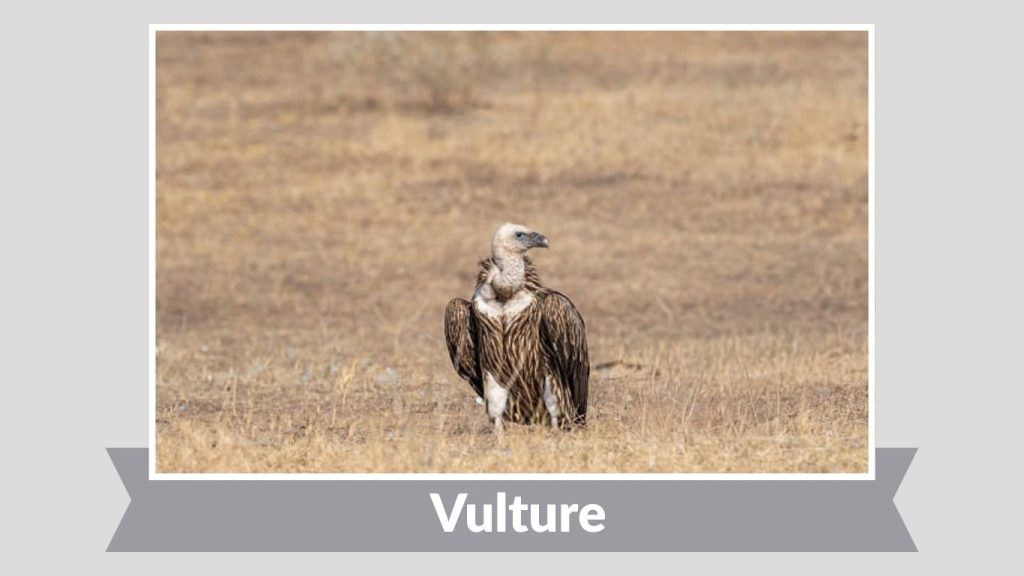
Vultures are large scavenging birds that play a crucial role in desert ecosystems by cleaning up carrion. Their strong stomach acids allow them to safely consume decaying meat that would be harmful to other animals.
Identification
- Large bird with a broad wingspan
- Bald or sparsely feathered head and neck
- Strong, hooked beak for tearing flesh
- Dark brown or black feathers, depending on species
- Long wings adapted for soaring
Habitat
Vultures are found in deserts, semi-deserts, and open landscapes across Africa, Asia, the Middle East, and the Americas. They prefer open areas where they can easily spot carcasses from the air.
Behaviors
Vultures are diurnal and spend much of the day soaring on thermal air currents to conserve energy. They rely on keen eyesight to locate food and often gather in groups at feeding sites. Despite their appearance, vultures are generally calm and non-aggressive.
Diet and Lifespan
Vultures are scavengers that feed almost exclusively on carrion. Their digestive system neutralizes dangerous bacteria and toxins. Many vulture species can live 20–30 years or more in the wild.
15. Ostrich
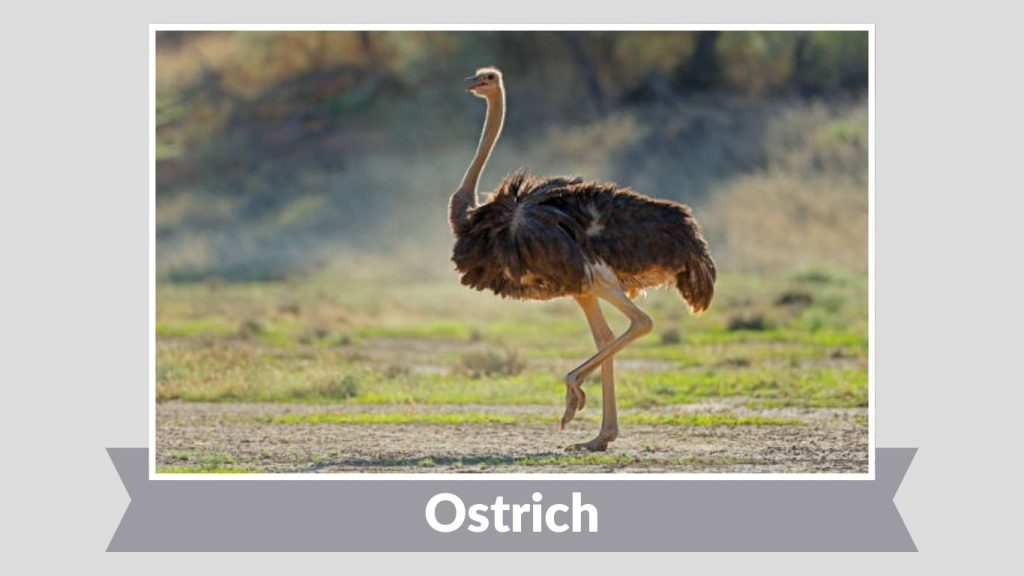
The ostrich is the largest and heaviest bird in the world and is well adapted to life in hot, dry environments. Although it cannot fly, its speed and strength make it a dominant desert and savanna species.
Identification
- Very large bird with a tall neck and long legs
- Males usually have black feathers with white wing tips
- Females have brown or grayish feathers
- Large eyes with long eyelashes
- Powerful legs with two-toed feet
Habitat
Ostriches live in deserts, semi-arid regions, and open savannas of Africa. They prefer wide, open spaces where they can spot predators from a distance and run freely.
Behaviors
Ostriches are diurnal and live in small groups. They rely on their incredible speed, running up to 45 mph, to escape predators. When threatened, they may also use powerful kicks for defense.
Diet and Lifespan
Ostriches are omnivores, feeding on seeds, grasses, leaves, insects, and small animals. They swallow stones to help grind food in their gizzard. In the wild, ostriches typically live 30–40 years.
16. Addax Antelope
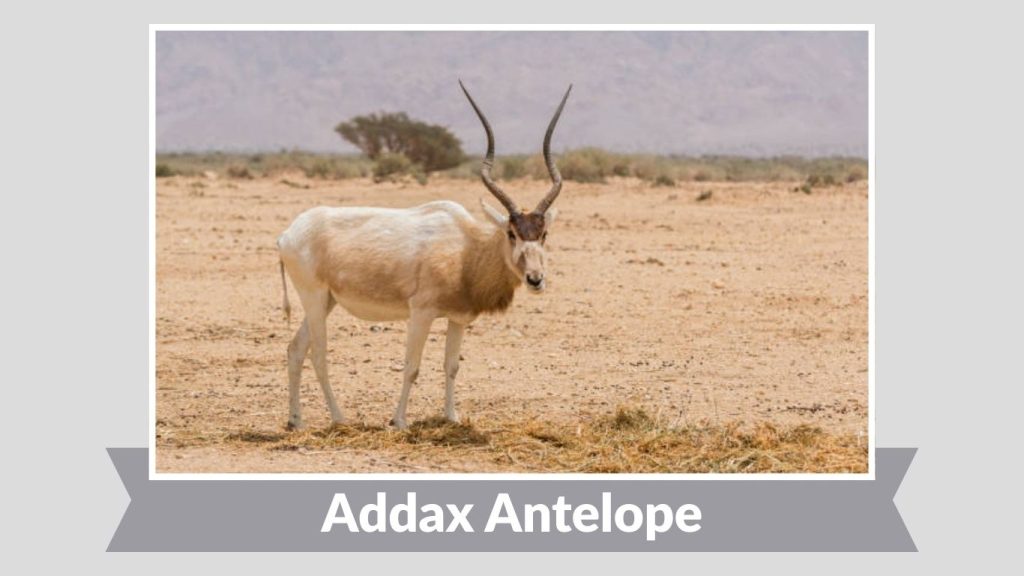
The addax antelope is a rare and critically endangered desert animal, perfectly adapted to some of the harshest desert conditions on Earth. It is known for its endurance and ability to survive with very little water.
Identification
- Medium-sized antelope with a stocky body
- Pale white or sandy coat that reflects sunlight
- Long, twisted horns found in both males and females
- Dark facial markings around the eyes and nose
- Broad hooves adapted for walking on soft sand
Habitat
Addax antelopes inhabit the Sahara Desert and other extremely arid regions of North Africa. They prefer sandy deserts, dunes, and gravel plains where vegetation is sparse but sufficient for grazing.
Behaviors
Addax antelopes are usually active during the night or early morning to avoid extreme heat. They often move in small herds and may travel long distances in search of food. Their light-colored coat helps regulate body temperature in intense desert sun.
Diet and Lifespan
Addax antelopes are herbivores that feed on desert grasses, leaves, herbs, and shrubs. They can survive long periods without drinking water, obtaining moisture from plants. In the wild, they typically live 15–20 years.
17. Jerboa
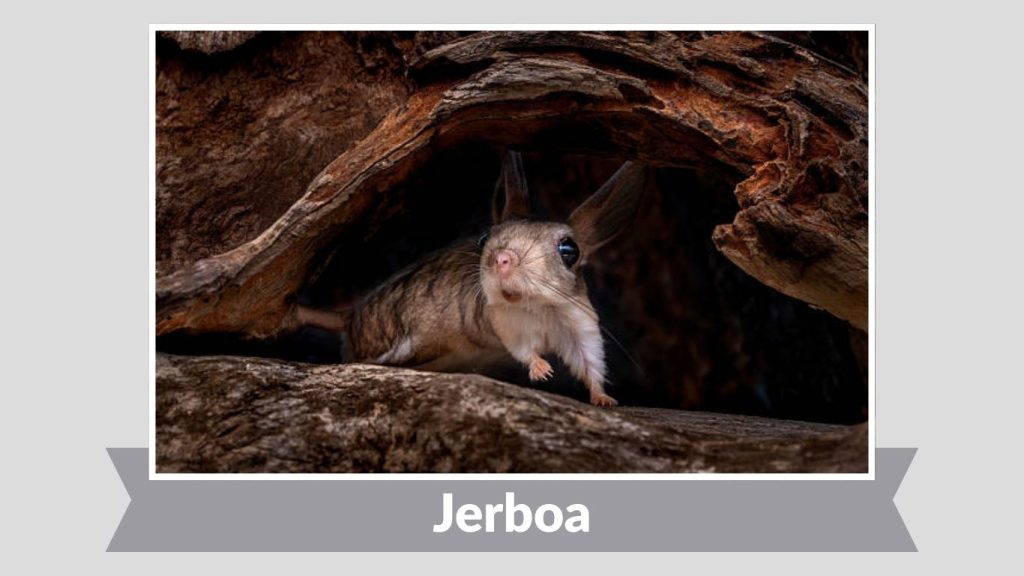
The jerboa is a small, mouse-like desert rodent known for its long legs and impressive jumping ability. Its movement and physiology are perfectly suited for surviving extreme desert heat and avoiding predators.
Identification
- Small body with very long hind legs
- Short front legs used for handling food
- Long tail with a tuft at the end for balance
- Large eyes and ears adapted for night activity
- Sandy or pale brown fur for camouflage
Habitat
Jerboas live in hot deserts and semi-arid regions of North Africa, the Middle East, and Central Asia. They prefer sandy soils where they can dig deep burrows to stay cool and safe during the day.
Behaviors
Jerboas are nocturnal and remain underground during daylight hours to avoid extreme heat. They move by hopping or jumping, which helps them escape predators quickly. Their burrows help regulate body temperature and conserve moisture.
Diet and Lifespan
Jerboas are omnivores, feeding on seeds, grasses, roots, insects, and small plant shoots. They rarely drink water, obtaining most of their moisture from food. In the wild, jerboas usually live 2–4 years.
18. Desert Fox
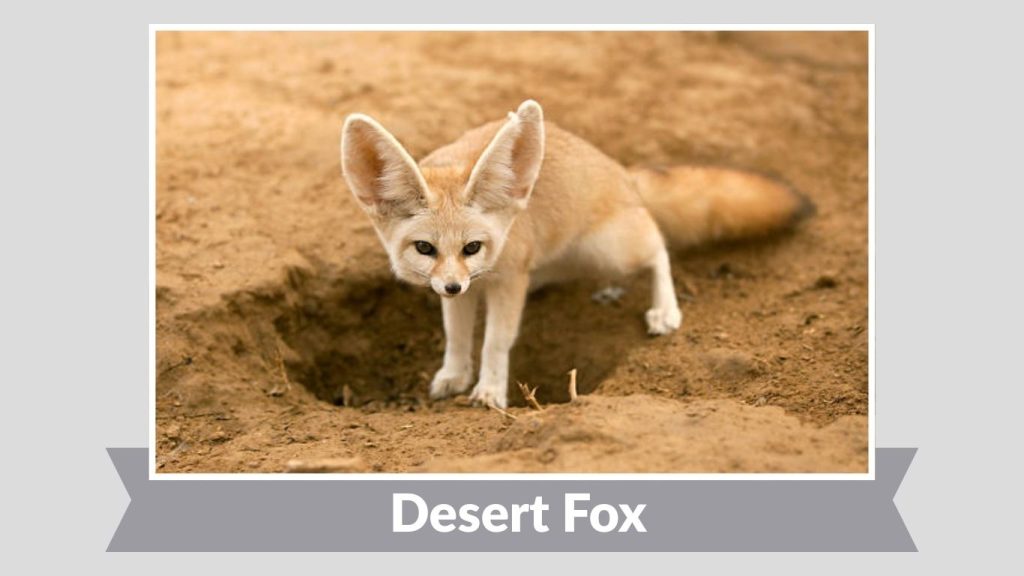
The desert fox is a small, agile mammal adapted to life in hot, arid regions. It is closely related to other fox species and is known for its keen senses and ability to survive in harsh desert conditions.
Identification
- Small to medium-sized fox with a slim body
- Large ears that help release body heat
- Sandy or pale brown fur for camouflage
- Bushy tail with a dark or white tip
- Sharp muzzle and bright eyes
Habitat
Desert foxes live in arid and semi-arid regions of Africa, the Middle East, and parts of Asia. They inhabit sandy deserts, rocky plains, and scrublands where shelter and prey are available.
Behaviors
Desert foxes are mostly nocturnal, staying hidden during the day to avoid extreme heat. They live alone or in small family groups and communicate using barks, yelps, and body language.
Diet and Lifespan
Desert foxes are omnivores, feeding on insects, rodents, birds, eggs, fruits, and plant matter. They are efficient at conserving water and can survive with minimal drinking. In the wild, they typically live 8–12 years.
19. Sand Cat
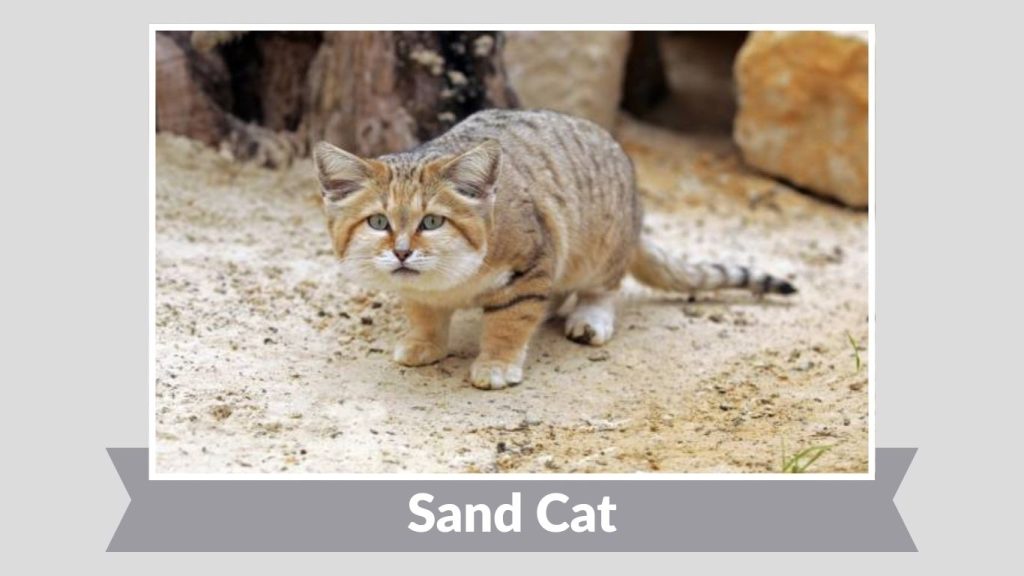
The sand cat is a small wild cat uniquely adapted to some of the driest and hottest deserts in the world. Unlike most cats, it can survive in areas with almost no surface water, making it a true desert specialist.
Identification
- Small, stocky wild cat with a broad head
- Pale sandy or grayish fur with faint stripes
- Large, wide-set ears that enhance hearing
- Short legs with thick fur on the paws
- Black-tipped tail with dark rings
Habitat
Sand cats live in remote desert regions of North Africa, the Middle East, and Central Asia. They prefer sandy and stony deserts with sparse vegetation, including dunes and flat plains. These areas offer loose soil for digging burrows and enough prey to survive despite extreme conditions.
Behaviors
Sand cats are nocturnal and avoid daytime heat by staying in underground burrows or sheltering under rocks. They are solitary and highly secretive, making them difficult to observe in the wild. Their large ears help them detect prey moving underground, and they are skilled diggers and hunters. Sand cats can tolerate extreme temperature changes, from freezing nights to scorching days.
Diet and Lifespan
Sand cats are carnivores that feed on rodents, lizards, snakes, insects, and birds. They are capable of getting all necessary moisture from their prey and may not drink water for long periods. In the wild, sand cats typically live 10–13 years.
20. Desert Monitor Lizard
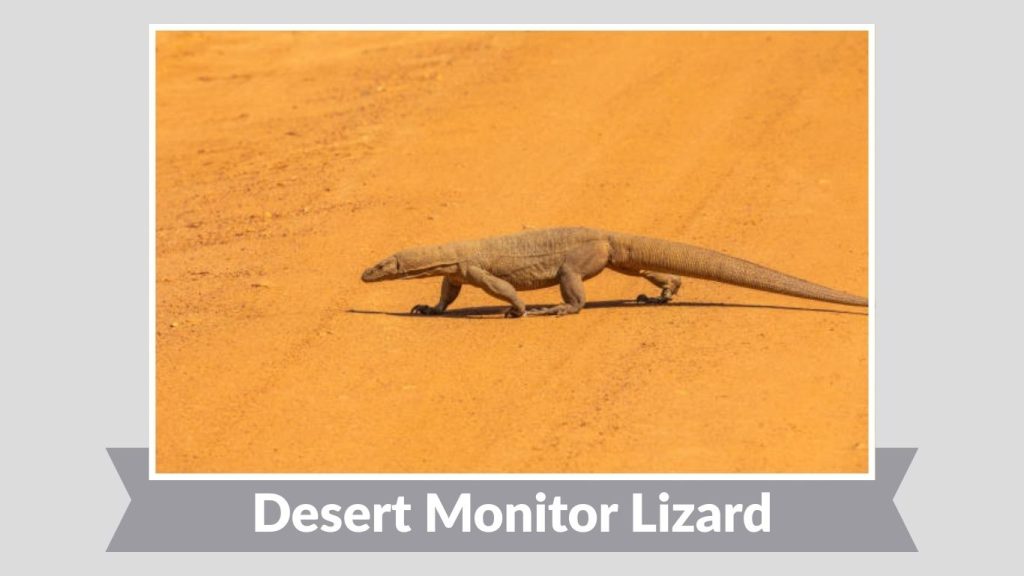
The desert monitor lizard is a large, powerful reptile and one of the top predators in desert ecosystems. Known for its intelligence and strength, it plays an important role in controlling populations of smaller animals in arid regions.
Identification
- Large lizard with a long neck and tail
- Yellowish, brown, or gray body with dark spots or bands
- Strong legs with sharp claws for digging and hunting
- Long, forked tongue used to sense surroundings
- Thick, muscular tail used for balance and defense
Habitat
Desert monitor lizards are found in hot desert and semi-desert regions of North Africa, the Middle East, and parts of South Asia. They prefer sandy plains, rocky deserts, and scrublands where burrows and prey are plentiful. They often use abandoned burrows or dig their own shelters to escape extreme heat.
Behaviors
These lizards are mostly diurnal and are active during the day, especially in the morning and late afternoon. Desert monitors are fast runners and excellent climbers. They are solitary animals and can be aggressive when threatened, using their sharp claws, tail, and strong bite for defense.
Diet and Lifespan
Desert monitor lizards are carnivores that eat rodents, birds, eggs, snakes, insects, and carrion. Their strong jaws allow them to crush prey easily. In the wild, they typically live 8–12 years, though some may live longer under favorable conditions.
21. Coyote
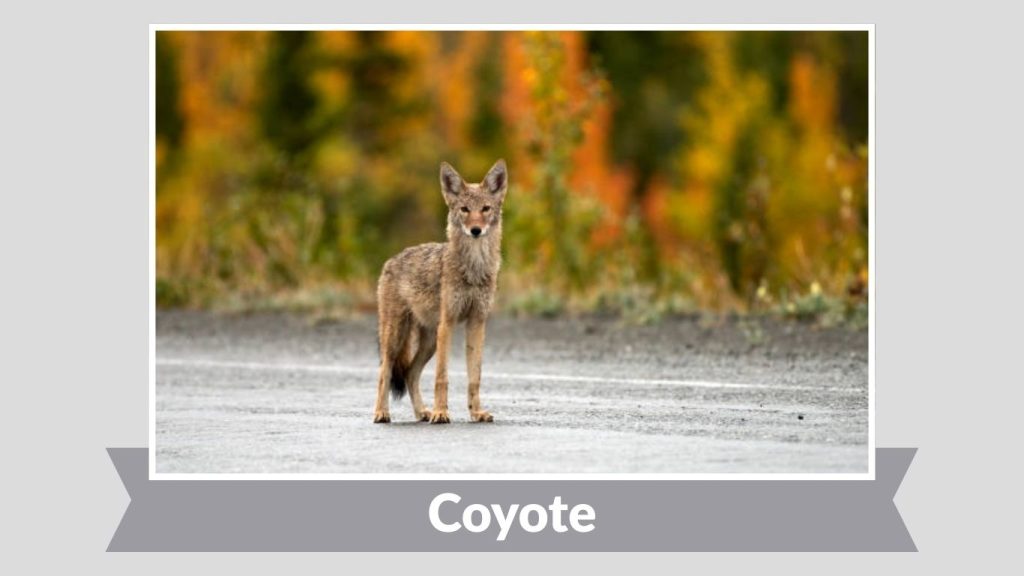
The coyote is a highly adaptable and intelligent mammal that thrives in deserts as well as many other environments. Its ability to adjust its behavior and diet has allowed it to survive in some of the harshest desert regions.
Identification
- Medium-sized canine with a lean, athletic body
- Grayish-brown fur with lighter underparts
- Pointed ears and narrow muzzle
- Bushy tail often held low
- Sharp teeth suited for a varied diet
Habitat
Coyotes inhabit deserts, semi-deserts, grasslands, and scrublands across North and Central America. In desert regions, they are commonly found in open plains, rocky areas, and near dry riverbeds where food is more available.
Behaviors
Coyotes are mostly nocturnal or crepuscular in hot desert areas, becoming active during early morning and evening. They may live alone, in pairs, or in small family groups. Coyotes communicate using howls, yips, and barks, which help maintain social bonds and territories.
Diet and Lifespan
Coyotes are omnivores with a very flexible diet that includes small mammals, birds, reptiles, insects, fruits, and carrion. This adaptability helps them survive food shortages. In the wild, coyotes usually live 10–14 years.
22. Burrowing Owl
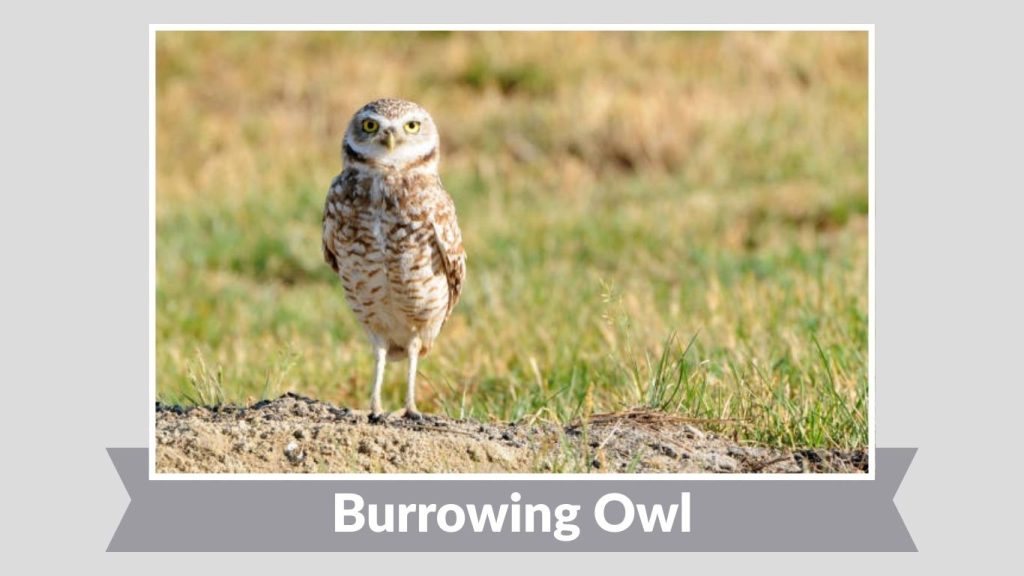
The burrowing owl is a small, long-legged owl that lives underground, making it unique among owl species. It is well adapted to desert and semi-arid environments where shelter from heat is essential.
Identification
- Small owl with a round head and short tail
- Long legs compared to other owls
- Brown feathers with white spots
- Bright yellow eyes and white eyebrows
- Lacks ear tufts
Habitat
Burrowing owls are found in deserts, grasslands, and open dry plains of North and South America. They live in burrows, often using abandoned tunnels made by mammals such as prairie dogs or ground squirrels.
Behaviors
Unlike most owls, burrowing owls are active during both day and night. They often stand at the entrance of their burrows, watching for predators and prey. When threatened, they may make hissing sounds that resemble a rattlesnake to scare off intruders.
Diet and Lifespan
Burrowing owls feed on insects, small mammals, reptiles, birds, and amphibians. They sometimes store food in their burrows. In the wild, they typically live 6–9 years.
23. Deathstalker Scorpion
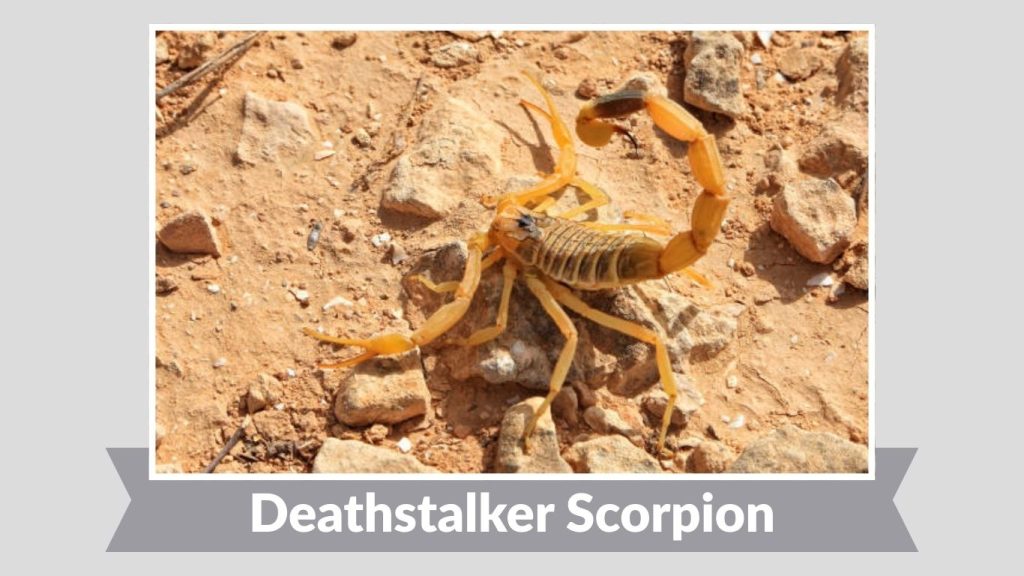
The deathstalker scorpion is one of the most venomous scorpion species in the world. Despite its fearsome reputation, it is a shy and secretive desert dweller that avoids humans whenever possible.
Identification
- Medium-sized scorpion with a slender body
- Pale yellow to light brown coloration
- Long, thin tail with a curved venomous stinger
- Narrow pincers compared to other scorpions
- Sensitive hairs that detect vibrations
Habitat
Deathstalker scorpions are found in deserts and dry regions of North Africa and the Middle East. They prefer sandy or rocky deserts and often hide under stones, in cracks, or in shallow burrows to escape extreme heat.
Behaviors
These scorpions are nocturnal and remain hidden during the day. They rely on vibrations to detect prey and predators rather than eyesight. When threatened, they raise their tail in a defensive posture and may sting if provoked.
Diet and Lifespan
Deathstalker scorpions are carnivores, feeding on insects, spiders, and small vertebrates. They can survive long periods without food by slowing their metabolism. In the wild, they typically live 3–5 years.
24. Desert Iguana
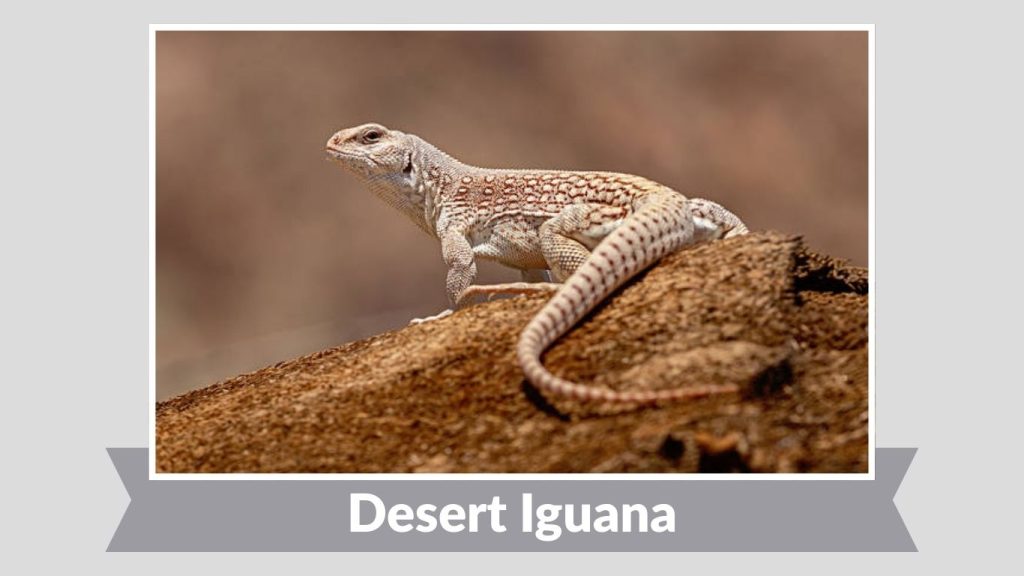
The desert iguana is one of the most heat-tolerant lizards in North America, thriving in extreme desert temperatures that many other reptiles cannot endure. It is an important herbivore in desert ecosystems.
Identification
- Medium-sized lizard with a sturdy body
- Pale gray or tan coloration with brown net-like patterns
- Long tail often longer than the body
- Smooth to slightly rough scales
- Short, strong limbs with sharp claws
Habitat
Desert iguanas are found in hot deserts of the southwestern United States and northern Mexico. They prefer sandy desert flats, creosote bush areas, and dry washes where shade and food plants are available.
Behaviors
Desert iguanas are diurnal and most active during the hottest parts of the day, when predators are less active. They bask in the sun to regulate body temperature and retreat into burrows or under shrubs when needed. They are generally solitary and non-aggressive.
Diet and Lifespan
Desert iguanas are mainly herbivores, feeding on leaves, buds, flowers, and fruits of desert plants, especially creosote bushes. Occasionally, they eat insects. In the wild, they typically live 7–10 years.
25. Arabian Oryx
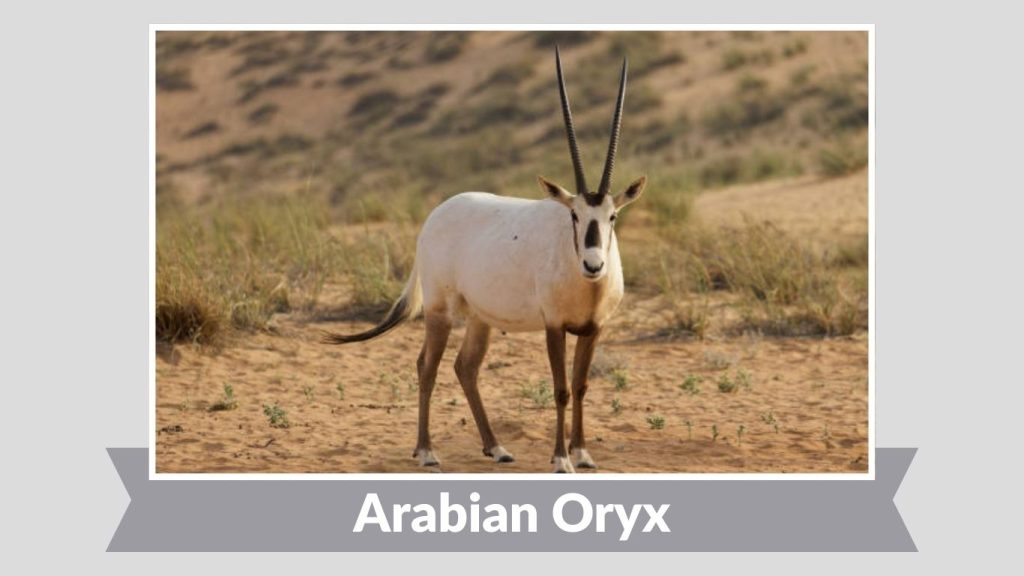
The Arabian oryx is a striking desert antelope known for its long, straight horns and bright white coat. Once extinct in the wild, it has been successfully reintroduced and is a symbol of desert conservation success.
Identification
- Medium-sized antelope with a strong, compact body
- White coat that reflects sunlight and reduces heat absorption
- Long, straight horns present in both males and females
- Dark facial markings and brown legs
- Broad hooves adapted for walking on sand
Habitat
Arabian oryx live in hot deserts and semi-desert regions of the Arabian Peninsula. They inhabit sandy deserts, gravel plains, and dry grasslands, often roaming large areas in search of vegetation after rainfall.
Behaviors
Arabian oryx are usually active during early morning and late afternoon to avoid extreme heat. They live in small herds and can detect rainfall from long distances, allowing them to move toward areas with fresh plant growth. They are highly resilient and can survive long periods without direct access to water.
Diet and Lifespan
Arabian oryx are herbivores, feeding on grasses, roots, herbs, fruits, and desert shrubs. They obtain most of their water from plants and dew. In the wild, they typically live 15–20 years.
26. Black Widow Spider
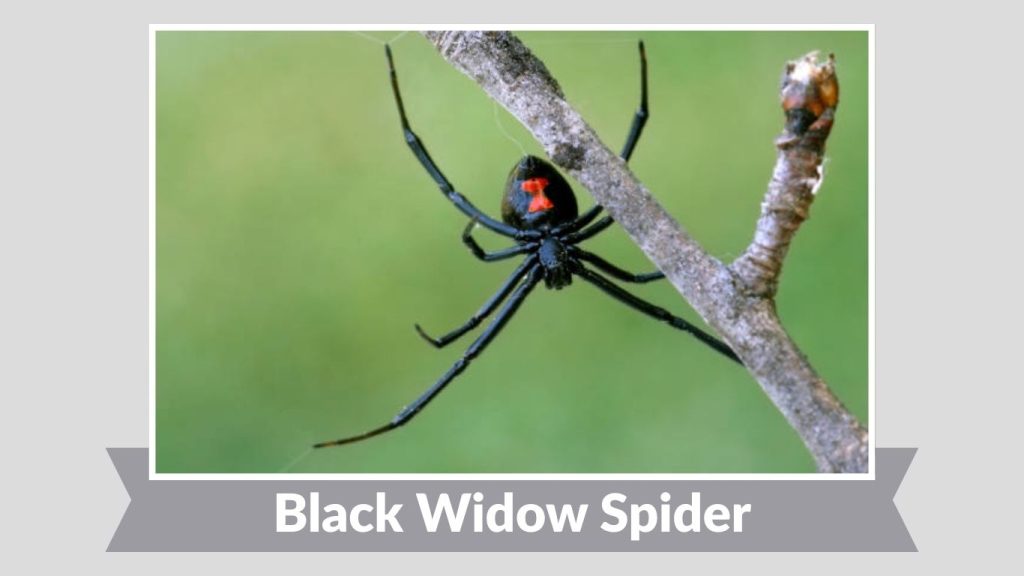
The black widow spider is a well-known desert arachnid recognized for its glossy appearance and potent venom. Despite its fearsome reputation, it is generally shy and avoids human contact unless threatened.
Identification
- Small to medium-sized spider with a round abdomen
- Shiny black body in females; males are smaller and lighter
- Distinct red or orange hourglass marking on the underside
- Long, thin legs
- Smooth, hairless appearance
Habitat
Black widow spiders are found in deserts, semi-arid regions, and dry grasslands around the world. In desert environments, they live under rocks, inside crevices, abandoned burrows, woodpiles, and human structures where they are protected from direct sunlight and extreme heat.
Behaviors
Black widows are mostly nocturnal and remain hidden during the day. They build irregular, tangled webs close to the ground to catch prey. These spiders are not aggressive and usually bite only in self-defense. Females are famous for occasionally consuming the male after mating, though this behavior is less common in the wild.
Diet and Lifespan
Black widow spiders feed mainly on insects such as flies, beetles, grasshoppers, and other spiders. They inject venom to immobilize prey before feeding. In the wild, females typically live 1–3 years, while males have a much shorter lifespan.
27. Desert Locust
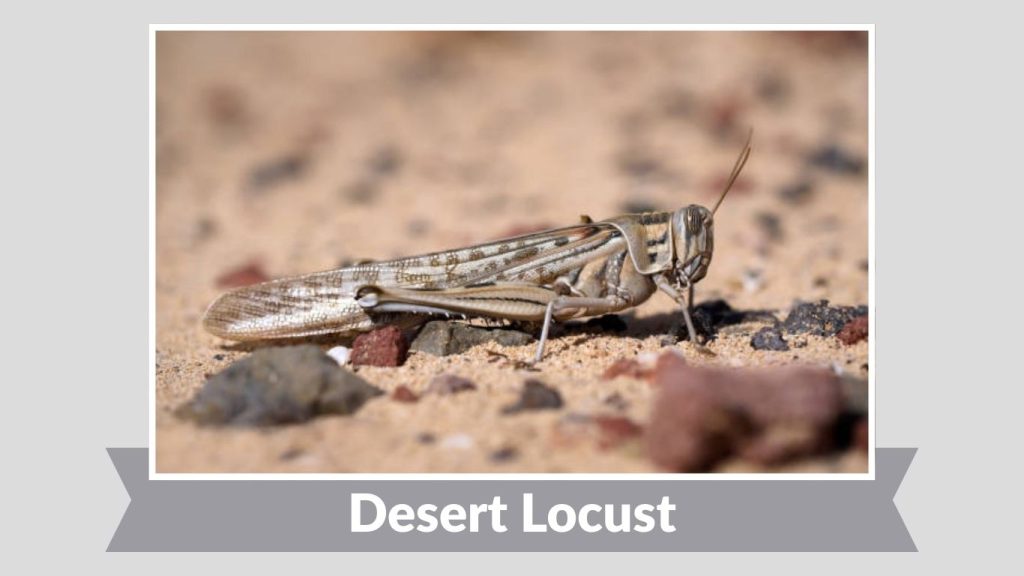
The desert locust is one of the most destructive migratory insects in the world. While it normally lives quietly in desert regions, under certain conditions it can form massive swarms that travel long distances and consume huge amounts of vegetation.
Identification
- Medium to large grasshopper-like insect
- Yellowish-brown or green body depending on age and conditions
- Strong hind legs adapted for jumping
- Two pairs of wings used for long-distance flight
- Large compound eyes and short antennae
Habitat
Desert locusts inhabit arid and semi-arid regions of Africa, the Middle East, and South Asia. They are commonly found in deserts, dry plains, and areas that receive occasional rainfall, which allows vegetation to grow and supports breeding.
Behaviors
Desert locusts can switch between solitary and gregarious phases. After heavy rains, they multiply rapidly and form swarms containing millions of individuals. These swarms migrate in search of food and can travel hundreds of kilometers in a short time, feeding during the day and resting at night.
Diet and Lifespan
Desert locusts are herbivores that feed on grasses, leaves, crops, and shrubs. An adult locust usually lives about 3–5 months, depending on environmental conditions.
28. Kit Fox
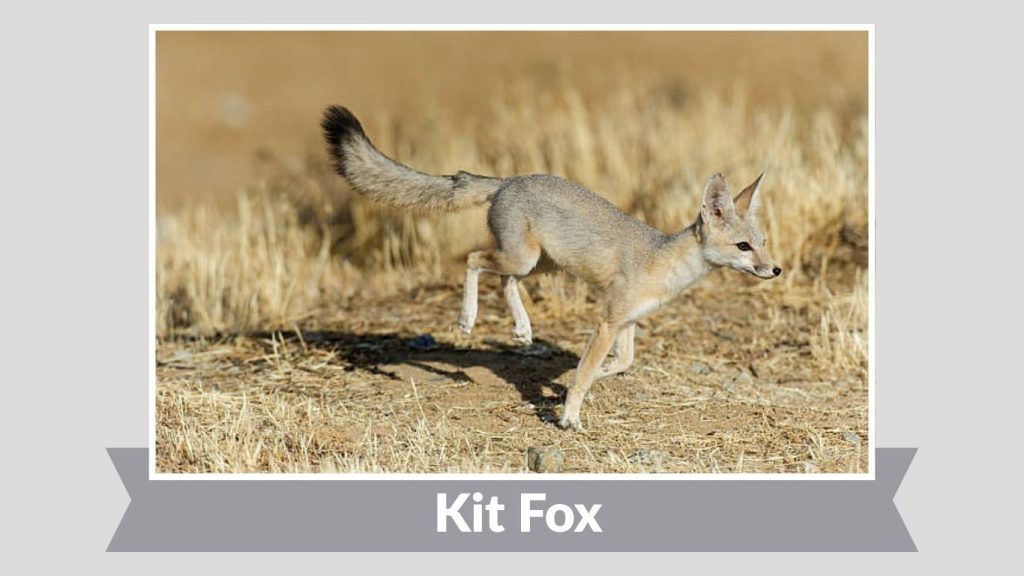
The kit fox is one of the smallest fox species in North America and is especially adapted to life in hot desert environments. Its physical traits and behavior help it survive extreme temperatures and scarce resources.
Identification
- Small, slender fox with a lightweight body
- Large ears that help release heat and enhance hearing
- Pale gray to sandy-colored fur
- Long, bushy tail with a black tip
- Narrow face with sharp features
Habitat
Kit foxes live in arid and semi-arid deserts of the southwestern United States and northern Mexico. They prefer open desert plains, sandy soils, and scrublands where they can dig burrows for shelter. These burrows protect them from extreme heat, cold nights, and predators.
Behaviors
Kit foxes are primarily nocturnal, becoming active at night to avoid daytime heat. They are generally solitary or live in small family groups. Excellent diggers, they may maintain multiple burrows within their territory. Kit foxes are fast runners and rely on agility and stealth rather than strength to escape predators.
Diet and Lifespan
Kit foxes are omnivores with a diet that includes rodents, rabbits, insects, birds, reptiles, fruits, and seeds. They can survive with very little water, getting most of their moisture from food. In the wild, kit foxes typically live 7–10 years.
29. Rattlesnake
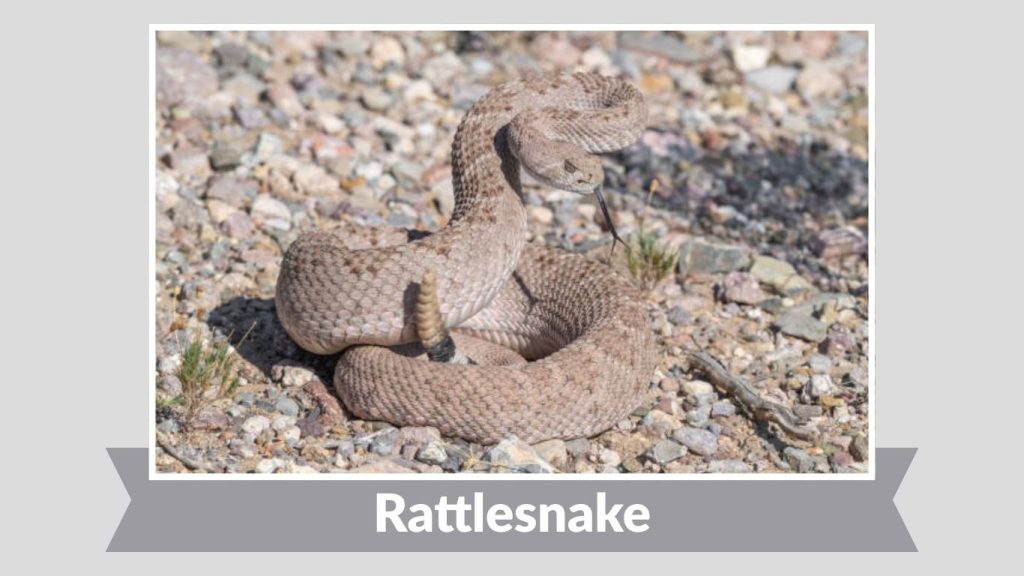
Rattlesnakes are well-known venomous snakes adapted to desert life. They are named for the distinctive rattle at the end of their tails, which they use as a warning signal to deter threats rather than attack.
Identification
- Medium to large snake with a thick, muscular body
- Distinct rattle made of interlocking segments on the tail
- Triangular head with heat-sensing pits near the eyes
- Color patterns of browns, grays, or tans with dark bands
- Rough, keeled scales
Habitat
Rattlesnakes live in deserts, semi-deserts, rocky hillsides, and scrublands across North and Central America. In desert regions, they are often found among rocks, sandy flats, dry riverbeds, and areas with sparse vegetation that provide shelter and prey.
Behaviors
Rattlesnakes are generally solitary and rely on camouflage to avoid detection. In hot desert climates, they are often nocturnal or active during early morning and evening. When threatened, they shake their rattle as a warning before striking. They use venom primarily to subdue prey rather than for defense.
Diet and Lifespan
Rattlesnakes are carnivores that feed mainly on rodents, birds, lizards, and small mammals. They swallow prey whole after injecting venom. In the wild, rattlesnakes typically live 15–25 years, depending on the species and environmental conditions.
30. Spiny-tailed Lizard
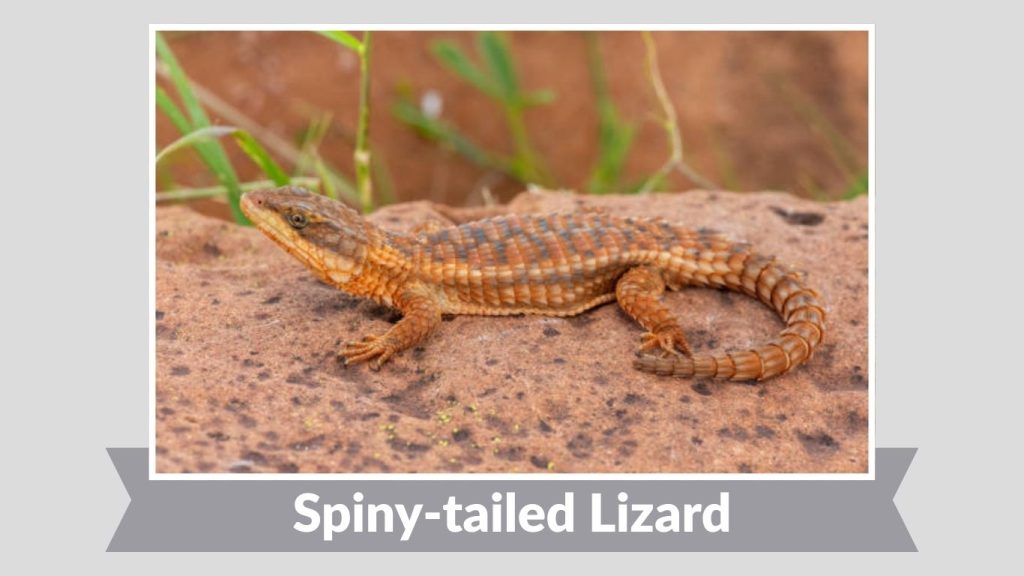
The spiny-tailed lizard is a tough, desert-adapted reptile best known for its thick, spiked tail, which it uses as a powerful defensive weapon. It is commonly found in some of the hottest desert regions in the world.
Identification
- Medium to large lizard with a robust body
- Thick tail covered in sharp, spiny scales
- Broad head with strong jaws
- Coloration ranges from sandy brown to yellowish or olive
- Short, powerful legs with sharp claws
Habitat
Spiny-tailed lizards inhabit deserts and semi-desert regions of North Africa, the Middle East, and South Asia. They prefer rocky deserts, dry plains, and hard-packed soil where they can dig deep burrows for shelter from extreme heat.
Behaviors
These lizards are diurnal and spend much of their time basking in the sun near their burrow entrances. When threatened, they retreat into their burrows and use their spiny tails to block or strike predators. They are generally solitary and highly territorial.
Diet and Lifespan
Spiny-tailed lizards are mostly herbivores, feeding on leaves, flowers, seeds, and desert plants, though some species may eat insects. They can survive long periods without water by obtaining moisture from food. In the wild, they typically live 15–20 years.
FAQs
What makes animals able to survive in the desert?
Desert animals survive through special adaptations such as water conservation, heat tolerance, nocturnal behavior, and physical features like thick skin, large ears, or burrowing habits that help them cope with extreme temperatures.
Do desert animals drink water regularly?
Many desert animals drink little or no water. They obtain moisture from their food, store water or fat in their bodies, or reduce water loss through efficient kidneys and minimal sweating.
Are most desert animals active during the day or night?
Most desert animals are nocturnal or crepuscular. Being active at night or during early morning and evening helps them avoid intense daytime heat and conserve energy.
What do desert animals eat when food is scarce?
Desert animals have flexible diets. Herbivores eat hardy plants, shrubs, and grasses, while carnivores and omnivores feed on insects, reptiles, small mammals, carrion, and sometimes plants.
Are desert animals dangerous to humans?
Most desert animals are not dangerous and prefer to avoid humans. Some species like snakes or scorpions may be venomous, but they usually attack only when threatened or disturbed.