

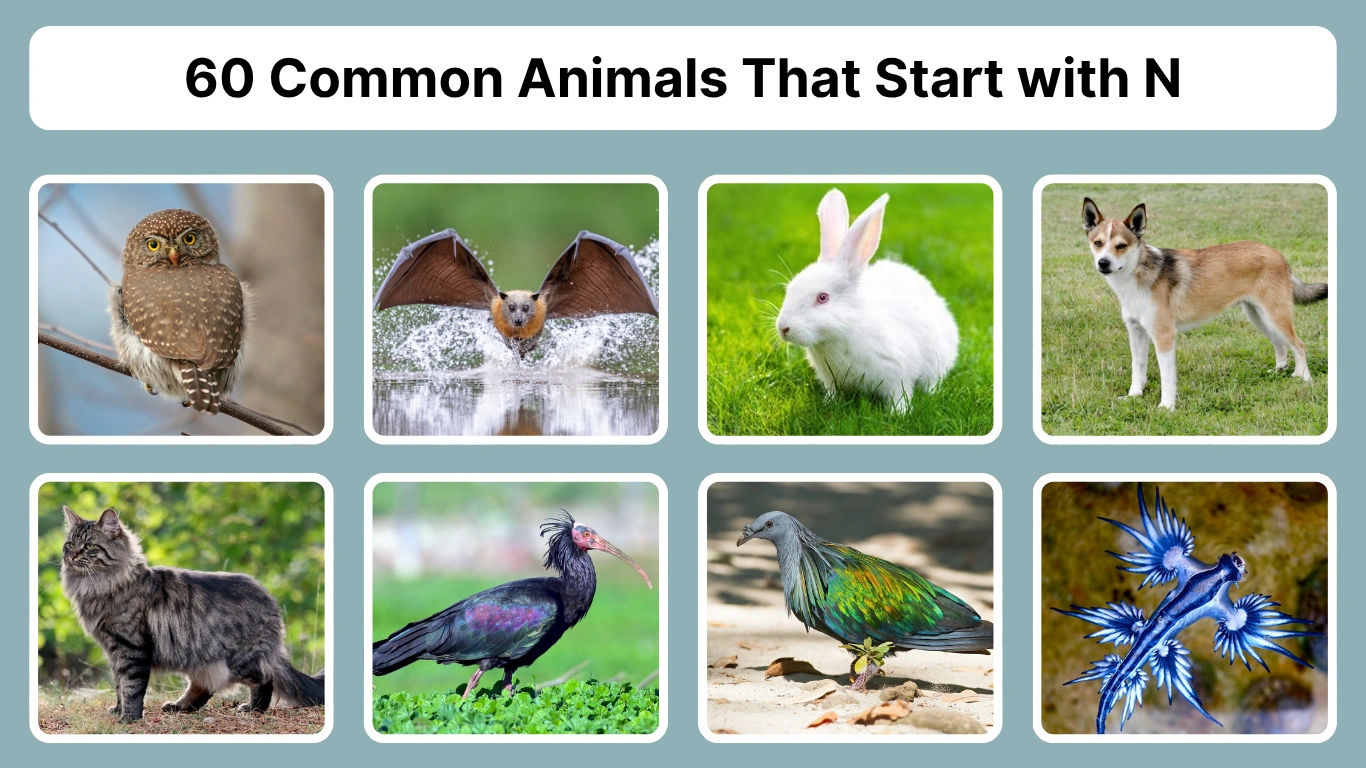
From the icy waters of the Arctic to the lush rainforests of the tropics, animals whose names begin with the letter N display remarkable diversity. This list features 60 fascinating species, grouped by type, including mammals, birds, reptiles, fish, insects, and more. Each entry offers unique adaptations, behaviors, and ecological roles, providing a captivating look into the incredible variety of wildlife that shares this alphabetical connection.
Mammals that Start with N
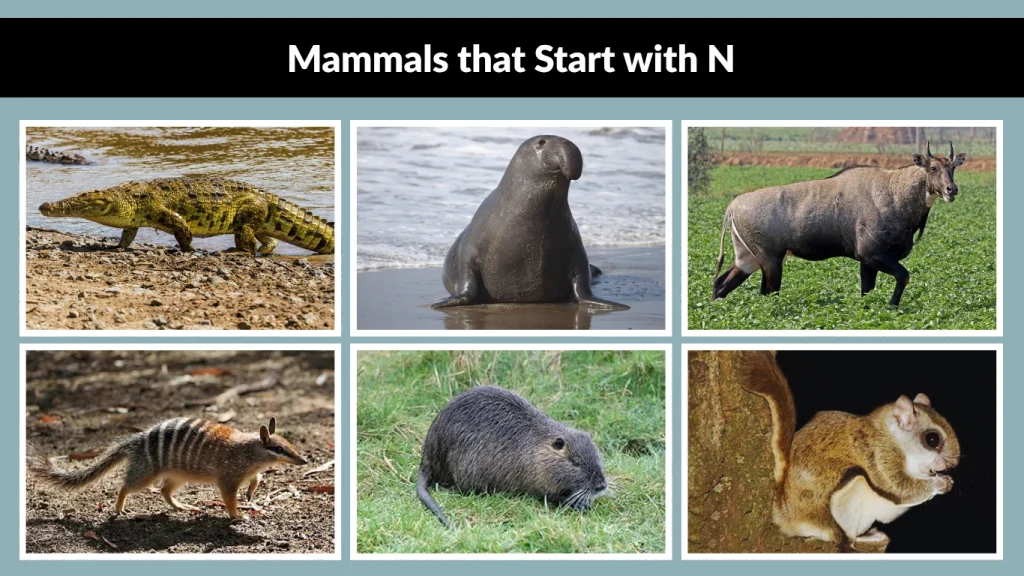
Mammals beginning with the letter N come from a wide range of habitats, from icy coasts to dense forests. These species showcase unique adaptations, fascinating behaviors, and important roles in their ecosystems. From aquatic hunters to tiny tree-dwellers, each one contributes to the rich diversity of the mammal world.
1. Nile Crocodile
The Nile crocodile is a powerful semi-aquatic predator found across Africa’s freshwater habitats. Although not a mammal, it’s often mentioned in large animal lists due to its impressive size and dominance. It can reach lengths over 16 feet and is an apex predator in rivers and lakes.
Despite its fearsome reputation, the Nile crocodile plays a key role in controlling prey populations. It feeds on fish, birds, and mammals, ambushing them with remarkable speed. Their nesting and hatching behaviors are highly protective, with females guarding their young until they enter the water.
2. Northern Elephant Seal
The northern elephant seal is a massive marine mammal found along the Pacific coast of North America. Males can weigh over 4,000 pounds and are known for their distinctive, trunk-like noses used to produce loud roars during breeding season.
They spend most of their lives at sea, diving deep in search of squid and fish. Breeding takes place on beaches in large colonies where males compete fiercely for mates. These seals are excellent divers, capable of reaching depths over 5,000 feet.
3. Nilgai
The nilgai, also called the blue bull, is the largest Asian antelope, native to the Indian subcontinent. Males have a bluish-grey coat while females are tawny-brown, both with slender legs adapted for speed.
Nilgai are primarily herbivores, feeding on grasses, leaves, and seeds. They are social animals, often seen in small groups. While they are shy in the wild, they can be bold when living near agricultural areas, sometimes causing crop damage.
4. Numbat
The numbat is a small, insect-eating marsupial found in Australia. It has a striking reddish-brown coat with white stripes and a long, sticky tongue used to capture termites. Unlike many marsupials, numbats are active during the day.
Once widespread, numbats are now endangered due to habitat loss and introduced predators like foxes and cats. Conservation efforts, including breeding programs and predator control, are helping their populations recover in protected areas.
5. Nutria
Nutria, also known as coypu, are large, semi-aquatic rodents native to South America but now found in many parts of the world. They have coarse brown fur, webbed hind feet, and long orange teeth.
Originally introduced for the fur trade, nutria have become invasive in several regions, damaging wetlands by eating vegetation and burrowing into banks. They are strong swimmers and spend much of their time in and around water.
6. Northern Flying Squirrel
The northern flying squirrel is a nocturnal gliding mammal found in North America’s forests. It has a special membrane called a patagium that stretches between its limbs, allowing it to glide between trees.
These squirrels are important for forest health because they spread fungi spores, which help trees absorb nutrients. They feed on nuts, seeds, lichens, and fungi, and are rarely seen due to their secretive, nighttime habits.
Birds that Start with N

Birds beginning with the letter N come from many different habitats, from tropical islands to northern forests. They display a variety of colors, songs, and behaviors that make them fascinating to observe. Some are known for their beauty, others for their unique calls, and all play important roles in their ecosystems.
7. Nene (Hawaiian Goose)
The nene, or Hawaiian goose, is the state bird of Hawaii and is found mainly on the islands of Maui, Kauai, and Hawaii. It has a distinctive patterned neck and is well adapted to life on volcanic terrain rather than wetlands.
Once critically endangered, conservation programs have helped its numbers rebound. Nenes feed mainly on grasses, seeds, and leaves, often grazing in open fields and lava plains. They are monogamous, forming strong pair bonds.
8. Northern Cardinal
The northern cardinal is one of North America’s most recognizable birds, with males sporting bright red feathers and females showing warm brown tones with red accents. Their sweet, whistled songs are a familiar sound in gardens and woodlands.
They are seed-eaters but also consume fruits and insects, especially during breeding season. Cardinals are non-migratory and fiercely defend their territories year-round.
9. Nightingale
The nightingale is celebrated for its powerful and melodious song, especially during spring nights. Found across Europe, Asia, and parts of Africa, it has plain brown plumage that hides its exceptional vocal talent.
Its song is used to attract mates and mark territory. Nightingales feed mainly on insects and berries, often foraging on the ground or in low vegetation.
10. Northern Goshawk
The northern goshawk is a large, powerful bird of prey found in forests across North America, Europe, and Asia. It has striking gray plumage, a bold white eyebrow stripe, and fierce red or orange eyes.
It hunts birds and mammals with incredible speed and agility, often weaving through dense trees in pursuit of prey. These raptors are highly territorial, especially during nesting season.
11. Nutcracker
The nutcracker is a sturdy bird in the crow family, found in forests of Europe, Asia, and North America. It has speckled plumage and a strong bill, perfect for cracking open tough seeds and nuts.
Clark’s nutcracker in North America is known for its remarkable memory, storing thousands of pine seeds for winter and finding most of them months later. This behavior also helps replant forests.
12. Northern Flicker
The northern flicker is a large woodpecker found across North America. Unlike most woodpeckers, it often feeds on the ground, probing soil for ants and beetles with its long tongue.
It has beautiful patterned plumage, with either yellow or red underwings depending on the region. During mating season, it drums on trees or even metal surfaces to attract mates.
Reptiles and Amphibians that Start with N
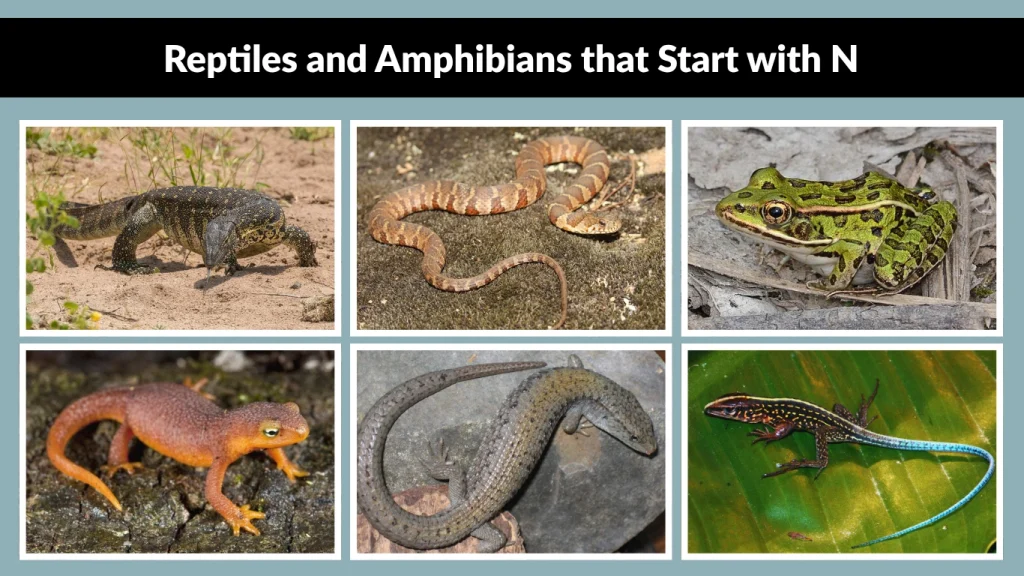
Reptiles and amphibians beginning with the letter N include a mix of cold-blooded hunters, agile climbers, and fascinating amphibians. They live in diverse habitats, from tropical rivers to temperate forests, and each species has unique adaptations for survival.
13. Nile Monitor
The Nile monitor is a large, powerful lizard native to Africa. It can grow over 7 feet long and is an excellent swimmer, often found near rivers, lakes, and swamps. Its dark, patterned skin provides camouflage in the wild.
An opportunistic predator, it feeds on fish, eggs, insects, and small mammals. Nile monitors are highly intelligent reptiles and can be aggressive if threatened, making them a challenging species to keep in captivity.
14. Northern Water Snake
The northern water snake is a non-venomous species found near lakes, rivers, and wetlands in North America. Its brown or gray body is marked with darker crossbands that help it blend into its environment.
These snakes are skilled swimmers and feed mainly on fish and amphibians. While harmless to humans, they may bite if handled, and their appearance often causes them to be mistaken for venomous snakes.
15. Northern Leopard Frog
The northern leopard frog is a medium-sized amphibian with distinctive dark spots on a green or brown background. It lives in ponds, marshes, and slow-moving streams across North America.
Known for its long leaps, it hunts insects, small invertebrates, and even other frogs. Once common, its population has declined in some areas due to habitat loss and disease.
16. Newt
Newts are small amphibians with both aquatic and terrestrial life stages. They have smooth, moist skin and can regenerate lost limbs, making them a fascinating subject for scientific study.
They are found in North America, Europe, and Asia, often in ponds and streams during breeding season. Their diet includes worms, insects, and small crustaceans.
17. Northern Alligator Lizard
The northern alligator lizard is a small, slender reptile native to the Pacific Northwest of North America. Its brown or gray body features dark bands, and it has a long tail that can detach to escape predators.
It prefers forested and rocky habitats and feeds on insects, spiders, and small snails. These lizards are shy and often hide under logs or rocks during the day.
18. Navassa Island Ameiva
The Navassa Island ameiva is a rare lizard species found only on Navassa Island in the Caribbean. It has a streamlined body, long tail, and strong legs for running quickly over rocky terrain.
Its diet consists of insects, fruits, and small invertebrates. Due to its limited range, it is vulnerable to habitat changes and invasive species.
Fish that Start with N
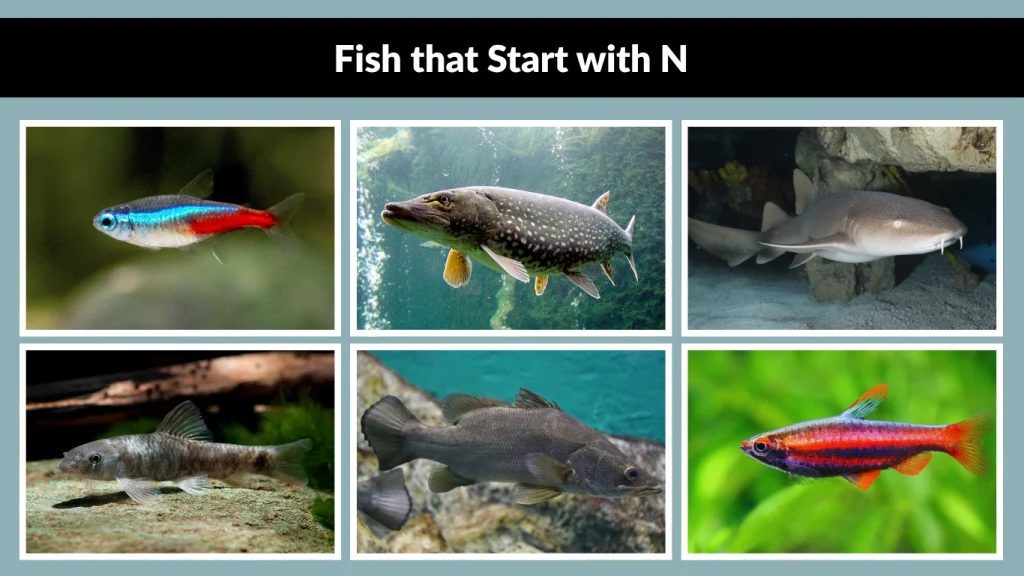
Fish beginning with the letter N inhabit oceans, rivers, and lakes around the world. They vary greatly in size, color, and behavior, from small ornamental aquarium fish to large predatory species. Many are important to ecosystems, fisheries, and even the aquarium trade.
19. Neon Tetra
The neon tetra is a small, brightly colored freshwater fish native to South America’s Amazon Basin. Its shimmering blue and red stripes make it a favorite in aquariums worldwide.
It is a peaceful schooling fish, thriving in groups and feeding on tiny invertebrates and plant matter. In the wild, it lives in soft, acidic waters under dense forest canopies.
20. Northern Pike
The northern pike is a large, predatory freshwater fish found in lakes and rivers across the Northern Hemisphere. Its elongated body and sharp teeth make it an efficient ambush hunter.
It feeds mainly on smaller fish, frogs, and even small mammals or birds that venture near the water’s edge. Pike are prized game fish for anglers due to their size and fighting strength.
21. Nurse Shark
The nurse shark is a slow-moving, bottom-dwelling species found in warm coastal waters of the Atlantic and Eastern Pacific. It has a broad, flat head and small barbels near its mouth.
Although large, nurse sharks are generally docile and feed on crustaceans, mollusks, and fish. They are often seen resting in groups during the day and hunting at night.
22. Nibble Fish
Also known as doctor fish, nibble fish are small freshwater fish native to the Middle East. They are known for their habit of gently feeding on dead skin, which has led to their use in spa treatments.
In the wild, they eat algae, plankton, and detritus. They thrive in warm, clean streams and are social fish, often found in schools.
23. Nile Perch
The Nile perch is a massive freshwater fish native to African lakes and rivers, particularly Lake Victoria. It can grow over 6 feet long and weigh more than 400 pounds.
Highly valued for its meat, it is also a controversial species due to its introduction in some ecosystems, where it has caused declines in native fish populations.
24. Nannostomus (Pencil Fish)
Nannostomus, or pencil fish, are small, slender freshwater fish native to South America. They have elongated bodies with horizontal stripes that resemble a pencil’s shaft.
Peaceful and schooling by nature, they feed on small insects and plankton. They are popular in aquariums for their calm behavior and striking patterns.
Insects that Start with N
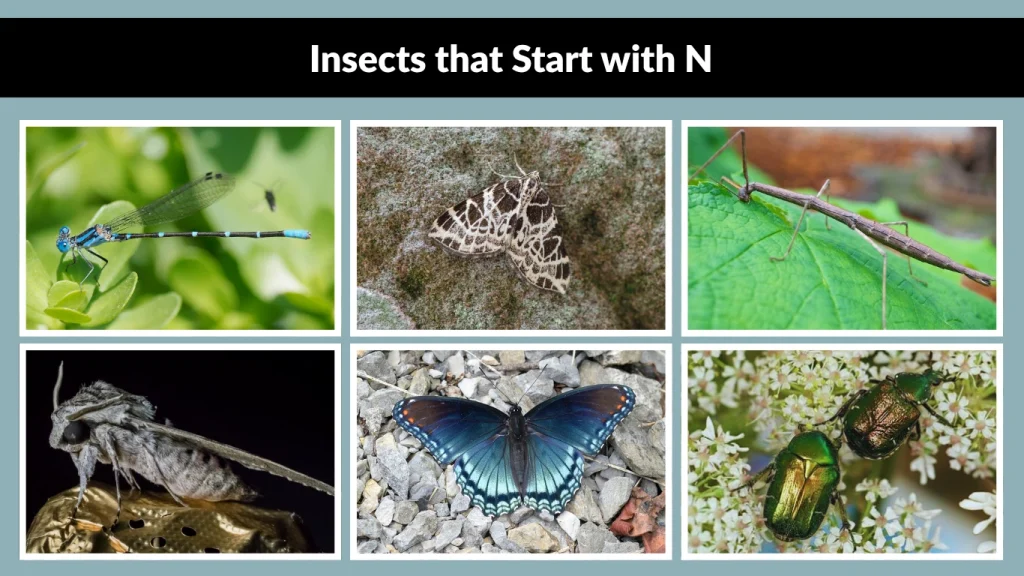
Insects beginning with the letter N include a fascinating mix of species, from delicate pollinators to stealthy predators. They live in varied habitats, from forests to wetlands, and each plays a unique role in maintaining ecological balance.
25. Northern Dancer Dragonfly
The northern dancer dragonfly is a slender, fast-flying insect found near ponds, lakes, and marshes in cooler regions of North America. Its body is often metallic blue or green with transparent wings.
It is a skilled predator, catching mosquitoes and other small flying insects mid-air. Dragonflies like this species are also indicators of healthy freshwater ecosystems.
26. Netted Carpet Moth
The netted carpet moth is a small, patterned moth found mainly in the UK and parts of Europe. Its wings display a delicate net-like pattern that helps it blend into its surroundings.
The larvae feed on touch-me-not balsam and other plants, making it closely tied to specific habitats. Adults are mostly active at night, using camouflage to avoid predators.
27. Northern Walkingstick
The northern walkingstick is a long, thin insect that closely resembles a twig. Found in forests of North America, it is a master of camouflage.
It feeds on the leaves of trees and shrubs, often remaining motionless to avoid detection. Although harmless, its appearance startles those who suddenly spot it among foliage.
28. Night Butterfly
The term “night butterfly” is often used for moth species that resemble butterflies but are active at night. These insects usually have muted wing colors and feathery antennae.
They feed on nectar and play a role in pollination, especially of night-blooming flowers. Many species rest during the day, relying on camouflage to avoid predators.
29. Nymphalid Butterfly
Nymphalid butterflies belong to one of the largest butterfly families, with species found worldwide. They have strong wings and striking patterns, including monarchs, admirals, and fritillaries.
They feed on nectar, tree sap, and rotting fruit, and their caterpillars often have spiny bodies. These butterflies are vital pollinators in many ecosystems.
30. Noble Chafer Beetle
The noble chafer beetle is a rare, metallic-green beetle found in parts of Europe. It is most often spotted in old orchards and meadows.
Its larvae develop in decaying fruitwood, making it dependent on traditional orchard habitats. It is considered a conservation priority in some regions due to habitat loss.
Arachnids and Other Invertebrates that Start with N
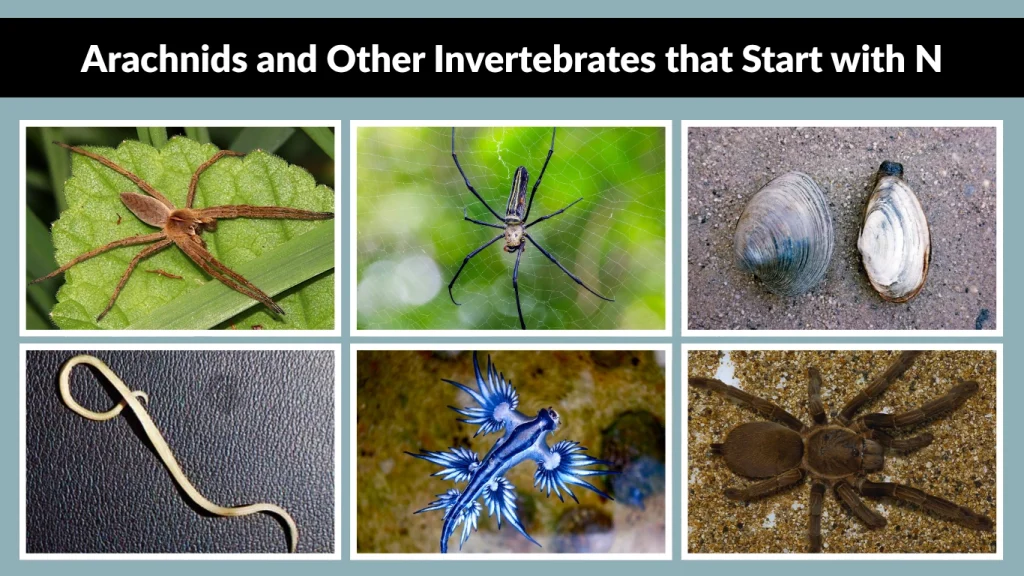
Arachnids and other invertebrates beginning with the letter N include unique and often overlooked species. They range from skilled web-weavers to brilliantly colored marine mollusks, each with fascinating adaptations for survival in their habitats.
31. Nursery Web Spider
The nursery web spider is a large, long-legged spider found in grasslands, wetlands, and forests worldwide. It gets its name from the silk “nursery” it builds to protect its egg sac and young.
Unlike web-dwelling spiders, it hunts by actively chasing prey such as insects and small invertebrates. Females are known for their devoted care of their offspring, guarding the nursery until the spiderlings emerge.
32. Nephila (Golden Orb Weaver)
Nephila spiders are known for spinning massive, golden-hued webs that can reach over a meter in diameter. Found in warm regions worldwide, they are among the largest web-building spiders.
Their silk is incredibly strong and sometimes used in scientific studies. Despite their intimidating size, they are generally harmless to humans, feeding mainly on flying insects.
33. Needle Clam
The needle clam is a slender, elongated bivalve mollusk found in sandy and muddy coastal areas. Its streamlined shell allows it to burrow quickly into the seabed.
It feeds by filtering plankton and organic particles from the water. Needle clams play a role in marine ecosystems by keeping sediments oxygenated and providing food for predators.
34. Nematode
Nematodes, or roundworms, are a vast group of worm-like invertebrates found in nearly every environment on Earth. They can be microscopic or visible to the naked eye.
Some are beneficial, breaking down organic matter in soil, while others are parasitic, living inside plants, animals, or humans. They are among the most numerous multicellular animals on the planet.
35. Nudibranch
Nudibranchs are brightly colored sea slugs found in oceans worldwide. Their vivid colors serve as warnings to predators, as many are toxic or distasteful.
They feed on sponges, corals, and other small marine organisms, often incorporating their prey’s toxins or stinging cells into their own defense. They are a favorite subject for underwater photographers.
36. Northern Tarantula
The northern tarantula is a large, hairy spider found in parts of North and Central America. It lives in burrows and emerges at night to hunt insects, small reptiles, and amphibians.
Despite their fearsome appearance, tarantulas are generally docile toward humans. They play an important role in controlling insect populations in their ecosystems.
Marine Animals that Start with N
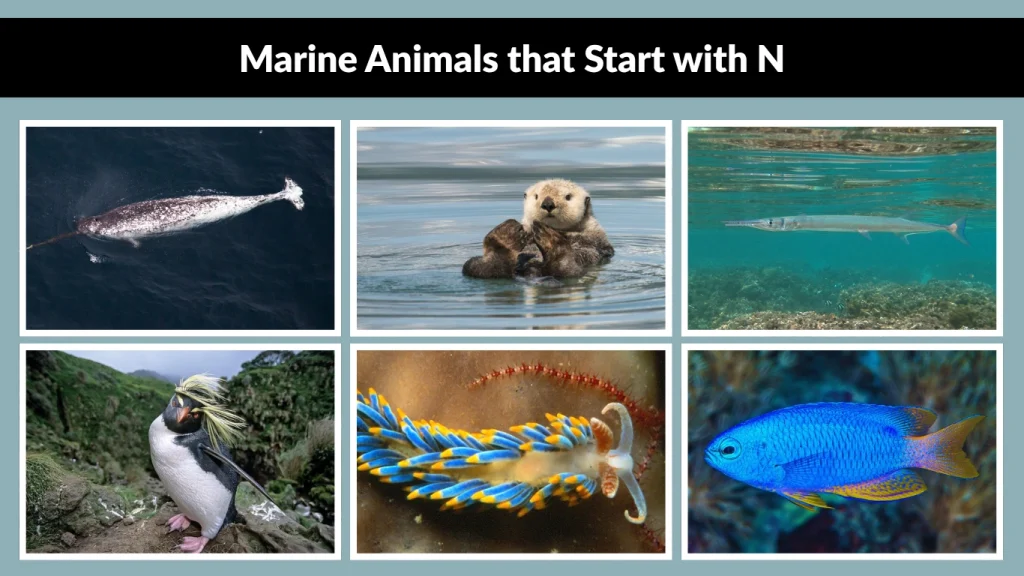
Marine animals beginning with the letter N include some of the ocean’s most remarkable creatures, from tusked whales to vividly colored reef dwellers. They inhabit a range of marine environments, from icy Arctic waters to tropical coral reefs, each with unique adaptations for survival.
37. Narwhal
The narwhal is a medium-sized whale found in Arctic waters, famous for its long, spiral tusk, which is actually an elongated tooth. Males usually have the longest tusks, but some females also develop them.
Narwhals feed on fish, squid, and shrimp, diving to great depths to find food. They are social, traveling in pods, and are well adapted to life in icy seas.
38. Northern Sea Otter
The northern sea otter is a marine mammal native to the coasts of Alaska and Russia. It has thick fur, the densest of any animal, which keeps it warm in cold waters.
Sea otters are known for using tools, such as rocks, to crack open shellfish. They play a crucial role in maintaining healthy kelp forests by preying on sea urchins.
39. Needlefish
Needlefish are slender, fast-swimming fish with elongated jaws filled with sharp teeth. They are found in warm seas and sometimes enter brackish or freshwater.
They feed on small fish and crustaceans, often leaping out of the water when startled. Needlefish are strong swimmers and sometimes caught by anglers for sport.
40. Northern Rockhopper Penguin
The northern rockhopper penguin is a small, crested penguin found on subantarctic islands. Its distinctive yellow crest feathers and red eyes make it easy to recognize.
It feeds on krill, squid, and small fish, diving skillfully to catch its prey. This species is endangered, with population declines linked to climate change and overfishing.
41. Nudibranch (Sea Slug)
Marine nudibranchs are soft-bodied, colorful sea slugs found in oceans worldwide. They lack shells and often display bright patterns that signal toxicity to predators.
They feed on sponges, corals, and hydroids, sometimes incorporating their prey’s defenses into their own bodies. Their vivid colors make them popular among underwater photographers.
42. Neon Damselfish
The neon damselfish is a small, brilliantly blue reef fish found in the Indo-Pacific. It is common in coral reefs, where it darts among corals for protection.
Highly territorial, it defends its space from other fish, especially during breeding. Its bright coloration makes it a favorite in home aquariums.
Exotic and Rare Animals that Start with N
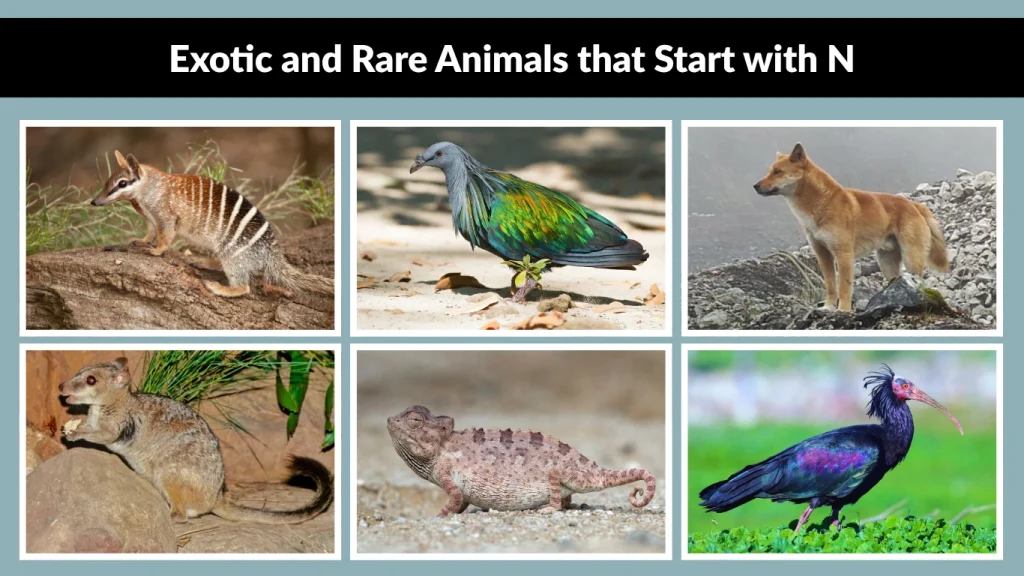
Exotic and rare animals beginning with the letter N include species with unique adaptations, limited ranges, or striking appearances. Many are little-known outside their native regions, making them especially intriguing to wildlife enthusiasts and conservationists.
43. Numbat
The numbat is a small, termite-eating marsupial from Australia. Its reddish-brown coat is marked with white stripes, and it has a long, sticky tongue for capturing insects.
Unlike most marsupials, numbats are active during the day. Sadly, they are endangered due to habitat loss and predators like foxes, but conservation breeding programs are helping their recovery.
44. Nicobar Pigeon
The Nicobar pigeon is a large, colorful bird found on islands in Southeast Asia and the Pacific. It has metallic green and copper feathers with a white tail.
It feeds on seeds, fruits, and small invertebrates. Due to habitat destruction and hunting, it is considered near-threatened, with populations declining in some areas.
45. New Guinea Singing Dog
The New Guinea singing dog is a rare, wild canine known for its unique vocalizations, which sound like a mix between a howl and a song. It is native to the highlands of New Guinea.
These dogs are highly intelligent, agile, and elusive. Their wild populations are extremely limited, and most individuals exist in captivity for conservation purposes.
46. Nabarlek (Little Rock Wallaby)
The nabarlek is a small species of rock wallaby found in rocky areas of northern Australia. It has a grayish-brown coat and strong hind legs for jumping between cliffs.
It feeds on grasses and herbs, often grazing at night. Its remote habitat makes it one of the least studied kangaroo relatives.
47. Namaqua Chameleon
The Namaqua chameleon lives in the deserts of Namibia and South Africa. It has the ability to change color for camouflage and temperature regulation.
It is a ground-dwelling chameleon, feeding mainly on insects. Adapted to harsh conditions, it drinks dew that collects on plants in the early morning.
48. Northern Bald Ibis
The northern bald ibis is a rare, long-billed bird with bare red skin on its head and glossy black feathers. Once widespread across Europe, it now survives in small populations in Morocco and the Middle East.
It nests on cliffs and feeds on insects, small reptiles, and other invertebrates. Conservation programs are working to restore this species to parts of its former range.
Farm and Domesticated Animals that Start with N
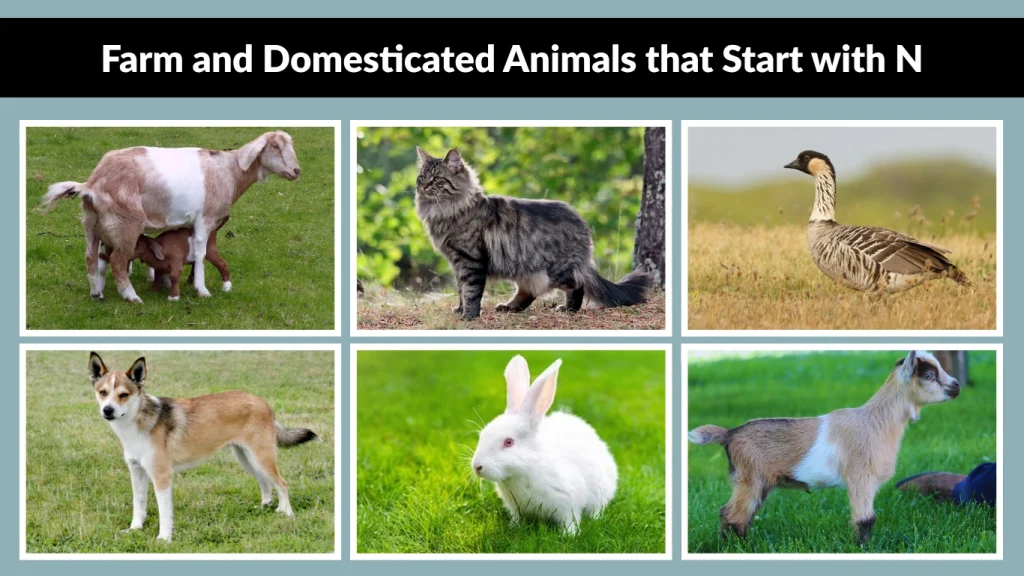
Farm and domesticated animals beginning with the letter N include hardy livestock breeds, unique pets, and semi-domesticated species. Many are valued for their adaptability, usefulness, and companionship, while others hold cultural or historical significance.
49. Nubian Goat
The Nubian goat is a popular dairy breed known for its long, floppy ears and Roman nose. Originating from Africa, it produces rich, high-butterfat milk ideal for cheese making.
Friendly and social, Nubian goats are also kept as pets and for land clearing. They are hardy animals, able to thrive in both hot and temperate climates.
50. Norwegian Forest Cat
The Norwegian Forest cat is a large, fluffy breed from Norway. It has a thick, water-resistant coat and tufted ears, making it well suited to cold climates.
Playful yet independent, it is an excellent climber and enjoys outdoor exploration. This breed is also affectionate with its human companions.
51. Nene (Hawaiian Goose)
The nene, Hawaii’s state bird, has been partially domesticated in some conservation areas. It has adapted to grassy, volcanic landscapes rather than wet marshes.
It is valued for its role in cultural heritage and is protected by law. Breeding programs have been vital in bringing this once critically endangered species back from the brink.
52. Norwegian Lundehund
The Norwegian Lundehund is a rare dog breed developed to hunt puffins along Norway’s cliffs. It is known for its extra toes and remarkable flexibility, which help it climb steep rock faces.
Active and alert, Lundehunds are intelligent and make devoted pets, though they have unique dietary needs due to their specialized digestive systems.
53. New Zealand Rabbit
The New Zealand rabbit is a large, white or red-furred breed originally developed for meat and fur production. It is also popular in pet ownership and show competitions.
Known for its calm temperament, it adapts well to handling, making it a good choice for families and breeders alike.
54. Nigerian Dwarf Goat
The Nigerian dwarf goat is a small, colorful breed prized for its sweet, high-quality milk. Despite their size, they are excellent milk producers and are popular on small farms.
They are gentle, friendly, and easy to handle, making them favorites for hobby farming and pet ownership.
Miscellaneous Animals that Start with N
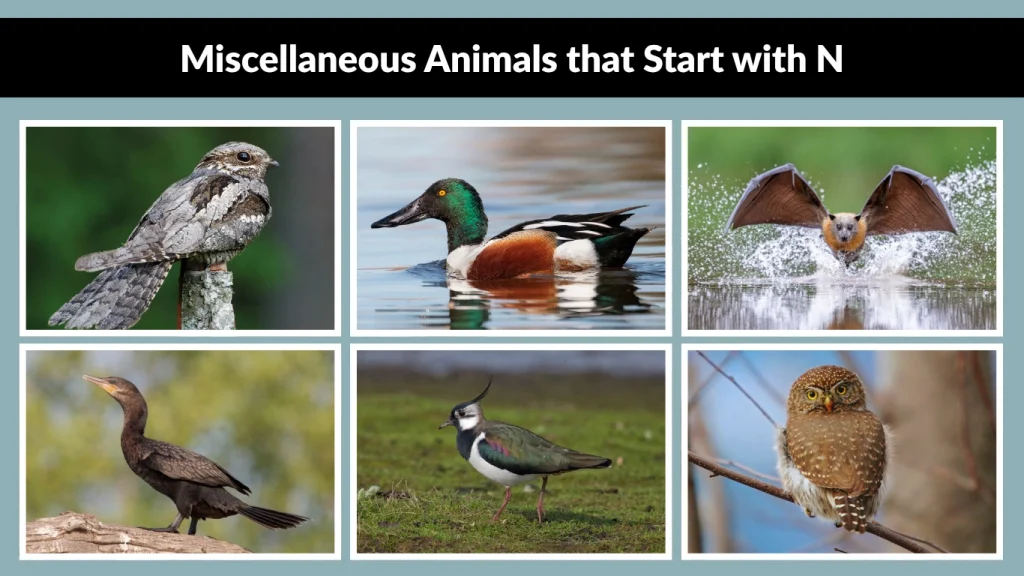
Miscellaneous animals beginning with the letter N include a mix of species from different habitats and classifications. Some are common and widely recognized, while others are less familiar but equally fascinating, each contributing uniquely to the biodiversity of our planet.
55. Nightjar
The nightjar is a nocturnal bird found across many parts of the world, including Europe, Asia, Africa, and the Americas. It has cryptic, mottled plumage that allows it to blend seamlessly into its surroundings during the day.
Nightjars feed primarily on moths and other flying insects, catching them mid-air with their wide mouths. Their soft, repetitive calls are a signature sound of summer nights in rural areas.
56. Northern Shoveler
The northern shoveler is a dabbling duck recognized by its large, spoon-shaped bill. Males have striking green heads and chestnut flanks, while females are mottled brown.
It uses its bill to filter tiny plants, seeds, and invertebrates from the water. These ducks are migratory, breeding in northern regions and wintering in warmer climates.
57. Northern Flying Fox
The northern flying fox is a large fruit bat native to northern Australia. With a wingspan reaching over a meter, it feeds mainly on nectar, pollen, and fruit.
It plays a vital role in pollination and seed dispersal, especially for eucalyptus trees. These bats roost in large colonies during the day and forage at night.
58. Neotropic Cormorant
The neotropic cormorant is a slender, black waterbird found in the Americas, from the southern United States to Argentina. It has a hooked bill and often perches with wings spread to dry.
It dives underwater to catch fish and crustaceans, using its strong legs for propulsion. This adaptable species thrives in both freshwater and coastal habitats.
59. Northern Lapwing
The northern lapwing is a wading bird with a striking black-and-white face, iridescent green wings, and a distinctive head crest. It breeds in grasslands and wetlands across Europe and Asia.
Its tumbling aerial displays during breeding season are a spectacular sight. It feeds on insects, worms, and other small invertebrates, often probing the ground with its bill.
60. Northern Pygmy Owl
The northern pygmy owl is a tiny but fierce predator found in North and Central America. Despite its small size, it hunts birds, rodents, and insects with remarkable skill.
It is active during the day, often perching quietly before swooping on its prey. This owl’s spotted head and yellow eyes give it a distinctive, alert appearance.