
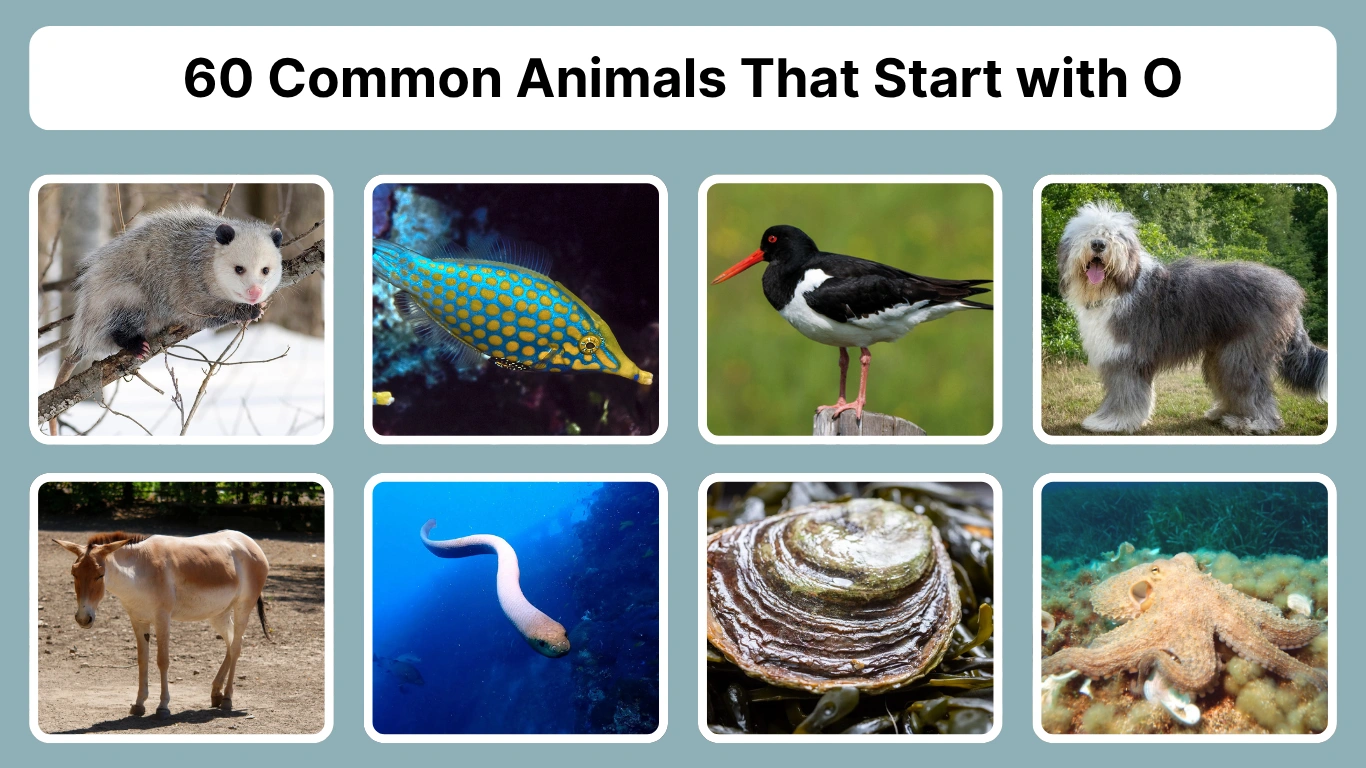
Animals whose names begin with the letter O can be found in every corner of the world, from the depths of the ocean to the highest mountain forests. This diverse collection includes powerful predators, colorful birds, fascinating reptiles, and unique invertebrates. Each plays a vital role in its habitat, showcasing nature’s adaptability and beauty. In this guide, we explore 60 remarkable species grouped for easy discovery.
Mammals that Start with O
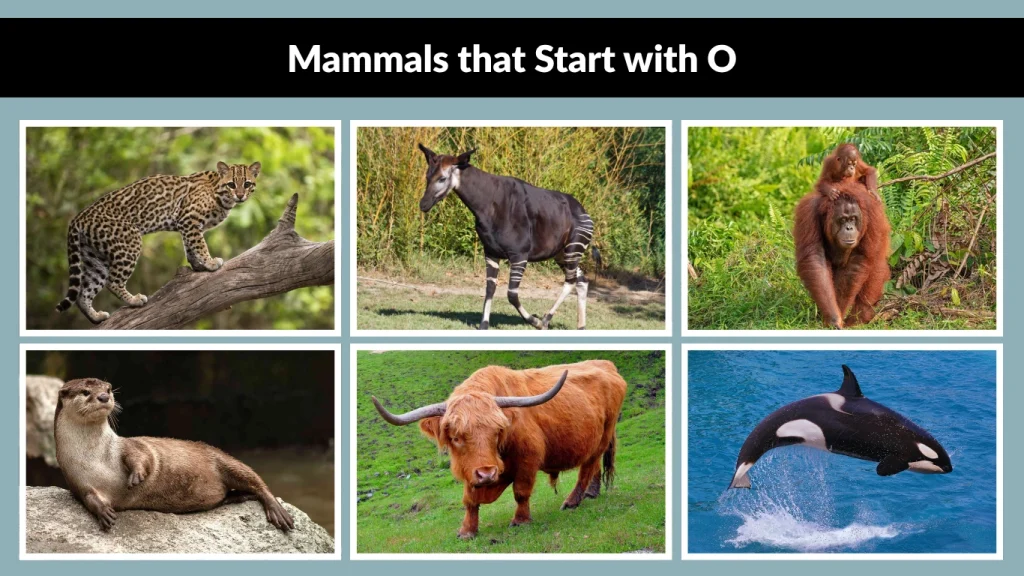
Mammals beginning with the letter O live in a variety of habitats, from tropical rainforests to icy seas. They include agile hunters, gentle grazers, and highly intelligent marine species. Each one plays an important role in its ecosystem, showcasing the adaptability and diversity of the mammal class across the globe.
1. Ocelot
The ocelot is a medium-sized wild cat native to Central and South America, known for its beautiful golden coat covered in dark spots and rosettes. It is a solitary and nocturnal predator.
Ocelots are skilled climbers and swimmers, hunting small mammals, birds, and reptiles. Due to habitat loss and hunting for their fur, some populations face conservation challenges.
2. Okapi
The okapi, found only in the dense forests of the Democratic Republic of Congo, is a close relative of the giraffe. It has a dark brown body with striking zebra-like stripes on its legs.
Okapis are shy and elusive, feeding on leaves, buds, and fruits. Their long, flexible tongue helps them reach vegetation and groom themselves.
3. Orangutan
Orangutans are highly intelligent great apes native to the rainforests of Borneo and Sumatra. They are known for their reddish-brown hair and long, powerful arms.
These gentle primates spend most of their time in trees, feeding on fruits, leaves, and insects. They are critically endangered due to deforestation and illegal pet trade.
4. Otter
Otters are playful, semi-aquatic mammals found in rivers, lakes, and coastal areas around the world. They have dense, water-repellent fur and webbed feet for swimming.
They feed on fish, crustaceans, and other aquatic animals, often using tools like rocks to break shells. Social and energetic, they are an important indicator of healthy waterways.
5. Ox
The ox is a domesticated form of cattle used for pulling carts, plowing fields, and other heavy work. Known for their strength and endurance, oxen have been vital in agriculture for centuries.
They are herbivores, feeding mainly on grass and hay. In many cultures, oxen also hold symbolic and religious importance.
6. Orca (Killer Whale)
The orca, or killer whale, is a highly intelligent marine mammal belonging to the dolphin family. They are recognizable by their striking black-and-white coloring.
Orcas live in pods with complex social structures and hunt cooperatively. Their diet includes fish, seals, and even whales, making them apex predators of the ocean.
Birds that Start with O

Birds beginning with the letter O range from swift ocean hunters to colorful songbirds. They inhabit environments as varied as coastal cliffs, open grasslands, tropical forests, and wetlands. Many of them are known for their distinctive calls, striking plumage, and specialized hunting or feeding behaviors that help them thrive in their unique habitats.
7. Osprey
The osprey is a large fish-eating bird of prey found on every continent except Antarctica. It has dark brown upperparts, white underparts, and a distinctive dark eye stripe.
With reversible outer toes and sharp talons, ospreys are expert hunters, diving feet-first to snatch fish from the water. They often nest on tall structures near coastlines and rivers.
8. Ostrich
The ostrich is the world’s largest bird, native to Africa. It is flightless, with long, powerful legs built for running at speeds up to 45 miles per hour.
Ostriches feed on seeds, leaves, and small invertebrates. They live in groups and use their strong legs to defend themselves from predators, delivering kicks capable of serious injury.
9. Ovenbird
The ovenbird is a small migratory songbird found in North and Central America. Its olive-brown back and spotted breast help it blend into the forest floor.
It gets its name from its dome-shaped clay nest, resembling a traditional outdoor oven. Ovenbirds feed mainly on insects and are known for their loud “teacher-teacher-teacher” song.
10. Oriental Magpie-Robin
The Oriental magpie-robin is a small, striking bird native to South and Southeast Asia. Males have glossy black feathers with white patches, while females are greyish-brown.
They are excellent singers, often heard in gardens and forests. These birds feed on insects, small fruits, and worms, and they are known for their lively and active behavior.
11. Olive-backed Sunbird
The olive-backed sunbird is a tiny, nectar-feeding bird found in Southeast Asia and northern Australia. Males display iridescent blue throats, while females are duller in color.
They feed on nectar using their curved bills but also eat insects for protein. Their fast, hovering flight helps them reach flowers, much like hummingbirds.
12. Orange-breasted Falcon
The orange-breasted falcon is a rare bird of prey found in Central and South America. It has dark wings, an orange chest, and a powerful, hooked beak.
It hunts small birds and insects mid-air with incredible speed and agility. Due to habitat loss, it is considered near threatened and is rarely seen in the wild.
Reptiles and Amphibians that Start with O
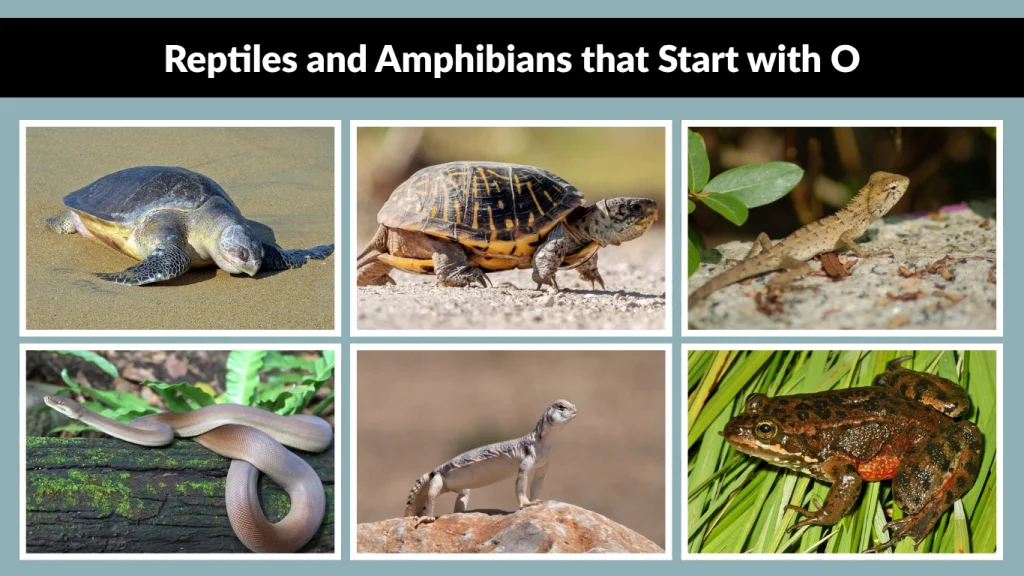
Reptiles and amphibians beginning with the letter O include species from tropical rainforests, arid deserts, and coastal waters. They range from hard-shelled turtles to slithering snakes and colorful frogs. Many of these animals have fascinating adaptations, such as camouflage, unique breeding behaviors, and specialized diets, helping them survive in diverse environments.
13. Olive Ridley Sea Turtle
The olive ridley sea turtle is a small to medium-sized marine turtle found in warm ocean waters around the world. Its name comes from its olive-green shell.
These turtles are known for their mass nesting events called arribadas, where thousands of females come ashore to lay eggs. They primarily feed on crabs, jellyfish, and algae.
14. Ornate Box Turtle
The ornate box turtle is a small, land-dwelling turtle native to the central United States. It has a high-domed shell with bright yellow lines radiating across each scute.
It feeds on insects, berries, and plants, often foraging during the morning and after rain. This species can completely close its shell to protect itself from predators.
15. Oriental Garden Lizard
The oriental garden lizard is a common reptile found across South and Southeast Asia. It can change color to shades of red, orange, and brown, especially during the breeding season.
It feeds on insects such as crickets, grasshoppers, and ants. Agile and alert, it often basks in the sun and uses its long tail for balance while climbing.
16. Olive Python
The olive python is one of Australia’s largest snakes, reaching lengths of over 13 feet. It is non-venomous and has smooth, olive-colored scales.
This powerful constrictor feeds on birds, mammals, and reptiles, ambushing prey before swallowing it whole. It is often found near water sources in rocky and savanna habitats.
17. Omani Lizard
The Omani lizard is native to the arid and rocky landscapes of Oman. It has a slender body with muted earth-tone colors for camouflage.
It feeds mainly on insects and small invertebrates. This lizard is adapted to extreme heat, seeking shelter in crevices during the hottest parts of the day.
18. Oregon Spotted Frog
The Oregon spotted frog is a medium-sized amphibian found in wetlands of the Pacific Northwest in the United States and Canada. It has dark spots scattered across its back and legs.
It feeds on insects, spiders, and small aquatic creatures. Due to habitat loss, it is considered threatened, with conservation efforts underway to protect its marsh habitats.
Fish that Start with O
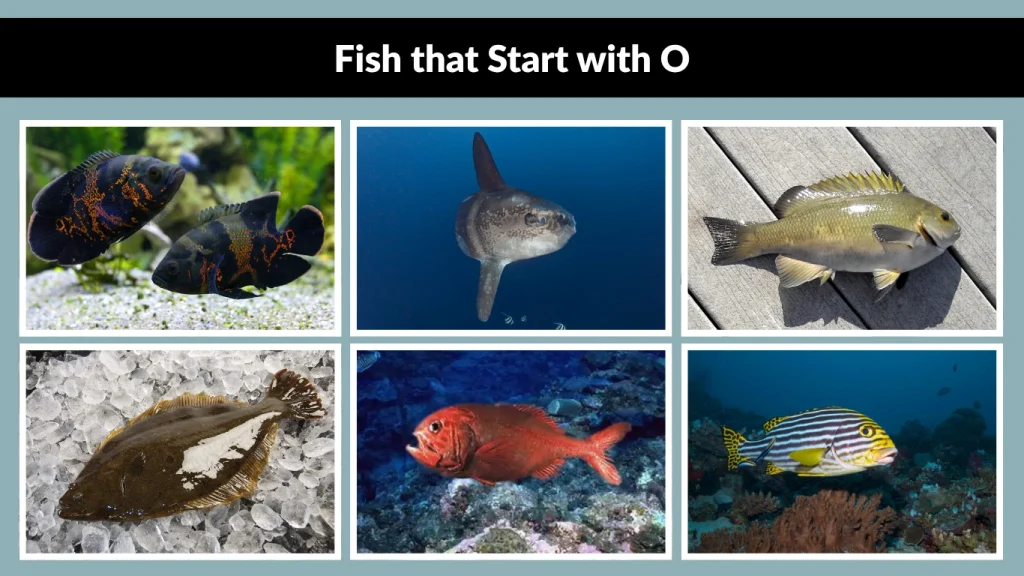
Fish beginning with the letter O live in a variety of aquatic environments, from deep oceans to freshwater rivers and lakes. They include colorful reef dwellers, powerful predators, and unique bottom-feeding species. Many are important to commercial fishing, aquaculture, and aquarium hobbies, showcasing the wide diversity of fish life that starts with O.
19. Oscar Fish
The oscar fish is a popular freshwater aquarium fish native to South America’s Amazon basin. It is known for its bright orange markings and intelligent behavior.
Oscars are territorial and can recognize their owners, often begging for food. In the wild, they feed on insects, crustaceans, and small fish, using quick strikes to capture prey.
20. Ocean Sunfish (Mola Mola)
The ocean sunfish is one of the heaviest bony fish in the world, weighing up to 2,000 pounds. It has a flattened, disk-like body and tiny pectoral fins.
They feed mainly on jellyfish but also eat small fish and plankton. Despite their size, they are gentle giants, often spotted basking near the ocean’s surface.
21. Opaleye
The opaleye is a coastal fish found along the Pacific coast of North America. It has a greenish body with two distinctive white spots near its dorsal fin.
Opaleyes feed on algae and seaweed, grazing in shallow waters. They are strong swimmers and are popular among recreational fishers for their fighting spirit.
22. Olive Flounder
The olive flounder is a flatfish native to the Northwest Pacific, particularly around Japan, Korea, and China. It has both eyes on one side of its body.
It lies camouflaged on the seabed, ambushing fish and crustaceans. This species is highly valued in Asian cuisine, especially for sushi and sashimi.
23. Orange Roughy
The orange roughy is a deep-sea fish known for its bright orange color and extreme longevity, living over 100 years. It inhabits deep, cold waters around the world.
Due to its slow growth and late maturity, it is vulnerable to overfishing. Its mild, white flesh makes it a popular seafood choice, though conservation measures are needed.
24. Oriental Sweetlip
The oriental sweetlip is a tropical reef fish found in the Indian and Pacific Oceans. It has bold black-and-white stripes as a juvenile, which change to spotted patterns as it matures.
It feeds on crustaceans, mollusks, and small fish. Known for its striking appearance, it is a favorite among divers and underwater photographers.
Insects that Start with O
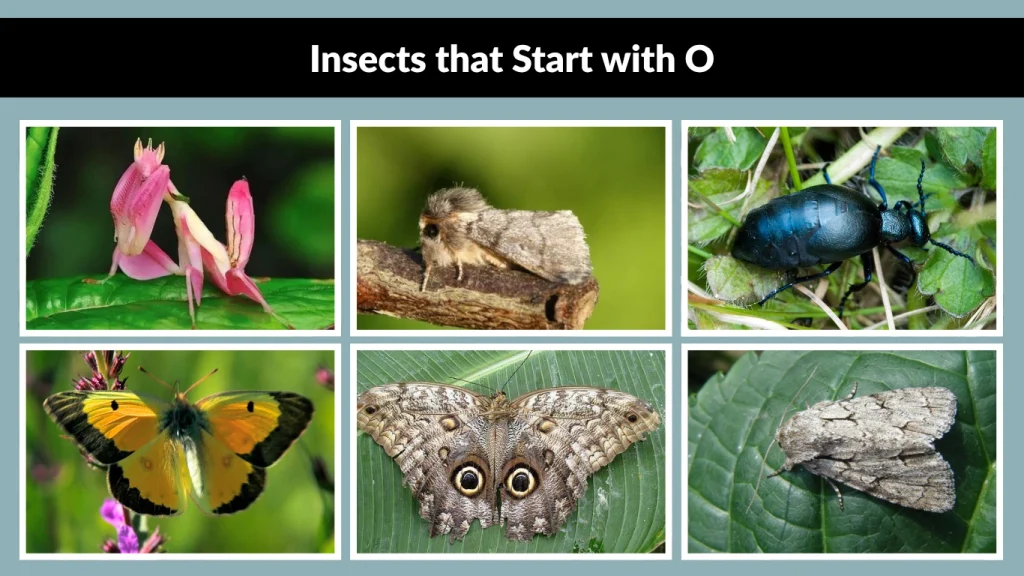
Insects beginning with the letter O include some of the most colorful, camouflaged, and ecologically important species in the world. They inhabit forests, grasslands, wetlands, and even deserts. From delicate butterflies to fierce predatory mantises, these insects display unique behaviors, striking appearances, and fascinating adaptations that make them vital to their ecosystems.
25. Orchid Mantis
The orchid mantis is a beautifully camouflaged praying mantis that resembles orchid petals. Native to Southeast Asia, it uses its floral disguise to ambush unsuspecting prey.
It primarily feeds on flies, bees, and butterflies. Despite its delicate look, it is a skilled predator with lightning-fast reflexes, capturing insects much larger than itself.
26. Oak Processionary Moth
The oak processionary moth is native to southern and central Europe but has spread to other regions. Its caterpillars are known for moving in nose-to-tail processions.
These caterpillars feed on oak leaves and can defoliate trees. They have irritating hairs that can cause allergic reactions in humans and animals, making them a forestry pest.
27. Oil Beetle
The oil beetle is a slow-moving ground beetle found in grasslands and meadows across Europe. It gets its name from the oily fluid it releases as a defense mechanism.
Its larvae have a unique life cycle, hitching rides on bees to access their nests and feed on pollen and bee larvae. Adults feed mainly on plants.
28. Orange Sulphur Butterfly
The orange sulphur butterfly is a medium-sized butterfly found in open fields and gardens across North America. It has bright yellow-orange wings with black borders.
It feeds on nectar from flowers such as clover and alfalfa. These butterflies are strong fliers and are often seen in large numbers during warm months.
29. Owl Butterfly
The owl butterfly is a large tropical butterfly found in Central and South America. It is named for the large eye-like spots on its wings that resemble an owl’s eyes.
It feeds mainly on rotting fruit rather than flowers. The eye spots help deter predators, making it one of the most fascinating examples of mimicry in nature.
30. Obscure Dagger Moth
The obscure dagger moth is a nocturnal moth found in North America. It has grey-brown wings with subtle patterns that help it blend into tree bark.
Its caterpillars feed on a variety of hardwood trees. Adults are attracted to lights at night and play a role in the food chain by serving as prey for bats.
Arachnids and Other Invertebrates that Start with O
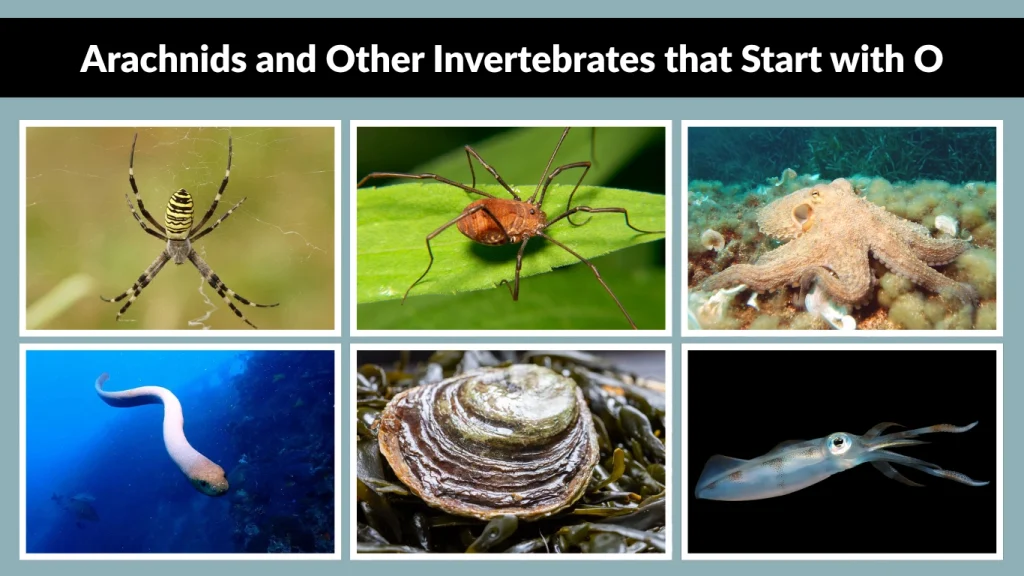
Arachnids and other invertebrates beginning with the letter O include fascinating sea creatures, land-dwelling spiders, and unique mollusks. They inhabit oceans, forests, grasslands, and even deserts. Many of them play crucial roles in their ecosystems, from controlling insect populations to filtering water and maintaining the health of marine habitats.
31. Orb-weaver Spider
The orb-weaver spider is known for building large, intricate, wheel-shaped webs to capture flying insects. They are found worldwide in gardens, forests, and grasslands.
Despite their intimidating size, most orb-weavers are harmless to humans. They play an important ecological role by reducing pest insect numbers. Their webs are rebuilt daily for maximum effectiveness.
32. Opiliones (Harvestman)
Opiliones, commonly called harvestmen, are arachnids with small oval bodies and extremely long, thin legs. Unlike spiders, they have fused body segments.
They are omnivorous, feeding on insects, plants, and fungi. Harvestmen lack venom and silk production, relying on camouflage and odor emissions for defense.
33. Octopus
The octopus is a highly intelligent marine mollusk known for its eight flexible arms and remarkable problem-solving skills. They inhabit oceans worldwide, from shallow reefs to deep waters.
Octopuses can change color and texture for camouflage and release ink to escape predators. They feed on crabs, fish, and mollusks, often using stealth to ambush prey.
34. Olive Sea Snake
The olive sea snake is a venomous marine reptile found in coral reefs and coastal waters of the western Pacific and northern Australia. It has smooth, olive-colored scales.
It feeds mainly on fish and crustaceans, hunting both during the day and night. Despite its potent venom, it is generally not aggressive toward divers.
35. Oyster
Oysters are bivalve mollusks found in both brackish and marine waters. They have rough, irregular shells and filter plankton from the water for food.
They are important for marine ecosystems, as oyster reefs provide shelter for many species. Oysters are also harvested for food and pearls.
36. Oceanic Squid
The oceanic squid is a fast-swimming mollusk found in open waters around the globe. It uses jet propulsion to move quickly and evade predators.
Squids are important prey for many marine animals, including whales, seals, and large fish. They have excellent eyesight and can change color to communicate or hide.
Marine Animals that Start with O
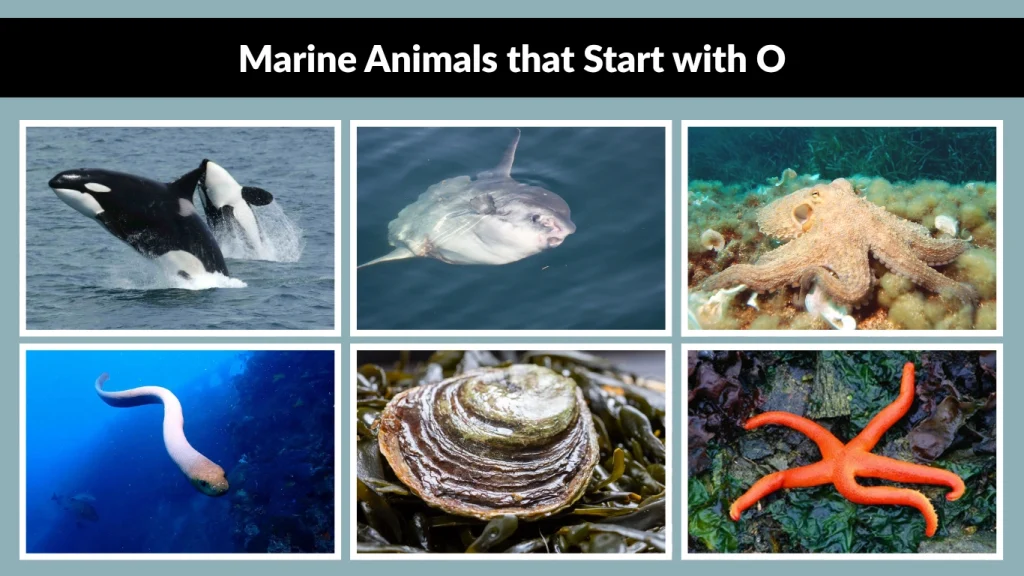
Marine animals beginning with the letter O include some of the ocean’s most intelligent predators, colorful invertebrates, and unique reef dwellers. They are found in diverse marine environments, from tropical coral reefs to cold polar waters. Many of these species are vital to the balance of marine ecosystems, serving as predators, prey, and habitat builders.
37. Orca (Killer Whale)
The orca, or killer whale, is the largest member of the dolphin family and a powerful marine predator. It is easily recognized by its black-and-white coloration and tall dorsal fin.
Orcas live in pods with complex social structures, communicating with distinct calls. They hunt fish, seals, and even whales, using cooperative strategies to capture prey.
38. Ocean Sunfish
The ocean sunfish, or mola mola, is one of the heaviest bony fish in the world. It has a flattened, disc-shaped body and can weigh over 2,000 pounds.
It feeds primarily on jellyfish but will also eat small fish and plankton. Despite its size, it is a gentle creature often spotted basking at the ocean surface.
39. Octopus
The octopus is a soft-bodied, highly intelligent mollusk with eight arms lined with suction cups. It inhabits oceans around the world, from shallow waters to the deep sea.
It can camouflage itself by changing color and texture, and it ejects ink to escape predators. Octopuses feed on crabs, fish, and shellfish, often hunting at night.
40. Olive Sea Snake
The olive sea snake is a venomous reptile adapted to life in the ocean. It has smooth, olive-green scales and a paddle-shaped tail for swimming.
It hunts fish and crustaceans among coral reefs and rocky seabeds. Although venomous, it rarely poses a threat to humans unless provoked.
41. Oyster
Oysters are marine bivalve mollusks that filter plankton from the water for food. They live attached to rocks, piers, and other surfaces in coastal waters.
Oyster reefs provide shelter for fish, crabs, and other marine life. They are also valued by humans for their meat and the pearls they sometimes produce.
42. Orange Sea Star
The orange sea star is a brightly colored starfish found in rocky coastal habitats and coral reefs. Its five arms are covered in tiny spines and tube feet.
It feeds by everting its stomach to digest prey such as mussels and clams externally. Orange sea stars play an important role in maintaining healthy reef ecosystems.
Exotic and Rare Animals that Start with O
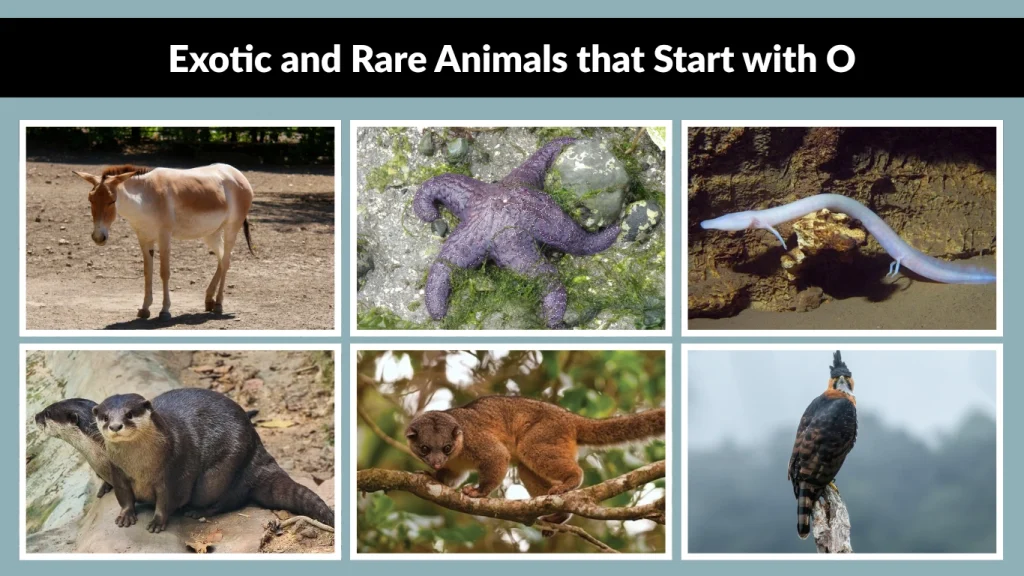
Exotic and rare animals beginning with the letter O are often found in remote, specialized habitats and may be unfamiliar to many people. These species stand out for their unusual appearances, unique behaviors, and sometimes vulnerable conservation status. Many face threats from habitat destruction, making them important subjects for wildlife protection and study.
43. Onager
The onager is a wild ass native to the deserts and steppes of Iran, Mongolia, and surrounding regions. It has a sandy coat, strong legs, and remarkable stamina.
Adapted to arid environments, onagers can survive with minimal water and travel long distances in search of food. They graze mainly on grasses and shrubs.
44. Ochre Sea Star
The ochre sea star is a large, colorful starfish found along the Pacific coast of North America. Its color ranges from orange to purple.
It feeds on mussels and barnacles, playing a vital role in controlling shellfish populations. It is highly resilient but sensitive to ocean warming and disease outbreaks.
45. Olm (Cave Salamander)
The olm is a rare, blind amphibian that lives in the underwater caves of Central and Southeastern Europe. It has pale, almost translucent skin.
It can survive without food for years and senses prey through vibrations. Due to its unique adaptations, it is a symbol of cave biodiversity.
46. Oriental Small-clawed Otter
The oriental small-clawed otter is the smallest otter species, found in South and Southeast Asia. It has short claws and webbed feet for swimming.
It feeds on crabs, shellfish, and fish, using its nimble paws to handle prey. These otters are highly social, living in family groups.
47. Olinguito
The olinguito is a small mammal from the cloud forests of Colombia and Ecuador, closely related to raccoons. It has reddish-brown fur and a bushy tail.
It feeds mainly on fruits but will also eat insects and nectar. The species was only scientifically described in 2013, making it a recent discovery.
48. Ornate Hawk-Eagle
The ornate hawk-eagle is a striking bird of prey found in Central and South American forests. It has bold black, white, and chestnut plumage with a tall crest.
It hunts monkeys, birds, and reptiles, using stealth and speed. Deforestation has caused declines in its population, but it remains a symbol of tropical wilderness.
Farm and Domesticated Animals that Start with O
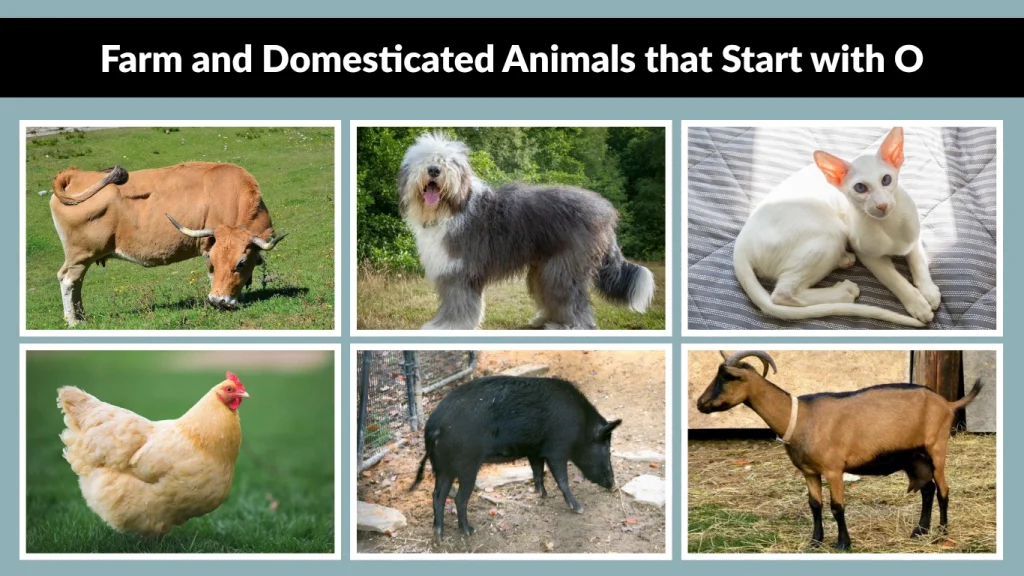
Farm and domesticated animals beginning with the letter O have been bred and cared for by humans for centuries. They serve as sources of food, labor, companionship, and even cultural heritage. Adapted to living alongside people, many of these species are valued for their unique traits, productivity, and the roles they play in agriculture and daily life.
49. Ox
The ox is a strong, domesticated form of cattle used worldwide for pulling carts, plowing fields, and other heavy tasks. It is prized for its endurance and steady temperament.
Oxen are herbivores, feeding mainly on grass, hay, and grain. In many rural communities, they remain an essential part of farming traditions.
50. Old English Sheepdog
The Old English sheepdog is a large, shaggy-coated herding breed from England. Known for its long fur and friendly personality, it is a loyal working and family dog.
Originally bred to herd sheep and cattle, it is intelligent and adaptable. Its thick coat requires regular grooming to prevent matting.
51. Oriental Cat
The Oriental cat is a sleek, elegant breed related to the Siamese. It has a slender body, large ears, and almond-shaped eyes.
Playful and vocal, it thrives on companionship and interaction. The breed comes in a wide variety of coat colors and patterns, making it popular among cat lovers.
52. Orpington Chicken
The Orpington chicken is a large, gentle breed originally developed in England for both eggs and meat. It is known for its soft, fluffy feathers.
They lay brown eggs and adapt well to both backyard coops and small farms. Their calm temperament makes them great for beginners in poultry keeping.
53. Ossabaw Island Hog
The Ossabaw Island hog is a feral pig breed from Georgia’s Ossabaw Island, descended from Spanish stock brought in the 1500s. It has a rugged build and coarse hair.
These hogs are hardy foragers, adapted to living with limited food and harsh conditions. They are now raised in heritage farming programs.
54. Oberhasli Goat
The Oberhasli goat is a dairy breed from Switzerland, known for its reddish-brown coat with black markings. It produces high-quality, sweet-tasting milk.
They are hardy, friendly, and well-suited to both small farms and larger dairy operations. Their gentle nature makes them easy to manage.
Miscellaneous Animals that Start with O
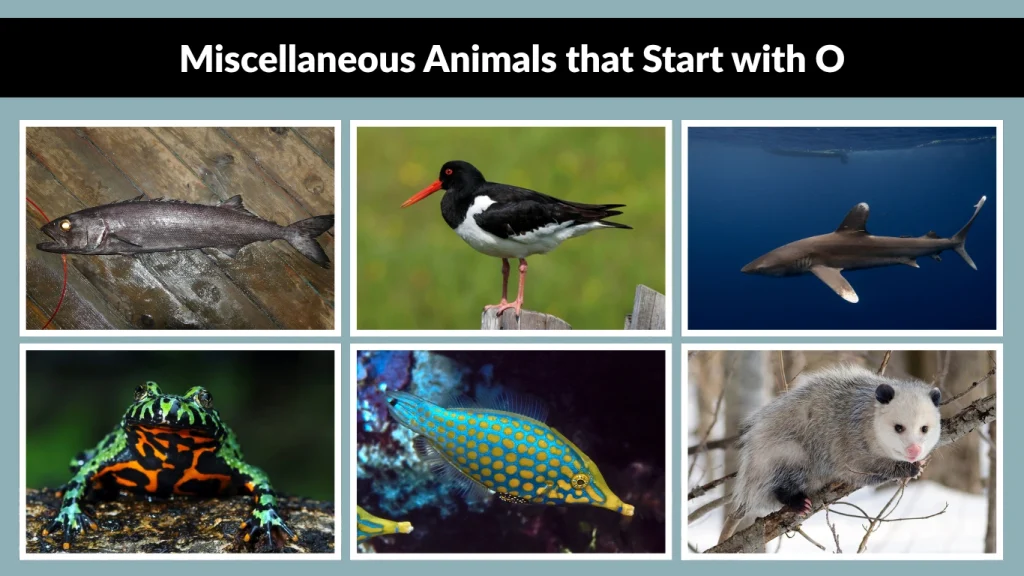
Miscellaneous animals beginning with the letter O include a diverse mix of species that don’t fit neatly into other categories. They live in a range of environments, from oceans and rivers to forests and grasslands. Each plays an important role in its ecosystem, contributing to biodiversity in unique and sometimes surprising ways.
55. Oilfish
The oilfish is a deep-sea fish with a long, sleek body and oily flesh. It inhabits tropical and temperate oceans worldwide.
It feeds mainly on squid and smaller fish. While edible, its high oil content can cause digestive discomfort, so it is sold with caution in some countries.
56. Oystercatcher (Bird)
The oystercatcher is a striking shorebird with black-and-white plumage and a long, bright orange bill. It is found along coastlines around the world.
It uses its bill to pry open mollusks, especially oysters and clams. Oystercatchers are often seen in pairs, defending their feeding and nesting territories.
57. Oceanic Whitetip Shark
The oceanic whitetip shark is a large pelagic predator recognizable by its rounded fins tipped with white. It inhabits warm, open oceans.
It feeds on fish, squid, and seabirds, often scavenging from fishing vessels. Though once abundant, its numbers have declined due to overfishing and fin harvesting.
58. Oriental Fire-bellied Toad
The oriental fire-bellied toad is a small amphibian with a bright red or orange belly and green, black-spotted back. It is native to East Asia.
The vivid belly coloration warns predators of its mild toxicity. It feeds on insects, worms, and small aquatic animals, often living in ponds and marshes.
59. Orange-spotted Filefish
The orange-spotted filefish is a tropical reef fish found in the Indo-Pacific. It has a slender body patterned with orange spots and blotches.
It feeds on coral polyps and algae, using its small mouth to nip at surfaces. Its coloration provides camouflage among corals.
60. Opossum
The opossum is a marsupial native to the Americas, known for its adaptability and ability to play dead when threatened. It has a pointed snout and prehensile tail.
Opossums are omnivores, eating fruits, insects, small animals, and carrion. They play an important role in controlling pests like ticks and rodents.