
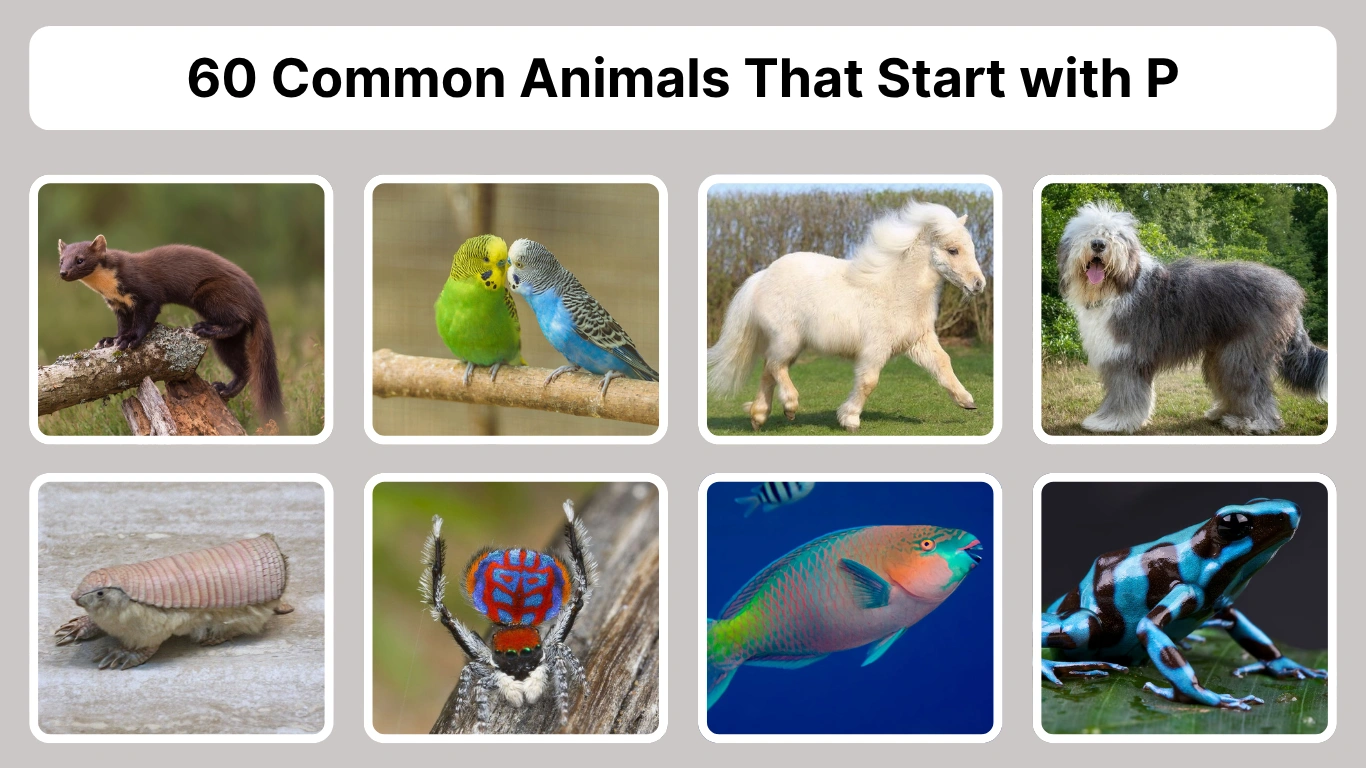
Animals whose names begin with the letter P come from every corner of the planet, ranging from the icy Arctic to lush tropical rainforests and deep oceans. This list showcases 60 fascinating species, divided into groups such as mammals, birds, reptiles, fish, and more. Each animal features unique traits, behaviors, and adaptations, offering a glimpse into the incredible diversity of the natural world.
Mammals that Start with P
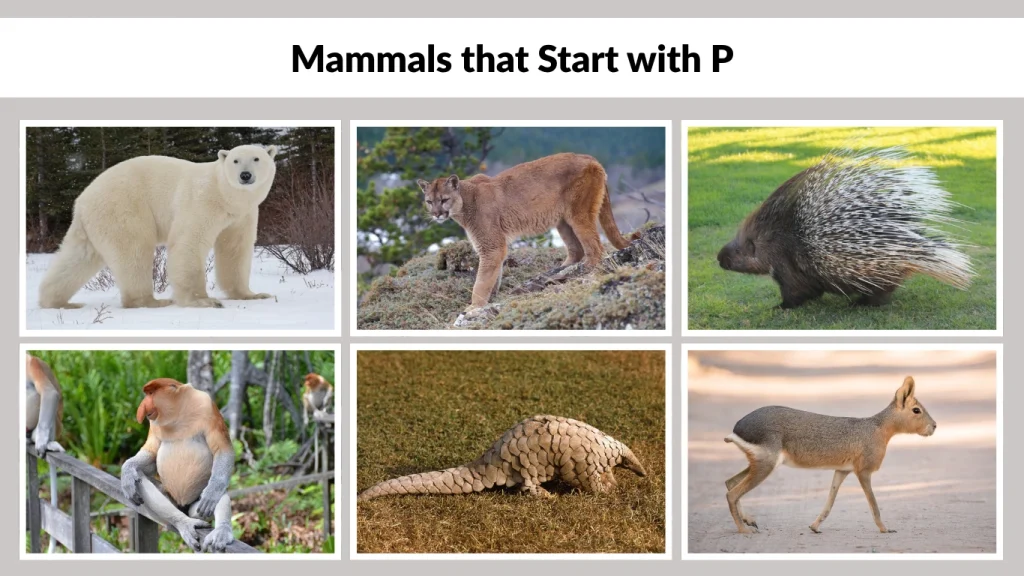
Mammals beginning with the letter P include some of the most iconic species in the animal kingdom. From powerful predators to unique marsupials and specialized herbivores, these animals inhabit a wide range of environments. Each one has fascinating adaptations that help them thrive in their respective habitats.
1. Polar Bear
The polar bear is the largest land carnivore, found primarily in the Arctic regions. Its thick white fur and insulating fat layer keep it warm in freezing temperatures, while its strong limbs make it an excellent swimmer.
They primarily hunt seals, using sea ice as a platform. Polar bears are powerful, solitary animals that roam vast territories, often traveling long distances in search of food. Climate change is a major threat to their survival.
2. Puma
Also known as the cougar or mountain lion, the puma is a large feline native to the Americas. Its tawny coat provides excellent camouflage, and it is a skilled ambush predator.
Pumas are highly adaptable and can thrive in forests, deserts, and mountains. They primarily hunt deer but will also take smaller prey. Solitary and territorial, they play an important role in maintaining ecological balance.
3. Porcupine
Porcupines are slow-moving, nocturnal rodents covered in sharp quills that serve as a defense against predators. They are found in forests, deserts, and grasslands across the Americas, Africa, and Asia.
They feed mainly on leaves, bark, and fruit. Despite their defensive appearance, porcupines are shy and non-aggressive, relying on their quills for protection rather than confrontation.
4. Proboscis Monkey
The proboscis monkey is easily recognized by its long, bulbous nose and reddish-brown fur. Native to the mangrove forests of Borneo, it is an excellent swimmer with partially webbed feet.
Its diet consists mainly of leaves, seeds, and unripe fruit. Proboscis monkeys live in social groups and are often seen near rivers. Their unique appearance makes them a highlight for wildlife enthusiasts.
5. Pangolin
Pangolins are insect-eating mammals covered in protective keratin scales. They are found in Africa and Asia, using their strong claws and long sticky tongues to feed primarily on ants and termites.
When threatened, a pangolin curls into a tight ball, using its scales as armor. Unfortunately, they are heavily poached for their meat and scales, making them one of the most trafficked mammals in the world.
6. Patagonian Mara
The Patagonian mara is a large rodent native to Argentina’s grasslands. With long legs and rabbit-like ears, it is built for running and can reach speeds up to 35 mph.
Maras live in pairs or small groups and feed on grasses and herbs. They are unusual among rodents for their monogamous relationships, often raising their young in communal burrows.
Birds that Start with P
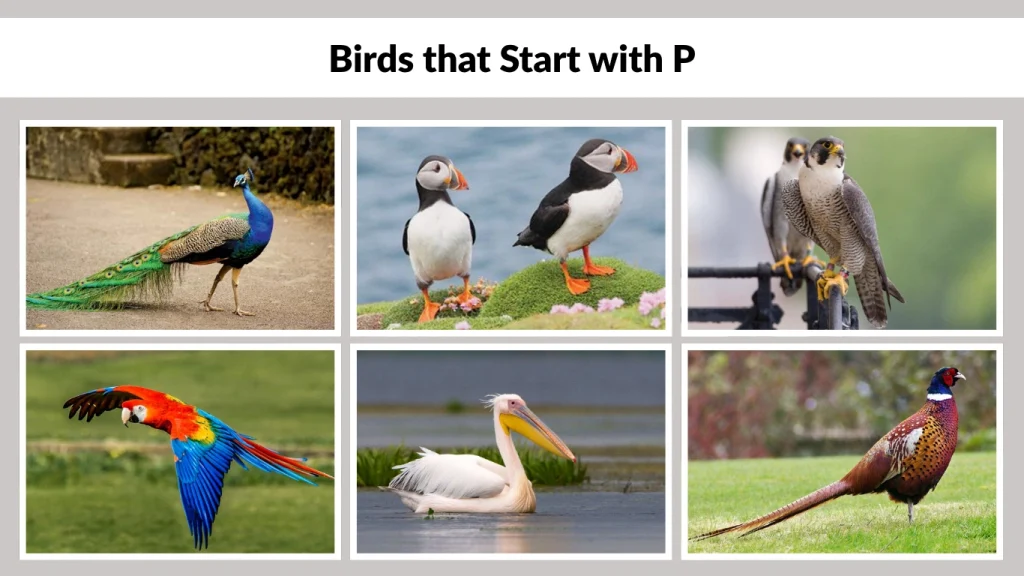
Birds beginning with the letter P are found across every continent, from icy coastal cliffs to tropical forests. They include both powerful predators and delicate songbirds, each with distinct colors, calls, and behaviors. Many of these birds are well-known for their beauty, intelligence, or impressive flight abilities.
7. Peacock
The peacock is famous for its dazzling, iridescent tail feathers that it fans out during courtship displays. Native to South Asia, it thrives in forests, grasslands, and near human settlements.
Males display their vibrant plumage to attract females, while females (peahens) have more subdued coloring for camouflage. Peacocks are omnivorous, feeding on seeds, insects, and small reptiles.
8. Puffin
Puffins are small seabirds with colorful, parrot-like beaks, found in the North Atlantic. Their striking appearance is most vibrant during the breeding season.
Excellent divers, puffins catch small fish by using their wings to ‘fly’ underwater. They nest in burrows on coastal cliffs, returning to the same sites each year to breed.
9. Peregrine Falcon
The peregrine falcon is the fastest bird in the world, capable of diving at speeds over 200 mph to catch prey mid-air. It has a sleek body and sharp eyesight.
Found on every continent except Antarctica, peregrines primarily hunt pigeons and other birds. They have made a remarkable recovery from population declines caused by pesticide use.
10. Parrot
Parrots are colorful, intelligent birds found in tropical and subtropical regions worldwide. They are known for their curved beaks and zygodactyl feet, which aid in climbing and handling food.
Many species can mimic human speech and sounds. They feed on seeds, fruit, and nectar, and are highly social, often living in flocks.
11. Pelican
Pelicans are large water birds with long beaks and expandable throat pouches used to scoop up fish. They are found near lakes, rivers, and coastal waters worldwide.
They often hunt cooperatively, herding fish into shallow waters before scooping them up. Pelicans are powerful fliers, gliding gracefully over water surfaces.
12. Pheasant
Pheasants are ground-dwelling birds with long tails and colorful plumage, native to Asia but introduced worldwide for hunting. Males are particularly striking.
They feed on seeds, insects, and berries. Known for their quick bursts of flight, pheasants prefer to run rather than fly when threatened.
Reptiles and Amphibians that Start with P
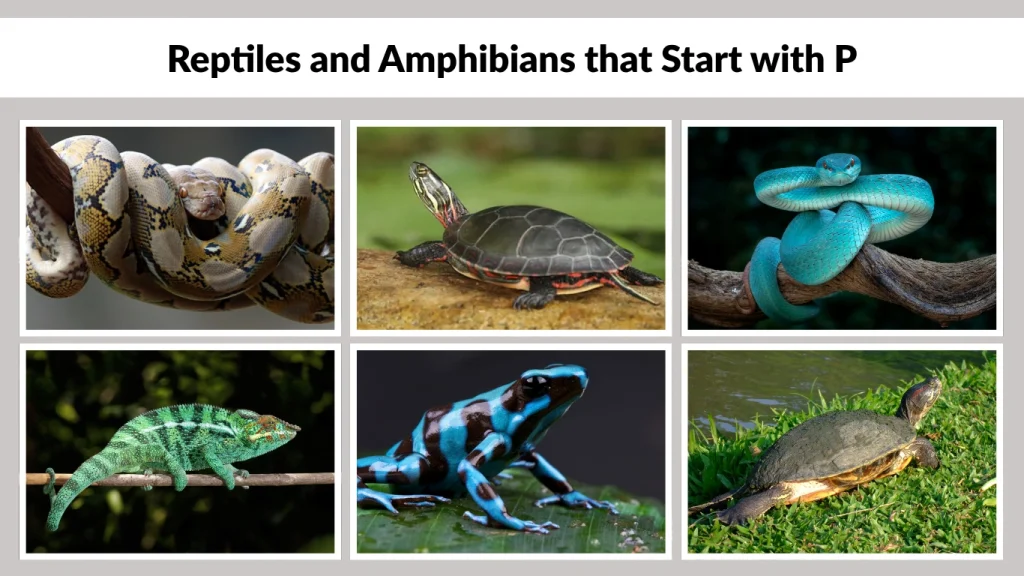
Reptiles and amphibians beginning with the letter P live in diverse environments, from tropical forests to arid deserts and freshwater wetlands. They include skilled predators, colorful species, and venomous hunters. Each one plays a vital role in its ecosystem, whether as a predator, prey, or environmental indicator.
13. Python
Pythons are large, non-venomous constrictor snakes found in Africa, Asia, and Australia. They kill prey by wrapping around it and suffocating it before swallowing it whole.
These snakes feed on mammals, birds, and reptiles. Some species, like the reticulated python, are among the longest snakes in the world, capable of exceeding 20 feet.
14. Painted Turtle
The painted turtle is a brightly colored freshwater turtle native to North America. It is named for the red, yellow, and orange markings on its shell and skin.
It inhabits ponds, lakes, and slow-moving rivers, basking on logs or rocks. Painted turtles are omnivorous, eating aquatic plants, insects, and small fish.
15. Pit Viper
Pit vipers are venomous snakes found in the Americas and Asia, equipped with heat-sensing pits between their eyes and nostrils for detecting warm-blooded prey.
They include species like rattlesnakes, copperheads, and bushmasters. Their venom varies in potency, but it is primarily used for immobilizing prey rather than self-defense.
16. Panther Chameleon
The panther chameleon is a vividly colored lizard native to Madagascar. Males are especially vibrant, with colors ranging from red to blue and green.
It can change color to communicate, regulate temperature, or camouflage. Panther chameleons feed on insects, catching them with their long, sticky tongues.
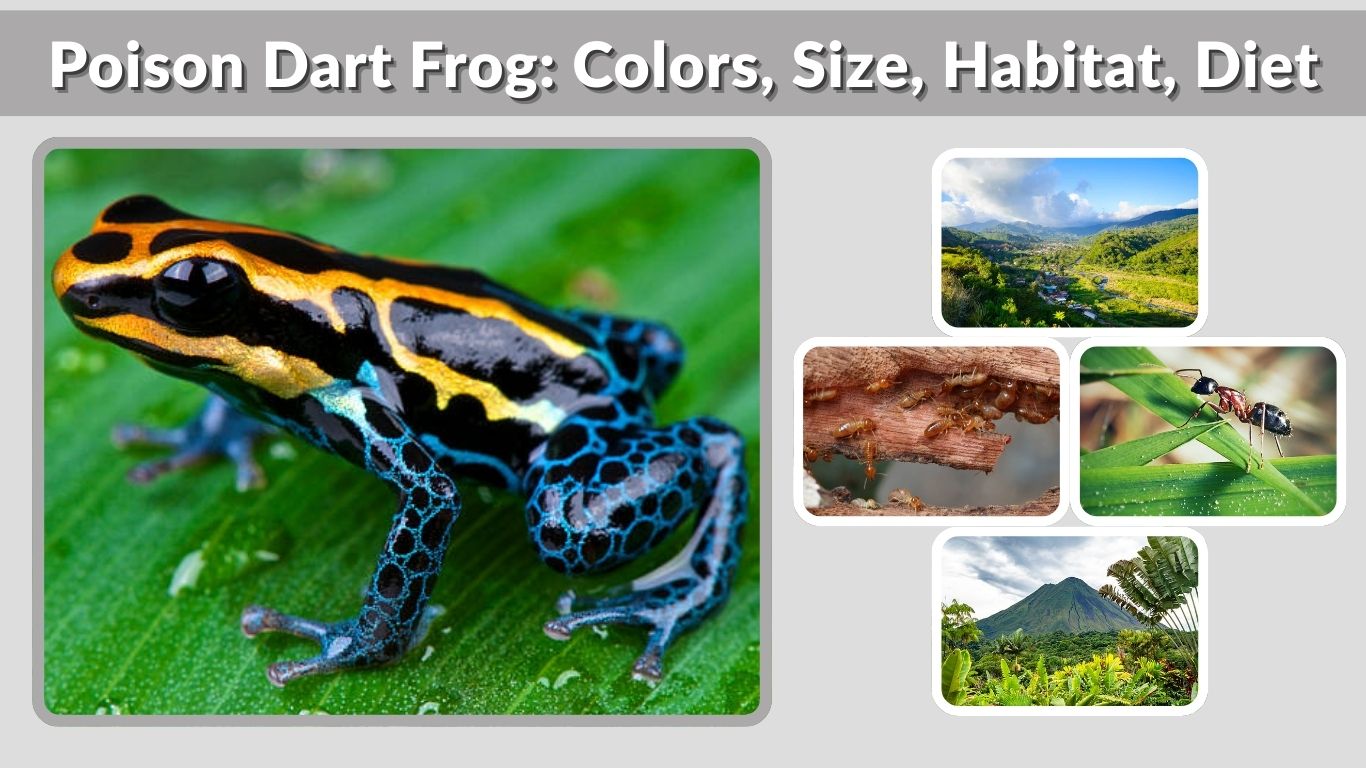
17. Poison Dart Frog
Poison dart frogs are small, brightly colored amphibians found in Central and South America. Their vivid colors warn predators of their toxicity.
Indigenous people have used their skin toxins to poison hunting darts. They feed mainly on ants, termites, and small insects, and their toxicity comes from their diet in the wild.
18. Pond Slider
The pond slider is a freshwater turtle native to the southeastern United States but introduced worldwide. The red-eared slider is its most recognized subspecies.
It is adaptable, thriving in ponds, lakes, and slow-moving rivers. Pond sliders are omnivorous and can become invasive, outcompeting native turtle species.
Fish that Start with P
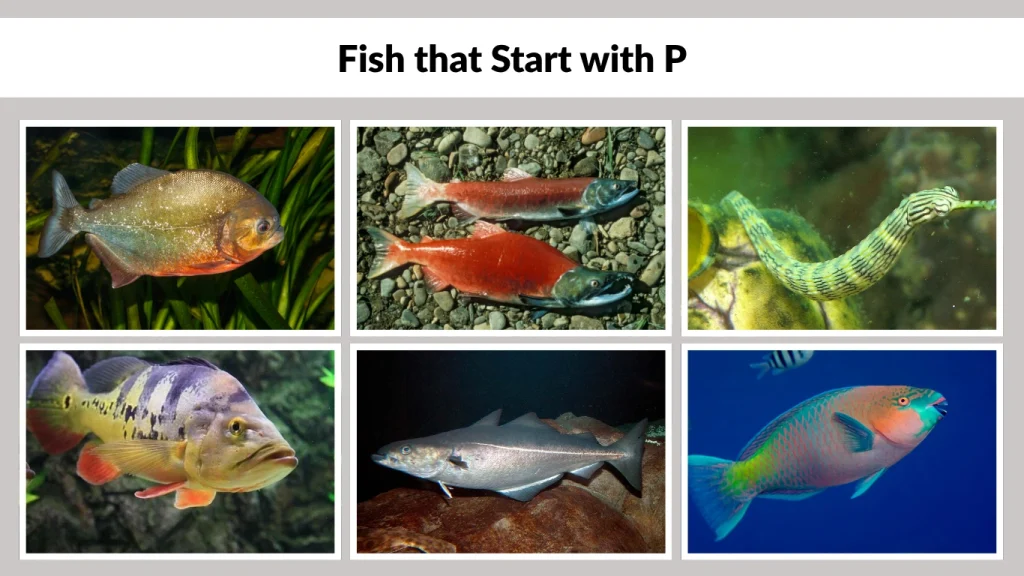
Fish species beginning with the letter P are incredibly diverse, living in environments ranging from freshwater rivers to the open ocean. Some are fierce predators, while others are brightly colored and sought after in aquariums. Each plays an important role in aquatic ecosystems, from controlling prey populations to supporting fisheries.
19. Piranha
Piranhas are freshwater fish native to South America, known for their sharp teeth and powerful jaws. While they have a fierce reputation, most species are opportunistic feeders rather than constant predators.
They live in rivers and lakes, feeding on fish, insects, and plant material. In large groups, they can strip flesh from prey quickly, especially when food is scarce.
20. Pacific Salmon
Pacific salmon are migratory fish found in the northern Pacific Ocean and rivers of North America and Asia. They are known for their remarkable journey from ocean to freshwater to spawn.
After spawning, adult salmon die, providing nutrients for river ecosystems. They are a vital food source for wildlife and an important resource for humans.
21. Pipefish
Pipefish are slender, elongated fish related to seahorses, found in shallow coastal waters and seagrass beds. Their long, tubular snouts help them suck up tiny prey.
Males carry the fertilized eggs in a brood pouch until they hatch, a unique trait they share with seahorses. They rely on camouflage to avoid predators.
22. Peacock Bass
The peacock bass is a brightly colored freshwater fish native to South America, popular among sport fishers for its strength and beauty.
It feeds on smaller fish and insects, using speed and power to capture prey. Peacock bass are also introduced in some regions for sport fishing.
23. Pollock
Pollock is a schooling fish found in the North Atlantic and North Pacific Oceans, important for commercial fisheries. It is a key ingredient in many processed seafood products.
They feed on smaller fish and plankton, forming large schools for protection. Pollock populations are closely managed to maintain sustainable fishing.
24. Parrotfish
Parrotfish are colorful reef fish named for their beak-like teeth, used to scrape algae from coral. They play a vital role in keeping coral reefs healthy.
They often change color and even sex during their lives. By grinding coral rock while feeding, parrotfish produce much of the sand found on tropical beaches.
Insects that Start with P

Insects starting with the letter P include skilled predators, beautiful pollinators, and fascinating species with unique life cycles. They inhabit a wide range of ecosystems, from forests to farmlands, and play vital roles in pollination, pest control, and the overall balance of nature.
25. Praying Mantis
The praying mantis is a predatory insect known for its upright posture and folded forearms that resemble a prayer position. It is found in gardens, grasslands, and forests worldwide.
Mantises are expert hunters, using stealth and lightning-fast strikes to capture insects. They are beneficial for controlling pest populations in agricultural areas.
26. Paper Wasp
Paper wasps are social insects that build umbrella-shaped nests from chewed plant fibers mixed with saliva. They are commonly found around gardens and homes.
They feed on nectar and hunt caterpillars to feed their larvae. While they can sting when threatened, they are important pollinators and natural pest controllers.
27. Painted Lady Butterfly
The painted lady butterfly is a widespread and migratory species found on every continent except Antarctica. It has orange, black, and white patterned wings.
These butterflies feed on nectar from a wide variety of flowers. Their migrations can span thousands of miles, making them one of the most widely distributed butterfly species.
28. Potato Beetle
The potato beetle, particularly the Colorado potato beetle, is a notorious agricultural pest that feeds on potato plant leaves. It has distinctive yellow and black stripes.
Without control, these beetles can cause severe crop damage. Farmers use various methods, including crop rotation and biological controls, to manage their populations.
29. Pine Sawyer Beetle
The pine sawyer beetle is a longhorn beetle found in coniferous forests. It has long antennae and can be a vector for pine wilt disease.
Larvae tunnel into pine trees, sometimes killing weakened ones. While they can be harmful to forestry, they also play a role in decomposing dead wood.
30. Periodical Cicada
Periodical cicadas are famous for emerging in massive numbers every 13 or 17 years in parts of North America. They have red eyes, black bodies, and transparent wings.
They spend most of their lives underground as nymphs, feeding on tree roots. Their synchronized emergence provides a feast for predators and ensures species survival.
Arachnids and Other Invertebrates that Start with P
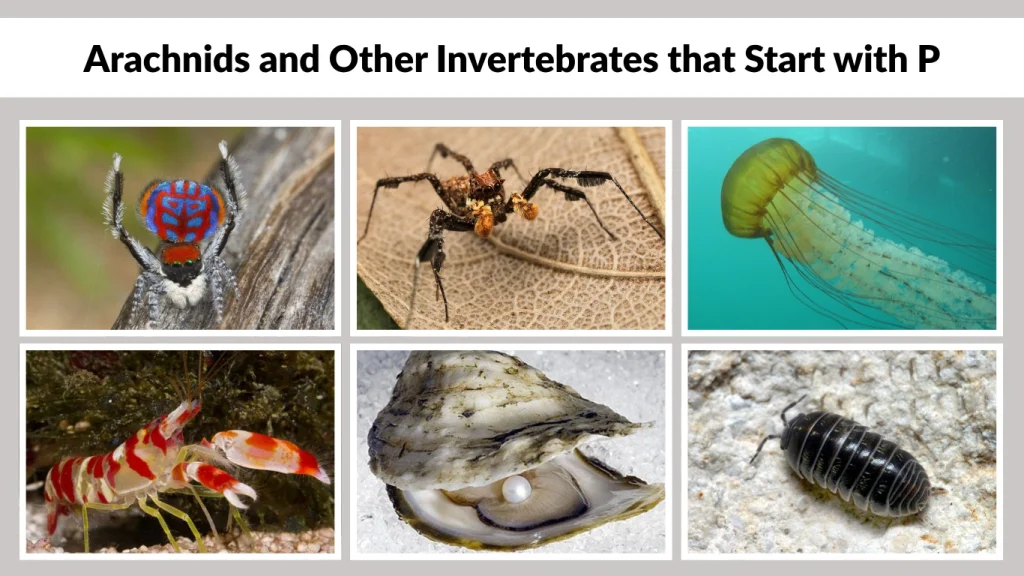
Arachnids and other invertebrates starting with the letter P include fascinating hunters, intricate web-weavers, and unique marine and land-dwelling creatures. They live in diverse habitats, from ocean floors to gardens, and often have specialized adaptations for survival, feeding, and defense.
31. Peacock Spider
The peacock spider is a tiny, colorful jumping spider native to Australia. Males are famous for their bright, fan-like abdominal patterns used in elaborate mating dances.
Despite their small size, they have excellent vision and agile hunting skills. These spiders actively stalk and pounce on prey rather than spinning webs to catch them.
32. Portia Spider
The Portia spider is an intelligent jumping spider known for its problem-solving abilities and complex hunting strategies. It is found in Africa, Asia, and Australia.
It preys on other spiders, often tricking them by mimicking the vibrations of trapped insects. Their cunning behavior has made them a subject of animal cognition studies.
33. Pacific Sea Nettle
The Pacific sea nettle is a large jellyfish with long, trailing tentacles and a golden-brown bell. It is found in the Pacific Ocean along North America’s coast.
Its tentacles contain stinging cells used to paralyze prey like plankton and small fish. While not deadly to humans, their sting can cause irritation.
34. Pistol Shrimp
The pistol shrimp, also known as the snapping shrimp, is a small crustacean capable of creating a loud snap with its claw to stun prey.
This snap can produce a shockwave strong enough to kill small fish. Pistol shrimp often live symbiotically with goby fish for mutual protection.
35. Pearl Oyster
The pearl oyster is a marine bivalve mollusk known for producing pearls when an irritant becomes trapped inside its shell. They are found in warm coastal waters.
Pearls are formed from layers of nacre, making them valuable in jewelry. Pearl oysters also contribute to marine biodiversity by creating habitats for other species.
36. Pill Bug
The pill bug, also called a roly-poly, is a terrestrial crustacean that can roll into a ball when threatened. It thrives in moist environments like gardens and forests.
Pill bugs feed on decaying plant material, helping recycle nutrients into the soil. They are harmless to humans and beneficial to ecosystems.
Marine Animals that Start with P
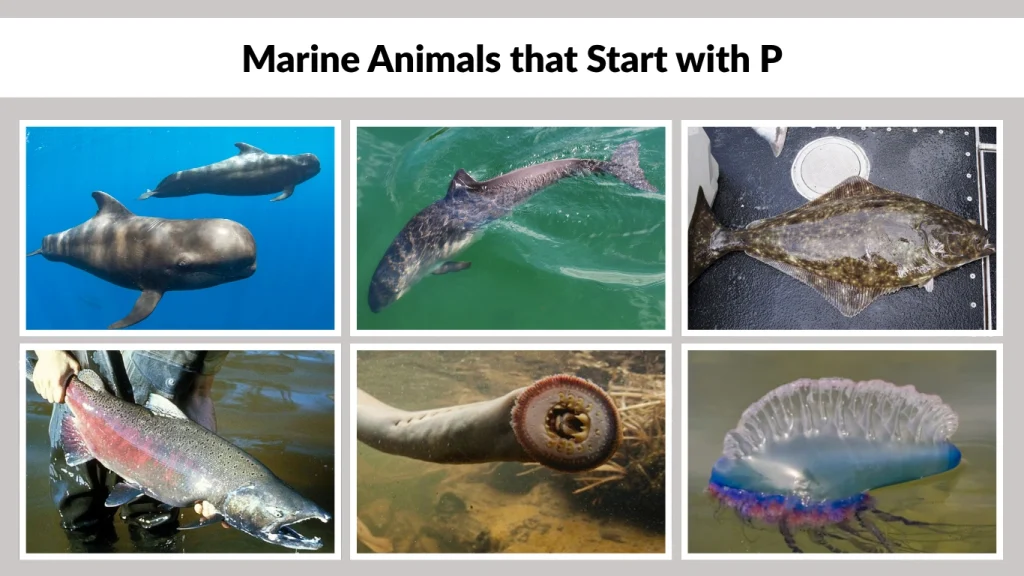
Marine animals beginning with the letter P range from graceful giants to tiny reef dwellers. They inhabit oceans, seas, and coastal areas around the world, playing important roles in marine ecosystems. Many are vital for biodiversity, serve as food sources, or help maintain the balance of aquatic habitats.
37. Pilot Whale
Pilot whales are large, social dolphins found in temperate and tropical oceans. They are named for the belief that a single leader, or “pilot,” guides the pod.
They feed mainly on squid and small fish, diving deep to hunt. Known for their strong social bonds, pilot whales sometimes strand together when one member is in distress.
38. Porpoise
Porpoises are small, toothed whales related to dolphins but with shorter snouts and spade-shaped teeth. They are found in coastal and river waters worldwide.
They are shy and tend to avoid boats, unlike many dolphins. Porpoises use echolocation to find prey such as fish and squid in murky waters.
39. Pacific Halibut
The Pacific halibut is a large flatfish found in the North Pacific Ocean. It has both eyes on one side of its body, adapted for life on the seafloor.
Highly valued in commercial and sport fishing, halibut are ambush predators, feeding on fish, crabs, and other bottom-dwelling animals. They can live for several decades.
40. Pink Salmon
Pink salmon are the smallest and most abundant Pacific salmon species. They are known for their light pink flesh and a pronounced hump on males during spawning.
They hatch in freshwater streams, migrate to the ocean, and return to spawn after two years. Pink salmon are an important food source for wildlife and humans.
41. Pacific Lamprey
The Pacific lamprey is a jawless, eel-like fish found along the Pacific coast of North America. It has a round, sucker-like mouth lined with sharp teeth.
It parasitizes other fish by attaching and feeding on their blood and bodily fluids. Lampreys also play cultural and ecological roles in river ecosystems.
42. Portuguese Man O’ War
The Portuguese man o’ war is a marine organism often mistaken for a jellyfish but actually a siphonophore—a colony of specialized polyps.
It has long, venomous tentacles that can paralyze and kill small fish. Its painful sting can affect humans, even from tentacles washed ashore.
Exotic and Rare Animals that Start with P
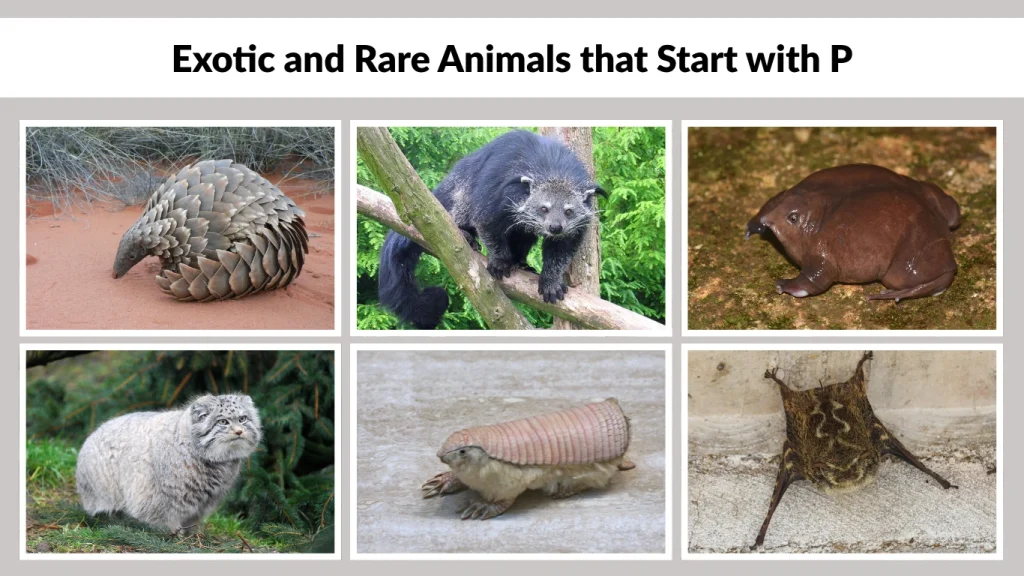
Exotic and rare animals beginning with the letter P are often found in remote or specialized habitats. Many of them are endangered or vulnerable due to habitat loss, hunting, and environmental changes. Their unique adaptations and appearances make them fascinating subjects for researchers and wildlife enthusiasts.
43. Pangolin (Ground and Tree Species)
Pangolins are scaly, insect-eating mammals found in parts of Africa and Asia. Their protective keratin scales act as armor against predators.
They use strong claws and long sticky tongues to extract ants and termites from nests. Sadly, pangolins are heavily poached for their meat and scales, making them critically endangered.
44. Palawan Bearcat
The Palawan bearcat, also known as the binturong, is a rare mammal native to Palawan Island in the Philippines. It has a long, prehensile tail and a musky scent.
Mostly nocturnal, it feeds on fruit, small animals, and insects. This arboreal species is threatened by deforestation and hunting.
45. Purple Frog
The purple frog is a burrowing amphibian native to India’s Western Ghats. It spends most of its life underground, emerging only during the monsoon to breed.
It has a bloated, rounded body and a pointed snout for digging. This species is considered endangered due to habitat loss from agriculture and development.
46. Pallas’s Cat
Pallas’s cat is a small wild cat native to Central Asia’s grasslands and mountains. It has a stocky body, dense fur, and a flat face, giving it a unique look.
Its thick fur helps it survive harsh winters, and it hunts small mammals and birds. Habitat fragmentation and hunting threaten its population.
47. Pink Fairy Armadillo
The pink fairy armadillo is the smallest armadillo species, found in central Argentina. It has a pale pink shell and silky white fur.
A skilled digger, it spends most of its life underground feeding on insects and plants. This species is rare and very sensitive to environmental changes.
48. Proboscis Bat
The proboscis bat is a small, insect-eating bat native to Central and South America. It has a distinctive long, pointed nose.
It roosts in tight clusters on tree trunks, camouflaging as part of the bark. These bats are important for insect control in their ecosystems.
Farm and Domesticated Animals that Start with P
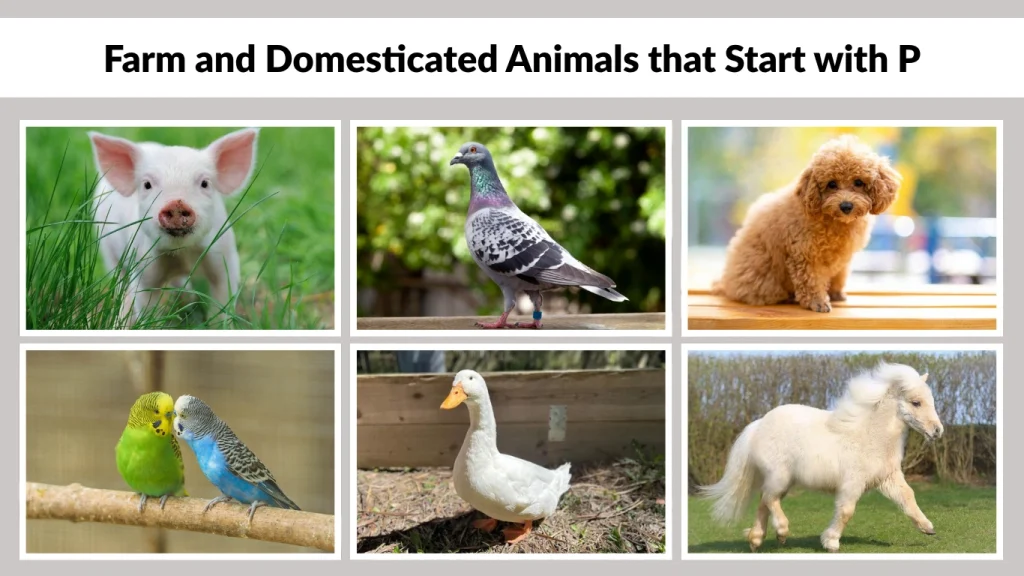
Farm and domesticated animals beginning with the letter P are kept for companionship, food, work, or other human uses. These animals have been bred over generations to adapt to human needs, yet many still retain traits from their wild ancestors.
49. Pig
Pigs are intelligent, social mammals domesticated worldwide for their meat and other products. They have a strong sense of smell and are highly adaptable.
Besides farming, pigs are sometimes kept as pets, especially miniature breeds. They are known for their problem-solving skills and ability to form strong bonds with humans.
50. Pigeon
Pigeons have been domesticated for thousands of years for racing, messaging, and companionship. They are found in cities and rural areas worldwide.
These birds are excellent navigators, capable of finding their way home over long distances. They feed on grains, seeds, and scraps in urban environments.
51. Poodle
The poodle is a popular dog breed known for its intelligence, curly coat, and elegant appearance. It comes in standard, miniature, and toy sizes.
Highly trainable, poodles excel in obedience and agility. Their hypoallergenic coats make them a favorite among allergy sufferers.
52. Parakeet
Parakeets are small, colorful parrots often kept as pets. The budgerigar, or budgie, is the most common species in captivity.
They are playful, social, and capable of mimicking sounds and speech. Parakeets thrive in pairs or groups and require mental stimulation.
53. Pekin Duck
The Pekin duck is a domesticated breed raised for its meat and eggs. It has white plumage and an orange bill and legs.
Calm and hardy, Pekin ducks are also kept as ornamental birds. They are fast-growing and adapt well to different climates.
54. Pony
Ponies are small horses bred for riding, work, and companionship. They are sturdy, intelligent, and often used for children’s riding lessons.
Despite their size, ponies are strong and capable of pulling heavy loads. Many breeds have thick coats for cold climates.
Miscellaneous Animals that Start with P
Miscellaneous animals beginning with the letter P include a variety of species that don’t fit neatly into a single category. They come from different habitats and ecological roles, ranging from skilled burrowers to agile climbers and aerial insect hunters.
55. Prairie Dog
Prairie dogs are burrowing rodents native to North America’s grasslands. They live in large colonies called “towns” with complex tunnel systems.
Highly social, they use a series of chirps and calls to communicate. Prairie dogs feed on grasses and roots, playing an important role in maintaining healthy prairies.
56. Platypus
The platypus is a unique, egg-laying mammal native to eastern Australia and Tasmania. It has a duck-like bill, webbed feet, and a beaver-like tail.
It feeds on insects, crustaceans, and worms by foraging underwater. Males have venomous spurs on their hind legs, making them one of the few venomous mammals.
57. Pangasius Catfish
The pangasius catfish is a freshwater fish native to Southeast Asia, often farmed for food. It has a streamlined body and smooth skin without scales.
It is an omnivore, feeding on plant matter, small fish, and insects. Pangasius is a major export in the aquaculture industry due to its mild-tasting flesh.
58. Painted Stork
The painted stork is a large wading bird found in South and Southeast Asia. It has distinctive pink tertial feathers and a long, yellow bill.
It feeds in shallow waters, sweeping its bill from side to side to catch fish and aquatic invertebrates. Painted storks often nest in large colonies.
59. Purple Martin
The purple martin is the largest swallow in North America, with glossy blue-purple plumage. It is a fast, agile flier that feeds on flying insects.
Many populations rely on human-provided nest boxes for breeding. They migrate long distances between North and South America.
60. Pine Marten
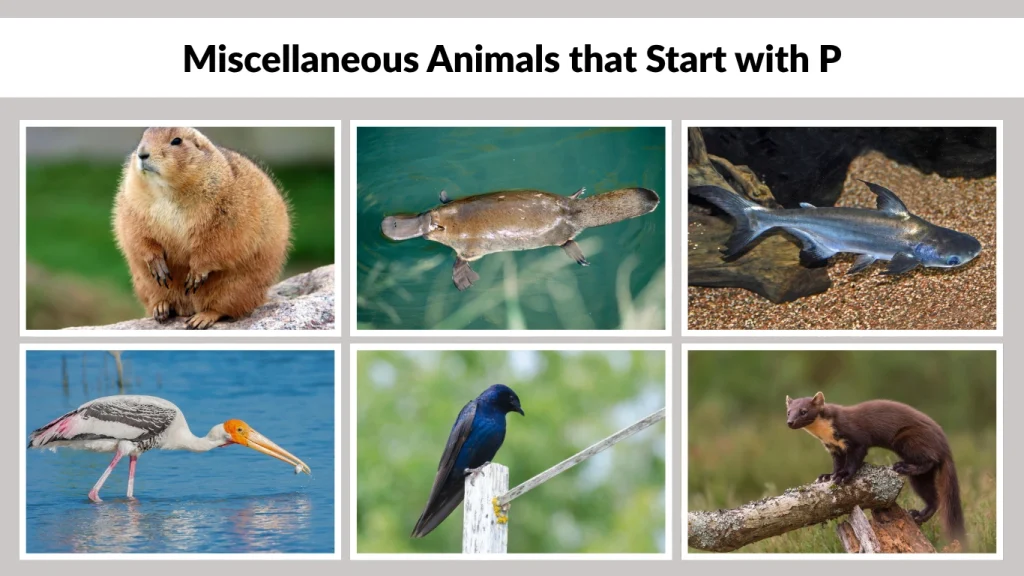
The pine marten is a small carnivorous mammal found in forests of Europe and parts of Asia. It has a slender body, bushy tail, and a creamy-yellow throat patch.
It feeds on small mammals, birds, fruit, and insects. Agile and arboreal, the pine marten is an excellent climber and often hunts in trees.