
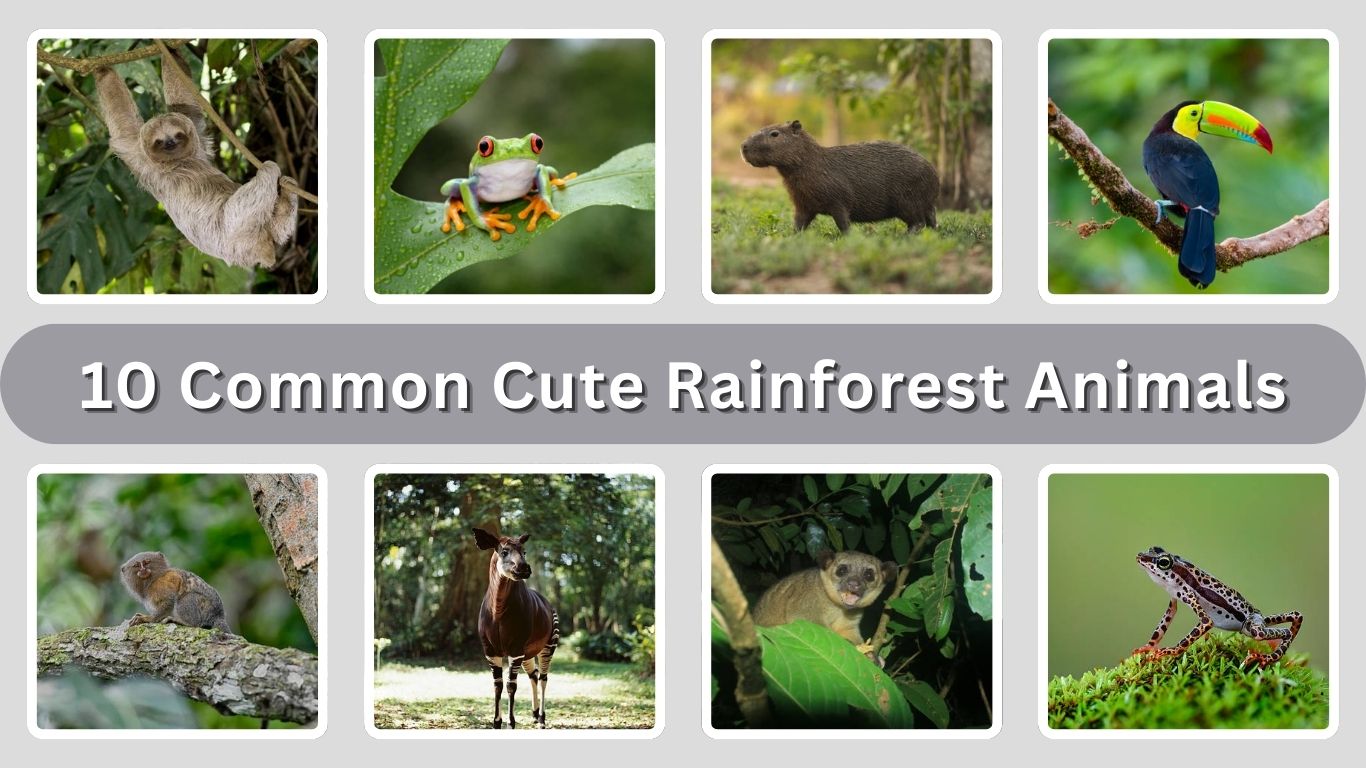
Rainforests are home to some of the most adorable and fascinating animals on Earth. From tiny, colorful frogs to gentle, slow-moving mammals, these creatures capture attention with their unique looks and charming behaviors. Many rainforest animals have evolved special features to survive in dense forests, humid climates, and high tree canopies. Beyond their cuteness, they play vital roles in maintaining healthy ecosystems. In this article, we explore ten common yet lovable rainforest animals, learning about their identification, habitats, behaviors, diets, and lifespans in a simple and engaging way.
1. Sloth
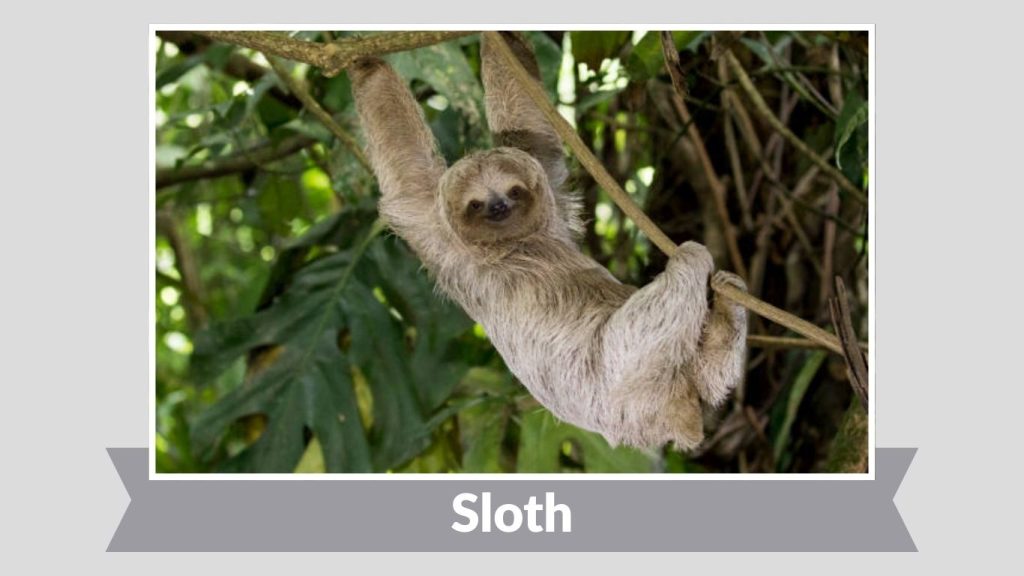
Sloths are slow-moving, tree-dwelling mammals best known for their calm nature and adorable, relaxed expressions. Native to tropical rainforests, they spend most of their lives hanging upside down from tree branches, perfectly adapted to a life high in the canopy where food is plentiful and danger is limited.
Identification
- Long, curved claws used for hanging and climbing
- Shaggy fur that appears brown, gray, or slightly green
- Small head with dark eye patches
- Slow, deliberate movements
Habitat
Sloths inhabit tropical rainforests in Central and South America. They rely heavily on tall trees with dense foliage, which provide both food and shelter. The forest canopy protects them from predators and harsh ground conditions. Their fur often hosts algae, helping them blend into their leafy surroundings.
Behaviors
Sloths are solitary and inactive for most of the day. They sleep up to 15 hours and move slowly to conserve energy. Their slow pace also helps them avoid predators, as they are difficult to detect. Sloths descend from trees about once a week, mainly for bodily functions.
Diet and Lifespan
Sloths primarily eat leaves, buds, and tender shoots. Their metabolism is extremely slow, allowing them to survive on low-nutrient food. Digestion can take weeks. In the wild, sloths typically live between 20 and 30 years.
2. Red-eyed Tree Frog
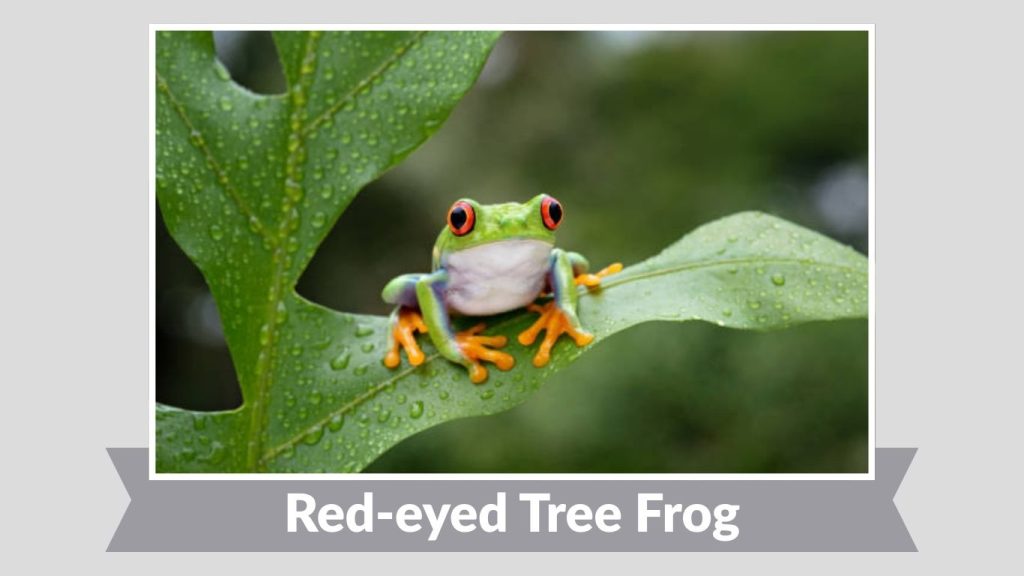
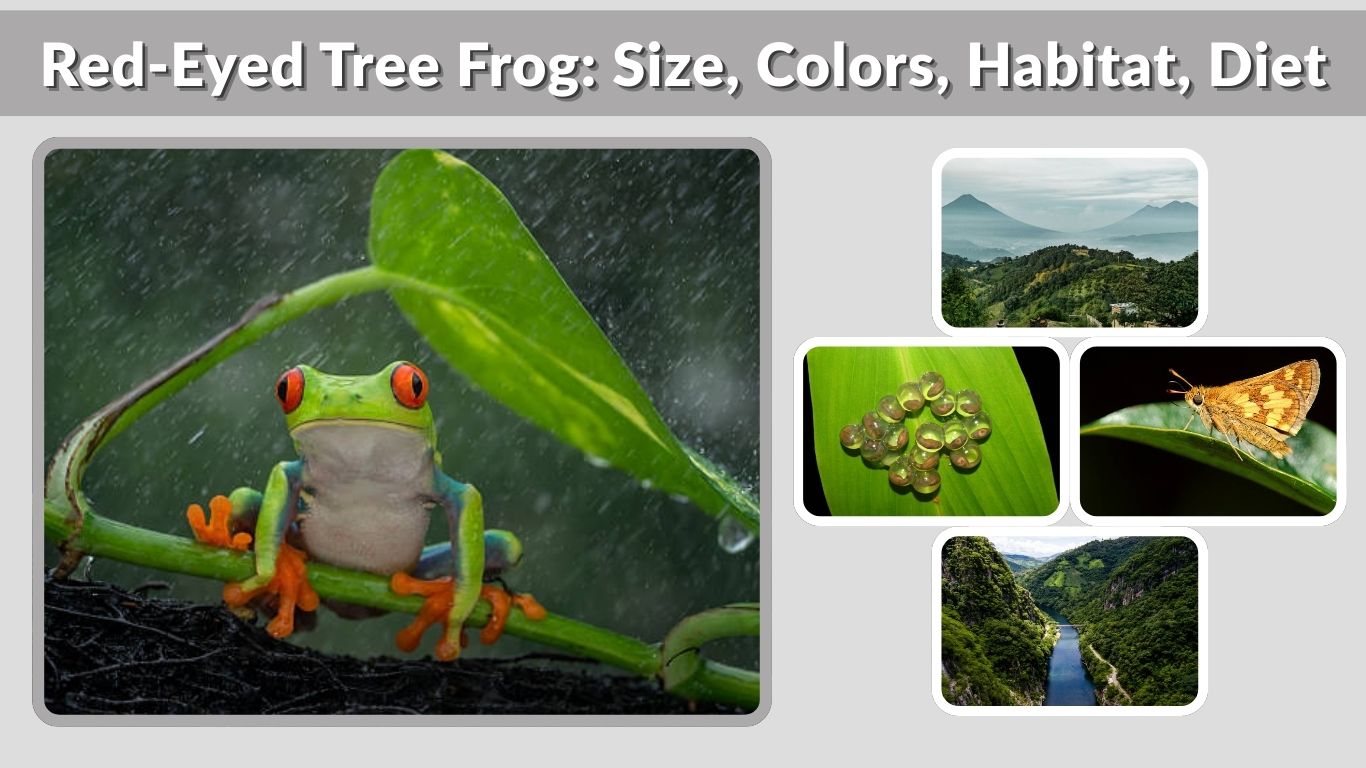
The red-eyed tree frog is a small, colorful amphibian famous for its bright red eyes and vibrant green body. Often considered one of the cutest rainforest animals, it is a symbol of tropical rainforests and is best known for its dramatic appearance and nighttime activity.
Identification
- Bright red eyes with vertical pupils
- Lime-green body with blue and yellow side stripes
- Orange or yellow feet with sticky toe pads
- Small, slender body
Habitat
Red-eyed tree frogs live in tropical rainforests of Central America, especially near rivers, ponds, and wetlands. They spend most of their time in trees and bushes close to water, which is essential for breeding. During the day, they rest on the underside of leaves, well hidden from predators.
Behaviors
These frogs are nocturnal, becoming active at night to hunt and mate. When threatened, they suddenly open their eyes to reveal bright red coloring, which can startle predators and give them a chance to escape. They are excellent climbers and jumpers, using sticky pads to grip leaves and branches.
Diet and Lifespan
Red-eyed tree frogs feed mainly on insects such as crickets, moths, and flies. They play an important role in controlling insect populations. In the wild, they usually live around 5 years, though some may live longer in protected environments.
3. Capybara
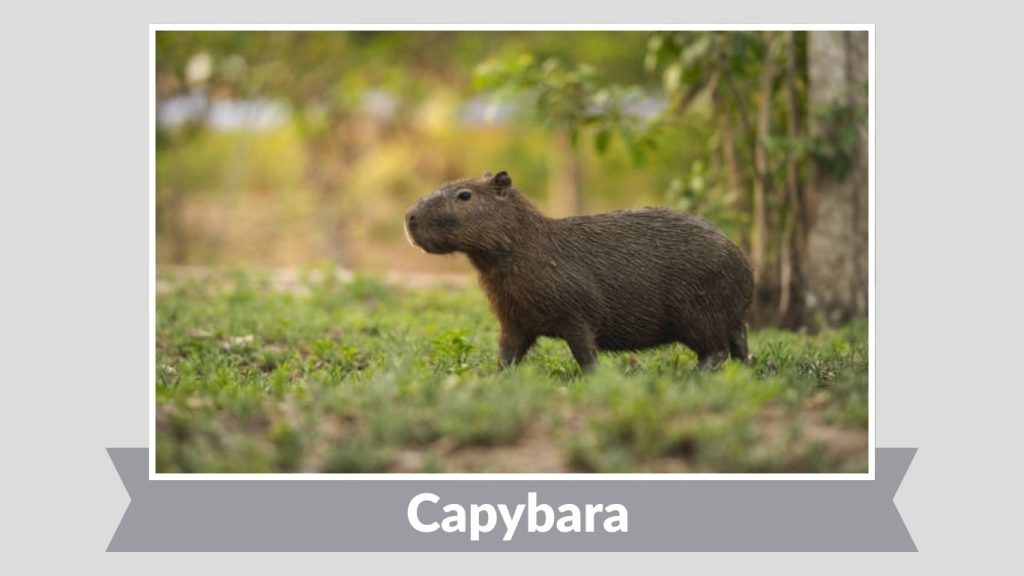
The capybara is the largest rodent in the world and is widely loved for its calm expression and friendly nature. Despite its size, it is gentle and social, often seen relaxing near water. Capybaras are well adapted to rainforest and wetland environments.
Identification
- Large, barrel-shaped body
- Short brown fur
- Blunt snout with small ears
- Slightly webbed feet
Habitat
Capybaras live in rainforests, wetlands, grasslands, and riverbanks across South America. They stay close to water such as rivers, lakes, and swamps, which helps them regulate body temperature and escape predators. Dense vegetation provides shade and protection.
Behaviors
Capybaras are highly social animals that live in groups, sometimes numbering up to 20 or more. They are most active during early morning and evening. Excellent swimmers, they can stay underwater for several minutes and often use water as a hiding place from danger.
Diet and Lifespan
Capybaras are herbivores that mainly eat grasses, aquatic plants, and fruits. Their digestive system is specially adapted to process tough plant material. In the wild, capybaras typically live between 8 and 10 years.
4. Toucan
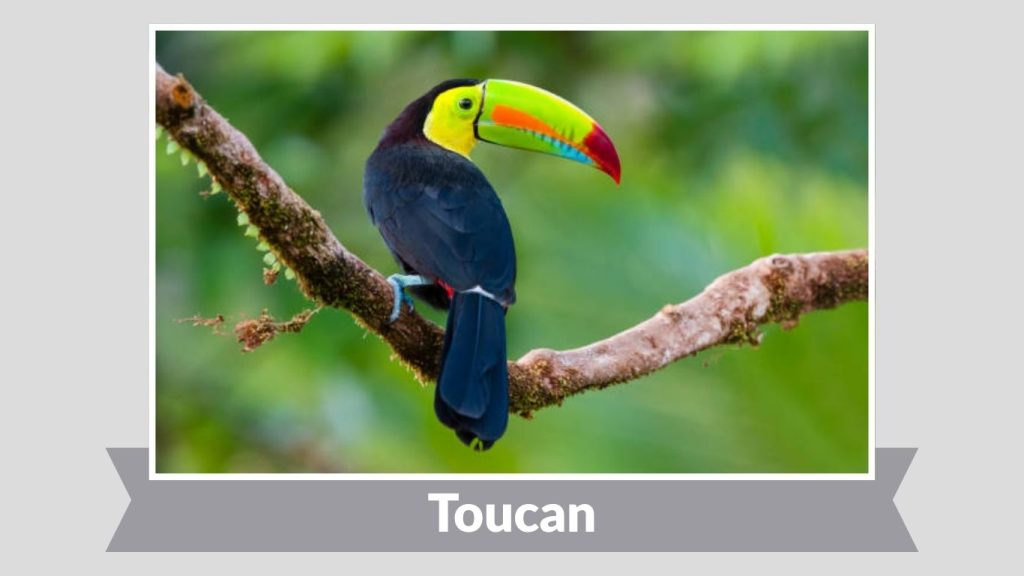
The toucan is a striking rainforest bird best known for its oversized, colorful bill and playful personality. Often seen hopping between branches, toucans add vibrant life to the rainforest canopy and are among the most recognizable tropical birds.
Identification
- Large, brightly colored bill
- Black body with contrasting chest colors
- Short wings and long tail
- Strong feet with gripping toes
Habitat
Toucans live in tropical rainforests of Central and South America. They prefer forest canopies and edges where fruit-bearing trees are abundant. Tree hollows are commonly used for nesting and shelter, offering protection from predators and weather.
Behaviors
Toucans are social birds and are often found in small flocks. They are agile movers, hopping rather than flying long distances. Their large bill helps them reach fruit on thin branches and is also used in playful interactions and displays.
Diet and Lifespan
Toucans mainly eat fruits but also consume insects, small reptiles, and bird eggs when available. Their diet helps spread seeds throughout the rainforest. In the wild, toucans can live around 15 to 20 years.
5. Pygmy Marmoset
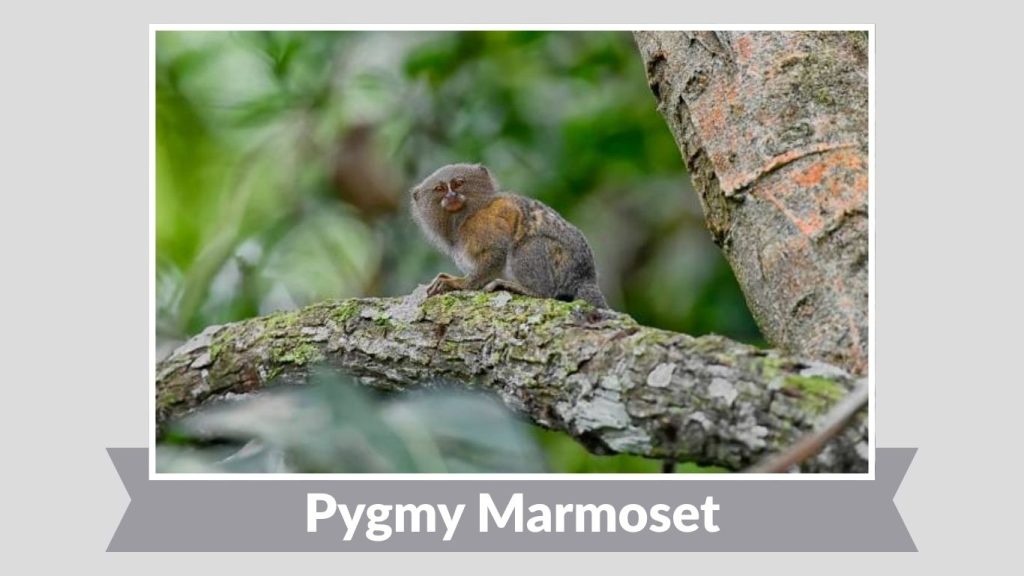
The pygmy marmoset is the smallest monkey in the world and one of the cutest rainforest animals. With its tiny size and curious behavior, it moves quickly through trees and is perfectly adapted to life in dense tropical forests.
Identification
- Extremely small body, fitting in a human hand
- Brown and gray fur with subtle stripes
- Long tail used for balance
- Sharp claws instead of flat nails
Habitat
Pygmy marmosets live in tropical rainforests of the western Amazon Basin in South America. They prefer areas with dense trees and vines, especially forests rich in sap-producing trees. These environments provide both food and protection from predators.
Behaviors
These monkeys are highly social and live in family groups. They are active during the day and communicate using high-pitched calls. Pygmy marmosets are excellent climbers and can cling vertically to tree trunks while feeding.
Diet and Lifespan
Their diet mainly consists of tree sap and gum, along with insects and small fruits. Specialized teeth help them chew tree bark. In the wild, pygmy marmosets typically live between 10 and 12 years.
6. Okapi
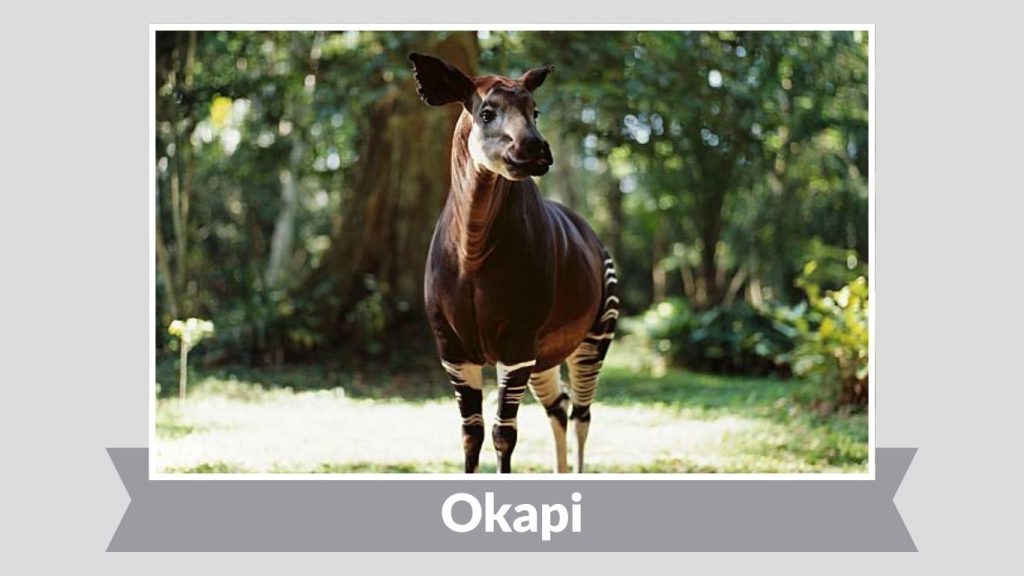
The okapi is a rare and gentle rainforest animal, often described as looking like a mix between a giraffe and a zebra. Shy and elusive, it lives deep in dense forests and is admired for its unique appearance and quiet nature.
Identification
- Reddish-brown body with white-striped legs
- Long neck and large ears
- Dark, velvety fur
- Long, flexible tongue
Habitat
Okapis are found only in the tropical rainforests of the Democratic Republic of the Congo. They prefer dense, humid forests where thick vegetation provides cover. These remote habitats help protect them from predators and human activity.
Behaviors
Okapis are solitary and mostly active during the day. They move quietly through the forest, using their keen hearing to detect danger. Their long tongue helps them pull leaves from branches and groom themselves.
Diet and Lifespan
Okapis are herbivores that eat leaves, buds, fruits, and fungi. They also consume clay for minerals. In the wild, okapis can live around 20 to 30 years.
7. Kinkajou
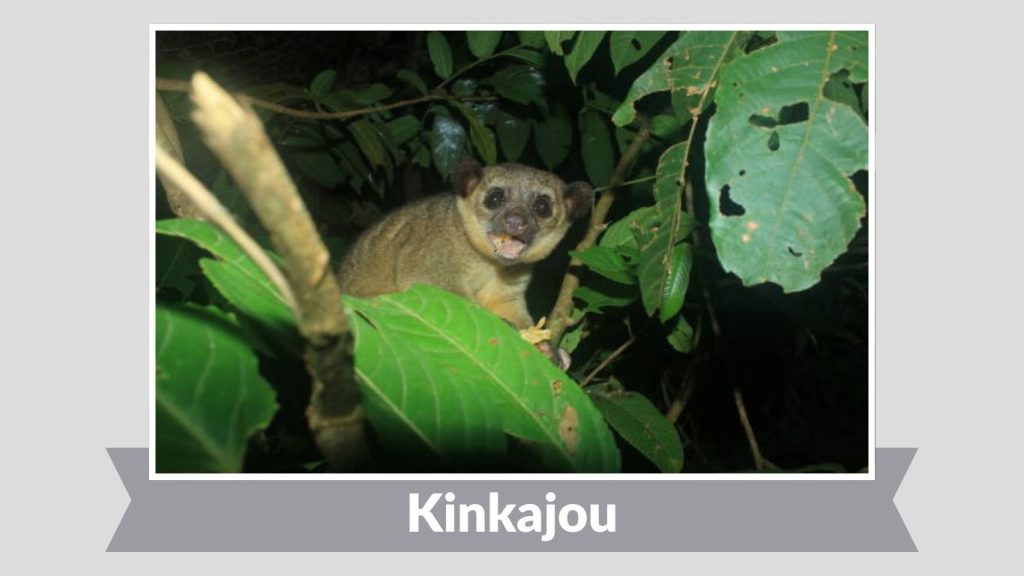
The kinkajou is a small, nocturnal rainforest mammal often called the “honey bear” because of its love for sweet foods. With its big eyes and fluffy tail, it looks cute and playful, but it is also an agile climber built for life in the treetops.
Identification
- Large, round eyes adapted for night vision
- Soft brown fur
- Long, prehensile tail used for hanging
- Small, rounded ears
Habitat
Kinkajous live in tropical rainforests of Central and South America. They spend almost their entire lives in the forest canopy, rarely coming down to the ground. Dense trees provide food, shelter, and safe pathways for movement.
Behaviors
Kinkajous are nocturnal and become active after sunset. They are mostly solitary but may share feeding areas. Using their tail like an extra limb, they can hang upside down and move smoothly between branches with great balance and speed.
Diet and Lifespan
Their diet mainly consists of fruit, nectar, and honey, but they also eat insects and small animals. Kinkajous play a role in pollination and seed dispersal. In the wild, they usually live around 20 to 25 years.
8. Poison Dart Frog
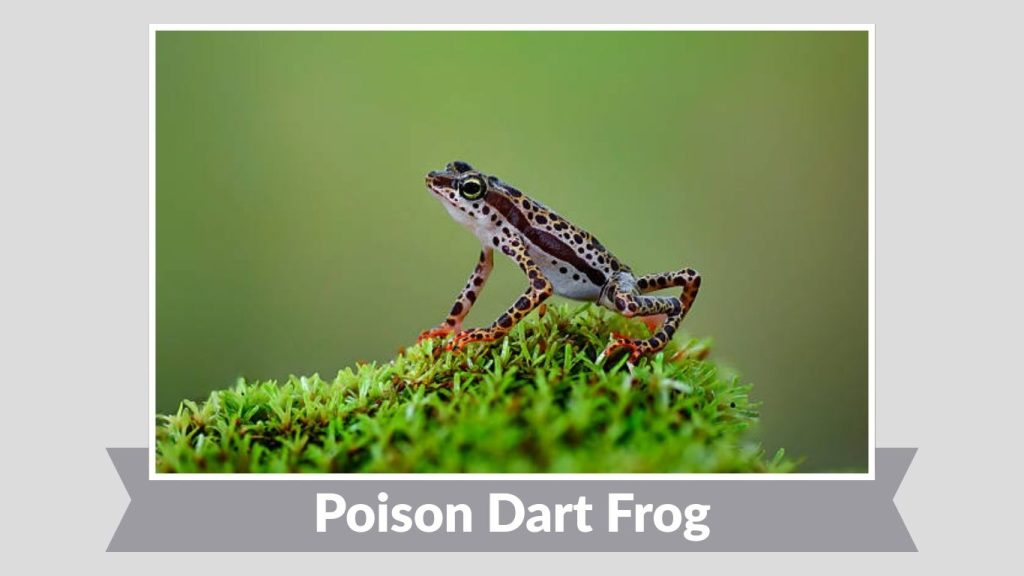
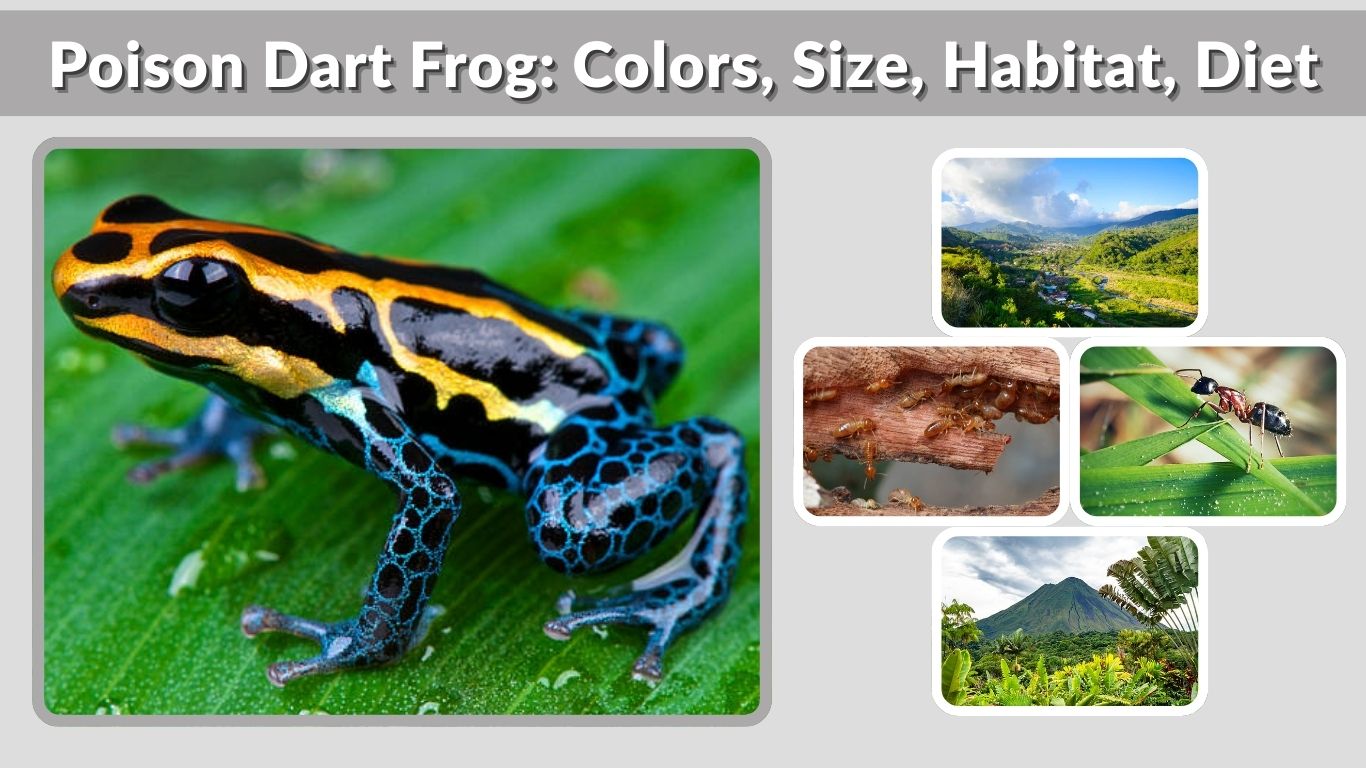
The poison dart frog is a tiny but eye-catching rainforest amphibian known for its bright colors. Despite its small size, it is one of the most fascinating animals of the rainforest, using color as a warning to predators.
Identification
- Small body, usually less than 2 inches long
- Bright colors such as blue, yellow, red, or green
- Smooth, shiny skin
- Slender legs with sticky toes
Habitat
Poison dart frogs live in tropical rainforests of Central and South America. They prefer warm, humid environments near streams or forest floors with leaf litter. Moist conditions are essential for their survival and breeding.
Behaviors
These frogs are active during the day, unlike many other frog species. Their bright colors warn predators of their toxicity. Some species show strong parental care, carrying tadpoles on their backs to safe water sources.
Diet and Lifespan
Poison dart frogs eat small insects such as ants, termites, and mites. Their toxic skin secretions come from chemicals in their diet. In the wild, they can live around 3 to 15 years, depending on the species.
9. Jaguar Cub
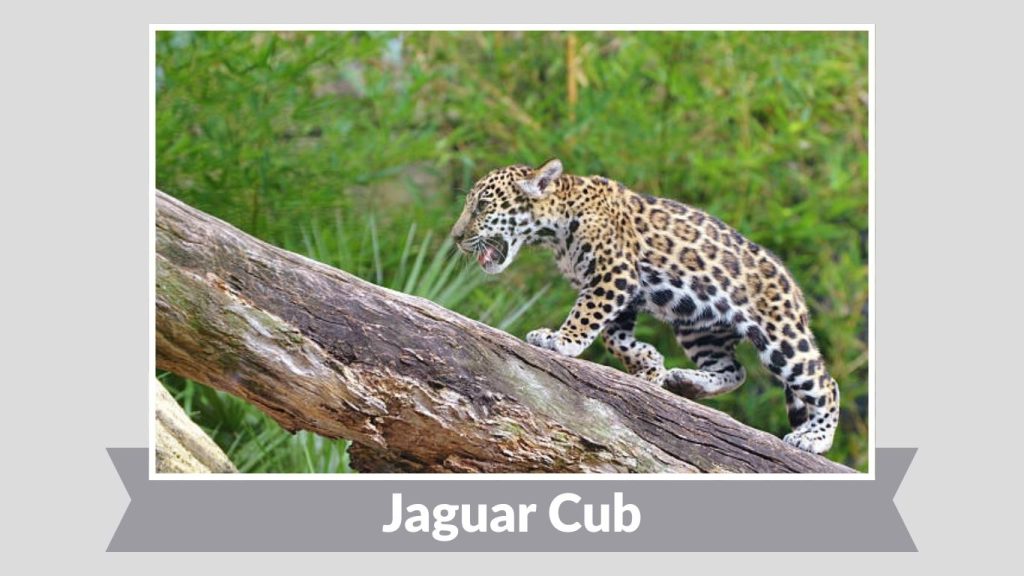
A jaguar cub is the youngest of the largest big cat in the Americas and is especially adorable with its oversized paws and playful nature. Though small at first, jaguar cubs grow into powerful and skilled predators of the rainforest.
Identification
- Golden fur with black rosette spots
- Short, stocky body
- Large paws for their size
- Rounded ears and bright eyes
Habitat
Jaguar cubs are born and raised in tropical rainforests, wetlands, and riverine forests of Central and South America. Their mothers choose dense, hidden areas to protect them from predators and human threats during early life.
Behaviors
Cubs stay with their mother for up to two years, learning essential hunting and survival skills. They spend time playing, which helps develop strength and coordination. During this period, the mother is highly protective.
Diet and Lifespan
Jaguar cubs feed on their mother’s milk at first, later transitioning to meat as they grow. Adult jaguars eat deer, capybaras, and other animals. In the wild, jaguars can live around 12 to 15 years.
10. Tapir
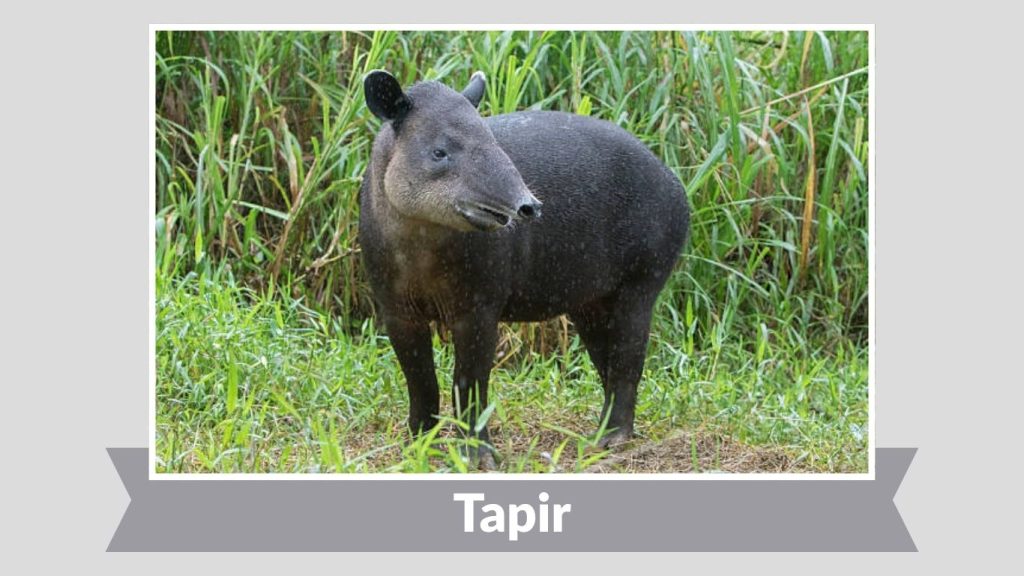
The tapir is a gentle, shy rainforest mammal with a round body and a short, flexible snout that gives it a cute, almost cartoon-like look. Often called a “living fossil,” tapirs have existed for millions of years and play an important role in rainforest ecosystems.
Identification
- Stocky body with short legs
- Short, trunk-like snout
- Smooth brown or gray skin
- Small eyes and rounded ears
Habitat
Tapirs live in tropical rainforests, cloud forests, and wetlands of Central and South America. They prefer areas close to rivers, swamps, and dense vegetation. Water is essential for cooling down, hiding from predators, and finding food.
Behaviors
Tapirs are mostly solitary and are active during the evening or at night. They are excellent swimmers and often dive into water to escape danger. Despite their size, they move quietly through the forest using well-worn paths.
Diet and Lifespan
Tapirs are herbivores that eat leaves, fruits, shoots, and aquatic plants. By spreading seeds through their droppings, they help regenerate forests. In the wild, tapirs usually live around 25 to 30 years.
FAQs
What makes rainforest animals cute?
Rainforest animals are often considered cute because of their unique features like big eyes, round faces, soft fur, bright colors, and playful behaviors. Many of them, especially young animals, have expressions and movements that humans naturally find endearing.
Are all rainforest animals dangerous?
No, most rainforest animals are not dangerous to humans. Many are shy, gentle, or avoid contact altogether. Some animals, like poison dart frogs or jaguars, have natural defenses, but they rarely pose a threat unless disturbed.
Why do many rainforest animals live in trees?
Living in trees helps animals find food, avoid predators, and stay safe from flooding on the forest floor. The rainforest canopy provides shelter, fruits, leaves, and insects, making it an ideal habitat.
Do rainforest animals make good pets?
Rainforest animals do not make good pets. They have specific environmental, dietary, and social needs that are difficult to meet outside their natural habitats. Keeping them as pets can harm both the animals and ecosystems.
How can we help protect rainforest animals?
Protecting rainforest animals starts with conserving forests, reducing deforestation, supporting wildlife conservation groups, and making eco-friendly choices. Education and awareness also play a key role in preserving their habitats.