

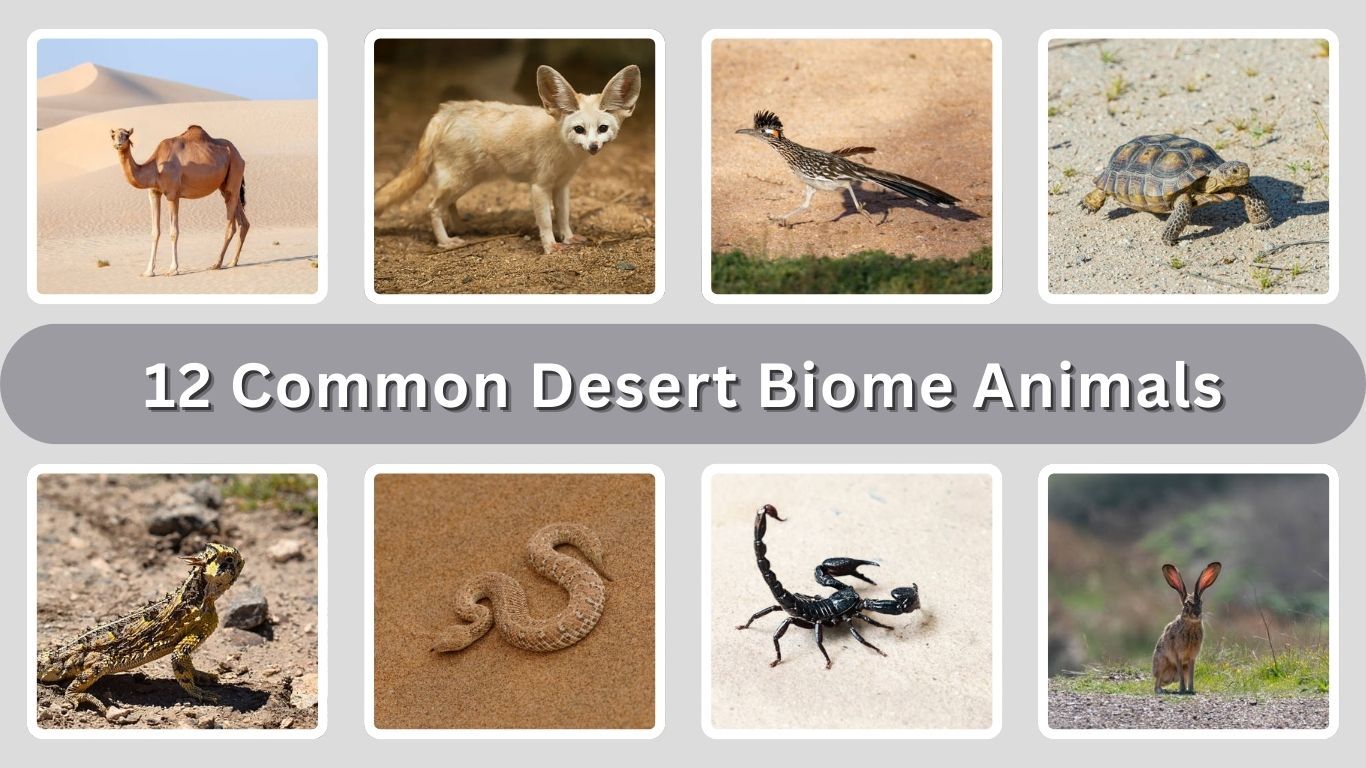
Desert biomes are some of the most extreme environments on Earth, defined by low rainfall, intense heat, and limited vegetation. Despite these harsh conditions, a wide variety of animals have evolved remarkable adaptations that allow them to survive and thrive. From conserving water to avoiding daytime heat, desert animals display unique physical and behavioral traits. Studying these animals helps us understand how life adapts to challenging ecosystems and highlights the importance of protecting fragile desert habitats around the world for future generations.
1. Camel
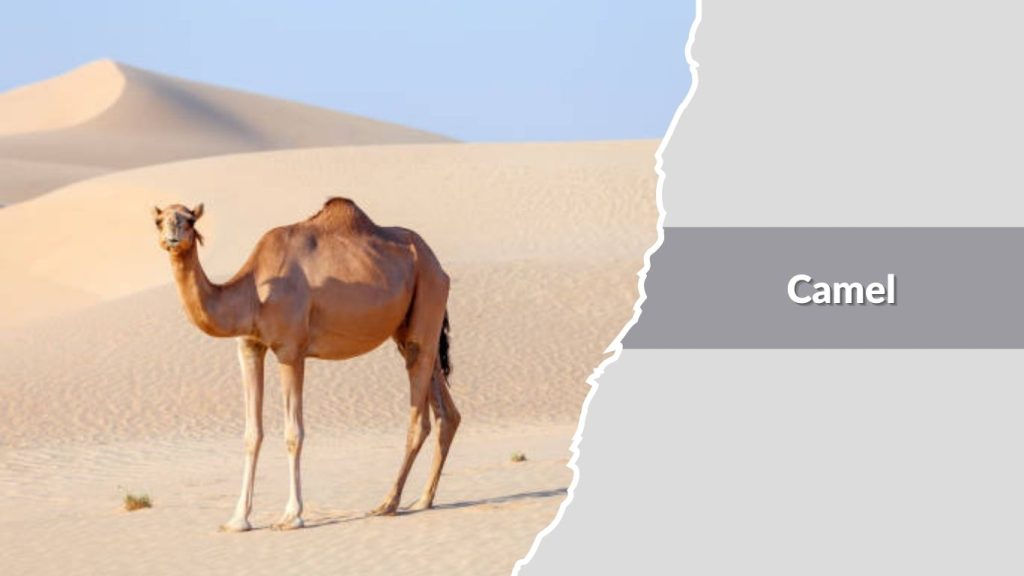
Camels are iconic desert animals best known for their ability to survive in extremely hot and dry environments. They are large mammals with unique physical and physiological adaptations that help them conserve water, regulate body temperature, and endure long journeys across arid landscapes where food and water are scarce.
Identification
- Large mammal with one or two humps on the back
- Long legs with broad, padded feet for walking on sand
- Thick eyelashes and bushy eyebrows to protect eyes from sand
- Nostrils that can close during sandstorms
Habitat
Camels inhabit deserts and semi-desert regions characterized by extreme temperatures and limited rainfall. They are commonly found in sandy deserts, rocky plains, and dry grasslands across North Africa, the Middle East, and Central Asia. These environments offer sparse vegetation, which camels are well adapted to utilize efficiently.
Behaviors
Camels are social animals that often live in herds. They are active mainly during cooler parts of the day to avoid extreme heat. Camels can travel long distances without water and are known for their calm but resilient nature. When threatened, they may defend themselves by kicking or spitting.
Diet
Camels are herbivores that feed on grasses, leaves, thorny shrubs, and dry desert plants. Their tough lips and mouths allow them to eat coarse, salty, and spiny vegetation that other animals cannot digest easily.
Lifecycle
Camels typically live between 40 and 50 years. Females give birth to a single calf after a long gestation period of about 13 months. Calves can stand and walk shortly after birth and depend on their mothers for milk and protection during early life.
2. Fennec Fox
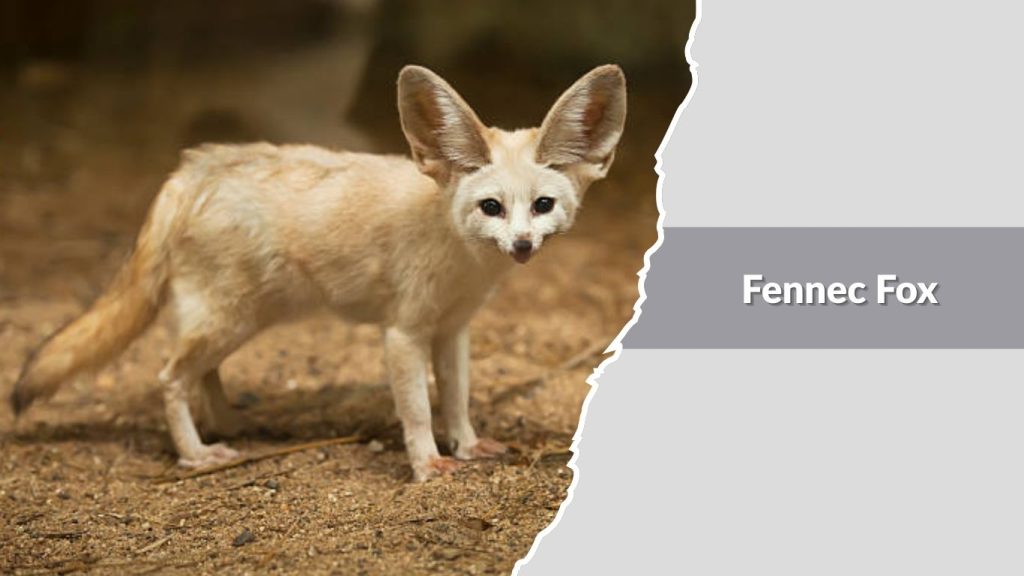
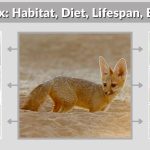
The fennec fox is the smallest fox species in the world and one of the most recognizable desert animals. It is famous for its oversized ears, which help it stay cool and detect prey beneath the sand. This animal is perfectly adapted to life in harsh desert environments.
Identification
- Small fox with a lightweight body
- Very large ears compared to head size
- Cream or sandy-colored fur
- Black-tipped tail
Habitat
Fennec foxes live in hot desert regions, especially in the Sahara Desert of North Africa and parts of the Arabian Peninsula. They prefer sandy deserts where they can dig deep burrows to escape extreme heat. These underground dens also protect them from predators and harsh weather conditions.
Behaviors
Fennec foxes are mostly nocturnal, meaning they are active at night when temperatures are cooler. They are social animals and often live in small family groups. During the day, they rest in burrows. Their keen hearing allows them to locate insects and small animals moving under the sand.
Diet
Fennec foxes are omnivores. Their diet includes insects, rodents, birds, eggs, fruits, and roots. They get most of their required water from the food they eat, allowing them to survive in areas with very little available water.
Lifecycle
Fennec foxes usually live 10–14 years in the wild. Females give birth to a litter of one to five kits after a gestation period of about 50 days. The young are cared for by both parents until they are old enough to hunt on their own.
3. Kangaroo Rat
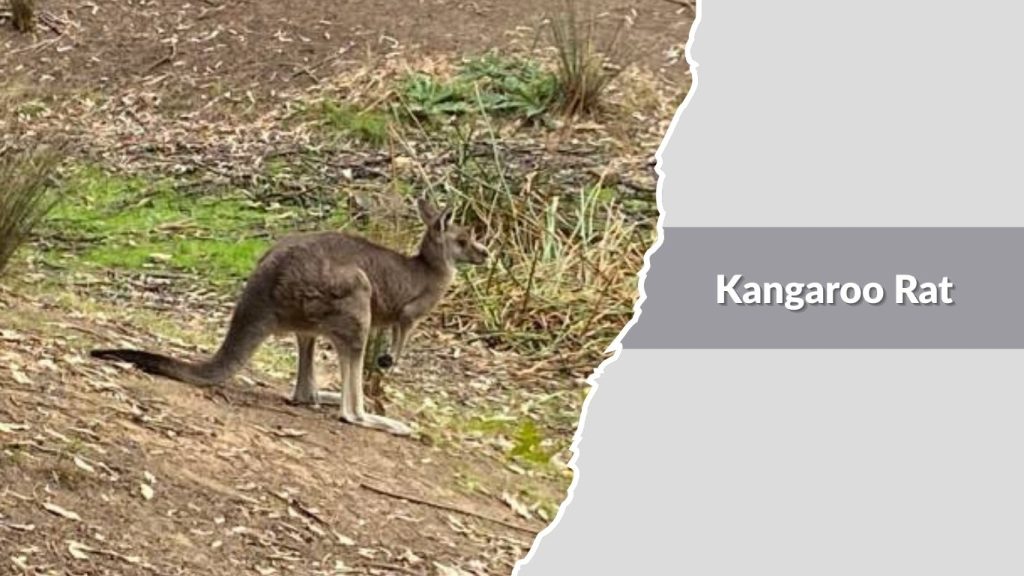
The kangaroo rat is a small desert rodent known for its incredible jumping ability and extreme water conservation skills. Despite living in some of the driest environments on Earth, it can survive without ever drinking liquid water.
Identification
- Small rodent with a compact body
- Long, powerful hind legs for jumping
- Long tail used for balance
- Large eyes and ears
Habitat
Kangaroo rats live in arid and semi-arid deserts of North America, especially in sandy or loose soils. They dig complex burrow systems that protect them from heat and predators. These burrows also help maintain cooler temperatures during the day.
Behaviors
Kangaroo rats are nocturnal and spend most of the day inside their burrows. They move by hopping on their hind legs, which helps them travel quickly across hot sand and escape predators. They are solitary animals and are highly territorial around their food storage areas.
Diet
Their diet mainly consists of seeds, grains, and small plant parts. Kangaroo rats store seeds in cheek pouches and cache them underground. They obtain all the water they need from the metabolic breakdown of the dry seeds they eat.
Lifecycle
Kangaroo rats typically live 2–5 years in the wild. Females give birth to several litters each year, usually containing one to six offspring. The young develop quickly and become independent soon after leaving the nest.
4. Desert Tortoise
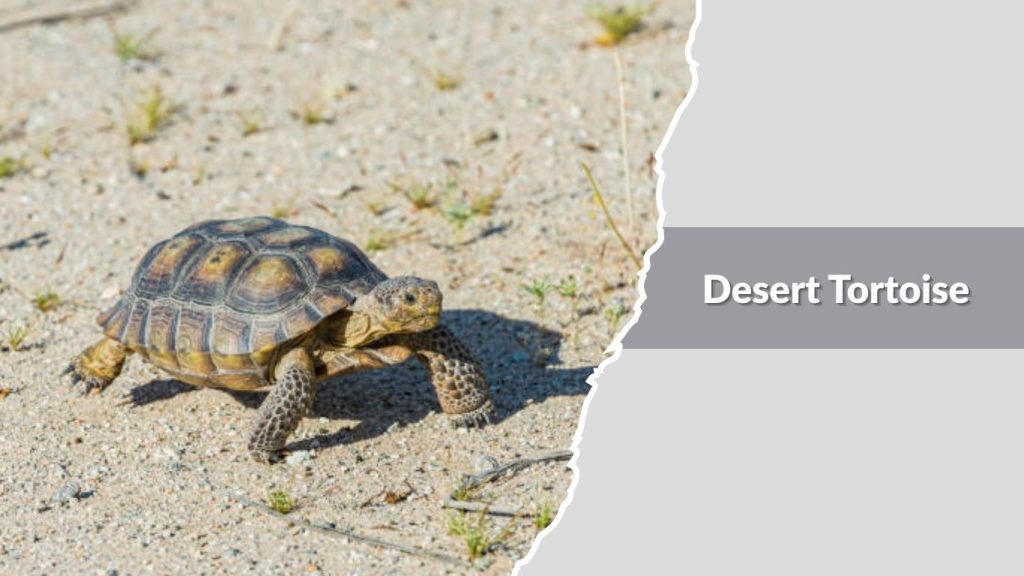
The desert tortoise is a slow-moving reptile well adapted to dry, harsh desert conditions. It is known for its long lifespan and its ability to survive long periods with very little food or water by conserving energy and moisture.
Identification
- Medium-sized tortoise with a high-domed shell
- Thick, scaly legs adapted for digging
- Brown or gray shell coloration
- Beak-like mouth
Habitat
Desert tortoises live in arid regions of the southwestern United States and northern Mexico. They prefer rocky deserts, sandy flats, and areas with sparse vegetation. Burrows are essential to their survival, providing shelter from extreme heat and cold.
Behaviors
Desert tortoises spend most of their lives in burrows to avoid harsh temperatures. They are most active during cooler parts of the day, especially in spring and after rainfall. Movement is slow and deliberate, helping them conserve energy.
Diet
They are herbivores that feed on grasses, wildflowers, cacti, and leafy plants. Desert tortoises obtain much of their water from the plants they eat and from rainwater collected in shallow depressions.
Lifecycle
Desert tortoises are long-lived and can survive 50–80 years or more. Females lay small clutches of eggs in underground nests. Hatchlings are independent at birth but face high risks from predators and environmental conditions.
5. Gila Monster
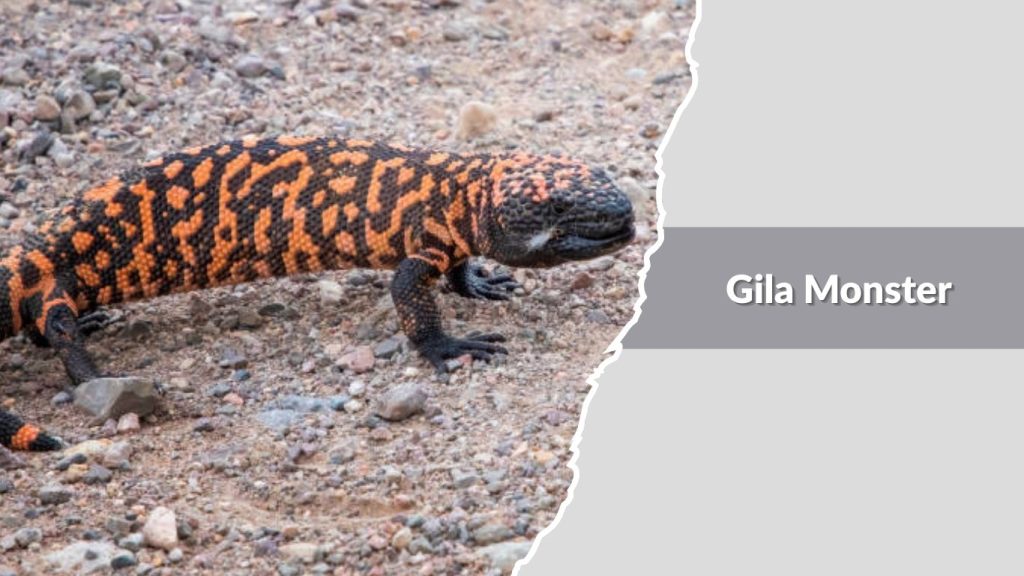
The Gila monster is one of the few venomous lizards in the world and a striking resident of desert ecosystems. It is known for its slow movement, bold coloration, and powerful bite, relying more on venom for defense than speed.
Identification
- Large, heavy-bodied lizard
- Black and orange or pink patterned skin
- Thick tail used for fat storage
- Beaded, rough-textured scales
Habitat
Gila monsters are found in hot deserts and semi-arid regions of the southwestern United States and northwestern Mexico. They prefer rocky foothills, desert scrub, and areas with sparse vegetation where shelter is available.
Behaviors
These lizards are mostly slow-moving and spend much of their time underground in burrows or rocky crevices. They are most active during spring and early summer, especially in the morning or evening. Gila monsters rely on stored fat in their tails to survive long periods without food.
Diet
Gila monsters are carnivores that feed mainly on eggs, small mammals, birds, reptiles, and carrion. They have a strong sense of smell, allowing them to locate hidden nests and prey.
Lifecycle
Gila monsters can live up to 30 years in the wild. Females lay eggs in underground nests, and the young hatch after several months. Hatchlings are venomous from birth and quickly become independent.
6. Sidewinder Snake
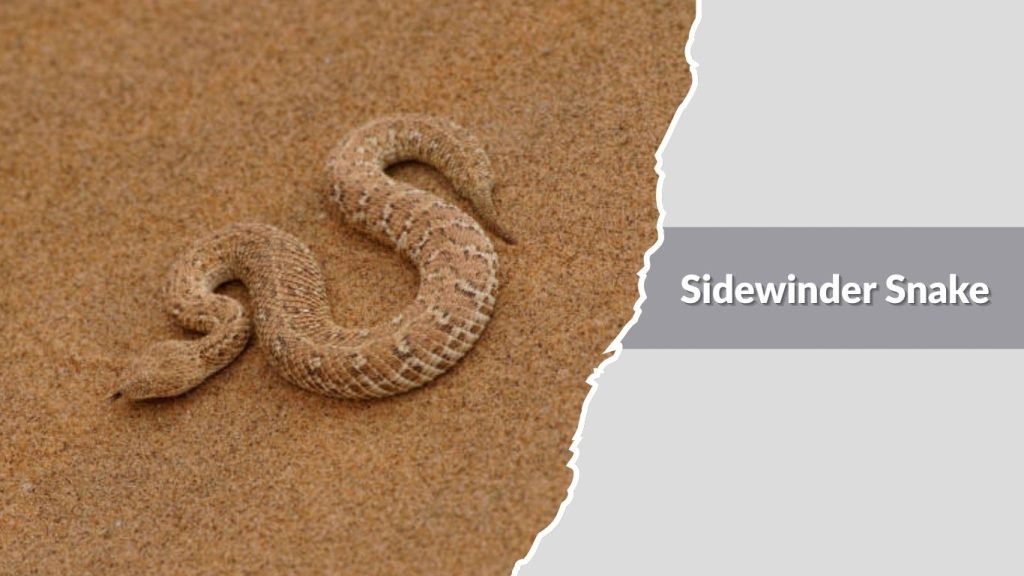
The sidewinder snake is a highly specialized desert rattlesnake known for its unique sideways movement. This adaptation allows it to travel efficiently across hot sand while minimizing contact with the ground.
Identification
- Medium-sized rattlesnake with a thick body
- Horn-like scales above the eyes
- Sandy or light brown coloration with dark patterns
- Rattle at the end of the tail
Habitat
Sidewinder snakes inhabit sandy deserts and dunes in the southwestern United States and northern Mexico. They prefer loose sand where their sidewinding movement is most effective. These environments experience extreme heat and minimal rainfall.
Behaviors
Sidewinders are mostly nocturnal during hot months and become active at dusk or night. Their sidewinding motion reduces heat absorption and helps them move quickly across sand. When threatened, they may coil, hiss, and use their rattle as a warning.
Diet
Their diet consists mainly of small mammals, lizards, and birds. Sidewinders use venom to immobilize prey before swallowing it whole. They often lie partially buried in sand, waiting to ambush passing animals.
Lifecycle
Sidewinder snakes typically live 10–20 years. Females give birth to live young rather than laying eggs. Newborn snakes are independent from birth and capable of hunting on their own.
7. Scorpion
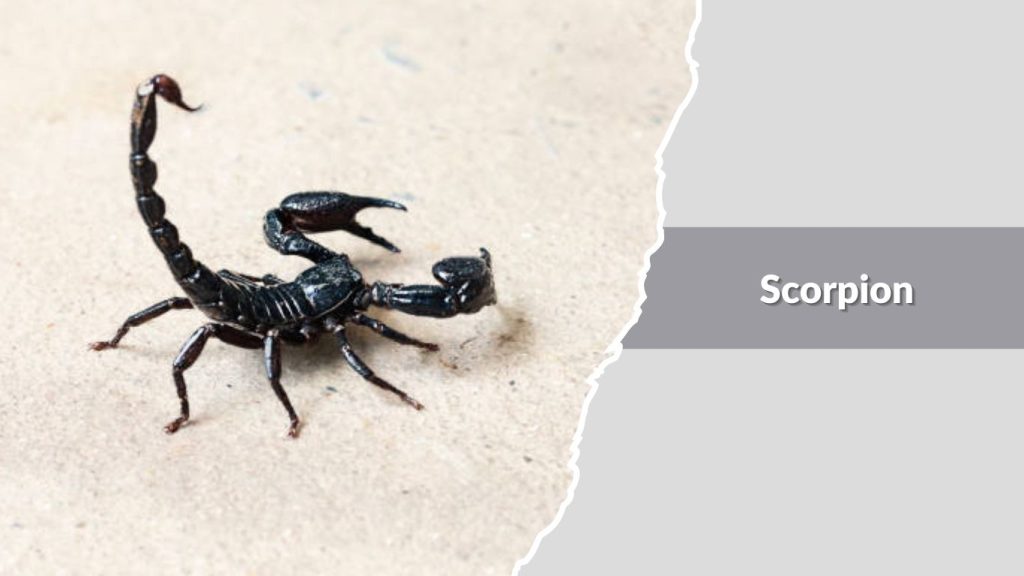
Scorpions are ancient desert arthropods that have survived for hundreds of millions of years. They are well known for their pincers and venomous stinger, which they use for hunting and defense in harsh desert environments.
Identification
- Small to medium-sized arthropod
- Eight legs with a pair of strong pincers
- Long, segmented tail ending in a stinger
- Usually yellow, brown, or black in color
Habitat
Scorpions are found in deserts around the world, living in sandy areas, rocky terrain, and dry scrublands. They often hide under rocks, logs, or within burrows to escape extreme daytime heat. These shelters also help them retain moisture.
Behaviors
Scorpions are nocturnal and remain hidden during the day. At night, they actively hunt for prey using vibrations sensed through their legs. They are solitary creatures and rely on camouflage and stillness to avoid predators. When threatened, they raise their tail in a defensive posture.
Diet
Scorpions are carnivorous and feed mainly on insects, spiders, and other small arthropods. Larger species may also prey on small lizards or rodents. They use their pincers to grasp prey and their venomous sting to immobilize it.
Lifecycle
Scorpions can live between 2 and 6 years, with some species living longer. Females give birth to live young, which climb onto the mother’s back for protection until their first molt.
8. Jackrabbit
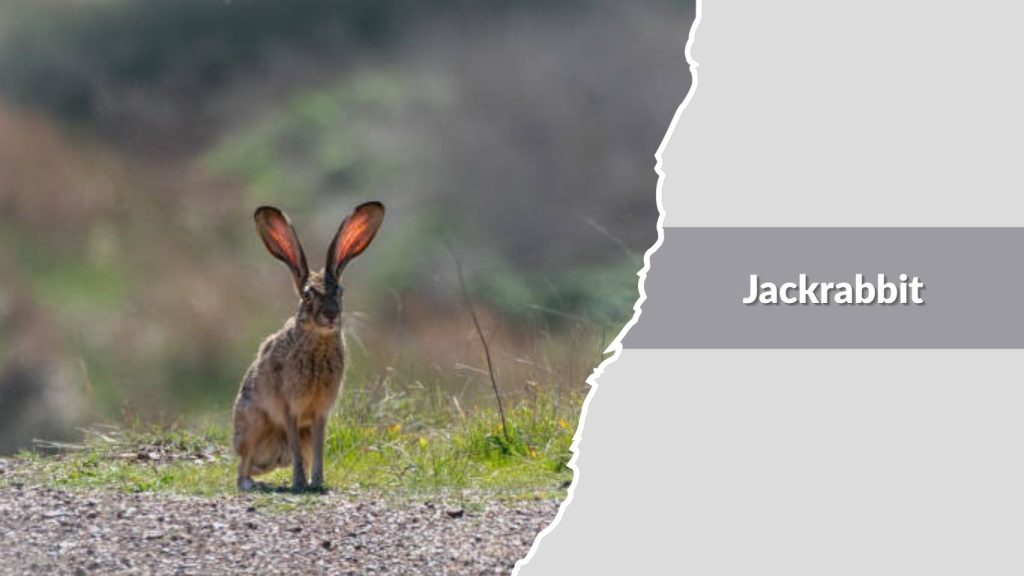
The jackrabbit is a large desert hare known for its powerful hind legs and extremely long ears. These features help it regulate body temperature and escape predators in open desert landscapes.
Identification
- Large hare with a slender body
- Very long ears with dark tips
- Long, strong hind legs
- Brown or gray fur for camouflage
Habitat
Jackrabbits inhabit deserts, grasslands, and open scrub areas of North and Central America. They prefer wide, open spaces with low vegetation, which allows them to spot predators from a distance and run at high speeds.
Behaviors
Jackrabbits are mostly crepuscular, being active during early morning and late evening. They rely on speed and agility rather than burrows to escape predators. Their large ears help release excess body heat and improve hearing.
Diet
They are herbivores that feed on grasses, shrubs, bark, and leaves. During dry seasons, jackrabbits may consume woody plants and cactus. Their diet provides enough moisture to reduce their dependence on free-standing water.
Lifecycle
Jackrabbits usually live 5–7 years in the wild. Females give birth to multiple litters each year, with young that are born fully furred and with eyes open, allowing them to move shortly after birth.
9. Roadrunner
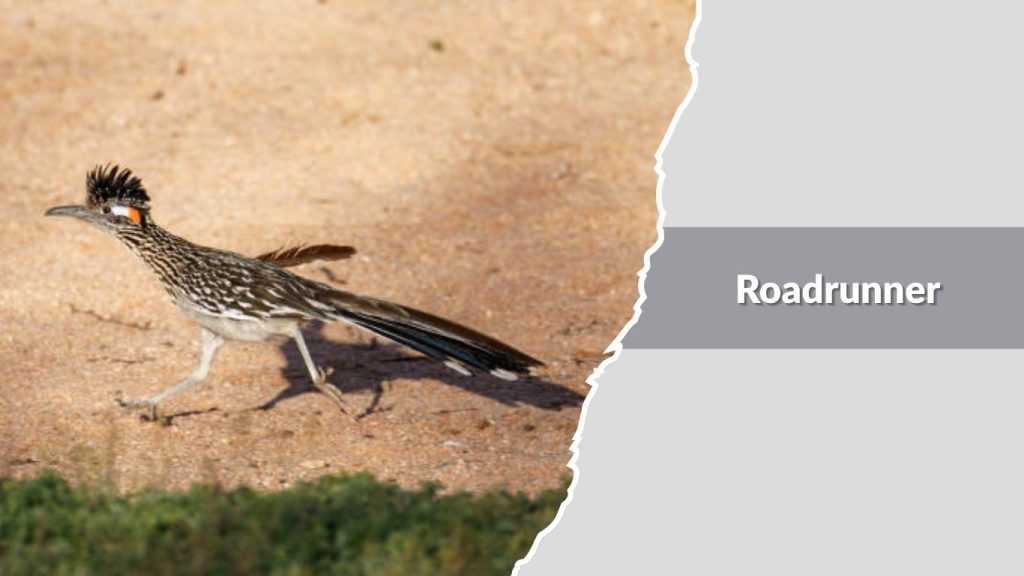
The roadrunner is a fast-running bird famous for its speed and ground-dwelling lifestyle. It is well adapted to desert environments, using agility and intelligence to hunt prey and survive extreme temperatures.
Identification
- Medium-sized bird with a long tail
- Streaked brown and white feathers
- Crest of feathers on the head
- Strong legs built for running
Habitat
Roadrunners live in deserts, semi-arid regions, and open scrublands of the southwestern United States and Mexico. They prefer areas with scattered vegetation that provide cover while still allowing open space for running and hunting.
Behaviors
Roadrunners are active during the day and rely on speed rather than flight to catch prey or escape danger. They are territorial birds and often hunt alone. To regulate body temperature, they may sunbathe in the morning with feathers raised.
Diet
They are carnivorous and feed on insects, lizards, snakes, small mammals, and birds. Roadrunners sometimes kill venomous snakes by striking them repeatedly against the ground.
Lifecycle
Roadrunners typically live 7–8 years. They build nests in low trees or shrubs. Both parents care for the eggs and feed the chicks until they are ready to survive independently.
10. Horned Lizard
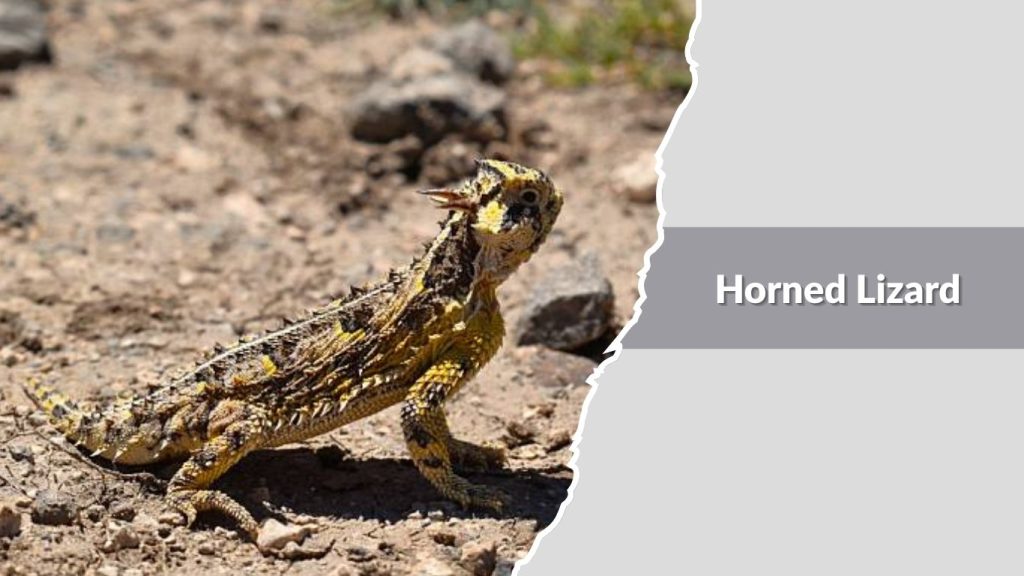
The horned lizard is a distinctive desert reptile known for its flattened body and crown of sharp horns. Its unusual appearance and defensive behaviors make it one of the most unique animals found in desert ecosystems.
Identification
- Flat, wide body with spiky horns on the head
- Rough, spiny scales covering the body
- Brown, tan, or reddish coloration
- Short tail and blunt snout
Habitat
Horned lizards inhabit deserts, grasslands, and arid scrub regions of North and Central America. They prefer sandy or loose soils where they can easily bury themselves for camouflage and protection from heat and predators.
Behaviors
These lizards rely heavily on camouflage and stillness to avoid predators. When threatened, they may puff up their bodies or play dead. Some species can even squirt blood from their eyes as a defense mechanism against predators.
Diet
Horned lizards primarily feed on ants, especially harvester ants. They may also eat other small insects. Their specialized diet and feeding behavior allow them to thrive in environments with limited food diversity.
Lifecycle
Horned lizards usually live 5–8 years. Females lay eggs in shallow nests dug into sandy soil. Hatchlings emerge fully formed and are capable of surviving on their own shortly after birth.
11. Meerkat
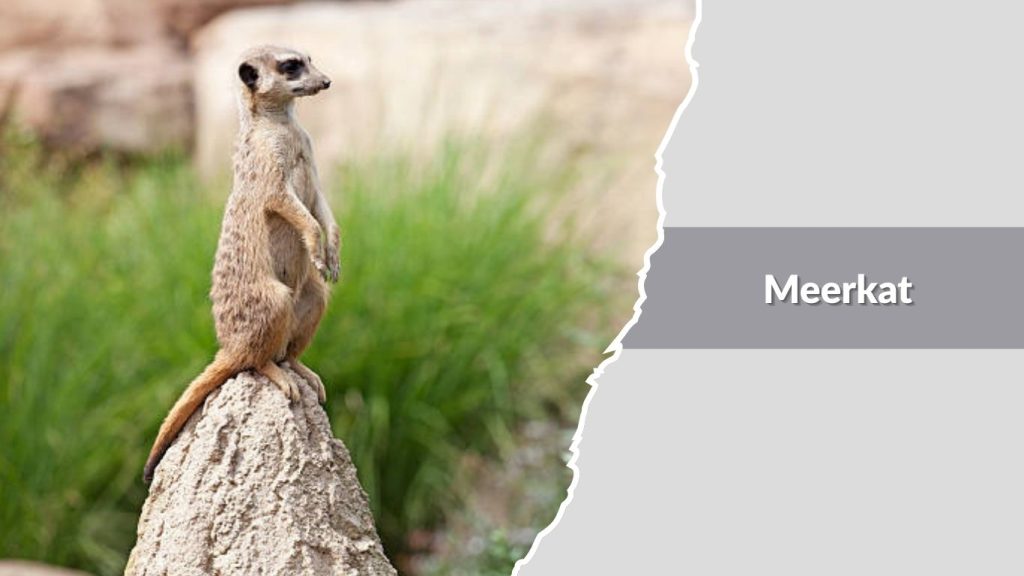
Meerkats are small, social mammals well known for their upright stance and cooperative behavior. Although commonly associated with deserts, they thrive in harsh, dry environments through teamwork and constant vigilance.
Identification
- Small mammal with a slender body
- Light brown fur with darker stripes on the back
- Long tail used for balance
- Dark patches around the eyes
Habitat
Meerkats live in deserts and semi-arid regions of southern Africa, including the Kalahari Desert. They prefer open plains with firm soil suitable for digging extensive burrow systems that provide shelter from predators and extreme temperatures.
Behaviors
Meerkats are highly social and live in groups called mobs or clans. They take turns acting as sentinels, standing upright to watch for predators while others forage. They are active during the day and rely on cooperation for survival.
Diet
They are omnivores that eat insects, spiders, small reptiles, eggs, and plant material. Meerkats are resistant to some venom, allowing them to safely hunt scorpions after removing the stinger.
Lifecycle
Meerkats typically live 6–8 years in the wild. Females give birth to litters of pups that are cared for by the entire group. Young meerkats learn survival skills by observing and practicing with adults.
12. Desert Hedgehog
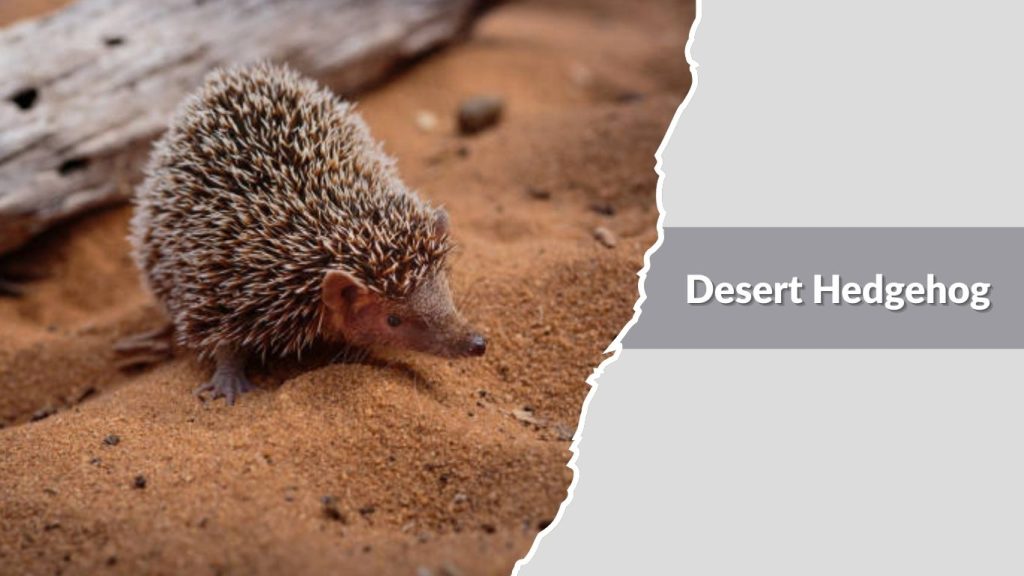
The desert hedgehog is a small, nocturnal mammal adapted to life in dry and sandy environments. Its spiny coat provides protection from predators, while its behaviors help it survive extreme desert conditions.
Identification
- Small, round-bodied mammal
- Covered with sharp spines on the back
- Short legs and pointed snout
- Pale brown or white spines
Habitat
Desert hedgehogs inhabit arid and semi-arid regions of North Africa and the Middle East. They prefer sandy deserts, scrublands, and areas with loose soil where they can dig burrows or find shelter under rocks.
Behaviors
These hedgehogs are nocturnal and avoid daytime heat by resting in burrows. When threatened, they roll into a tight ball, using their spines as defense. During extreme conditions, they may enter short periods of torpor to conserve energy.
Diet
Desert hedgehogs are omnivores that feed on insects, worms, snails, small vertebrates, and plant matter. Their varied diet helps them survive in environments where food availability can be unpredictable.
Lifecycle
Desert hedgehogs usually live 4–7 years. Females give birth to a small litter of young that are born with soft spines, which harden within hours. The young become independent after several weeks.
FAQs
What is a desert biome?
A desert biome is a dry ecosystem that receives very little rainfall, usually less than 250 mm per year. It is characterized by extreme temperatures, sparse vegetation, and animals that are specially adapted to conserve water and survive harsh conditions.
How do desert animals survive without much water?
Desert animals survive by conserving water, being active at night, storing fat or moisture, and obtaining water from the food they eat. Some species can go their entire lives without drinking liquid water.
Are all desert animals nocturnal?
No, not all desert animals are nocturnal. While many avoid daytime heat by being active at night, some animals like camels, meerkats, and roadrunners are active during the day and use behavioral or physical adaptations to manage heat.
What adaptations are common in desert animals?
Common adaptations include light-colored fur or scales, large ears for heat release, burrowing behavior, slow metabolism, water-efficient kidneys, and specialized diets suited to limited food sources.
Do desert animals live shorter lives due to harsh conditions?
Not necessarily. Some desert animals, such as camels and desert tortoises, have long lifespans. Survival depends more on adaptation and ecological role than on the harshness of the environment alone.
Are desert animals found only in hot deserts?
No. While many desert animals live in hot deserts, some species are adapted to cold deserts as well. Desert biomes exist in both hot and cold regions around the world.