

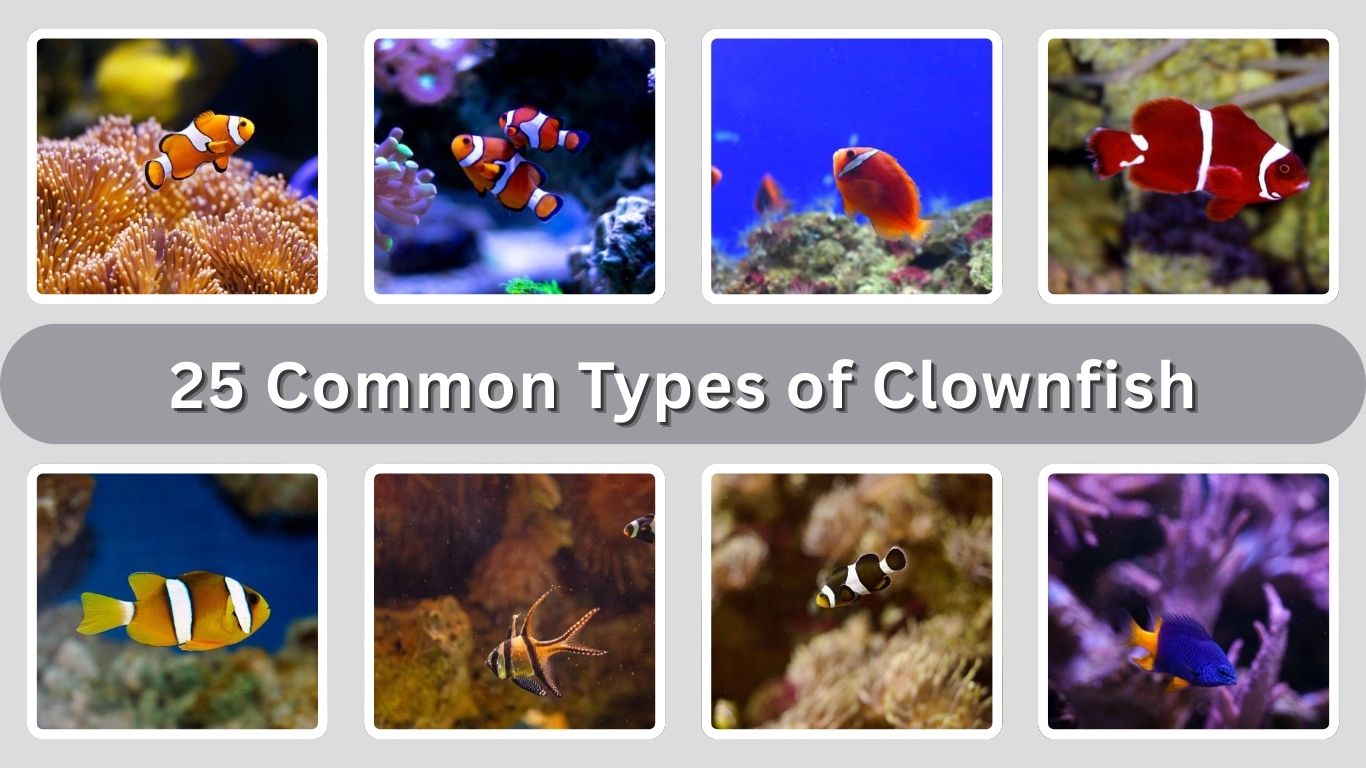
Clownfish are among the most recognizable and beloved reef fish in the world, famous for their bright colors, playful movements, and close relationship with sea anemones. Belonging to the genus Amphiprion and Premnas, these small marine fish inhabit warm tropical waters, where they live in complex coral reef ecosystems. From classic orange-and-white species to rare dark and regional varieties, clownfish attract divers, researchers, and aquarium enthusiasts across the globe.
1. Ocellaris Clownfish (Amphiprion ocellaris)
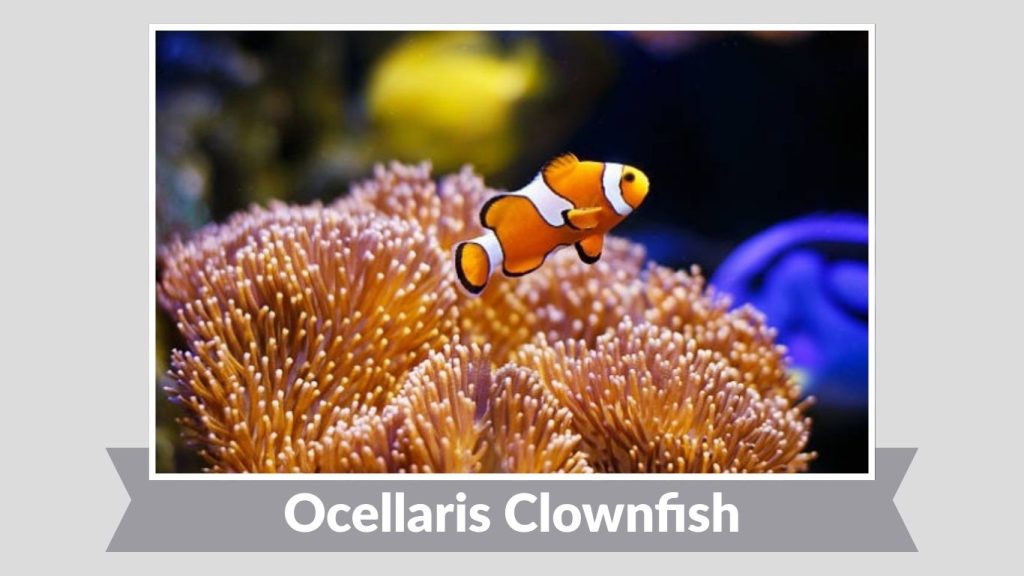
The Ocellaris Clownfish is one of the most famous and widely recognized clownfish species in the world, often associated with sea anemones and colorful coral reefs. Known for its bright orange body, bold white bands, and playful swimming style, this small reef fish is a favorite among divers and marine aquarium keepers.
Identification
- Bright orange body with three white vertical bands
- Thin black edging around the white bands and fins
- Small, oval, laterally compressed body
- Grows up to about 4 inches (10 cm) long
- Rounded tail fin
- Dark eyes and small mouth
Habitat
Ocellaris Clownfish are found mainly in the Indo-Pacific region, including the eastern Indian Ocean, Southeast Asia, and northern Australia. They inhabit shallow coral reefs and lagoons, living closely among sea anemones, which provide protection from predators and a safe breeding site.
Behaviors
This species lives in small social groups within a host anemone. They are well known for their symbiotic relationship with sea anemones, gaining protection while helping keep the anemone clean. Ocellaris Clownfish are territorial around their host and display playful, darting swimming patterns.
Diet and Lifespan
In the wild, they feed on algae, zooplankton, small crustaceans, and leftover food from their anemone host. In aquariums, they readily accept flakes, pellets, and frozen foods. With proper care, Ocellaris Clownfish usually live between 6 and 10 years.
2. Percula Clownfish (Amphiprion percula)
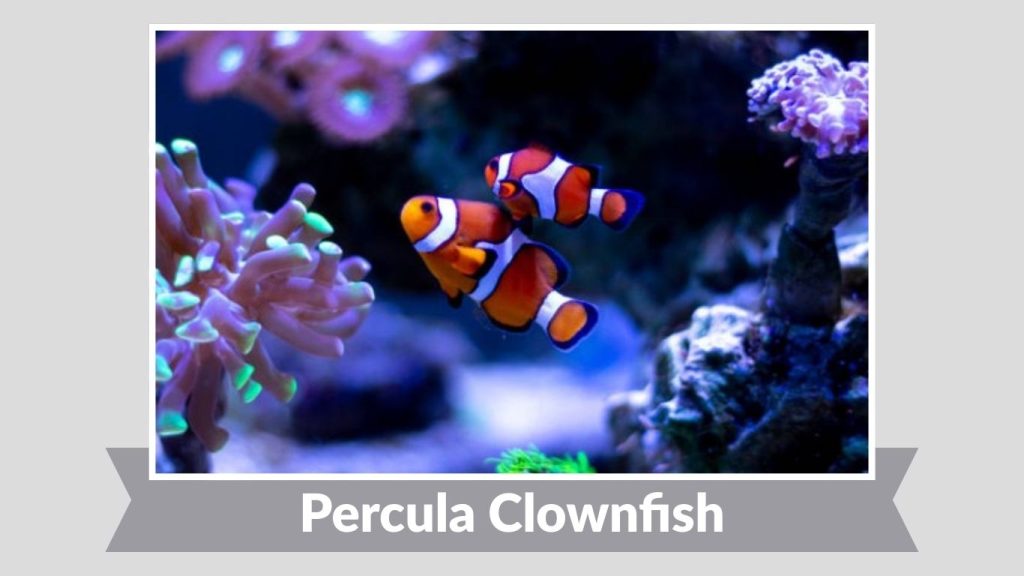
The Percula Clownfish is a vibrant and charismatic reef fish closely related to the Ocellaris Clownfish, often confused due to their similar appearance. It is prized for its rich orange coloration, thick black banding, and close association with sea anemones. This species is native to warm Indo-Pacific reefs and is a favorite among marine aquarium enthusiasts.
Identification
- Bright orange body with three bold white vertical bands
- Thick black outlines around the white bands
- Small, oval, laterally compressed body
- Grows up to about 4 inches (10 cm) long
- Rounded tail fin
- Distinct black margins on fins
Habitat
Percula Clownfish are found in the western Pacific, including the Great Barrier Reef, Papua New Guinea, the Solomon Islands, and nearby regions. They inhabit shallow coral reefs and lagoons, almost always living among sea anemones that provide shelter and breeding sites.
Behaviors
This species lives in small social groups with a strict dominance hierarchy, usually led by a single breeding female. Percula Clownfish are territorial around their host anemone and will actively defend it. They are curious, active swimmers and often interact closely with their environment.
Diet and Lifespan
In the wild, Percula Clownfish feed on zooplankton, algae, small crustaceans, and scraps of food from their host anemone. In captivity, they thrive on a varied diet of marine flakes, pellets, and frozen foods. Their average lifespan ranges from 6 to 10 years.
3. Tomato Clownfish (Amphiprion frenatus)
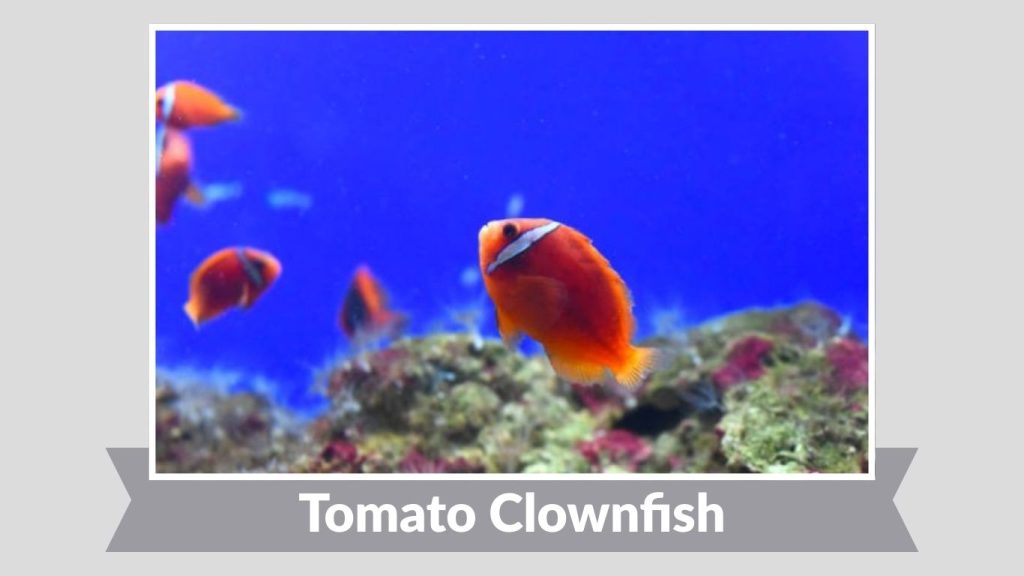
The Tomato Clownfish is a bold and colorful species known for its deep red to orange body and confident personality. Unlike many clownfish, adults usually display only a single white band behind the head, giving them a distinctive look. This species is popular in the aquarium trade and is well known for its hardy nature.
Identification
- Deep red to orange body coloration
- One prominent white band behind the head in adults
- Juveniles have three white bands that reduce with age
- Oval, laterally compressed body
- Grows up to about 5 inches (13 cm) long
- Dark edging on fins
Habitat
Tomato Clownfish are native to the western Pacific Ocean, including southern Japan, the Philippines, and Indonesia. They inhabit shallow coral reefs and lagoons, living closely with sea anemones that provide shelter and breeding sites.
Behaviors
This species is known for its bold and sometimes aggressive behavior, especially when guarding its host anemone or eggs. Tomato Clownfish live in small social groups and form strong bonds with their host. They actively defend their territory from intruders.
Diet and Lifespan
In the wild, they feed on algae, zooplankton, small crustaceans, and leftover food from anemones. In aquariums, they accept a wide range of foods, including flakes, pellets, and frozen marine diets. With good care, their lifespan usually ranges from 6 to 10 years.
4. Maroon Clownfish (Premnas biaculeatus)
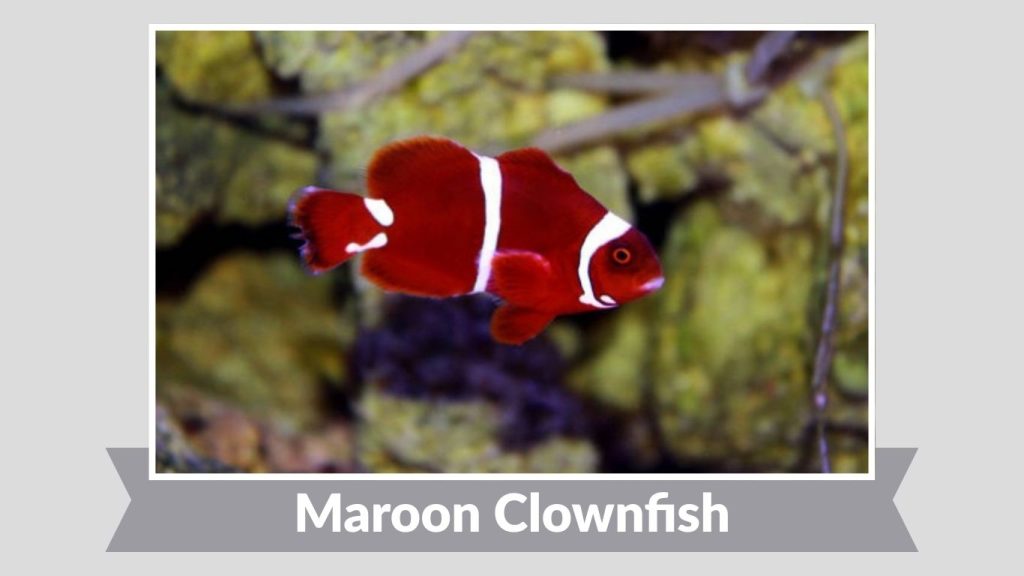
The Maroon Clownfish is the largest and one of the most striking clownfish species, easily recognized by its deep red body and bold white or yellowish stripes. Known for its strong personality and intense territorial behavior, this species is admired for its rich coloration and impressive presence on coral reefs.
Identification
- Deep red to maroon body color
- Three white or yellowish vertical bands
- Thick, oval, laterally compressed body
- Grows up to about 6 inches (15 cm) long
- Females are significantly larger than males
- Distinct cheek spines near the head
Habitat
Maroon Clownfish are found mainly in the Indo-Pacific, including Indonesia, the Great Barrier Reef, and the Solomon Islands. They inhabit shallow coral reefs and lagoon areas, living closely among large sea anemones.
Behaviors
This species is highly territorial and can be aggressive, especially when defending its host anemone. Maroon Clownfish live in small social groups dominated by a large breeding female. They are active swimmers but rarely stray far from their host.
Diet and Lifespan
In the wild, they feed on zooplankton, algae, small crustaceans, and food scraps from their anemone. In captivity, they accept most marine foods and are considered hardy. With proper care, Maroon Clownfish can live 8 to 12 years.
5. Clarkii Clownfish (Amphiprion clarkii)
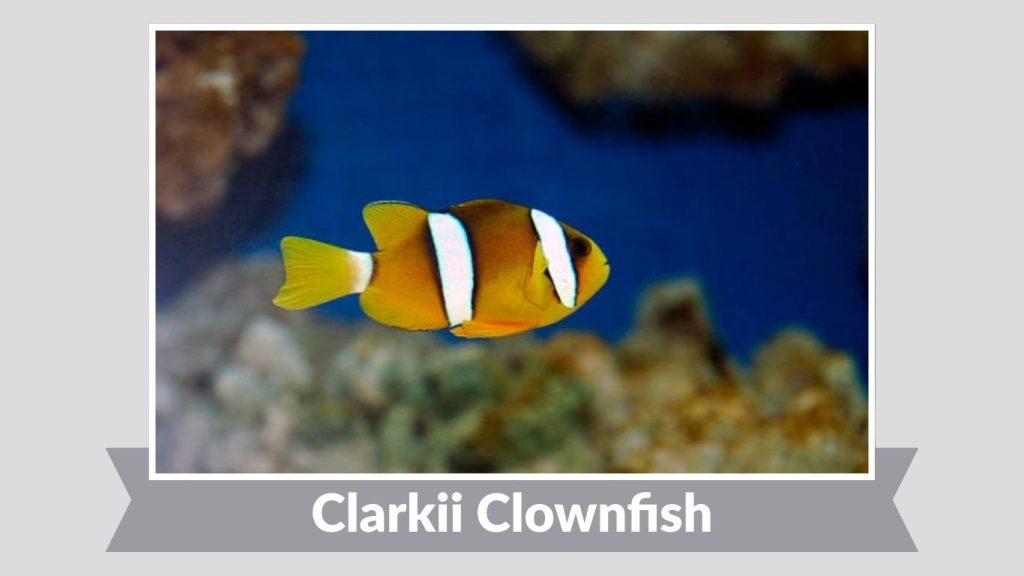
The Clarkii Clownfish is one of the most widespread and adaptable clownfish species, known for its variable coloration and hardy nature. It can display yellow, brown, or black bodies with bold white bands, making it one of the most diverse-looking clownfish across different regions.
Identification
- Body color ranges from yellow to brown or black
- Three white vertical bands
- Tail fin often bright yellow
- Oval, laterally compressed body
- Grows up to about 6 inches (15 cm) long
- Rounded fins and thick body shape
Habitat
Clarkii Clownfish are found throughout the Indo-Pacific, from the Red Sea and East Africa to Japan, Australia, and Polynesia. They inhabit coral reefs, lagoons, and sheltered reef slopes, living among a wide variety of sea anemone species.
Behaviors
This species is bold, active, and adaptable. Clarkii Clownfish are territorial around their host anemone and will defend it aggressively if threatened. They live in small social groups with a strict hierarchy, similar to other clownfish species.
Diet and Lifespan
In the wild, they feed on algae, zooplankton, small crustaceans, and scraps from their host. In aquariums, they are hardy eaters and accept many types of prepared foods. Their typical lifespan ranges from 6 to 10 years.
6. Cinnamon Clownfish (Amphiprion melanopus)
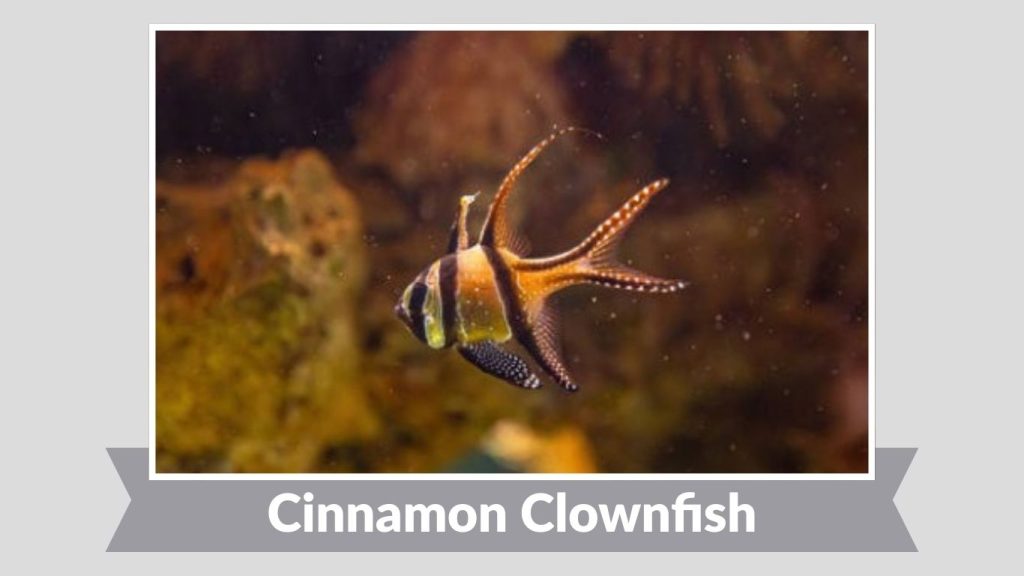
The Cinnamon Clownfish is a colorful and energetic species named for its warm reddish-brown to cinnamon body tones. It is closely related to the Tomato Clownfish and is known for its bold behavior and adaptability. This species is commonly found on shallow coral reefs and is popular among marine aquarium keepers.
Identification
- Reddish-brown to cinnamon-colored body
- Usually one prominent white head band in adults
- Dark to black pelvic and anal fins
- Oval, laterally compressed body
- Grows up to about 5 inches (13 cm) long
- Rounded tail fin
Habitat
Cinnamon Clownfish are native to the western Pacific, including the Great Barrier Reef, New Guinea, and surrounding regions. They inhabit shallow coral reefs and lagoons, closely associated with sea anemones that provide protection and breeding grounds.
Behaviors
This species is bold and territorial, especially around its host anemone. Cinnamon Clownfish live in small social groups and actively defend their territory. They are energetic swimmers and frequently interact with their environment.
Diet and Lifespan
In the wild, they feed on algae, zooplankton, small crustaceans, and leftover food from their host anemone. In captivity, they readily accept flakes, pellets, and frozen foods. With proper care, their lifespan usually ranges from 6 to 10 years.
7. Saddleback Clownfish (Amphiprion polymnus)
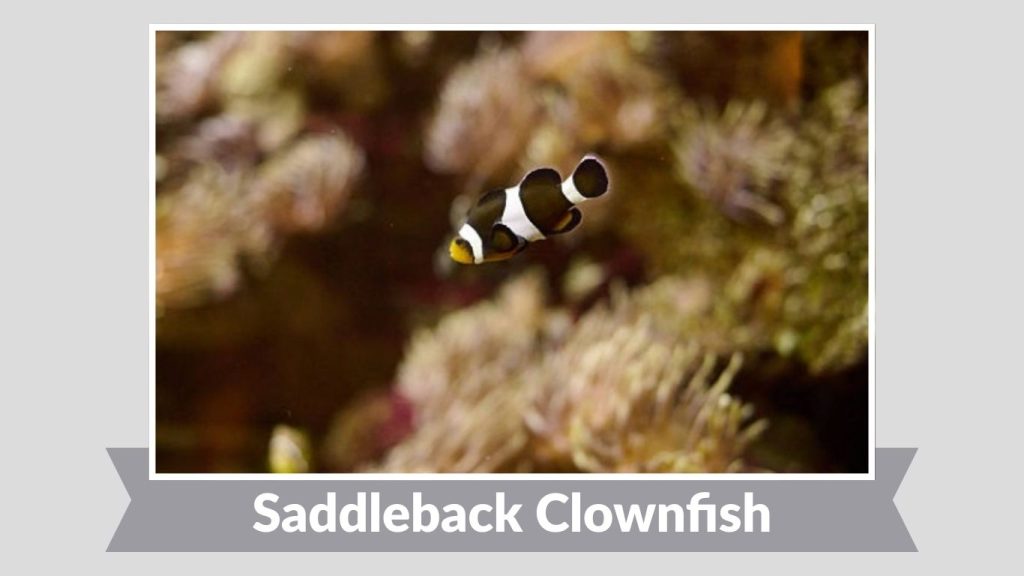
The Saddleback Clownfish is named for the wide white band across its back that resembles a saddle. This distinctive marking, combined with its dark body and pale face, makes it one of the most easily recognized clownfish species. It is commonly found in shallow, sandy reef areas of the Indo-Pacific.
Identification
- Dark brown to black body
- Large white “saddle” band behind the head
- Pale face and snout
- Oval, laterally compressed body
- Grows up to about 5 inches (13 cm) long
- Rounded fins and slightly elongated body
Habitat
Saddleback Clownfish are found across the Indo-Pacific, including the Red Sea, Southeast Asia, and northern Australia. They prefer shallow lagoons, sandy-bottom reefs, and coastal coral areas, often living with anemones anchored in soft substrates.
Behaviors
This species is more bottom-oriented than many clownfish, often staying close to sandy areas around its host anemone. Saddleback Clownfish are territorial and will defend their host aggressively. They usually live in small social groups led by a dominant female.
Diet and Lifespan
In the wild, they feed on zooplankton, algae, small crustaceans, and organic debris. In aquariums, they are hardy and accept most marine foods. With proper care, they typically live around 6 to 10 years.
8. Skunk Clownfish (Amphiprion akallopisos)
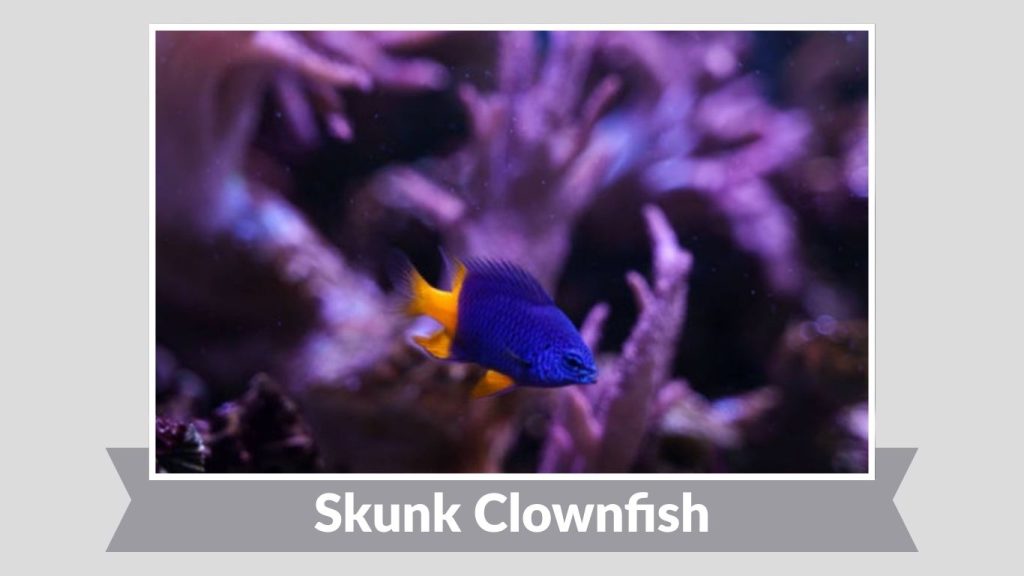
The Skunk Clownfish is a slender, graceful species named for the single white stripe that runs from its snout along the top of its body to the tail. Its gentle coloration and peaceful nature make it a distinctive and elegant member of the clownfish family.
Identification
- Peach to orange body color
- Single white stripe running from nose to tail along the back
- Slender, streamlined body
- Grows up to about 4 inches (10 cm) long
- Rounded fins
- Dark eyes and pale face
Habitat
Skunk Clownfish are found throughout the Indo-Pacific, including the Indian Ocean, Southeast Asia, and northern Australia. They inhabit shallow coral reefs and lagoons, where they live closely associated with long-tentacled sea anemones.
Behaviors
This species is generally more peaceful and less aggressive than many other clownfish. Skunk Clownfish often live in small groups and remain very close to their host anemone. They are gentle swimmers and spend much of their time hovering near shelter.
Diet and Lifespan
In the wild, they feed on zooplankton, algae, and tiny crustaceans. In captivity, they readily accept flakes, pellets, and frozen marine foods. With proper care, their typical lifespan ranges from 6 to 10 years.
9. Pink Skunk Clownfish (Amphiprion perideraion)
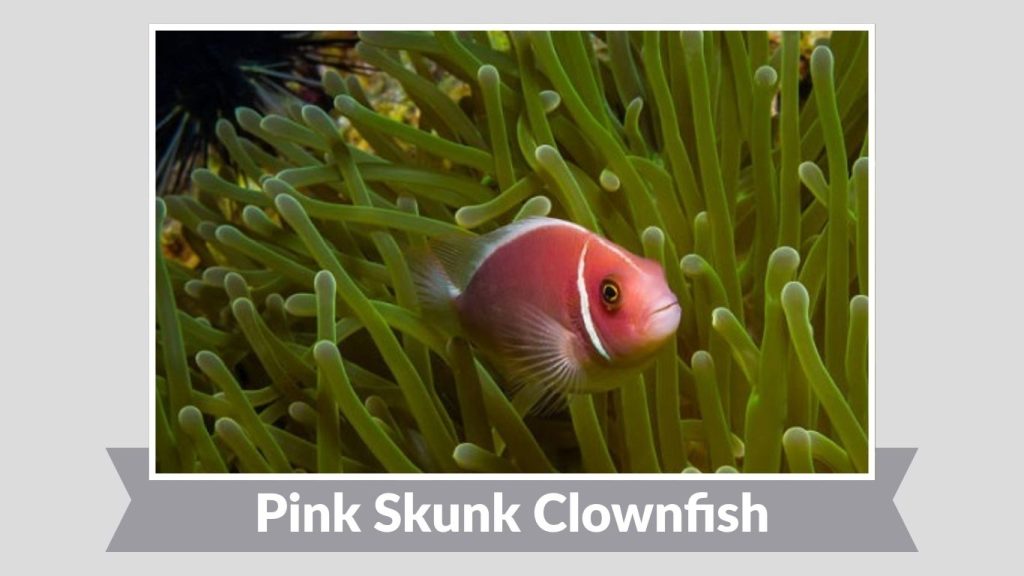
The Pink Skunk Clownfish is a delicate and attractive species known for its soft pink body and a bright white stripe running along its back. It is one of the more peaceful clownfish species and is often seen gently hovering around long-tentacled sea anemones on shallow coral reefs.
Identification
- Soft pink to peach body color
- Single bright white stripe from snout to tail
- Slender, streamlined body
- Grows up to about 4 inches (10 cm) long
- Clear to pale fins
- Rounded tail fin
Habitat
Pink Skunk Clownfish are found across the Indo-Pacific, including the Great Barrier Reef, Indonesia, and the western Pacific islands. They inhabit shallow coral reefs and sheltered lagoons, living closely with sea anemones in warm, clear waters.
Behaviors
This species is gentle and less aggressive than most clownfish. Pink Skunk Clownfish usually live in small groups and stay very close to their host anemone. They are calm swimmers and rarely venture far from shelter.
Diet and Lifespan
In the wild, they feed mainly on zooplankton, algae, and tiny crustaceans. In aquariums, they accept a wide variety of prepared foods. With good care, they generally live between 6 and 10 years.
10. Sebae Clownfish (Amphiprion sebae)
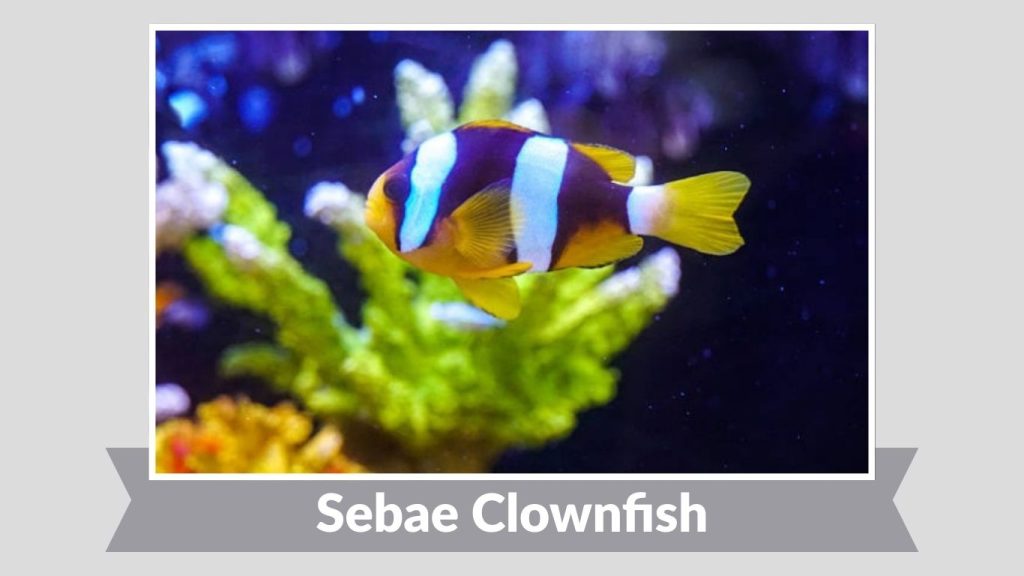
The Sebae Clownfish is a striking species recognized for its dark body contrasted by two bright white bands and a yellow to orange tail. Often confused with true Sebae anemones, this clownfish is native to the Indian Ocean and is admired for its elegant appearance and close bond with host anemones.
Identification
- Dark brown to black body
- Two broad white vertical bands
- Yellow to orange tail fin
- Oval, laterally compressed body
- Grows up to about 5 inches (13 cm) long
- Pale face and rounded fins
Habitat
Sebae Clownfish are found mainly in the Indian Ocean, including the Red Sea, Maldives, and Sri Lanka. They inhabit shallow coral reefs and lagoons, usually living among large sea anemones anchored in sandy or rubble areas.
Behaviors
This species is moderately territorial and forms small social groups within a host anemone. Sebae Clownfish are active swimmers but rarely stray far from their anemone. They will defend their host area from intruders.
Diet and Lifespan
In the wild, they feed on zooplankton, algae, small crustaceans, and organic matter. In captivity, they accept most marine foods and are considered fairly hardy. Their typical lifespan ranges from 6 to 10 years.
11. Orange Skunk Clownfish (Amphiprion sandaracinos)
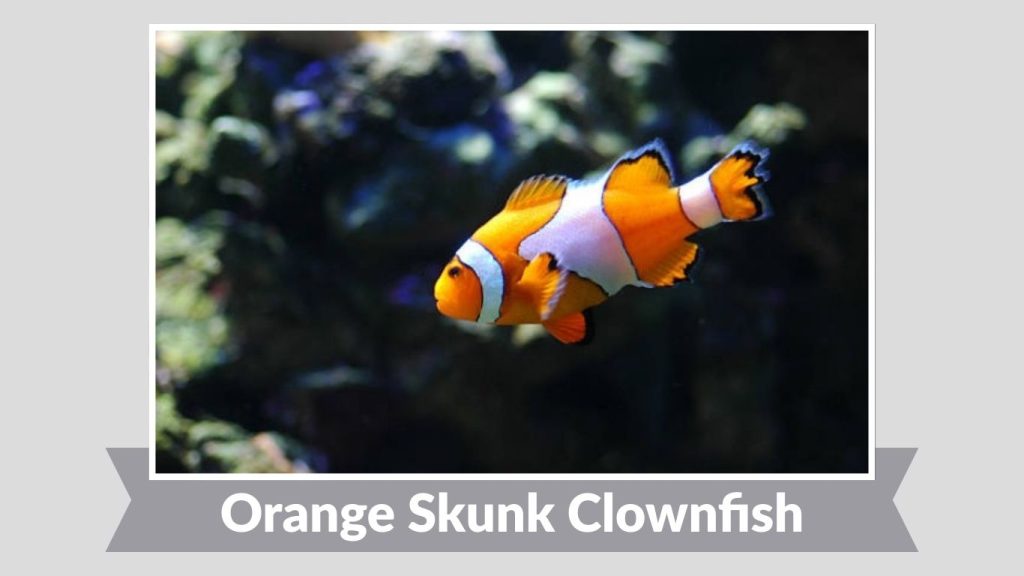
The Orange Skunk Clownfish is a slim, brightly colored species known for its vivid orange body and a single white stripe running from the snout to the tail along its back. Its elegant appearance and relatively peaceful temperament make it a popular choice among reef enthusiasts.
Identification
- Bright orange body color
- Single white dorsal stripe from head to tail
- Slender, streamlined body
- Grows up to about 4 inches (10 cm) long
- Clear to pale fins
- Rounded tail fin
Habitat
Orange Skunk Clownfish are found across the Indo-Pacific, including Indonesia, the Philippines, and the Great Barrier Reef. They inhabit shallow coral reefs and lagoons, closely associated with long-tentacled sea anemones.
Behaviors
This species is generally peaceful and spends most of its time hovering close to its host anemone. Orange Skunk Clownfish are social and usually live in small groups. They are gentle swimmers and less aggressive than many other clownfish species.
Diet and Lifespan
In the wild, they feed on zooplankton, algae, and tiny crustaceans. In captivity, they accept a wide variety of prepared foods. With proper care, their lifespan usually ranges from 6 to 10 years.
12. Barrier Reef Clownfish (Amphiprion akindynos)
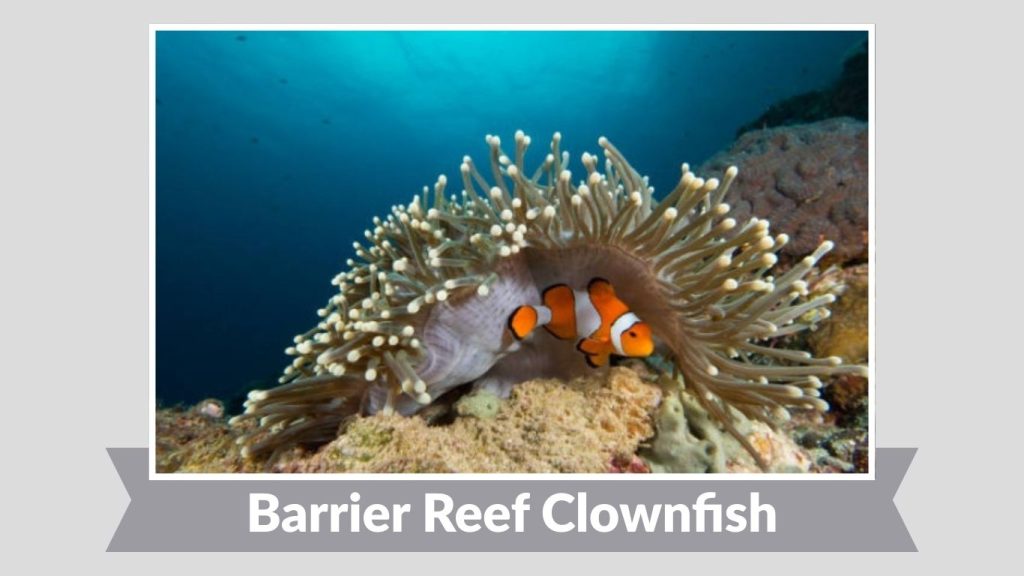
The Barrier Reef Clownfish is a hardy and attractive species native to the Great Barrier Reef and surrounding waters. It is known for its orange-brown body, bold white bands, and confident swimming behavior. This clownfish plays an important role in reef ecosystems through its close relationship with sea anemones.
Identification
- Orange to brown body coloration
- Two prominent white vertical bands
- Thick black edging on fins
- Oval, laterally compressed body
- Grows up to about 5 inches (13 cm) long
- Rounded tail fin
Habitat
Barrier Reef Clownfish are found mainly around the Great Barrier Reef, Coral Sea, and nearby Pacific regions. They inhabit coral reefs and sheltered lagoons, living closely among large sea anemones in shallow, warm waters.
Behaviors
This species is active and moderately territorial. Barrier Reef Clownfish live in small social groups and aggressively defend their host anemone. They are confident swimmers and often venture slightly farther from shelter than more timid species.
Diet and Lifespan
In the wild, they feed on zooplankton, algae, small crustaceans, and organic debris. In aquariums, they readily accept flakes, pellets, and frozen marine foods. With good care, they usually live between 6 and 10 years.
13. Madagascar Clownfish (Amphiprion latifasciatus)
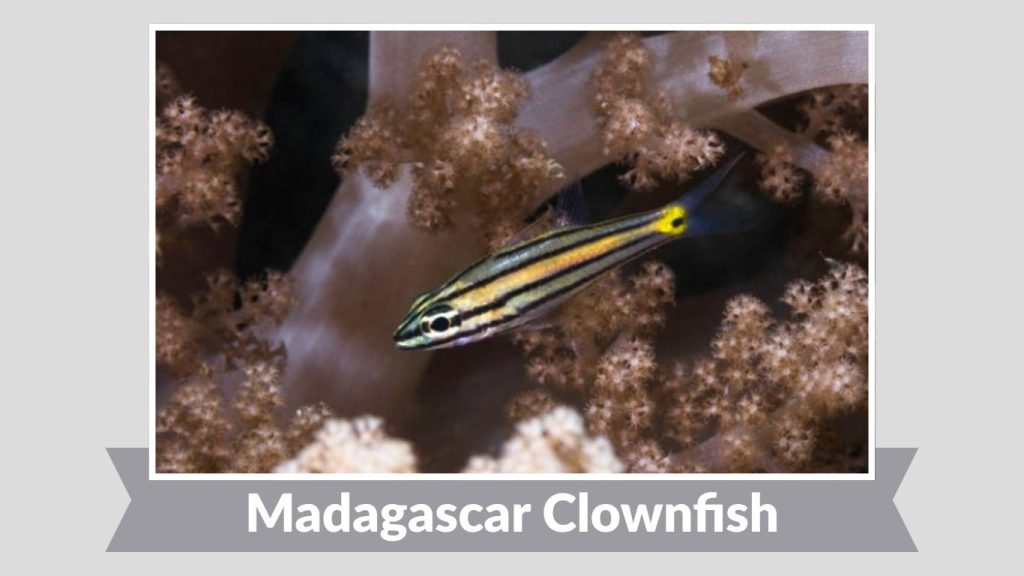
The Madagascar Clownfish is a rare and distinctive species known for its dark body and broad white bands. Endemic to the waters around Madagascar, this clownfish is admired for its bold contrast and limited geographic range, making it of special interest to marine biologists and aquarium collectors.
Identification
- Dark brown to nearly black body
- Two wide white vertical bands
- Yellowish to orange tail fin
- Oval, laterally compressed body
- Grows up to about 5 inches (13 cm) long
- Thick black edging on fins
Habitat
Madagascar Clownfish are found primarily along the southwestern coast of Madagascar in the Indian Ocean. They inhabit shallow coral reefs and lagoons, closely associated with sea anemones in warm, clear coastal waters.
Behaviors
This species is territorial and lives in small social groups within a host anemone. Madagascar Clownfish actively defend their anemone from intruders. They are alert swimmers and often remain close to shelter.
Diet and Lifespan
In the wild, they feed on zooplankton, algae, small crustaceans, and organic debris. In captivity, they accept a wide range of marine foods. With proper care, their lifespan generally ranges from 6 to 10 years.
14. Allard’s Clownfish (Amphiprion allardi)
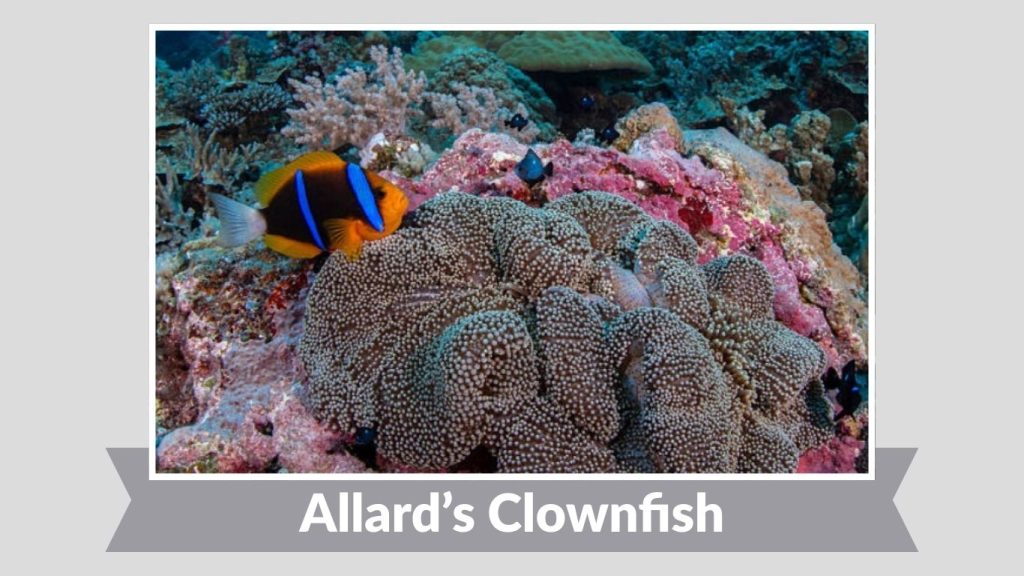
Allard’s Clownfish is a bold and attractive species native to the western Indian Ocean. It is recognized for its dark body, bright white bands, and contrasting yellow to orange fins. This clownfish is closely associated with sea anemones and is known for its active reef behavior.
Identification
- Dark brown to black body
- Two bright white vertical bands
- Yellow to orange tail and fins
- Oval, laterally compressed body
- Grows up to about 6 inches (15 cm) long
- Thick body shape and rounded fins
Habitat
Allard’s Clownfish are found in the western Indian Ocean, including the coasts of East Africa, Madagascar, and surrounding islands. They inhabit shallow coral reefs and sheltered lagoons, living closely among large sea anemones.
Behaviors
This species is active, confident, and territorial. Allard’s Clownfish live in small social groups and strongly defend their host anemone. They are alert swimmers and often interact aggressively with intruders near their territory.
Diet and Lifespan
In the wild, they feed on zooplankton, algae, small crustaceans, and organic material. In aquariums, they are hardy eaters and adapt well to prepared foods. Their typical lifespan ranges from 6 to 10 years.
15. Twoband Clownfish (Amphiprion bicinctus)
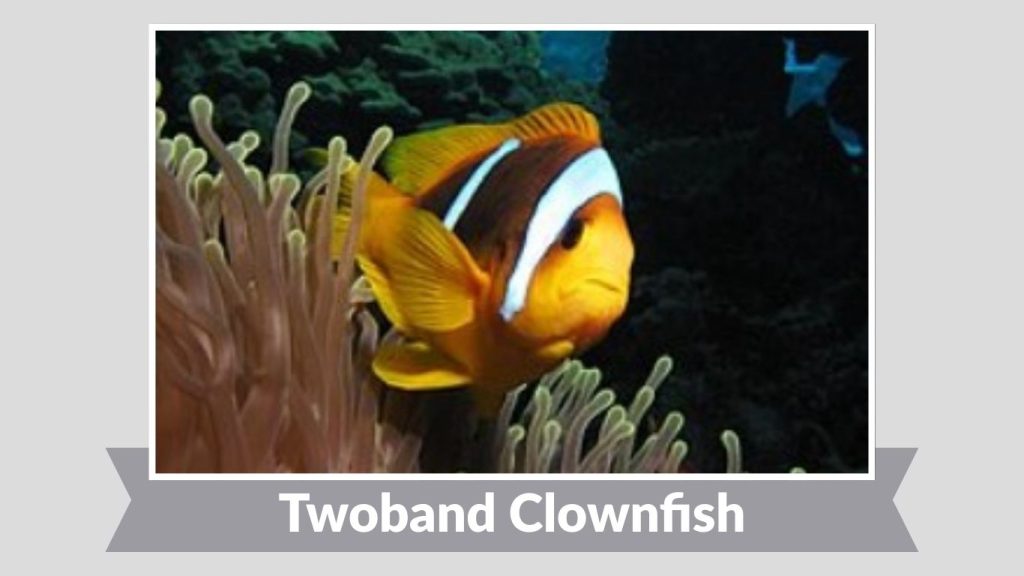
The Twoband Clownfish is named for the two bold white bands that stand out against its yellow to orange body. Native mainly to the Red Sea and nearby waters, this species is known for its bright coloration, hardy nature, and strong bond with host sea anemones.
Identification
- Yellow to orange body color
- Two distinct white vertical bands
- Black edging on fins
- Oval, laterally compressed body
- Grows up to about 5 inches (13 cm) long
- Rounded tail fin
Habitat
Twoband Clownfish are found primarily in the Red Sea and the Gulf of Aden. They inhabit shallow coral reefs and lagoons, living closely among sea anemones anchored to coral and rocky substrates.
Behaviors
This species is bold and territorial, especially around its host anemone. Twoband Clownfish live in small social groups led by a dominant female. They are active swimmers and will aggressively defend their anemone from intruders.
Diet and Lifespan
In the wild, they feed on zooplankton, algae, small crustaceans, and organic debris. In captivity, they readily accept a wide range of marine foods. With proper care, their lifespan usually ranges from 6 to 10 years.
16. Red Saddleback Clownfish (Amphiprion ephippium)
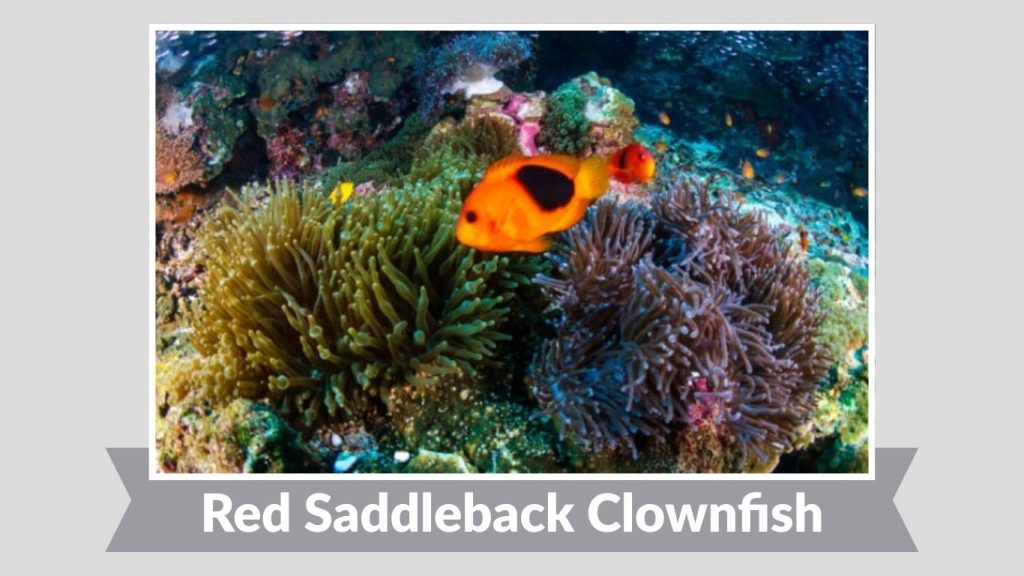
The Red Saddleback Clownfish is a bold and colorful species named for the large white “saddle” marking across its back. As it matures, its body deepens into rich red or reddish-brown tones, making it one of the more striking clownfish found on Indo-Pacific reefs.
Identification
- Red to reddish-brown body
- Large white saddle-shaped band behind the head
- Juveniles often have additional white bands
- Oval, laterally compressed body
- Grows up to about 5 inches (13 cm) long
- Dark edging on fins
Habitat
Red Saddleback Clownfish are found across the Indo-Pacific, including Southeast Asia, Indonesia, and northern Australia. They inhabit shallow coral reefs and lagoons, usually living with sea anemones anchored in sandy or rubble areas.
Behaviors
This species is territorial and protective of its host anemone. Red Saddleback Clownfish live in small social groups and aggressively defend their territory. They are active swimmers but tend to remain close to their anemone.
Diet and Lifespan
In the wild, they feed on zooplankton, algae, small crustaceans, and organic matter. In aquariums, they accept most prepared marine foods. With good care, they generally live between 6 and 10 years.
17. Three-band Clownfish (Amphiprion tricinctus)
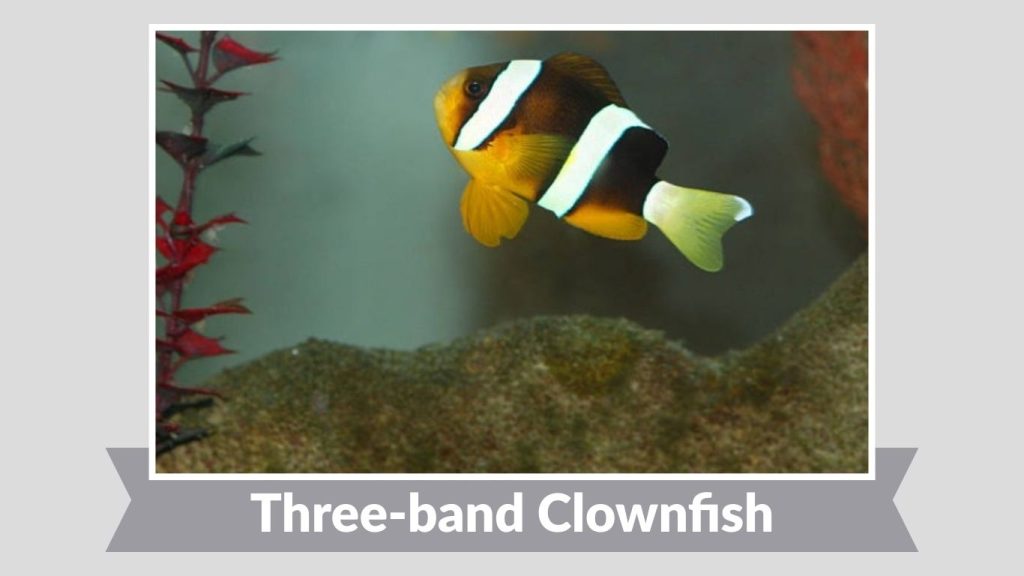
The Three-band Clownfish is an attractive species known for its orange body contrasted by three bold white vertical bands. Endemic to the Marshall Islands region, this clownfish is relatively rare in the wild and valued for its classic clownfish appearance and lively behavior.
Identification
- Bright orange body
- Three distinct white vertical bands
- Thin black edging on fins
- Oval, laterally compressed body
- Grows up to about 4 inches (10 cm) long
- Rounded tail fin
Habitat
Three-band Clownfish are found mainly around the Marshall Islands and nearby central Pacific regions. They inhabit shallow coral reefs and sheltered lagoons, living closely among sea anemones in warm, clear waters.
Behaviors
This species is active and territorial around its host anemone. Three-band Clownfish live in small social groups and defend their territory from intruders. They are energetic swimmers and often hover just above their anemone.
Diet and Lifespan
In the wild, they feed on zooplankton, algae, small crustaceans, and organic debris. In captivity, they readily accept a wide range of prepared foods. Their typical lifespan ranges from 6 to 10 years.
18. Maldives Clownfish (Amphiprion nigripes)
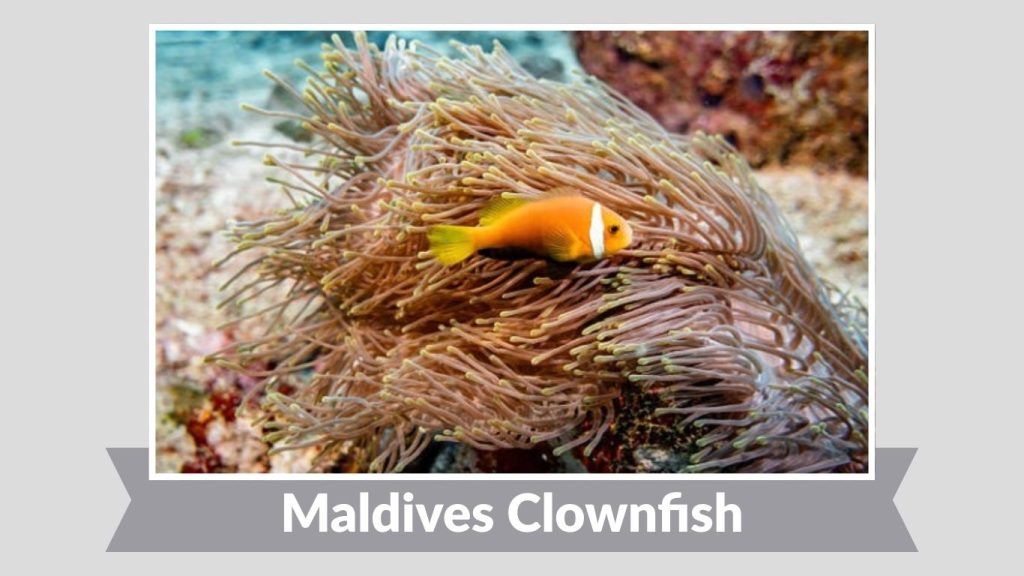
The Maldives Clownfish is a distinctive species recognized for its dark body, bright orange face, and two clear white bands. Native mainly to the central Indian Ocean, it is admired for its strong contrast in coloration and close association with sea anemones.
Identification
- Dark brown to black body
- Bright orange face and snout
- Two bold white vertical bands
- Oval, laterally compressed body
- Grows up to about 4 inches (10 cm) long
- Rounded fins
Habitat
Maldives Clownfish are found primarily in the Maldives, Sri Lanka, and surrounding Indian Ocean regions. They inhabit shallow coral reefs and lagoons, living among sea anemones anchored to sandy or rocky substrates.
Behaviors
This species is territorial and forms small social groups within a host anemone. Maldives Clownfish are active swimmers and aggressively defend their anemone from intruders. They usually remain close to shelter.
Diet and Lifespan
In the wild, they feed on zooplankton, algae, small crustaceans, and organic matter. In aquariums, they accept a wide variety of prepared foods. With proper care, they generally live between 6 and 10 years.
19. Oman Clownfish (Amphiprion omanensis)
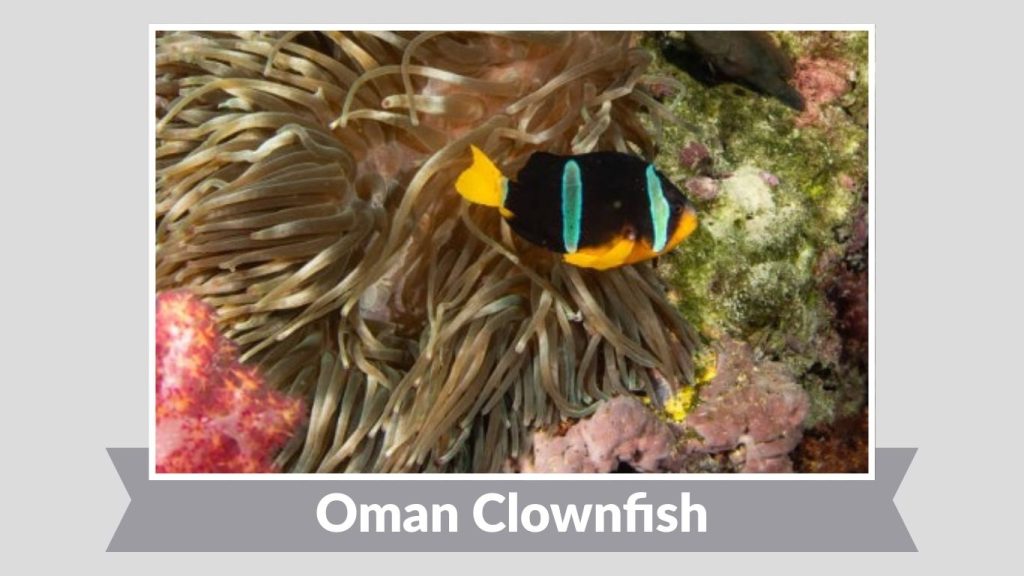
The Oman Clownfish is a rare and localized species known mainly from the coastal reefs of Oman. It closely resembles the Twoband Clownfish but is distinguished by its geographic range and subtle coloration differences. Because of its limited distribution, it is of special interest to marine researchers.
Identification
- Yellow to orange body
- Two bold white vertical bands
- Thin dark edging on fins
- Oval, laterally compressed body
- Grows up to about 5 inches (13 cm) long
- Rounded tail fin
Habitat
Oman Clownfish are found primarily along the coast of Oman in the northwestern Indian Ocean. They inhabit shallow coral reefs and rocky reef areas, living closely among sea anemones in warm coastal waters.
Behaviors
This species is territorial and strongly attached to its host anemone. Oman Clownfish live in small social groups and actively defend their territory. They are alert swimmers and usually stay close to shelter.
Diet and Lifespan
In the wild, they feed on zooplankton, algae, small crustaceans, and organic debris. In captivity, they accept most prepared marine foods. With proper care, their lifespan usually ranges from 6 to 10 years.
20. Australian Clownfish (Amphiprion rubrocinctus)
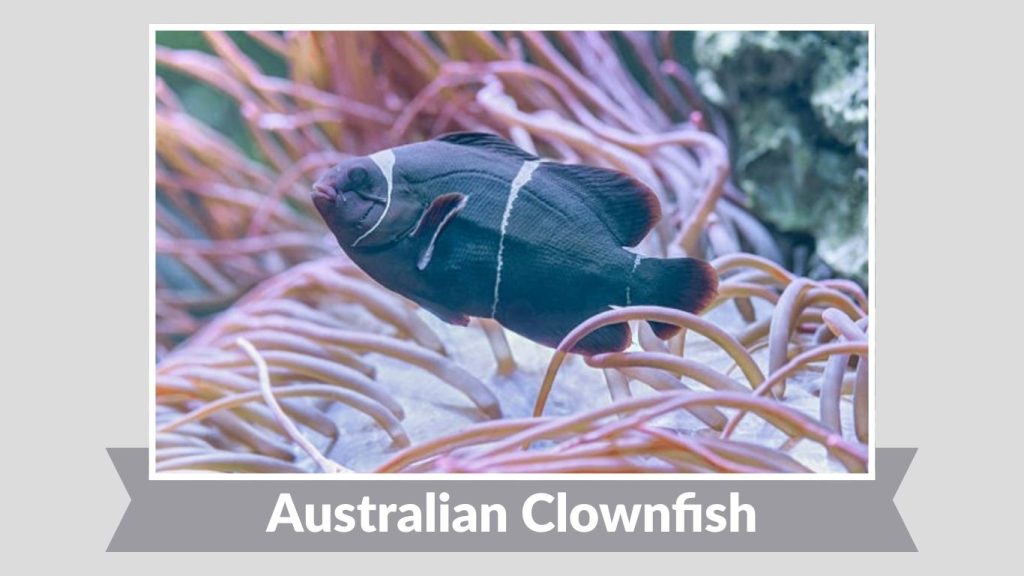
The Australian Clownfish, also known as the Red-and-black Anemonefish, is a distinctive species recognized for its dark body and a single bright red to orange band behind the head. Endemic to northern Australia, this clownfish stands out for its unique color pattern and strong territorial nature.
Identification
- Dark brown to black body
- Single red or orange vertical band behind the head
- Red edging on fins
- Oval, laterally compressed body
- Grows up to about 5 inches (13 cm) long
- Rounded fins and compact shape
Habitat
Australian Clownfish are found mainly along the northern coast of Australia. They inhabit shallow coral reefs, coastal lagoons, and rocky reef zones, living among sea anemones in warm, tropical waters.
Behaviors
This species is territorial and bold, especially around its host anemone. Australian Clownfish live in small social groups and aggressively defend their territory. They are active swimmers and rarely stray far from their host.
Diet and Lifespan
In the wild, they feed on zooplankton, algae, small crustaceans, and organic matter. In aquariums, they accept most marine foods. With good care, they generally live between 6 and 10 years.
21. Fiji Clownfish (Amphiprion barberi)
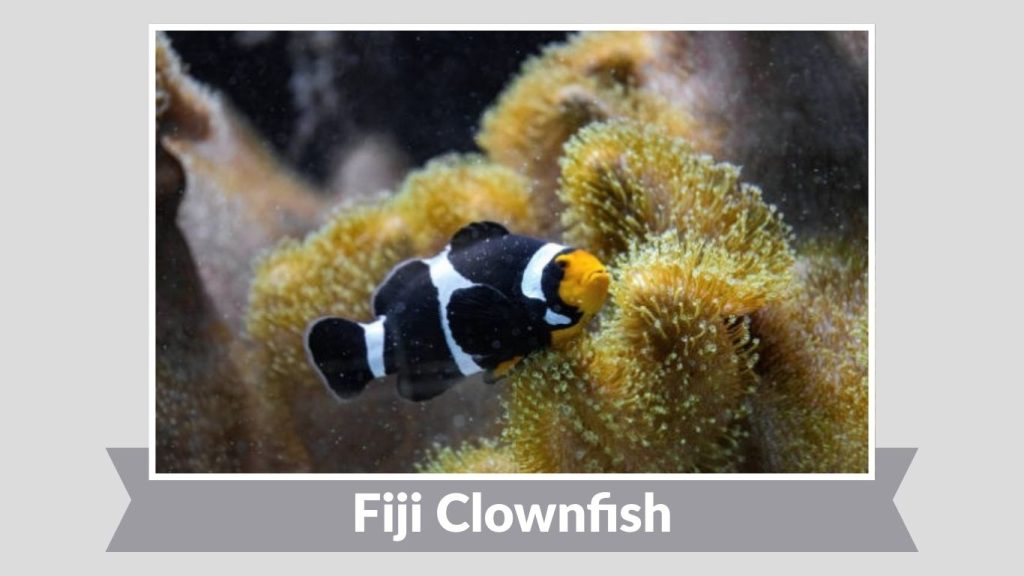
The Fiji Clownfish is a colorful and active species native to the reefs of Fiji, Tonga, and Samoa. It is admired for its rich orange-brown body, bright white bands, and confident swimming behavior. This species is closely related to the Barrier Reef Clownfish and was only formally recognized in recent years.
Identification
- Orange-brown to dark orange body
- Two bold white vertical bands
- Thin dark edging on fins
- Oval, laterally compressed body
- Grows up to about 5 inches (13 cm) long
- Rounded tail fin
Habitat
Fiji Clownfish are found mainly in the central South Pacific, especially around Fiji, Tonga, and Samoa. They inhabit shallow coral reefs and lagoons, living closely among sea anemones in warm, clear waters.
Behaviors
This species is active, territorial, and strongly attached to its host anemone. Fiji Clownfish live in small social groups and aggressively defend their territory. They are confident swimmers and often hover just above their anemone.
Diet and Lifespan
In the wild, they feed on zooplankton, algae, small crustaceans, and organic debris. In aquariums, they accept a wide range of prepared foods. With proper care, their lifespan usually ranges from 6 to 10 years.
22. White-banded Clownfish (Amphiprion latezonatus)
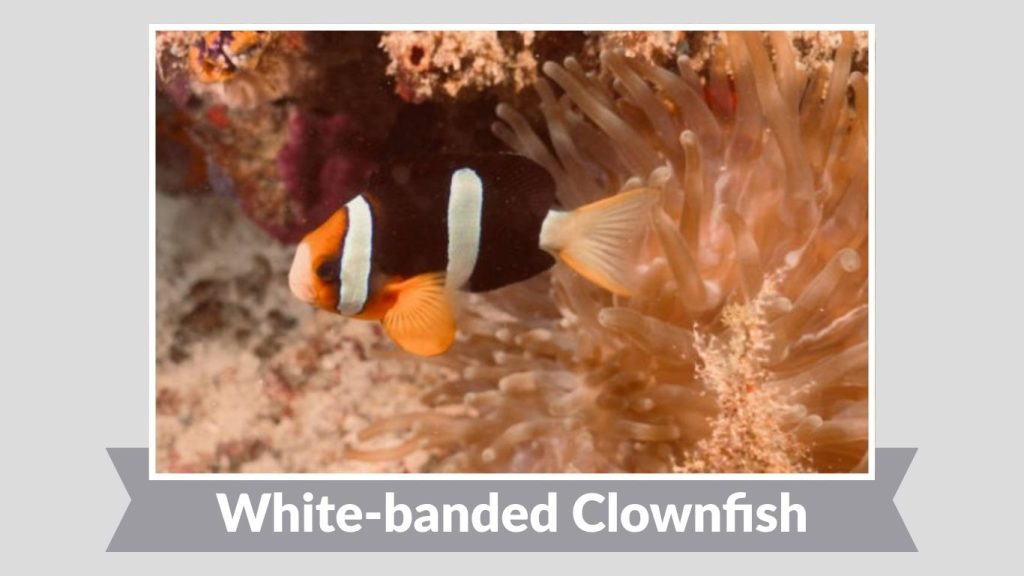
The White-banded Clownfish is a striking and relatively rare species recognized for its thick, bright white bands that strongly contrast with its dark body. Native to eastern Australia, this clownfish is admired for its bold pattern and strong territorial behavior around its host anemone.
Identification
- Dark brown to black body
- Two very thick white vertical bands
- Yellowish to orange snout and fins
- Oval, laterally compressed body
- Grows up to about 5 inches (13 cm) long
- Rounded fins and sturdy body shape
Habitat
White-banded Clownfish are found mainly along the eastern coast of Australia, including New South Wales and southern Queensland. They inhabit shallow coral reefs and rocky reef areas, living among large sea anemones in coastal waters.
Behaviors
This species is bold and territorial, especially when guarding its host anemone. White-banded Clownfish live in small social groups and actively defend their territory. They are confident swimmers and usually remain close to shelter.
Diet and Lifespan
In the wild, they feed on zooplankton, algae, small crustaceans, and organic matter. In aquariums, they accept most marine foods and are considered fairly hardy. With good care, they typically live between 6 and 10 years.
23. Indian Clownfish (Amphiprion indicus)
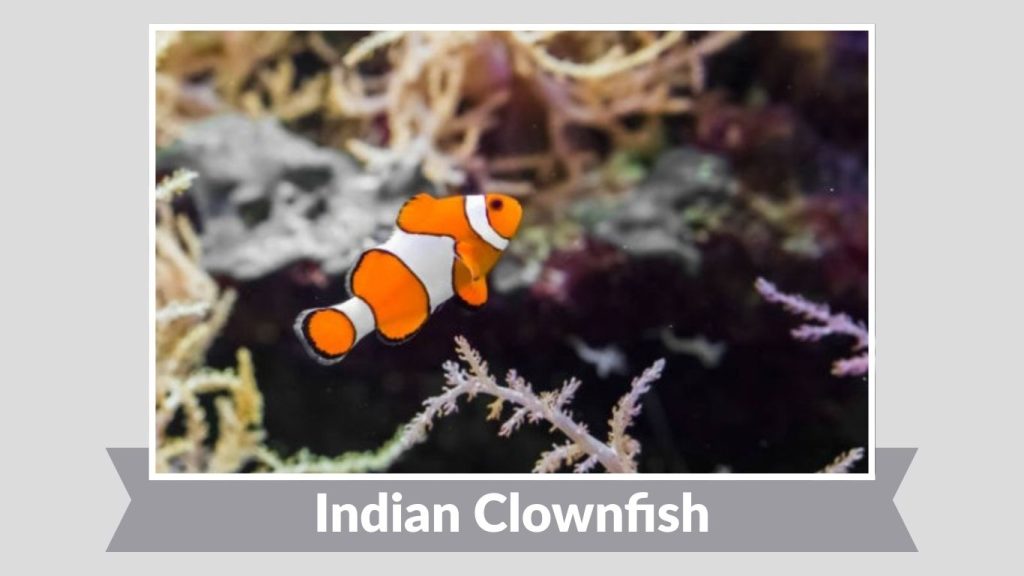
The Indian Clownfish is a relatively newly described species known from the eastern Indian Ocean and Bay of Bengal region. It closely resembles the Ocellaris Clownfish but has subtle differences in body shape and coloration. Its limited range makes it of special interest to researchers and reef fish enthusiasts.
Identification
- Bright orange body
- Three white vertical bands
- Thin dark edging on fins
- Oval, laterally compressed body
- Grows up to about 4 inches (10 cm) long
- Rounded tail fin
Habitat
Indian Clownfish are found mainly along the eastern coast of India, the Andaman Sea, and parts of the Bay of Bengal. They inhabit shallow coral reefs and coastal lagoons, living closely among sea anemones.
Behaviors
This species is territorial around its host anemone and forms small social groups. Indian Clownfish actively defend their territory and usually remain close to shelter. Their social structure is similar to other clownfish species.
Diet and Lifespan
In the wild, they feed on zooplankton, algae, small crustaceans, and organic debris. In captivity, they accept a wide range of prepared foods. With proper care, their lifespan usually ranges from 6 to 10 years.
24. Andaman Clownfish (Amphiprion andamanensis)
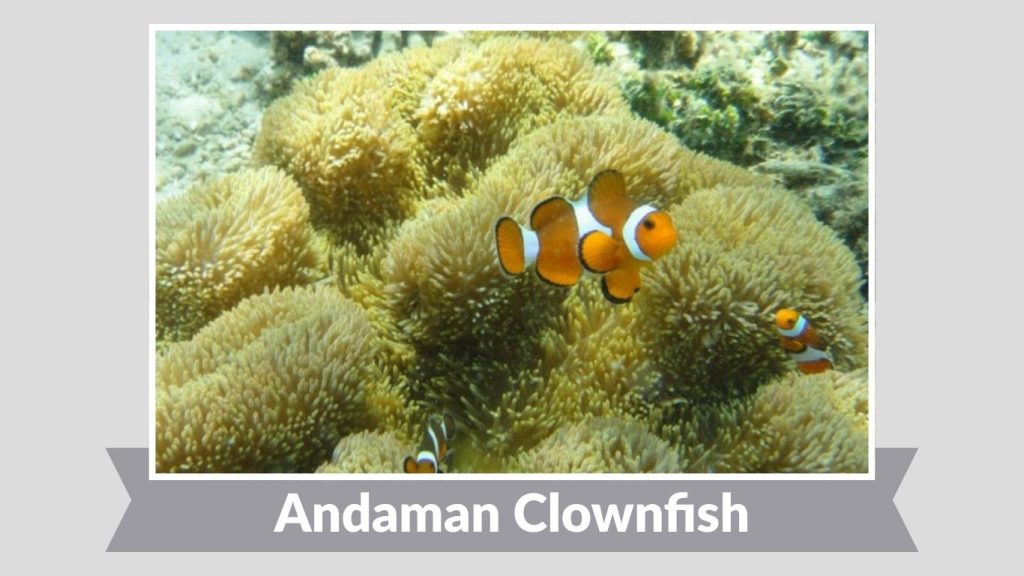
The Andaman Clownfish is a rare and region-specific species native to the Andaman Sea. It resembles other orange clownfish but is distinguished by its restricted range and subtle pattern differences. Because it occurs only in a small geographic area, it is considered an important species for regional marine biodiversity.
Identification
- Bright orange body
- Three white vertical bands
- Thin black edging on fins
- Oval, laterally compressed body
- Grows up to about 4 inches (10 cm) long
- Rounded tail fin
Habitat
Andaman Clownfish are found mainly in the Andaman Sea, around coral reefs near Thailand, Myanmar, and India. They inhabit shallow coral reefs and sheltered lagoons, living closely among sea anemones in warm, clear waters.
Behaviors
This species is territorial and lives in small social groups within a host anemone. Andaman Clownfish actively defend their anemone and display typical clownfish hierarchy behavior, with a dominant breeding female leading the group.
Diet and Lifespan
In the wild, they feed on zooplankton, algae, small crustaceans, and organic matter. In aquariums, they adapt well to prepared marine foods. With proper care, their lifespan generally ranges from 6 to 10 years.
25. Black Ocellaris Clownfish (Amphiprion ocellaris, black morph)
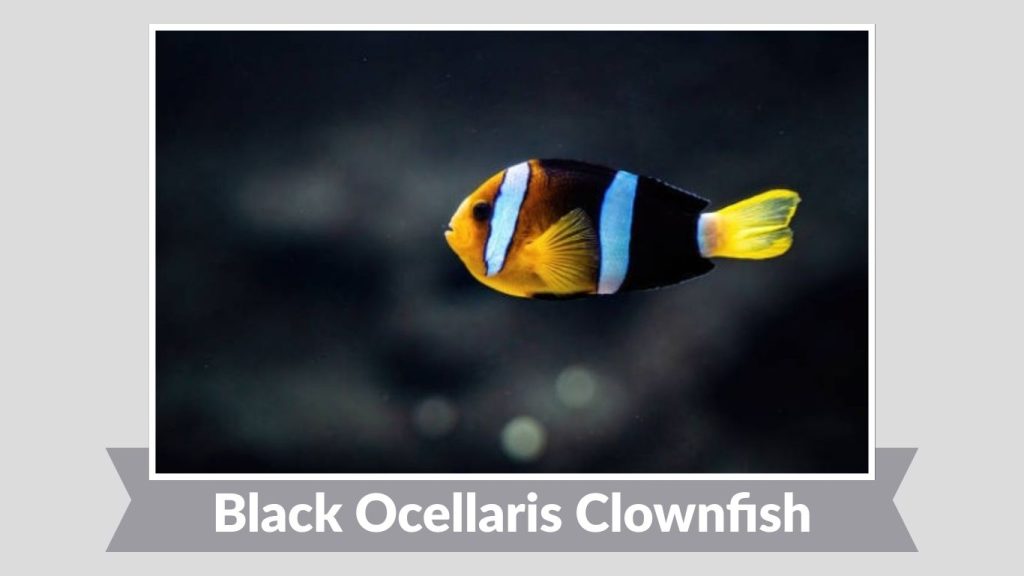
The Black Ocellaris Clownfish is a naturally occurring color variant of the common Ocellaris Clownfish, distinguished by its deep black body contrasted with bright white bands and orange facial features. It is especially associated with reefs around northern Australia and is highly valued for its dramatic appearance.
Identification
- Deep black body color
- Three bold white vertical bands
- Orange to yellow face and fins
- Oval, laterally compressed body
- Grows up to about 4 inches (10 cm) long
- Rounded tail fin
Habitat
Black Ocellaris Clownfish are found mainly around northern Australia and parts of the western Pacific. They inhabit shallow coral reefs and lagoons, living closely among sea anemones that provide shelter and breeding sites.
Behaviors
This species shows the same social structure as standard Ocellaris Clownfish. They live in small groups within a host anemone and are territorial around it. Black Ocellaris Clownfish are active, playful swimmers and interact constantly with their environment.
Diet and Lifespan
In the wild, they feed on zooplankton, algae, small crustaceans, and leftover food from anemones. In captivity, they readily accept flakes, pellets, and frozen foods. With good care, they typically live between 6 and 10 years.
FAQs
What do clownfish eat in the wild?
Clownfish are omnivores and feed mainly on zooplankton, small crustaceans, algae, and organic debris. They also eat leftover food particles from their host anemones. This mixed diet supports their bright coloration, energy levels, and overall health in reef environments.
Why do clownfish live with sea anemones?
Clownfish live with sea anemones for protection. Their special mucus coating prevents them from being stung, allowing them to hide safely among the anemone’s tentacles. In return, clownfish help clean the anemone, provide nutrients through waste, and chase away potential predators.
Are clownfish easy to keep in home aquariums?
Clownfish are among the easiest marine fish to keep and are popular with beginners. They are hardy, adapt well to aquarium life, and accept many prepared foods. However, they still require stable saltwater conditions, proper tank size, and compatible tank mates.
How long do clownfish usually live?
Most clownfish species live between 6 and 10 years, but with excellent care, some individuals can live even longer in captivity. Lifespan depends on factors such as water quality, diet, stress levels, and the overall stability of the aquarium environment.
Can clownfish change their sex?
Yes, clownfish can change sex. All clownfish are born male. In a social group, the largest fish becomes female. If the female dies, the dominant male changes into a female, and the next largest male becomes the breeding partner.