
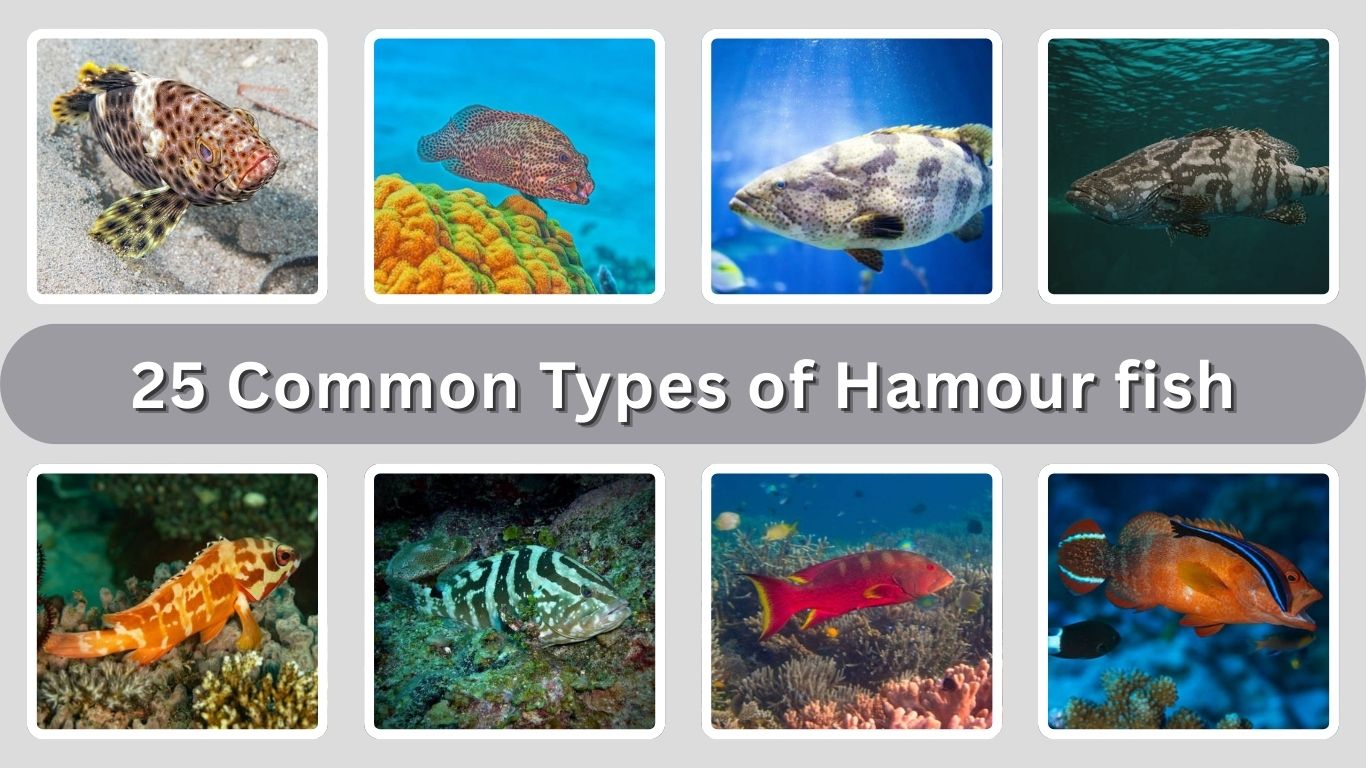
Hamour fish is a popular name used for several species of groupers found in warm seas around the world. These powerful, thick-bodied fish are well known for living around coral reefs and rocky seabeds, where they act as top predators. Hamour is highly valued for its firm, white meat and is widely sold in seafood markets, especially in the Middle East and Asia. Because many different species are called hamour, understanding their types helps with identification, fishing, and conservation awareness.
1. Brown-spotted Grouper (Hamour)
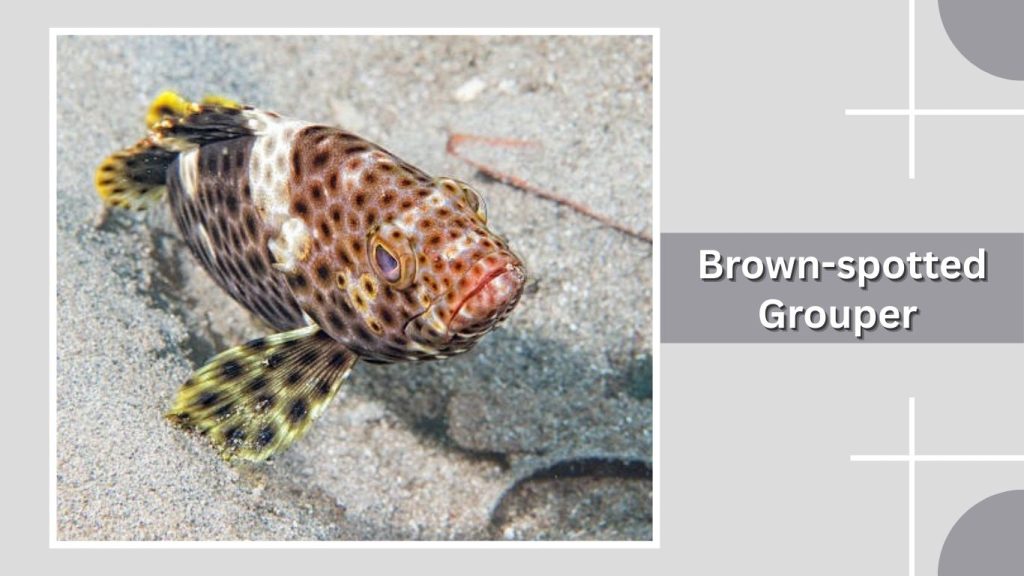
The brown-spotted grouper, often called Hamour in many coastal regions, is a popular reef fish known for its thick body, wide mouth, and distinctive dark brown spots scattered across a lighter background. It commonly lives around coral reefs, rocky bottoms, and lagoons, where it hunts smaller fish and crustaceans. This species is highly valued as both a food fish and a reef predator.
Identification
- Body color ranges from pale brown to yellowish with many small dark brown spots
- Thick, heavy body with a large head and wide mouth
- Rounded tail fin and strong pectoral fins
- Adults are usually 40–80 cm long, though some grow larger
- Juveniles often show brighter contrast in their spot patterns
Habitat & Distribution
Brown-spotted groupers are mainly found in the Indo-Pacific region, especially in the Red Sea, Arabian Gulf, Indian Ocean, and western Pacific. They prefer coral reefs, rocky reefs, and coastal lagoons, usually staying close to shelters such as caves and reef crevices.
Diet & Hunting Behavior
This hamour species is a carnivorous ambush predator. It feeds mostly on small fish, crabs, shrimps, and occasionally squid. Instead of chasing prey, it waits motionless near rocks or coral, then suddenly opens its large mouth to create suction and pull prey inside.
Size & Growth
Brown-spotted groupers grow at a moderate rate. Most adults reach between 40 and 80 centimeters in length, but in rich reef environments they can exceed this size. As they mature, their bodies become thicker and heavier, giving them a powerful appearance.
Relationship with Humans
This species is one of the most commonly sold hamour fish in seafood markets. It is prized for its firm, white flesh and mild taste. Because of heavy fishing pressure, some populations are declining, and in certain regions, size limits and seasonal bans are used to protect breeding stocks.
2. Orange-spotted Grouper (Hamour)
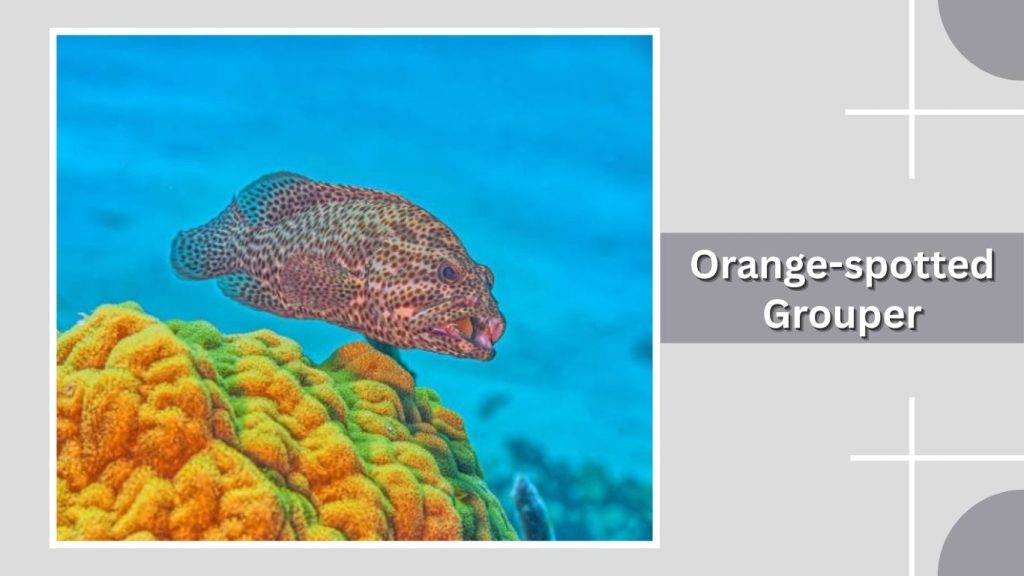
The orange-spotted grouper is one of the most recognizable hamour fish due to its light body color covered with bright orange to reddish spots. It is widely found in warm coastal waters and coral reef systems, where it plays an important role as a top predator. This species is also one of the most commercially important groupers in Asian and Middle Eastern fish markets.
Identification
- Pale yellowish to light brown body with many round orange or reddish spots
- Thick, elongated body with a large mouth and strong jaws
- Small eyes positioned high on the head
- Rounded fins with darker edges in adults
- Average adult size ranges from 50–90 cm
Habitat & Distribution
Orange-spotted groupers live throughout the Indo-Pacific region, including the Red Sea, Persian Gulf, Indian Ocean, Southeast Asia, and northern Australia. They prefer coral reefs, mangroves, estuaries, and rocky coastal areas, often staying near caves and reef ledges.
Diet & Hunting Behavior
This hamour fish feeds mainly on fish, crabs, shrimp, and other crustaceans. It is a slow-moving ambush predator that hides among rocks or corals and strikes suddenly. Its powerful mouth creates strong suction, allowing it to swallow prey whole.
Size & Growth
Orange-spotted groupers can grow quite large compared to many reef fish. Most adults reach 60 to 90 centimeters, but some individuals exceed 1 meter in length. Juveniles grow relatively fast in shallow coastal areas before moving to deeper reefs.
Relationship with Humans
This species is heavily fished for food and is also commonly farmed in aquaculture. It is highly valued for its taste, making it one of the most expensive hamour fish in markets. Due to overfishing in some regions, conservation measures are becoming increasingly important.
3. Malabar Grouper (Hamour)
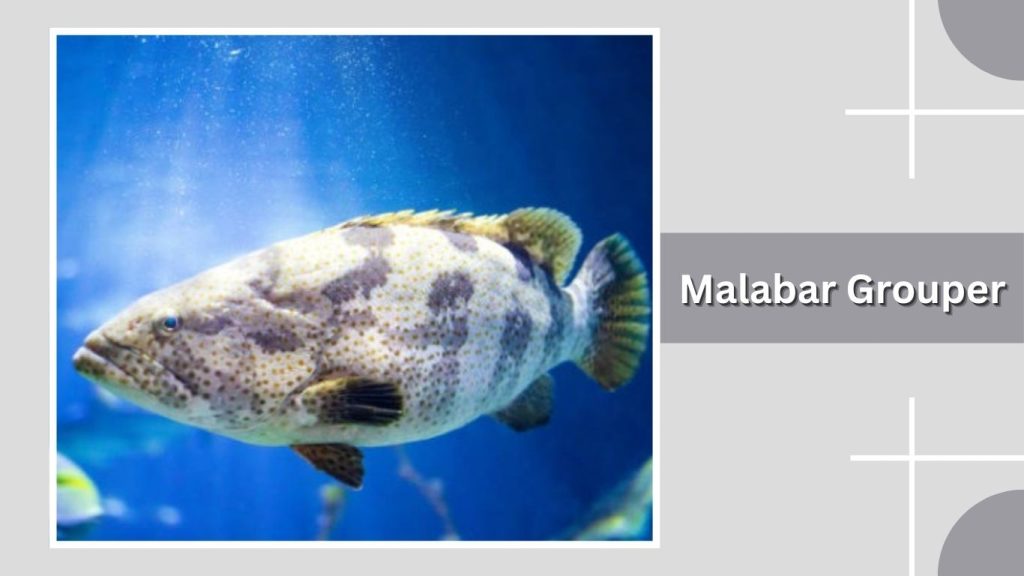
The Malabar grouper is a large, powerful hamour fish well known for its thick body, blunt head, and impressive size. It is a dominant reef predator that inhabits coral reefs, rocky bottoms, and coastal drop-offs. Because of its firm white flesh and large fillet size, this species is highly prized in commercial and local fisheries.
Identification
- Body color varies from greyish-brown to dark brown with irregular darker blotches
- Very thick, heavy body with a broad head and large mouth
- Small eyes and strong jaw muscles
- Rounded tail fin and wide pectoral fins
- Adults commonly reach 70–120 cm in length
Habitat & Distribution
Malabar groupers are found widely across the Indo-Pacific region, including the Red Sea, East Africa, Arabian Sea, India, Southeast Asia, and northern Australia. They prefer coral reefs, rocky reefs, and deep coastal ledges, usually hiding in caves and crevices during the day.
Diet & Hunting Behavior
This hamour fish is a carnivorous ambush predator. It feeds on fish, crabs, lobsters, and cephalopods. The Malabar grouper often waits near reef structures and uses a rapid mouth-opening motion to suck prey inside in a single strike.
Size & Growth
Malabar groupers are among the larger reef groupers. Many adults exceed 1 meter in length, and some can weigh over 100 kg. Juveniles grow faster in shallow coastal waters before migrating to deeper reef environments.
Relationship with Humans
The Malabar grouper is an important food fish throughout the Indian Ocean region. It is targeted by hook-and-line, nets, and spearfishing. Due to its slow growth and late maturity, overfishing is a concern, and in some areas it is considered vulnerable.
4. Giant Grouper (Hamour)
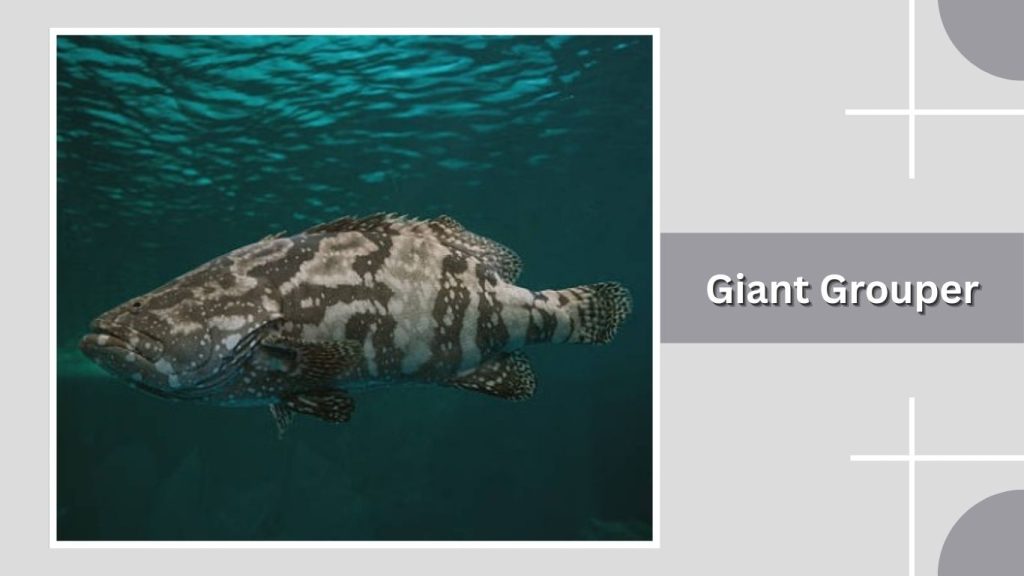
The giant grouper is the largest of all hamour fish and one of the biggest bony fish found on coral reefs. With its massive head, thick body, and slow, powerful movements, it dominates reef environments. This species is famous for its enormous size, deep booming sounds, and long lifespan.
Identification
- Huge, bulky body with a very large mouth and thick lips
- Mottled grey, brown, or greenish coloration with irregular dark patches
- Small eyes compared to head size
- Rounded tail fin and very wide pectoral fins
- Adults commonly exceed 150 cm and can grow over 270 cm
Habitat & Distribution
Giant groupers are found throughout the Indo-Pacific region, including the Red Sea, East Africa, Southeast Asia, and northern Australia. They inhabit coral reefs, rocky reefs, and shipwrecks, often staying near deep caves and reef drop-offs.
Diet & Hunting Behavior
This hamour fish is a slow but powerful ambush predator. It feeds on fish, crustaceans, octopus, and even small sharks and rays. Instead of chasing prey, it relies on stealth and a sudden suction strike to capture large animals.
Size & Growth
The giant grouper is extremely slow-growing and long-lived. Some individuals are believed to live over 50 years. Because they mature late and grow slowly, their populations are especially vulnerable to heavy fishing pressure.
Relationship with Humans
Giant groupers are highly valued as trophy and food fish, but their numbers have declined in many regions. In several countries, they are now protected or subject to strict fishing regulations to prevent further population collapse.
5. Blacktip Grouper (Hamour)
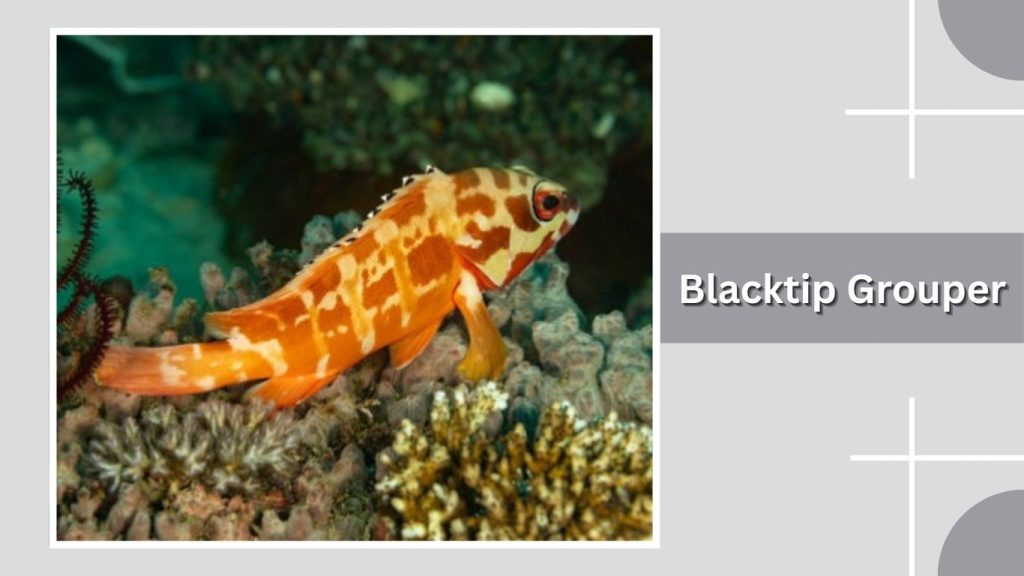
The blacktip grouper is a medium-to-large hamour fish recognized by the dark edges on its fins and its sturdy reef-dwelling body. It is an active predator on coral reefs and rocky coastlines, where it plays an important role in controlling smaller fish populations. This species is also commonly seen in local fish markets.
Identification
- Light brown to grey body with faint darker blotches
- Distinct black tips or dark margins on dorsal, tail, and pectoral fins
- Thick, muscular body with a broad head
- Large mouth with strong jaws
- Adults usually grow between 50–90 cm
Habitat & Distribution
Blacktip groupers are found across the Indo-Pacific region, including the Red Sea, East Africa, the Arabian Gulf, Southeast Asia, and the western Pacific. They prefer coral reefs, rocky reefs, and reef slopes, often sheltering in caves and under ledges.
Diet & Hunting Behavior
This hamour fish feeds mainly on reef fish, crabs, shrimp, and squid. It is a classic ambush predator, remaining still near reef structures and striking suddenly when prey comes close.
Size & Growth
Blacktip groupers grow steadily and can reach impressive sizes in healthy reef systems. Juveniles usually live in shallower reefs and lagoons before moving to deeper reef areas as adults.
Relationship with Humans
This species is frequently caught using hand lines, traps, and spearfishing. It is valued for its firm meat and mild flavor. In some regions, fishing pressure has increased, leading to local population declines.
6. Sixbar Grouper (Hamour)
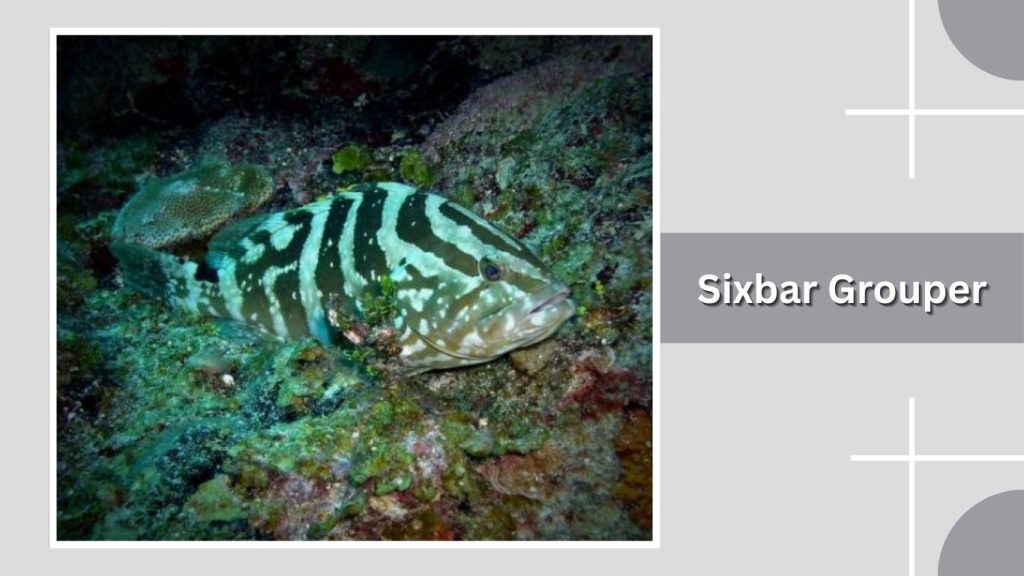
The sixbar grouper is a striking hamour fish named for the bold dark vertical bands that run across its body. These bands are especially visible in juveniles and young adults, giving the fish a dramatic reef appearance. It is a powerful predator commonly seen around coral reefs, drop-offs, and rocky underwater walls.
Identification
- Pale yellow to light brown body with 5–6 wide dark vertical bars
- Thick, heavy body with a large head and wide mouth
- Rounded tail fin and strong pectoral fins
- Bars may fade slightly in older adults
- Adults commonly reach 60–100 cm
Habitat & Distribution
Sixbar groupers are found across the Indo-Pacific, including the Red Sea, East Africa, Indian Ocean islands, Southeast Asia, and northern Australia. They prefer coral reefs, reef slopes, and deep rocky structures, often resting in caves or under ledges.
Diet & Hunting Behavior
This hamour fish feeds mainly on reef fish, crabs, shrimps, and cephalopods. It hunts by ambush, staying still near reef cover before launching a sudden suction strike to capture prey.
Size & Growth
Sixbar groupers grow into large, heavy-bodied fish. Juveniles stay in shallower reef areas, while adults are more common along deeper reef edges and drop-offs.
Relationship with Humans
The sixbar grouper is caught in both artisanal and commercial fisheries. It is valued for its firm flesh but, like many large groupers, is vulnerable to overfishing due to slow growth and late maturity.
7. Yellow-edged Grouper (Hamour)
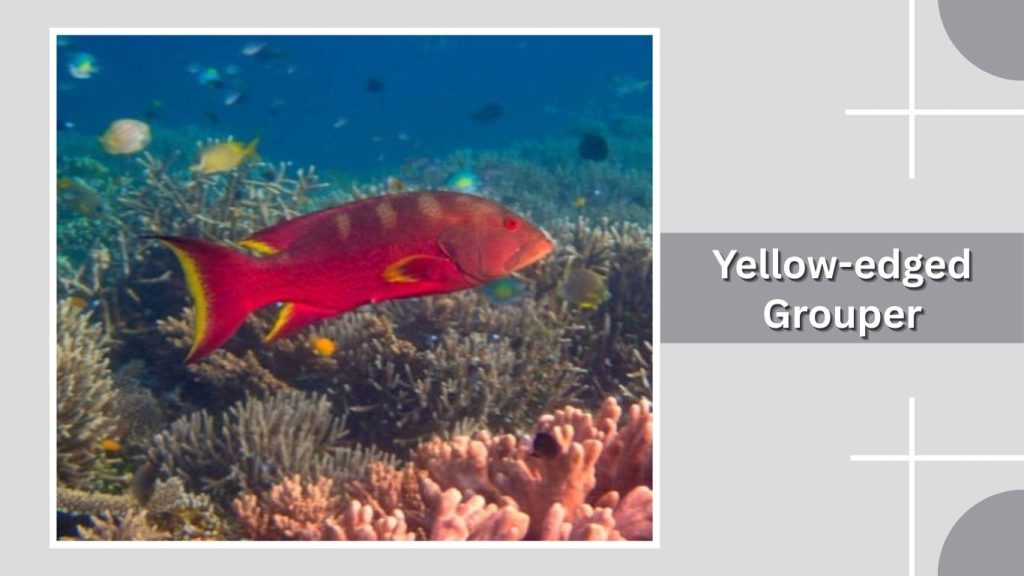
The yellow-edged grouper is a large, elegant hamour fish named for the thin yellow borders along its fins. It is often found cruising near reef slopes and deep ledges, where it acts as a strong reef predator. This species is well known in both sport fishing and commercial seafood markets.
Identification
- Dark brown to grey body with irregular lighter patches
- Distinct yellow edges along the dorsal, tail, and anal fins
- Thick body with a broad head and powerful jaws
- Small eyes set high on the head
- Adults usually measure 60–120 cm
Habitat & Distribution
Yellow-edged groupers are widely distributed across the Indo-Pacific, including the Red Sea, East Africa, Arabian Sea, Southeast Asia, and southern Japan. They inhabit coral reefs, rocky reefs, and deep coastal drop-offs.
Diet & Hunting Behavior
This hamour fish preys mainly on fish, crabs, shrimp, and octopus. It is a patient ambush hunter, hiding near reef structures and striking suddenly when prey swims close.
Size & Growth
Yellow-edged groupers are slow-growing and long-lived. Juveniles prefer shallower reefs, while adults are often found at greater depths. Large individuals can weigh over 100 kg.
Relationship with Humans
This species is highly valued as a food fish and is also popular among sport anglers. Due to heavy fishing pressure, some populations have declined, leading to management measures in certain regions.
8. Blue-lined Grouper (Hamour)
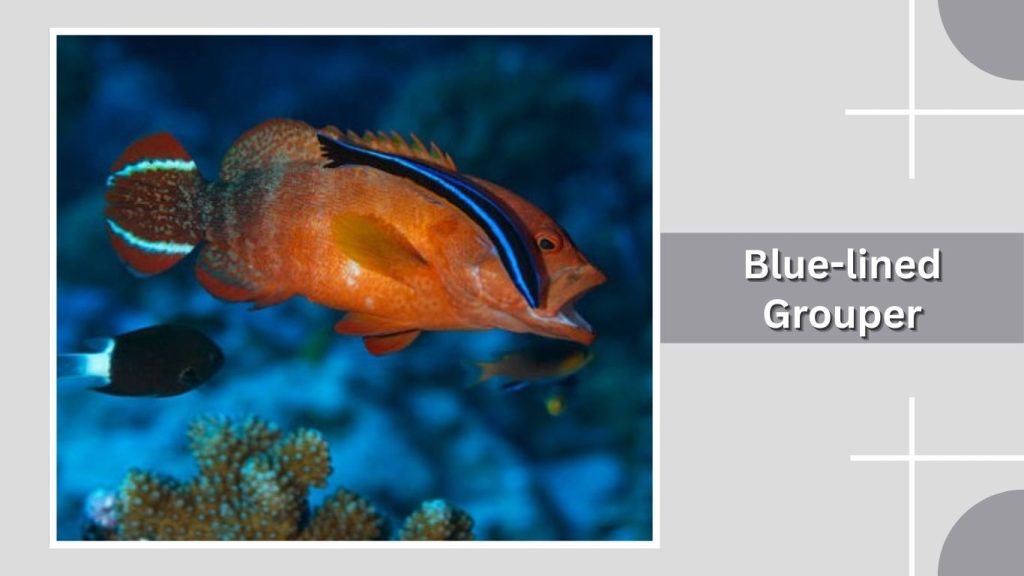
The blue-lined grouper is one of the most visually striking hamour fish, easily recognized by the bright electric-blue lines and spots that cover its dark body. It is a powerful reef predator and is often seen near coral outcrops, caves, and reef walls. This species is especially admired by divers because of its bold colors and confident behavior.
Identification
- Dark brown to black body with vivid electric-blue lines and dots
- Thick, muscular body with a large head and wide mouth
- Rounded tail fin and strong pectoral fins
- Bright markings are more intense in juveniles and young adults
- Adults commonly grow 60–100 cm long
Habitat & Distribution
Blue-lined groupers are found throughout the Indo-Pacific, including the Red Sea, East Africa, the Indian Ocean, Southeast Asia, and the western Pacific. They live mainly on coral reefs, reef slopes, and rocky underwater walls.
Diet & Hunting Behavior
This hamour fish feeds on fish, crabs, shrimps, and squid. It is an ambush predator that hides near reef structures, then lunges forward with a powerful suction strike to capture prey.
Size & Growth
Blue-lined groupers grow steadily and develop thicker bodies with age. Juveniles often stay in shallow reef areas, while adults move to deeper reefs and drop-offs.
Relationship with Humans
The blue-lined grouper is an important food fish and is also sometimes kept in large public aquariums. Because of its size and slow reproductive rate, it is vulnerable to overfishing in heavily fished reef systems.
9. Honeycomb Grouper (Hamour)
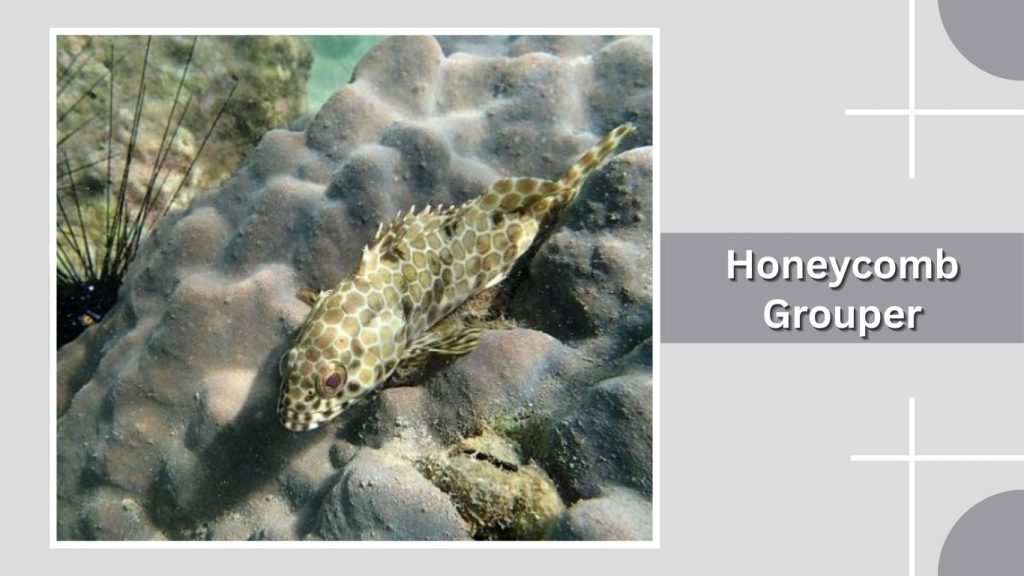
The honeycomb grouper is a beautifully patterned hamour fish known for the network of dark-edged spots that create a honeycomb-like design across its body. It is commonly seen resting near coral heads and rocky shelters, blending well with reef textures. This species is a widespread reef predator and an important part of coral reef ecosystems.
Identification
- Light brown to yellowish body covered with dark-edged hexagonal spots
- Thick, oval-shaped body with a large mouth
- Rounded tail fin and strong dorsal fin
- Pattern becomes more complex and darker with age
- Adults usually grow between 40–70 cm
Habitat & Distribution
Honeycomb groupers are found across the Indo-Pacific, including the Red Sea, East Africa, Southeast Asia, Japan, and the western Pacific islands. They inhabit coral reefs, lagoons, and rocky coastal areas, often hiding in crevices during the day.
Diet & Hunting Behavior
This hamour fish feeds mainly on small fish, crabs, shrimps, and other crustaceans. It hunts by ambush, waiting motionless near reef structures before striking quickly.
Size & Growth
Honeycomb groupers are medium-sized compared to giant hamour species. Juveniles often live in shallow reef flats and lagoons, while adults move to deeper reef zones.
Relationship with Humans
This species is regularly caught for food in reef fisheries. It is also popular with divers and underwater photographers because of its striking natural pattern. In some areas, overfishing has led to local population pressure.
10. Leopard Grouper (Hamour)
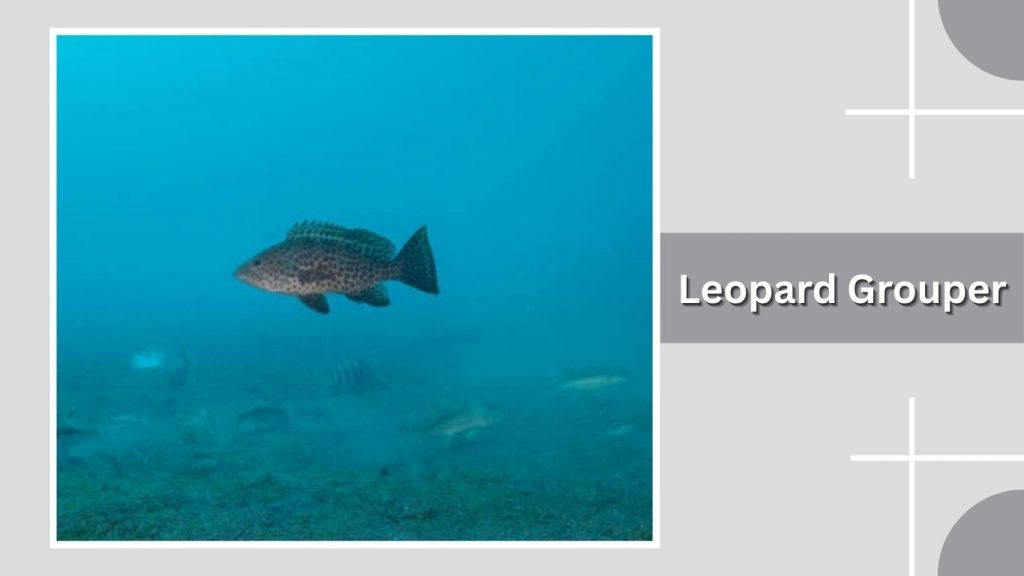
The leopard grouper is named for its bold, dark spots scattered across a lighter background, giving it a leopard-like appearance. It is a strong, fast ambush predator commonly found around coral reefs and rocky bottoms. This species is well known in tropical reef fisheries and is appreciated both for its beauty and its food value.
Identification
- Light cream to yellowish body covered with large dark brown or black spots
- Thick, elongated body with a large head and wide mouth
- Rounded tail fin and powerful pectoral fins
- Spot patterns may vary between individuals
- Adults typically grow 50–80 cm long
Habitat & Distribution
Leopard groupers are distributed across the Indo-Pacific, including the Red Sea, East Africa, Southeast Asia, and many Pacific islands. They prefer coral reefs, reef slopes, and rocky coastal zones with plenty of hiding spaces.
Diet & Hunting Behavior
This hamour fish feeds mainly on reef fish, crabs, shrimps, and cephalopods. It waits among coral and rocks, then strikes suddenly, swallowing prey whole with a powerful suction motion.
Size & Growth
Leopard groupers grow at a moderate rate and develop thicker bodies with age. Juveniles are usually found in shallow reefs and lagoons, while adults often move to deeper reef areas.
Relationship with Humans
This species is widely fished for food and is sold fresh in many coastal markets. It is also sometimes kept in large marine aquariums. Heavy fishing in some regions has raised concerns about local stock levels.
11. Coral Grouper (Hamour)
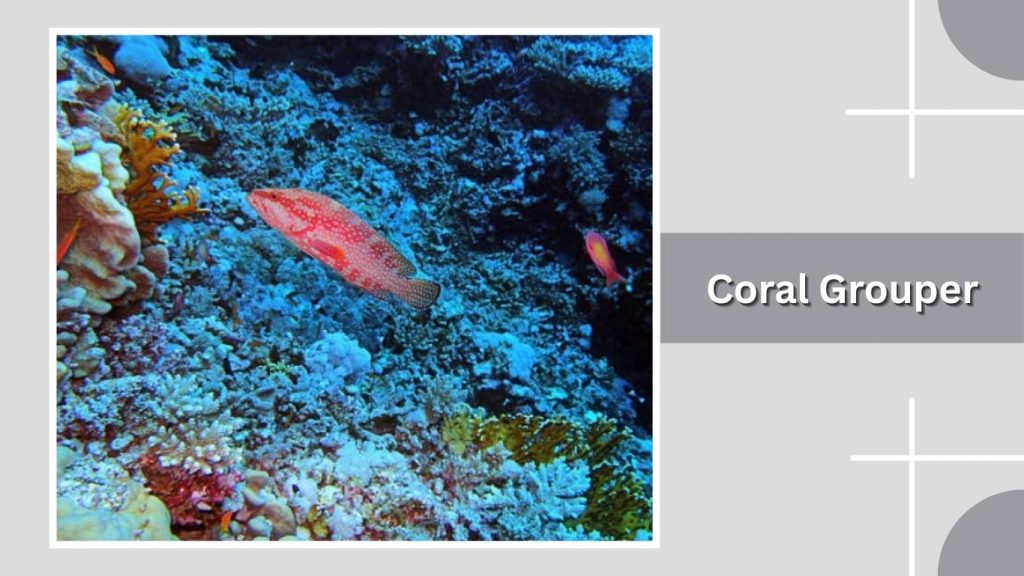
The coral grouper is one of the most colorful hamour fish, famous for its bright red to orange body covered with small blue spots. It is a fast and alert reef predator, often seen patrolling coral slopes and reef drop-offs. Because of its vivid appearance and excellent meat quality, it is one of the most valued reef groupers.
Identification
- Bright red, orange, or coral-pink body with many small blue spots
- Thick, streamlined body with a large mouth
- Rounded tail fin and pointed pectoral fins
- Color intensity may change with mood or environment
- Adults usually grow between 40–80 cm
Habitat & Distribution
Coral groupers are widespread across the Indo-Pacific, including the Red Sea, Indian Ocean, Southeast Asia, and the Great Barrier Reef. They live mainly on coral reefs, reef slopes, and outer reef drop-offs.
Diet & Hunting Behavior
This hamour fish feeds mostly on smaller reef fish, shrimps, and crabs. Unlike many slow groupers, coral groupers can actively pursue prey, making short, powerful bursts of speed to capture fish.
Size & Growth
Coral groupers grow at a moderate rate and become thicker and heavier with age. Juveniles are usually found in shallow reef areas, while adults dominate deeper reef slopes.
Relationship with Humans
Coral groupers are extremely popular in the live reef fish trade and high-end seafood markets. Due to intense demand, some species in this group face strong fishing pressure, making sustainable management essential.
12. Peacock Grouper (Hamour)
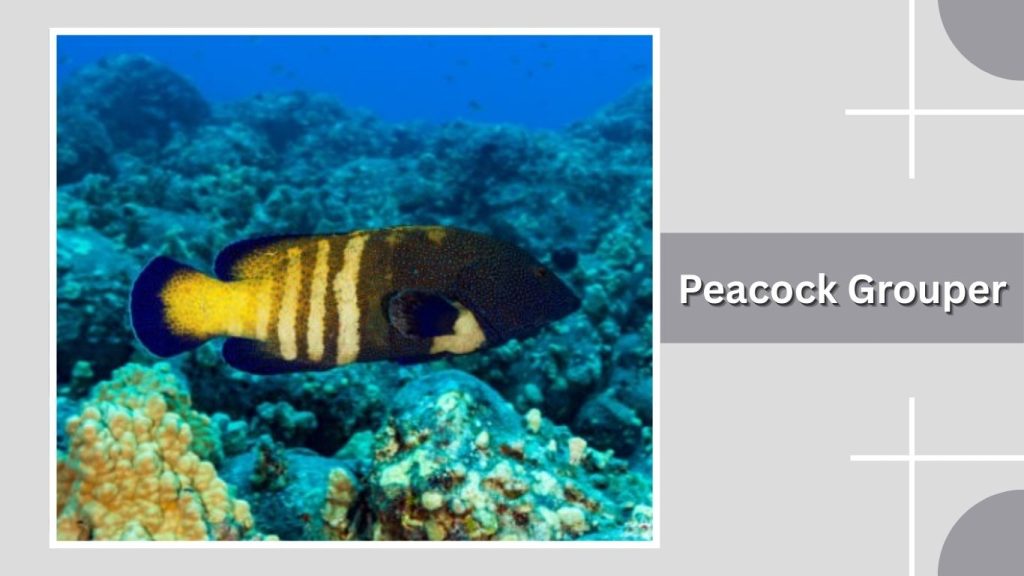
The peacock grouper is a highly distinctive hamour fish, easily recognized by the bright turquoise and blue spots covering its dark reddish-brown body. It is an aggressive reef predator that is often seen sitting on coral heads or slowly cruising reef slopes. This species is especially popular with divers because of its bold colors.
Identification
- Dark reddish-brown to chocolate body with bright blue or turquoise spots
- Thick, oval-shaped body with a large head and wide mouth
- Rounded tail fin and strong dorsal fin
- Color patterns remain vivid throughout adulthood
- Adults commonly reach 30–60 cm
Habitat & Distribution
Peacock groupers are native to the Indo-Pacific but have also been introduced to places like Hawaii. They inhabit coral reefs, rocky reefs, and lagoons, often staying near caves and coral shelters.
Diet & Hunting Behavior
This hamour fish feeds mainly on smaller fish, crabs, and shrimp. It is an ambush hunter, hiding among coral or rocks and launching sudden attacks on passing prey.
Size & Growth
Peacock groupers are smaller than many hamour species but grow steadily. Juveniles often live in shallow reef flats, while adults prefer reef slopes and outer reef areas.
Relationship with Humans
This species is harvested for food and is also popular in the aquarium display trade. In some regions, especially where it was introduced, it has had strong ecological impacts by reducing native fish populations.
13. Camouflage Grouper (Hamour)
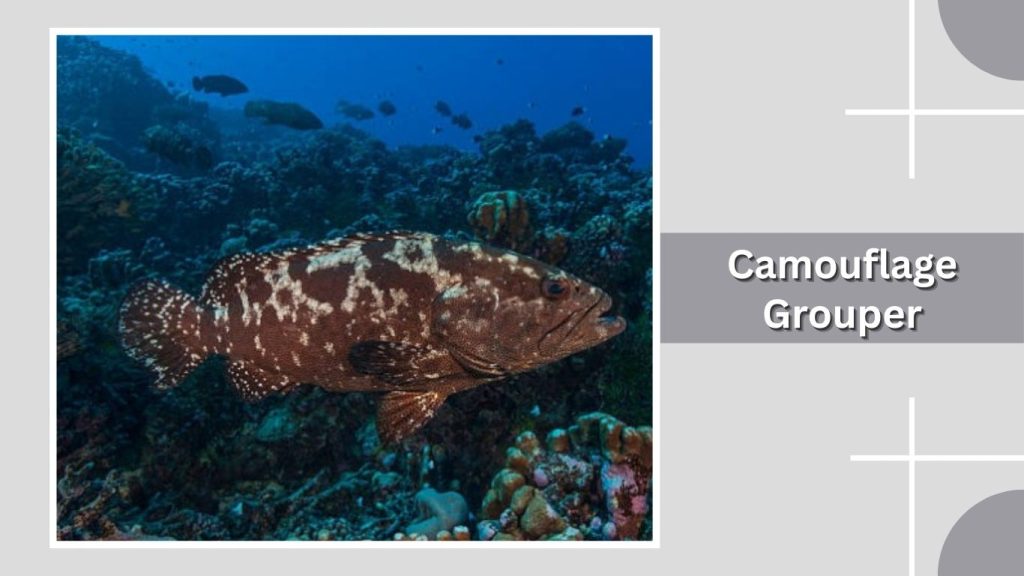
The camouflage grouper is named for its remarkable ability to blend into reef and rocky environments. Its body is covered with irregular blotches and patterns that closely match coral, sand, and stone. This makes it an effective ambush predator and a fascinating species for divers to observe.
Identification
- Grey, brown, or greenish body with irregular dark blotches
- Skin pattern often changes slightly to match surroundings
- Thick, robust body with a large head and wide mouth
- Rounded tail fin and strong pectoral fins
- Adults usually grow between 50–90 cm
Habitat & Distribution
Camouflage groupers are widely found across the Indo-Pacific, including the Red Sea, Indian Ocean, Southeast Asia, and western Pacific reefs. They inhabit coral reefs, rocky reefs, and reef slopes, often resting motionless near coral heads.
Diet & Hunting Behavior
This hamour fish feeds on reef fish, crustaceans, and squid. It relies heavily on stealth, staying perfectly still until prey moves within striking distance.
Size & Growth
Camouflage groupers grow steadily and become bulkier with age. Juveniles are more common in shallow reefs and lagoons, while adults move to deeper reef structures.
Relationship with Humans
This species is regularly caught in reef fisheries and is valued as a food fish. Its excellent camouflage also makes it a favorite subject for underwater photographers and divers.
14. Greasy Grouper (Hamour)
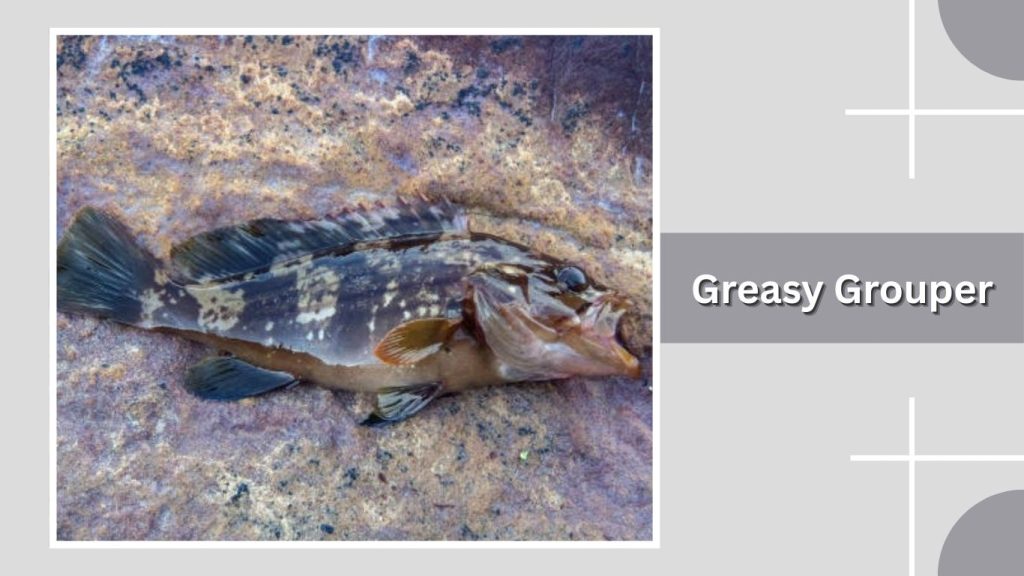
The greasy grouper is a dark-colored hamour fish known for its smooth, shiny appearance and scattered pale spots. It is a hardy reef predator that thrives in a wide range of coastal habitats. This species is one of the most commonly encountered groupers in Indo-Pacific reef fisheries.
Identification
- Dark brown to almost black body with small pale or whitish spots
- Thick, stocky body with a broad head
- Large mouth with strong jaws
- Rounded tail fin and wide pectoral fins
- Adults usually grow between 40–75 cm
Habitat & Distribution
Greasy groupers are widespread across the Indo-Pacific, including the Red Sea, East Africa, South Asia, Southeast Asia, and the western Pacific. They inhabit coral reefs, rocky reefs, lagoons, and even turbid coastal waters.
Diet & Hunting Behavior
This hamour fish feeds mainly on fish, shrimps, crabs, and small octopus. It is an ambush predator that hides in holes and crevices before making a sudden strike.
Size & Growth
Greasy groupers grow at a moderate rate and develop heavier bodies as they age. Juveniles often occur in shallow reef flats and protected bays, while adults dominate deeper reef areas.
Relationship with Humans
This species is heavily fished throughout its range and is a regular sight in seafood markets. It is valued for its firm flesh but is also vulnerable to overharvesting in areas without fishing controls.
15. Black Grouper (Hamour)
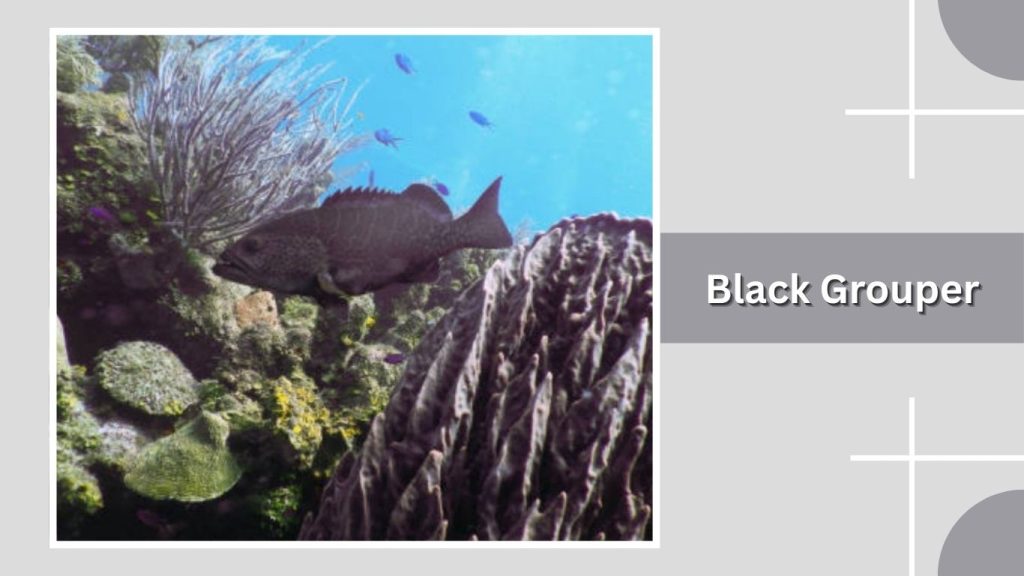
The black grouper is a large, powerful hamour fish recognized for its dark coloration and massive body. It is one of the dominant predators on Atlantic and Caribbean reefs, often seen cruising reef edges and deep ledges. This species is especially valued in commercial and sport fisheries.
Identification
- Dark grey to almost black body with faint lighter blotches
- Very thick, heavy body with a massive head and wide mouth
- Rounded tail fin and strong, broad fins
- Skin often shows bronze or greenish tones in sunlight
- Adults commonly reach 80–150 cm
Habitat & Distribution
Black groupers are mainly found in the western Atlantic, including Florida, the Gulf of Mexico, the Caribbean, and parts of South America. They inhabit coral reefs, rocky reefs, and offshore drop-offs.
Diet & Hunting Behavior
This hamour fish feeds on fish, lobsters, crabs, and octopus. It is a strong ambush predator but can also actively pursue prey over short distances.
Size & Growth
Black groupers are slow-growing and long-lived. Juveniles prefer shallow reefs and mangroves, while adults move to deeper offshore reefs.
Relationship with Humans
This species is one of the most important commercial groupers in the Atlantic. Due to high demand, strict size limits and seasonal closures are used in many regions to protect breeding populations.
16. Nassau Grouper (Hamour)
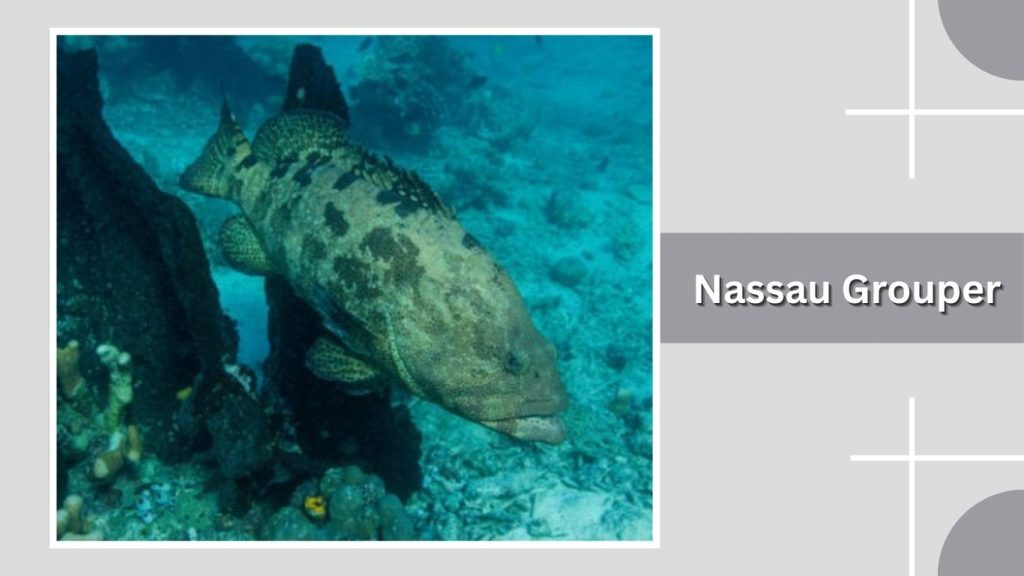
The Nassau grouper is one of the most well-known hamour fish in the Caribbean, famous for its seasonal spawning aggregations and distinctive body markings. It has a sturdy body, bold facial stripes, and a reputation as a key reef predator. Sadly, it is also one of the most overfished groupers in the world.
Identification
- Light brown to grey body with darker vertical bars
- Two distinct dark stripes running from the snout through the eyes
- Thick, oval-shaped body with a large mouth
- Rounded tail fin with a slightly squared edge
- Adults usually grow between 40–120 cm
Habitat & Distribution
Nassau groupers are found in the western Atlantic, including Florida, the Bahamas, the Caribbean Sea, and parts of Central America. They inhabit coral reefs, rocky bottoms, and reef drop-offs.
Diet & Hunting Behavior
This hamour fish feeds on fish, crabs, lobsters, and other crustaceans. It hunts mainly by ambush but is also capable of short, fast pursuits.
Size & Growth
Nassau groupers grow slowly and can live for several decades. Juveniles live in seagrass beds and shallow reefs before migrating to deeper coral reef habitats.
Relationship with Humans
Once one of the most important Caribbean food fish, Nassau groupers have suffered dramatic population declines. They are now protected in many countries, with fishing bans during spawning seasons.
17. Red Grouper (Hamour)
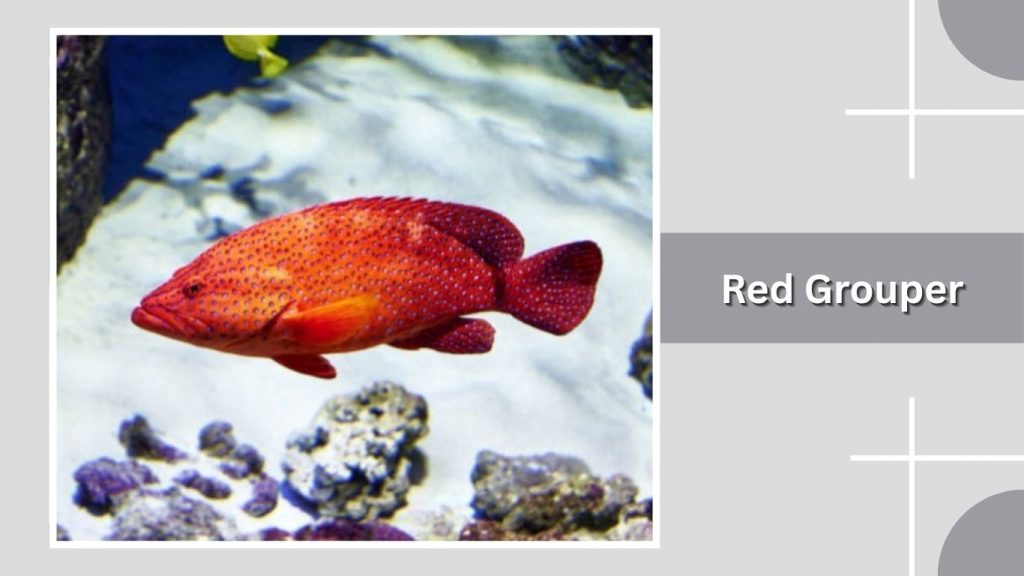
The red grouper is a robust hamour fish known for its brick-red to brownish coloration and its habit of shaping reef habitats by digging and clearing areas on the seafloor. It is a dominant predator in the Gulf of Mexico and western Atlantic reef systems and plays an important ecological role.
Identification
- Reddish-brown to brick-red body with scattered pale blotches
- Thick, heavy body with a broad head
- Large mouth with powerful jaws
- Rounded tail fin and wide pectoral fins
- Adults commonly grow between 50–125 cm
Habitat & Distribution
Red groupers are mainly found in the western Atlantic, including the Gulf of Mexico, Florida, and parts of the Caribbean. They inhabit rocky reefs, ledges, and sandy bottoms near reef structures.
Diet & Hunting Behavior
This hamour fish feeds on fish, crabs, shrimps, and squid. It often lies in wait near reef edges and uses sudden suction strikes to capture prey.
Size & Growth
Red groupers grow slowly and can live for several decades. Juveniles occupy shallow waters, while adults move to deeper offshore reefs.
Relationship with Humans
Red groupers are highly valued commercial fish. They support major fisheries, especially in the Gulf of Mexico. Because of their importance, strict regulations are used to maintain sustainable populations.
18. Snowy Grouper (Hamour)
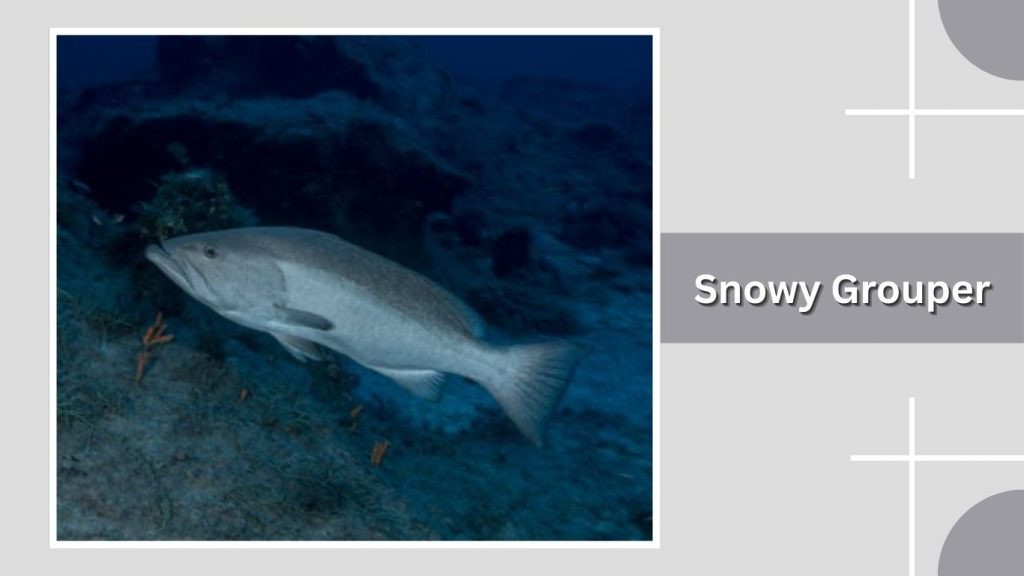
The snowy grouper is a deep-water hamour fish named for its pale spots that contrast against a dark brown background. It is less commonly seen by divers because it usually lives in deeper offshore waters. This species is an important commercial grouper in deeper reef and slope fisheries.
Identification
- Dark brown body with many small white or pale spots
- Thick, elongated body with a large head and wide mouth
- Rounded tail fin and strong dorsal fin
- Skin often appears velvety or matte
- Adults usually grow between 60–120 cm
Habitat & Distribution
Snowy groupers are found in the western Atlantic, including the Gulf of Mexico, Caribbean Sea, and along the southeastern coast of the United States. They prefer deep reefs, offshore ledges, and continental shelf edges.
Diet & Hunting Behavior
This hamour fish feeds on deep-water fish, crabs, shrimp, and squid. It is an ambush predator, resting near deep ledges and striking suddenly when prey comes close.
Size & Growth
Snowy groupers are slow-growing and long-lived. Juveniles may inhabit shallower reefs, while adults move to much deeper waters.
Relationship with Humans
This species supports valuable deep-water fisheries. Due to slow growth and late maturity, it is sensitive to overfishing, and catch limits are enforced in many regions.
19. Warsaw Grouper (Hamour)
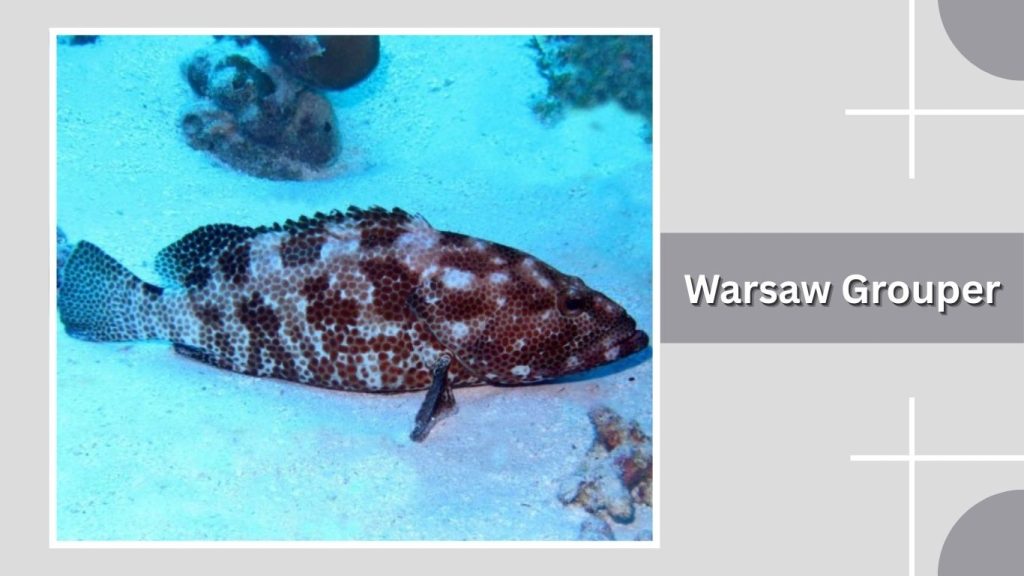
The Warsaw grouper is a massive deep-water hamour fish known for its thick body, huge mouth, and dark, uniform coloration. It lives much deeper than most reef groupers, making encounters with divers rare. Because of its size and strength, it is considered one of the giants of the grouper family.
Identification
- Dark brown to nearly black body with few visible markings
- Extremely thick, heavy body and very large head
- Huge mouth capable of swallowing large prey
- Rounded tail fin and broad pectoral fins
- Adults often exceed 150 cm in length
Habitat & Distribution
Warsaw groupers are found in the western Atlantic, including the Gulf of Mexico, Caribbean Sea, and parts of South America. They inhabit deep reefs, steep drop-offs, and continental shelf edges.
Diet & Hunting Behavior
This hamour fish feeds on fish, crustaceans, and deep-water cephalopods. It is a powerful ambush predator, relying on surprise and suction to capture large prey.
Size & Growth
Warsaw groupers grow very slowly and may live for many decades. They reach maturity late, which makes their populations extremely vulnerable to overfishing.
Relationship with Humans
Warsaw groupers are occasionally caught in deep-sea fisheries, but their low population numbers have raised serious conservation concerns. They are considered endangered in some regions.
20. Gag Grouper (Hamour)
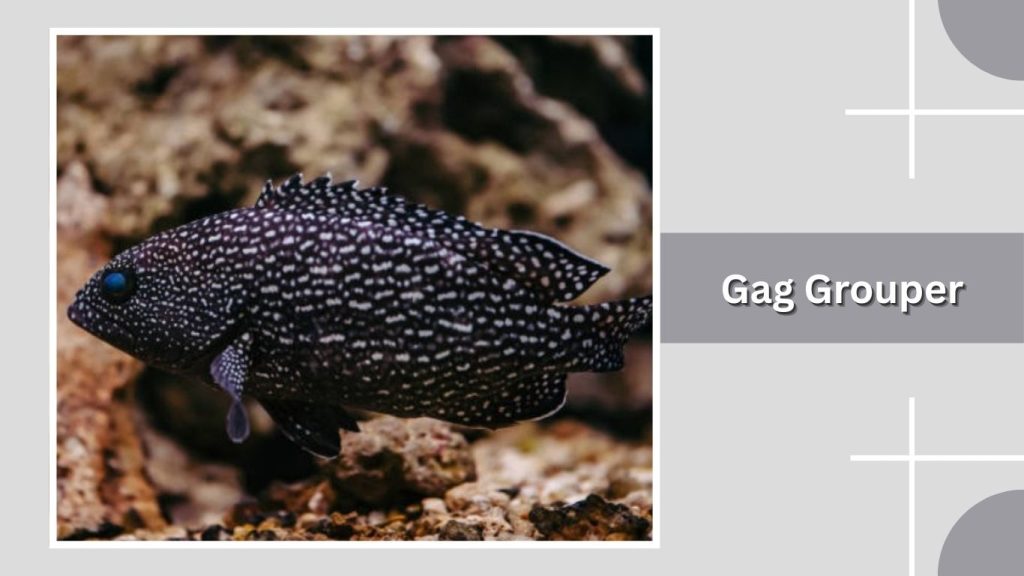
The gag grouper is a large, strong hamour fish well known in the western Atlantic for its changing color patterns and commercial importance. Juveniles are often light with dark markings, while adults become darker and more uniform. This species is a major reef predator and a key target in commercial and recreational fisheries.
Identification
- Juveniles pale with dark, wavy markings; adults grey to dark brown
- Thick, streamlined body with a broad head
- Large mouth and strong jaws
- Rounded tail fin with a slightly squared edge
- Adults usually grow between 60–120 cm
Habitat & Distribution
Gag groupers are found mainly in the western Atlantic, including the Gulf of Mexico, Florida, and along the southeastern United States coast. They inhabit rocky reefs, ledges, and offshore reef structures.
Diet & Hunting Behavior
This hamour fish feeds on fish, crabs, shrimps, and squid. It hunts by ambush, hiding near reef cover before making short, powerful attacks.
Size & Growth
Gag groupers grow slowly and can live for over 30 years. Juveniles occupy shallow seagrass beds and estuaries before moving offshore as adults.
Relationship with Humans
The gag grouper is one of the most economically important groupers in the United States. Because of heavy fishing pressure, seasonal closures, quotas, and size limits are widely used.
21. Rock Hind (Hamour)
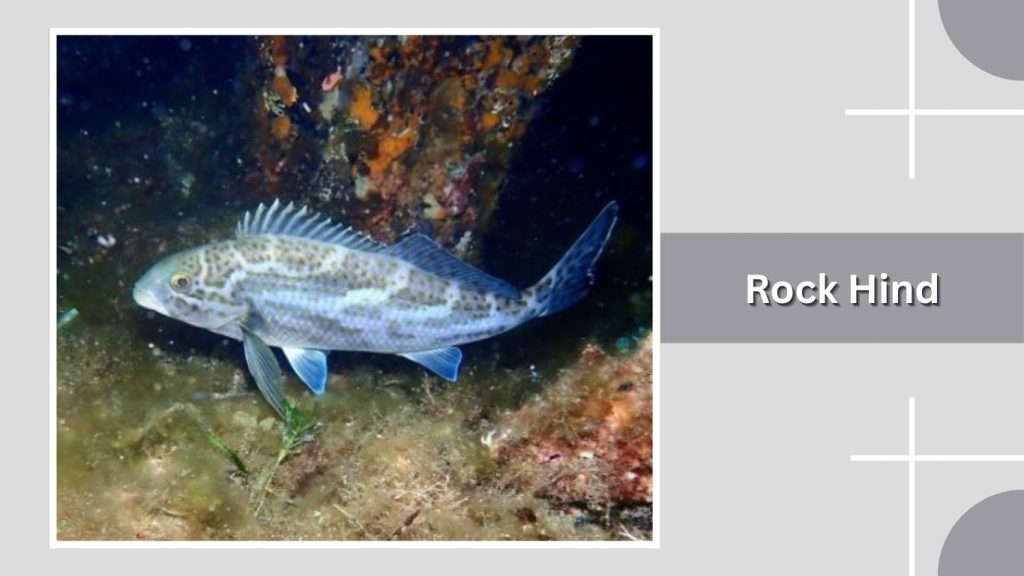
The rock hind is a smaller hamour fish compared to many giant groupers, but it is a bold and active reef predator. It is easily recognized by its contrasting body pattern and red-orange spots. This species is often seen around shallow reefs and rocky coastlines.
Identification
- Light brown to tan body with darker mottling
- Numerous small red, orange, or brown spots across the body
- Thick body with a large mouth for its size
- Rounded tail fin and spiny dorsal fin
- Adults usually grow between 30–60 cm
Habitat & Distribution
Rock hinds are mainly found in the western Atlantic, including Florida, the Caribbean, and parts of the Gulf of Mexico. They inhabit shallow coral reefs, rocky shores, and reef slopes.
Diet & Hunting Behavior
This hamour fish feeds on small fish, crabs, shrimps, and other invertebrates. It is an ambush predator, often sitting motionless near rocks before striking.
Size & Growth
Rock hinds grow more quickly than larger groupers but remain relatively small. Juveniles often live in very shallow reef zones before moving deeper as they mature.
Relationship with Humans
Rock hinds are caught in local reef fisheries and are also popular with recreational anglers. They are not as heavily exploited as larger hamour species but still require monitoring.
22. Tiger Grouper (Hamour)
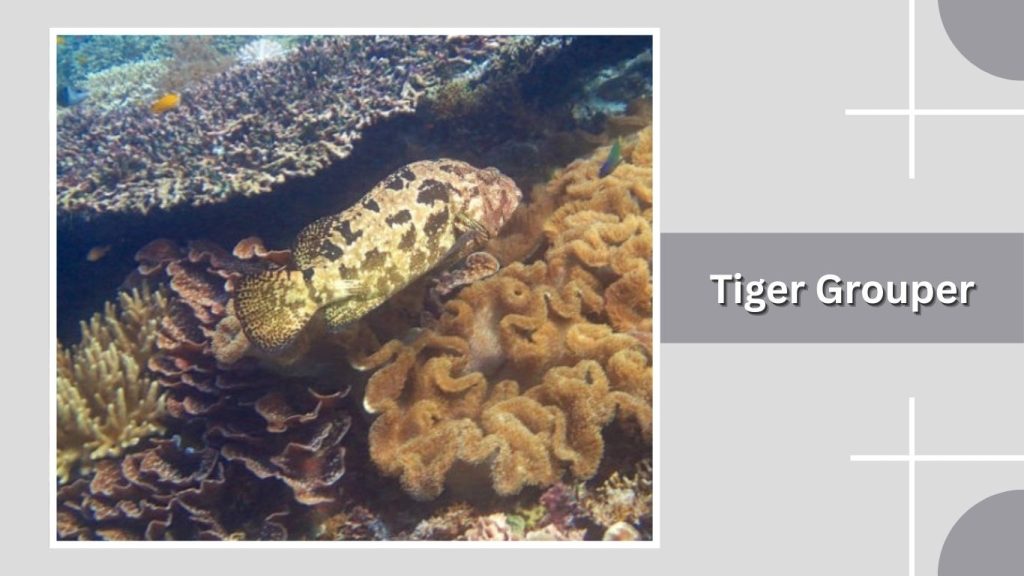
The tiger grouper is a rare hybrid hamour fish, usually produced by crossing a giant grouper with another large grouper species. It is named for its bold, tiger-like stripes and impressive growth rate. This fish is especially popular in aquaculture because of its fast growth and high market value.
Identification
- Grey to brown body with bold dark vertical tiger-like stripes
- Very thick, heavy body with a massive head
- Large mouth with strong jaws
- Rounded tail fin and wide pectoral fins
- Can grow very large, often over 100 cm
Habitat & Distribution
Tiger groupers are rarely found naturally and are mostly produced in fish farms across Southeast Asia and China. In the wild, they resemble deep-reef groupers and would inhabit coral reefs and rocky offshore areas.
Diet & Hunting Behavior
This hamour fish is strongly carnivorous, feeding on fish, crabs, and shrimp. In the wild, it would behave as an ambush predator similar to other large groupers.
Size & Growth
Tiger groupers grow much faster than most natural hamour species, which makes them highly attractive for aquaculture. They develop thick bodies and large fillets in a short time.
Relationship with Humans
This species is extremely important in fish farming and the live reef food fish trade. It is rarely encountered by divers but is common in seafood markets supplied by aquaculture.
23. Spotted Coral Grouper (Hamour)
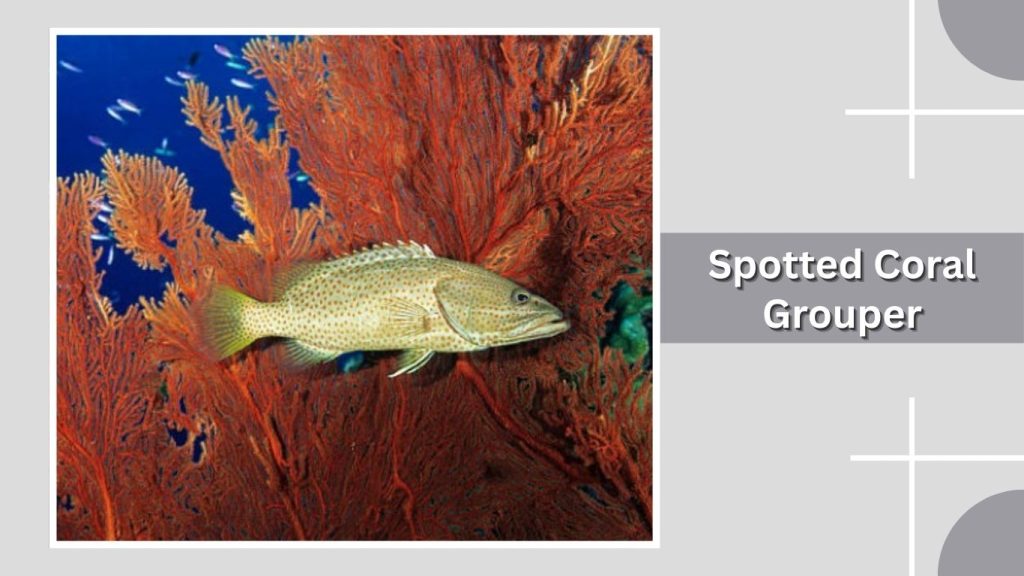
The spotted coral grouper is a brightly colored hamour fish admired for its vivid red body covered with small blue or dark spots. It is an alert, fast-moving reef predator commonly seen around coral slopes and reef edges. This species is one of the most iconic coral reef groupers.
Identification
- Bright red to orange-red body with many small blue or dark spots
- Thick, streamlined body with a large mouth
- Rounded tail fin and strong pectoral fins
- Colors may intensify when hunting or excited
- Adults usually grow between 40–80 cm
Habitat & Distribution
Spotted coral groupers are found across the Indo-Pacific, including the Indian Ocean, Southeast Asia, and the Great Barrier Reef. They live mainly on coral reefs, reef slopes, and outer reef walls.
Diet & Hunting Behavior
This hamour fish feeds mostly on reef fish, shrimps, and crabs. It often actively patrols reef edges and makes quick bursts of speed to capture prey.
Size & Growth
Spotted coral groupers grow at a moderate rate and develop thicker bodies with age. Juveniles usually live in shallow reefs, while adults dominate deeper coral slopes.
Relationship with Humans
This species is highly valued in the live reef food fish trade and premium seafood markets. Heavy fishing pressure in some regions has raised sustainability concerns.
24. Lyretail Grouper (Hamour)
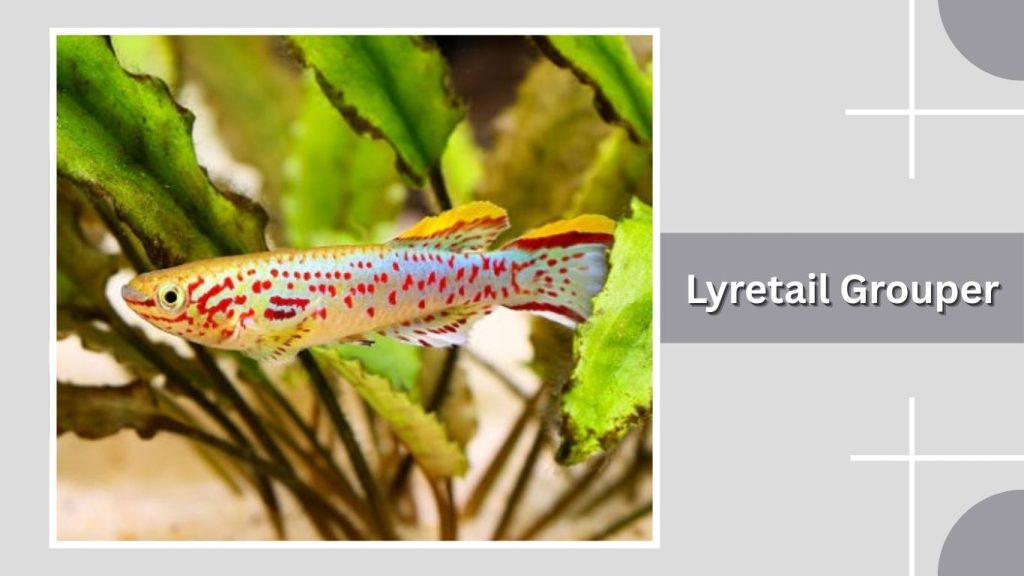
The lyretail grouper is a beautifully patterned hamour fish known for its slightly forked, lyre-shaped tail and dense covering of small dark spots. It is an active reef predator often seen resting near coral outcrops or cruising slowly along reef slopes. Divers frequently recognize this species because of its elegant shape and bold markings.
Identification
- Light grey to brown body covered with many small dark spots
- Slightly forked, lyre-shaped tail fin
- Thick body with a large head and wide mouth
- Rounded dorsal and anal fins
- Adults usually grow between 40–70 cm
Habitat & Distribution
Lyretail groupers are widely distributed in the Indo-Pacific, including the Red Sea, East Africa, Indian Ocean islands, Southeast Asia, and northern Australia. They inhabit coral reefs, rocky reefs, lagoons, and reef slopes.
Diet & Hunting Behavior
This hamour fish feeds mainly on small reef fish, shrimps, and crabs. It hunts by ambush, staying close to coral structures and lunging suddenly when prey comes within range.
Size & Growth
Lyretail groupers grow at a moderate pace. Juveniles are often found in shallow reefs and lagoons, while adults prefer deeper reef zones with more shelter.
Relationship with Humans
This species is caught in local reef fisheries and is sold fresh in seafood markets. It is also popular with recreational anglers and underwater photographers because of its distinctive appearance.
25. Star-spotted Grouper (Hamour)
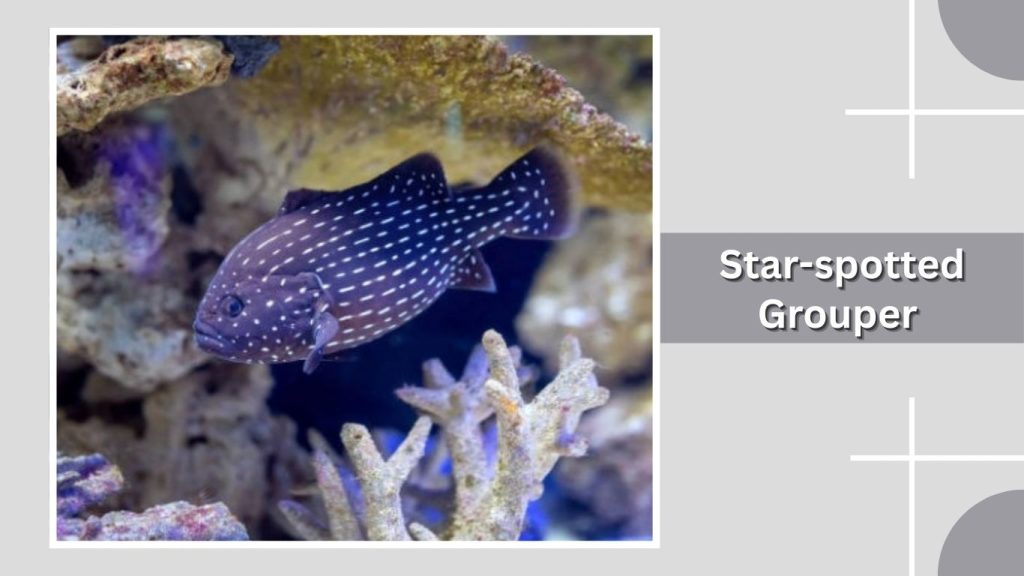
The star-spotted grouper is a striking hamour fish named for the star-like pale spots scattered across its darker body. These spots give it a sparkling appearance underwater. It is a reef-associated predator commonly found around coral heads, rocky ledges, and reef slopes.
Identification
- Dark brown to grey body covered with pale, star-like spots
- Thick, oval-shaped body with a large head and wide mouth
- Rounded tail fin and strong pectoral fins
- Spot patterns may vary between individuals
- Adults usually grow between 40–75 cm
Habitat & Distribution
Star-spotted groupers are found mainly in the Indo-Pacific region, including the Red Sea, Indian Ocean, Southeast Asia, and western Pacific islands. They inhabit coral reefs, rocky reefs, and sheltered lagoons.
Diet & Hunting Behavior
This hamour fish feeds on small fish, crabs, shrimps, and other reef invertebrates. It hunts by ambush, staying hidden near reef structures before launching sudden attacks.
Size & Growth
Star-spotted groupers grow steadily and become bulkier with age. Juveniles prefer shallow reef environments, while adults move to deeper coral reef zones.
Relationship with Humans
This species is regularly caught in reef fisheries and is valued for its good meat quality. In some areas, fishing pressure has increased, making local conservation measures important.
FAQs
What is Hamour fish?
Hamour is a common Middle Eastern and South Asian market name for several species of groupers. These fish are thick-bodied reef predators known for their large mouths, slow growth, and high food value. Many different grouper species are sold under the single name “Hamour.”
Is Hamour fish good to eat?
Yes, hamour fish is highly valued for its firm, white flesh and mild flavor. It is widely used in grilled, fried, and curry dishes. Because of high demand, some hamour species are now farmed in aquaculture to reduce pressure on wild populations.
Where do Hamour fish usually live?
Most hamour fish live in warm tropical and subtropical waters. They are commonly found around coral reefs, rocky bottoms, lagoons, and reef slopes, where they hide in caves and crevices and hunt smaller fish and crustaceans.
How big can Hamour fish grow?
Size depends on the species. Smaller hamour types may reach only 30–50 cm, while large species like the giant grouper can grow over 2.5 meters long and weigh several hundred kilograms, making them among the largest reef fish in the world.
Are Hamour fish endangered?
Some hamour species are threatened due to overfishing and habitat loss. Because groupers grow slowly and mature late, their populations recover very slowly. Many countries now use size limits, seasonal bans, and protected areas to conserve them.