


Hawks are powerful birds of prey known for their sharp vision, strong talons, and impressive hunting skills. Found on every continent except Antarctica, they occupy a wide range of habitats, from open grasslands and deserts to dense forests and mountain regions. This guide explores 27 common types of hawks, highlighting their identification, habitats, behaviors, diets, and life cycles to help readers better understand these skilled and fascinating raptors.
1. Red-tailed Hawk
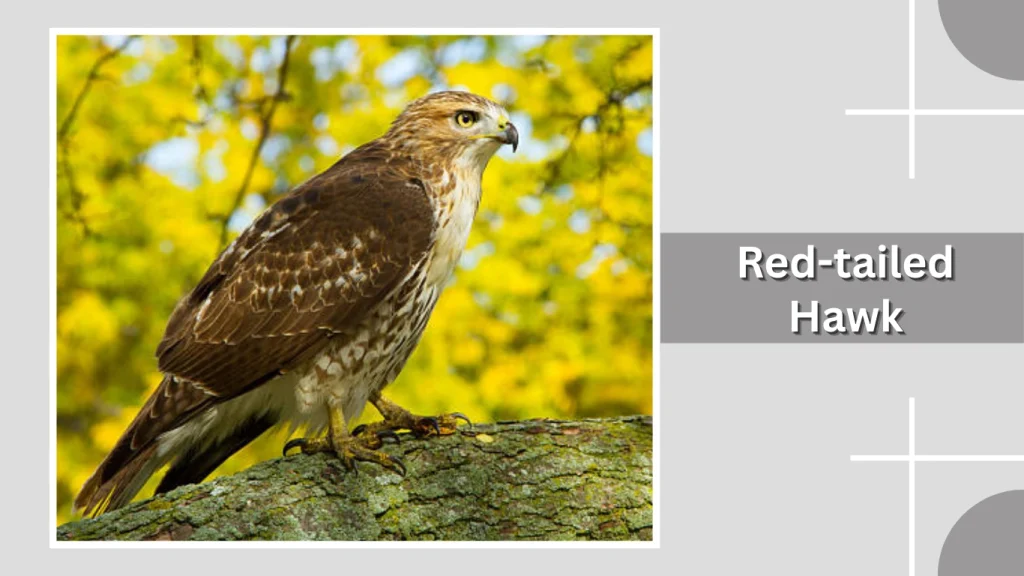
The Red-tailed Hawk is one of the most common and easily recognized hawks in North America. Known for its broad wings and distinctive reddish tail, it is a powerful and adaptable bird of prey often seen soaring over open landscapes.
Identification
- Large hawk measuring about 18–26 inches (45–65 cm) long
- Broad, rounded wings with a wide wingspan
- Brick-red tail in adults (juveniles have brown, banded tails)
- Pale underside with a dark belly band
- Sharp, hooked beak and strong yellow talons
Habitat and Behaviors
Red-tailed Hawks inhabit a wide range of environments including grasslands, deserts, forests, farmlands, and urban areas. They often perch on trees, poles, or cliffs while scanning the ground for prey. These hawks are frequently seen soaring in wide circles, using thermal air currents to conserve energy. They are territorial during the breeding season and are known for their loud, raspy scream commonly used in movies and television to represent birds of prey.
Diet and Lifecycle
Their diet primarily consists of small mammals such as mice, voles, rabbits, and squirrels, though they may also eat birds, reptiles, and carrion. Red-tailed Hawks typically mate for life and build large stick nests high in trees or on cliff ledges. Females usually lay 1–3 eggs, which hatch after about a month. Chicks fledge at around 6–7 weeks but remain dependent on their parents for several more weeks. Red-tailed Hawks can live 10–20 years in the wild.
2. Red-shouldered Hawk
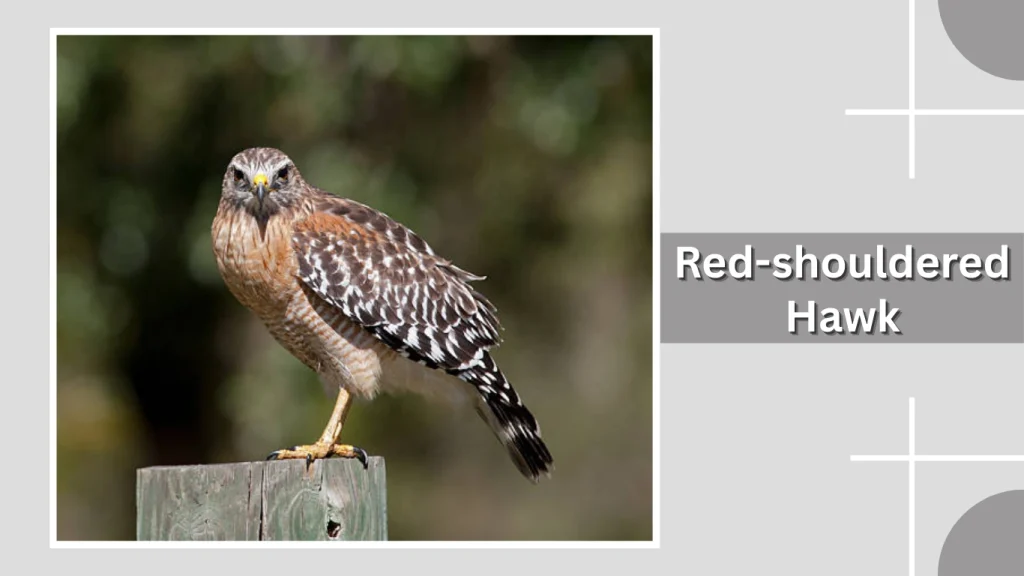
The Red-shouldered Hawk is a medium-sized forest hawk known for its striking plumage and piercing calls. It is commonly found near wetlands and wooded areas, where it hunts from perches beneath the forest canopy.
Identification
- Medium-sized hawk, about 16–24 inches (41–61 cm) long
- Reddish-brown shoulders and upper wings
- Bold black-and-white checkered wings and tail
- Warm reddish barring on the chest and belly
- Yellow legs and hooked beak
Habitat and Behaviors
Red-shouldered Hawks favor mature forests, swamps, river corridors, and wooded suburban areas, especially near water. They often perch quietly inside trees rather than soaring high like Red-tailed Hawks. These hawks are vocal and frequently announce their presence with loud, repeated calls. They are territorial year-round and may be seen flying through the forest with quick, direct wingbeats.
Diet and Lifecycle
Their diet includes small mammals, frogs, snakes, lizards, birds, and large insects. They hunt by watching from a perch and dropping quickly onto prey. Red-shouldered Hawks usually nest in tall trees, building stick nests lined with bark and greenery. Females typically lay 2–4 eggs. Young hawks fledge after about 6 weeks but remain dependent on their parents for food and protection for several more weeks.
3. Cooper’s Hawk
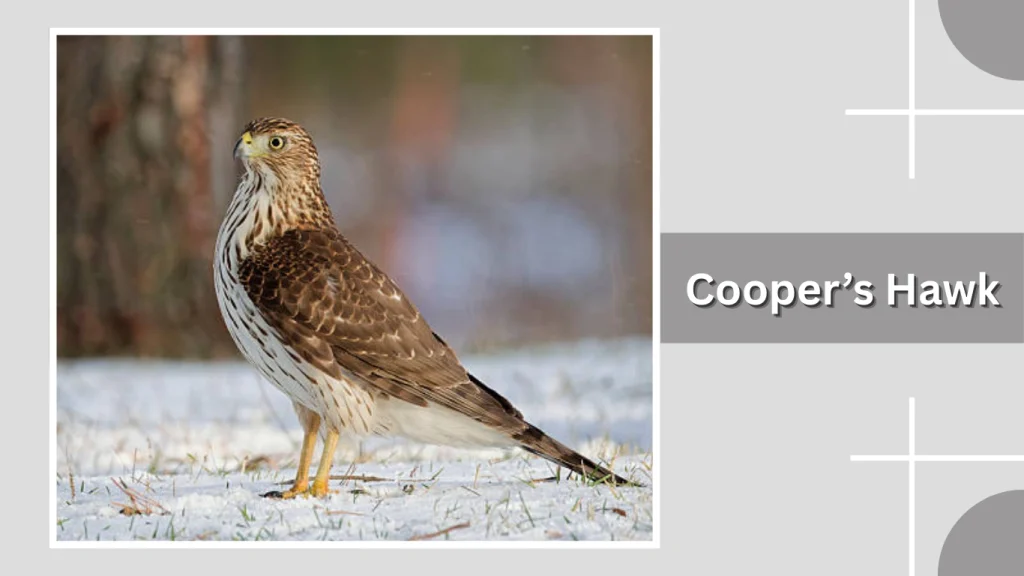
Cooper’s Hawk is a fast, agile forest hawk best known for its skill at chasing birds through dense trees. It is a common species in North America and has adapted well to suburban areas, where it often hunts around bird feeders.
Identification
- Medium-sized hawk, about 14–20 inches (36–51 cm) long
- Broad, rounded wings and a long tail
- Blue-gray back with a reddish barred chest
- Dark bands across the tail with a rounded tip
- Red eyes in adults (yellow in juveniles)
Habitat and Behaviors
Cooper’s Hawks inhabit forests, woodlands, forest edges, and suburban neighborhoods with mature trees. They are stealthy hunters that rely on speed and surprise, often flying low and weaving between trees to capture prey. Unlike soaring hawks, they are frequently seen making quick, powerful flights. They are territorial during breeding season and can be aggressive in defending their nests.
Diet and Lifecycle
Their diet consists mainly of medium-sized birds such as doves, pigeons, and songbirds, as well as small mammals like squirrels and mice. Cooper’s Hawks build stick nests high in trees. Females usually lay 3–5 eggs, which hatch after about 30–36 days. Chicks fledge at around 4–5 weeks but depend on their parents for several more weeks. In the wild, Cooper’s Hawks commonly live 8–12 years.
4. Sharp-shinned Hawk
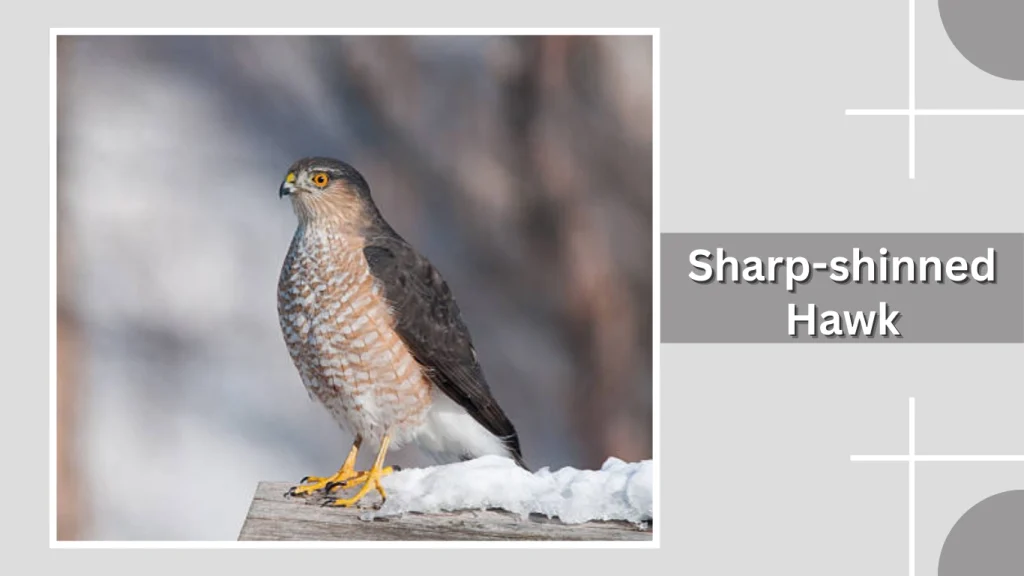
The Sharp-shinned Hawk is the smallest hawk in North America and is known for its incredible speed and agility. This secretive forest raptor specializes in chasing small birds through dense vegetation, making it a skilled and efficient aerial hunter.
Identification
- Small hawk, about 9–14 inches (23–36 cm) long
- Short, rounded wings and a long, narrow tail
- Blue-gray upperparts with reddish barring on the chest
- Square-tipped tail with dark bands
- Yellow eyes in juveniles, turning red in adults
Habitat and Behaviors
Sharp-shinned Hawks inhabit coniferous and mixed forests, woodlands, and forest edges. During migration and winter, they are often seen near suburban areas where songbirds are abundant. These hawks are stealthy and fast, using surprise attacks and rapid wingbeats to pursue prey. They usually hunt by darting from cover rather than soaring and are most active during daylight hours. Despite their small size, they are fierce and determined predators.
Diet and Lifecycle
Their diet consists mainly of small birds such as sparrows, finches, and warblers, though they occasionally eat insects or small mammals. Breeding occurs in dense forests, where they build well-hidden stick nests high in trees. Females typically lay 3–5 eggs, which are incubated for about 30–35 days. Young hawks fledge at around 3–4 weeks but remain dependent on their parents for several more weeks.
5. Broad-winged Hawk
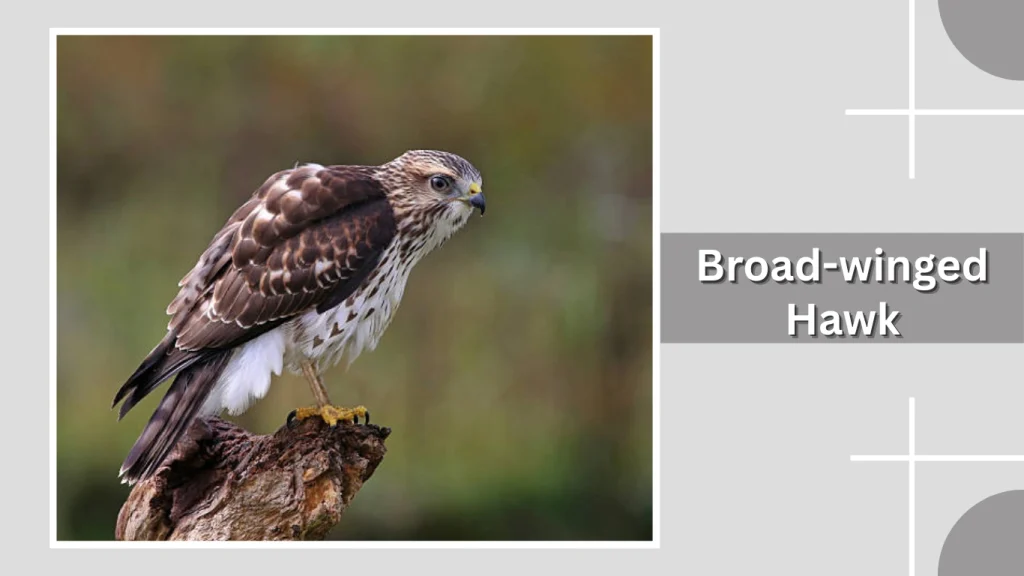
The Broad-winged Hawk is a compact, forest-dwelling raptor best known for its spectacular mass migrations, where thousands can be seen soaring together in thermal columns. Though often hidden during the breeding season, it becomes highly visible during migration.
Identification
- Medium-sized hawk, about 13–17 inches (34–44 cm) long
- Broad, rounded wings and a short, square tail
- Dark brown upper body with a pale, lightly barred underside
- Tail marked with bold black-and-white bands
- Yellow legs and dark eyes
Habitat and Behaviors
Broad-winged Hawks inhabit dense deciduous and mixed forests, often near water. They prefer quiet, wooded areas and are rarely seen soaring during the breeding season, instead hunting from perches beneath the canopy. During migration in fall and spring, they form large groups called “kettles,” riding warm air currents to conserve energy. They are generally shy and unobtrusive when not migrating and rely on forest cover for protection.
Diet and Lifecycle
Their diet includes small mammals, frogs, snakes, lizards, insects, and occasionally small birds. Broad-winged Hawks hunt by watching from a perch and dropping quickly onto prey. They build stick nests in tall trees, often reusing the same site each year. Females typically lay 2–4 eggs, which hatch after about 30–35 days. Chicks fledge in roughly 5–6 weeks but remain dependent on adults for a short period afterward.
6. Swainson’s Hawk
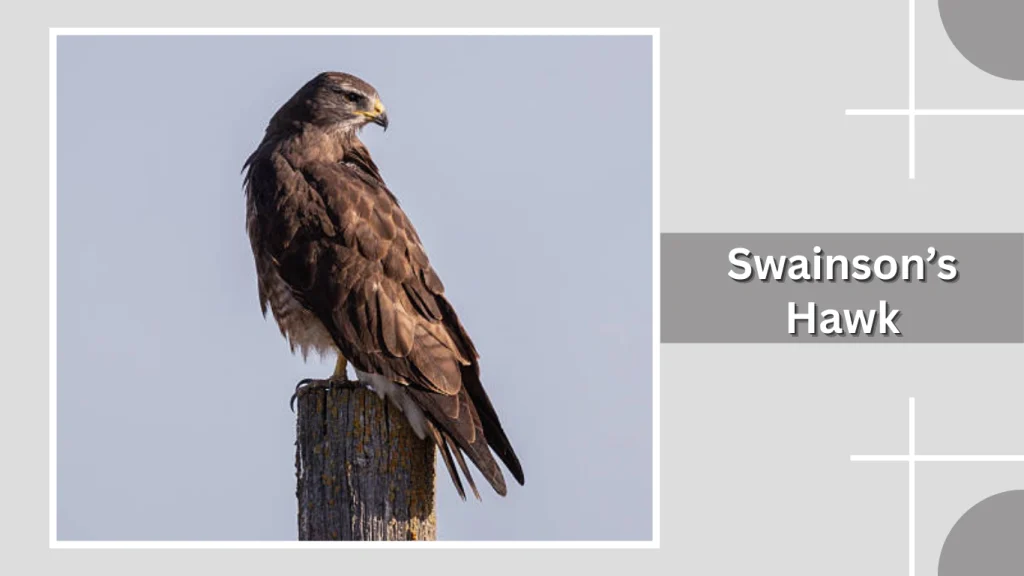
The Swainson’s Hawk is a long-winged raptor famous for its incredible long-distance migrations. Native to the Americas, it travels from North America to South America each year, making one of the longest migrations of any hawk species.
Identification
- Medium to large hawk, about 17–22 inches (43–56 cm) long
- Long, narrow wings adapted for soaring
- Brown upperparts with a pale underside
- Distinct dark bib on the chest in many individuals
- Tail gray-brown with subtle banding
Habitat and Behaviors
Swainson’s Hawks inhabit open grasslands, prairies, agricultural fields, and deserts. During the breeding season, they are often seen perched on fence posts or soaring high on thermals. Outside of breeding, they become highly social and may gather in large flocks, especially during migration. They rely heavily on soaring flight to conserve energy and can travel thousands of miles annually. These hawks are generally tolerant of human-modified landscapes.
Diet and Lifecycle
Their diet shifts seasonally and includes small mammals, reptiles, birds, and large insects such as grasshoppers. In South America, they often feed almost exclusively on insects. Swainson’s Hawks build stick nests in isolated trees or shrubs. Females typically lay 2–3 eggs, which hatch after about 34 days. Young hawks fledge in 5–6 weeks and begin their first migration only months after leaving the nest.
7. Ferruginous Hawk
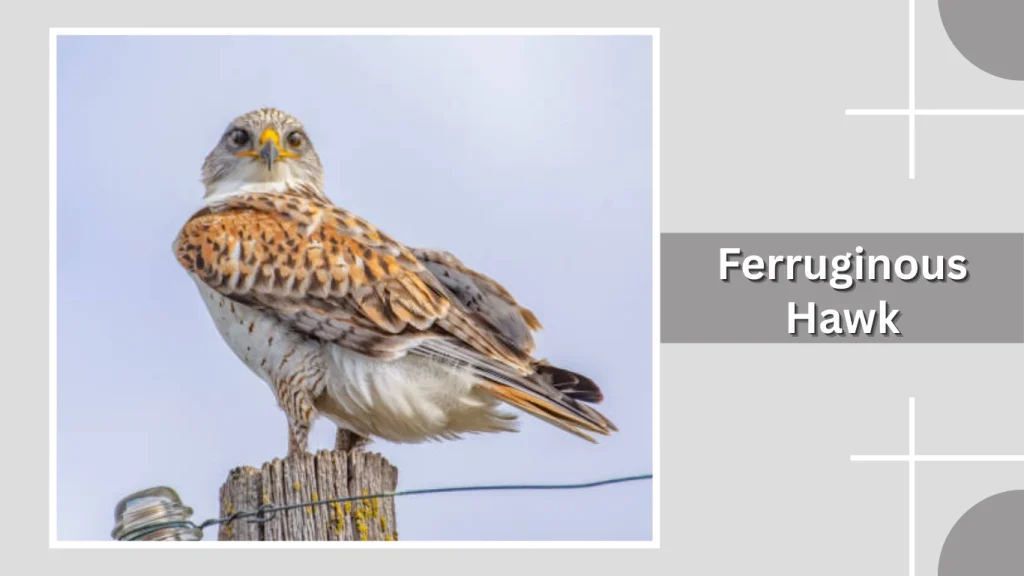
The Ferruginous Hawk is the largest hawk in North America and is named for its rust-colored (ferruginous) markings. It is a powerful raptor of open country, often seen soaring over wide plains or perched on low rises scanning for prey.
Identification
- Very large hawk, about 20–27 inches (51–69 cm) long
- Broad wings and a large head
- Pale underside with rusty-colored legs and back
- Light tail, often whitish with minimal banding
- Feathered legs extending down to the toes
Habitat and Behaviors
Ferruginous Hawks inhabit open grasslands, prairies, deserts, and shrublands with minimal tree cover. They prefer wide, open spaces where prey is abundant and visibility is high. These hawks often hunt from elevated perches such as rocks, mounds, or fence posts, but they also soar at low altitudes while searching for prey. They are generally solitary and sensitive to disturbance, especially during the breeding season, when they strongly defend nesting territories.
Diet and Lifecycle
Their diet consists mainly of small to medium-sized mammals, including prairie dogs, ground squirrels, rabbits, and mice. Birds and reptiles are taken occasionally. Ferruginous Hawks build large stick nests on cliffs, trees, or artificial structures such as utility poles. Females typically lay 2–4 eggs, which hatch after about 32–35 days. Chicks fledge at around 6–7 weeks but may remain dependent on their parents for several more weeks.
8. Rough-legged Hawk
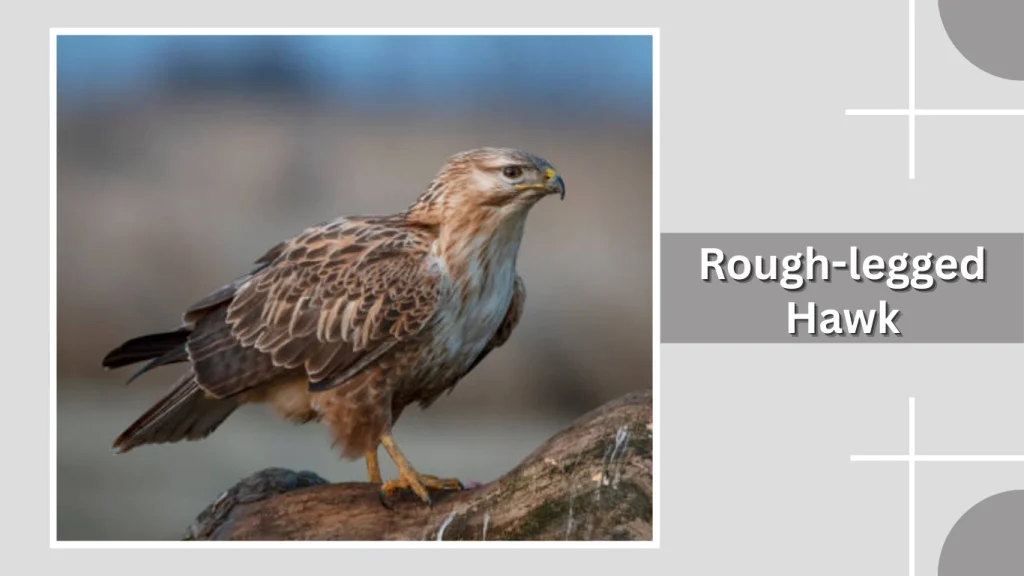
The Rough-legged Hawk is a cold-climate raptor best known for its feathered legs and long migrations between Arctic breeding grounds and southern wintering areas. It is commonly seen hovering over open fields while hunting.
Identification
- Medium to large hawk, about 18–23 inches (46–59 cm) long
- Broad wings with dark patches at the wrists
- Feathered legs extending to the toes
- Light and dark color morphs
- Dark band across the belly in most individuals
Habitat and Behaviors
Rough-legged Hawks breed in Arctic tundra and migrate south in winter to grasslands, prairies, marshes, and agricultural fields. Unlike many hawks, they frequently hover in place while scanning the ground for prey, a behavior especially noticeable in windy conditions. They are mostly seen in open landscapes with few trees and are generally solitary outside of migration.
Diet and Lifecycle
Their diet consists mainly of small mammals such as voles, mice, and lemmings, with occasional birds. Breeding occurs in the Arctic, where nests are built on cliffs or rocky outcrops. Females typically lay 3–5 eggs, and clutch size often depends on prey availability. Chicks fledge after about 5–6 weeks. Rough-legged Hawks usually live 10–15 years in the wild.
9. Harris’s Hawk
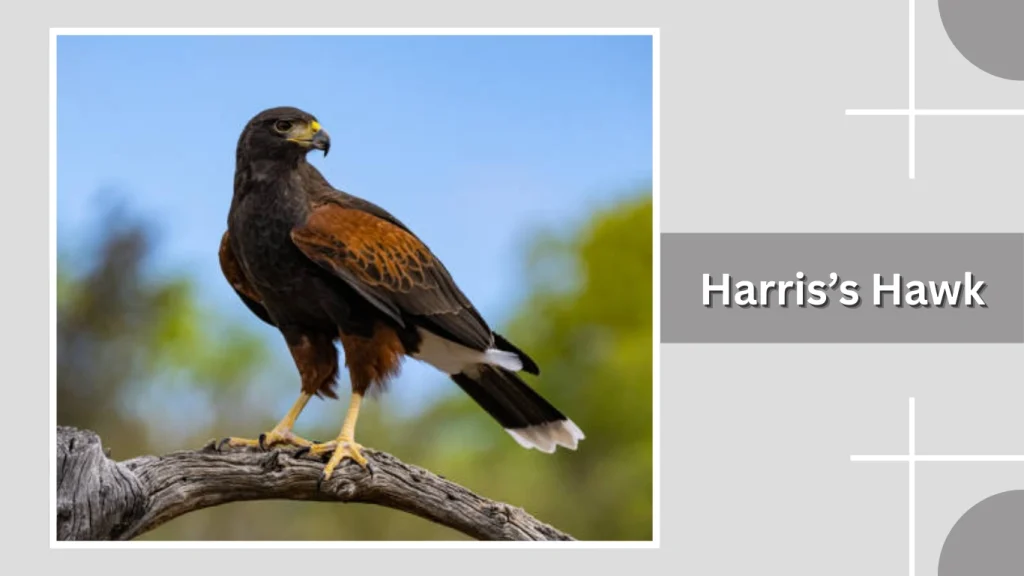
Harris’s Hawk is a highly social and intelligent raptor native to the Americas. Unlike most hawks, it is famous for hunting cooperatively in family groups, a behavior that makes it unique among birds of prey.
Identification
- Medium to large hawk, about 18–23 inches (46–59 cm) long
- Dark brown body with chestnut shoulders and thighs
- White markings at the base and tip of the tail
- Broad wings and long legs
- Yellow cere, legs, and eyes
Habitat and Behaviors
Harris’s Hawks inhabit deserts, scrublands, grasslands, and open woodlands, especially in arid and semi-arid regions. They are most active during the day and are often seen perched together on cacti, trees, or utility poles. Their cooperative hunting strategy involves flushing, chasing, and ambushing prey as a group, greatly increasing success. They also share food and help raise young, forming strong social bonds that can last for years.
Diet and Lifecycle
Their diet includes small to medium-sized mammals such as rabbits, hares, rodents, birds, and reptiles. Harris’s Hawks build stick nests in trees, shrubs, or cacti. Breeding groups may include more than two adults, with helpers assisting in feeding and protecting the young. Females typically lay 2–4 eggs. Chicks fledge after about 5–6 weeks but often remain with the family group for extended periods, learning hunting skills before dispersing.
10. Northern Goshawk
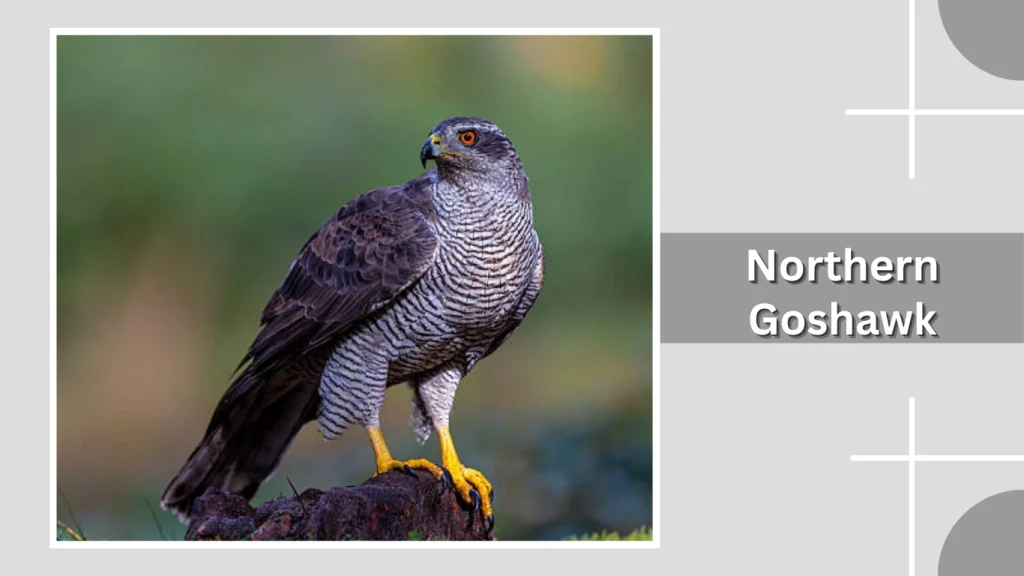
The Northern Goshawk is a powerful, forest-dwelling hawk known for its strength, speed, and aggressive hunting style. It is the largest of the accipiter hawks and is highly respected for its ability to pursue prey through dense woodland with precision.
Identification
- Large hawk, about 20–26 inches (51–66 cm) long
- Broad wings and a long, rounded tail
- Slate-gray upperparts with finely barred gray underside
- Bold white eyebrow stripe above red or orange eyes
- Thick legs and strong talons
Habitat and Behaviors
Northern Goshawks inhabit mature forests, including coniferous, mixed, and deciduous woodlands. They prefer large, undisturbed forest tracts and are often secretive outside the breeding season. These hawks are aggressive defenders of their nests and may dive at intruders, including humans. They hunt by flying swiftly through trees or launching surprise attacks from perches. Although capable of soaring, they rely more on direct, powerful flight when pursuing prey.
Diet and Lifecycle
Their diet includes medium-sized mammals such as rabbits and squirrels, as well as birds like grouse, pigeons, and crows. Northern Goshawks build large stick nests high in trees, often reused for many years. Females typically lay 2–4 eggs, which hatch after about 30–32 days. Chicks fledge at around 5–6 weeks but remain dependent on their parents for several more weeks while learning to hunt.
11. Gray Hawk
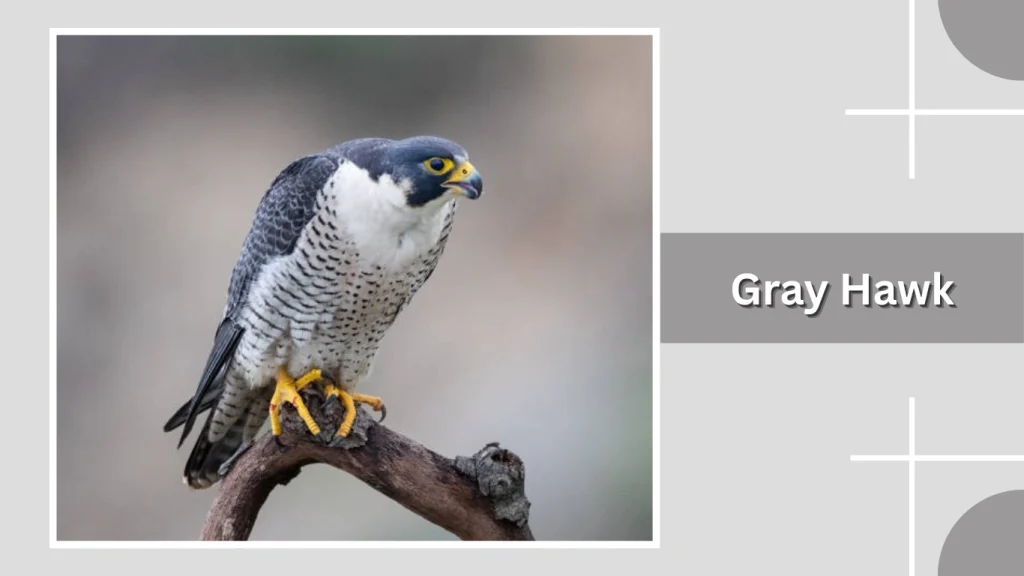
The Gray Hawk is a medium-sized raptor commonly found in the southwestern United States, Mexico, and Central America. It is closely associated with river corridors and is often seen perched quietly near water while scanning for prey.
Identification
- Medium-sized hawk, about 18–24 inches (46–61 cm) long
- Pale gray upperparts with a lighter gray head
- Finely barred gray-and-white underside
- Broad black-and-white bands on the tail
- Red to orange eyes and yellow legs
Habitat and Behaviors
Gray Hawks primarily inhabit riparian woodlands, river valleys, and forest edges, especially in arid or semi-arid regions. They are most often found near permanent water sources lined with tall trees. These hawks are relatively sedentary and often perch motionless for long periods before making short, direct flights to capture prey. Compared to many hawks, they are less inclined to soar and more likely to hunt from low or mid-level perches. They are generally quiet outside the breeding season.
Diet and Lifecycle
Their diet consists mainly of reptiles, particularly lizards and snakes, along with frogs, small mammals, and occasionally birds. Gray Hawks build stick nests in tall trees near water, often returning to the same nesting area year after year. Females usually lay 2–3 eggs, which are incubated for about 33–35 days. Chicks fledge at around 6 weeks but may remain dependent on adults for additional time while learning to hunt effectively.
12. Zone-tailed Hawk
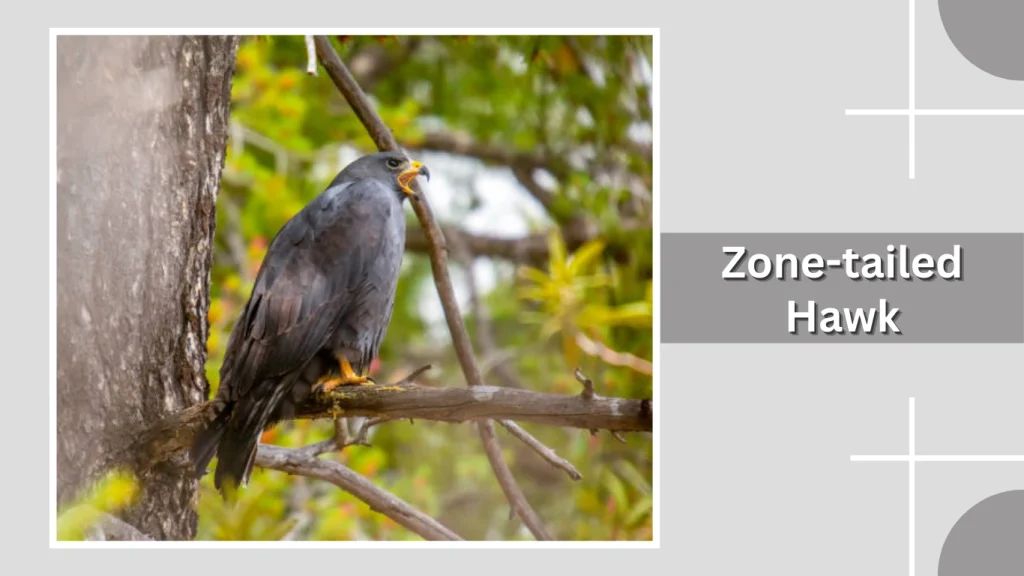
The Zone-tailed Hawk is a stealthy and often overlooked raptor that closely resembles vultures in flight. This clever mimicry allows it to approach prey unnoticed, making it a highly effective hunter in its range across the Americas.
Identification
- Medium-sized hawk, about 18–22 inches (46–56 cm) long
- Mostly black plumage with subtle barring
- Distinct white bands (“zones”) across the tail
- Broad wings held in a shallow dihedral when soaring
- Yellow legs and dark eyes
Habitat and Behaviors
Zone-tailed Hawks inhabit open woodlands, canyons, forest edges, and mountainous regions, often near cliffs or rugged terrain. They are frequently seen soaring alongside vultures, mimicking their flight pattern to avoid alarming prey below. This hawk relies heavily on soaring and surprise attacks rather than active pursuit. It is generally solitary and can be difficult to spot due to its resemblance to non-predatory birds.
Diet and Lifecycle
Their diet includes small mammals, birds, reptiles, and amphibians. They hunt by dropping suddenly from the sky onto unsuspecting prey. Zone-tailed Hawks build stick nests on cliffs or in tall trees, often well concealed. Females typically lay 1–3 eggs, which are incubated for about 34–36 days. Chicks fledge after roughly 6–7 weeks and remain dependent on their parents for several additional weeks while developing hunting skills.
13. Roadside Hawk
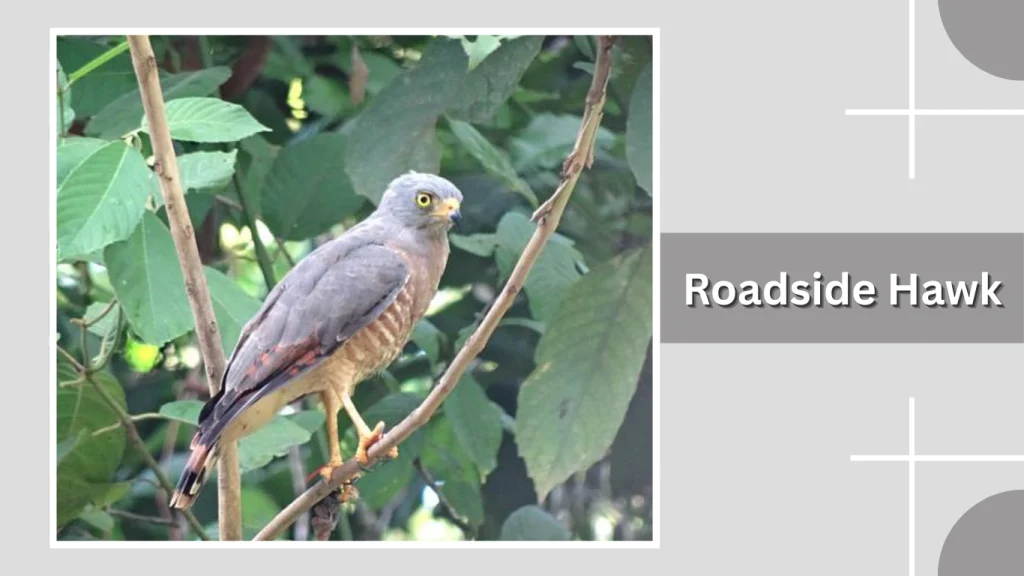
The Roadside Hawk is a common and easily observed raptor throughout Central and South America. It is named for its habit of perching along roadsides, where it watches quietly for prey in nearby vegetation.
Identification
- Medium-sized hawk, about 14–16 inches (36–41 cm) long
- Brown upperparts with a pale gray to buff underside
- Finely barred chest and belly
- Short, broad wings and a relatively long tail
- Yellow legs and dark eyes
Habitat and Behaviors
Roadside Hawks inhabit open woodlands, forest edges, savannas, agricultural areas, and suburban landscapes. They are often seen perched on poles, fences, or low trees along roads and clearings. These hawks are not strong soarers and prefer short, direct flights when hunting. They are generally solitary and territorial, using sharp, repeated calls to announce their presence, especially during the breeding season.
Diet and Lifecycle
Their diet includes insects, small mammals, reptiles, amphibians, and occasionally birds. Roadside Hawks hunt primarily from perches, dropping quickly onto prey on the ground or in low vegetation. They build stick nests in trees, often reusing the same nest in successive years. Females typically lay 1–3 eggs, which hatch after about 33–35 days. Young hawks fledge at around 5–6 weeks and stay dependent on their parents for a short period afterward.
14. Common Buzzard
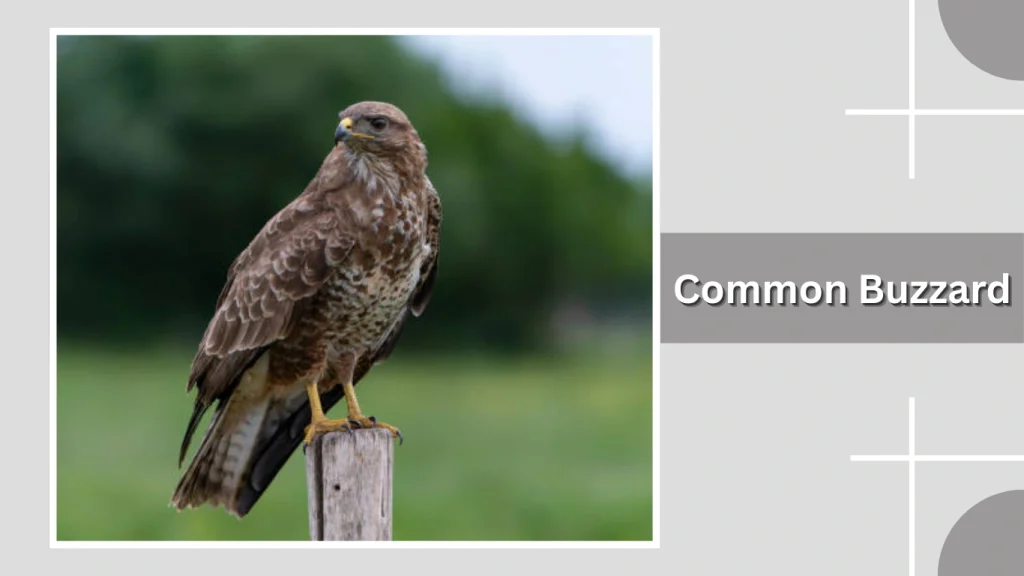
The Common Buzzard is a widespread and adaptable hawk found across Europe and parts of Asia. Known for its variable plumage and broad wings, it is often seen soaring high above open countryside or perched quietly while scanning for prey.
Identification
- Medium-sized hawk, about 16–22 inches (40–56 cm) long
- Broad wings and a short, rounded tail
- Plumage highly variable, ranging from dark brown to very pale
- Pale underside often marked with a darker belly band
- Yellow legs and dark eyes
Habitat and Behaviors
Common Buzzards inhabit a wide range of environments including woodlands, farmland, grasslands, moorlands, and forest edges. They are frequently seen soaring in circles on thermals or perched on trees, fence posts, or utility poles. These hawks are mostly solitary outside the breeding season and are strongly territorial when nesting. Their mewing, cat-like call is commonly heard during flight, especially in spring.
Diet and Lifecycle
Their diet is diverse and includes small mammals such as voles and mice, birds, reptiles, amphibians, insects, and carrion. Common Buzzards hunt by soaring or watching from perches before descending on prey. They build large stick nests in trees or on cliffs. Females usually lay 2–4 eggs, which hatch after about 33–35 days. Chicks fledge in roughly 6–7 weeks but may remain dependent on adults for several more weeks as they learn to hunt.
15. Eurasian Sparrowhawk
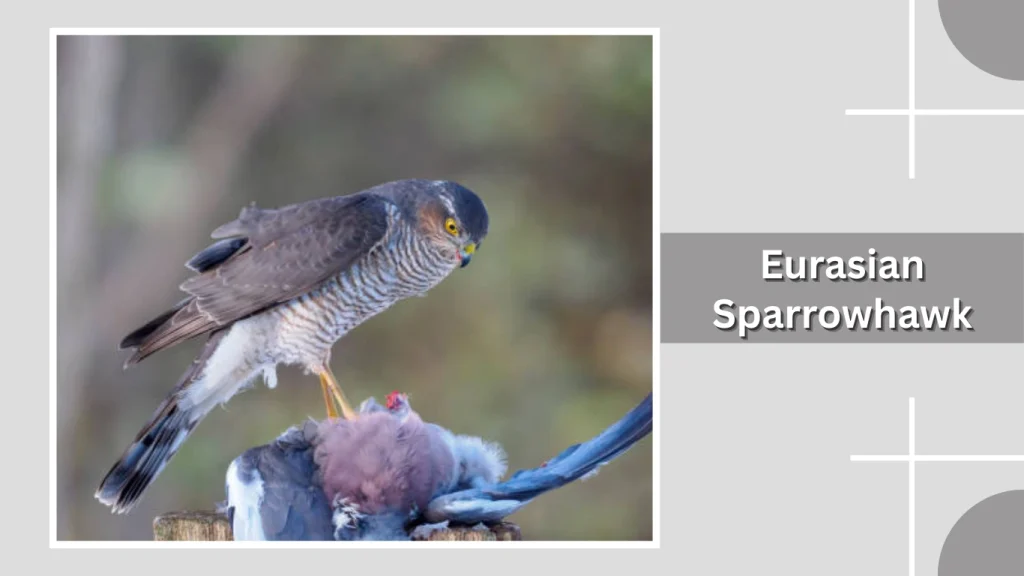
The Eurasian Sparrowhawk is a small, fast, and highly agile hawk best known for its ability to hunt birds in dense woodland and suburban areas. It is widespread across Europe and Asia and is a specialist aerial hunter.
Identification
- Small hawk, about 11–16 inches (28–41 cm) long
- Short, rounded wings and a long tail
- Blue-gray upperparts in males; brown in females
- Fine reddish barring on the chest (males)
- Yellow eyes in juveniles, turning orange or red in adults
Habitat and Behaviors
Eurasian Sparrowhawks inhabit woodlands, forests, hedgerows, farmland, and urban parks. They are stealthy ambush hunters, often flying low and fast through trees or suddenly bursting into bird flocks. Unlike soaring hawks, they rely on surprise and speed. They are mostly solitary and secretive, becoming most visible during rapid hunting flights or breeding displays. These hawks are active during the day and are common around bird feeders.
Diet and Lifecycle
Their diet consists mainly of small to medium-sized birds such as sparrows, finches, and thrushes, though they occasionally eat small mammals. Eurasian Sparrowhawks nest in trees, building stick nests hidden within dense foliage. Females typically lay 3–6 eggs, which are incubated for about 33–35 days. Chicks fledge after around 3–4 weeks but remain dependent on adults for additional weeks while learning to hunt.
16. African Harrier-Hawk
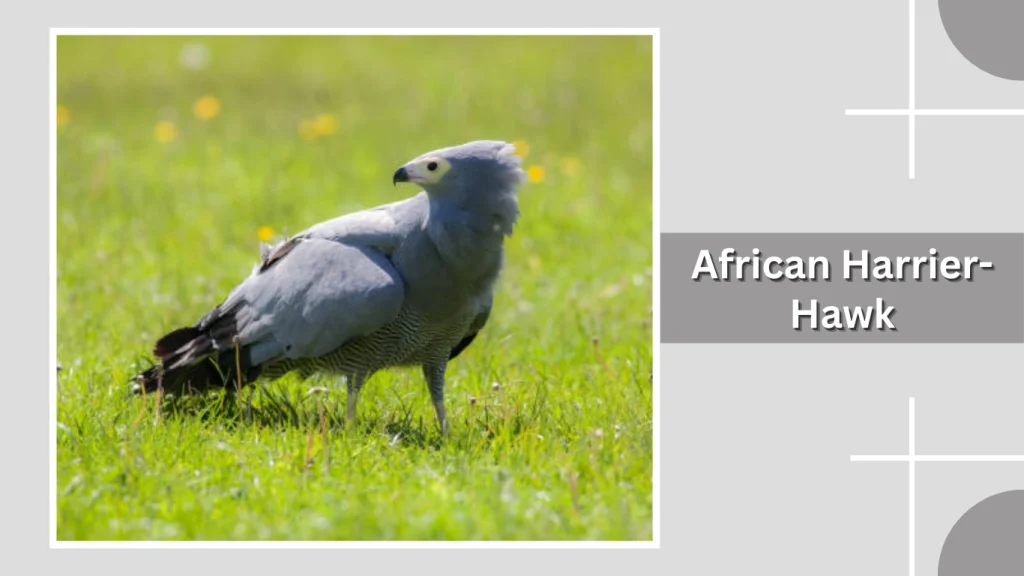
The African Harrier-Hawk, also known as the Gymnogene, is a distinctive raptor native to sub-Saharan Africa. It is famous for its unusual hunting technique and highly flexible legs, which allow it to extract prey from tree cavities and nests.
Identification
- Medium-sized hawk, about 20–24 inches (50–61 cm) long
- Pale gray upper body with darker wings
- White underparts with fine dark barring
- Bright red facial skin and yellow legs
- Long legs with double-jointed ankles
Habitat and Behaviors
African Harrier-Hawks inhabit savannas, woodlands, forests, and urban areas, often near human settlements. They are slow, deliberate fliers and frequently soar low over trees while searching for prey. Unlike most hawks, they often climb trees and use their flexible legs to reach into holes, nests, and crevices. They are usually seen alone or in pairs and are active throughout the day.
Diet and Lifecycle
Their diet includes birds’ eggs, nestlings, small mammals, reptiles, insects, and carrion. They are opportunistic feeders and use both aerial hunting and scavenging strategies. African Harrier-Hawks build stick nests high in trees. Females usually lay 1–3 eggs, which are incubated for about 35–37 days. Chicks fledge after roughly 7–8 weeks but may remain dependent on adults for some time afterward.
17. Black Hawk
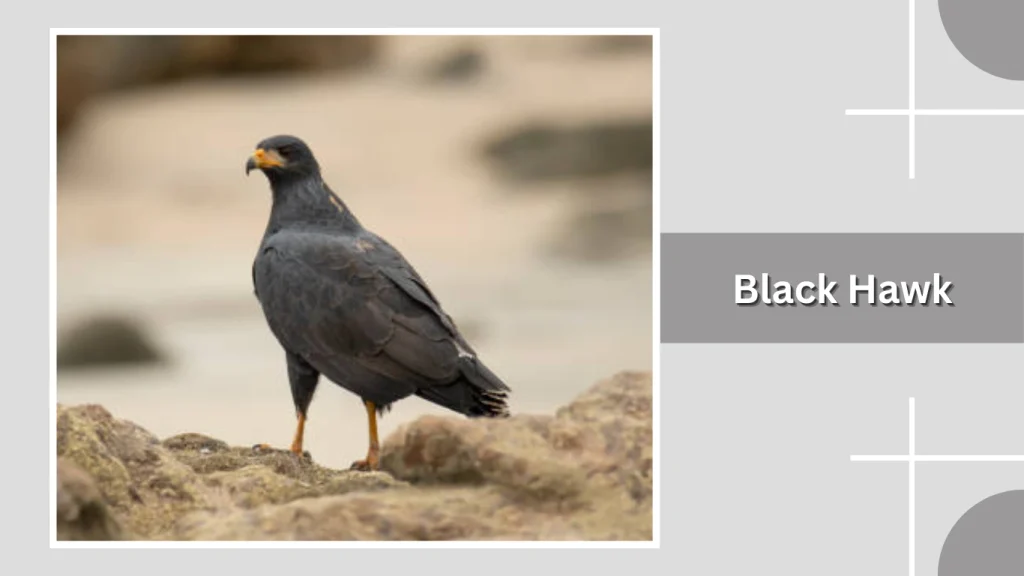
The Black Hawk is a broad-winged, powerful raptor commonly found near water in the Americas. It is known for its dark plumage, strong flight, and close association with rivers, coastlines, and wetlands.
Identification
- Medium to large hawk, about 18–24 inches (46–61 cm) long
- Mostly dark gray to black plumage
- Broad wings and a short, wide tail
- Tail marked with white bands near the tip
- Yellow legs and hooked beak
Habitat and Behaviors
Black Hawks are typically found along rivers, mangroves, coastal areas, swamps, and forested waterways. They are strong, steady fliers and are often seen soaring above water or perched in tall trees near shorelines. Unlike many open-country hawks, they stay close to dense vegetation and water sources. Black Hawks are territorial and usually solitary or found in pairs, especially during the breeding season.
Diet and Lifecycle
Their diet mainly consists of aquatic and semi-aquatic prey such as crabs, fish, frogs, reptiles, and small mammals. They hunt by scanning from perches or flying low over water before swooping down on prey. Black Hawks build large stick nests high in trees near water. Females typically lay 1–3 eggs, which hatch after about 35 days. Chicks fledge in roughly 6–7 weeks but remain dependent on their parents for additional time as they learn to hunt effectively.
18. White-tailed Hawk
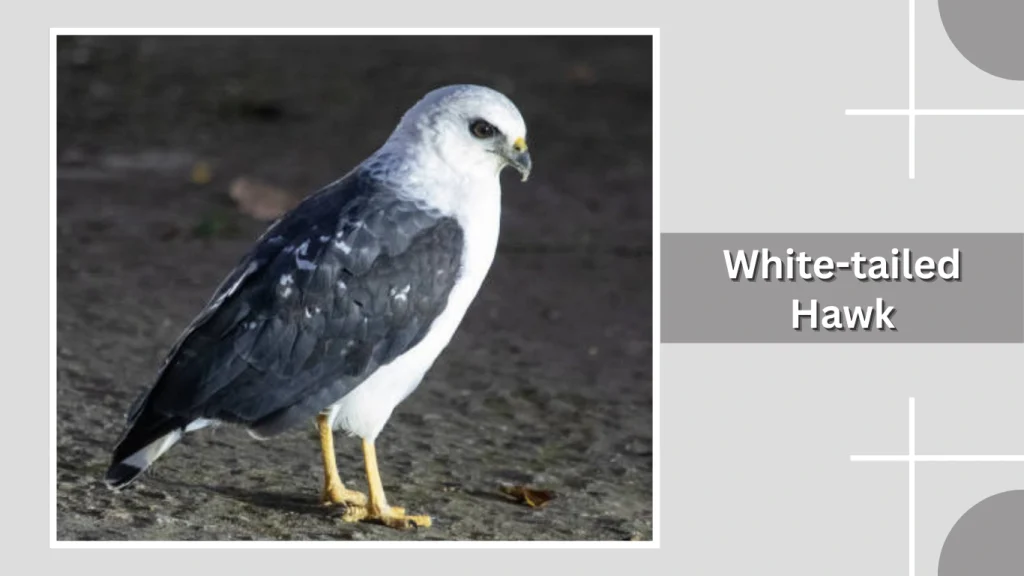
The White-tailed Hawk is a striking raptor of open landscapes, easily recognized by its pale tail and contrasting dark wings. Native to the Americas, it is often seen soaring high above grasslands and coastal plains.
Identification
- Medium to large hawk, about 18–22 inches (46–56 cm) long
- Pale gray upperparts with darker wings
- Distinct white tail with a dark terminal band
- Light underside with subtle barring
- Yellow legs and hooked beak
Habitat and Behaviors
White-tailed Hawks inhabit open grasslands, savannas, coastal plains, and agricultural areas. They prefer wide, unobstructed spaces where they can soar and hunt efficiently. These hawks are commonly seen gliding on thermals or perched on fence posts and low trees. They are territorial during the breeding season but may tolerate others nearby when food is abundant. Their flight is graceful and buoyant, making them easy to spot against open skies.
Diet and Lifecycle
Their diet consists mainly of small mammals such as rodents and rabbits, as well as birds, reptiles, and large insects. White-tailed Hawks hunt by soaring or watching from elevated perches before diving on prey. They build stick nests in trees or shrubs, sometimes reusing the same nest for several years. Females typically lay 2–3 eggs, which hatch after about 34–36 days. Chicks fledge in roughly 6–7 weeks but remain dependent on adults for a short period afterward.
19. Gray-lined Hawk
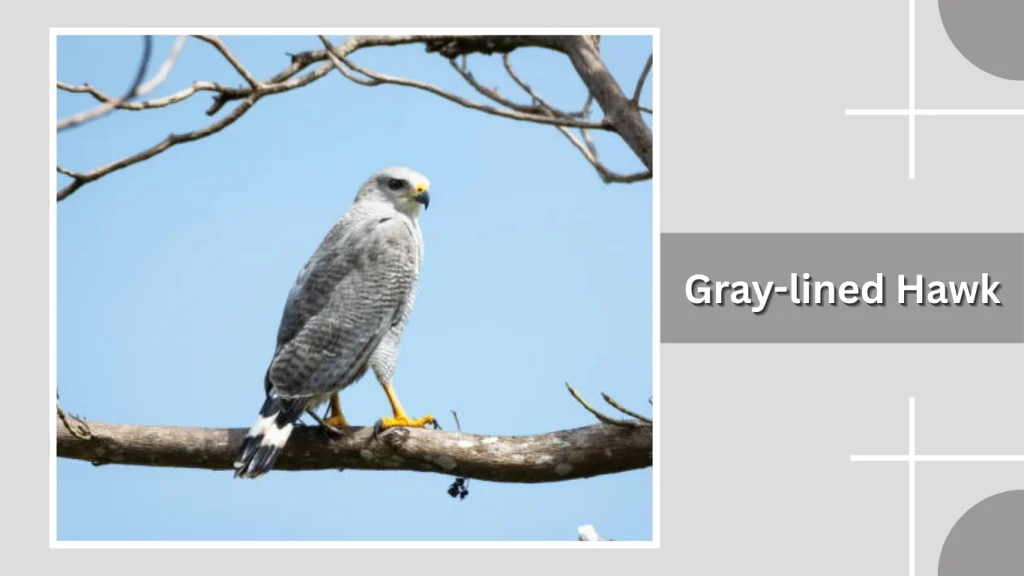
The Gray-lined Hawk is a medium-sized raptor native to Central America and parts of northern South America. It is closely associated with forest edges and semi-open habitats, where it hunts quietly from concealed perches.
Identification
- Medium-sized hawk, about 16–18 inches (41–46 cm) long
- Gray upperparts with darker wings
- Fine gray-and-white barring on the underside
- Distinct dark bands on the tail
- Yellow legs and dark eyes
Habitat and Behaviors
Gray-lined Hawks inhabit forest edges, open woodlands, plantations, and lightly wooded countryside. They prefer areas that offer both cover and open space for hunting. These hawks are usually seen perched silently within trees, watching the ground below. They rely on surprise rather than speed, making short, direct flights to capture prey. Gray-lined Hawks are generally solitary and territorial, becoming more vocal during the breeding season.
Diet and Lifecycle
Their diet includes reptiles such as lizards and snakes, small mammals, amphibians, insects, and occasionally birds. They hunt mainly from perches, dropping quickly onto prey. Gray-lined Hawks build stick nests in tall trees, often well hidden by foliage. Females typically lay 1–3 eggs, which are incubated for about 33–35 days. Chicks fledge at around 5–6 weeks and remain dependent on their parents for a short period while learning to hunt.
20. Plumbeous Hawk
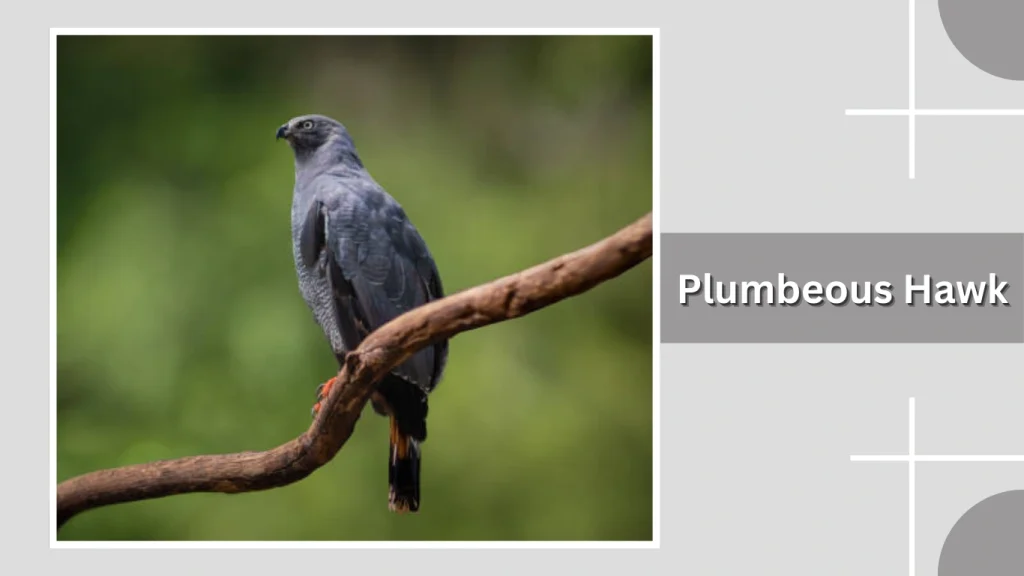
The Plumbeous Hawk is a slender, agile raptor of tropical forests and wetlands in Central and South America. It is closely tied to waterways and is known for its swift flight and preference for hunting near water.
Identification
- Medium-sized hawk, about 14–18 inches (36–46 cm) long
- Slate-gray to bluish-gray upperparts
- Light gray to whitish underside
- Long tail with subtle dark banding
- Yellow legs and dark eyes
Habitat and Behaviors
Plumbeous Hawks inhabit lowland forests, mangroves, river edges, wetlands, and forested streams. They are often seen flying low over water or perched near rivers and swamps. These hawks are agile fliers and make quick, direct flights when pursuing prey. They are generally solitary and somewhat secretive, spending much of their time near dense vegetation. Their presence is often revealed by sudden movement rather than prolonged soaring.
Diet and Lifecycle
Their diet mainly consists of aquatic and semi-aquatic prey such as frogs, fish, small reptiles, and insects, with occasional small mammals or birds. Plumbeous Hawks hunt by swooping down from low perches or flying close to the water’s surface. They build stick nests in trees near water. Females typically lay 1–2 eggs, which hatch after about 34–36 days. Chicks fledge in roughly 6 weeks but remain dependent on adults for a short time afterward.
21. Short-tailed Hawk
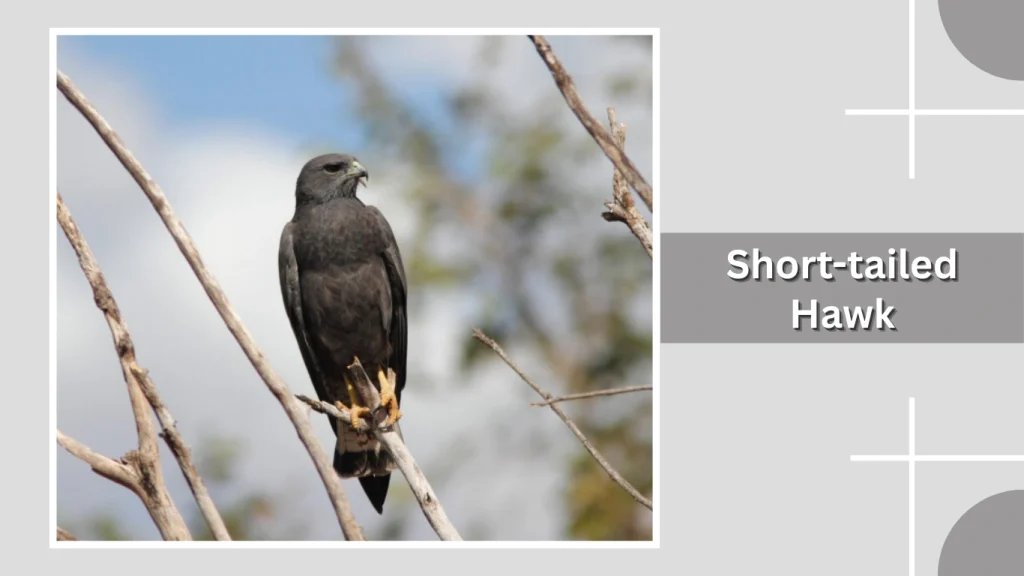
The Short-tailed Hawk is a compact, powerful raptor best known for its dramatic color variation and strong soaring flight. Found in the Americas, it is often seen circling high above forests while searching for prey below.
Identification
- Medium-sized hawk, about 15–17 inches (38–43 cm) long
- Short, broad tail relative to body size
- Broad wings adapted for soaring
- Two color morphs: dark (mostly black) and light (white underside with dark wings)
- Yellow legs and hooked beak
Habitat and Behaviors
Short-tailed Hawks inhabit tropical and subtropical forests, forest edges, and wooded hillsides. They are frequently seen soaring high on thermals, often at great heights, making them easier to identify by silhouette than detail. These hawks rely on aerial hunting, dropping suddenly onto prey spotted from above. They are generally solitary and quiet, spending much of the day gliding rather than perching.
Diet and Lifecycle
Their diet consists mainly of birds, especially small to medium-sized species, though they may occasionally take bats or small mammals. Short-tailed Hawks hunt almost exclusively from the air, using surprise dives. They nest in tall trees within forested areas. Females typically lay 1–2 eggs, which are incubated for about 35–37 days. Chicks fledge after roughly 6–7 weeks and remain dependent on adults for additional time while developing hunting skills.
22. Cuban Black Hawk
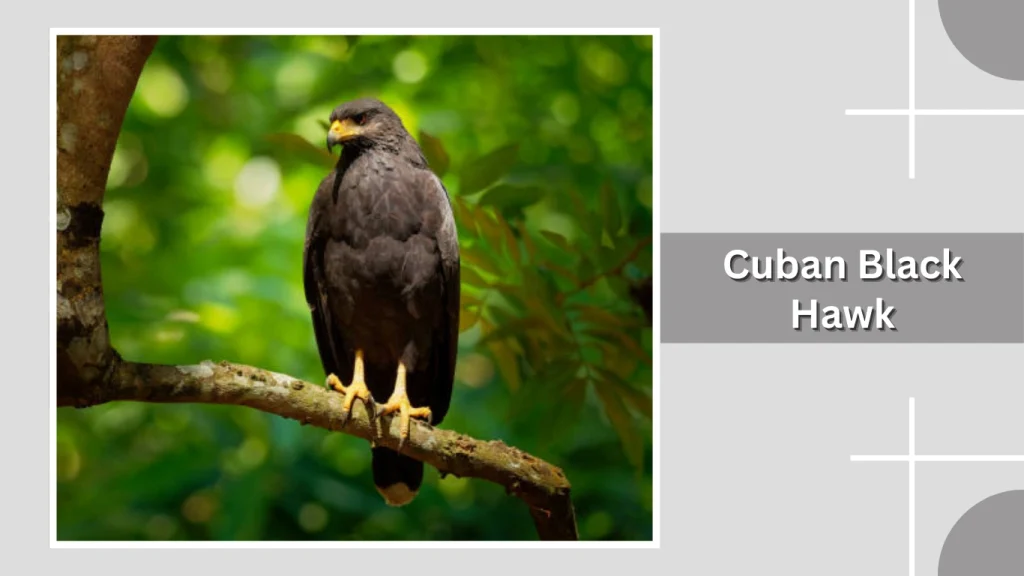
The Cuban Black Hawk is a coastal raptor endemic to Cuba and nearby islands. It is closely associated with shorelines and mangrove ecosystems, where it hunts specialized prey and plays an important role in coastal food webs.
Identification
- Medium to large hawk, about 18–22 inches (46–56 cm) long
- Mostly dark brown to black plumage
- Broad wings and a short tail
- White banding near the tail tip
- Yellow legs and hooked beak
Habitat and Behaviors
Cuban Black Hawks inhabit mangroves, coastal forests, estuaries, and shorelines. They are rarely found far from the coast and are often seen perched in mangrove trees overlooking tidal flats. These hawks are strong fliers but usually hunt from perches, dropping down onto prey. They are territorial and typically seen alone or in pairs, especially during the breeding season.
Diet and Lifecycle
Their diet consists mainly of crabs, along with fish, reptiles, and small mammals. They are skilled at handling hard-shelled prey using their powerful beaks. Cuban Black Hawks build stick nests in mangrove trees or coastal forests. Females usually lay 1–2 eggs, which hatch after about 34–36 days. Chicks fledge in roughly 6–7 weeks and may remain dependent on adults for some time afterward.
23. Savanna Hawk
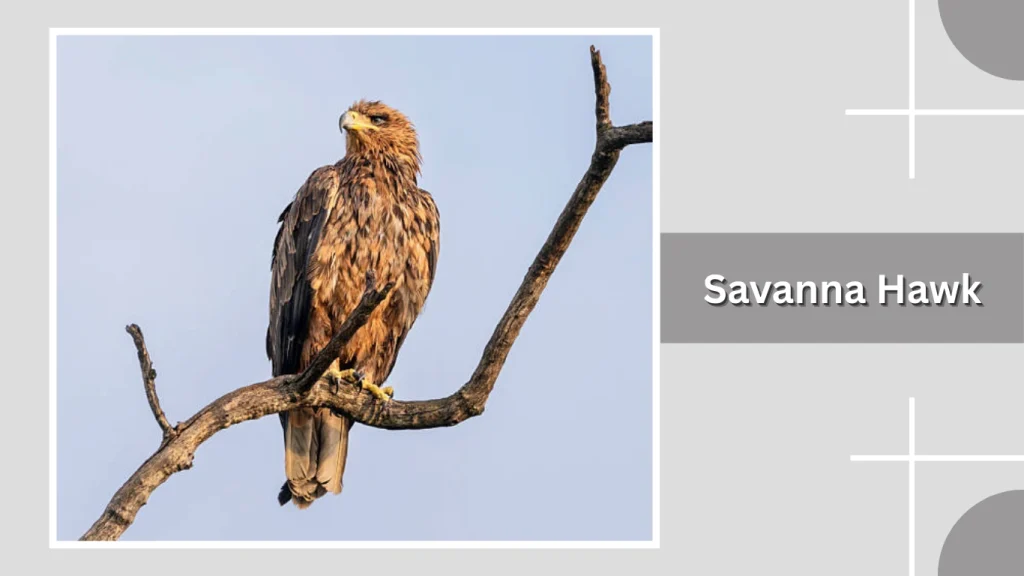
The Savanna Hawk is a long-legged raptor of open tropical landscapes in Central and South America. It is commonly seen walking on the ground or perched in open areas, making it one of the more approachable and easily observed hawks in its range.
Identification
- Medium-sized hawk, about 18–22 inches (46–56 cm) long
- Long yellow legs adapted for ground hunting
- Brown upperparts with a paler, lightly streaked underside
- Broad wings and a relatively short tail
- Pale head with darker crown and face markings
Habitat and Behaviors
Savanna Hawks inhabit savannas, grasslands, wetlands, marshes, and agricultural fields. Unlike many hawks, they frequently hunt on foot, walking through grass or shallow water in search of prey. They are also known to follow fires, feeding on animals flushed from vegetation. These hawks are usually solitary or seen in pairs and are active throughout the day. Their flight is slow and deliberate, and they often perch on low trees or fence posts.
Diet and Lifecycle
Their diet includes insects, frogs, snakes, lizards, small mammals, birds, and carrion. Savanna Hawks are opportunistic feeders and readily exploit seasonal food sources. They build stick nests in trees or shrubs near open areas or wetlands. Females typically lay 1–3 eggs, which are incubated for about 35 days. Chicks fledge after roughly 6–7 weeks but may remain dependent on adults for a short period while developing hunting skills.
24. Laughing Falcon
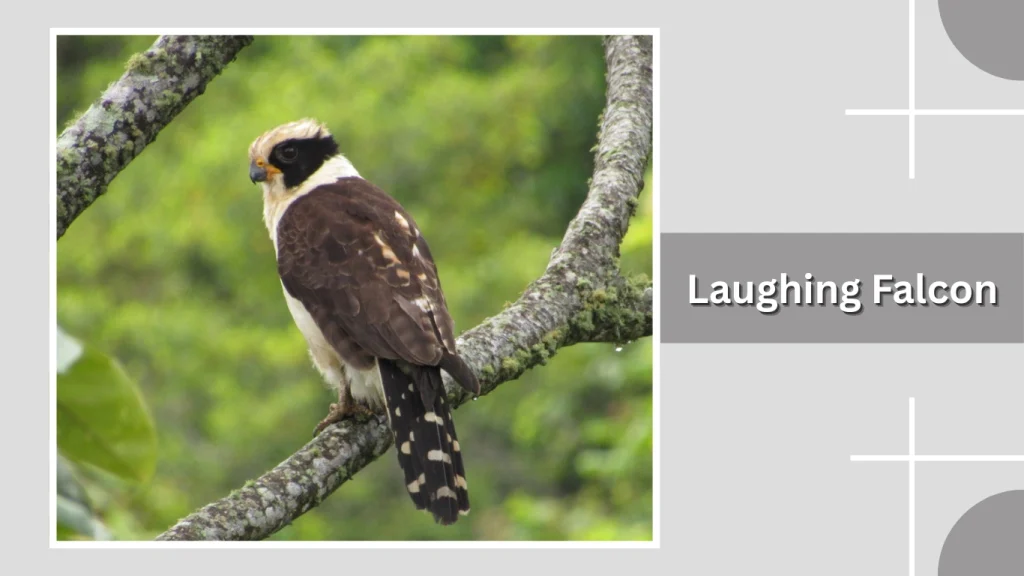
The Laughing Falcon is a distinctive raptor best known for its loud, laughing call and its specialization in hunting snakes. Found from Mexico through much of Central and South America, it is often heard before it is seen.
Identification
- Medium-sized raptor, about 18–20 inches (46–51 cm) long
- Pale gray to white head with a bold black facial mask
- Brown upperparts with a lighter underside
- Long tail with dark bands
- Strong hooked beak adapted for reptile prey
Habitat and Behaviors
Laughing Falcons inhabit open woodlands, forest edges, savannas, river corridors, and agricultural areas. They are usually seen perched high in trees or on exposed branches, watching the ground below. These falcons are mostly solitary or found in pairs and are active during the day. Their rolling, laughing vocalization is often given at dawn or dusk and can carry long distances. They rely more on patience and precision than speed when hunting.
Diet and Lifecycle
Their diet is highly specialized and consists mainly of snakes, including venomous species, along with lizards and occasional small mammals. Laughing Falcons kill prey with powerful bites to the head. They nest in tree cavities or old nests, often high above the ground. Females typically lay 1–2 eggs, which are incubated for about 32–35 days. Chicks fledge after roughly 6–7 weeks and may remain dependent on the parents for an extended period while learning to hunt safely.
25. Red-backed Hawk
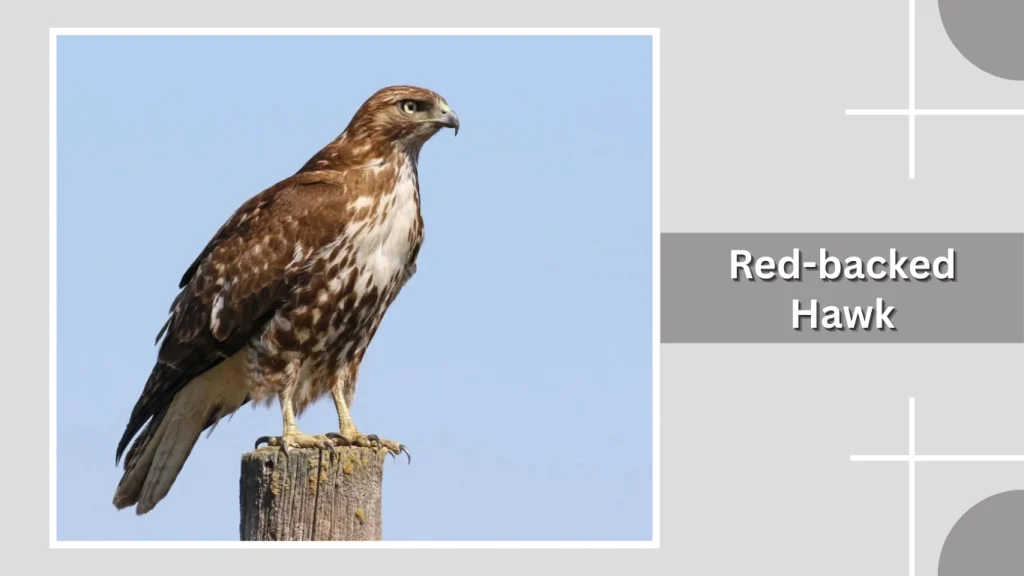
The Red-backed Hawk is a striking raptor native to southern South America, especially Patagonia and the Andes. It is known for its bold coloration and preference for open, windswept landscapes where it can hunt efficiently.
Identification
- Medium-sized hawk, about 18–22 inches (46–56 cm) long
- Gray head and upper body
- Distinct reddish-brown back and wing coverts
- Pale underside with fine barring
- Yellow legs and strong hooked beak
Habitat and Behaviors
Red-backed Hawks inhabit open grasslands, steppes, shrublands, and mountainous regions. They are commonly seen perched on fence posts, rocks, or low trees, scanning the ground for prey. These hawks are strong fliers and may also soar over open terrain, especially in windy conditions. They are generally solitary or seen in pairs and maintain territories during the breeding season.
Diet and Lifecycle
Their diet includes small mammals such as rodents and rabbits, as well as birds and reptiles. Red-backed Hawks hunt by watching from elevated perches or by soaring low over open ground. They build stick nests on cliffs, trees, or rocky outcrops. Females typically lay 2–3 eggs, which hatch after about 33–35 days. Chicks fledge in roughly 6–7 weeks and remain dependent on adults for a short time afterward.
26. Jackal Buzzard
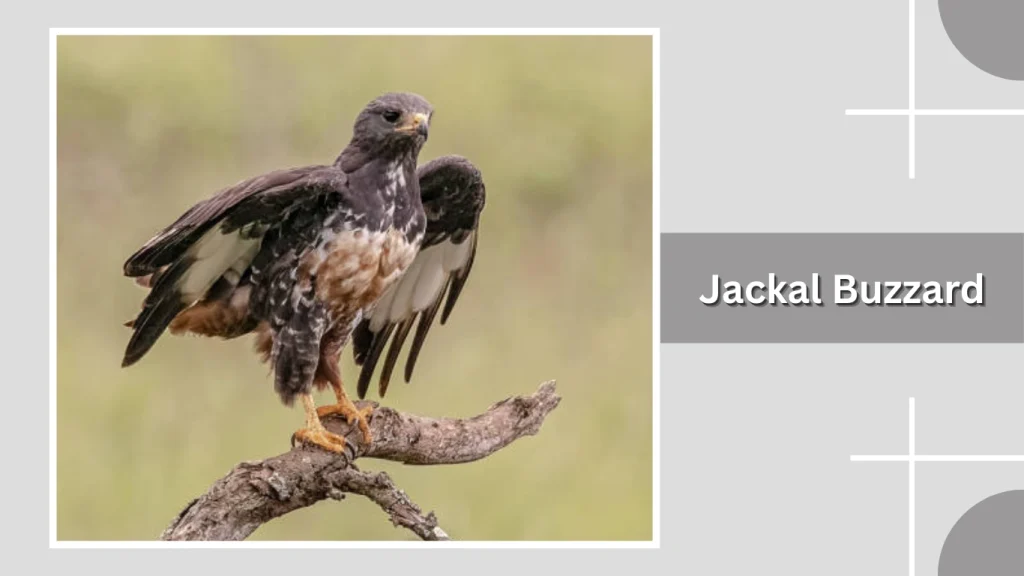
The Jackal Buzzard is a bold and striking raptor native to southern Africa. It is easily recognized by its dramatic black, white, and chestnut coloration and its loud, piercing calls that echo across mountainous landscapes.
Identification
- Medium to large hawk, about 18–22 inches (46–56 cm) long
- Black upper body with white chest and belly
- Rich chestnut patches on the wings and tail
- Broad wings and a relatively short tail
- Yellow legs and sharp hooked beak
Habitat and Behaviors
Jackal Buzzards inhabit mountains, rocky hills, grasslands, and open savannas. They are often seen soaring high on thermals or perched prominently on rocks and ridges. These hawks are highly territorial and vocal, especially during the breeding season, when their calls are frequently heard. They are confident hunters and are active throughout the day, using both soaring and perch-hunting strategies.
Diet and Lifecycle
Their diet includes small to medium-sized mammals such as rodents and hares, as well as birds, reptiles, and carrion. Jackal Buzzards hunt by soaring or scanning from elevated perches before diving onto prey. They build large stick nests on cliffs, rocky outcrops, or tall trees. Females usually lay 1–2 eggs, which are incubated for about 35–38 days. Chicks fledge after roughly 7–8 weeks but may remain dependent on parents for some time afterward.
27. Mountain Hawk-Eagle
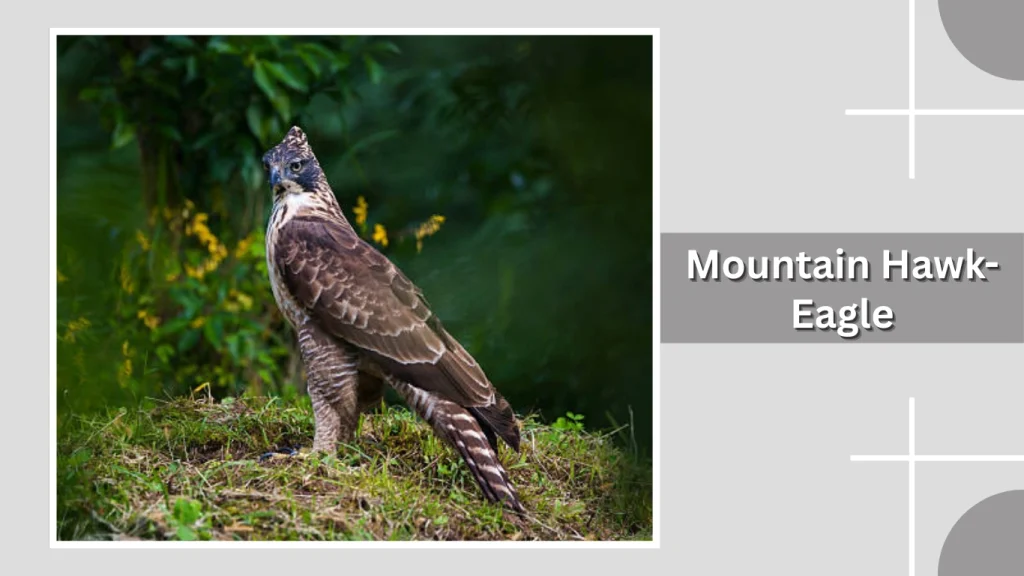
The Mountain Hawk-Eagle is a powerful forest raptor native to South and Southeast Asia. It is known for its impressive size, bold crest, and commanding presence, making it one of the top predators in mountainous and forested regions.
Identification
- Large raptor, about 26–30 inches (66–76 cm) long
- Broad wings and a long tail
- Dark brown upperparts with pale, streaked underside
- Prominent crest on the head
- Strong yellow legs with massive talons
Habitat and Behaviors
Mountain Hawk-Eagles inhabit dense forests, forested hills, and mountainous regions, often at higher elevations. They prefer remote, undisturbed habitats and are usually seen soaring above forest canopies or perched high in tall trees. These raptors are solitary and highly territorial, especially during the breeding season. They are powerful fliers capable of swift, direct attacks through forest openings and are rarely seen near human settlements.
Diet and Lifecycle
Their diet consists of medium-sized mammals such as monkeys, squirrels, and hares, as well as birds and reptiles. Mountain Hawk-Eagles hunt by soaring or launching surprise attacks from high perches. They build large stick nests high in tall trees, often reused year after year. Females typically lay 1–2 eggs, which are incubated for about 40–45 days. Chicks develop slowly and may remain dependent on their parents for several months before becoming fully independent.
FAQs
1. What is the difference between a hawk and an eagle?
Hawks are generally smaller than eagles and have slimmer bodies and wings. Eagles are larger, more powerful, and often hunt bigger prey.
2. Where do hawks usually live?
Hawks live in diverse habitats including forests, grasslands, deserts, wetlands, mountains, and even urban areas, depending on the species.
3. What do hawks eat?
Hawks mainly eat small to medium-sized mammals, birds, reptiles, and insects. Some species also feed on fish or carrion.
4. Are hawks migratory birds?
Many hawk species migrate seasonally, especially those that breed in colder regions. Others remain in the same area year-round.
5. How long do hawks live?
In the wild, hawks typically live between 10 and 20 years, though some larger species can live even longer under favorable conditions.