




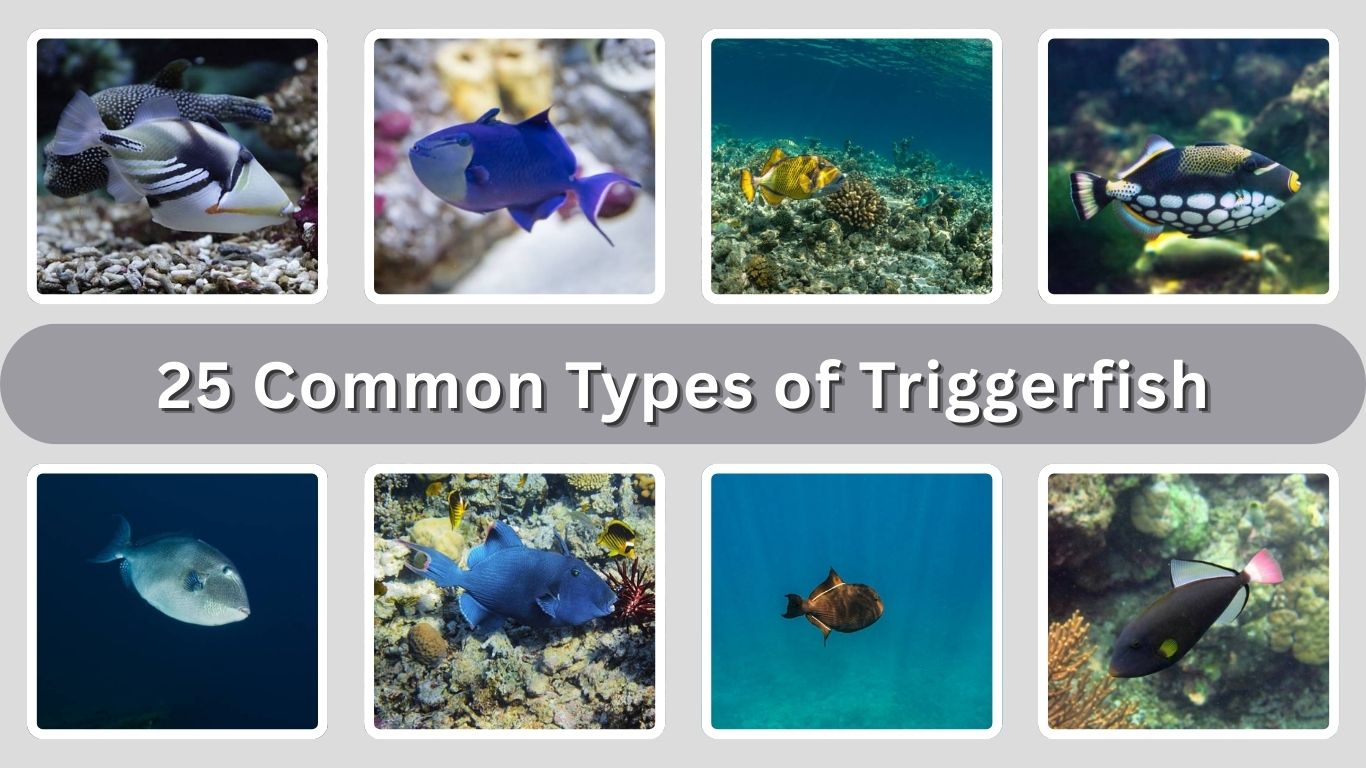
Triggerfish are some of the most fascinating and easily recognized reef fish in the ocean, known for their bold colors, powerful jaws, and confident behavior. Found mainly in tropical and subtropical seas, they play an important role in coral reef ecosystems by controlling populations of sea urchins and hard-shelled invertebrates. With over 40 species worldwide, triggerfish vary widely in size, habitat, and temperament, ranging from peaceful open-water swimmers to highly territorial reef guardians.
1. Picasso Triggerfish (Rhinecanthus aculeatus)
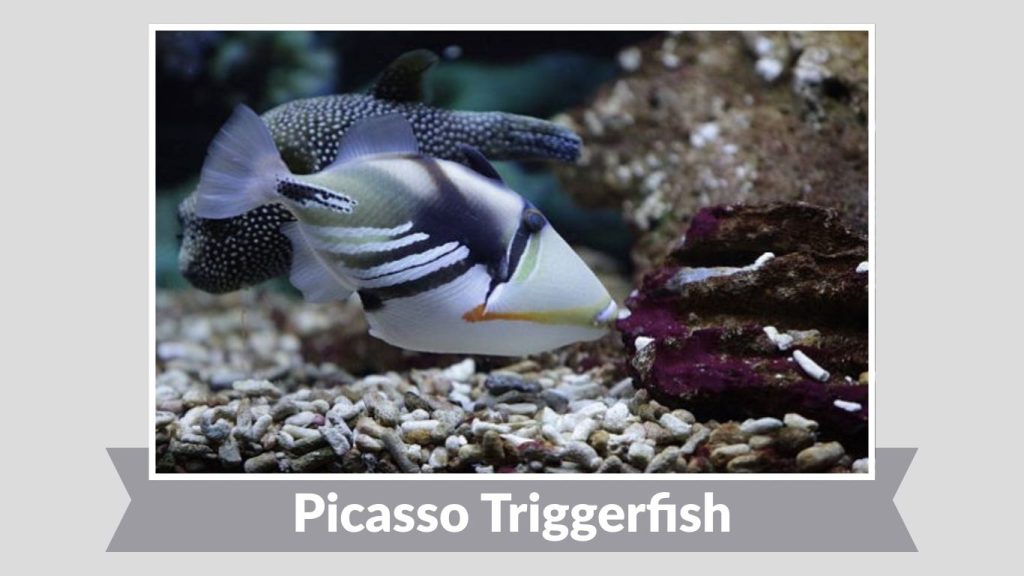
The Picasso triggerfish is one of the most recognizable triggerfish species in the world, famous for its bold colors and abstract face markings that resemble a painted mask. It is commonly found in shallow coral reefs of the Indo-Pacific region, where it actively swims among rocks and corals. This species is known for its alert behavior, strong jaws, and territorial nature, making it both fascinating to observe and challenging to handle in aquariums.
Identification
- Bright mix of blue, yellow, white, and black patterns
- Distinct dark stripe running through the eye
- Oval, laterally compressed body shape
- Strong beak-like teeth adapted for crushing shells
- Average adult size: about 8–10 inches
Habitat
Picasso triggerfish mainly live in shallow lagoons, reef flats, and coral-rich coastal waters. They prefer areas with plenty of hiding spaces such as crevices, coral heads, and rocky shelters. These environments provide protection from predators and easy access to food sources like crustaceans and sea urchins.
Behavior
This species is highly active, curious, and often aggressive toward intruders. Picasso triggerfish are known for defending their nesting areas fiercely, especially during breeding season. Divers often notice them following or confronting perceived threats, showing surprising intelligence and strong territorial instincts.
Diet
Picasso triggerfish feed primarily on hard-shelled invertebrates. Their natural diet includes crabs, shrimp, sea urchins, mollusks, and occasionally small fish. Their powerful jaws allow them to crush shells easily, playing an important role in controlling reef invertebrate populations.
Lifespan
In the wild, Picasso triggerfish can live around 8 to 10 years, though some individuals may survive longer under ideal conditions. In aquariums, with proper tank size, water quality, and a protein-rich diet, they can reach similar or slightly extended lifespans.
2. Queen Triggerfish (Balistes vetula)
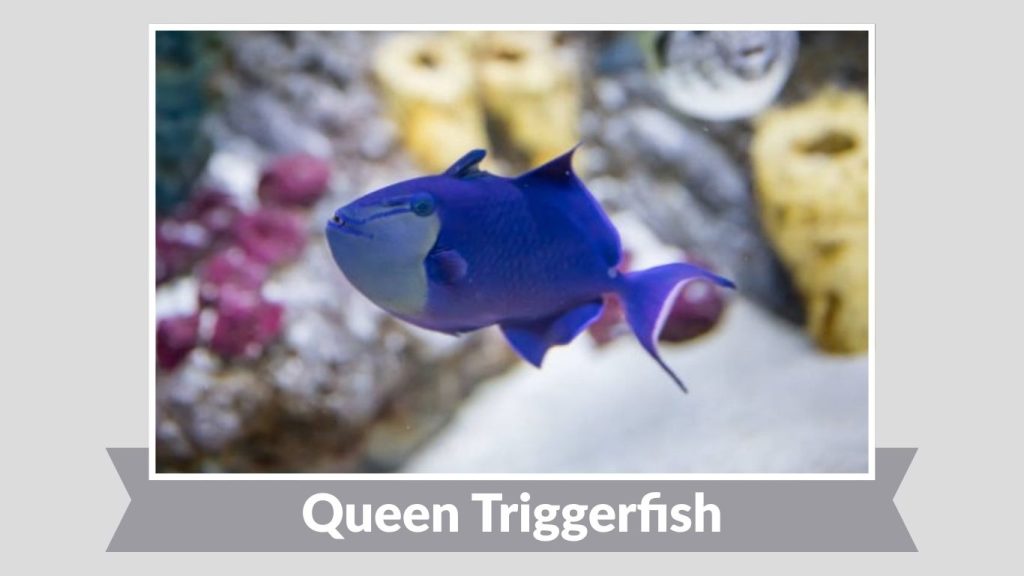
The queen triggerfish is a striking and powerful reef fish known for its vivid blue lines, strong body, and bold personality. It is widely distributed across the western Atlantic Ocean, especially around coral reefs, rocky bottoms, and seagrass areas. This species is admired for its beauty but also respected for its aggressive nature, particularly when defending territory or nests.
Identification
- Blue and turquoise lines across the face and body
- Strong, oval-shaped body with rough skin texture
- Bright yellow highlights near the mouth and fins
- Large head with extremely powerful jaws
- Average adult size: about 18–24 inches
Habitat
Queen triggerfish are commonly found around coral reefs, rocky reefs, and coastal drop-offs. They often stay close to the bottom, where they search among rocks and coral rubble for food. Juveniles may inhabit shallower areas, while adults are frequently seen in deeper reef zones.
Behavior
This species is highly territorial and fearless. Queen triggerfish are known to charge divers or chase away intruders, especially during spawning periods. They are intelligent, curious, and capable of recognizing threats, making them one of the more dominant triggerfish species in reef environments.
Diet
Queen triggerfish mainly feed on hard-shelled prey such as crabs, sea urchins, mollusks, and lobsters. They also eat fish, sand dollars, and other benthic organisms. Their strong teeth allow them to crush tough shells with ease.
Lifespan
In the wild, queen triggerfish usually live between 10 and 15 years. With favorable conditions and limited predators, some individuals may survive even longer. In captivity, their lifespan depends heavily on tank size, diet quality, and environmental enrichment.
3. Titan Triggerfish (Balistoides viridescens)
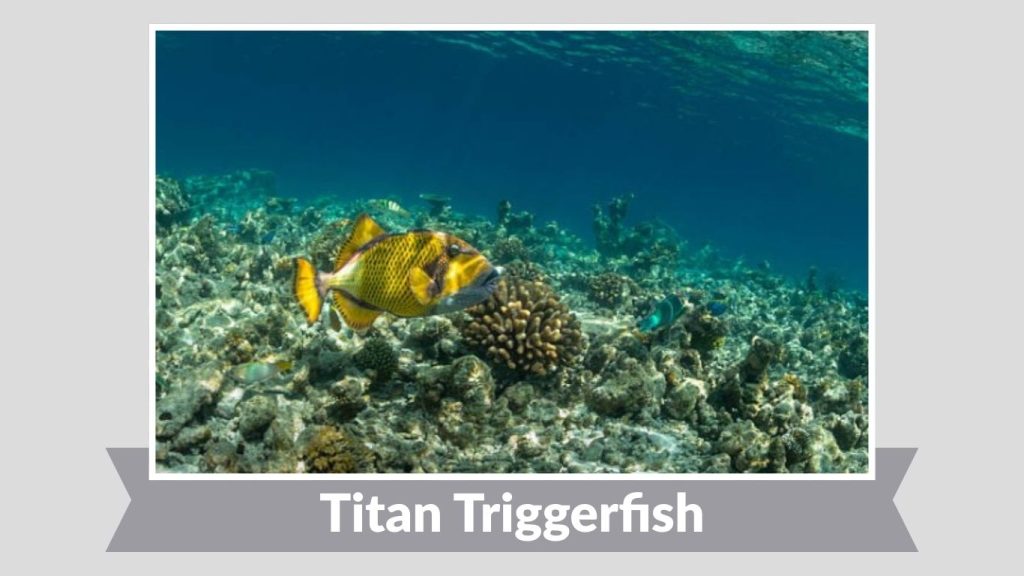
The titan triggerfish is the largest and one of the most powerful triggerfish species, well known for its impressive size and extremely aggressive territorial behavior. It is widely distributed throughout the Indo-Pacific region, especially around coral reefs, lagoons, and reef slopes. Because of its strength and bold nature, the titan triggerfish is often considered one of the most dangerous triggerfish to divers during nesting season.
Identification
- Thick, heavy-bodied appearance with large head
- Mottled brown, yellow, and green coloration
- Very strong jaws with prominent teeth
- Rough, leathery skin texture
- Average adult size: about 24–30 inches
Habitat
Titan triggerfish inhabit coral reefs, reef flats, and outer reef slopes, usually in tropical Indo-Pacific waters. They often stay near sandy bottoms mixed with coral rubble, where they can dig nests and search for hard-shelled prey. Adults are frequently seen alone, patrolling large territories.
Behavior
This species is extremely territorial, especially during breeding season. Titan triggerfish are notorious for aggressively charging intruders, including divers, when their nests are threatened. They are also intelligent problem-solvers, capable of moving rocks and flipping sea urchins to access food.
Diet
Their diet mainly consists of sea urchins, crabs, shrimp, mollusks, and other armored invertebrates. Titan triggerfish use their powerful jaws to crush shells and spines. They may also consume small fish and carrion when available.
Lifespan
Titan triggerfish generally live around 10 to 13 years in the wild. With low natural predators and good environmental conditions, some individuals may live longer. In captivity, they require very large tanks and robust care to maintain long-term health.
4. Clown Triggerfish (Balistoides conspicillum)
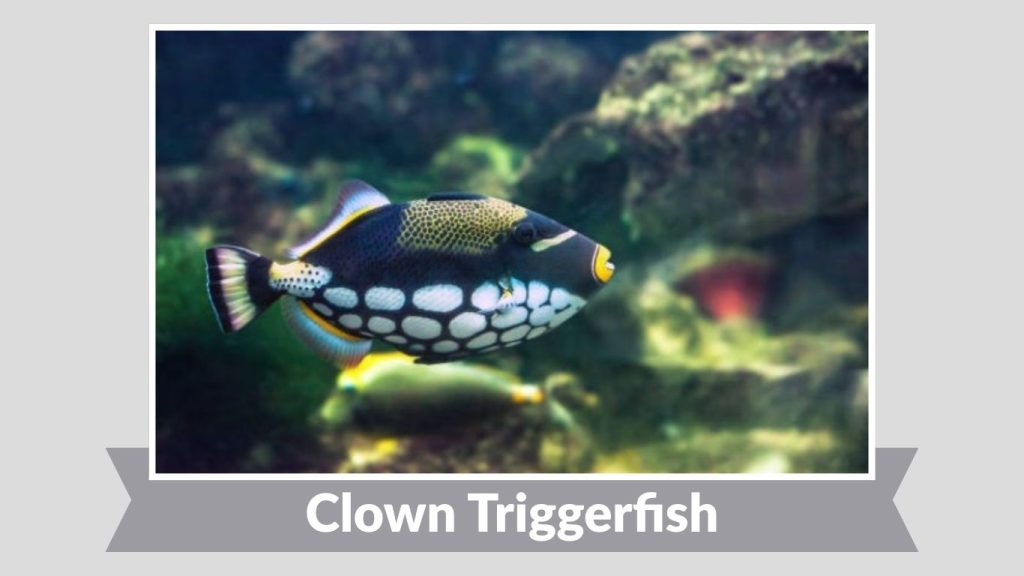
The clown triggerfish is one of the most colorful and dramatic-looking triggerfish species, easily recognized by its bold black body covered with large white spots and bright yellow facial markings. It inhabits tropical Indo-Pacific reefs, where it usually stays close to caves, ledges, and coral heads. Although visually stunning, this species is known for its strong jaws and aggressive temperament.
Identification
- Jet-black body with large white polka dots
- Bright yellow mouth and facial mask
- Thick, oval-shaped body with tough skin
- Strong dorsal trigger spine
- Average adult size: about 16–20 inches
Habitat
Clown triggerfish are commonly found around outer reef slopes, coral-rich areas, and rocky reef structures. They prefer zones with caves and overhangs that provide shelter. Juveniles often hide deep within coral crevices, while adults patrol open reef areas near their chosen shelters.
Behavior
This species is bold, solitary, and highly territorial. Clown triggerfish aggressively defend their space and may bite if provoked. They are curious fish and often investigate unfamiliar objects or divers entering their territory.
Diet
Their natural diet includes sea urchins, crabs, shrimp, mollusks, and other hard-shelled invertebrates. They also consume starfish and occasionally small fish. Their powerful teeth allow them to crush tough shells with ease.
Lifespan
Clown triggerfish usually live around 8 to 12 years in the wild. In well-maintained aquariums, they can sometimes live longer, provided they receive a spacious tank, enriched environment, and a protein-rich diet.
5. Gray Triggerfish (Balistes capriscus)
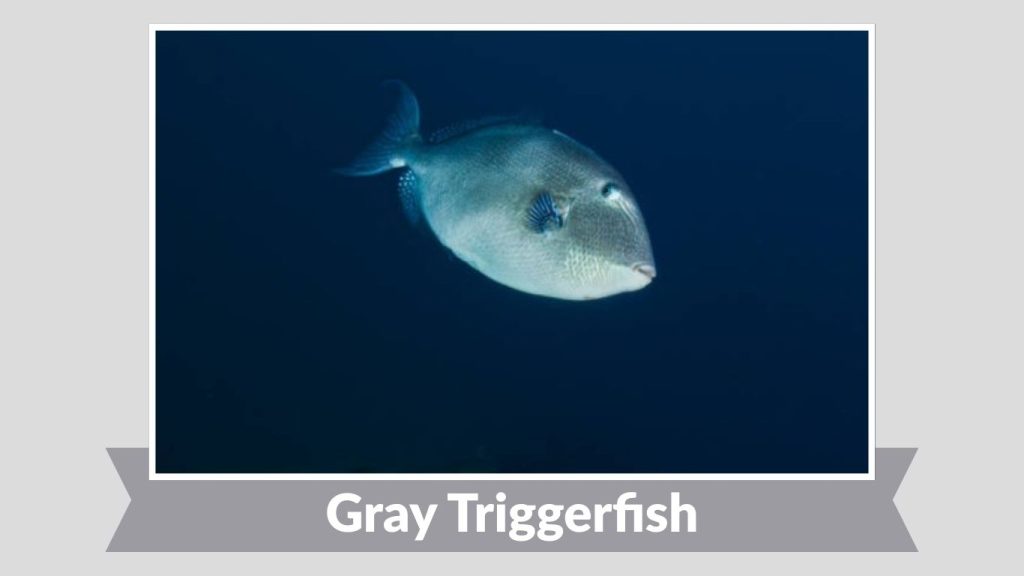
The gray triggerfish is a widely distributed species known for its solid build, muted coloration, and importance in commercial and recreational fishing. It is found mainly in the Atlantic Ocean, including the Gulf of Mexico and Caribbean Sea, where it inhabits reefs, wrecks, and sandy bottoms. Compared to many tropical triggerfish, it appears less colorful but is equally strong and resilient.
Identification
- Gray to olive-brown body with lighter underside
- Oval, laterally compressed shape
- Strong jaws with prominent front teeth
- Small eyes set high on the head
- Average adult size: about 14–24 inches
Habitat
Gray triggerfish live around offshore reefs, rocky bottoms, shipwrecks, and sandy areas near reef structures. Juveniles often drift among floating debris or Sargassum mats, while adults move to deeper reef zones where they establish territories and feeding grounds.
Behavior
They are alert, territorial, and known for digging nests in sandy bottoms during breeding season. Gray triggerfish vigorously defend their eggs and may charge intruders. Outside the breeding period, they are more cautious and often seen hovering above reef structures.
Diet
Their diet mainly consists of crabs, shrimp, sea urchins, mollusks, and other bottom-dwelling invertebrates. They also eat small fish and barnacles. Their strong teeth and jaws allow them to break shells and crush exoskeletons.
Lifespan
Gray triggerfish typically live around 8 to 10 years in the wild. Some individuals may live longer in stable reef environments. In captivity, lifespan depends on tank conditions, nutrition, and stress management.
6. Bluejaw Triggerfish (Xanthichthys auromarginatus)
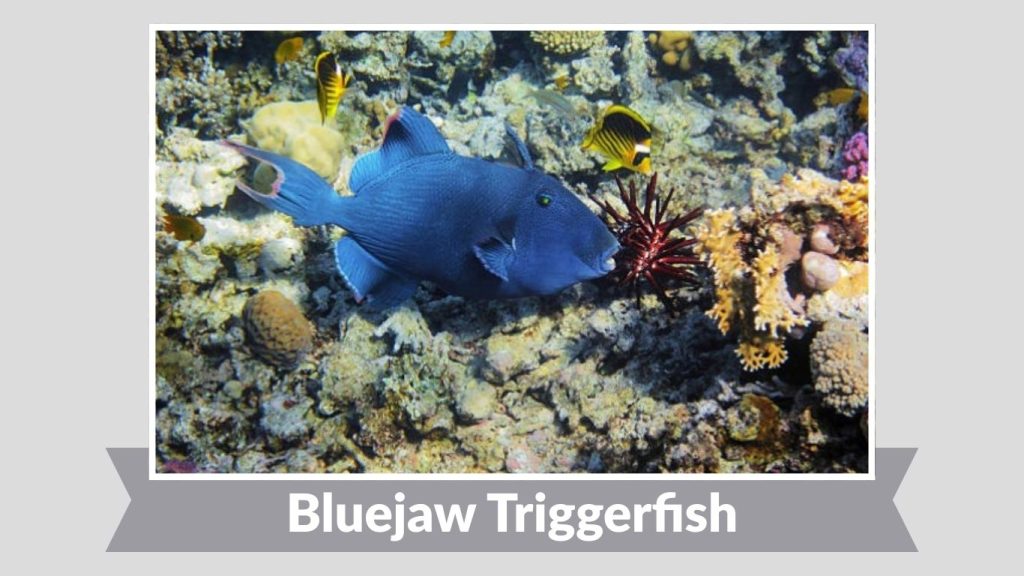
The bluejaw triggerfish is a sleek, open-water reef species admired for its elegant swimming style and striking sexual dimorphism. Males are especially attractive, displaying a bright blue lower jaw and yellow highlights along the fins. This triggerfish is found mainly in the Indo-Pacific region, where it inhabits outer reef slopes and drop-offs, often swimming above the reef rather than staying close to the bottom.
Identification
- Males have a bright blue lower jaw and throat
- Yellow edging on dorsal and tail fins
- Streamlined, torpedo-shaped body
- Dark brown to purplish body tone
- Average adult size: about 9–11 inches
Habitat
Bluejaw triggerfish prefer outer reef slopes, deep reef edges, and ocean-facing drop-offs. They are usually seen hovering in small groups above the reef, especially where currents bring a steady supply of plankton and small drifting prey.
Behavior
Unlike many triggerfish, this species is relatively peaceful and less territorial. They often form loose schools and spend much of their time swimming in the water column. Males may become more assertive during breeding, but overall they are calmer compared to reef-bottom triggerfish.
Diet
Their natural diet consists mainly of zooplankton, small crustaceans, fish eggs, and drifting invertebrates. Instead of crushing hard shells, they pick prey from the water, reflecting their mid-water feeding behavior.
Lifespan
Bluejaw triggerfish typically live around 8 to 10 years in the wild. With stable conditions, a nutritious diet, and low stress, individuals in captivity may reach similar lifespans.
7. Black Triggerfish (Melichthys niger)
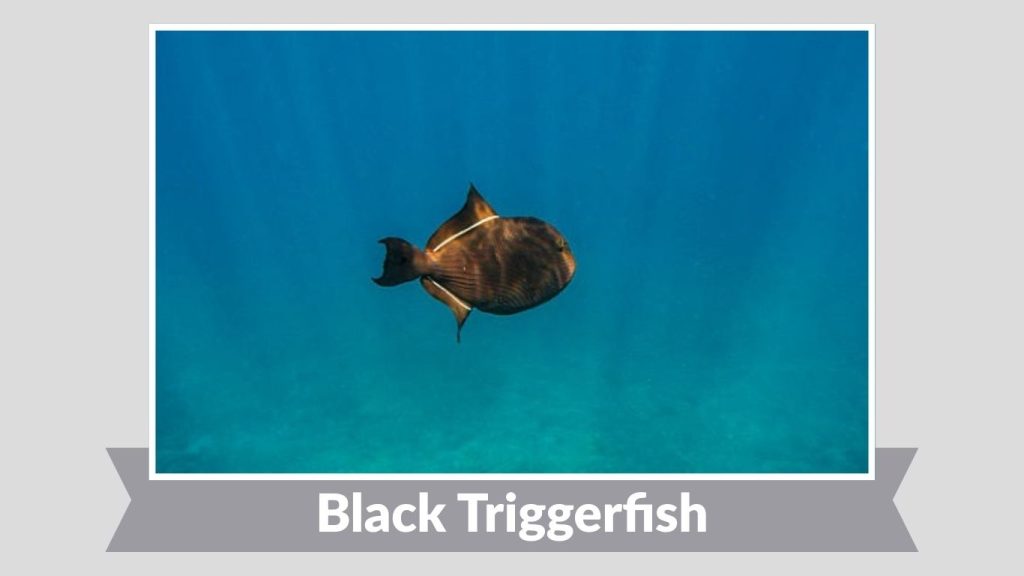
The black triggerfish is a large, sleek species known for its dark coloration and tendency to form schools in open reef waters. It is widely distributed across tropical oceans, especially in the Indo-Pacific, where it is often seen swimming above reef slopes and drop-offs. Unlike many bottom-dwelling triggerfish, this species frequently occupies mid-water zones.
Identification
- Dark brown to deep black overall body color
- Long, sickle-shaped tail fin
- Streamlined, laterally compressed body
- Small mouth with sharp teeth
- Average adult size: about 14–20 inches
Habitat
Black triggerfish are commonly found near outer reef slopes, reef drop-offs, and oceanic reefs. They prefer areas with strong currents, where they can feed on drifting food. Juveniles are sometimes seen closer to reef shelters, while adults often cruise in open water.
Behavior
This species is more social than most triggerfish and is often observed in groups or loose schools. They are active swimmers and generally less aggressive, although they may still defend territory during breeding periods.
Diet
Their diet mainly includes zooplankton, small crustaceans, algae, and floating organic matter. They may also pick small invertebrates from the reef, but they rely less on hard-shelled prey than many other triggerfish.
Lifespan
Black triggerfish typically live around 8 to 12 years in the wild. With minimal predators and suitable habitats, some individuals may survive longer. In aquariums, lifespan depends on spacious tanks and proper water conditions.
8. Pinktail Triggerfish (Melichthys vidua)
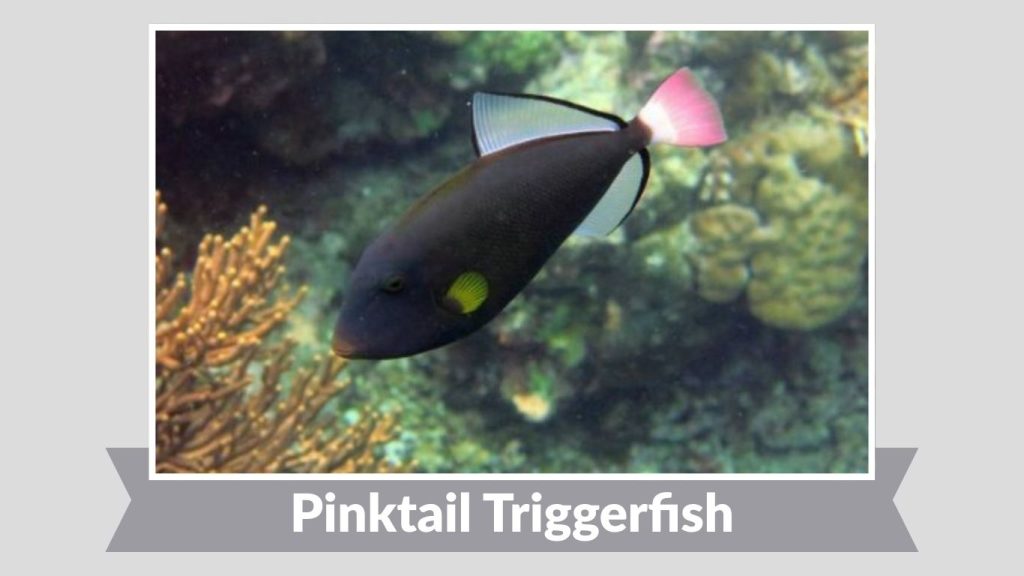
The pinktail triggerfish is a bold, attractive species recognized for its dark body and contrasting pink to reddish tail fin. It is widely distributed throughout the Indo-Pacific region and is commonly seen around reef slopes and drop-offs. This triggerfish is popular among divers and aquarium enthusiasts due to its striking color contrast and relatively calmer nature compared to many bottom-dwelling triggerfish.
Identification
- Dark brown to nearly black body
- Distinct pink to red tail fin
- Oval, laterally compressed body shape
- Small mouth with strong teeth
- Average adult size: about 12–15 inches
Habitat
Pinktail triggerfish inhabit outer reef slopes, reef drop-offs, and coral-rich offshore reefs. They are often found in deeper reef zones, swimming just above the reef structure where currents deliver a steady supply of food.
Behavior
This species is active, alert, and generally less aggressive than many triggerfish. They are often seen swimming in open water near reefs and may tolerate the presence of other fish, though they can still become territorial during breeding periods.
Diet
Their natural diet consists mainly of plankton, small crustaceans, algae, and drifting organic material. They may also pick small invertebrates from reef surfaces, but they rely less on crushing hard shells than reef-bottom triggerfish.
Lifespan
Pinktail triggerfish usually live around 8 to 12 years in the wild. In captivity, with a large tank, stable water quality, and a varied diet, they can often reach similar lifespans.
9. Niger Triggerfish (Odonus niger)
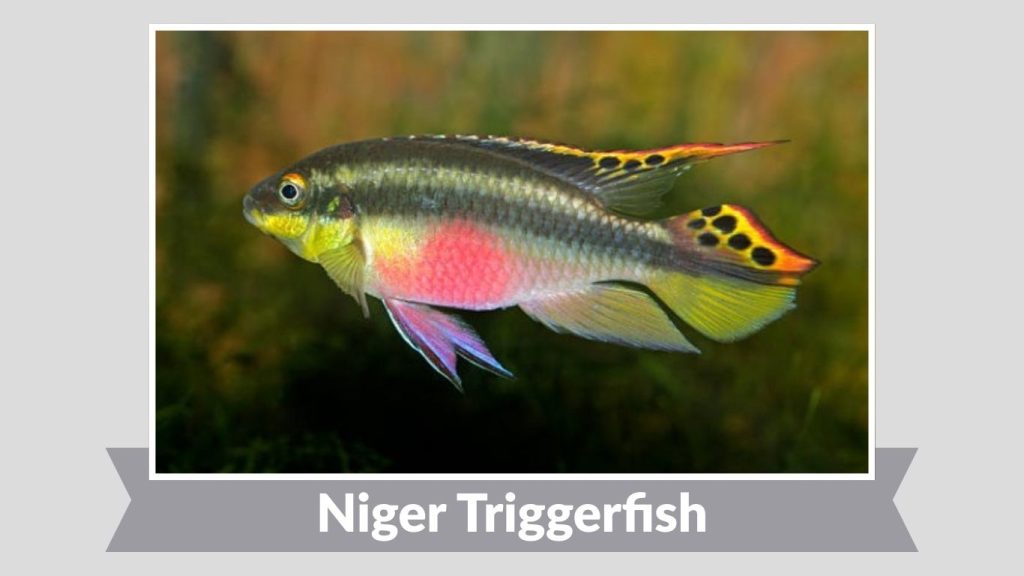
The Niger triggerfish, also known as the redtooth triggerfish, is a sleek, fast-swimming species famous for its deep blue to violet body and bright red teeth. It is widely distributed throughout the Indo-Pacific region, especially around outer reef slopes and drop-offs. Unlike many triggerfish that stay close to the bottom, this species spends much of its time swimming in open water above the reef.
Identification
- Deep blue to purple body coloration
- Bright red teeth visible when mouth is open
- Forked, scissor-like tail fin
- Slender, streamlined body shape
- Average adult size: about 12–18 inches
Habitat
Niger triggerfish are most often found along outer reef edges, steep reef slopes, and ocean-facing drop-offs. They prefer areas with strong currents, where plankton and small drifting organisms are abundant.
Behavior
This species is active, alert, and generally less aggressive than many bottom-dwelling triggerfish. They are often seen alone or in small groups, hovering above reefs and darting quickly to catch food from the water column.
Diet
Their diet mainly consists of zooplankton, small crustaceans, fish eggs, and drifting invertebrates. They occasionally graze on algae and pick tiny organisms from reef surfaces.
Lifespan
Niger triggerfish typically live around 8 to 12 years in the wild. With proper care, a spacious environment, and high-quality food, individuals in captivity may achieve similar longevity.
10. Bursa Triggerfish (Sufflamen bursa)
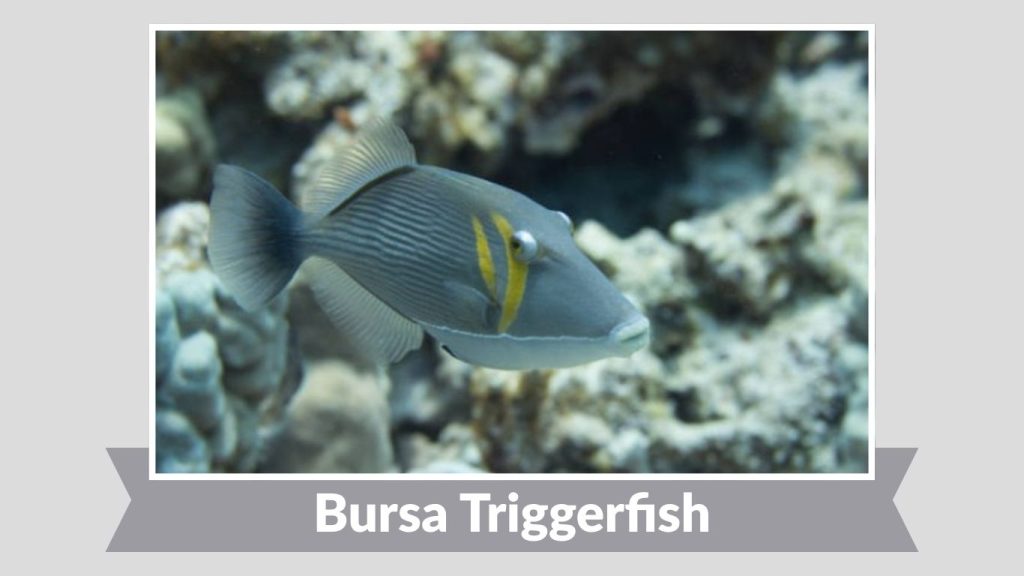
The bursa triggerfish is a hardy, adaptable species commonly found on coral reefs and sandy reef flats across the Indo-Pacific region. It is recognized by its earthy coloration and subtle facial markings, which provide excellent camouflage among rocks and coral rubble. This triggerfish often stays close to the bottom, where it actively searches for invertebrates hidden in sand and crevices.
Identification
- Brown to gray body with darker mottling
- Pale lines and markings on the face
- Oval, laterally compressed body
- Strong jaws with blunt crushing teeth
- Average adult size: about 10–12 inches
Habitat
Bursa triggerfish inhabit shallow reef flats, lagoons, sandy bottoms, and coral rubble zones. They prefer areas where sand meets reef structures, allowing them to dig, flip debris, and access buried prey.
Behavior
This species is alert, curious, and moderately territorial. It often uses its powerful mouth to move rocks and shells while foraging. During breeding season, bursa triggerfish aggressively defend their nests, chasing away fish and even divers.
Diet
Their natural diet includes crabs, shrimp, sea urchins, mollusks, and other benthic invertebrates. They also consume small fish and algae when available.
Lifespan
Bursa triggerfish usually live around 7 to 10 years in the wild. In stable reef environments with low disturbance, some individuals may survive longer.
11. Halfmoon Triggerfish (Sufflamen chrysopterum)
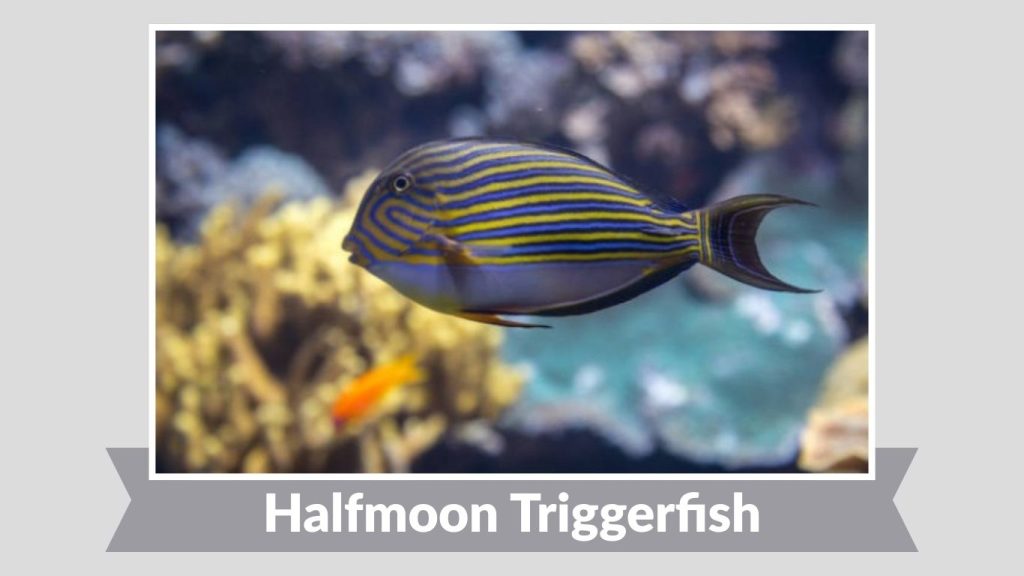
The halfmoon triggerfish is named for its distinctive yellow, crescent-shaped tail fin that resembles a half moon. It is a widespread Indo-Pacific species commonly found around coral reefs, lagoons, and reef slopes. This fish is known for its strong swimming ability, hardy nature, and striking contrast between its dark body and bright fins.
Identification
- Dark brown to charcoal-colored body
- Bright yellow, half-moon–shaped tail fin
- Yellow margins on dorsal and anal fins
- Stout, oval body with rough skin
- Average adult size: about 12–14 inches
Habitat
Halfmoon triggerfish inhabit lagoons, reef flats, and outer reef slopes. They are often seen close to coral structures or swimming just above rocky reef areas where they can quickly retreat into crevices for protection.
Behavior
This species is bold, alert, and territorial, especially around nesting sites. They are frequently observed actively patrolling their area and may chase away intruders. Outside the breeding season, they are less aggressive but remain highly aware of their surroundings.
Diet
Their diet mainly consists of sea urchins, crabs, shrimp, mollusks, and other bottom-dwelling invertebrates. They also eat algae and occasionally small fish.
Lifespan
Halfmoon triggerfish typically live around 8 to 11 years in the wild. With stable habitat conditions and sufficient food, some individuals may live longer.
12. Crosshatch Triggerfish (Xanthichthys mento)
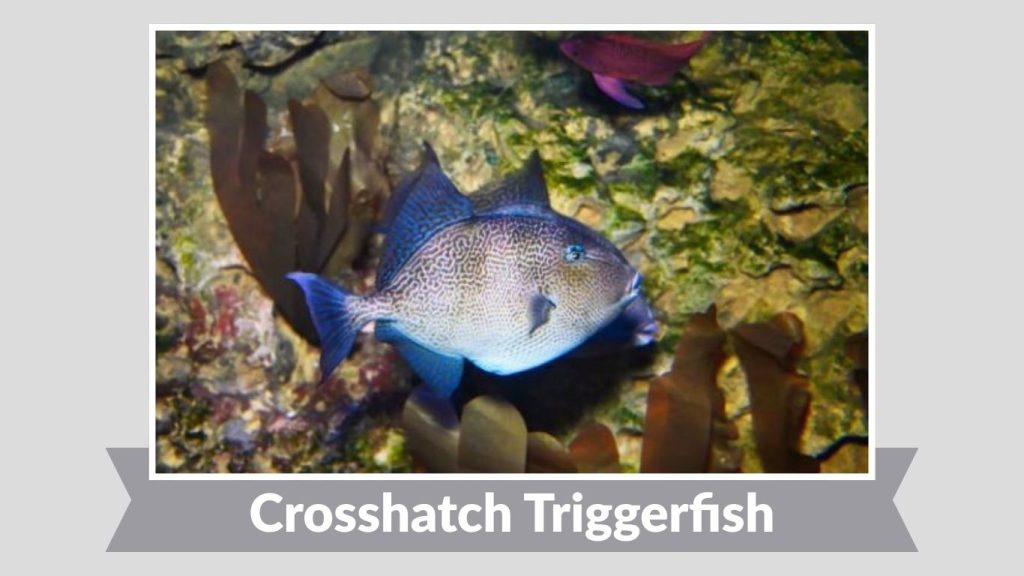
The crosshatch triggerfish is considered one of the most beautiful triggerfish species, admired for its elegant shape and fine, crosshatched scale pattern. It lives mainly in deeper waters of the Indo-Pacific, especially around outer reef slopes and drop-offs. This species is more pelagic than many triggerfish and often swims above the reef in clear, open water.
Identification
- Fine crosshatch pattern covering the body
- Reddish to bronze body tones
- Males have brighter colors and longer fins
- Streamlined body with forked tail
- Average adult size: about 11–14 inches
Habitat
Crosshatch triggerfish prefer deeper outer reef slopes, reef drop-offs, and oceanic reefs. They are commonly found hovering above steep reef faces where currents bring plankton-rich water.
Behavior
This species is relatively peaceful compared to many triggerfish. They are graceful swimmers and often seen in pairs or small groups. Males may display brighter colors during courtship, but overall they are less aggressive and more open-water oriented.
Diet
Their diet mainly includes zooplankton, small crustaceans, fish eggs, and drifting invertebrates. They feed primarily in the water column rather than on hard-shelled bottom prey.
Lifespan
Crosshatch triggerfish usually live around 8 to 12 years in the wild. In well-maintained aquariums, they may reach similar or slightly longer lifespans.
13. Sargassum Triggerfish (Xanthichthys ringens)
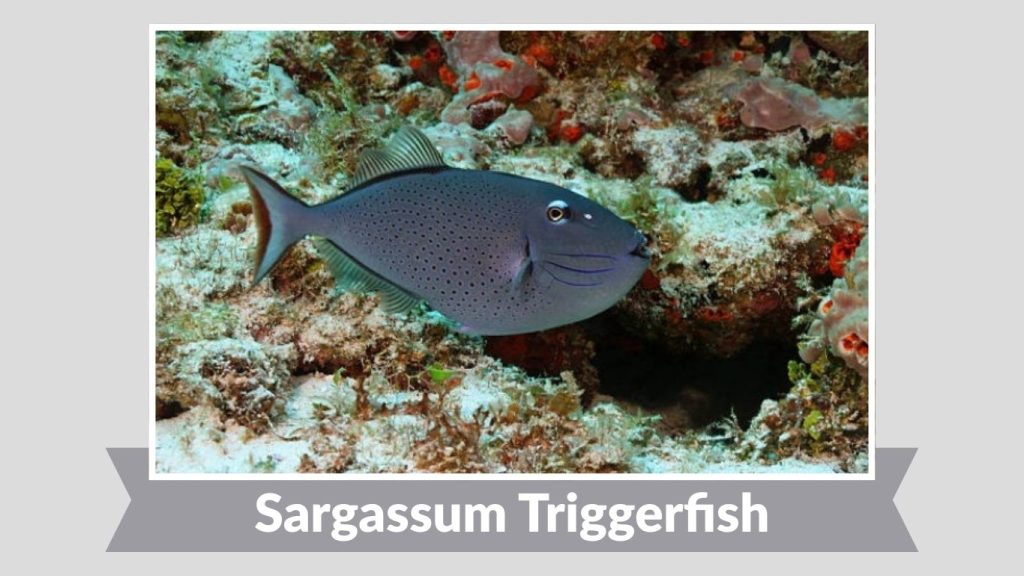
The sargassum triggerfish is a sleek, oceanic species often associated with floating Sargassum seaweed mats and open-water environments. It is primarily found in the Atlantic Ocean, including the Gulf of Mexico and Caribbean Sea. Unlike many reef-dwelling triggerfish, this species frequently occupies pelagic zones and drifts far from coastal reefs.
Identification
- Blue-gray to olive body coloration
- Long, deeply forked tail fin
- Streamlined, laterally compressed body
- Subtle facial markings and pale fin edges
- Average adult size: about 10–12 inches
Habitat
Sargassum triggerfish are commonly found around floating Sargassum mats, offshore reefs, and open-ocean drift zones. Juveniles are especially associated with floating seaweed, which provides both shelter and food sources.
Behavior
This species is active, alert, and often seen swimming in mid-water or near floating objects. They are less territorial than bottom-dwelling triggerfish and may form small groups, especially in open-water environments.
Diet
Their natural diet consists mainly of zooplankton, small crustaceans, fish eggs, and tiny drifting organisms. They also feed on algae and small invertebrates found among floating vegetation.
Lifespan
Sargassum triggerfish typically live around 6 to 10 years in the wild. With favorable conditions and minimal predation, some individuals may survive longer.
14. Undulated Triggerfish (Balistapus undulatus)

The undulated triggerfish is a compact, highly aggressive species known for its bold facial markings and strong territorial instincts. It is widely distributed across the Indo-Pacific region, especially on shallow coral reefs and reef flats. Despite its smaller size compared to giants like the titan triggerfish, it is considered one of the most aggressive triggerfish toward intruders.
Identification
- Yellow and blue wavy facial lines
- Dark brown to greenish body color
- Short, stocky body shape
- Bright blue edging on fins
- Average adult size: about 10–12 inches
Habitat
Undulated triggerfish inhabit shallow coral reefs, reef flats, and rocky reef zones. They often stay close to coral heads, crevices, and rubble where they can quickly retreat for shelter and nesting.
Behavior
This species is extremely territorial and fearless, especially during breeding season. Undulated triggerfish aggressively defend their nests and are known to repeatedly charge divers who enter their territory. They are solitary and highly alert.
Diet
Their diet mainly includes sea urchins, crabs, shrimp, mollusks, and other benthic invertebrates. They may also eat small fish and algae.
Lifespan
Undulated triggerfish generally live around 8 to 10 years in the wild. In stable reef conditions, some individuals may live longer.
15. Redtooth Triggerfish (Odonus niger)
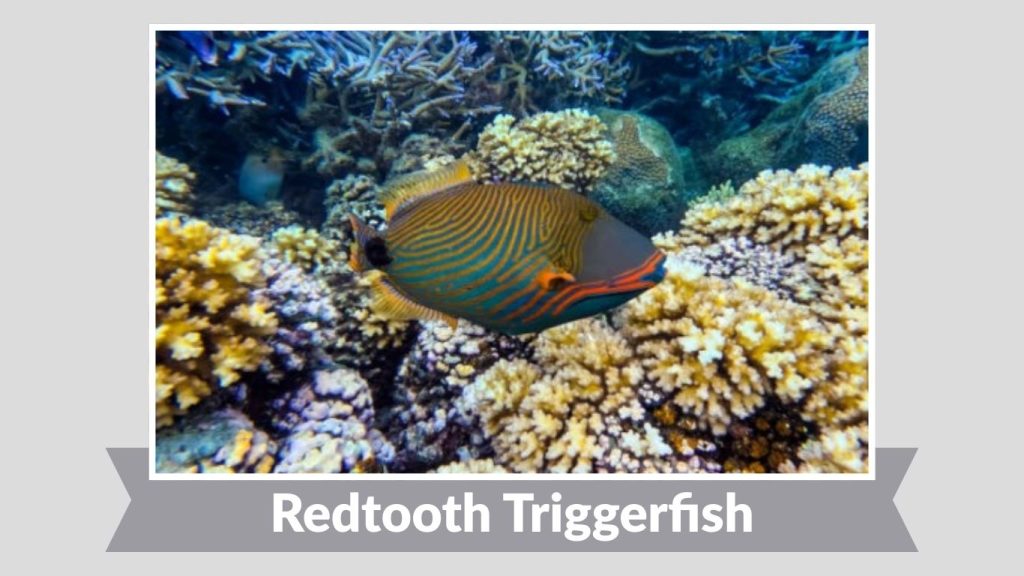
The redtooth triggerfish is a fast, open-water species best known for its deep blue body and bright red teeth, which are visible when it opens its mouth. It inhabits tropical Indo-Pacific waters, especially along outer reef slopes and drop-offs. This fish is often seen swimming above reefs, catching drifting prey in strong currents.
Identification
- Deep blue to violet body coloration
- Bright red teeth inside the mouth
- Slender, streamlined body
- Deeply forked tail fin
- Average adult size: about 12–18 inches
Habitat
Redtooth triggerfish are commonly found around outer reef edges, steep reef slopes, and ocean-facing drop-offs. They favor areas with strong currents that deliver a steady flow of plankton and small organisms.
Behavior
This species is active, alert, and generally less aggressive than many reef-bottom triggerfish. They are often observed hovering above reefs alone or in small groups, darting quickly to capture drifting food.
Diet
Their diet mainly consists of zooplankton, small crustaceans, fish eggs, and drifting invertebrates. They occasionally graze on algae and pick tiny organisms from reef surfaces.
Lifespan
Redtooth triggerfish usually live around 8 to 12 years in the wild. With favorable conditions and proper nutrition, they may reach similar lifespans in captivity.
16. Yellowmargin Triggerfish (Pseudobalistes flavimarginatus)
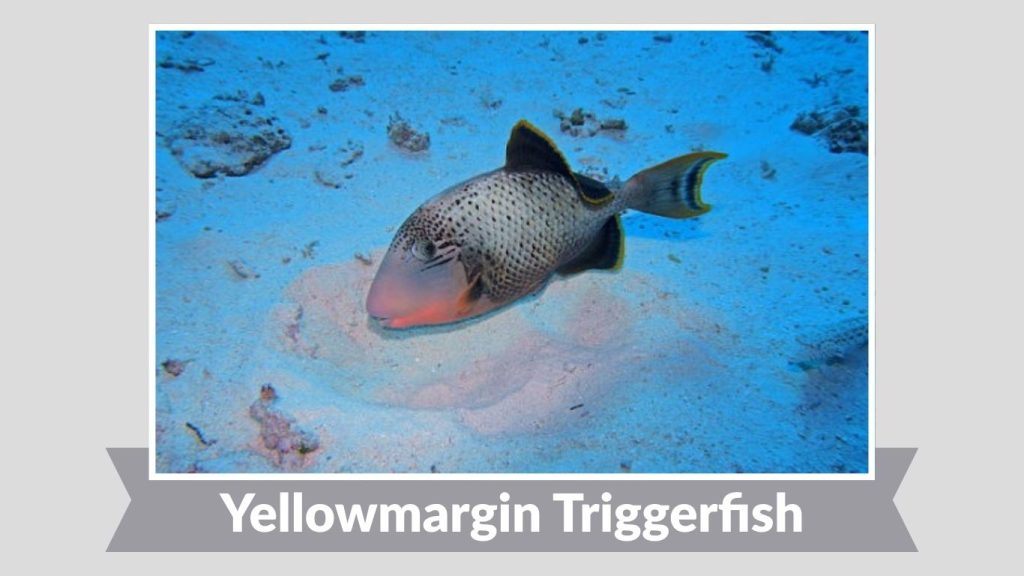
The yellowmargin triggerfish is a large, powerful reef species known for the bold yellow edging along its fins and its thick, heavy-bodied appearance. It is widely distributed across the Indo-Pacific region, especially around coral reefs and reef slopes. This species is often seen near the bottom, patrolling reef areas and searching for hard-shelled prey.
Identification
- Thick, oval body with rough skin
- Yellow margins on dorsal, anal, and tail fins
- Brown to gray body with subtle mottling
- Strong jaws with crushing teeth
- Average adult size: about 20–24 inches
Habitat
Yellowmargin triggerfish inhabit coral reefs, outer reef slopes, and rocky reef zones. They are usually found close to the seabed, near coral heads, caves, and rubble where prey is abundant.
Behavior
This species is bold, territorial, and aggressive when defending nests. They often patrol their chosen area and may chase away fish or divers that approach too closely. Outside breeding season, they are more solitary and focused on feeding.
Diet
Their natural diet consists mainly of sea urchins, crabs, shrimp, mollusks, and other armored invertebrates. They may also eat starfish and small fish.
Lifespan
Yellowmargin triggerfish generally live around 10 to 14 years in the wild. With good habitat conditions and minimal disturbance, some individuals may live longer.
17. Arabian Triggerfish (Rhinecanthus assasi)
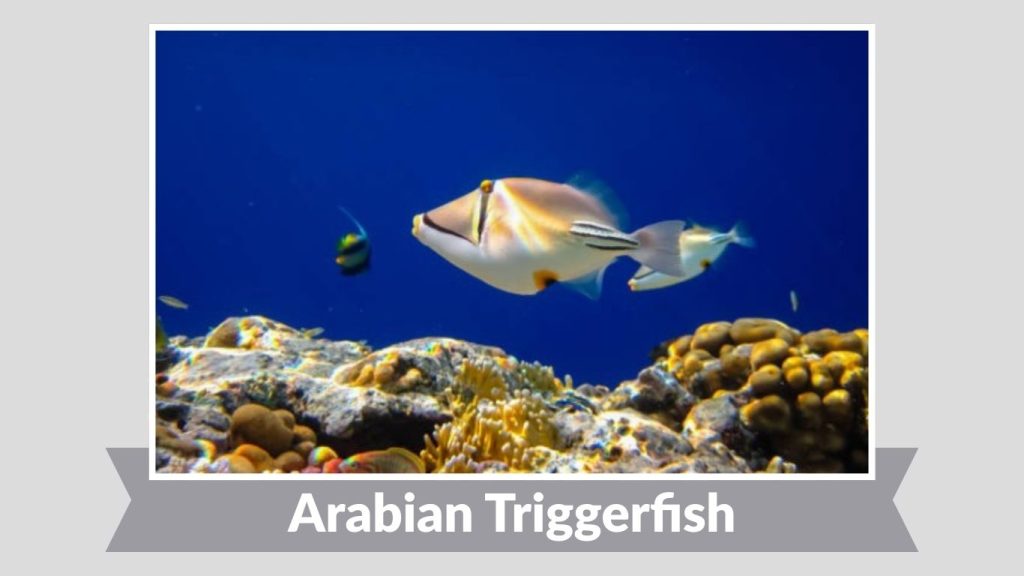
The Arabian triggerfish is a beautifully patterned species native mainly to the Red Sea, Arabian Sea, and nearby parts of the western Indian Ocean. It closely resembles the Picasso triggerfish but can be distinguished by its unique facial markings and color tones. This triggerfish inhabits shallow coral reefs, where it actively swims among rocks and corals.
Identification
- Bold blue, yellow, and white facial patterns
- Dark stripe running through the eye
- Compact, oval-shaped body
- Strong beak-like teeth
- Average adult size: about 7–9 inches
Habitat
Arabian triggerfish are most commonly found in shallow coral reefs, reef flats, and lagoons. They prefer clear waters with plenty of coral cover, crevices, and rocky shelters.
Behavior
This species is alert, curious, and territorial, especially around nesting areas. It actively patrols reef zones and may chase away intruders that enter its space.
Diet
Their diet mainly includes crabs, shrimp, sea urchins, mollusks, and other small reef invertebrates. They may also consume algae and tiny fish.
Lifespan
Arabian triggerfish typically live around 6 to 9 years in the wild. In protected reef environments, some individuals may survive longer.
18. Rectangular Triggerfish (Rhinecanthus rectangulus)

The rectangular triggerfish is a colorful reef species closely related to the Picasso and Arabian triggerfish. It is named for the dark rectangular markings on its body and face. This fish is widely distributed across the Indo-Pacific region and is commonly seen in shallow coral reefs and reef flats, where it swims actively among corals and rocks.
Identification
- Blue, yellow, and white facial patterns
- Dark rectangular blotches on the body
- Oval, laterally compressed shape
- Strong beak-like teeth
- Average adult size: about 8–10 inches
Habitat
Rectangular triggerfish inhabit shallow coral reefs, reef flats, and lagoons. They prefer areas with abundant coral growth, rubble zones, and rocky shelters where they can hide and forage.
Behavior
This species is active, alert, and territorial. It often patrols a small area of reef and aggressively defends nesting sites during breeding season.
Diet
Their natural diet includes crabs, shrimp, sea urchins, mollusks, and other small invertebrates. They also eat algae and occasionally small fish.
Lifespan
Rectangular triggerfish usually live around 6 to 10 years in the wild. With good environmental conditions, some individuals may live longer.
19. Rough Triggerfish (Canthidermis maculata)
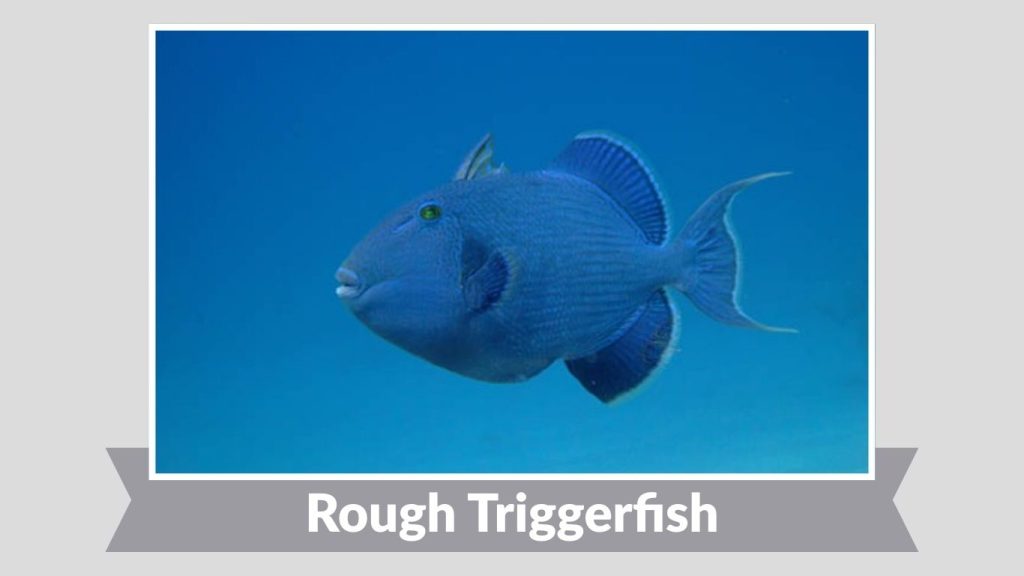
The rough triggerfish is an oceanic species recognized for its coarse skin texture and preference for open-water environments. It is found in tropical and subtropical oceans worldwide and is often associated with floating objects, drifting debris, or offshore waters. Unlike many reef triggerfish, it spends much of its life far from coral reefs.
Identification
- Gray to brown body with small pale spots
- Noticeably rough, sandpaper-like skin
- Slender, elongated body shape
- Forked tail fin
- Average adult size: about 12–15 inches
Habitat
Rough triggerfish inhabit open ocean waters, offshore zones, and areas around floating debris. Juveniles are commonly found sheltering beneath drifting objects, which offer both protection and feeding opportunities.
Behavior
This species is active and mobile, often swimming long distances in pelagic environments. They are less territorial than reef triggerfish and may form small groups around floating structures.
Diet
Their diet mainly consists of zooplankton, small crustaceans, jellyfish, and drifting invertebrates. They also feed on algae and organic matter found on floating debris.
Lifespan
Rough triggerfish generally live around 6 to 10 years in the wild. With favorable ocean conditions, some individuals may survive longer.
20. Lagoon Triggerfish (Rhinecanthus aculeatus)
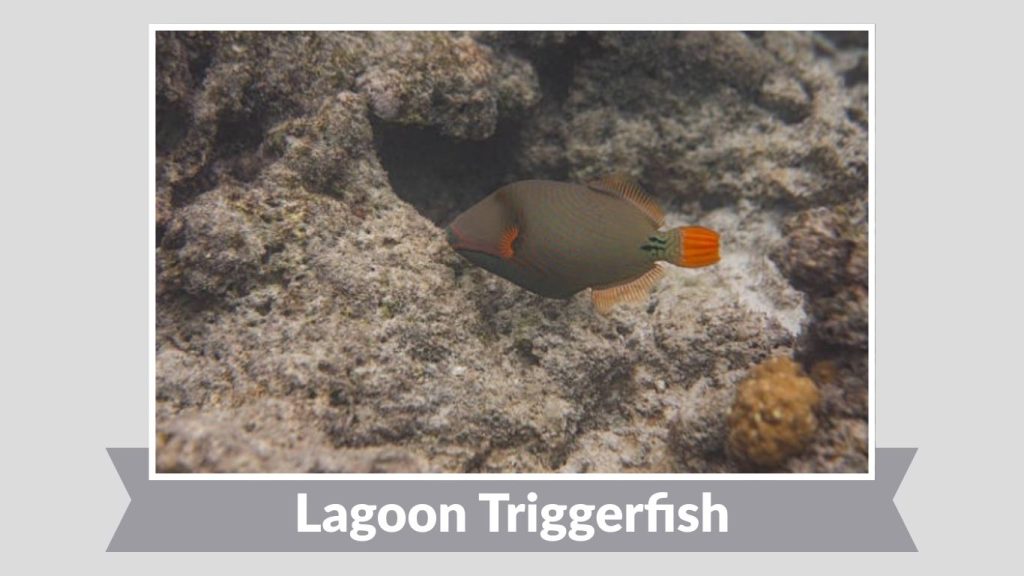
The lagoon triggerfish is a brightly patterned reef species commonly seen in shallow lagoons and reef flats across the Indo-Pacific region. It is famous for its striking mask-like face markings and bold colors, which make it popular among snorkelers and divers. This fish is active, alert, and well adapted to life in shallow coral environments.
Identification
- Bright blue, yellow, black, and white color patterns
- Distinct dark band through the eye
- Oval, laterally compressed body
- Strong beak-like teeth
- Average adult size: about 8–10 inches
Habitat
Lagoon triggerfish inhabit shallow lagoons, reef flats, and protected coral reef zones. They prefer warm, clear waters with abundant coral cover, sandy patches, and rocky crevices.
Behavior
This species is curious, bold, and territorial, especially when guarding nests. It actively patrols reef areas and may chase away intruders that come too close.
Diet
Their natural diet includes crabs, shrimp, sea urchins, mollusks, and other small invertebrates. They may also eat algae and tiny fish.
Lifespan
Lagoon triggerfish typically live around 6 to 9 years in the wild. In healthy reef systems, some individuals may live longer.
21. Starry Triggerfish (Abalistes stellatus)
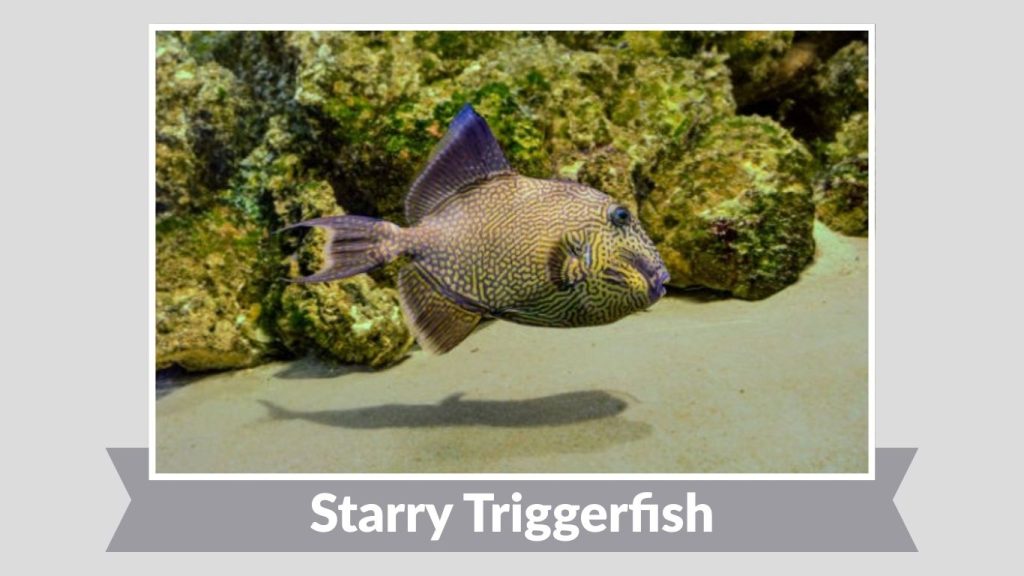
The starry triggerfish is a large, deep-bodied species named for the small star-like white spots scattered across its dark body. It is mainly found in the Indo-Pacific region, especially around coastal reefs, rocky bottoms, and deeper reef slopes. This triggerfish is powerful, alert, and well adapted for crushing hard-shelled prey.
Identification
- Dark brown to black body with tiny white spots
- Thick, heavy-bodied appearance
- Strong jaws with large crushing teeth
- Rounded tail fin
- Average adult size: about 18–22 inches
Habitat
Starry triggerfish inhabit coastal reefs, rocky reef zones, and deeper reef slopes. They are often found near the bottom, close to coral rubble and rocky structures where prey is abundant.
Behavior
This species is solitary, territorial, and highly alert. During breeding season, it becomes especially aggressive when defending nesting areas. Outside this period, it spends much of its time foraging along the seabed.
Diet
Their diet mainly consists of sea urchins, crabs, shrimp, mollusks, and other bottom-dwelling invertebrates. They may also eat starfish and small fish.
Lifespan
Starry triggerfish generally live around 10 to 14 years in the wild. In stable marine environments, some individuals may survive longer.
22. Blackbar Triggerfish (Rhinecanthus verrucosus)

The blackbar triggerfish is a colorful reef species easily recognized by the bold black band across its body and its bright facial patterns. It inhabits shallow coral reefs and reef flats throughout the Indo-Pacific region. This species is active, alert, and commonly seen swimming close to the reef surface among corals and rocks.
Identification
- Bright blue, yellow, and white facial markings
- Thick black band across the body
- Oval, laterally compressed shape
- Strong beak-like teeth
- Average adult size: about 8–11 inches
Habitat
Blackbar triggerfish live in shallow coral reefs, reef flats, and lagoons. They prefer areas with abundant coral cover, sandy patches, and rocky crevices where they can forage and hide.
Behavior
This species is curious, bold, and territorial. It often patrols a small area of reef and becomes aggressive when protecting nests or defending food sources.
Diet
Their natural diet includes crabs, shrimp, sea urchins, mollusks, and other reef invertebrates. They also eat algae and occasionally small fish.
Lifespan
Blackbar triggerfish usually live around 6 to 10 years in the wild. In healthy reef systems, some individuals may live longer.
23. White-tailed Triggerfish (Sufflamen albomarginatus)
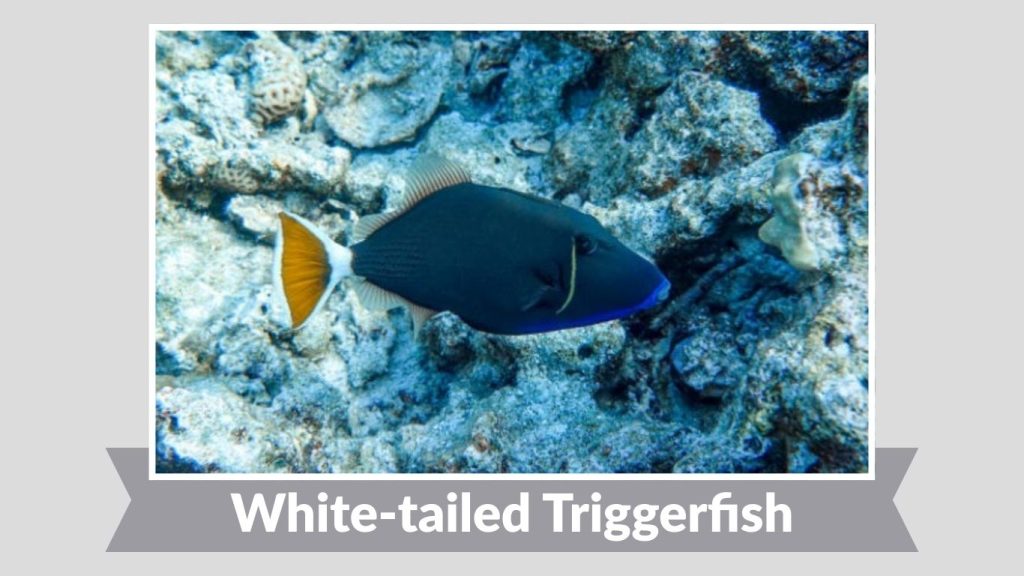
The white-tailed triggerfish is a reef-dwelling species recognized for its pale tail margins and subtle but attractive body tones. It is found mainly in the Indo-Pacific region, especially around coral reefs, reef slopes, and rocky bottoms. This species often stays close to the seabed, where it searches for invertebrates among sand and coral rubble.
Identification
- Brown to gray body with faint mottling
- Whitish edges on the tail fin
- Thick, oval body shape
- Strong jaws with crushing teeth
- Average adult size: about 10–13 inches
Habitat
White-tailed triggerfish inhabit coral reefs, reef flats, and outer reef slopes. They are commonly seen near coral rubble and rocky areas that provide shelter and feeding opportunities.
Behavior
This species is alert, moderately territorial, and solitary. It often patrols a chosen area and becomes more aggressive when nesting or defending food sources.
Diet
Their diet mainly includes crabs, shrimp, sea urchins, mollusks, and other benthic invertebrates. They may also eat algae and occasionally small fish.
Lifespan
White-tailed triggerfish typically live around 7 to 11 years in the wild. With stable reef conditions, some individuals may live longer.
24. Indian Triggerfish (Balistes polylepis)
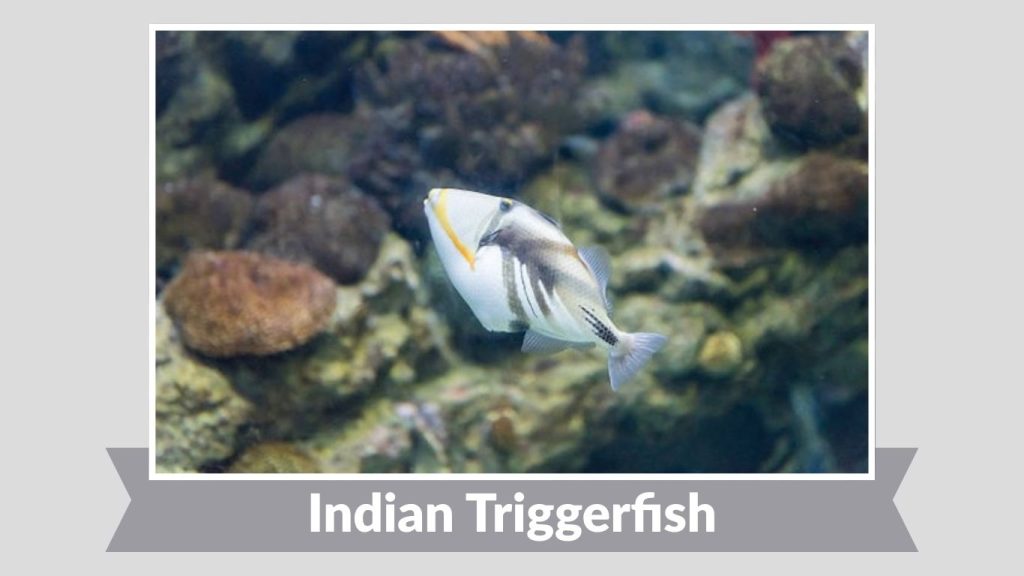
The Indian triggerfish is a large, powerful species found mainly in the eastern Pacific Ocean, ranging from the west coast of the Americas into tropical waters. Despite its common name, it is not limited to India but is named from historical classification. This triggerfish inhabits rocky reefs, offshore islands, and deeper coastal waters.
Identification
- Gray to brown body with subtle mottling
- Thick, heavy-bodied appearance
- Strong jaws with large crushing teeth
- Rounded fins with tough skin texture
- Average adult size: about 18–24 inches
Habitat
Indian triggerfish live around rocky reefs, offshore islands, and deeper reef slopes. They prefer areas with strong currents and abundant hard-shelled prey.
Behavior
This species is solitary, bold, and territorial. It often patrols rocky reef zones and may aggressively defend nesting areas.
Diet
Their natural diet consists mainly of sea urchins, crabs, mollusks, and other armored invertebrates. They also consume starfish and small fish.
Lifespan
Indian triggerfish generally live around 10 to 14 years in the wild. With favorable marine conditions, some individuals may survive longer.
25. Orange-lined Triggerfish (Balistapus undulatus)
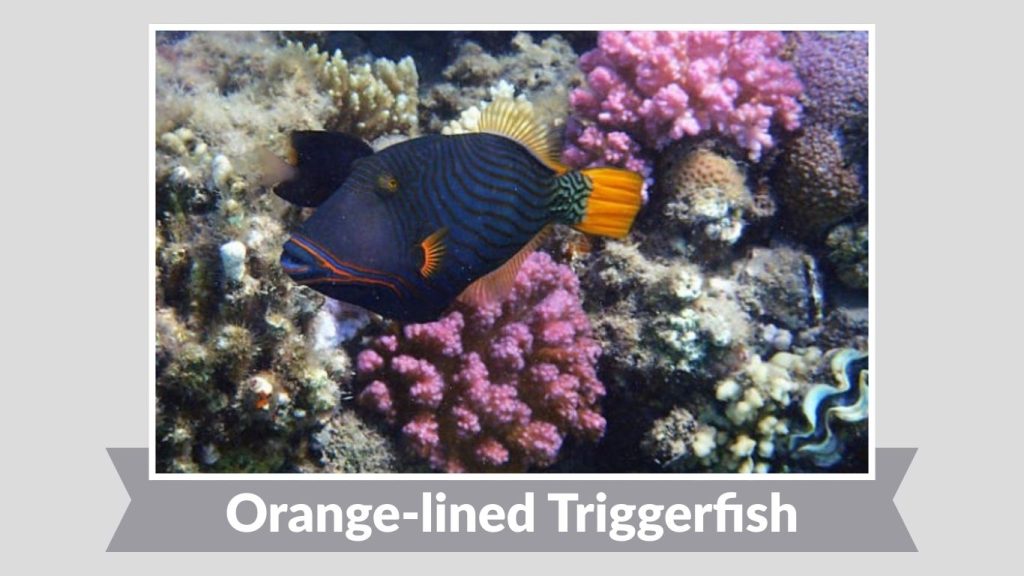
The orange-lined triggerfish is a vividly marked reef species known for the bright orange and blue wavy lines across its face and body. It is widely distributed throughout the Indo-Pacific region, especially on shallow coral reefs and reef flats. This species is famous for its fearless nature and is considered one of the most aggressive triggerfish toward intruders.
Identification
- Bright orange and blue wavy facial lines
- Dark brown to greenish body color
- Compact, muscular body shape
- Strong jaws with sharp teeth
- Average adult size: about 10–12 inches
Habitat
Orange-lined triggerfish inhabit shallow coral reefs, reef flats, and rocky reef zones. They prefer warm, clear waters with abundant coral cover and sandy patches for nesting.
Behavior
This species is extremely territorial and bold, especially during breeding season. It actively defends its nest and may repeatedly charge divers or other fish that approach its territory.
Diet
Their diet mainly includes sea urchins, crabs, shrimp, mollusks, and other reef invertebrates. They may also eat small fish and algae.
Lifespan
Orange-lined triggerfish typically live around 8 to 10 years in the wild. In protected reef habitats, some individuals may live longer.
FAQs
What are triggerfish best known for?
Triggerfish are best known for their strong “trigger” spine on the dorsal fin, powerful crushing teeth, and bold personalities. Many species are highly territorial, especially during breeding season. They are also famous for their intelligence, bright colors, and ability to break open hard-shelled prey like sea urchins and crabs.
Are triggerfish dangerous to humans?
Triggerfish are not naturally aggressive toward humans, but some species can become defensive if their nests are threatened. During spawning season, they may chase or bite divers who enter their territory. Serious injuries are rare, but their strong jaws mean caution and distance are always recommended.
Where do triggerfish usually live?
Triggerfish mainly live in tropical and subtropical oceans around the world. Most species inhabit coral reefs, reef flats, and rocky reef zones, while some prefer outer reef slopes or open-water environments. They rely on reefs for shelter, nesting sites, and access to abundant food sources.
What do triggerfish eat in the wild?
Triggerfish are mostly carnivorous and feed on crabs, shrimp, sea urchins, mollusks, and other hard-shelled invertebrates. Some species also consume plankton, algae, and small fish. Their powerful teeth allow them to crush shells that many other reef fish cannot break.
Can triggerfish be kept in home aquariums?
Some triggerfish can be kept in very large, well-maintained marine aquariums, but they are not beginner-friendly. Many species grow large, can be aggressive, and may damage tank equipment or attack other fish. They require spacious tanks, strong filtration, and carefully chosen tank mates.