




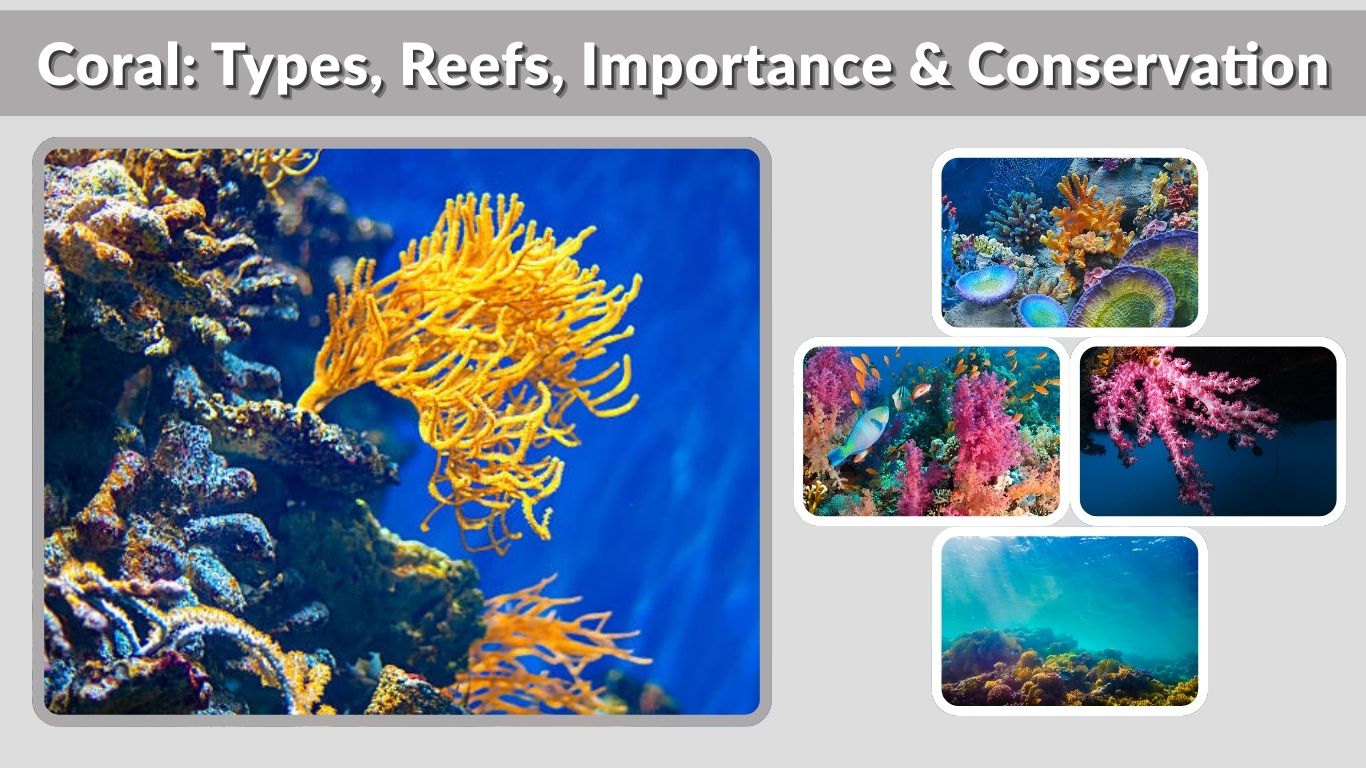
Coral is one of the most fascinating and vital organisms in the ocean. Although many people think coral is a plant or even a colorful rock, it is actually a living marine animal. Coral forms the foundation of coral reefs—some of the most diverse and valuable ecosystems on Earth. These underwater structures support thousands of marine species, protect coastlines, and contribute billions to global economies. However, coral reefs are increasingly threatened by climate change, pollution, and human activities, making their protection more important than ever.
What Is Coral?
Is Coral a Plant, Rock, or Animal?
Coral is a marine invertebrate animal belonging to the group Cnidaria, which also includes jellyfish and sea anemones. Each individual coral organism is called a polyp. These tiny, soft-bodied creatures live in colonies and secrete a hard outer skeleton made of calcium carbonate.
One reason coral is often mistaken for a plant is its relationship with microscopic algae called zooxanthellae. These algae live inside the coral’s tissues and perform photosynthesis, producing food that helps the coral survive. In return, the coral provides the algae with shelter and nutrients. This mutually beneficial partnership is essential for reef-building corals to thrive.
How Coral Grows and Forms Reefs
Coral grows slowly over time as thousands of polyps attach to one another and build massive colonies. As the polyps secrete calcium carbonate, they create hard skeletons that form the structural base of coral reefs. When polyps die, their skeletons remain, and new polyps grow on top of them. Over centuries or even millennia, this process creates large reef systems.
Most reef-building corals grow in warm, shallow, clear waters where sunlight can reach the algae living within them. Growth rates vary by species, but many corals grow only a few millimeters to a few centimeters per year. Despite their slow growth, coral reefs can eventually become enormous ecosystems visible even from space.
Types of Coral
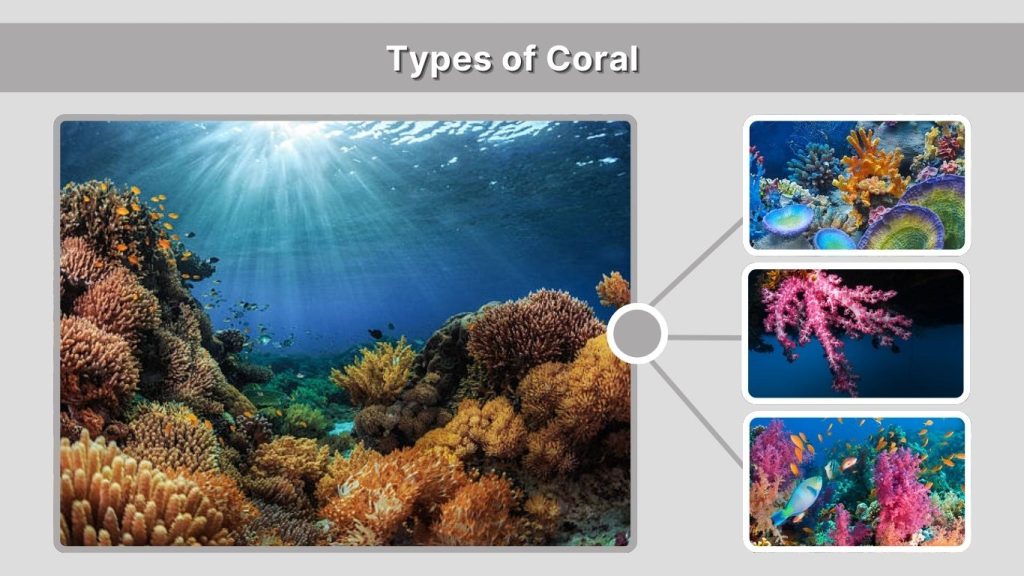
Coral species vary widely in appearance, structure, and habitat. Scientists generally classify coral into three main categories.
Hard Corals (Stony Corals)
Hard corals, also known as stony corals, are the primary reef builders. They produce rigid calcium carbonate skeletons that form the backbone of coral reefs. Examples include brain coral, which has a grooved surface resembling a human brain, and staghorn coral, known for its branching, antler-like shape.
These corals depend heavily on sunlight because of their symbiotic algae. As a result, they are typically found in shallow tropical waters. Without hard corals, large reef ecosystems would not exist.
Soft Corals
Unlike hard corals, soft corals do not produce rigid skeletons. Instead, they have flexible bodies supported by tiny skeletal elements. Soft corals often resemble underwater plants, with flowing shapes such as sea fans and sea whips.
Although they do not build reefs, soft corals contribute to reef biodiversity by providing shelter and habitat for many marine species. They can thrive in slightly deeper or less sunny waters compared to many hard corals.
Deep-Sea Corals
Deep-sea corals live in cold, dark waters at depths where sunlight cannot penetrate. Unlike reef-building corals, they do not rely on photosynthetic algae for survival. Instead, they capture nutrients from ocean currents.
These corals grow even more slowly than tropical species and can live for hundreds or even thousands of years. Deep-sea coral ecosystems are less visible but equally important for marine biodiversity.
What Are Coral Reefs?
Coral reefs are large underwater structures formed by colonies of reef-building corals. Often referred to as the “rainforests of the sea,” coral reefs are among the most diverse ecosystems on the planet. They occupy less than 1% of the ocean floor but support approximately 25% of all marine species.
Types of Coral Reefs
There are three primary types of coral reefs:
- Fringing reefs grow directly along coastlines and are the most common type.
- Barrier reefs form parallel to shorelines but are separated by deeper lagoons. The Great Barrier Reef in Australia is the most famous example.
- Atolls are ring-shaped reefs that surround a lagoon, typically formed around submerged volcanic islands.
Why Coral Reefs Are Important
Coral reefs provide critical habitat for fish, crustaceans, mollusks, and countless other marine organisms. They also act as natural barriers that reduce wave energy, protecting coastal communities from storms and erosion.
In addition, coral reefs support fishing industries and tourism economies worldwide. Millions of people depend directly on reef ecosystems for food, income, and coastal protection.
Coral Bleaching and Major Threats

What Is Coral Bleaching?
Coral bleaching occurs when corals become stressed and expel the microscopic algae (zooxanthellae) living inside their tissues. Since these algae provide most of the coral’s energy through photosynthesis, their loss causes the coral to turn white or pale—hence the term “bleaching.”
Bleached coral is not immediately dead, but it is extremely vulnerable. Without its algae, coral loses a major food source and becomes more susceptible to disease and mortality. If stressful conditions continue for too long, entire reef systems can die.
Causes of Coral Bleaching
The primary cause of coral bleaching is rising ocean temperatures linked to climate change. Even a small increase of 1–2°C above normal summer temperatures can trigger bleaching events.
Other major threats include:
- Ocean acidification: Increased carbon dioxide levels lower ocean pH, making it harder for corals to build their calcium carbonate skeletons.
- Pollution: Agricultural runoff, plastic waste, and oil spills damage reef ecosystems.
- Overfishing: Disrupts ecological balance and removes species that help maintain reef health.
- Coastal development: Sedimentation and habitat destruction harm coral growth.
Mass bleaching events have become more frequent in recent decades, affecting major reef systems worldwide, including the Great Barrier Reef.
Can Coral Recover?
Coral can recover from bleaching if ocean temperatures return to normal quickly and other stressors are minimized. In such cases, algae can return to the coral tissues, restoring color and energy production.
However, repeated or prolonged bleaching events reduce recovery chances. Since coral grows slowly, large-scale reef recovery can take decades. Severe and frequent stress may permanently alter reef ecosystems, replacing vibrant coral communities with algae-dominated environments.
Coral Conservation and Protection Efforts
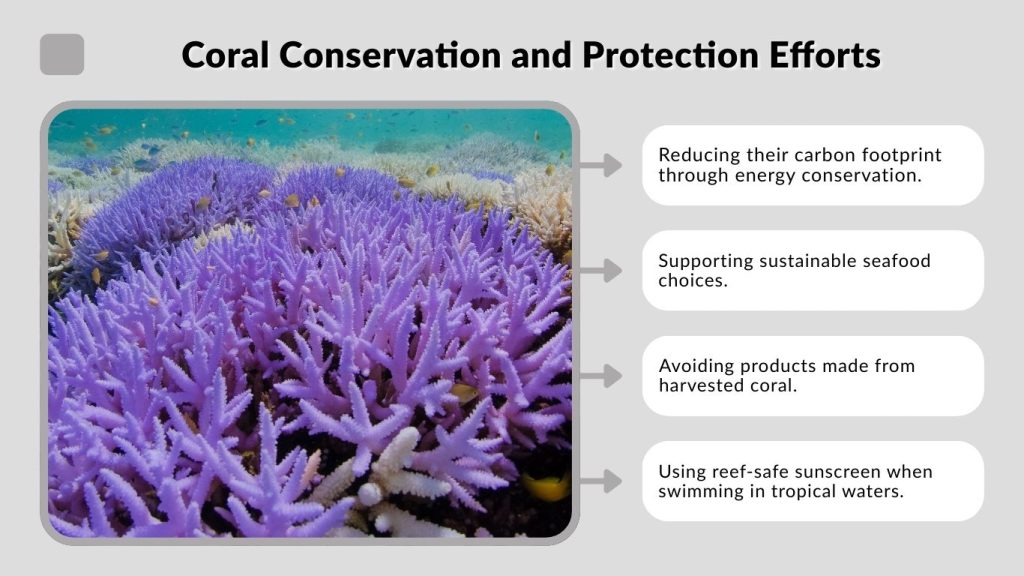
As coral reefs face increasing threats, global conservation efforts are expanding to protect and restore these ecosystems.
Global Conservation Initiatives
Many countries have established marine protected areas (MPAs) where fishing and other damaging activities are restricted. These zones allow reefs to recover and maintain biodiversity.
Scientists are also developing reef restoration programs, including coral farming and transplantation. In coral nurseries, fragments are grown in controlled environments before being replanted onto damaged reefs. Artificial reefs made from eco-friendly materials are sometimes used to provide new surfaces for coral attachment.
Additionally, international agreements aim to reduce carbon emissions, which is crucial for slowing ocean warming and acidification.
How Individuals Can Help
Protecting coral reefs is not limited to governments and scientists. Individuals can contribute by:
- Reducing their carbon footprint through energy conservation.
- Supporting sustainable seafood choices.
- Avoiding products made from harvested coral.
- Using reef-safe sunscreen when swimming in tropical waters.
- Practicing responsible tourism by not touching or standing on coral.
Small actions, when multiplied globally, can significantly reduce pressure on reef ecosystems.
Interesting Facts About Coral
Coral reefs are among the oldest ecosystems on Earth, with some structures dating back over 5,000 years. The Great Barrier Reef is the largest coral reef system in the world, stretching over 2,300 kilometers along Australia’s northeast coast.
Coral spawning is another fascinating phenomenon. Once a year, many coral species release eggs and sperm into the water simultaneously in a synchronized event often guided by moon cycles. This natural spectacle ensures reproduction and genetic diversity.
Despite covering less than 1% of the ocean floor, coral reefs support nearly a quarter of all marine species, making them one of the most productive ecosystems on the planet.
FAQs
Is coral alive?
Yes, coral is alive. Each coral structure is made up of thousands of tiny animals called polyps. These polyps live together in colonies and build hard skeletons that form coral reefs. Although coral may look like rock, it is a living marine organism.
What causes coral reefs to die?
Coral reefs die mainly due to rising ocean temperatures, pollution, overfishing, and ocean acidification. These stressors cause coral bleaching and weaken reef systems. If stressful conditions continue for too long, corals lose their algae, starve, and eventually die.
Why are coral reefs important to humans?
Coral reefs protect coastlines from storms, support fisheries, and contribute to tourism economies. Millions of people rely on reefs for food, jobs, and coastal safety. They also play a crucial role in maintaining marine biodiversity.
How long does coral take to grow?
Coral grows slowly, usually between a few millimeters and a few centimeters per year depending on the species. Large reef systems take hundreds or even thousands of years to form, which makes their destruction especially concerning.
Conclusion
Coral is far more than a beautiful underwater structure—it is a living organism that forms the backbone of some of the world’s most important ecosystems. Coral reefs support marine biodiversity, protect coastlines, and sustain millions of livelihoods. Yet climate change and human activities continue to threaten their survival. Understanding coral, its role in ocean ecosystems, and the steps needed for conservation is essential. By taking collective action, we can help preserve coral reefs for future generations.