



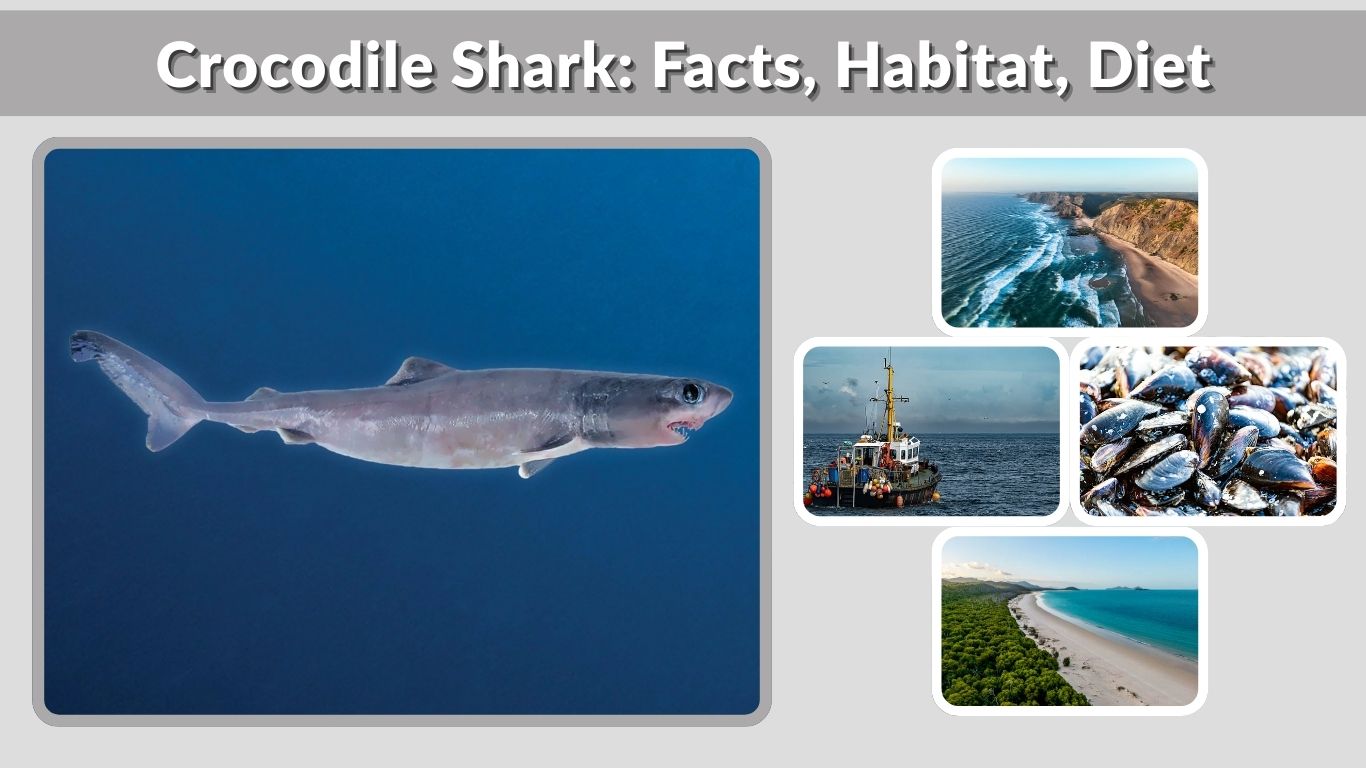
The crocodile shark is a small but fierce-looking deep-sea predator found in tropical oceans around the world. Despite its modest size, this shark has a powerful bite and sharp, triangular teeth that resemble those of a crocodile—hence its name. Known for its unusually large eyes and slender body, the crocodile shark is specially adapted for life in dimly lit offshore waters. In this guide, you’ll discover fascinating crocodile shark facts, including its habitat, diet, and unique deep-sea adaptations.
What Is a Crocodile Shark?
The crocodile shark (Pseudocarcharias kamoharai) is a rare species and the only member of its genus. It belongs to the order Lamniformes, which also includes well-known sharks like the great white and mako sharks. However, unlike its larger relatives, the crocodile shark is relatively small and lives far offshore.
It gets its common name from its sharp, narrow teeth, which resemble those of a crocodile. These teeth are especially noticeable because of the shark’s small head and slender jaw structure.
Crocodile sharks are pelagic, meaning they inhabit the open ocean rather than coastal waters. They are typically found in warm tropical and subtropical seas across the Atlantic, Pacific, and Indian Oceans. Due to their deep-water lifestyle, they are rarely seen by divers or coastal observers.
Crocodile Shark Habitat
Where Do Crocodile Sharks Live?
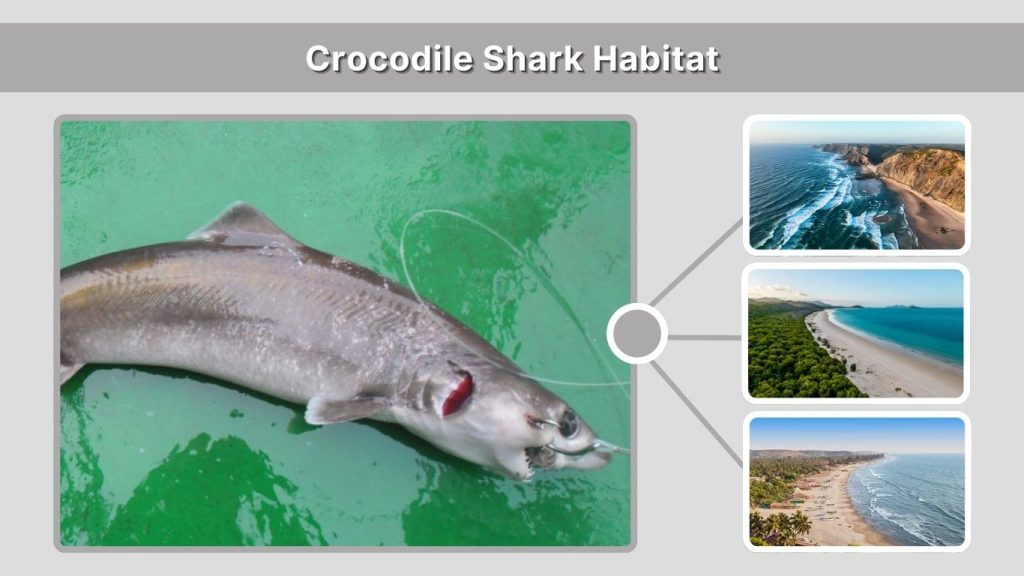
The typical crocodile shark habitat includes tropical and subtropical oceans worldwide. They are found in the Atlantic, Pacific, and Indian Oceans, usually far from shore.
Unlike coastal sharks, crocodile sharks prefer offshore, pelagic zones. These areas are often several miles away from land and extend over deep ocean basins.
Because they inhabit open waters rather than reefs or coastal environments, encounters with humans are extremely rare.
Depth Range and Movement
Crocodile sharks are commonly found at depths between 200 and 1,000 meters. However, they may migrate vertically within this range. Some evidence suggests they move closer to the surface at night to feed, then return to deeper waters during the day.
This vertical migration pattern is common among deep-sea predators and allows them to take advantage of prey that also shifts depth depending on light levels.
Why They Thrive in Deep Waters
Deep offshore waters offer several advantages for crocodile sharks. These regions contain abundant squid and small fish, which make up a large portion of their diet.
In addition, deep waters have fewer large predators compared to shallow coastal areas. The stable temperatures and reduced light levels also suit their specialized adaptations, including their large eyes and buoyancy system.
Crocodile Shark Diet
What Do Crocodile Sharks Eat?
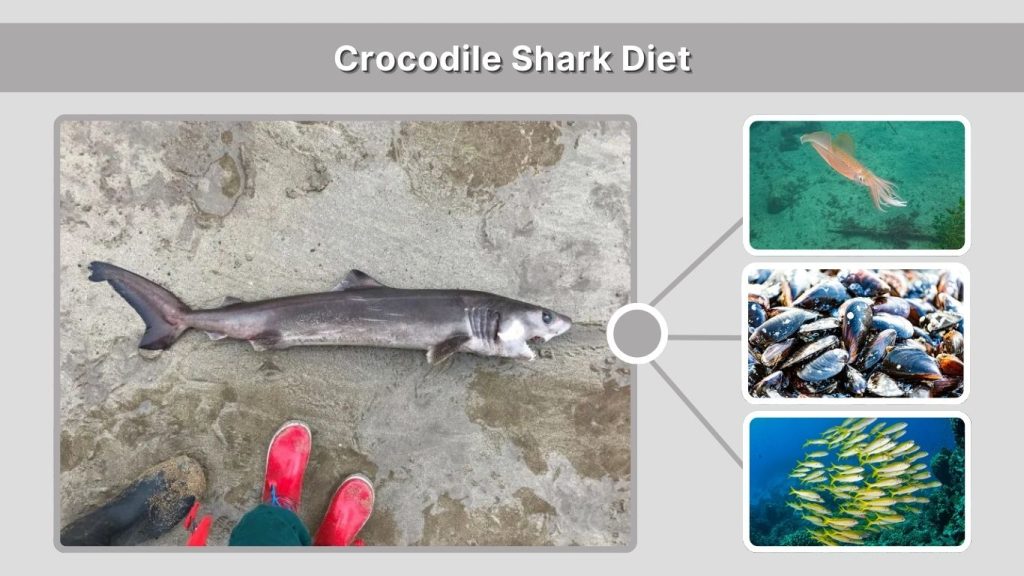
Crocodile sharks primarily feed on small fish and squid. Squid are believed to be one of their main food sources, especially in deeper waters where squid populations are abundant.
They may also consume crustaceans and other midwater species when available. As opportunistic predators, crocodile sharks take advantage of whatever suitable prey they encounter in the open ocean.
Hunting Behavior
Unlike ambush predators that hide on the seabed, crocodile sharks are active hunters. They rely on their speed, agility, and keen eyesight to locate prey in dimly lit environments.
Their large eyes help them detect movement in low light, while their sharp teeth ensure a firm grip once prey is captured. This combination of traits makes them effective predators despite their relatively small size.
Behavior and Lifestyle
General Behavior
Crocodile sharks are generally solitary animals. Because they inhabit deep offshore waters, much of their daily behavior remains difficult to observe directly. However, scientists believe they are mostly nocturnal, becoming more active at night when many prey species rise closer to the surface.
They are agile swimmers and capable of covering large areas of open ocean. Their streamlined body allows them to move efficiently through midwater zones in search of food.
Although rarely seen alive in their natural habitat, crocodile sharks are sometimes caught accidentally in deep-sea fishing operations. Observations from these encounters suggest they are energetic and capable of strong defensive movements when captured.
Reproduction
Crocodile sharks are ovoviviparous, meaning the eggs develop and hatch inside the female’s body before young are born. This reproductive method is common among many shark species.
Females typically produce a small number of pups per litter. The developing embryos are nourished by yolk sacs inside the mother rather than through a placenta.
Newborn crocodile sharks are relatively large compared to their mother’s body size. After birth, the pups are fully independent and must immediately begin hunting in the open ocean.
Because litter sizes are limited, population growth may be slow. This makes long-term monitoring important, even if the species is not currently considered highly threatened.
Is the Crocodile Shark Dangerous?
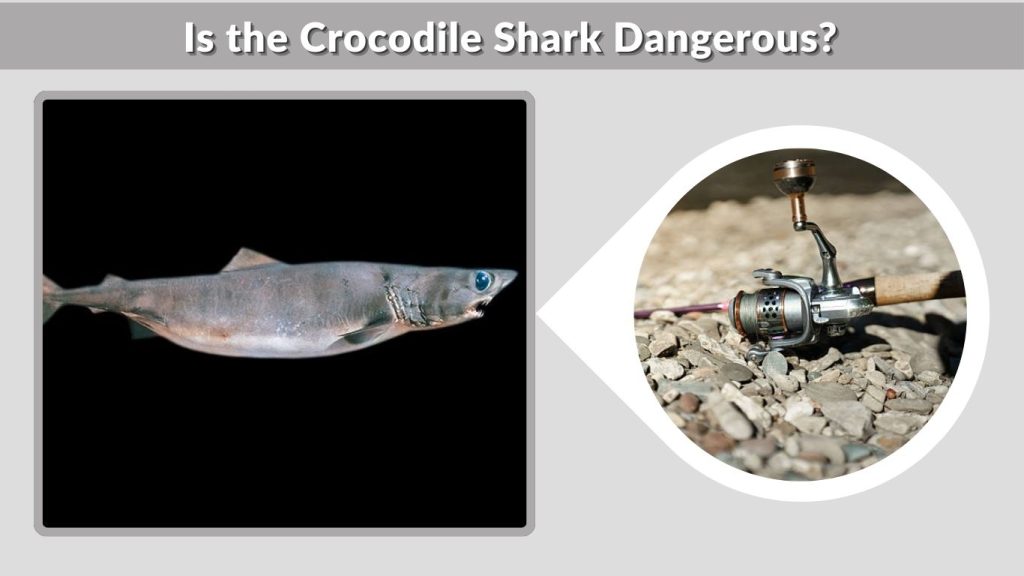
Despite its sharp teeth and fierce appearance, the crocodile shark poses little threat to humans. Its deep offshore habitat keeps it far from beaches and recreational diving areas.
There are no confirmed reports of attacks on humans in the wild. However, individuals caught in fishing gear have been known to bite nets and equipment. This behavior is likely defensive rather than aggressive.
Overall, the crocodile shark is considered a low-risk species when it comes to human interaction. Its remote habitat greatly reduces the chances of encounters.
Are Crocodile Sharks Endangered?
Currently, the crocodile shark is generally listed as Least Concern on conservation assessments. Its wide distribution across tropical oceans suggests that global populations remain relatively stable.
Unlike some coastal sharks, crocodile sharks are not heavily targeted by commercial fisheries. However, they are sometimes caught as bycatch in tuna longline fisheries operating in deep waters.
Because they live far offshore and at significant depths, accurate population estimates can be challenging. Continued research and monitoring are important to ensure that their status remains stable.
Threats to Crocodile Sharks
Bycatch in Longline Fisheries
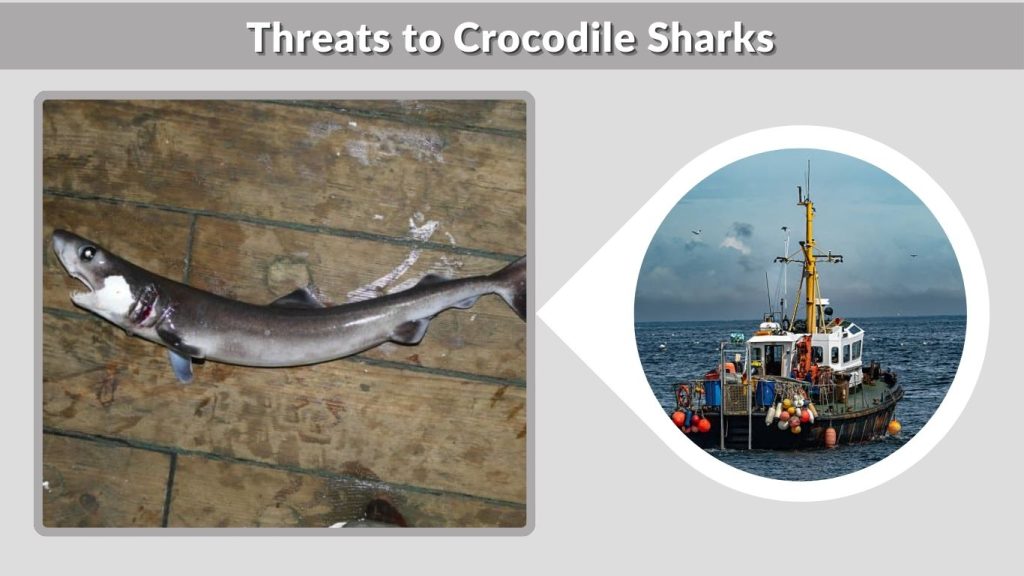
The primary threat facing crocodile sharks is accidental capture in commercial longline fisheries. These fisheries target species such as tuna and swordfish but may unintentionally hook deep-sea sharks.
While crocodile sharks are not usually kept for commercial value, many do not survive after capture. Reducing bycatch through improved fishing practices could help limit unnecessary mortality.
Expanding Deep-Sea Fishing
As fishing operations expand into deeper waters, previously undisturbed habitats may experience increased pressure. Although crocodile sharks are not currently considered endangered, changes in fishing intensity could affect their populations over time.
Proactive management strategies are important to prevent future declines.
Role in the Marine Ecosystem
Crocodile sharks serve as mid-level predators within pelagic ecosystems. By feeding on squid and small fish, they help regulate prey populations and maintain balance in open-ocean food webs.
They also serve as prey for larger sharks and marine predators. This interconnected role highlights their importance within the broader ocean ecosystem.
Protecting species like the crocodile shark helps preserve the stability and diversity of deep-sea environments.
Crocodile Shark Facts
Physical Characteristics
One of the most interesting crocodile shark facts is its size. Most individuals grow between 3 and 4 feet (about 1 meter) in length, making them much smaller than many other sharks in the same order.
Their bodies are slender and streamlined, allowing them to swim efficiently in open water. They have relatively small dorsal fins positioned toward the back of their bodies. Their coloration is usually light to dark brown or gray, which helps them blend into the darker waters of the deep ocean.
Perhaps their most striking feature is their large eyes. Compared to their body size, crocodile sharks have unusually big eyes, an adaptation that helps them see better in low-light conditions. This trait is especially important for hunting in deep or dim environments.
Unique Adaptations
Crocodile sharks possess several adaptations that help them survive in deep offshore habitats. One of the most important is their large, oil-rich liver. Like many deep-sea sharks, they lack a swim bladder. Instead, their liver provides buoyancy, helping them maintain position in the water column without expending too much energy.
Their powerful jaws and sharp teeth allow them to grasp slippery prey such as squid. Despite their small size, they are capable hunters with strong biting ability.
Another key adaptation is their ability to tolerate a range of depths. Crocodile sharks often move vertically through the water column, possibly following prey that migrates closer to the surface at night.
FAQs
How big is a crocodile shark?
Crocodile sharks typically grow between 3 and 4 feet (about 1 meter) long. They are relatively small compared to other sharks in the same order, such as mako or great white sharks. Despite their size, they have strong jaws and sharp teeth.
Where do crocodile sharks live?
Crocodile sharks live in tropical and subtropical oceans worldwide. They inhabit offshore pelagic zones, usually at depths between 200 and 1,000 meters. Because of their deep-water habitat, they are rarely encountered by humans.
What do crocodile sharks eat?
Crocodile sharks primarily eat squid and small fish. They are active predators that rely on their large eyes and quick movements to capture prey in low-light conditions. Occasionally, they may also feed on crustaceans and other midwater species.
Are crocodile sharks dangerous to humans?
Crocodile sharks are not considered dangerous to humans. They live far offshore in deep waters and have no recorded history of attacking people in the wild. Most human interactions occur only when they are accidentally caught in fishing gear.
Conclusion
The crocodile shark may be small, but it is a remarkable deep-sea predator with powerful adaptations. From its large eyes and oil-rich liver to its sharp crocodile-like teeth, this species is well suited to life in offshore tropical waters.
Although not currently endangered, crocodile sharks face potential risks from bycatch and expanding deep-sea fishing. Understanding their habitat, diet, and ecological role highlights the importance of continued research and responsible ocean management to protect this unique shark species.