




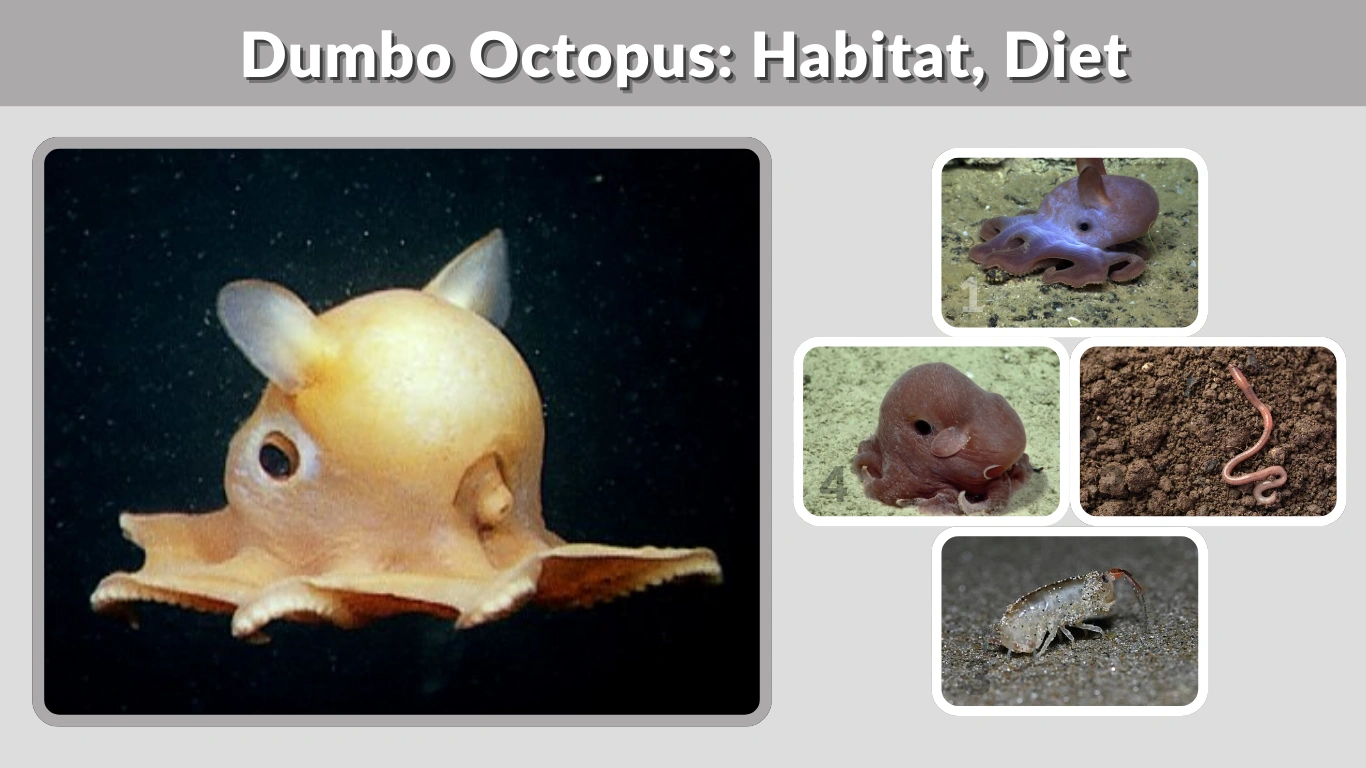
The dumbo octopus is one of the most mysterious and visually striking creatures in the ocean. Named for the ear-like fins on its head that resemble Disney’s flying elephant, this deep-sea octopus drifts gracefully through the dark waters thousands of meters below the surface. Belonging to the genus Grimpoteuthis, dumbo octopuses are specially adapted to extreme pressure, cold temperatures, and perpetual darkness. Their unusual body shape, slow movements, and gentle feeding style make them very different from shallow-water octopuses.
What Is a Dumbo Octopus
The dumbo octopus refers to a group of octopus species in the genus Grimpoteuthis. These animals are part of the umbrella octopus family and are characterized by their rounded bodies, large fins, and webbed arms. Unlike reef-dwelling octopuses, dumbo octopuses live exclusively in the deep sea and rarely interact with the ocean floor.
Because they inhabit extreme depths, they are among the least-studied octopuses. Most knowledge about them comes from deep-sea submersibles and remotely operated vehicles. Despite limited encounters, dumbo octopuses have become iconic symbols of deep-ocean life.
Physical Characteristics

Size and Body Structure
Dumbo octopuses are generally small to medium-sized compared to shallow-water octopuses. Most individuals measure between 20 and 30 centimeters across, though some species can grow larger. Their bodies are soft, gelatinous, and rounded, which helps them withstand intense deep-sea pressure.
Their arms are connected by a web of skin, giving them an umbrella-like appearance when spread. This webbing helps them capture prey and maneuver through the water.
Ear-Like Fins
The most distinctive feature of the dumbo octopus is the pair of fins protruding from the sides of its mantle. These fins flap slowly, allowing the octopus to “fly” through the water rather than jet-propelling like other octopus species. This energy-efficient movement is ideal for the deep sea, where food is scarce.
Color, Skin, and Texture
Dumbo octopuses are usually pale white, pink, reddish, or brown. Their skin is smooth and lacks the dramatic texture-changing abilities seen in reef octopuses. Since there is no sunlight in their environment, color change for camouflage is less important than it is in shallow waters.
Habitat and Distribution

Global Range
Dumbo octopuses are found in oceans around the world, including the Pacific, Atlantic, and Indian Oceans. They have been recorded near North America, Japan, the Philippines, New Zealand, and along mid-ocean ridges and trenches.
Their wide distribution reflects their ability to survive in a range of deep-sea environments.
Depth and Environment
These octopuses inhabit some of the deepest zones of the ocean, often living at depths between 1,000 and 4,000 meters. Some have been observed even deeper. Their environment is completely dark, extremely cold, and subject to enormous pressure.
They are usually found hovering above soft seafloor habitats such as mud plains, abyssal flats, and underwater slopes, where small invertebrates are present.
How Dumbo Octopuses Move
Unlike most octopuses that rely on jet propulsion, dumbo octopuses primarily swim using their fins. They flap them gently to maintain buoyancy and move slowly through the water. This style of locomotion conserves energy and allows precise control.
They can also use subtle arm movements and occasional jet bursts when necessary. Often, dumbo octopuses drift with currents, scanning the seafloor for food.
Diet and Feeding Behavior
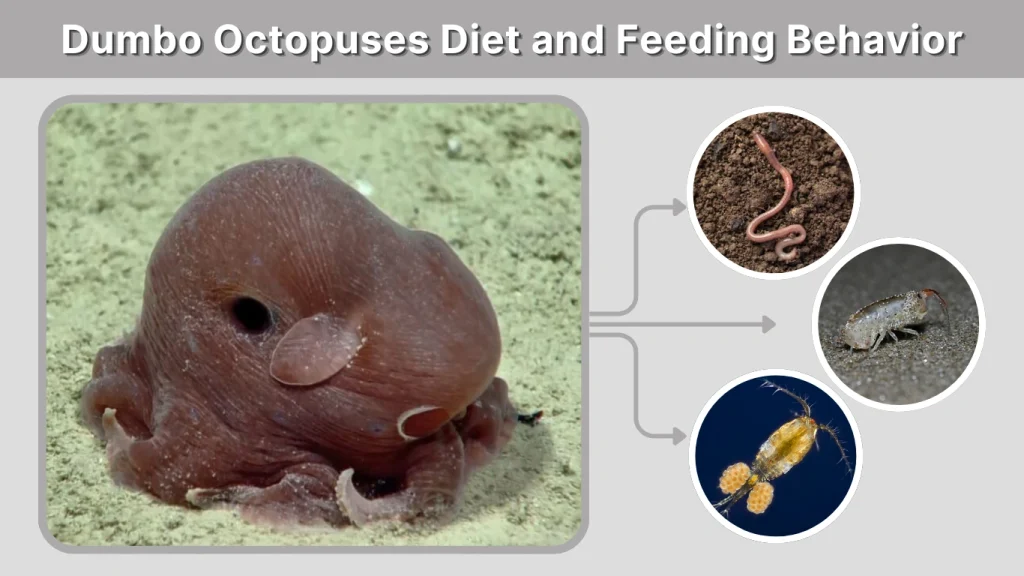
What Dumbo Octopuses Eat
Dumbo octopuses feed mainly on small bottom-dwelling organisms. Their diet includes polychaete worms, amphipods, copepods, isopods, and small snails. Because food is scarce in the deep sea, they eat whatever slow-moving prey they can capture.
How They Hunt
Rather than chasing prey, dumbo octopuses hover above the seabed and slowly descend. They spread their webbed arms over their target and trap it beneath their body. The prey is then guided to the beak and consumed whole.
Their feeding method is quiet, efficient, and well suited to an environment where sudden movements would waste precious energy.
Reproduction and Lifecycle
Mating Behavior
Dumbo octopuses have a different reproductive strategy from shallow-water octopuses. Instead of having a single short breeding season, they are believed to reproduce continuously throughout their lives. Males carry sperm packets and transfer them to females whenever an opportunity arises, rather than only during specific seasons.
Egg Laying and Development
Females produce relatively large eggs compared to shallow-water octopuses. Instead of laying thousands of eggs at once, they release a small number of well-developed eggs over time. These eggs are attached to hard surfaces such as rocks, shells, or sponges on the seafloor.
Unlike many octopuses, dumbo octopuses do not guard their eggs. The embryos develop slowly in the cold deep-sea environment, relying on the large yolk supply inside each egg.
Growth and Maturity
Because of cold temperatures and limited food, dumbo octopuses grow slowly. Hatchlings emerge as miniature adults and immediately begin independent life. It may take several years for them to reach full maturity, making their lifecycle much longer than that of most shallow-water octopuses.
Dumbo Octopus Lifespan

The exact lifespan of dumbo octopuses is unknown, but scientists believe they live significantly longer than most shallow-water species. Estimates suggest a lifespan of three to five years or more. Their slow metabolism, deep-sea lifestyle, and continuous reproduction support greater longevity.
Unlike many octopuses that die shortly after reproducing, dumbo octopuses may reproduce multiple times throughout their lives, which further supports the idea of a longer natural lifespan.
Predators and Survival Strategies
Even in the deep sea, dumbo octopuses face predators. Known and suspected predators include:
- Deep-sea fish
- Large squids
- Sharks
- Sperm whales and other deep-diving whales
To survive, dumbo octopuses rely on gentle movements, neutral buoyancy, and soft bodies that make them difficult to detect. Their slow swimming style produces minimal water disturbance, helping them avoid attention. When threatened, they can retract their fins, curl their arms, and sink toward the seafloor.
Dumbo Octopus vs Common Octopus
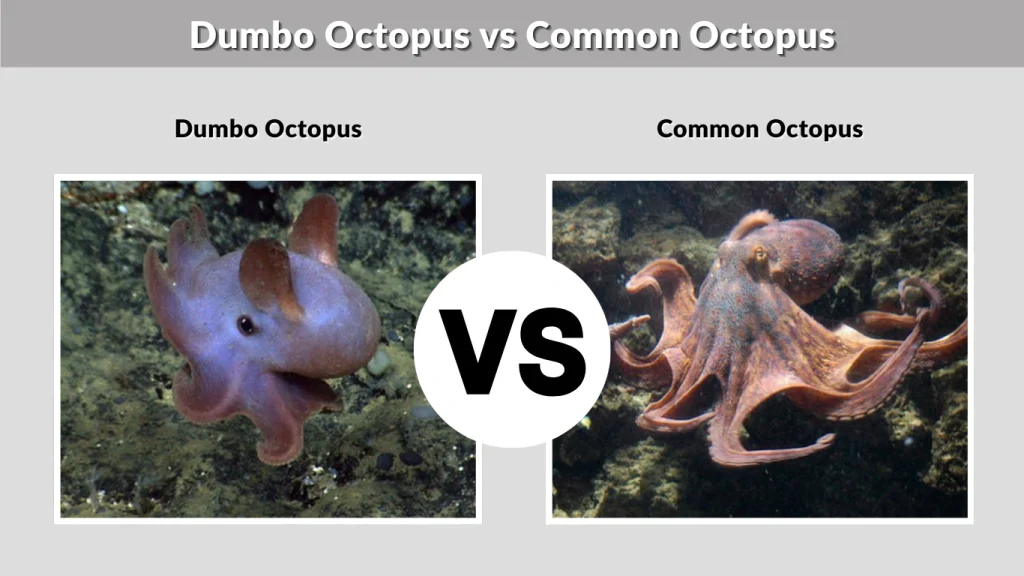
| Feature | Dumbo Octopus | Common Octopus |
| Habitat | Deep sea, 1,000–4,000 m | Shallow reefs and coasts |
| Movement | Fin swimming and drifting | Jet propulsion and crawling |
| Body | Soft, gelatinous, webbed | Muscular, firm, less webbing |
| Reproduction | Continuous, few large eggs | One-time, many small eggs |
| Lifespan | Several years | 1–2 years |
These differences highlight how strongly habitat shapes octopus evolution.
Why the Dumbo Octopus Is Unique
The dumbo octopus stands apart from other octopuses because it has evolved specifically for deep-sea survival. Its fin-based swimming, soft pressure-resistant body, and slow hunting style are perfectly suited to dark, food-poor environments. It represents one of the clearest examples of how life adapts to extreme ocean conditions.
Conservation and Scientific Importance
Dumbo octopuses are rarely encountered, making them difficult to study. Their deep-sea habitats are increasingly threatened by deep-sea mining, bottom trawling, and climate-driven changes in ocean chemistry.
Because they live in some of the least explored parts of the planet, dumbo octopuses are valuable indicators of deep-ocean health. Studying them helps scientists understand deep-sea ecosystems and how they may be affected by human activity.
FAQs
How deep do dumbo octopuses live?
Dumbo octopuses are usually found between 1,000 and 4,000 meters below the surface, although some individuals have been observed even deeper.
Why are they called dumbo octopuses?
They are named after the Disney elephant Dumbo because of the ear-like fins on their heads that resemble large ears.
What do dumbo octopuses eat?
They feed on worms, crustaceans, small snails, and other slow-moving deep-sea animals found on or near the seafloor.
How big is a dumbo octopus?
Most dumbo octopuses are about 20–30 centimeters across, though some species can grow larger.
Are dumbo octopuses dangerous?
No. Dumbo octopuses are gentle deep-sea animals and pose no threat to humans.