




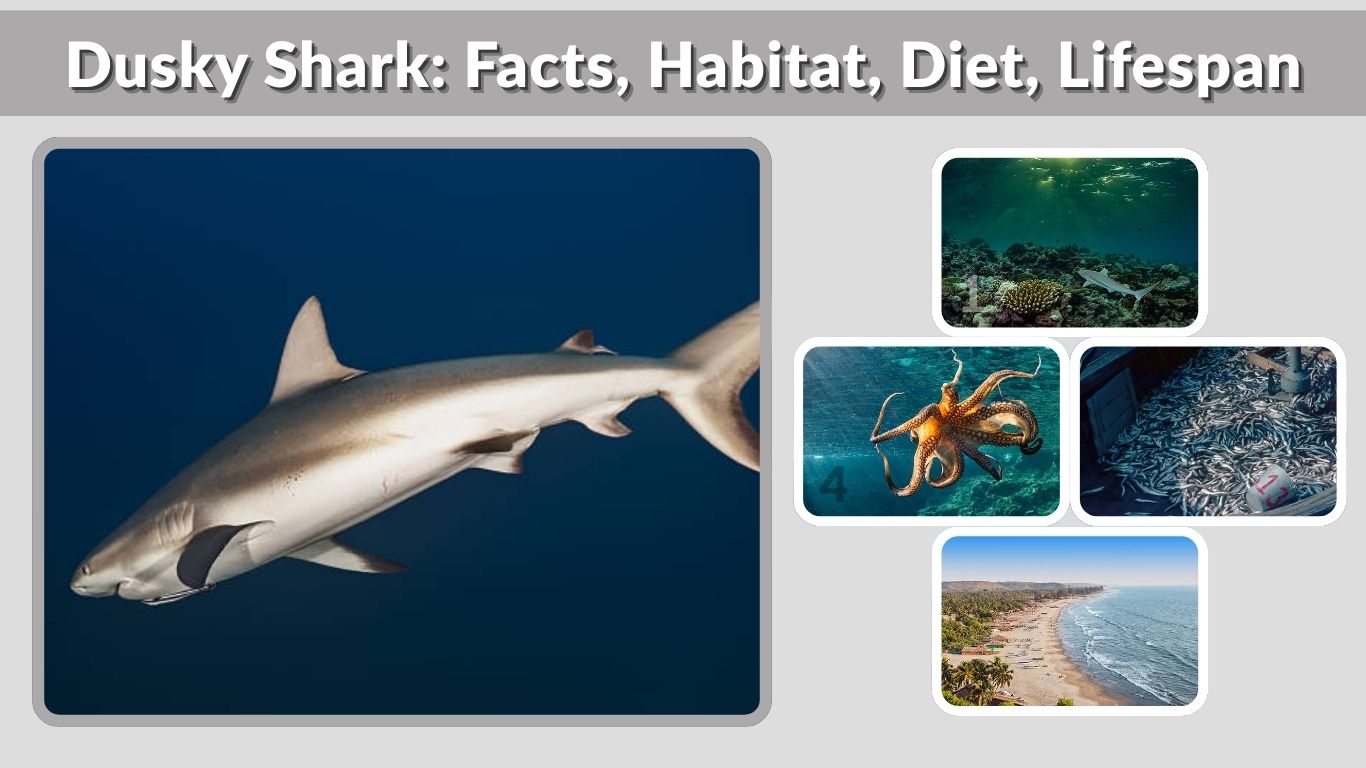
The dusky shark is a large, powerful predator found in warm coastal and offshore waters around the world. Known for its sleek body and dusky gray coloration, this species plays an important role in maintaining marine ecosystem balance. Unlike faster-growing sharks, the dusky shark matures slowly and can live for several decades. Its long lifespan and low reproductive rate make it especially vulnerable to overfishing. Often confused with the sandbar shark, the dusky shark has distinct features that set it apart. Understanding its habitat, diet, and life history is key to appreciating this remarkable ocean predator.
What Is a Dusky Shark?
The dusky shark (Carcharhinus obscurus) is a member of the requiem shark family, Carcharhinidae. It is considered one of the larger coastal shark species and is widely distributed in tropical and warm temperate seas.
Scientific Name and Classification
The scientific name of the dusky shark is Carcharhinus obscurus. It belongs to the same family as other well-known sharks such as bull sharks, blacktip sharks, and sandbar sharks. Requiem sharks are typically streamlined, fast swimmers that inhabit coastal and offshore waters.
The dusky shark stands out within this group due to its large size, slow growth rate, and long lifespan.
Why It’s Called the Dusky Shark
The name “dusky” refers to its dark gray to bronze coloration. The upper body usually appears dusky gray, fading to a lighter or white underside. This color pattern provides camouflage in open water, helping the shark blend into its surroundings.
Quick Dusky Shark Facts
- Scientific name: Carcharhinus obscurus
- Average length: 10–12 feet (3–3.7 meters)
- Maximum length: Around 14 feet
- Habitat: Coastal and offshore warm waters
- Diet: Fish, rays, smaller sharks, squid
- Lifespan: Up to 40–50 years
- Reproduction: Viviparous (live birth)
These dusky shark facts highlight why this species is considered both impressive and vulnerable.
Dusky Shark Identification and Appearance
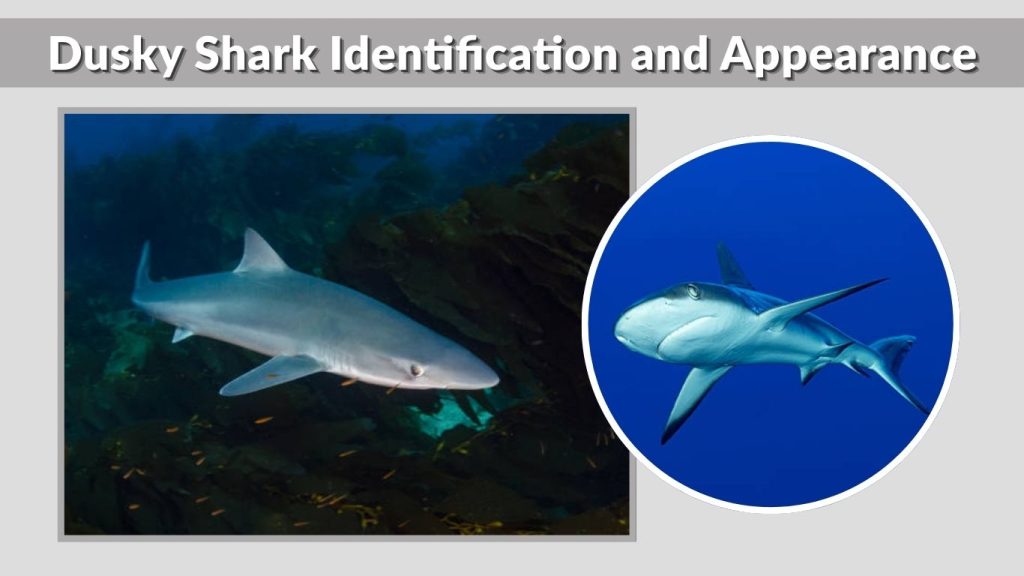
Correct dusky shark identification can be challenging because it resembles other large requiem sharks, particularly the sandbar shark. However, several features help distinguish it.
Body Shape and Coloration
The dusky shark has a long, slender, and powerful body built for steady swimming in coastal and offshore environments. Its upper body is typically dark gray or bronze, while the underside is pale or white.
The body appears more streamlined compared to bulkier species like the sandbar shark. Its fins generally lack prominent markings, which can make identification more difficult in the wild.
Dusky Shark Size
The dusky shark is one of the larger coastal shark species.
- Average adult length: 10–12 feet
- Maximum length: Around 14 feet
- Weight: Up to 750 pounds or more
Females are often slightly larger than males. Juveniles are significantly smaller and are usually found in shallow nursery areas.
Key Identification Features
Some important features for identifying a dusky shark include:
- Rounded snout
- Large triangular first dorsal fin
- First dorsal fin positioned slightly behind the pectoral fins
- Long upper tail lobe
- Generally uniform coloration without distinct fin tips
These characteristics help differentiate it from similar species, especially the sandbar shark.
Dusky Shark Habitat
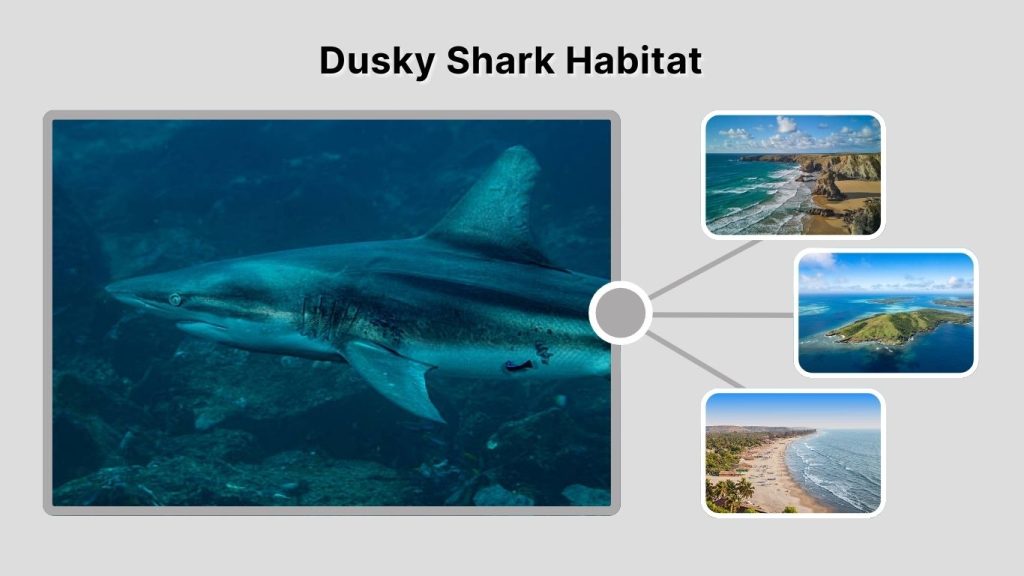
The dusky shark habitat spans tropical and warm temperate waters across several oceans.
Where Do Dusky Sharks Live?
Dusky sharks are found in the Atlantic, Pacific, and Indian Oceans. In the Atlantic, they range from the eastern United States down to Brazil, as well as along the coasts of Africa and parts of the Mediterranean. They are also present in parts of Australia and the Indo-Pacific region.
Their wide distribution makes them one of the more globally recognized coastal shark species.
Coastal vs Offshore Environments
Dusky sharks inhabit both coastal and offshore waters. They are commonly found along continental shelves, near drop-offs, and sometimes in open ocean areas.
Juveniles often remain in shallow coastal nurseries, where they are protected from larger predators. Adults, however, may travel long distances into deeper offshore regions.
Depth Range and Migration
Dusky sharks are typically found from the surface down to depths of about 1,300 feet (400 meters). They may migrate seasonally in response to changes in water temperature and prey availability.
Their migratory behavior allows them to exploit different feeding grounds throughout the year.
Dusky Shark Diet

The dusky shark diet reflects its role as a powerful apex predator in coastal and offshore ecosystems. As it grows, its diet expands to include a wide variety of marine animals.
What Do Dusky Sharks Eat?
Dusky sharks feed primarily on:
- Bony fish such as mackerel, tuna, and bluefish
- Rays and skates
- Smaller sharks
- Squid and other cephalopods
- Occasionally crustaceans
Juvenile dusky sharks tend to eat smaller fish and invertebrates, while adults target larger prey. Their strong jaws and sharp teeth allow them to capture and tear apart fast-moving animals.
Hunting Behavior
Dusky sharks are active and capable swimmers. They often hunt in coastal waters where prey is abundant, but they also venture offshore.
They are opportunistic predators, meaning they eat what is most available in their environment. Their speed, size, and strength make them efficient hunters capable of taking down sizable prey.
Role as an Apex Predator
As one of the top predators in many marine ecosystems, dusky sharks help regulate fish populations. By controlling numbers of mid-level predators and prey species, they contribute to overall ocean balance.
Dusky Shark Lifespan and Life History
The dusky shark lifespan is one of the longest among coastal shark species, but this longevity comes with slow growth and late maturity.
How Long Do Dusky Sharks Live?
Dusky sharks can live up to 40–50 years in the wild. Some studies suggest they may live even longer under favorable conditions.
Their long lifespan is closely tied to their slow growth rate, which also makes them vulnerable to fishing pressure.
Growth Rate and Maturity
Dusky sharks grow slowly and do not reach sexual maturity until around 18–20 years of age. This is unusually late compared to many other fish species.
Because they reproduce later in life, population recovery from overfishing can take decades.
Reproduction and Birth
Dusky sharks are viviparous, meaning they give birth to live young rather than laying eggs. Females have a long gestation period of around 22–24 months, one of the longest among sharks.
After gestation, they give birth to a small number of pups in shallow nursery areas. These protected coastal zones are essential for juvenile survival.
Dusky Shark vs Sandbar Shark
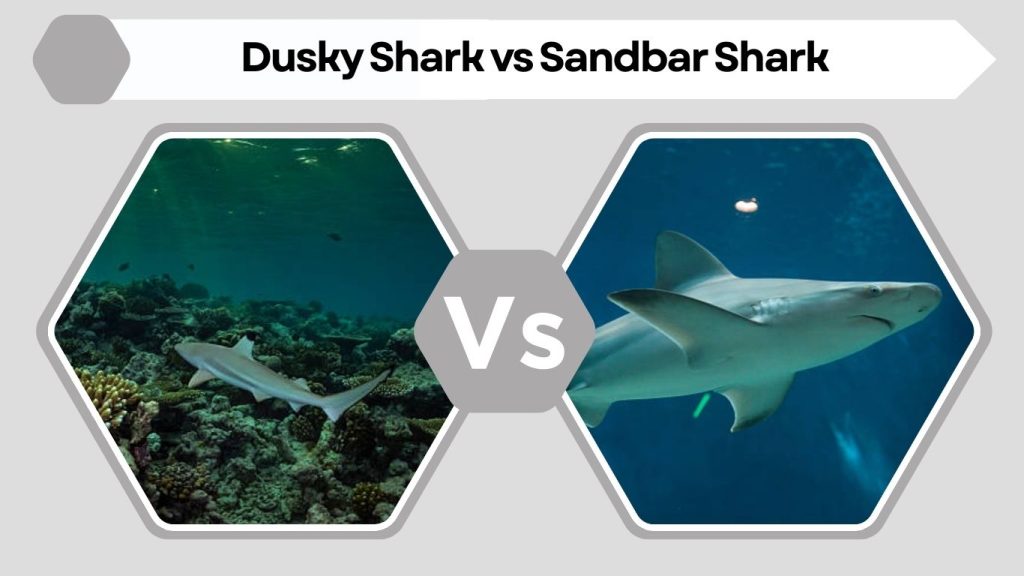
The dusky shark vs sandbar shark comparison is common because the two species look similar and share overlapping habitats.
Key Physical Differences
- Body Shape: Dusky sharks are more slender; sandbar sharks are bulkier.
- Dorsal Fin: Sandbar sharks have a taller, more prominent first dorsal fin.
- Snout: Dusky sharks have a more rounded snout.
These subtle differences are important for correct identification.
Habitat and Behavior Differences
Both species inhabit coastal waters, but sandbar sharks are more commonly associated with sandy bottoms and bays. Dusky sharks tend to range more widely and may travel farther offshore.
Identification Tips
When observing from a distance:
- Look at the size and height of the first dorsal fin.
- Notice overall body thickness.
- Consider the location and depth of the sighting.
Proper identification is important for research and conservation efforts.
Behavior and Temperament
Dusky sharks are generally cautious but powerful animals.
Are Dusky Sharks Dangerous?
Due to their large size, dusky sharks are considered potentially dangerous. However, attacks on humans are extremely rare. Most encounters occur in coastal waters, and the sharks typically avoid direct interaction.
As with all large wild predators, caution and respect are important.
Social and Movement Patterns
Juveniles often gather in nursery areas along coastlines. Adults are more solitary and may travel long distances.
Their migratory nature allows them to adapt to seasonal changes in water temperature and food supply.
Conservation Status and Threats
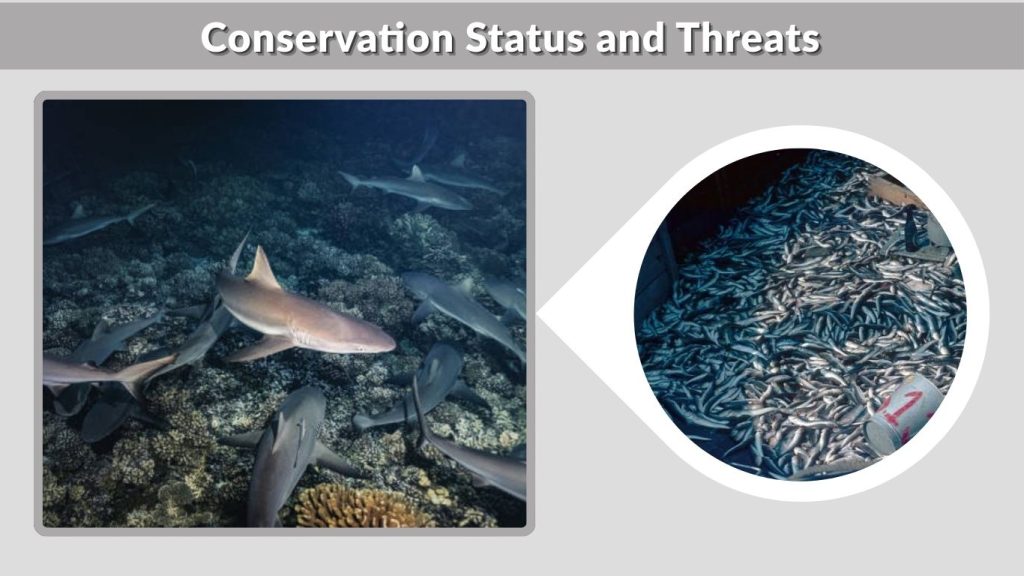
Dusky sharks face serious conservation concerns. In many regions, they are listed as Endangered due to heavy fishing pressure.
Their slow growth, long gestation, and late maturity make them especially vulnerable to overfishing. They are often caught in commercial fisheries targeting other species.
International regulations and improved fishing management are essential for protecting this long-lived shark.
Conclusion
The dusky shark is a large, long-lived predator that plays a crucial role in coastal and offshore ecosystems. From its wide-ranging habitat to its varied diet and slow reproductive cycle, this species represents both strength and vulnerability.
Understanding dusky shark facts—including its lifespan, diet, and differences from similar species like the sandbar shark—highlights the importance of conservation. Protecting nursery habitats and managing fisheries responsibly will help ensure that this impressive shark continues to thrive in oceans worldwide
FAQs
Where do dusky sharks live?
Dusky sharks live in tropical and warm temperate waters of the Atlantic, Pacific, and Indian Oceans. They are commonly found along continental shelves, coastal waters, and sometimes in offshore regions. Juveniles typically stay in shallow nursery areas, while adults travel more widely.
What do dusky sharks eat?
Dusky sharks eat a variety of prey, including bony fish, rays, smaller sharks, and squid. As apex predators, they adapt their diet based on availability. Larger adults target bigger prey, while juveniles feed on smaller fish and invertebrates.
How long do dusky sharks live?
The dusky shark lifespan can reach 40–50 years in the wild. They grow slowly and mature late, often around 18–20 years of age. Their long lifespan and slow reproduction make them vulnerable to overfishing.
What is the difference between a dusky shark and a sandbar shark?
Dusky sharks are generally more slender, with a rounded snout and a slightly smaller first dorsal fin. Sandbar sharks have a taller, more prominent dorsal fin and a bulkier body. Proper identification often requires careful observation of fin shape and body structure.
Are dusky sharks dangerous?
Dusky sharks are large and powerful, but attacks on humans are rare. They are considered potentially dangerous due to their size, yet they typically avoid people. As with any wild shark, caution and respect are essential during encounters.