


Elk and moose are two of the largest members of the deer family, and they are often confused due to their similar appearance and overlapping ranges. Both animals are impressive in size and play important roles in their ecosystems, yet they differ significantly in body structure, behavior, and habitat preferences. Understanding these differences not only helps with wildlife identification but also promotes safer and more informed interactions with nature. This article explores the key distinctions between elk and moose, from their physical characteristics to their lifestyles in the wild.
What Is an Elk?
An elk is a large herbivorous mammal belonging to the deer family, scientifically known as Cervus canadensis. Elk are also called wapiti, a name that means “white rump,” referring to the light-colored patch on their hindquarters. They are among the largest deer species in the world, second only to moose in overall size.
Elk are known for their strong, athletic build and their social nature. They typically live in herds, especially females and calves, while males may form smaller bachelor groups outside the breeding season. Elk are highly adaptable and can thrive in forests, grasslands, and mountainous regions.
Key Traits of Elk
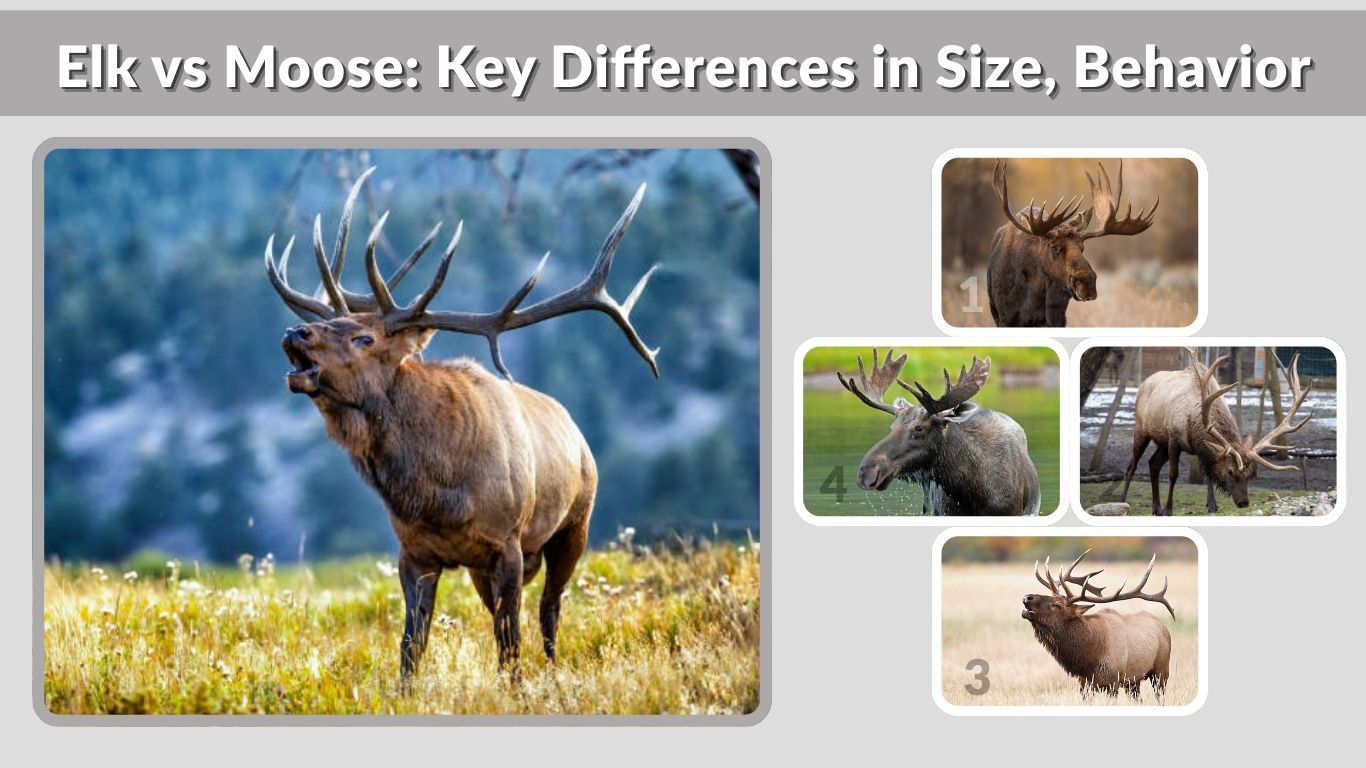
Elk have long legs, slender bodies, and relatively narrow faces compared to moose. Adult males, called bulls, can weigh between 700 and 1,100 pounds and stand about five feet tall at the shoulder. One of the most distinctive features of elk is their antlers. Bulls grow long, pointed antlers each year, which they shed and regrow annually. Elk are also known for their loud bugling calls during the mating season, which can be heard over long distances.
What Is a Moose?
The moose is the largest living member of the deer family and is scientifically known as Alces alces. Moose are instantly recognizable due to their massive bodies, long legs, and broad, flat antlers. They are built for life in cold climates and are well adapted to wetlands, forests, and snowy environments.
Unlike elk, moose are mostly solitary animals. They prefer to live alone or in small family groups, coming together primarily during the breeding season. Their size and strength make them less reliant on group protection, allowing them to dominate their surroundings.
Key Traits of Moose
Moose are significantly larger and heavier than elk. Adult males can weigh between 1,000 and 1,600 pounds and stand over six feet tall at the shoulder. Their antlers are palmate, meaning they are wide and flattened, resembling large paddles. Moose also have long, drooping noses and a distinctive flap of skin called a dewlap, or bell, that hangs beneath the throat.
Elk vs Moose Size and Physical Differences
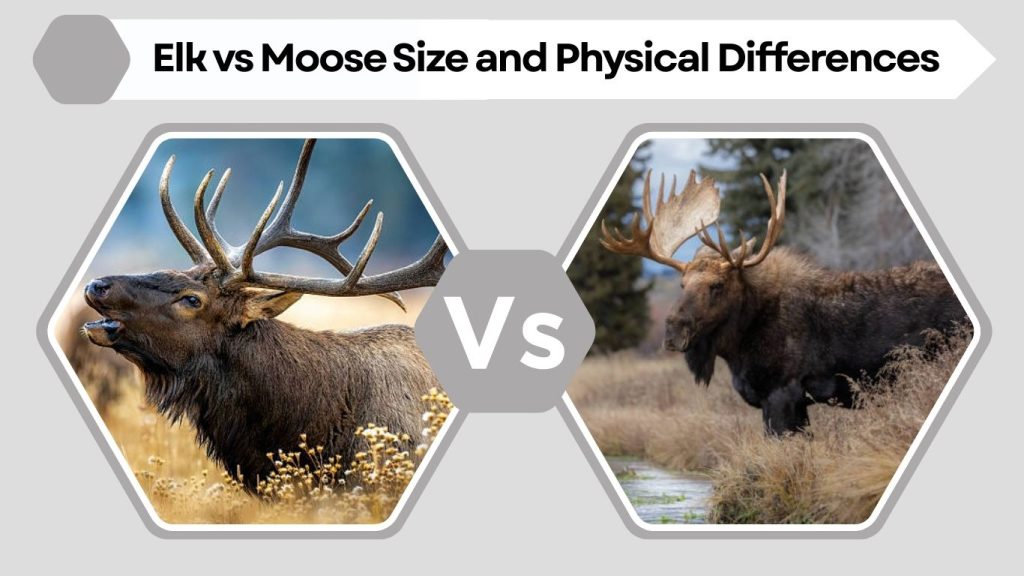
When comparing elk and moose, size is one of the most obvious differences. Moose are taller, heavier, and bulkier, with longer legs designed to move through deep snow and wetlands. Elk, while smaller, are more agile and streamlined, built for speed and endurance.
Which Is Bigger: Elk or Moose?
Moose are clearly the larger of the two animals. They stand taller at the shoulder and outweigh elk by several hundred pounds. Moose also have a more massive frame, while elk appear leaner and more athletic. These size differences affect how each animal moves, feeds, and interacts with predators.
Antlers: Elk vs Moose
Antlers are another major point of distinction. Elk antlers are long, narrow, and sharply pointed, growing upward and outward. They are primarily used during the rut to compete for mates. Moose antlers, on the other hand, are wide and flat with short points along the edges. These massive antlers are also used for dominance displays but are heavier and more energy-demanding to grow.
Habitat and Geographic Range
Elk and moose occupy different types of habitats, although their ranges can sometimes overlap. Elk prefer open woodlands, grasslands, and mountainous regions where they can graze and migrate seasonally. Moose are more commonly found in northern forests, wetlands, and areas with dense vegetation and access to water.
Do Elk and Moose Live in the Same Areas?
Although elk and moose can be found in some of the same regions, they usually prefer different habitats within those areas. Elk tend to occupy open forests, valleys, and grasslands where grazing is abundant. Moose favor dense forests, wetlands, and areas near lakes or rivers, where they can browse on shrubs and aquatic plants. This habitat separation reduces competition for food and space.
Behavior and Social Structure
Elk and moose differ greatly in how they interact with others of their species. Elk are highly social animals, often forming large herds that provide protection and improve survival. These herds are typically made up of females and calves, while males may live separately outside the breeding season.
Moose, in contrast, are largely solitary. They rely on their size and strength rather than group cooperation for survival. Adult moose usually come together only during the mating season or when a cow is caring for a calf.
Aggression and Temperament
Moose are generally more aggressive than elk, especially when threatened. Their large size, powerful kicks, and unpredictable behavior make them one of the more dangerous large mammals in North America. Elk are usually less aggressive but can still pose a risk, particularly during the rut or calving season when protective instincts are strong.
Diet and Feeding Habits
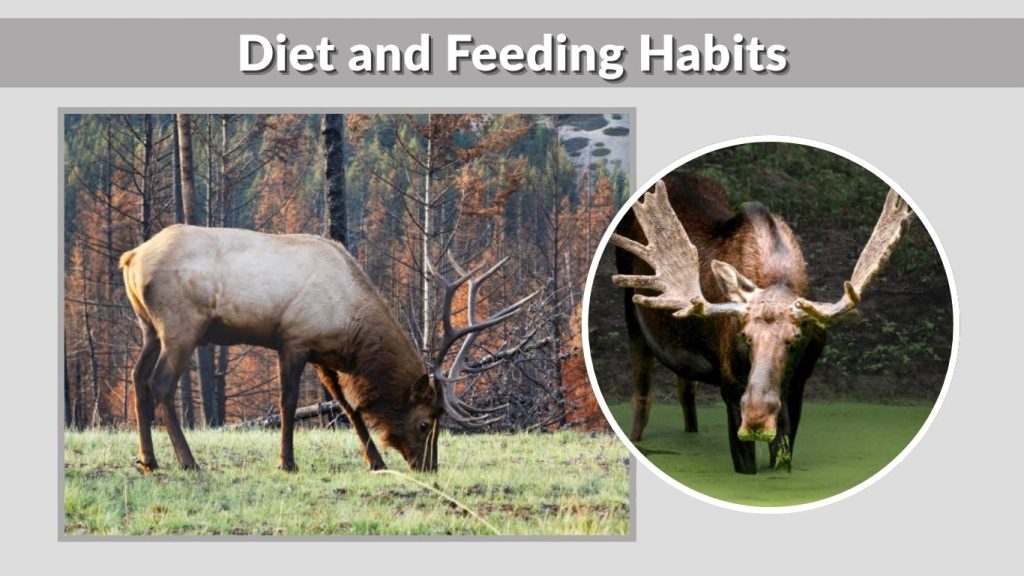
Both elk and moose are herbivores, but their diets reflect their habitat preferences. Elk are primarily grazers, feeding on grasses, sedges, and flowering plants. They also browse on shrubs and tree bark when necessary, especially in winter.
Moose are mainly browsers. Their long legs and flexible necks allow them to reach high shrubs and low tree branches. Moose also feed on aquatic plants, which provide essential minerals and nutrients. These dietary differences help explain why elk and moose occupy different ecological niches.
Grazers vs Browsers
Elk rely more on open areas where grasses are plentiful, while moose depend on woody vegetation found in forests and wetlands. This distinction plays a key role in how each species shapes its environment.
Speed, Strength, and Survival
Elk are built for speed and endurance. They can run at speeds of up to 45 miles per hour and travel long distances during seasonal migrations. Their agility allows them to escape predators such as wolves and mountain lions.
Moose are slower but immensely strong. While they can run at speeds close to 35 miles per hour, they are more likely to stand their ground when threatened. Moose use their size and powerful legs to fend off predators, including bears and wolves.
Predators and Defense Strategies
Both species face natural predators, but their defense strategies differ. Elk rely on early detection and escape, often moving as a group. Moose use intimidation, strength, and powerful kicks to defend themselves, making them formidable opponents.
Elk vs Moose Reproduction and Lifespan
Elk and moose both mate in the fall, but their mating behaviors differ. Elk males engage in vocal displays and physical contests, while moose rely more on direct competition. After mating, elk have a gestation period of about eight and a half months, while moose gestation lasts slightly longer.
Elk typically live between 10 and 13 years in the wild. Moose have a similar lifespan but often face higher mortality due to harsh winters, predators, and human-related factors.
Elk vs Moose and Humans
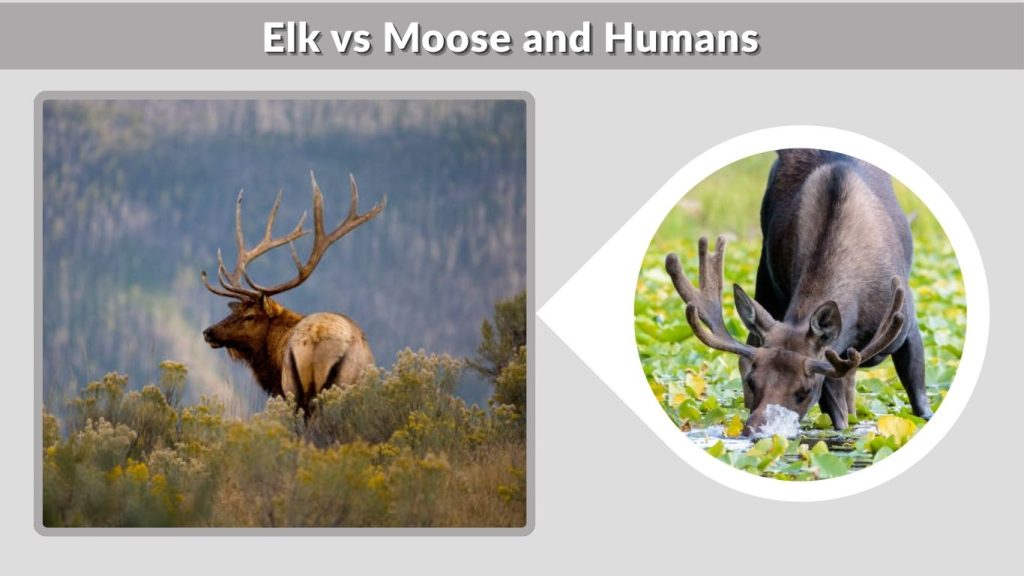
Human encounters with elk and moose are common in areas where development overlaps with wildlife habitat. Moose are involved in more vehicle collisions due to their height and dark coloration. Elk encounters are more frequent near parks and rural communities.
Hunting and Wildlife Management
Both species are managed through regulated hunting programs that support conservation and population control. Responsible wildlife management helps maintain healthy ecosystems while reducing conflicts between humans and large mammals.
Conclusion
While elk and moose may appear similar at first glance, they differ greatly in size, behavior, habitat, and survival strategies. Moose are massive, solitary browsers adapted to cold, wet environments, while elk are social, agile grazers that thrive in open landscapes. Understanding these differences helps improve wildlife awareness and promotes safer coexistence with these remarkable animals.
FAQs
What is the biggest difference between elk and moose?
The biggest difference is size and body structure. Moose are much larger and heavier, with long legs and broad, flat antlers, while elk are smaller, more agile, and have pointed antlers.
Are elk and moose the same species?
No, elk and moose are different species. Elk belong to Cervus canadensis, while moose belong to Alces alces, even though both are part of the deer family.
Which animal is more aggressive, elk or moose?
Moose are generally more aggressive, especially when threatened or during calving season. Elk are usually less aggressive but can be dangerous during the rut.
Can elk and moose live in the same habitat?
They can live in the same regions, but they usually use different habitats. Elk prefer open forests and grasslands, while moose favor dense forests and wetlands.
Which has larger antlers, elk or moose?
Moose have larger antlers in terms of width and mass, while elk antlers are longer and more pointed with multiple tines.