




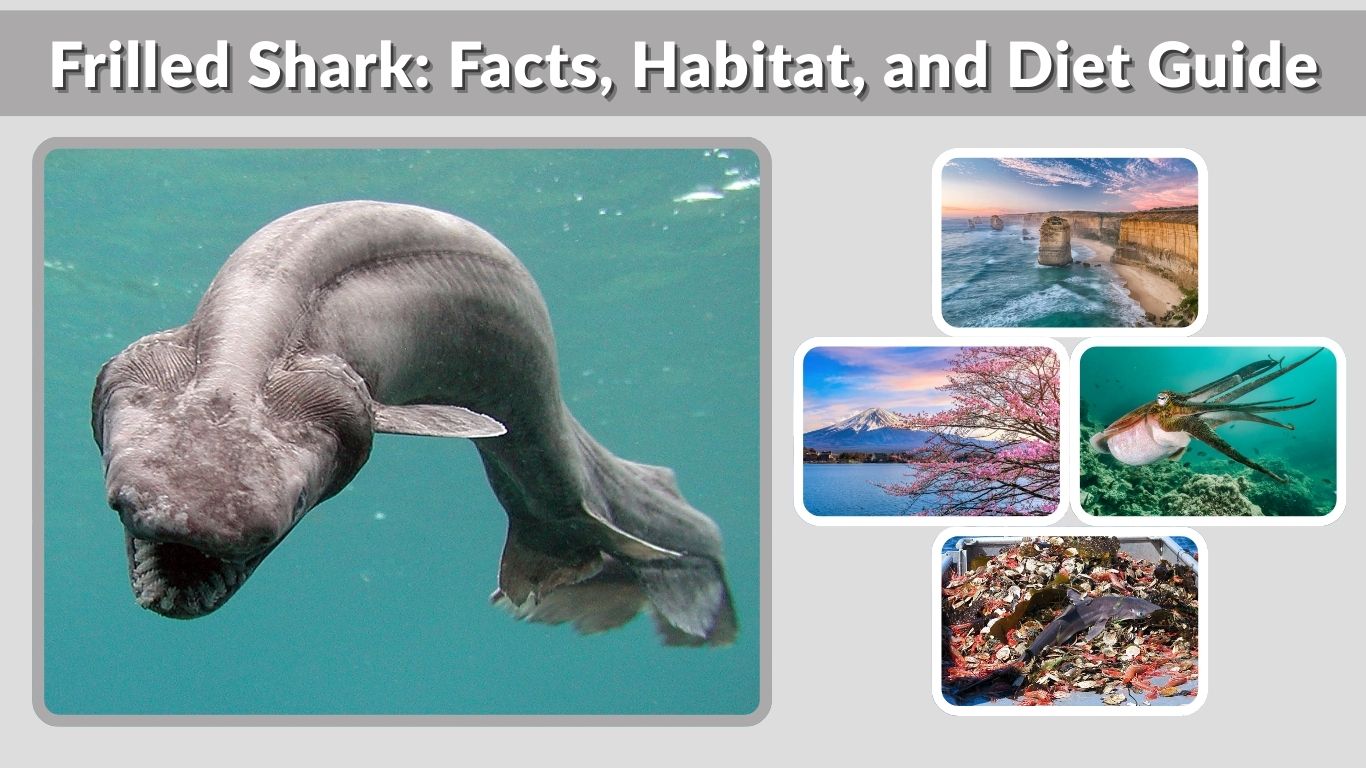
Hidden in the dark depths of the ocean lives one of the most mysterious sharks on Earth—the frilled shark. Often described as a “living fossil,” this rare deep-sea predator has changed very little over millions of years. With its eel-like body, rows of needle-sharp teeth, and strange frilled gills, it looks more prehistoric than modern. Because it lives far below the ocean’s surface, sightings are extremely rare, adding to its reputation as one of the ocean’s most fascinating and ancient creatures.
What Is a Frilled Shark?
The frilled shark is a deep-sea species known for its primitive features and unusual appearance. Unlike the powerful, fast-swimming sharks most people imagine, this species moves in a more snake-like manner and survives in extreme underwater environments.
Scientific Classification
The scientific name of the frilled shark is Chlamydoselachus anguineus. It belongs to one of the oldest shark lineages still alive today. Unlike modern sharks such as great whites or hammerheads, the frilled shark’s family tree stretches back tens of millions of years.
It is sometimes called the “lizard shark” because of its reptile-like movements and ancient features. Scientists consider it a key species for understanding shark evolution due to its primitive anatomy.
Why It’s Called a Living Fossil
The term “living fossil” refers to species that have remained relatively unchanged for millions of years. Fossil evidence suggests that ancestors of the frilled shark lived around 80 million years ago, during the time of the dinosaurs.
Many of its physical features closely resemble ancient shark fossils. Unlike most modern sharks, it retains structural traits that were common in prehistoric oceans. This makes it incredibly valuable to researchers studying marine evolution.
Physical Characteristics and Unique Features
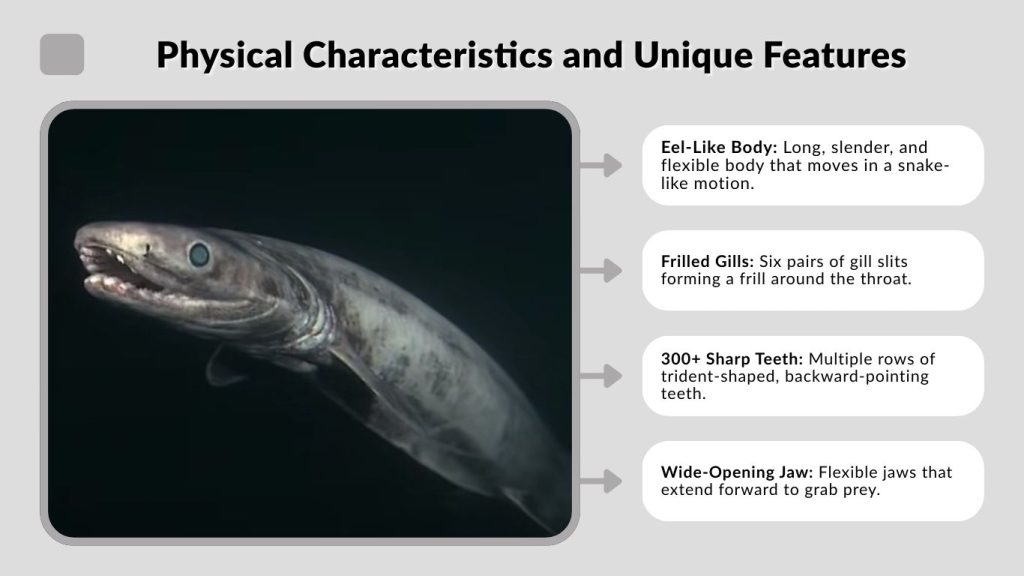
The frilled shark stands out from nearly every other shark species due to its primitive structure and snake-like appearance. Unlike modern sharks built for speed and power, this deep-sea predator has evolved for stealth and survival in dark, high-pressure environments. Its unusual anatomy not only gives it a prehistoric look but also plays a crucial role in how it hunts and adapts to life far below the ocean’s surface.
Key Physical Features:
- Eel-Like Body: Long, slender, and flexible body that moves in a snake-like motion.
- Frilled Gills: Six pairs of gill slits forming a frill around the throat.
- 300+ Sharp Teeth: Multiple rows of trident-shaped, backward-pointing teeth.
- Wide-Opening Jaw: Flexible jaws that extend forward to grab prey.
- Dark Coloration: Brown or gray body for deep-sea camouflage.
- Large Liver: Helps with buoyancy in deep water.
- Primitive Skeleton: Cartilage-based structure similar to ancient shark species.
- Long Dorsal Fin Placement: Positioned far back on the body compared to modern sharks.
These features combine to make the frilled shark one of the most distinctive and ancient-looking predators in today’s oceans.
Habitat and Global Distribution
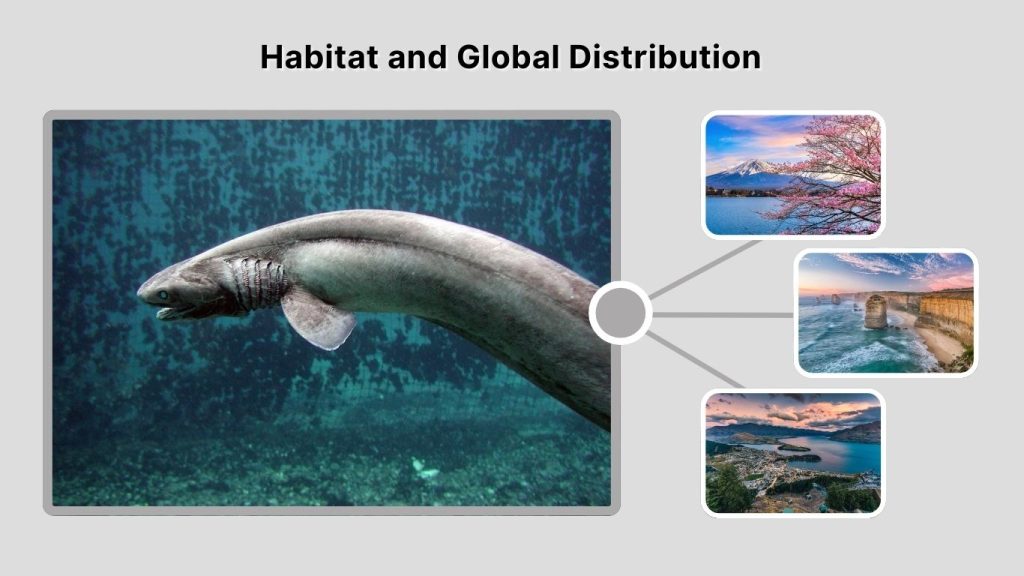
The frilled shark is rarely seen because it lives in deep ocean waters, far from human activity. Its habitat plays a major role in its mysterious reputation.
Deep-Sea Environment
Frilled sharks are usually found at depths ranging from 500 to 1,500 meters (1,640 to 4,920 feet). At these depths, sunlight barely penetrates, temperatures are low, and water pressure is extremely high.
Living in such harsh conditions requires special adaptations. The frilled shark has a slow metabolism, which helps it conserve energy in an environment where food can be scarce.
Because of its deep habitat, scientists still have limited information about its daily behavior. Most knowledge comes from specimens accidentally caught in deep-sea fishing nets.
Geographic Locations
Although rare, frilled sharks have been found in both the Atlantic and Pacific Oceans. Sightings and captures have occurred near Japan, Australia, New Zealand, and parts of Europe and North America.
They appear to prefer continental slopes and underwater canyons where prey such as squid is abundant. However, their global distribution suggests they are more widespread than commonly believed.
Why Sightings Are Rare
The main reason frilled sharks are rarely seen is their deep-sea habitat. Unlike coastal shark species, they do not swim near beaches or shallow waters.
Occasionally, one may be caught accidentally by deep-sea fishing operations. In very rare cases, a frilled shark has been observed closer to the surface, often due to illness or disorientation. These unusual events attract significant media attention because encounters with this species are so uncommon.
Diet and Hunting Behavior
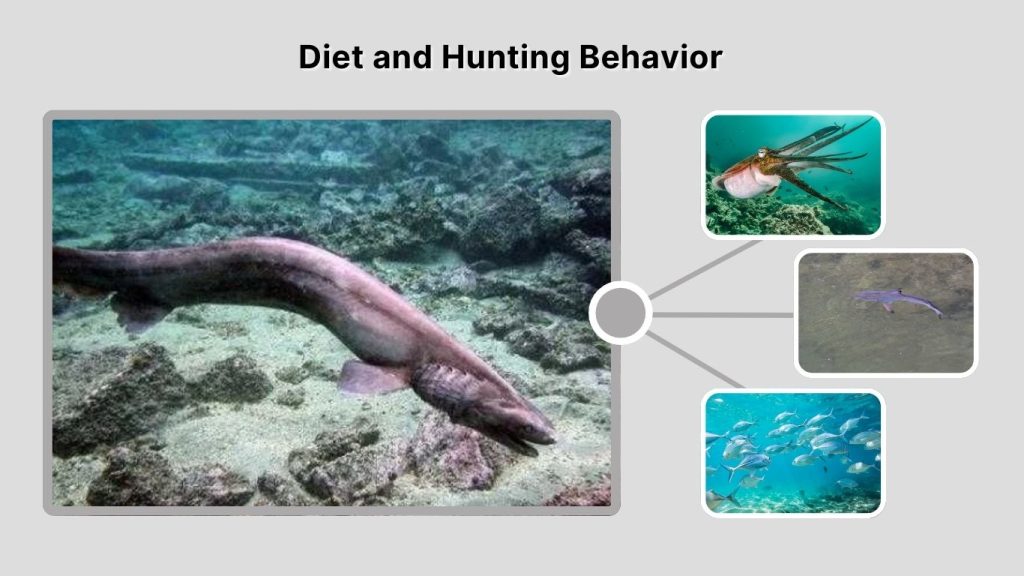
Living in the deep sea means food is not always easy to find. The frilled shark has developed specialized hunting techniques that allow it to survive in this challenging environment.
Primary Prey
The frilled shark mainly feeds on squid, which make up a large portion of its diet. It also eats deep-sea fish and occasionally smaller sharks. Because squid are soft-bodied and slippery, the shark’s sharp, backward-pointing teeth are perfectly designed to trap them.
Researchers studying stomach contents have found remains of various cephalopods, confirming that squid are a primary food source. Its diet reflects the types of creatures commonly found along continental slopes and deep ocean trenches.
Ambush Hunting Technique
Unlike fast, aggressive predators such as great white sharks, the frilled shark is believed to use an ambush strategy. Its flexible body allows it to lunge forward suddenly, almost like a snake striking its prey.
Its jaws can extend outward, increasing its reach and improving its ability to capture fast-moving squid. Because energy is limited in the deep sea, this low-effort, high-impact hunting style helps conserve strength while still being effective.
The frilled shark’s dark coloration also provides camouflage in the dim environment, making it harder for prey to detect it before it strikes.
Reproduction and Life Cycle
The reproductive biology of the frilled shark is one of its most fascinating features and remains an area of ongoing research.
Ovoviviparous Reproduction
Frilled sharks are ovoviviparous, meaning the eggs develop inside the mother’s body. Instead of laying eggs externally, the embryos grow internally and are born live.
This reproductive method provides extra protection to developing pups, which is especially important in the unpredictable deep-sea environment.
Long Gestation Period
One of the most remarkable aspects of the frilled shark is its extremely long gestation period. Scientists estimate it may last more than three years, possibly making it the longest gestation period of any vertebrate animal.
Females typically give birth to litters ranging from 2 to 15 pups. The long development time likely contributes to the species’ slow population growth.
Growth and Lifespan
Frilled sharks grow slowly, which is common among deep-sea animals. Slow growth and late maturity can make species more vulnerable to environmental changes and fishing pressures.
Although their exact lifespan is not fully known, their deep-sea adaptations suggest they are built for long-term survival in stable, low-energy environments.
Evolutionary Importance
The frilled shark offers scientists a rare glimpse into the distant past of shark evolution.
Link to Ancient Sharks
Many of its physical traits resemble those of prehistoric sharks seen in fossil records. Its simple body structure, jaw placement, and tooth arrangement are considered primitive compared to modern shark species.
These features provide clues about how early sharks may have looked and functioned millions of years ago.
What It Teaches Scientists
By studying the frilled shark, researchers gain insights into how species adapt to extreme environments. It also helps scientists understand how certain ancient traits have survived while others disappeared over time.
Its continued existence highlights the resilience of some evolutionary designs, even in a rapidly changing world.
Conservation Status and Threats
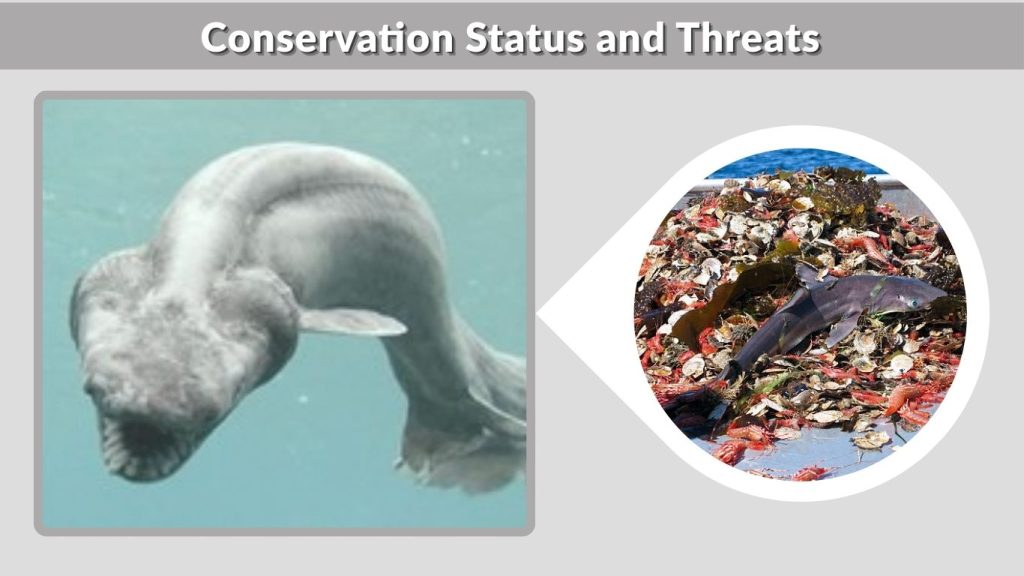
Although not commonly targeted by fisheries, the frilled shark still faces potential risks.
IUCN Status
The frilled shark is currently classified as “Near Threatened” in some regions due to limited data and potential vulnerability. Because it lives so deep in the ocean, accurate population estimates are difficult to obtain.
Main Threats
The primary threat to frilled sharks is bycatch from deep-sea fishing operations. As fishing technology advances and expands into deeper waters, encounters with this species may increase.
Habitat disturbance from deep-sea trawling can also impact the delicate ecosystems where these sharks live.
Importance of Protection
Protecting deep-sea habitats is essential for preserving not only the frilled shark but also countless other species that share its environment. Sustainable fishing practices and improved monitoring can help reduce unintended harm.
Frilled Shark vs Modern Sharks
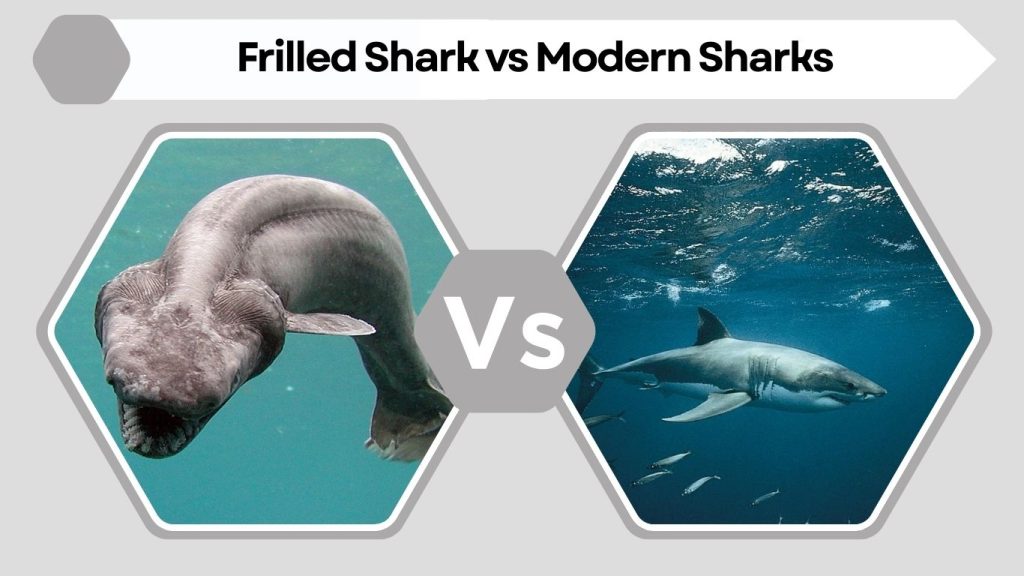
When compared to modern sharks like the great white or tiger shark, the frilled shark appears almost alien.
Modern sharks typically have streamlined bodies built for speed and active predation. In contrast, the frilled shark has a more primitive structure, designed for stealth and survival in darkness.
Its eel-like movement, frilled gills, and multiple rows of trident-shaped teeth clearly distinguish it from contemporary shark species. While modern sharks dominate coastal and open waters, the frilled shark remains a quiet inhabitant of the deep.
Fascinating Facts About the Frilled Shark
- It has around 300 teeth arranged in about 25 rows.
- It can open its mouth extremely wide relative to its body size.
- It is sometimes called the “lizard shark” due to its ancient appearance.
- Its gestation period may be the longest of any vertebrate animal.
- It has survived multiple mass extinction events over millions of years.
FAQs
Is the frilled shark dangerous to humans?
The frilled shark poses virtually no threat to humans. It lives in deep ocean waters far below recreational diving depths. Most human encounters occur only when the shark is accidentally caught in fishing equipment.
How deep does the frilled shark live?
Frilled sharks typically inhabit depths between 500 and 1,500 meters. These deep, dark waters provide the cold temperatures and high pressure conditions they are adapted to survive in.
Why is it called a living fossil?
It is called a living fossil because its body structure and features have changed very little over millions of years. Fossils of ancient sharks show strong similarities to this modern species.
How rare is the frilled shark?
While not necessarily extremely rare globally, it is rarely seen due to its deep-sea habitat. Limited research and few encounters make it one of the ocean’s most mysterious sharks.
Conclusion
The frilled shark is one of the most extraordinary creatures hidden in Earth’s oceans. With its prehistoric appearance, ancient lineage, and deep-sea adaptations, it stands apart from nearly every other shark species alive today. Although rarely seen, it plays an important role in understanding marine evolution and biodiversity. As deep-sea exploration continues, this living fossil reminds us how much of the ocean remains unexplored—and how many secrets still lie beneath the surface.